Intertwined
Camila Lozano
See it On Campus: Level 2
The Wood Co-Op/Forestry Innovation Investment in Wood Design Industrial Design Graduation Award — Honourable Mention
Project Overview
Intertwined began as a personal reflection on the fast-paced nature of our environments and how our interactions with nature have become increasingly limited by the hectic rhythm of urban life, trapping us in a cycle that rarely ever breaks. The project seeks to strengthen our connection with nature, recognizing that, despite our innate bond with the natural world, the design of urban spaces rarely prioritizes this relationship.
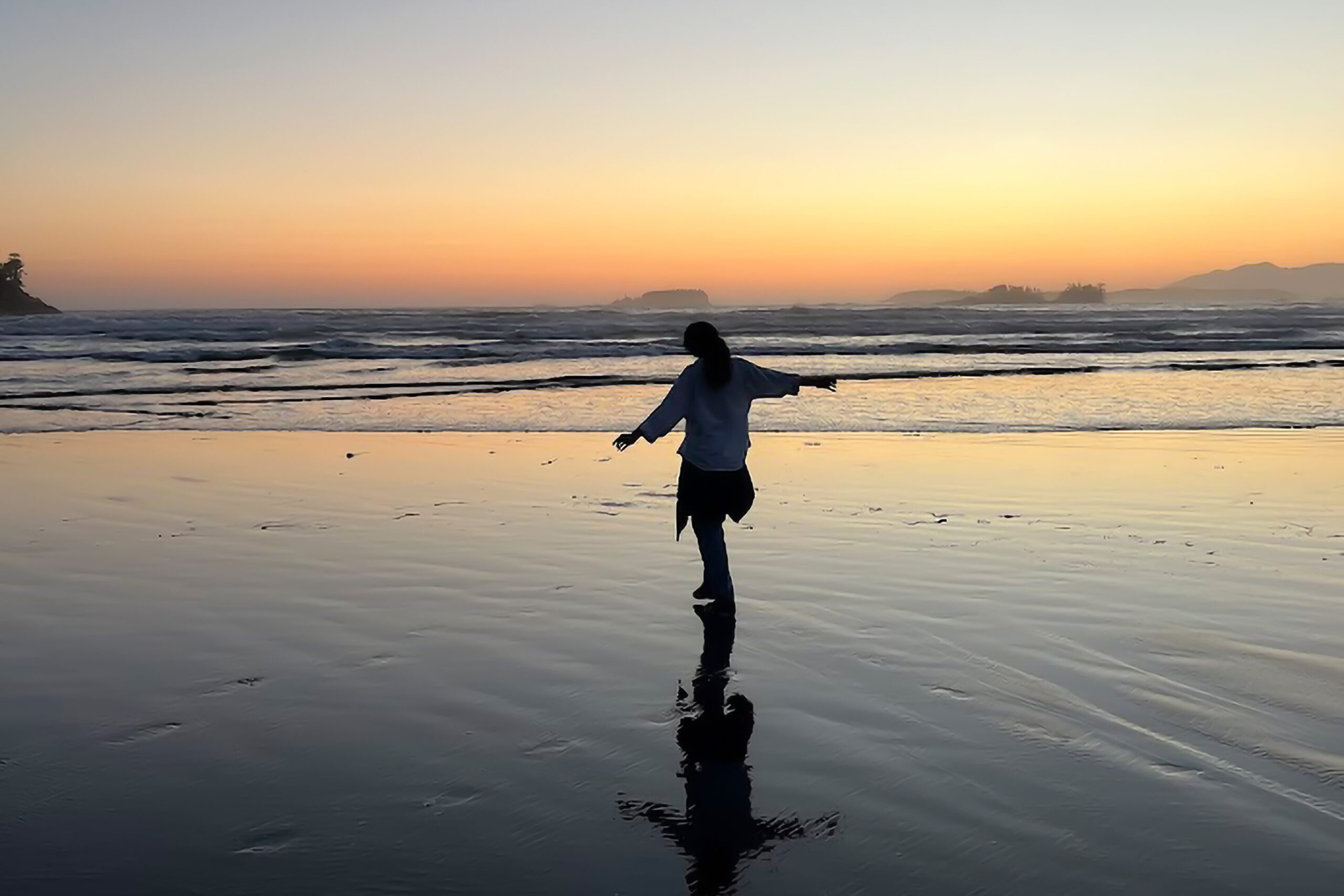
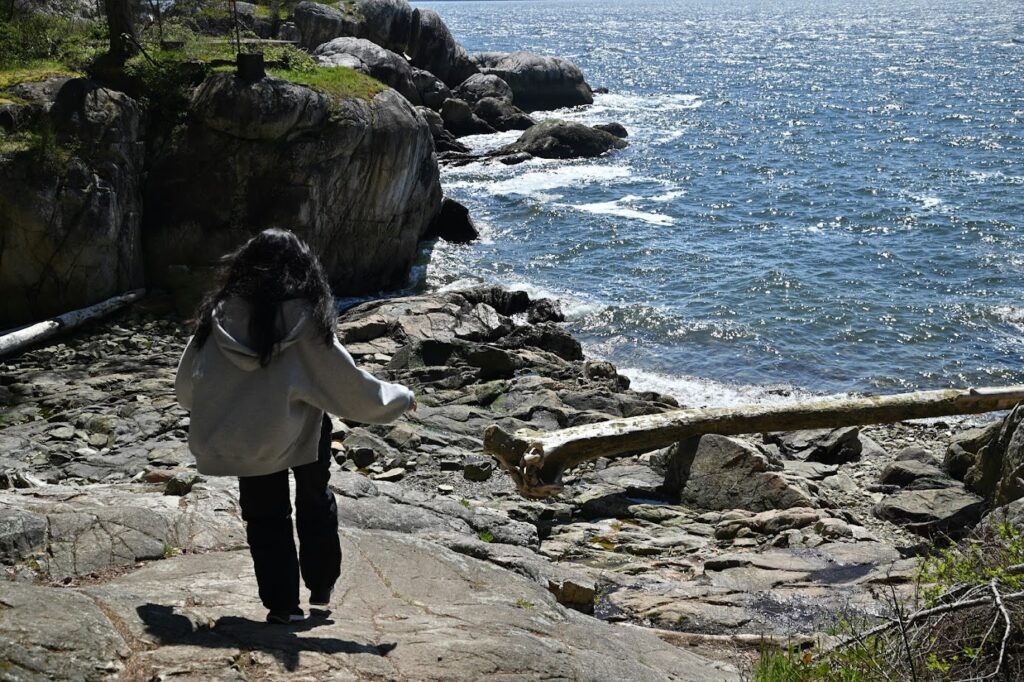
I approached the project through the lens of biophilic design, exploring its current strategies for enhancing space through nature. I then merged these with my own experiences, reflecting on the elements of nature that help me pause, breathe, and feel immersed. The project specifically focuses on urban spaces because of the significant role they play in shaping our daily routines, and yet nature, when present, often feels controlled and distant.
The spatial design aspect of Intertwined does not simply aim to include natural elements; it seeks to create a space that is shaped by nature, inviting a more intuitive, immersive interaction that turns nature into an essential part of our day-to-day life.
Project Objective
Following the earlier considerations, I defined my main design objective: to explore how the feelings we experience in nature can be brought into the everyday spaces we interact with. This led to a series of design considerations that shaped the direction of the project:
- Focus on the design of indoor public spaces and their influence on our daily routines.
- Let nature shape the space, rather than allowing the space to control or contain nature.
- Explore what it means for individuals to take a pause, and how a space can encourage that experience in a personal and intuitive way.
- Work with a welcoming, adaptable scale that allows the space to exist across multiple locations we move through.
- Consider how materials can evoke and reflect natural experiences
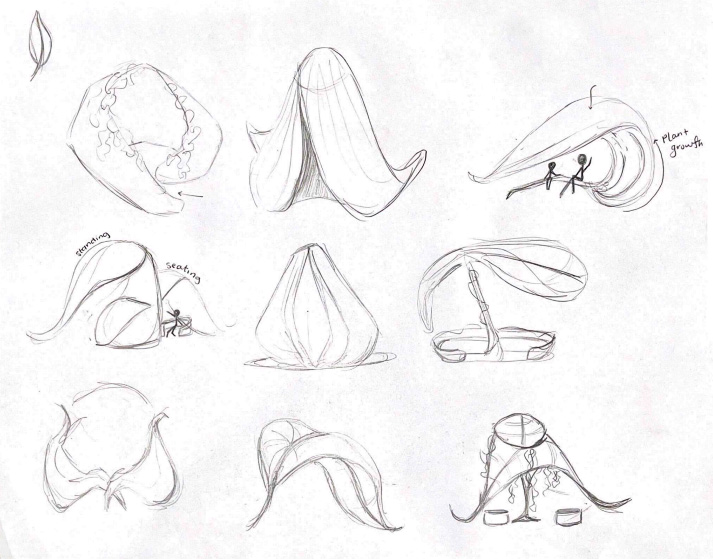
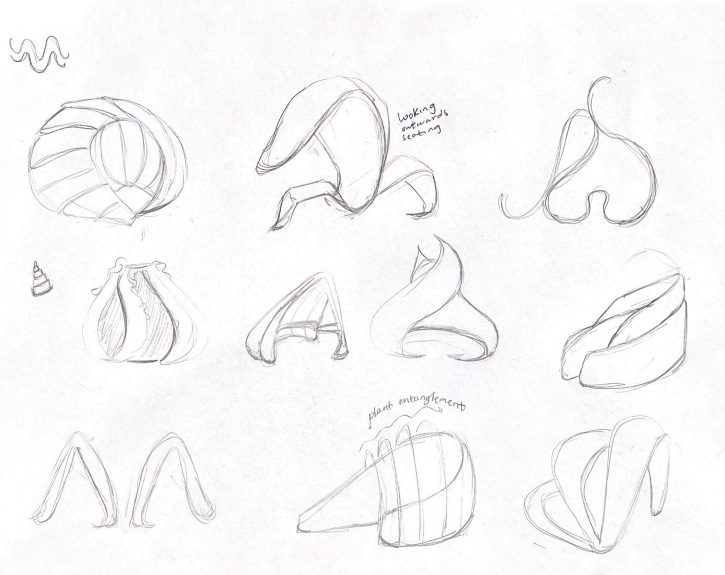
Sketching & Form Studies
A key aspect of this project was understanding how to bring natural forms into the spatial design itself. Rather than beginning with functionality as the main focus. I started by studying natural shapes and experiences that I felt connected to. I reflected on the movement of tidal waves, the peaceful rhythm of trees swaying in the wind, and the comforting sense of being cocooned by the environment around me. These moments became guiding references—not just for form, but for atmosphere and flow of the space.
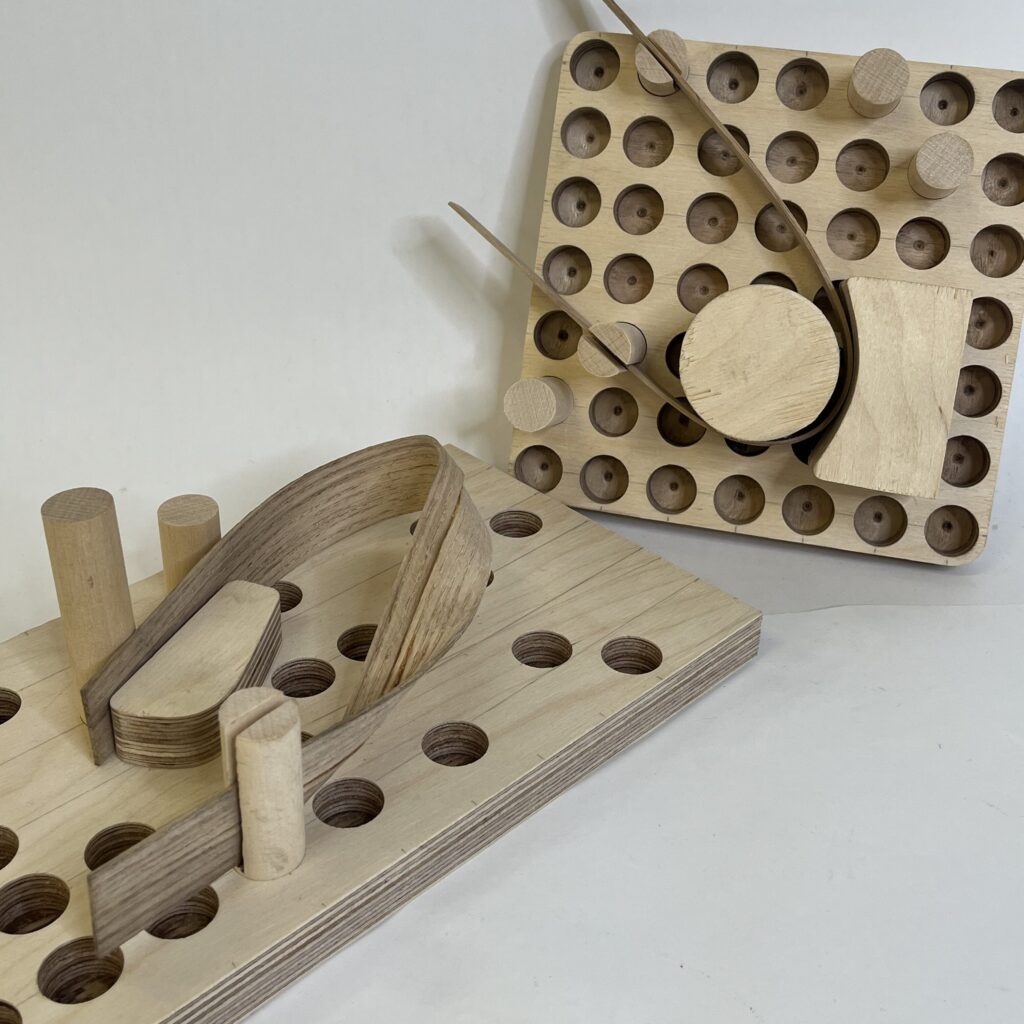
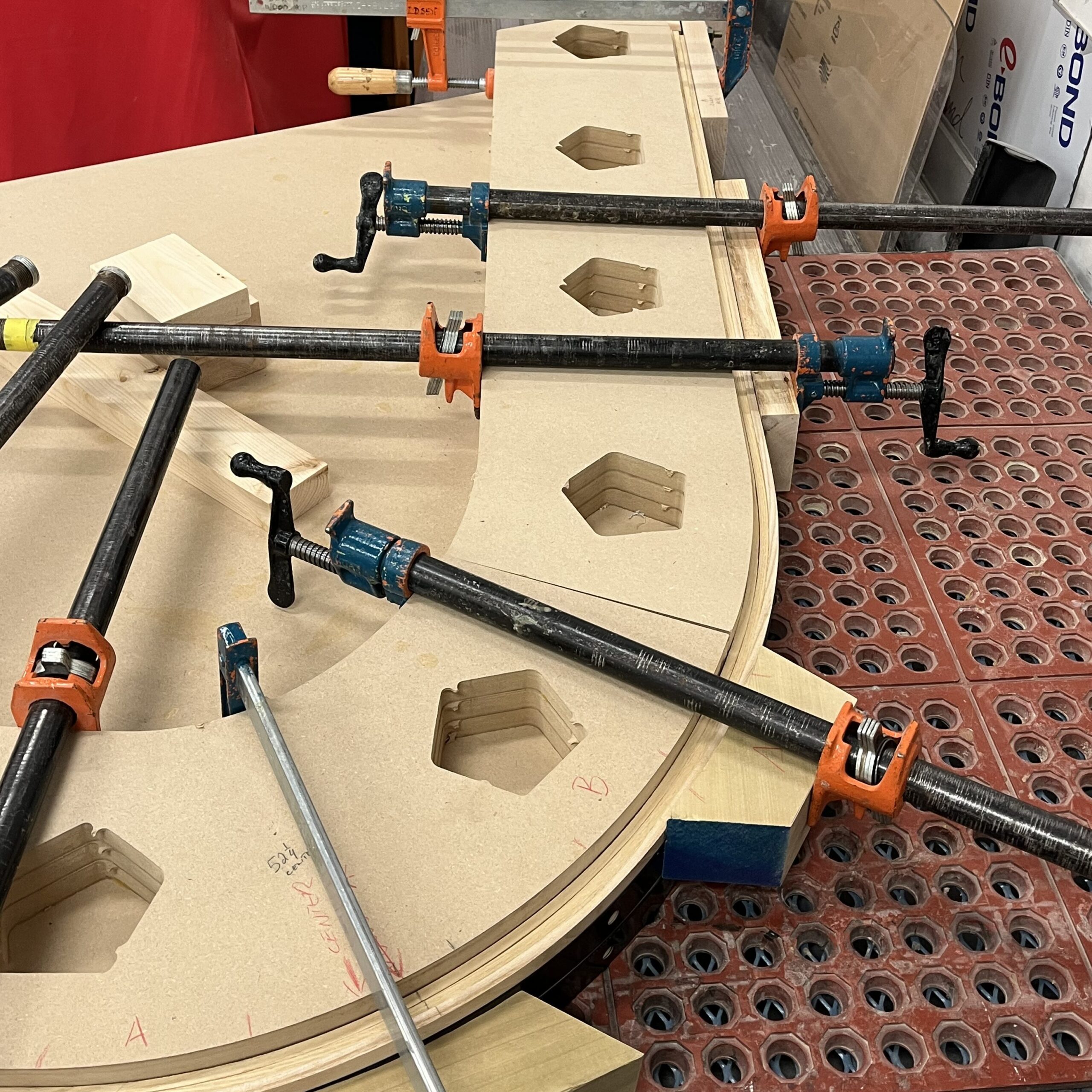
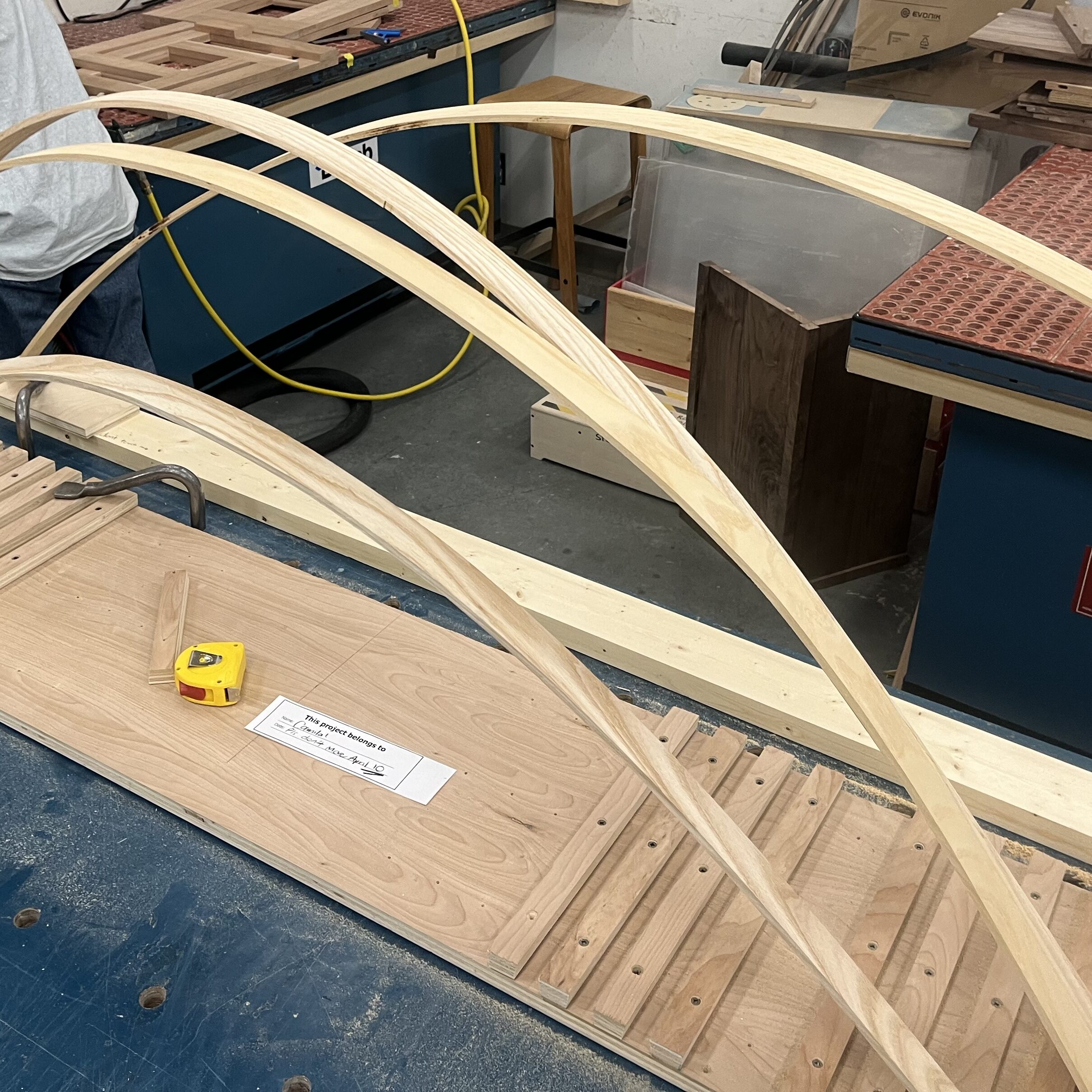
Low-Tech studies
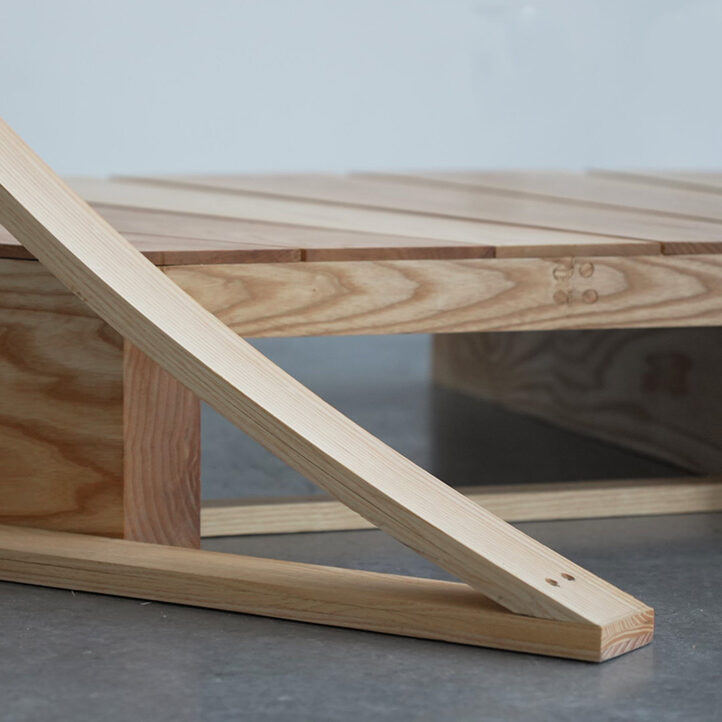
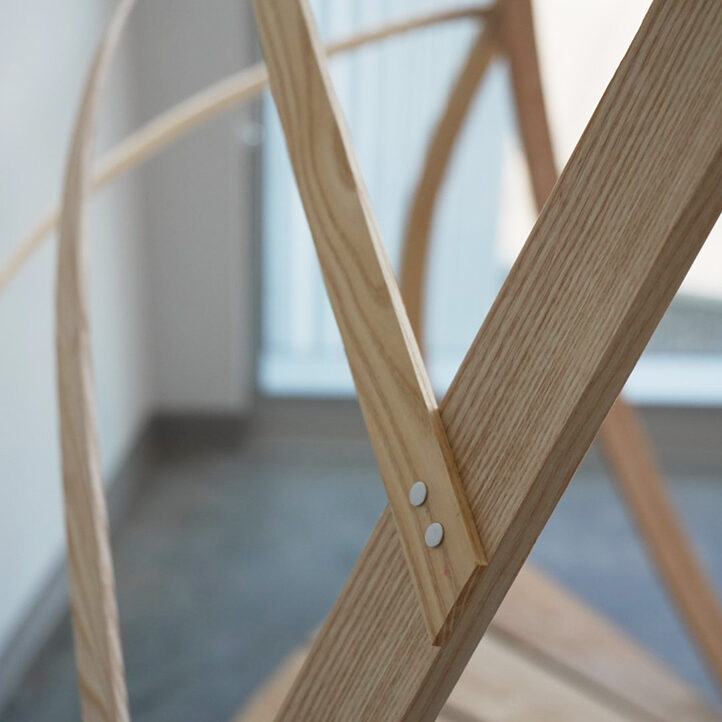
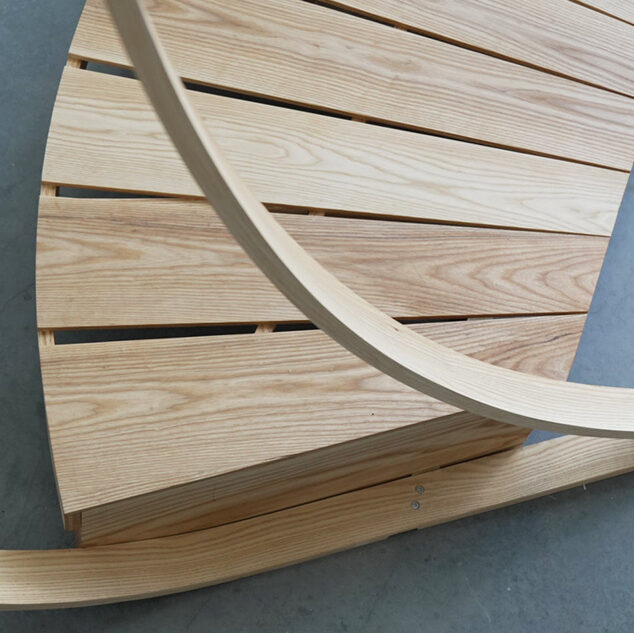
Materiality played a key role in my form explorations, as I considered approaches rooted in slow craft and low-tech practices. I didn’t begin with a fixed or precise direction; instead, I allowed the process to guide me. I explored steam bending solid wood, focusing on how the material itself could shape the outcome, letting form emerge through an understanding of the wood’s natural grain and its inherent bending capabilities. In this way, nature took on a different role in the project, not just as inspiration but as a collaborator, influencing its final form.
Special thanks to Henry Huangfu for all the help taking pictures
Space Interactions
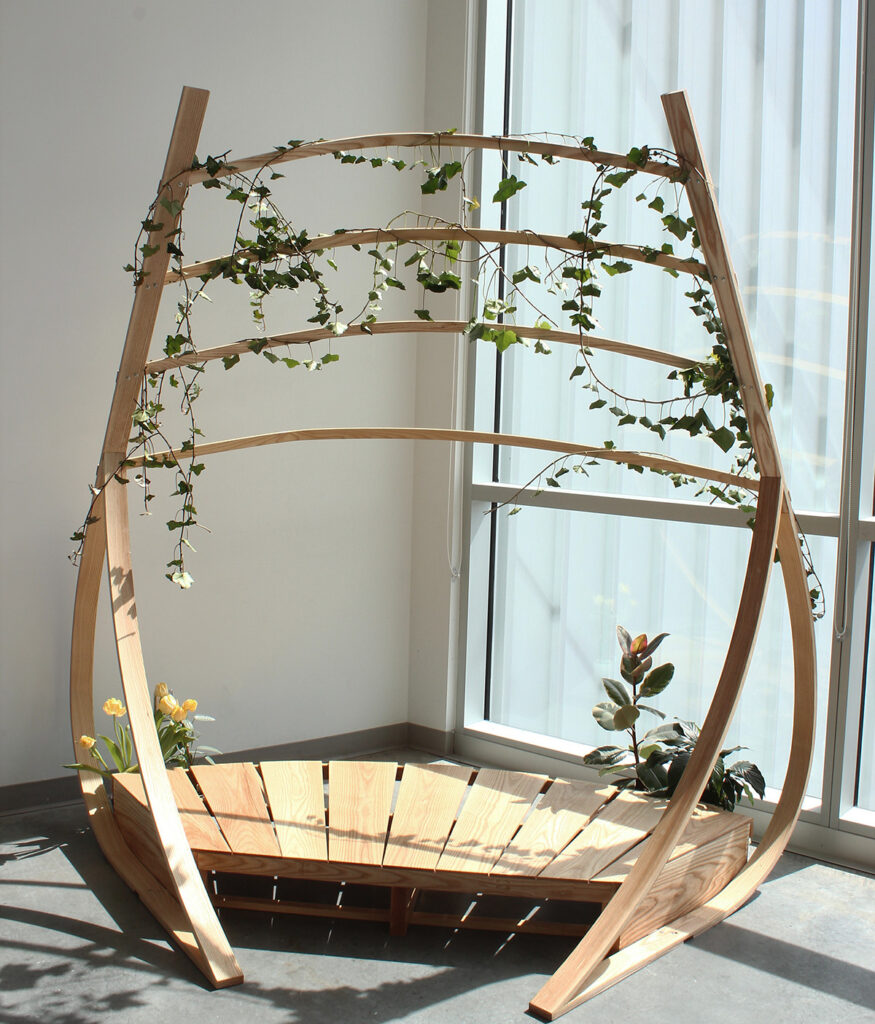
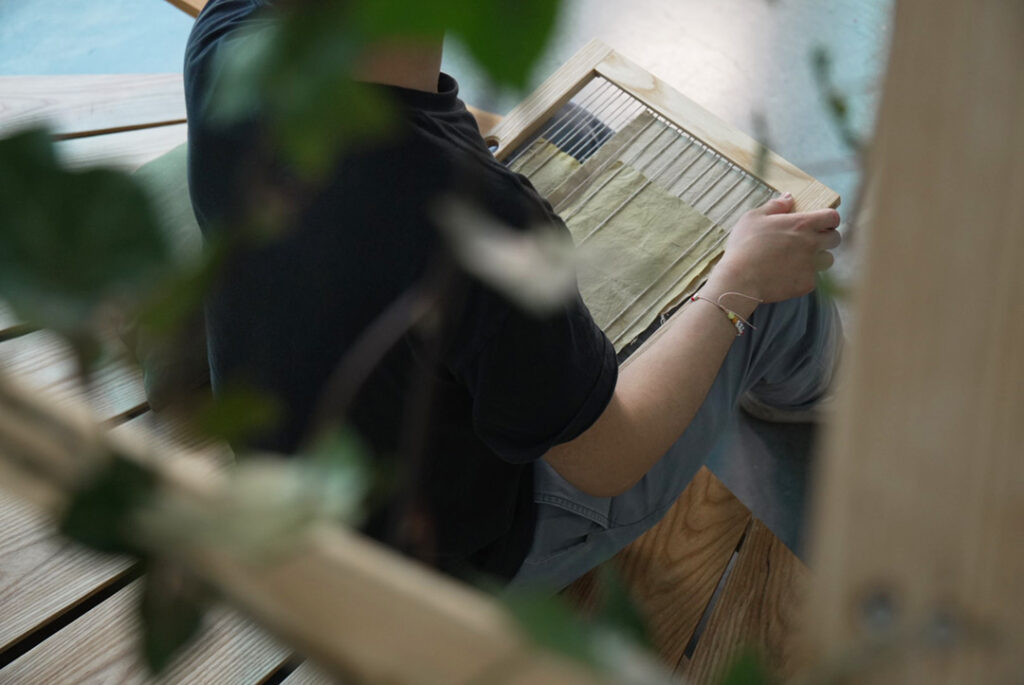
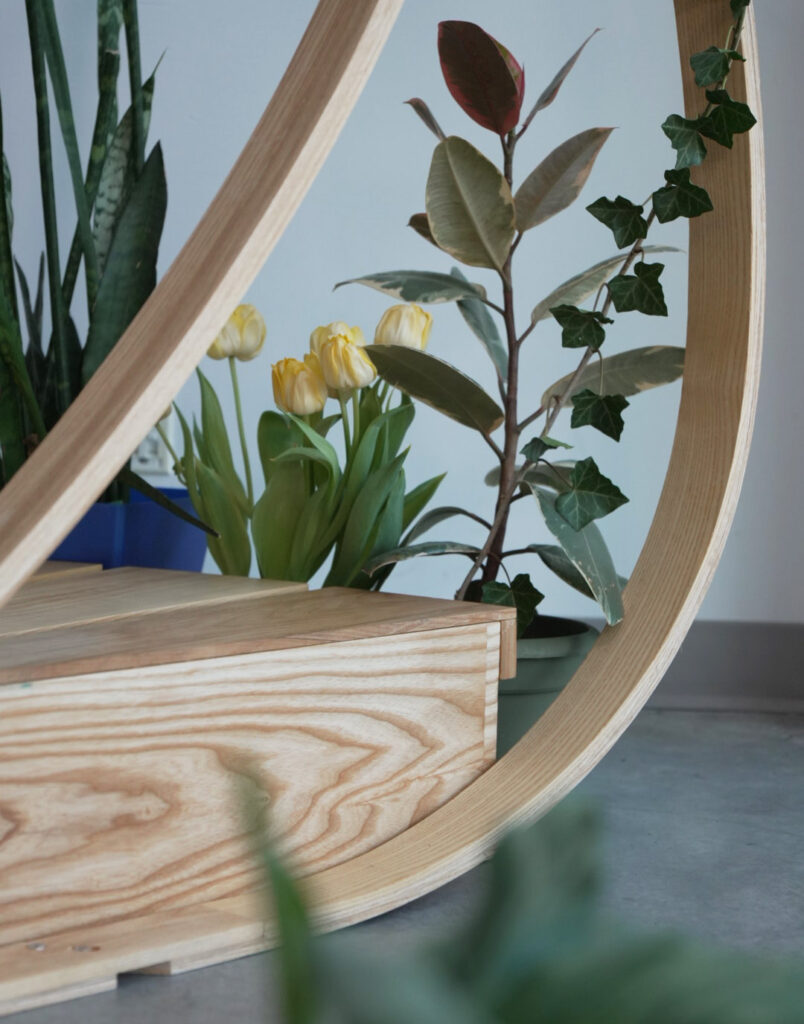
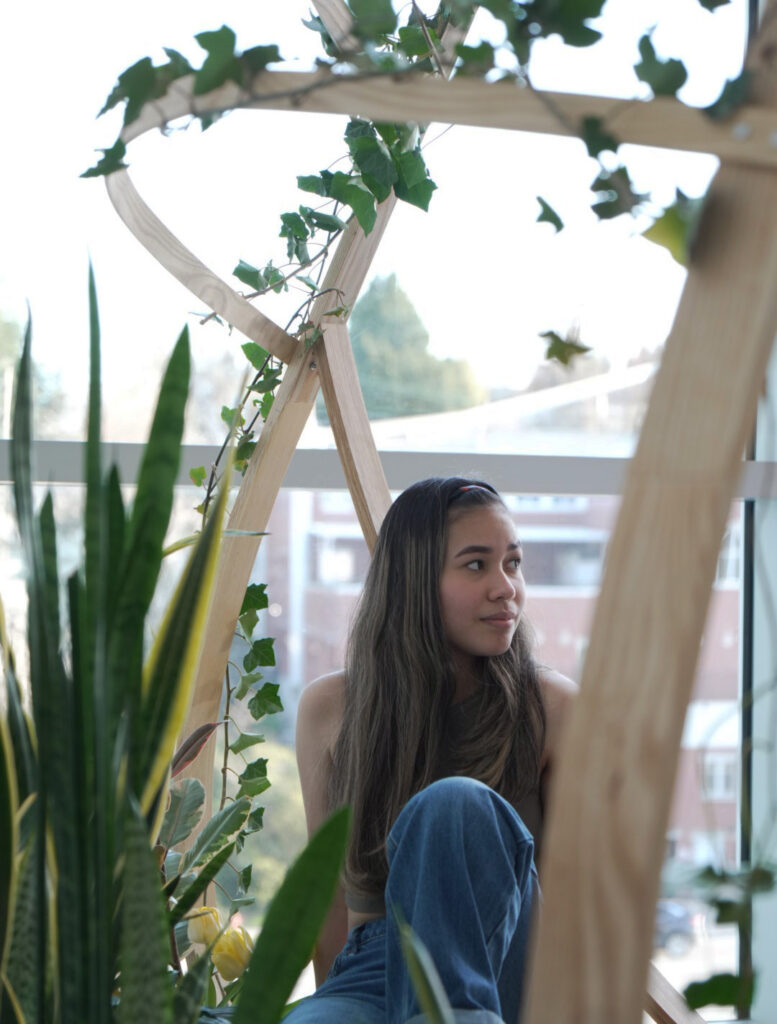
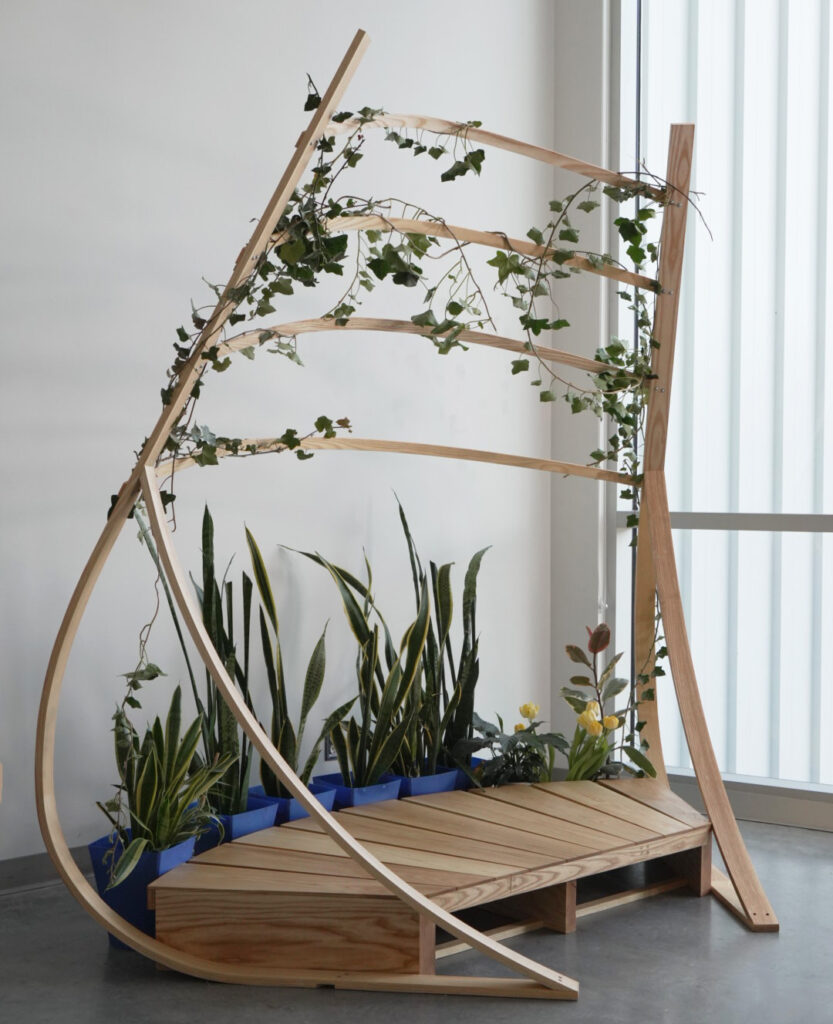
After finding a balance between material and form considerations, I landed on a petal-like form that gently wraps around you, an indoor platescape where the form alone is not the main focus but rather the juxtaposition between plant and space and how they shape the environment together.
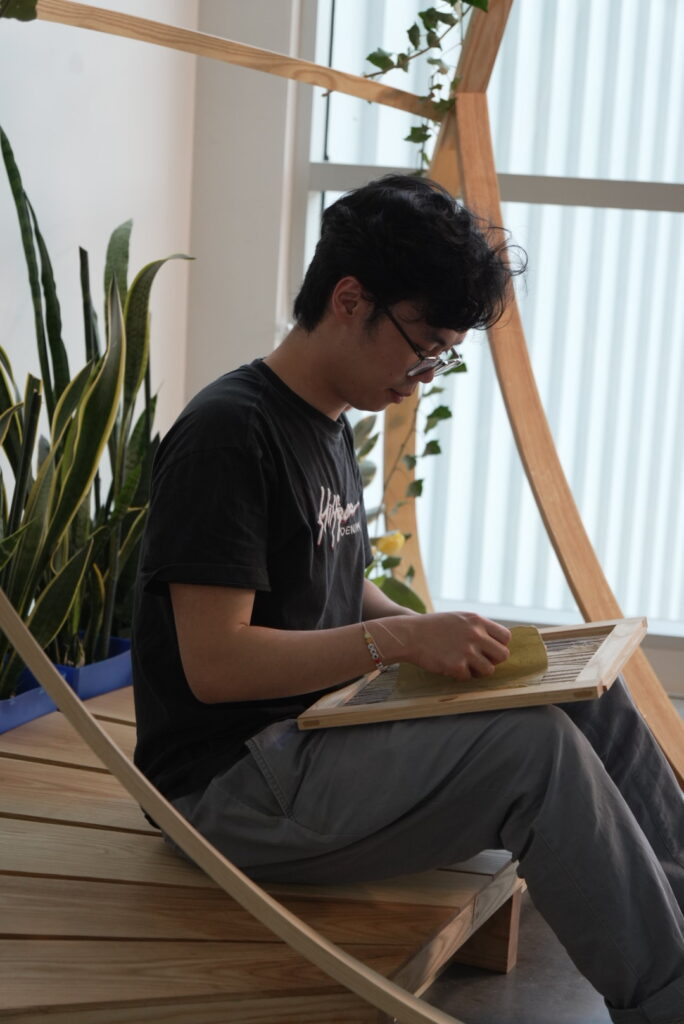
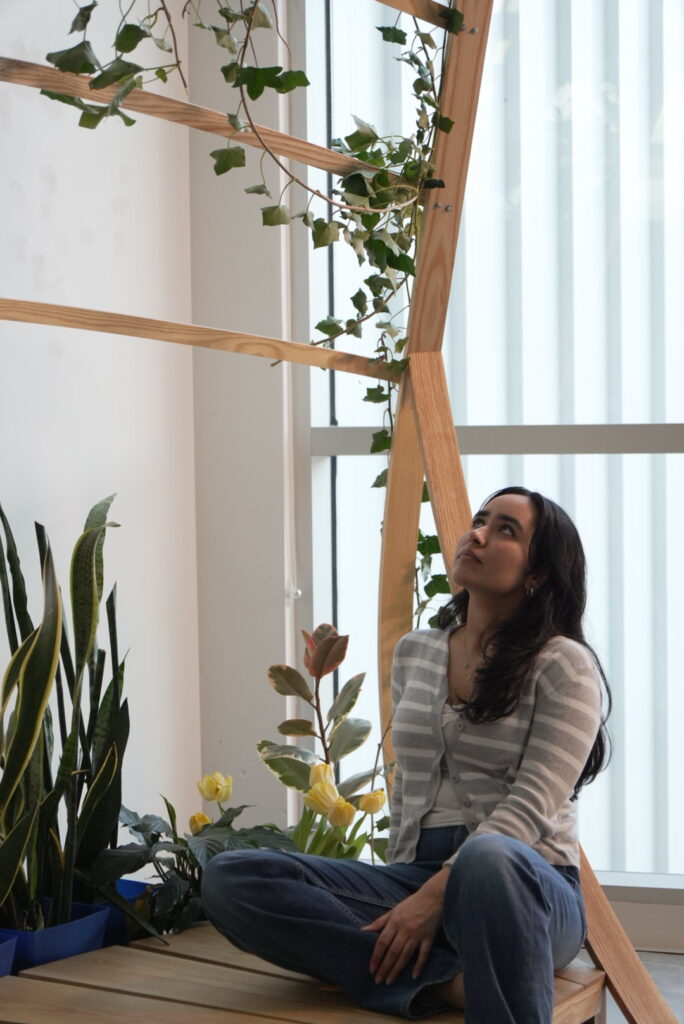
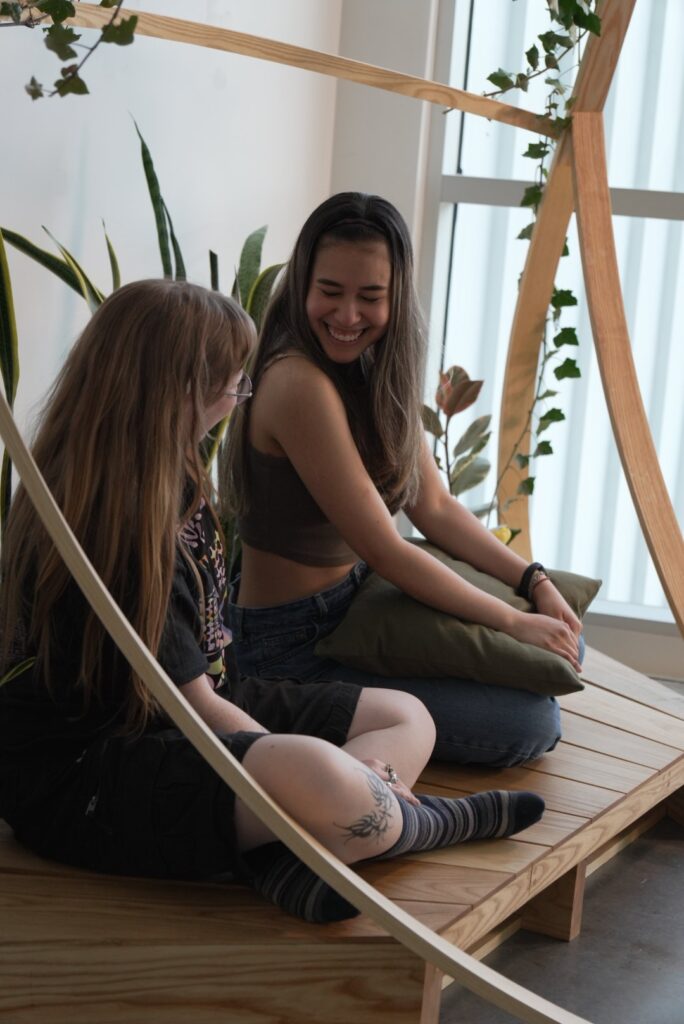
The resting area of the space started with the concept of a bench but slowly transformed into a low platform to encourage different resting positions that invite you to immerse further with the space around you. After all, nature doesn’t dictate how you sit when being outdoors.
Encouraging the feelings of calmness nature provides, this could be a place of rest or community, but it is formed by the freedom of letting go, whatever that could mean to you.
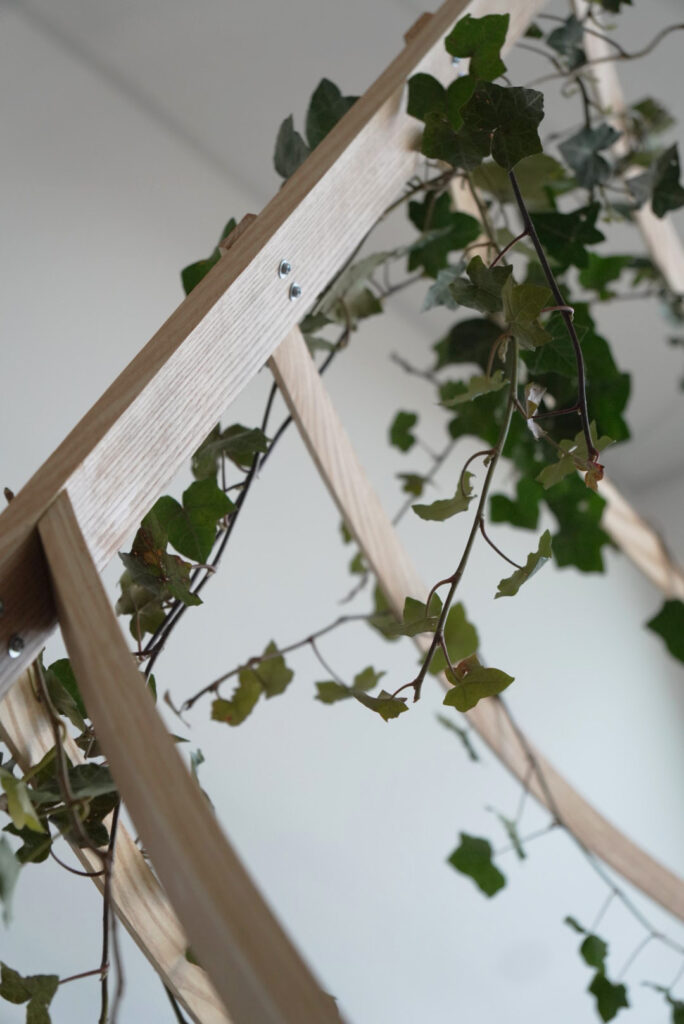
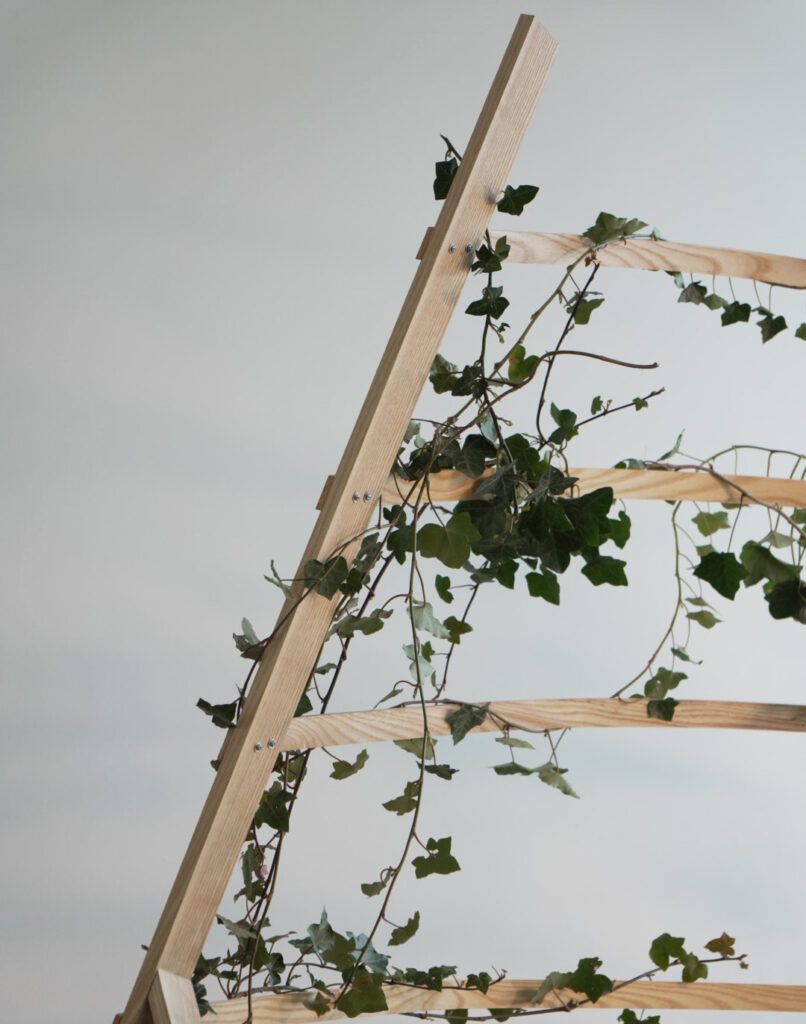
The form, even though it’s inspired by the elements of nature in mind, is almost like a skeleton as it’s only truly completed once the plants bring it to life. The upper part of the form is meant to be entangled by the wildness and unpredictability of vines, letting the form change with the seasons and create a story alongside the space.
The choice of designing specifically for vines came early in my concept as I wanted a plant that reflects finding wonder in the unexpected and while qualified as an “invasive species”, I always find excitement in seeing them take over a space, entangling into the form differently depending of what type of vine grows onto it.
The adaptability of the space is where the essence of nature is most deeply reflected. It symbolizes openness and fluidity, allowing users to engage with it in multiple, personal ways. Just as we bring the things we cherish into natural settings, that same sense of intention and connection can be carried into this space.
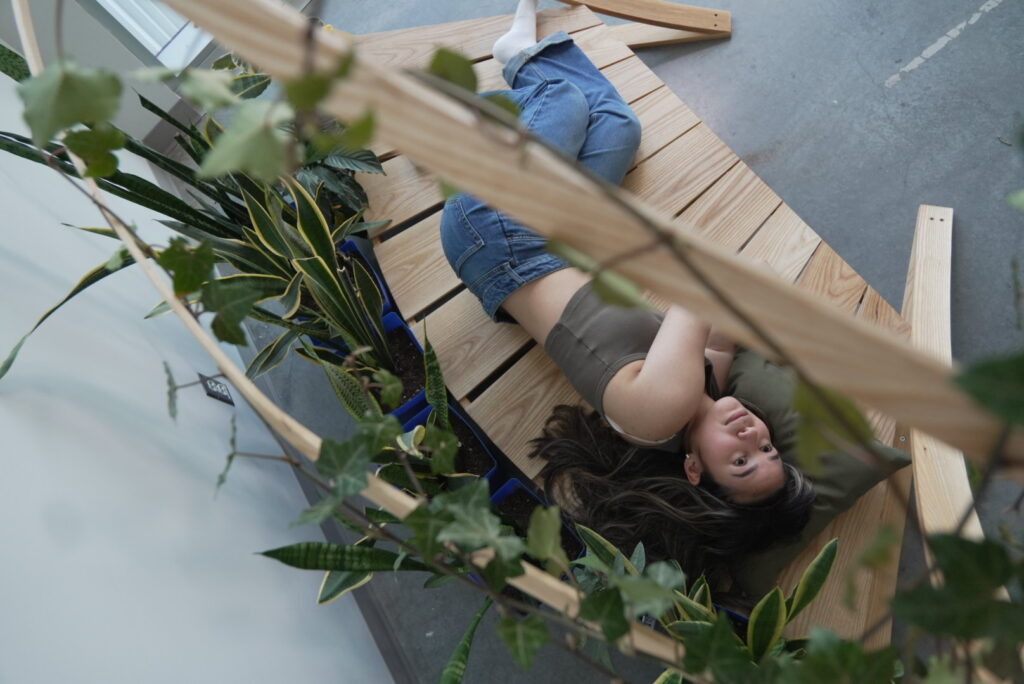
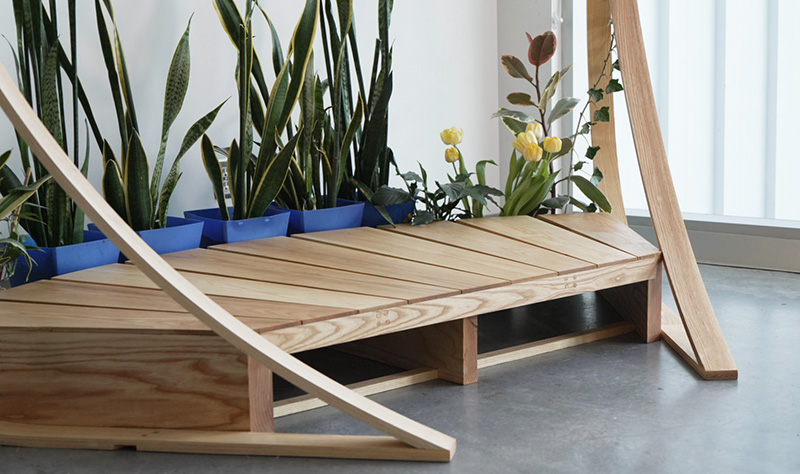
Intertwined is a project that not only physically reconnects us with nature within our built environments, but also invites a deeper reflection on how nature can take a more central role—how it can shape our spaces and tell its own story. With each interaction, I hope we can be reminded of the power in the peacefulness and wonders that nature holds, and the possibilities of reshaping the spaces we already have.
If you’re interested in bringing nature into one of your spaces with Intertwined, contact me!