pulp!
Vaughan Woodward
See it On Campus: Level 2
You can find pulp! located on the second floor, eastside in the sculpture gallery. (room with all the windows)
Visitor Info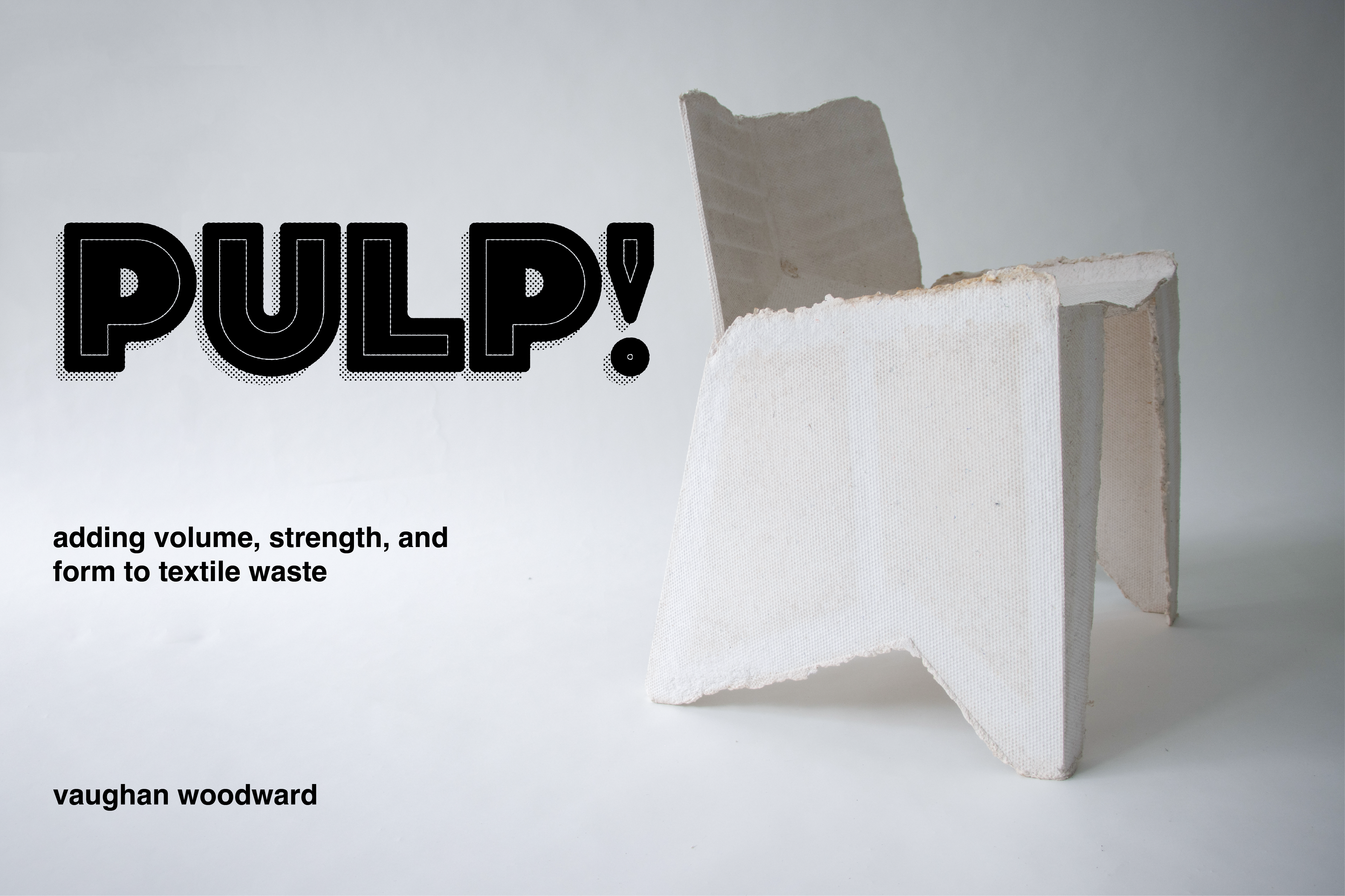
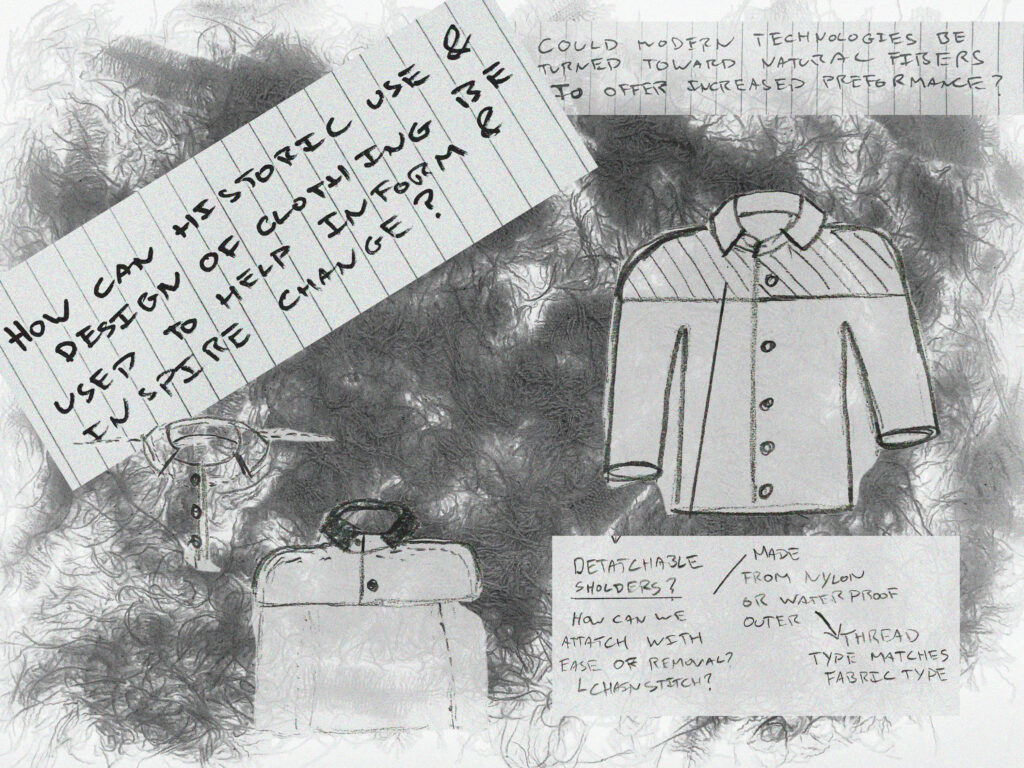
Textiles contribute 92 million tonnes of waste (one garbage truck a second!) to landfills annually and is expected to increase to 134 million tonnes by the end of the decade. (Ellen Macarthur Foundation) Given this massive waste stream, how could we extend the lifespan of this unused and discarded material?
I initially aimed to increase the perceived value of clothing through the promotion of repair and reuse. As I progressed further into the world of waste, I realized that without systematic shifts in governance, production, and consumption, fast and cheap clothing would continue to be produced. Instead of producing more, how could I take material that already existed, transform and add value to it?
Abstract
The aim of this project has been to find a viable and interesting way to use textile waste, specifically natural textile waste. The choice of natural fibre was intentional because as soon as synthetic and natural fibres are mixed, the separation and recycling viability plummets. Think of this project as a proposal, it is not a concrete solution but an investigation into what could be done with waste streams. I set out to create a use which would promote circularity, and create volume, strength and form.
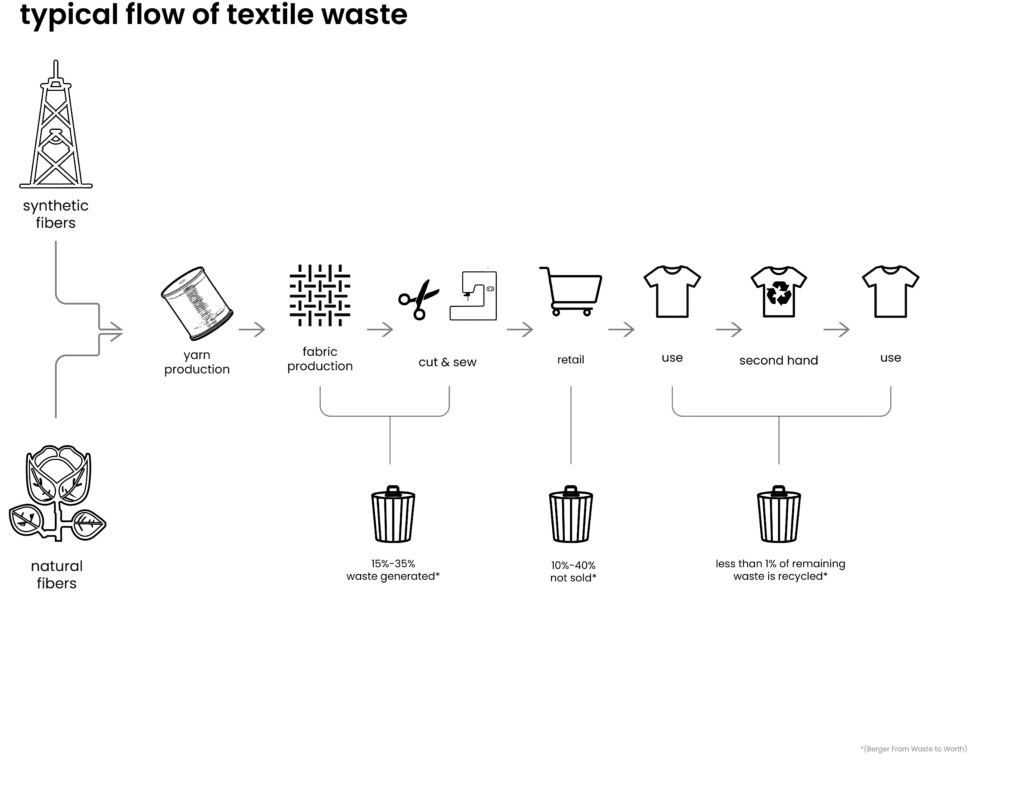
In the typical flow of textile waste, there are six or more opportunities to address and intercept waste before it heads to the landfill. Pulp! Can interject at any of these levels but is intended to be inserted in the pre-consumer waste cycle. Placing “pulp!” in any of the other streams works but would require the destruction of potentially serviceable garments..
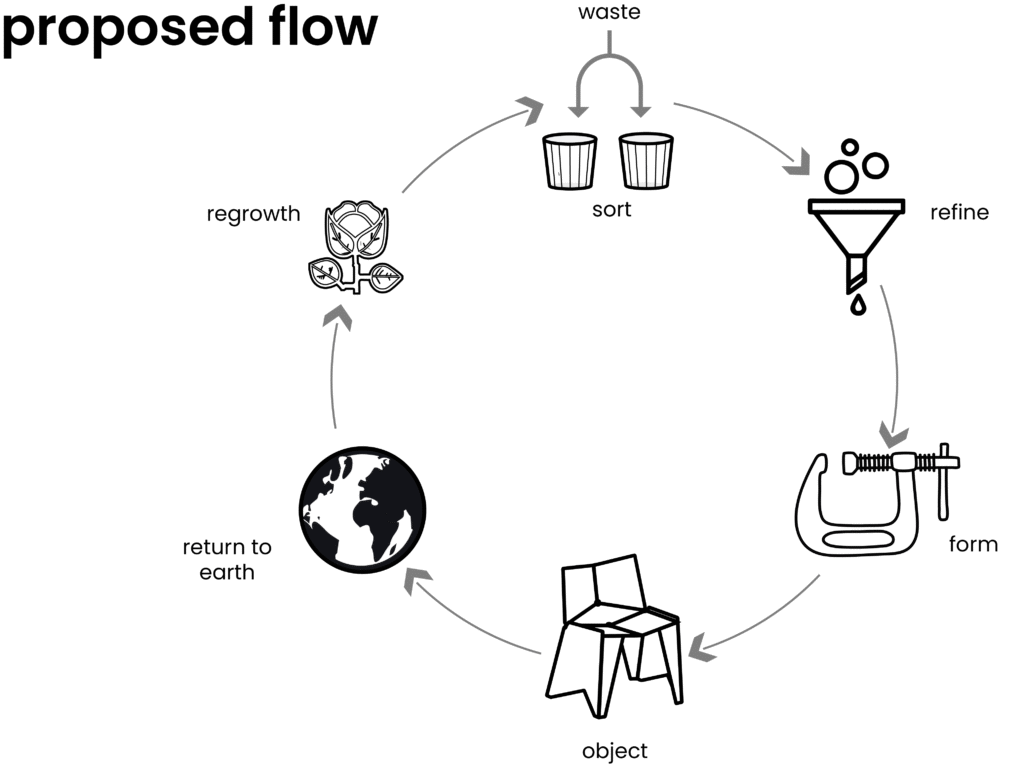
Within the proposed flow, “pulp!” would help divert waste and allow for faster and easier commercial and residential composting, allowing the nutrients to return to the soil rather than be lost in the landfill.
Development
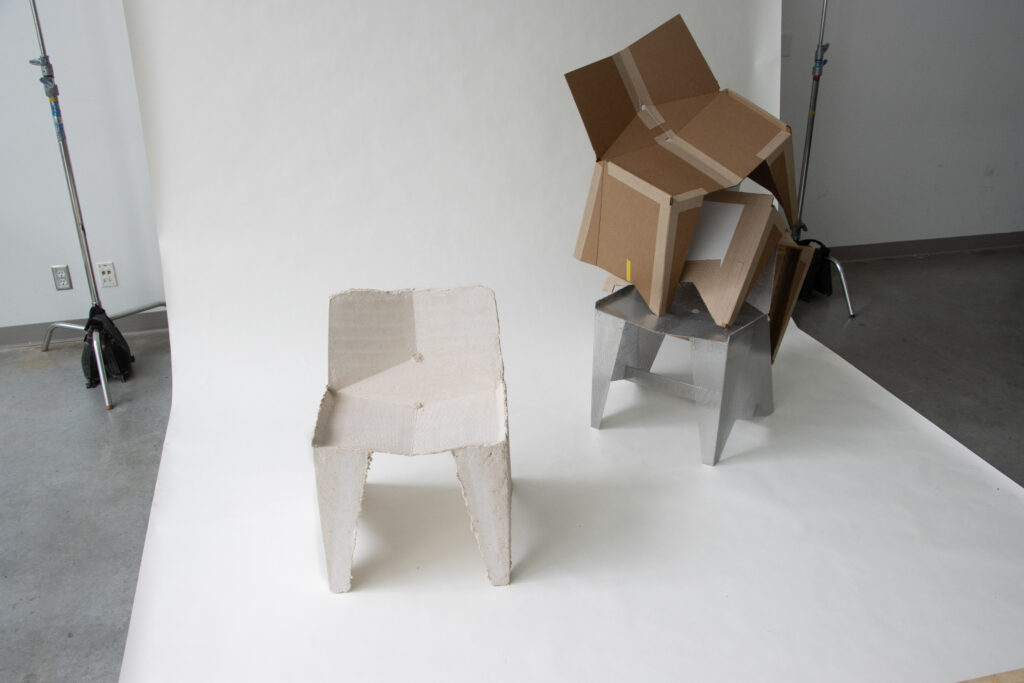
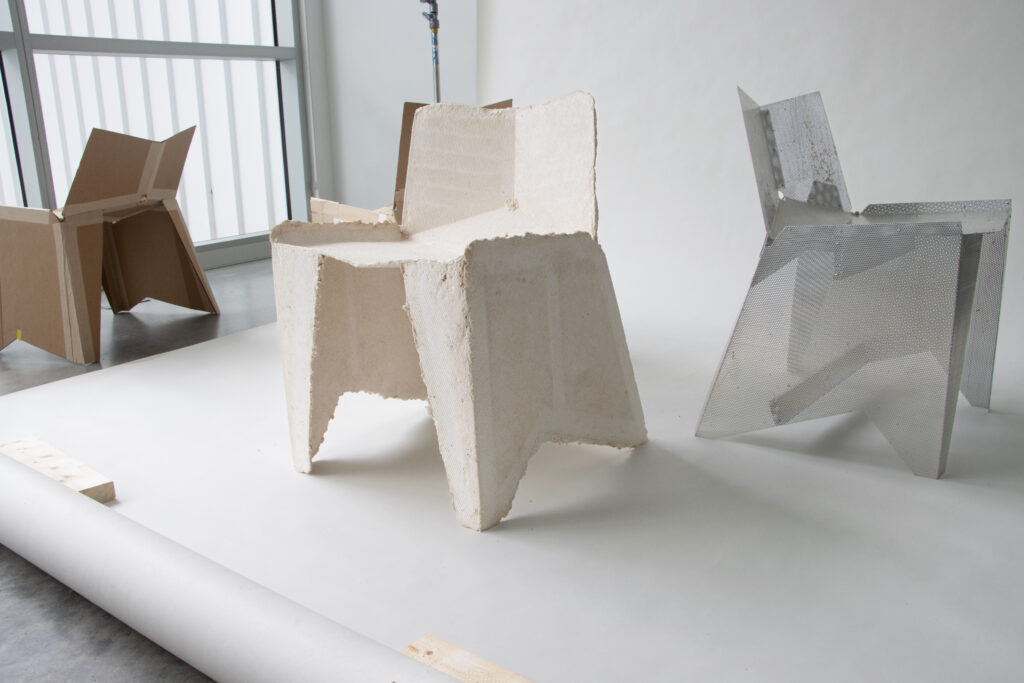
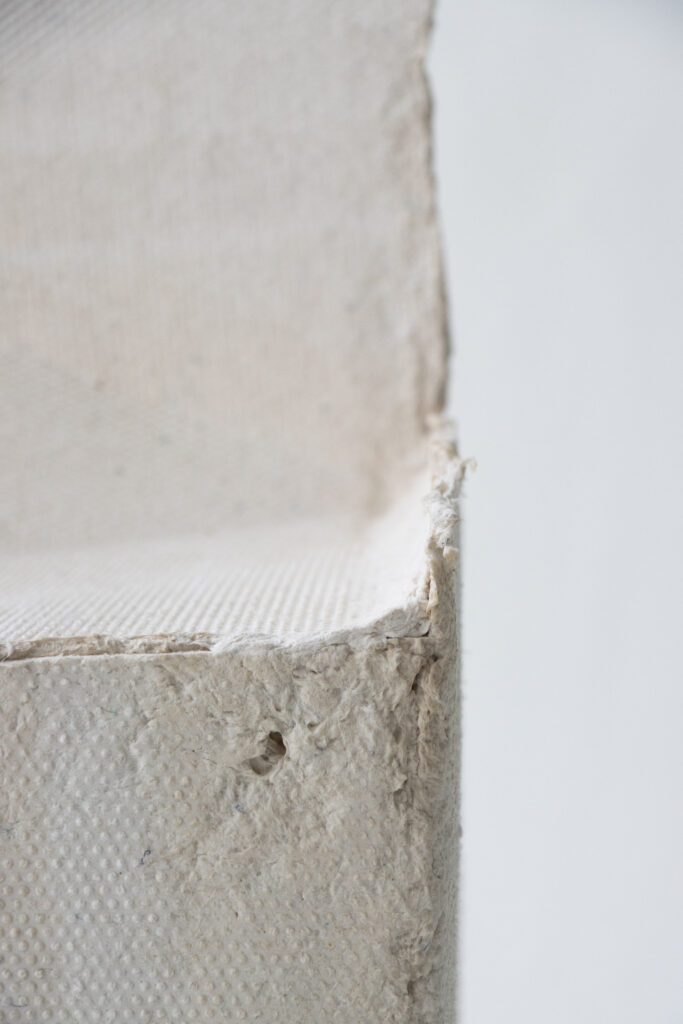
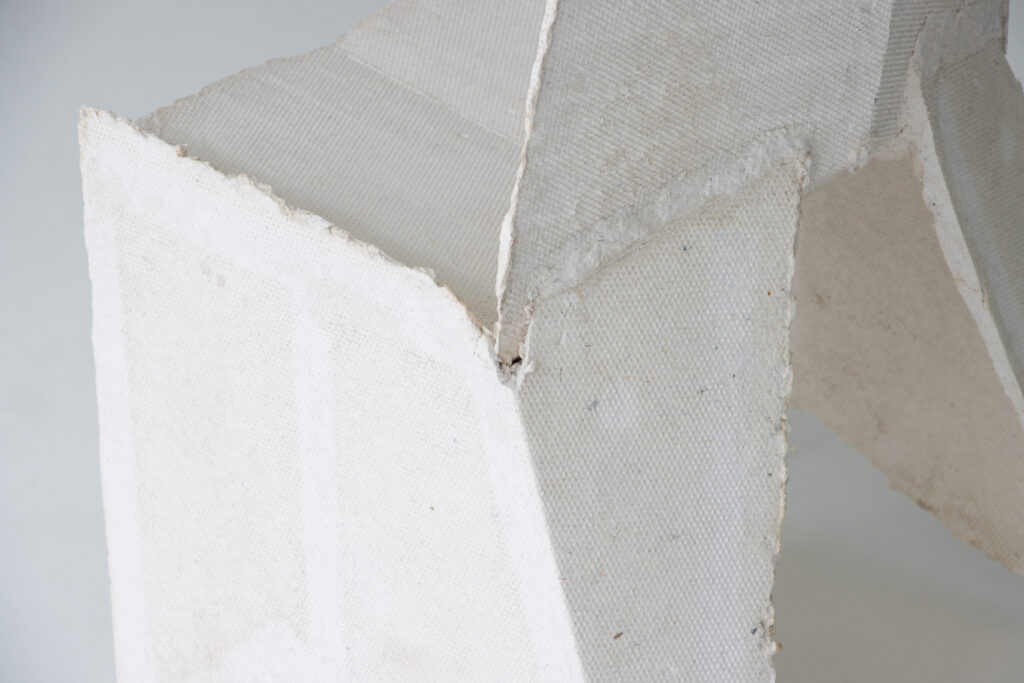
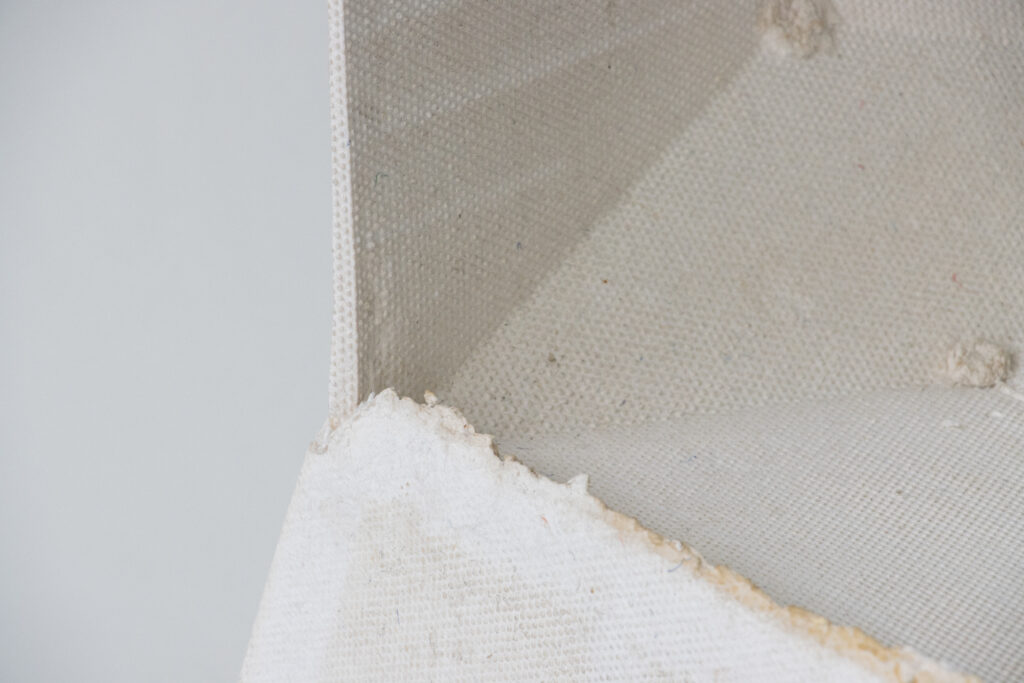
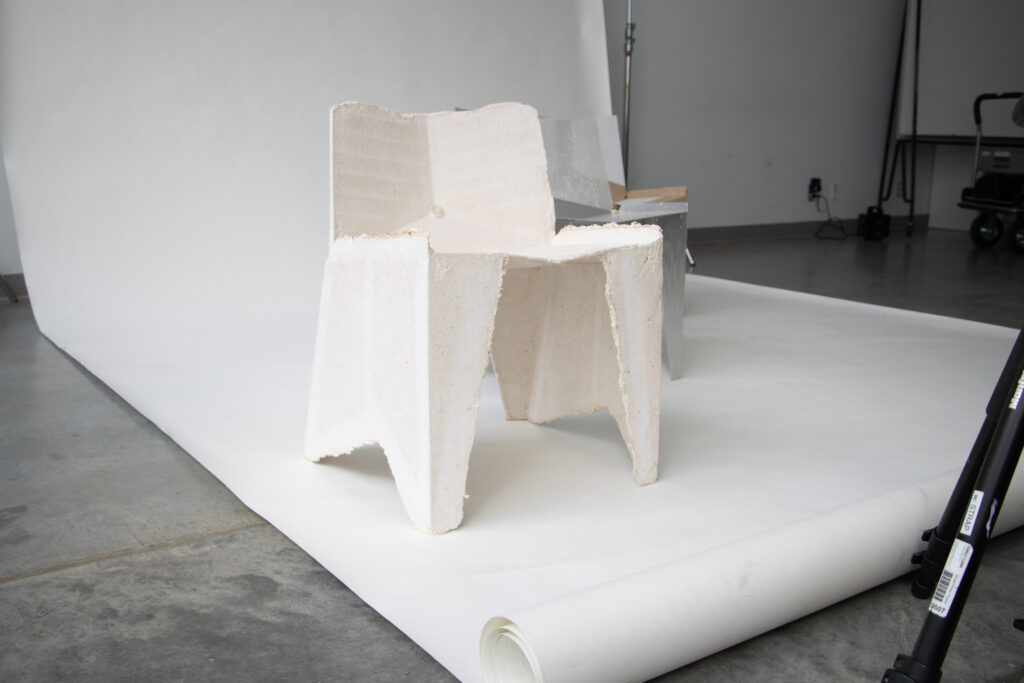
Taking both synthetic and natural textiles, I began to deconstruct and re-form, eventually settling on pulping and forming natural textile fibres. The chair is made entirely out of textiles and carboxymethyl cellulose (CMC), a wood-based, biodegradable binder. As it stands, it will quickly decompose in both home and commercial composting facilities, allowing the nutrients of the fibre to return to the earth.
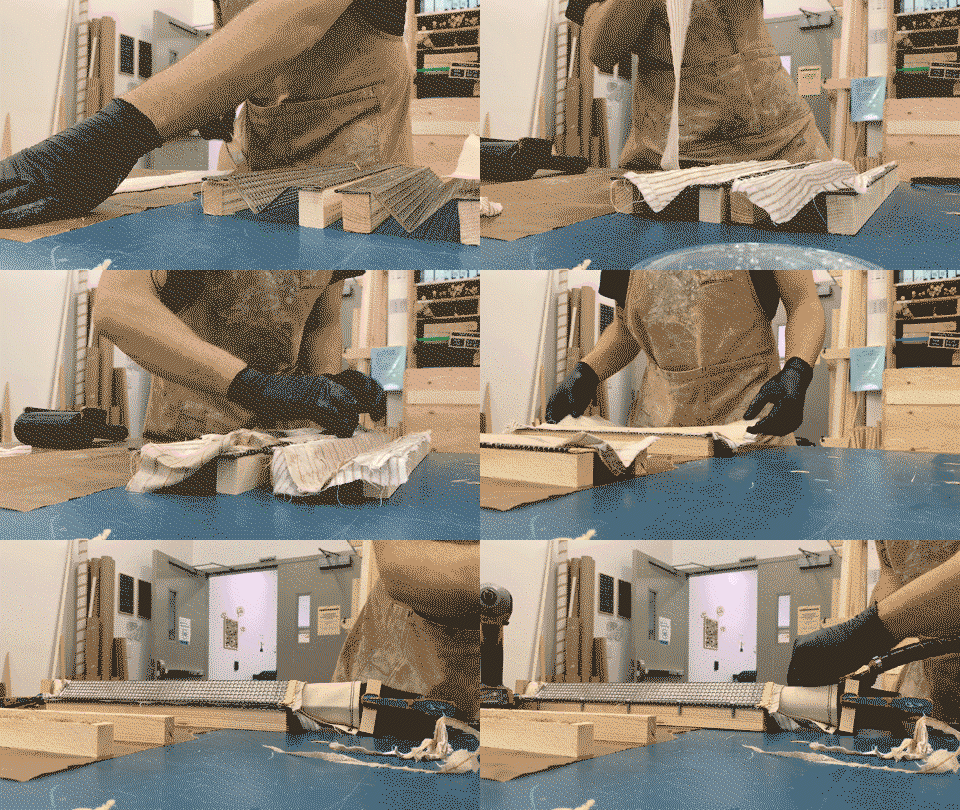
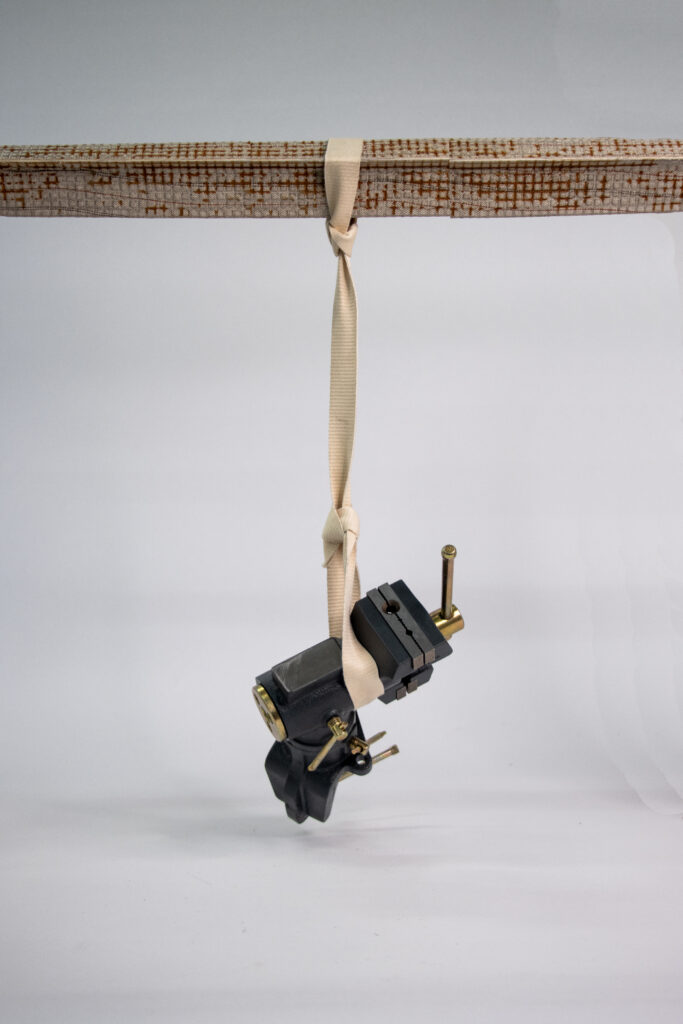
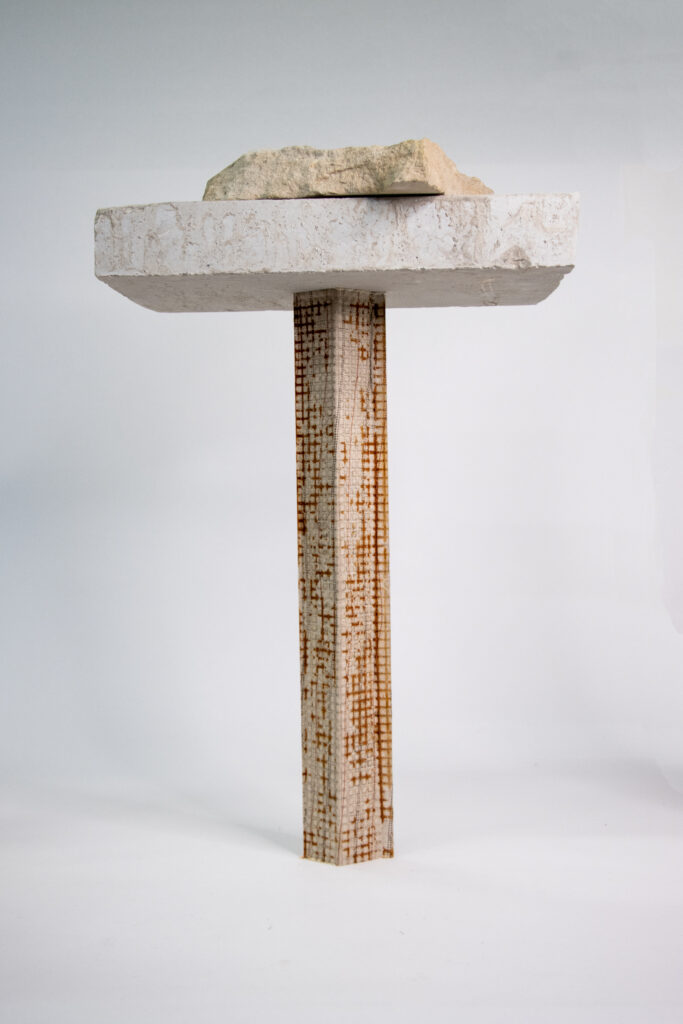
I began with strips of fabric and CMC and developed a moulding system which allowed me to create tubular forms. These forms had a substantial amount of compressive and shear strength, but due to limitations within the process, I realized that this was not a viable production method.
Pulping
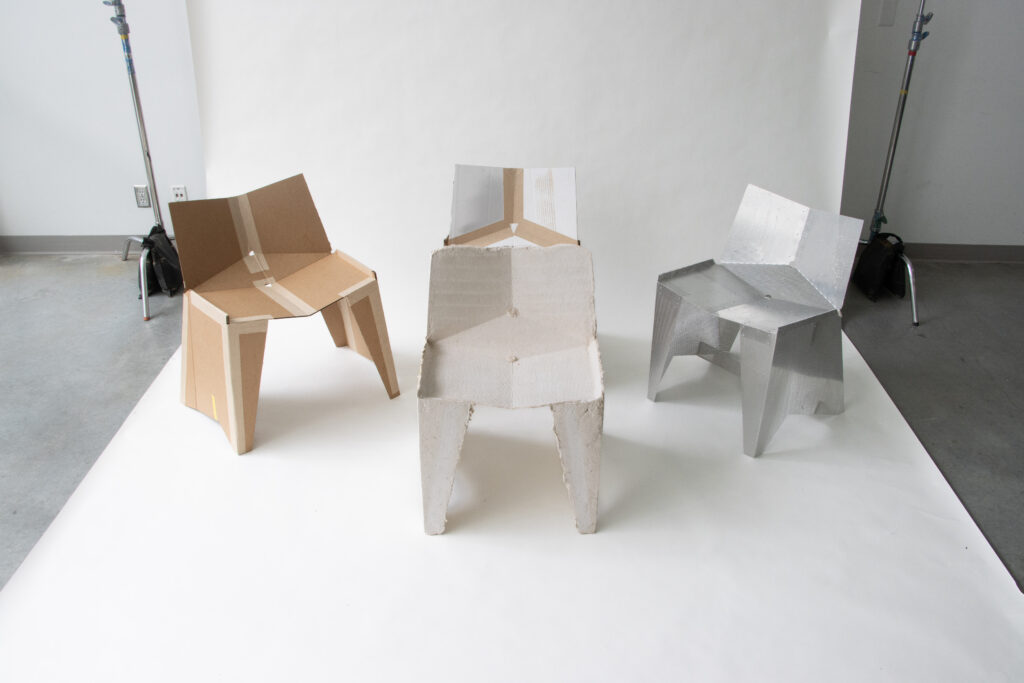
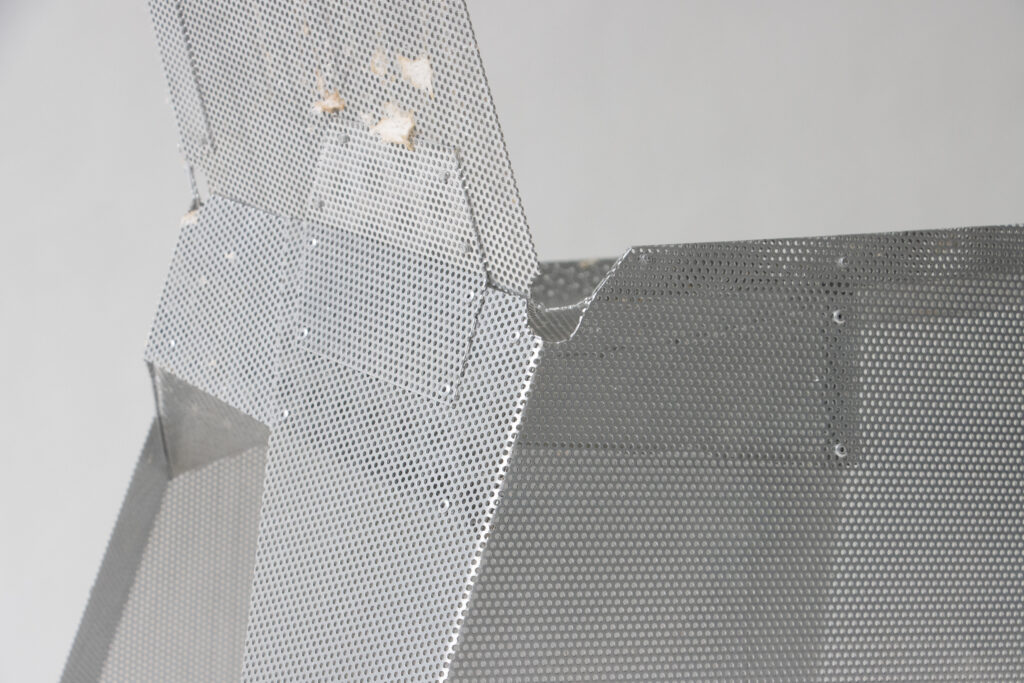
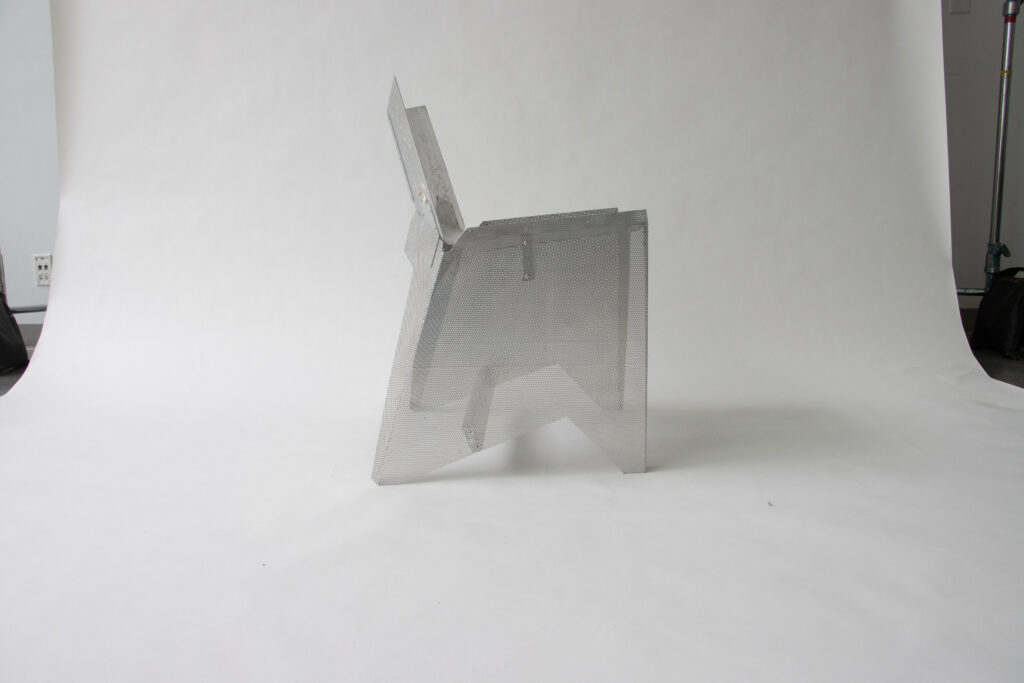
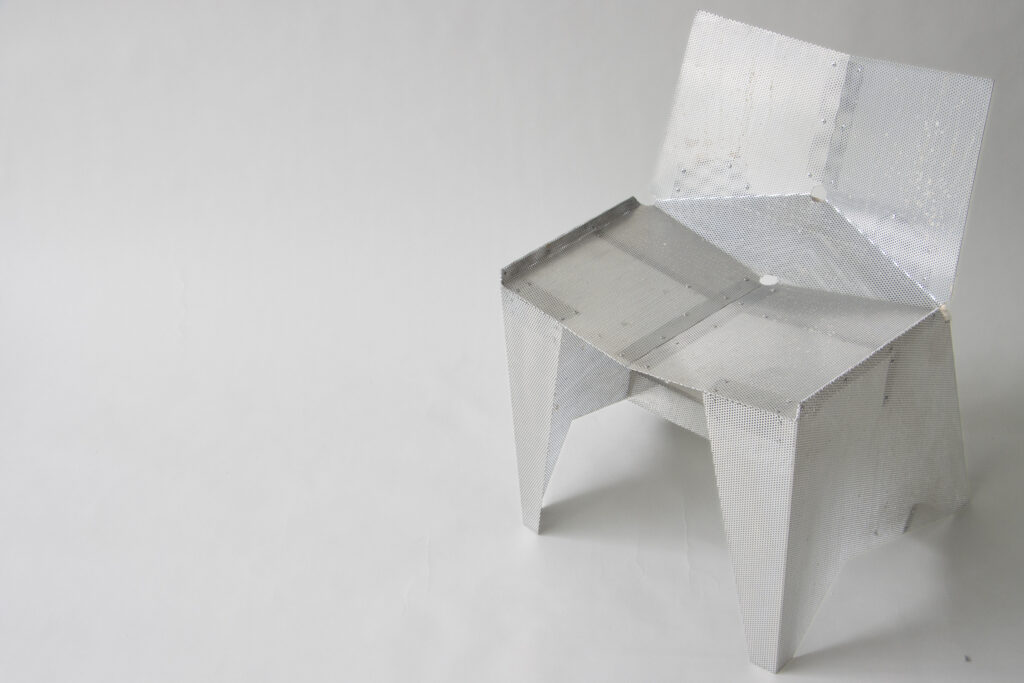
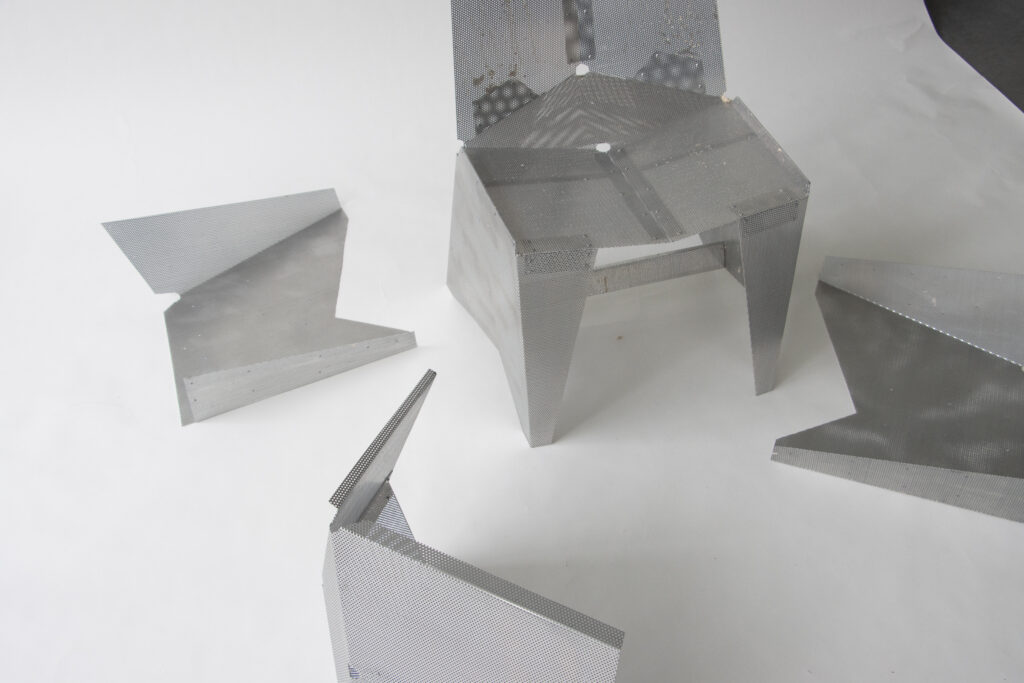
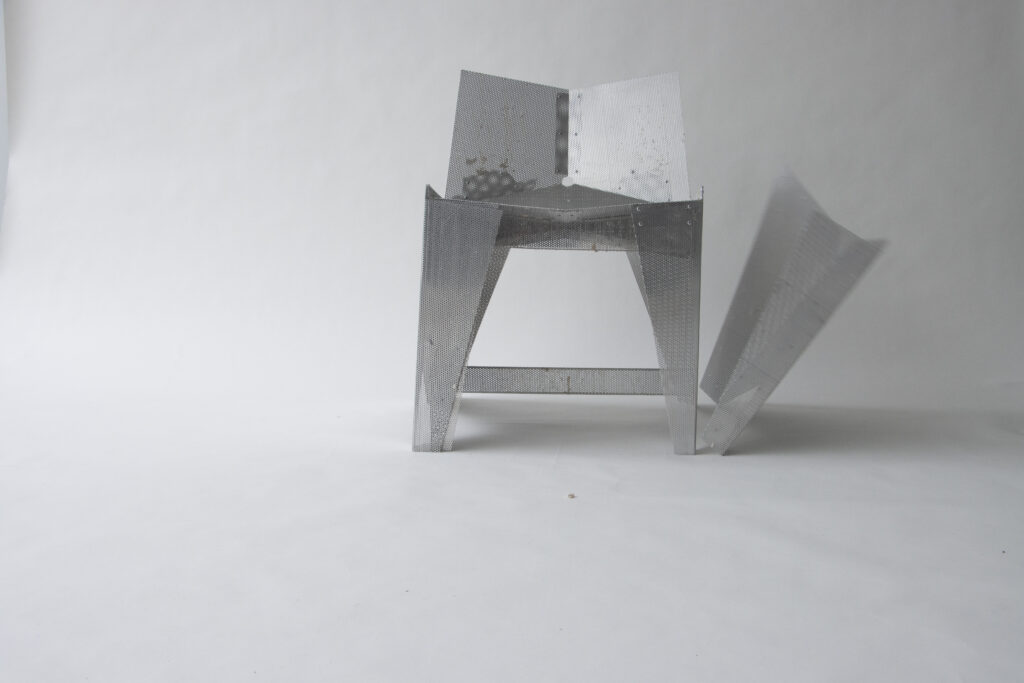
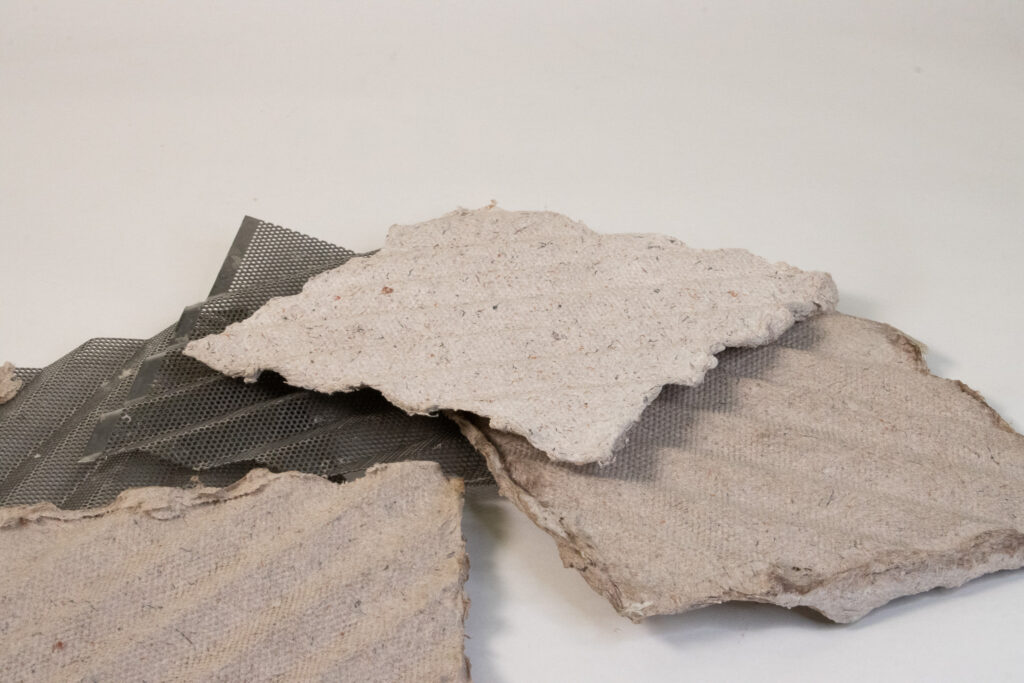
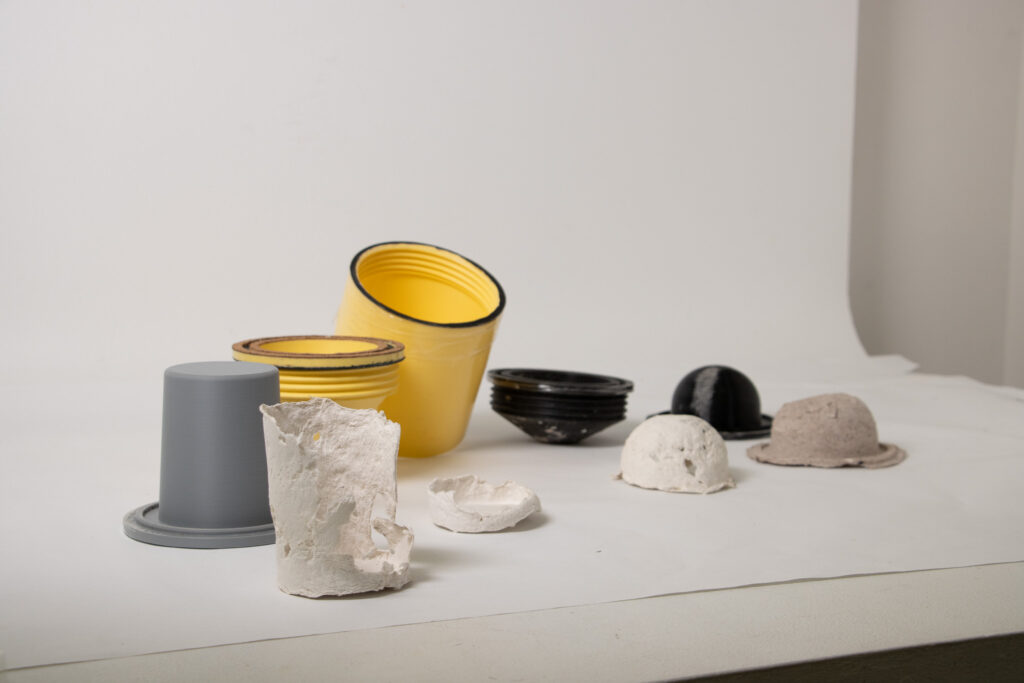
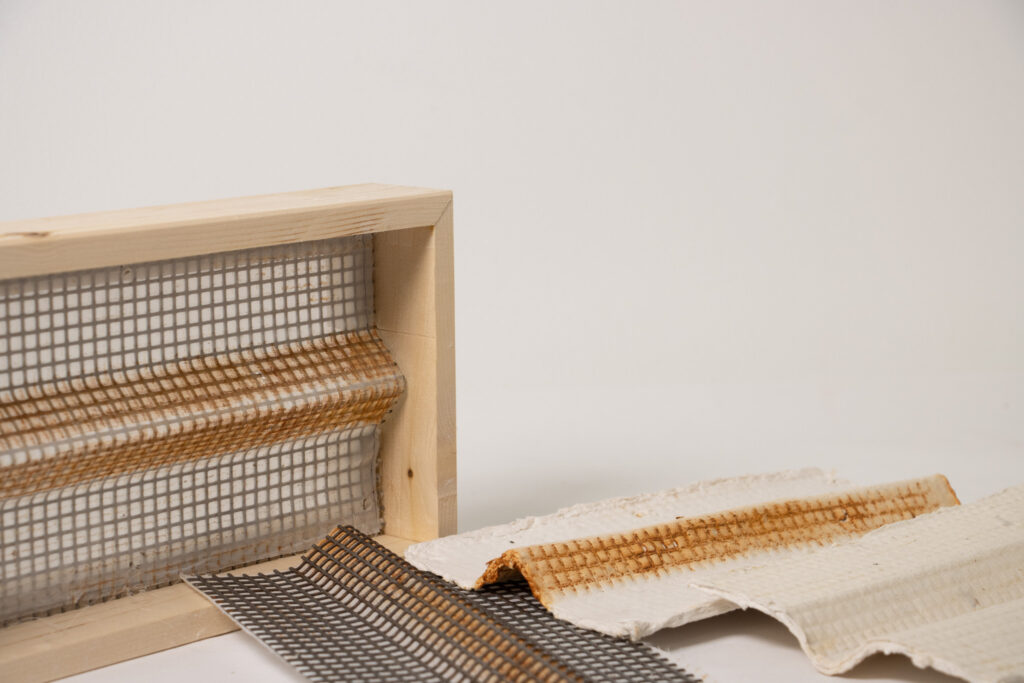
The initial tubular forms were successful but limited in form; pulp, a semi-fluid, could allow me to expand and create more complex forms. I began with traditional papermaking techniques to better understand the limits of textile pulp and moved rapidly into three-dimensional form using different moulding techniques. Through rapid experimentation, I found that perforated metal forms were the most successful method to aid drying and support of the pulp, allowing for complex and large forms.
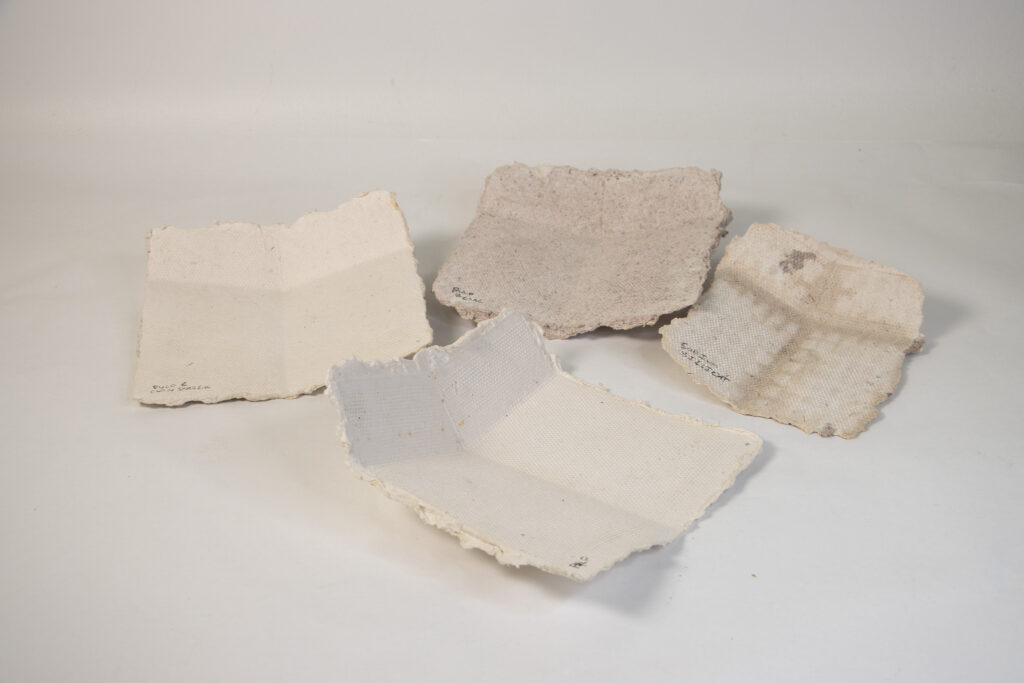
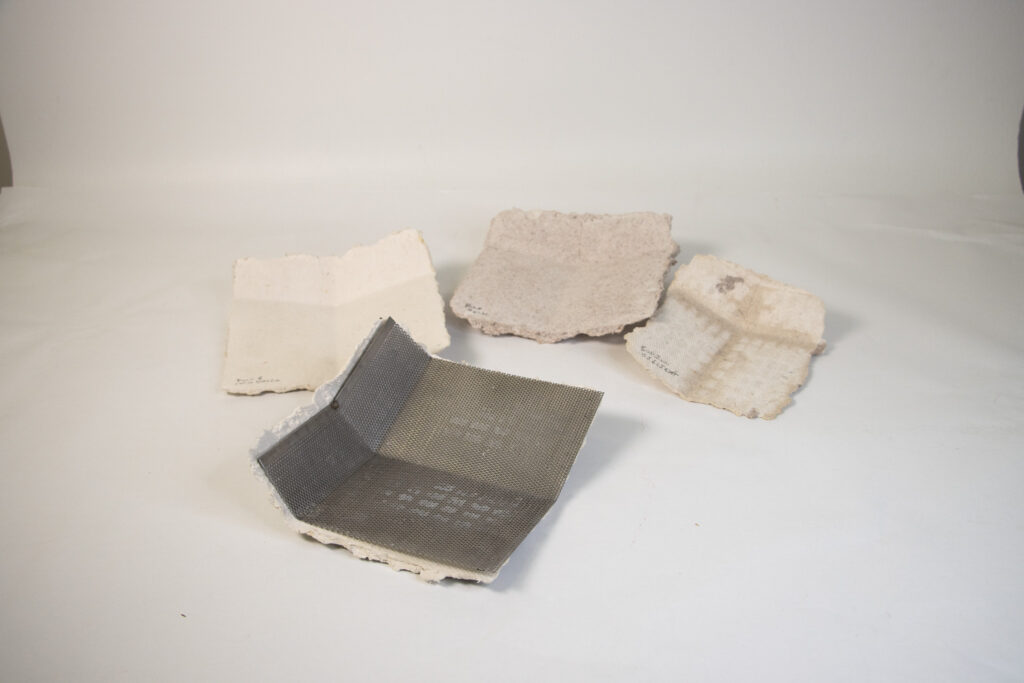
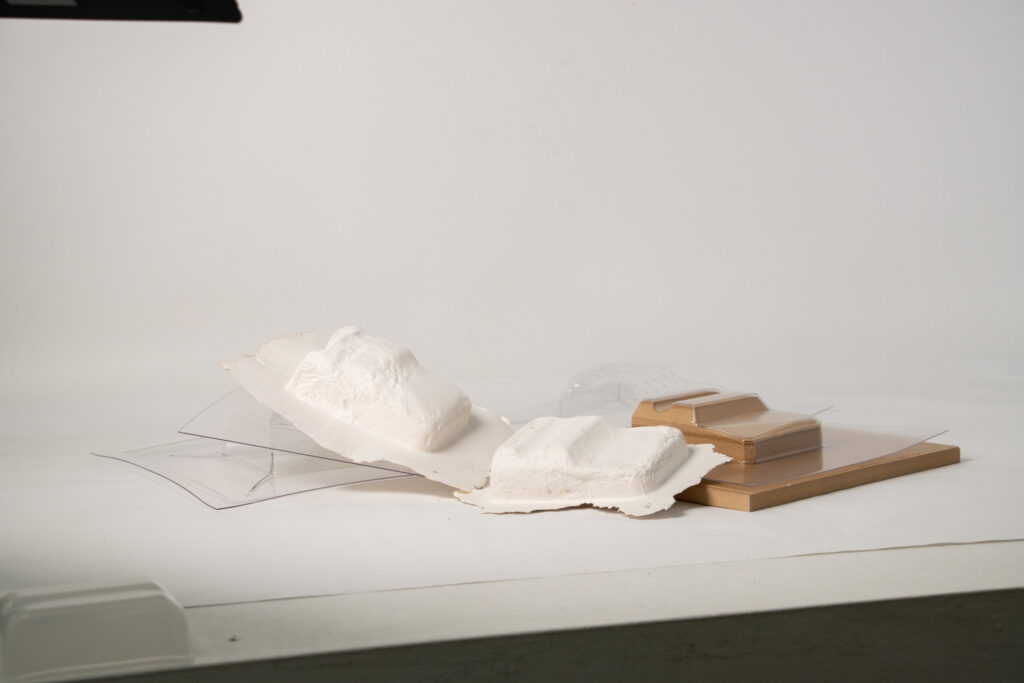
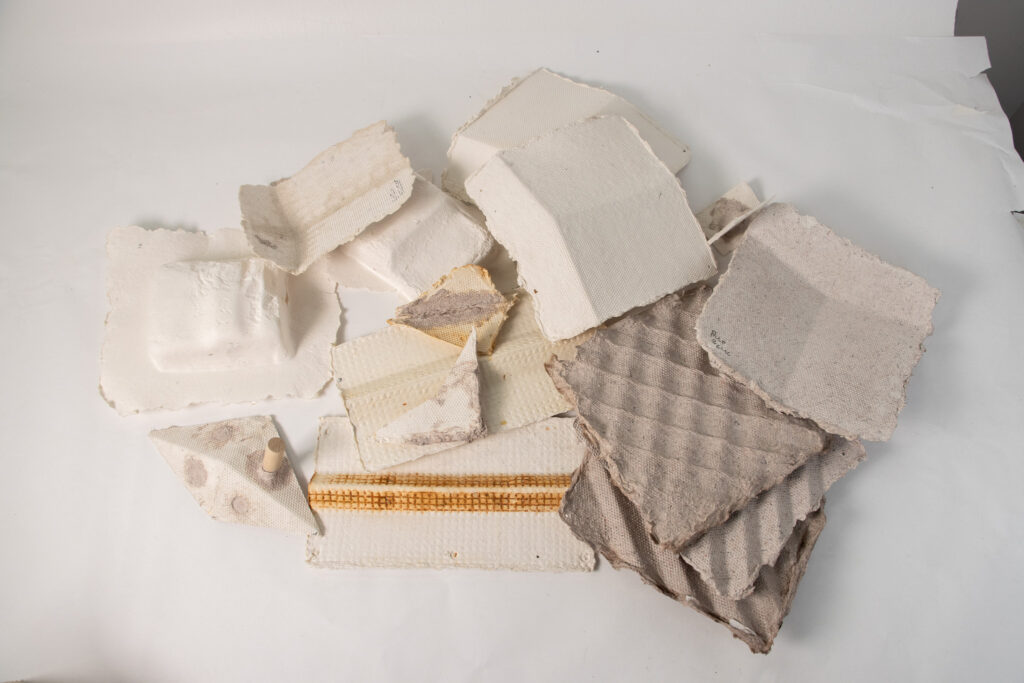
How could I communicate what this material could be just through samples?
Could I eliminate the question of what is it? And instead have the question: it’s made of what?
Chair
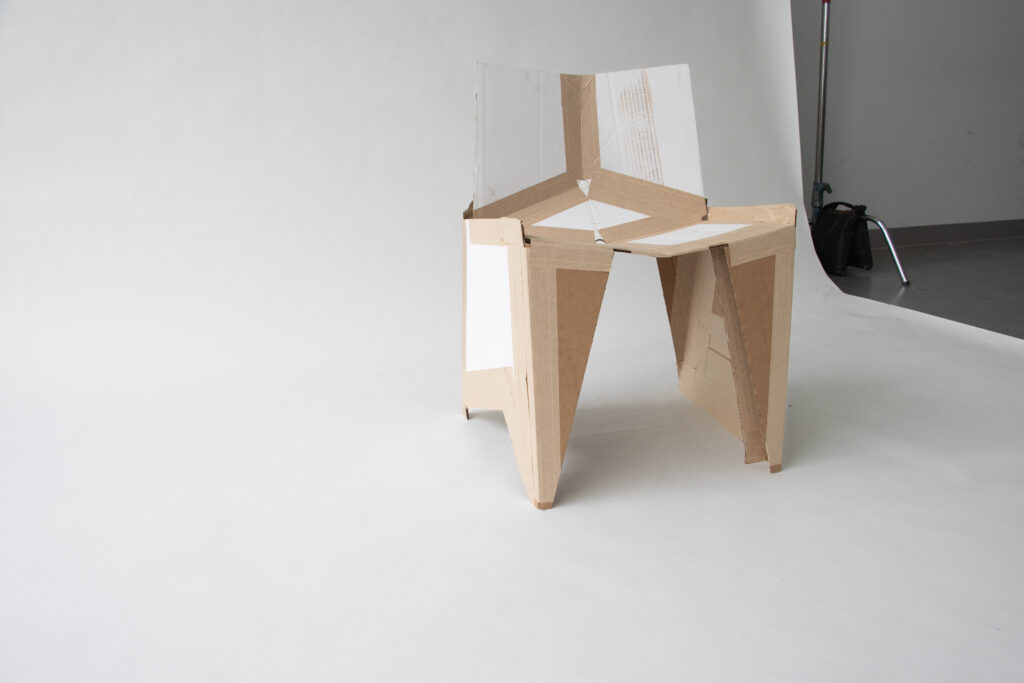
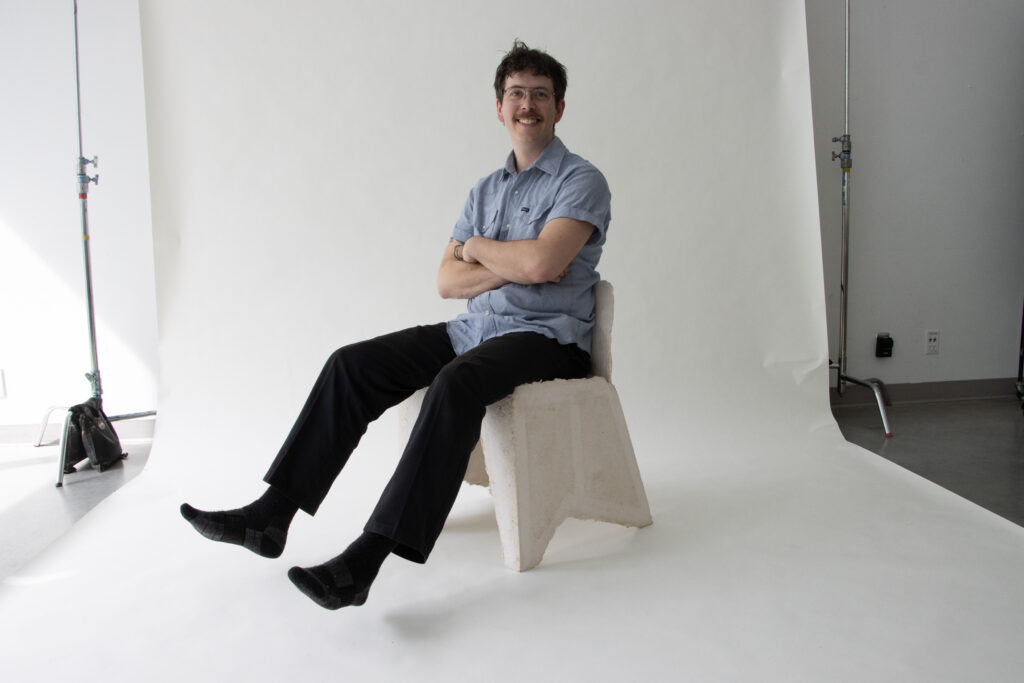
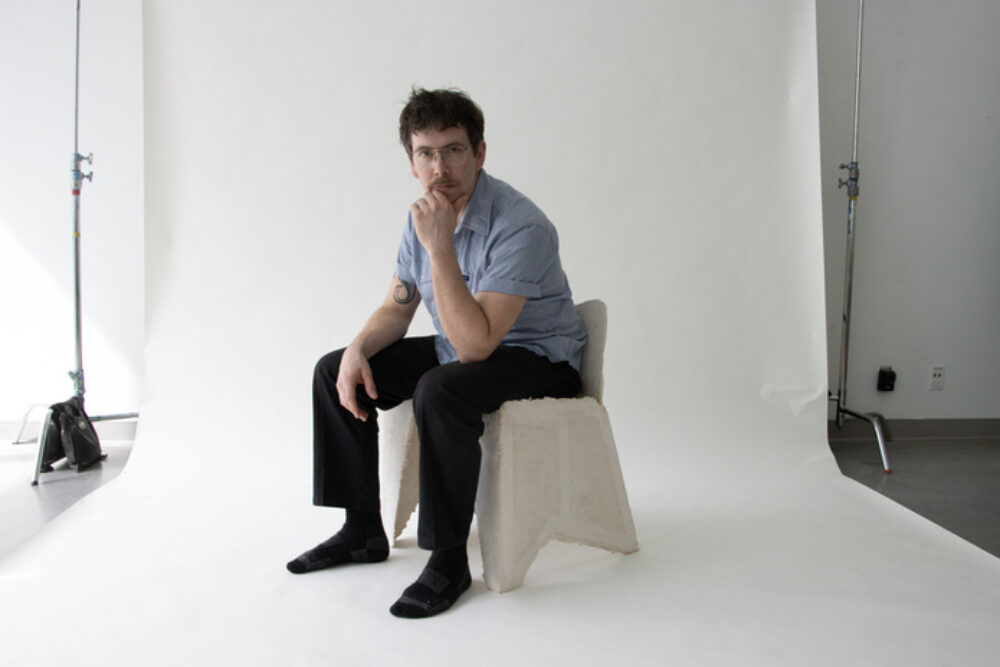
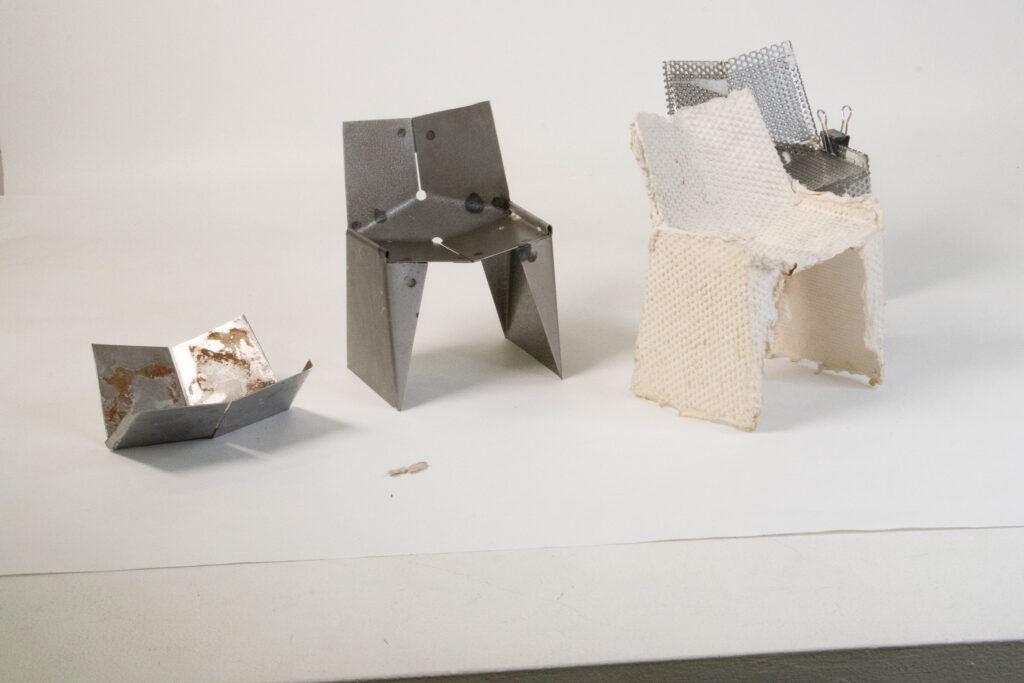
I worked through material, scale and fidelity to move the prototype quickly from development to production. I modeled the chair in CAD which allowed me to quickly make changes and produce a refined pattern which I then applied to ¼ scale metal prototypes. I quickly learned that my pattern was technically possible but needed some adjustments to be realized with the tooling available. I applied the pattern to full scale, adjusted the fit with cardboard models and was ready to make the final mould from perforated metal.