Grounded: An immersion into non-profit design
Lucas Balthazar
See it On Campus: Level 2
From the main entrance, turn right and follow the exhibition hall straight until the furthest room.
Visitor Info
What does it take to make design sustainable?
Pursuing circularity of resources is an important strategy to reduce the impact of production. But how far can that take us?
The idea of circularity can sometimes create the impression that constant production is made possible by achieving full circularity of resources. However, when production is driven by the market needs of ever-growing profits, it fails to modulate the total universe of resources being used. Even with 100% efficiency, over time, our sustainable strategy to reuse resources will be pushed to consume all resources available.
Grounded is a project where I decided to explore not only circularity, but also self-reliability. A form of protest by avoidance of mass-consumption, where I learn how to be sustainable by harvesting and utilizing the resources myself, learning about the processes, directly observing their impact, and building my designs
literally,
from the ground up.
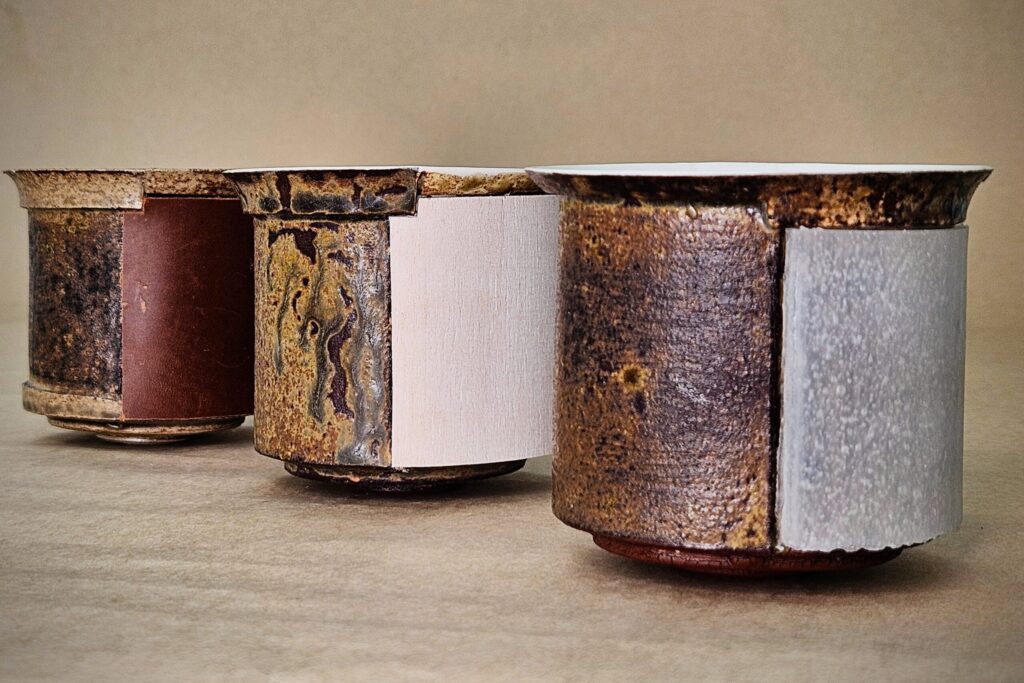
Grounded started as a project revolving around the use of wild clay to produce ceramic cups, designed to be used in outdoors scenarios, when in communion with nature.
Material:
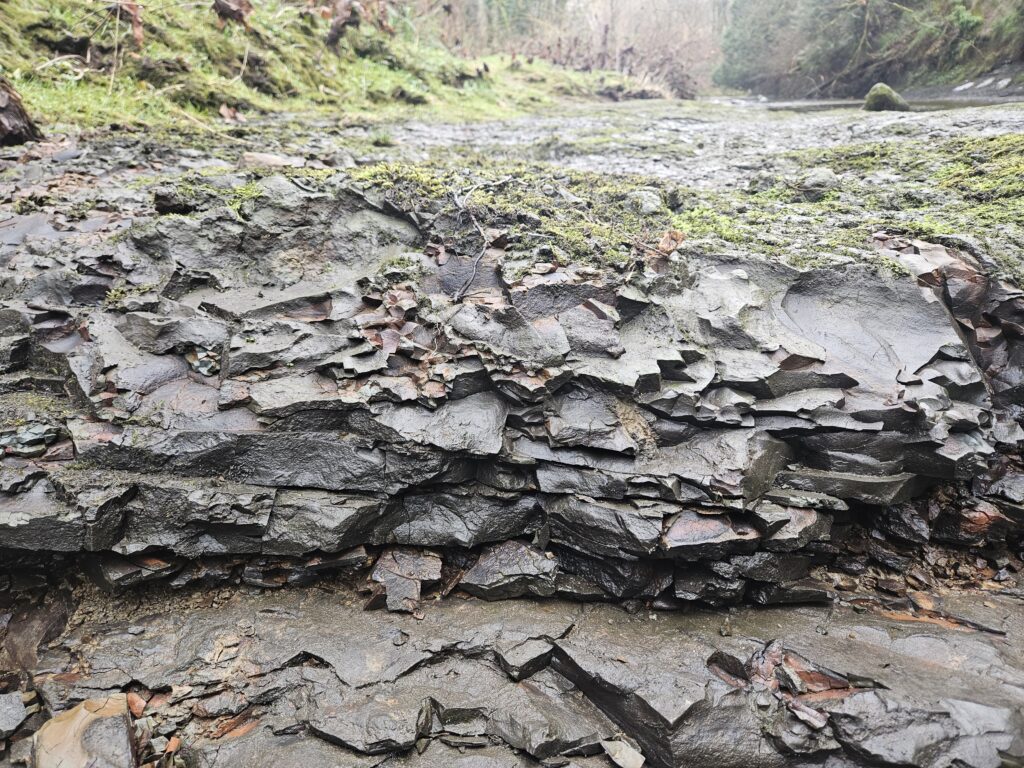
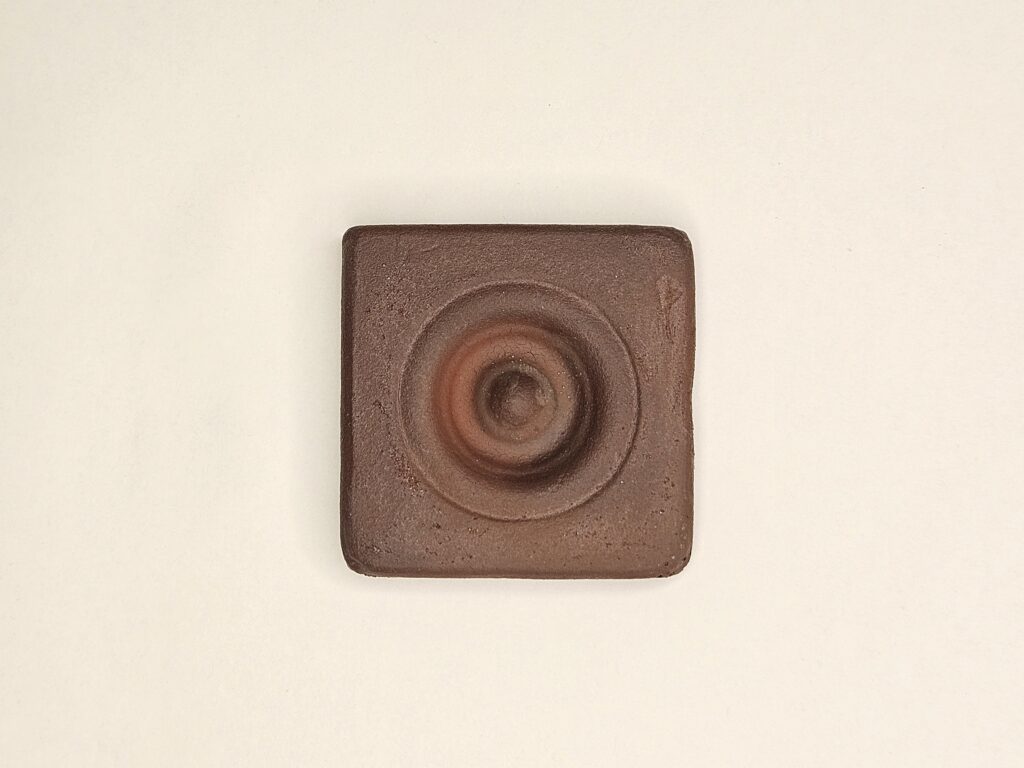
Using previous provincial geological studies as guide, I was able to find a local source of shale, a clay-rich form of sedimentary rock that can be made into viable ceramics material if properly processed.
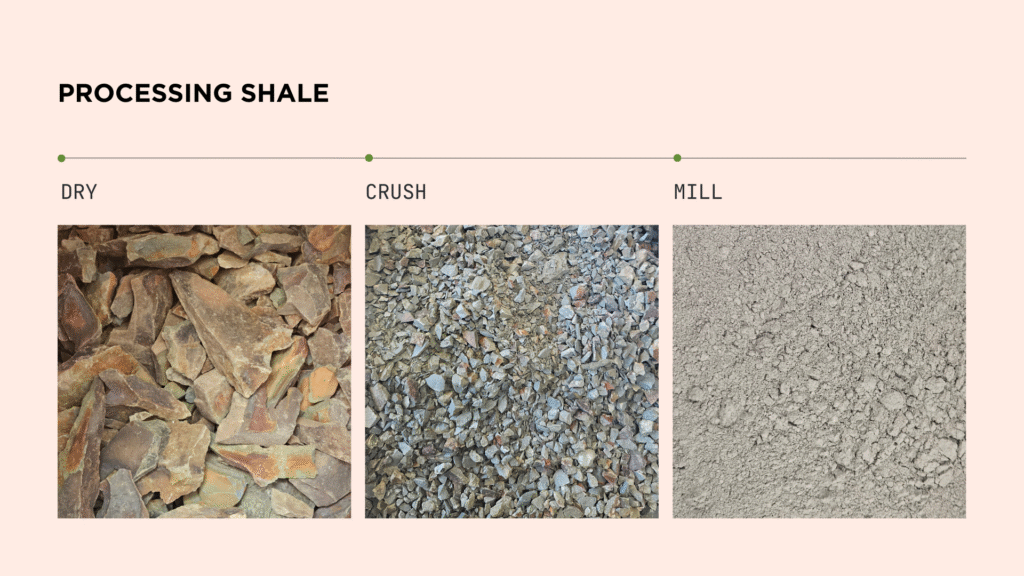
The shale can then be reconstituted into a clay-like body by adding approx. 20-25% water.
Firing tests results indicated the wild shale was an iron-rich viable stoneware material at Cone 6 (2.45% Porosity, 19-20% Shrinkage) and vitrified at Cone 10.
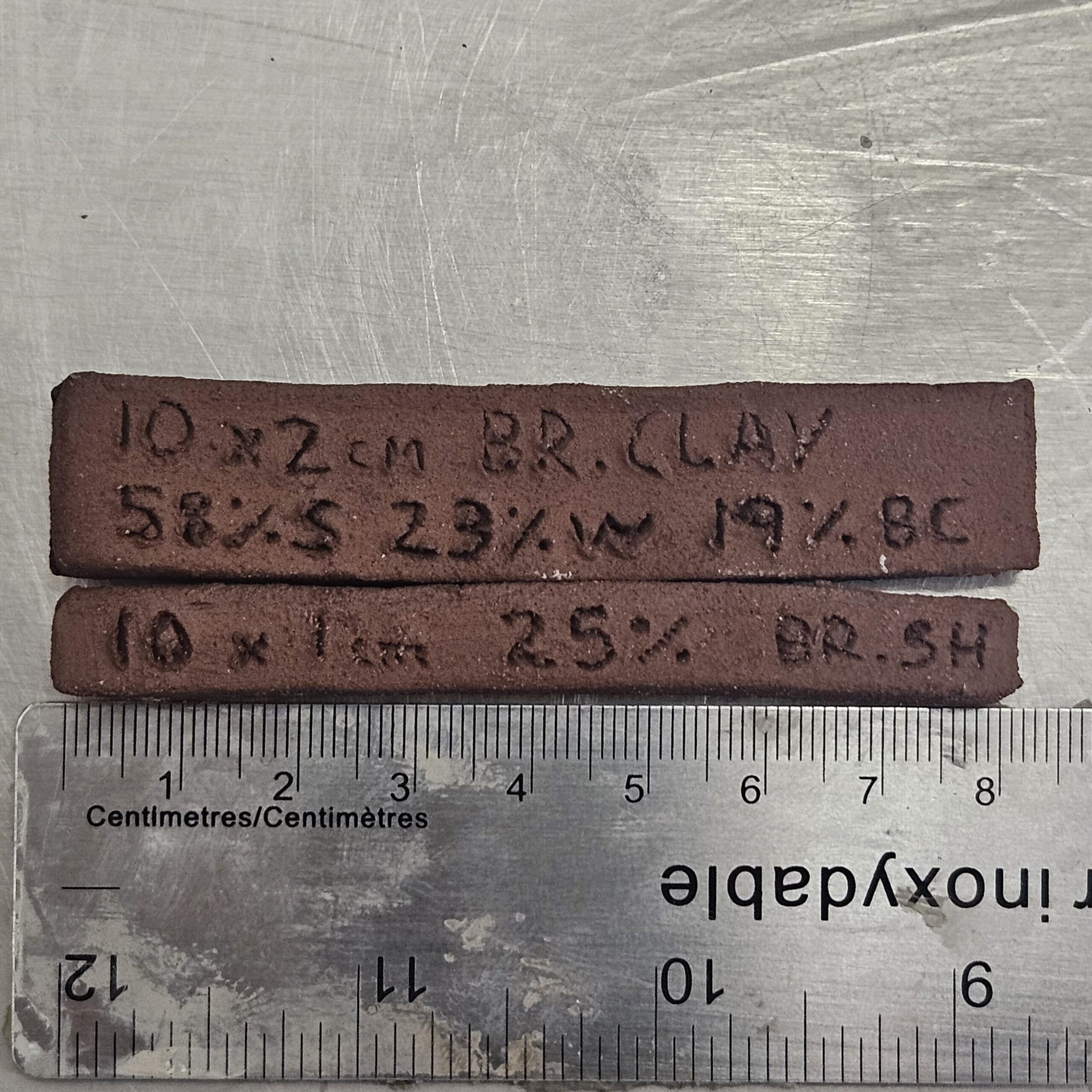
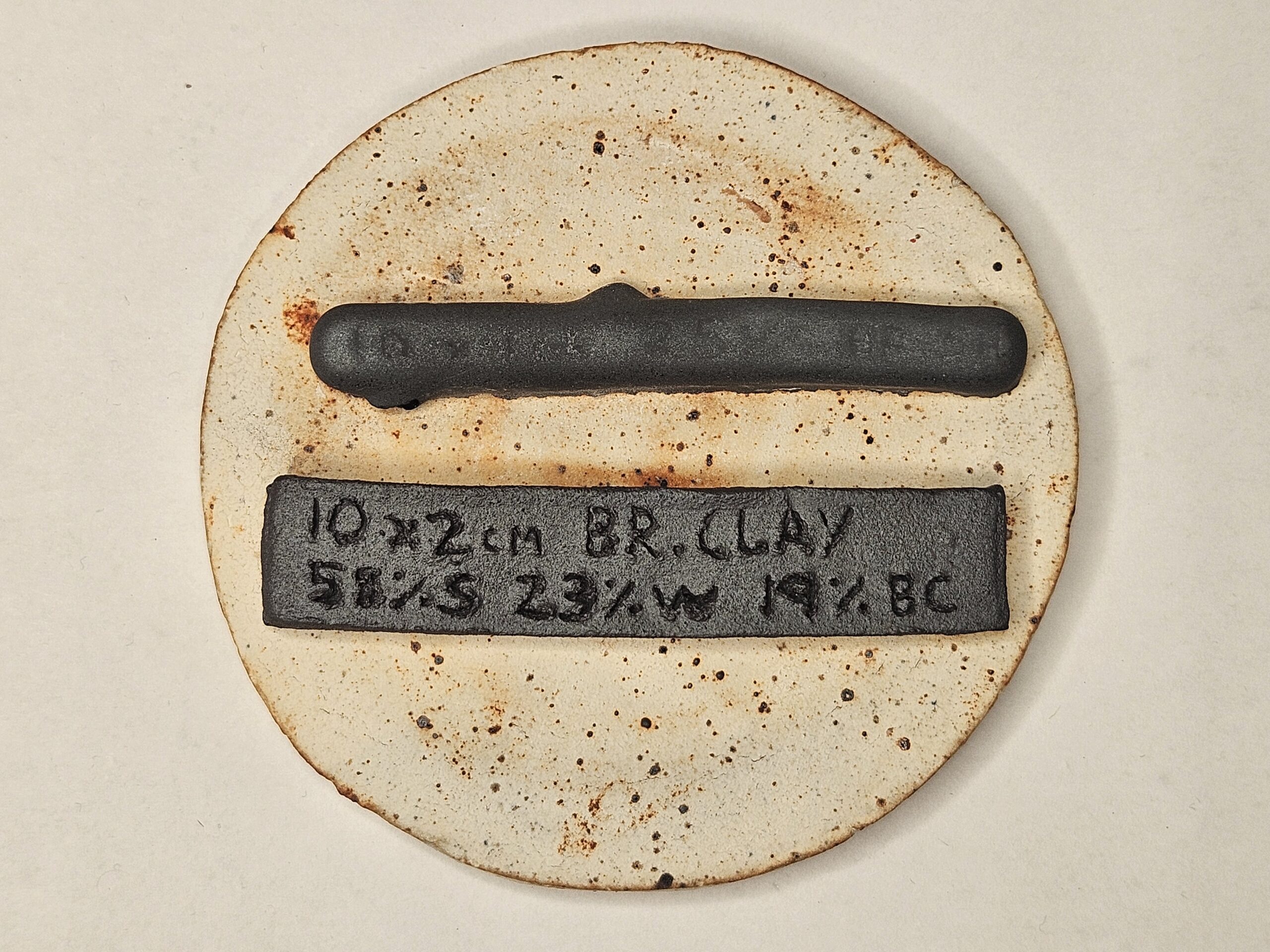
To avoid having to supplement the shale with other compounds to make it into a workable, plastic body suitable for wheel-throwing, I decided to develop the shale into a casting slip and terra sigillata that could be applied to other clay bodies.
Circularity:
In this project I had the opportunity of reusing a material that is an abundant by-product of the food supply chain and transform it back into artefacts used in such rituals.
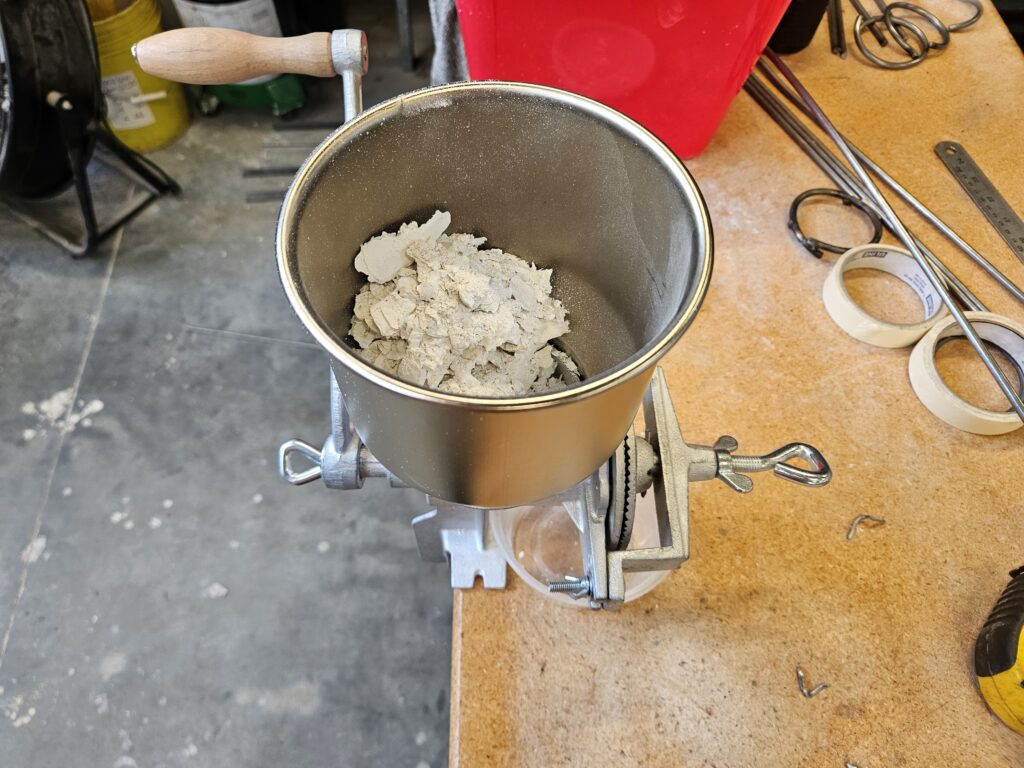
The practice of using ground up oyster shells as component in ceramics and other building materials is an ancestral knowledge shared by many cultures.
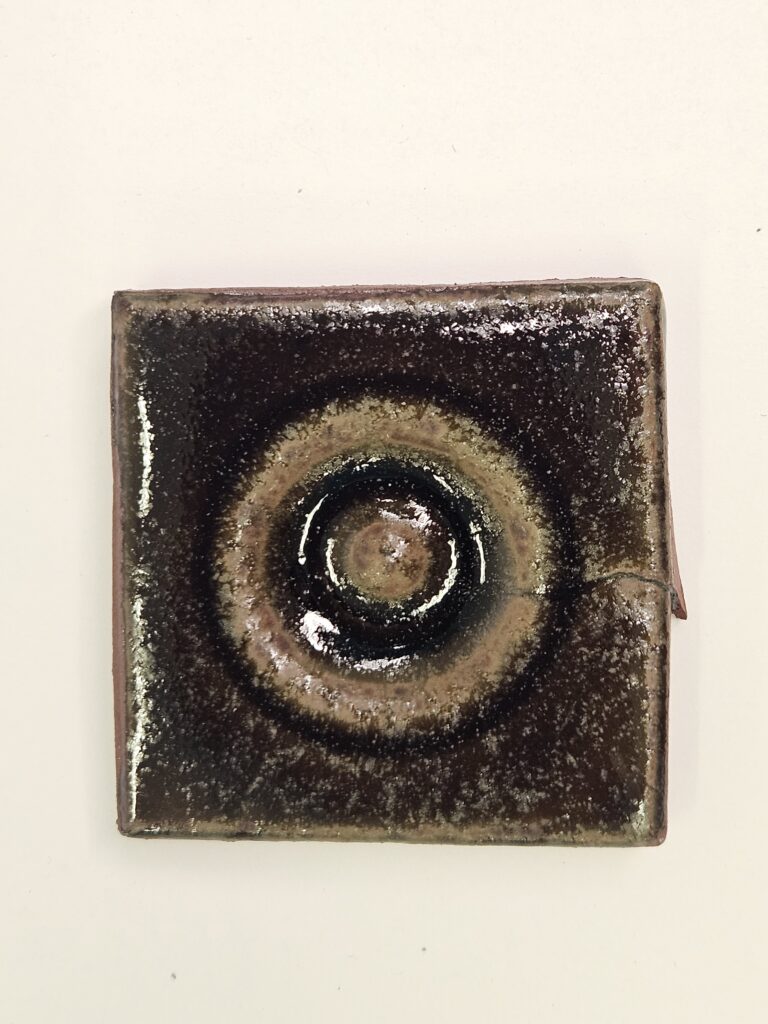
Here, I utilized it as one of the main components in the glaze recipe:
- Shale 35%
- Boron 22%
- Oysters 20%
- Silica 8%
- Feldspar 15%
Design:
For a project invested in environmental consciousness, I thought appropriate to use the natural resource in a context where nature is being celebrated. I decided to design tableware that would reflect the necessities of a outdoors use-scenario, when often a table is not available. Features include:
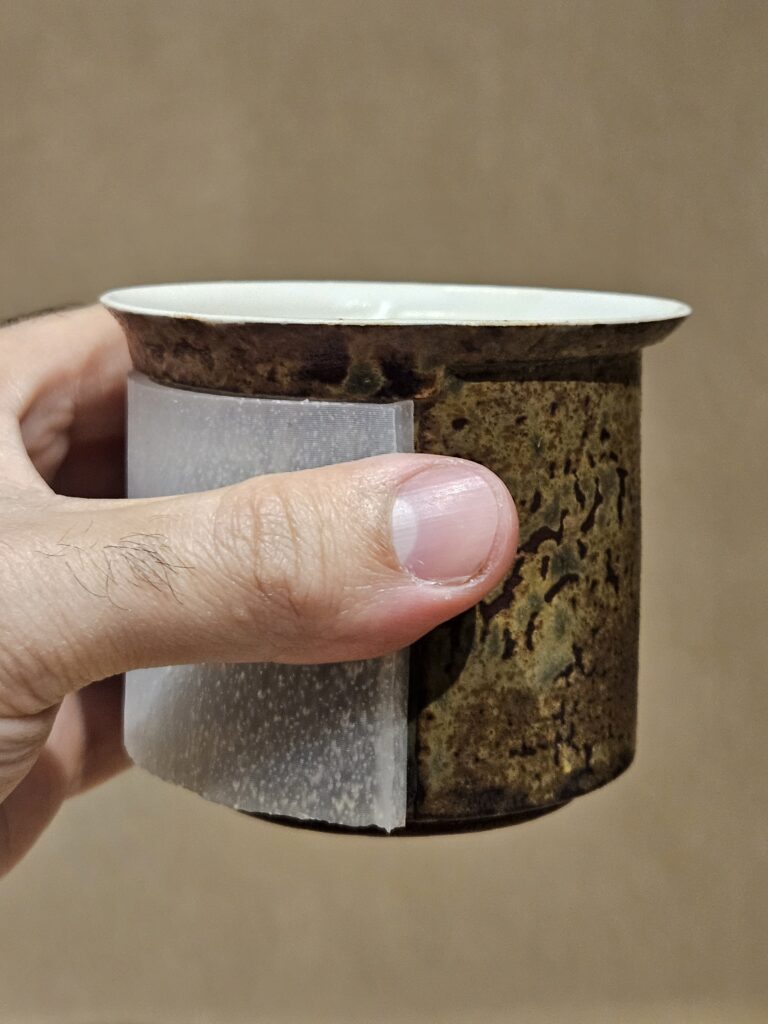
Safe to hold at high temperatures, with the addition of an external half-sleeve made of heat-safe material.
Angular slanted foot that self-balances the cup in uneven surfaces;
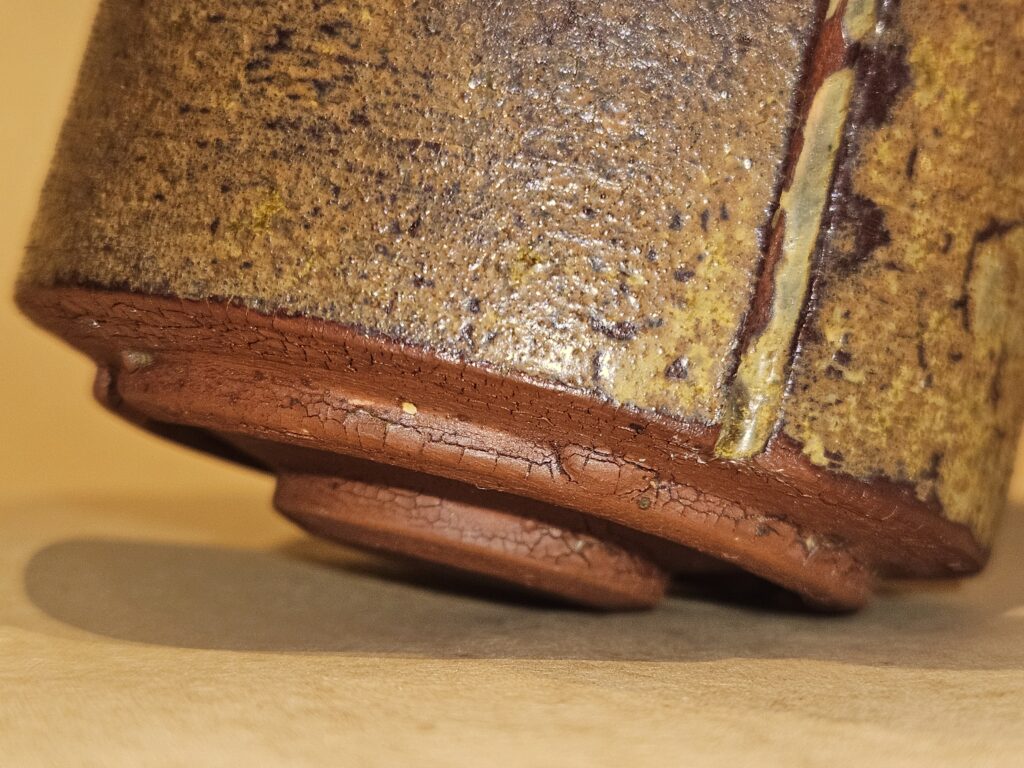
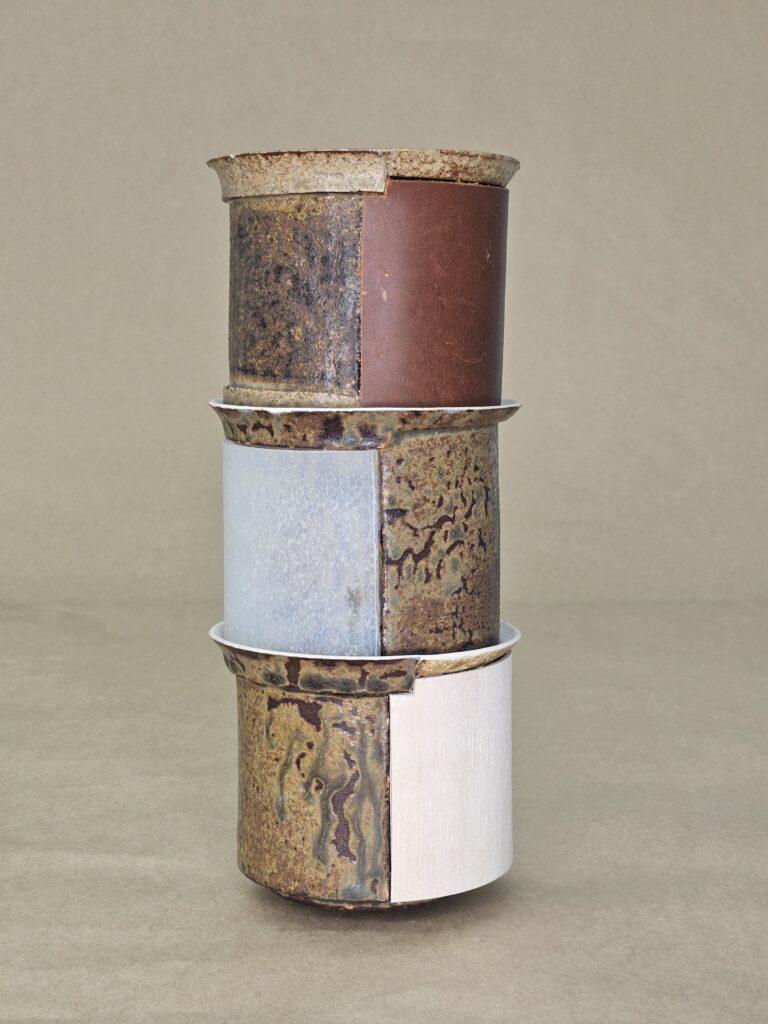
Light and portable, at 8cm diameter x 8.5cm height, 220ml internal volume and approx. 50g.
Reciprocity
We need to change our view on our connection with those natural resources. For most of human history, indigenous cultures held the understanding that we are not owners of these resources, we are their protectors. We need to change how we perceive our role in nature.
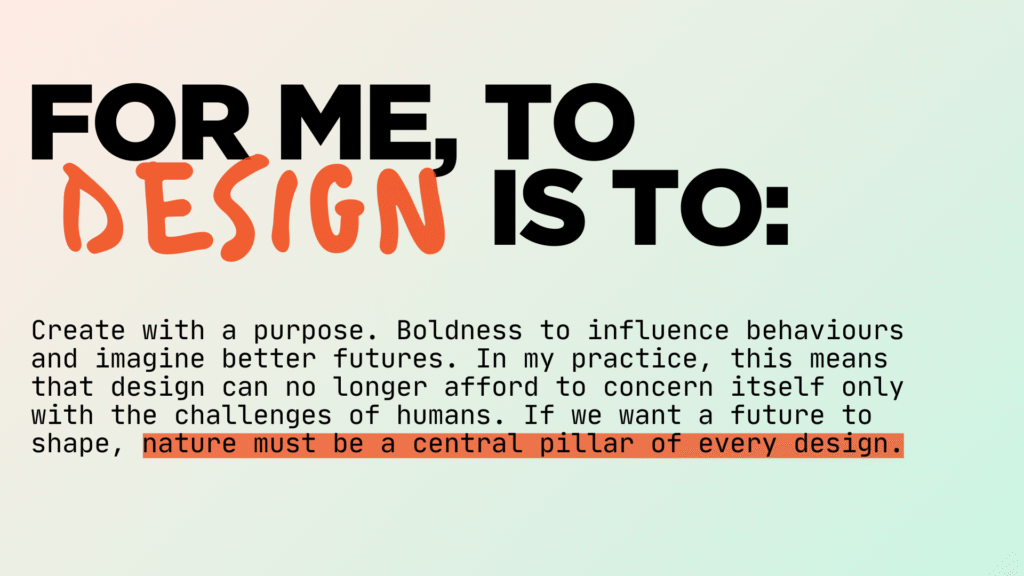
What if design was made for integration of humans and nature rather than segregation? What if instead of destroying less, we design to multiply and heal? What if design taught us to care and to feel an integral part of nature? A protector? A caregiver?
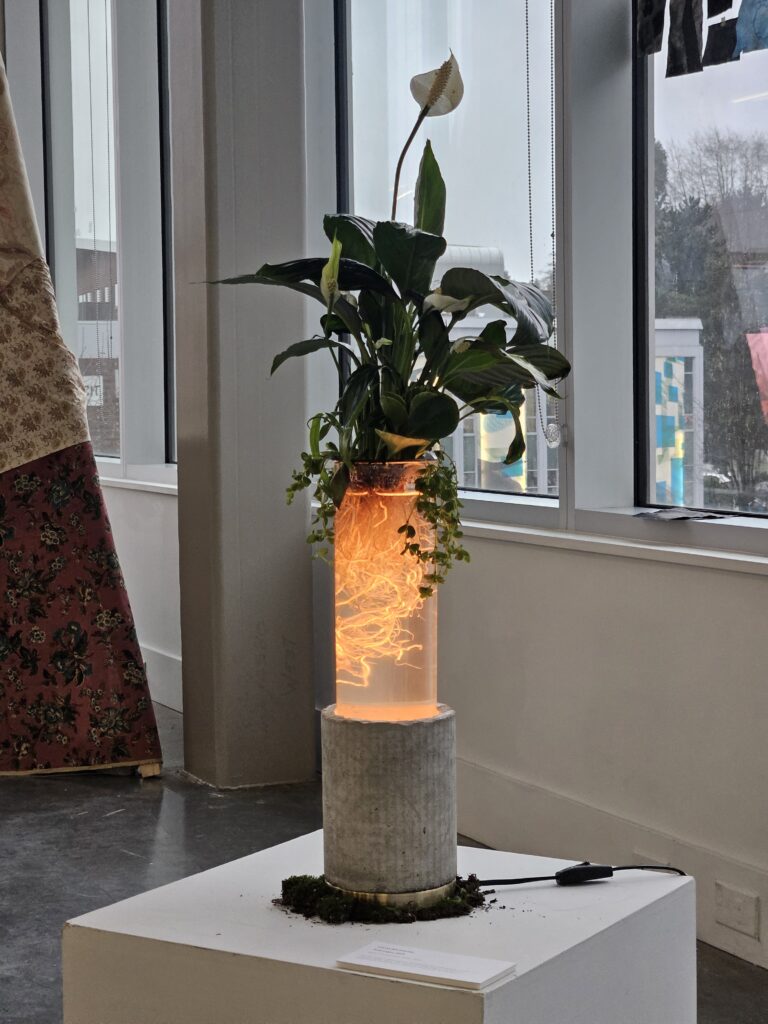
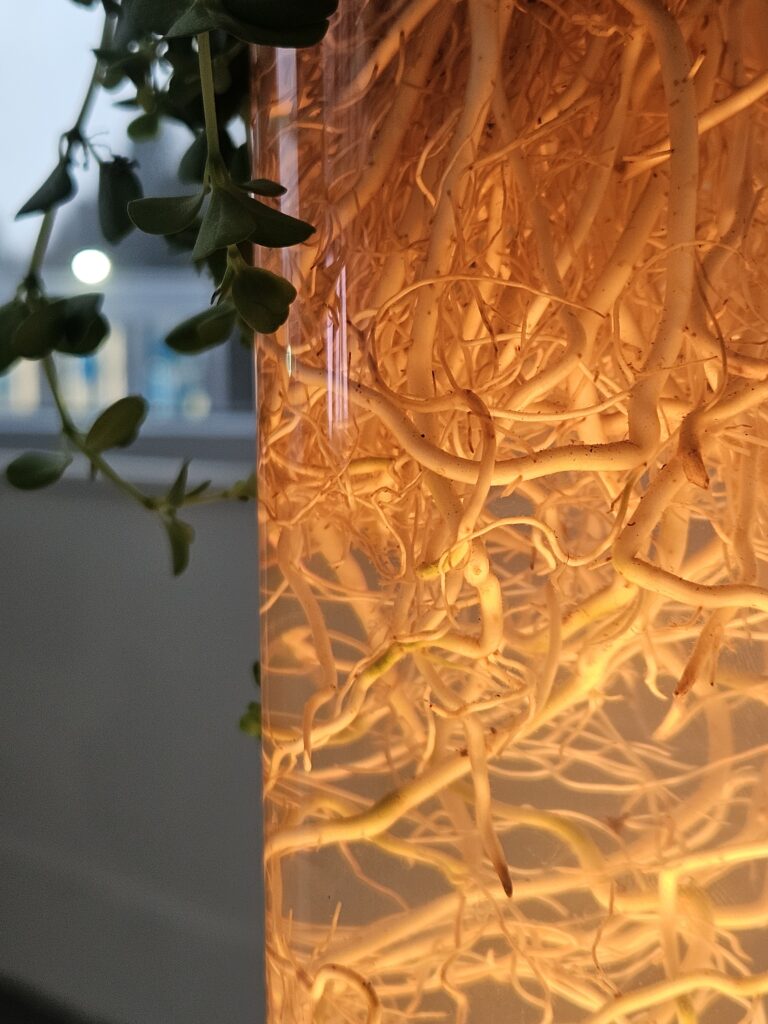
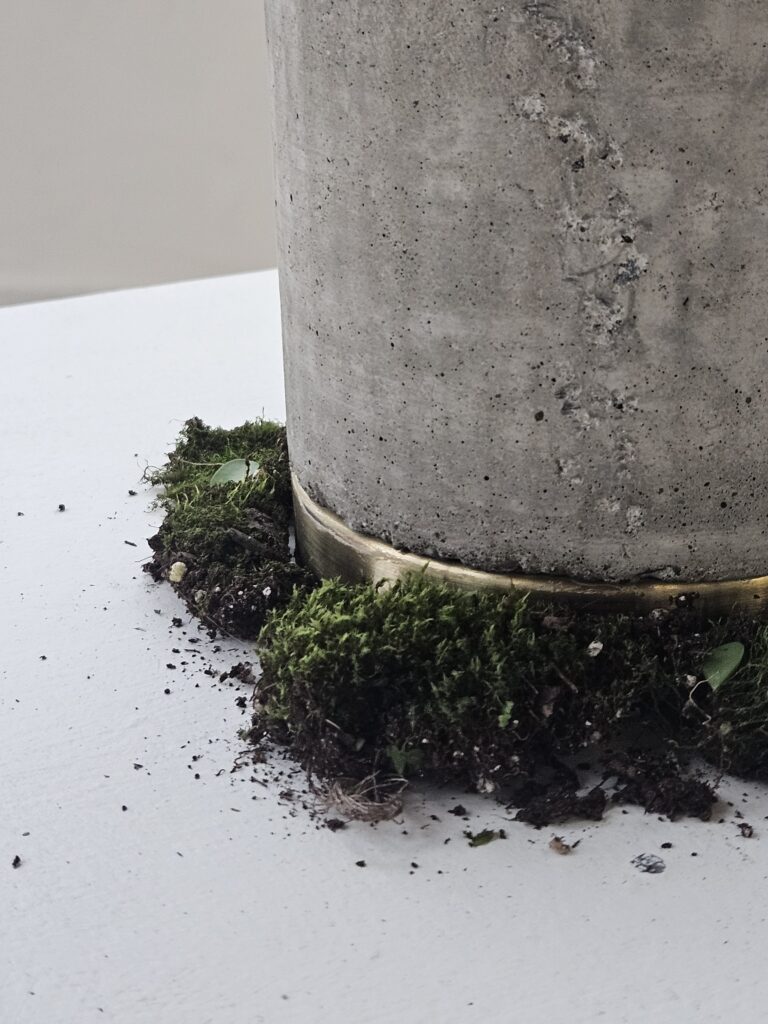
The Pond Light expands the Grounded project into transforming the connection between urban living and nature through a design that embodies a symbiotic relationship of care. The same resources used to provide light into home are also nurturing life.