incense of you
Jen Cheon and Gloria Lee
See it On Campus: Level 2
Find our project on the 2nd floor near the cafeteria.
Visitor InfoVancouver Biennale “Art Attack” Award — Winner
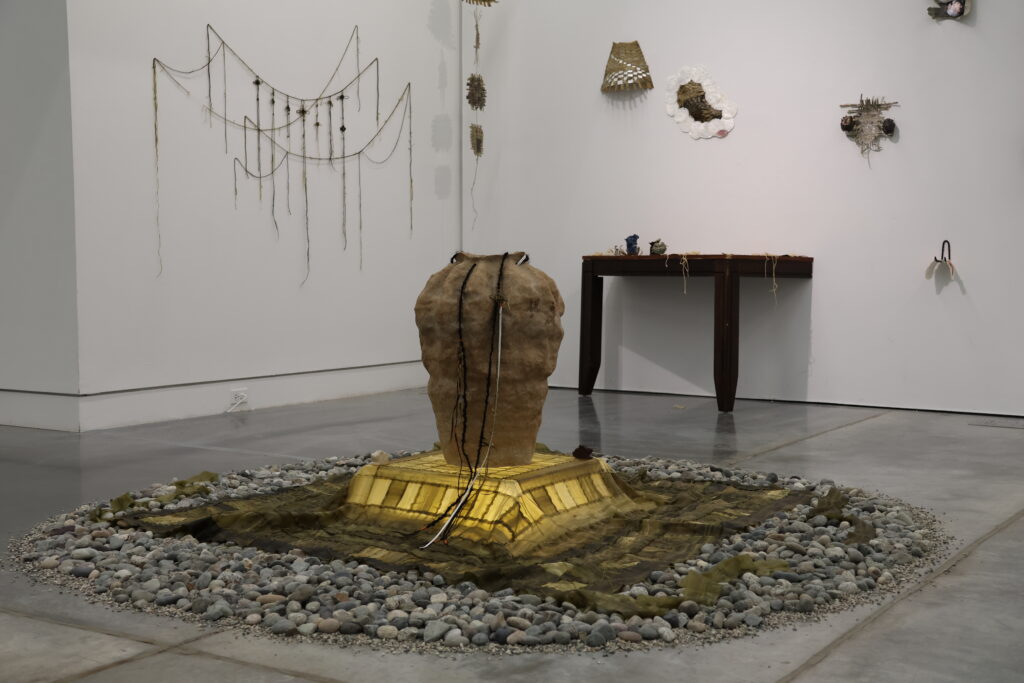
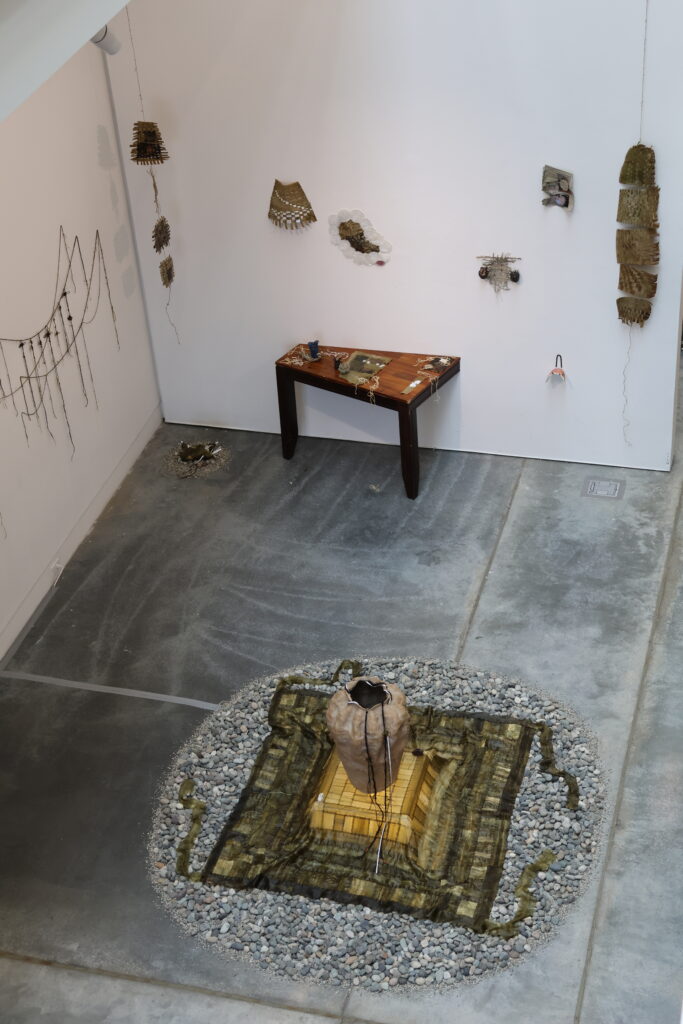
In an institution that prioritizes individuality and art as our own, we recognize the importance of collaboration and community. Through the sharing of knowledge and skills in this collaboration, we have been able to create a work that expands beyond our own individual practices.
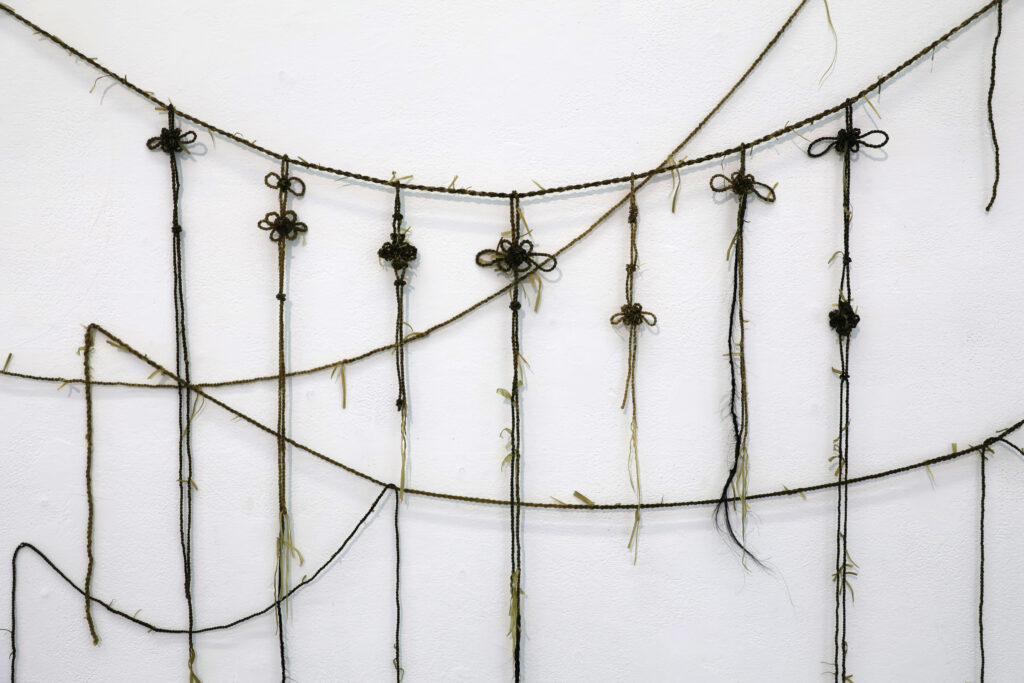
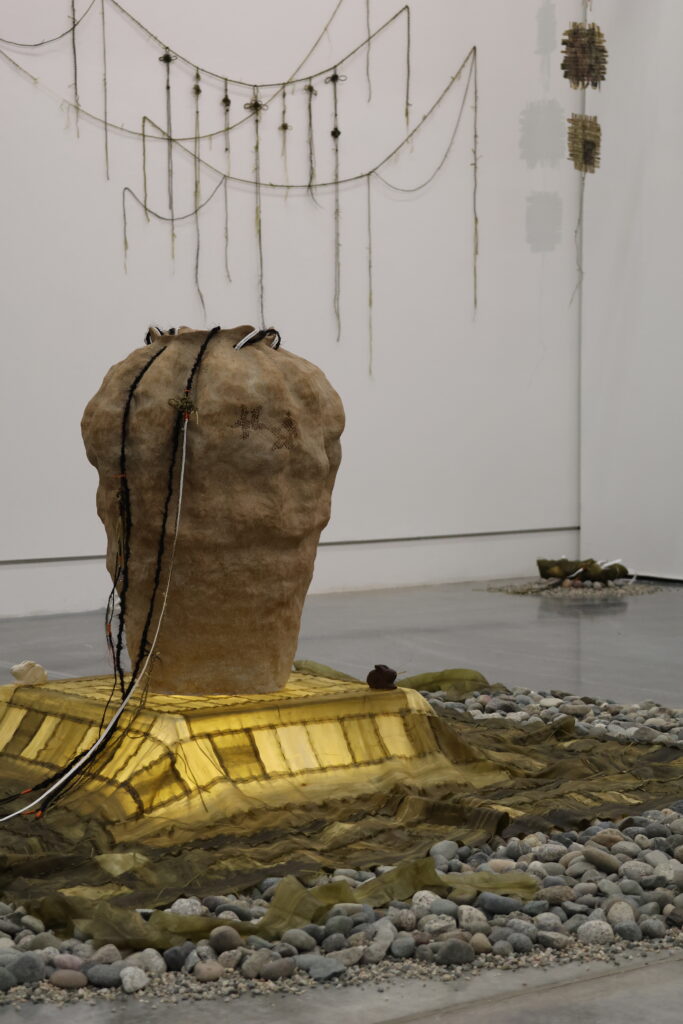
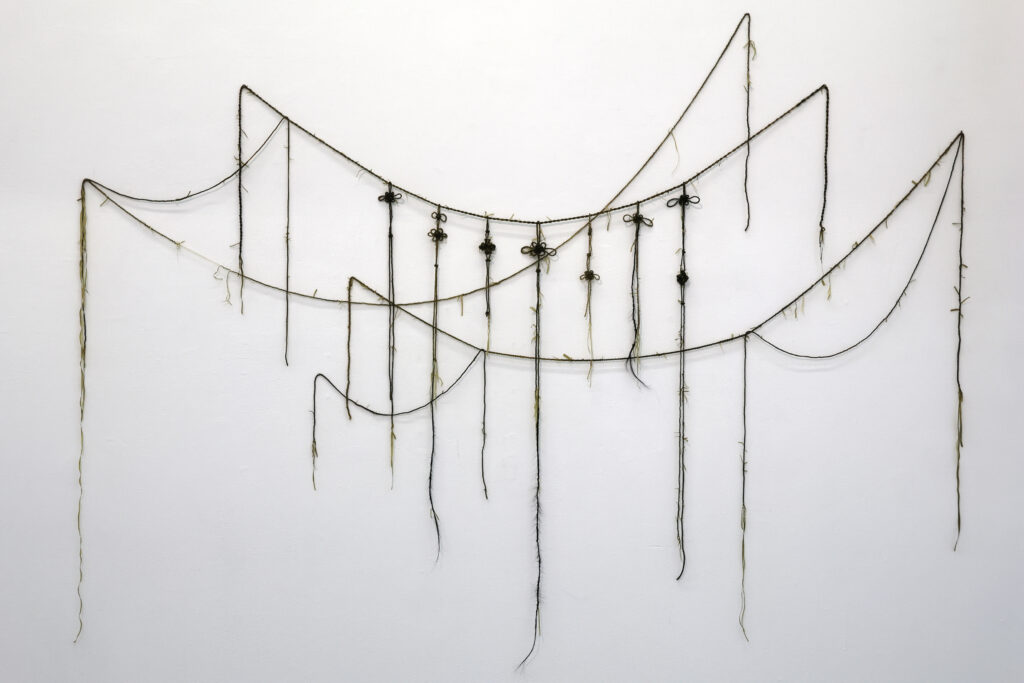
As artists of Korean descent we have been researching and engaging with traditional Korean motifs and practices to help us interpret our cultural heritage and traditions. 보자기 (Bojagi), 노리개 (Norigae), and 매듭(Maedeup) have been our main points of focus and inspiration for the visual aesthetics of our collaboration. Bojagi is a traditional wrapping cloth often patchworked and made from scraps, Norigae is a traditional accessory used in Hanbok that functions as both decoration and good luck charm, and Maedeup are the knots used within Norigae. As we were thinking of these traditions, we thought about gift giving and the concept of wrapping, and as to what stories these adornments or wrapped bojagis tell. Who or what is protected, and what is unraveled?
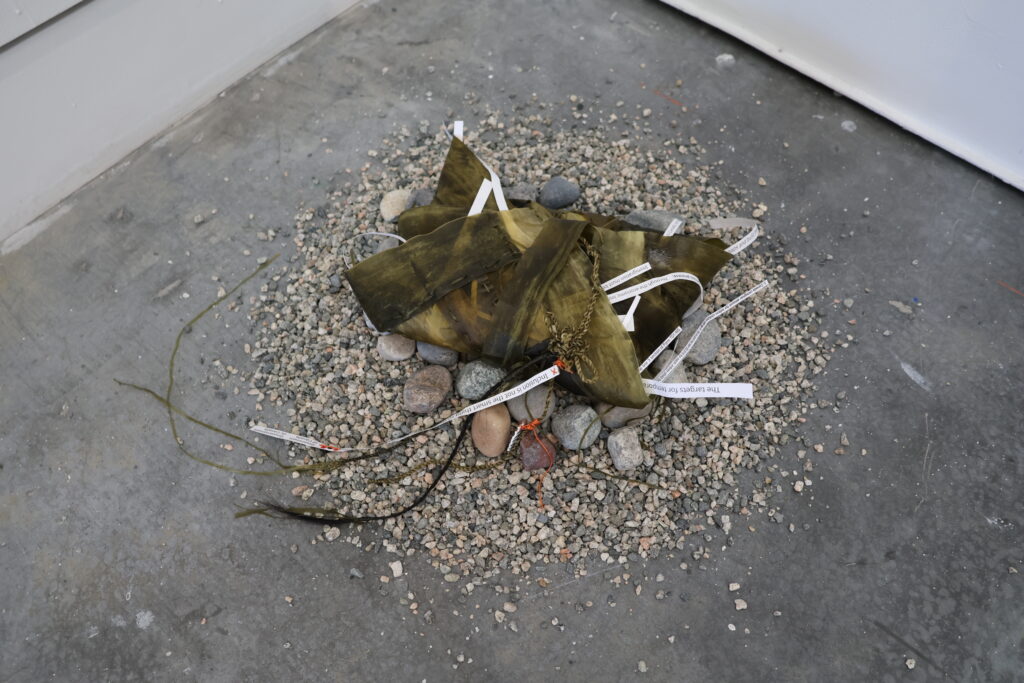
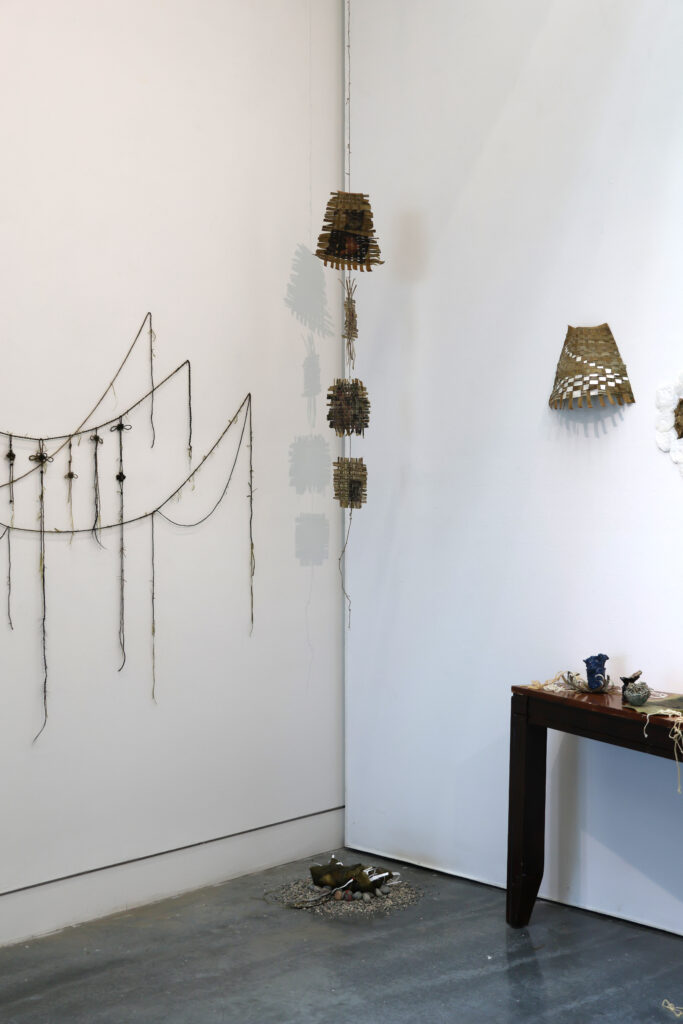
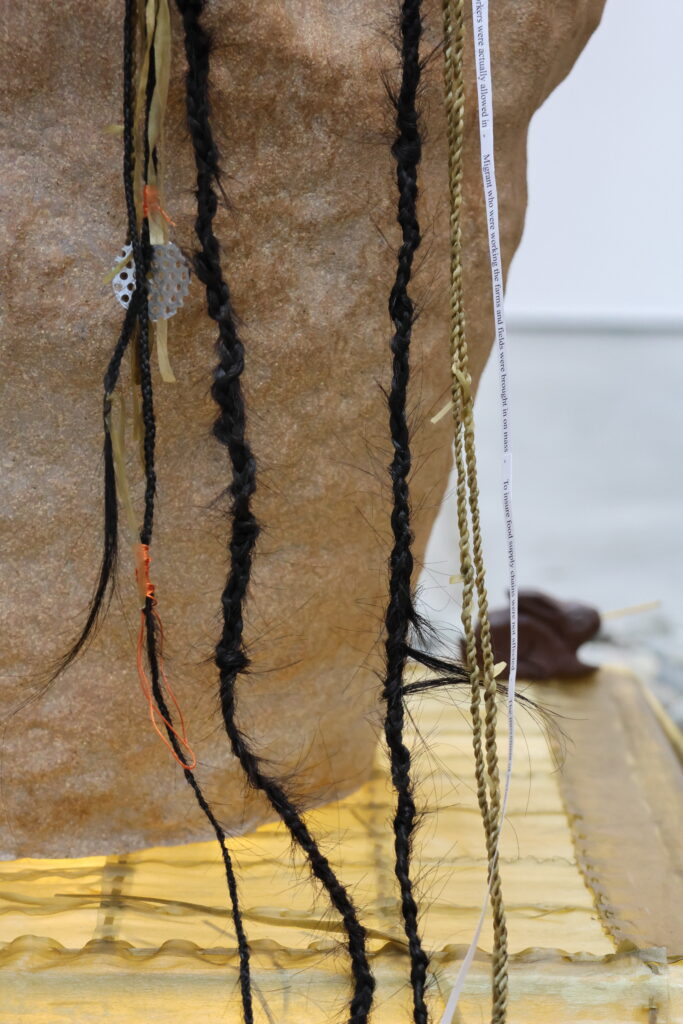
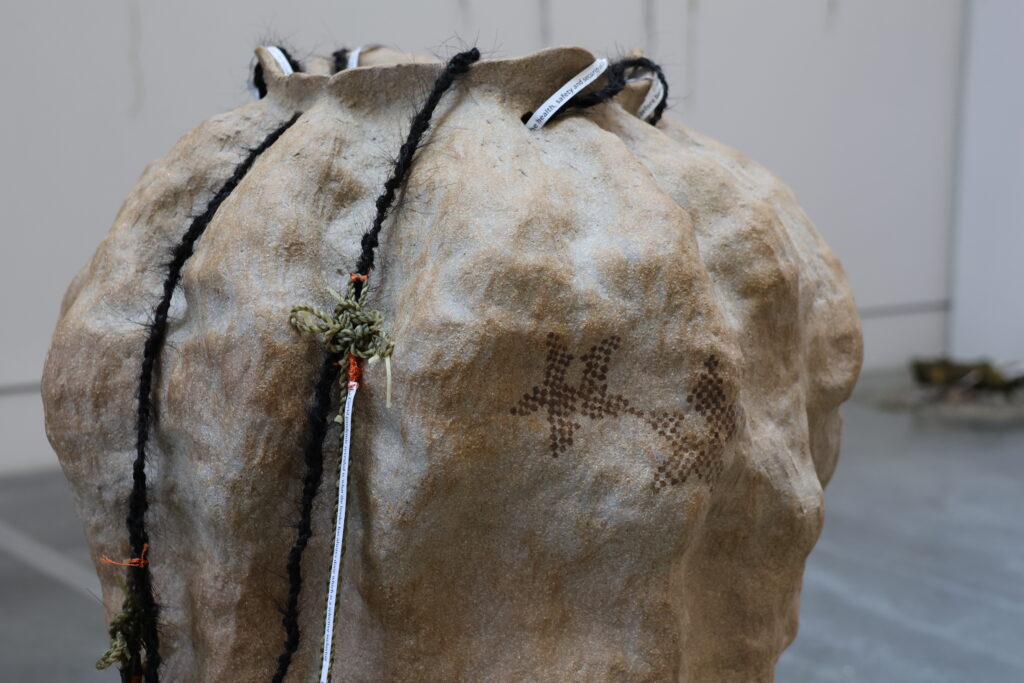
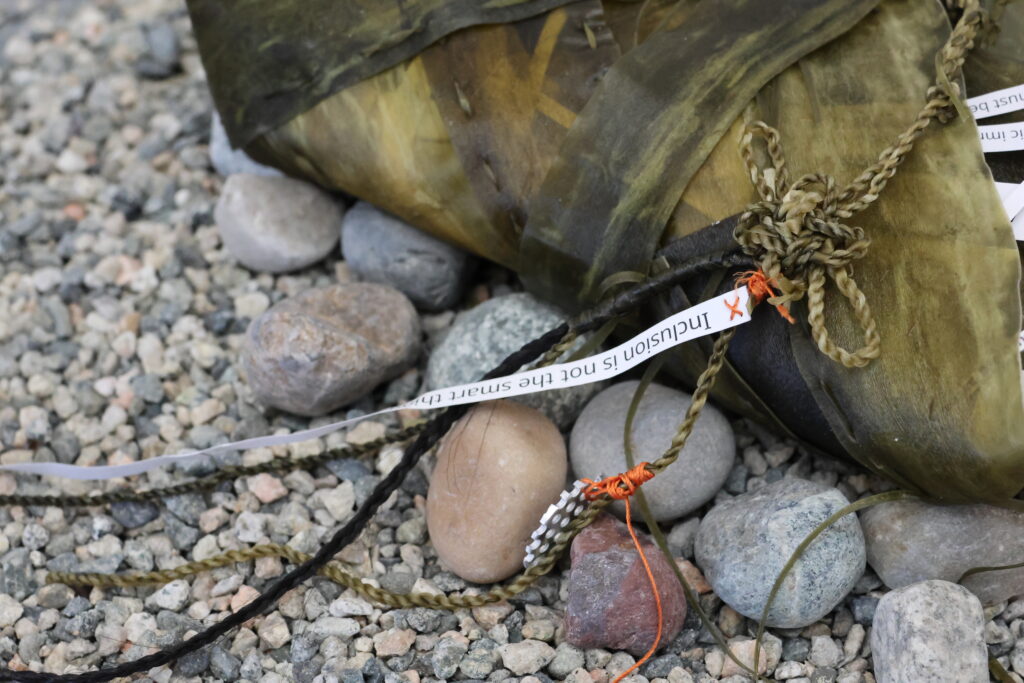
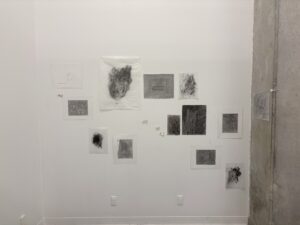
Jen has been recently exploring their grandfather’s deportation story, and as such, we wanted to research the vernacular used in government documents, and how it is weaponized to alienate people. Researching the inaccessibility of government documents and Canada’s statements, we found how contradictory these documents are. In one statement, the government of Canada discusses diversity and how Canada welcomes immigrants. Yet in a different statement, the government of Canada writes about extensively screening every immigrant that comes into Canada for the safety of Canadian citizens, as well as how the IRCC and other entities choose who are the “best” immigrants to omit into the country based on the economic gain for Canada.
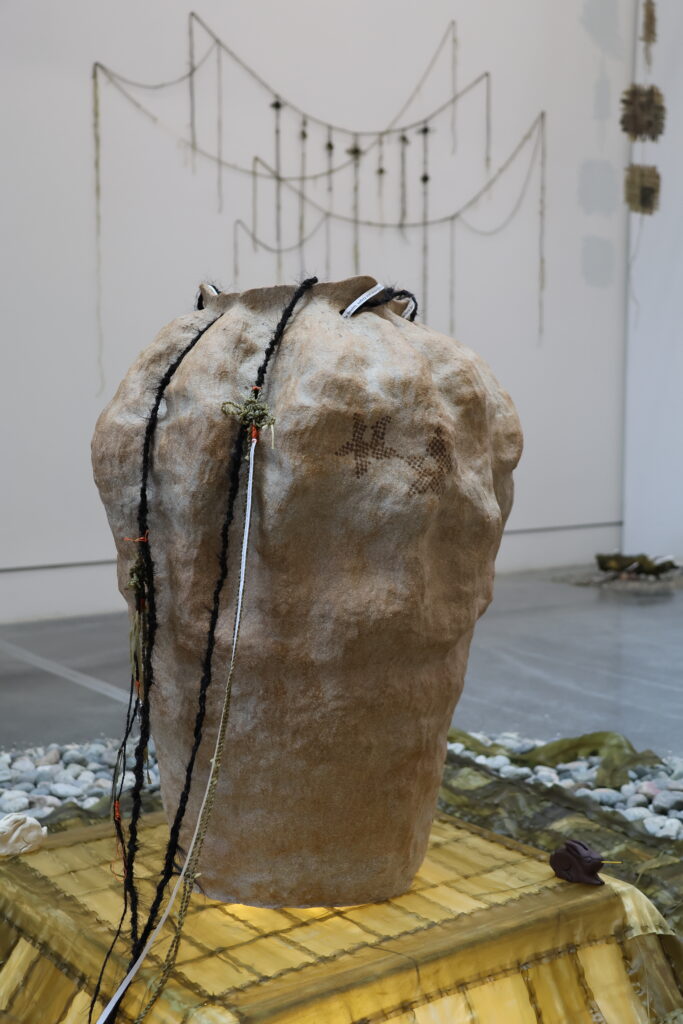
Labour and the transformation of material are an important part of our process. We spent countless hours together, labouring over and caring for our materials, and getting to know them intimately. Our interest to work with hair stemmed from the thought that the hair on our heads is conventionally seen as beauty, but when hair is detached, it becomes disgusting and useless. This reminded us of what this government does to migrants and how migrants are exploited for economic gain, and as soon as the powers that be don’t want to fairly compensate these migrants, they will just detain them, deport them, and essentially dispose of them. We used kelp to talk about how migration also is a long journey over waters, and many migrants come from far and wide with the hopes for a better life. However, migrants end up exploited by the endless avarice of capitalism.
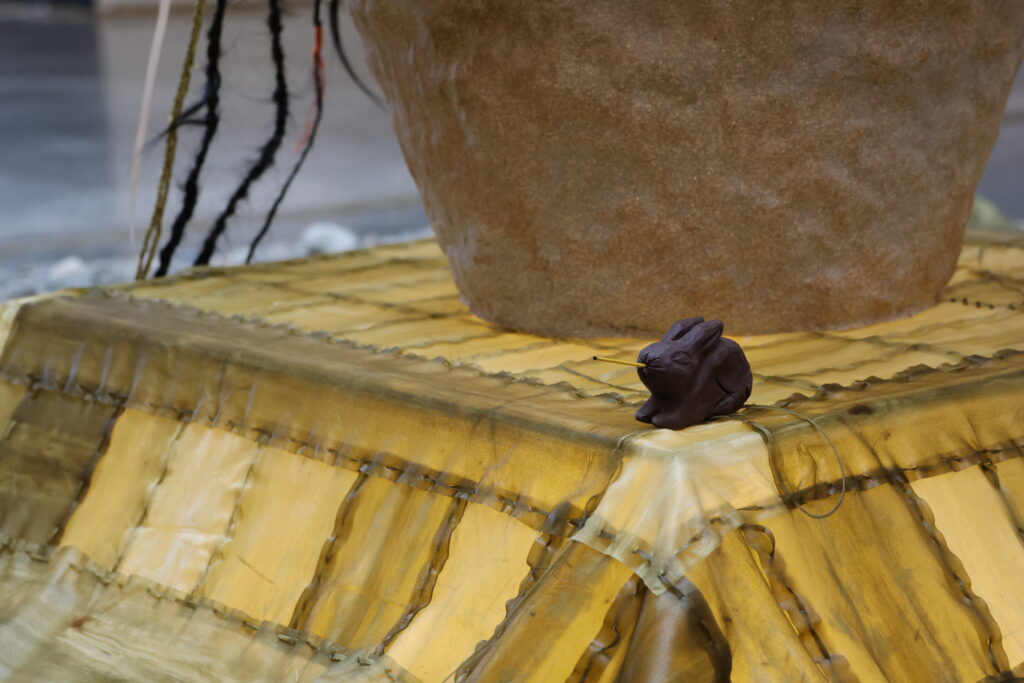
We are also using hair as resistance and storytelling. The long braid of hair within our work is sourced from different friends and friends-of-friends, each with their own stories and experiences. In essence, the hairs we shed were incorporated with the hair from our community. As we braided these hairs together, they became stronger. Hair was also a point of interest for us in terms of the sustainability and self-reliance of a material that is constantly being grown and shed from our bodies. Cut hair represents something different. It can mean grief, and also severance from families, and is a representation of remembrance.
As we learn within this school we want to also acknowledge that right now in Gaza, there are no more schools standing. We demand a free Palestine and an end to this genocide. We also wanted to acknowledge the tragedy that happened at Lapu Lapu Day and we grieve alongside the Filipino community. Please consider using the links below to find out more about how you can help with these ongoing crises.
Jen Daeun Cheon
Jen Daeun Cheon is Korean artist on the stolen lands of the xʷməθkʷəy̓əm, Sḵwx̱wú7mesh Úxwumixw, and səl̓ilw̓ətaʔɬ peoples. Jen mainly works in ceramics, textiles, and biomaterials. Recently, they have been working with themes of inaccessibility in government documents and Canada’s statements on immigration. The concepts of mass deportations, the fungibility of migrants, and peoples as surplus are pertinent to Jen’s work, as their grandfather faced deportation in 2011. They aim to critique the inaccessibilities that are within these official government papers, incorporating document papers, textiles, biomaterials, and hair within their ceramics to make a statement on the severance of families, but also the resilience of community and of the people. Jen strives to create a community where people can eventually learn together how to co-opt this inaccessible language to help dismantle these systems.
Gloria Jae Hee Lee
Gloria Jae Hee Lee is a multidisciplinary visual artist of Korean descent originally from Chicago and currently based on the stolen lands of the xʷməθkʷəy̓əm, Sḵwx̱wú7mesh Úxwumixw, and səl̓ilw̓ətaʔɬ peoples. With a process focusing on biomaterials and the transformation of material through labor, time, and care they examine ideas of permanence and impermanence relating to material, memory, culture, and relationships in an effort to understand their own existence and experience in this world. Their sculptures, installations, and performances are intended to exist as transitory pieces exhibiting change and decay. These become a temporary vessel for memory and encounters, capturing moments of personal significance and preserving them just for a moment outside of their own consciousness. By engaging with these themes of memory and temporality through the use of ephemeral materials, they invite viewers to reflect on their own experiences of memory and to consider the ways in which our memories shape our understanding of self.