- Abstract,
- Accessibility,
- Activism,
- Aesthetic,
- Best Of,
- Body,
- Care,
- Collage,
- Community,
- Conceptual,
- Connection,
- Consumerism,
- Contemporary,
- Culture,
- Death,
- Documentary,
- Drama,
- Embodied,
- Emergency,
- Emotion,
- Environment,
- Ephemeral,
- Experimental,
- Gender,
- Healing,
- History,
- Identity,
- Imagination,
- Installation,
- LGBTQ+,
- Material,
- Material Practice,
- Multidisciplinary,
- Object,
- Personal,
- Political,
- Practice-based,
- Reflection,
- Relationships,
- Research,
- Sculpture,
- Security,
- Self,
- Self-portrait,
- Slice of Life,
- Social,
- Speculative,
- Storytelling,
- Surrealist,
- Textile,
- Women
Allysa Pierre
Allysa Pierre
See it On Campus: Level 1
(They/Them)

Untitled (The Preparator), 2025
Sculpture is a language of weight—and in this work, it speaks of labor, exhaustion, and invisibility.
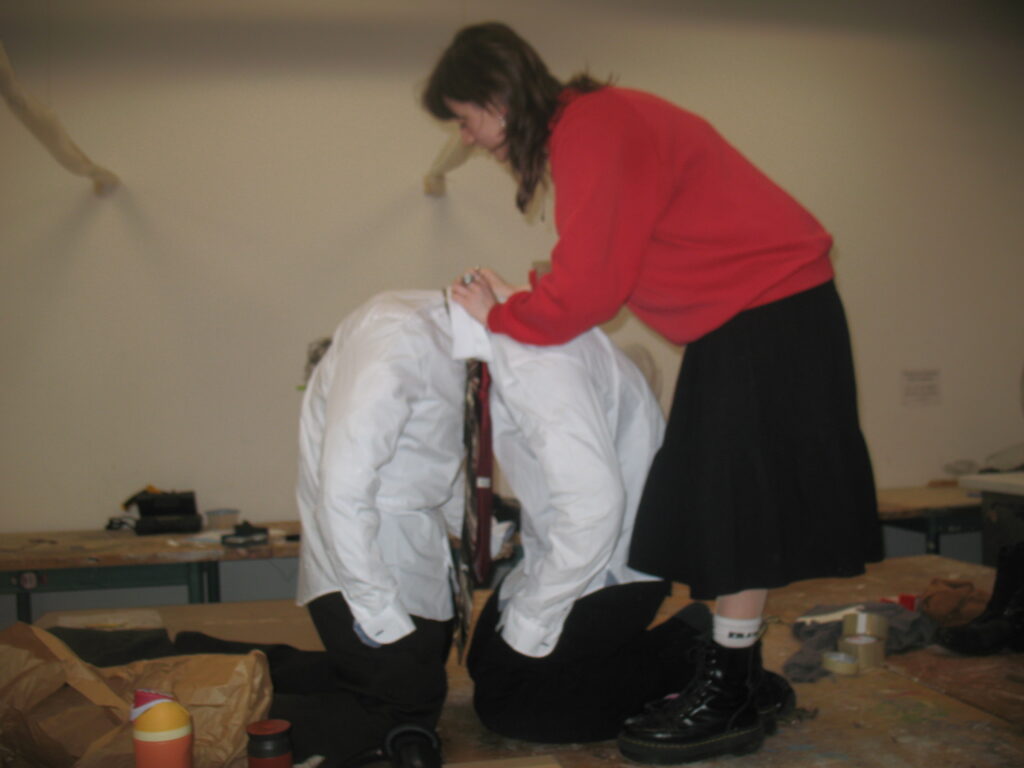
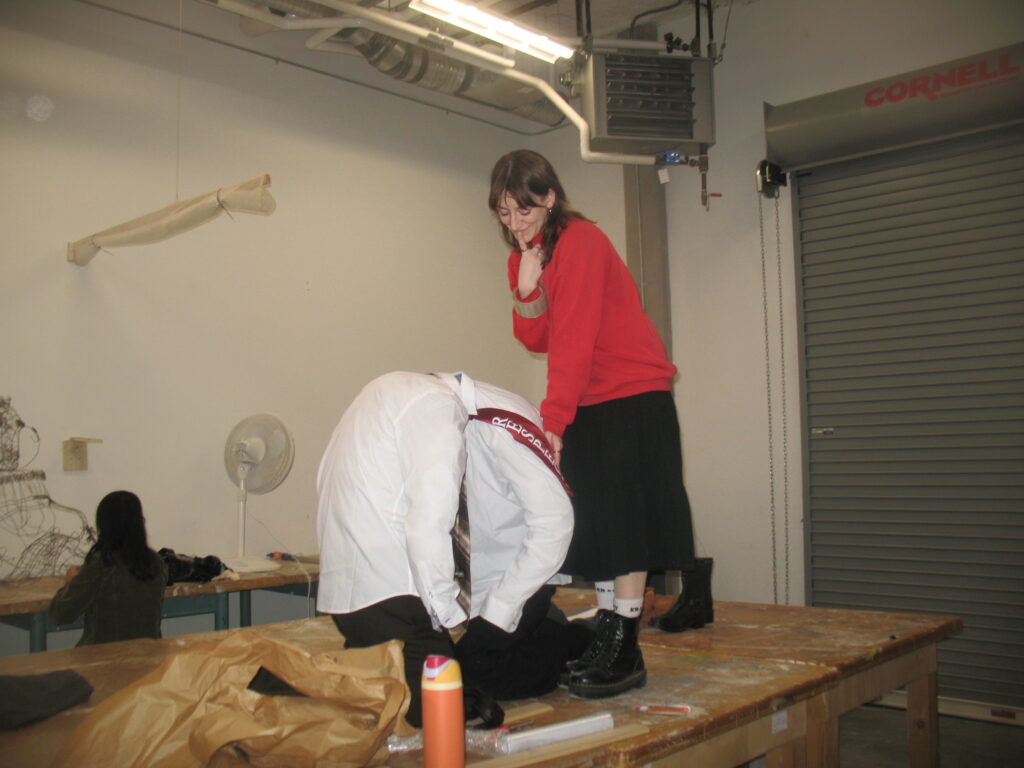
Untitled (The Preparator), 2025 is a sculptural inquiry into the architecture of labor that underpins the cultural institution. Composed of wood, worn clothing, and a human figure slumped into a shipping crate, the work captures a moment of ambiguous tension—between collapse and continuation, visibility and erasure.
Rooted in my own experience working behind the scenes in gallery spaces, this piece centers the preparator: the technician, installer, handler—those whose labor is essential yet systemically obscured. The figure is anonymous and unheroic, leaning into the crate not as a gesture of performance, but of necessity. It is a body caught in the fatigue of repetition, the strain of being necessary but unacknowledged.
The shipping crate, typically relegated to back rooms and loading docks, serves as both stage and symbol. It represents not just the physical infrastructure of the art world, but the institutional mechanisms that prioritize polish over process, surface over support. By placing the figure in direct contact with it—literally folded into the system—the work confronts the viewer with a visual metaphor for institutional dependence and disregard.
Materially, the use of wood, clothing, and a human body resists abstraction. The physicality is deliberate: the rawness of wood, the sag of fabric, the weight of flesh. These elements assert presence, offering no easy escape from the reality of what is being shown—a body at work, and nearly worn through.
This piece is not a protest, but a reckoning. It is a recognition of the people who enable visibility while remaining unseen themselves. Untitled (The Preparator) asks: who holds the space, and at what cost?