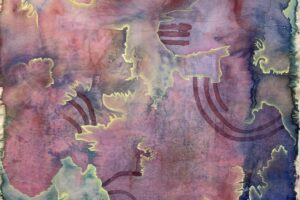
Plant it into the border’s soil
Rowen
See it On Campus: Level 1
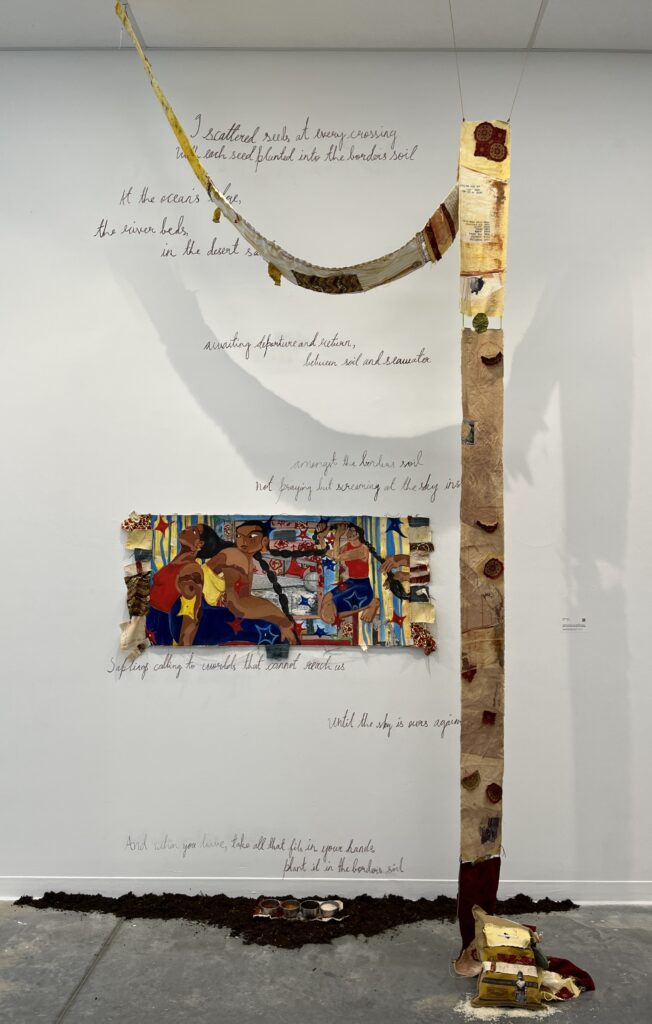
And when you leave, Take all that fits in your hand, plant it into the border’s soil
I scattered seeds at every crossing,
with each planted into the border’s soil.
At the ocean’s edge,
the river beds,
in the desert sand,
along the muddy fence.
Planted at the border, our presence made the ground glow.
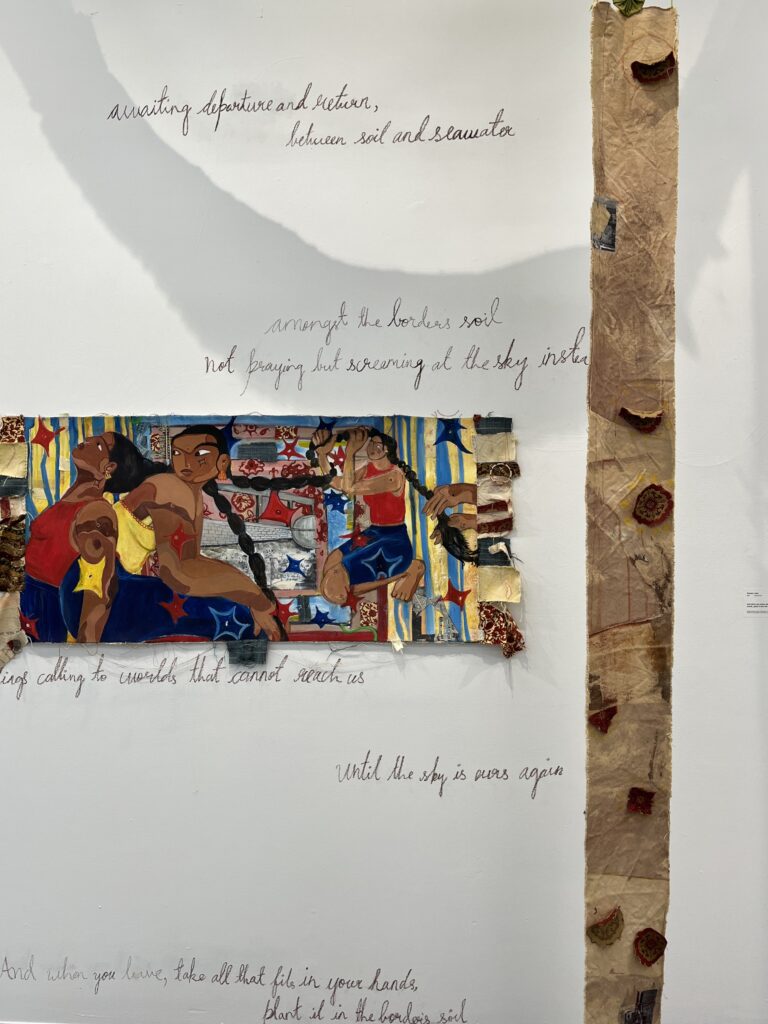
Planted into the border’s soil, not praying but screaming at the sky instead.
Saplings calling to worlds that cannot reach us, until the sky is ours again.
Take what fits in your hands and scatter seeds into the border’s soil
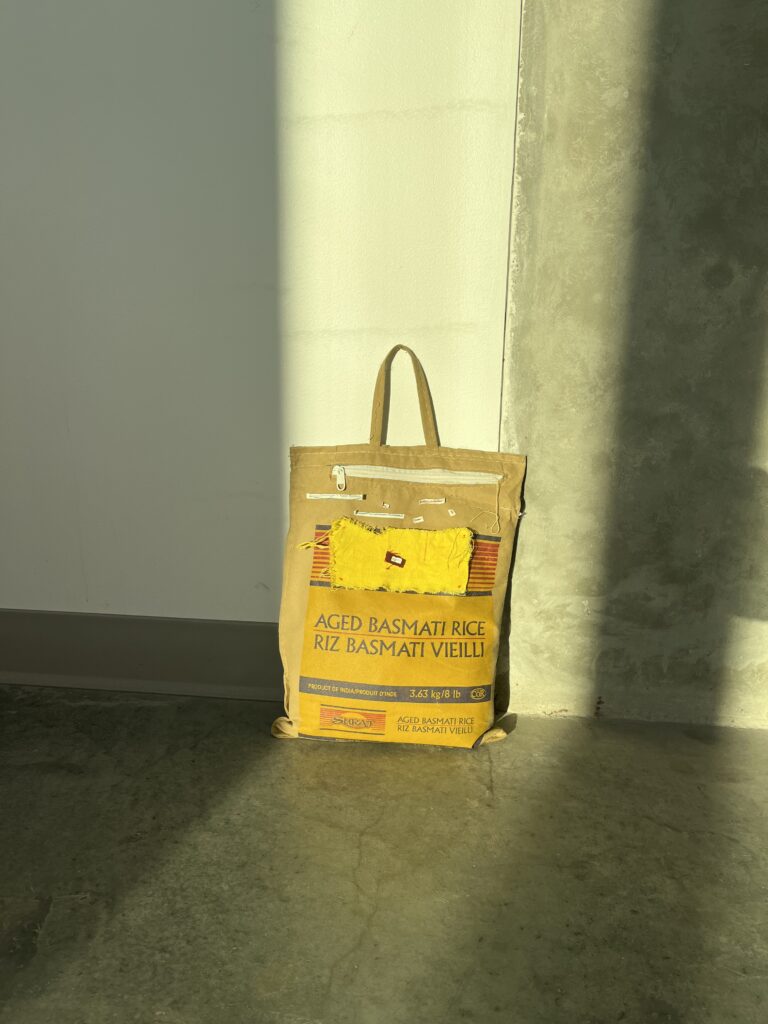
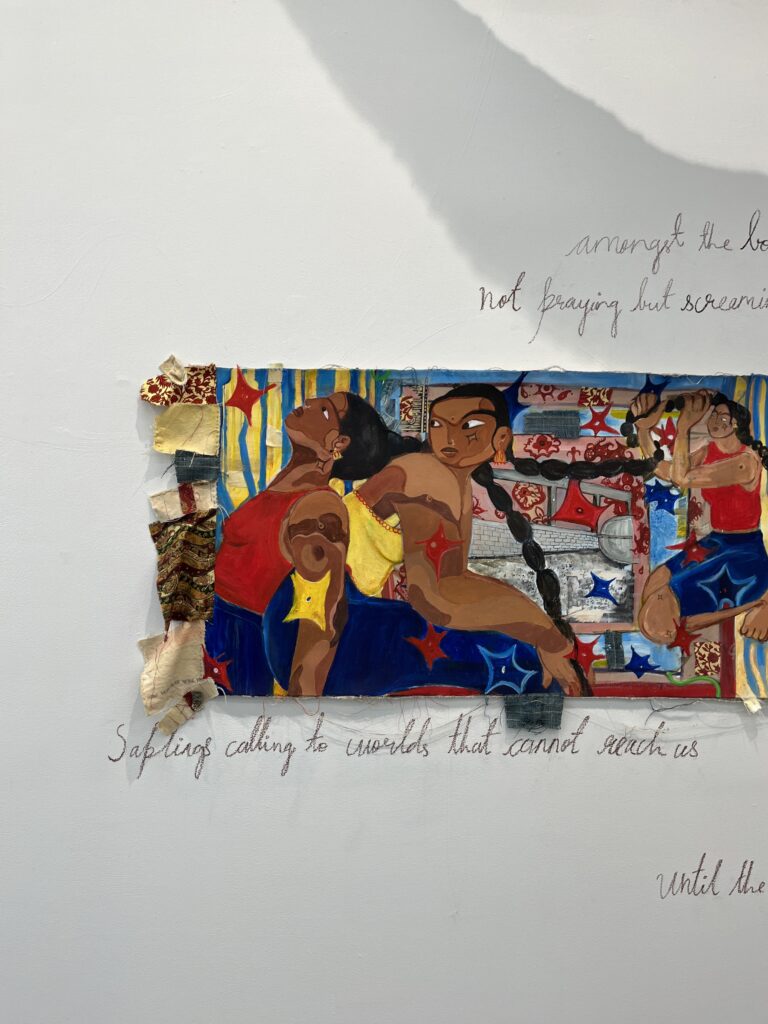
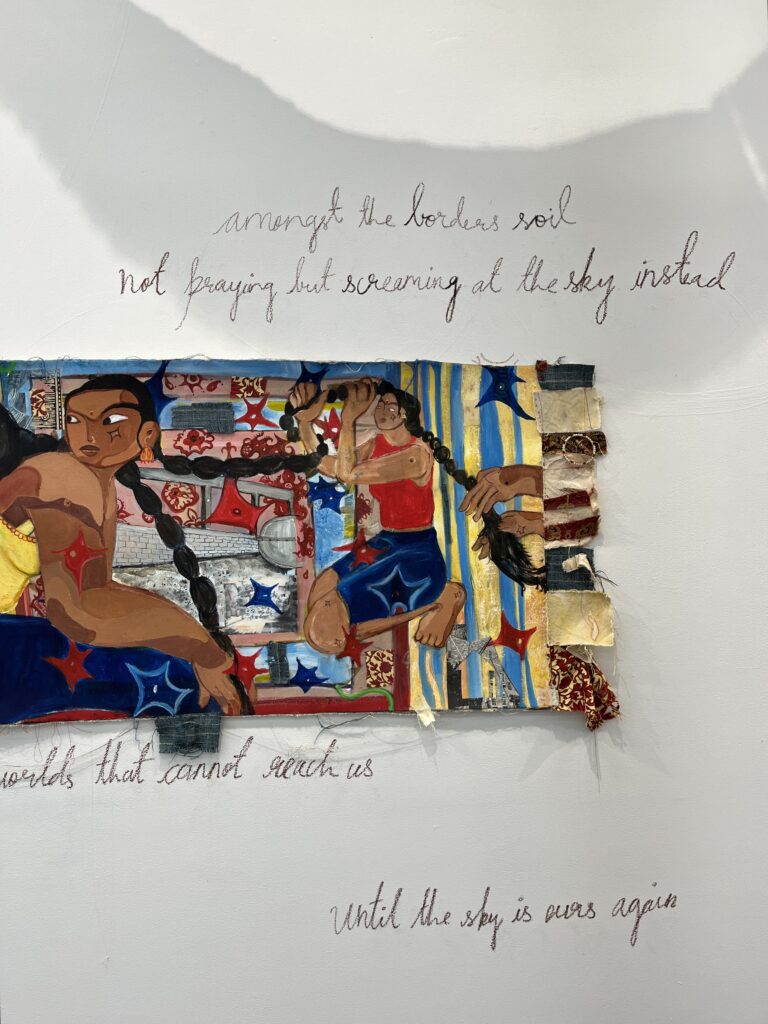
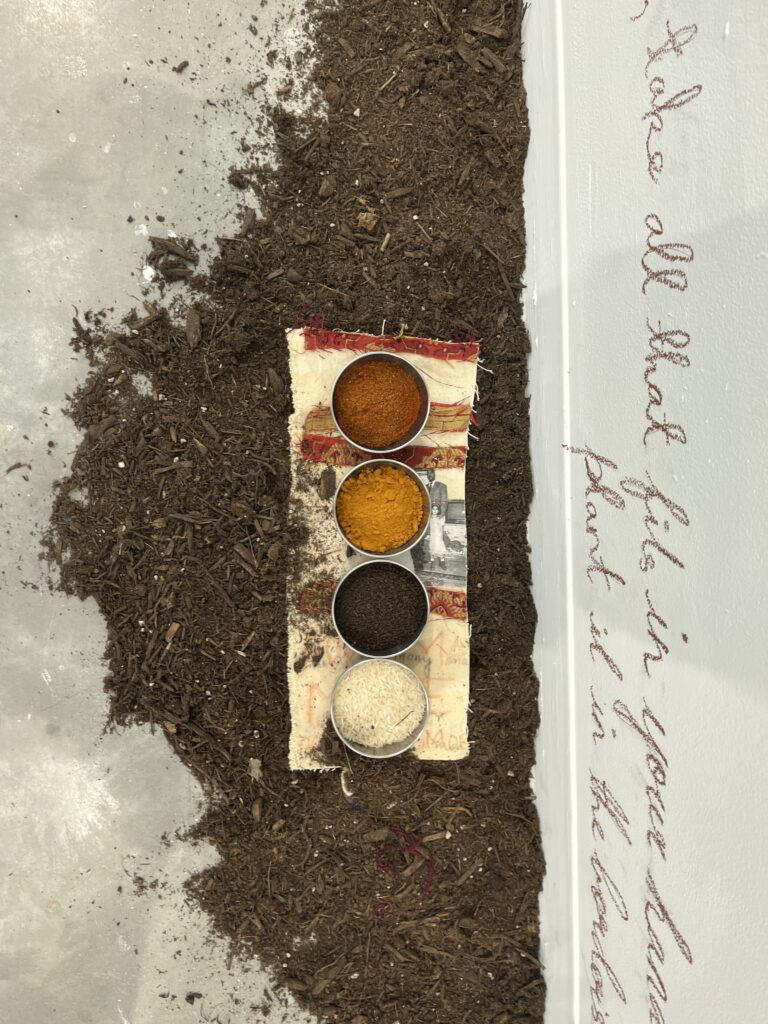
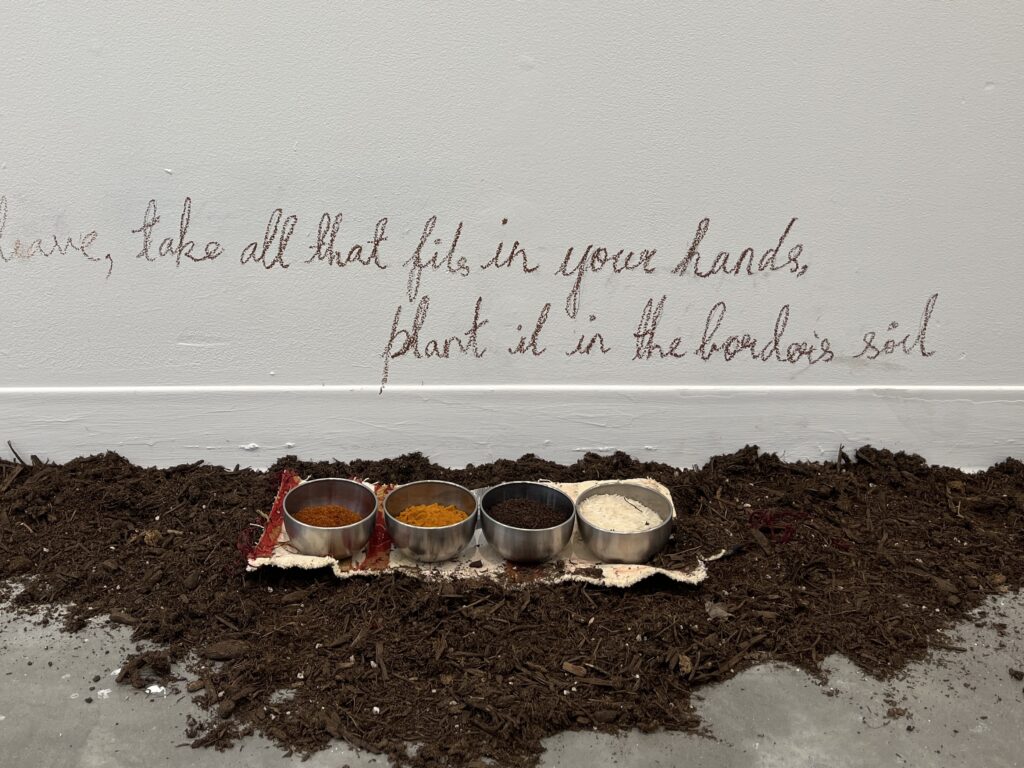
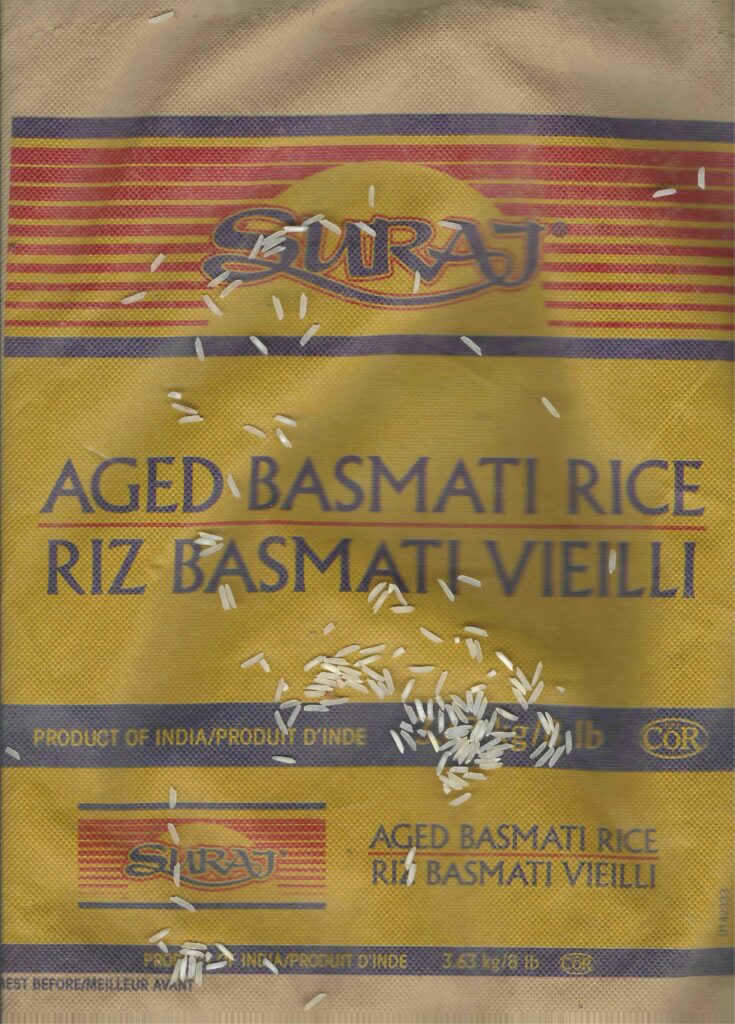
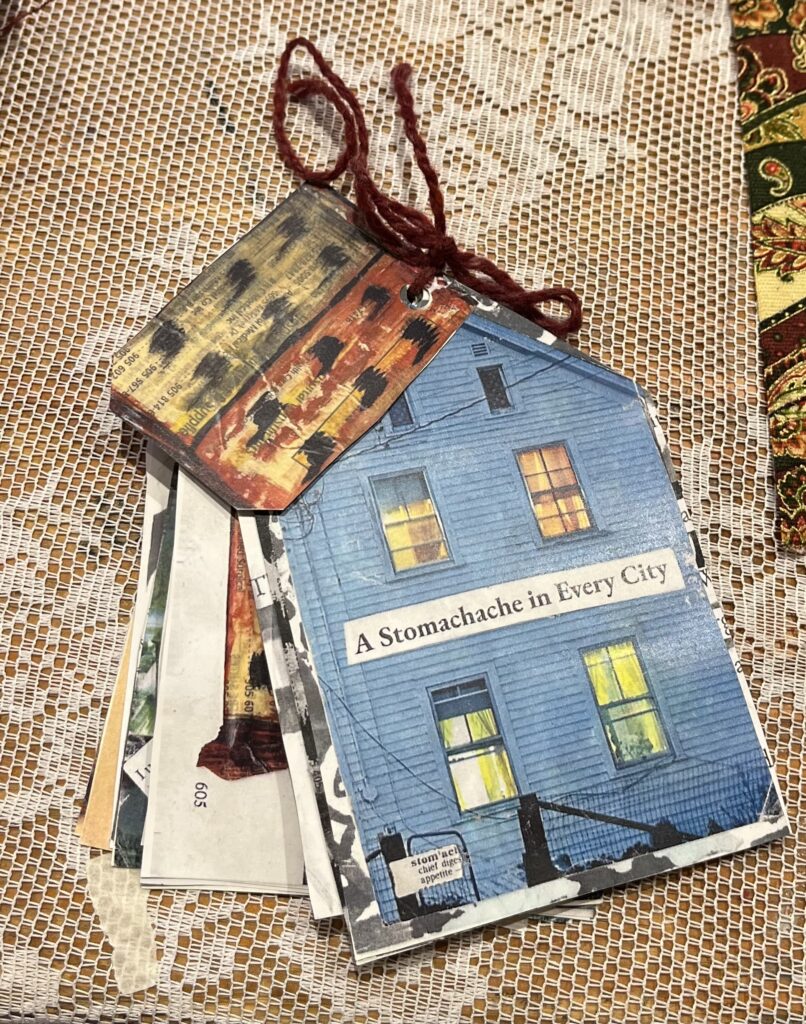
Initially, a poem “stomachaches in cities” is a concept that discusses themes of displacement and constant relocation. I plan on creating a multimedia tangible piece as a reflection of the writing. What is it like when digesting displacement is accompanied by guilt? In the song Kalinda, it is custom for women in the Caribbean to tie a towel tightly around their lower abdomen to “ban” the belly and “bawl” was recommended to those in great grief (Elder 198) It is common within south asian communities to experience gut issues or digestive troubles when undergoing deep sadness and stress. basmati rice as a key element in my project. My grandmother told me stories about rice being used as an adhesive, and the rice jute bags were used along the side of the river and on the walls of our house to prevent flooding. Rice serves as food, and as material for sanctuary. The finished canvas(es) are placed in a rice bag, it is representative of rice consistently being a soother of the belly, vessel of memories, and a protector of stories. Haldi, Chai, and Basmati rice were household items, regardless of location. Coincidentally, they were also the only three items that I was fed when I had a stomach ache.
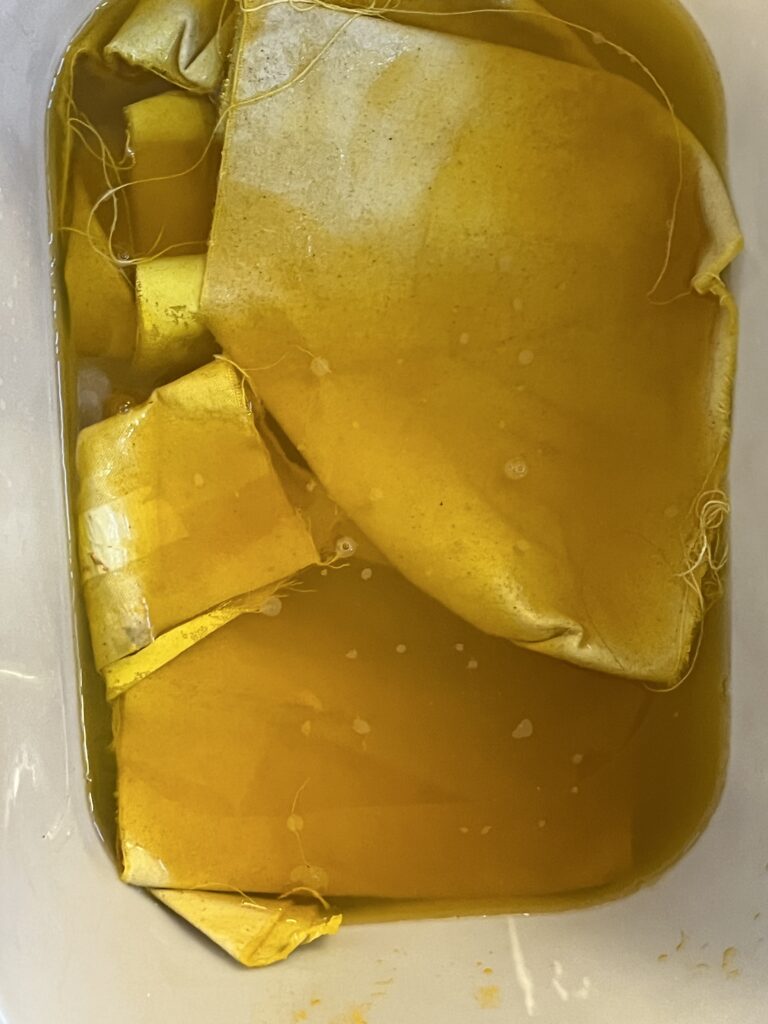
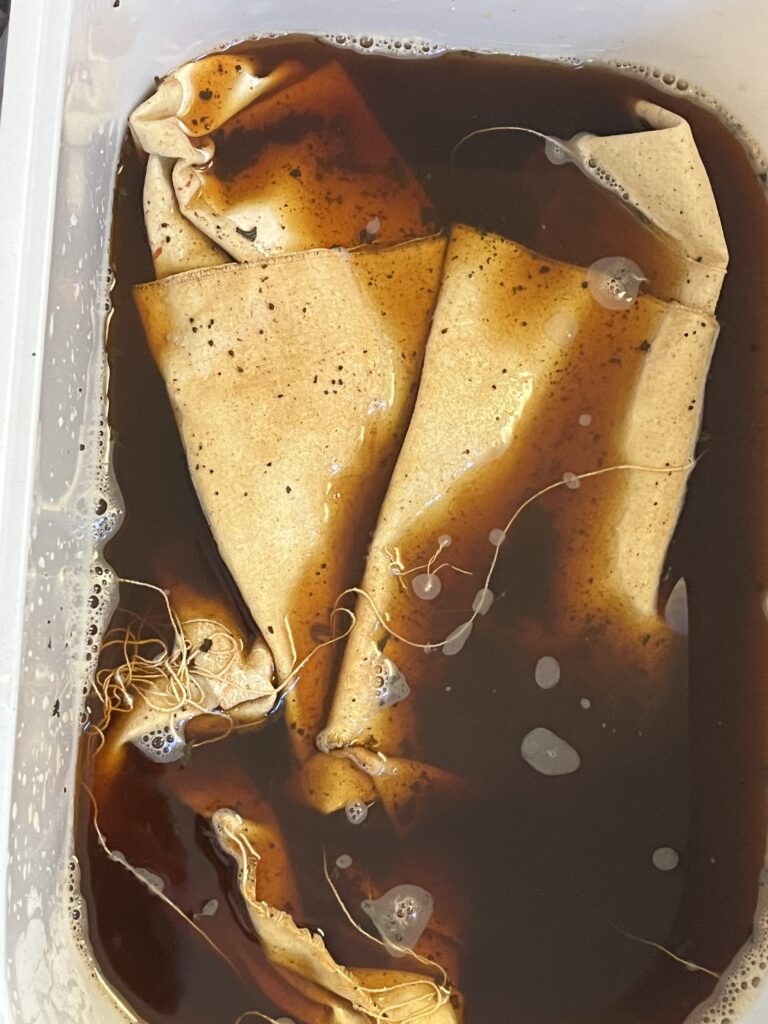
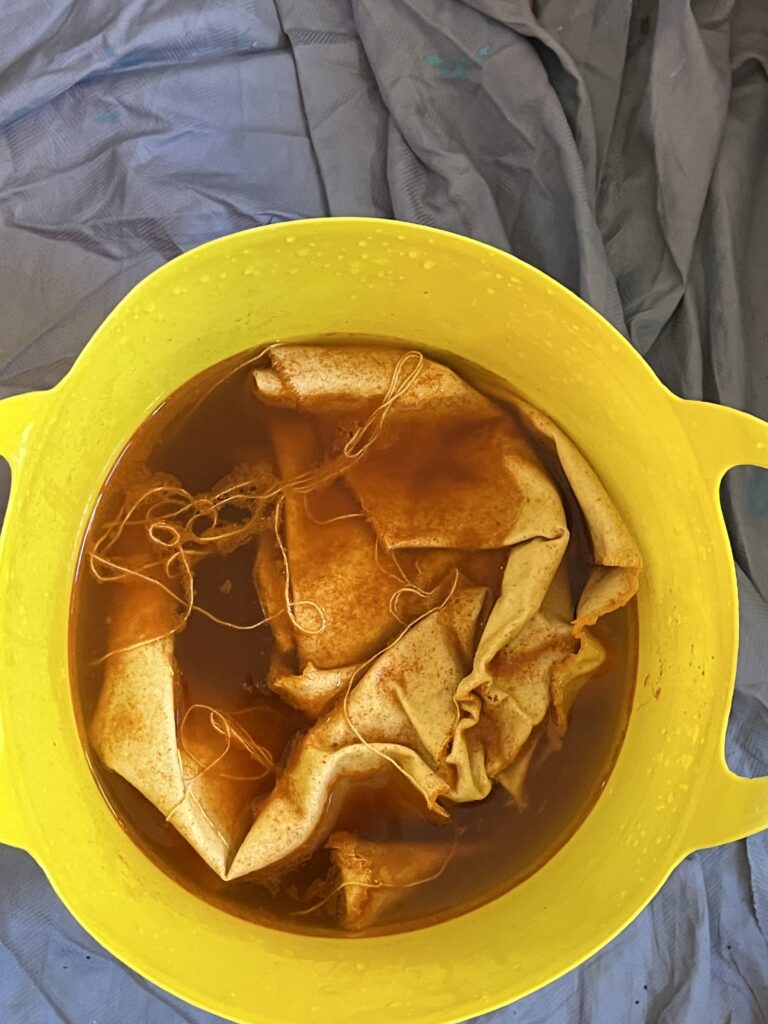
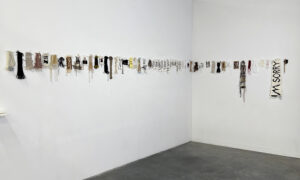
In progess images: Haldi (turmeric powder), Mirch (red chilli powder), Chai (black tea) were used to dye canvases, the odour and staining of these powders contributes not only to aesthetics but also triggers specific memories.
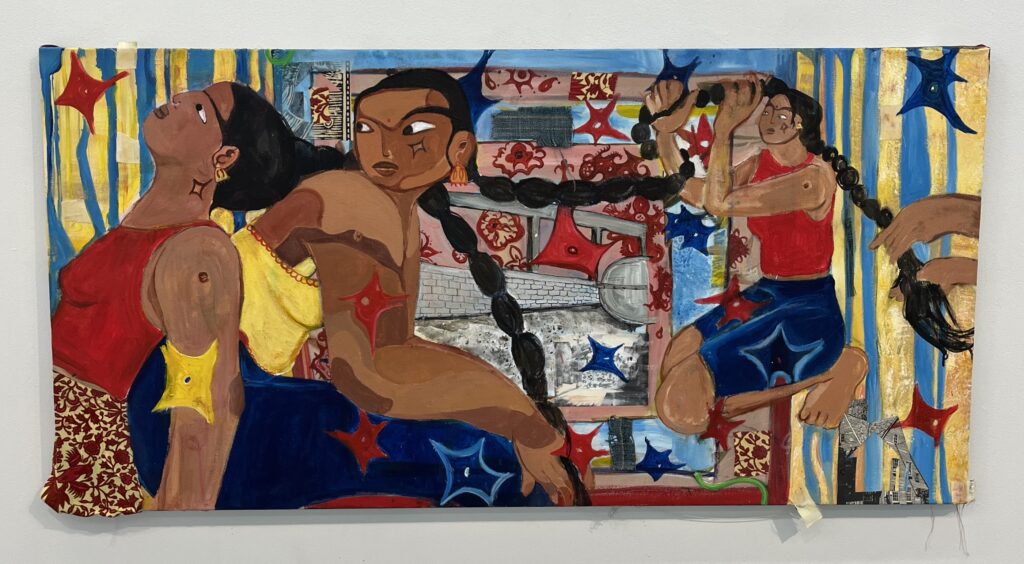
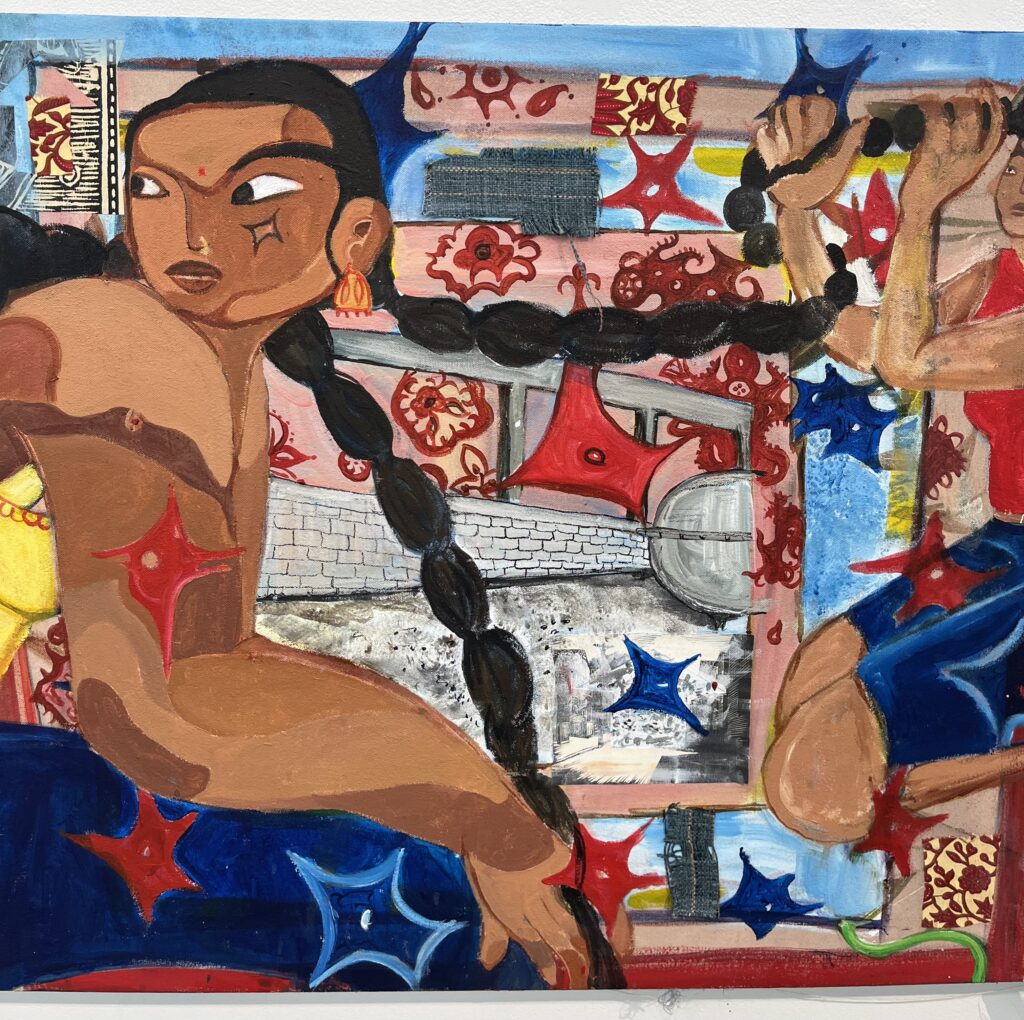
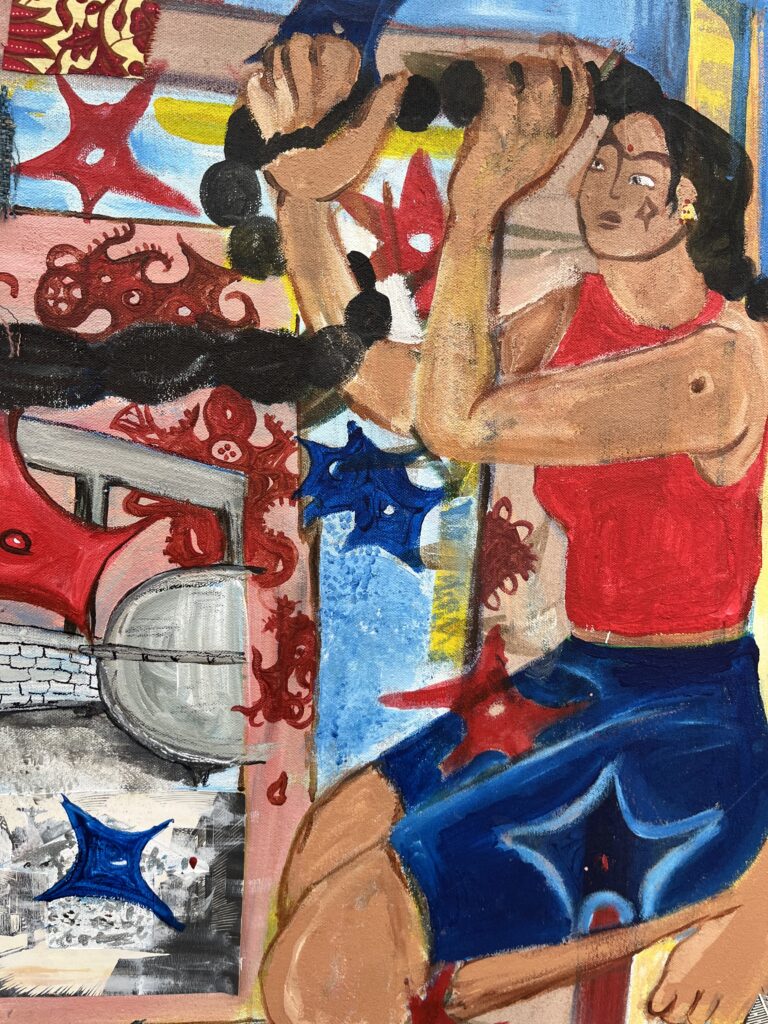
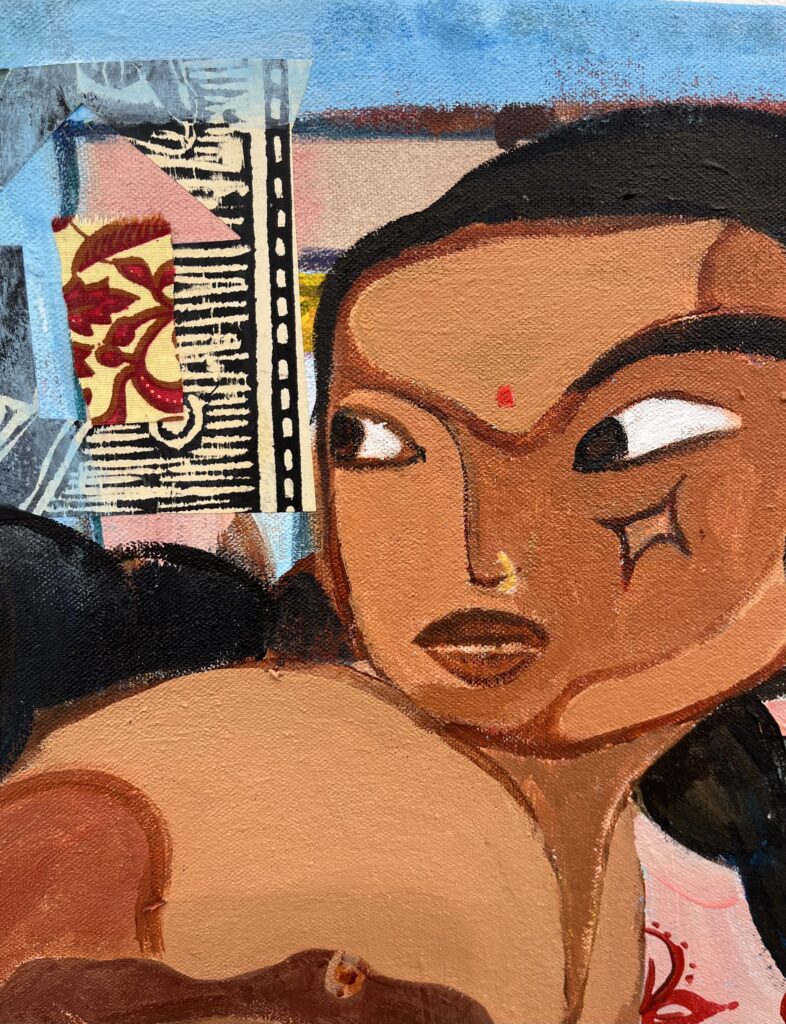
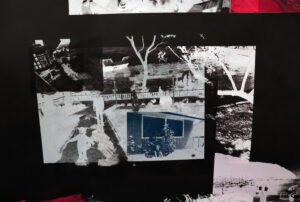
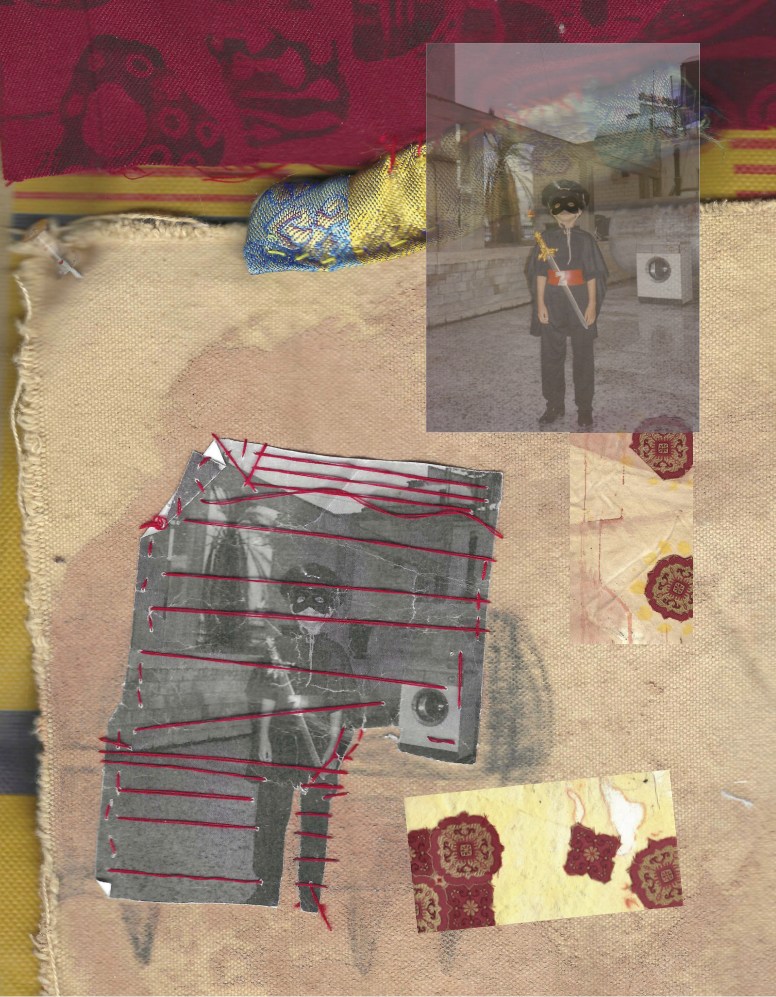
heavily inspired by home, not home and the inbetween, this painting includes photos and imagery across oceans. Fabrics from couches and bedsheets that have surpassed borders are also used as a medium,
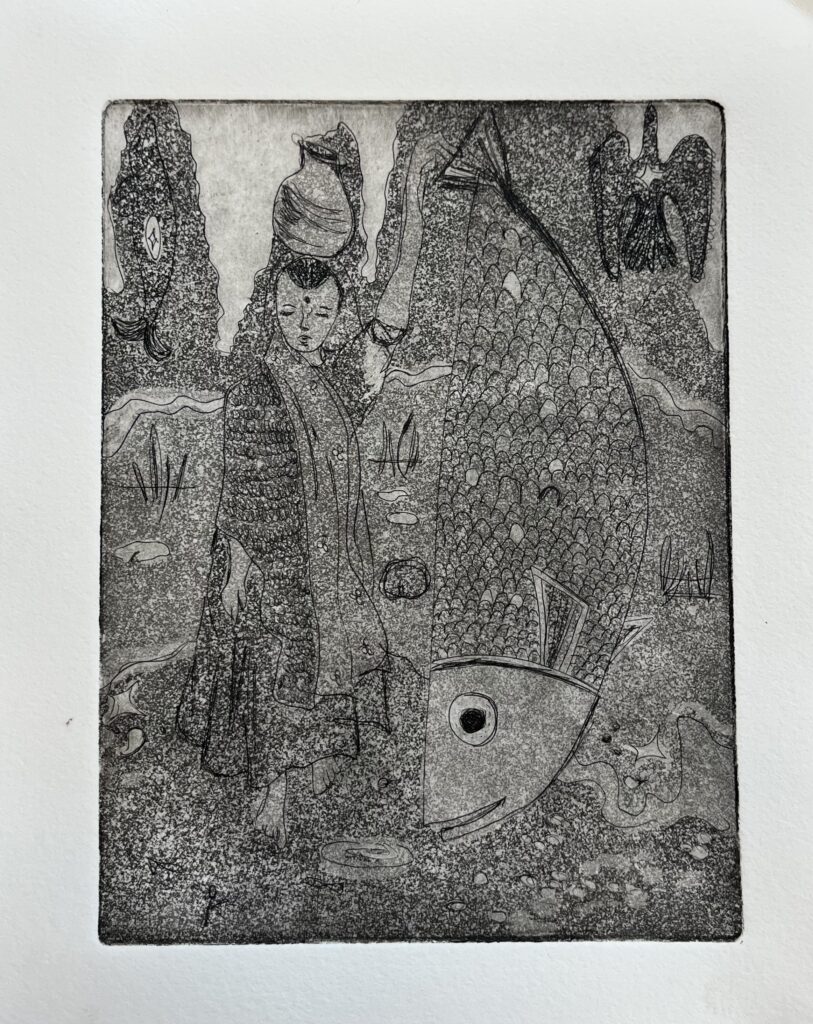
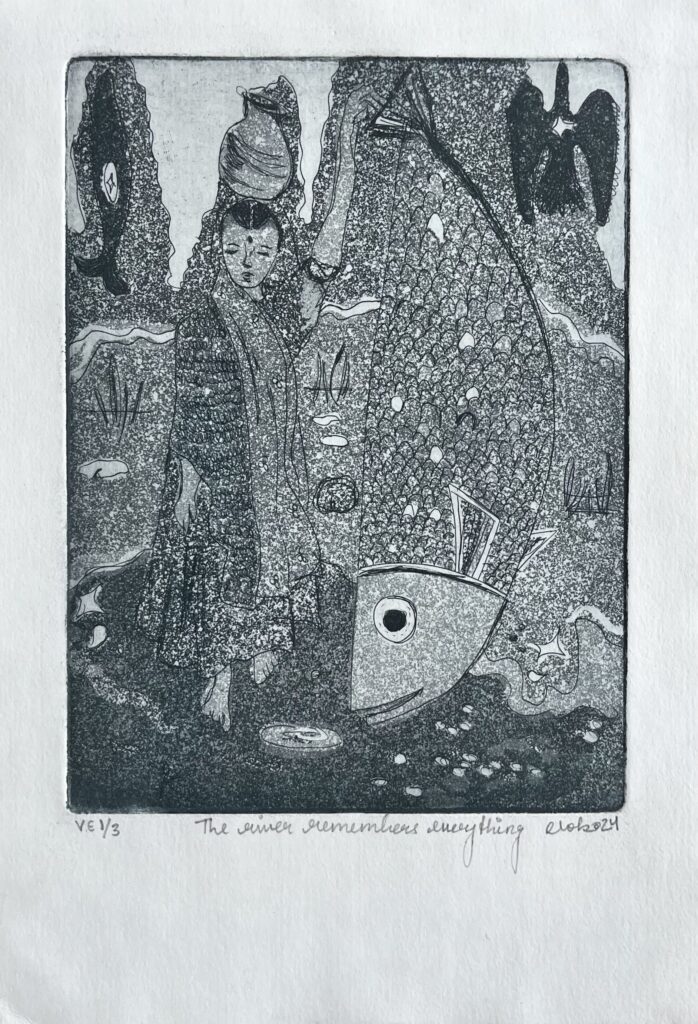
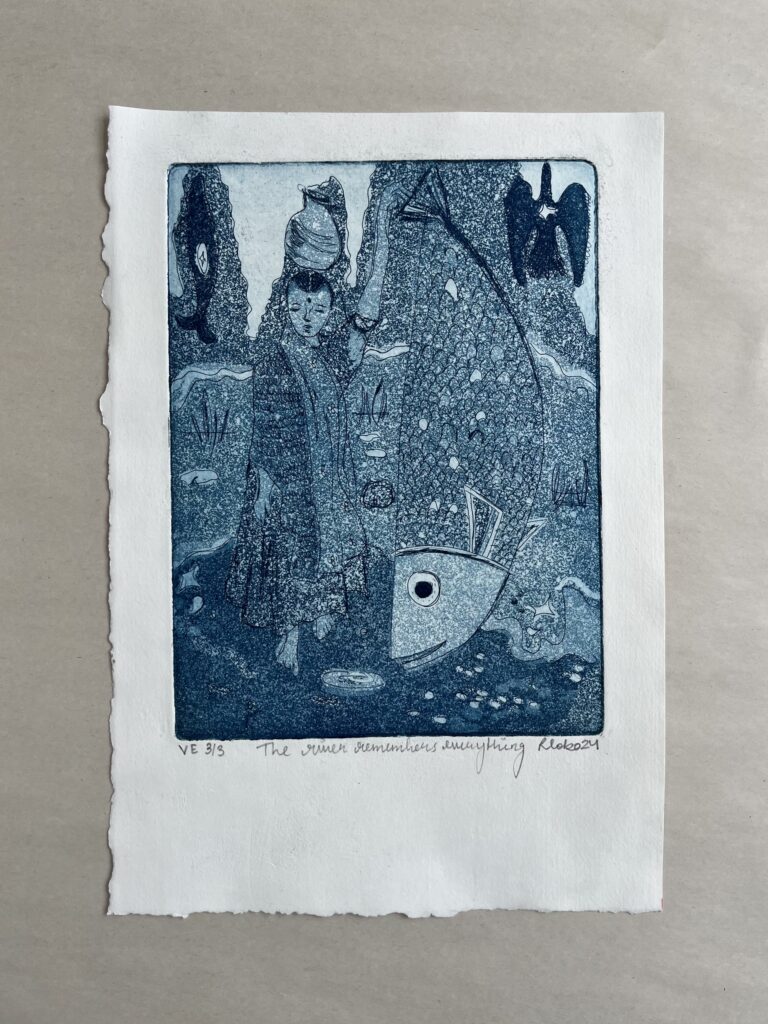
The River Remembers Everything
6×8
Copper plate etching and aquatint
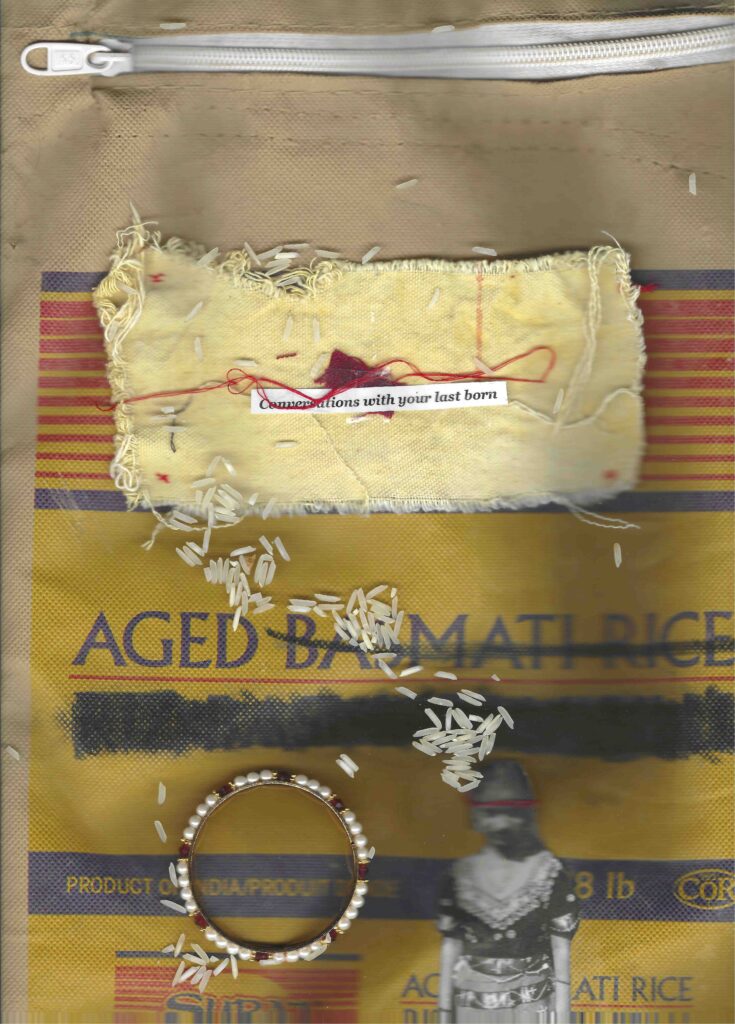
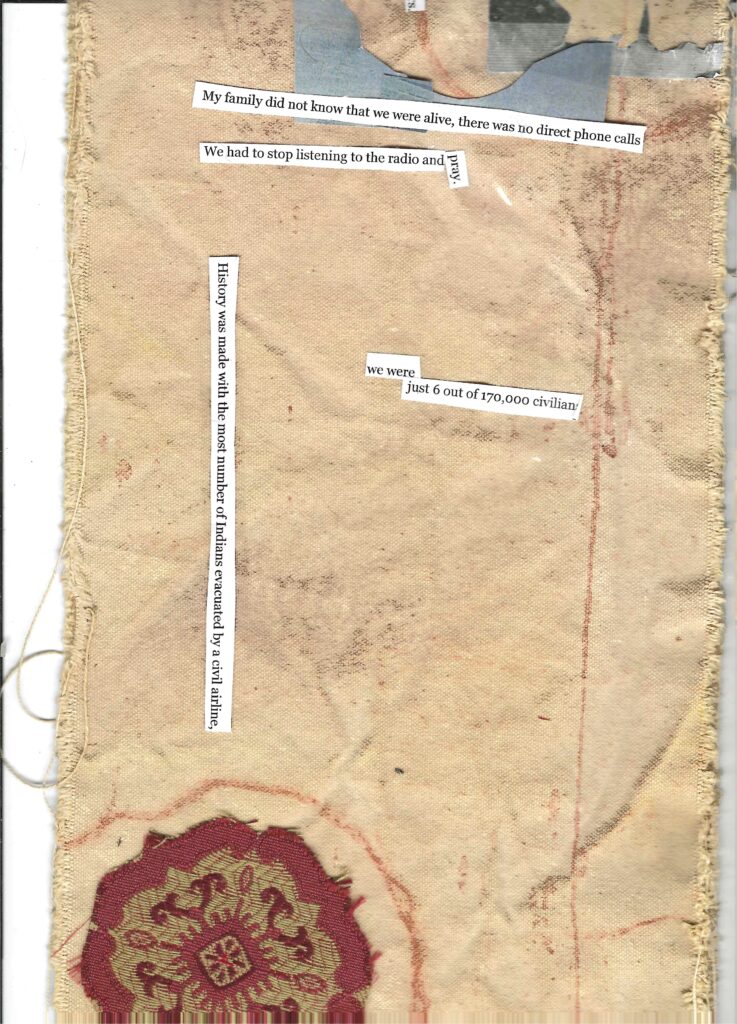
(Excerpts and Images from Conversations with your last born)
Land holds memory, Land reminds us of who we are.
but if we are displaced from our land, rare or never to return
What reminds us of who we are?
What are we made of?
In the end all we are, are our stories
Birth:
2001 (Kuwait city) مدينة الكويت
I was born into a home with rice, Jesus Christ and cricket matches on the TV box
A home with loud wooden doors and eggshells on the floors
A home with constant nausea, vomit and stomachaches
The pandit says debilitating stomach aches
Written in the stars, Virgos will suffer with constant and consistent digestive issues
I dug into the roots and stay buried in the soil
The last rooted vegetable, shedding layers, desperately hoping to grow, craving nourishing soil, estranged, out of its natural element, rotting, shedding and trekking on
Movement ages a child.
Pre birth:
الاجتياح العراقي للكويت (Iraq Invasion of Kuwait) 1990
Mom and Dad met in a place shaped like a falcon’s head on the map
In September of 1990, two months after they met and one month into the invasion they got married in a Church basement
Dad bribed an Iraqi for food
Uncle Ronny drove to Saudi Arabia to illegally buy moonshine for the celebration
They danced all night before fleeing.
الأردن (Jordan) 1990
From my Mom, Dad, Aunt Judy, Uncle Ronny, Aunt Nina and their little baby
It was a blackout and all the airports were shut down. We were trapped at the Jordan border on a bus for 48 hours.
My family did not know that we were alive, there was no direct phone calls
We had to stop listening to the radio and pray.
History was made with the most number of Indians evacuated by a civil airline, we were just 6 out of 170,000 civilians
ಮಂಗಳೂರು (Mangalore) 1960
Mama lived in a home, where she slept under a cot
Oldest of 6
They survived on scraps, while her dad drank himself stupid
I slept in a queen sized bed of a 3 storey house
Youngest of three
I wasted expensive meals and drank myself stupid
Visiting the cot, smelling old skin and Stomach aching
The prodigal child returns, vowing to never drink themself stupid again
Vows are meant to be broken, but mama would never forgive me if I sent her to a retirement home.
उल्हासनगर (Ulasnagar) 1959
Dada lived in a home by the train station
One of 4, he started providing at five years old
His father was a drunk and a train conductor
Men disappear and his uncles go missing
He is used to the dehumanization of brown men
So much grief yet I have never seen him cry
Riding the trains, smelling the empty bedroom and lingering whiskey
The child returns, vowing to never give up on him
Vows are meant to be broken, But I would never forgive myself if I abandoned him too.
After birth:
الفروانية (Farwaniya) 2004
We pray
We pray in the morning
We pray before every meal
Every snack
Every drink
After every Sin
We pray in the evening
We pray before bed
Mama, to whom do we pray?
Why do we pray?
If nothing changes, why are we praying at all?
If I ask that again, Hell awaits.
Mama and Christ are in constant connection
Even now, I sit down at the dinner table, out of habit, I do the sign of the cross.
I don’t pray anymore, I scream at the sky instead
Reliving reconnecting:
आंबोली (Amboli) 2022
Nana has never talked to me about independence day
I ask and I ask
nothing
Independence Day, She was 12 and heard the fireworks and the parade
आमची मुंबई (amchi Mumbai)
I’m 20 and I ask her about her life
When she was my age, she was married with 4 children
I ask about her life again
And Nothing
She asked me about the Goreh I was seeing
I said we broke up
She wanted us to marry
I said nana म्हाका गोरो चलो जायना (Maka goreh cheduh zaina) (I don’t want a white boy)
My family was shocked
As if not wanting whiteness was a deep deep sin.
I could never love a goreh truly or deeply
because what the actual fuck would we ever talk about?
My family mourned the departure of the goreh
They coveted my proximity to whiteness
But I think it was really my proximity to white privilege they envied
I envy that too
الفروانية (Farwaniya) 2012
My uncle raised me and I left him behind
The loneliness, I think it might kill hm
He works in a hotel, and lives in one of their rooms.
He’s kind and giving, but there are vultures that feast on his generosity.
I’m so far away and I watch
So scared that the loneliness might kill him
We buy him shoes and clothes and gifts but nothing fills the hollowness of us.
Uncle Lancy dedicated himself to his niece, never starting a family of his own.
No wife, no children, no pets
Lancy works the nightshift, so that he’s home to care for his niece in the daytime
He wants to be home, when she comes home from school
He cooks her favorite foods and buys her everything he can afford
When she felt small, he’s the reason she stands tall
He doesn’t really know it, but he is the reason she knows unconditional love.
अम्बरनाथ (Ambernath) 2022
10 years later, Lancy and his niece meet at a train station.
They are hugging and crying near the Mumbai local.
I hate when he cries
My cousin asked him “what do you think about the way she looks? the piercings? tattoos? hair color? What do you think about what she’s made of herself?”
He says “I love her, I have nothing to say, I raised her. I can’t say anything about the way she looks. It’s still her. It looks good.”
I hated leaving him again
I hate it when he cries.
He was the first man I ever saw sob, but I really hate it when he cries.
I fear loneliness might kill him
I wish my thoughts were enough to keep him company.
Survival:
“Canada” 2014
What does it feel like to be a baby in the land of the free?
I don’t know
Perhaps life would have been easier if I was brought in fresh out of the womb
A baby fits better
They grow and mold into the hollow of this city, to its greed
perhaps I would be accepted, if was a soft, giggling, squishy tiny human
This city is expensive
It takes everything to survive
My body aches from the constant work
My head aches from thinking
My heart aches from living
The gift of life:
Stolen lands of The Mississaugas of the Credit, the Anishnabeg, the Chippewa, the Haudenosaunee and the Huron-Wendat peoples 2015
I think about the generations of sacrifice made just for me to live
Every complaint comes with a consequence
I think about everyone before me, who made this ‘dream’ achievable.
But if this is supposed to be easy, am I weak?
How am I to survive in a society that does not want me as I am?
My parents miss their language.
My sister calls me on the phone in a whisper, almost as if it is a secret, she says “I don’t know what it is, but when I talk to a group of white girls, something happens and I always walk away feeling less than them.”
loud proclaims come from the living room “if immigrants keep complaining and don’t like it here in Canada, they should go back to where they came from”
He forgets who we are. I wish I could tell him that bidding our identity farewell will not make you one of them. How can you willingly forget where we come from? I envy all the time you had in our home.
He calls me “ungrateful and privileged.”
I should be grateful. I am after all the miracle baby, the only one of us who moved to the Imperial core before my frontal cortex was fully developed, but I did not ask for this life, and God forbid I defy this life.
I used to love the ocean,
carrots made my stomachache, but water was good for the eyes
Diving in would make my brown eyes bleed
Perhaps my Irises would stain blue, and my pigmented skin would wash away
Life:
Stolen lands of xʷməθkʷəy̓əm Sḵwx̱wú7mesh and səlilwətaɬ people 2023
A vessel of memory for lands and waters
From the waters of Chitarapura to Al Kout to the Salish Seas
I am connected by Oceans
With water there are no borders, I am always close to home
Basking in the sea with the sun illuminating
Diving in, my brown eyes and skin is nourished
In the Coffee shop 2024
A white mom and her 16 year old daughter sit at the table right next to me.
A good ole canadian family
They won’t stop talking
Like this, Like that
Like like like
My fault for sitting at the communal table
Now i’m one of the girls
I’m reading a book,
Actually just holding a book open on Page 27
My eyes aren’t moving
I haven’t flipped a page in 7 minutes
I’m listening to their conversation
This normalcy feels like an unnatural fact
I don’t remember the last time I talked to my family like this
where it didn’t end in disagreement
Or discomfort
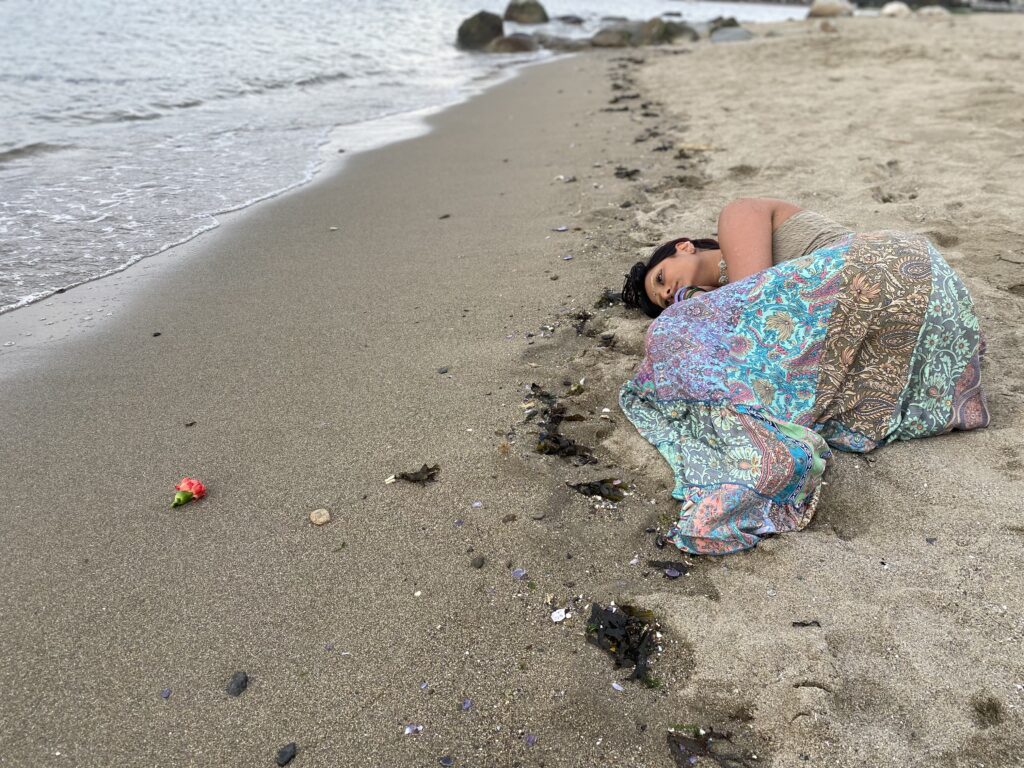
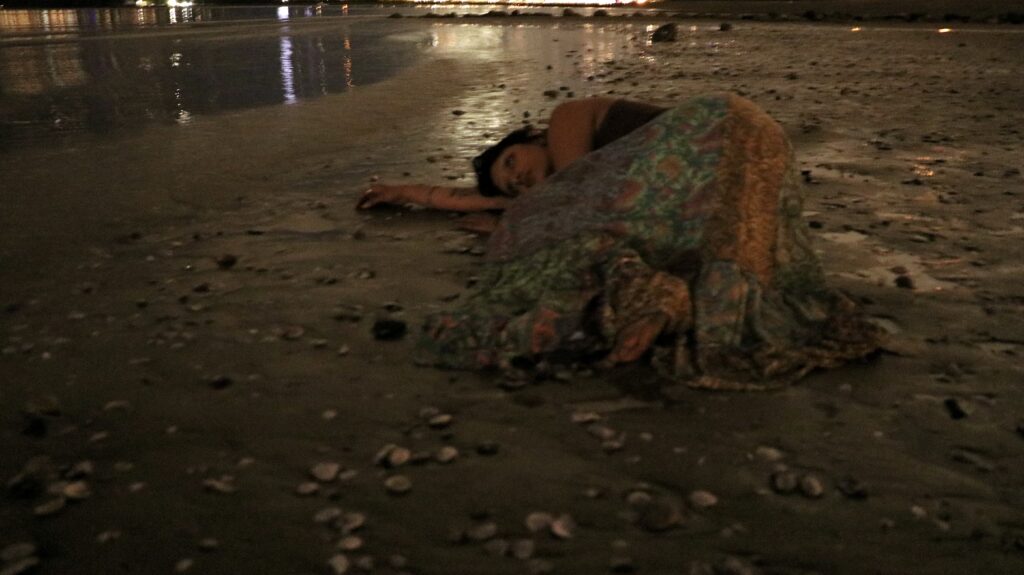
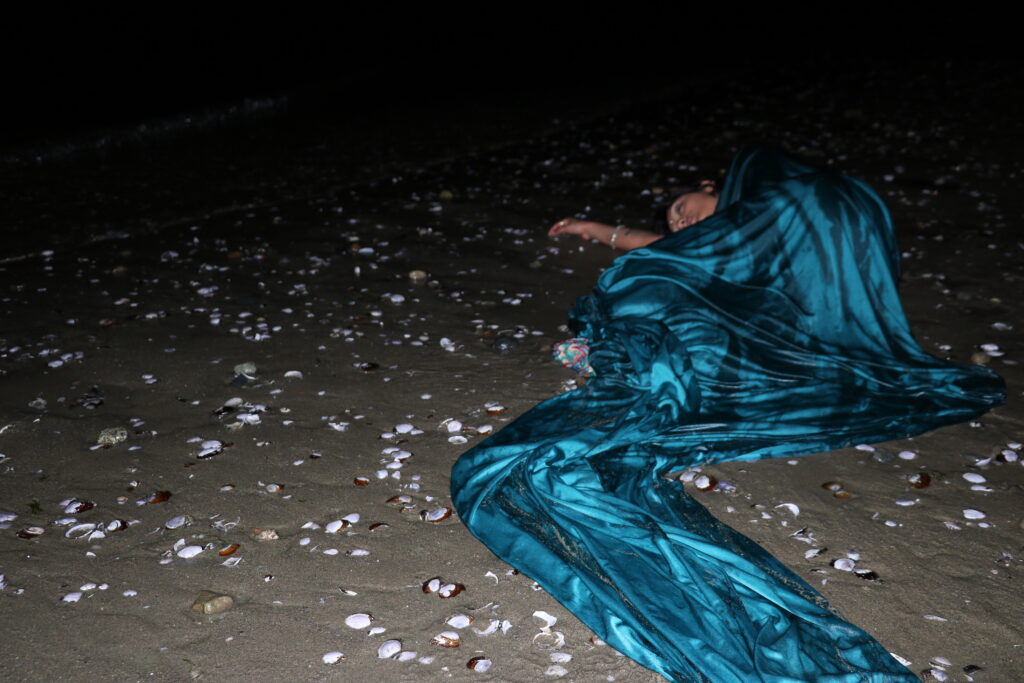
Laying on the ocean’s edge, yearning Performance (Image stills)
Planted along the ocean’s edge; yearning for mobility, connection and belonging. The shoreline becomes a place for dreaming about land without constructed borders; between departure and remaining, soil and seawater, immobile and free flowing.
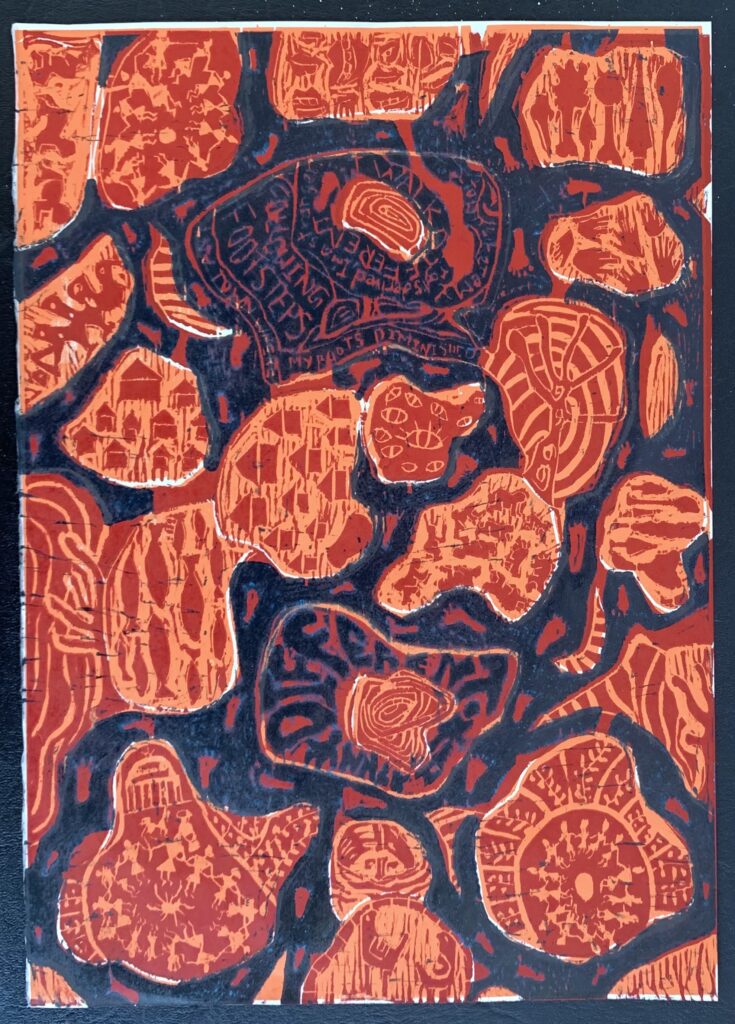
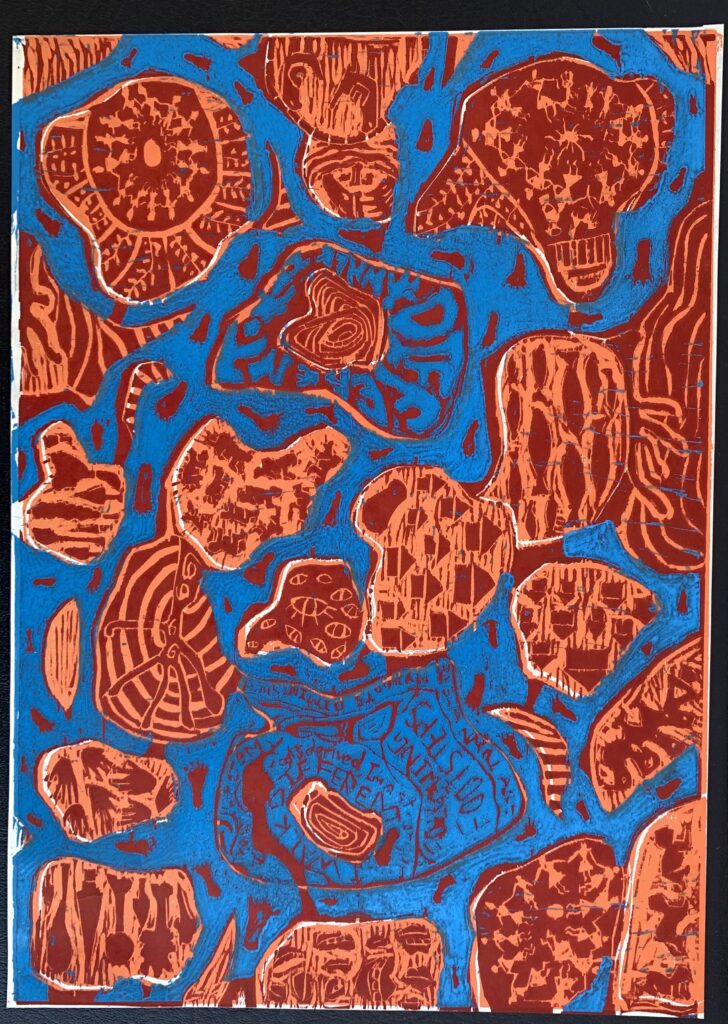
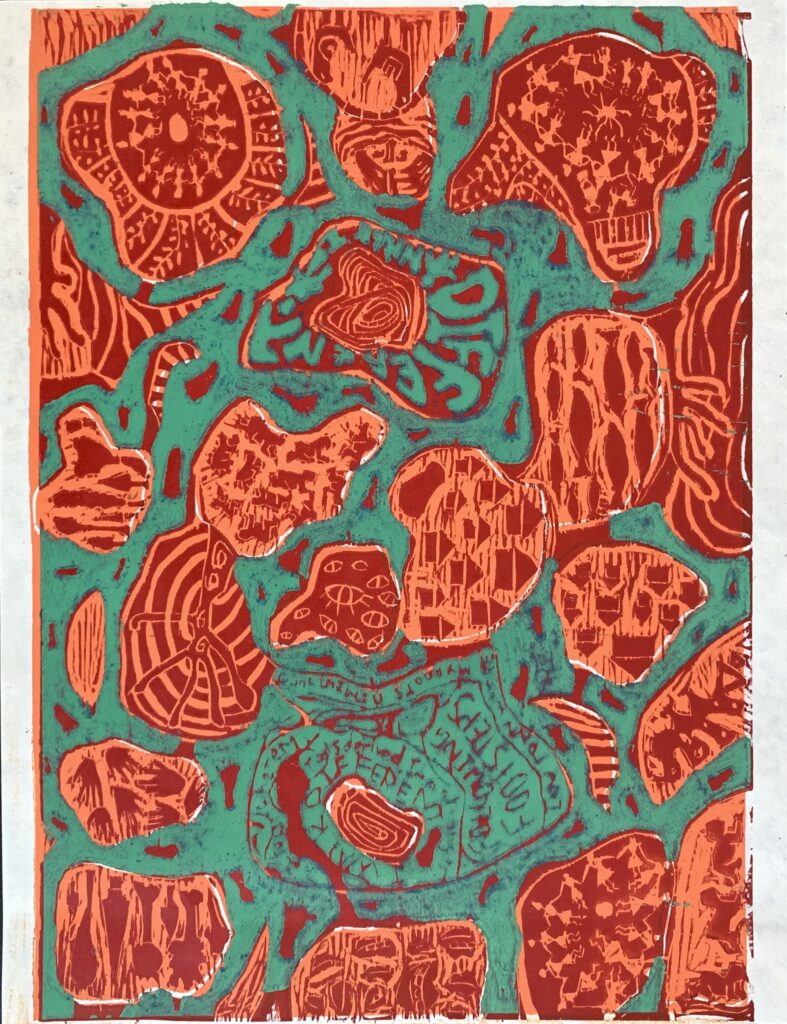
Walking in this Body
10×14
Relief woodcut
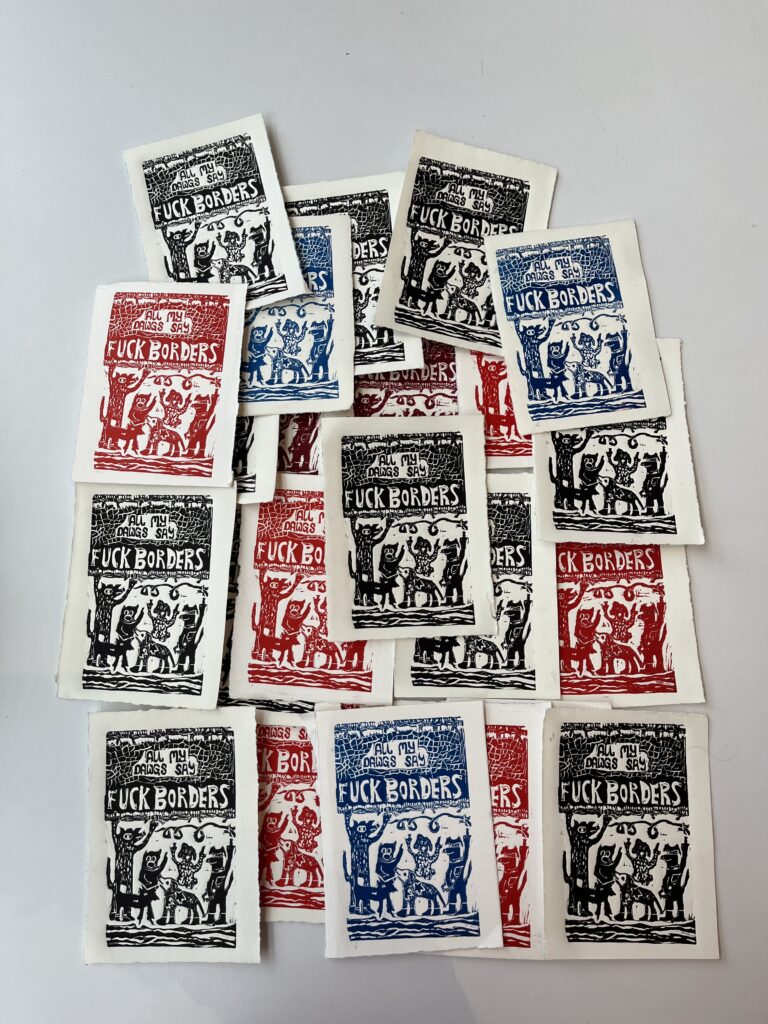
Who Let the Dogs out?
linocut
6×8
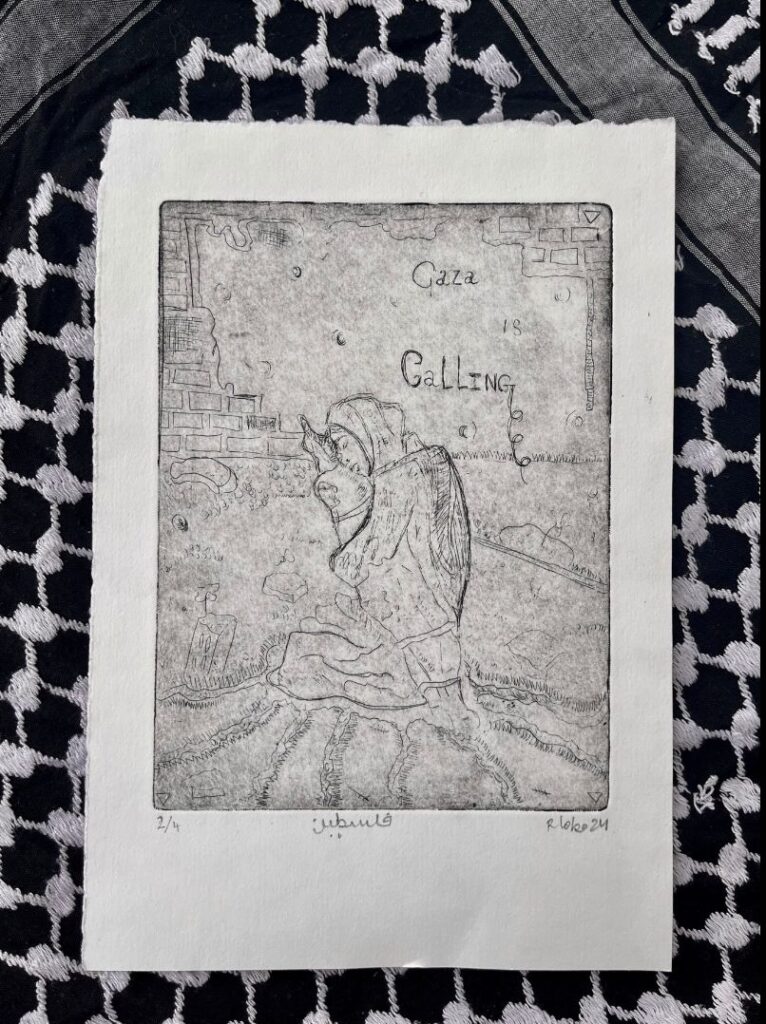
Gaza is calling
6 x 8
Etching
To onlookers, To fellow artists and writers, To those who are still holding onto their humanity,
I have one question I keep coming back to- how do you look away? How are we to celebrate the grad show and our degrees when there are no remaining universities in Gaza? When we have lost count of the death toll? When students just like me are being abducted and deported right across the border? How do we continue on with business as usual?
I cannot with a clear conscience create artwork about constructed borders, the mundane violence it perpetuates, the grief and separation that comes with it, without acknowledging the violence being enacted through a full siege on Gaza. I cannot disregard one of the most clearly documented genocides in history that includes a full land, air and sea siege, blockade of food, water and humanitarian aid and brutal bombing committed by the israeli state on Palestinians. Militarized borders are a poison, we see this in occupied Kashmir, partitioned Panjab, in Gaza, occupied Palestine and along the united states-Mexico boundary. I cannot disregard the police state sanctioned violence, ice abductions and deportations enacted by the trump administration, especially knowing many of them are student organizers. I cannot disregard the rise in ethno-nationalist facism-from zionism to hindutva. I believe ethno-nationalist facism and border imperialism to be the colonizer’s poisonous tools. From Kashmir to Turtle Island to Palestine, I recognize the parallels of the complete eradication of familial lineages, ethnic cleansing and land occupation and I long for everyone to be free.
The past two years have been a display of a brutal occupation regime and how our governments are supporting it. I have no words for what we bare witness to. When I think I have seen the worst of it, I see more, I see worse. Our world is on fire and as artists it is our responsibility to reflect that. Art and poetry are tools of the revolution, Fascist regimes, consistently target artists, writers, academics, educators and cultural workers because we connect people to a power that no institution or empire can buy, steal or conquer. It is our intuitive calling to make the revolution irresistible, to be a truth tellers and amplify the marginalized. I will never be able to unsee the horrors and unlearn our reality. I refuse the normalcy that our institutions are complicit in genocide, that our education is being funded by corporations profiting from Israeli apartheid and genocide. Another world is not only possible, but is inevitable.
I am aware that our administration has no interest in protecting its racialized students, much less being on the right side of history. They have shown us this through their repeated efforts to silence and fear monger students, staff and faculty. They condescend our demands and calls for justice in the name of us being “passionate” and “caring” while the most well documented genocide in history occurs, let me remind you that this is violence. Your dismissal for the loss of Palestinian life is violence. Your guilt and empty apologies will not save you from your complicity. They would much rather we purport decolonial theory insteading of putting it into action, because if we dare practice effort for decolonization and antiracism, we might be labelled as institutional threats (allegedly). This place, like many colonial institutions, has continued to try and kill our spirit. In all honesty I will never forgive the institution for the violence they have enacted on its students and faculty. However, through it all solidarity and community prevails. No amount of threatening emails, investigations (allegedly), increased security, calls to the police and fire marshalls, book bans, curriculum bans and art censorship will stop the student intifada. A new generation of solidarity will rise each time and the struggle will continue. We are united in our fight against settler colonialism, fascists, white supremacists, Capitalists and imperialists. There is community here and where there is community there is resistance.
Now 559 days after our first demands you never adequately met or acknowledged, we demand ECU:
- Disclose, boycott, and divest from all companies complicit in the Israeli apartheid regime, the occupation of Palestine and the genocide of Palestinians. This includes ending ECU’s relationship with RBC, which owns $75 M of shares in Palantir Technologies, a military contractor supplying the Israeli occupation.
- End the exchange program and cut ties with the Bezalel Academy of Art and Design, and participate in the global academic boycott of Israeli universities and institutions.
- Create an anti-racism policy that protects Palestinian, Arab, and BIPOC students.
- Publicly acknowledge the genocide and condemn the Israeli government for its clear violations of international human rights. Publicly condemn the scholasticide in Gaza.
- Reaffirm the Palestinian peoples’ right to resist.
- Make a public statement of your completion of (or material, timed commitment to complete) each demand, or, a public statement with explanation of your refusal of each demand
I urge you to contemplate your place in this, to be uncomfortable. Our discomfort will not kill us and for many that is a reality. There is no rest for people in Gaza. There is no graduation. No celebration. There is no looking away. Every day more people die, we see last moments, last breaths, final goodbyes. We bare witness to well documented atrocities, massacre after massacre, and we still continue to ask for mere acknowledgement of the violence. Silence on the matter of colonialism, complicity with genocide and white supremacy is not neutrality, it is violence. We feel the hostility and ostracization within the walls at Emily Carr University, they are coated in white supremacy and institutional violence, we feel it within these classrooms, studios, hallways and from the hands, actions, and words of the President’s Office and administration. We see the blood on your hands.