Gaslit By Design
Joshita Nagaraj
See it On Campus: Level 2
Opposite the Aboriginal Gathering Place
Visitor InfoAddressing deceptive design practices through education and awareness
Introduction
This research examines the pervasive issue of deceptive design in the digital design industry, highlighting its detrimental impacts on user trust, emotional well-being, and long-term business sustainability. A course curriculum is created and making which foster critical awareness, ethical responsibility, and practical frameworks for responsible design practices, emphasizing the balance between user-centered values and business objectives to create a more trustworthy digital ecosystem. By interacting with design students and community engagement, the course serves as an educational platform with resources and a toolkit on how to identify and address unethical design behaviors through building and critical analysis of their work.

Key Anchors
Community engagement and critical analysis emerged as key factors in addressing deceptive design issues through educational pedagogy. Engaging with design students, the course is an educational platform to help participants identify and address unethical design. By engaging in participatory activities, diving into types of deceptive designs and having ethical design dialogue, participants gain a deeper understanding on deceptive design and its implications. Through activities like building and critically analyzing their own work, participants develop practical skills to create more transparent and ethical user experiences.
The objective of this study is to establish a community of responsible designers, create frameworks of best practices and ensure, advocacy, and dialogue. Decisions that bridge design strategies and ethics must be made as part of a culture shift in the industry that values and adopts ethical design practices in order to decrease the use of deceptive design.

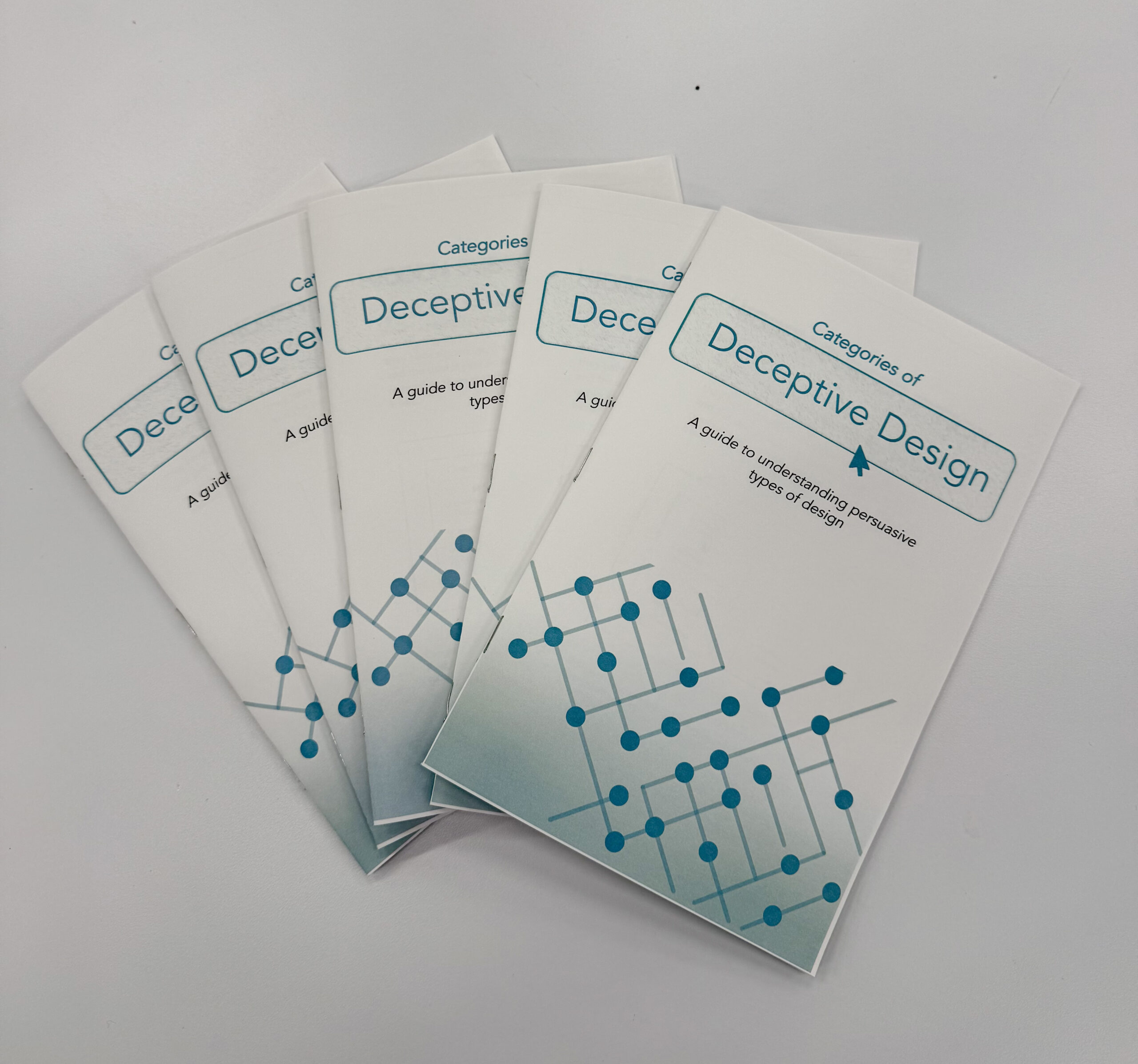
Discourse in the form of education is used as a tool in creating positive social change with community engagement. As a part of this education, this project asks the question – How can interaction designers’ literacy regarding deceptive designs be improved using educational resources and activities?
Surveys
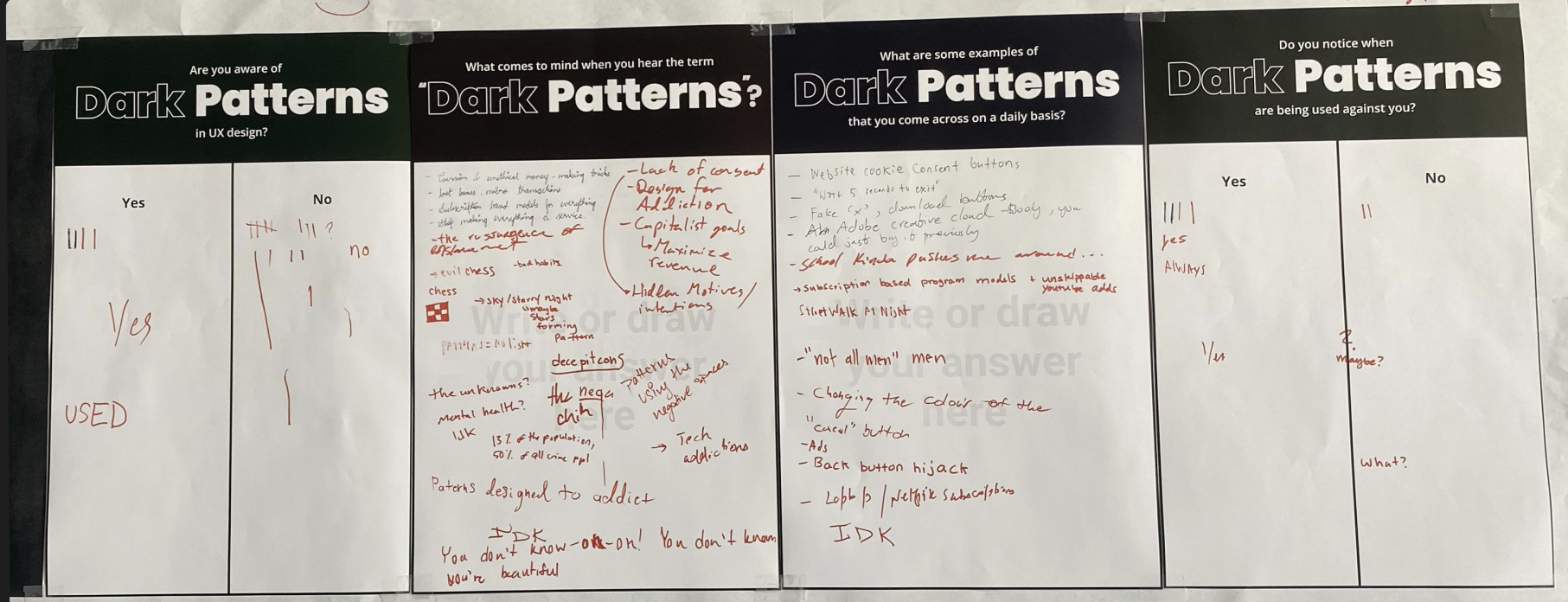
To gauge awareness of deceptive design with an art and design audience, I created a survey that asks what “dark patterns” which is the more commonly used term, means to them without giving any futher context. This was an open survey for the students of ECU and it was strategically placed in a spot on campus where there would be more design students from various streams in passing. The outcome of this survey was interesting because some of them mentioned that they thought it was a chessboard or a street walk at night, but a lot of them knew that these designs exist, just not the formal term for it.
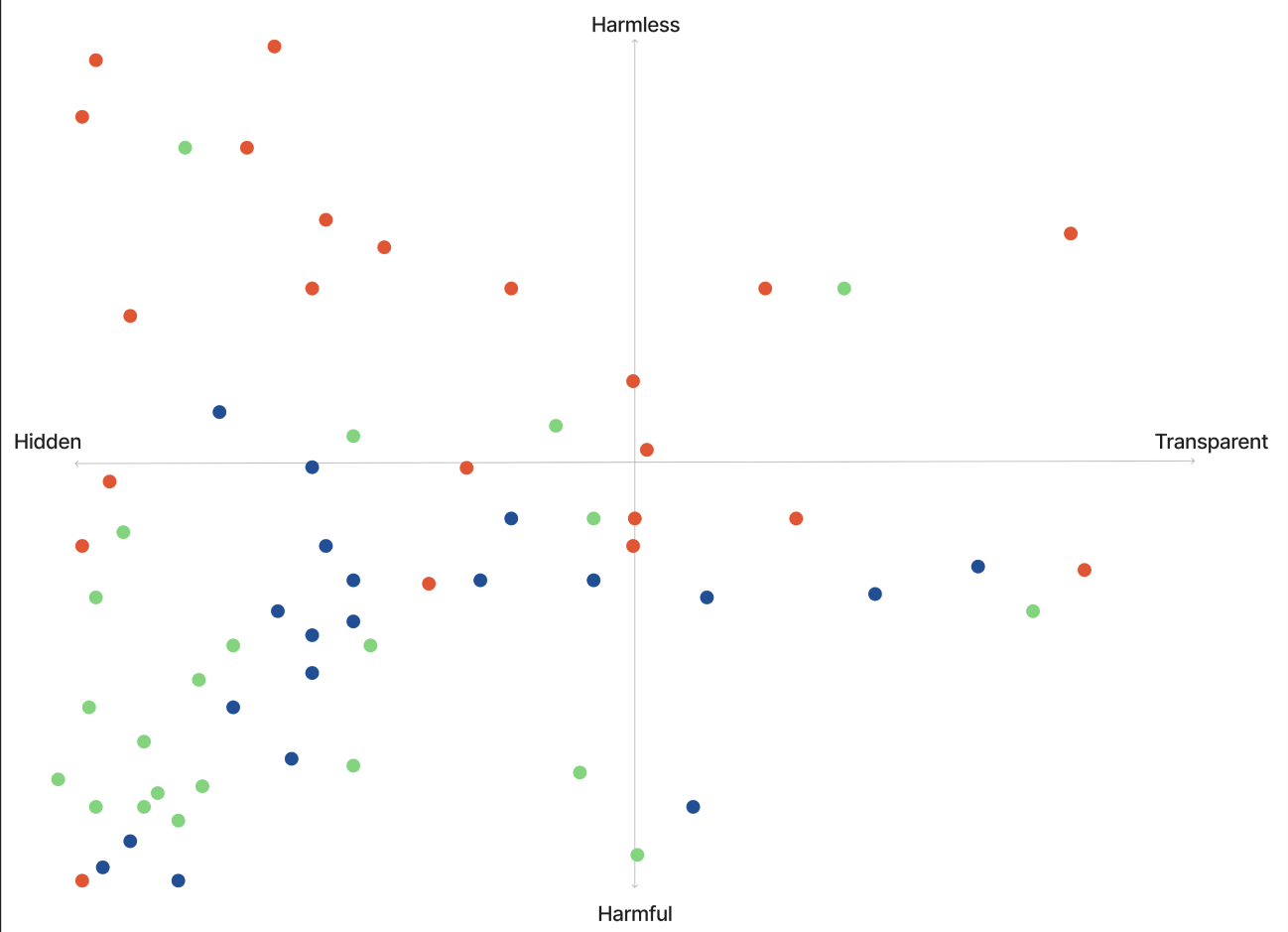
I created another survey where I wanted to see what people considered as harm. I provided three examples of deceptive designs. The first one being Facebook’s default privacy settings in blue dots. Second one was youtube’s premium ad subscription pushes in red dots and third one was google assistant’s terms and conditions review in green dots. Participants were required to plot these examples on a graph of hidden vs transparent and harmless vs harmful. Looking at the range of where these examples are plotted were interesting. I wanted to understand the nuances of these choices so I began creating workshops for the same.
Workshops
In November 2024, after conducting different interviews and surveys to get students’ perspectives on deceptive design, I created a workshop to get understand perspectives through participatory methods and community engagement. The workshop took place for three hours. Six interaction design master’s students from Emily Carr University participated. Three groups of two people each were formed. A hypothetical roleplaying scenario is simulated where the participants are working for a company that gives them business objectives such as “retain users through UI optimization” or “upsell premium subscription to consumers” so that the company is able to make profits.
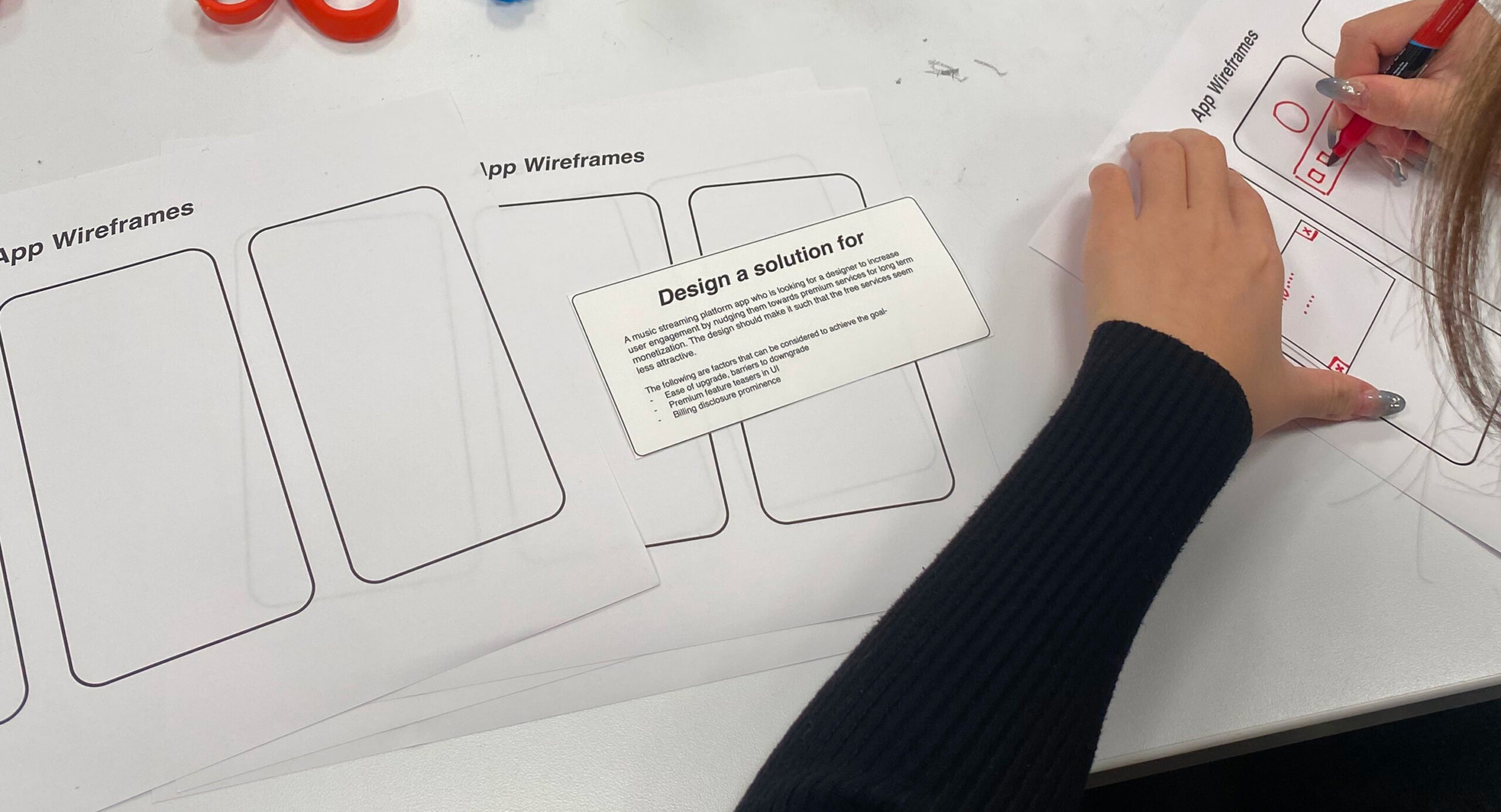
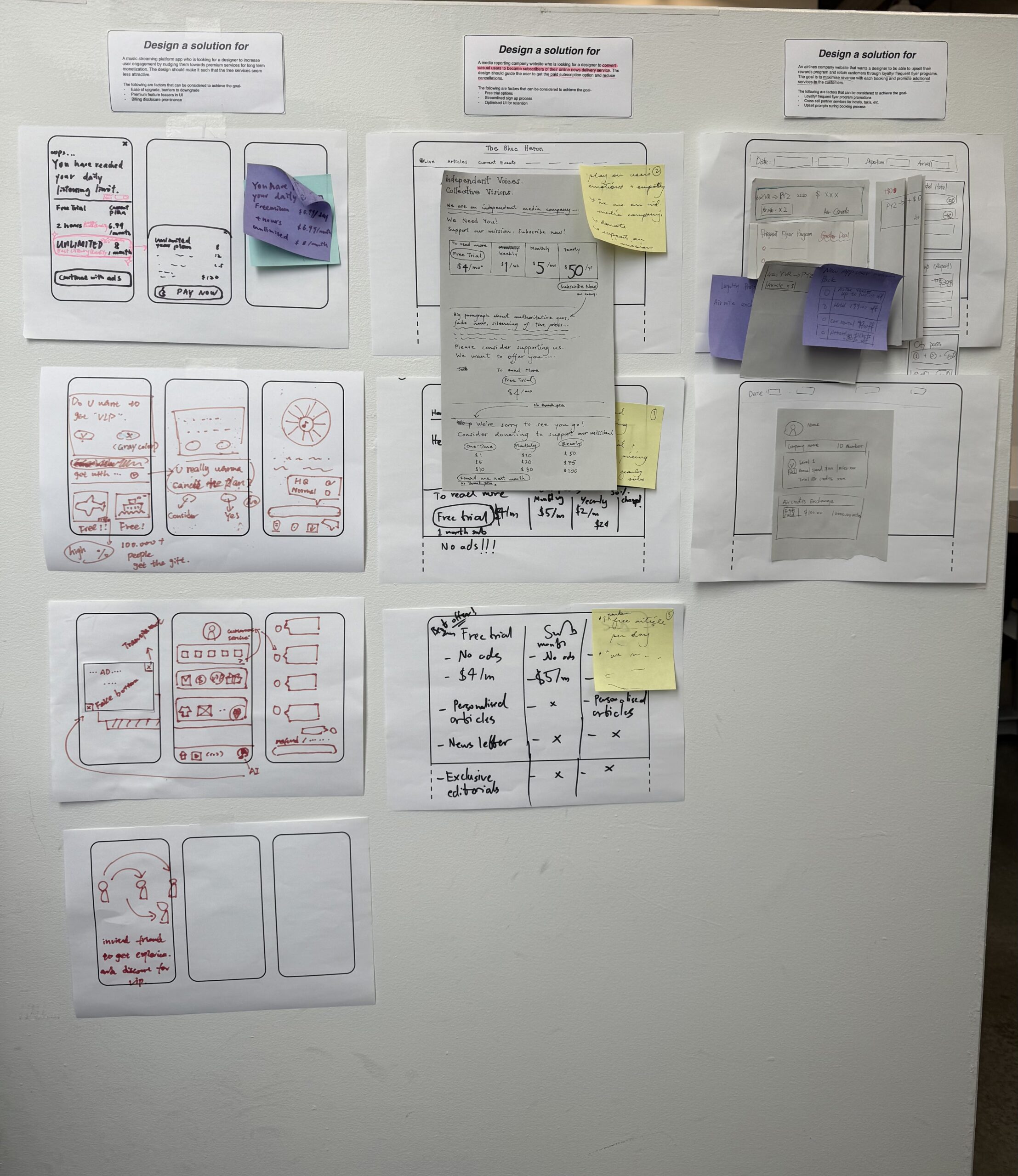
I created a workshop to prototype the structure of the course curriculum for community engagement on a bigger scale. A three hour workshop was conducted as a part of a behavioral psychology class with 19 first year interaction design students from Emily Carr University. I collaborated with the professor of the class, Ben Unterman, who wanted to talk to the students about deceptive design. The class is conducted during the fourth week of the four-month course where the students have a basic understanding of UX designs but have little to no experience of working in the industry. It aims to provide them a comprehensive understanding of deceptive design practices and reinforces the importance of responsible design as they move forward in their careers. This workshop is a test of a structure that is later expanded into a full three to four month course outline.
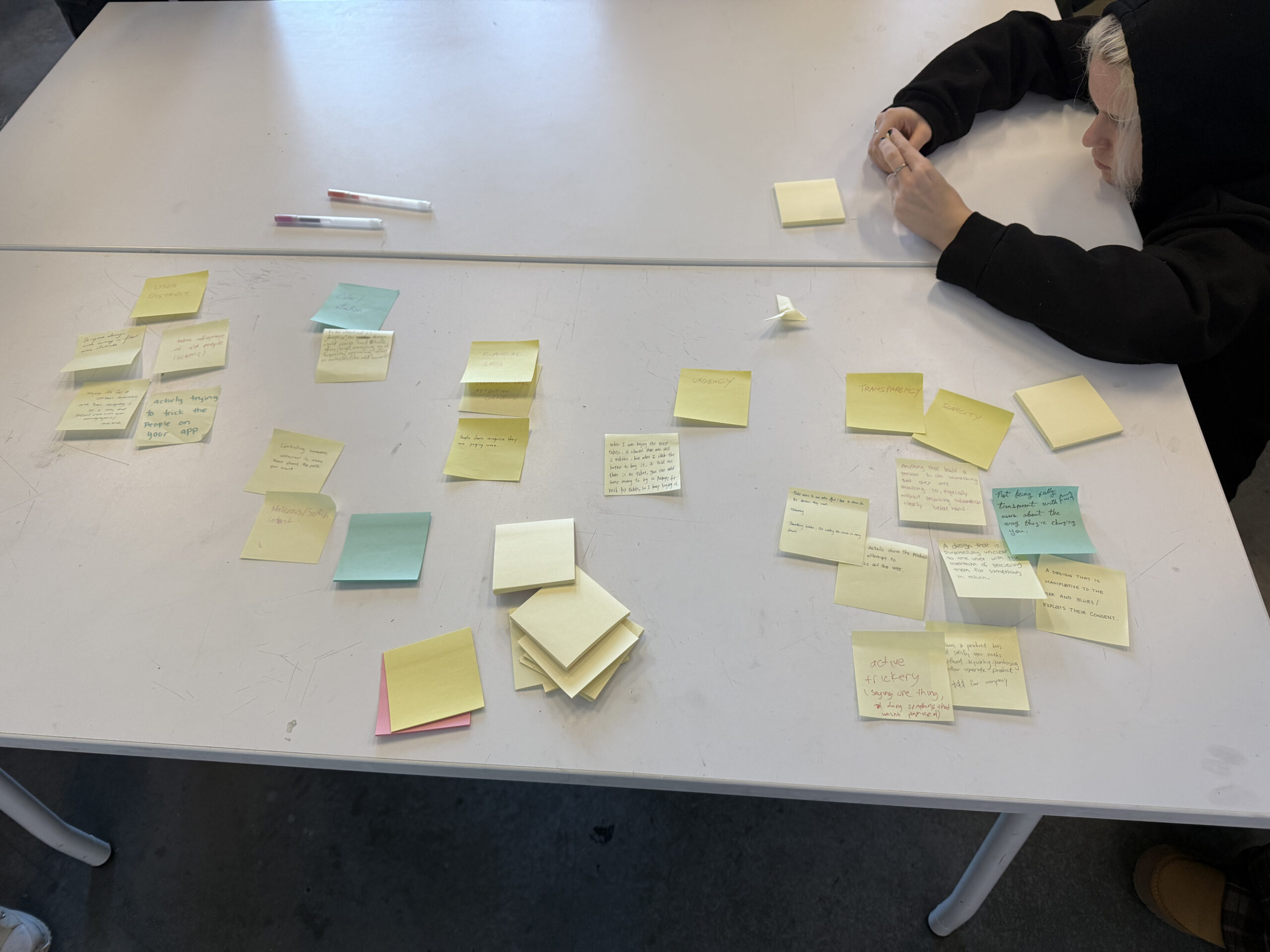
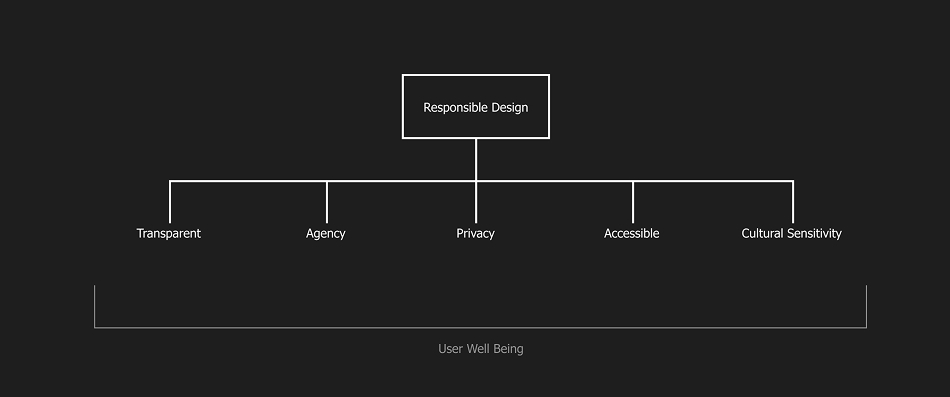
From the research methods so far, a pattern emerged in what people consider are responsible design for them. The workshop had one driving question to it which is “what does responsible design mean to you?”
The Outcome
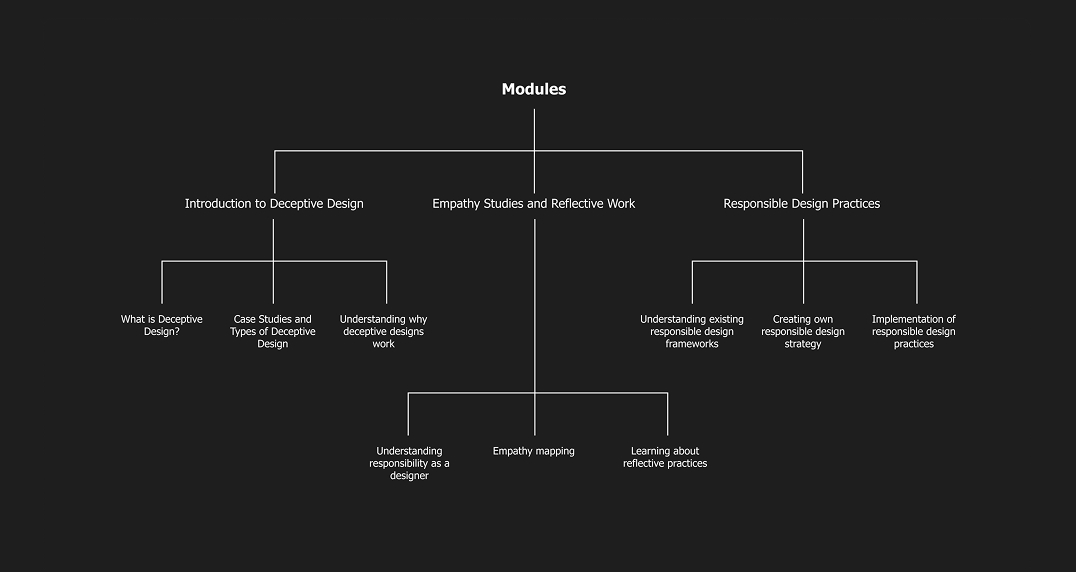
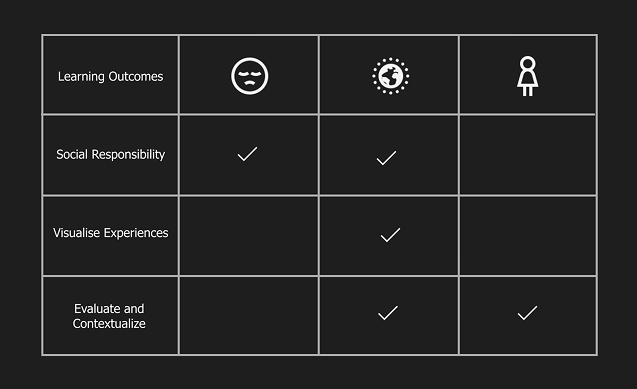
A course curriculum is developed from all the data collected so far. This course implements all the information learned and addresses the gaps faced within literacies of deceptive design in undergraduate interaction design education. The course includes modules, lesson plans, activities, assessments, and grading criteria. The structure is inspired by the BOPPPS lesson plan (Zheng, 2023) and is modified to fit each subtopic’s learning goals. BOPPPS stands for Bridge-in, Objective, Pre-assessment, Participatory Learning, Post-assessment, and Summary. The BOPPPS model is used in implementing each lesson in the course module as well.
Reflection
This course can be implemented in many ways. The course structure is a potential direction that educational organisations can begin implementing in their interaction design, UX, HCI and interdisciplinary design programs. However, it comes with its set of challenges. Addressing deceptive design requires action to be taken from a community and not just individually. It brings together facilitators, education systems, students and young professionals alike to collaborate in exploring ethical challenges and predominant issues faced by the industry today. This brings momentum in creating systemic positive responsible changes. The course creates a culture where ethical considerations are embedded in the community’s design practices from the ground up.
Release Granted