An Exploratory Study on Bridging Biometric Insights to Emotional Well-Being
Lilian Zhaotong Chen
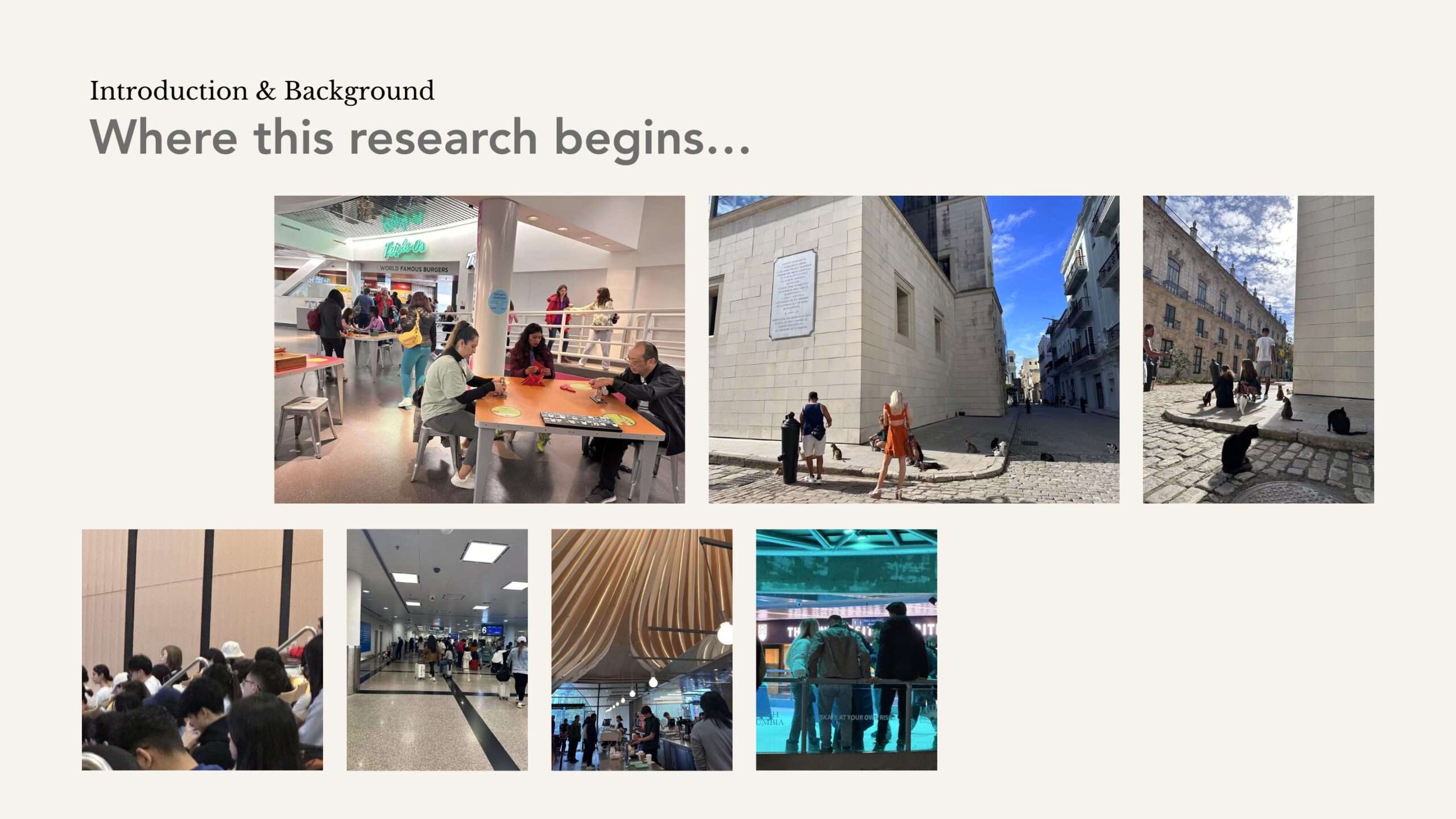
Over the past few years, I found myself unintentionally ‘people-watching’—observing how people interact in public places, whether it’s at an airport, a café, or a busy street corner. I started noticing subtle gestures or habits that seemed to reveal underlying moods, like nervous tapping or absent-minded fiddling with an object.
That curiosity about the hidden emotional cues in everyday behaviour is what initially sparked this research.
I wanted to understand how these seemingly small physical signals might be connected to our inner states, and how we could potentially design interventions that nurture emotional well-being.
Research Question
“How does combining physical and digital environments collectively shape and influence actions and behaviours, and how can symptom diagnosis foster a mindful connection between users and their senses?”
This question addresses two key aspects:
- The relationship between physical and digital environments in shaping user behaviour.
- The potential for symptom diagnosis to guide users toward greater mindfulness and self-awareness.
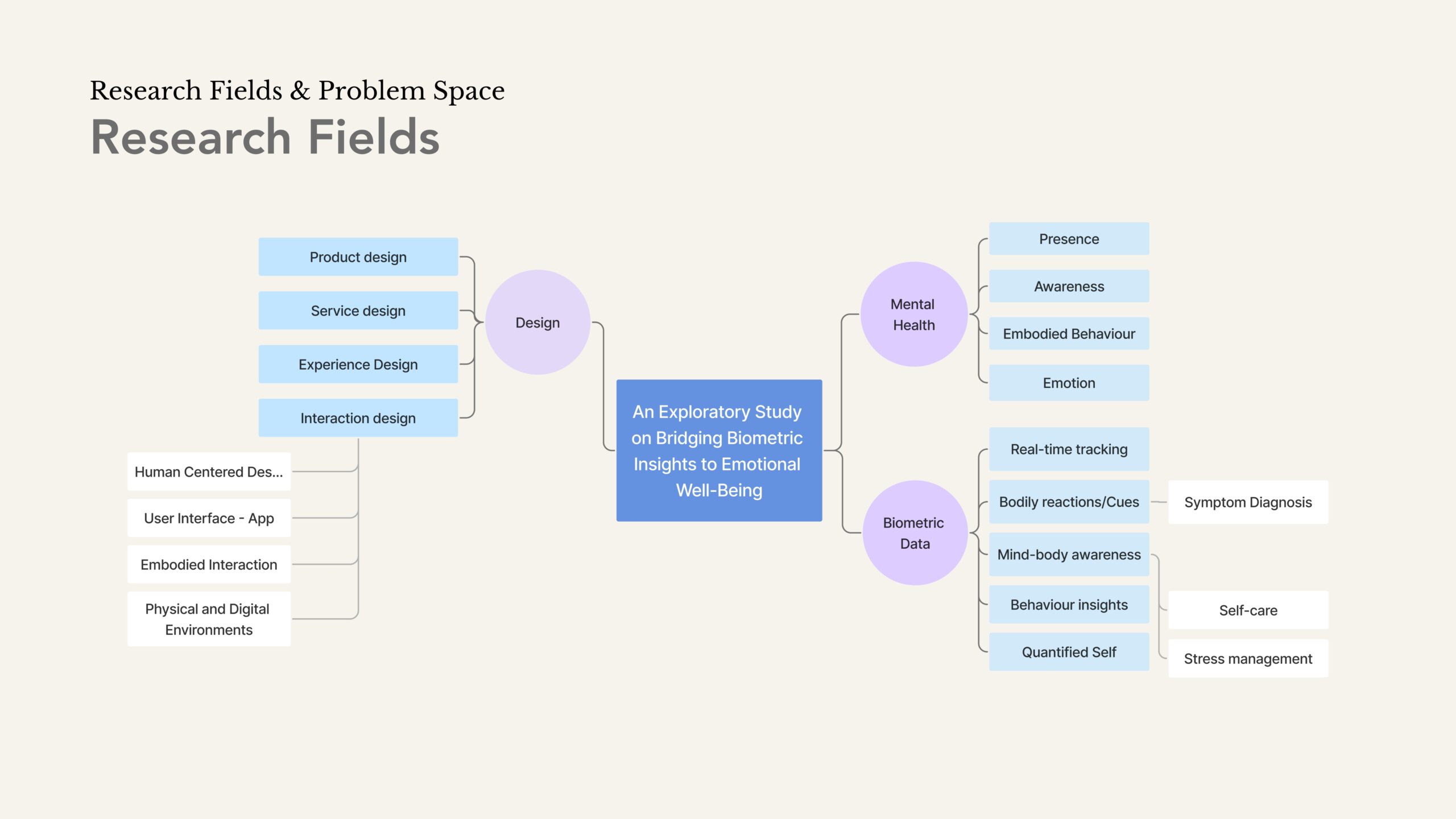
At its core, this research sits at the intersection of Interaction Design and Mental Health, leveraging Biometric Data as a bridge between the two. What I’m addressing is the gap between the raw data our devices collect, such as heart rate, sleep patterns, or activity levels, and truly actionable insights for everyday mental well-being.
Right now, many wearables gather loads of data, but they don’t often help us interpret how that data relates to emotional experiences or offer personalized suggestions we can actually use in the moment. That’s the central point of my problem space: how can we transform real-time physiological signals into meaningful feedback, so users can better recognize emotional patterns, manage stress, and form more mindful habits?
Research
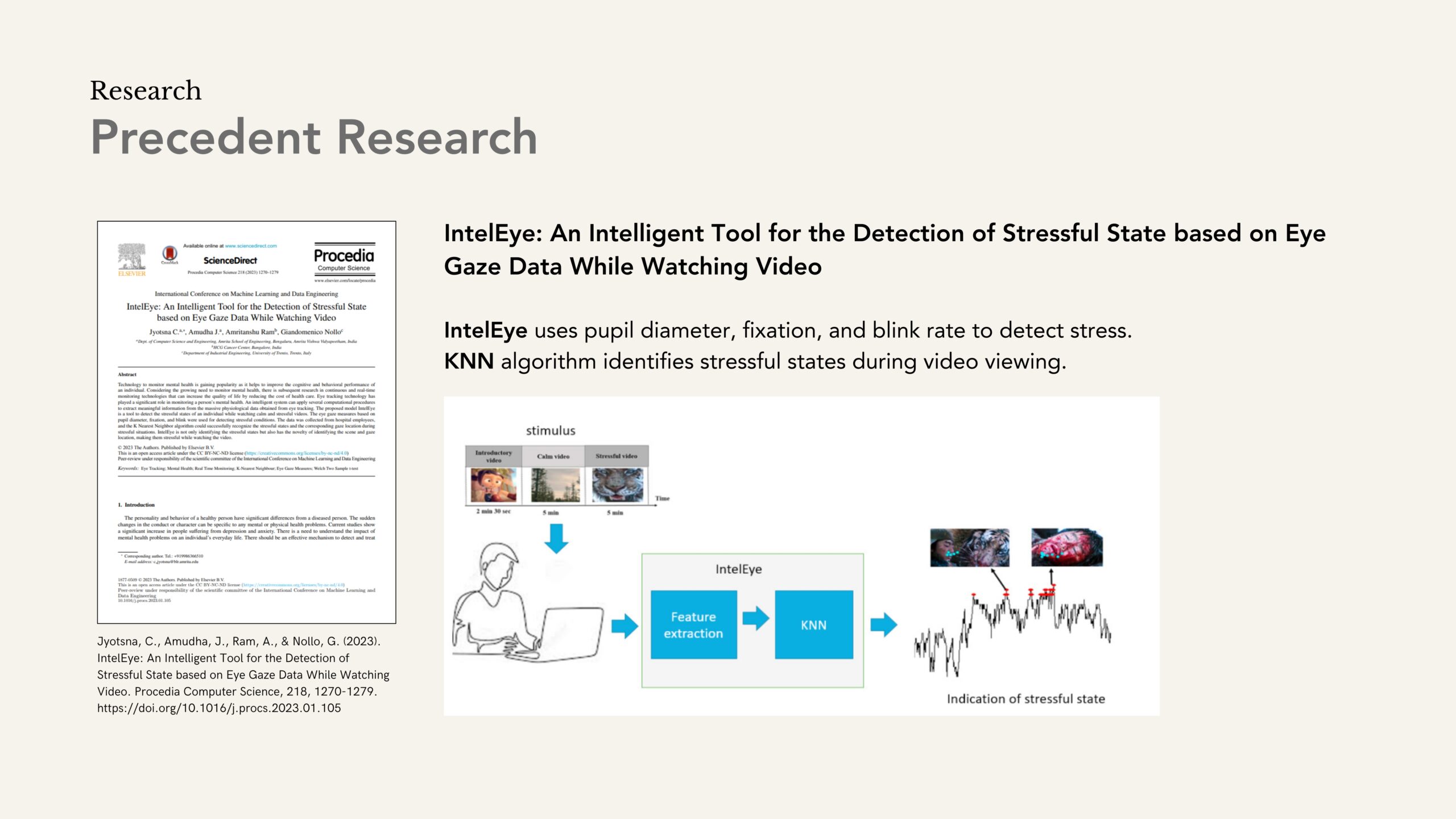
The example I am showing here is IntelEye, which uses metrics like pupil diameter, fixation, and blink rate to detect stress levels while participants watch both calm and stressful videos. By running these measurements through the KNN algorithm, IntelEye can successfully classify when someone is experiencing heightened stress and even pinpoint the user’s gaze location in those moments. They tested this tool with hospital employees, reinforcing the practical potential of data-driven approaches in mental health.”
Seeing how IntelEye leverages physiological inputs for emotional insights has greatly influenced my own approach. It suggests that when we capture biometric data, like eye tracking, we can interpret it in real time to estimate emotional well-being.
This foundation helps inform my TouchDesigner prototype.
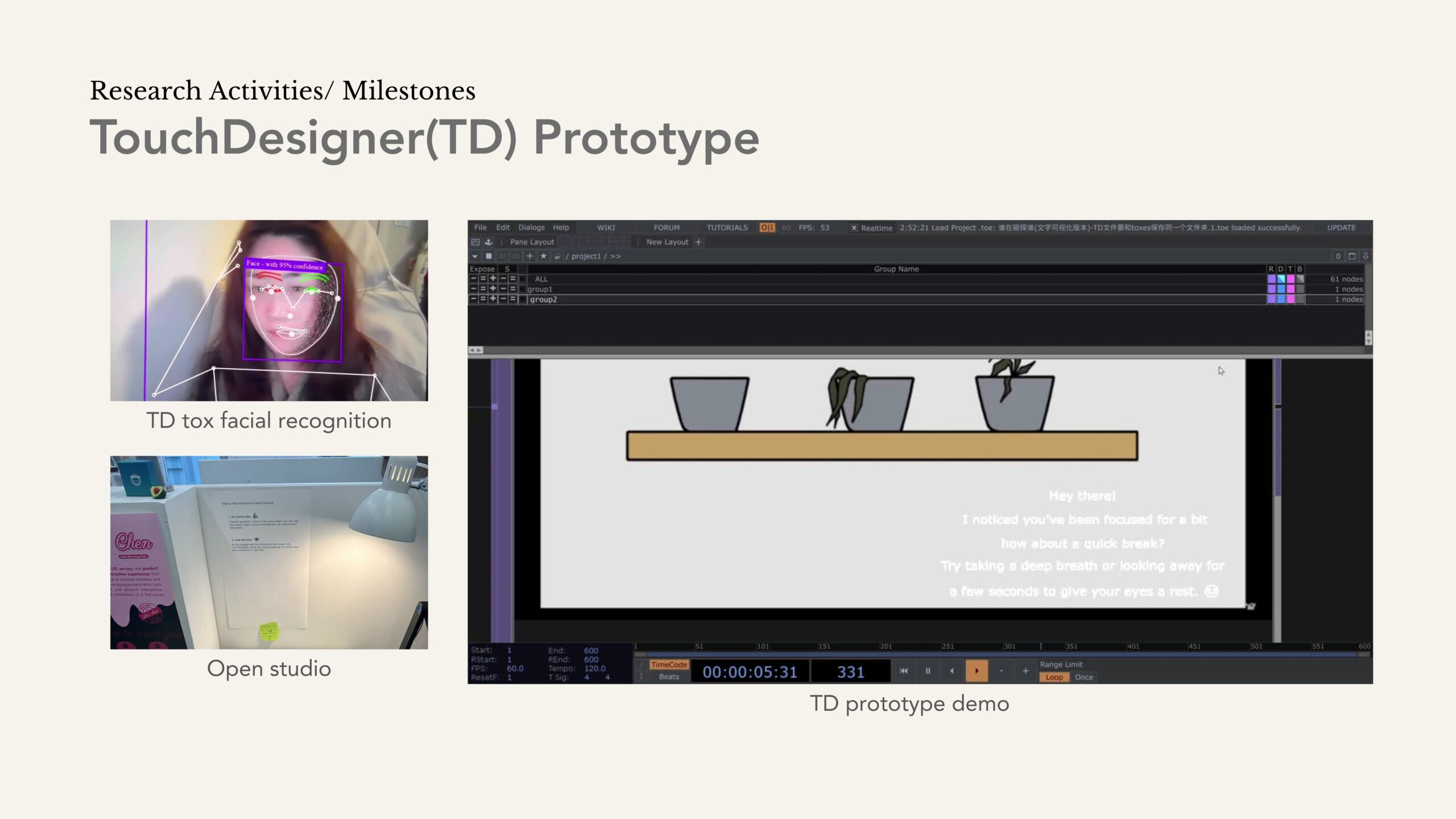
During our Open Studio, I presented my TouchDesigner prototype that uses facial recognition ‘TOX’ components to track eye movements. The idea was straightforward: whenever the system detected prolonged eye gaze, it would gently prompt the user to take a break, like a digital nudge toward mindfulness.
However, as people interacted with the piece, I noticed a fair amount of confusion. Many participants didn’t immediately see how it connected to my broader thesis about mental well-being. This feedback was invaluable—it pushed me to rethink how to make the interaction more intuitive and clearly tied to stress relief or emotional awareness.
Research Methodologies
- Autoethnography
- 7-day diary entries
After developing prototypes and gathering initial feedback, I wanted to immerse myself in a setting that would truly test how physical environments can impact our biometric and emotional responses.
This led me to Hamakua Sanctuary on the Big Island of Hawaii—a place that became essential in my autoethnographic research.

Hamakua Sanctuary is a unique retreat focused on cultivating self-mastery and leadership through land stewardship. They offer a program called Metamorphosis, designed to deepen one’s connection with nature.
Living and working on-site gave me firsthand insight into how an environment dedicated to natural rhythms could shift my mental and emotional states. I documented my experiences daily, noting changes in my stress levels, feelings, activities, sleep times, and steps taken as I interacted with the land and community.
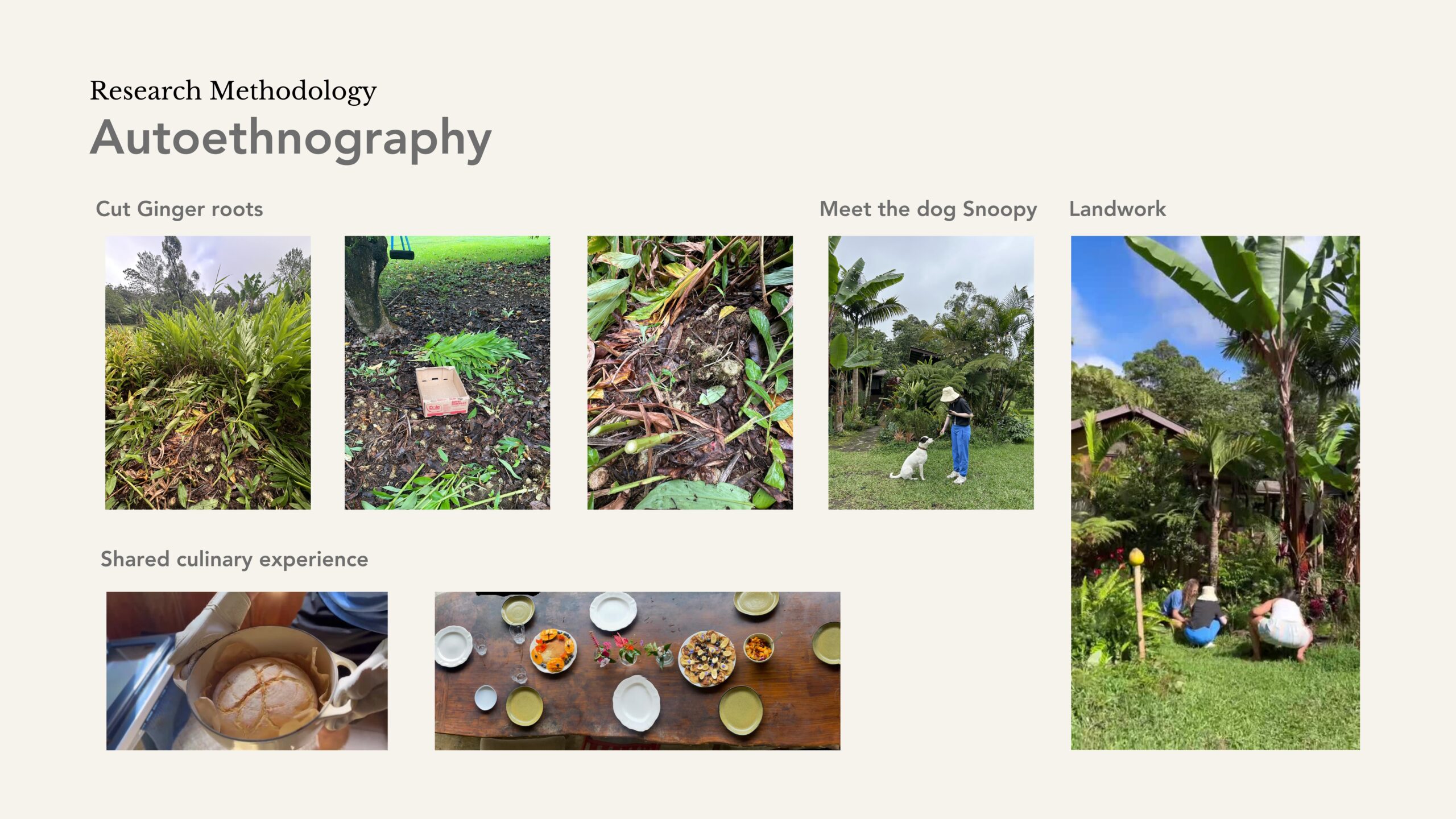
While at the sanctuary, I immersed myself in activities that demonstrated the environment’s impact on my well-being. One task was cutting ginger roots with a machete—this physical, repetitive action helped reduce stress and anxiety, and I could pause or meditate whenever I needed. Landwork, like identifying and removing weeds, became a way to connect with nature on a deeper level; working with soil boosts serotonin, which contributes to happiness and mental stability.
Another highlight was cooking and baking sourdough bread with others—a shared culinary experience that built a sense of community and supported emotional well-being through collaboration.
All of these experiences illustrate how physical actions, social connections, and interactions with the natural world can shape our emotions and state of mind—principles at the core of my research on embodied interaction.
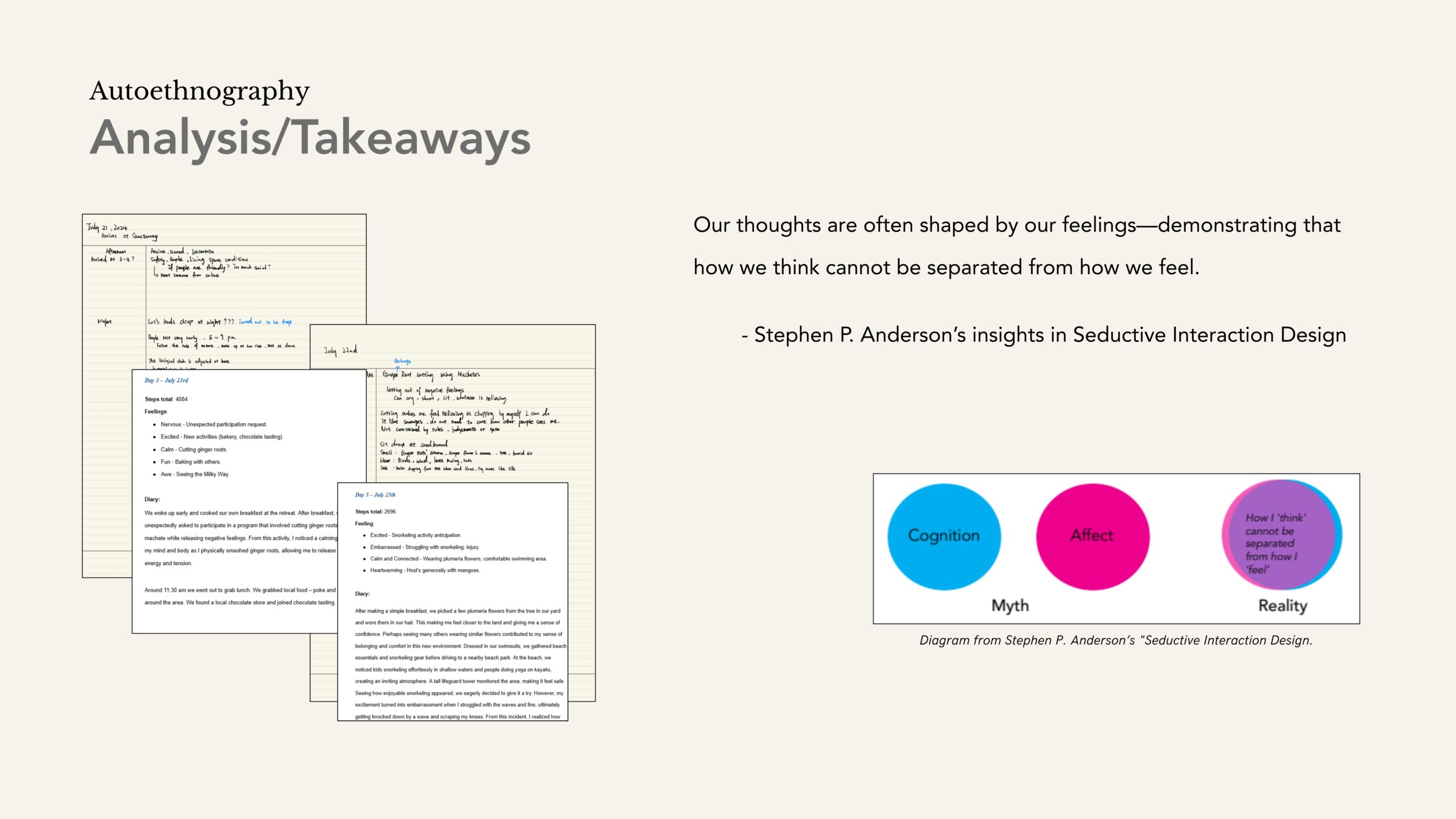
As I reflected on my experiences, I noticed just how inseparable thoughts and feelings can be—a point Stephen P. Anderson highlights in Seductive Interaction Design. Essentially, our thinking is often guided by our emotions. For instance, when we’re tired, anxious, or depressed, we might naturally crave a change of scenery or time in nature to help us reset.
Personally, I discovered that immersing myself in a natural environment, like walking among trees, listening to flowing water, or simply being surrounded by greenery, was profoundly calming. I came to see how my physical actions and surroundings were closely tied to my emotional state, reinforcing the central idea of my research: that embodied behaviours—what we do with our bodies—have a direct influence on how we feel.
2. Participant Research
- Quantified Self – 7 day diary study
- Interview sessions
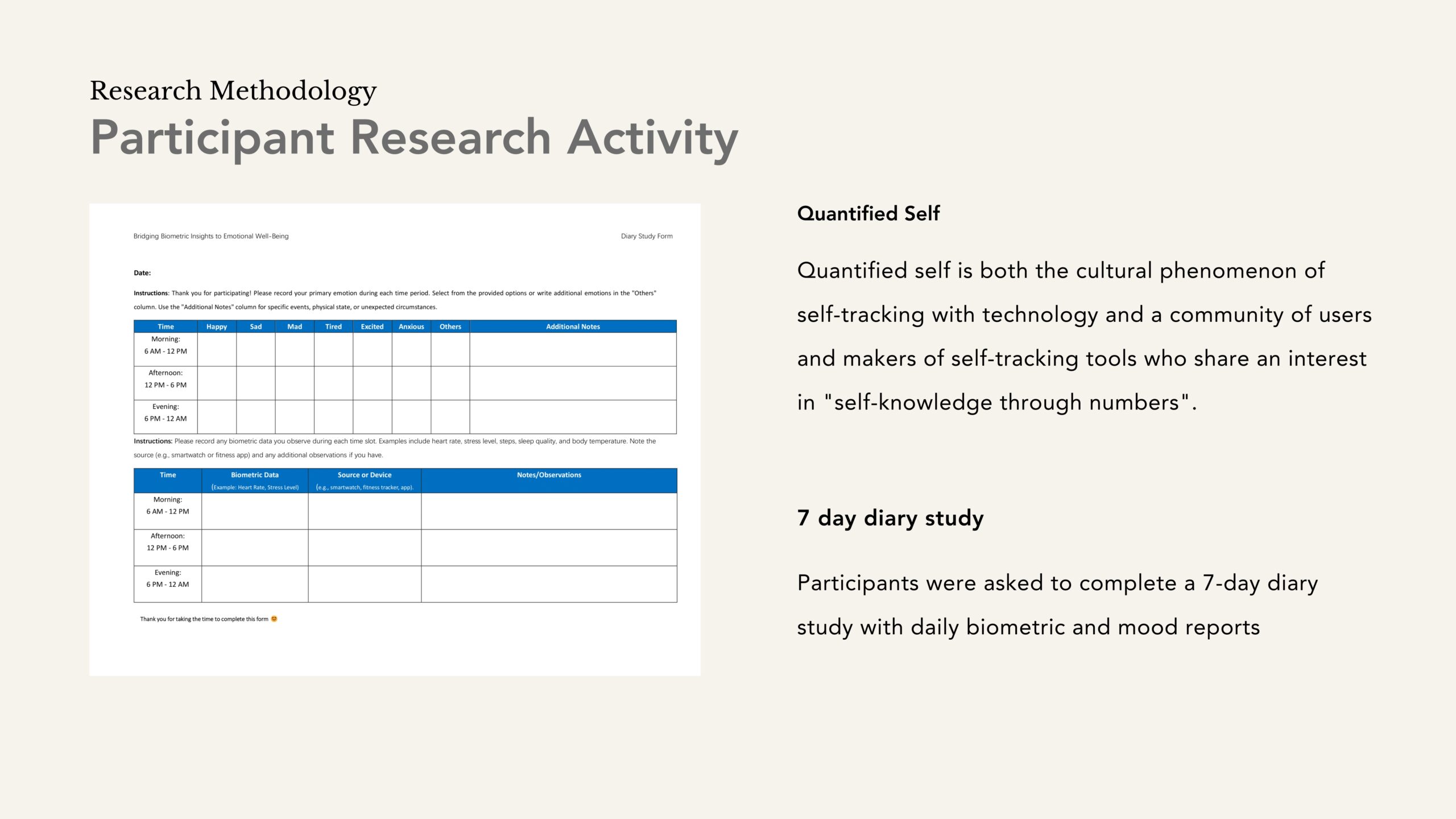
Having explored my own autoethnographic experiences, I wanted to see how everyday biometric tracking could inform self-awareness in a more structured way.
This is where the concept of the Quantified Self comes in. The movement encourages individuals to track, record, and analyze daily activities, aiming for ‘self-knowledge through numbers.’ With that in mind, I conducted a 7-day diary study in which participants logged both their mood and their biometric data each day.
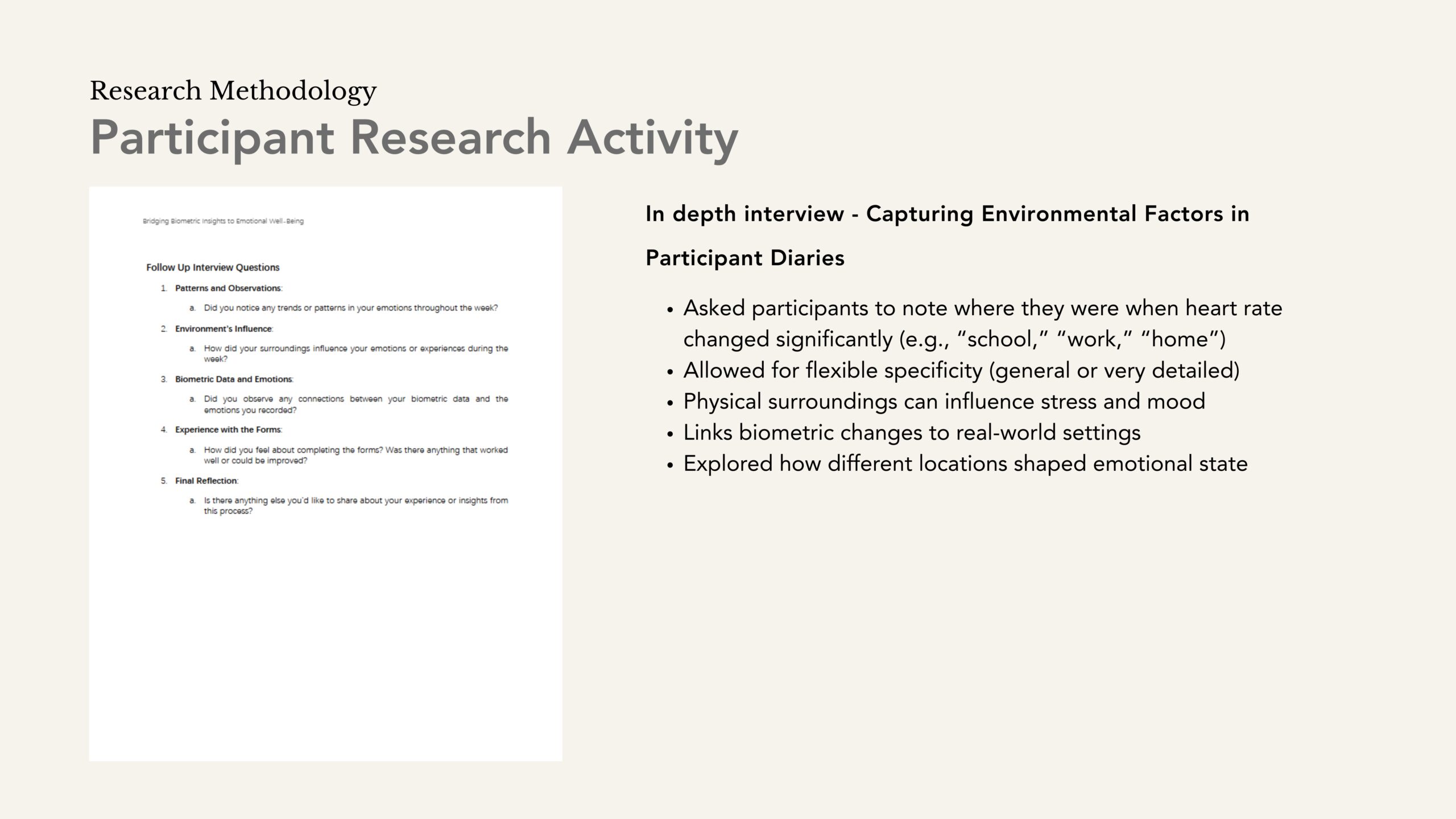
After participants completed their 7-day diary, I conducted a 30-minute interview with each person. We discussed patterns they noticed, how their surroundings might have influenced their moods, and any correlations between their biometric data and emotional states.
By incorporating these location details, I could see how different physical settings possibly shaped their stress levels and overall emotional well-being.
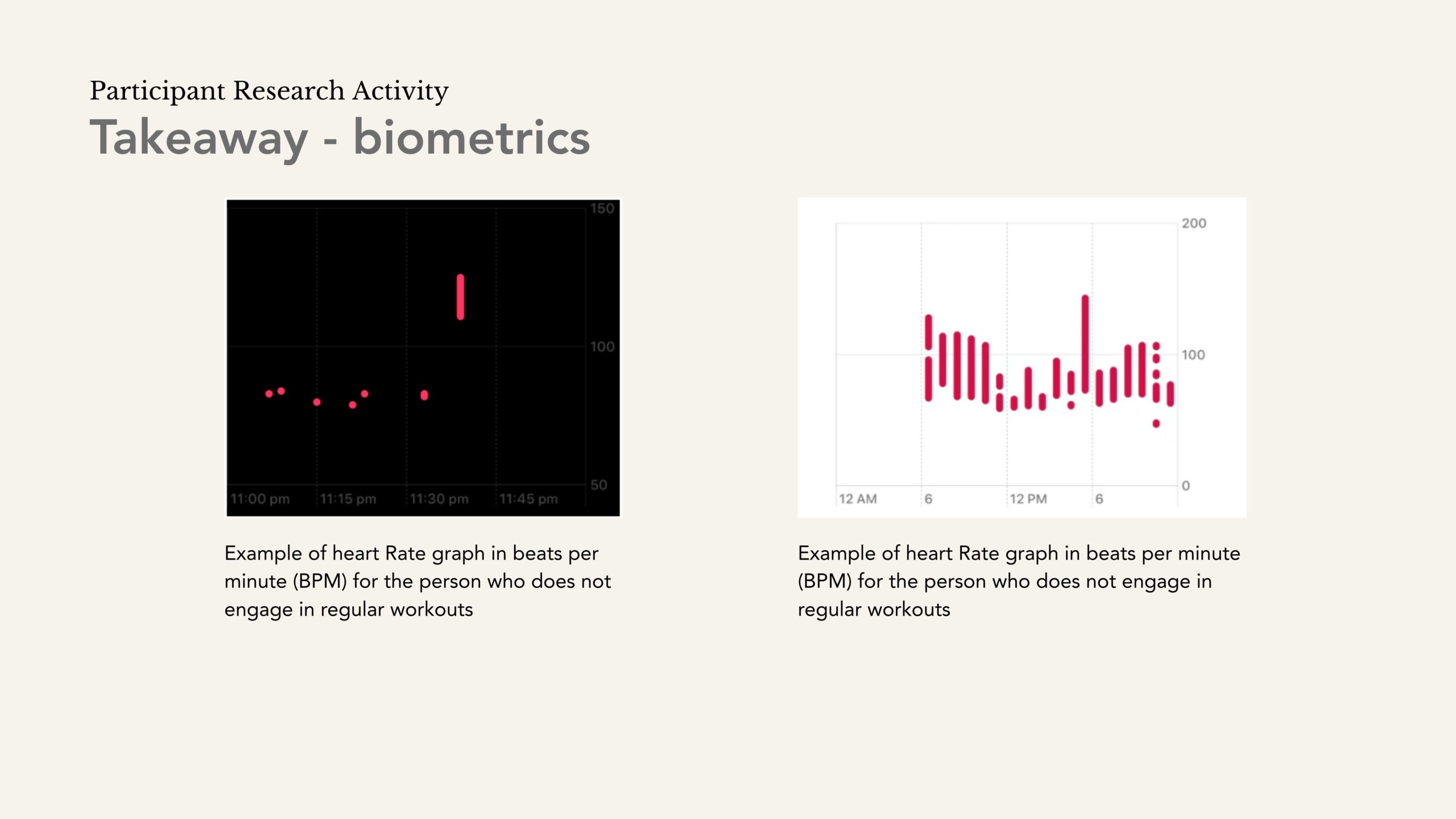
On the left is someone who does not engage in regular workouts. Their heart rate typically remains lower, but brief activities, like walking upstairs or running, can cause distinct spikes. Occasional emotional stressors may also appear in these scattered points, yet it’s difficult to tell which spikes are purely physical versus emotional.
On the right, the participant routinely exercises, so we’ll notice more sustained increases during workout sessions, creating a wider BPM range overall. This makes it harder to isolate emotional triggers because both workouts and stress can elevate heart rate. By comparing these snapshots, we see how personal fitness habits shape baseline heart rate patterns and influence how we interpret biometric data, underscoring the need for context when connecting physiological signals to emotional states
Design outcome
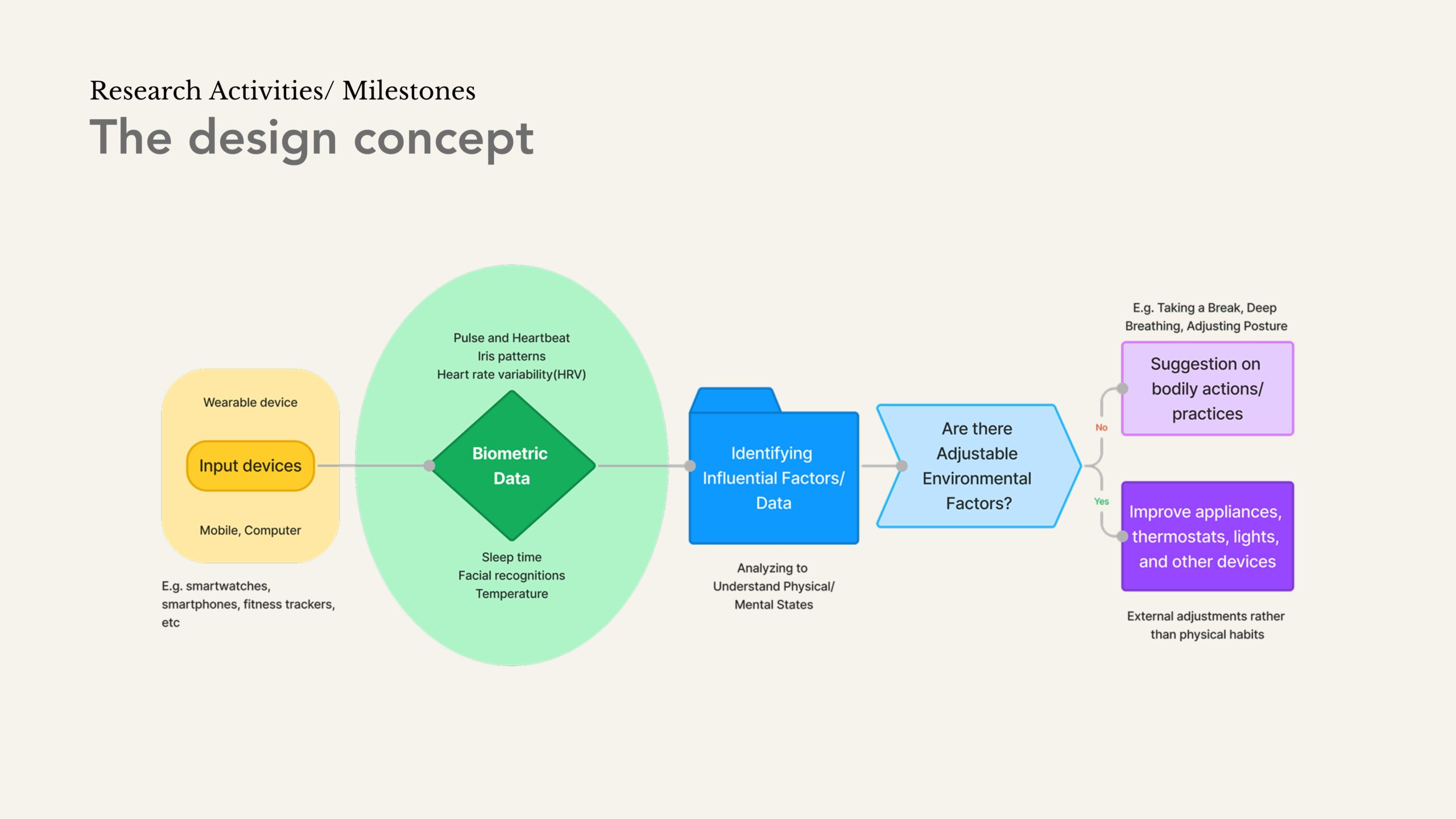
Having gathered these insights from the research methods I used, I started to see how real-time biometric data could be transformed into meaningful, everyday interventions,
This flowchart shows how my system bridges raw biometric data and actionable steps to enhance well-being:
We begin with input devices—for example, smartwatches, smartphones, or fitness trackers—that collect real-time metrics such as heart rate or even facial recognition cues.
These signals feed into a data layer, where patterns are analyzed for potential stress or emotional shifts.
The system then checks for adjustable factors in the user’s environment, like temperature or lighting, and suggests or automates changes if possible.
When environmental factors aren’t adjustable—for example, if you’re in a public space—the system nudges users toward helpful actions like mini-breaks, deep breathing, or posture adjustments.
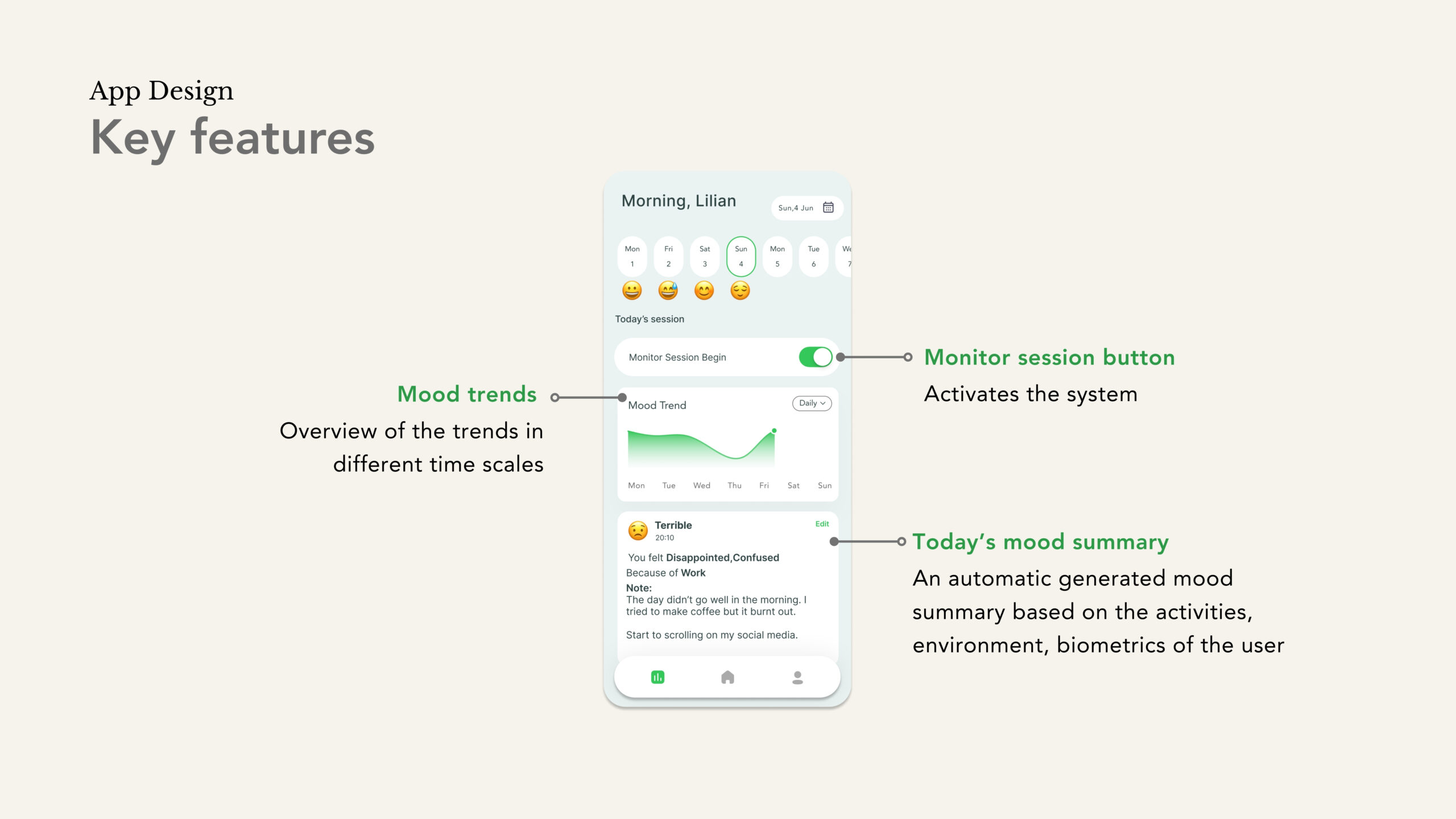
Landing page
At the top, you’ll see dates with daily moods—quick snapshots of how you’ve been feeling. Below that is a Monitor Session button, which toggles the system’s real-time monitoring mode. Once activated, the app will access your biometric data, such as heart rate, and integrate environmental cues, potentially nudging you toward a short break or a posture adjustment if it detects rising stress.
Next, you’ll see a Mood Trend Overview, which displays trends on various time scales, including daily, weekly, monthly, or yearly. Finally, at the bottom, you’ll find Today’s Mood Summary. This summary is automatically generated based on your recorded activities, location data, and biometric inputs; users can also edit or add notes.
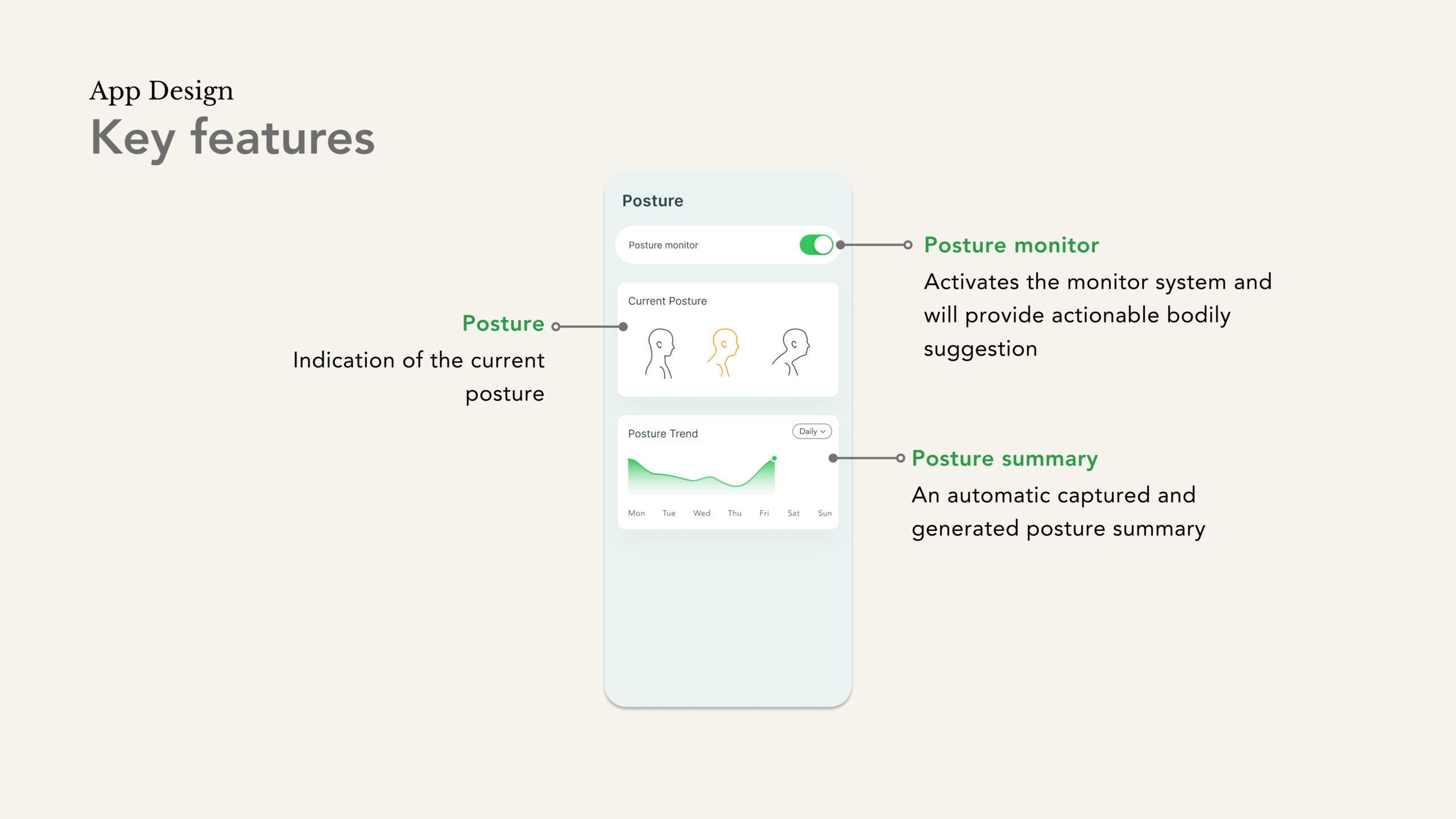
Posture Monitor function
When turned on, the system continuously checks the user’s posture in real time. If it detects prolonged slouching or any physical misalignment, it can prompt you with a gentle reminder, encouraging a quick stretch or a posture correction.
Below, users will see the Posture Summary, which aggregates the data over time. It gives a clear view of how often users’ve been off-balance throughout the day or week, providing insights that can guide better ergonomic habits. Because posture can reflect stress and fatigue, this feature aims to support not just physical comfort but also emotional well-being.
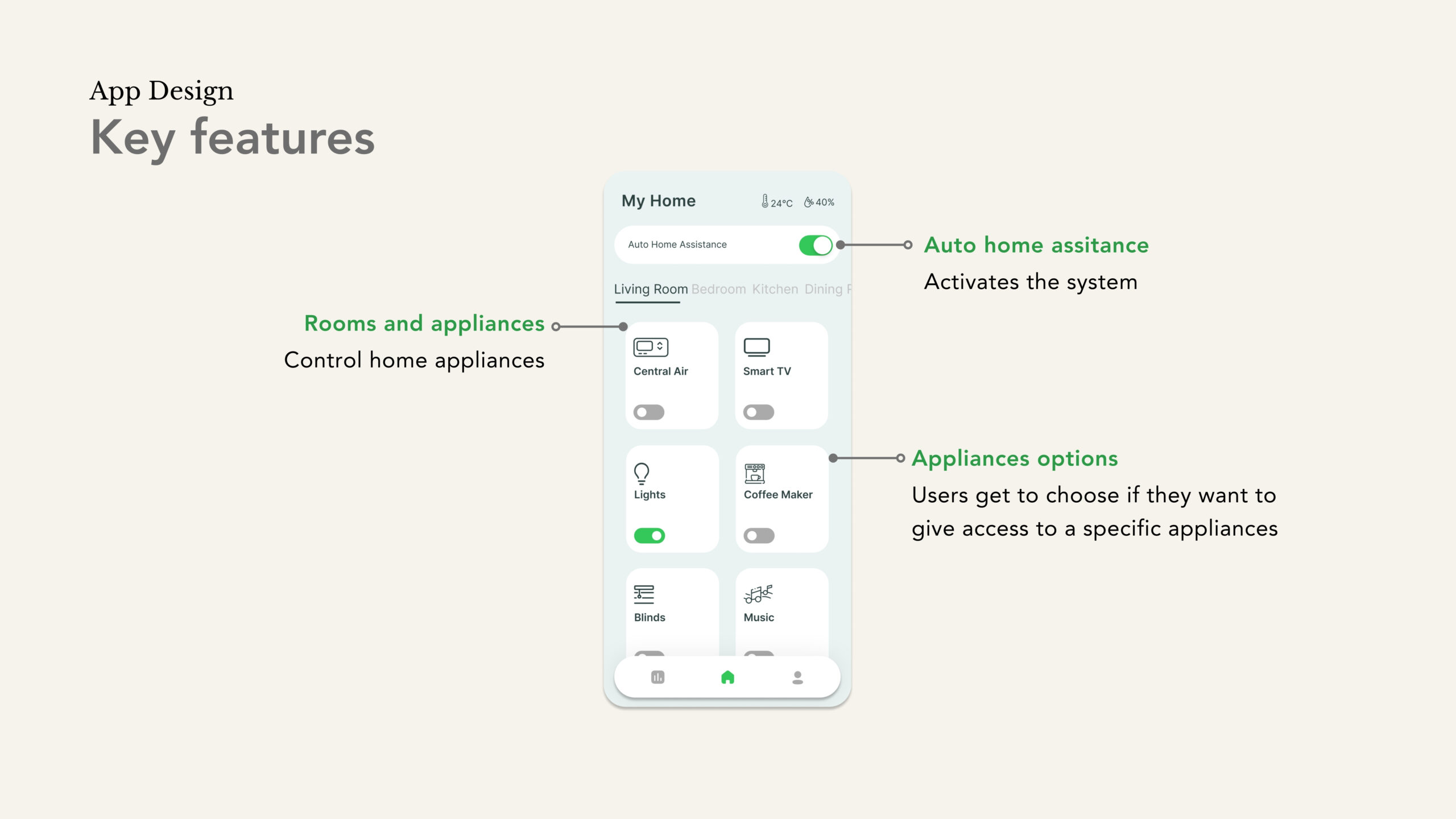
Auto Home Assistance
The system can automatically adjust environmental settings based on real-time biometric inputs by interfacing with connected home devices, such as smart lights, thermostats, and even coffee makers. For example, if it detects elevated stress levels, the system might automatically dim the lights or play calming music. This feature bridges the gap between what’s happening internally and your external environment, ensuring that your living space adapts to help you relax and stay centred.
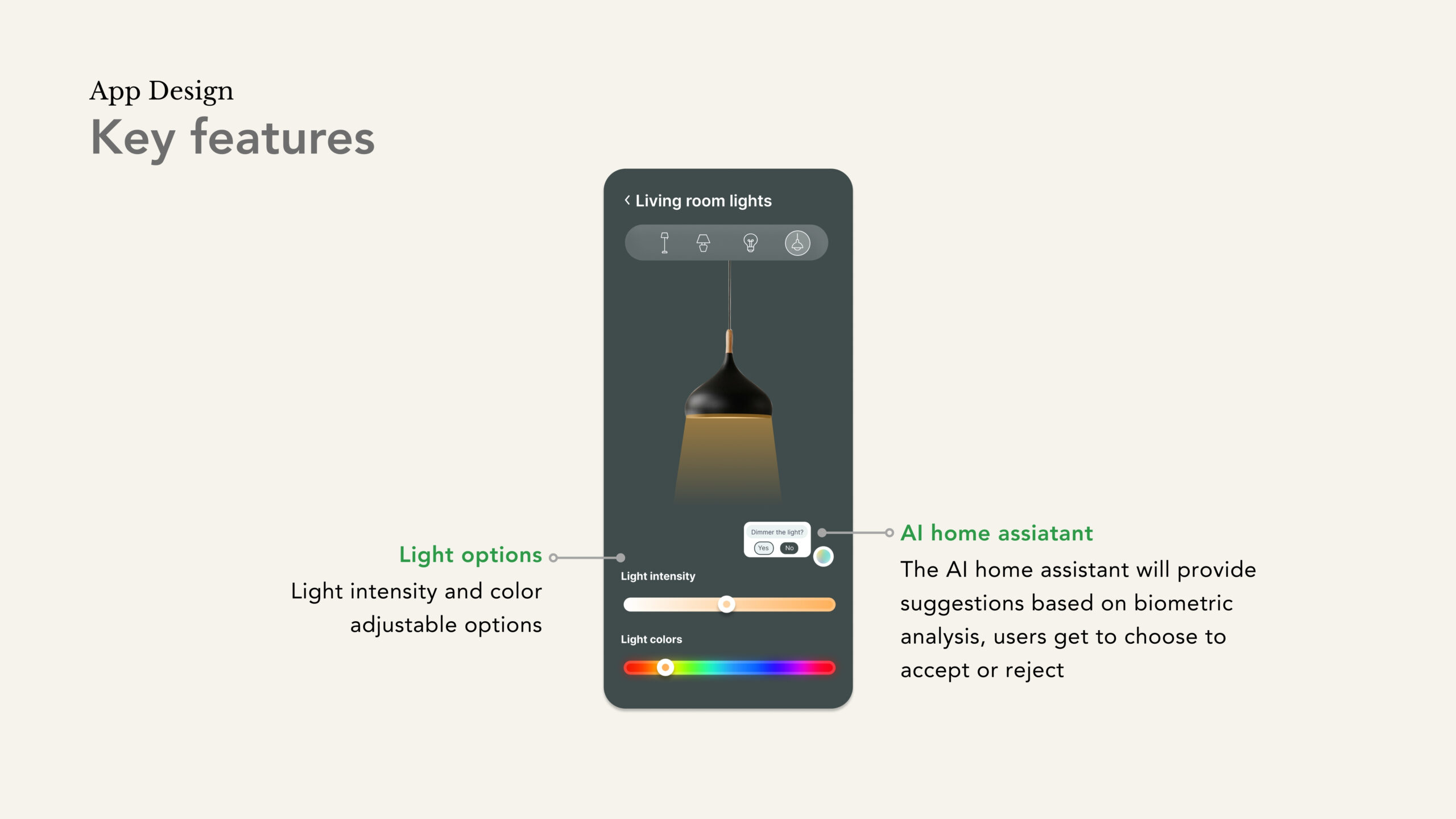
Light options
This screen illustrates how the app manages your light options, allowing you to adjust both intensity and colour to suit different moods or activities. In addition, the AI home assistant steps in to provide suggestions based on biometric analysis, like a higher-than-usual heart rate or indications of stress. Users then decide whether to accept or reject these recommendations, ensuring that the system remains helpful without becoming intrusive.
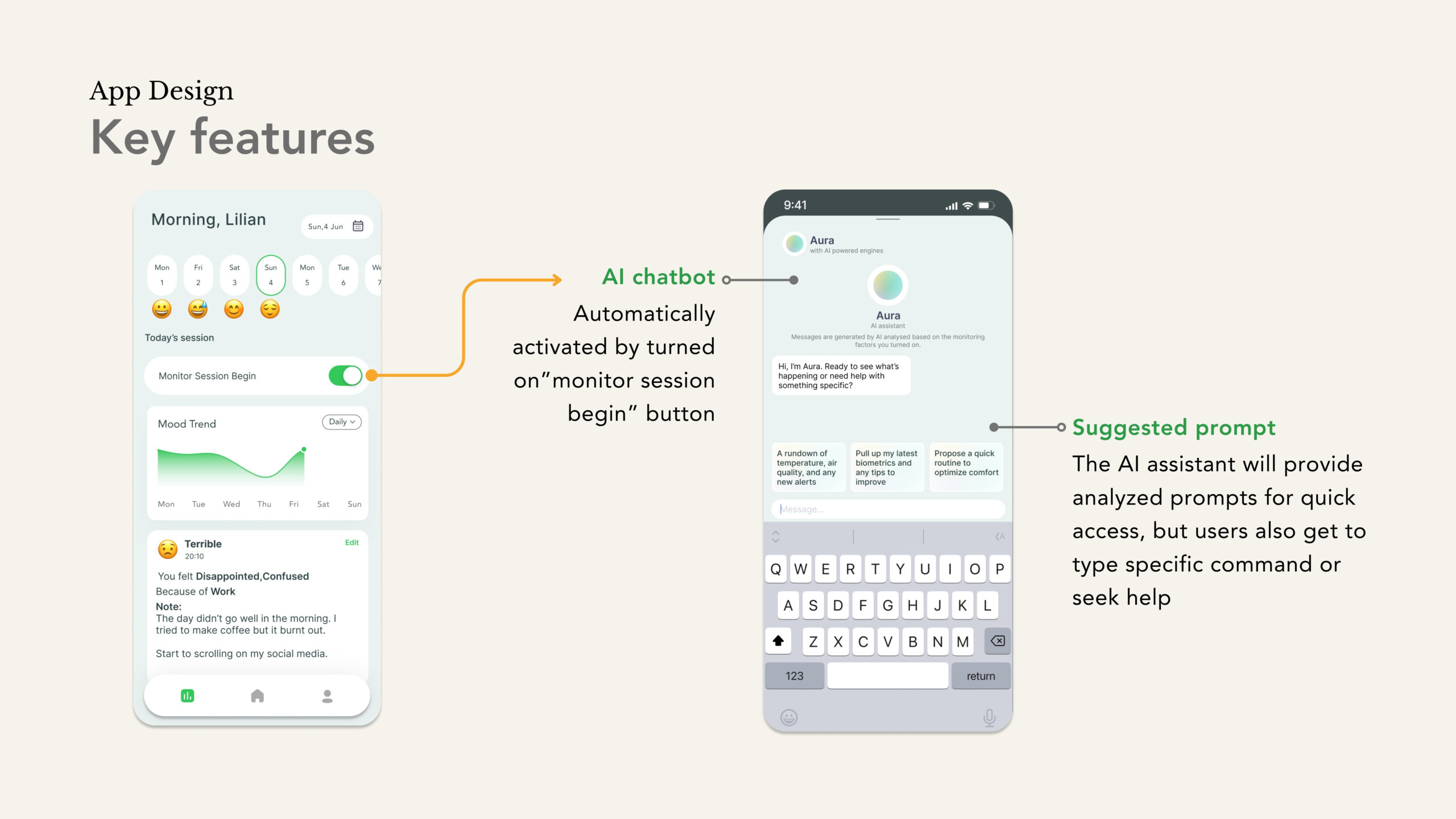
AI chatbot
This interface appears when you enable the ‘monitor session.’ The AI chatbot actively interprets your biometric signals—like an elevated heart rate—and offers immediate suggestions, such as taking a brief break or practicing a simple breathing exercise. Meanwhile, the Suggested Prompt section provides quick-access recommendations based on your data.
Users can also type their own requests or commands, like adjusting home settings or seeking stress-relief tips, keeping them in control. By blending biometric insights with conversational prompts, the app delivers a supportive, user-friendly way to manage well-being in real time.
Limitations & Reflection
- Sample Size and Participant Diversity
- The participant studies in this thesis involved a small cohort and lacked broad demographic representation. As a result, findings may not generalize across different ages, cultural backgrounds, or levels of tech-savviness. Future research should recruit larger and more diverse samples to validate the robustness of the interaction concepts.
- Biometric Data Scope
- This work focused primarily on heart rate and step count, offering a narrow view of users’ physiological states. Incorporating additional signals, such as skin conductance, respiration rate, and sleep metrics, would enable richer correlations between bodily responses and emotional well-being.
- Technical Implementation Constraints
- As a designer without formal computer-science training, prototype development relied on third-party tools and simplified models. Ensuring reliable real-time data processing, seamless device interoperability, and accurate AI-driven pattern recognition will require close collaboration with software engineers and data scientists.
- Study Duration and Longitudinal Insights
- Data collection was limited to a one-week diary study and short autoethnography. Longitudinal research over several months is necessary to determine whether users sustain new habits, how self-reported emotional logs evolve, and if biometric–emotion mappings remain consistent over time.
- Reliability of Self-Report Measures
- Biometric signals and emotional states are highly sensitive to context—ambient noise, social interactions, and daily routines can all influence outcomes. Future iterations should integrate richer environmental sensing (e.g., geolocation, ambient sound levels) and adaptive machine-learning models capable of interpreting these contextual variables.
- Biometric signals and emotional states are highly sensitive to context—ambient noise, social interactions, and daily routines can all influence outcomes. Future iterations should integrate richer environmental sensing (e.g., geolocation, ambient sound levels) and adaptive machine-learning models capable of interpreting these contextual variables.
Conclusion
This research advances our understanding of how real-time biometric feedback can enhance mental wellness through interaction design. By integrating physical and digital environments, this study illuminates the role of embodied interaction in making biometric data actionable and relatable, thus fostering deeper self-awareness and emotional self-regulation.
Throughout the research, several significant findings emerged. First, the intuitive presentation of biometric data through user-centred design prototypes enabled participants to connect more meaningfully with their physical and emotional states. The qualitative interviews revealed that this approach not only improved participants’ awareness of their mental states but also encouraged the adoption of healthier behaviours based on these insights.
However, the study recognizes several critical limitations, including the small sample size, narrow range of biometric signals, short study duration, reliance on simplified technical implementations, and the inherent unreliability of self-report measures. Ethical considerations around user privacy, autonomy, and data transparency also highlight the necessity for careful and sensitive design practices. Addressing these challenges will require future studies to engage larger, diverse participant groups, expand biometric indicators, incorporate richer environmental contexts, and pursue multidisciplinary collaborations.
Lessons learned from this research emphasize the importance of considering both the physical environment and the design of digital interfaces in promoting effective engagement with health technologies. Future applications of this work could explore adaptive interventions that respond in real-time to users’ emotional and physical changes, potentially offering more personalized and timely support for mental wellness.
In conclusion, this thesis contributes to the fields of interaction design and health informatics by demonstrating how technology can bridge the gap between human emotions and digital experiences. As we continue to explore this promising area, the insights gained here will hopefully inform the design of next-generation wellness technologies that prioritize empathetic and user-informed interactions.