File: Save As…
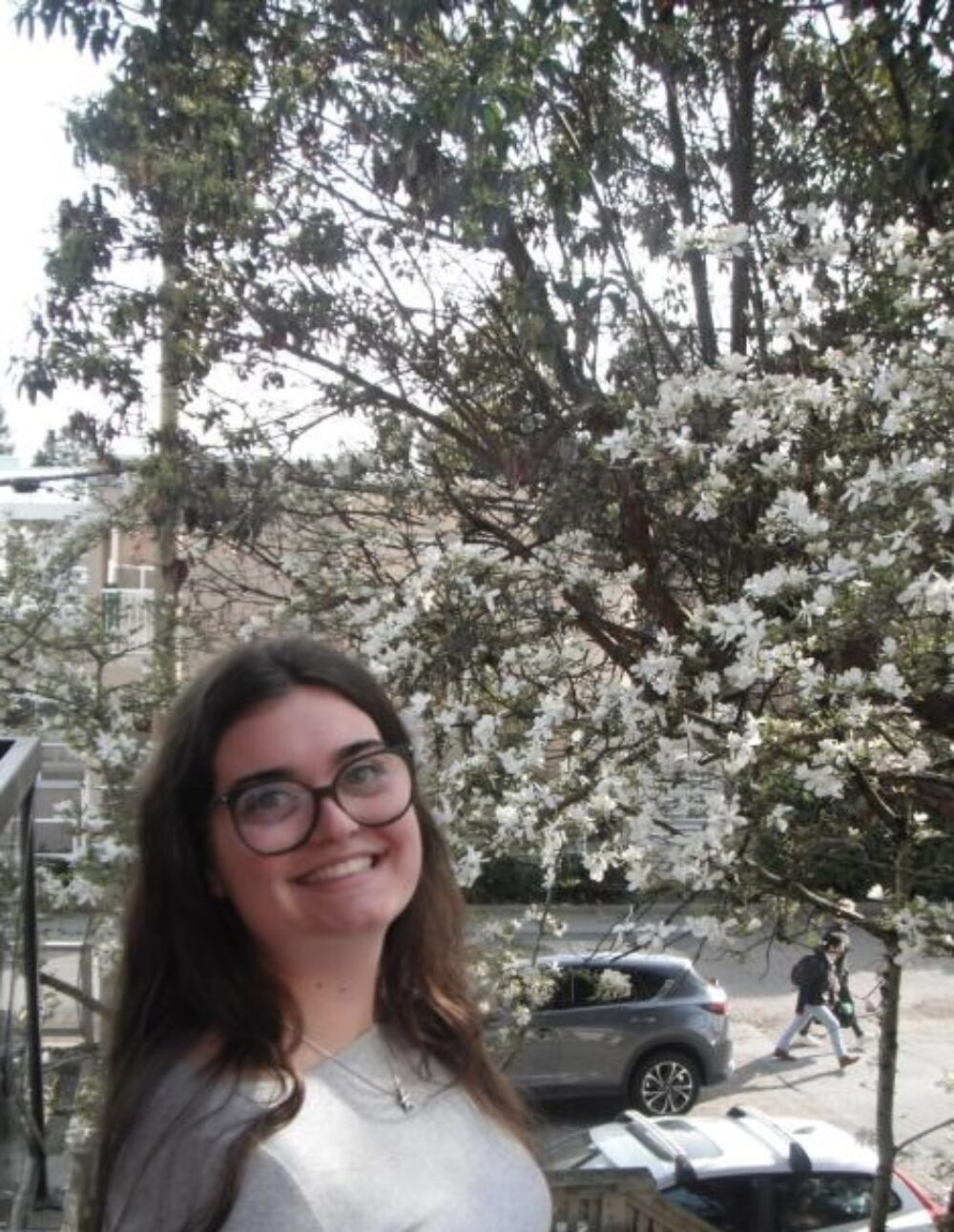
Madeleine Mullen
See it On Campus: Level 2
Inside Rennie Hall, find me on the window.
Visitor InfoAn exploration into Archiving the Internet.
“Those of us who grew up alongside the internet know a bit more intimately of its dangers, especially regarding how we feed it. Nothing ever disappears from the internet – supposedly. The truth is a lot disappears from the internet everyday, including things we actually will miss. This is the effect of digital decay as, “Unlike the methods for preserving analog documents that have been honed over millennia, there is no deep precedent to look to regarding the management of digital records,” (Boyda, 7). When every year or two there is another Apple update, any failure to comply with changing hardware and software obsolescence or digital storing mediums results in “…a terminal end – the definitive loss of information” (Boyda, 8).”
Excerpt from Archiving the Internet: Rot and Reinvention (2024).
I have always questioned how we could possibly attempt to archive the internet. In what universe would we ever be able to record the endless sprawl of the world wide web? What would be lost and what would be saved? This curiosity became my final project, entitled File: Save As…
Research….
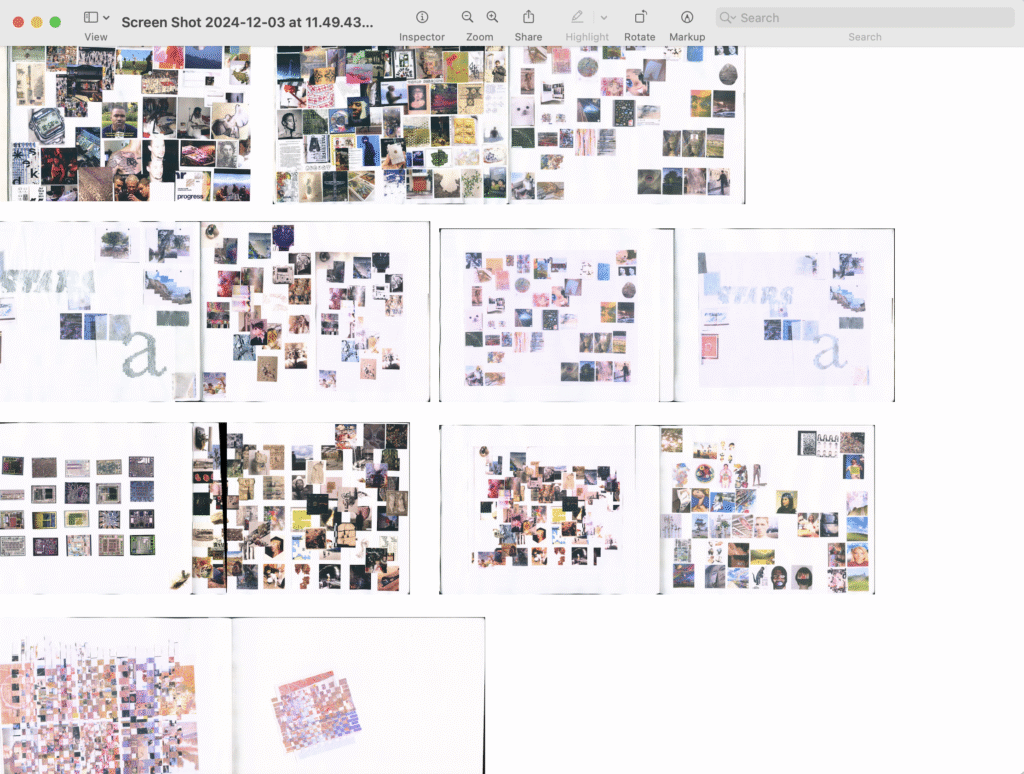
Scoping out my research space was enough for a final project alone. Along with my academic research, I kept up a collage of visual material that mirrored the cluttered desktop I am always managing.
The problem with my project was that there was no end to it: in every google search, there was three more to follow. I found that archiving the internet explores perspectives of archiving, of sustainability, of technological advancement, of sociology, of culture, and so on. It became a bit overwhelming. Rather than be rigid in my understanding of the subject, I tried to engage with each question as it came to me: this was reflected in my experimental practice.
I worked in many design fields while exploring my topic: typography, book design, risoprinting- but I also explored different art forms I hadn’t worked with before. Video editing, performance art, and even circuit-building all informed my process.
One of the best and most important parts of my journey was my discussion with peers, teachers and others about my topic. These are problems that affect us all, that we all have an opinion about, and it was so valuable to hear how everyone else regarded my questions.
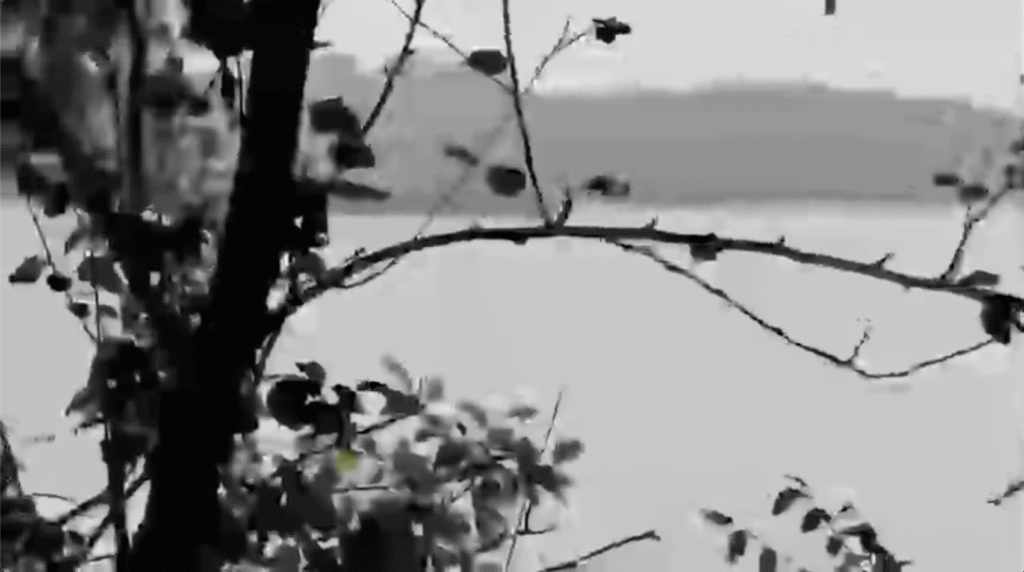
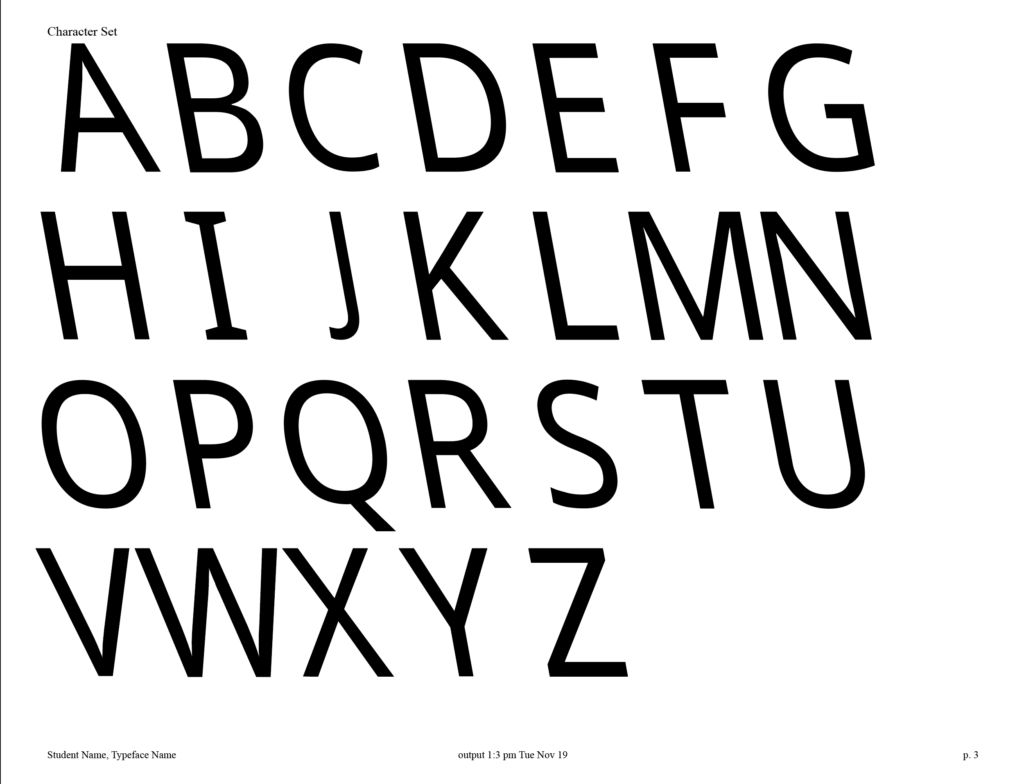
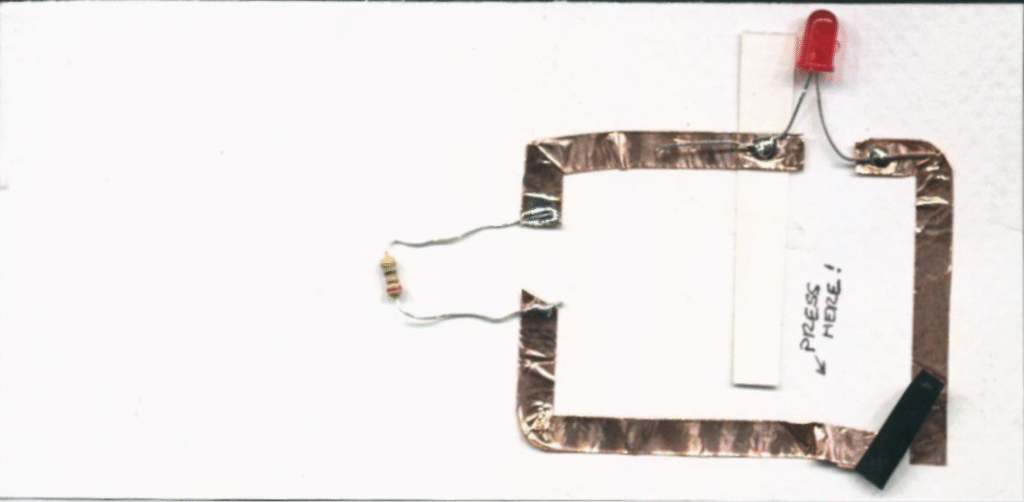
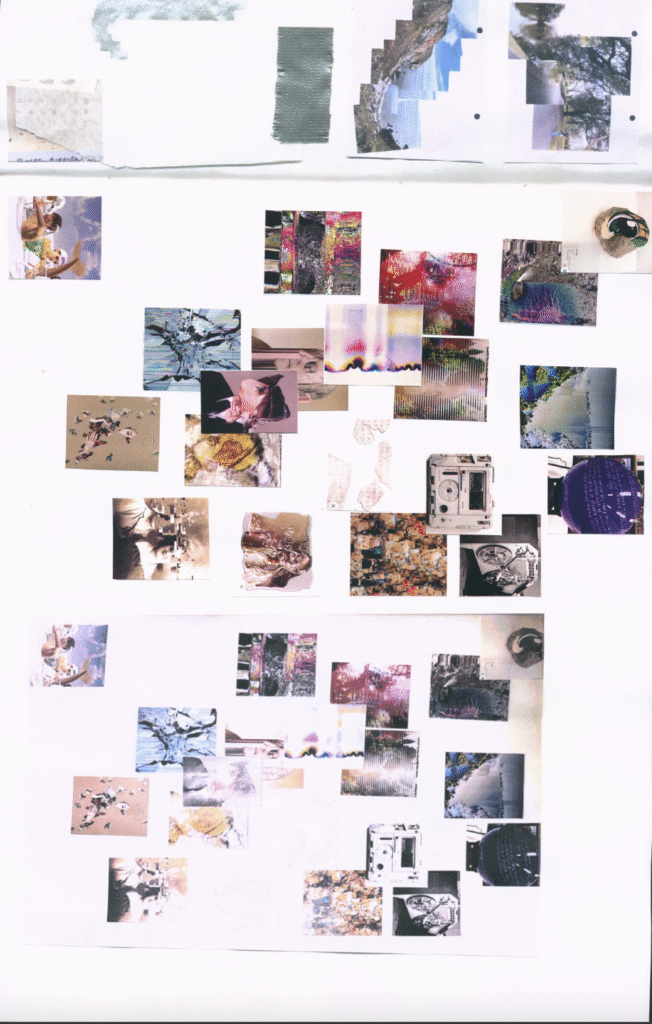
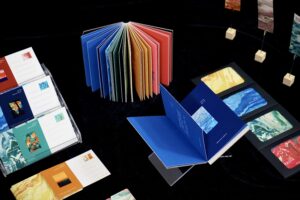
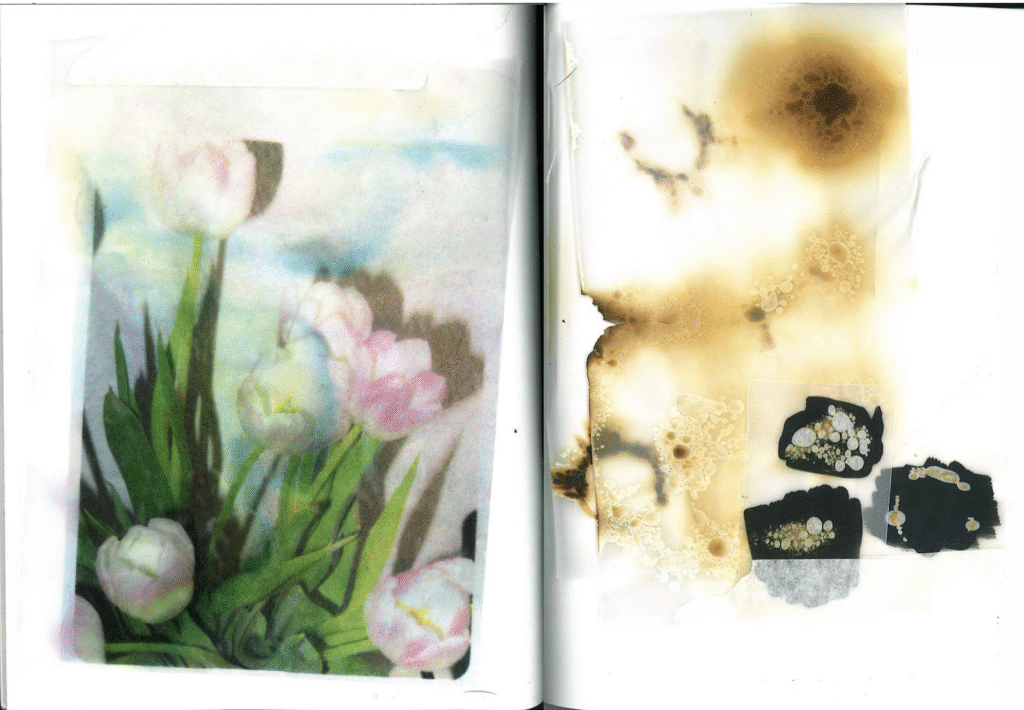
These all culminated into a catalogue of my experiments: inside are many explorations of archiving the internet. An example of some of the projects inside:
- A typeface designed for all AI/computer generated writing to be written in.
- Video explorations of “digital rot” and “data degradation”.
- Flip books of popular .Gifs.
- Paper circuits which display social media “interactions”.
- A printed collection of all the websites and resources used to research this project, bound into one book.
- And many more…
Exhibition piece….
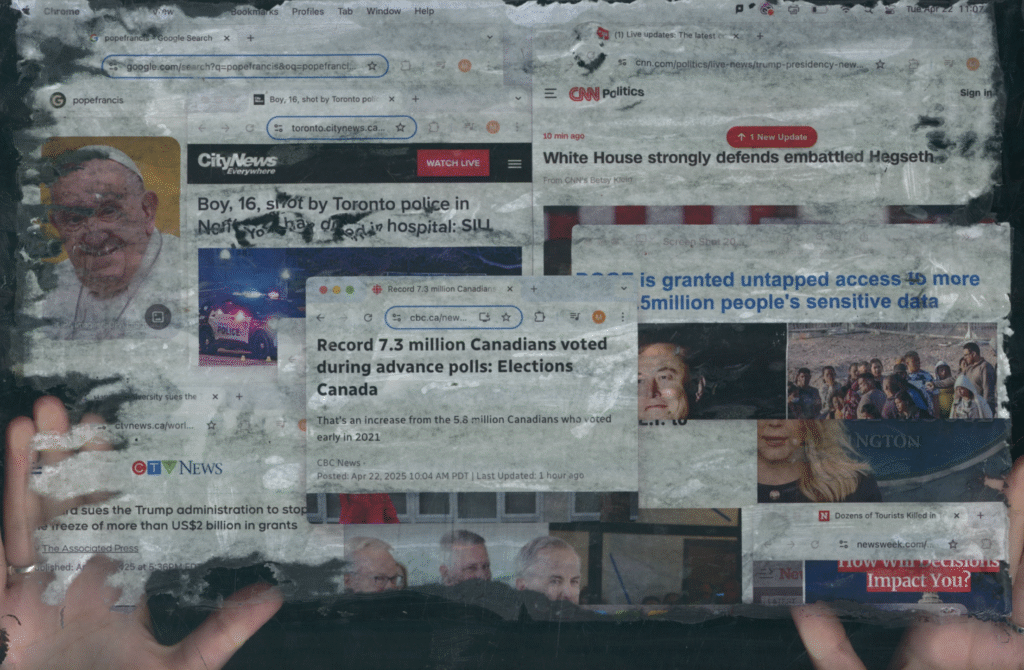
The final piece I chose to exhibit in the Grad Show is a reflection of the themes I explored this year. With the constant influx of information, how can we properly demonstrate the world that is the internet? How will we show to future generations what it was like? What is important to keep? When is there too much?
This piece, a screenshot of my desktop plastered to a piece of recycled glass, is a momentary reflection of the cultural climate I was in when I made it. It makes sense to audiences now, but what will it mean 10 years in the future? What about 100?
I hope to continue exploring this work for years to come, as I believe this topic is important to continuously question and re-examine overtime. Thank you so much for taking the time to see my design!