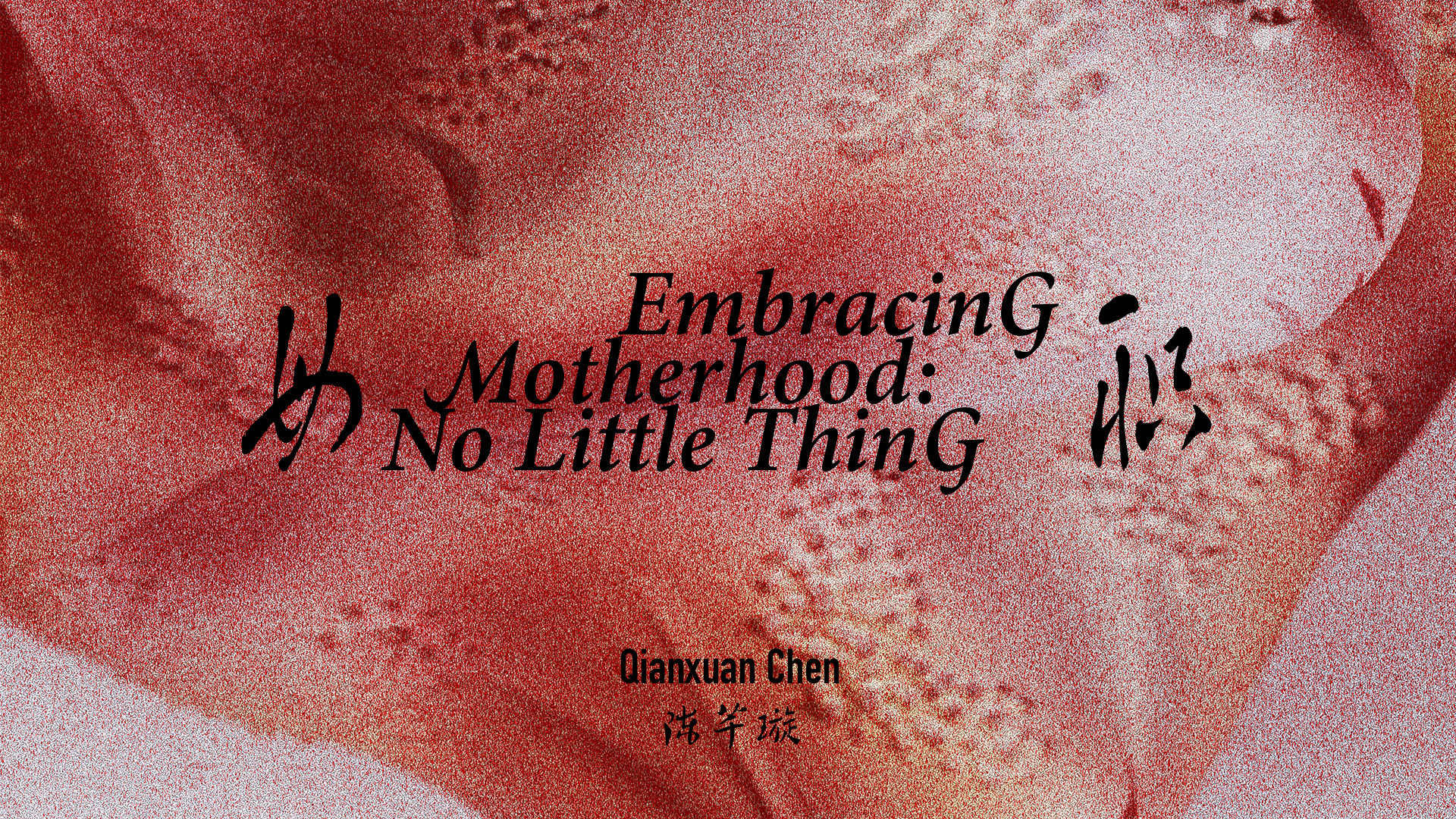
Embracing Motherhood: No Little Thing
Qianxuan Chen
See it On Campus: Level 2
By the stairs, diagonally opposite the library.
Visitor InfoWA Architects Ltd Master of Design Graduation Award — Winner
Introduction
This project discusses the complexities of maternal experiences, focusing on pregnancy, childbirth, and postpartum realities. It does so through a multisensory and material-based approach, incorporating ceramics, textiles, glass, 3D printing, and interactive installations to challenge traditional representations of motherhood. It is informed by feminist theories, sensory design principles, and critical design perspective, aiming to create a more in-depth and embodied understanding of maternity. In the following pages, I will begin by discussing the complexities of pregnancy, childbirth, and postpartum experiences through multisensory exhibition installations. From there, I will introduce my material explorations and design approaches. I will discuss both my sensory experiences through making and the ones I have attempted to invite audiences to engage with. Throughout my work, it has been set as a means to consider maternity’s emotional, physical, and social complexities. Challenging passive viewing by creating an array of objects in glass, ceramics, and cloth and situating them in an immersive, participatory space, I have sought to challenge passive viewing, disrupt idealized portrayals of motherhood, and provide space for critical reflection.
Contemporary media often presents childbirth and reproduction in a romanticized and idealized way.
These portrayals tend to ignore the physical pain, emotional struggles, and systemic challenges that many women face, which leads to a distorted public understanding and creates unrealistic expectations. This idealized image makes it hard for people to talk about reproduction openly and honestly. As a result, many women lack sufficient knowledge about the physical and emotional demands of childbirth, and they also feel pressured to meet traditional expectations of femininity and motherhood. Without proper education, open conversations, and accessible resources, many women are left unprepared—both mentally and physically when making decisions about reproduction.
In response to these concerns, I have realized that motherhood is not only a personal experience but also a deeply political one, shaped by societal structures and expectations. My research arises from personal and cultural reflection. This project emerged from my desire to uncover and present these realities using design and art to depict childbirth from multiple perspectives—through raw, embodied experiences that strip away idealized portrayals and reveal the unfiltered reality of maternal experiences.
Feminist Position Self-identity
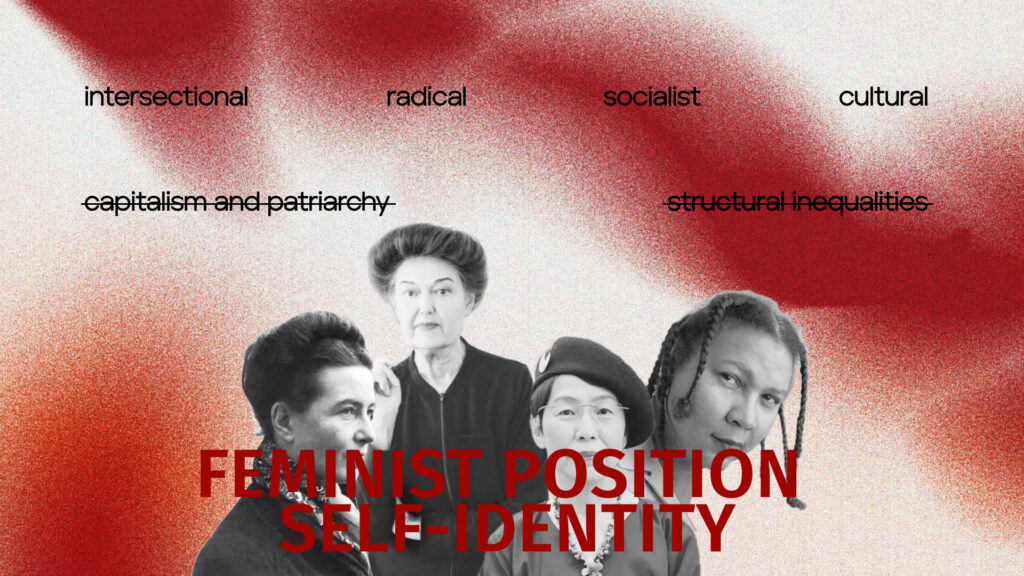
As an intersectional and radical feminist embracing socialist feminism and drawing insights from cultural feminism, I ground my beliefs in a critical understanding of gender inequality and class oppression as inextricably linked within systems of capitalism and patriarchy. My cultural feminism perspective complements intersectionality by valuing motherhood and maternity while emphasizing their transformative potential in challenging patriarchal norms. I acknowledge that socialist feminism underscores the inseparability of gender inequality from the structural inequalities caused by capitalism. In this feminist position, I recognize that gender identities are fluid and socially constructed. The exclusion of transgender women from feminist spaces goes against the inclusive principles of intersectionality and ignores the common but distinct struggles that all women face under patriarchy. Based on these feminist theories and insights, I have developed this project through research and creative practice.
ART PRACTICES < ——— > DESIGN PRACTICES
As my undergraduate degree was in visual art, I was trained as an artist. This background deeply shaped how I engage with materials and form. My creative process emphasizes material exploration, intuitive making, and the use of tactile and visual language—all of which are rooted in an artistic sensibility. In my master’s studies, I continued working across disciplines, combining research-creation in both art and design. I experimented with various materials, including textiles, ceramics, and glass, using them to express personal and cultural reflections. I adopted certain design methods—such as speculative, critical, sensory, and participatory. This fluid movement between art and design has allowed me to transform the objects I create, allowing me to explore my concerns while also fulfilling distinct ‘design’ functions – inviting participants and audiences to engage their senses and reflect on the emotional, physical, and social complexities of childbirth and motherhood. My creative practice evolves from balancing my roles as an artist and designer. As an artist, I use materials, employing their tactile and visual properties as a language to express the complexities of maternal experiences. From a designer’s perspective, I integrate sensory design and employ participatory research methods in exhibitions. I invite participants to share their feedback through surveys, which helps me refine my work. This interplay between art and design strengthens my process, creating a more profound and embodied experience.

EXHIBITED WORKS
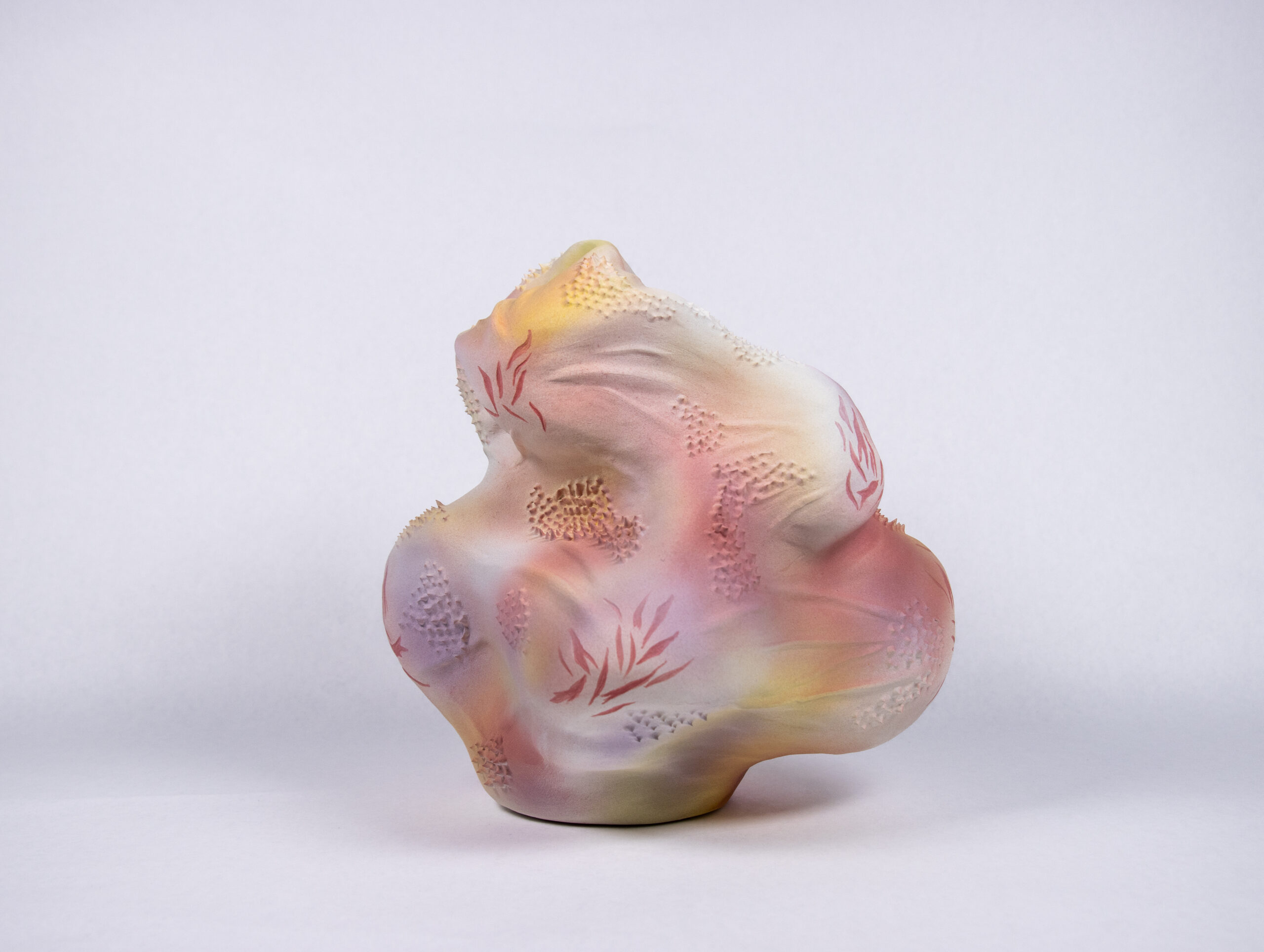
Gestational Pulse
(Ceramics, 2024)
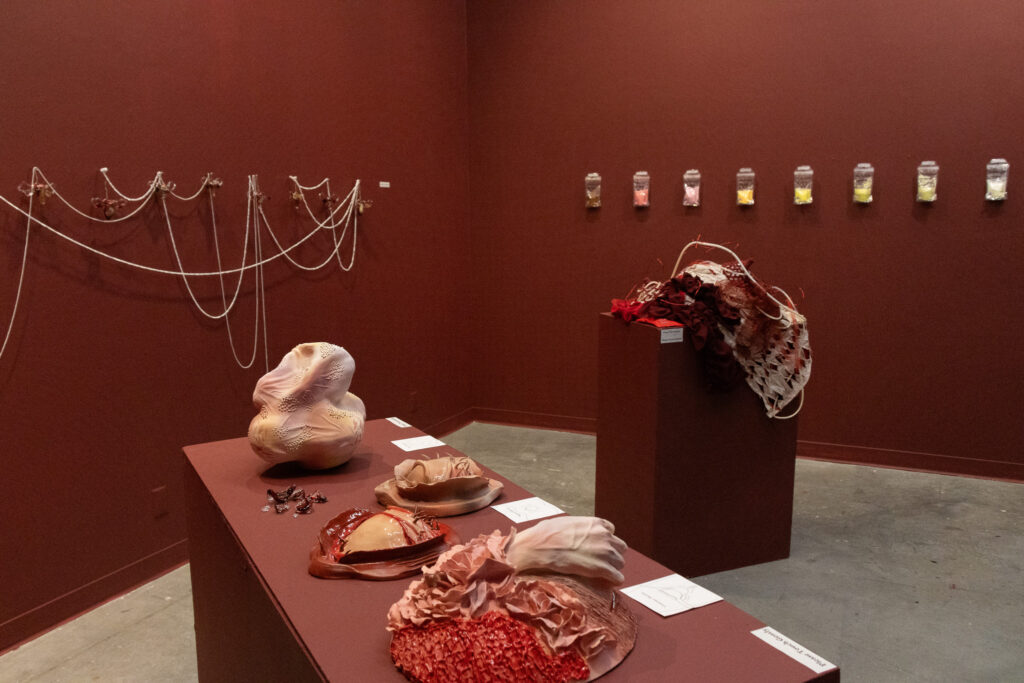
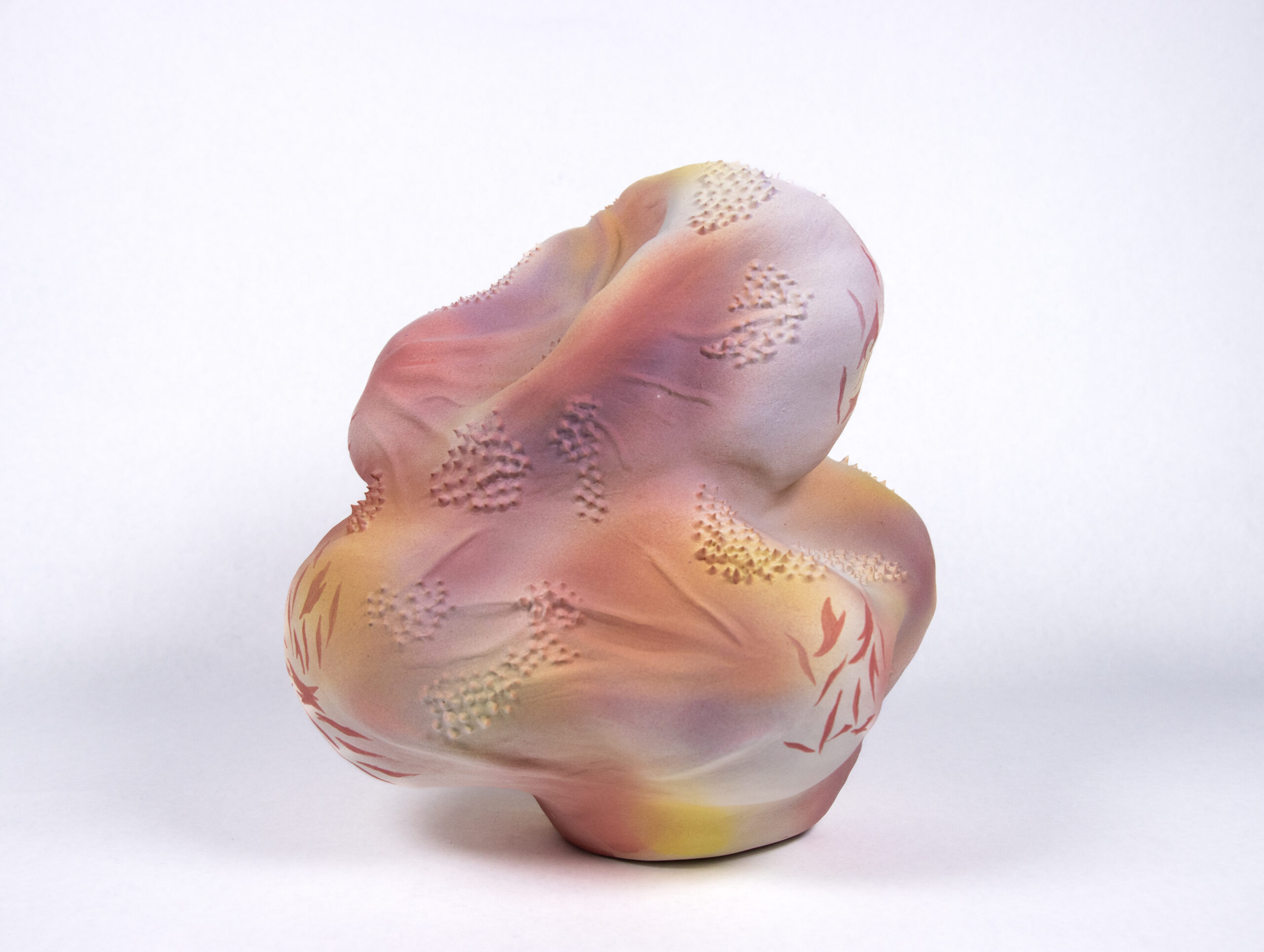
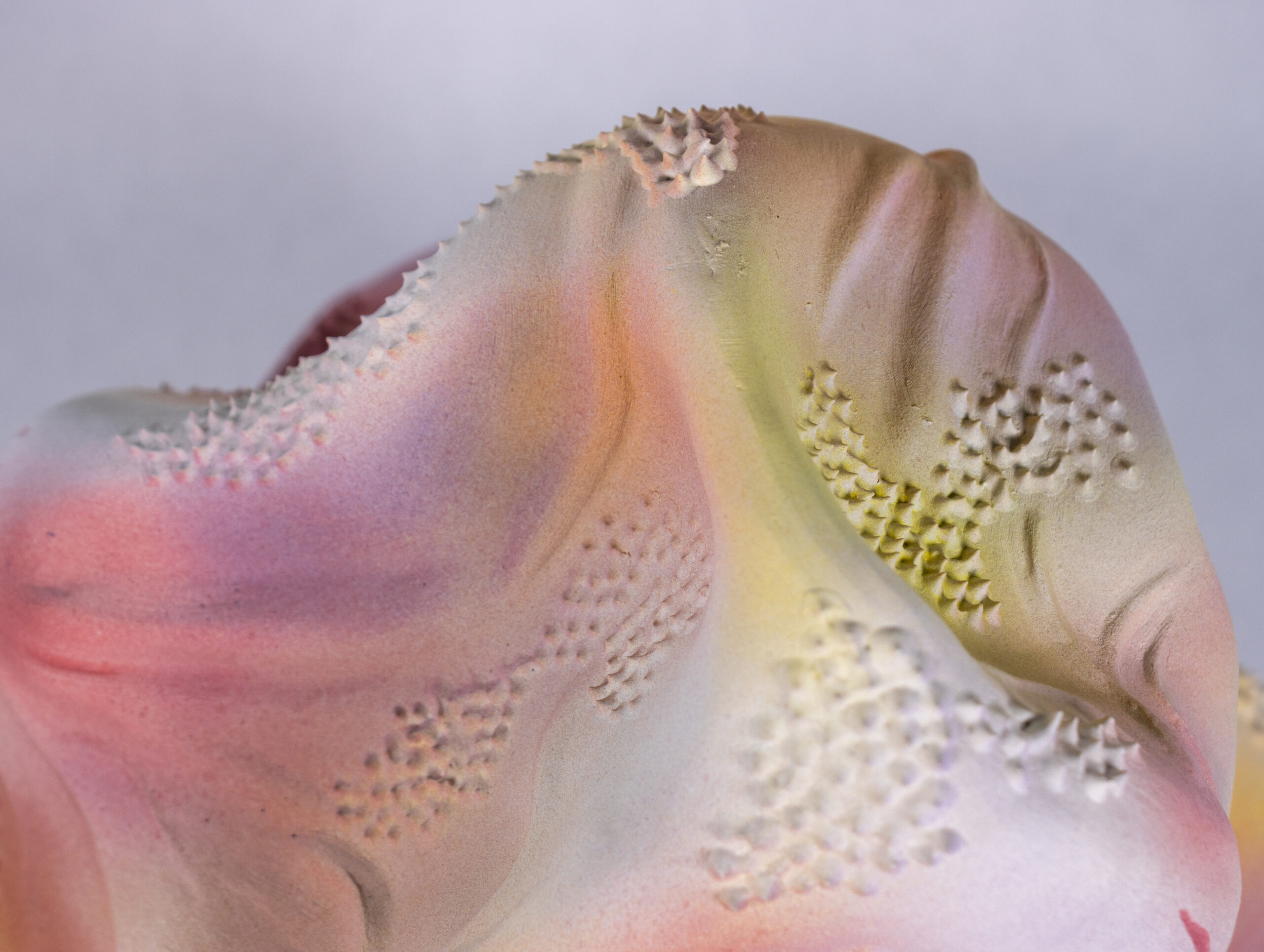
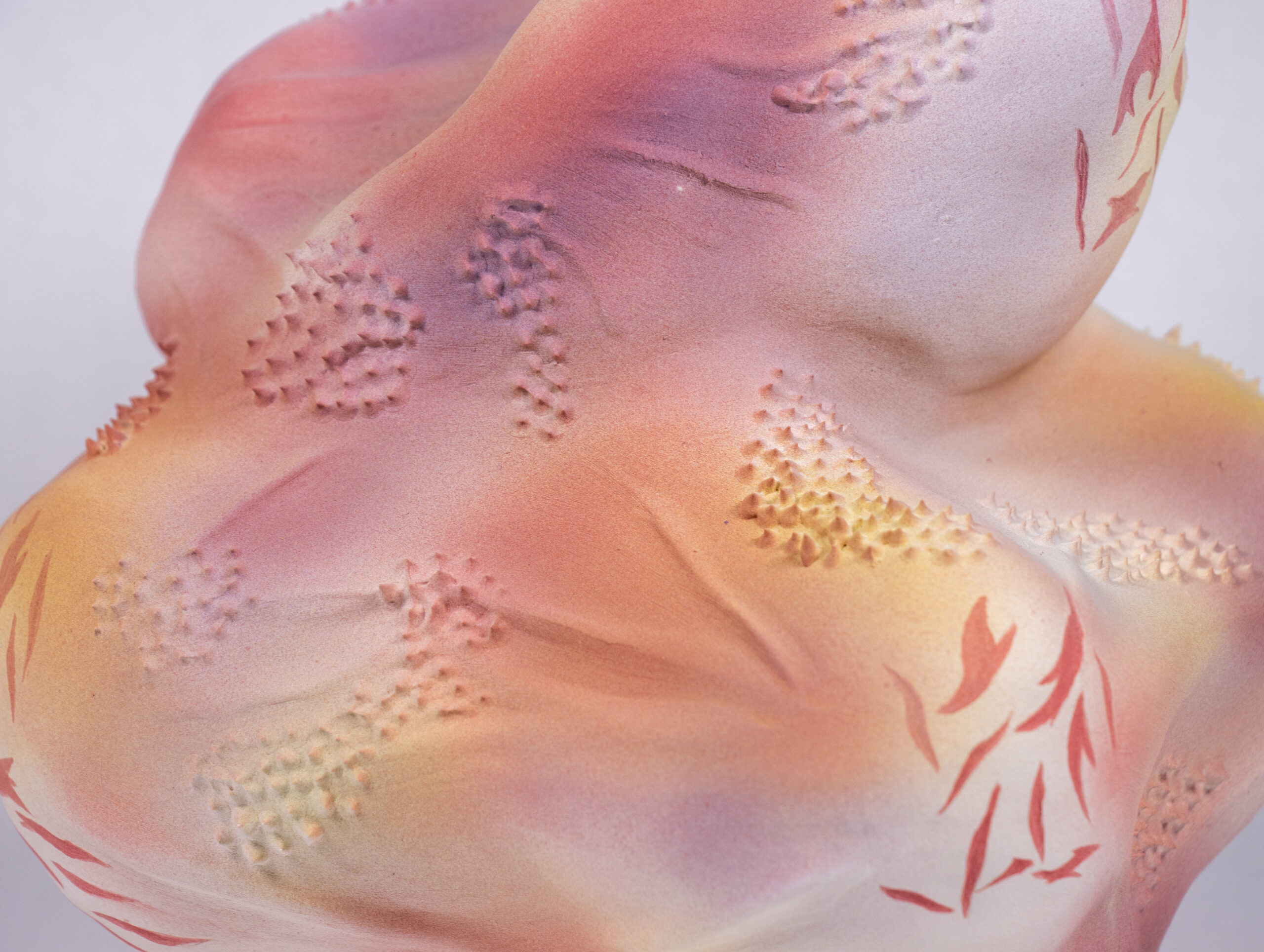
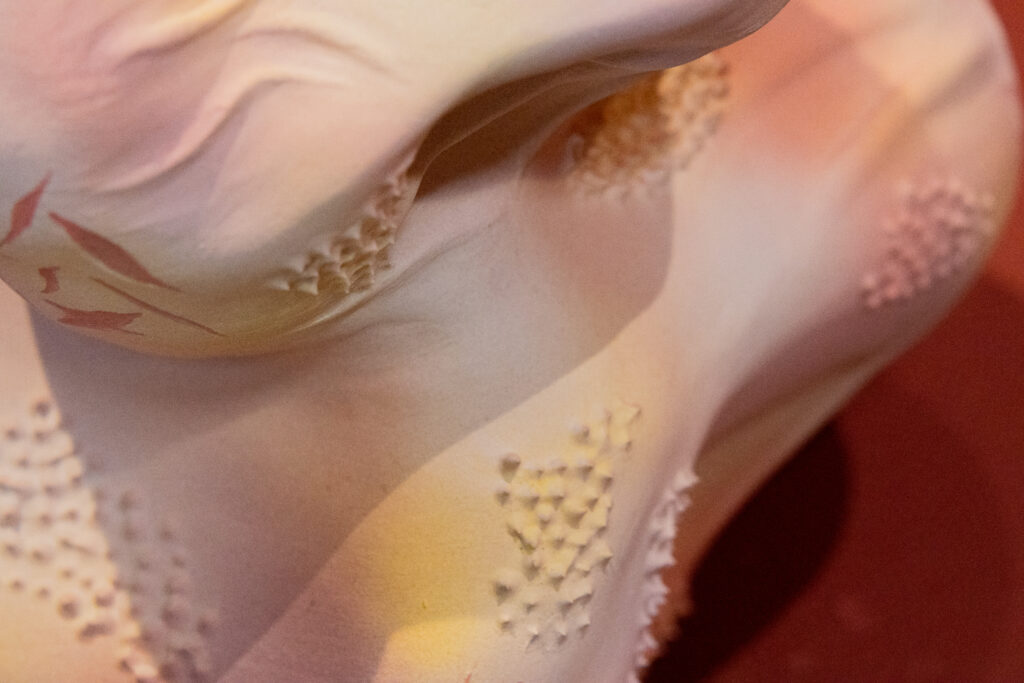
Gestational Pulse is a sensory and abstract sculptural form that explores the sensations of fetal movement through tactile engagement. Using slip and a piping bag, I created numerous small spikes while carving stretch mark patterns into the surface.
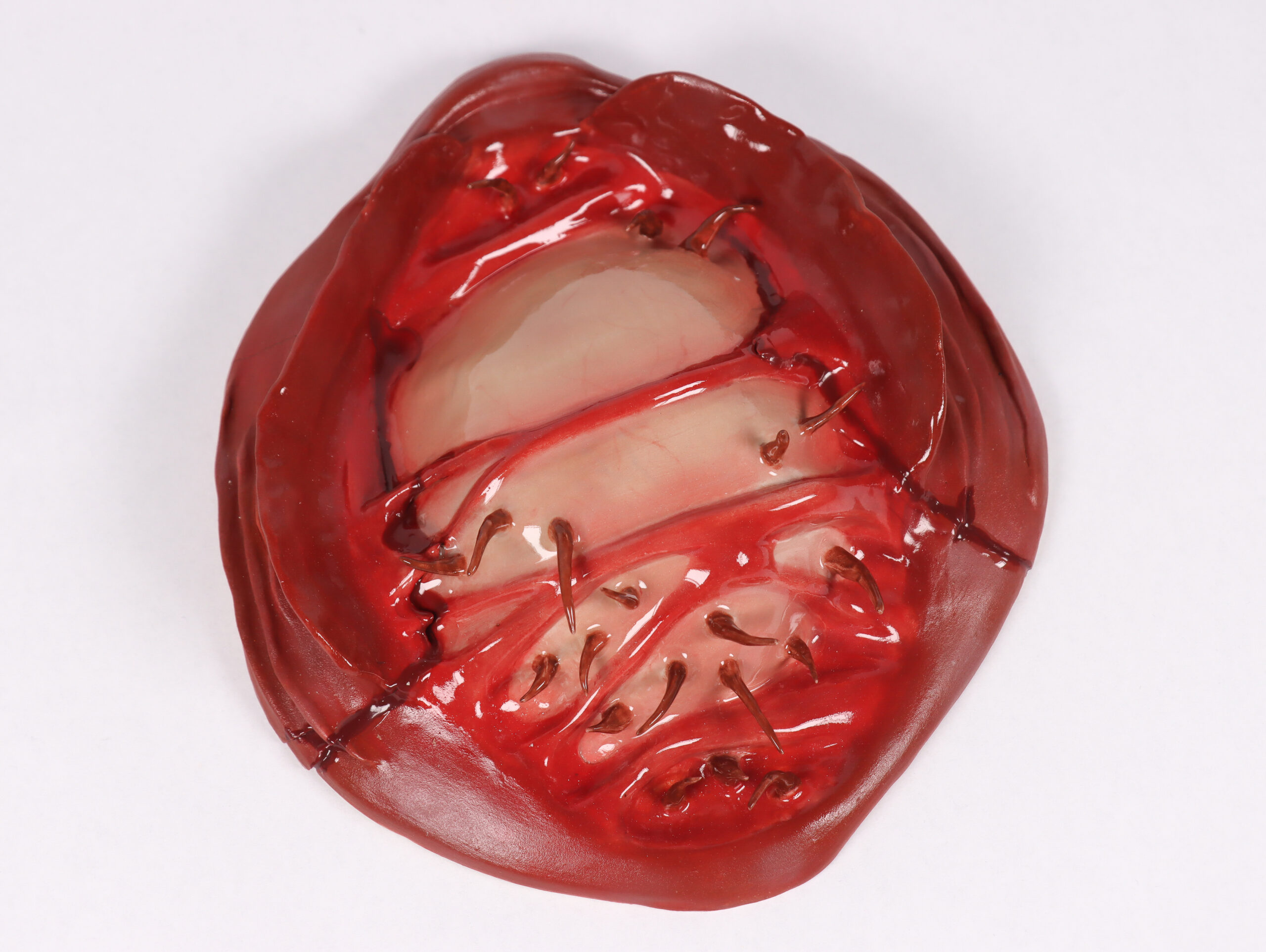
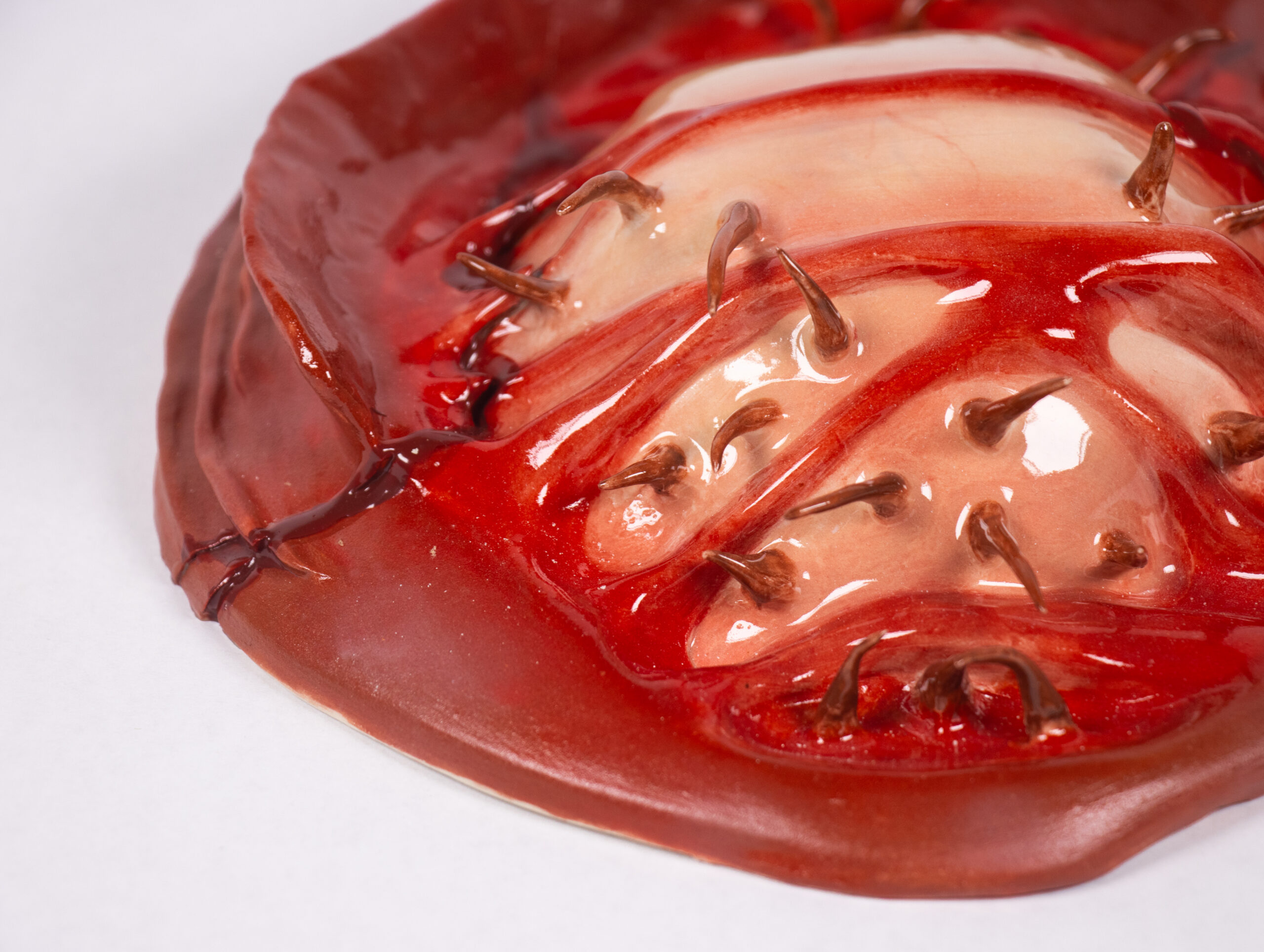
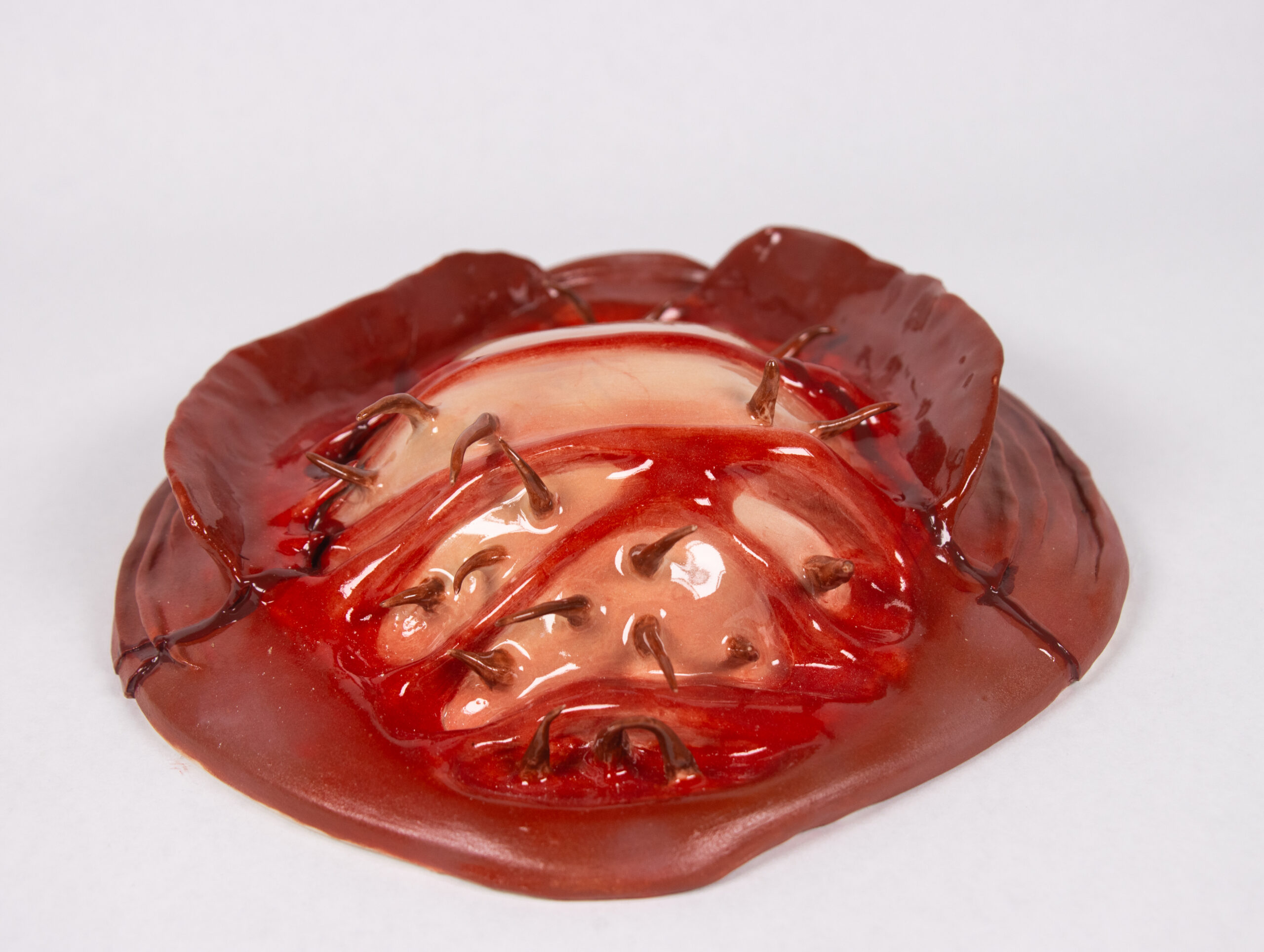
Tearing I
(Ceramics, 2024)
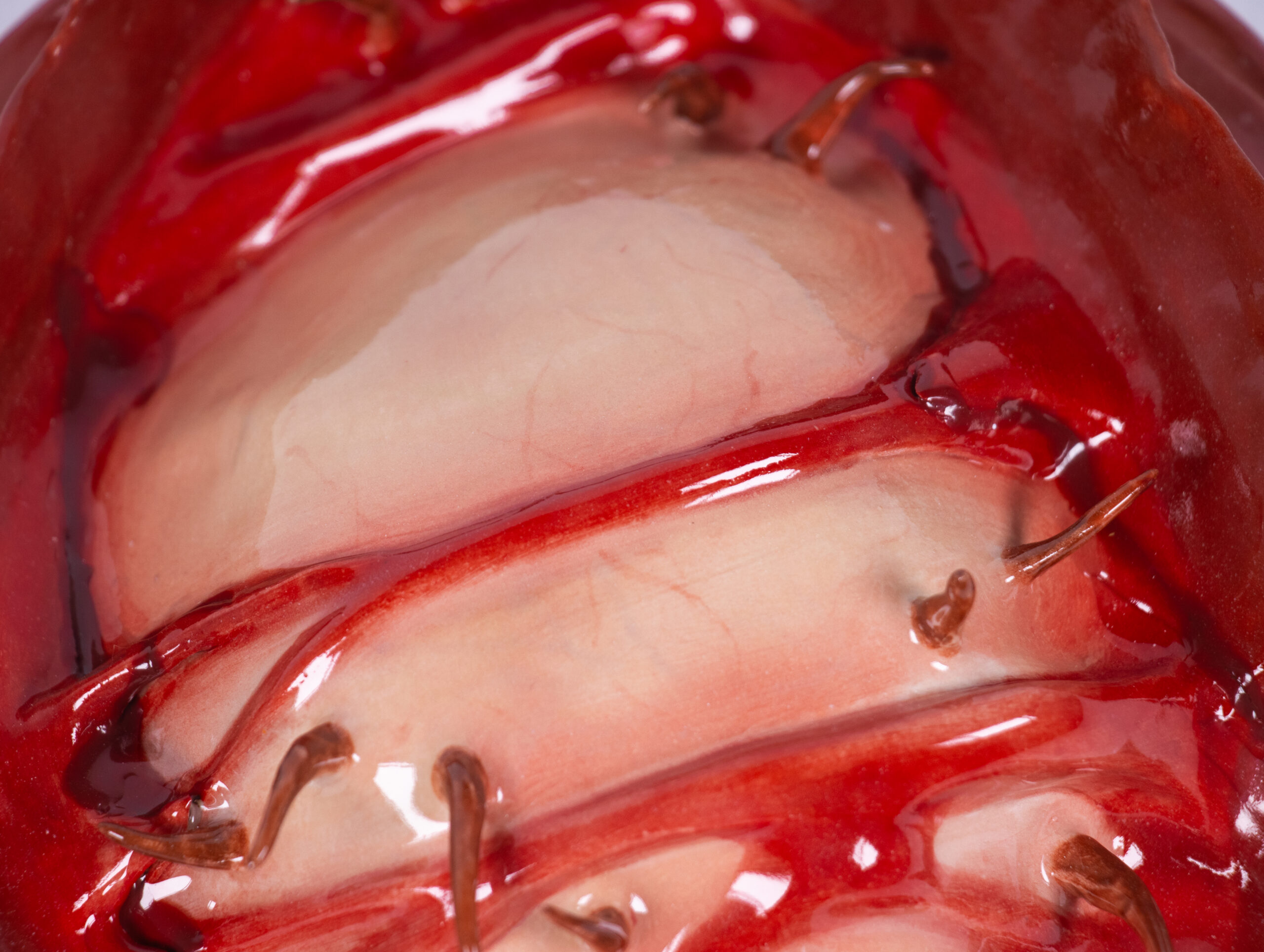
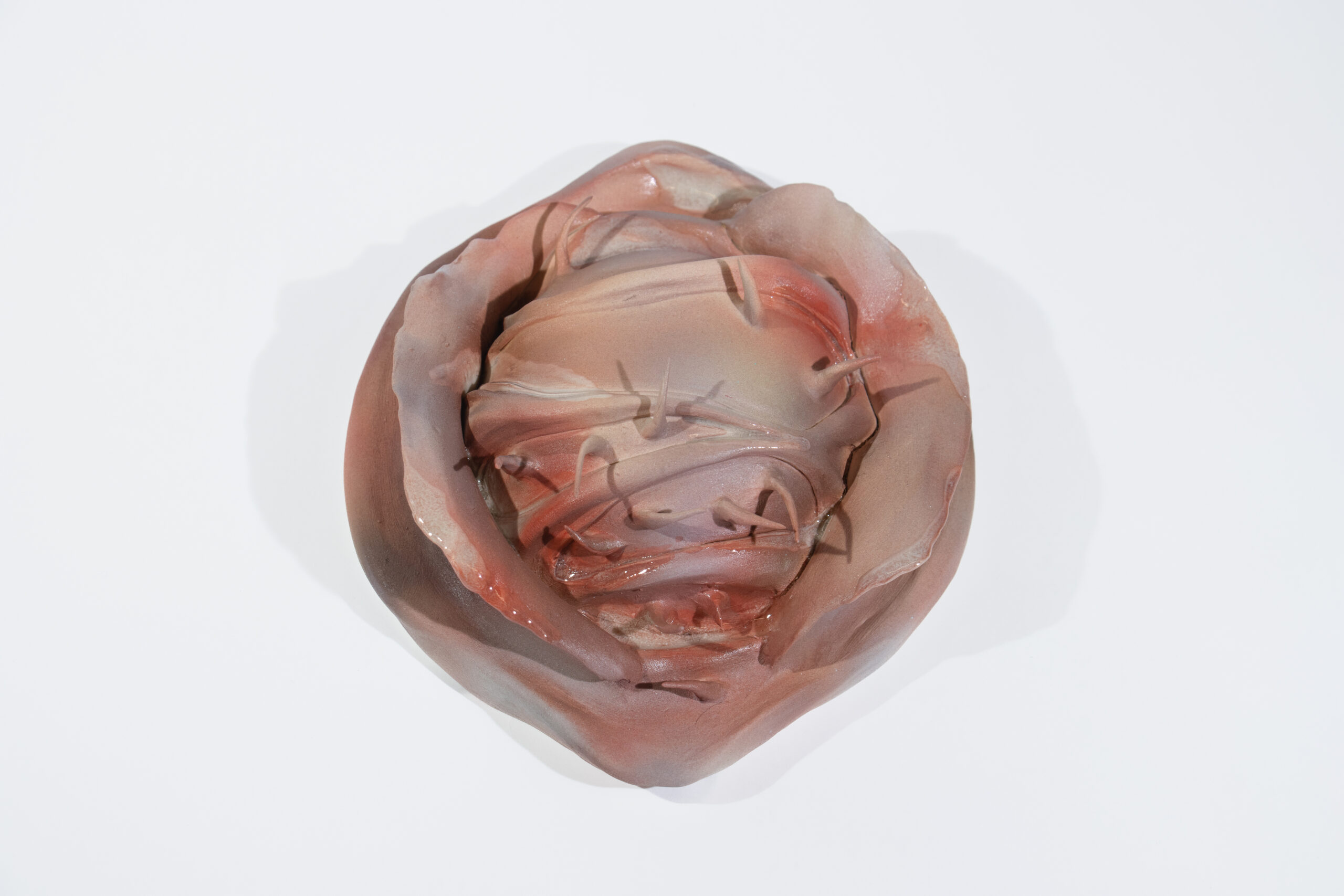
Tearing is a sensory and abstract sculptural form representing natural childbirth’s intense physical and emotional threshold. The surface features numerous sharp spikes and torn textures.

Tearing II
(Ceramics, 2024)
Tearing is a sensory and abstract sculptural form representing natural childbirth’s intense physical and emotional threshold. The surface features numerous sharp spikes and torn textures.
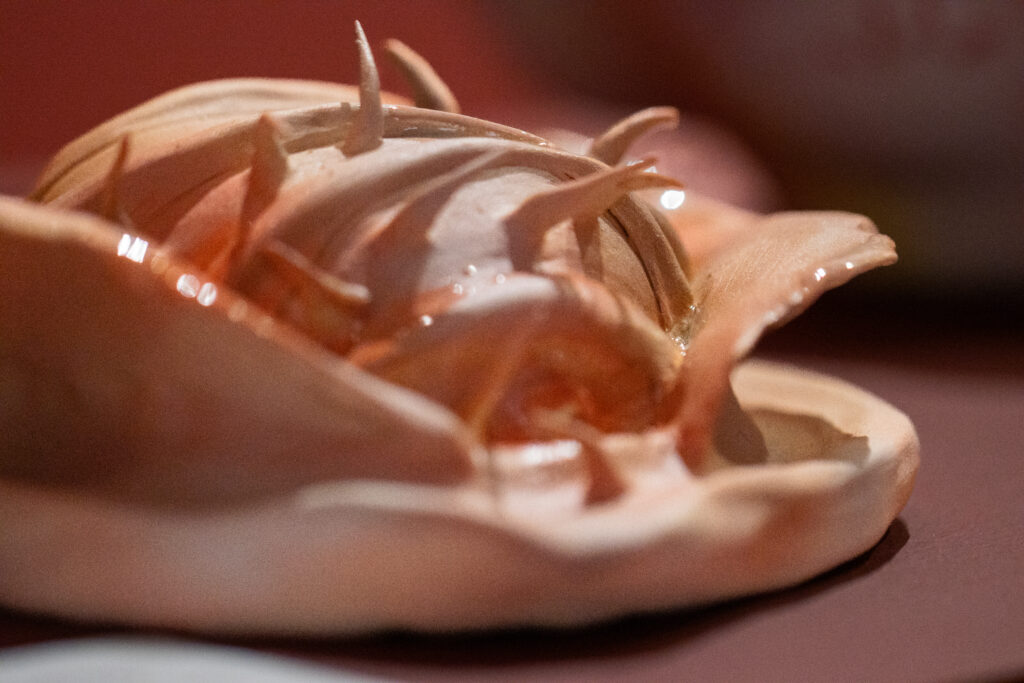
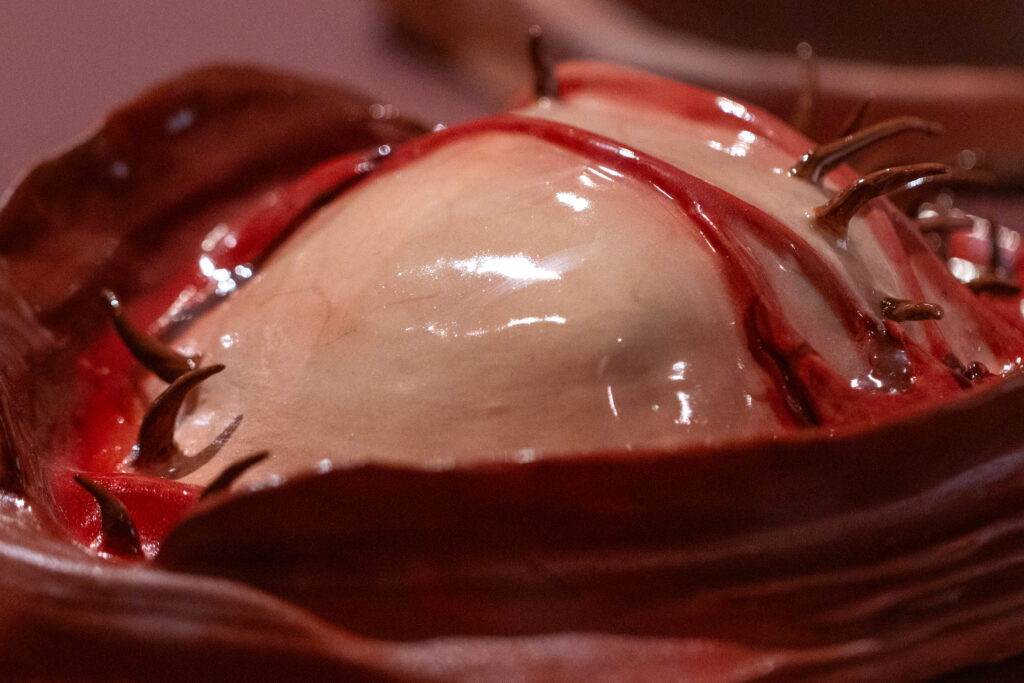
C- Section
(Ceramics, 2024)
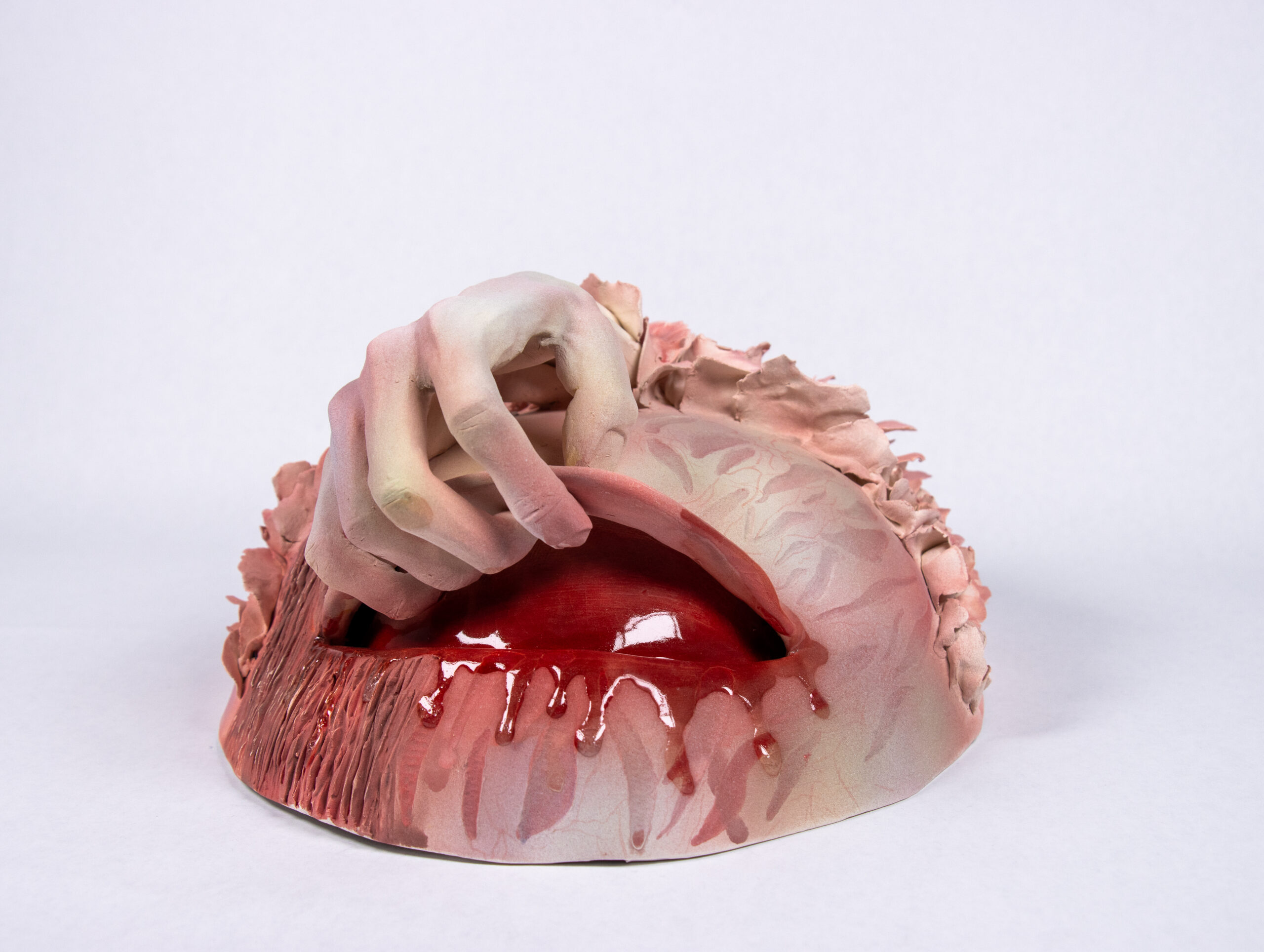
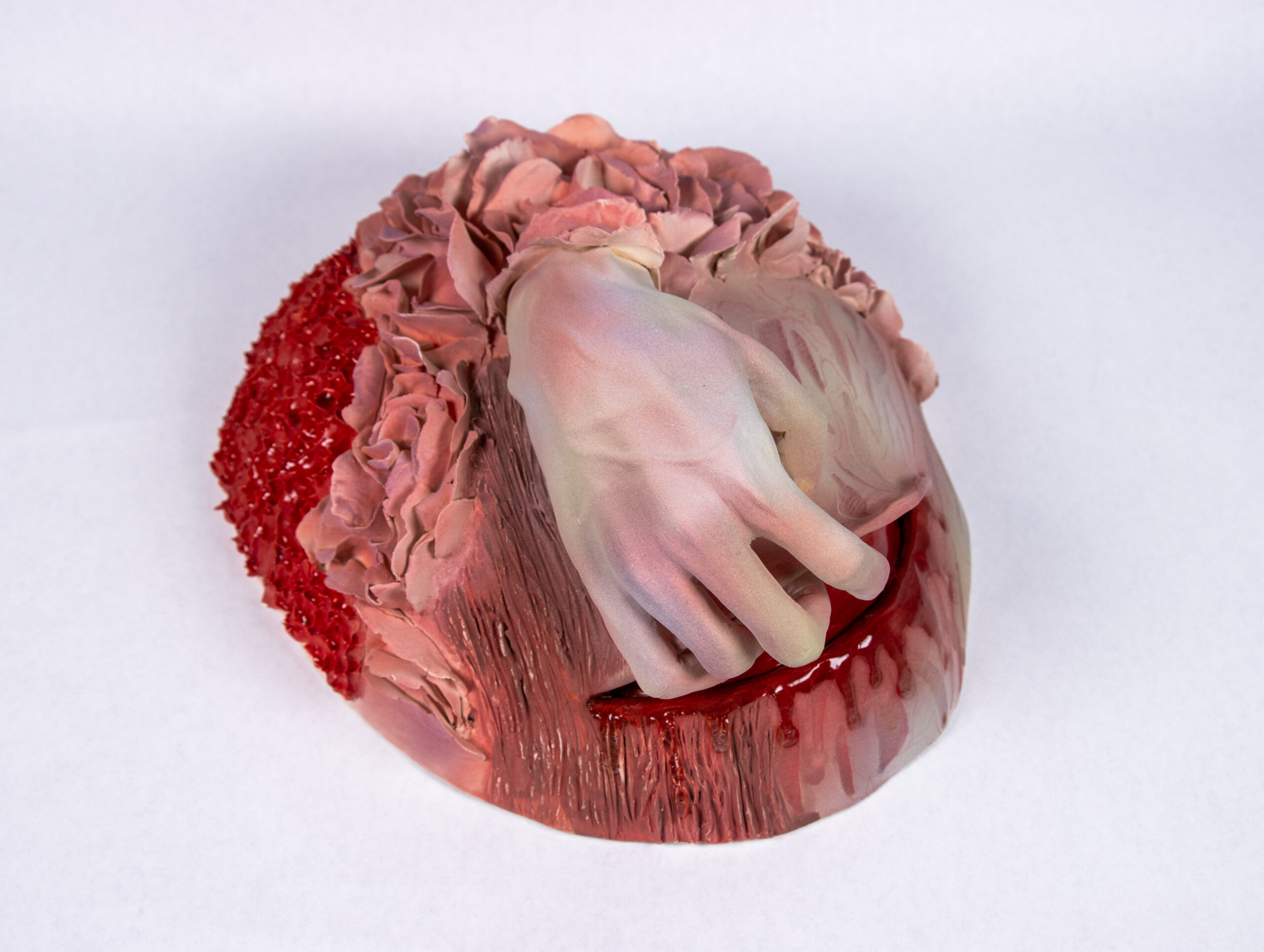
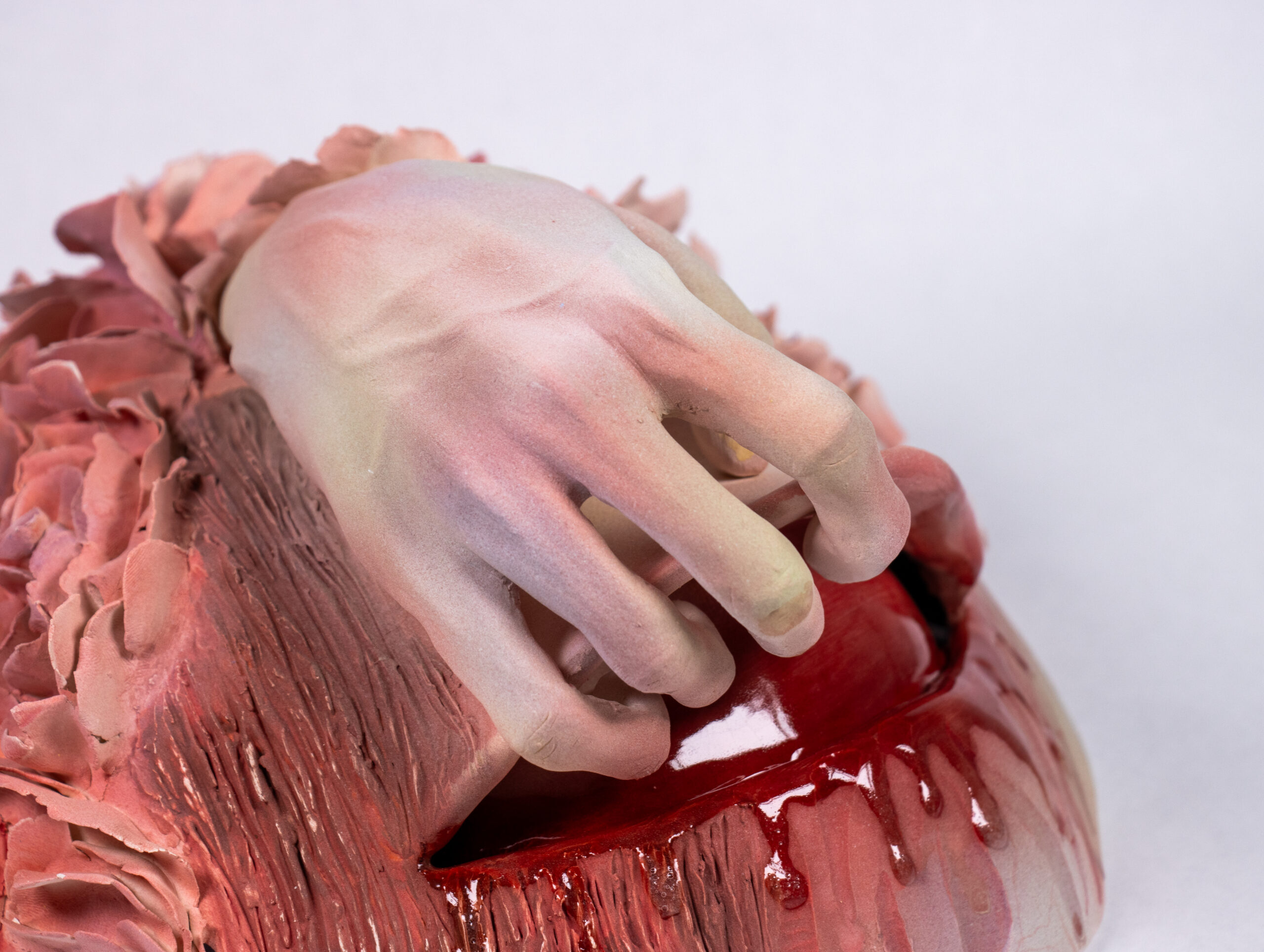
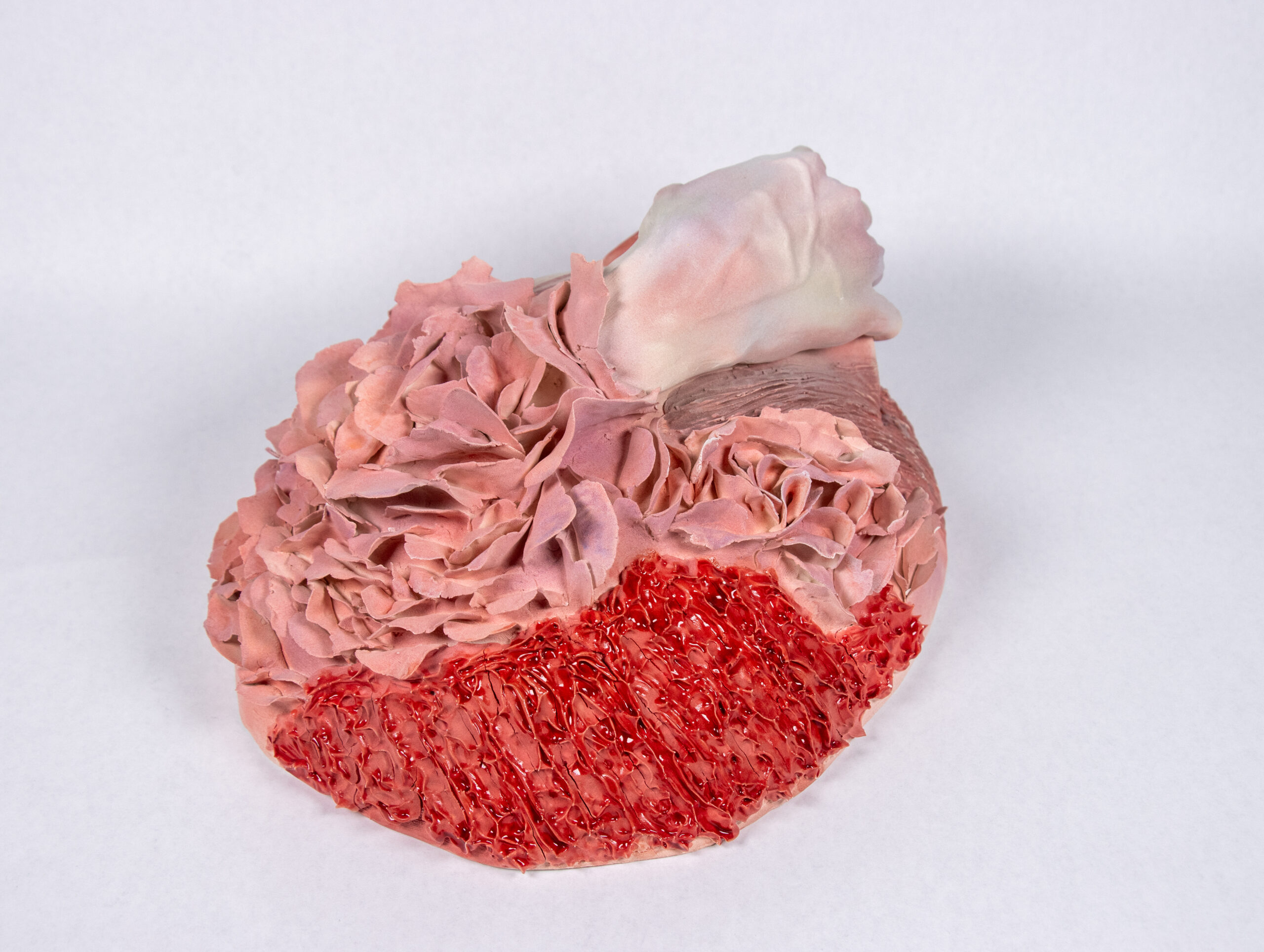
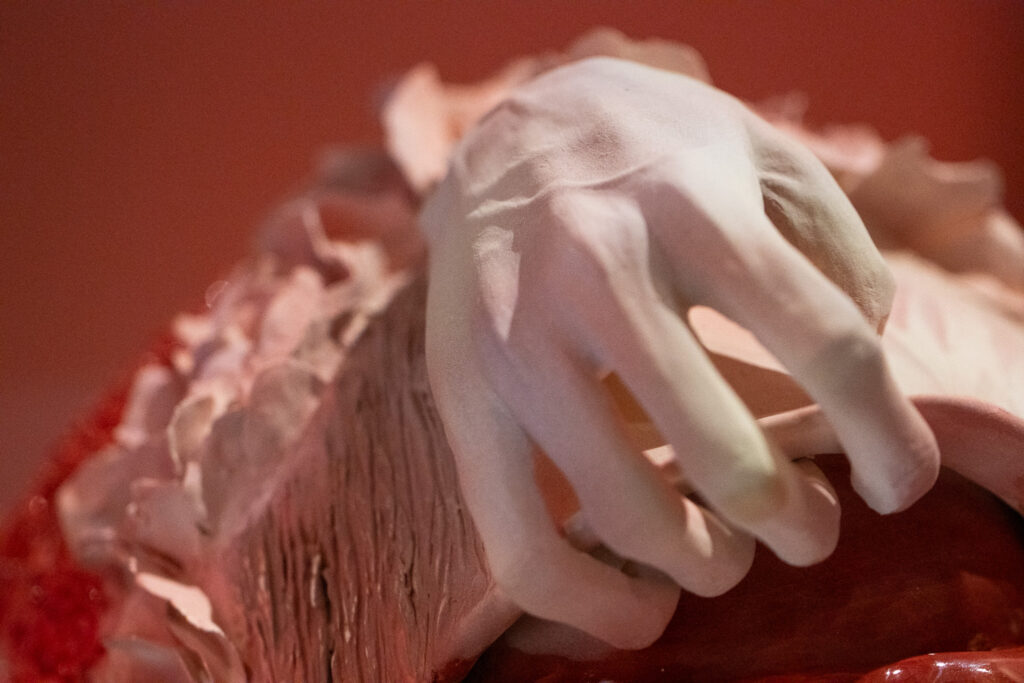
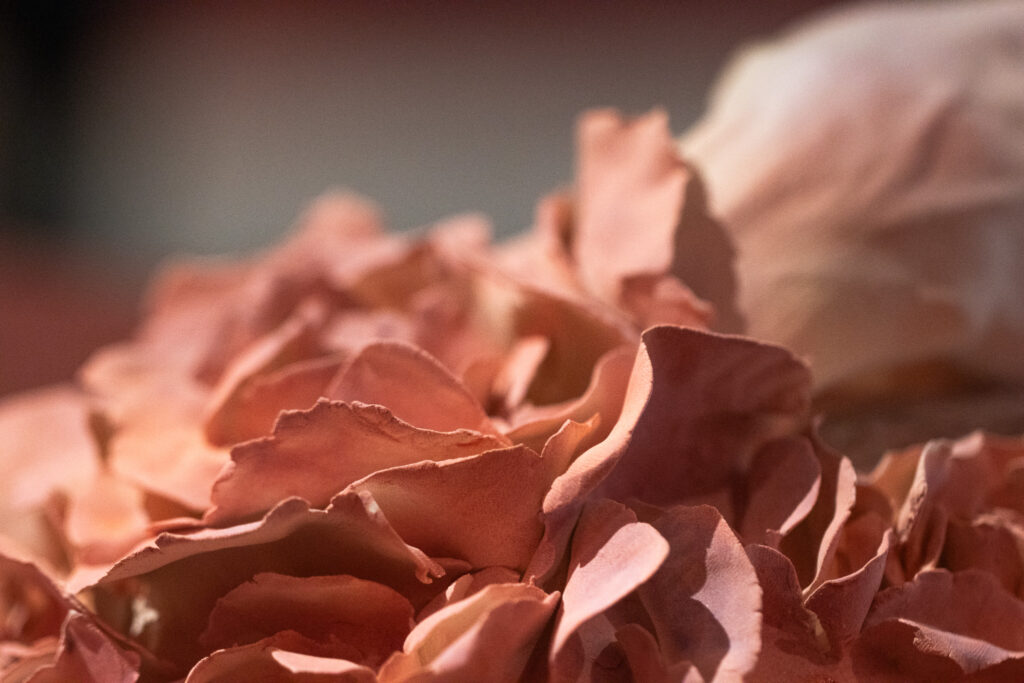
C-section is a cross-section sculpture of a cesarean delivery featuring a hand pulling open the mother’s body. It is a sensory and surreal form of work that symbolizes both the physical and emotional toll of labour. The surface comprises layered, petal-like forms stacked upon one another alongside rough and uneven textures.
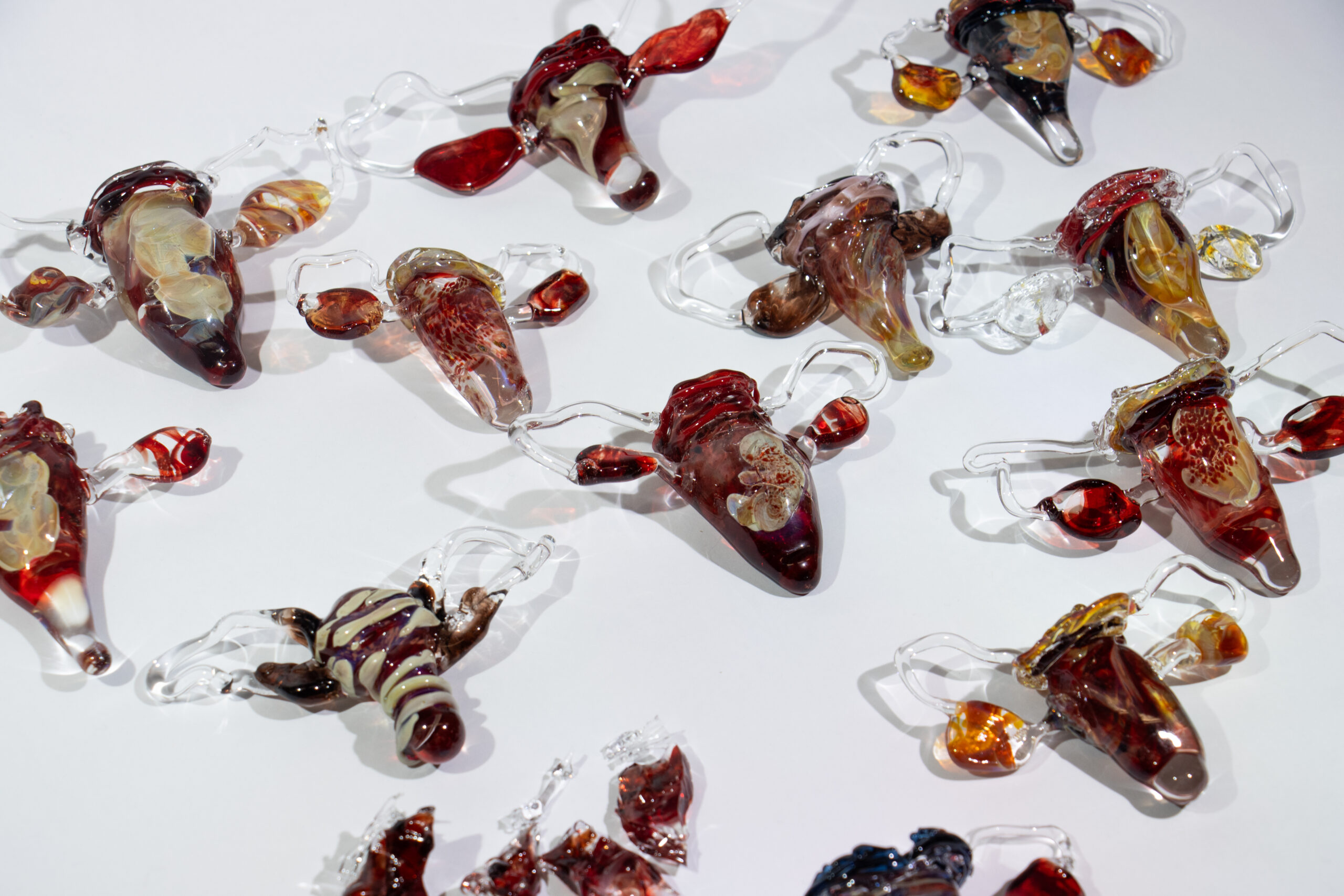
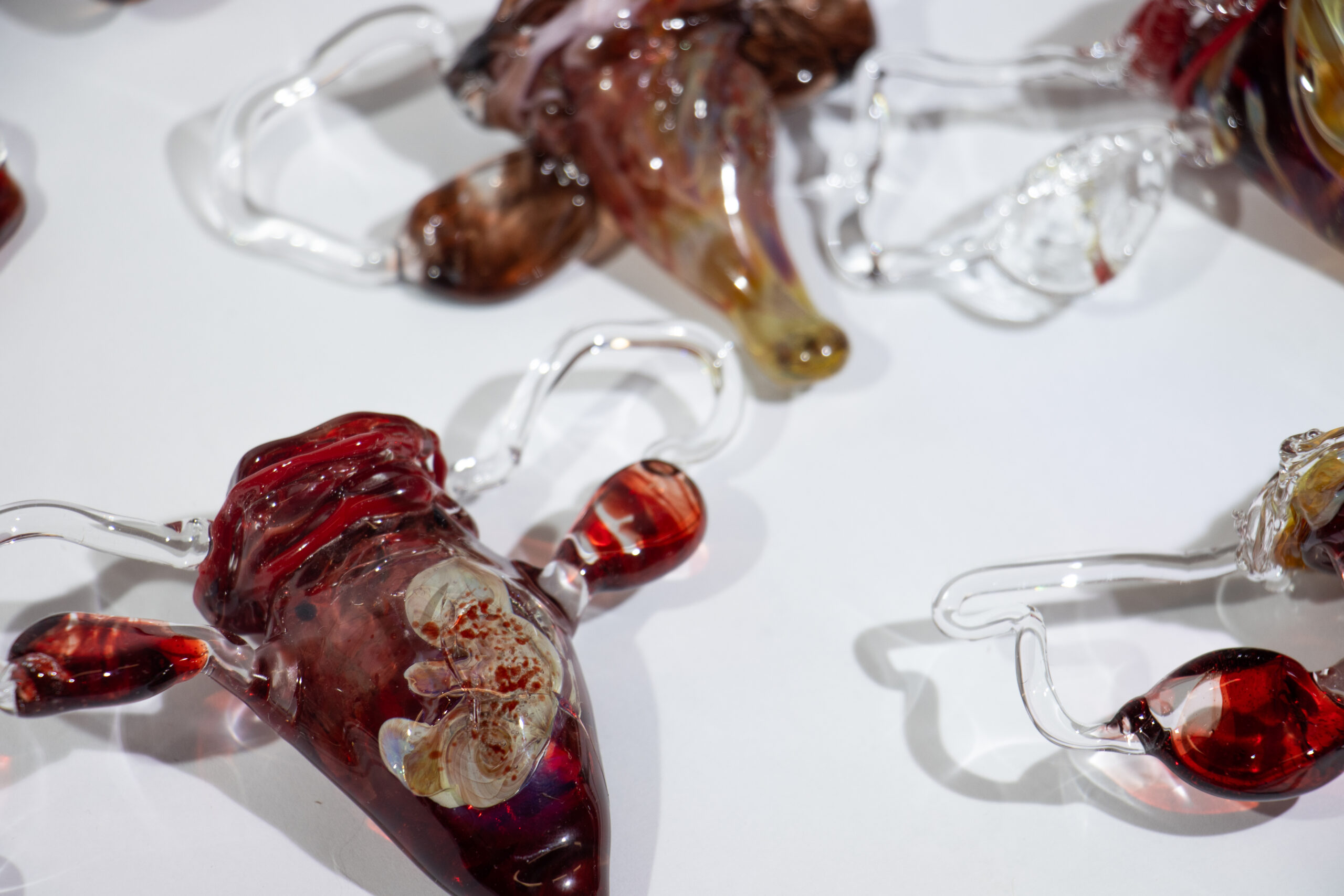
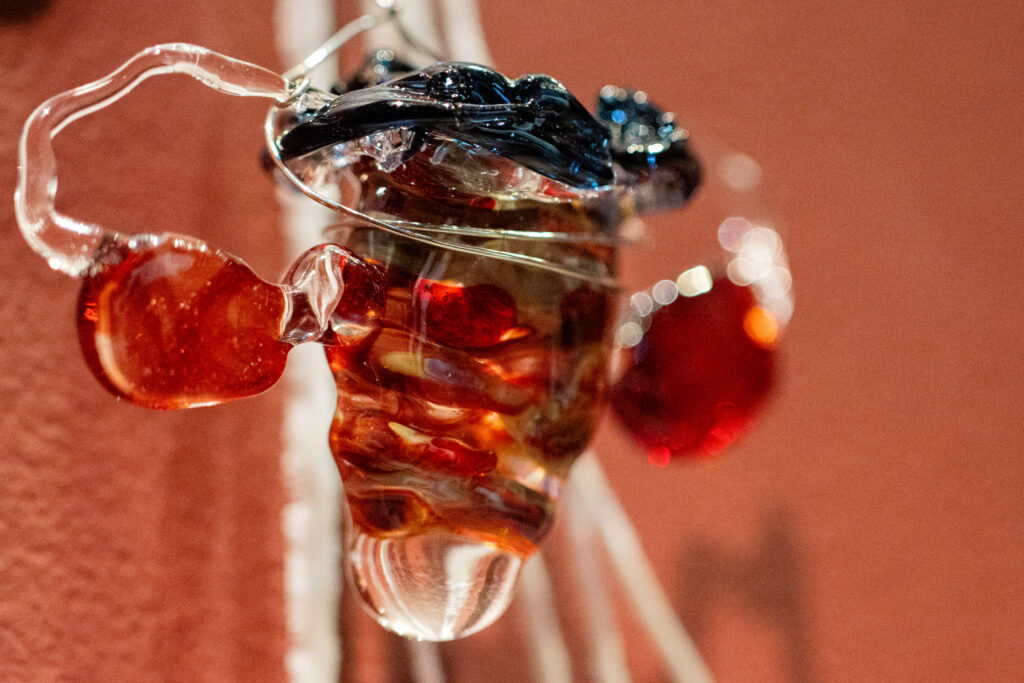
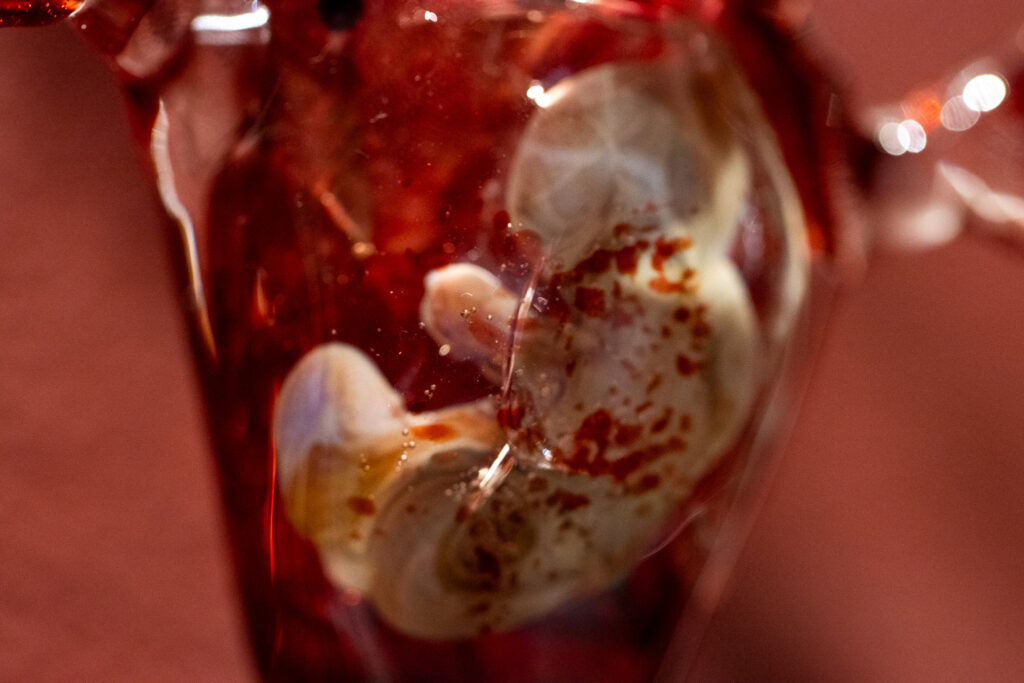
Uterus Series: Echoes of the Womb
(Borosilicate glass, 2024) include 13 pieces
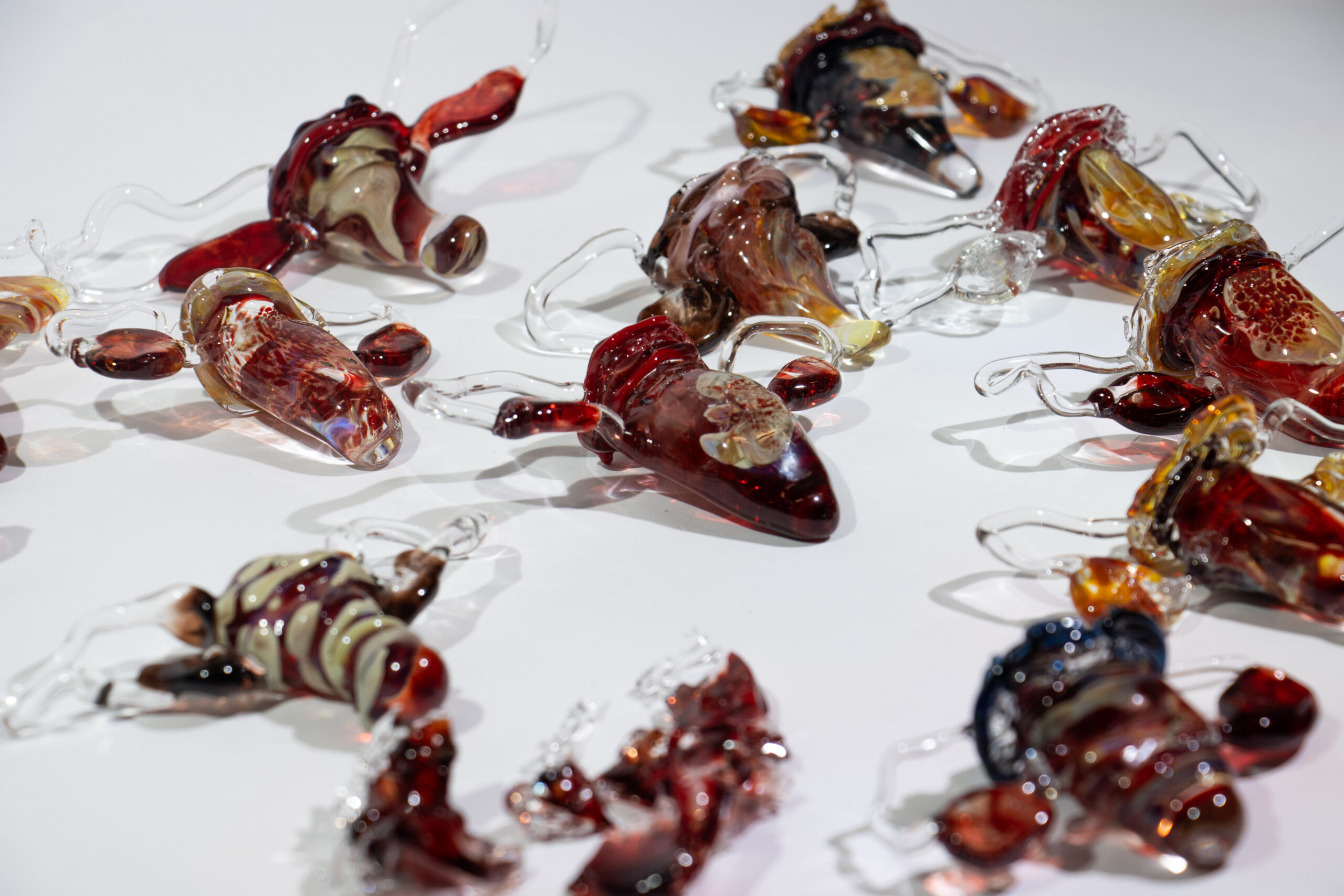
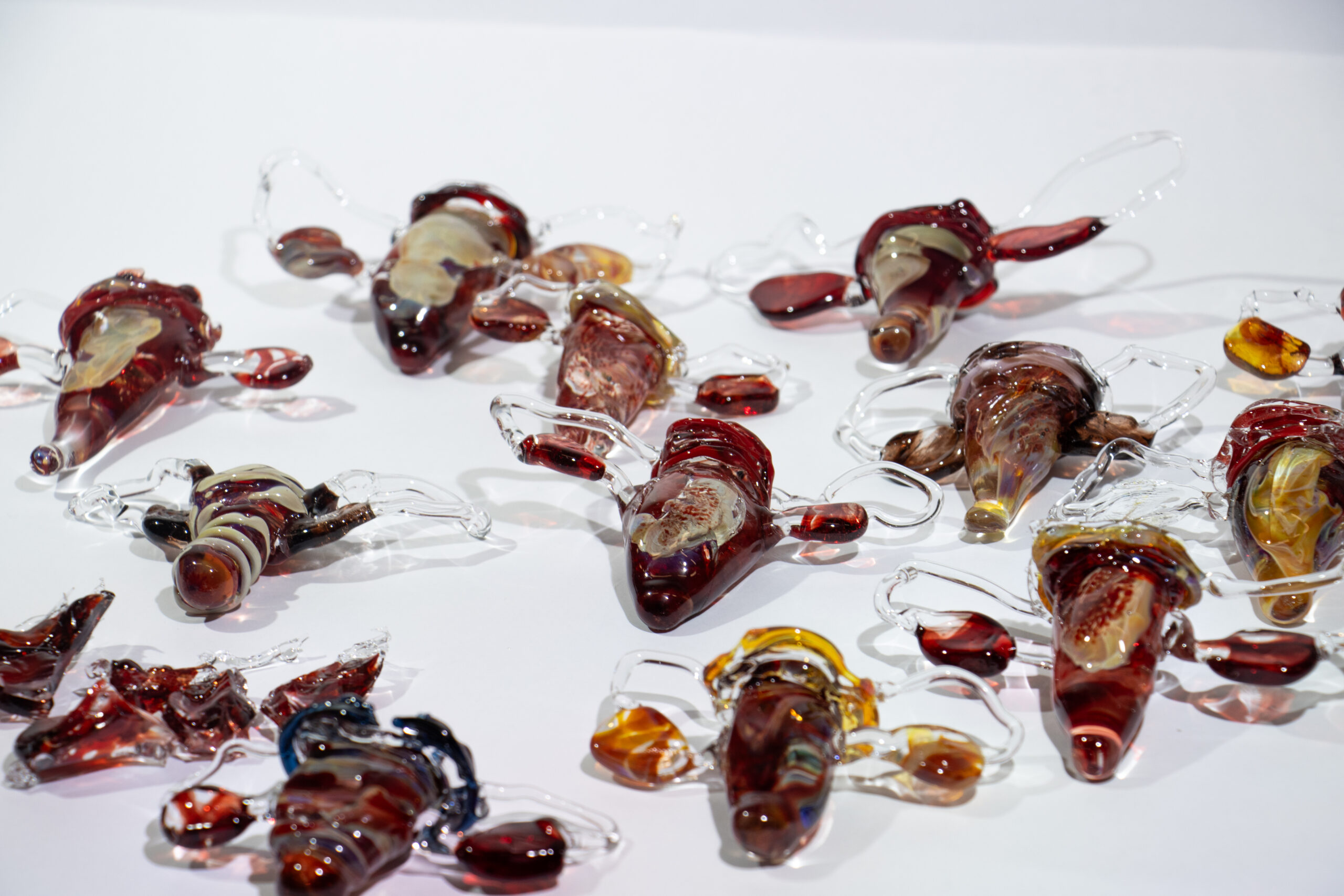
Uterus Series: Echoes of the Womb is a collection of small glass sculptures. Each form operates as a speculative reproductive narrative, representing different stages and conditions of the uterus. This work explores themes of reproductive health and the evolving maternal body. Some of the pieces depict a uterus nurturing a child, while others portray forms that are post-miscarriage, missing an ovary, or awaiting surgical removal.
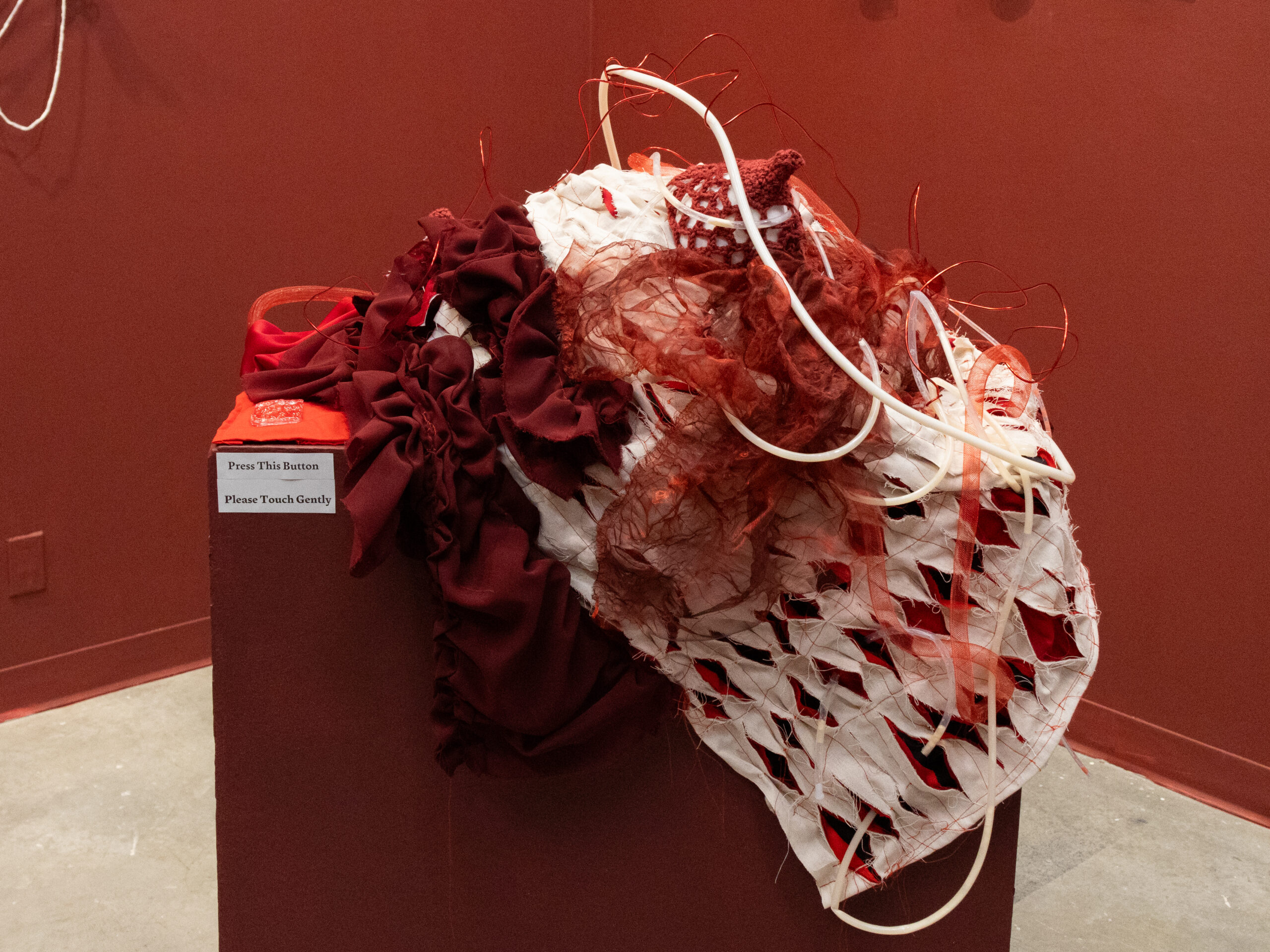
Engorged
(Textile, yarn, 3D-printed structure, Arduino, pumps, silk tubes, metal wires, 2024)
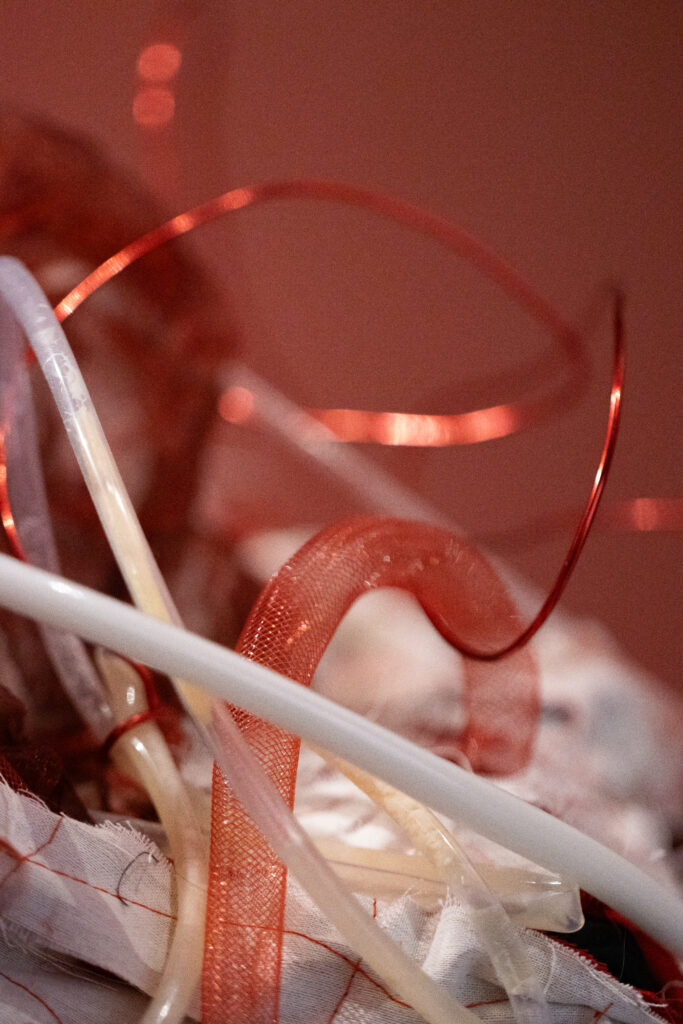
Engorged is a textile-based installation work that incorporates critical design interventions and explores the physical and emotional complexities of breastfeeding. The installation features crocheted breast forms supported by a 3D-printed structure. The soft yarn contrasts with the firm internal frame. Participants can press textured buttons, activating a pump system that moves liquid through translucent pipes, mimicking breastfeeding. Thin red metal wires and red silk tubes are woven into the fabric and a combination of soft and hard materials.
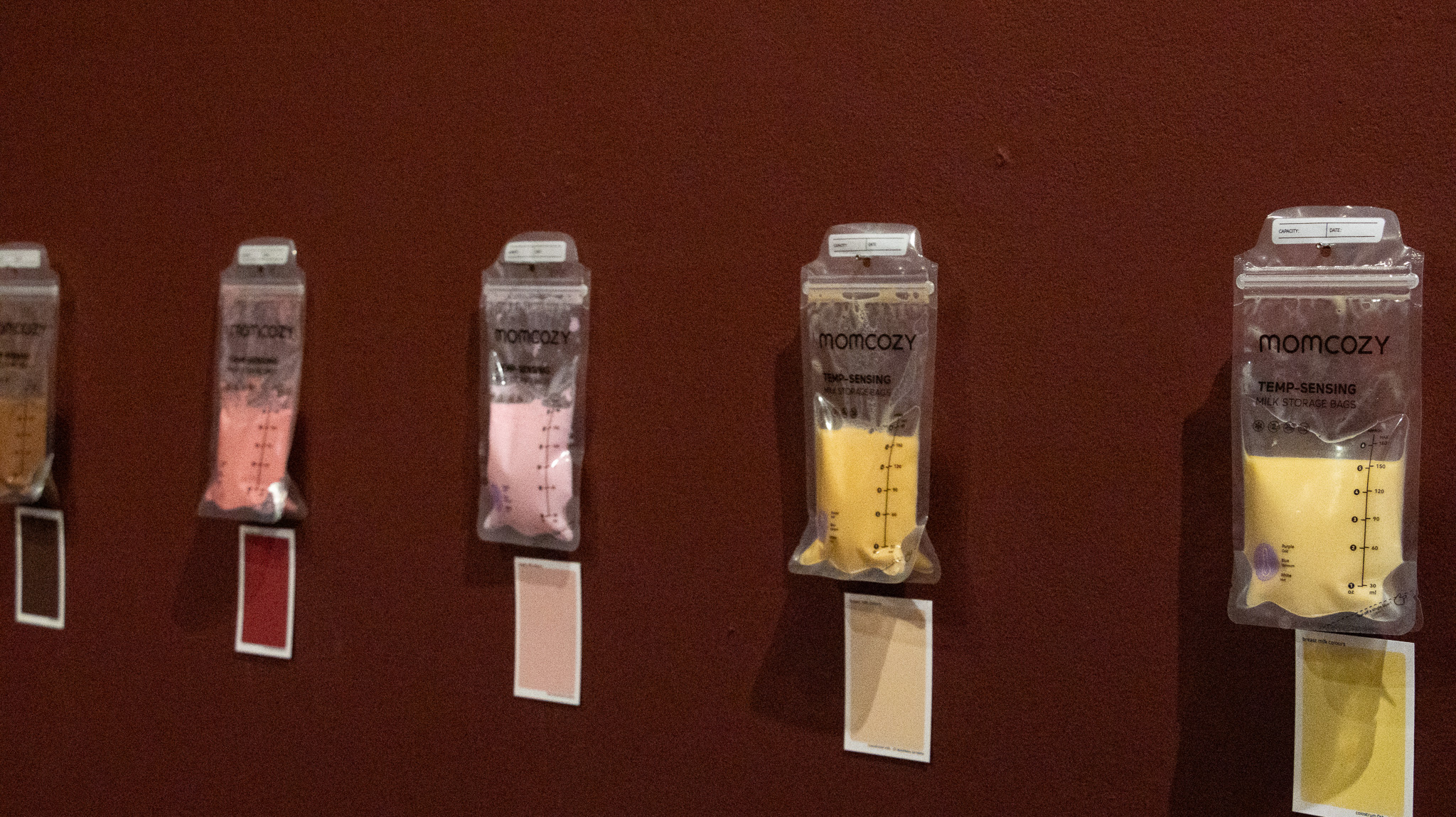
Breastmilk Colors
(Breastmilk storage bags, soymilk, food colour dye, breastmilk colour cards, 2024)
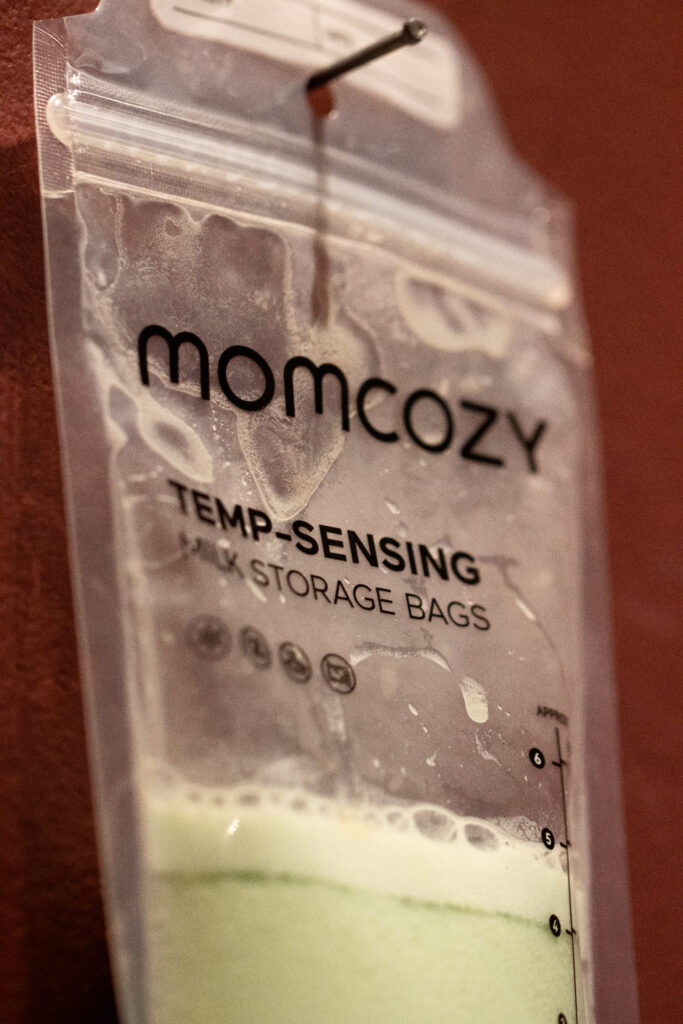
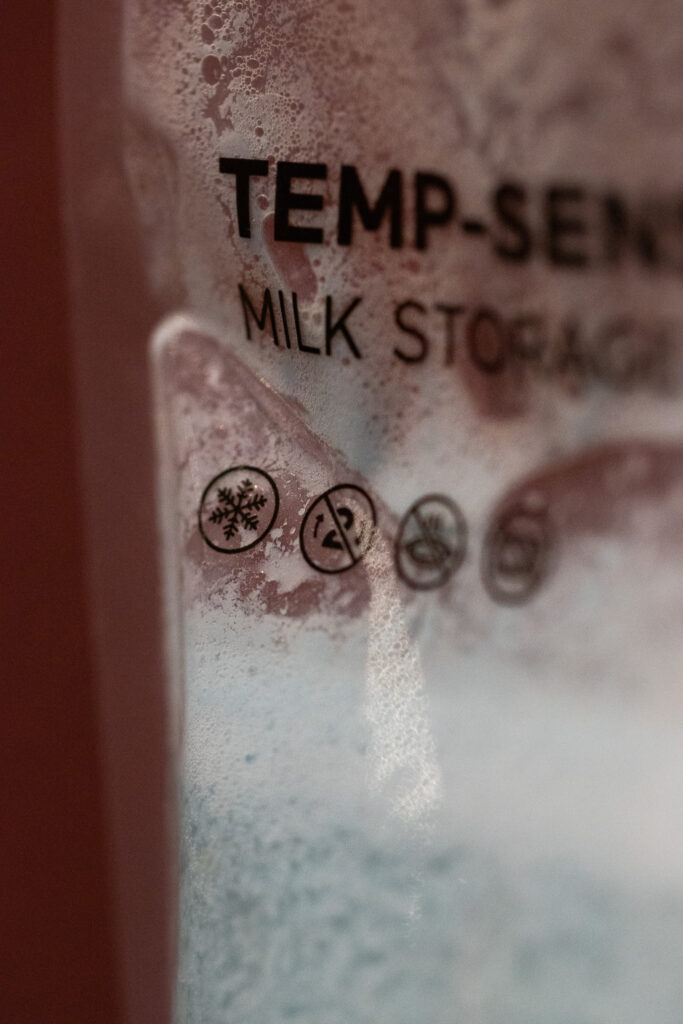
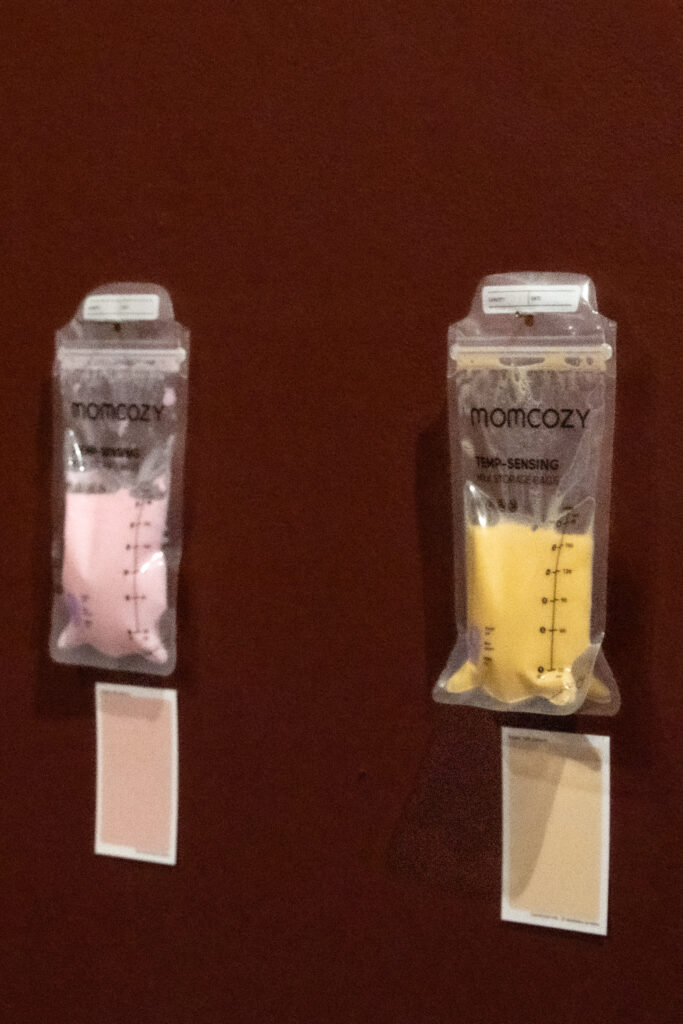
Breastmilk Colors is an installation that features breastmilk storage bags filled with soy milk, each tinted with food coloring to reflect the natural variations in breastmilk shades. The bags are paired with corresponding colour swatches, referencing breastmilk colour charts. This work shows the diverse and changing nature of breastmilk, influenced by factors like diet, hydration, and health.
Methodology
My methodology integrates material practice, speculative and critical design, and participatory design. By working with diverse materials, I craft sensory experiences that prompt audiences to reflect on the complexities of motherhood. Through speculative and participatory approaches, I challenge dominant narratives, foster dialogue, and invite active engagement from the audience in the process of meaning-making.
Material Practice
Speculative and Critical Design
Participation Practice in Design
THE EXHIBITION
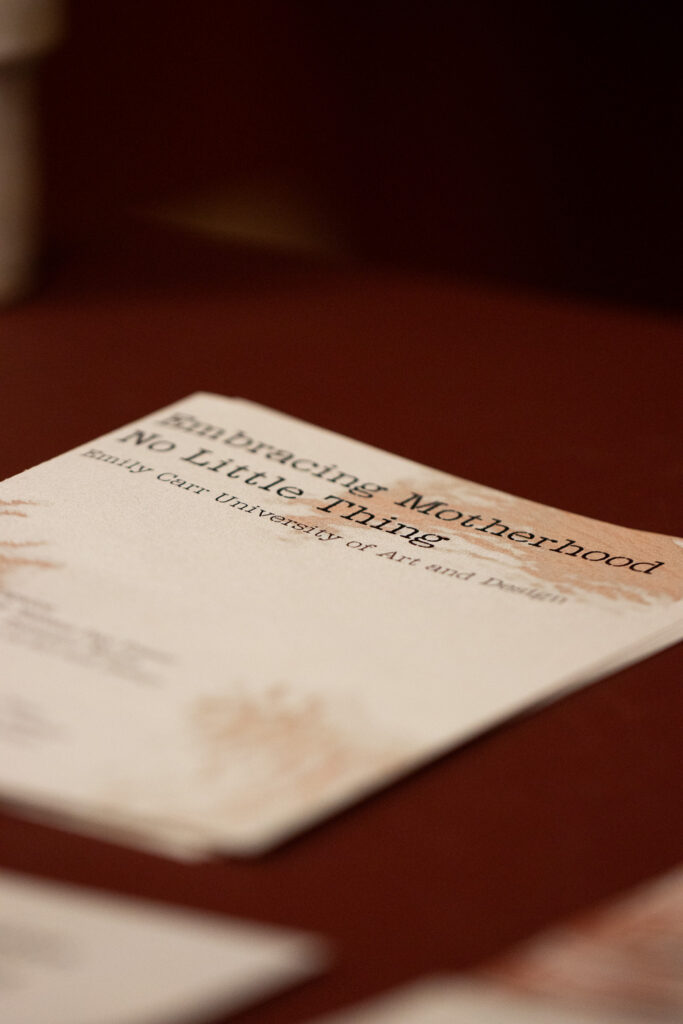
Embracing Motherhood: No Little Thing
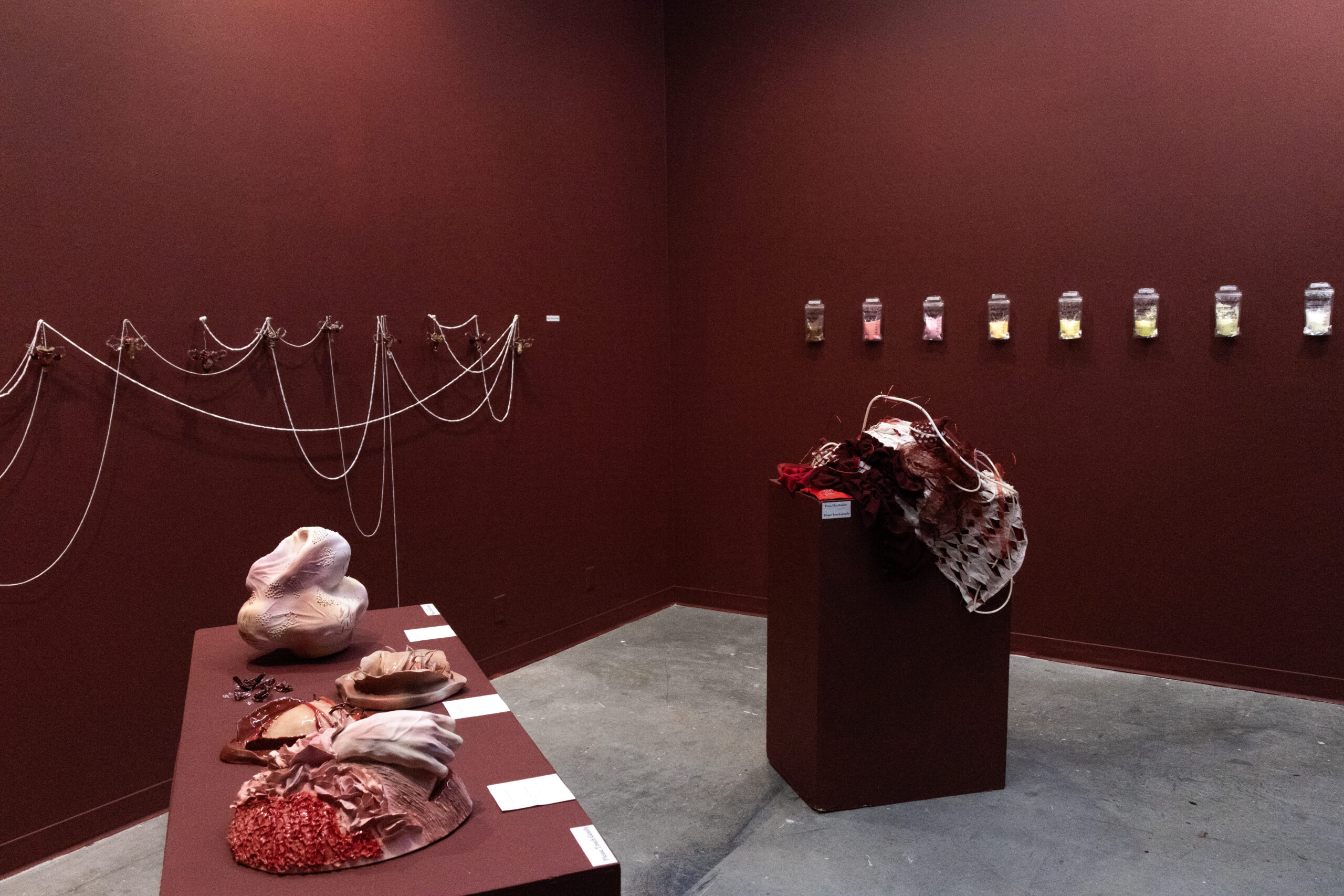
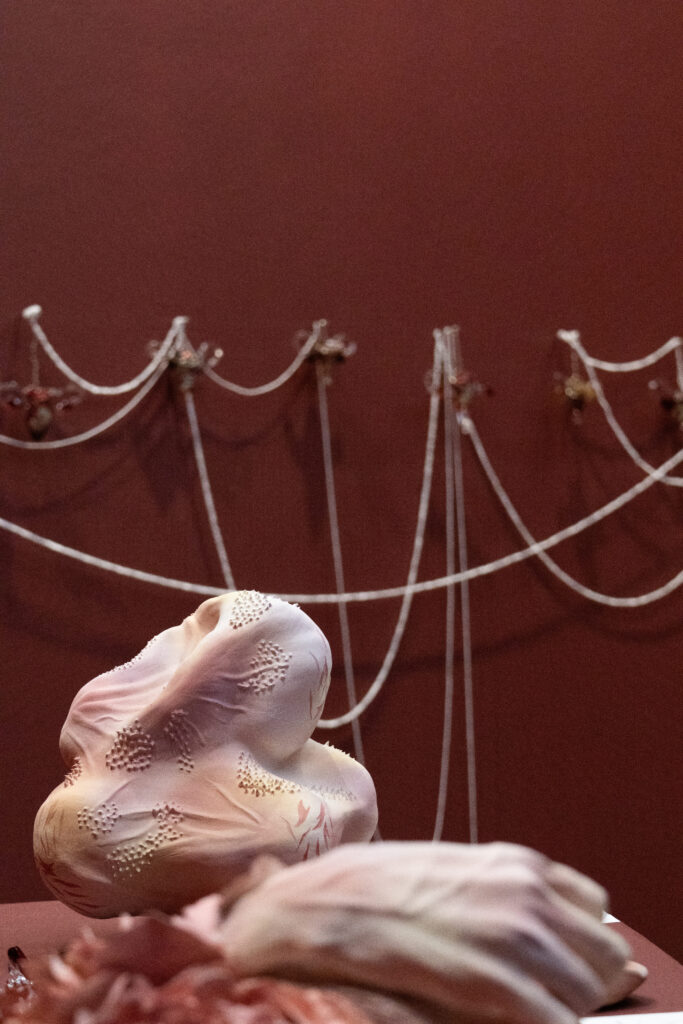
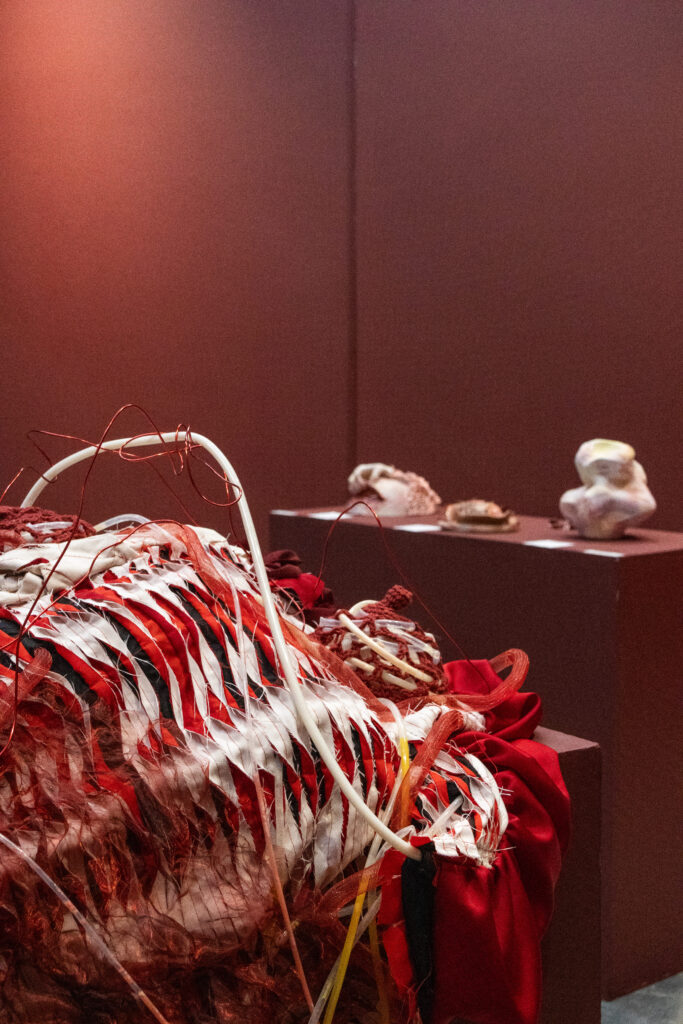
Early on in my Masters, I was aware that I wanted to be able to situate my material practice in an installation format that invited active engagement and consideration. Approaches found in speculative and critical design practices and participatory design research served as great examples for me to work off of. These frameworks encouraged me to think beyond traditional exhibition formats and explore how materiality, interaction, and audience agency shape meaning. Participatory design emphasizes the importance of incorporating participant feedback into the work’s evolution. Taking a cue from this design area, I was mindful of creating an exhibition responsive to diverse experiences. Considering the role of sensory engagement and material practice in evoking embodied experiences, I created an interactive exhibition that integrates ceramic and glass sculptures, sound elements, and tactile interactions to invite emotional responses and consequently deeper reflections on maternity.
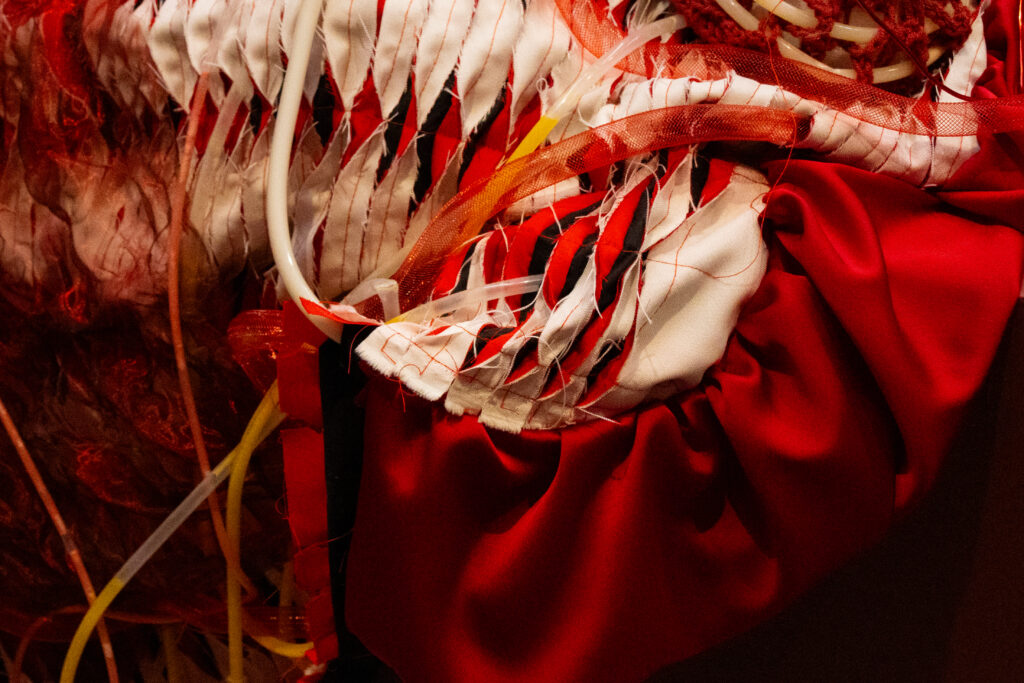
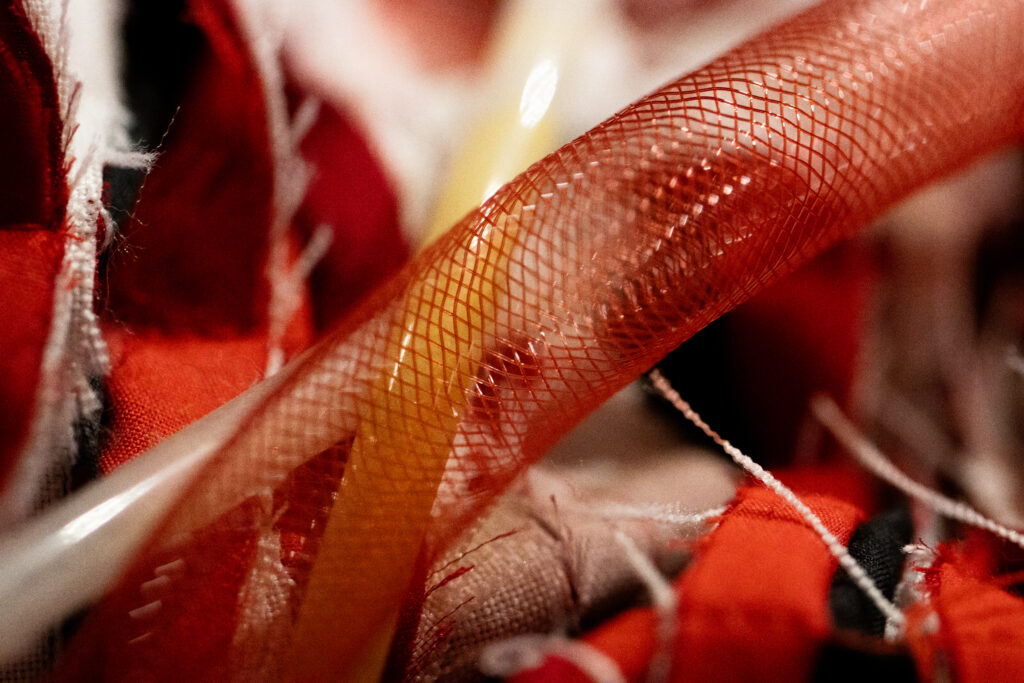
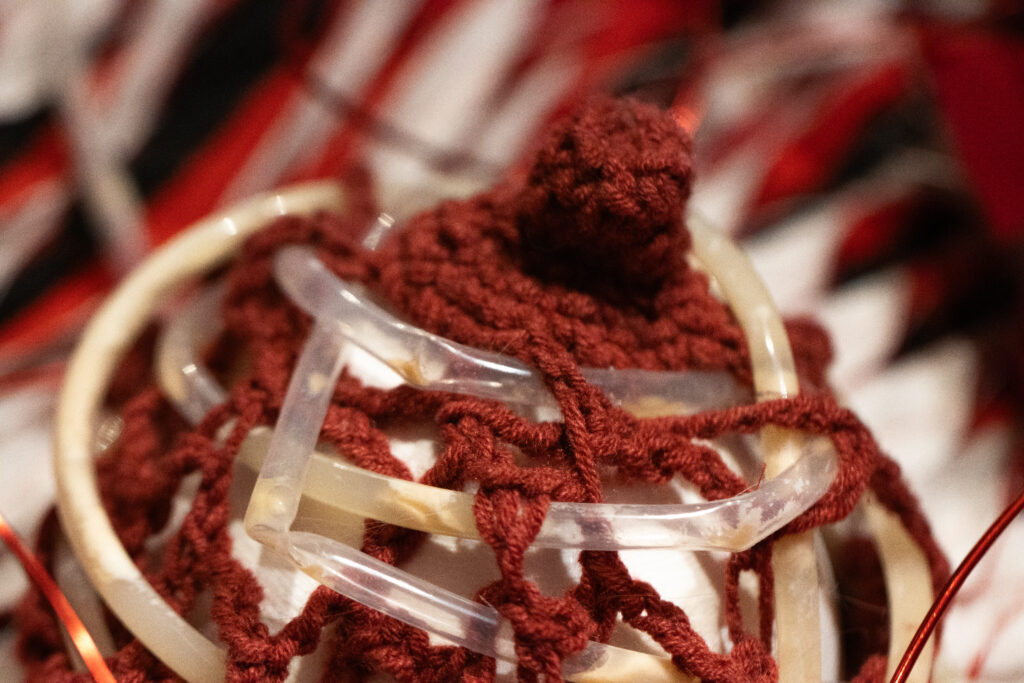
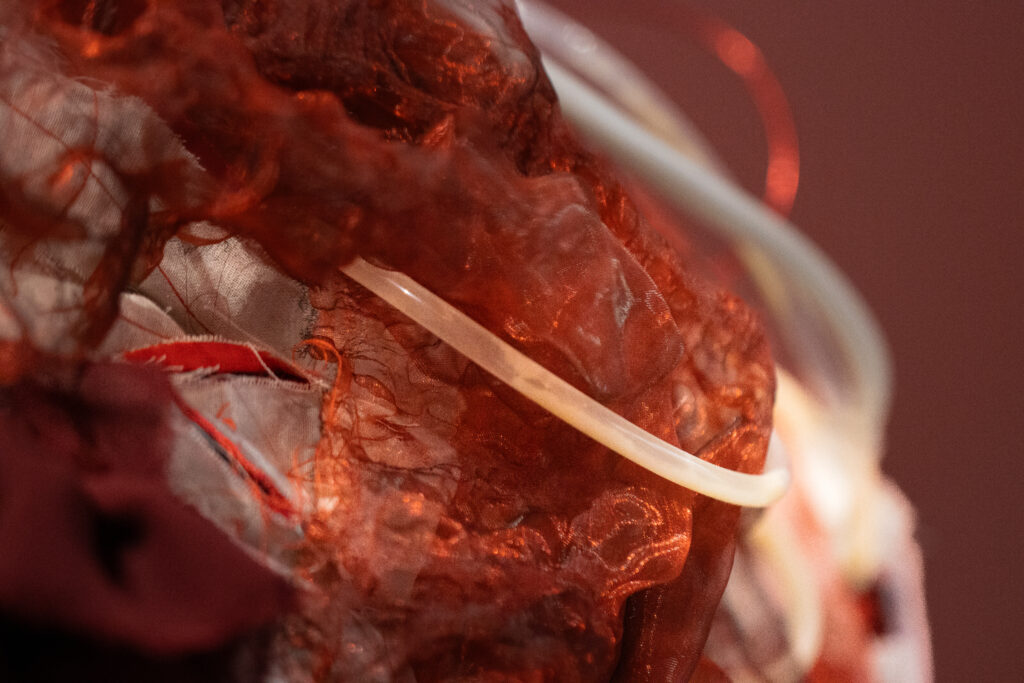


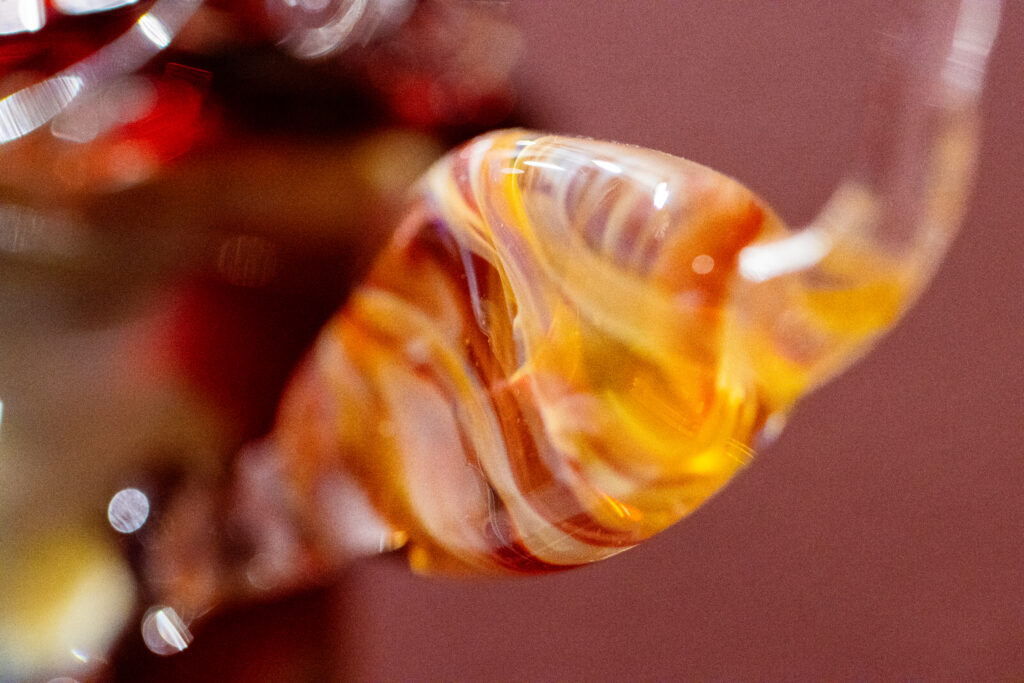

This exhibition hosted at Emily Carr University in Jake Kerr Faculty of Graduate Studies in a 4th-floor gallery/critic space, Embracing Motherhood: No Little Thing features a series of tactile, immersive installations constructed using diverse materials and techniques, including ceramics, textiles, glass, 3D printing, Arduino, and mixed media. This designed space explores the multifaceted realities of pregnancy, childbirth, and postpartum experiences and invites audiences to actively engage with and reflect on the emotional, physical, and social complexities of maternity. It includes the ceramic sculptures of fetal movement, cesarean delivery, and natural childbirth; the textile installations made of crochet, sewing, and mixed media; and the delicate glass uterus sculptures. Moving beyond traditional visual representation, and static curated exhibition, I sought to create an exhibition that engages multiple senses (sight, touch, and sound) and creates an immersive experience that fosters personal reflection and emotional connections on experiences of maternity. My intent was to design an experience that fostered empathy, understanding, and a deeper appreciation for the resilience and complexity of motherhood. Challenging passive viewing practices and inviting the audience to participate and engage, my intent has been, from very early on, to critique the idealized or oversimplified narratives of maternity that are often perpetuated by mainstream media. I have also seen this work as a way to provide a platform for inclusive dialogue about motherhood, encouraging visitors to reconsider their perceptions of maternal identity.
Rethinking Form Giving
– through participatory feedback
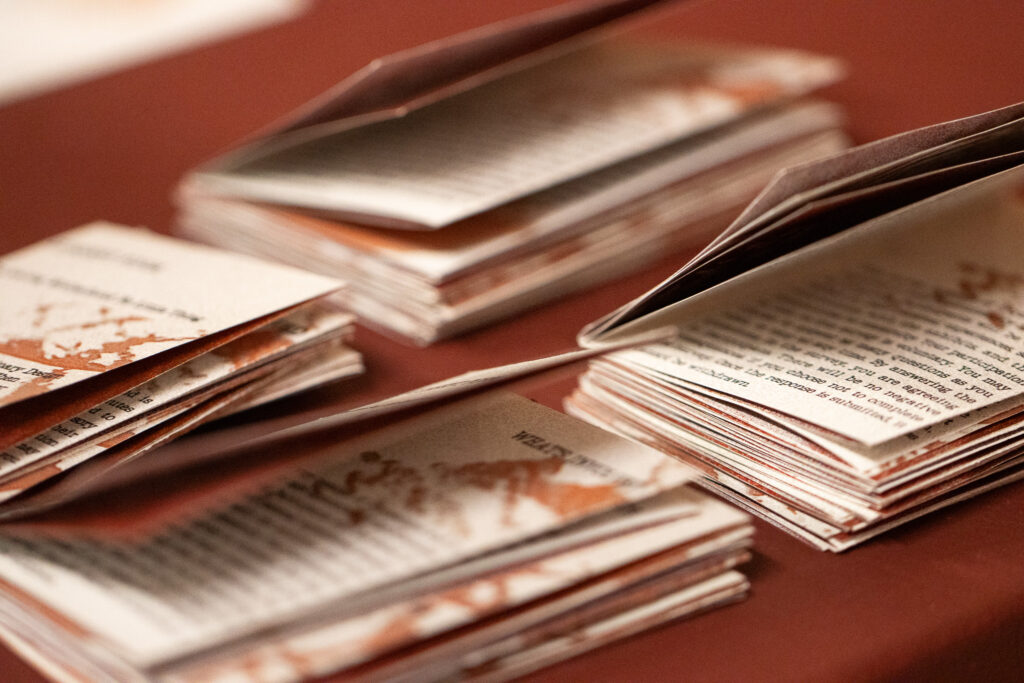
The responses I received from participants were incredibly meaningful and insightful. They led me to reassess the effectiveness of my material and spatial choices, as well as the sensory cues I incorporated. Through this process, I also gained a deeper understanding of how sensory elements evoke emotions. Many participants reflected on the realities of motherhood, expressing empathy toward its difficulties and engaging in thoughtful consideration of maternity and childbirth. The participants generously shared their experiences—their feedback was deeply personal and reflective. The anonymous survey comments contributed to a collective understanding of motherhood, reinforcing that maternal experiences are not singular but are complex, fluid, and deeply subjective.
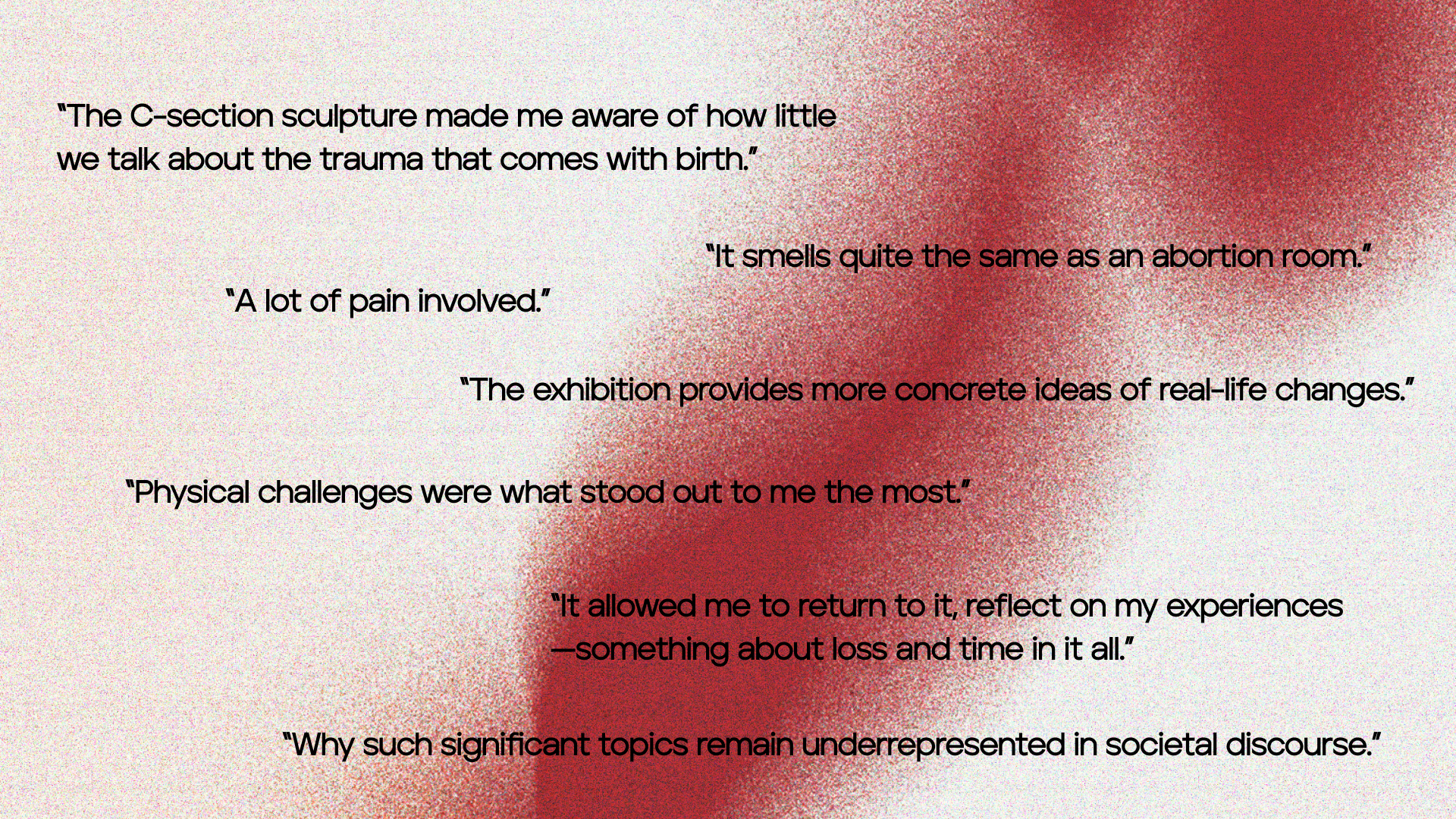
I gained a lot of inspiration from these answers, but the one that touched me the most turned up at the exhibition. The soy milk spoiled, releasing an unpleasant smell, Some found the scent disruptive, while others felt it enhanced the exhibition’s immersive quality. One audience’s comment stayed with me:
“It smells quite the same as an abortion room.”
This reaction revealed how scent and discomfort can trigger memories, reinforcing my goal of making hidden maternal experiences tangible. Instead of detracting from the work, this interplay between scent and memory deepened engagement, encouraging a more embodied reflection on childbirth, loss, and transformation.
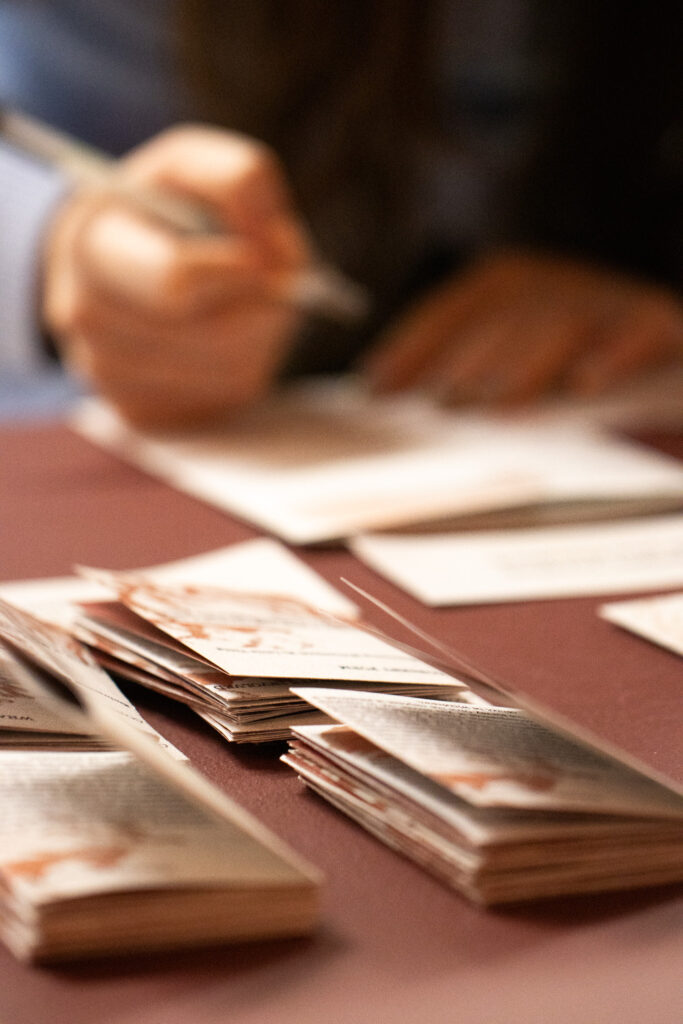
All of this feedback has led me to understand participation not only expands the understanding of the piece engaged with but also includes multiple experiences and voices in the storytelling. The anonymous comments made in the survey have contributed to a shared understanding of motherhood, confirming the fact that mother experiences are not singular but complex, fluid, and subjective.
Embracing Motherhood: No Little Thing demonstrates how participation enriches depth and relevance. Participation bridges the gap between the artist, the artwork, and the audience, creating a shared space where diverse experiences of motherhood can be explored and understood. This approach not only strengthens my work’s conceptual framework but also emphasizes the importance of audience engagement in creating meaningful and impactful designs.
Material as a Language of Embodied Experience
Materials possess their own inherent memory, constraints, and possibilities. In my practice, working with ceramics, glass, textiles, and yarn as an approach has allowed me to explore these materials in a different way – to think about sensory and emotional dimensions of pregnancy, childbirth, and postpartum experiences while working with materials. Each material carries unique physical properties that shape the creative process and how audiences interact with the work. By testing these materials’ limits, I seek to experiment with the possibilities of materials and reflect on them through sensory exploration.
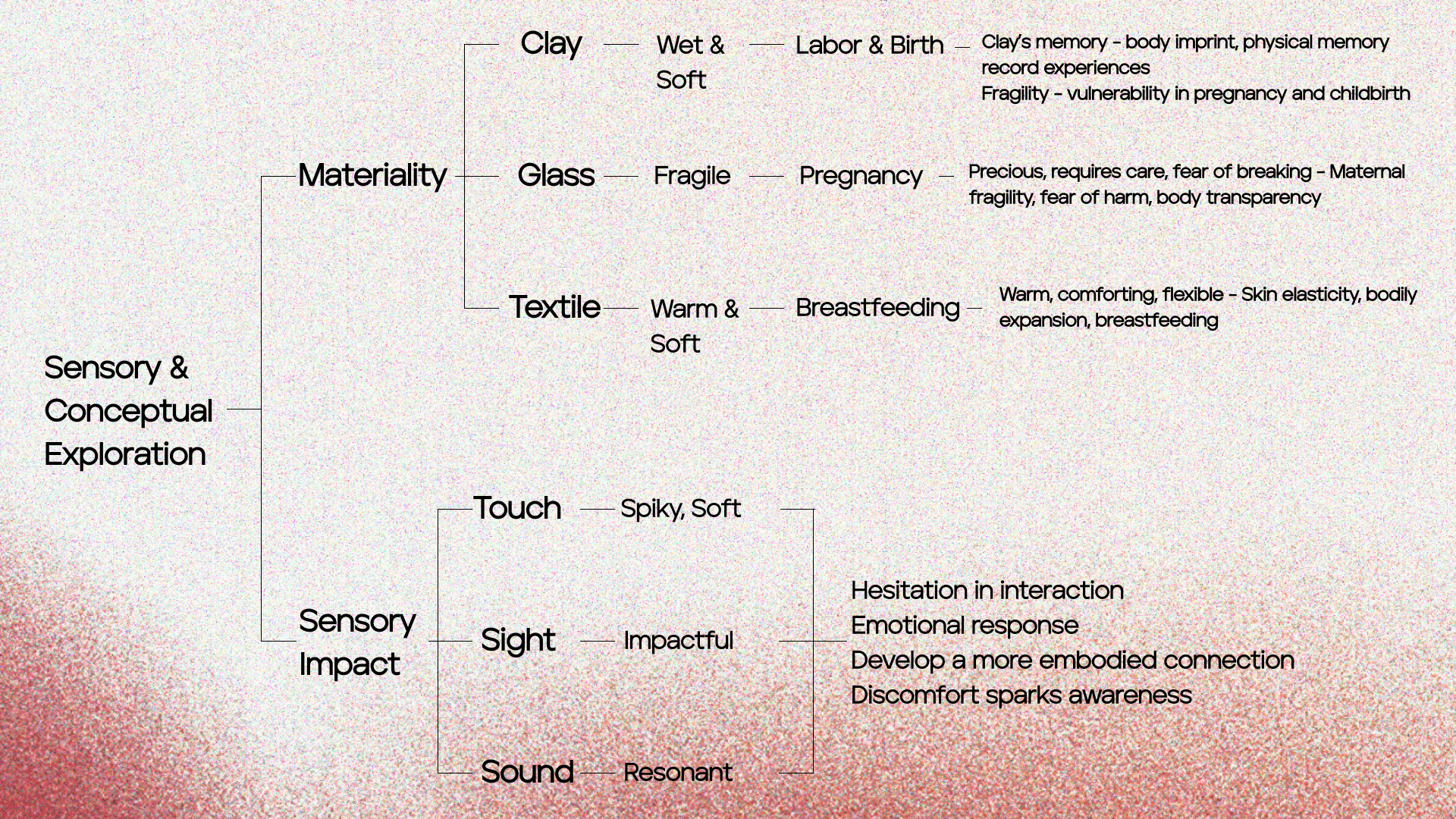
Working with diverse materials has led to unexpected insights that reshaped my approach to sensory engagement. Initially, I viewed my work as representing maternal experiences through tangible forms. Through the act of making, however, I discovered that materials themselves dictate their own narratives. Glass, despite its apparent fragility, resists control—its final form remains unpredictable until the annealing process finishes. This unpredictability mirrors the uncertainties of pregnancy and childbirth, where outcomes cannot be predetermined or controlled. Another insight emerged from audience interactions with my works. When encountering Gestational Pulse, participants often hesitated before touching the surface, anticipating pain from its spiky texture. This response revealed how sensory anticipation shapes physical engagement.
The Things I Have Learned and Will Take With Me as I Move Forward With This Work
Moving forward, I see this project as a dynamic platform rather than a fixed exhibition that continuously engages with and challenges prevailing narratives about motherhood. For future exhibitions, improvements can be made in various aspects, such as refining the layout and explanatory elements to enhance audience engagement and interaction. From an accessibility perspective, while I began with information collection, I saw great potential in using interviews, group discussions, and participatory workshops not only as feedback tools but also as feminist research methods. These methods allow for the inclusion of diverse voices and lived experiences, essential when challenging mainstream narratives about motherhood and reimagining it through a feminist lens.
Through acts of making—material, visual, and spatial—I aim to give form to these feminist ideals and reframe the dominant narratives of maternity and motherhood. Making becomes not only a method of expression but also a way to resist dominant narratives and bring forward voices and experiences that are often overlooked. These creative processes challenge the romanticized and idealized portrayals often defining motherhood in mainstream culture.
Rethinking the Narrative of Maternity and Motherhood
From a feminist perspective, motherhood needs to be deconstructed and reimagined as something diverse, fluid, and centred on individual agency, not merely a fixed social role. Each mother’s experience is unique and profoundly influenced by culture, class, and gender identity. Motherhood should be a choice—one that society supports rather than enforces through obligation. Moving beyond traditional boundaries, motherhood should be understood as a decentralized and gender-inclusive concept, challenging the assumption that it belongs exclusively to biological women. Motherhood can be collective, shared, and detached from the nuclear family. Motherhood should not be viewed as an individual woman’s burden but as a shared responsibility, where collective support and community care are essential for transforming societal norms around parenting (hooks, 2000, p. 13-16). Society needs to recognize motherhood as labour, not a natural duty and create systems for shared, supported childcare. The freedom to opt out of motherhood is also essential—women should be able to choose a child-free life without facing social stigma.
Mainstream culture often romanticizes motherhood by promoting unrealistic ideals, such as the notion that a mother’s love is selfless and infinite, that mothers must always be gentle, patient, and giving, and that a good mother must perfectly balance career and family. These myths create an impossible ideal mother standard, triggering maternal anxiety and making mothers constantly feel they are not good enough. Society must challenge these narratives and recognize motherhood as a personal choice. Motherhood is complex—mothers experience exhaustion, frustration, and sometimes even regret, and these emotions are completely valid. Mothers have the right to prioritize themselves; motherhood shouldn’t demand complete self-sacrifice. Parenting is a collective responsibility, not just the duty of an individual mother. Redefining motherhood requires fundamental changes across legal, economic, cultural, and social spheres to ensure it becomes respected, supported, and valued instead of exploited.