Karen Leon
To win the war we wove it sideways
This work, the source of some materials, and the land these materials will return to is Musqueam, Tsleil-Waututh, Squamish, Kwantlen, Cowichan, and Tsawwassen First Nation land.
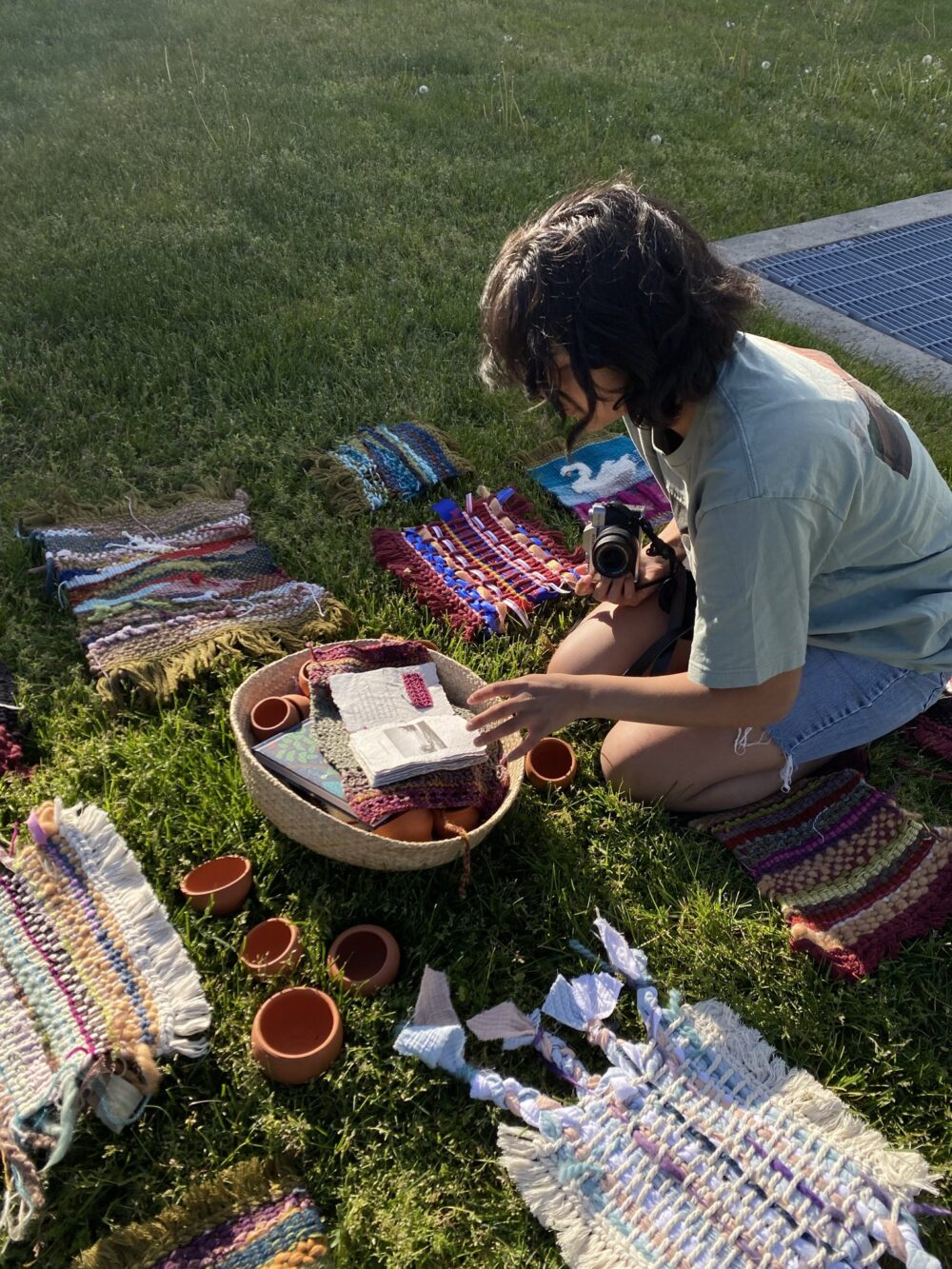
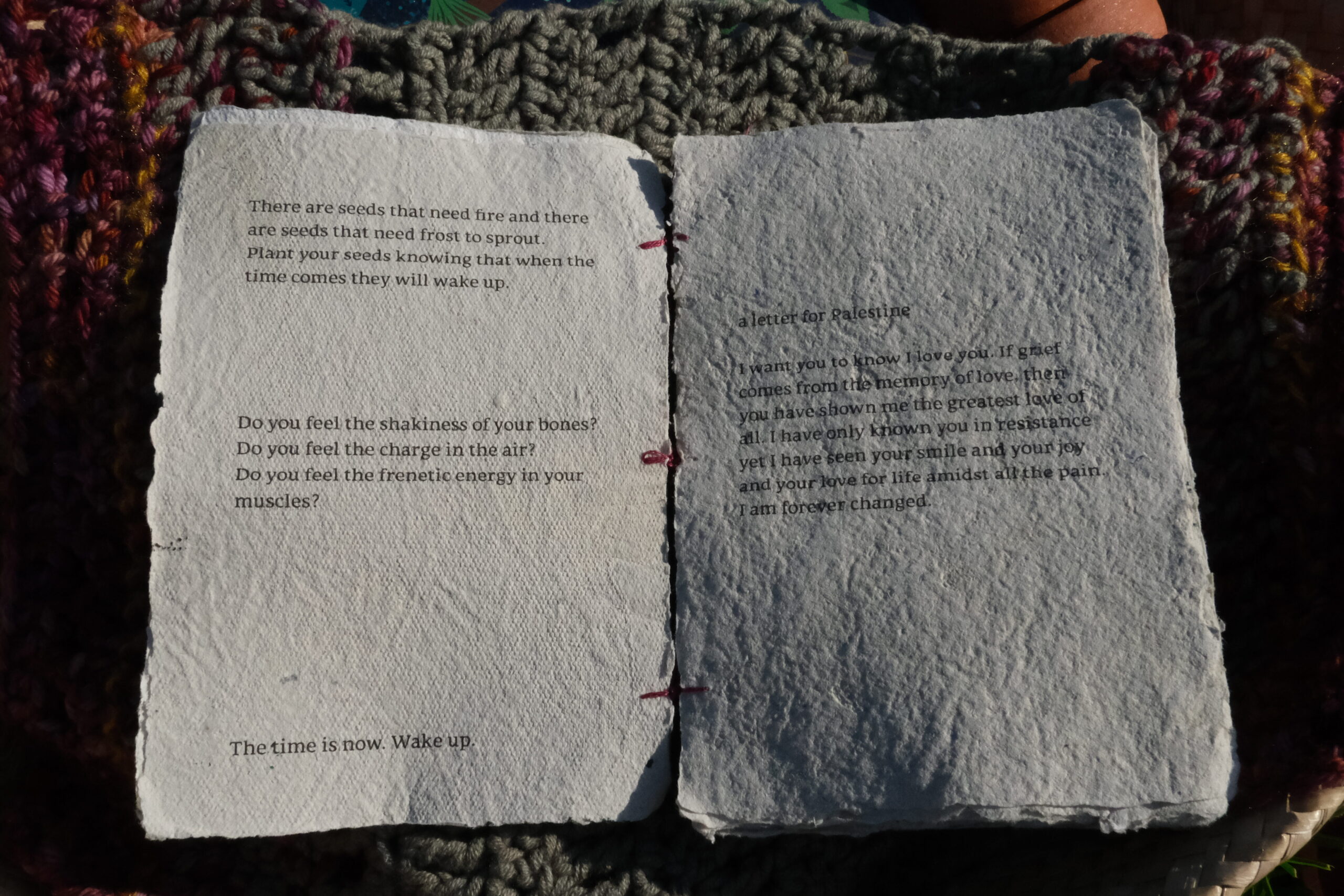
To win the war we wove it sideways consists of a book, rugs, and many teacups. The rug was made collaboratively with around 25 people who gathered to create weavings with me individually or in a group. The rug is made of wool and cotton yarn, and parts of it include plastic, beads, buttons, pearls, cat hair, morning glory cordage, and ribbon. During each session we shared tea and read the book together. Each small weaving is placed together in a patchwork style, creating a shape that allows for expansion. This project aims to create a space where people can come as they are and feel comfortable grieving, learning, healing and just being. The teacups are unglazed terracotta. Each time tea is poured into them, they become a little more infused with the tea. This signifies our growing relationship with each other as well as a hope for continued kinship.
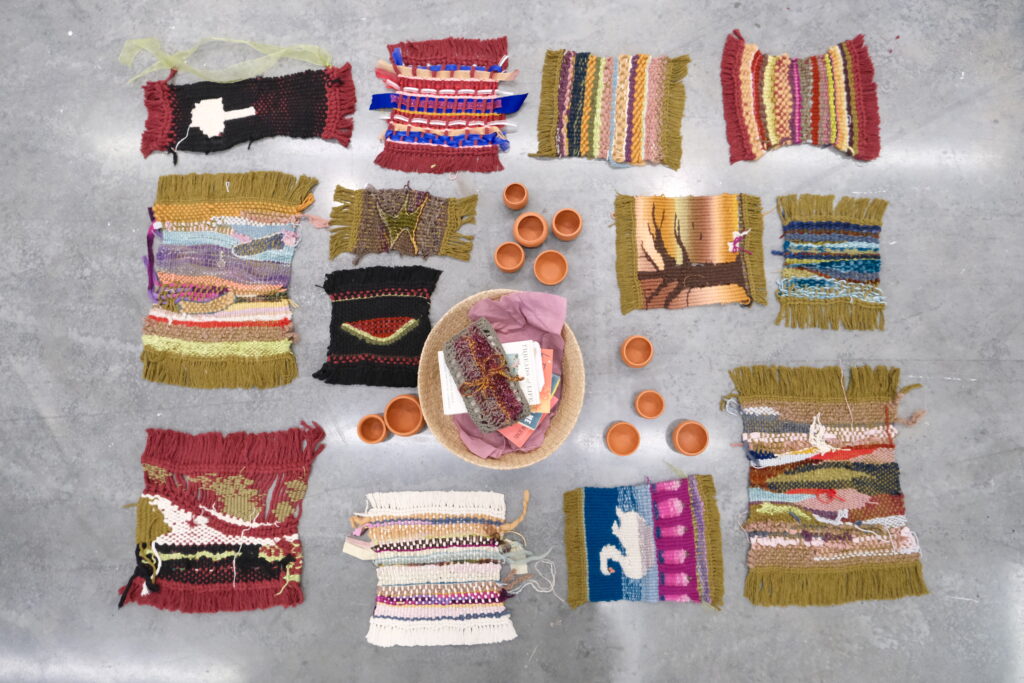
I take inspiration from Paolo Virno’s theory of Exit or Exodus, in which the exit or flight invalidates the authority of the state through collective action in a way that is open to unseen possibilities for a better world. This zone is in direct contradiction to the capitalist society that requires constant productivity or you lack basic needs. In this space we are nourished through tea, rest, cry, regenerate, heal, organize, and motivate each other to continue resisting. Similarly, I am inspired by Firelai Baez’s A Drexcyen Chronocommons (To win the war you fought it sideways) where she creates a space reflecting a community safe underwater that was born out of enslaved mothers escaping slavery. I am also guided by the work of Black feminist abolitionists like Mariame Kaba and Salish knowledges of interconnectivity.
This was created on the ancestral land of the Musqueam, Tsawwassen, Kwantlen, Squamish, and Tsleil-Waututh First Nations. This is the land it will return to.
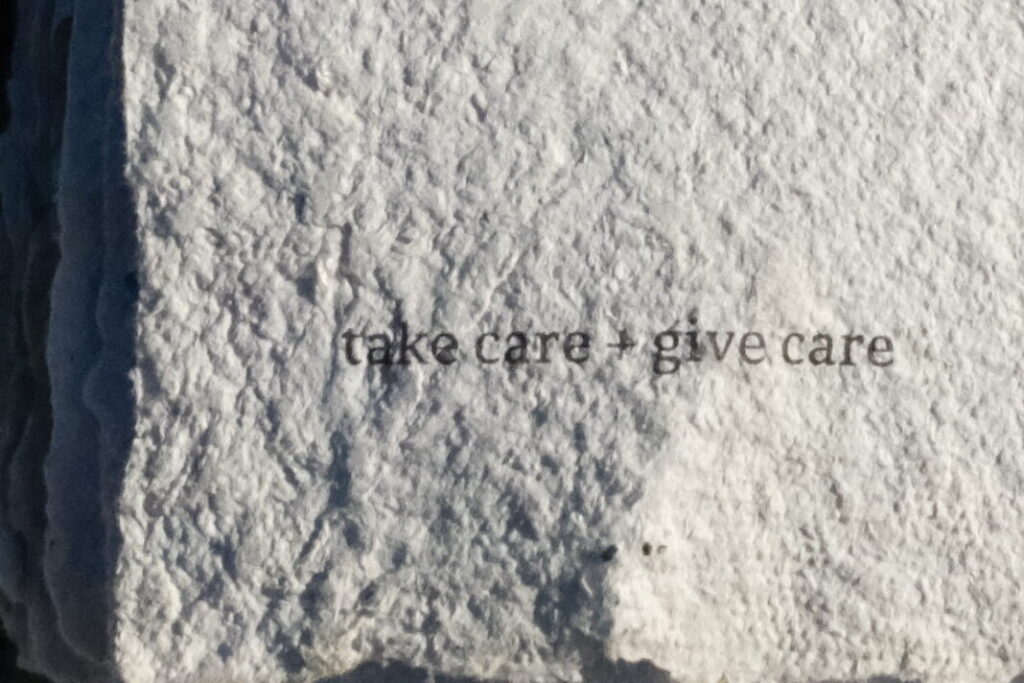
The book, This was created on the ancestral land of the Musqueam, Tsawwassen, Kwantlen, Squamish, and Tsleil-Waututh First Nations. This is the land it will return to., is a compilation of teachings, poems, and connections compiled as an expression of gratitude. I want it to be passed from one person to another as a gift of appreciation and don’t expect it to come back to me. I think it will highlight our linkages and reinforce them, and expand our sense of community having it go out much farther than our regular circle. I think it will come back in a different way, i.e. a stronger sense of community and reinforced bonds. I am working with concepts of worldbuilding, destruction of oppressive systems also require us to think about the world we want to live in. I am engaging with the work in Rehearsals for Living, Unearthing, and Ismatu Gwendolyn’s, and Adrienne Maree Brown’s work. It begins with topics of death and abolition, then solidarity, and ends with thinking of our communities as expansive and encourages bonds beyond human. The book’s cover is a crocheted rectangle with a tie. It is meant to hold the book snuggly and function as a mini blanket for whoever is reading the book.
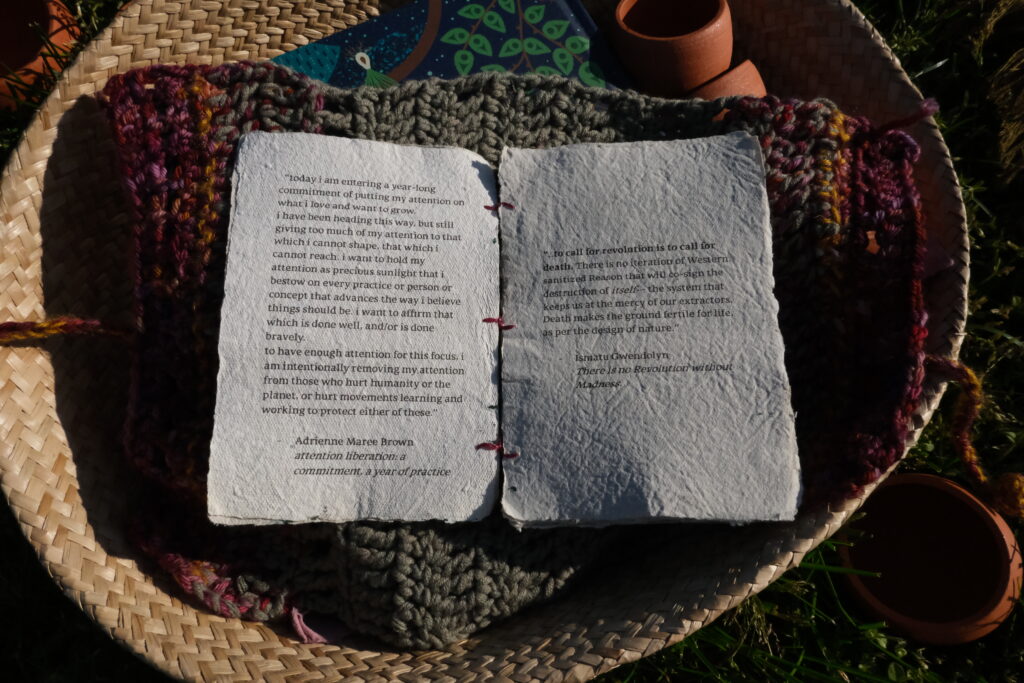
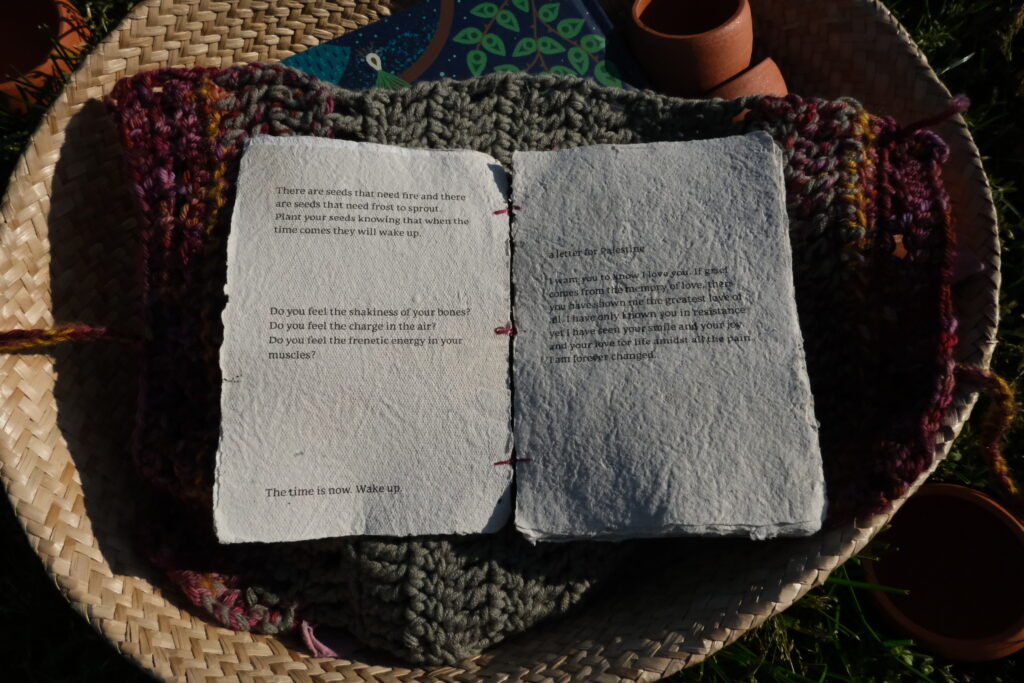
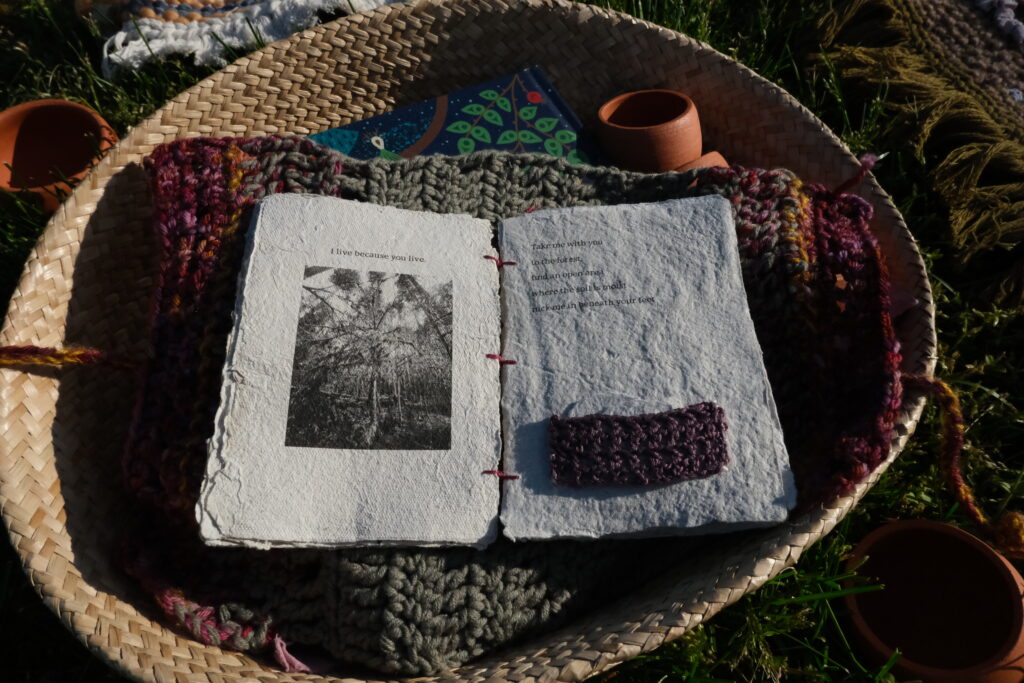
The process for these items is very important. I want to make things in a way that minimizes harm to our environment. For this project it comes down to slowing things down. I want the process to be in harmony with the concept, in this case community and healing. Community extends to the plant and animal life around us so the process needs to be beneficial to the ecosystem. We are not creating a healing space by harming others. The materials for the book is mostly handmade paper. Embeded are seeds of local plants into the pages for intentional sowing, and it’s inevitable return to the land. They have been sourced seeds from the Coast Salish plant nursery. The paper I break down is old paycheques, parking tickets, letters from collection agencies, envelopes. Bureaucratic papers put to a better use. Breaking this system down in the smallest ways to make space for growth. The pages are dyed with English ivy leaves to give them a green tint. We can use invasives while sowing native plants.
All of these elements take time and require me to slow down astronomically. This work comes from doing a lot in a little bit of time, seeing and experiencing burn out and the need to slow down. It is also a pushback against the same capitalistic society that pushes productivity, bombs people for their land, takes water and soil and devastates communities, all for more production.
This project and all my learning could not have been done without the help and support of my community, those who put time and energy into creating a beautiful world together.
Thank you.
In her continuous effort to promote and practice decolonial practices, this artist stands in solidarity with Black and Indigenous peoples, and the Palestinian struggle for freedom and justice.