JOMA’s Declassified Listening Room Survival Guide
Jefferson Alade
See it On Campus: Level 2
In the section across the library. Listen for the music.
Visitor InfoJefferson Alade
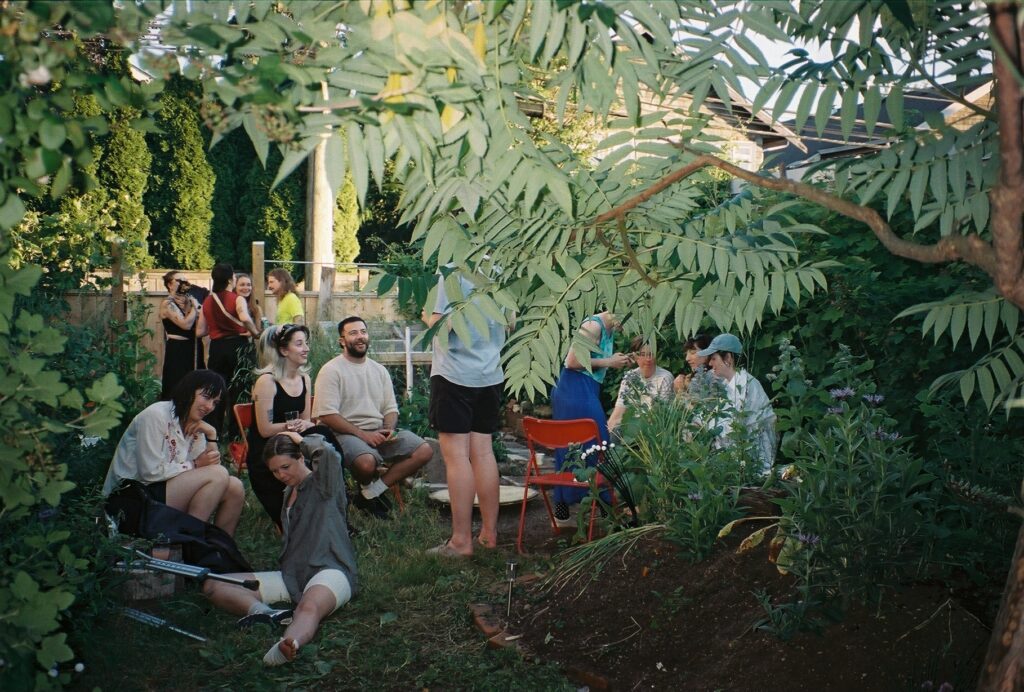
Writing these final words feels bittersweet.
What should be a moment of celebration—closing one chapter of research—is colored by the grief of losing loved ones. When I think of myself against the vast uncertainty of the world, I feel small. Yet in that smallness, I listen to my spirit. I find a quiet power, a sharpened focus and a resolve to make an impact with the time and strength I have left. I carry the torch of their memory, and with it, a devotion to live and work in service of something greater than myself.
For this final reflection, I offer two thoughts: one for life, and one for work.
For life, I return to my cultural heritage and the practice of collective listening. After presenting at the Master of Design Symposium, I received feedback from my external reviewer, Dimeji Onafuwa. A fellow Nigerian, I felt he truly saw me. One insight he offered me was about the Yoruba tradition of Oríkì. Until that moment, I had not fully grasped how deeply an Oríkì is rooted in the act of listening—not just between performer and audience, but across time, reaching out to our ancestors. In Oríkì, listening becomes a bridge. It reminds me that even as people pass into another place, they do not leave us. They remain in our hearts, our minds, our words, our sounds. Through listening, we keep them alive.
For work, I return to radio. I see radio as something I want to carry forward on my own terms. Before entering this program, I had begun The Ryze Radio in Los Angeles—a station with two shows: one showcasing DJ mixes, another holding conversations with creatives about their journeys.
Now, having completed my research in Vancouver, I imagine a new future for The Ryze Radio (TRR): a mobile radio station, a nomadic platform that moves between digital and physical spaces. TRR will use transmedia storytelling to broadcast from wherever the creative spirit calls— whether that be a gallery, website or garden. At this moment, rather than building permanent infrastructure, TRR will focus on popping up in places and facilitating collective listening experiences to new communities. It might host a season in Vancouver, then drift eastward to Edmonton, gathering stories and weaving connections. Through its mobility, TRR stays flexible, hybrid and responsive; becoming a living, breathing archive of creativity.
This program has given me more than new skills or conversations; it has given me a methodology for practice and a deeper understanding of myself as a creative being. I know better how I wish to walk through the world. I recognize my place in a larger, ongoing story. Life is bigger than me. With the wisdom of Oríkì in my ears, and the vessel of The Ryze Radio in my hands, I move forward—ready to listen, to remember, and to meet others who also believe in creating positive change. One sound, one word and one gathering at a time.
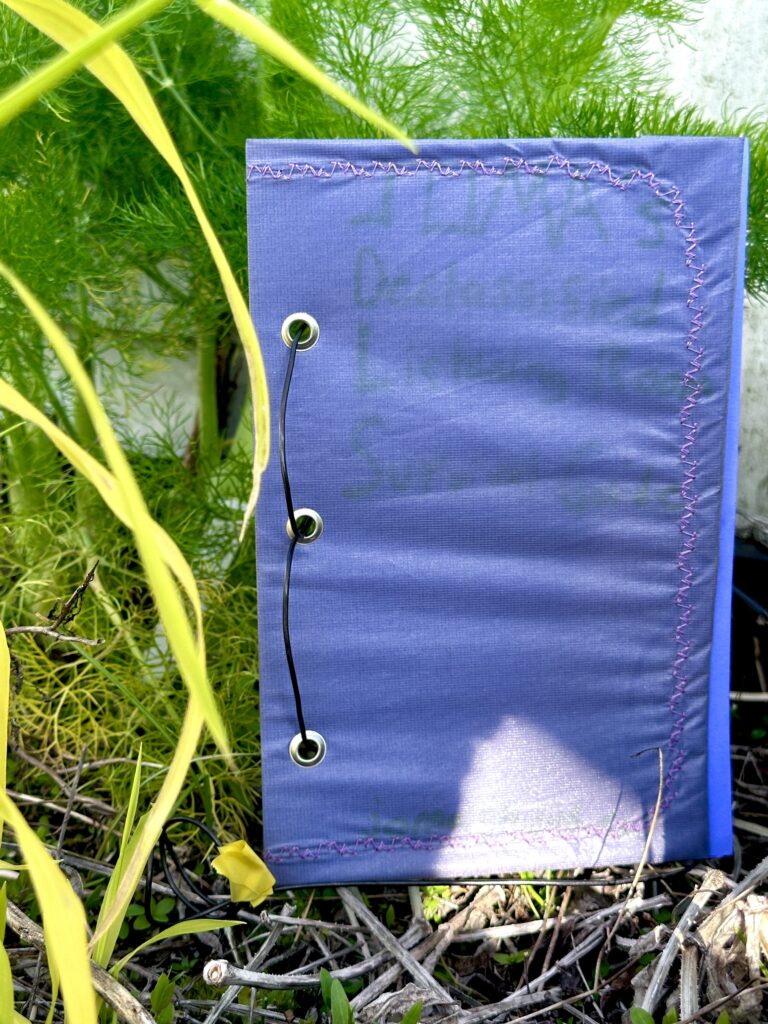
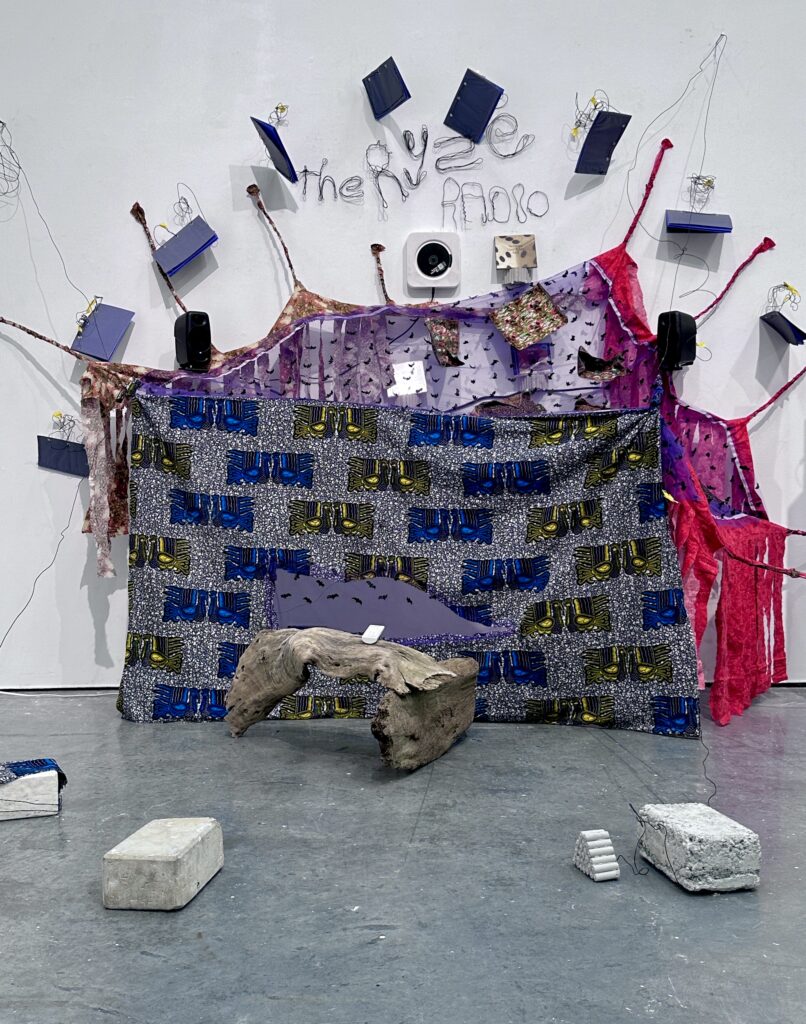
JOMA’s Declassified Listening Room Survival Guide is my contribution to the Emily Carr “The Show” and the Master of Design exhibition—a playful yet critical artist book that riffs off the early-2000s cult classic Ned’s Declassified School Survival Guide. Reimagined through the lens of sonic culture and collective experience, the book distills my thesis research on listening rooms and outlines the curatorial design strategies I’ve developed to foster intentional, collective audio listening experiences.
More than just a book, this guide is an open-ended toolkit. It invites the reader to become co-author—there’s space to reflect, respond, and rewrite what a listening room can be. It’s a living document, meant to be marked up, passed around, and carried into new contexts.
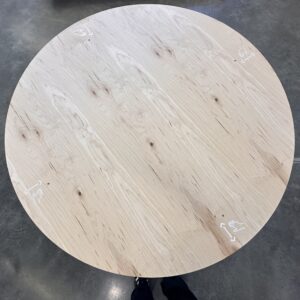
On opening night, my exhibition space transforms into a listening room hosted by The Ryze Radio. Sculptural seating sets the stage for slow conversation and focused listening. A curated selection of music plays from my CD player, while visitors are invited to engage in non-monetary trades for a copy of the limited edition book—anything from a physical object to a story, a song, a sketch, or a shared moment.
This room, like music itself, is in flux: growing, evolving, and eventually decaying, only to re-emerge somewhere new.
Abstract
This thesis explores how a designer might facilitate collective listening experiences (CLEs) by incorporating curation into their practice. This research uses the CLE of listening rooms to explore the in-between space of curatorial design coined by IZK institute for contemporary art. Noticing the shift towards dematerialization in our music-listening culture, primarily mediated by smartphones and streaming, this project advocates for designers to take a similar dematerialized shift in practice. By embracing facilitation of sensory-driven experiences, designers can reimagine our everyday musicking to be more embodied and poetic. Furthermore, this work proposes future directions for listening room development, including integration within art spaces, design for ritual and potential field research in Japan. This work ultimately aims to create splaces for conviviality. Spaces that foster social connection and places that promote alternative ways of being.
Keywords
music, radio dematerialize, listening, collective, splace*, curation, kinesthetic, embodied, autoethnography