Co-designing a joyful gathering place on reserve land
Julie McIntosh
See it On Campus: Level 2
Find my installation on the left-hand side of the Aboriginal Gathering Place (AGP), level 2.
Visitor Info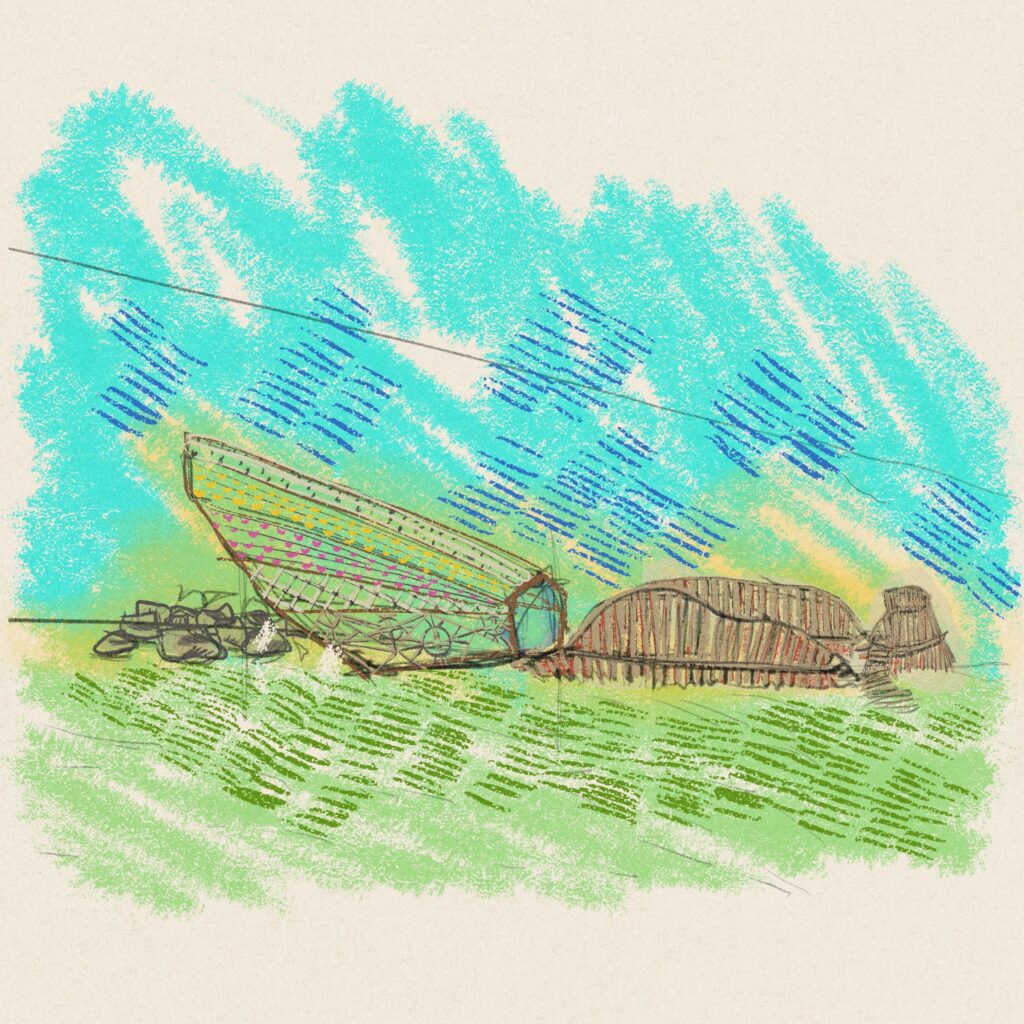
My project explores how play and gathering can spark joy, healing, and connection in my First Nation community. Set in Fisher River Cree Nation, it brings together Cree knowledge and design to imagine a new kind of outdoor space rooted in the practice and needs of our community. Through interviews, workshops, and land-based observation, the research asks: what would it look like to design from a place of laughter, care, and cultural strength?
Designing for my community
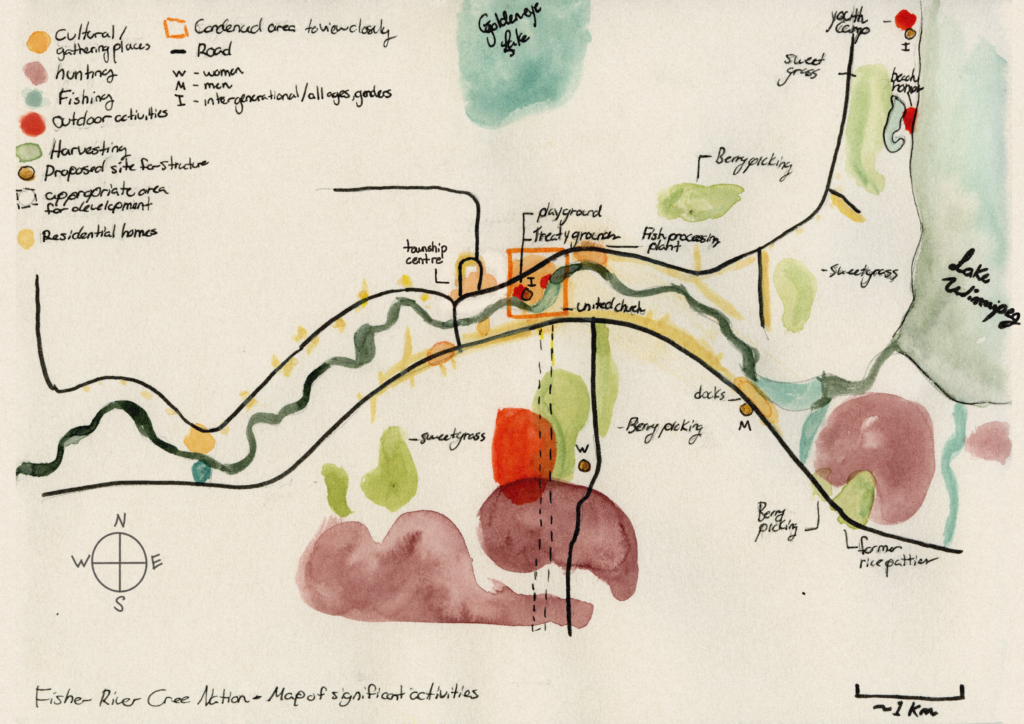
Ochekwi-Sipi, or Fisher River Cree Nation, is located in Manitoba’s southeastern Interlake region, 200 km north of Winnipeg. Established in 1875 by Swampy Cree families from Norway House, it sits on over 5,500 hectares of Boreal Forest rich with wetlands, woodlands, and prairie grasslands. This map describes significant areas of cultural activity, and informed my decision to design a place for joyful and cultural gathering.
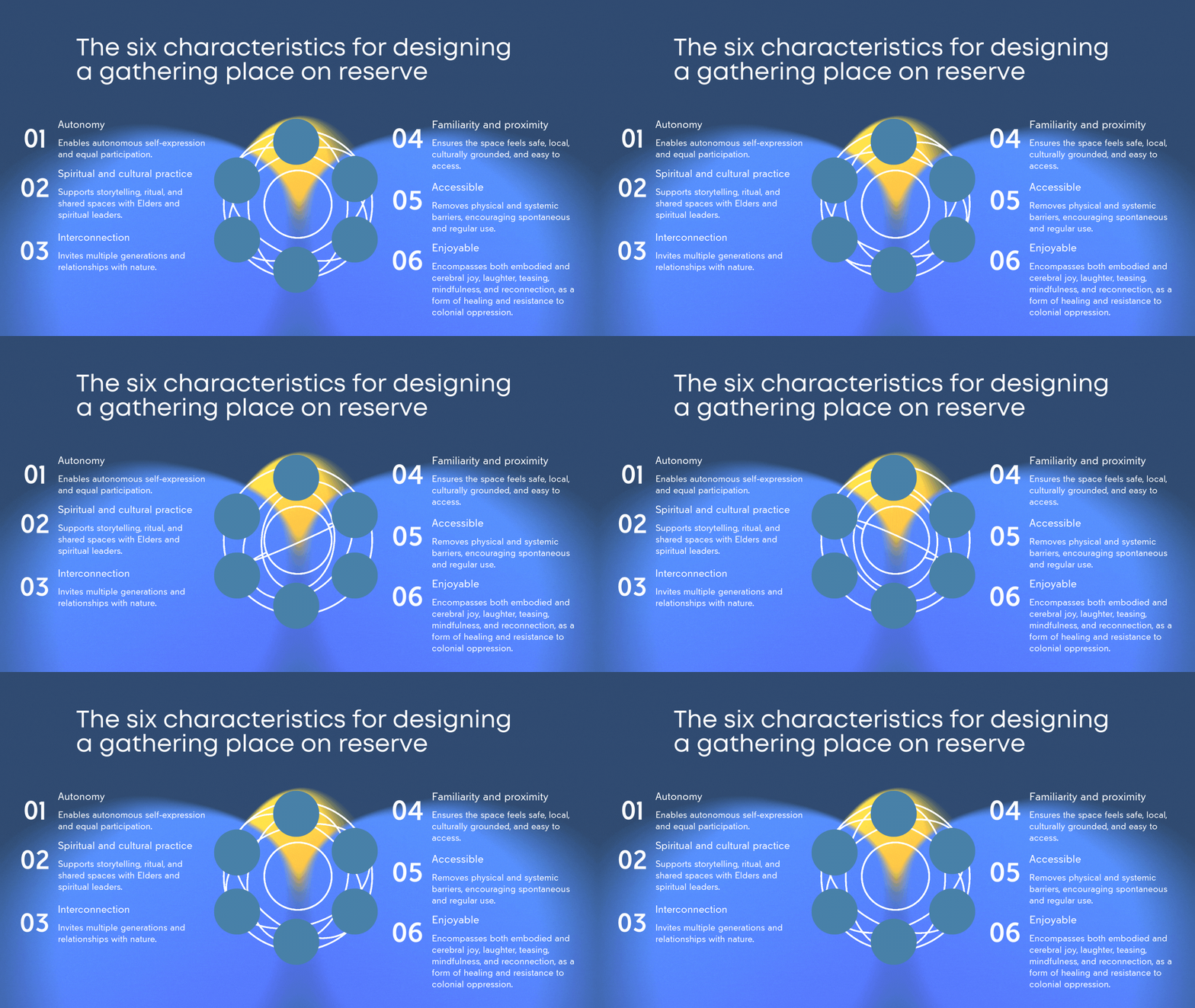
My community engagement led to six characteristics for designing a place for gathering in my First Nation community
Community engagement: land-based observations

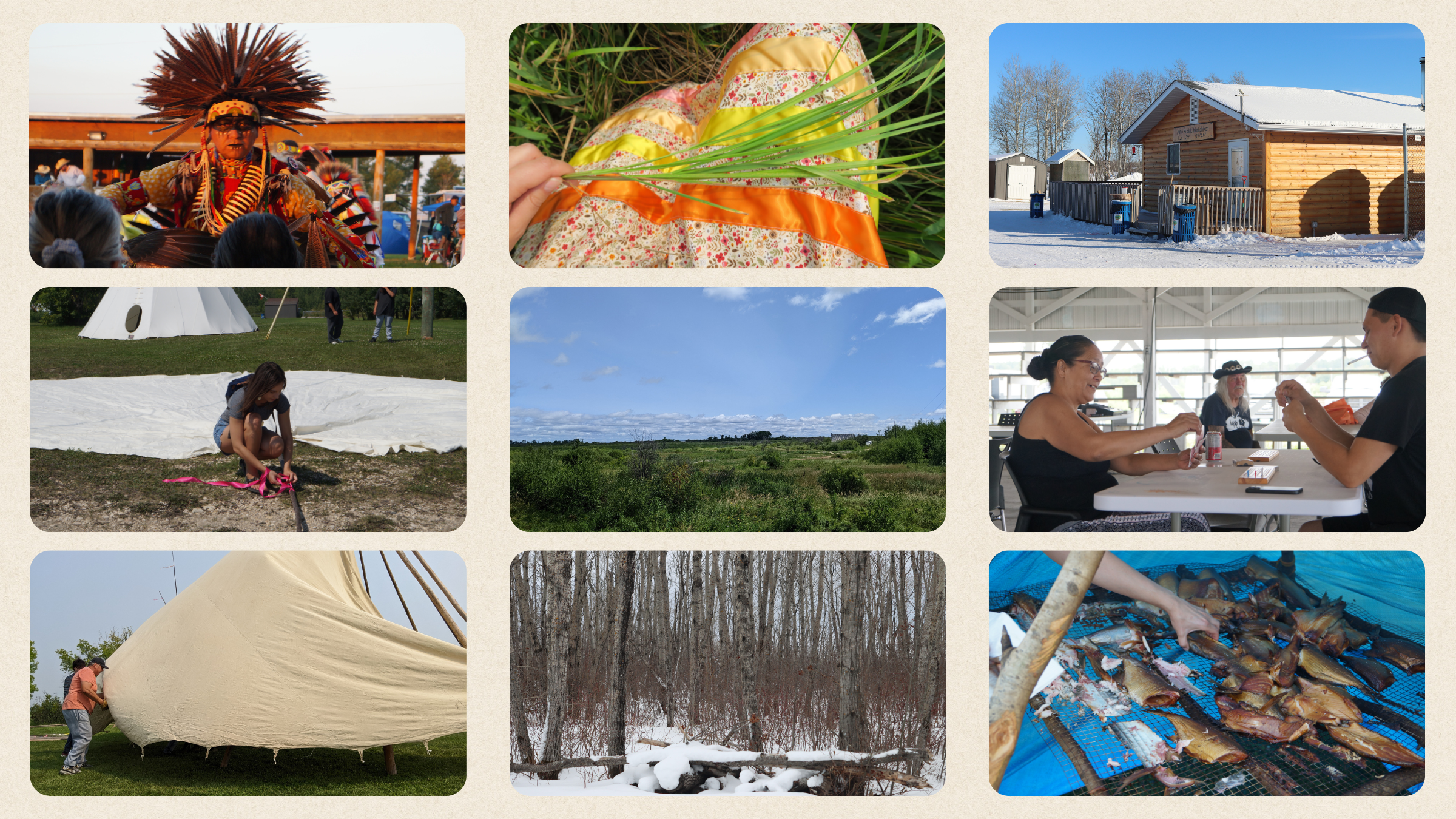
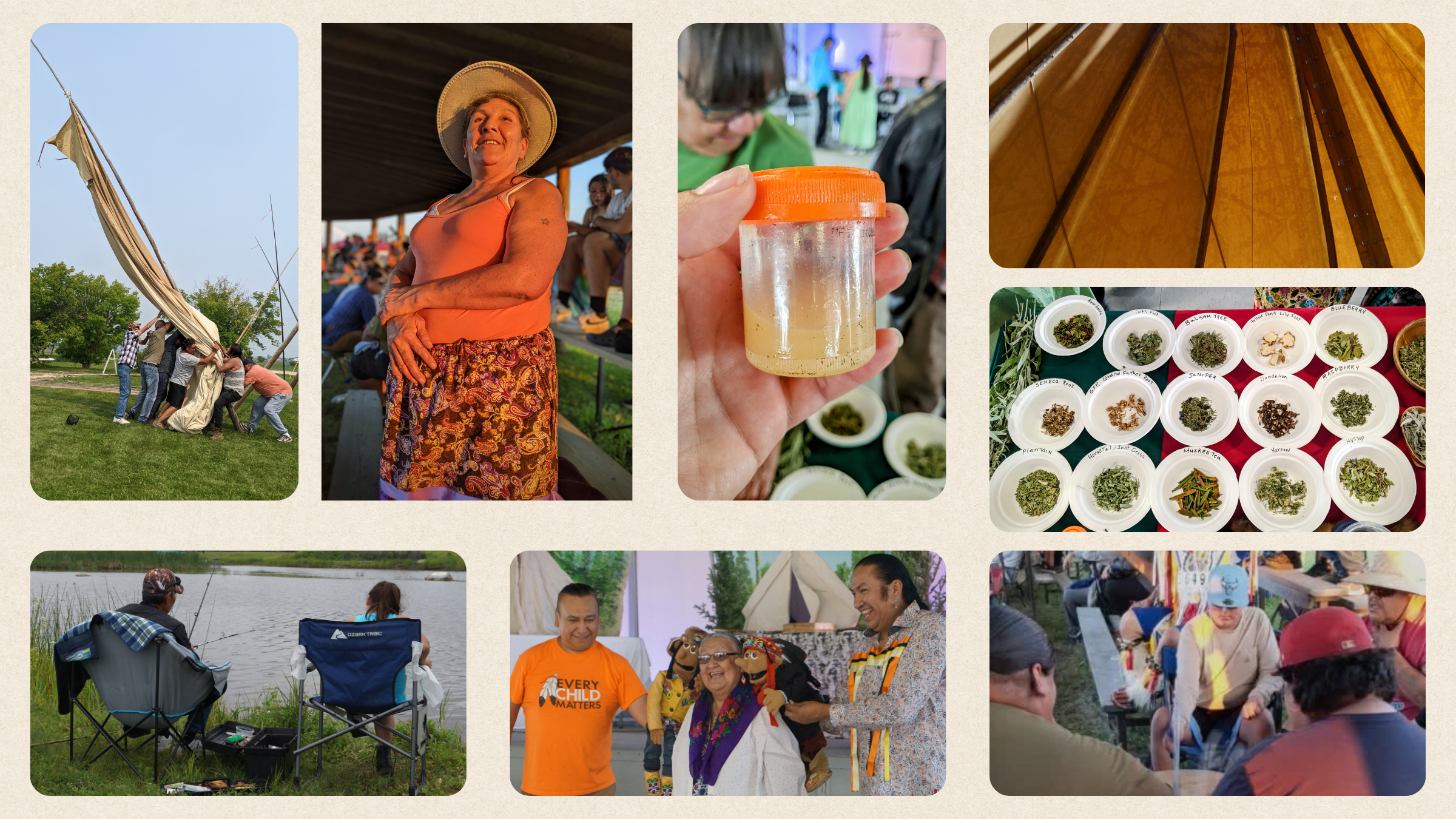
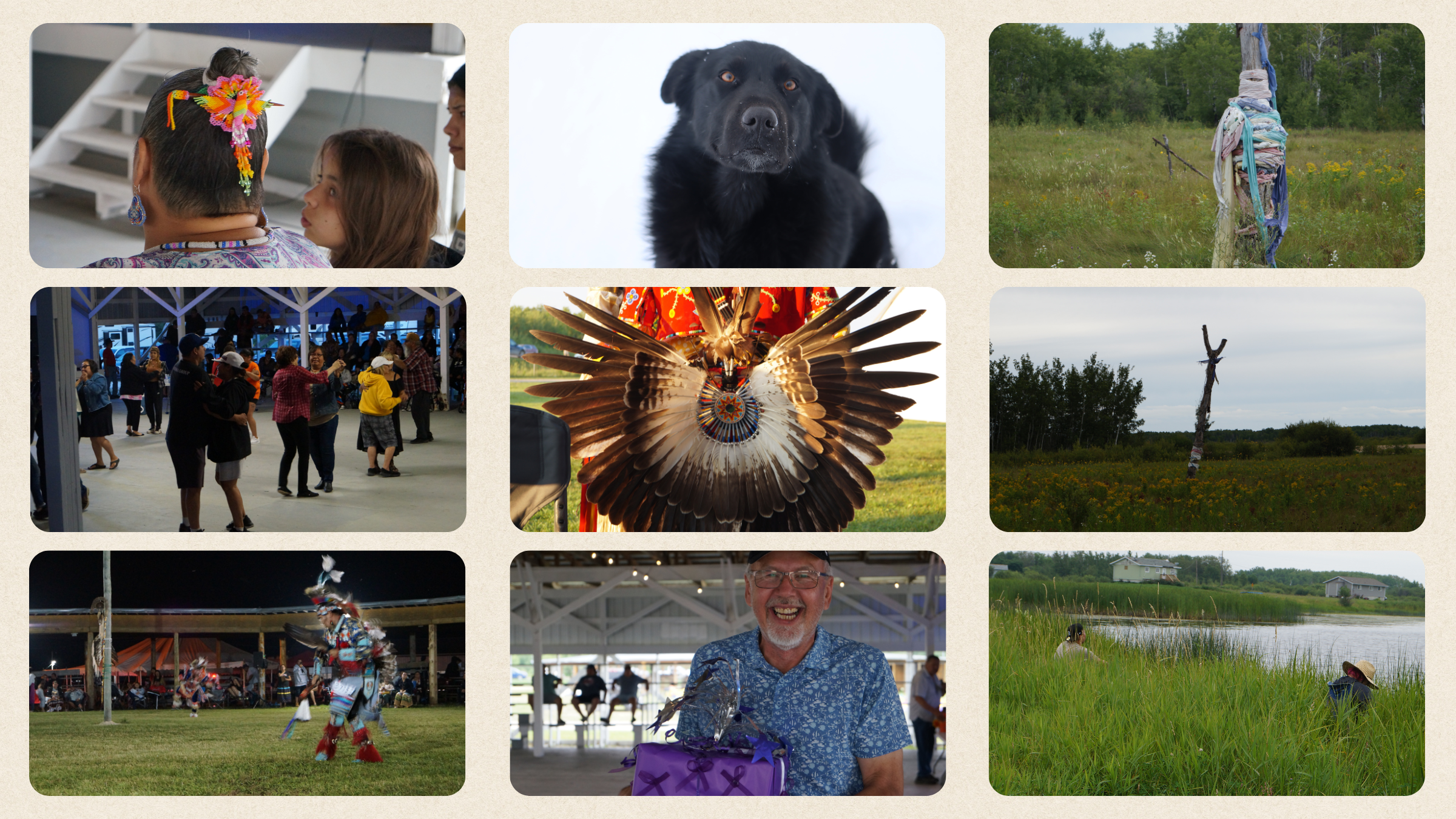
During my visits to Fisher River Cree Nation, I spend time on the land and explored how people engage with one another during formal and informal gatherings. Community events like the annual Treaty Days, Pow Wow, and the National Cree Gathering. I saw how joy, ceremony, humour, and connection are woven into these experiences, and how nature plays a fateful role in shaping these experiences. Despite harsh weather, environmental constraints, and historical disruption, people continue to gather, adapt, and find meaning in shared spaces—indoors, outdoors, and on the land. From kids playing in the river to Elders harvesting sweetgrass, the land becomes a living participant in community life. These observations revealed that playfulness goes beyond spaces for organized games: it is cultural resilience, healing, and a way to connect with ourselves and with nature.
Community engagement: interviews
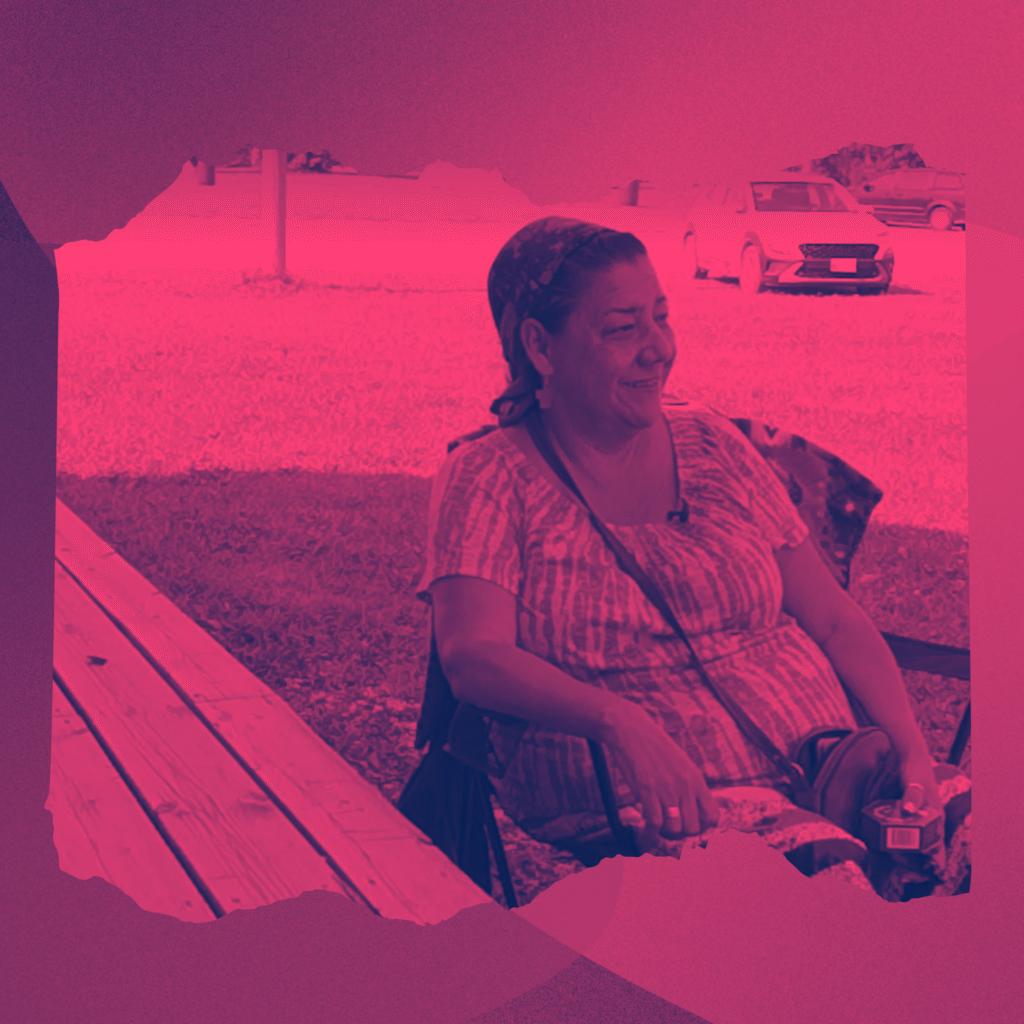
Nine interviews and one survey revealed that playfulness in Fisher River is closely tied to family, healing, resilience, and care in Ochekwi-Sipi. Community members emphasized the growth towards connection and togetherness over the past 150 years. Where people were once fearful of letting their children outside, new generations are playing with their grandkids in nature. Humour, storytelling, and unstructured play were described as powerful tools for connection, often used in healing programs, through ceremony, informally, or by community entities. Resilience in the face of the reserve’s colonial design, community leaders are working towards transforming everyday spaces into inclusive ones where nature, culture, youth, and land-based practices can thrive. Here, play is not just survival, it’s a way to connect further with ourselves.
Community engagement: workshops

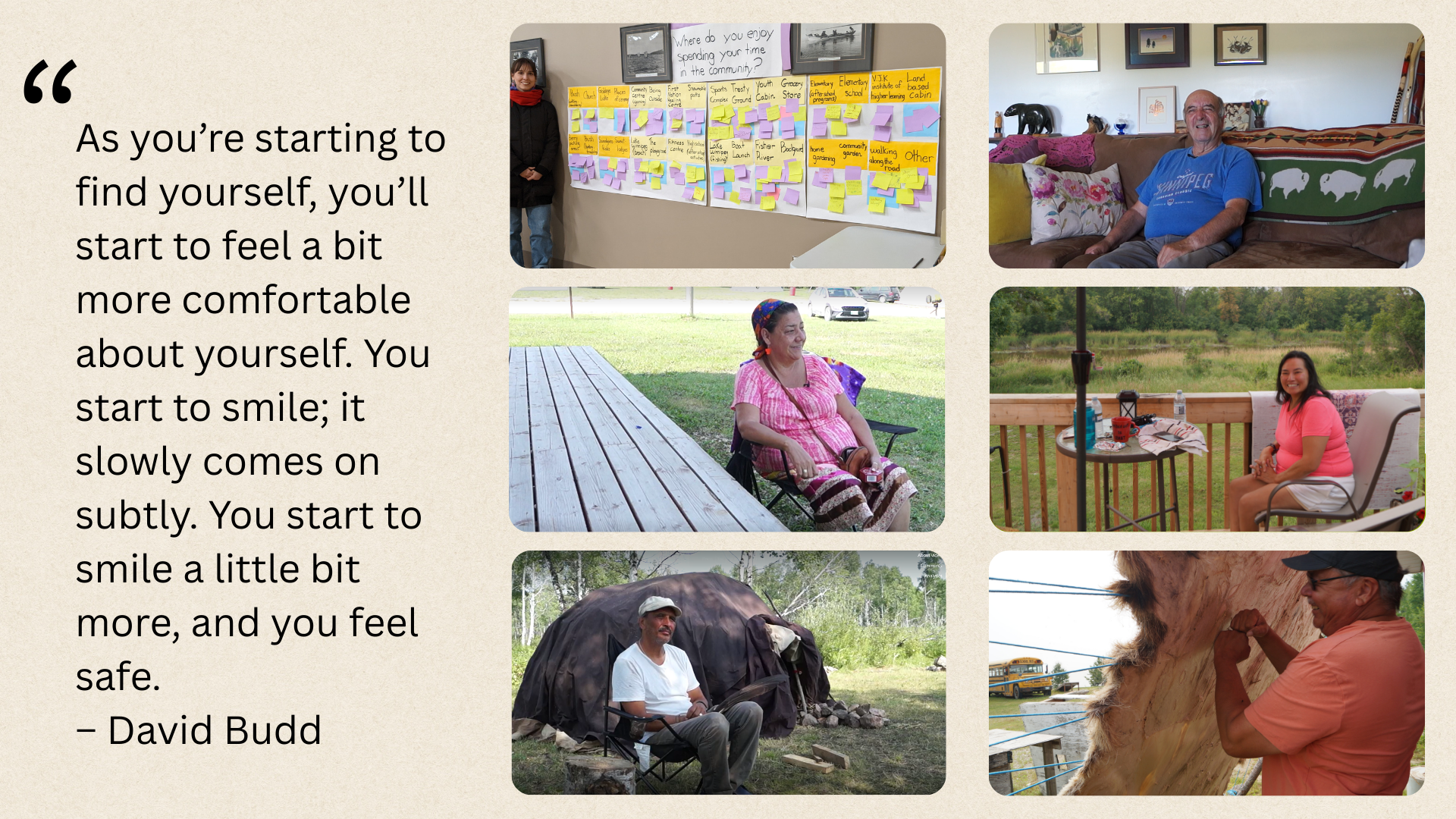
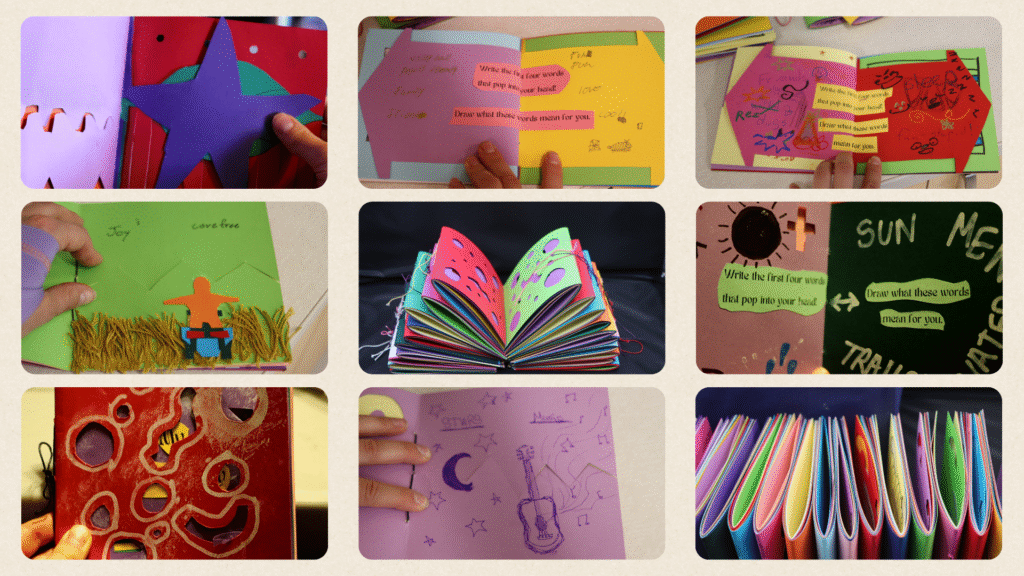
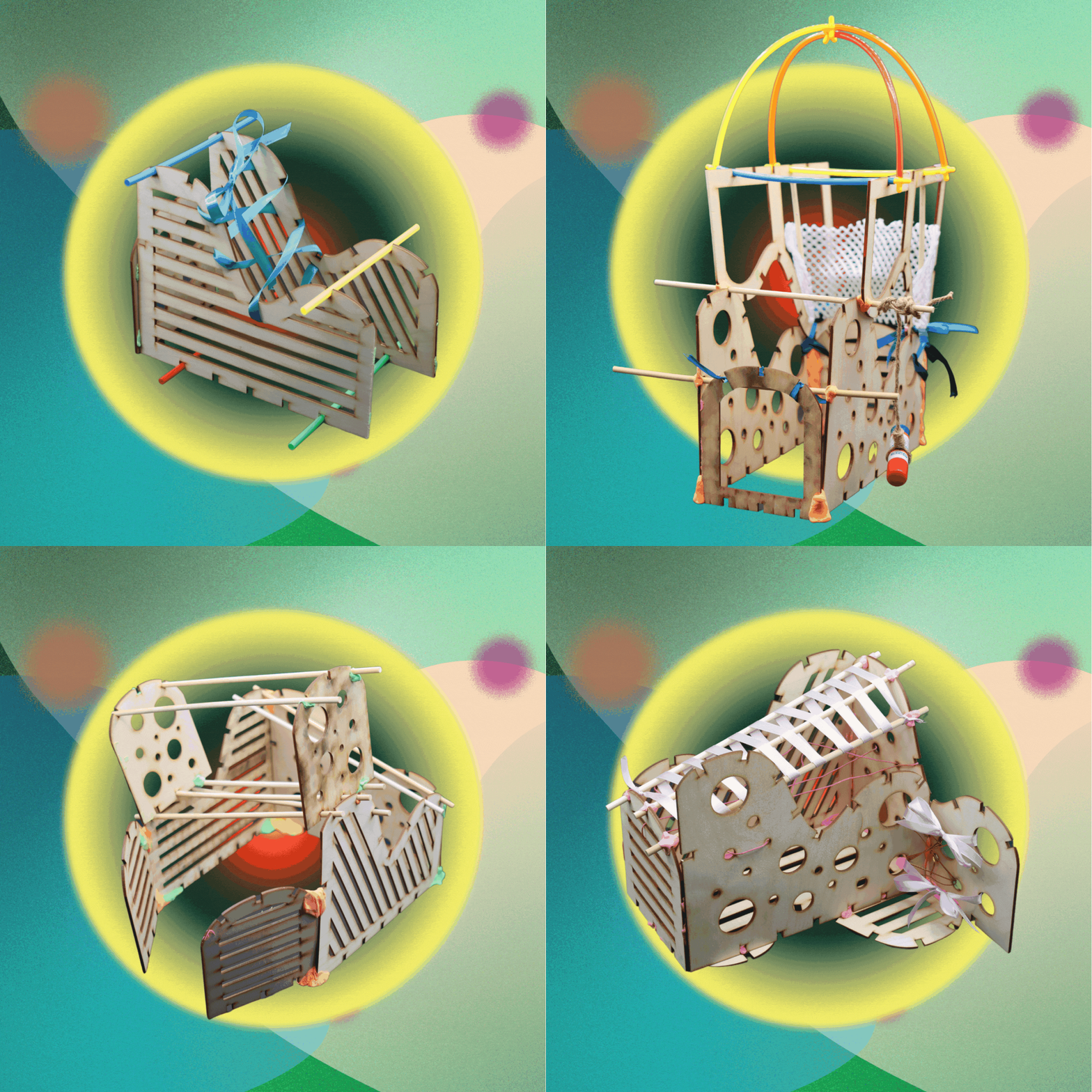
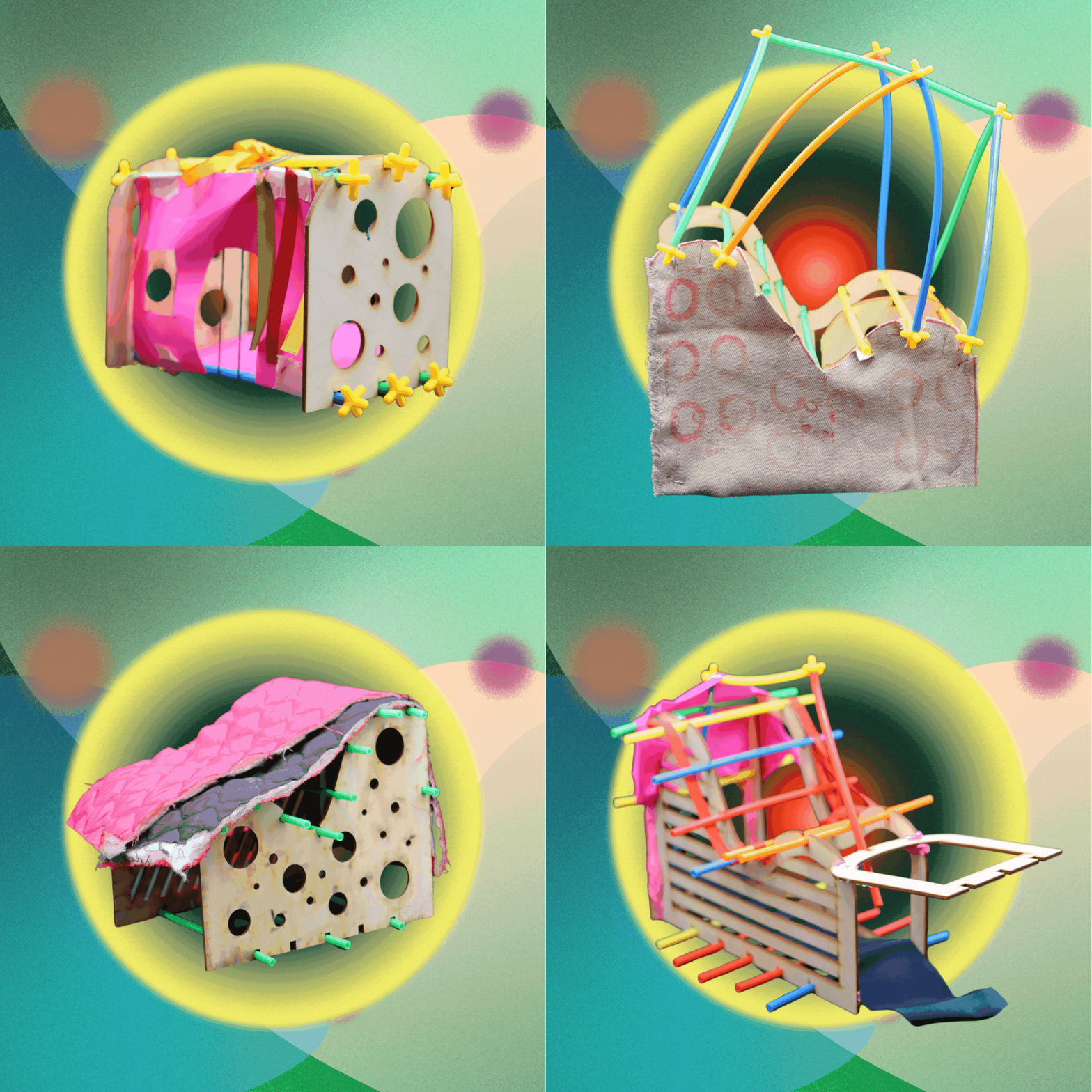
In the Creative Reflections design workshops, participants were invite to imagine a community gathering place on reserve. They were given a book to draw things that brought them a sense of joy in community, then build their imagines spaces using materials. Their designs reflected a desire for places that offer a choice to navigate and invite personal expression. Their pull towards symbolism, storytelling, and references to Cree teachings revealed a strong interest in spaces that were interpretive. Participants emphasized familiar, accessible activities, like spending time in nature or listening to music, and highlighted the importance of home, memory, and family. Together, these visions point to a need for adaptable, open-ended spaces that invite immersive, embodied experiences.

My findings led me to develop six characteristics necessary to create a gathering space on reserve. The characteristics offer a community-informed framework for designers to use when engaging with First Nations communities.
Conceptual space for gathering
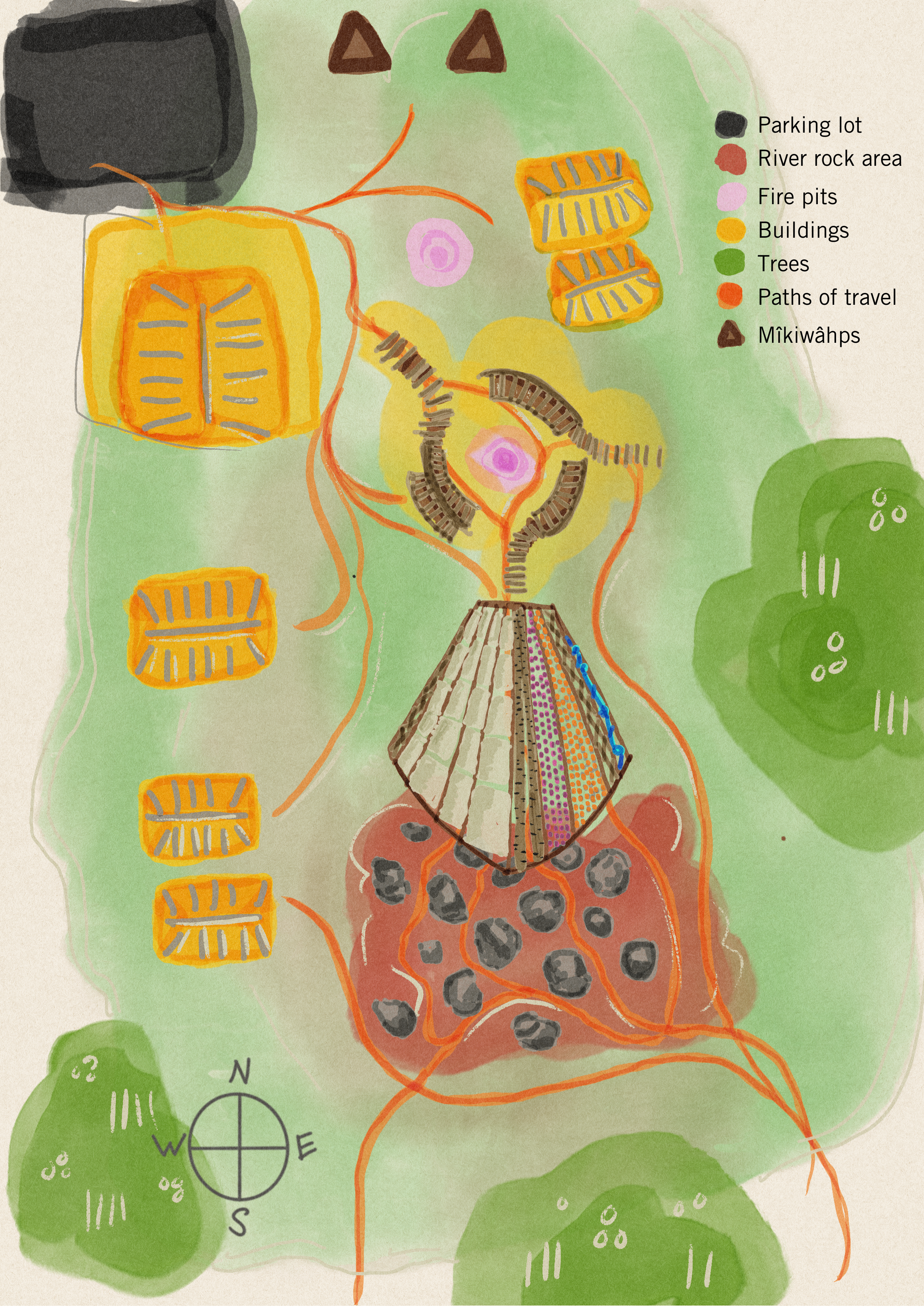
Taking things a step further, I embodied my six characteristics in a conceptualized gathering place, a space rooted in the cultural rhythms, memories, and daily life of Ochekwi-Sipi. It tandem with nature, it is not a fixed structure but a living and responsive one. People are encouraged to engage with the space to the degree they are comfortable with. Stories are shared near the sitting rocks or in the circular bench area. Its design reflects the land around it—using natural materials and interactive elements that invite passive observation or active engagement. This space becomes a site of cultural continuity, a gentle provocation toward healing, and a reminder that design methods are accessible to all, and can be used as a tool for belonging in your own land.
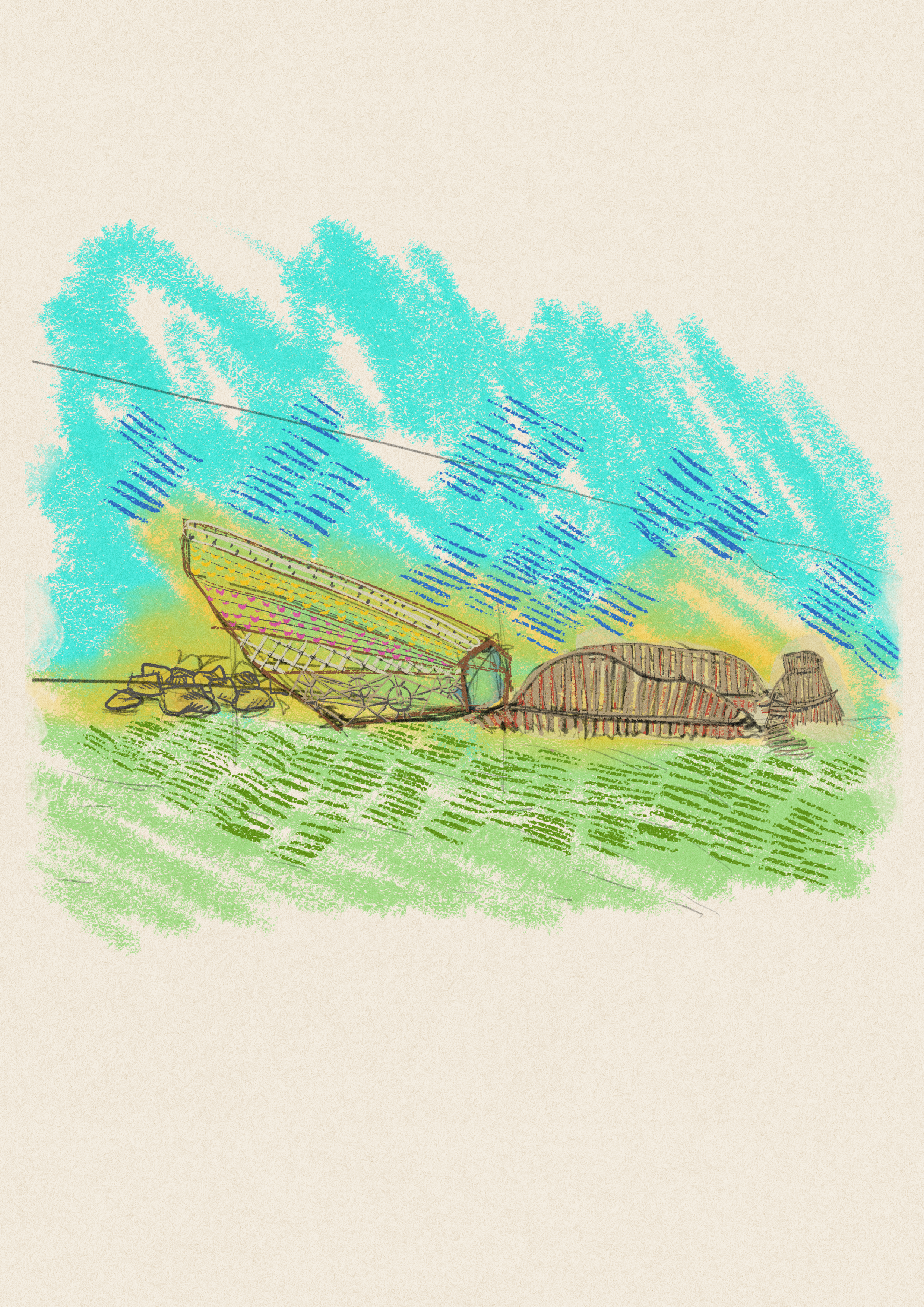
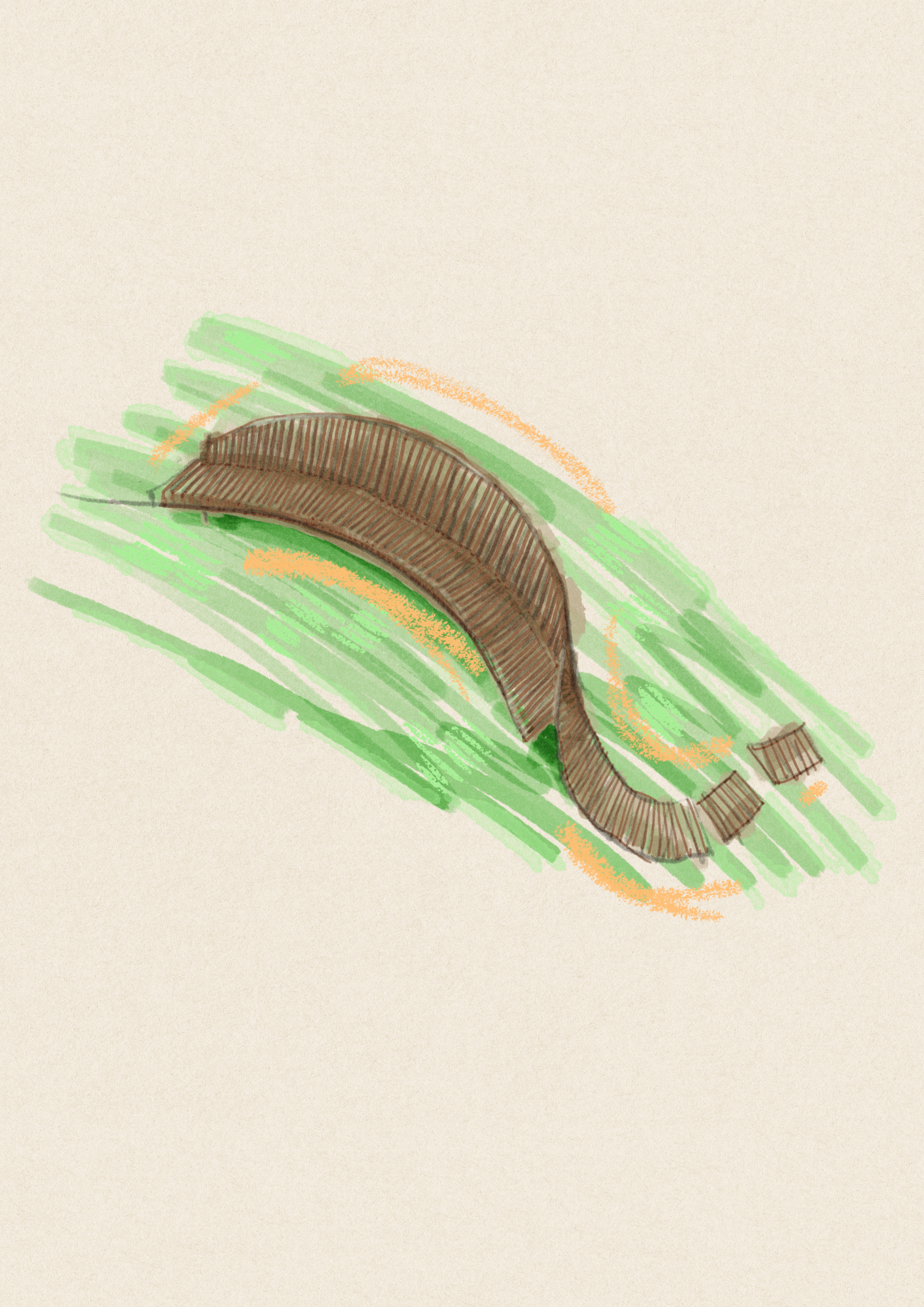
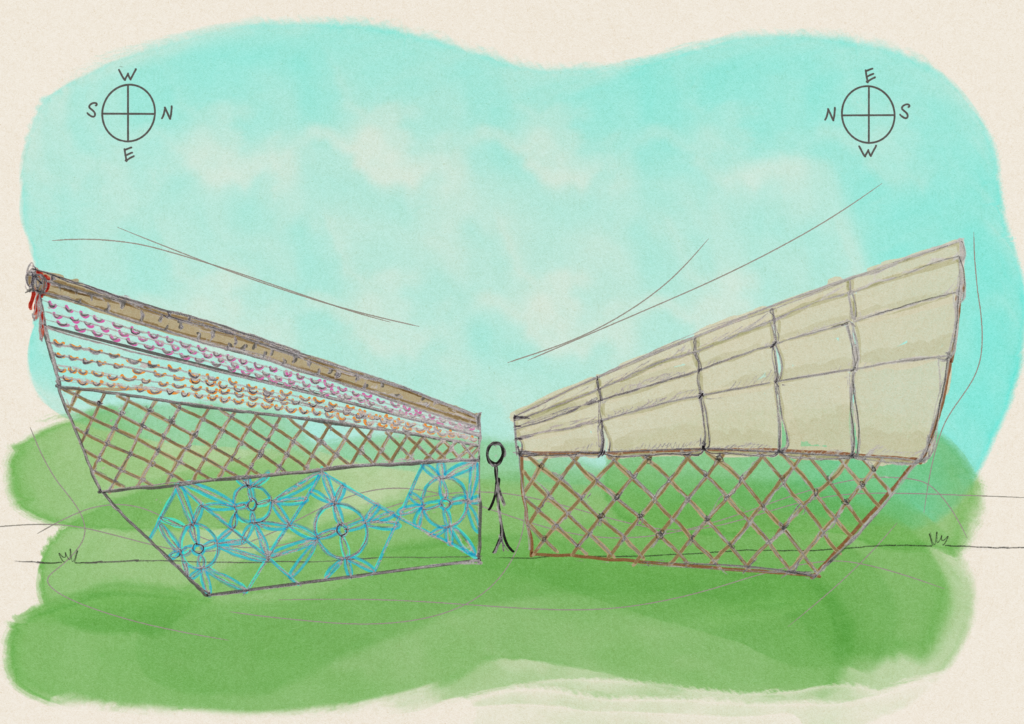
Description: The centre structure of aniskômohcikewin, spliced here into two parts, reveals 10 panels of varying material. Image on the left side: rope design inspired by hand drums and fish netting, rows of curved metal disks inspired by jingle cones are attached in rows, and two large birch trees tied with cotton fabric lays atop the structure. Image on the right: the rope fishnet pattern is repeated, and four panels of 20 large pieces of canvas fabric. These elements are interactive. They provide shade from the sun, movement, and gentle sounds. The canvas and jingle caps come most alive when engaging with the wind and rain.