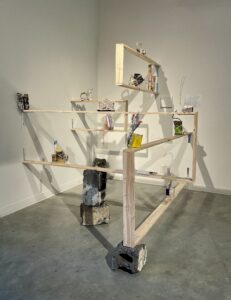
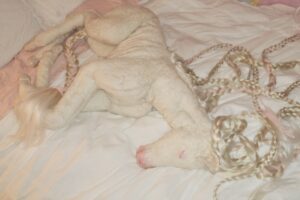
red horses oscillating in the undercurrent (sediment clouds)
Nicole Cruz Bie & Matthew N.M. Bordeleau
See it On Campus: Level 2
Vancouver Biennale “Art Attack” Award — Winner
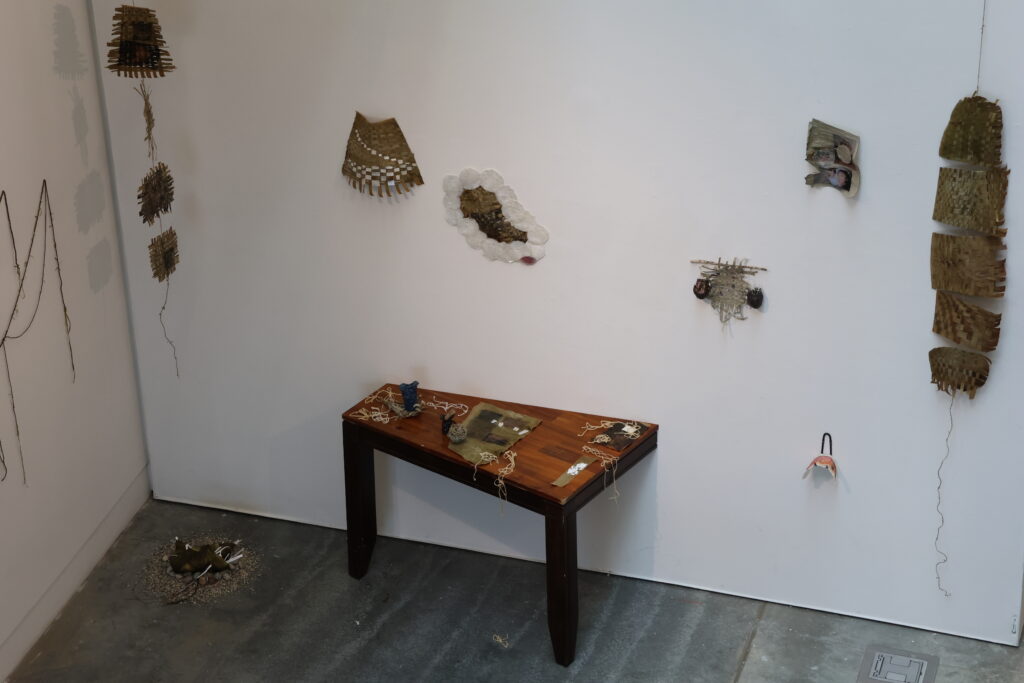
red horses
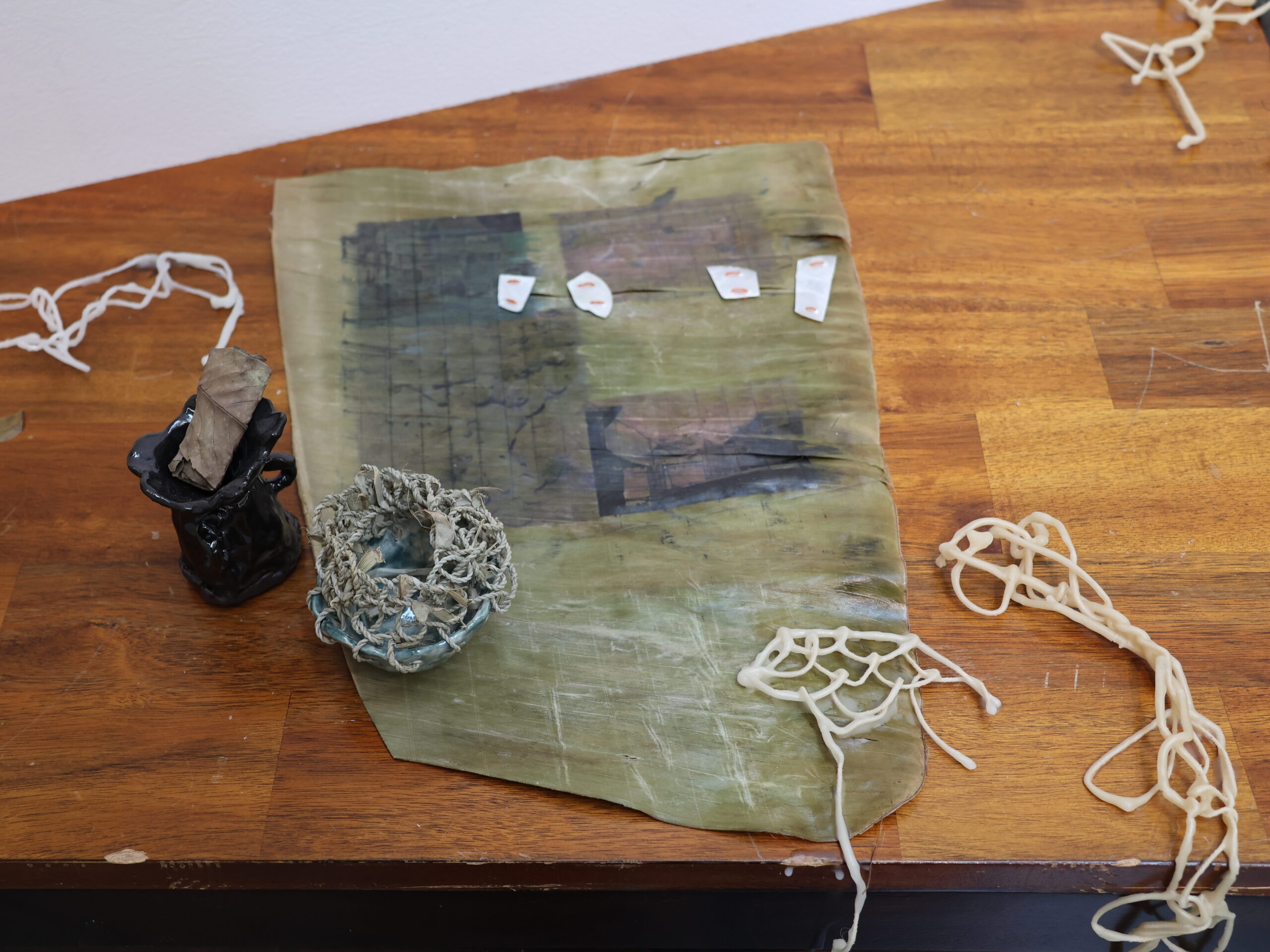
Frozen banana leaf in the freezer waiting to make its way to the dinner table.
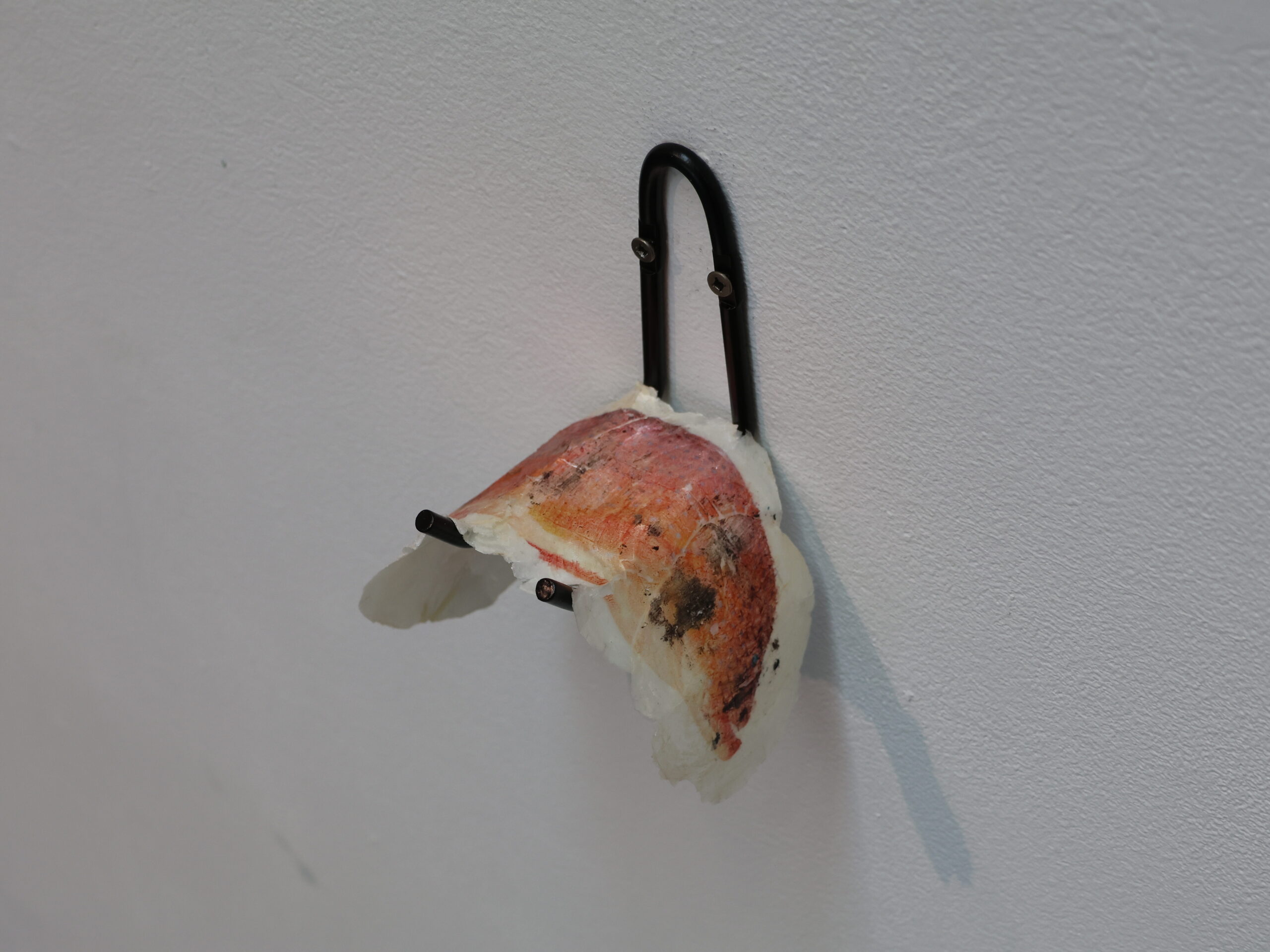
Brightly lit Capiz shell parols, hung outside during Christmas.
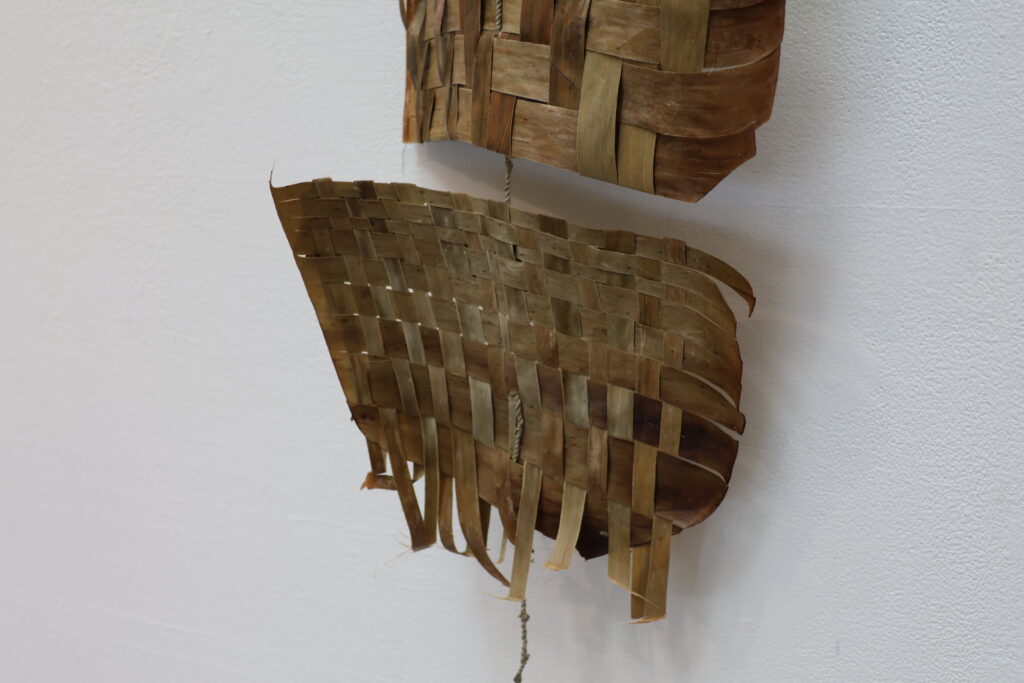
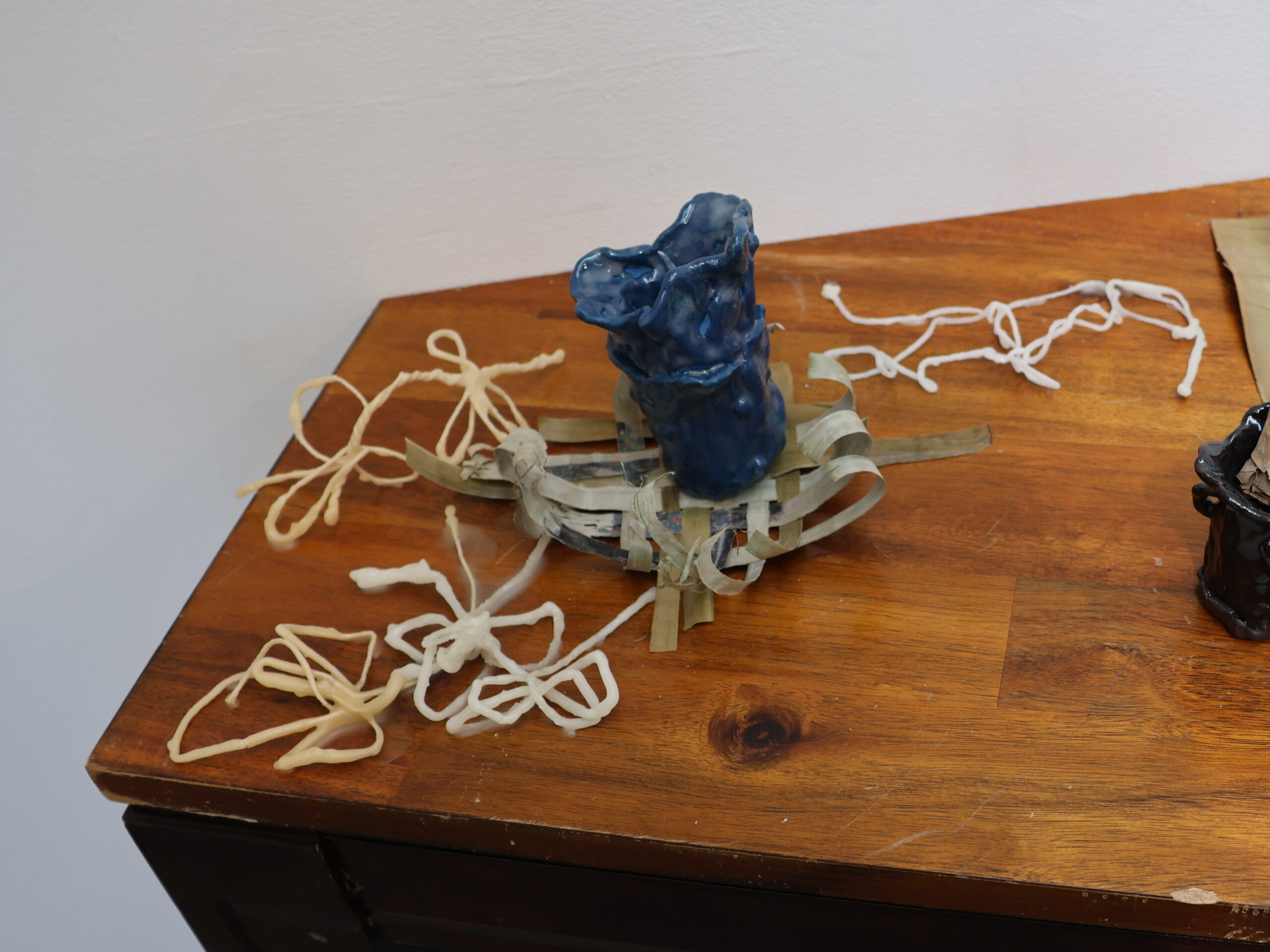
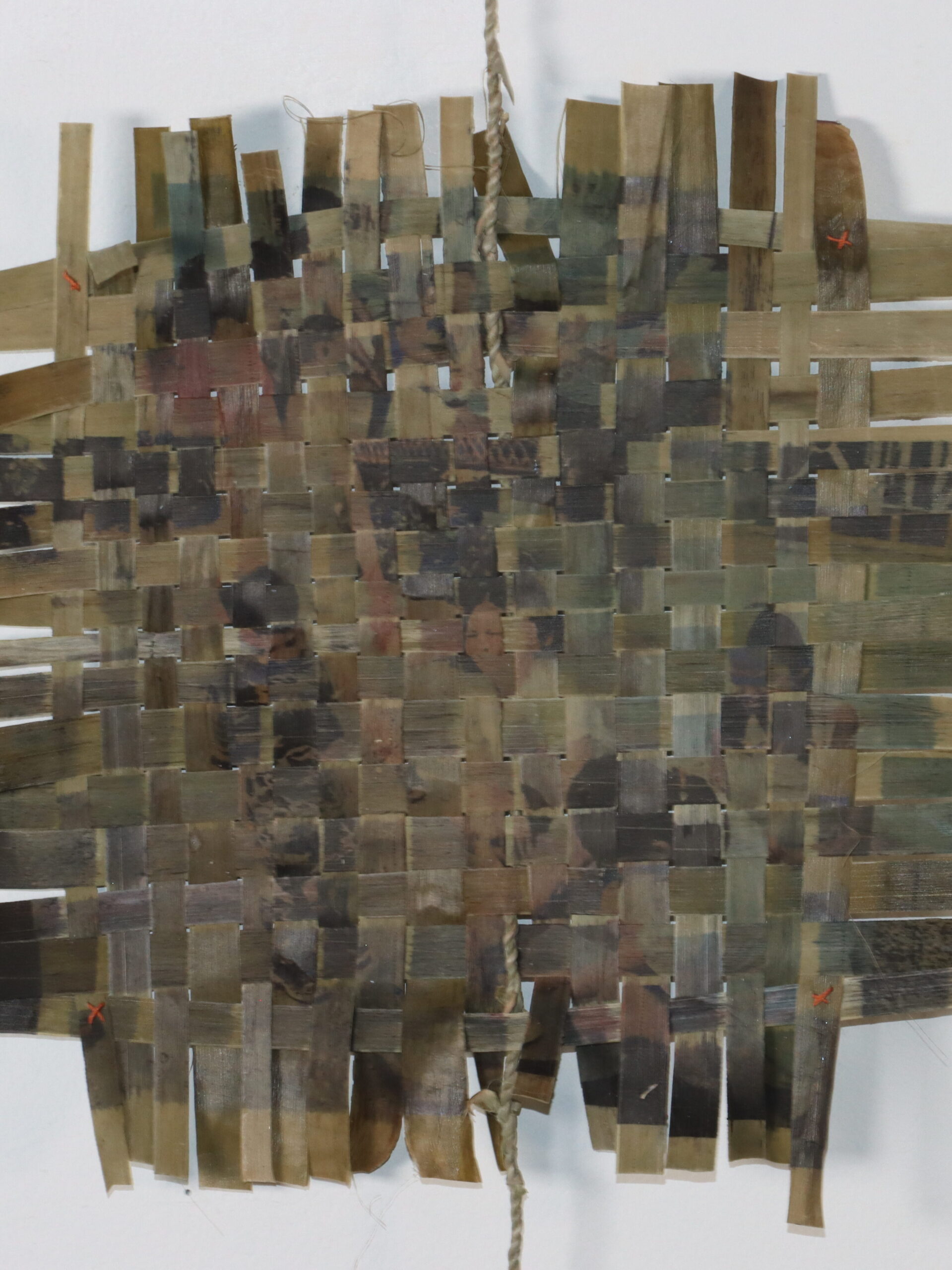
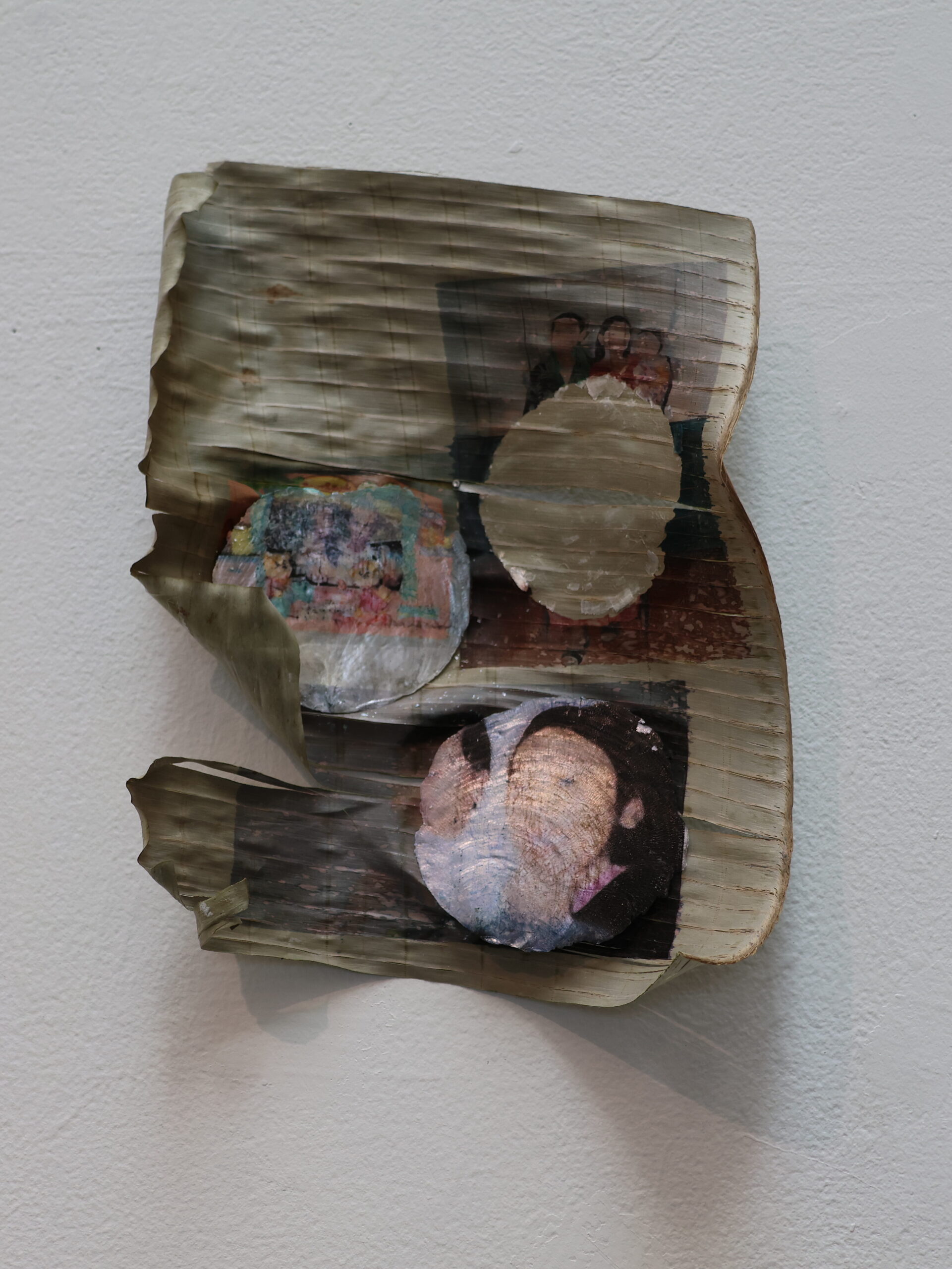
These materials; Capiz Shells, and Banana leaf are the base materials that help us frame this emerging praxis. They are also representative of key symbolic signifiers of cultural production found within the Philippines. Like the foods, objects, and brands we bring over and export, these two materials serve as portals that tie us back home. However there lies an inherent dichotomy within these things. The former provides an anchor that brings us back, and the latter which informs us of the separation; between place, family, and friends.
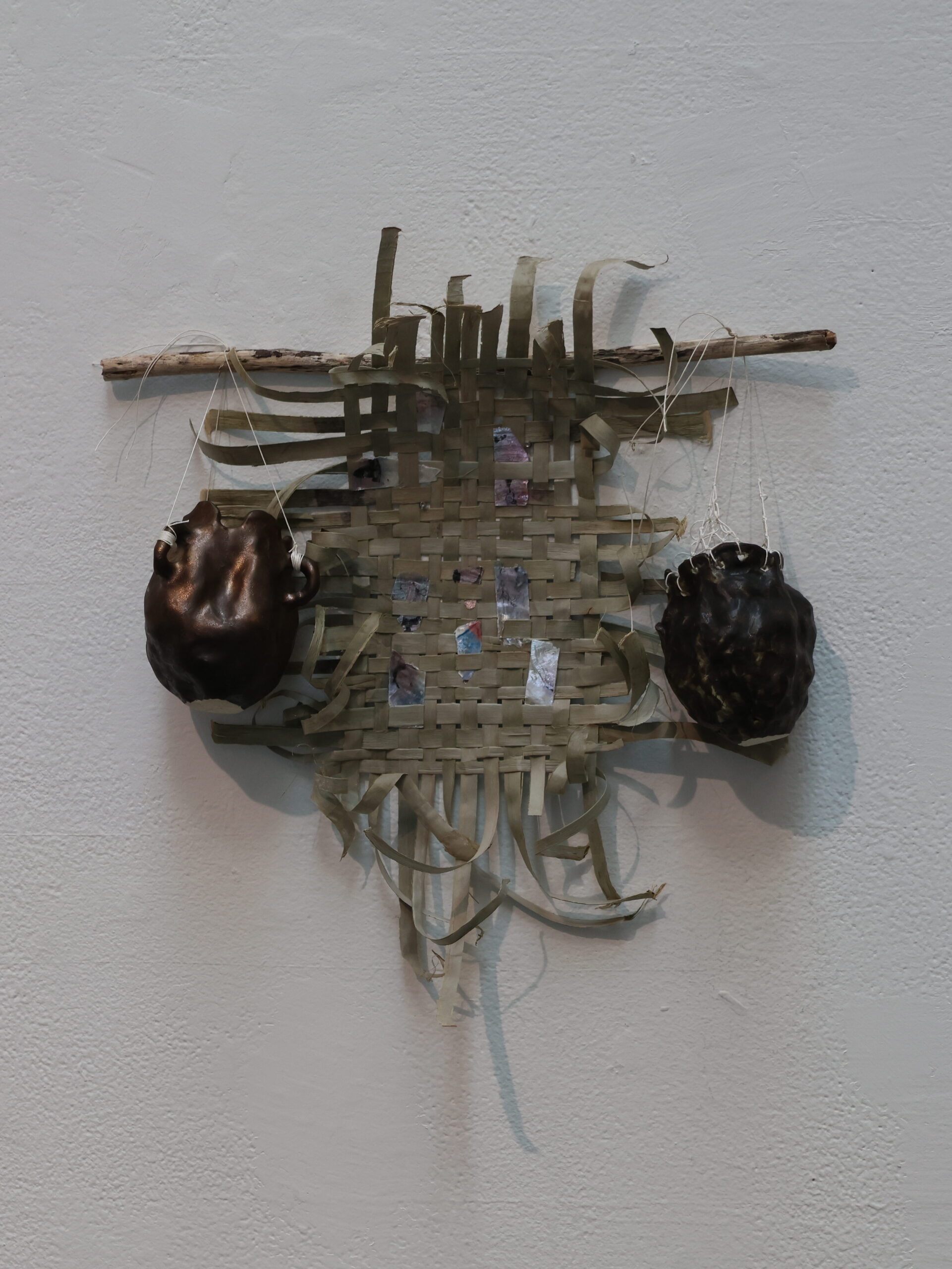
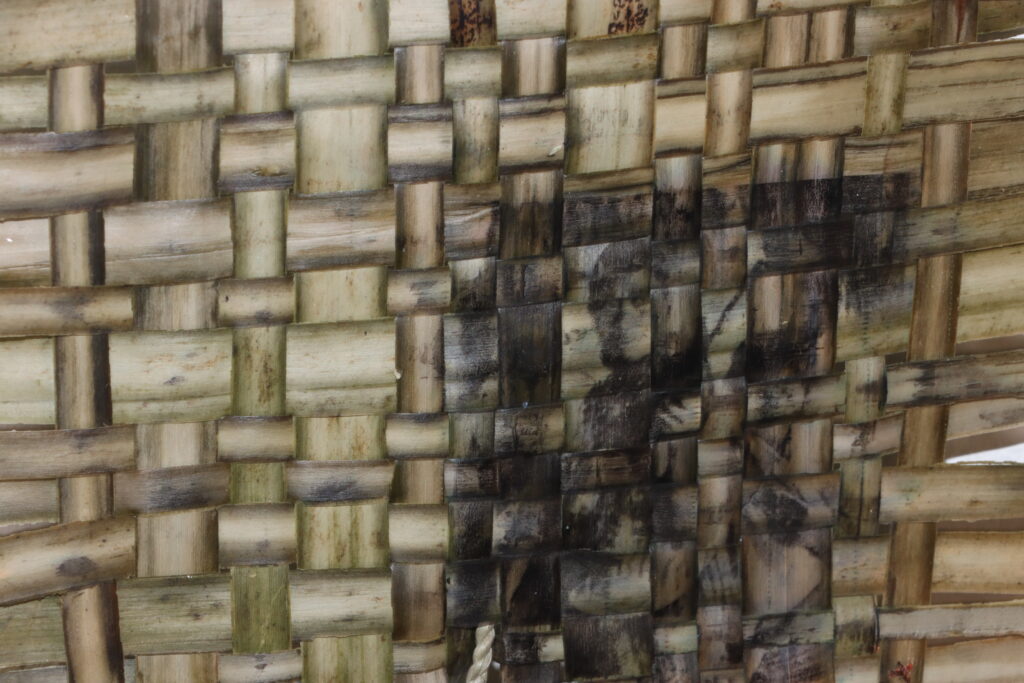
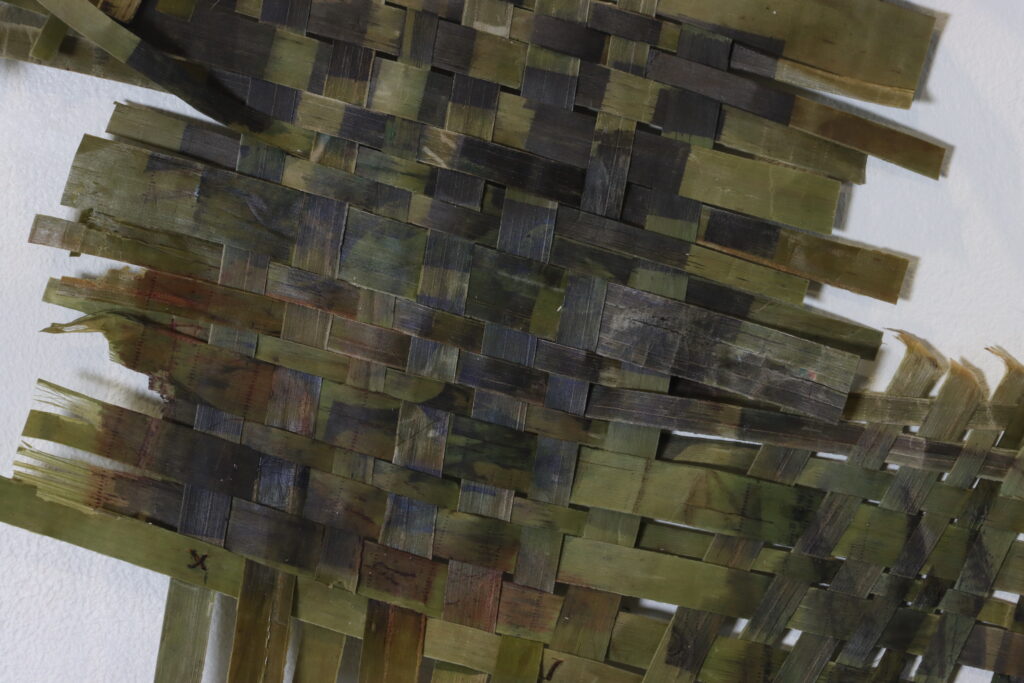
oscillating
From this gap found in separation, the diaspora is formed. But what does it mean to live in this state of two demarcated points in space? Where does home lie? To live between two countries, two social systems, and two ways of being, creates a criticality and acceptance of both. The expectations to uphold Filipino values are set in place by seeing our parents taking care of others. Their giving nature, sending remittances back home, a hardworking balikbayan. But as Filipinos born and raised abroad what does it mean to return? We do not return to a fixed point but we oscillate together in an infinite plane to reconsider and focus moments of semblance, moments to observe the stars as they cycle through.
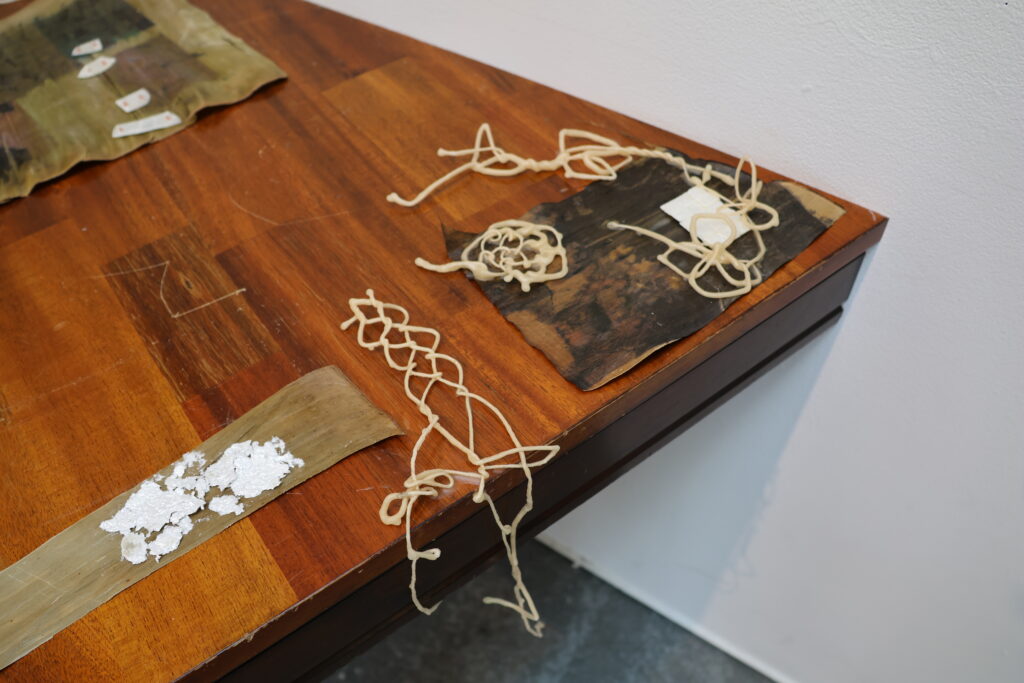
(sediment clouds)
Our work is rooted in the entanglement of histories and systems that have dispersed Filipinos globally. This dispersion is due to a need for better opportunities due to political and economic instability, rising from a colonized system and further into a globalized system that has caused a shift for Filipinos working overseas. Historically and into the present these workers have been nurses, caregivers, cleaners, and nannies. It is in this sphere of labour where we confront a jarring truth of our history, that the Philippines biggest export has been our people. Currently there are 2.2 million Filipino overseas workers worldwide, 58% being women. It was the turmoil during the Marcos dictatorship that made our families move abroad, from two towns only 30 minutes away from each other. It is what brought us here, working together. Through our people’s and our family’s history we trace the sediment and ruptures that are left behind.
undercurrents
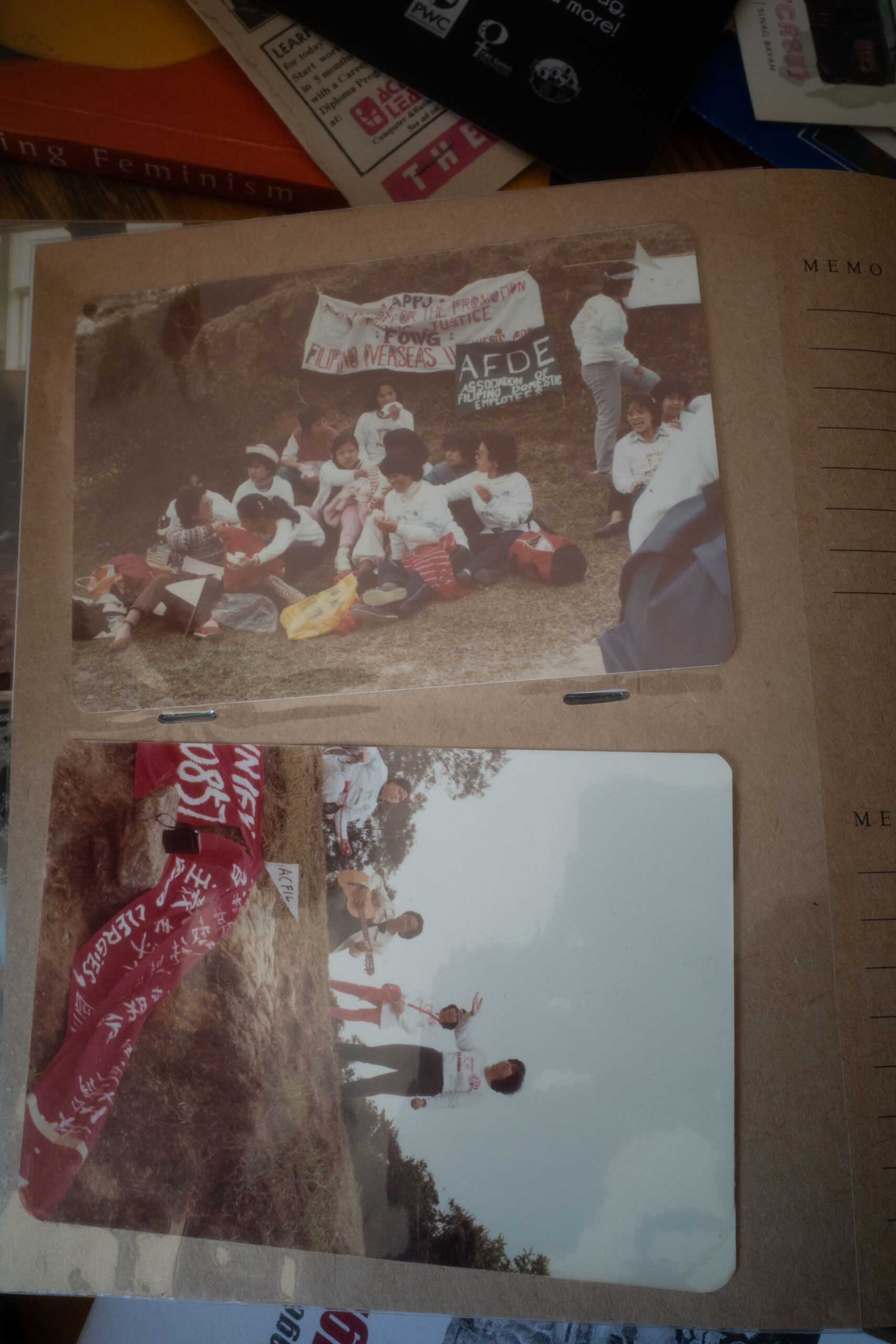
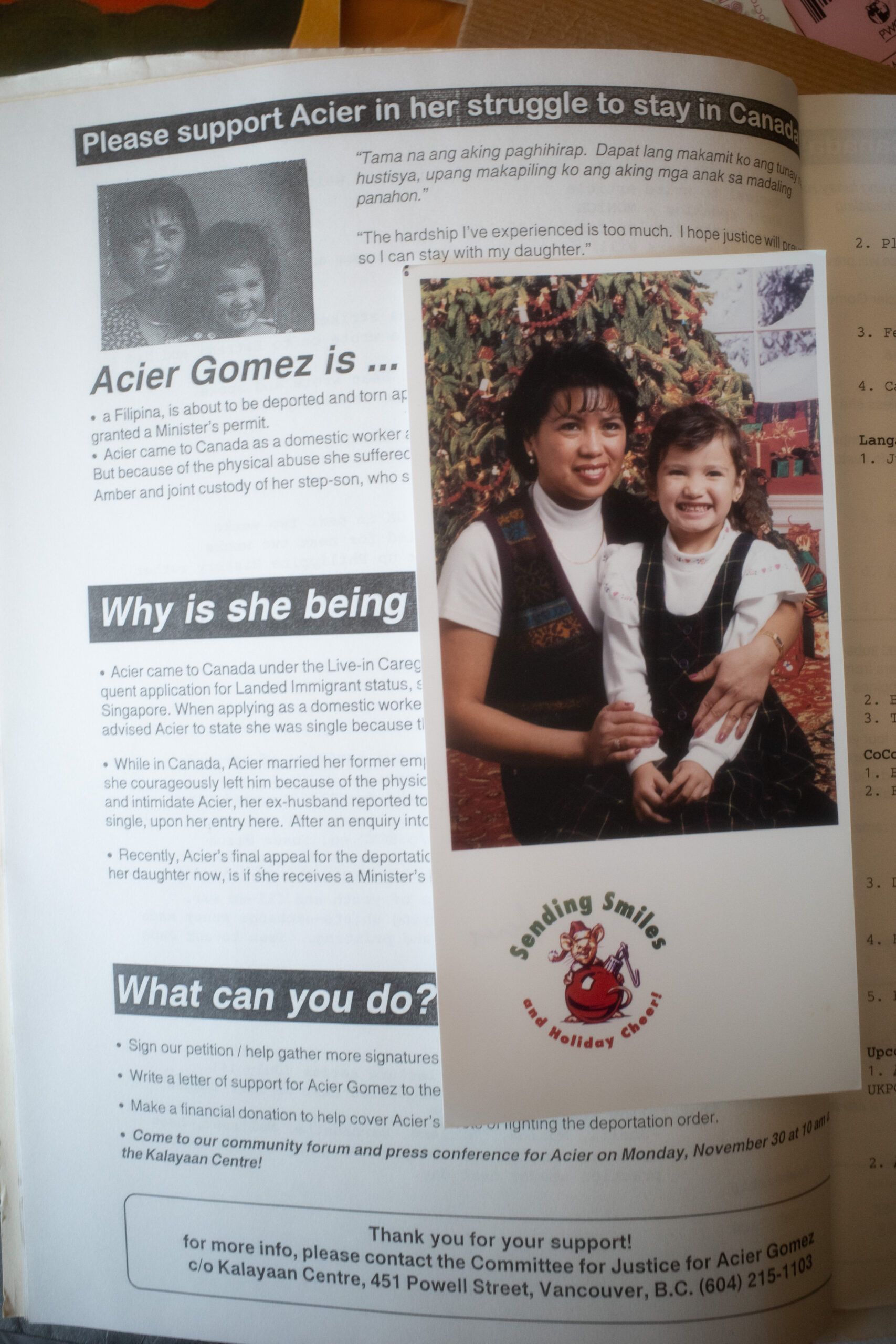
Within this rupture, we physically manipulate our families’ archives from here and the Philippines to re-imagine the past and to construct an uncertain, yet nevertheless emergent future. Much of our people’s early history is housed in institutional archives abroad. Taken and recorded under an ethnographic gaze, they are reflective of colonization, violence, and control. We ask, who produced these photos and documents and what narratives did they sustain? Whose agency is lost in the process? We turn not just to our archives, but as well as to community sustained ones (The Philippine Women’s Centre of BC) as alternate ways to record history. This is a history we have the right to claim—one that is not framed under a transparent, and reductive gaze. Against the backdrop of Capiz and banana leafs, photographs become obscured—intertwined in the material makeup of the compositions and the discourse that frames them. People, material, and discourse; all three co-constitute to create new meanings that reflect the indeterminate mode of being we trace ourselves in.
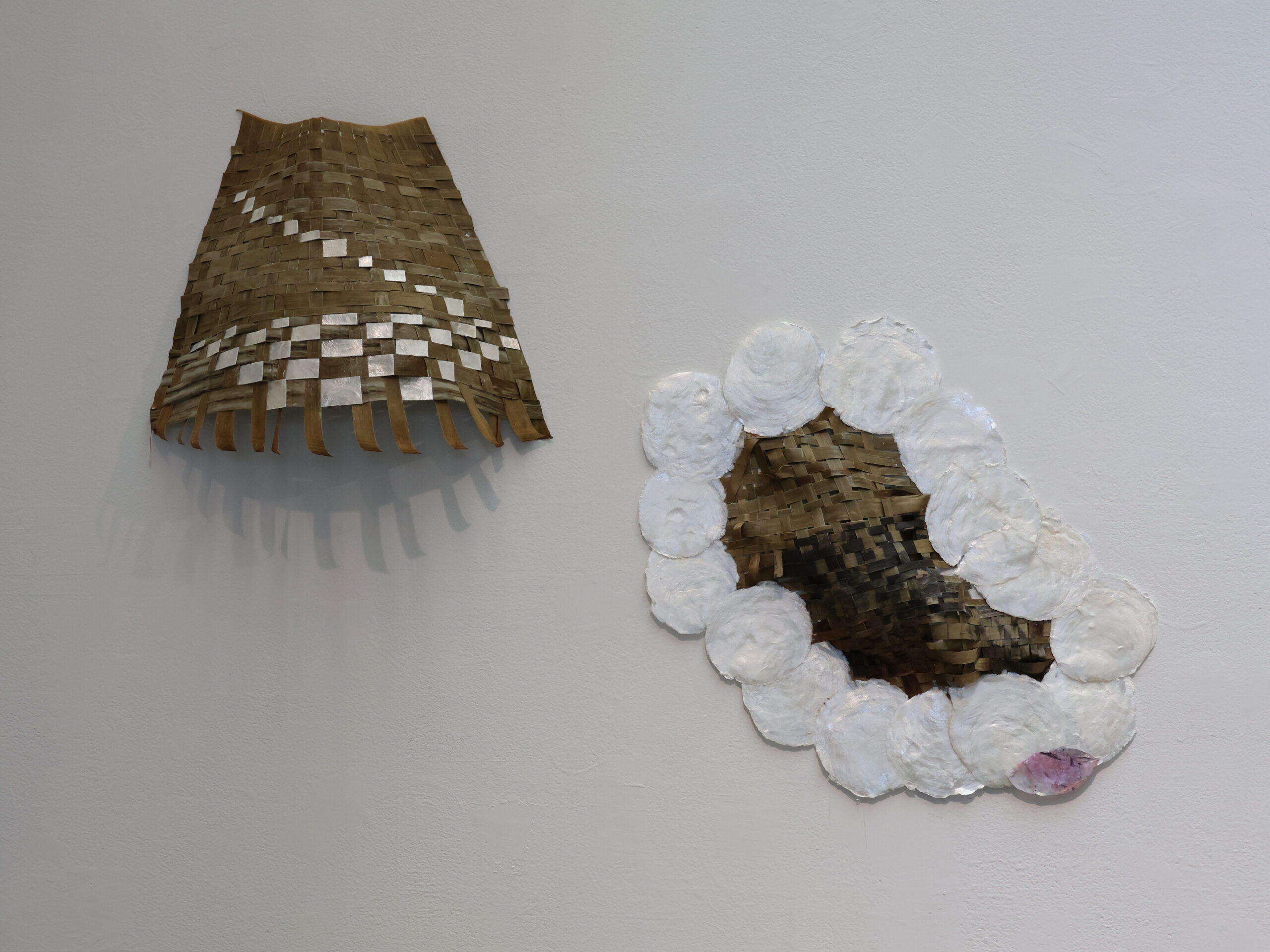
collaboration, community, and healing
Kapwa and Bayanihan are values of the Filipino peoples rooted in a shared sense of self and the spirit of community. Both of these values were taught to us by our elders and became the catalysts for our collaboration. We shared our lived experiences, material reflections, and knowledge with each other and members of the ECU community. Recently, we worked with Charlene Sayo and through her, the PWC archive. We held our first workshop with Charlene interviewing her parents on the PWC and student-organizing during martial law. We will continue knowledge sharing through our material research, such as shell bending, to others in the community. We hope for the community to create, grieve, and heal together to further sustain Bayanihan through shared making in Vancouver.
In light of the recent tragedy at the Lapu Lapu festival, we remember and honour our kabayan who lost their lives and those whose lives are affected. Our desire is that our shared practice will continue to support, and give back to the Filipino community and beyond. We strive for practices that build a relationship with the land, fight for land back, for a free Palestine, and the abolition of borders.
collaborators and community: Kai Pama (visual arts), Jen Cheon (visual arts) , Gloria Lee (visual arts), Charlene Sayo, Thea Loo, Sue Shon, Sarah Shamash, Pat Vera, Charlotte Falk, Helene Day-Fraser, Peter Bussigel, Damala Tamer, Gwenessa Lam, Sanem Guvenc, Gloria Han, Anata Laylay, Ben Migneault (industrial design), Patrick Lagas, and Tenaya Fogelman (industrial design)
this project converses with: Meeting the Universe Halfway by Karen Barad, Inay by Thea Loo, Brown Women Blonde Babies by Marie Boti and Sr. Florchita Bautista, You Shall be as Gods by Dennis S. Villegas, My Friend the Terrorist by Malcolm Guy and Demetri Estdelacropolis, Venus in Two Acts by Sadiya Hartman, No Pigs in Paradise by Balbir K. Singh, The Intimacies of Four Continents by Lisa Lowe, The Map to the Door of No Return by Dionne Brand, Poetics of Relation by Edouard Glissant, The Four Fundamental Concepts of Psychoanalysis by Jacques Lacan, ~~~ by Ana Roxanne
Matthew Norberto Marius Bordeleau
Matthew N.M. Bordeleau is a Kapampangan transdisciplinary __________ residing on the lands of the xʷməθkʷəy̓əm, Sḵwx̱wú7mesh, and səlilwətaʔɬ peoples. Their work spans across sculpture, sound art, critical design, spatial design, material science, and poetry; all within an affect-driven, investigative, and iterative approach. Their recent projects reflect on split subjectivity, eternal recurrences, and desire.
Nicole Cruz Bie
Nicole Bie is a Kapampangan artist residing on the lands of the xʷməθkʷəy̓əm, Sḵwx̱wú7mesh, and səlilwətaʔɬ peoples. She works between ceramics, textiles, and sound grounded in feminist theory and abolitionist thought. Recently she has been interested in anting-anting; specifically the etymology and reclamation of its pre-colonial importance within the context of Roman Catholicism and its effects on the Philippines culturally. Through ritual and desire Nicole explores how to strengthen the resistance and care for those in her community.
inquiries: nicolebie72@gmail.com
Release Granted