What’s mine is yours.
Benjamin Migneault
See it On Campus: Level 2
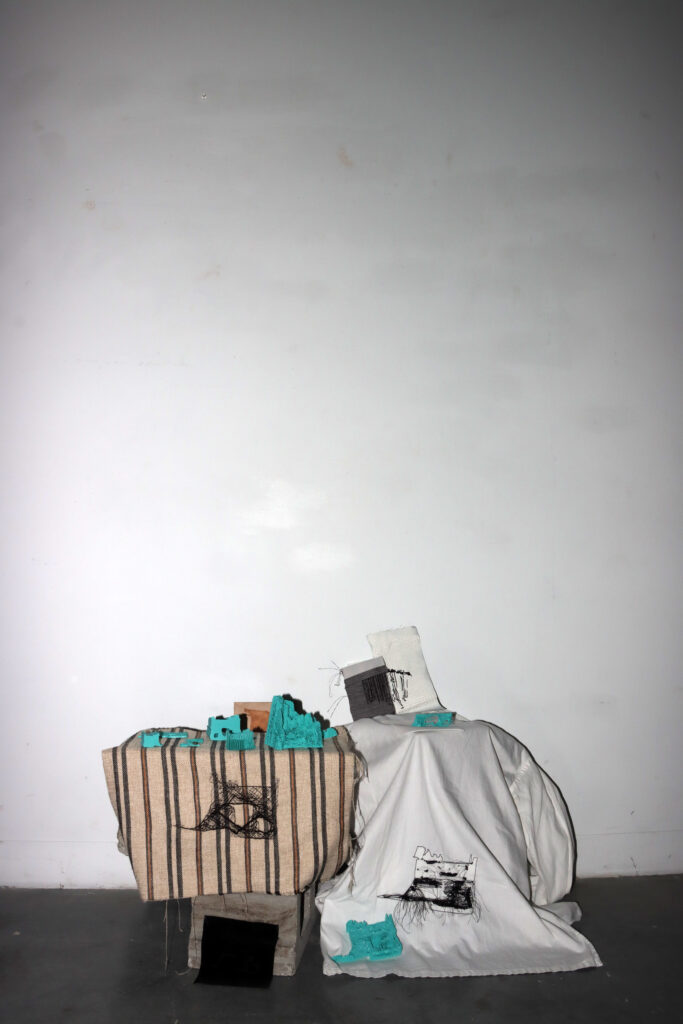
This is a research project exploring the relationships that form between creator and ______. Where that blank space could be created, machine, a space, or another person.
What began as an exploration of treasured objects and histories has evolved to an exploration of the interaction between maker and machine, heavily informed by space, collaborator (maker), collaborator (object) and philosophical theory.
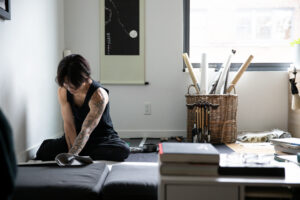
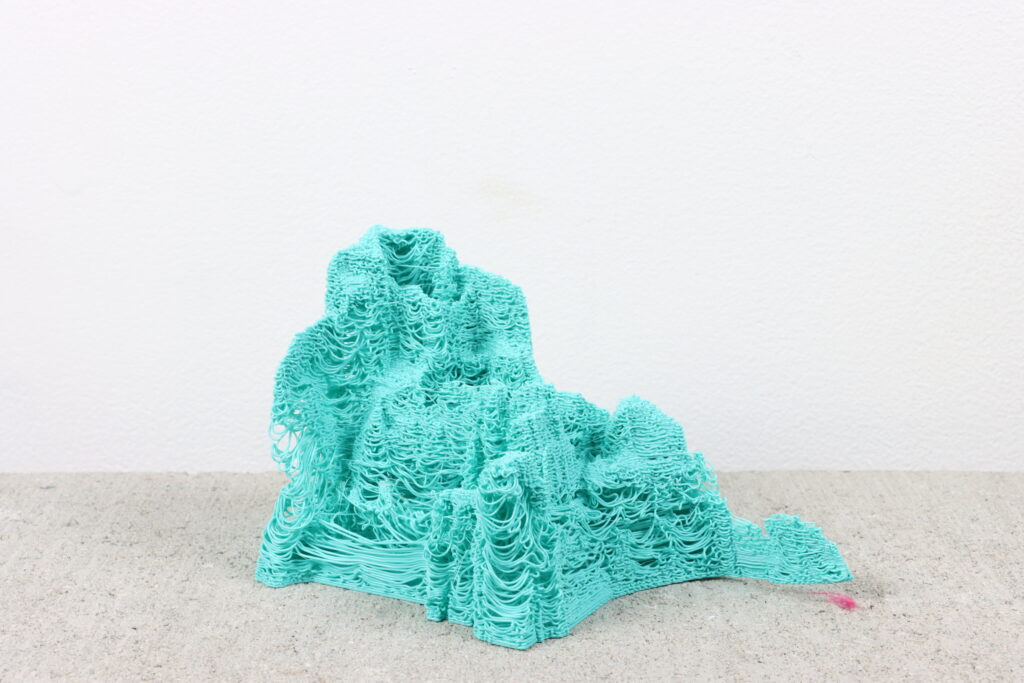
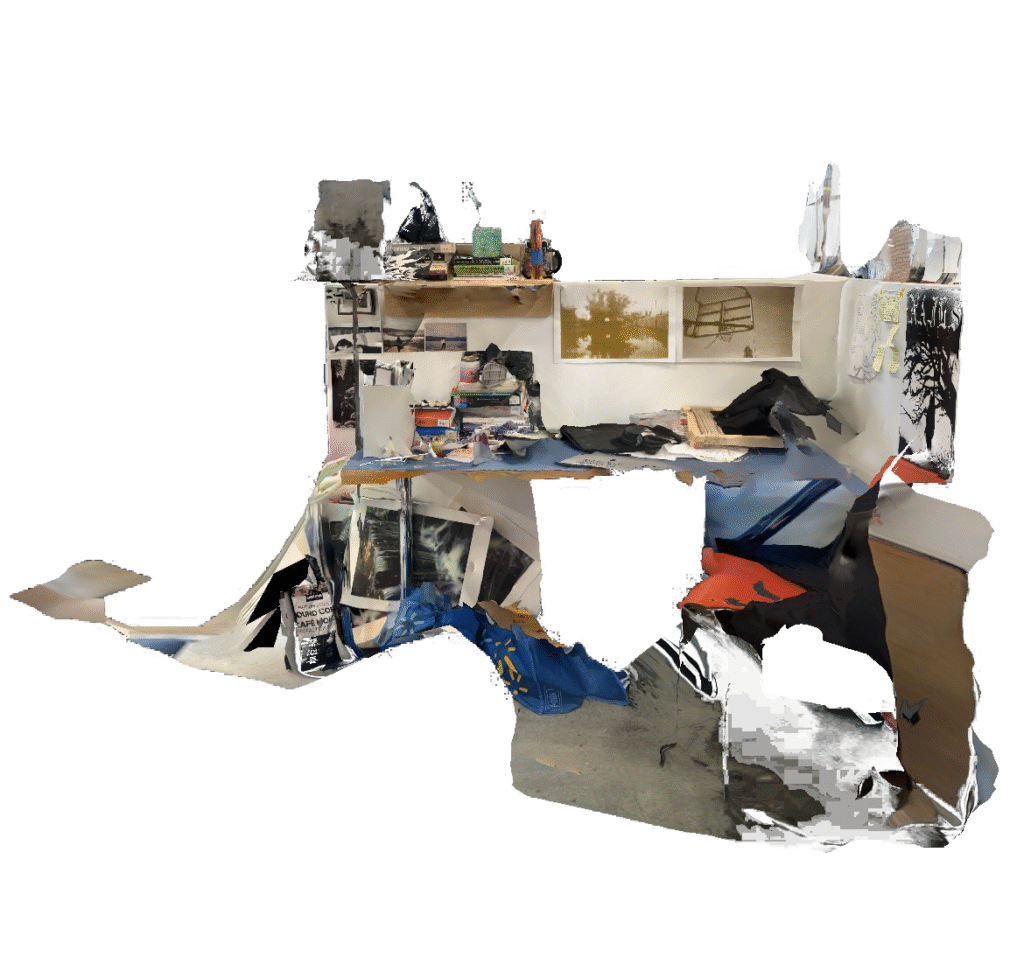
A three dimensional scan of the place where I work, alongside three other makers, becomes translated across dimensions, material, and machine.
This place, situated within a studio, becomes rife with history, with each collaborator (maker) becoming a thread sewn into the form. The form is then translated, through different experimental processes. the imperfection that arises from a yet unnamed collaborator (object) is welcome and treasured.
The non-sentient situates itself with the sentient. The machine sheds its history as tool and is embraced as collaborator.
This is a project attempting to visualise that relationship.
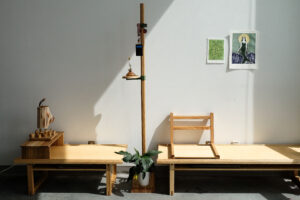
The project begins with my initial exploration into the relationship between owner and owned. This exploration began in 2022, where I, in collaboration with Matthew Bordeleau renegotiated the definition of table. We created a trilogy of tables that defied traditional function, making objects that failed (by design) as a way to interact critically with the traditional rhetoric of Industrial Design.
This concept moves forward through my work, now situating itself within the research I have undertaken throughout the last year. As this research has evolved, I have changed direction and conversation around the aforementioned rhetoric. While I no longer am engaging critically with the definition of furniture and function, my project exists as critique but also as act of inclusion. I veer away from using the word “care” in place of “inclusion”, due to the connotations that “care” brings. I am not simply caring for the machine I am collaborating with, if anything, I am aiming to harm it in some way. But in that harm, there is an offer of collaboration. The machine fails, through intervention of my own, to fulfill it’s one purpose. And that is the collaborative aspect I am researching, that interaction between human and machine that begets symbiosis.
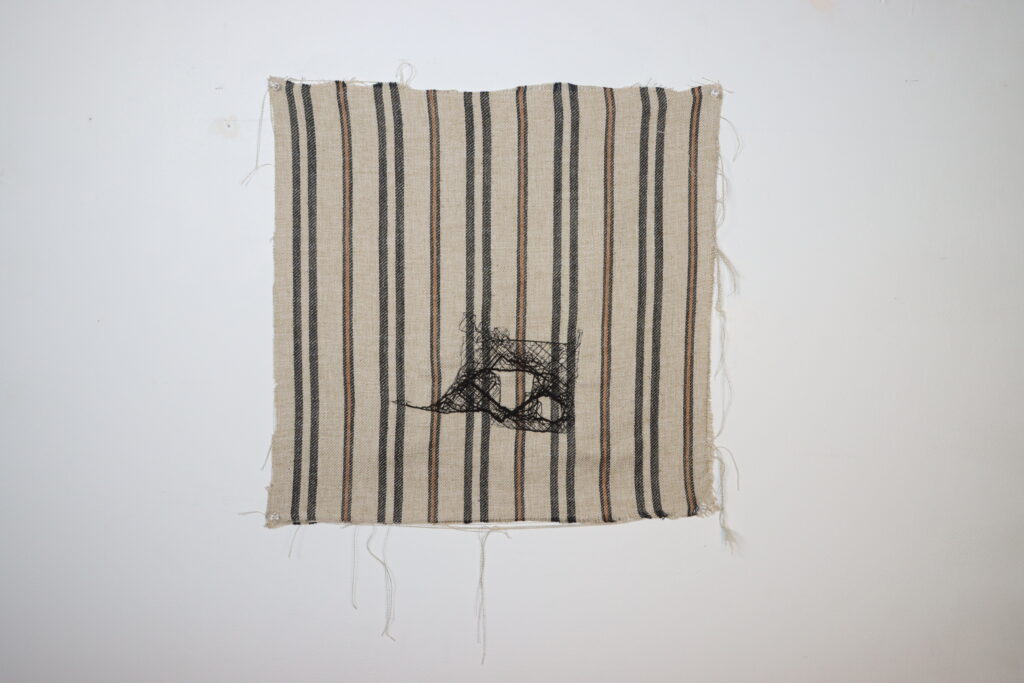
This level of intervention and subsequent symbiosis varies from medium to medium. For example, in digital embroidery the human maker must intervene in the machine’s natural order of processing the stitches in order to create a working, satisfactory embroidery. I choose to let the machine guide it’s own hand, instead prompting it with complex geometry. This creates a sense of harm within the machine. It fails upon itself, no longer able to pierce needle through fabric.
Prior to this idea of machine collaboration, I initially sought out to create a participatory workshop to “care” (I use care, not inclusion here, deliberately) for treasured objects. I spent the first month of this project absorbing philosophies that reconsider the object. Heidegger, for his shortcomings, creates a meaningful conversation about the object and gives it an existentialism that is previously unique to human experience.
And this project exists within that space, a constant conversation with the machine and the people who made the machine and the people surrounding the machine and me.
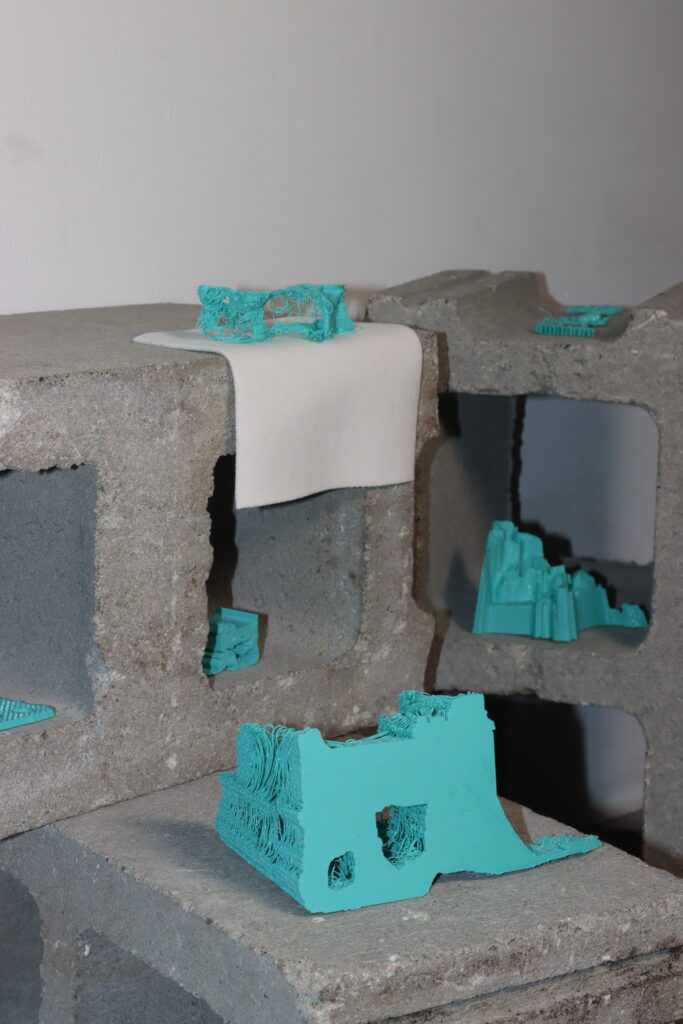
I thought about labour as an act of care. But in this scenario, the labour begins with the machine bearing the weight of it. Though the traditional idea of what this labour is, is offset to the machine, the labour becomes caring for the machine. Sitting with it, making sure it is producing properly, it is not jamming or harming itself. It is an act of care, instead of an act of make.
So the output is influenced by the labour as an act of care, and the collaboration by the machine to alter the output. But it is also influenced by the unnamed collaborators. The people walking by in the studio, the short conversations, the people who sit at the desk with me. The food, the drink, the laughter. It is all burned into the material. In some way.
In overview, this project is a series of studies of place, of collaboration, of machine, of labour, of relationships, and of reflecting.
Time with space and object and people and beautiful connection and collaboration.
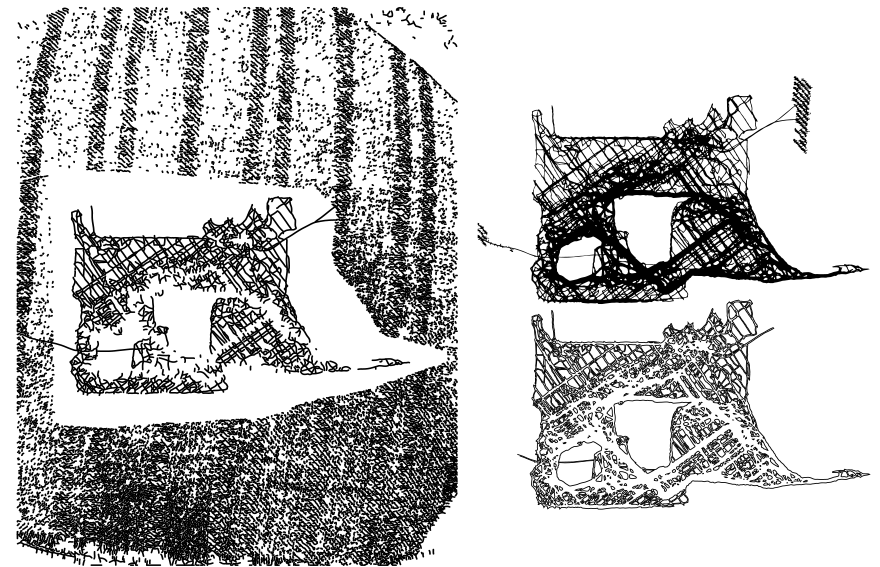
This project was a love-letter to my computer, to these machines, all these invisible collaborators and labourers. To the people who designed these objects, the minds that created that which is made to create. It’s so easy to assume sentience is what determines aliveness, or humanness. But it becomes so much more when you realise that these machines, though without thought in that moment, were at once, rife with thought. A deep, swirling, unending thinking of how to achieve a goal. To make that machine make. And successfully. It’s so easily deciphered as a human act to me, witnessing a 3D printer print a form, or an embroidery machine weave threads. And I guess that is the heart to this project, that even though it is a love letter to cyberspace, it is also a love-letter to real place: the desk, and the people within it.
It is so beautiful to be alive, to speak to another, to watch the sun set, or rise, to be privileged to create, to be surrounded.
This is not just an insight from this project, but from my time pursuing this degree as a whole. While it was not perfect, and it was filled with some of the hardest moments of my life- true and utter heartbreak and total exhaustion- it was a summer of my life. And there have been others, and there have been winters too, and there will be more summers and winters and swirling brains and bodies and birds flying through the air and heat and energy and running and being out of breath and falling down and I am so lucky to ever have been anything at all.
What’s mine is yours.