Forms In Flux
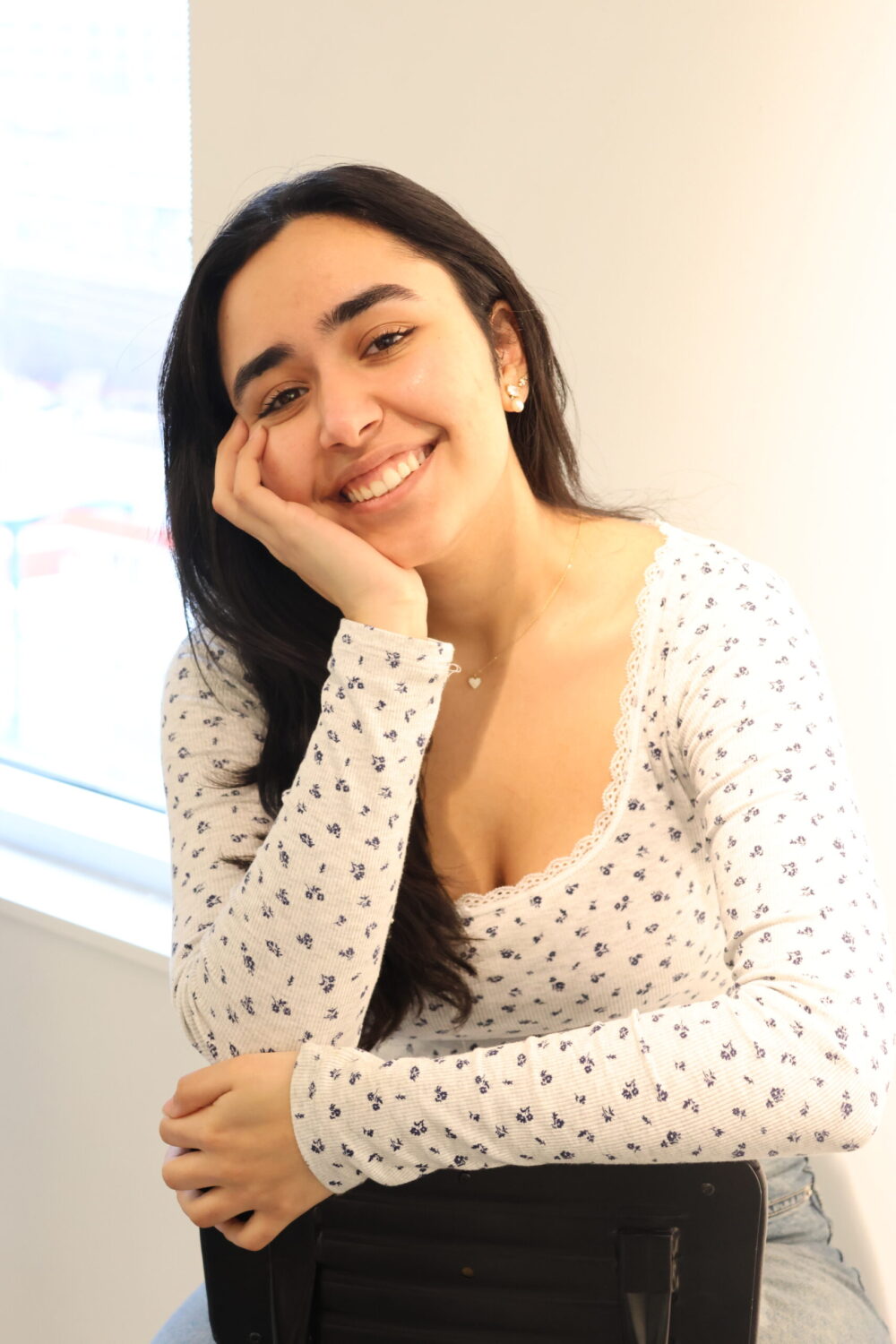
Aradhita Virmani
See it On Campus: Level 2
Second Floor- Sculpture Gallery, near the big windows.
Visitor InfoSpaces that adapt with you.
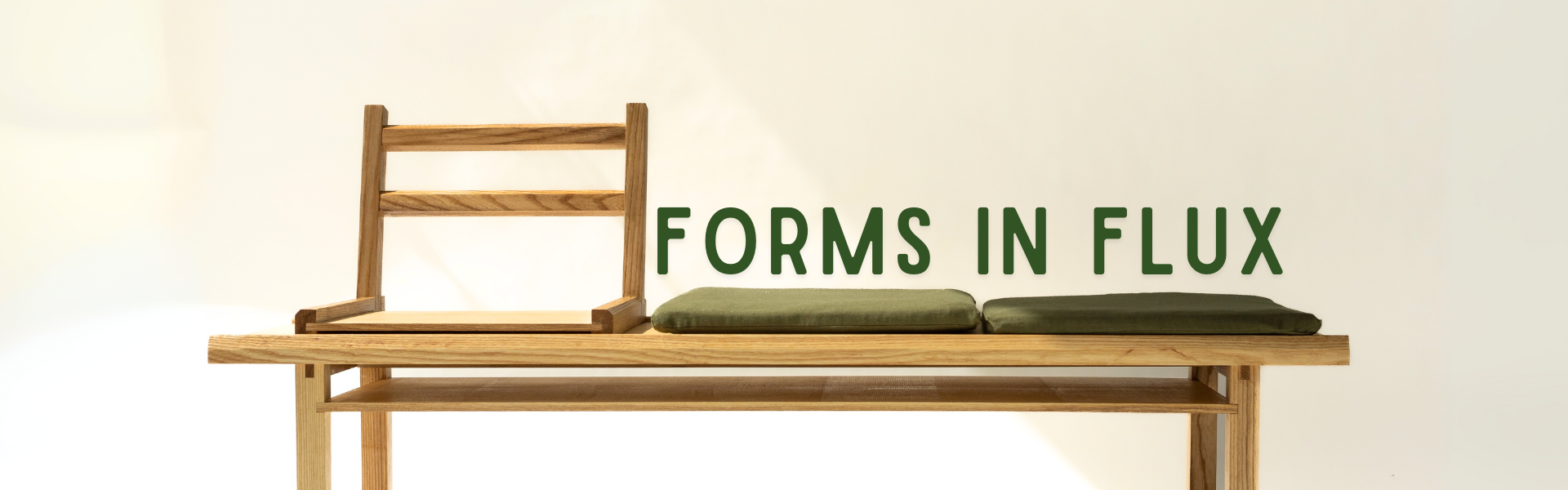
Shift, Create & Adapt – with your new system
It started with a simple question: How can our furniture remain open and responsive, rather than fixed?
After noticing how rigid most products are, even as our lives and spaces constantly change, I set out to design a piece that’s adaptable, responsive, and open to interpretation. This project brings together my love for spatial and industrial design to promote living with less, by creating objects that do more.
Rooted in personal experience—growing up and moving often—I began adapting spaces around change. This inspired a design approach that embraces sustainability not just through materials, but through longevity, emotional connection, and multifunctionality. Like heirlooms, this piece is meant to be kept, reconfigured, and expanded over time, extending its lifecycle and deepening its value.
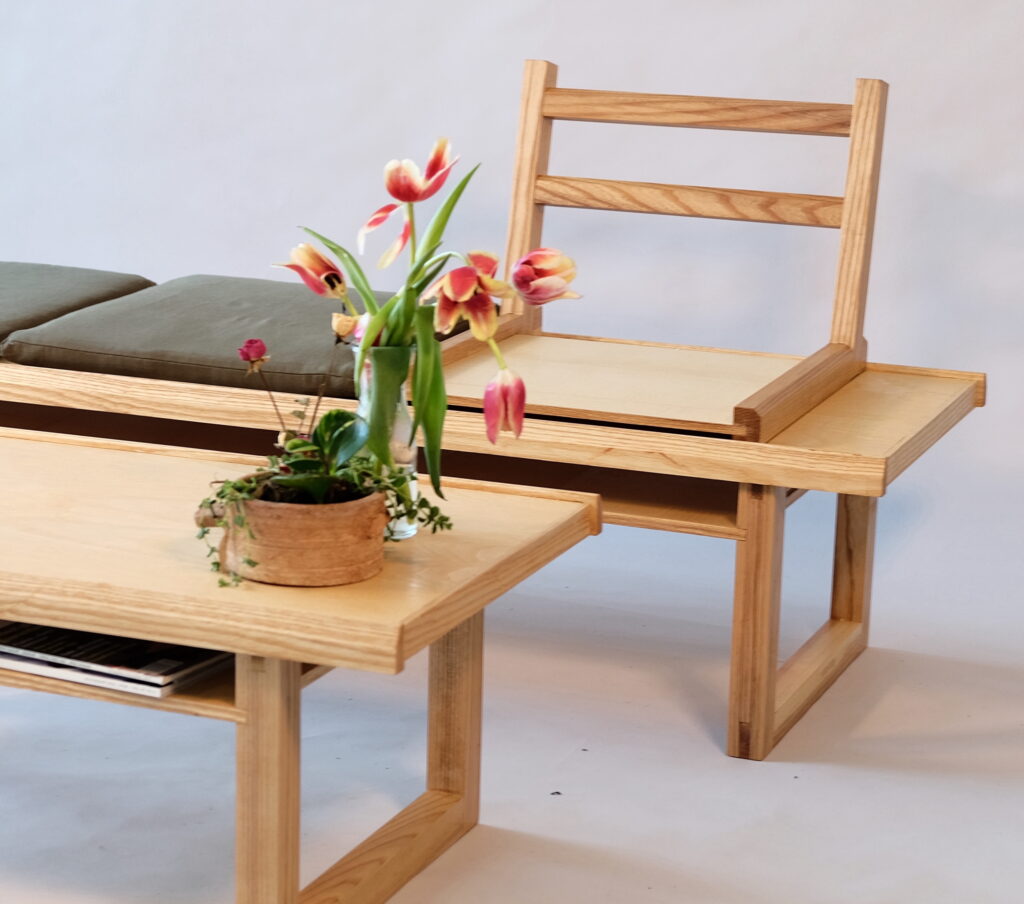
Designing for the theme of Change: How can I make this system do everything?
This project is an exploration dedicated to five outcomes. It shows the interplay of spaces and objects and our interactions with them, leading to the relationships we create with our belongings and challenging overconsumption. This system aims to look at furniture design by intentionally avoiding traditional ‘finished’ design aesthetics, it can subtly critique the culture of perfection and disposability, advocating instead for process, evolution, and care. The choice of material(ash) aligns with a long-lifespan approach and a better perceived value.
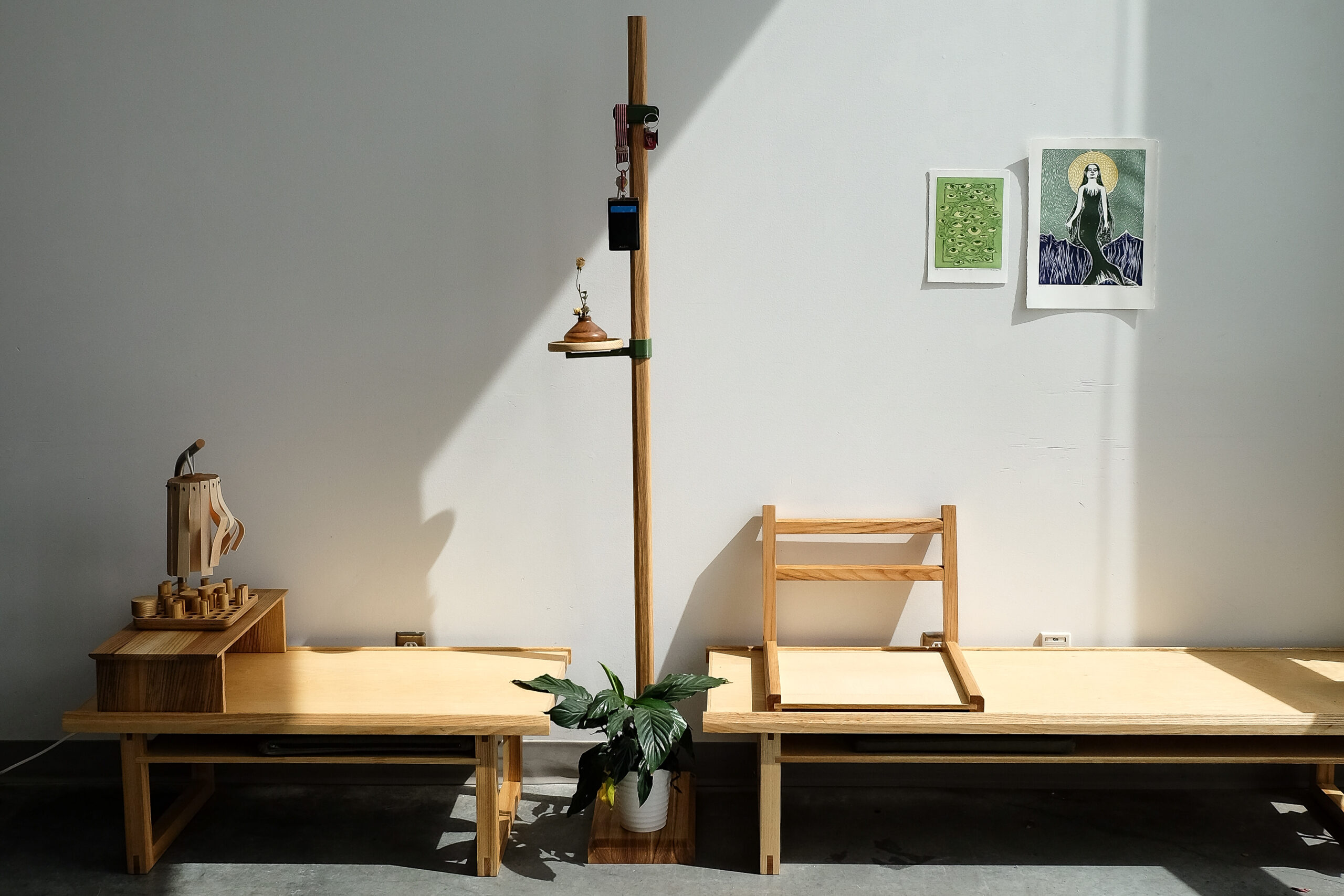
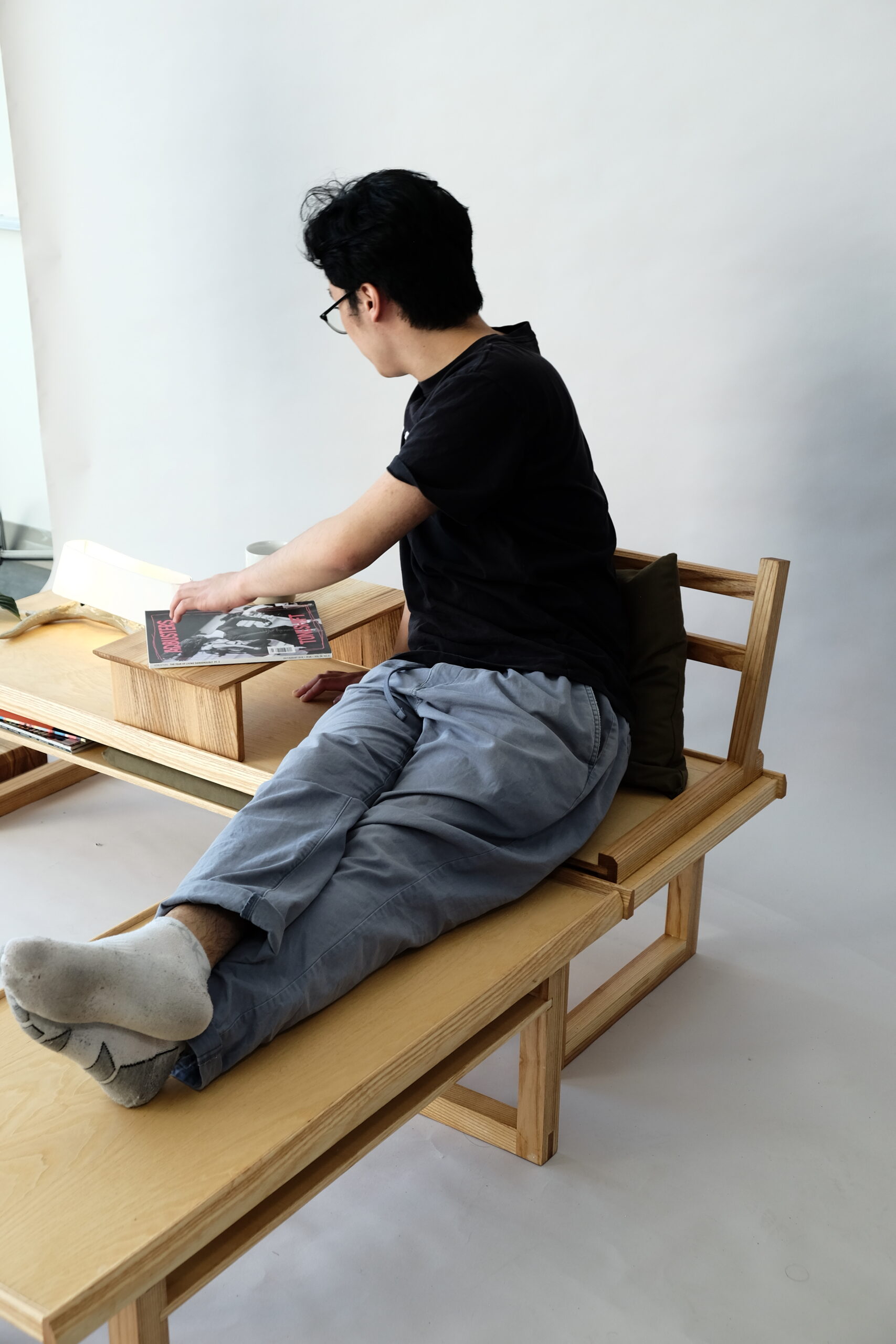
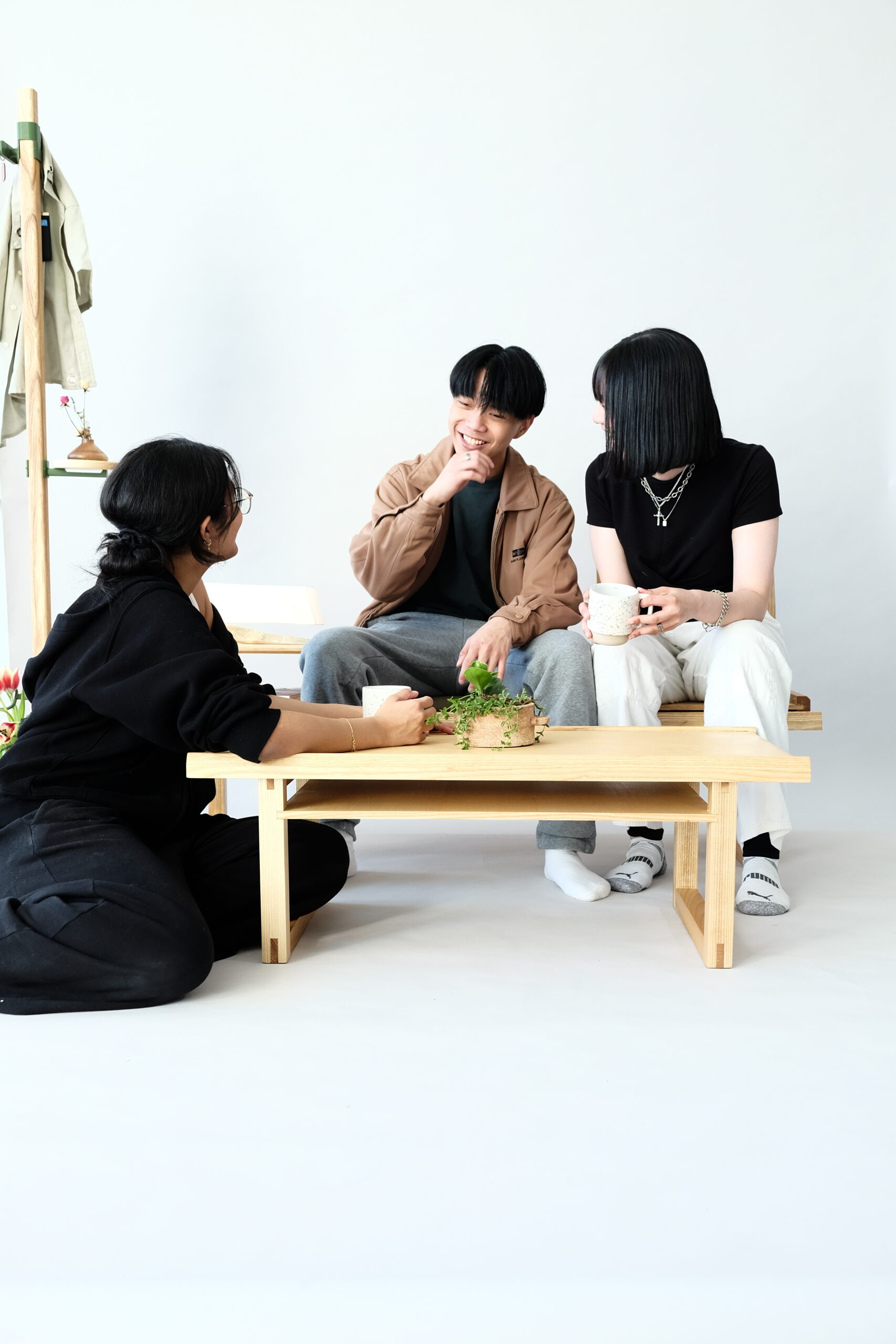
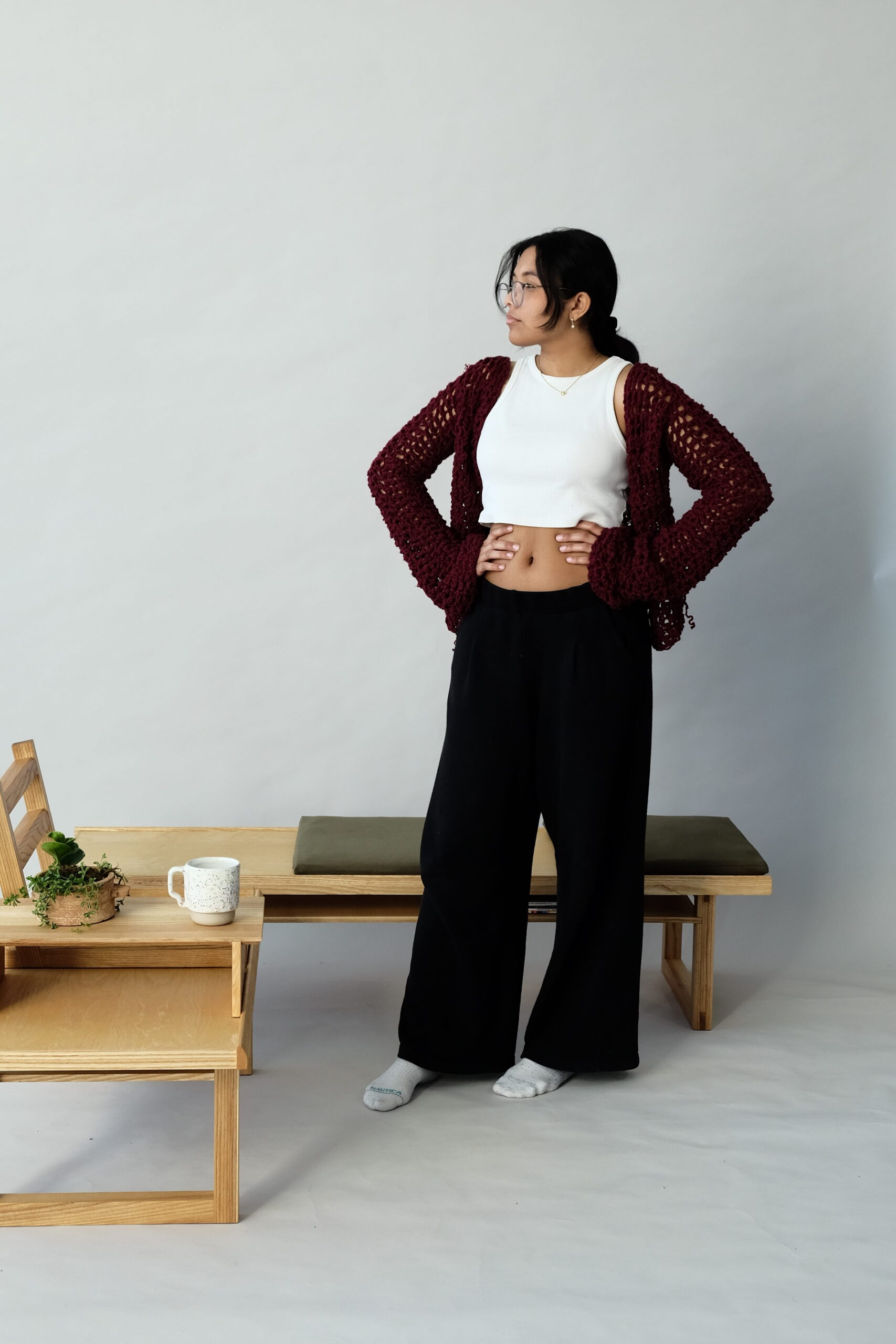
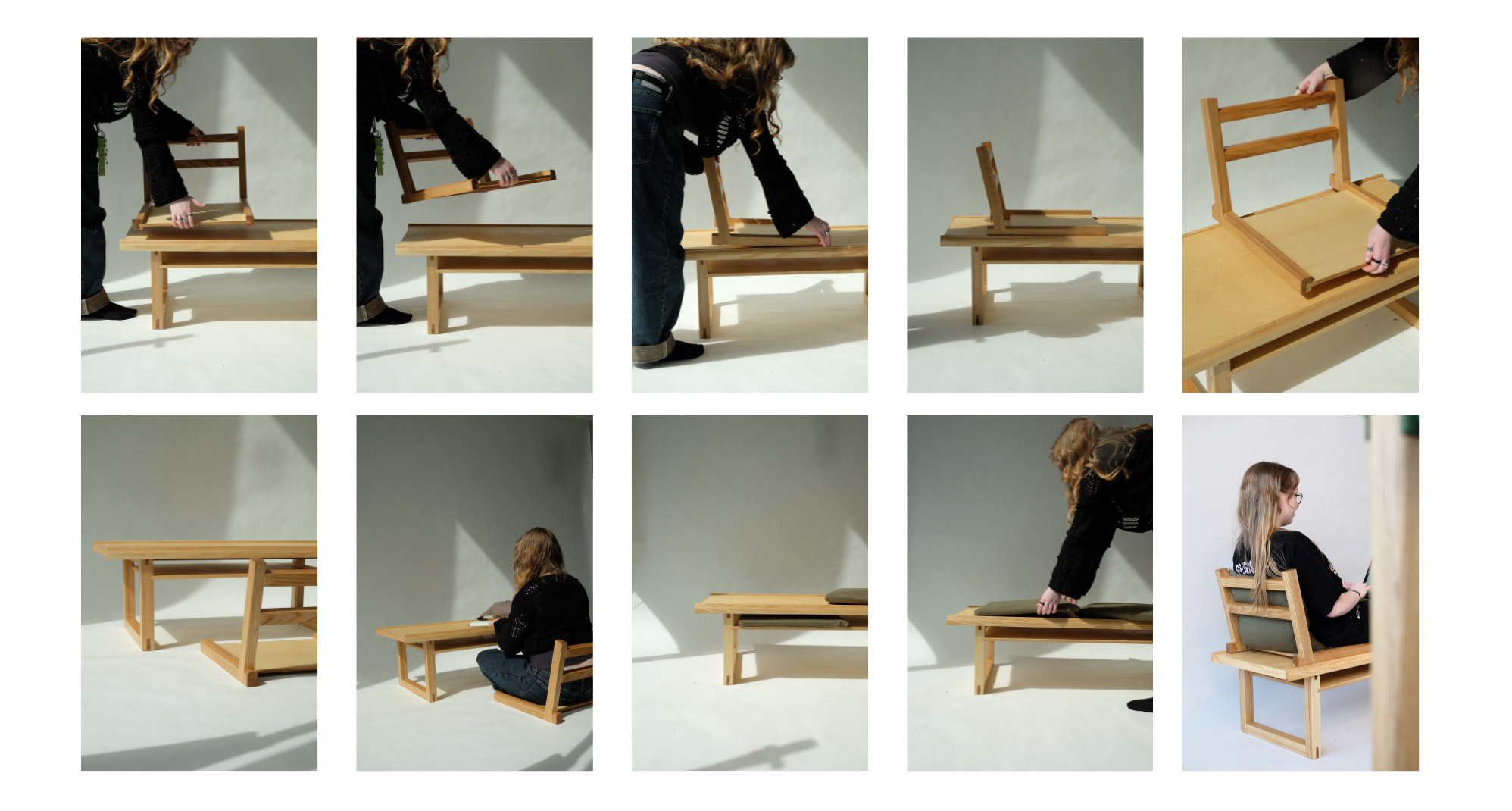
A big goal of mine was to explore actions that involved one simple step for creating this shape-shifting nature and having different configurations to add utility. Most modular systems have overly complicated mechanisms, and I wanted to avoid that and move towards a simpler action.
Shape shifting.
Participatory.
Fluid.
Personalized.
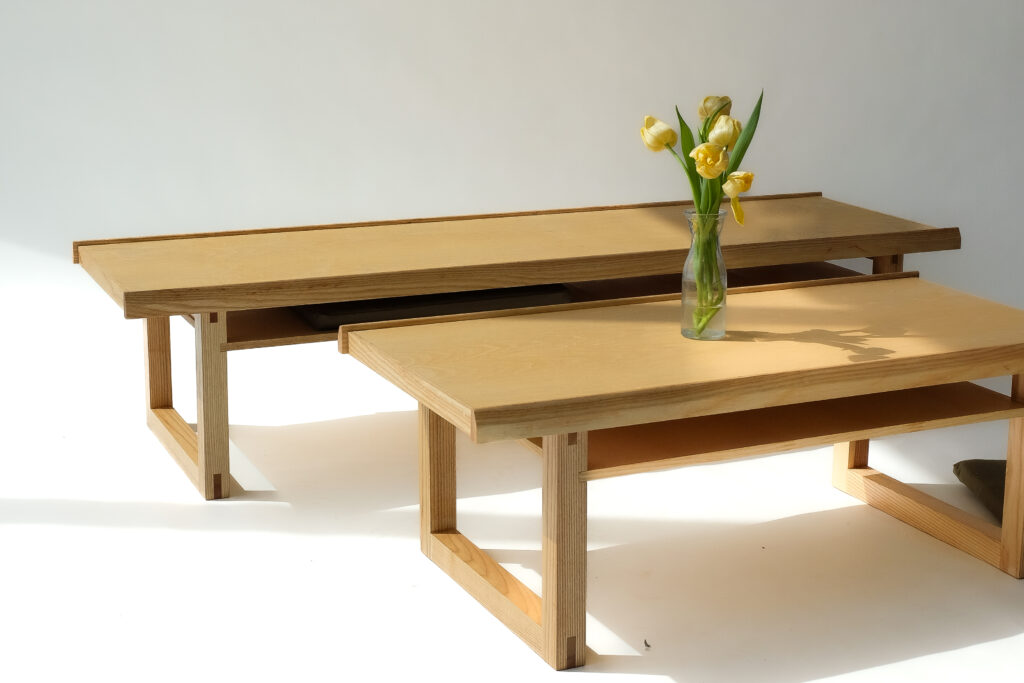
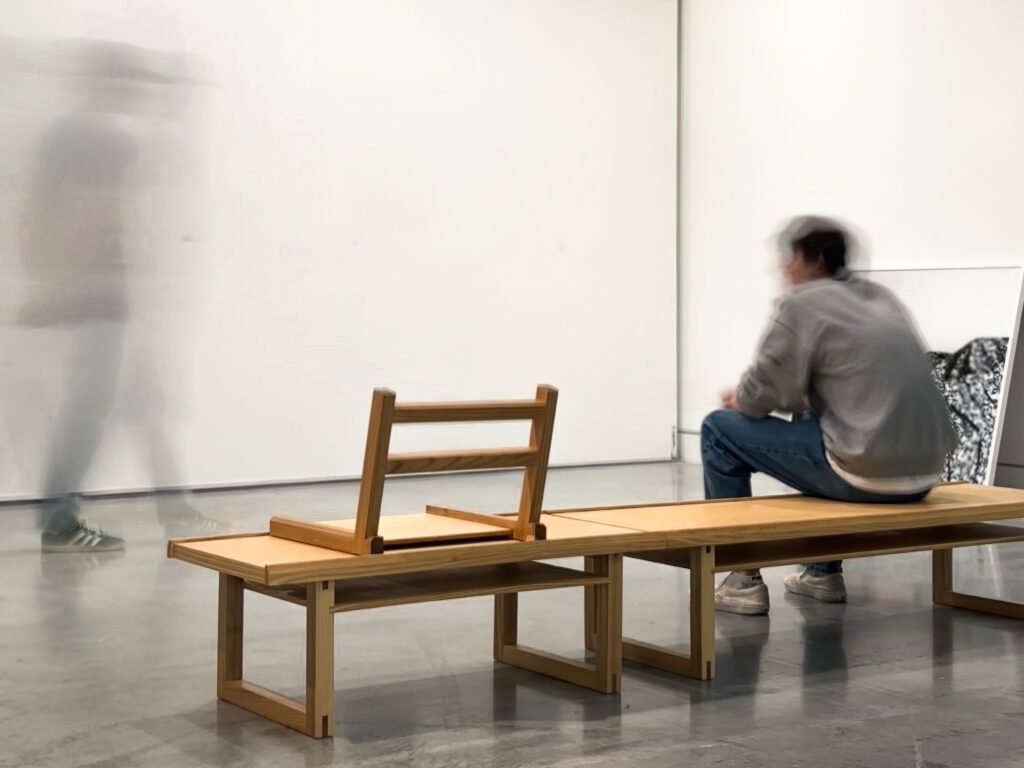
Forms in flux can exist in all those spaces that are beyond our homes.
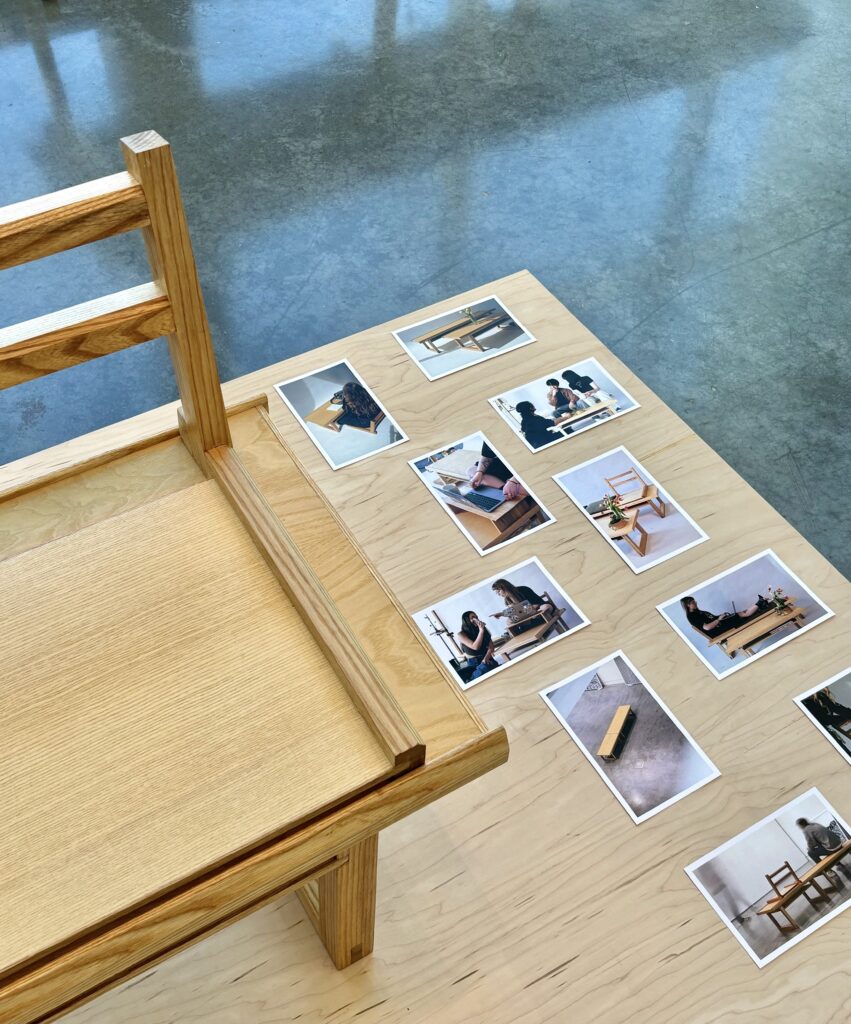
It’s not designed just for one, it’s ready for many. Each part of this system can exist individually or come back to be a cohesive element with the others. It can be used in multiple settings, for many different contexts, and still hold strong to its core idea and values.
Details aren’t just decorative — they’re where design becomes meaningful.
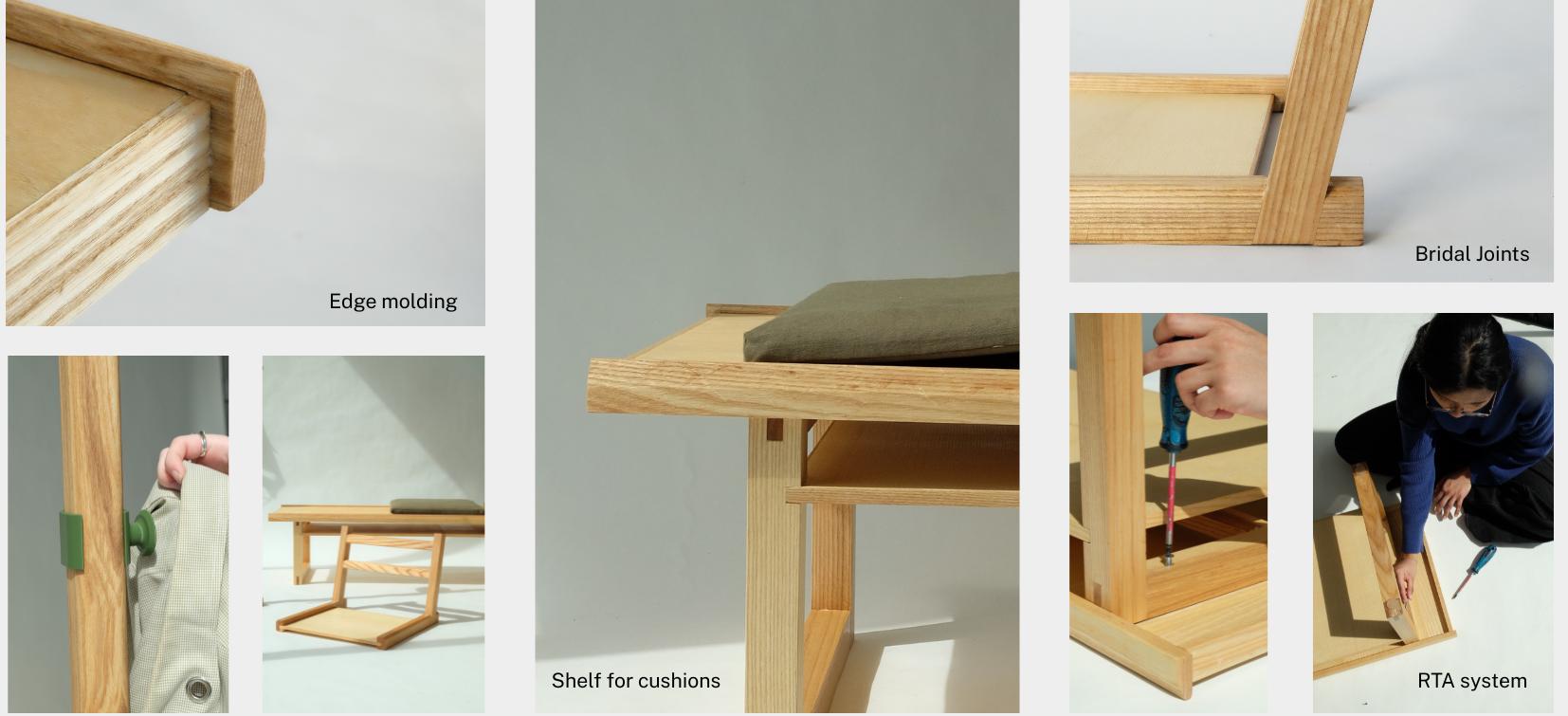
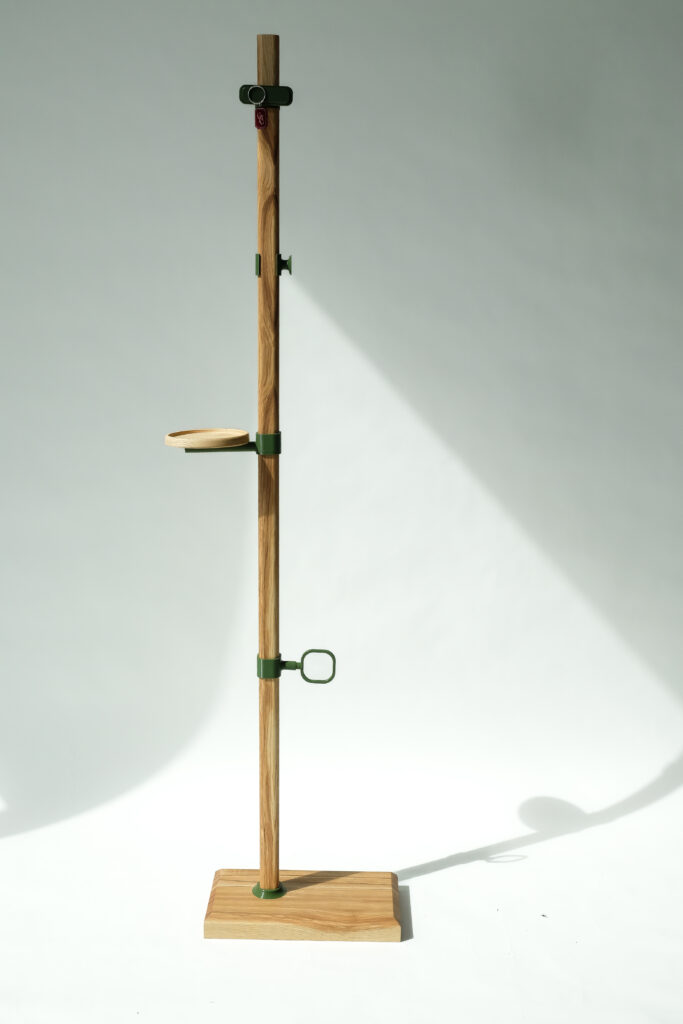
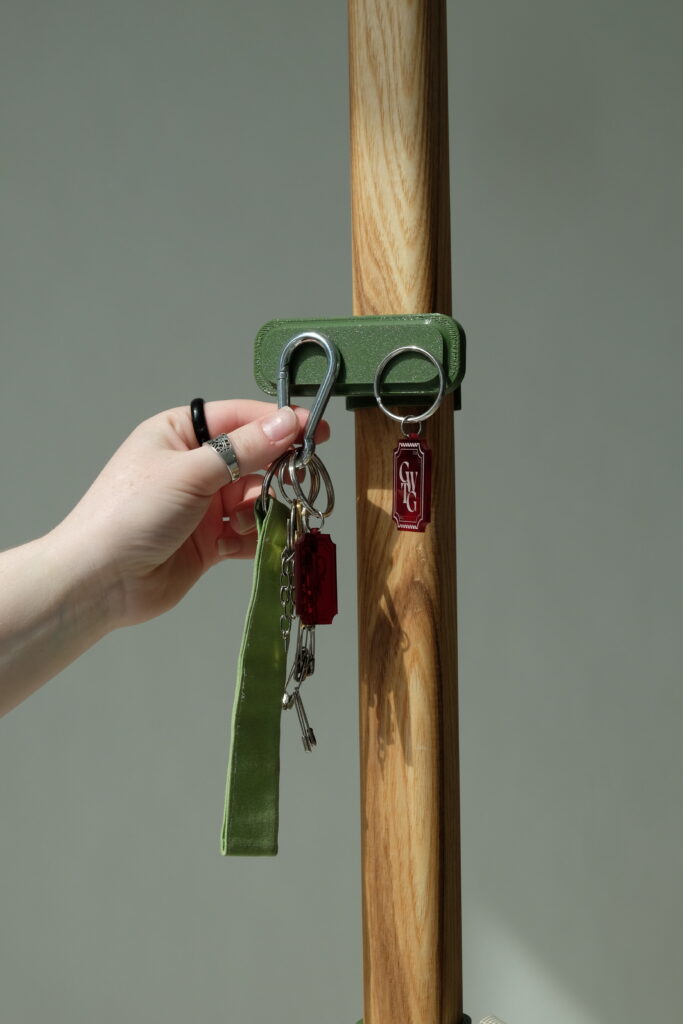
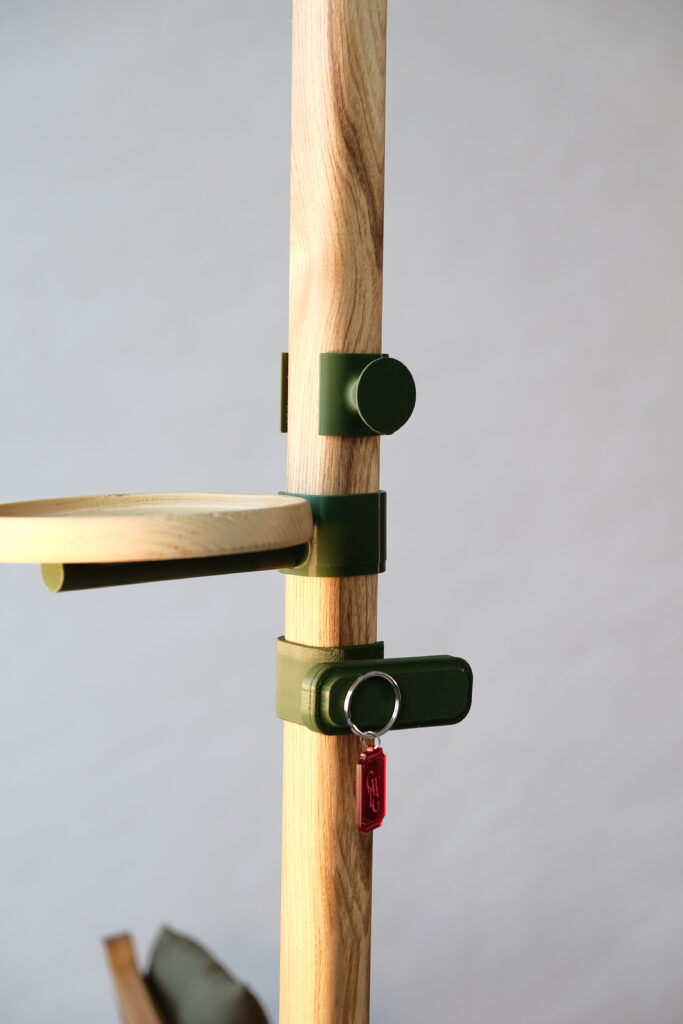
The Utility pole combines the satisfying click from the magnets, to the quick snap of the hooks- these tiny elements have endless possibilities to be designed for your personal needs.
My approach to sustainability through innovation:
“Less but better” living — fewer objects, longer use, adaptable to change.
Ash wood is sourced sustainably in BC and replenishes faster than other wood species, and it lasts forever, creating an heirloom piece that lives through generations.
Promoting an attachment to your furniture: Lightweight plywood makes each piece easy to move, assemble, and adapt, with removable legs and tops for lasting connections.
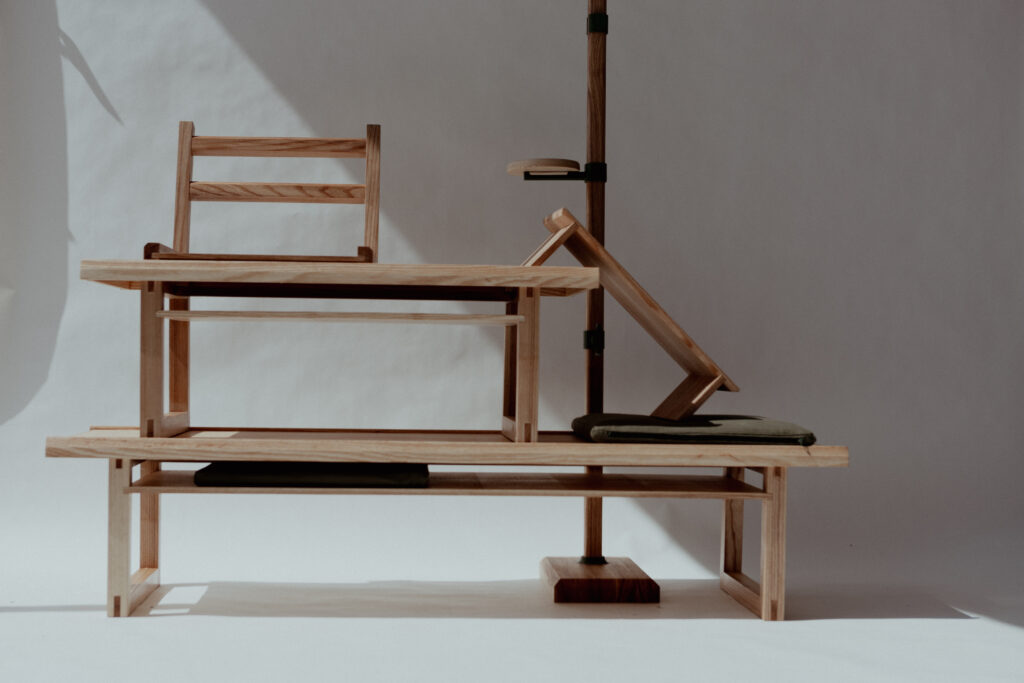
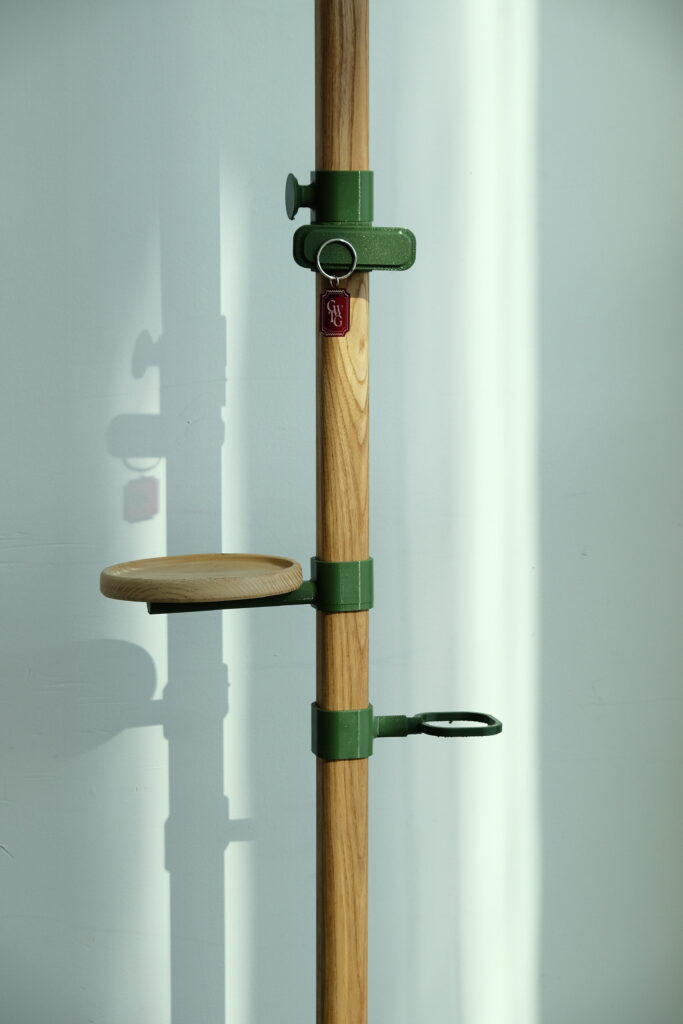
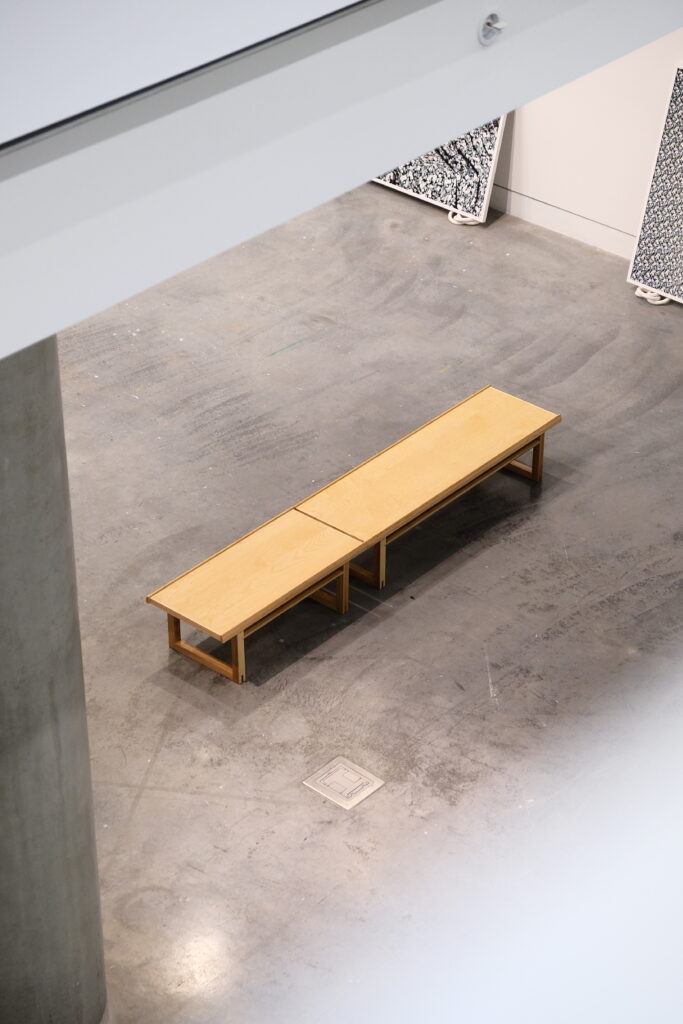
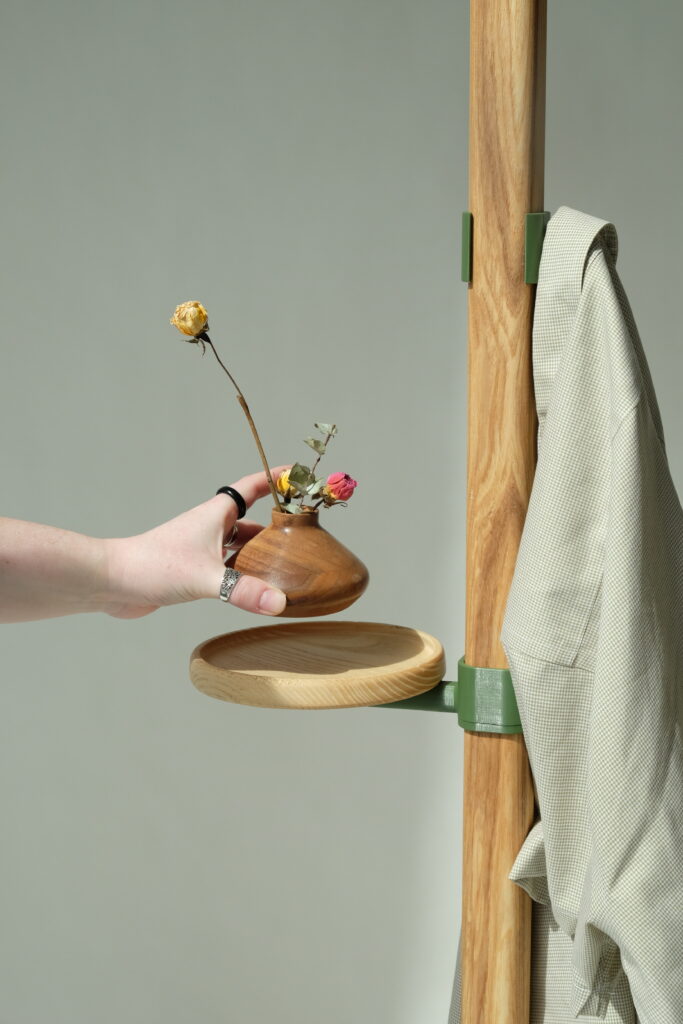
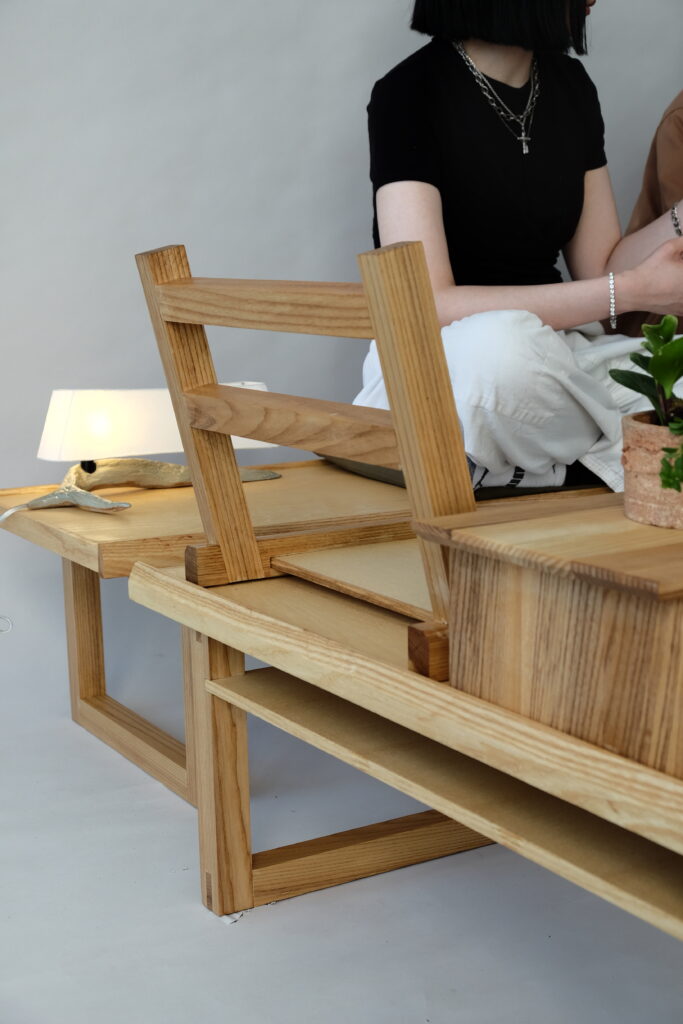
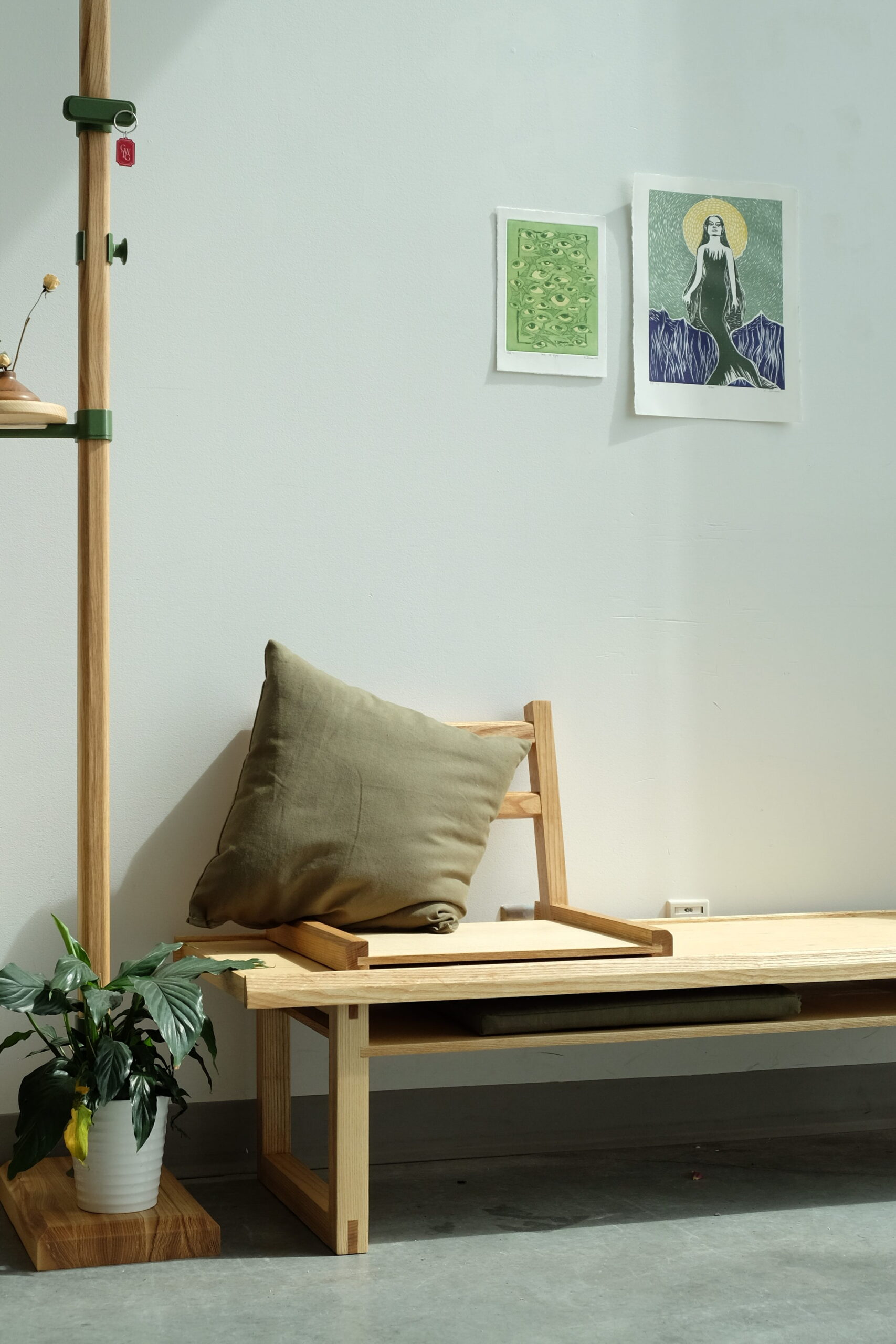
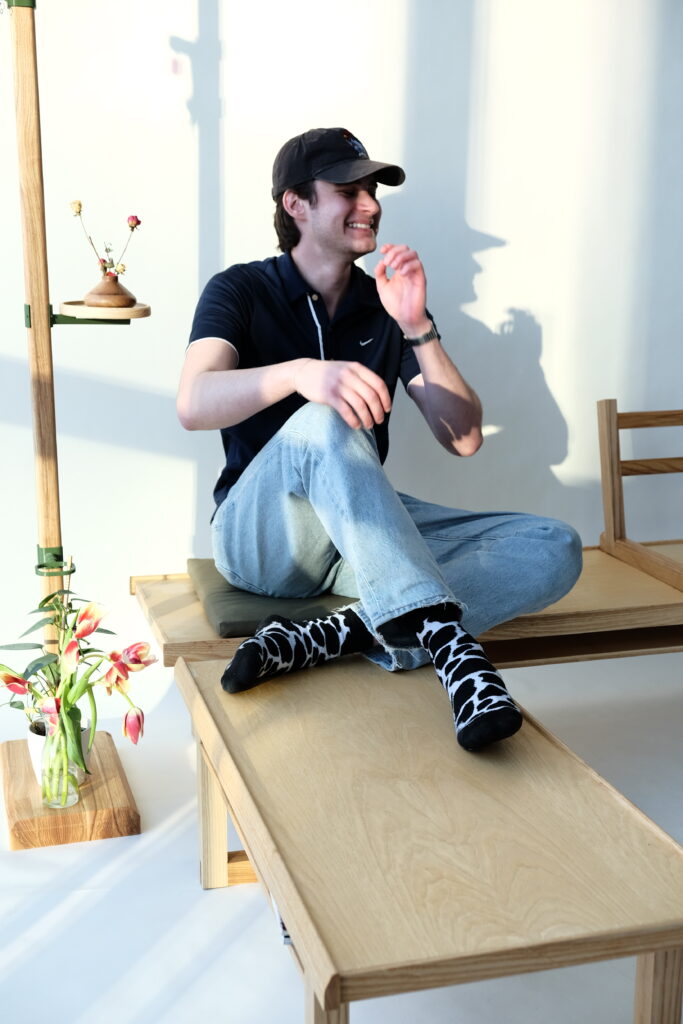
Do we really need that much furniture to live well? As people move toward urban living and smaller homes, this system supports living lighter without sacrificing comfort or functionality.
The circular design process: Sketching to Production and back?
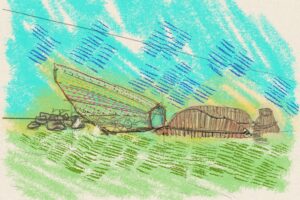
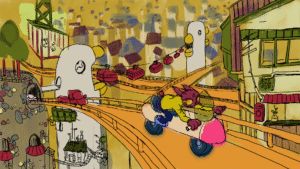
Before I landed on this final set of forms, I went through a couple of iterations and prototypes in the last year, and the ones that stood out for me looked something like this:
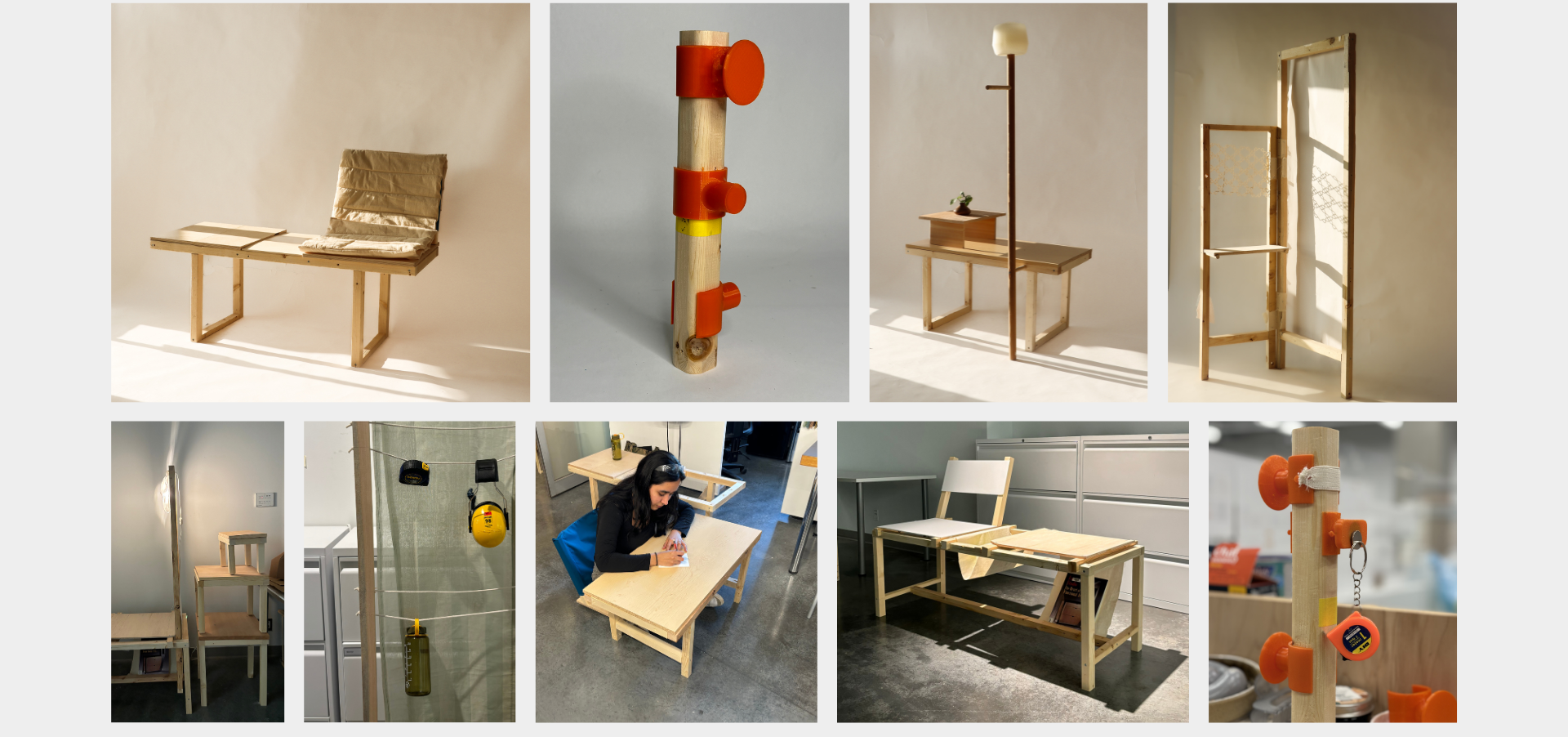
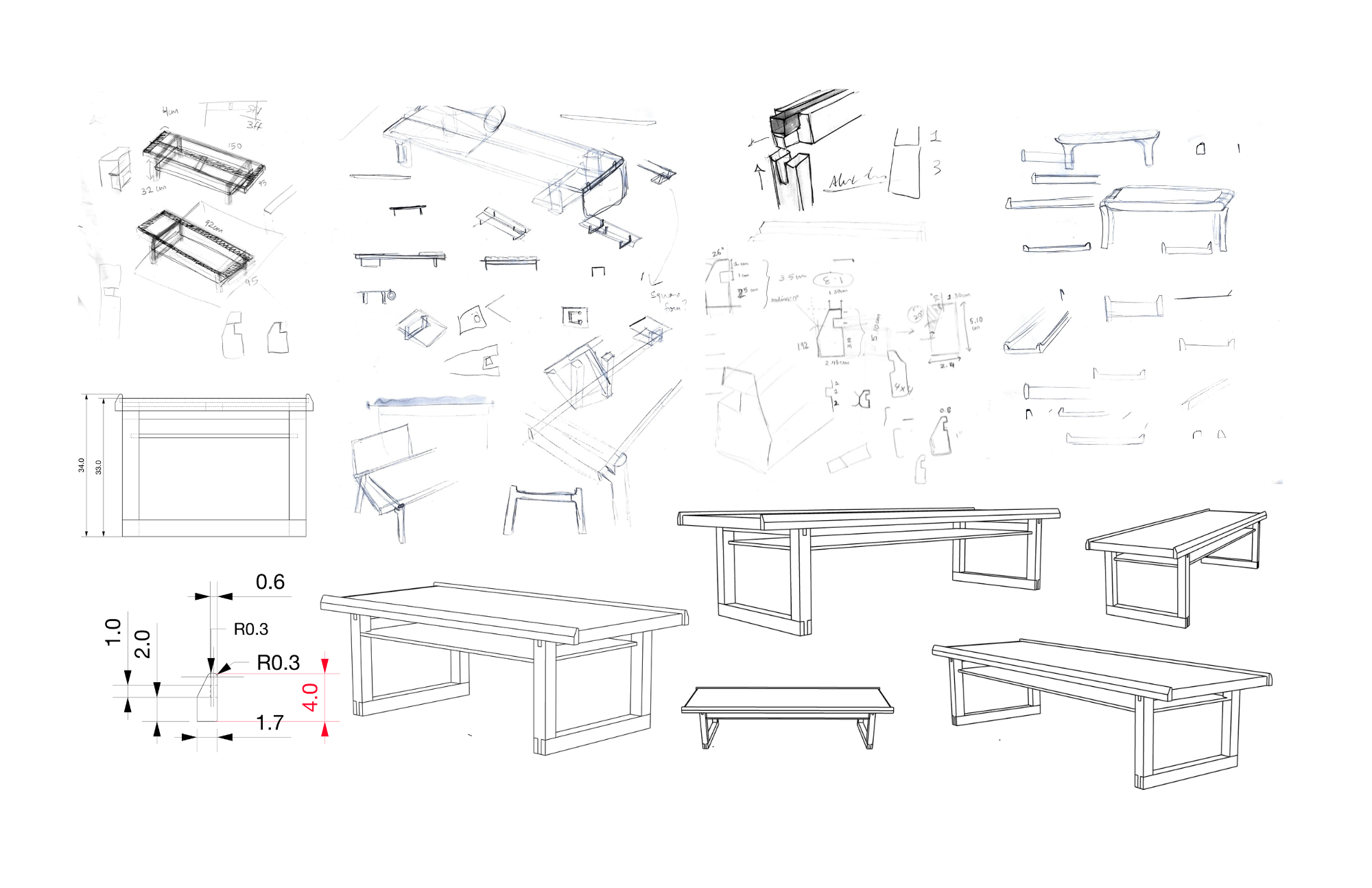
The intersection where textiles, wood, and digital output meet is quite interesting to me, and playing with hard angles and straight lines but adding a touch of softness with the cushions and the curves of the hooks made me realise how strongly the design outcome has been influenced by the materials. When my peers tested it out, I noticed that a certain level of intuition followed their interactions with it. I think that as designers, we cannot be everywhere to explain our thoughts and ideas to users, so knowing that I am close to overcoming that gap was quite a happy moment for me.
Forms in flux has shaped me as a designer, and I have shaped it in turn as a project very close to my heart. The possibilities are genuinely endless, and I am glad to finally share this with the world!