Hangukhwa: Painting in Diaspora
Wol-Un (월운, 月雲)
See it On Campus: Level 2
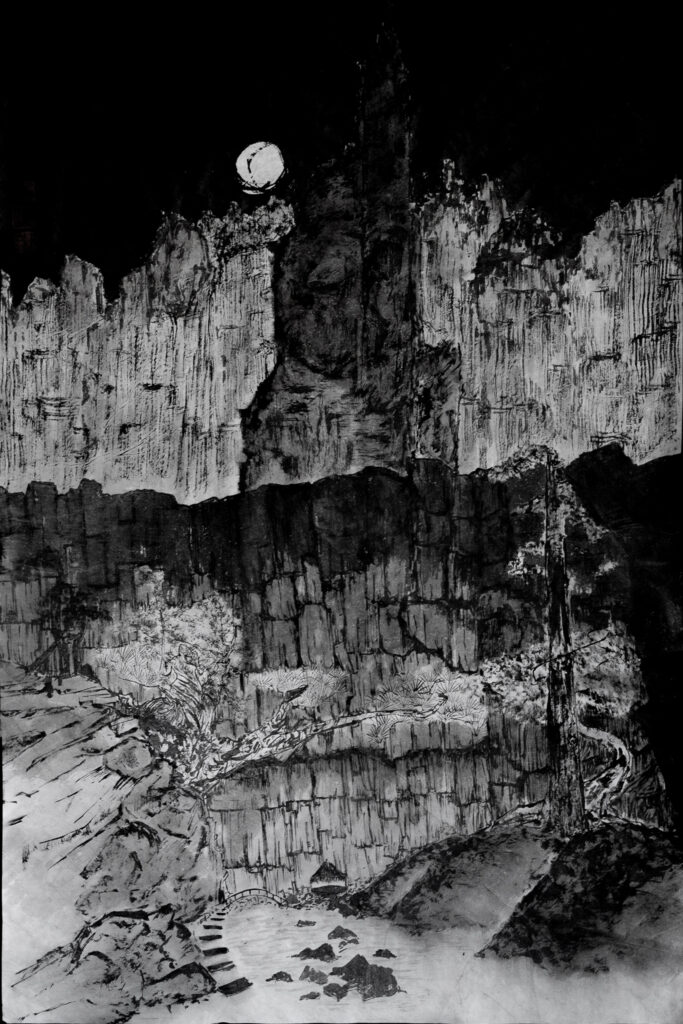
Through hangukhwa (한국화, 韓國畵), or Korean painting, my wish is to contribute to the net beauty of the world. My practice is informed by classical poetry and texts, nature, and a deep infatuation with the materiality of ink. I place a great deal of emphasis on my research, whether the means are academic, experiential, or experimental. Accordingly, my process for painting tends to be rather slow, which places my work in direct friction with the expectations of modern rapidity. I find this intentional method of making more than just gratifying, but an essential component to my practice, and how I live my life.
By working in ink, I am honoured to continue the legacy of centuries of scholars and artists who have come before me. However, while I hold this lineage in the highest regard, I remain highly critical of the antiquated political and social ideologies embedded in the visual language of pre-modern ink, masquerading as tradition. It is a disservice to any medium when its artists fail to innovate on what has come before, and I refuse to fail this medium, to which I have dedicated myself.
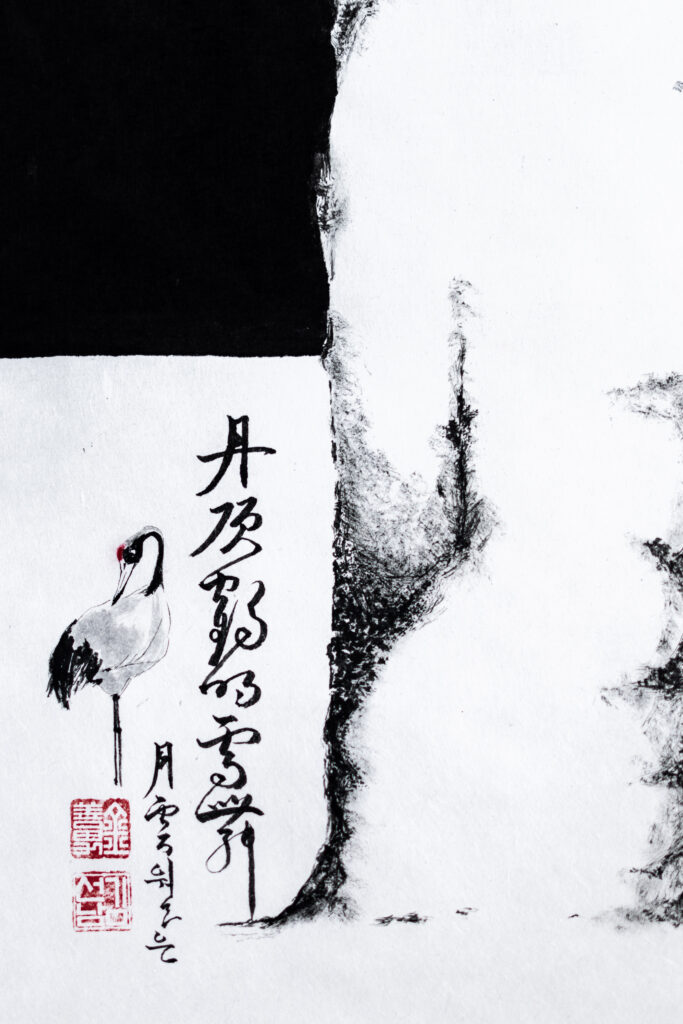
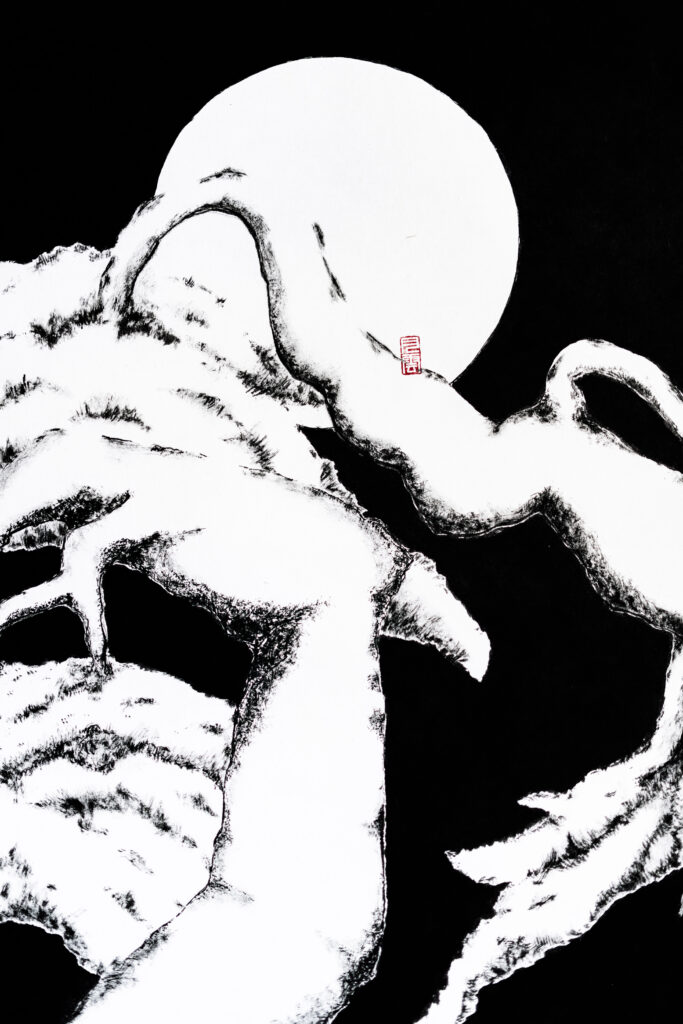
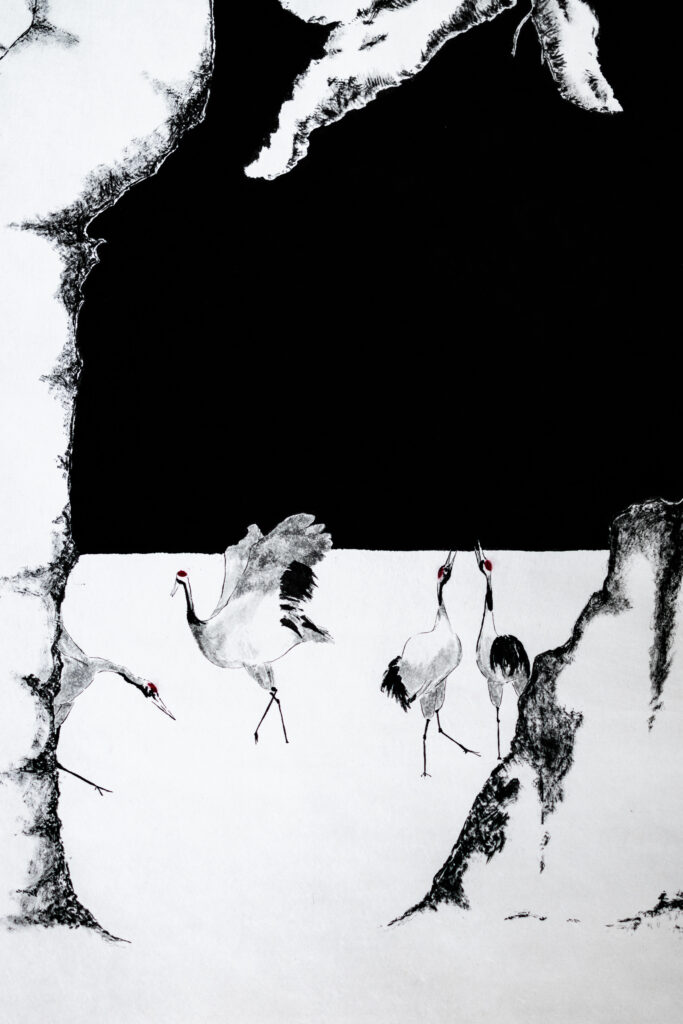
The Snow Dance of the Red Crowned Crane
丹頂鶴的雪舞
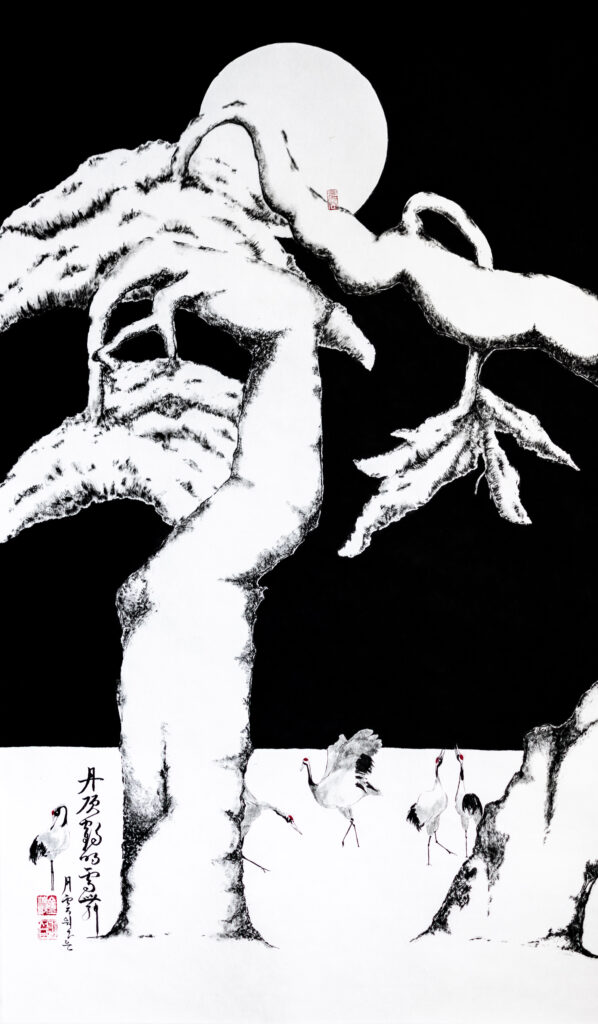
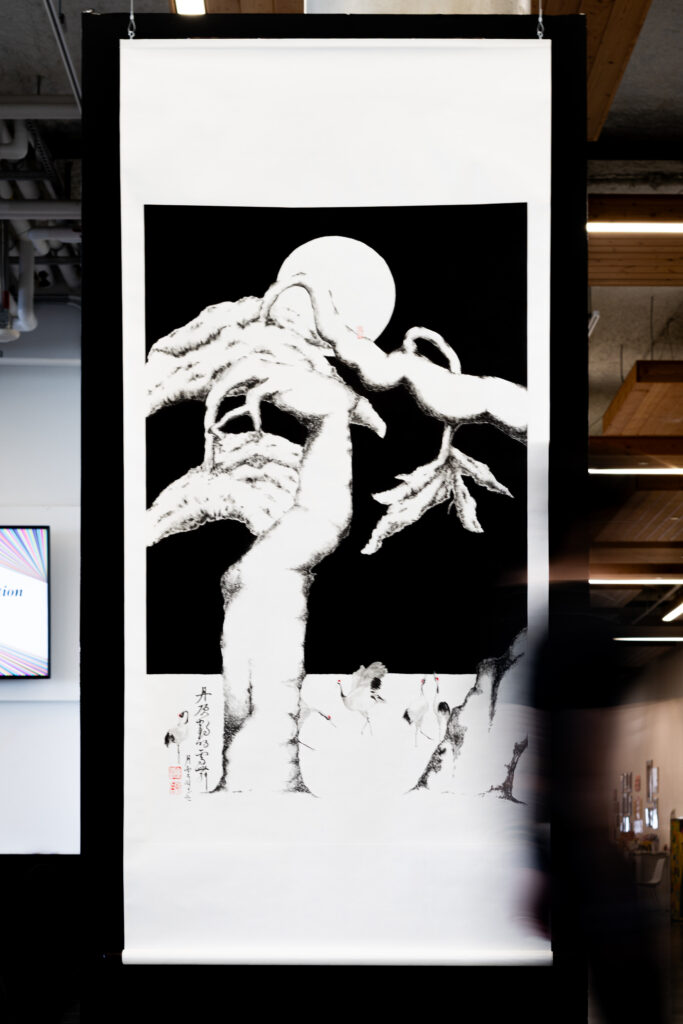
丹頂鶴的雪舞
Ink and Colour on Hanji and Silk Scroll 86″x 40″
(Korean Mulberry Paper)
2025
Archive
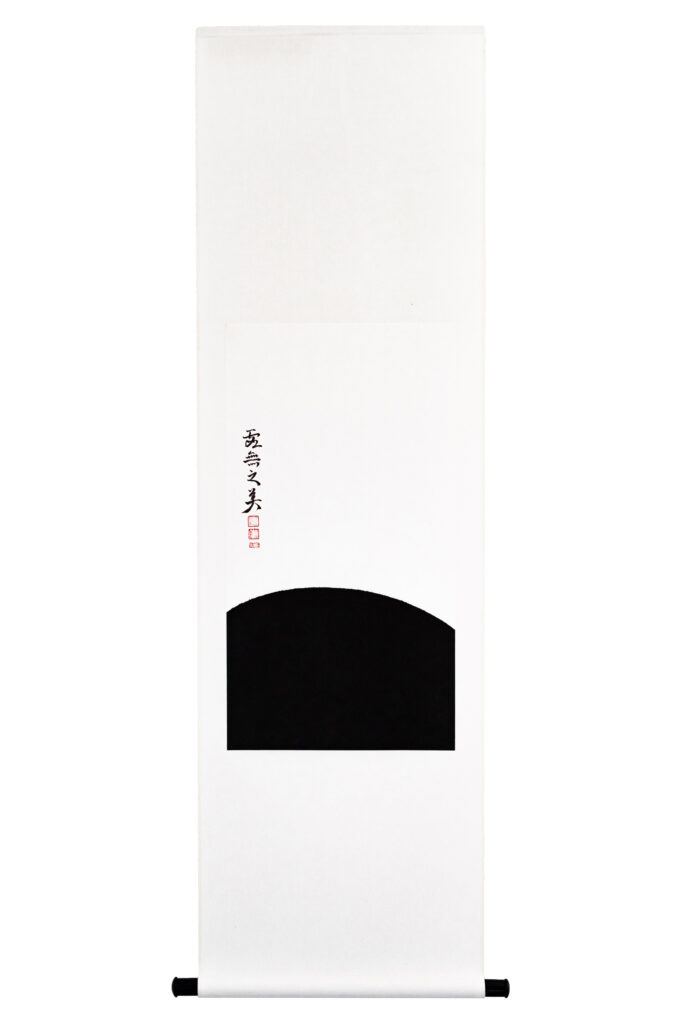
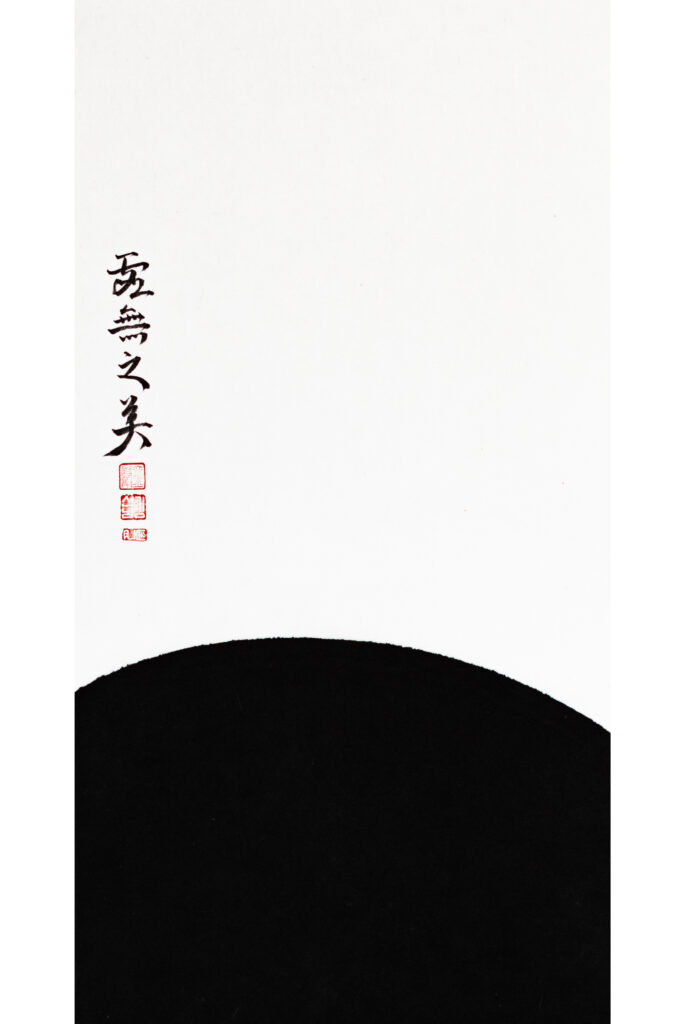
虚無之美
Ink on Hanji and Silk Scroll 56″x18″
(Korean Mulberry Paper)
2024
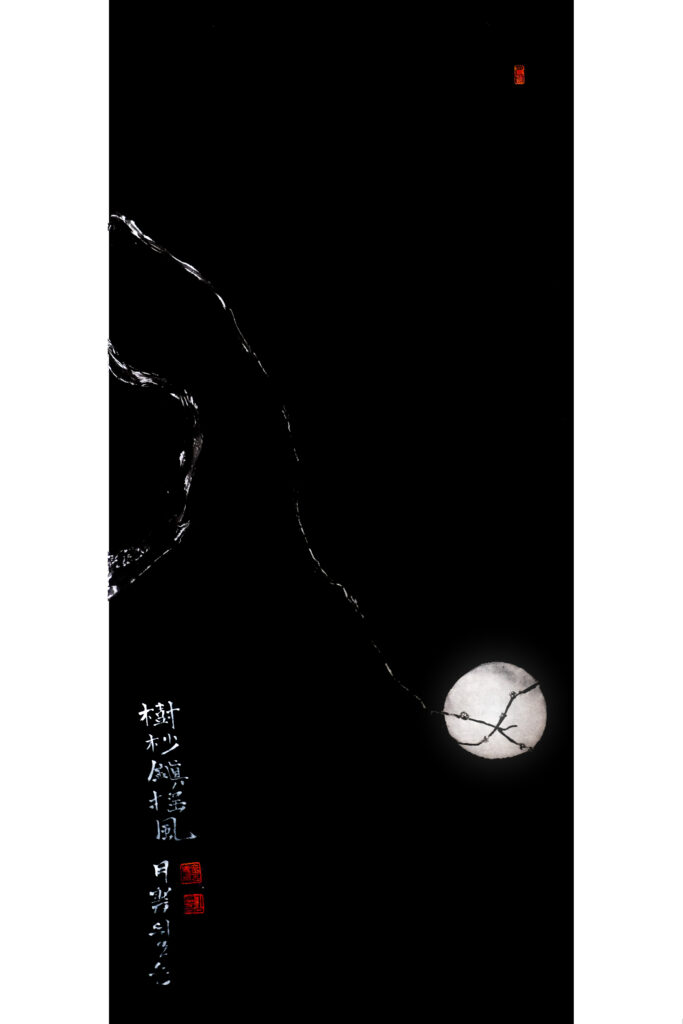
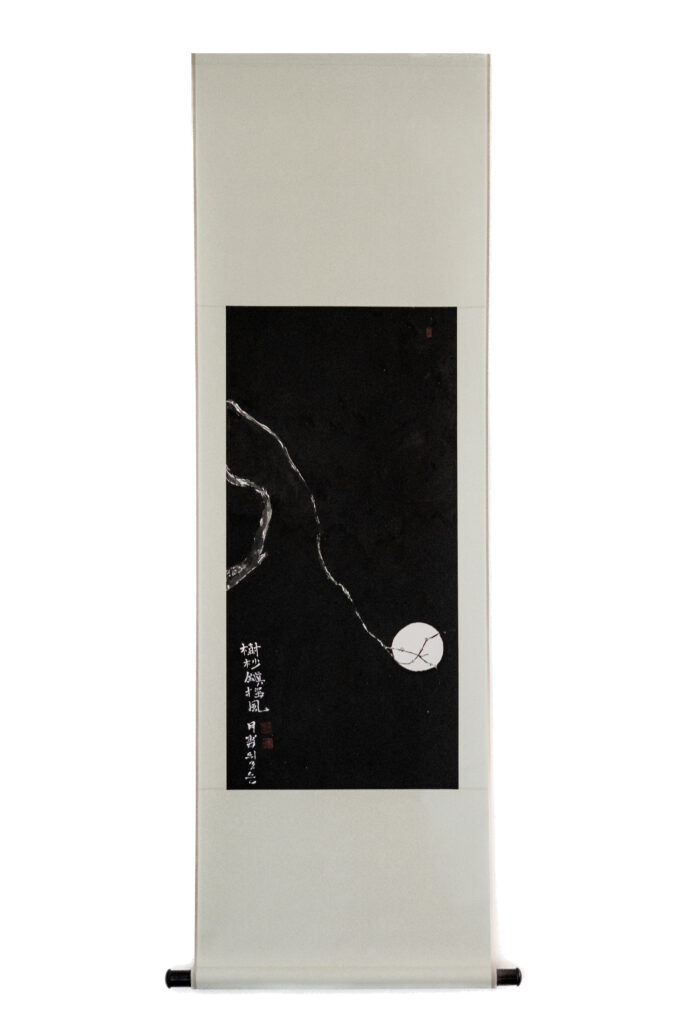
樹杪鎭搖風
Ink on Rice Paper and Silk Scroll 56″x18″
2024
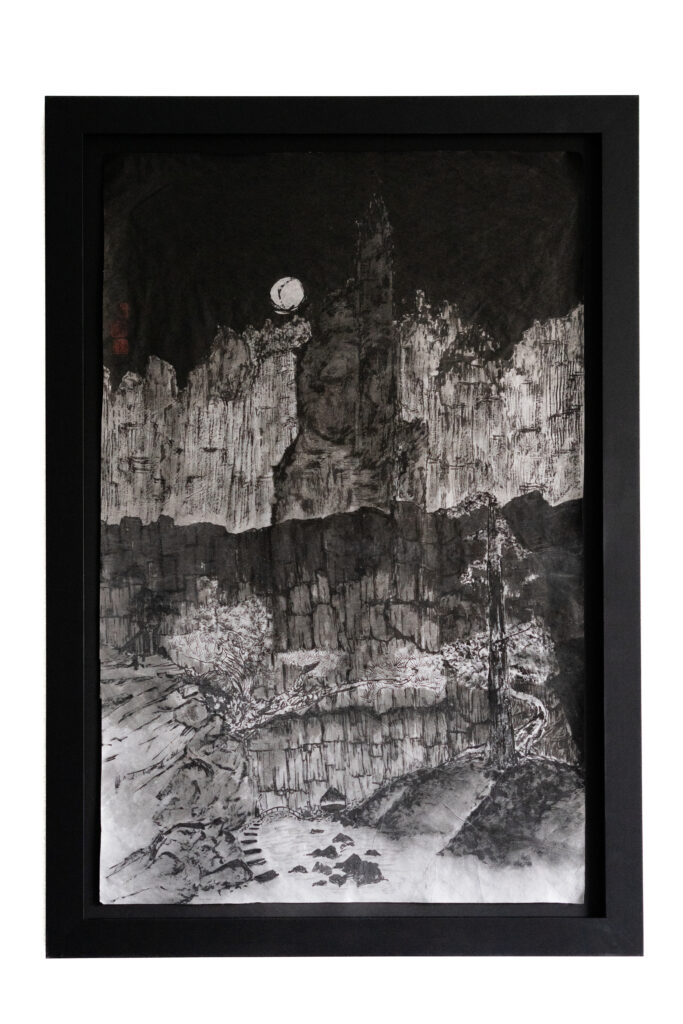
Ink on Hanji Framed 36″x24″
2024
My World in Ink, Vault Gallery, Postmark Center of the Arts, Auburn, WA. (2024)
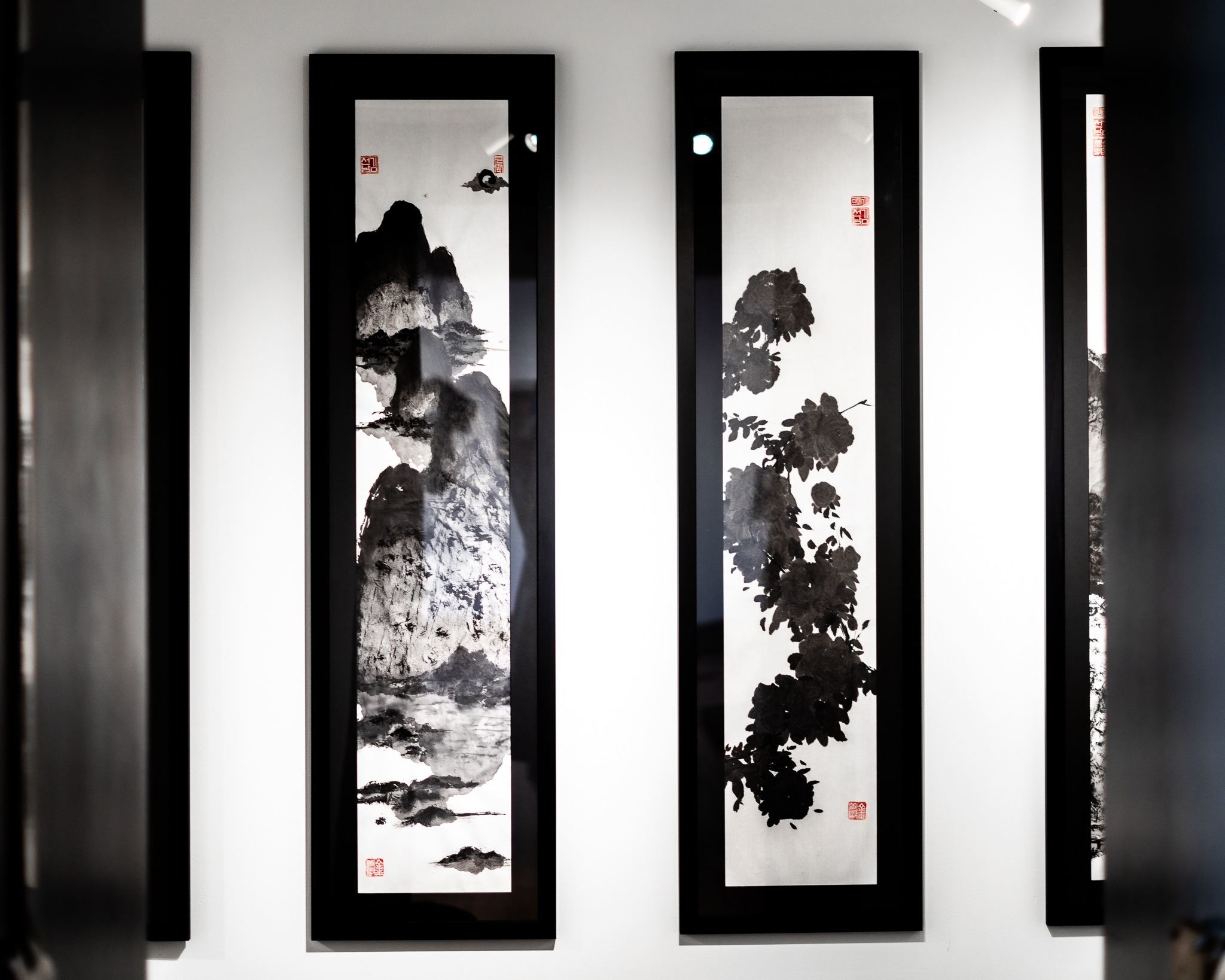
Ink on Rice Paper 58″x 19″ 2024
Ink on Rice Paper 58″x 19″
2024
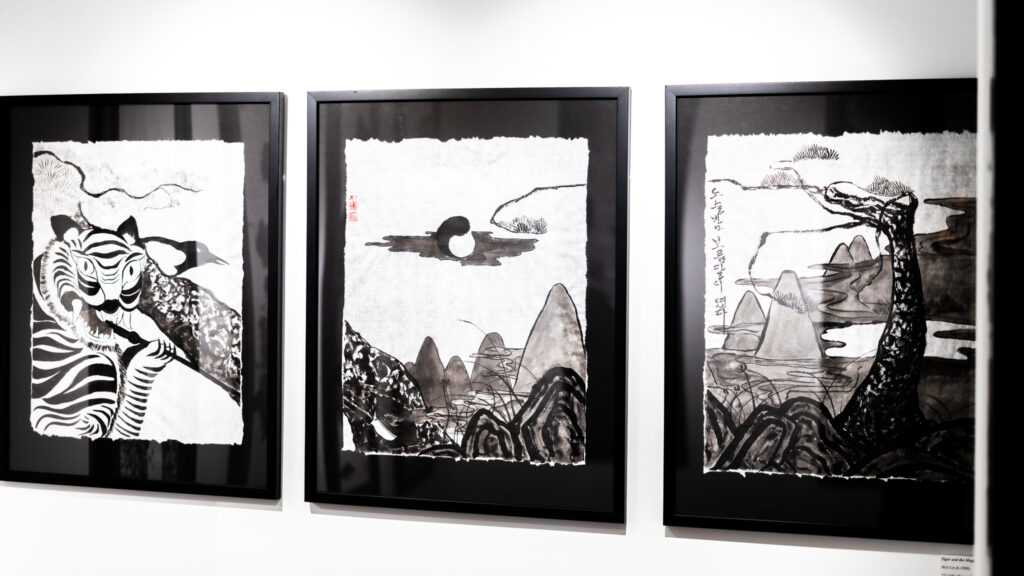
(Triptych) Ink on Hanji 22″x28″
(Korean Mulberry Paper)
2024
I have a natural affinity towards the genres of sipjangsaengdo (십장생도, 十長生圖) and hojakdo (호작도, 鵲虎圖), which refers to the ten symbols of longevity and tiger and magpie paintings respectively. These genres are primarily associated with minhwa (민화, 民畵) or the people’s paintings, which were popularized by the lower classes of Korea’s traditional caste system during the Joseon Dynasty (1392-1910). As a self taught painter living in diaspora, I feel closely related to these anonymous artists of Joseon for they painted in spite of their inability to receive any formal education or training, unlike the professional artists of the royal court who primarily worked in seohwa (서화, 書畵) or ink painting and calligraphy. Minhwa artists drew inspiration from everyday life, as well as nature, mythology, and the values they wished to carry forward. By synthesizing the thematic ideas of Korean folk painting with the dynamic visual language of ink painting, I hope to discover what lies within the dialectics of the various dominant styles of Korean painting throughout the centuries.
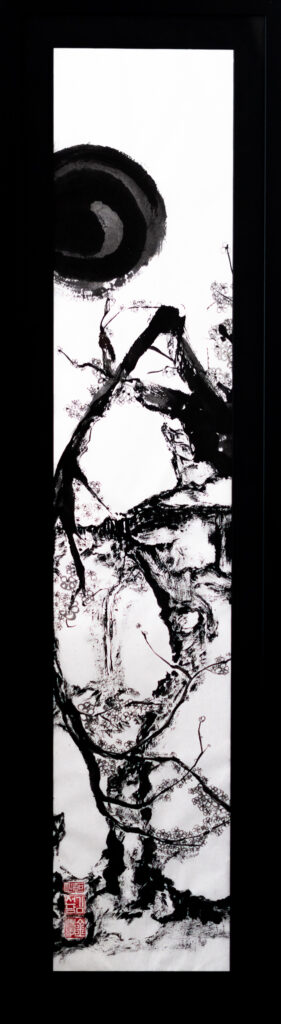
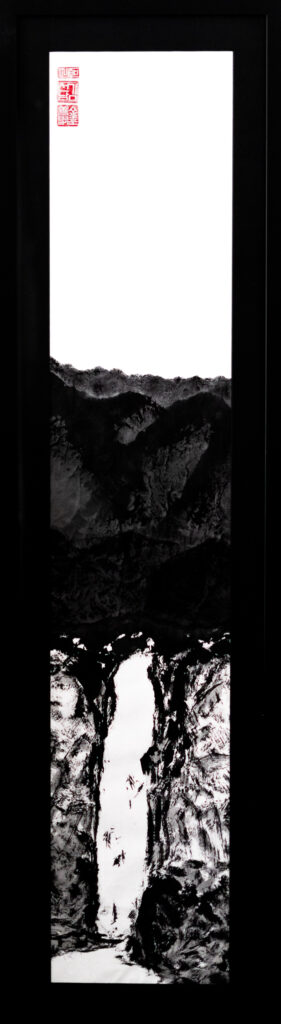
Ink on Rice Paper 58″x 19″
2024