Paper Rafts
Jade Kiko Toth
See it On Campus: Level 2
Artist Statement
My work explores the use and re-use of paper as a source of collective memory or knowledge tied to one’s heritage. I came across this topic while looking at my surroundings, in an immigrant household with the mindset that nothing can be wasted and deserves a second role in our lives. When looking at many diasporic communities, you may come across this scarcity mindset and the habits that follow. This work is based on the habits of my family which also tie to the history of papermaking in Japan.
Historically, paper was made by farmers as a way to ensure an income over the winter and utilize any leftover space in their fields. As the paper industry grew, paper makers would turn scraps into paper mache daruma and miharu dolls. This collection of work engages with this history as it has transformed through the movement of people and a different set of circumstances and materials. The Japanese paper tradition is extensive, it had been used in art, architecture, ceremonies, theatre, fashion, and toys.
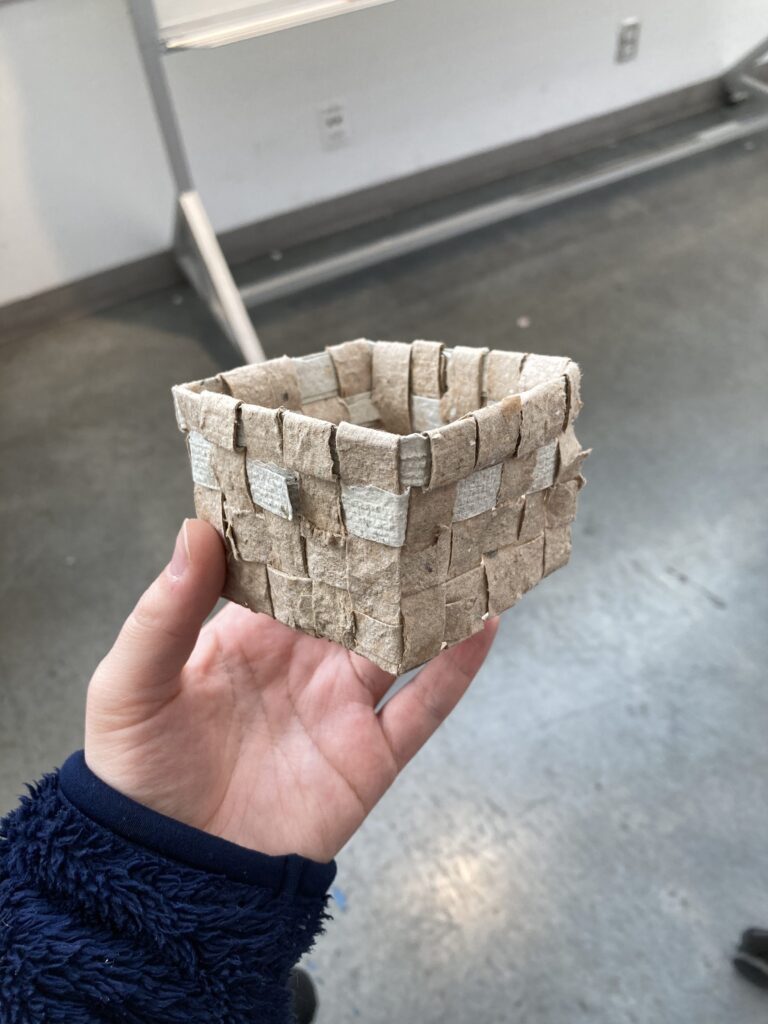
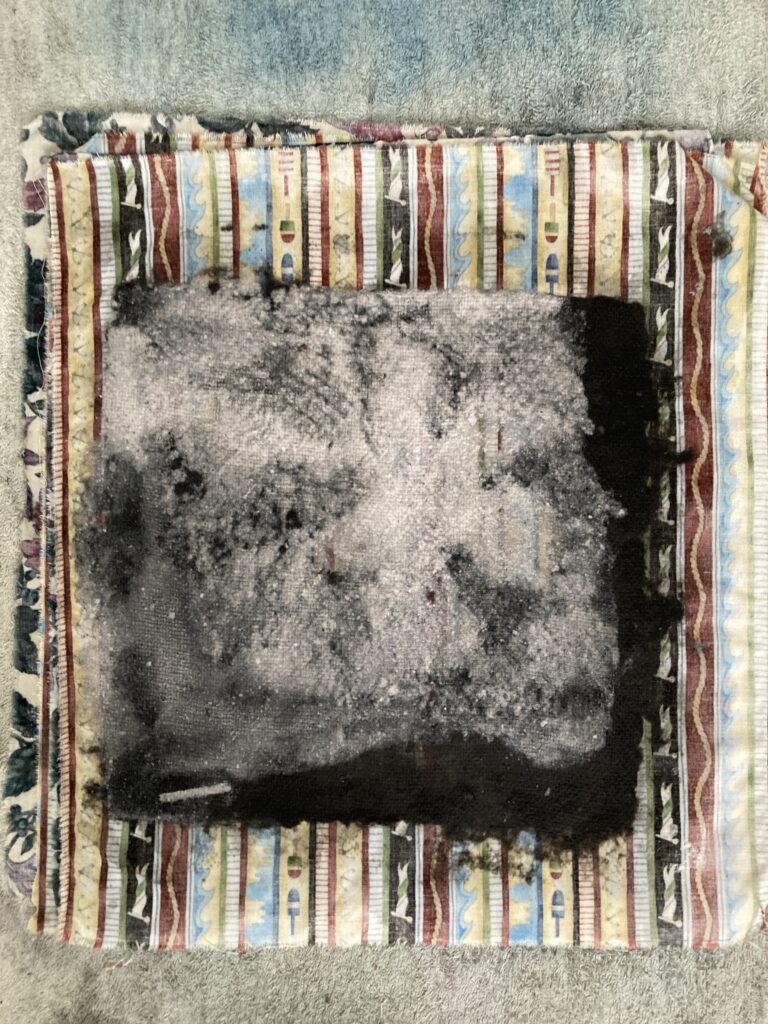
The wide range of uses is inspiring and speaks to a resourcefulness that continues to be passed down. This project was motivated by those varied modes in historical papermaking to consider the full potential of the recycled paper I was working with.
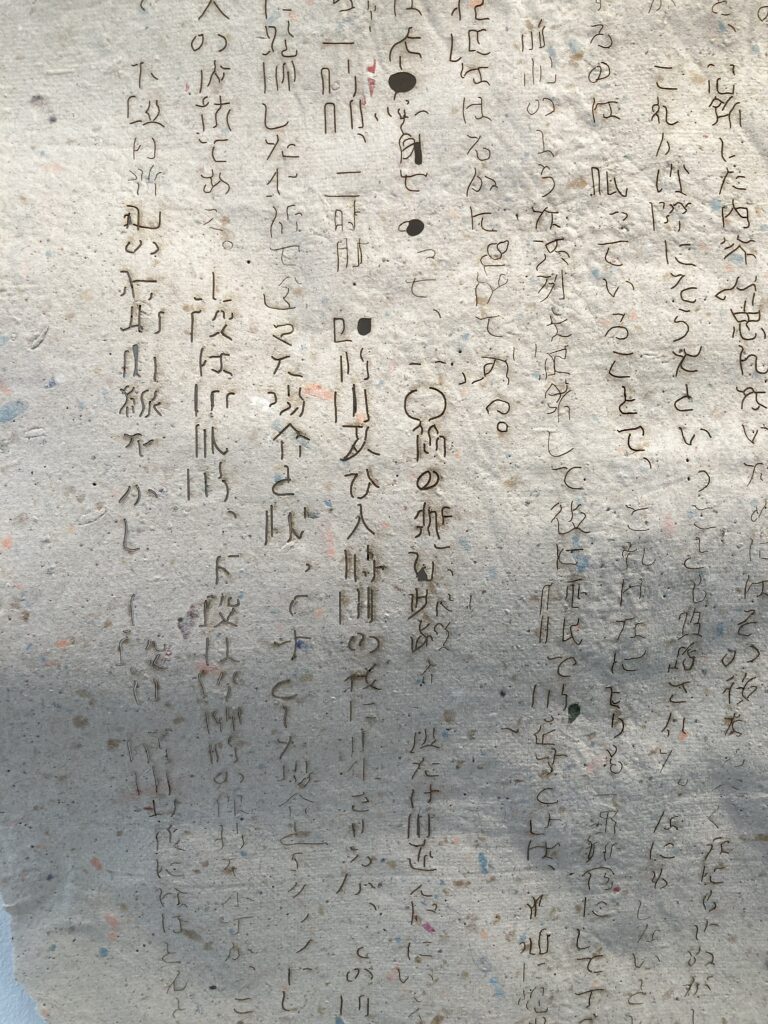
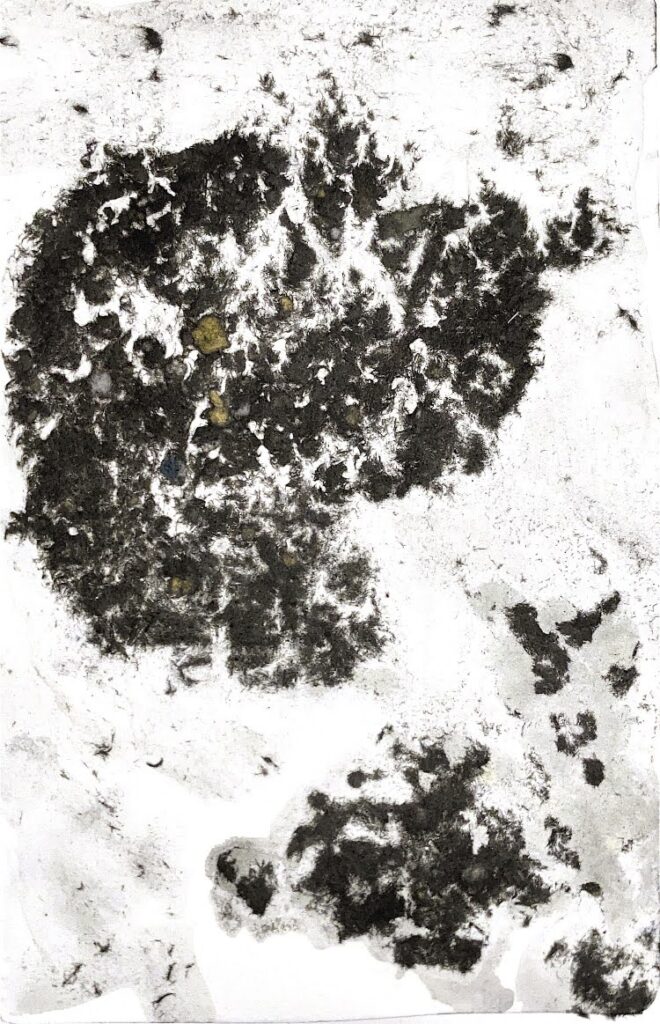
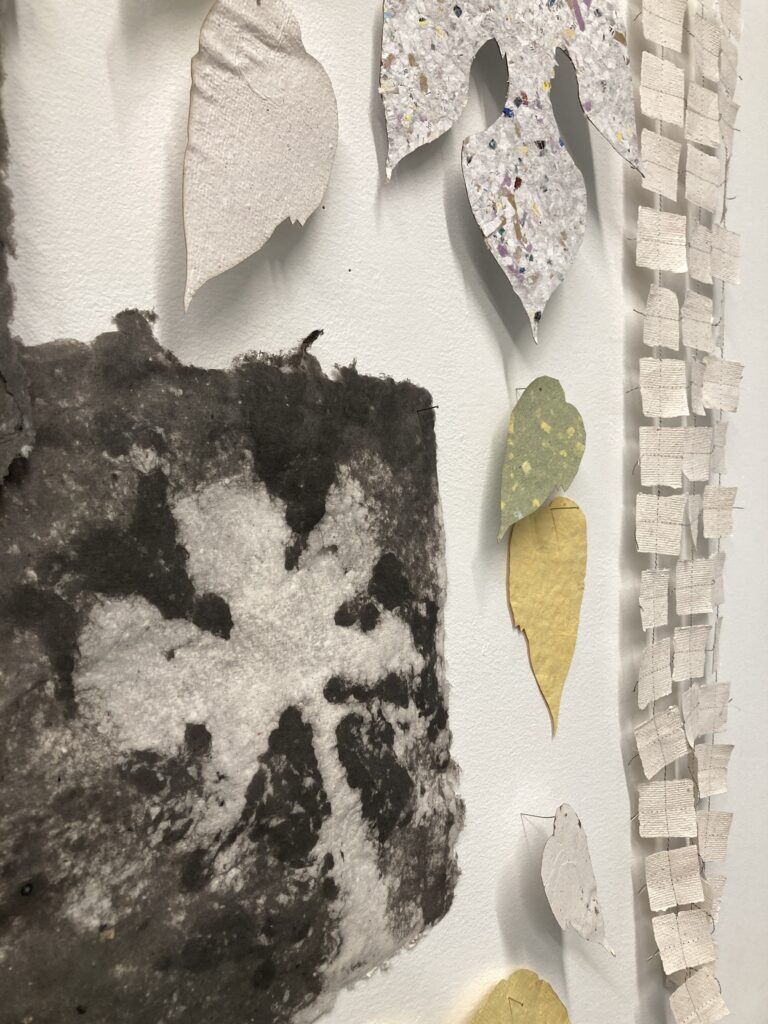
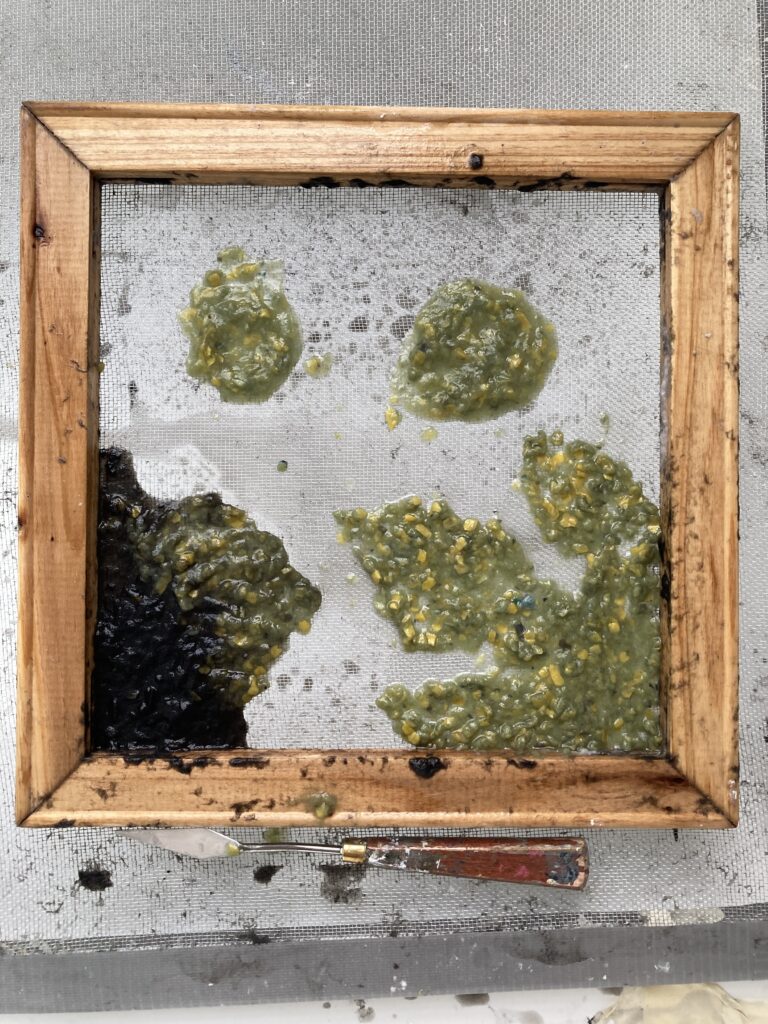
This area of my work deals with the craft of papermaking through various explorations in papermaking which included pulp images, texture, transparency, and text.
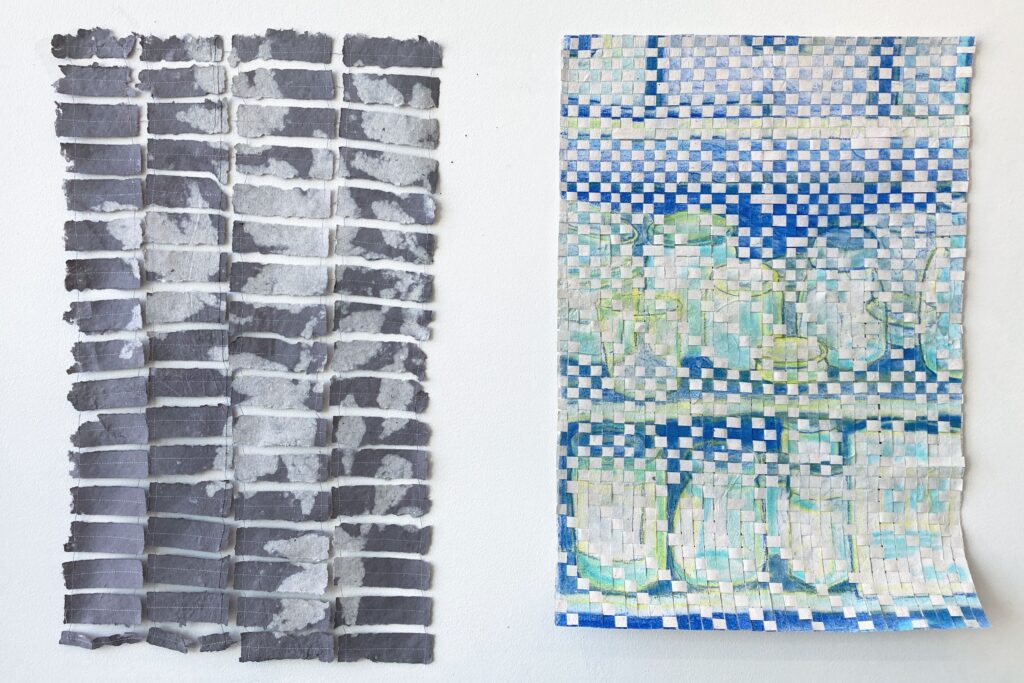
The results of the exploration act as a window into the process itself, to the fibres and recycled materials which make up the rest of the work are on full display. Transparency and fragility play a large part in this work as a way to expose the craftsmanship of the paper, revealing inconsistencies and the mesh framing used in its production. The sight of the surviving text and printed designs leaves an impression of their reappropriation into this project. The finished installation is a documentation of my experiments and of the materials and processes of papermaking as a form of craft and technology. Some of the material trials seek to transform the recycled paper even further, through sewing, weaving, and laser cutting. The woven and sewn pieces make an attempt towards paper as fabric, following historical Japanese ‘washi’ paper textiles and clothing. The woven piece is both a ‘fabric’ and a drawing surface, the warp and weft being used to obscure parts of the image. The image is of my stash of reused single-use plastic containers, my contribution to this generational scarcity mindset. Through the act of weaving this drawing into the paper I am making a symbolic addition to a collective history of reusing, recycling, and resourcefulness.
This work is highly influenced by my background and personal experiences. I grew up in a low income, single-parent, immigrant household here in the lower mainland. With this mix of circumstances, I was raised observing my mother’s system for a clean, efficient, and cheap household; reusing newspaper to pack fragile items then reusing it again to line the cabinet under the sink, holding onto yogurt containers to store leftovers, and plastic shopping bags to reuse as garbage bags. Even as a child I understood the role uncertainty had in our lives and that these acts were one small way to save money and survive. Now as an adult in a more stable environment, clutter, and the satisfaction that comes with successfully repurposing an item still bring me comfort.