Islamic Modern Medicine in the 10th Century
Dima Husein
See it On Campus: Level 2
Mary Plumb Blade Award — Winner
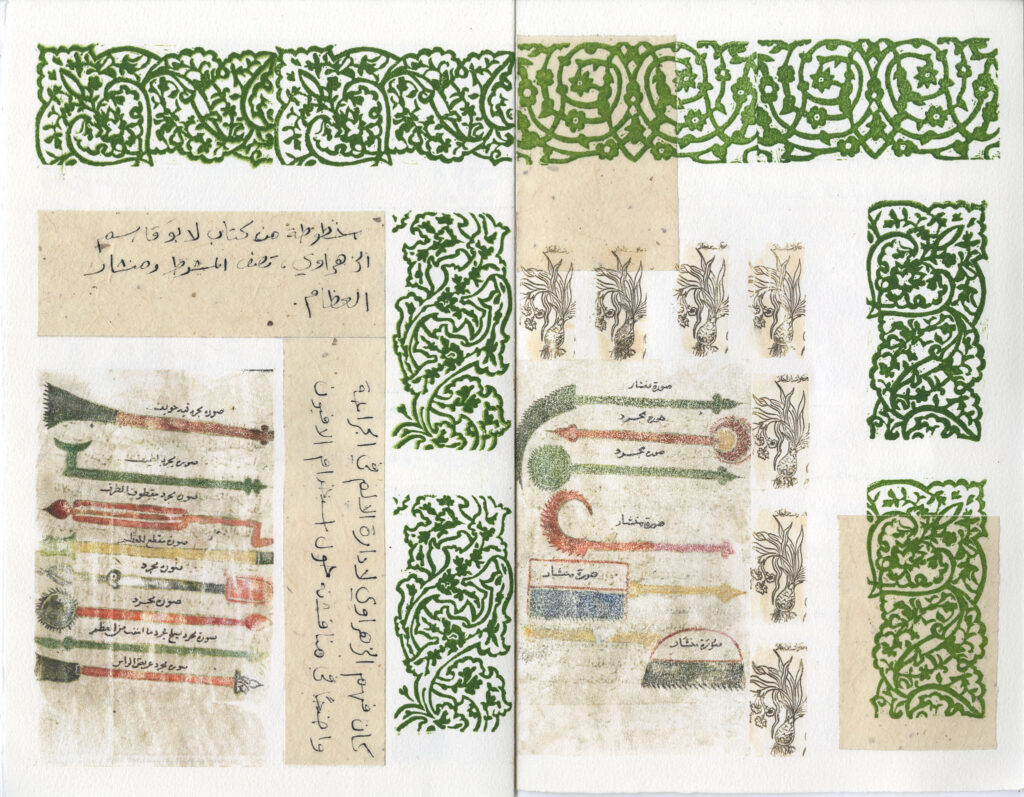
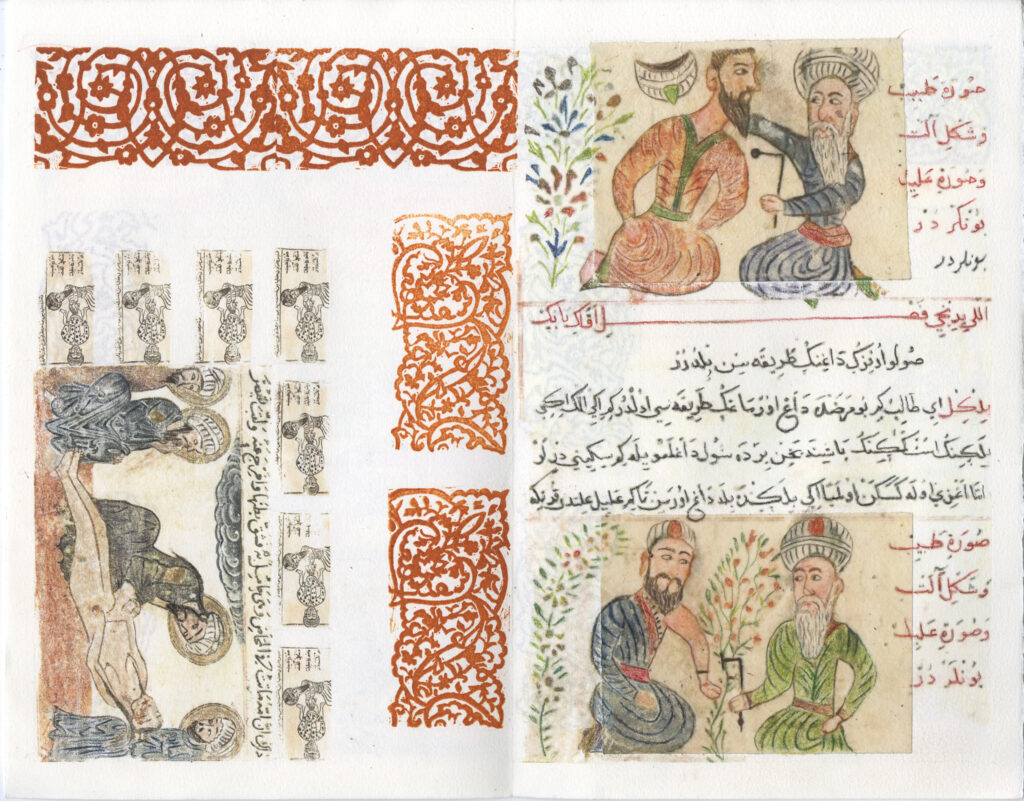
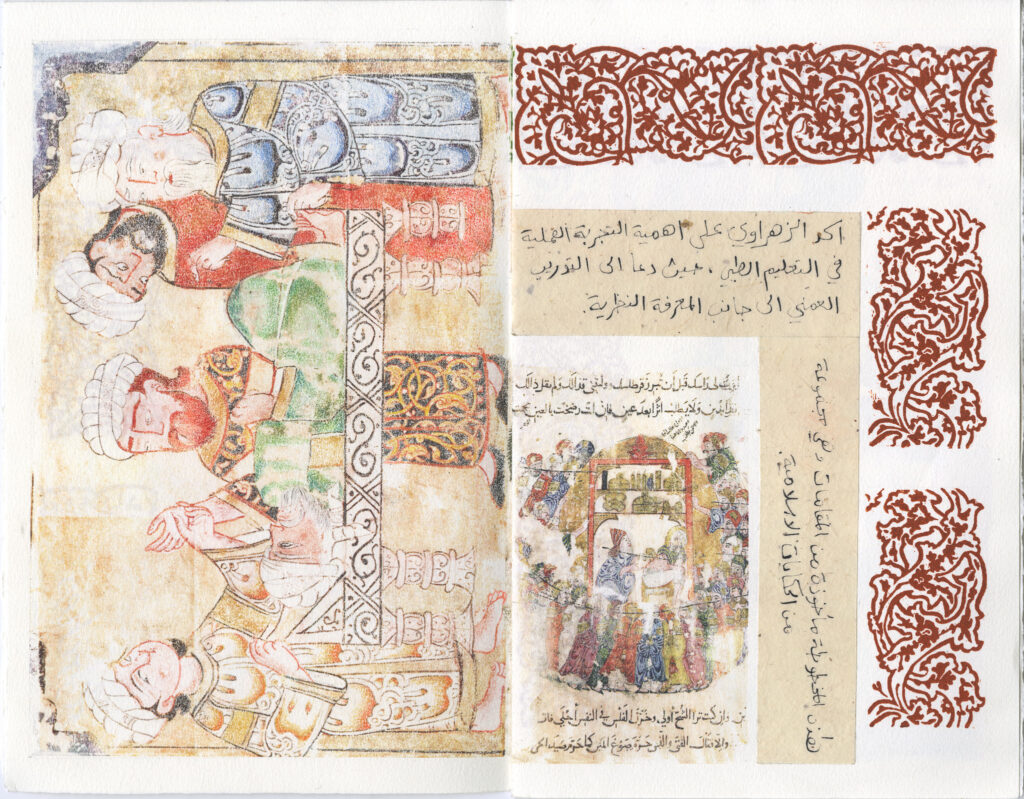
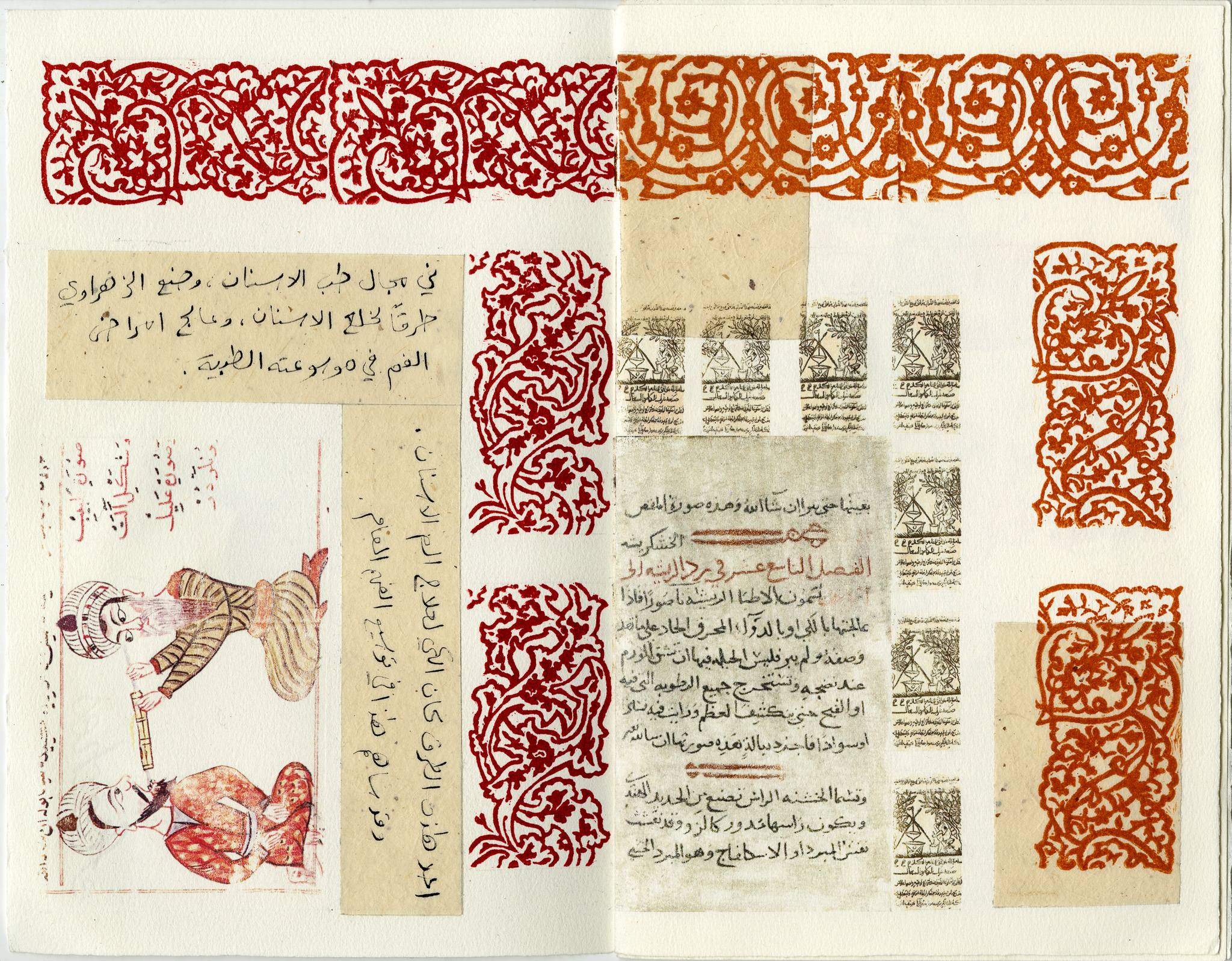
2025. Book, featuring: acetone transfer and linocut prints, chine colle, calligraphy. 5″x10″
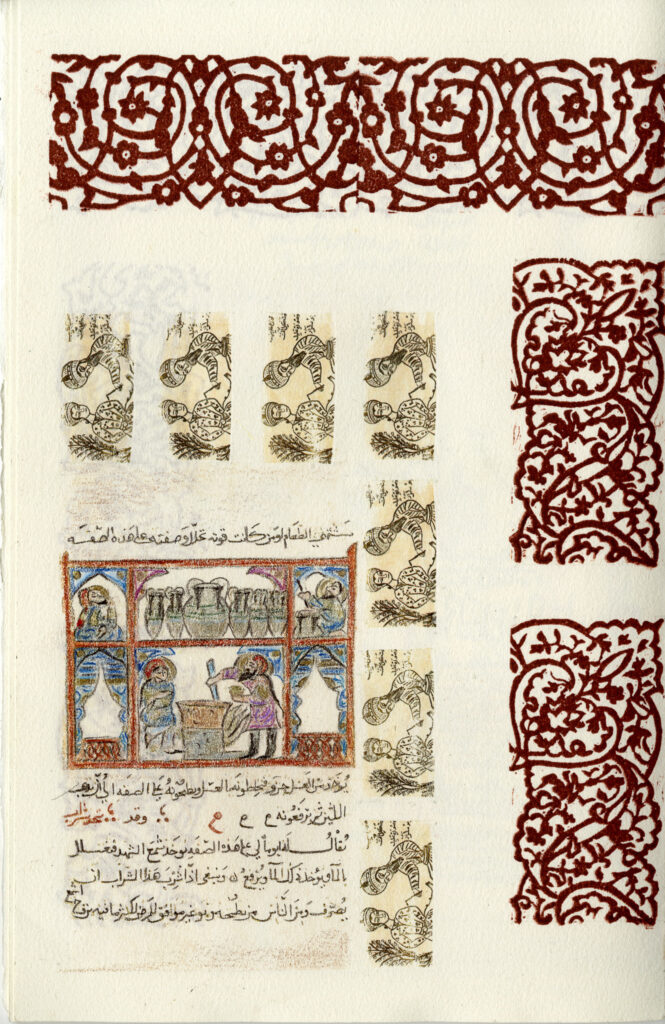
In my work, I am interested in examining the relationship between the global East and West; the centre of this relationship being the contrast between pluralism and consumption. In summary, in the East, we share knowledge, and in the West, they steal it. I’ve worked extensively with manuscripts and books from Muslim scientists working in modern medicine from the 10th to 13th centuries. I engaged in collaging and drawing that brought their rich visuals to life. While I deeply enjoyed exploring their aesthetic beauty, this new project is not about visuals or colors. Instead, it focuses on highlighting inventions from this intellectual legacy that have been neglected, ignored, or undervalued—especially in Western narratives and institutions.
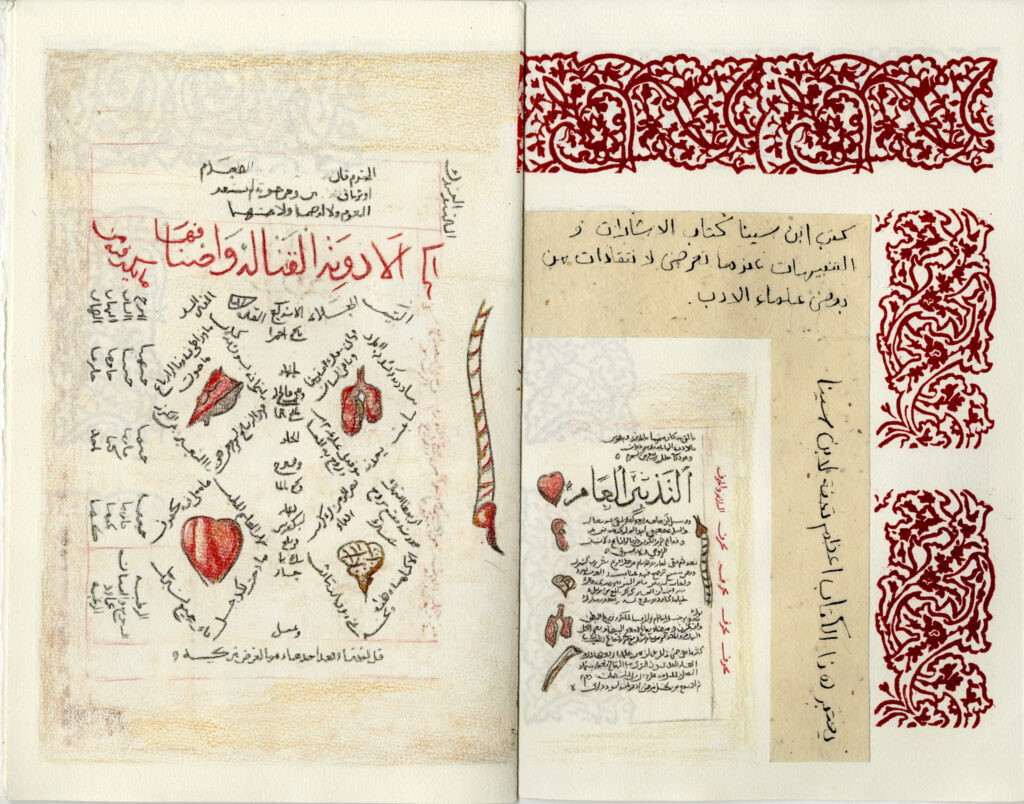
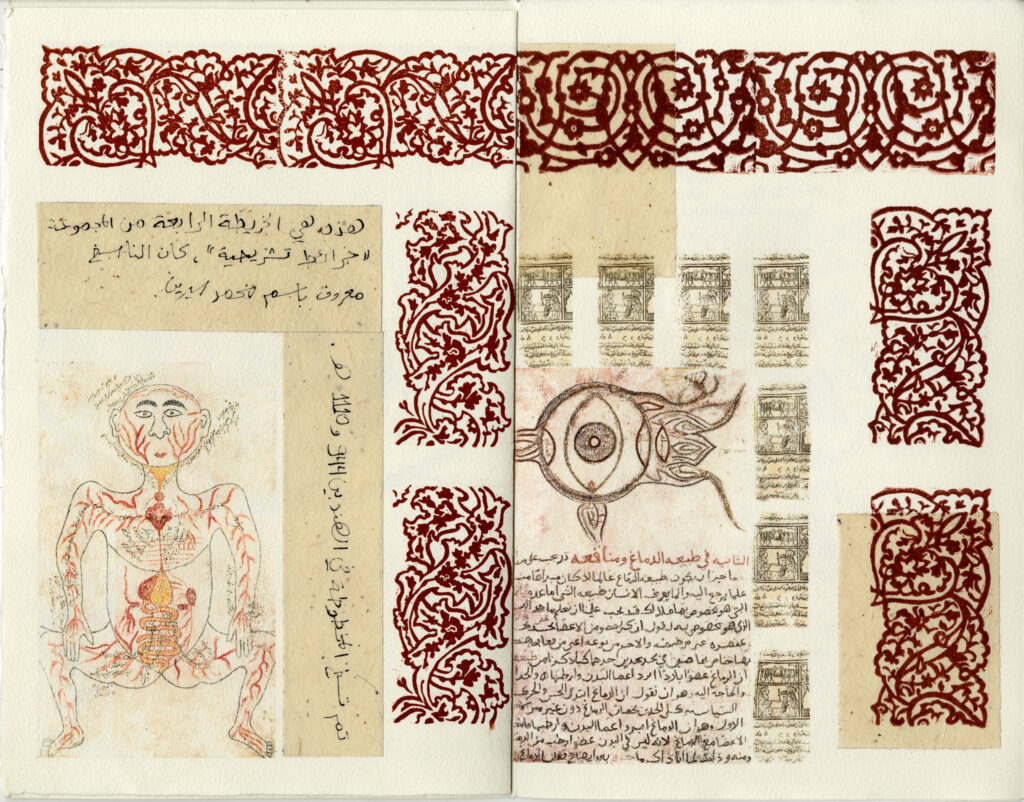
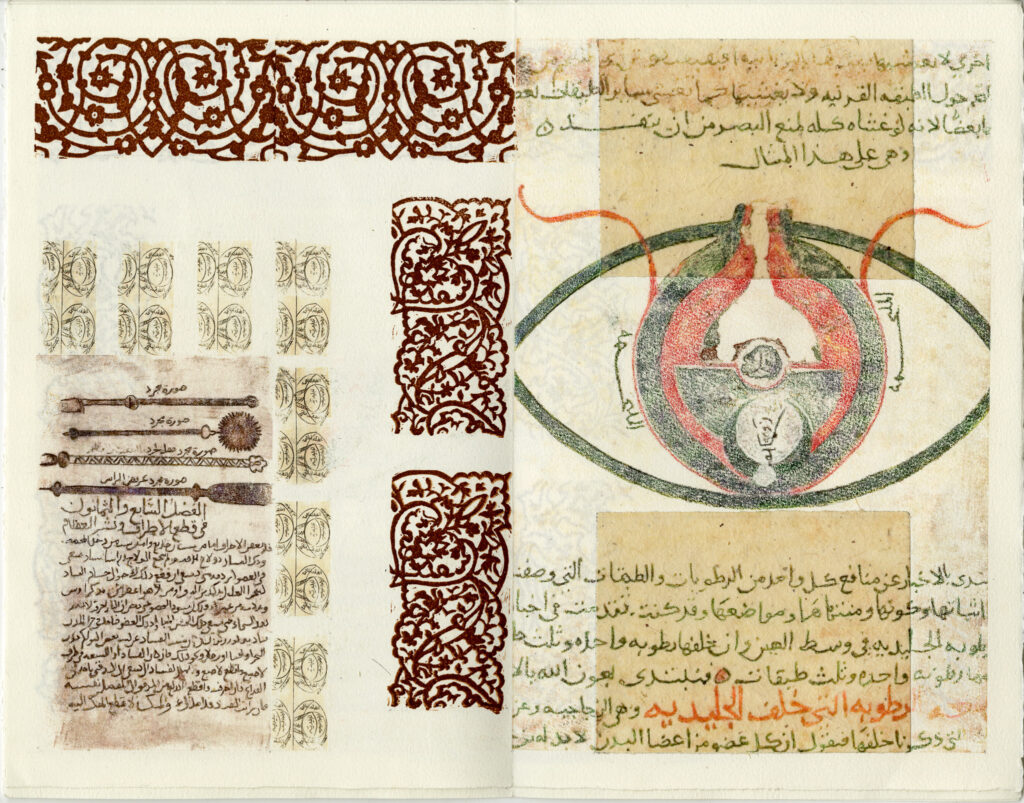
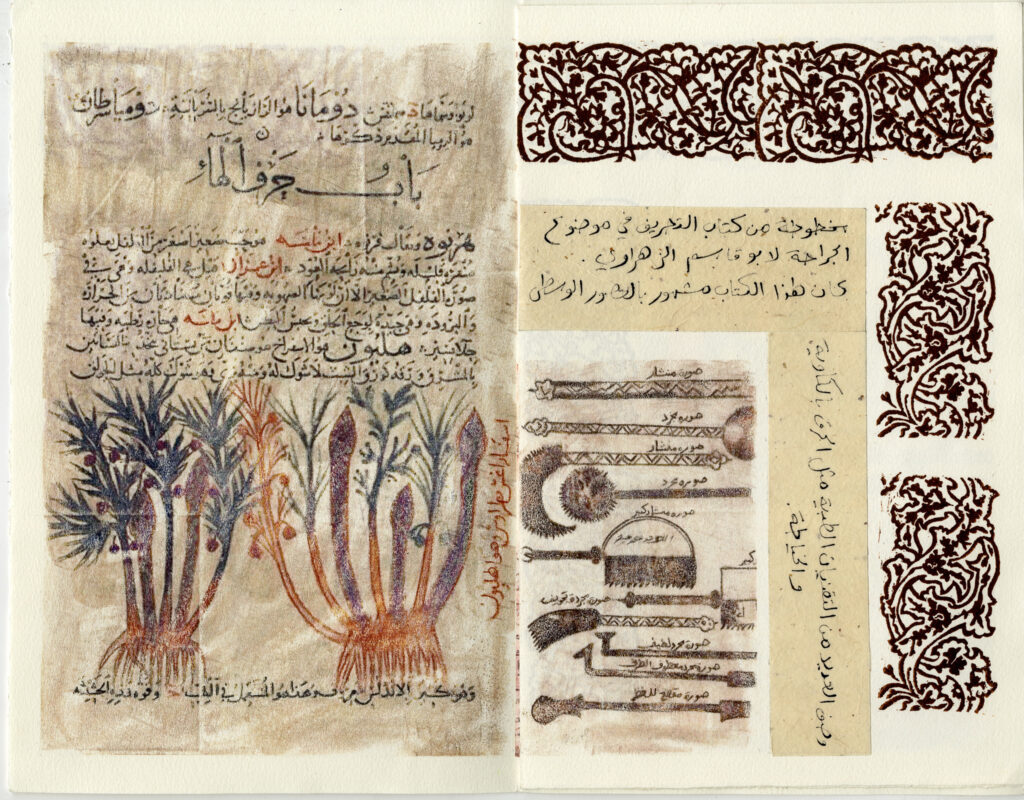
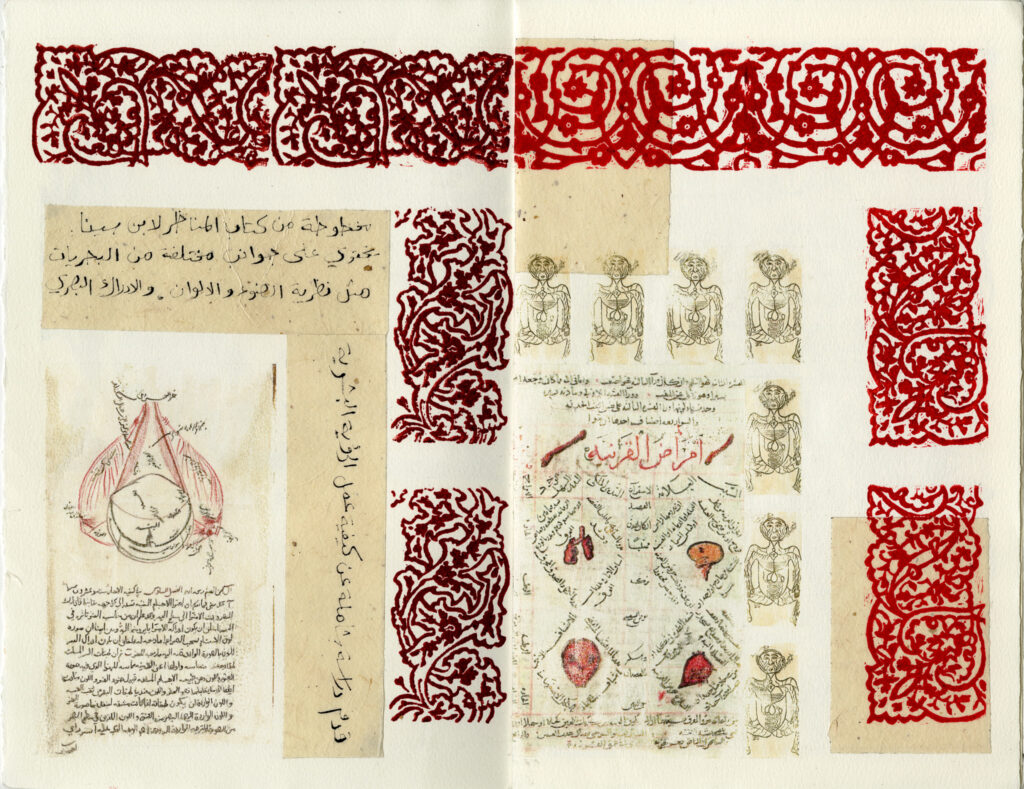
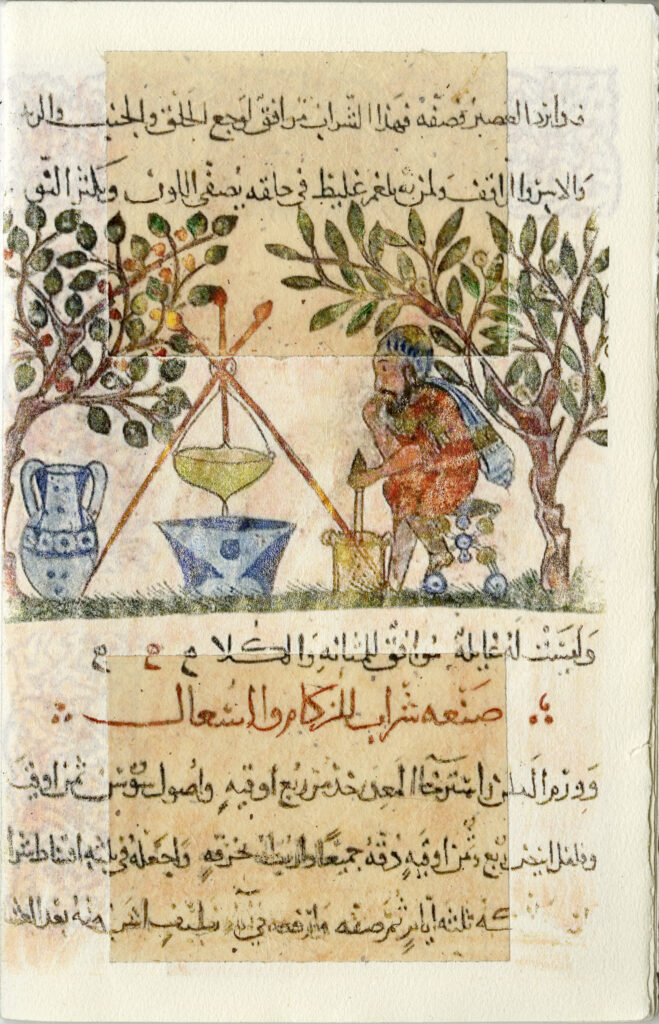
This work is a response to the hypocrisy of Western hegemonic notions of discovery which often erase or downplay the foundational contributions of non-Western cultures. My goal is to uncover these hidden innovations and present them in a way that challenges these biases and celebrates the brilliance of the past.
The practice of aggrandizing the individual such as the naming of Snell’s Law (evidenced to have been discovered by Ibn Sahl 600 years prior) is a Western practice. In contrast, the Global Southern practice entails furthering collective knowledge production aimed towards developing one’s community rather than pertaining to one’s status.
More examples of Western individualism include: Al Karaj’s theorem, named the “Binomial Theorem.” Al Kashi’s Law was named the “Law of Cosines.” “The Quadratic Formula,” is imperative to mathematics and it’s ubiquitous. The formula is taught to high school students, and it involves two of the most brilliant minds in all the history of mathematics, Brahmagupta and Al Khwarizmi, both of whom are not acknowledged in education. Additionally, the concepts of quarantine, hospital were invented by Muslim scientists. In the House of Wisdom, Ibn Sina and El Zahrawi worked with Greek manuscripts, translated them and then built upon the work. These ideas were spread in Europe after Ibn Sina and El Zahrawi were finished and greatly benefited Europe.
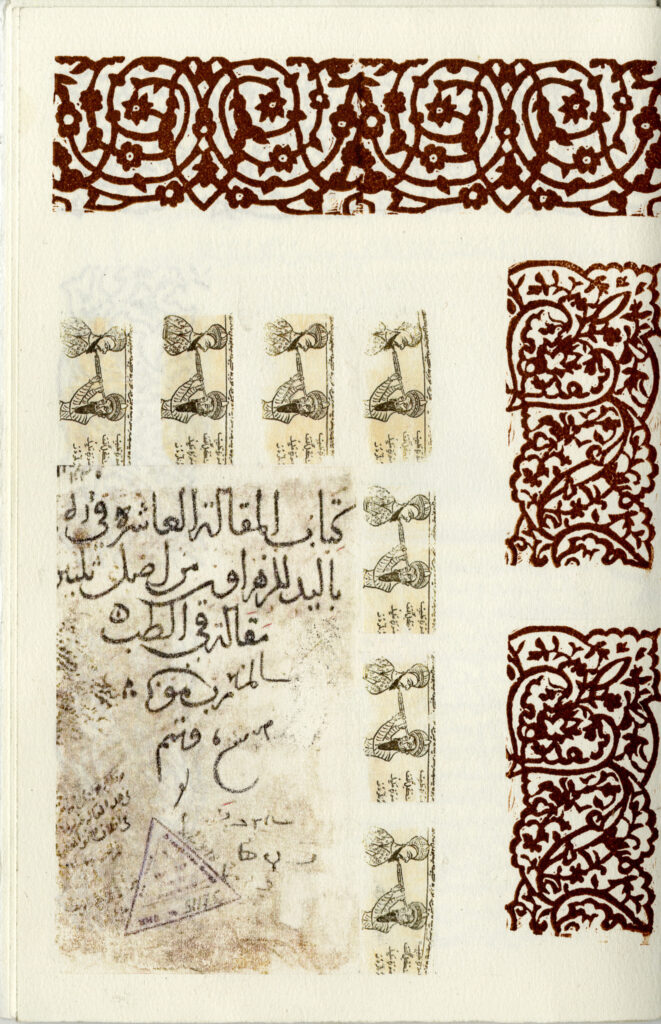
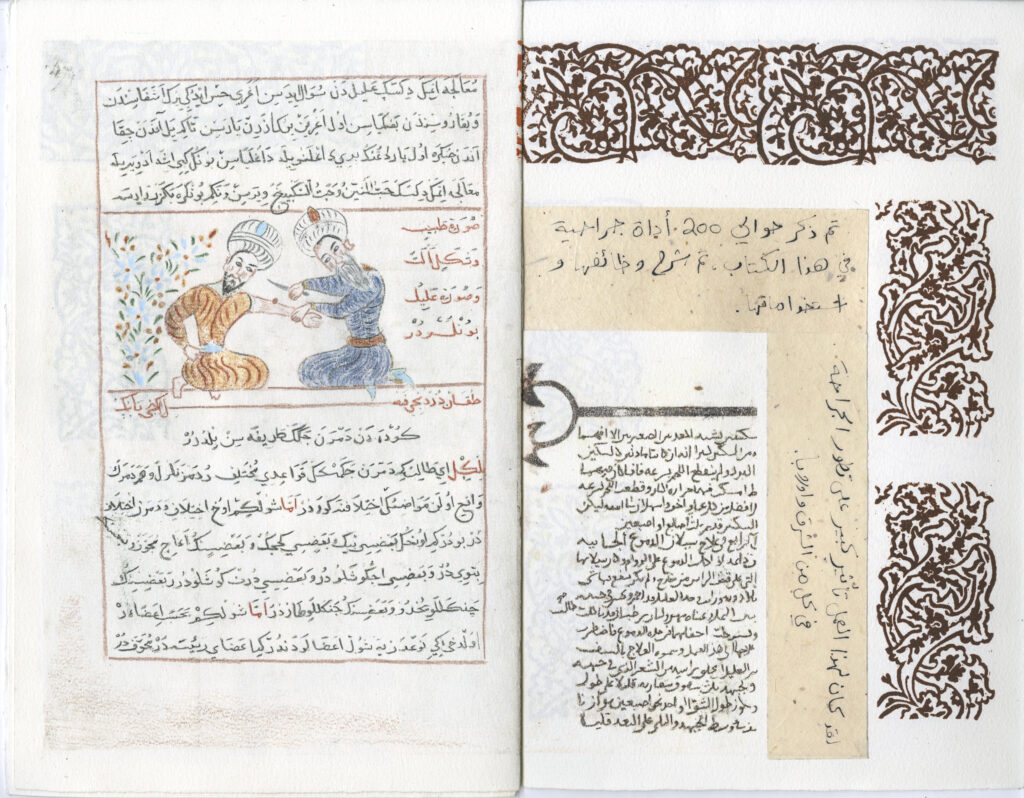
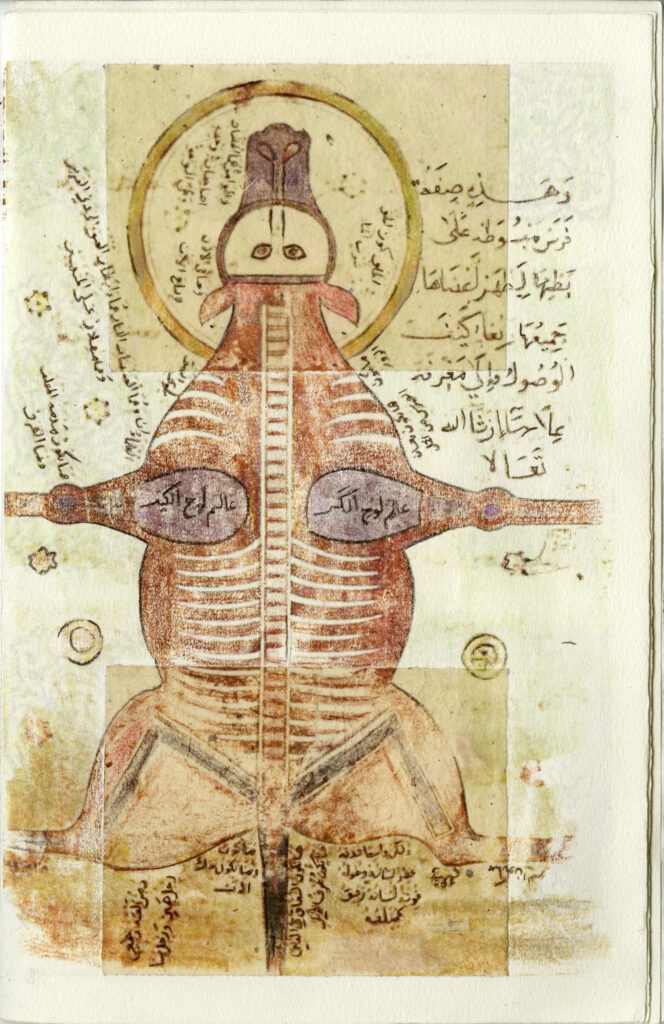
Additionally, Indian transcripts reveal that the Fibonacci sequence, attributed to Fibonacci, was discovered in 200 BC by mathematician Pingala. The Chinese, and then the Persians and several others had discovered Pascal’s triangle before it was discovered and accredited to Pascal. In ancient Egypt, ancient India and Babylon, the Pythagorean theorem was known before it was attributed to Pythagoras. However, this project does not attempt to engage in the discussion of “who came first,” as this framework is ultimately a colonial mentality to begin with. I highlight these examples in order to emphasize a repetitive pattern of taking, claiming, and accreditation.
The dominance and colonialism by Western culture deems the archival and recording process of discoveries made outside of the West impossible. This is ignorance and erasure. Not only is the legacy of colonialism speaking, but this becomes a missed opportunity to teach about how many different cultures contributed to our understanding of the world. I believe it is important to know our history and to be educated in order to strengthen our communities. I am emulating manuscripts and scientists that are not recognized. By highlighting the manuscripts that are hidden, erased and undervalued by society, I intend for my work to be an interrogation into colonial dominant thought.