Close-Up
Sienna Lee
See it On Campus: Level 1
[D1385] Photo Studio, at the right corner of the studio room.
Visitor Info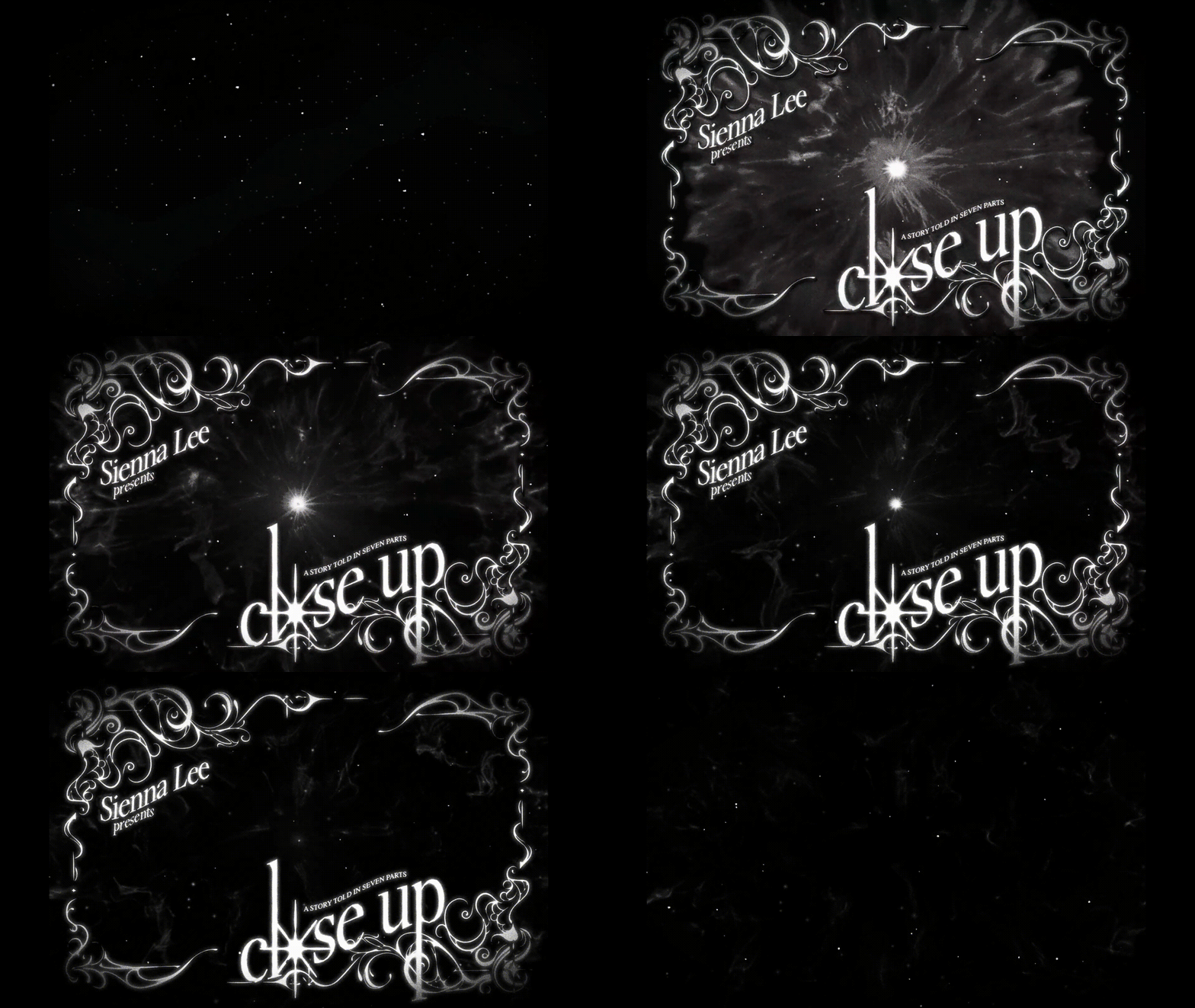
CLOSE-UP (2025)
Dir. Sienna Lee
The journey of an otherworldly being reborn in a human body: as seven hours on Earth pass, it gets a glimpse into human life – practicing its relationship with its own skin and with others.
– And a story of how you experience it throughout.
Close-Up is a project that challenges graphic design to create an immersive experience for the audience, replicating the impact of watching a film. By reinterpreting the precisely controlled routine of going to a movie theatre, watching a film, and returning to life with a new perspective, the project aims to prompt the audience to understand art as an experience.
⛶ PROBLEM SPACE
SIMILAR CONCEPT, DIFFERENT PERCEPTION
Design involves a thorough process of problem-solving; searching for the appropriate visual presentation that leads to effective communication and storytelling. Films, one of the most common pieces of artistic medium people encounter in their lives, are also a form of visual storytelling.
Although both mediums are precisely controlled forms of storytelling, films are perceived as more immersive and resonant than the other. Design is often associated with perceptions of it being an additional asset than a stand-alone project, more commercial than personal, and frequently considered less ‘artistic’ compared to other mediums.
HOW CAN WE CHANGE THIS?
Comparing film and graphic design’s principles, I was led to the conclusion that their main difference is the fact that design lacks what people consider an experience. This included the three key components of what builds up a cinematic experience:
SOUND
MOTION
TIME
But most importantly, the audience’s direct participation. We go to a movie theatre – a space specifically designed for showcasing the medium, and immerse ourselves into the visual medium that is presented to us until it ends. Afterwards, we return to our regular life. This commonly acted out routine builds an experience for the viewer that ultimately separates them from their regular life, maximizing the impact the medium has on people’s lives by allowing complete detachment.
⛶ DESIGN SOLUTION
RECREATING THE ROUTINE
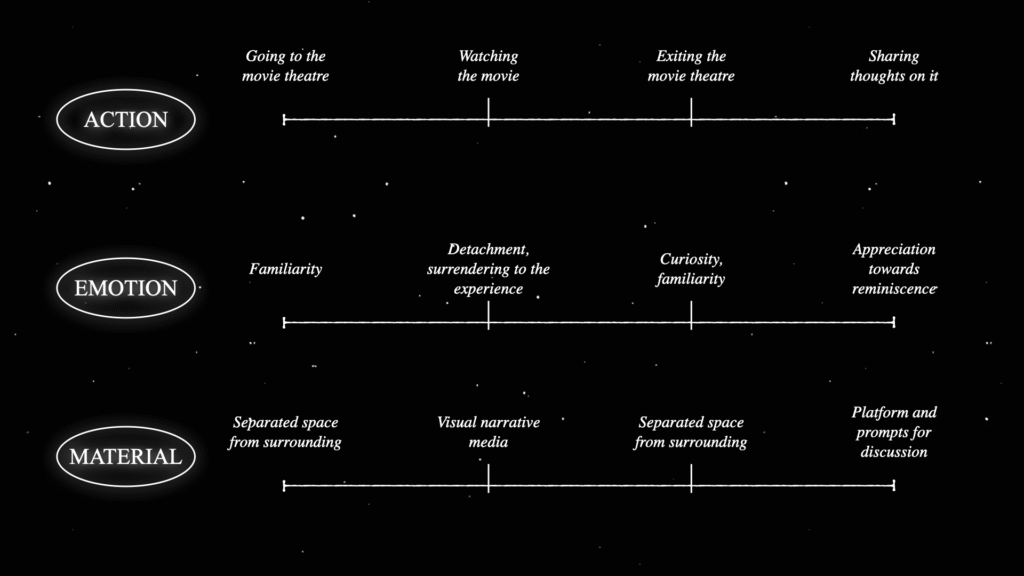
I decided to break down the film-watching experience into emotions, materials, and actions to better understand how the routine could be replicated in a graphic design project. As the project focus shifted toward creating an experience and not just a “movie“, I realized I needed to design something more than a single visual narrative.
This led the project to function as a frame narrative, where the main narrative involves the routine practiced by the audience through the installation space – a replication of the idea of a movie theatre. A secondary narrative is embedded into the project as a form of visual storytelling – in this case, what would serve as the movie. The main focus of the overall narrative is that the beginning and the end are ultimately the same: it starts within our regular lives and ends as we return to them.
THE NARRATIVE WITHIN
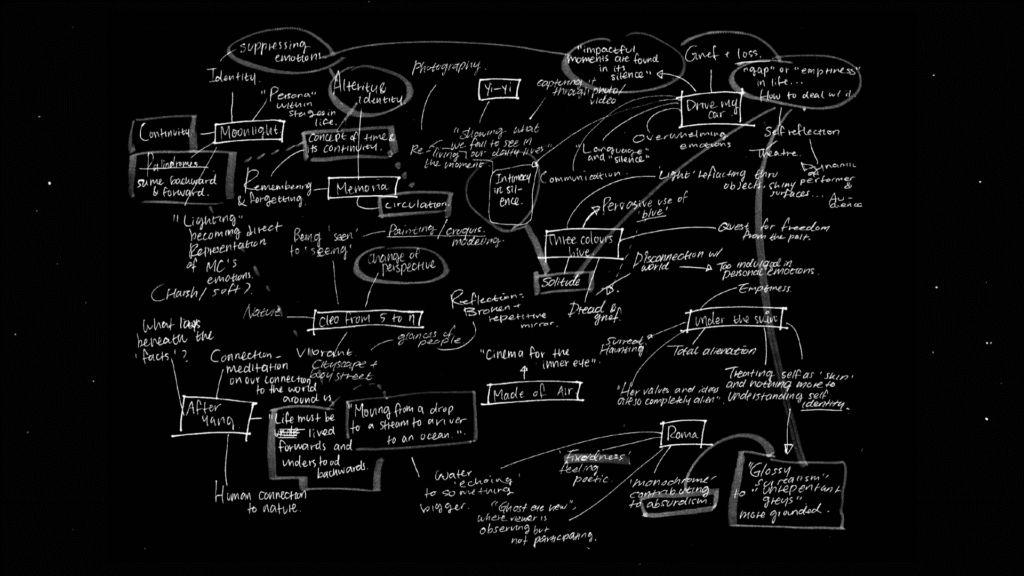
Following this structure, I created a storyline directly inspired by films often referred to as poetic cinema; with its significant usage of visual presentation to amplify the emotions within the plot. Key themes, values and visual techniques used in 20 different films were organized in minor keywords – which were later assembled to build a new narrative that is to be implemented into the project.
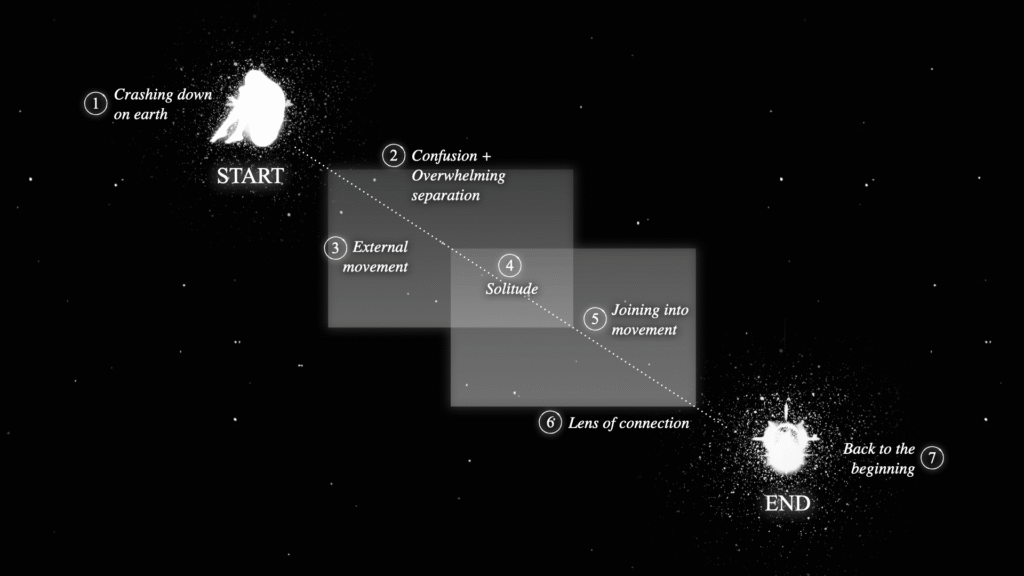
To amplify the audience’s detachment from their self-identity and the practiced perspective on the world, the final story features a protagonist with no backstory or context – which in this case, is an otherworldly being that crashed down to earth.

CLOSE-UP : THE FINAL CUT
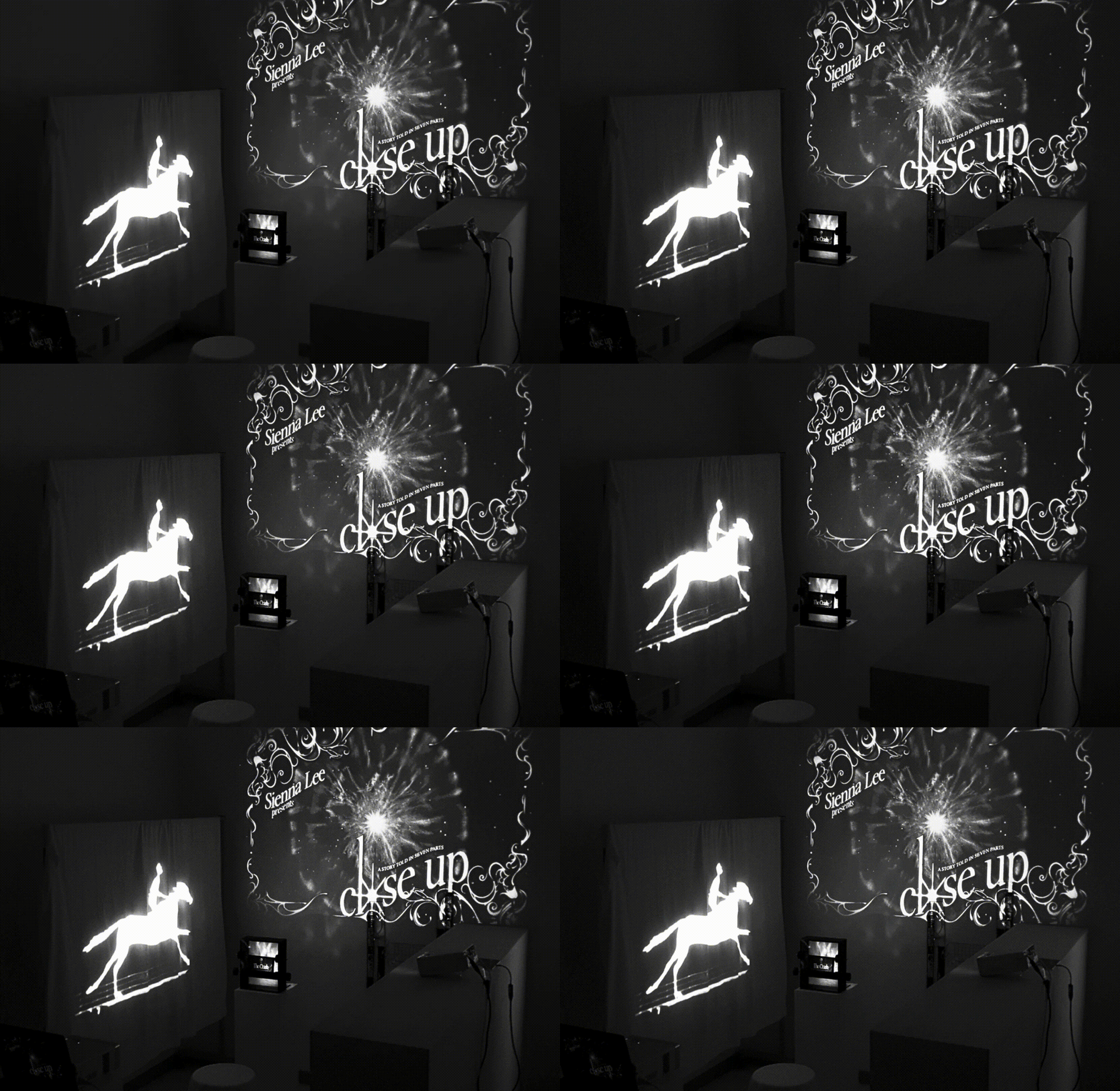
The final installation involves a seat for the viewer, an opening sequence projection, the main publication and a take-home kit – with additional props to adorn the given space.
PROLOGUE | THE ROUTINE
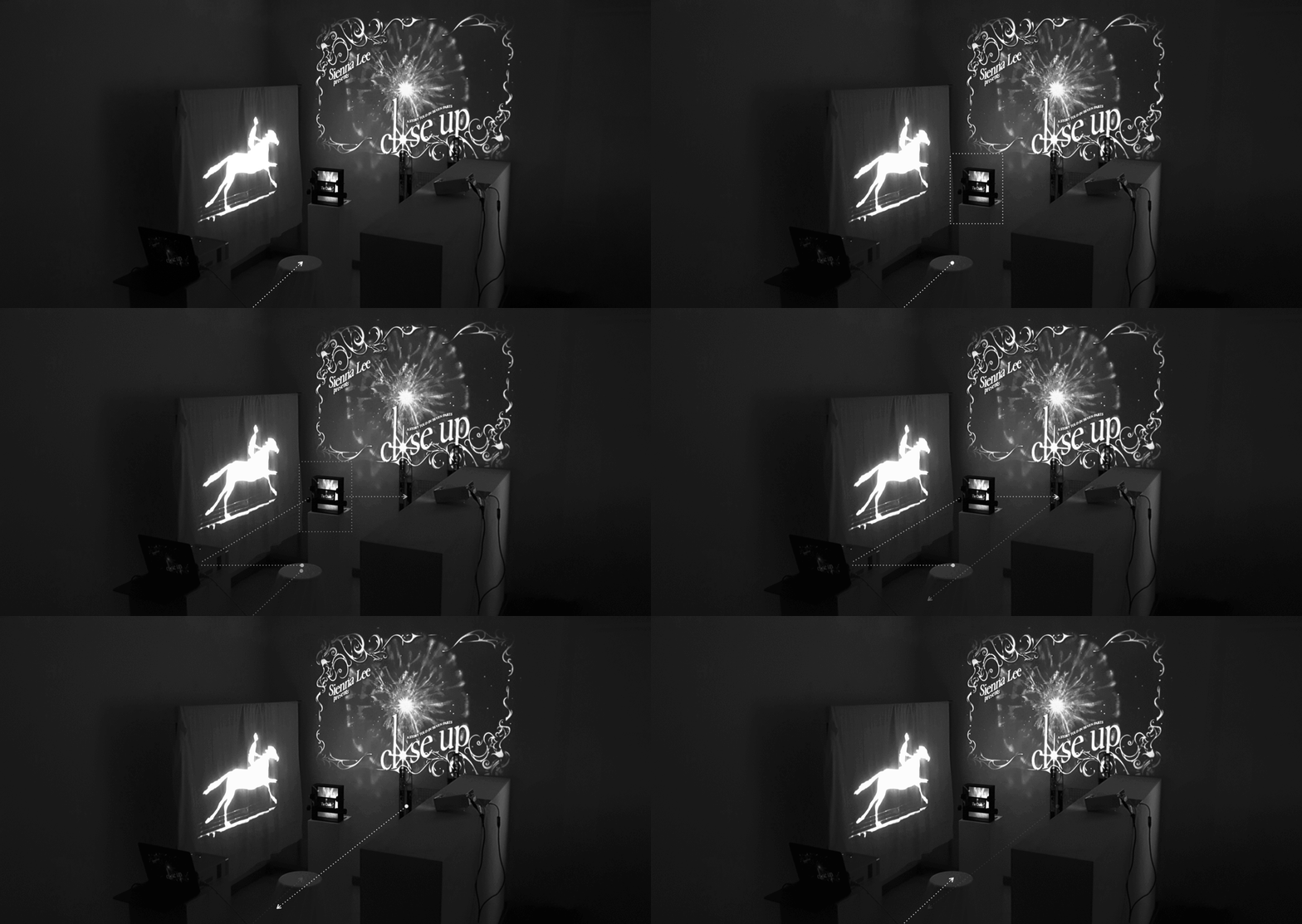
The routine was optimized for the compact installation space – so that the viewers will be allowed transference of space and position, but also limited enough to focus their actions and senses solely to the presented media.
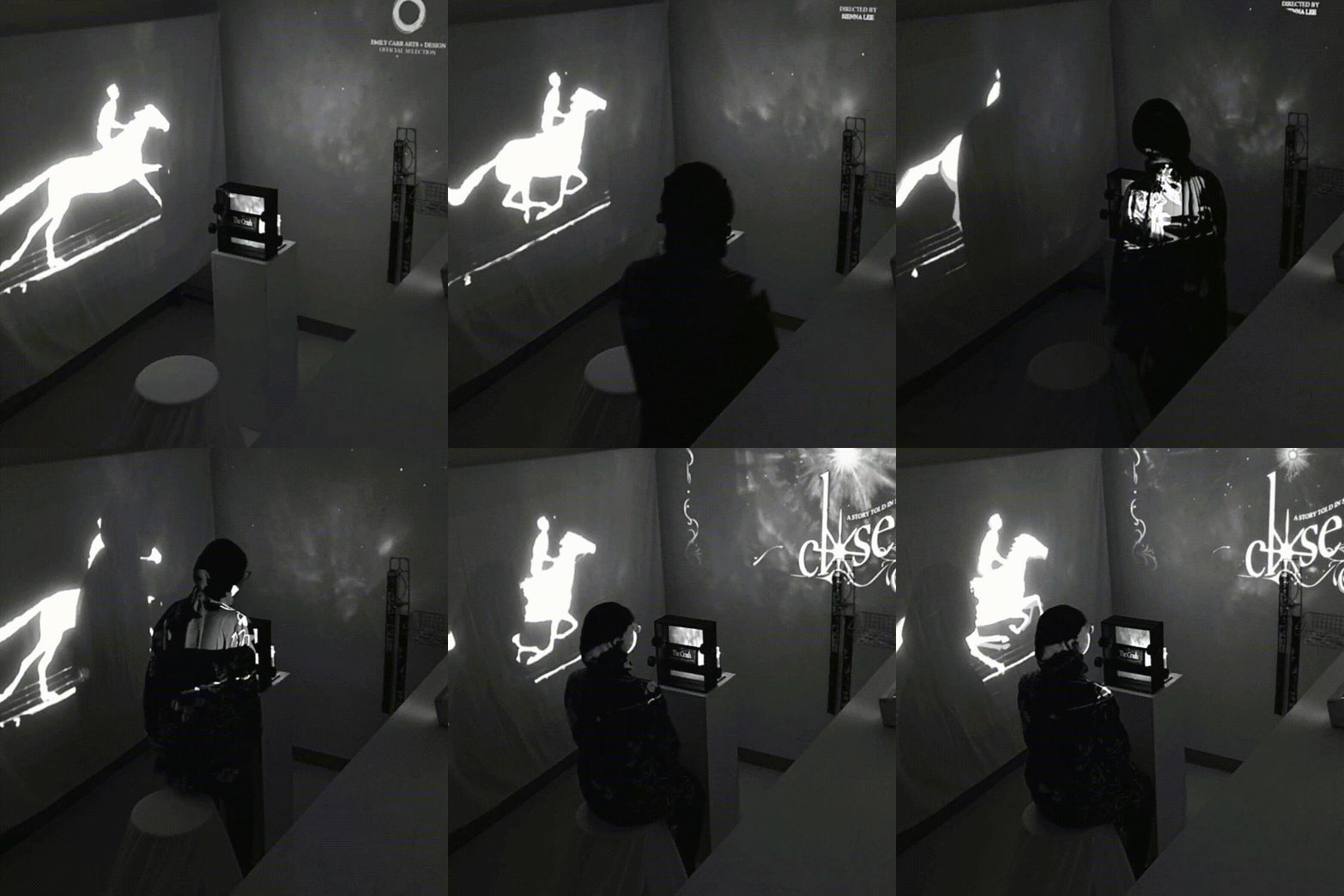
The viewer will enter the installation space and take a seat, beginning to watch through the opening sequence video projected on the wall.
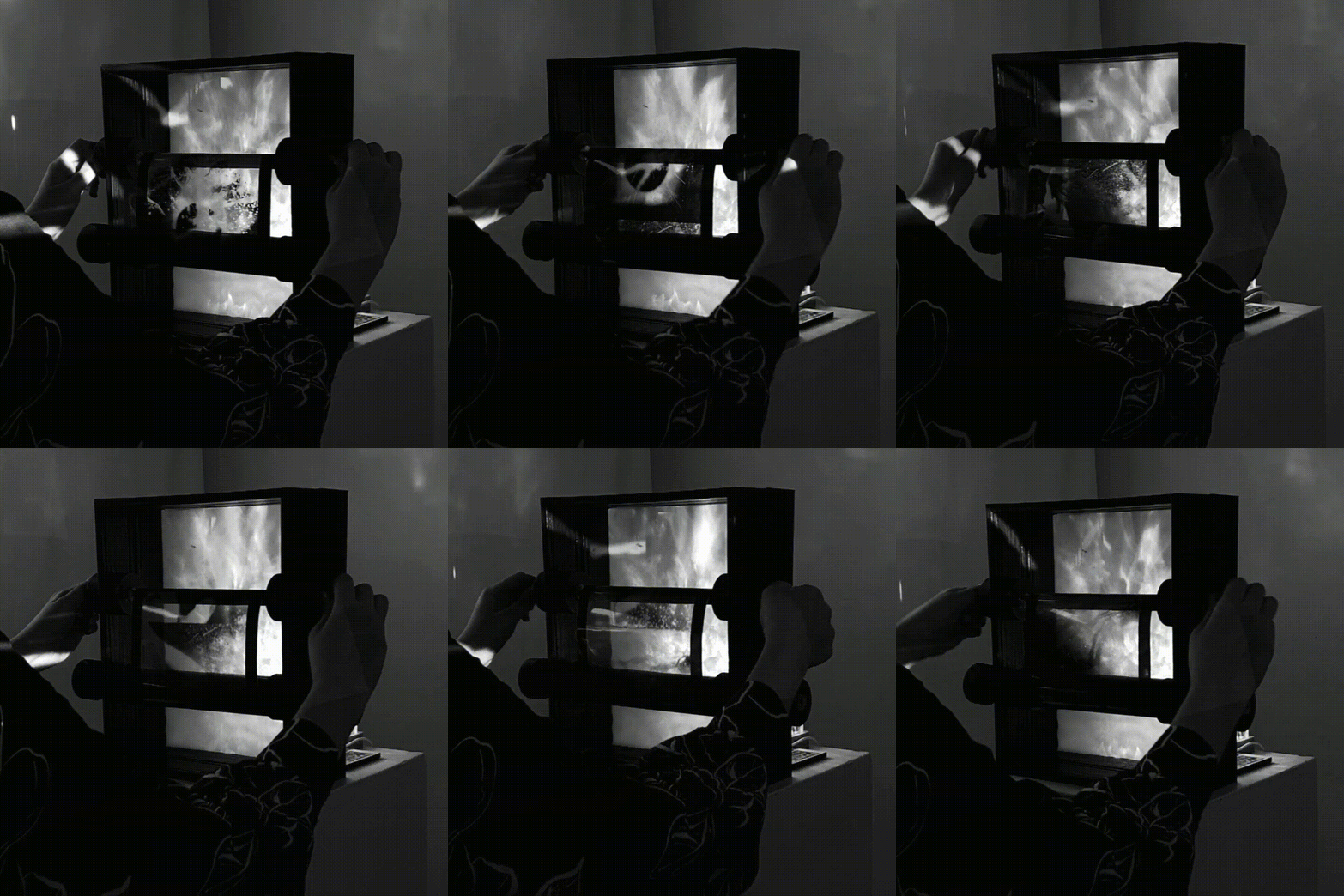
They will proceed to scrolling through the shadow box publication.
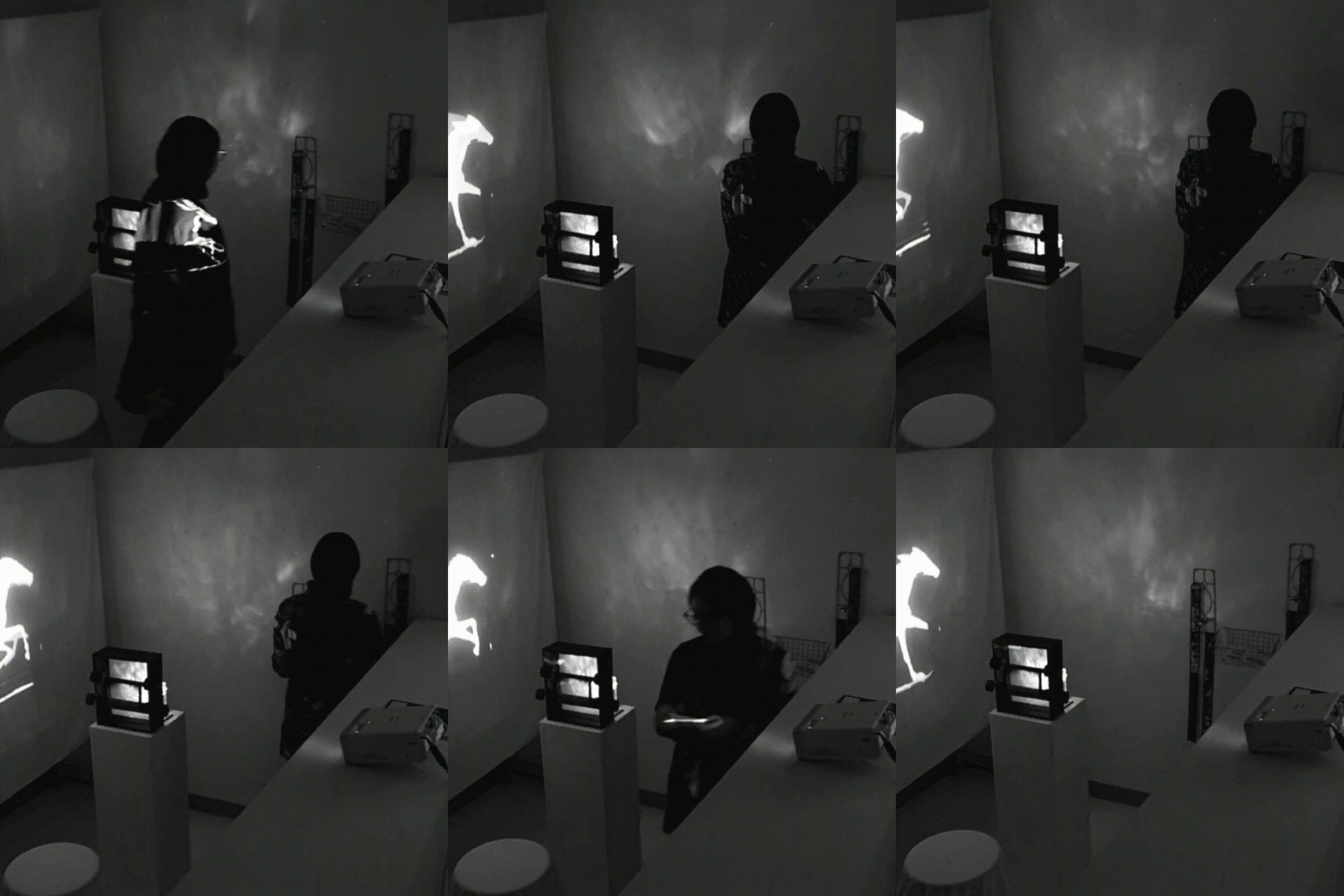
After reading through the story, the viewer will make their way to take the take-home kit placed in the corner and leave the installation space; going back to their regular life.
SCENE #1 | OPENING SEQUENCE
The opening sequence video features a short overview of the seven chapters in the story represented through abstract graphics. The video ends with the first frame / title card of the first chapter in the story, providing a smooth transition of focus from the video to the publication.
SCENE #2 | PUBLICATION
The idea behind creating the publication was to mimic the idea that in filmmaking, the director gains direct control over how much time the audience spends on each frame, each scene and the overall narrative as a whole. Starting from the idea of restricting the manipulation of the order of the story and frames within them, I began to implement cinema-inspired elements to the form of the publication form.
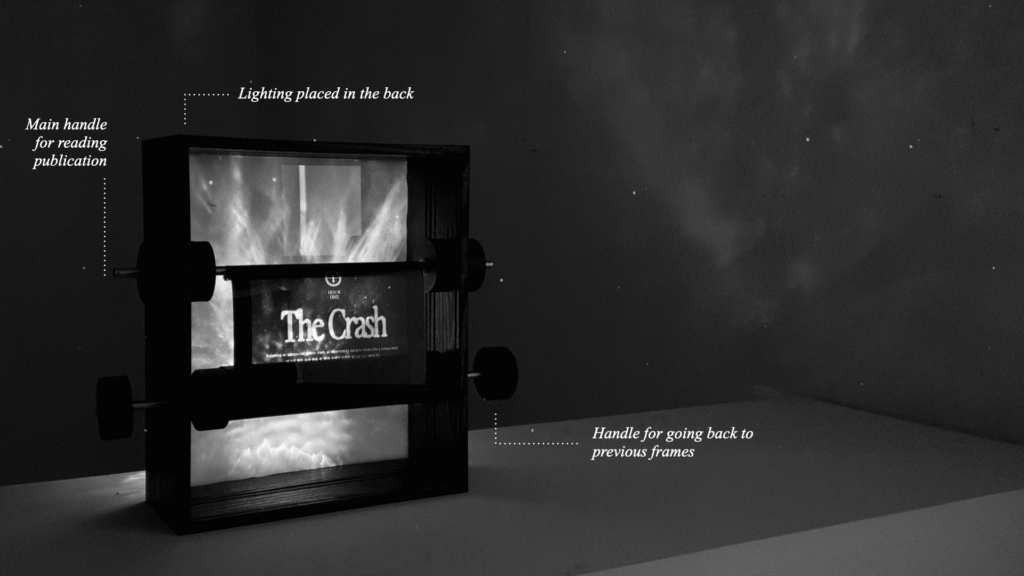
A scroll mechanic was added to the publication to involve direct physical participation of the audience and also to leave an essence of rotating a Vitascope projector.
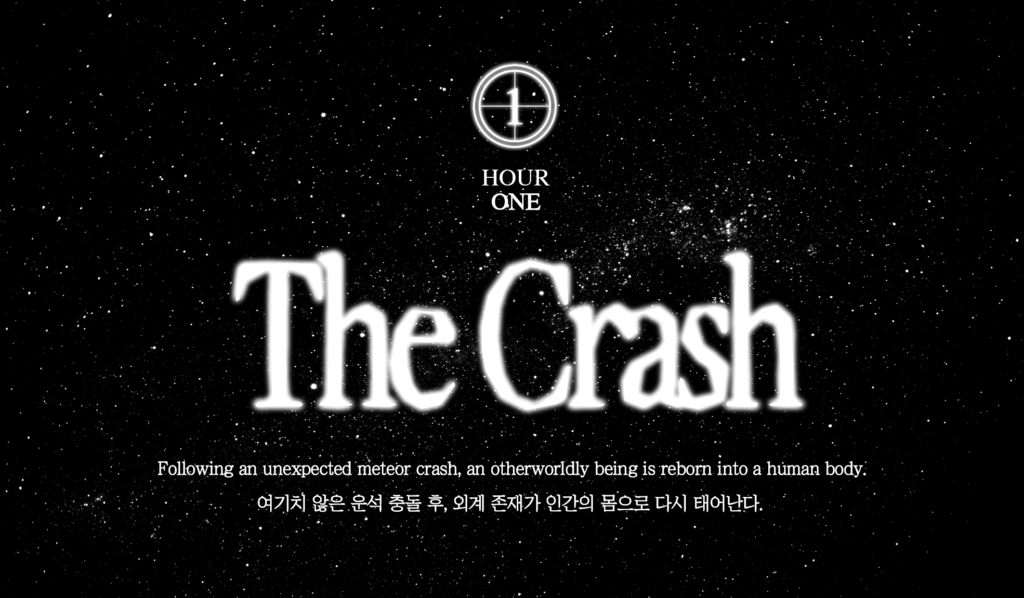
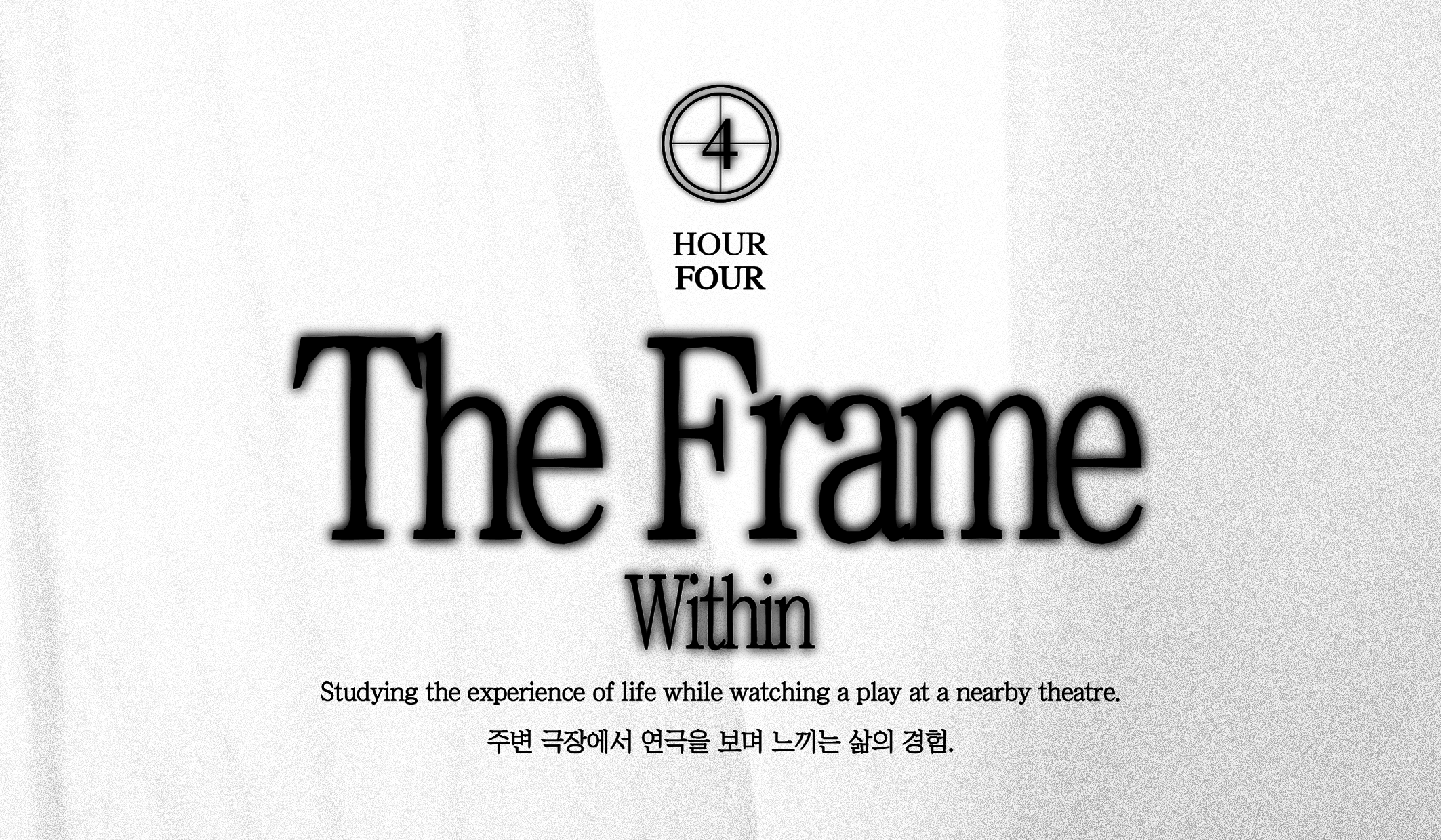
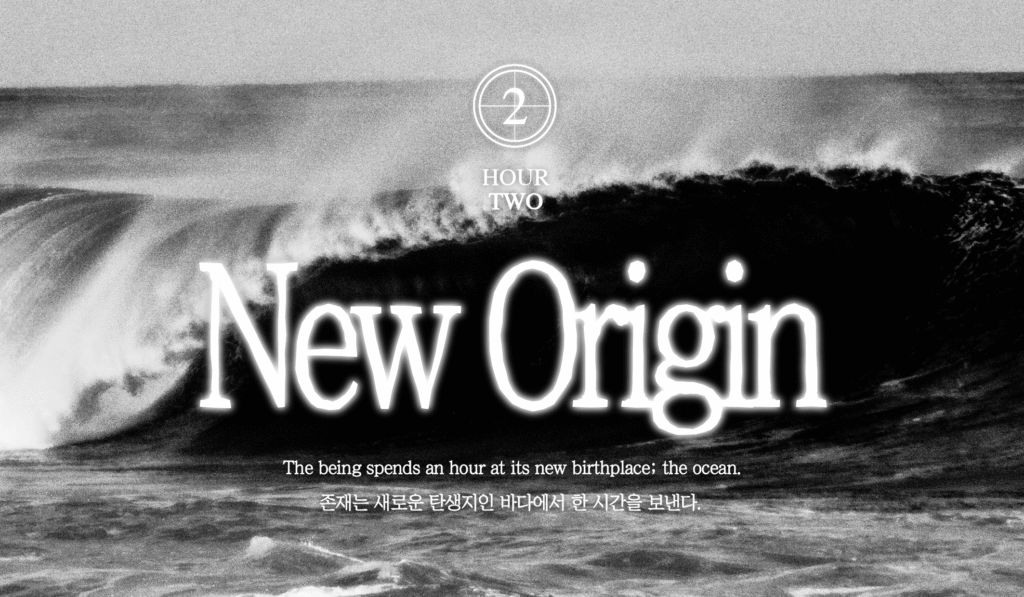
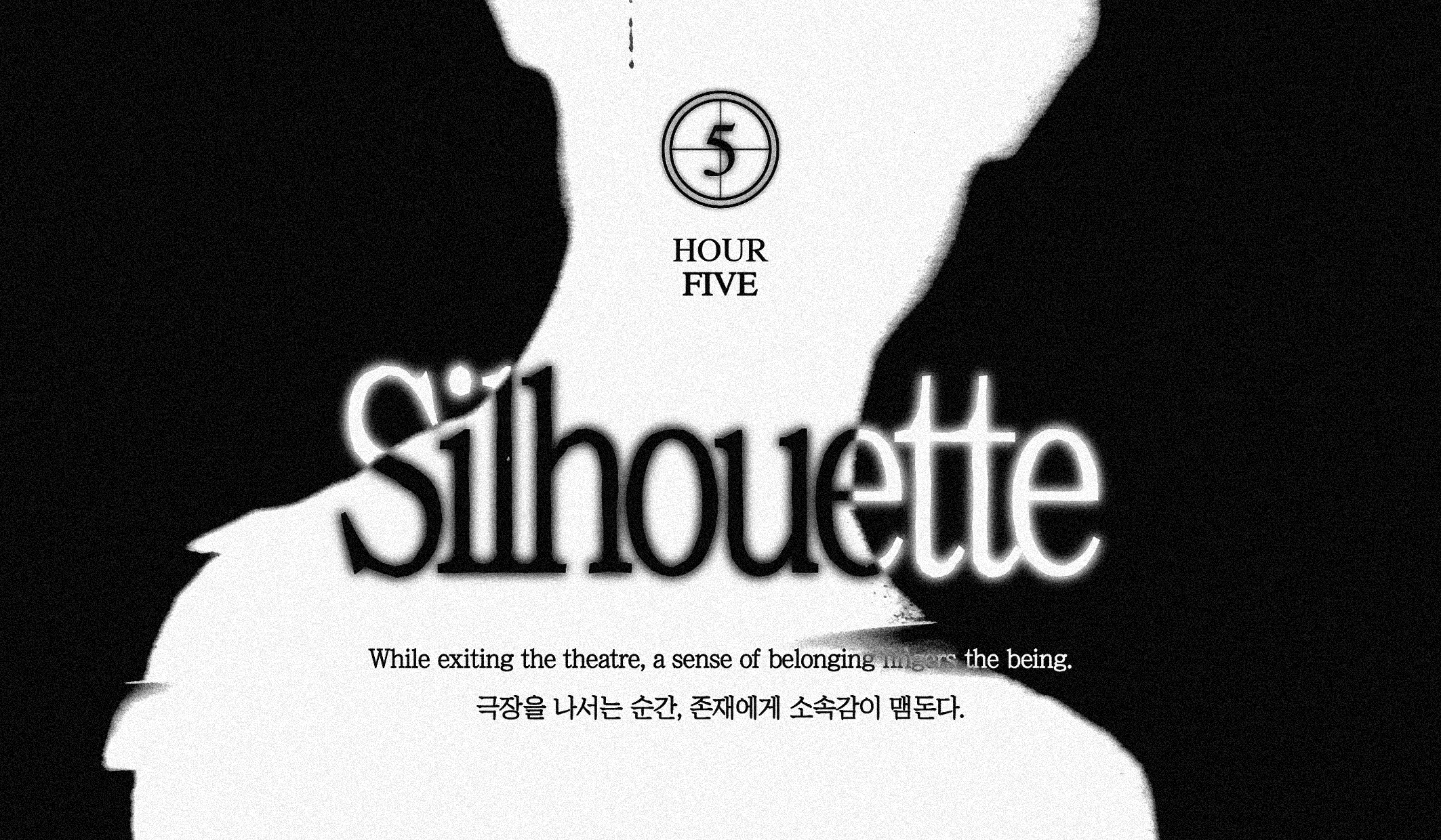
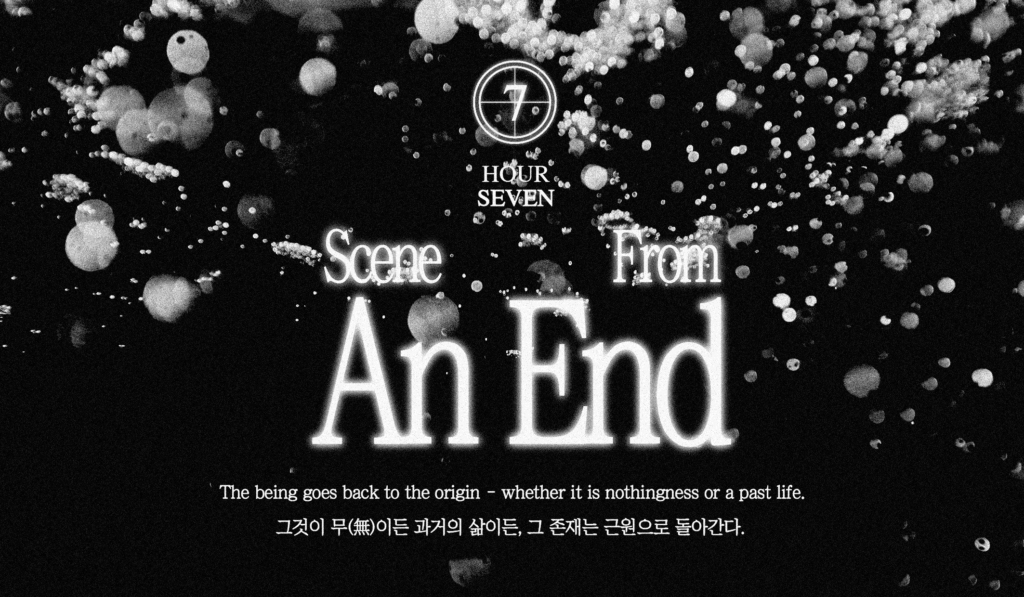
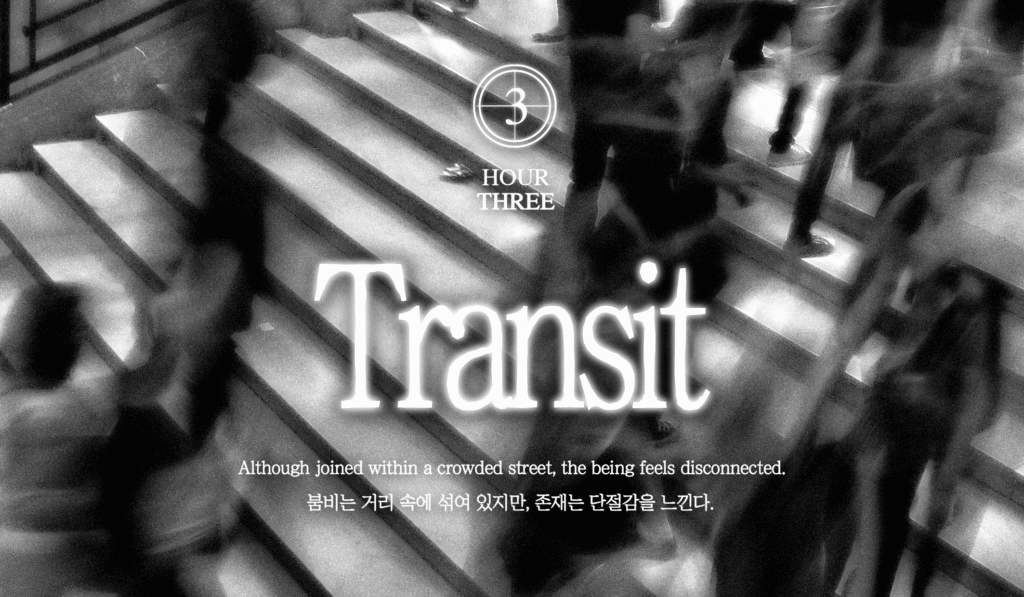
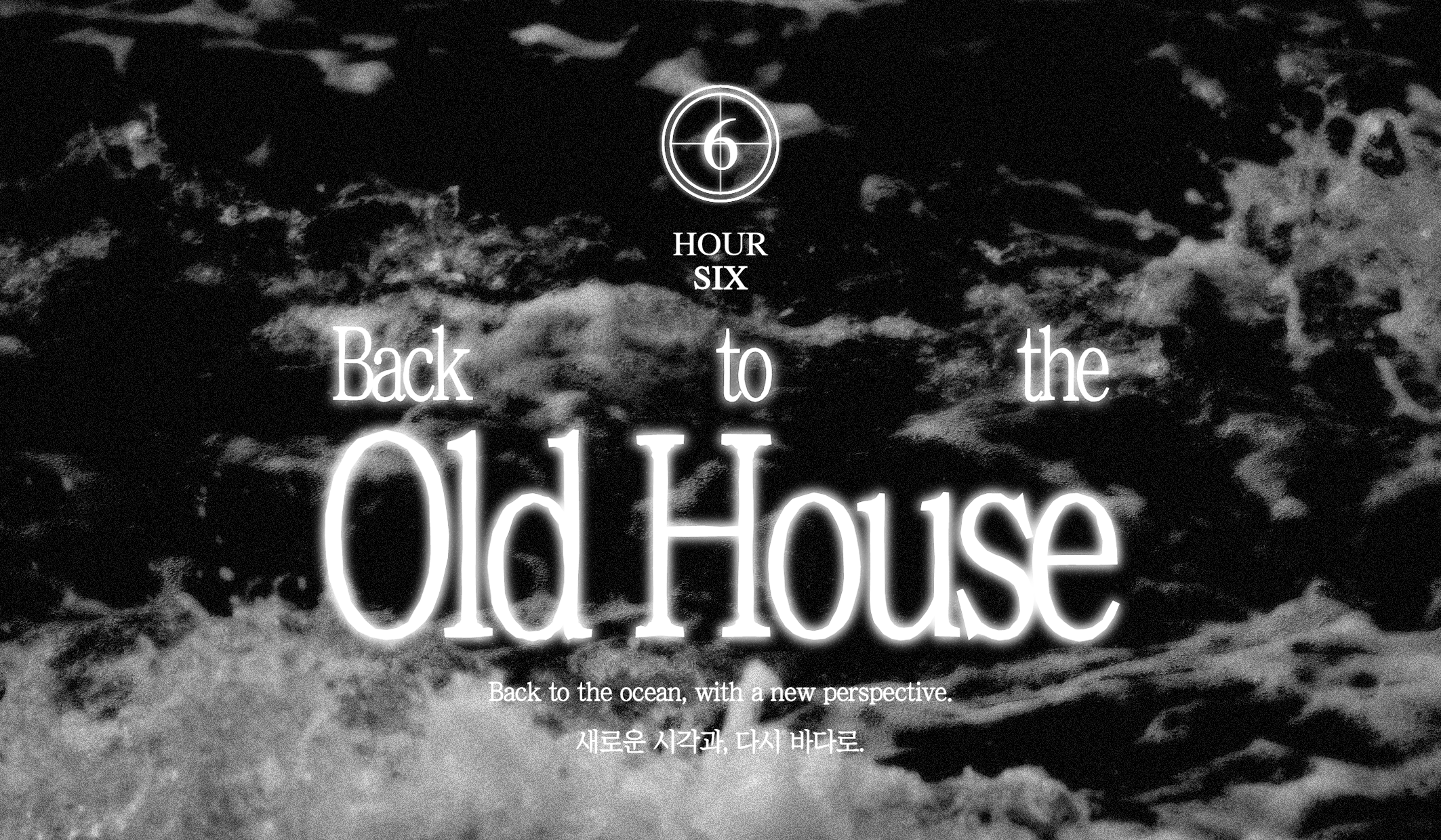
Overall, the publication involves 81 frames, with each frame created by editing stock pictures and license-free photographs on the internet.
The story consists of seven chapters, with each chapter representing an hour the protagonist spends on earth – exploring various places and experiencing different emotions. The protagonist’s physical form is mostly depicted in silhouettes and blurred out shadows, leaving viewers to question and immerse themselves into the ambiguity of the protagonist’s expressions.
The entire story can also be read through this video.
SCENE #3 | TAKE-HOME KIT
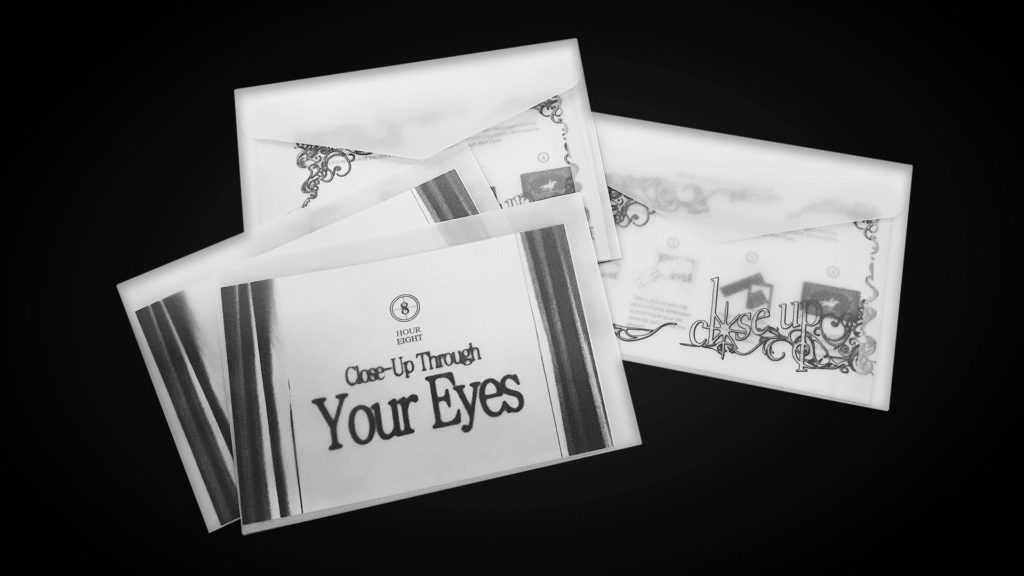
Within our daily lives, we often interact with others to share our experiences and thoughts about movies – through both in-person conversations and various online platforms. To help the story remain present in the audience’s lives and to provide viewers with a platform where their experience can be extended, I created a take-home kit to encourage direct participation.
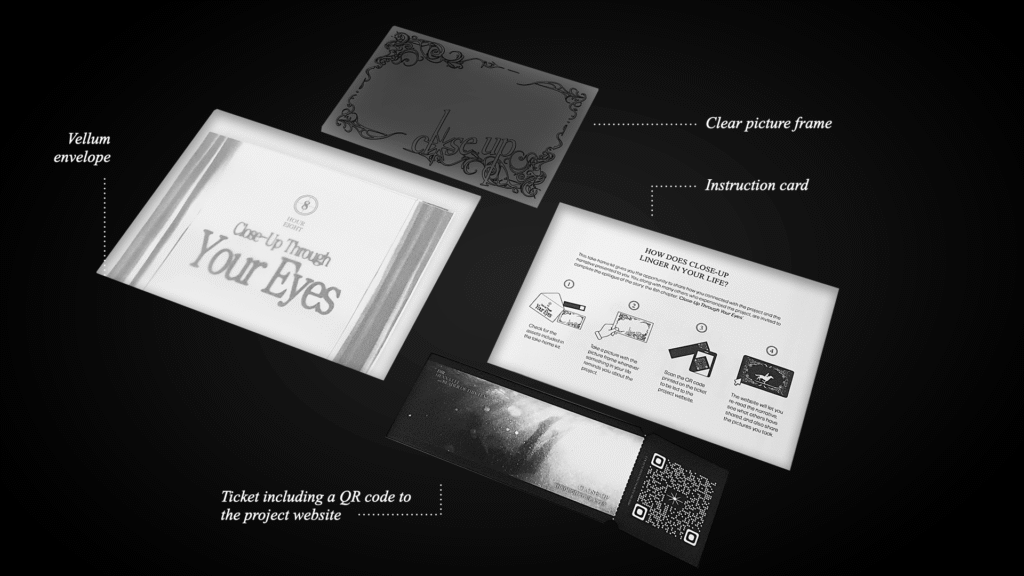
The kit includes an instruction card, a ticket with a QR code linking to the project website, and a transparent picture frame. Audience members who take the kit are encouraged to carry the frame with them – and whenever they encounter something in their daily lives that reminds them of the narrative or the project itself, they can use the frame to take a picture. These pictures can then be submitted and later shared with the public through the website.
SCENE #4 | WEBSITE
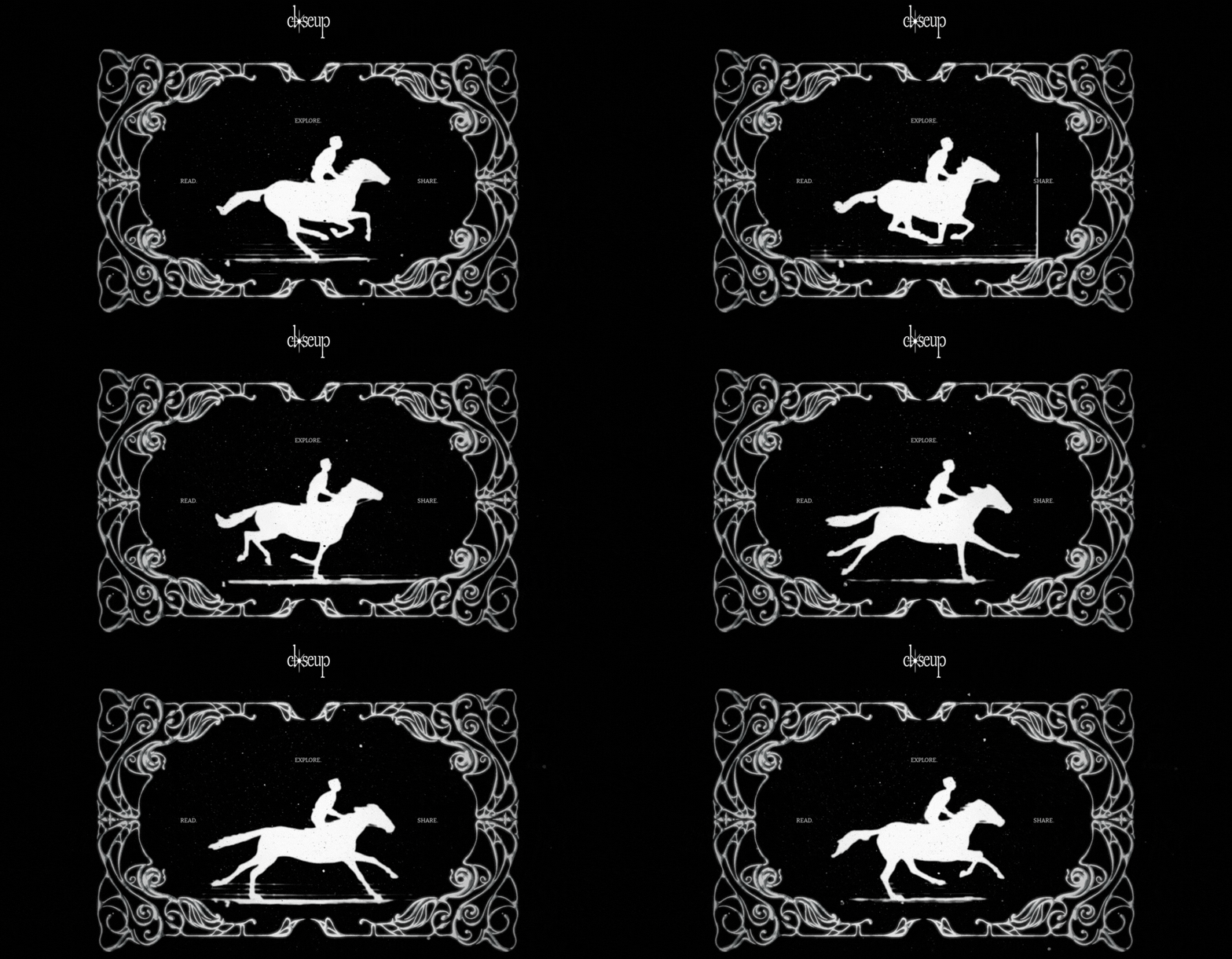
Check out the full website here.
The final website allows the audience to read through the publication once again, explore the pictures other viewers have shared, and also submit their pictures taken with the picture frame to be featured on the website.

The ‘EXPLORE’ page showcases the pictures submitted by the viewers of the project, with their names credited under the photographs.
The ‘SHARE’ page involves a simple form the visitor of the website can fill out to submit their pictures.

NOTES FROM THE DIRECTOR
Is the world we see as a designer and as an audience different? If so, should we close the gap between them? Completing this project, I found myself struggling to consider both perspectives of telling the story and reading the story. As I switched between being a film-inspired project director and a film enjoyer, I was able to reflect back at times when films really resonated with me and understand how effectively the filmmakers have been doing their job.
The way we let ourselves surrender to a foreign experience, listen to and watch another life’s story for hours in a collective space, is a significant moment we experience in our lives. I hope my love for both film and design is reflected in this project, and I hope you come to love them as well.
I want to thank my instructors, Nadia Beyzaei and Patricia Vera, for all the guidance throughout this academic year – as well as all my designer peers, and my friend Emily for their support.
Thank you!