FLEXI L!FE
Peter(Yingzhuo) Wu
See it On Campus: Level 2
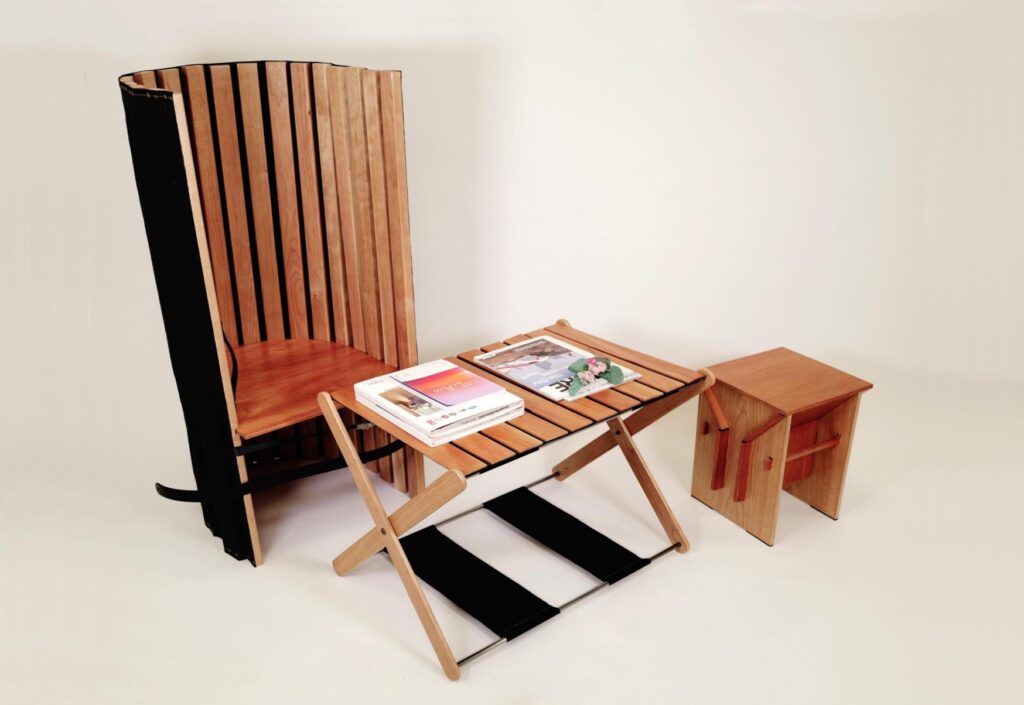
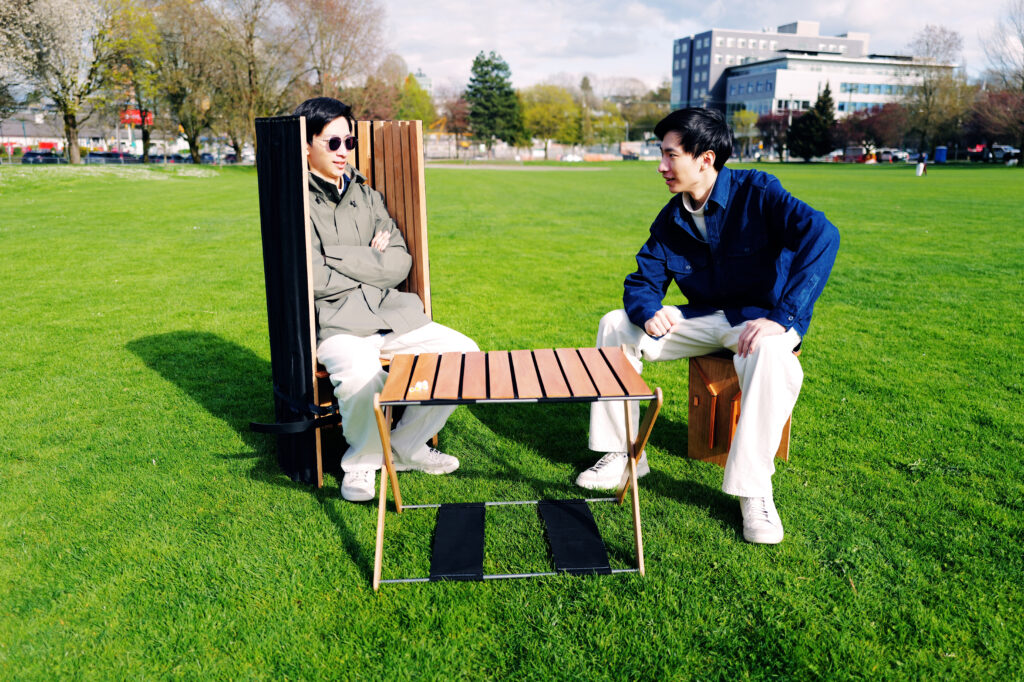
FLEXI L!FE is a multi-functional, foldable furniture collection designed to seamlessly transition between indoor comfort and outdoor adventure. Tailored for modern lifestyles that value flexibility, mobility, and emotional connection, the project features a collapsible stool, a rollable table, and a high-back foldable chair—each offering a personal space that feels like home, wherever life takes you.
Project Background
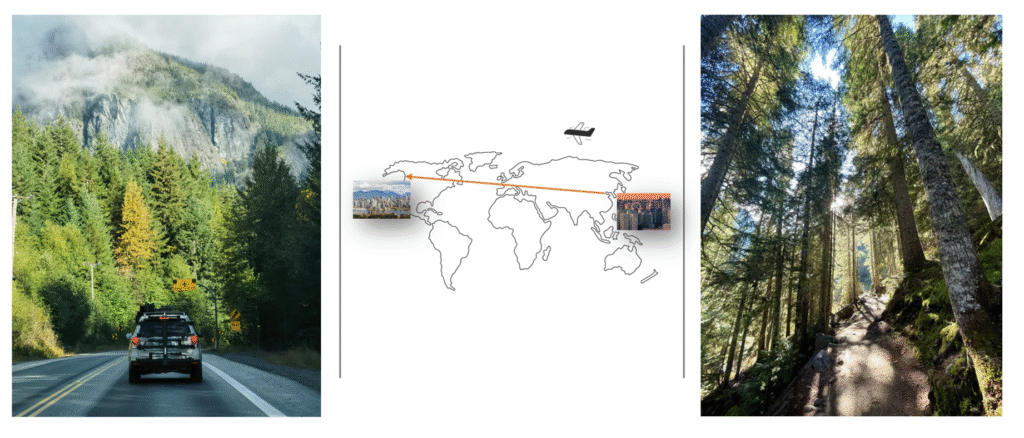
I came to Vancouver as an international student 4 years ago and was amazed by how close nature is here. Over time, nature became something I wanted to connect with deeply.
This experience led me to find out the core point behind this project: How can design help people connect with nature in a simpler, more meaningful way?
Mind-Mapping
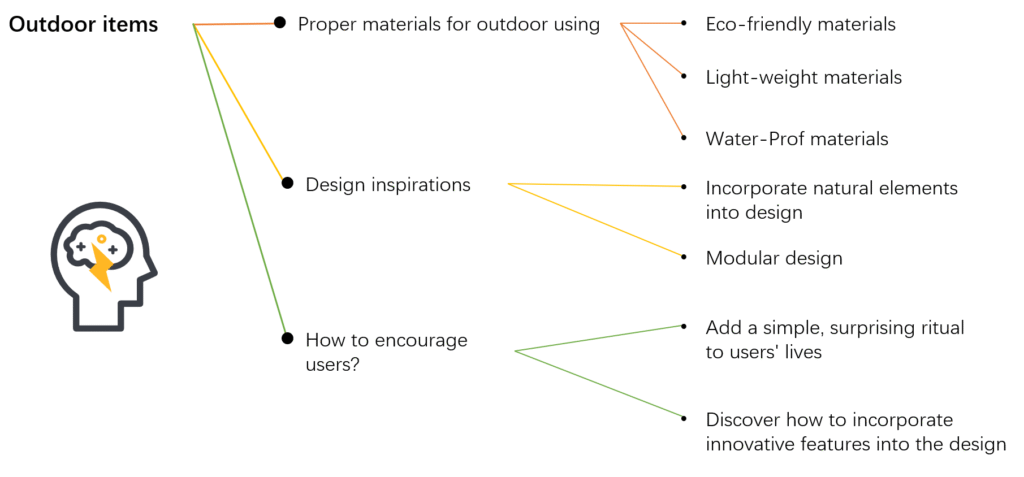
• I started by creating a mind map to organize my thoughts and explore various aspects of the project. This process involved examining suitable materials for outdoor use, gathering design inspirations, and brainstorming effective ways to encourage users to connect with nature through my designs.
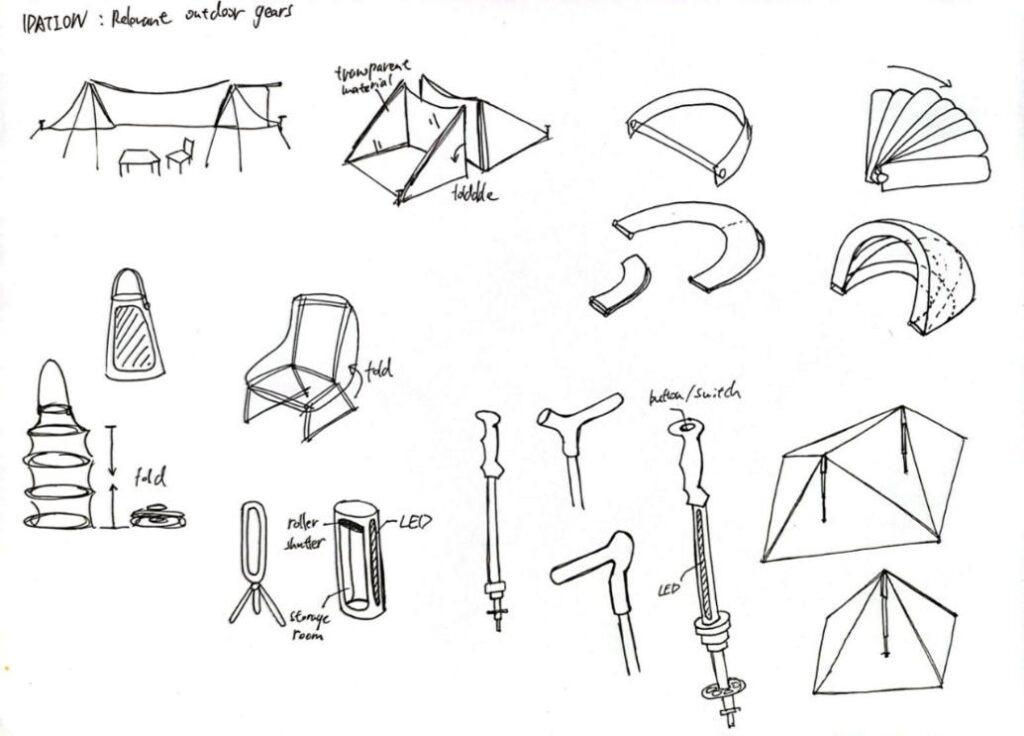
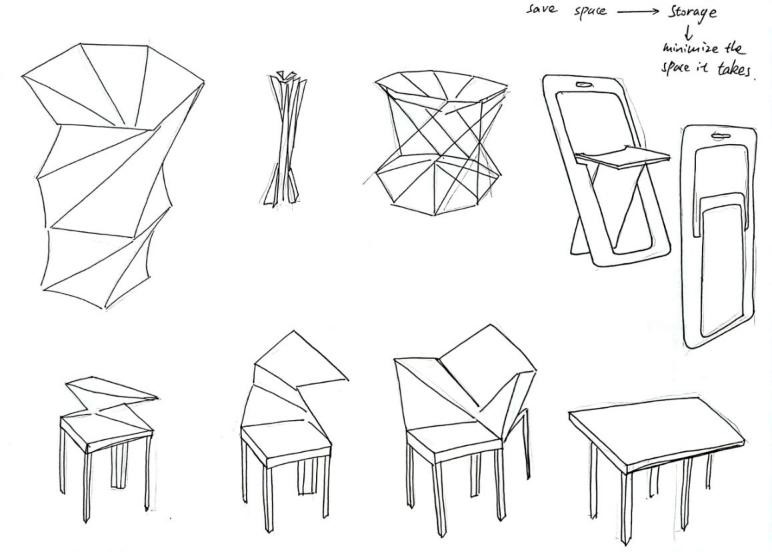
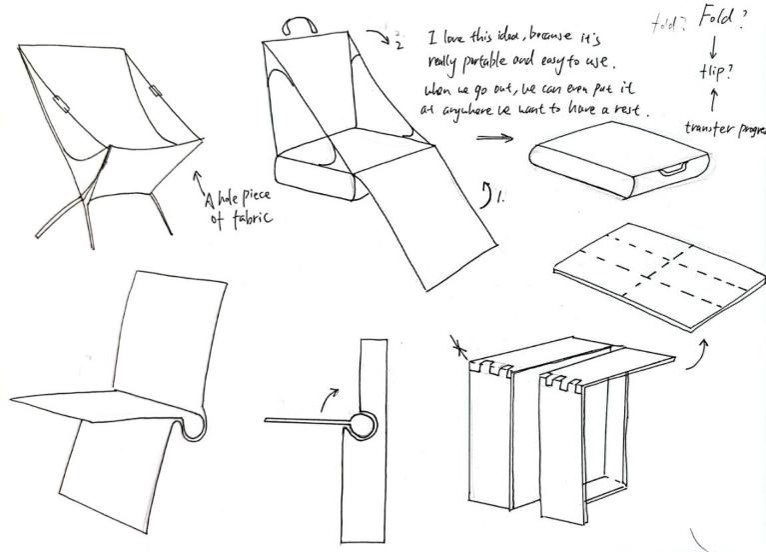
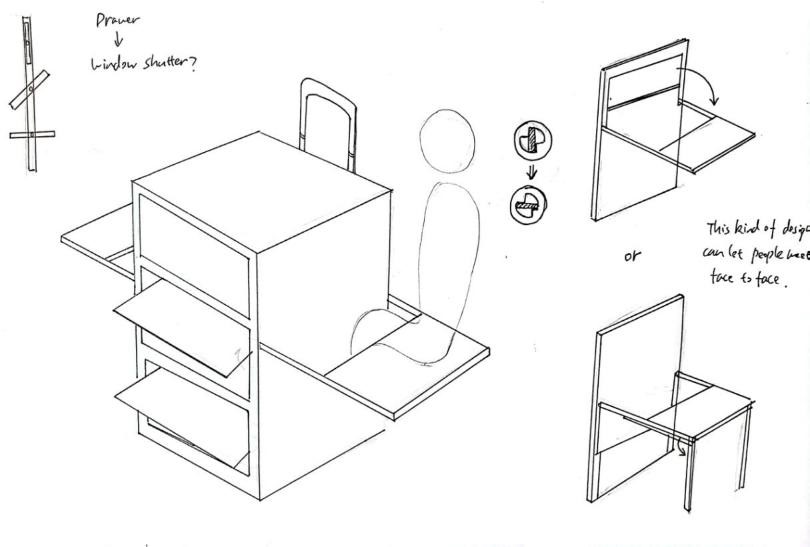
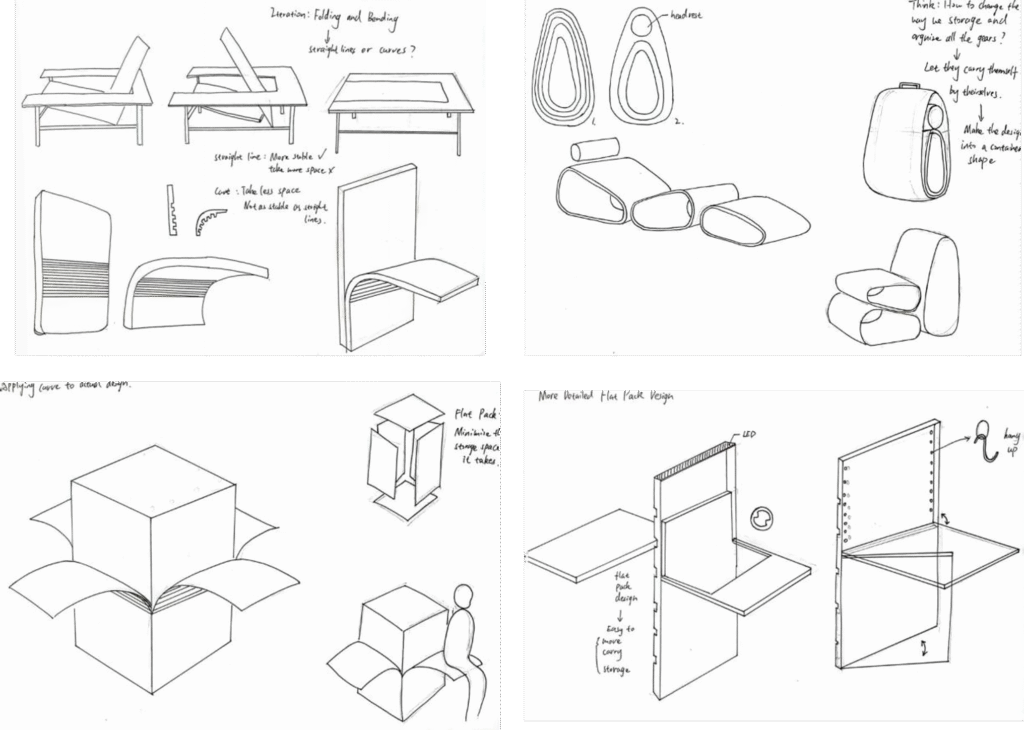
Initial sketches
Initial prototypes
• I began by exploring folding mechanisms. I created a conceptual folding module to simulate a chair. However, I soon realized that without additional support, the structural strength of this design was insufficient to fulfill its intended purpose.
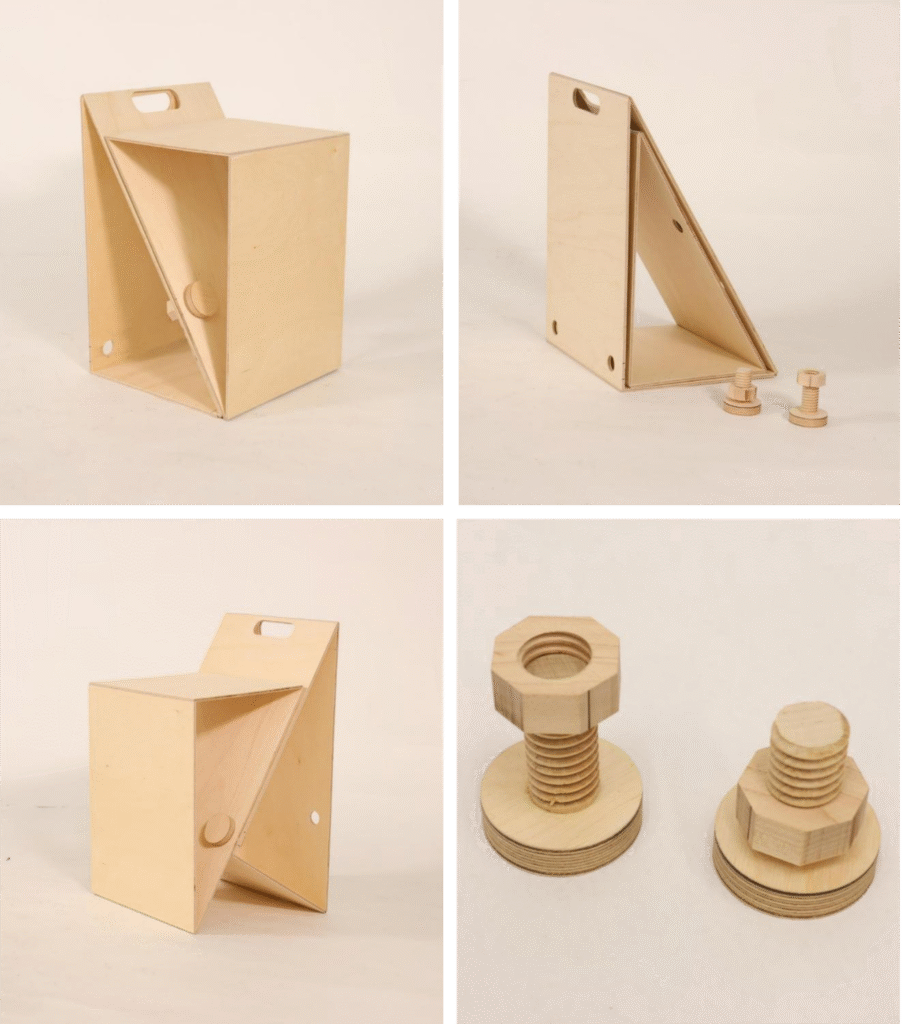
• Then, I began experimenting with designing a portable chair. Following the same approach I used for the table design, I aimed to use simple geometric shapes to create more possibilities. So, I used two triangles of different sizes as the two parts that can be freely combined into a chair and connected them with wooden bolts.
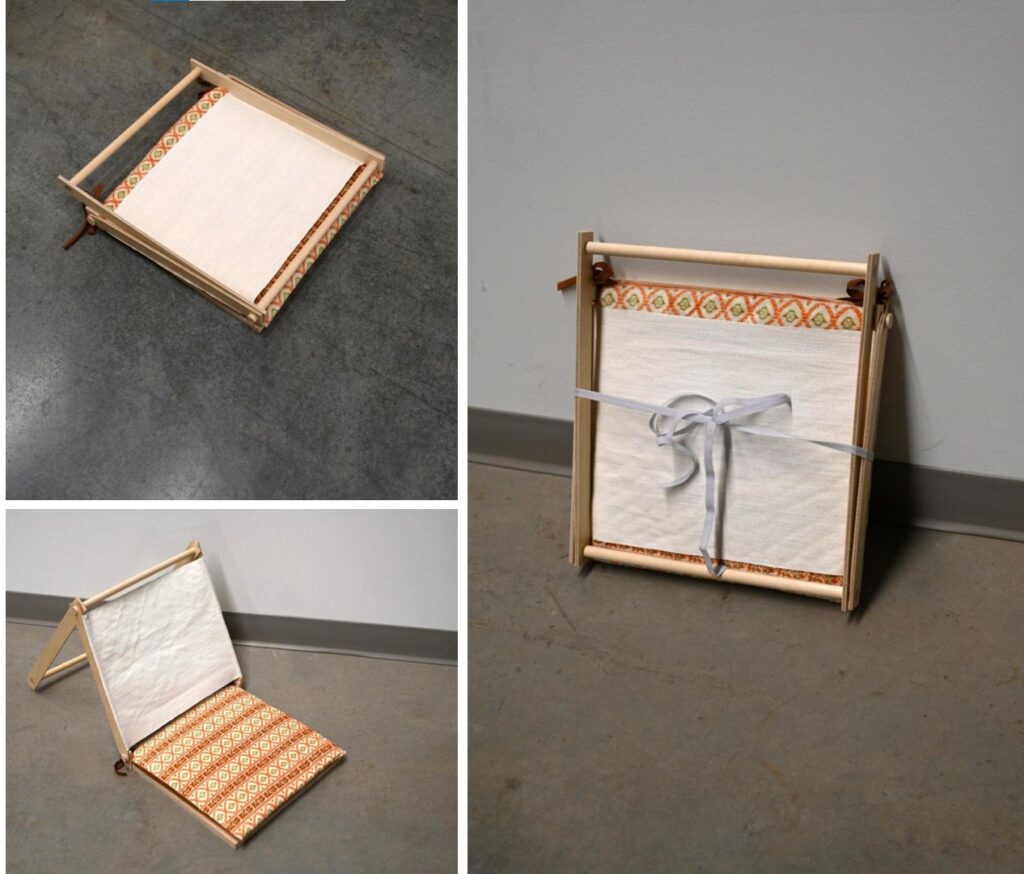
• After creating a bench that can be nested like Russian dolls, I began exploring different folding methods. This chair can unfold to provide a flat surface for users to sit on the ground. When stored, it can be collapsed into a shape similar to a suitcase, making it easy to carry.
• Building on the previous prototype, I simplified the folding process of the chair, aiming to make the transition between storage and use as straightforward as possible. In this prototype, the user only needs to pull the chair legs out from the storage state and then cover the seat surface to immediately use it.
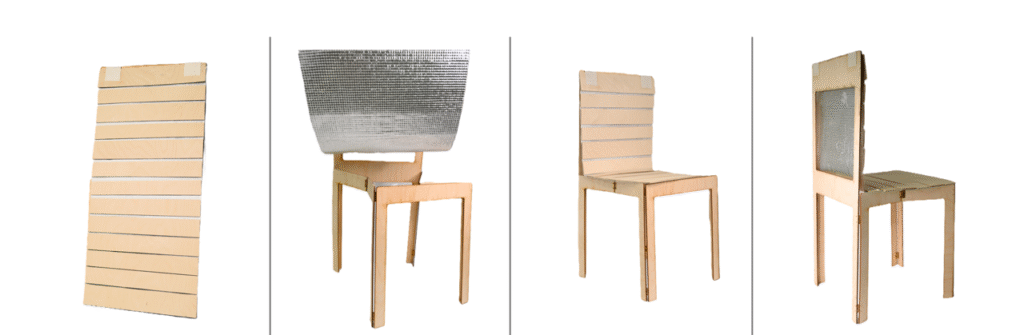
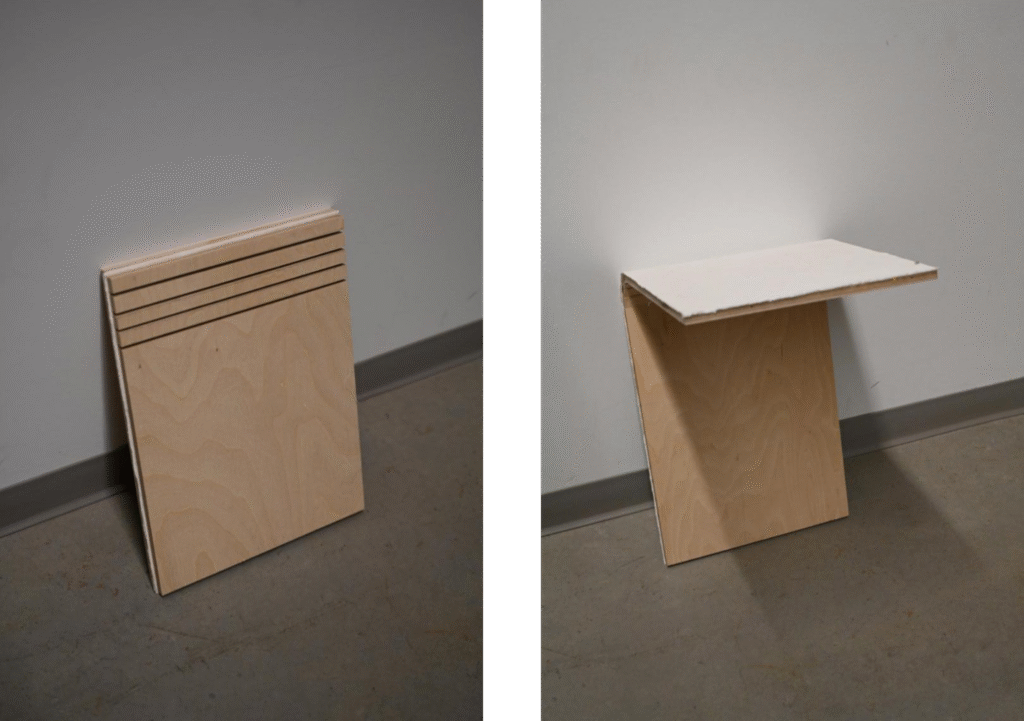
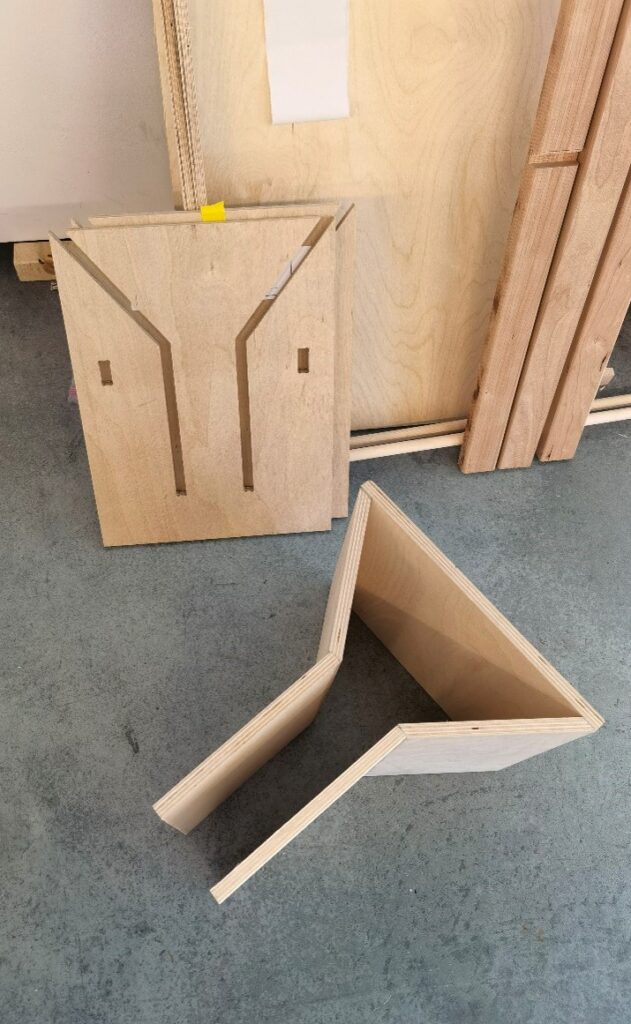
• Next, I explored the use of laser cutting to create a more stable and precise structure. This method allowed me to design a prototype where the chair could be stored as a completely flat surface, making it highly compact and space-efficient.
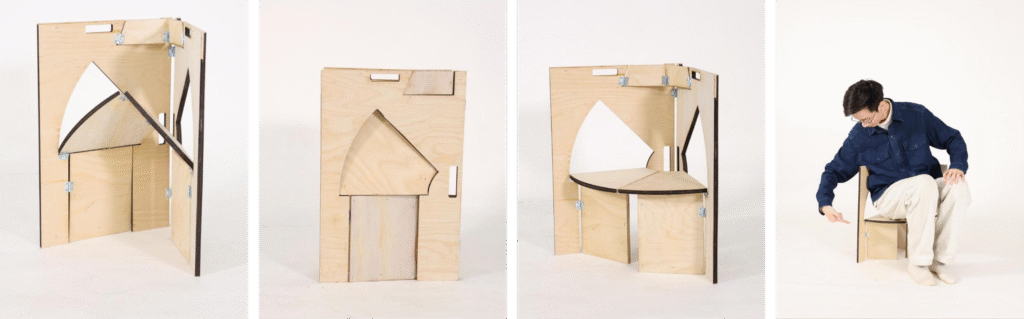
• For this prototype, I utilized just two pieces of plywood and a single rope to craft a lightweight, foldable chair capable of supporting an adult’s weight. This streamlined design demonstrated the potential for achieving both simplicity and efficiency.
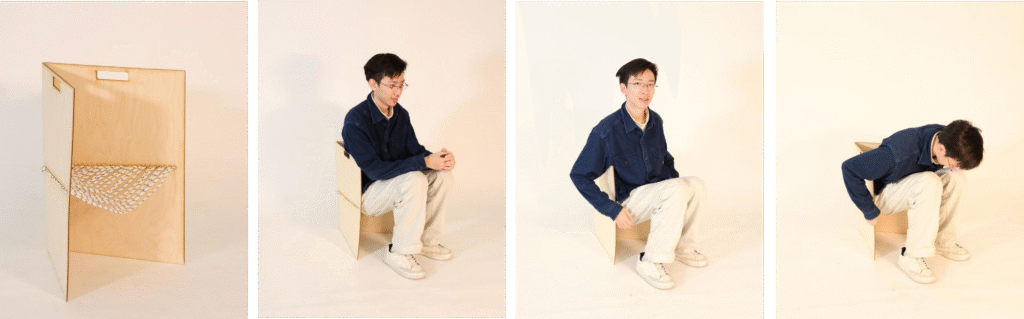
• Looking back at the existing prototype, I continued doing user testing with the version I had already built. Through those tests, it became clear that there were still quite a few areas that needed improvement—especially when it came to ergonomics and dimensions. Some users found the seating slightly uncomfortable or the proportions not quite right, which helped me realize that even small adjustments could make a big difference in overall comfort and usability.
Changing & Developing

• At the beginning of the project, my design focus was mainly on the portability of the product and its functionality for outdoor use. I aimed to provide a lightweight and practical solution for camping or outdoor activities through a folding structure. However, as the project progressed, I began to reflect on the product’s value and usage frequency in daily life. As a result, I shifted my design approach from “for outdoor use only” or “for a single scenario” to “multi-purpose and adaptable to various scenarios.” This means the product can not only be used as everyday furniture at home but can also be easily stored in the car trunk and taken to the campsite on weekends. This shift allowed me to achieve a better balance between functionality and aesthetics, while also enhancing the convenience and overall experience for the users.
Making
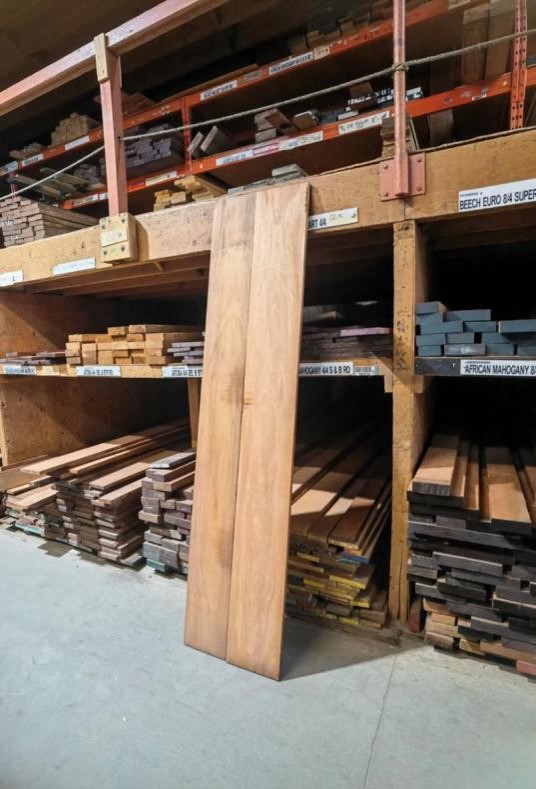
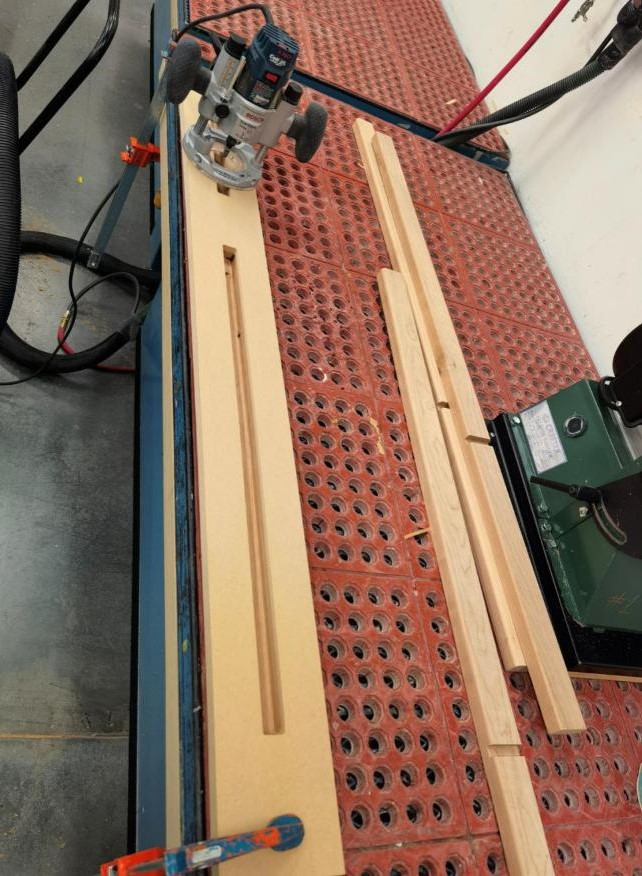
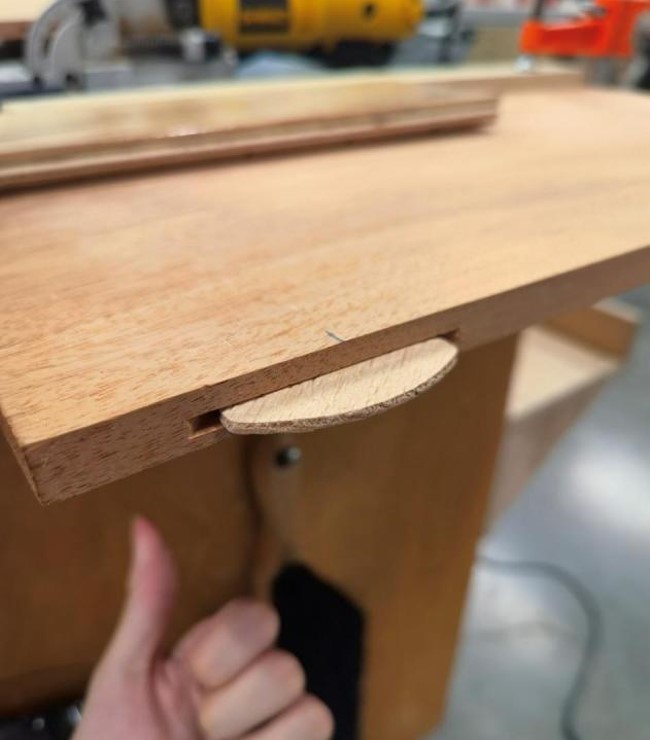
Final outcome
•FLEX I
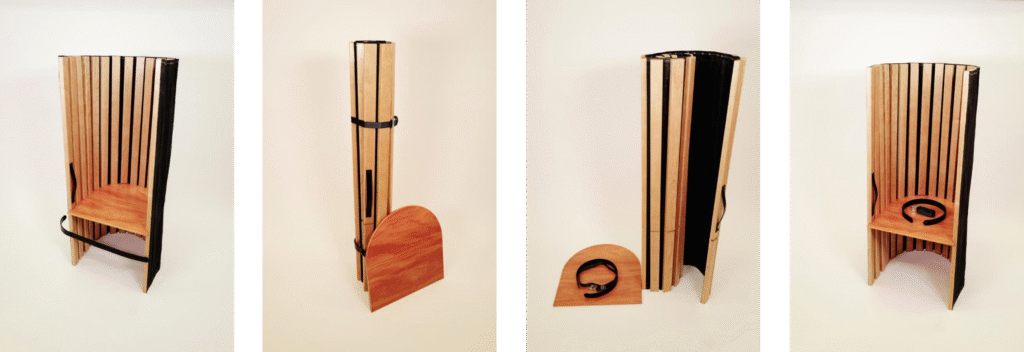
• This is the first piece in the series and represents the home-style direction of the project. It’s a high-back chair that can be rolled up for storage. The image here shows how it transforms from its compact, stored form into a full seating setup, balancing comfort with space-saving design.
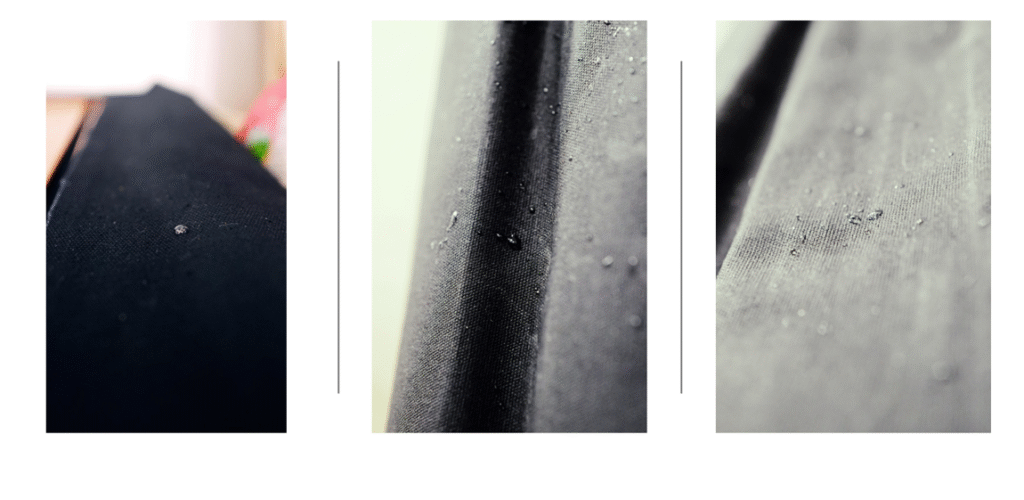
• After completing assembly it, I conducted a waterproof test, and the results were excellent—the water beads did not penetrate the waxed canvas but instead rolled off easily, confirming its effectiveness for outdoor use.
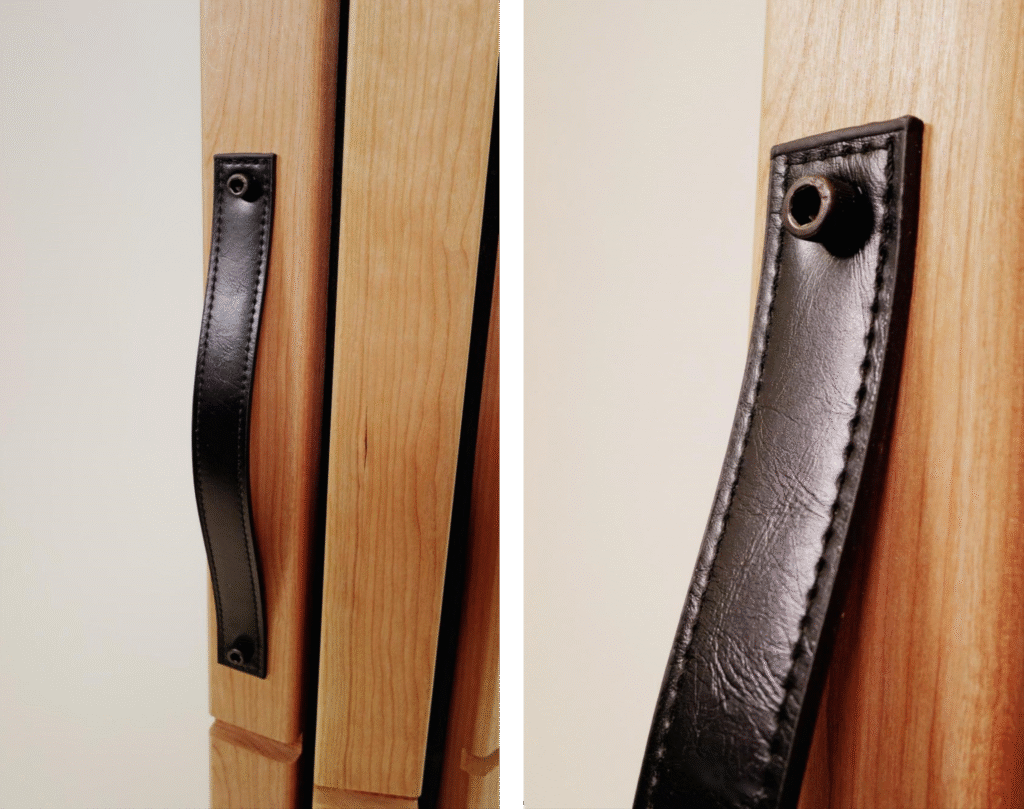
• Here are some detailed photos showcasing the leather handle and strap connections. These elements highlight both the craftsmanship and the functional design that contribute to the piece’s overall durability and aesthetic appeal.
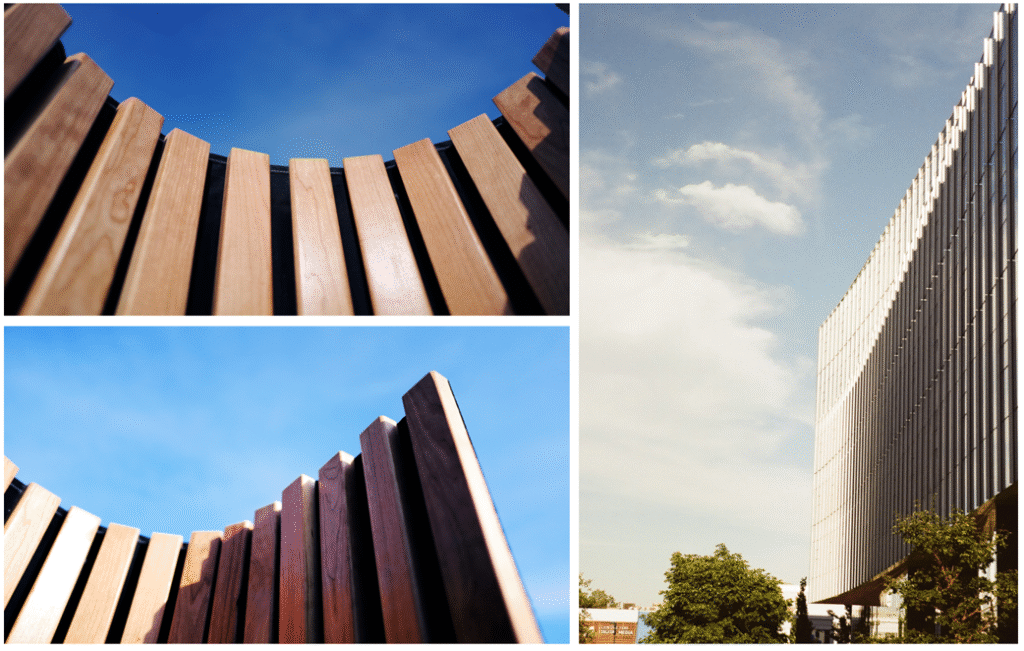
• While making this chair, I was also thinking about how to incorporate architectural elements into the design. As shown here, I created a tall backrest—not only to wrap around the user for comfort and privacy, but also to echo the vertical lines of buildings. The idea is that when the user looks up while sitting, they experience the sky from a different, more intentional perspective.
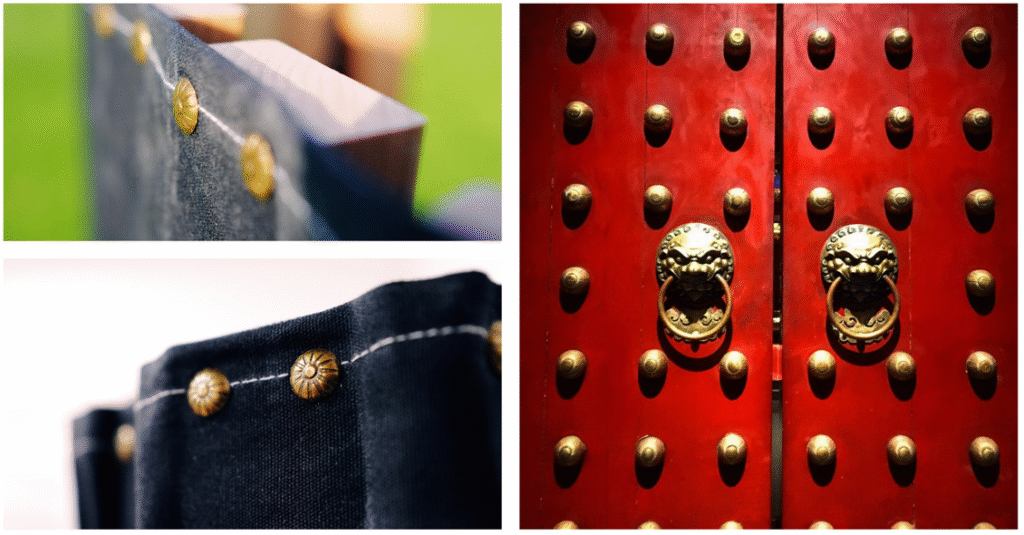
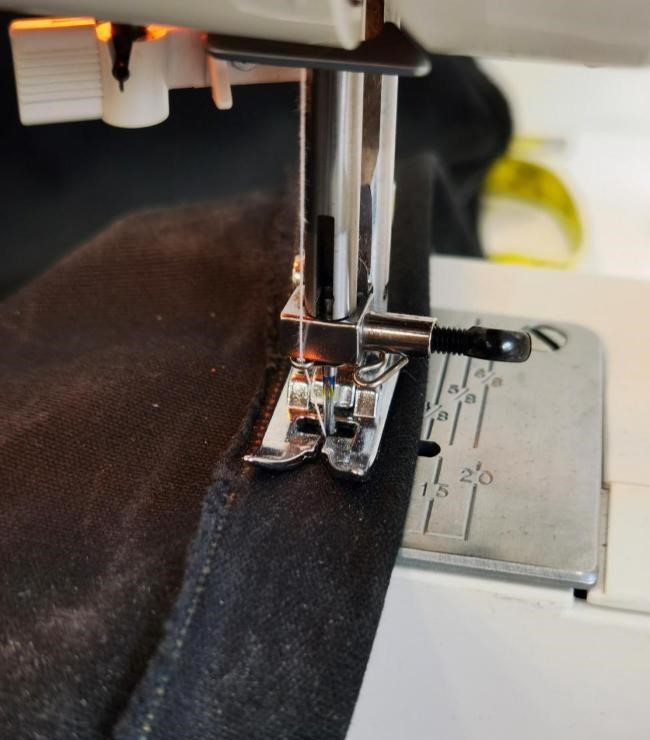
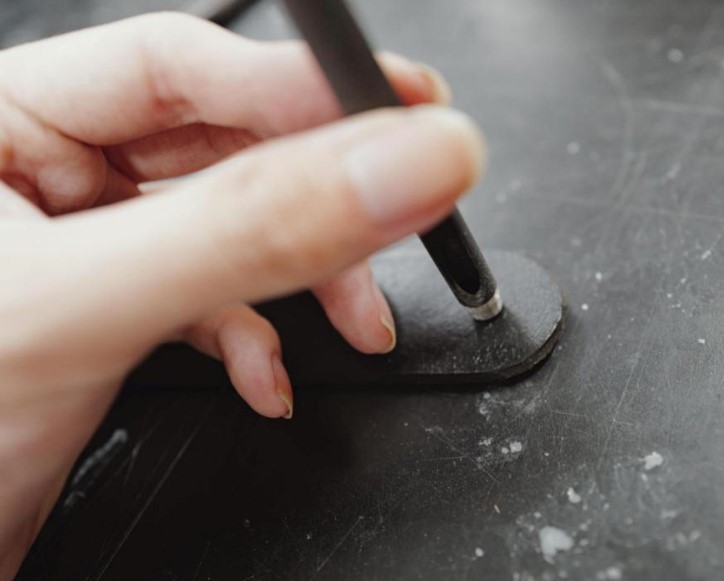
• At the same time, I used rivets to secure the waxed canvas to the chair frame—this was a subtle nod to the decorative studs found on traditional East Asian architecture. The rivets not only hold the fabric firmly in place, but also allow users to remove and re-wax the canvas when needed, extending the product’s life and avoiding a disposable design approach.
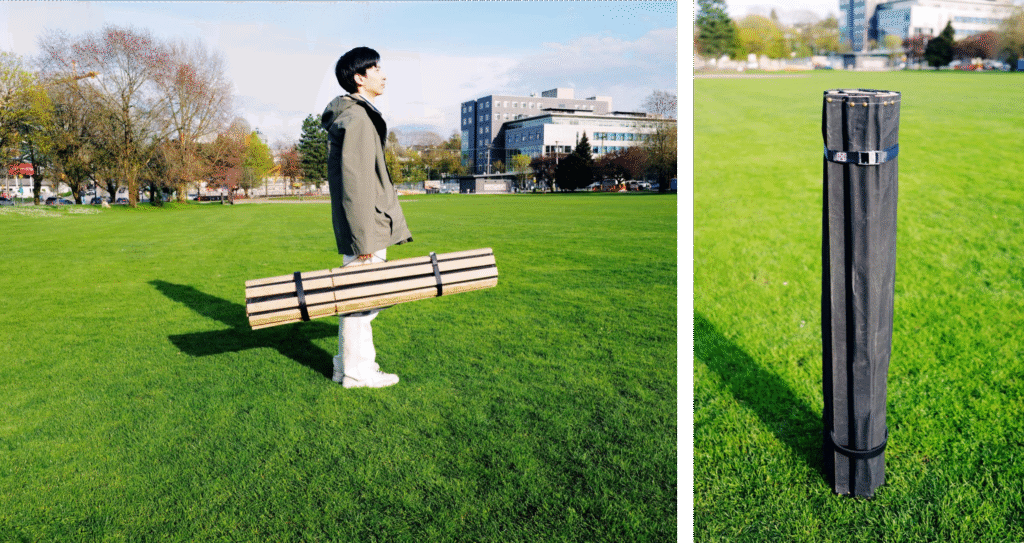
• As shown in the image, it can be rolled up and packed in two different ways—either with the cherry wood facing outward, showcasing the handle, or with the waxed canvas on the outside for a softer, more flexible appearance. This offers users versatility in both look and function during transport.
•FLEX II
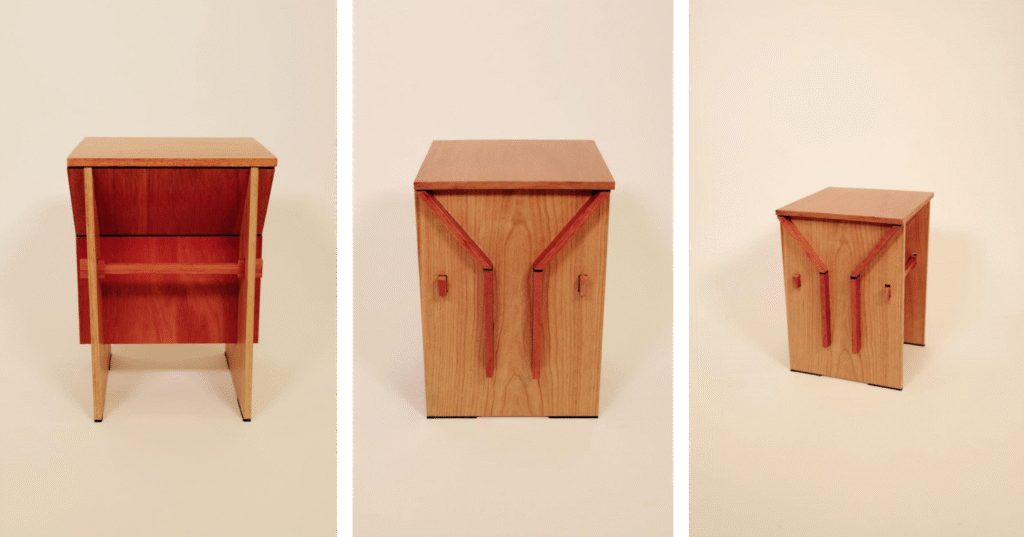
• This is the second piece in the series, reflecting the project’s outdoor-focused direction. It’s a fully flat-pack stool, refined from earlier prototypes with improved height and handle placement for better ergonomics and comfort in outdoor settings.
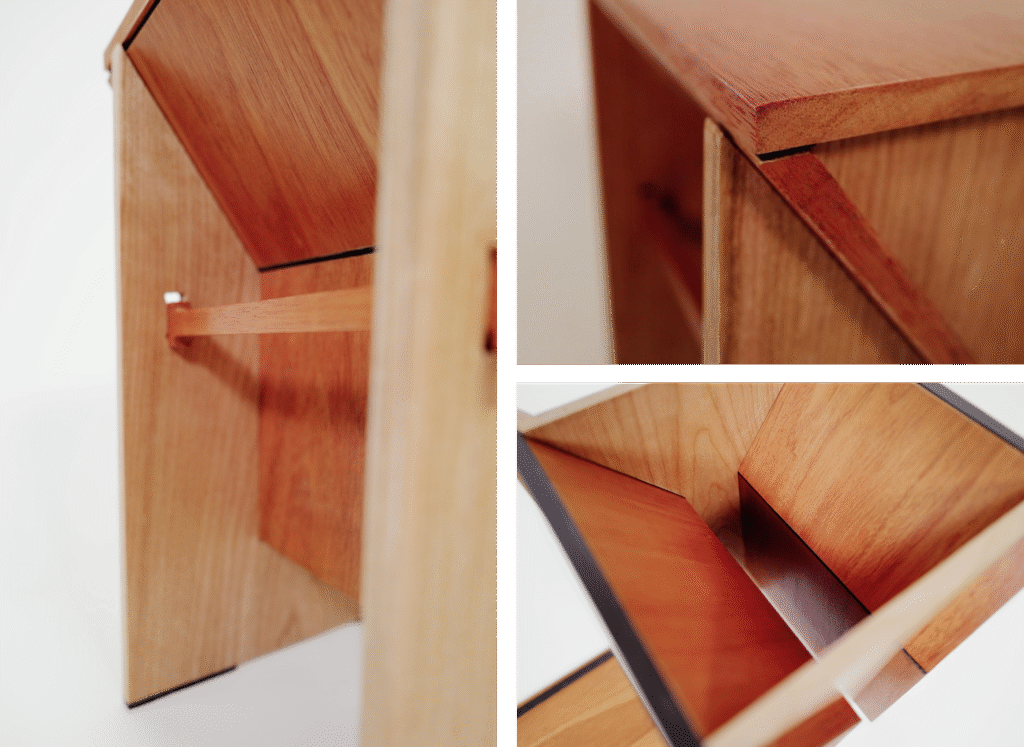
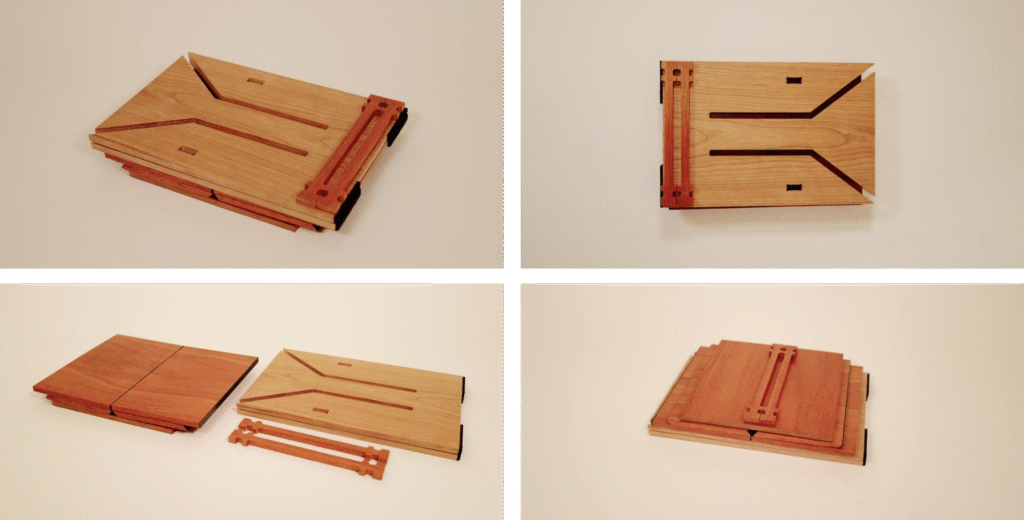
• I used mahogany to create the magnetically connected frame and cherry wood for the outer supports, making it easy for users to intuitively understand how to assemble the stool. My goal was to balance architectural aesthetics with playfulness and functionality. When fully packed, the stool even resembles a face, adding a fun visual element. It also includes waterproof non-slip pads to ensure stability and usability in almost any outdoor environment.
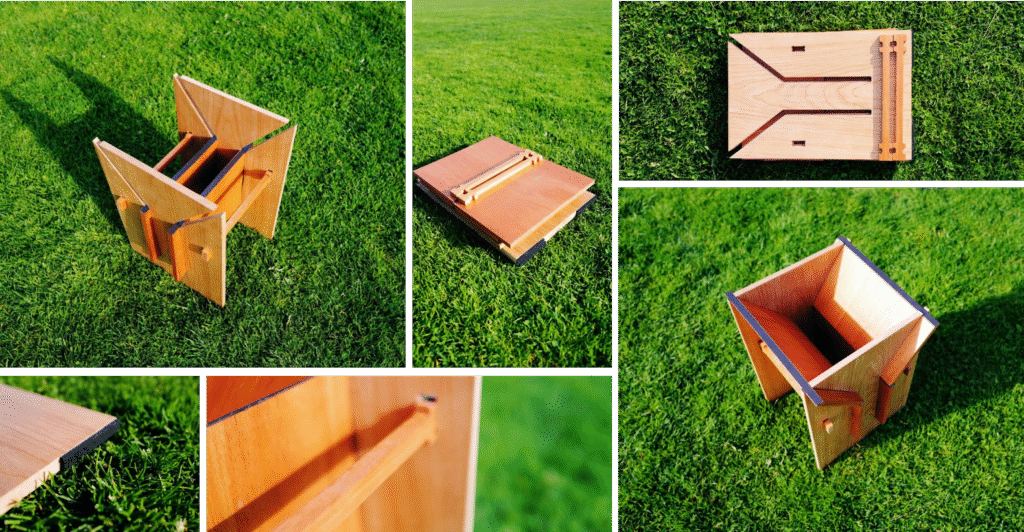
•FLEX III
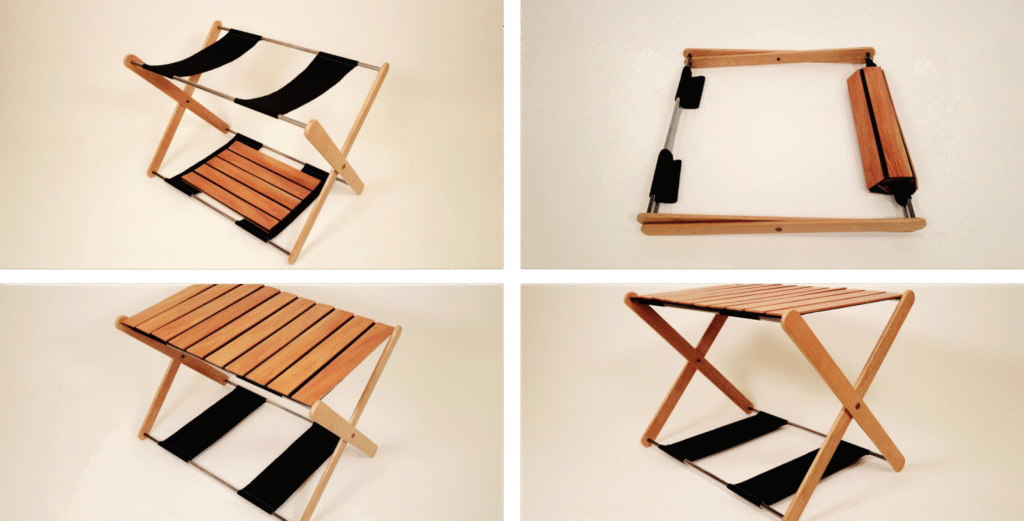
• This is the third piece in the series, designed to bridge both the home-style and outdoor-style directions of the project. For transport, the tabletop can simply be rolled up, with the legs neatly wrapped inside for easy carrying. When set up, the upper section of the frame supports the tabletop, while the lower section provides space for storing personal items or gear, making it both practical and versatile in different environments.
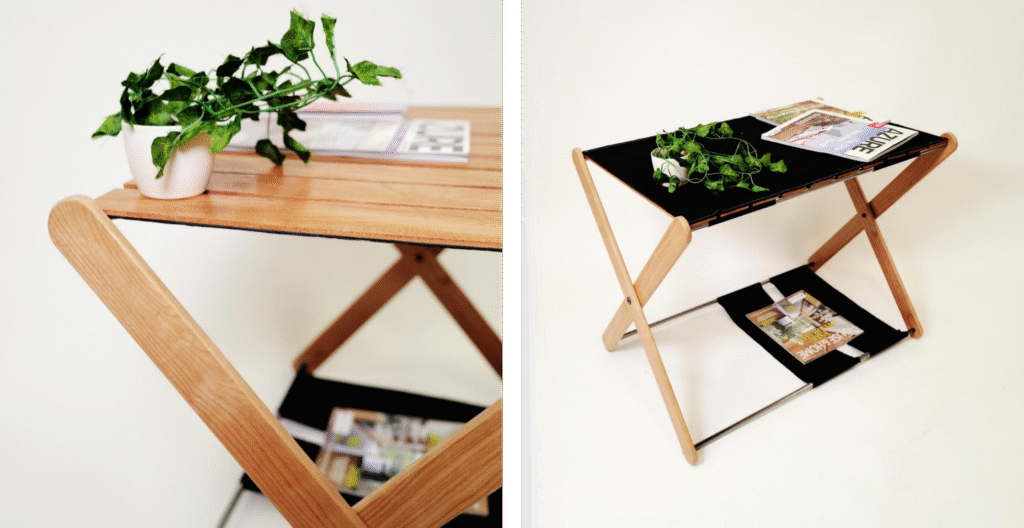
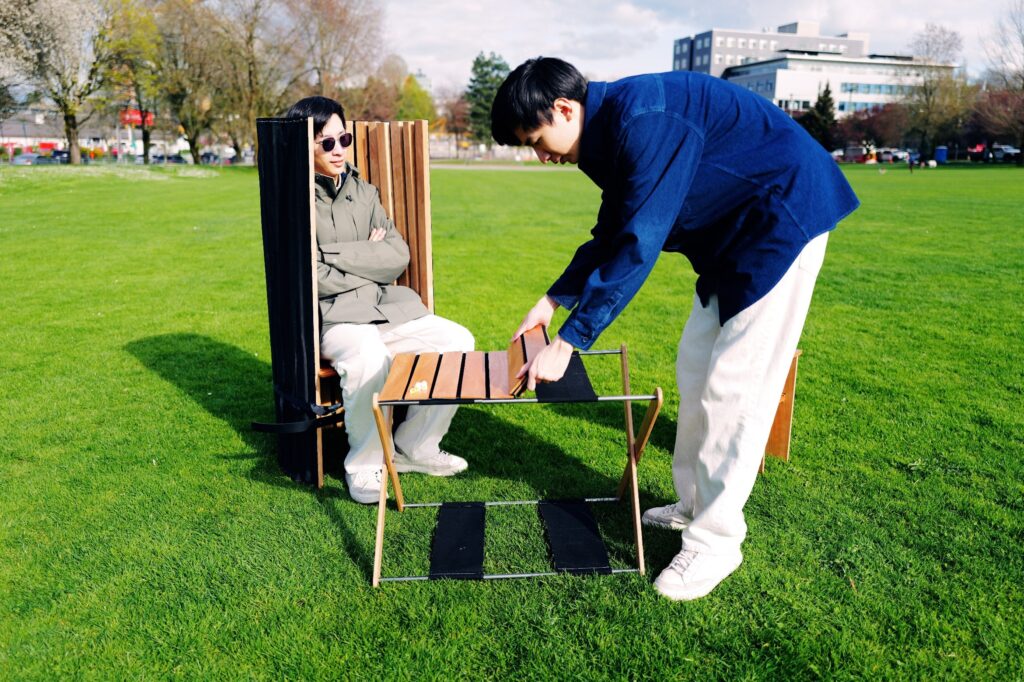
• Inside each tabletop panel, I embedded magnets, so the surface securely attaches to the waterproof-coated metal support beams. This prevents the tabletop from shifting or sliding, giving users peace of mind that their items won’t fall due to instability. Additionally, the tabletop is reversible—users can flip it depending on the setting, choosing between a waxed canvas surface for outdoor use or a mahogany wood surface for indoor environments.
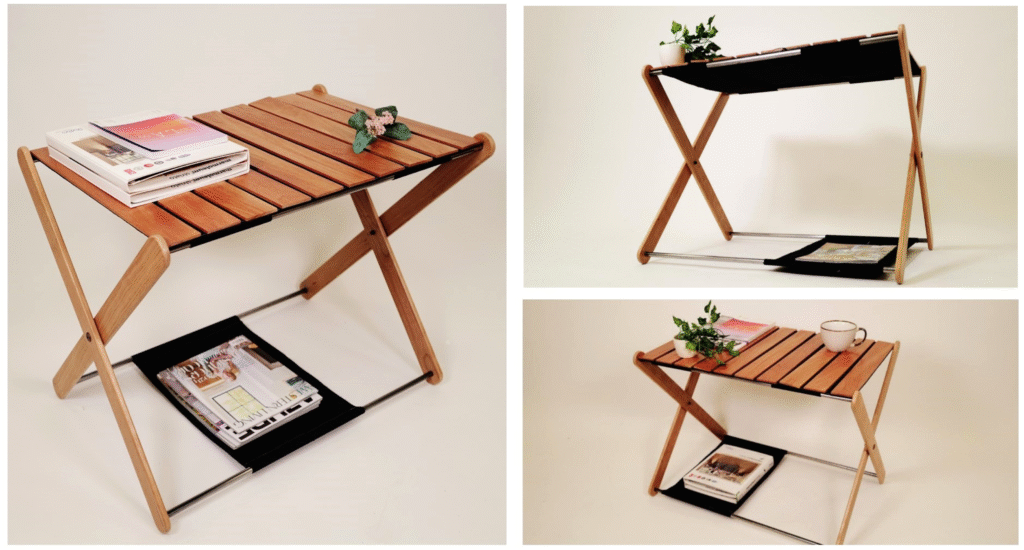
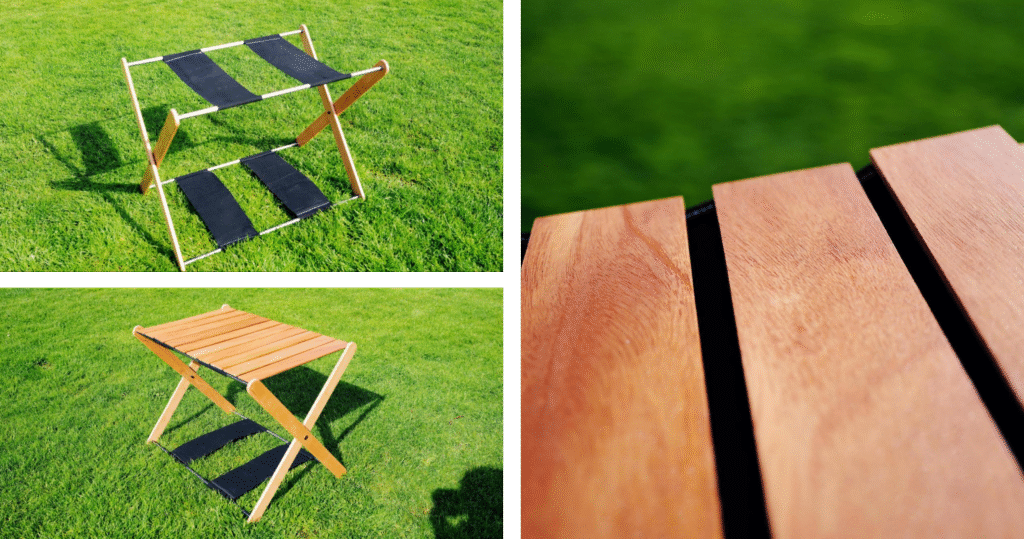
• Indoor and outdoor usage scenarios