a language i almost speak
tannaz amineh saatchi
See it On Campus: Level 2
a language i almost speak
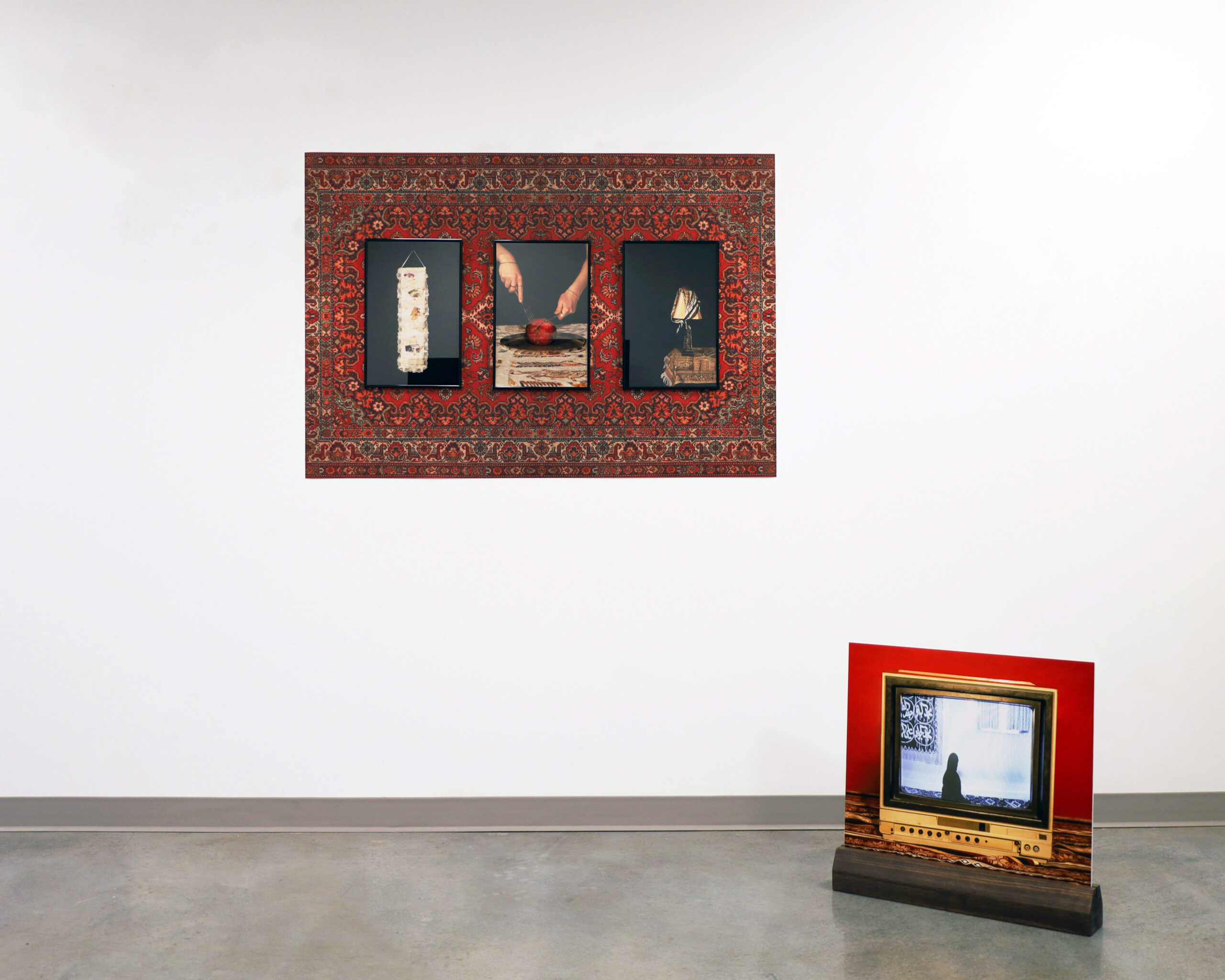
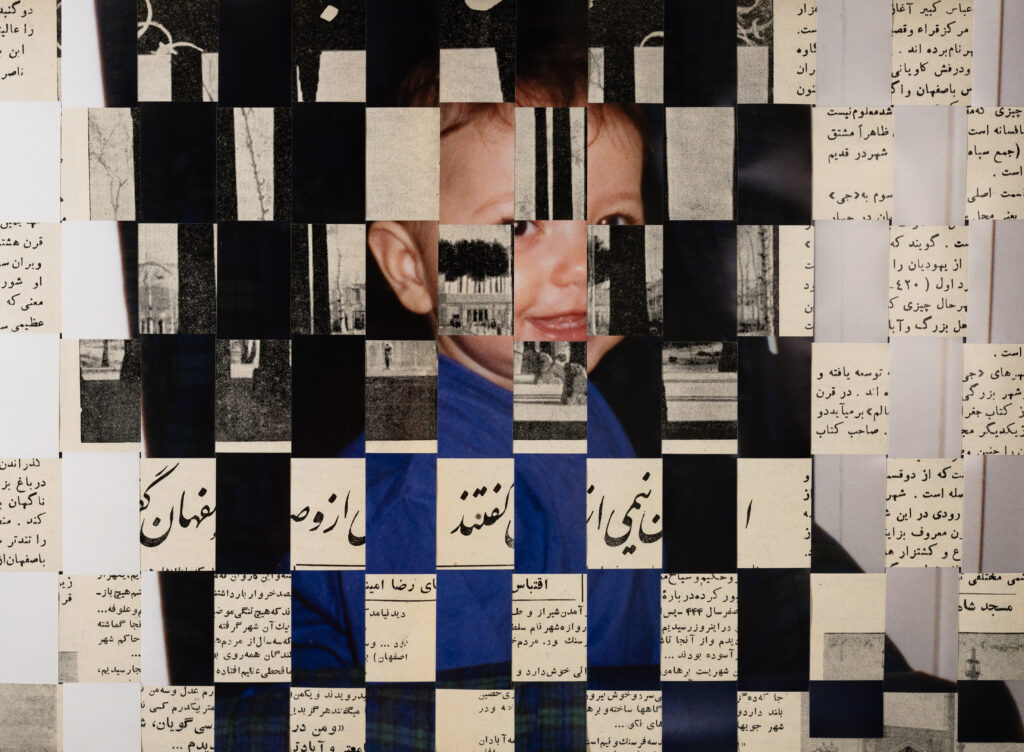
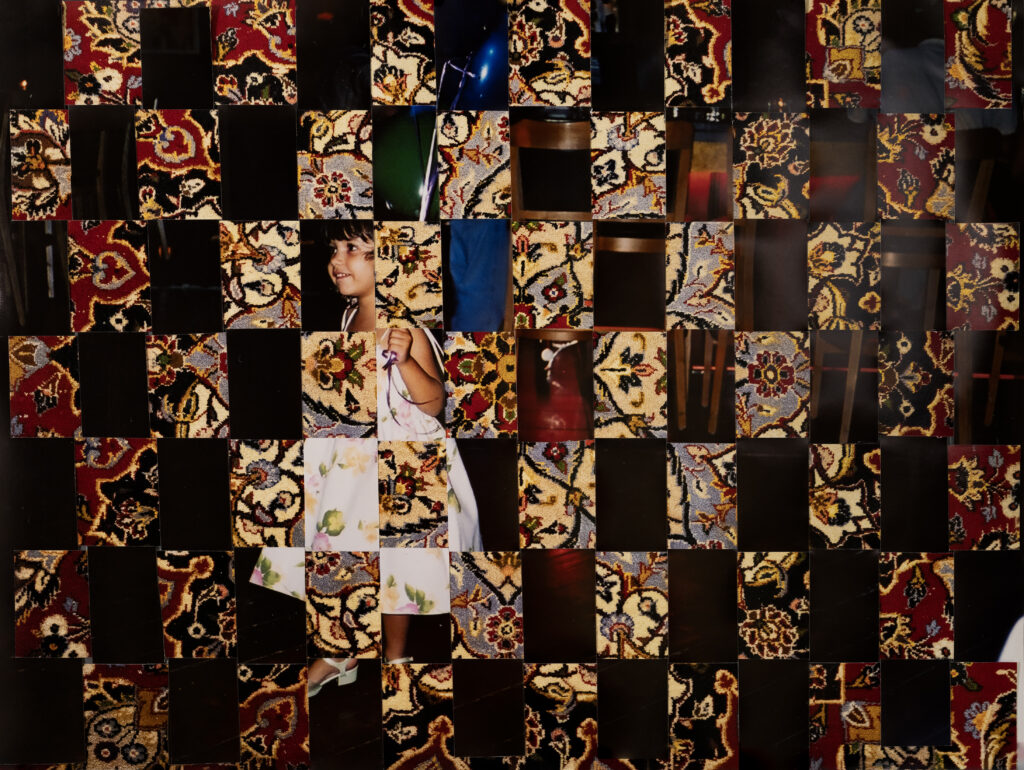
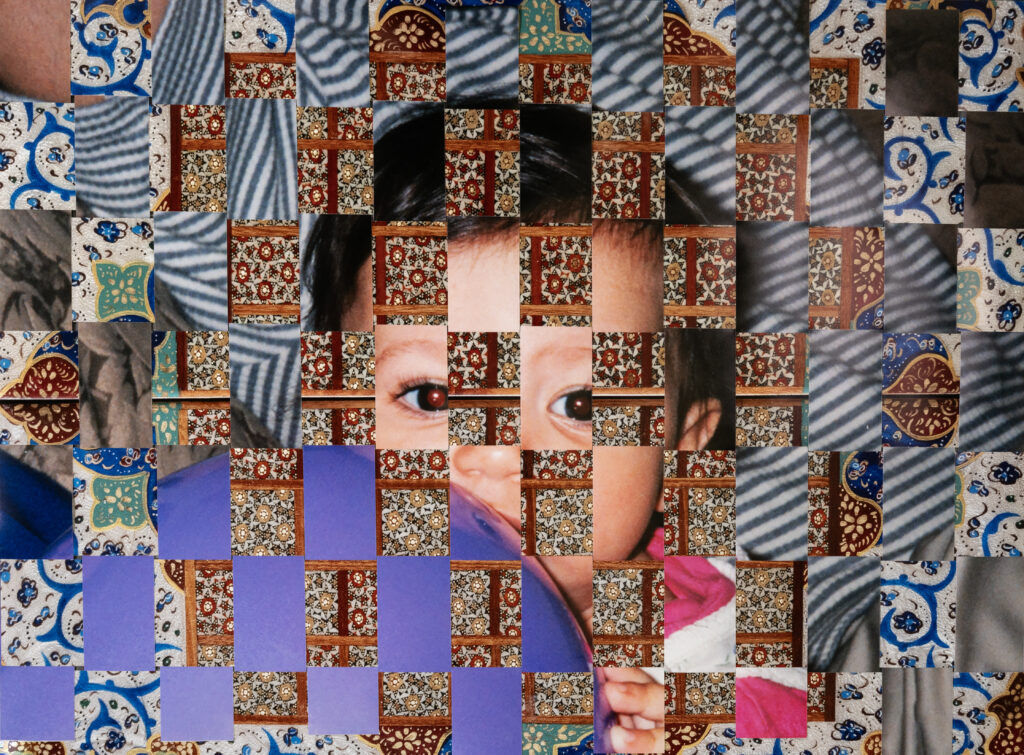
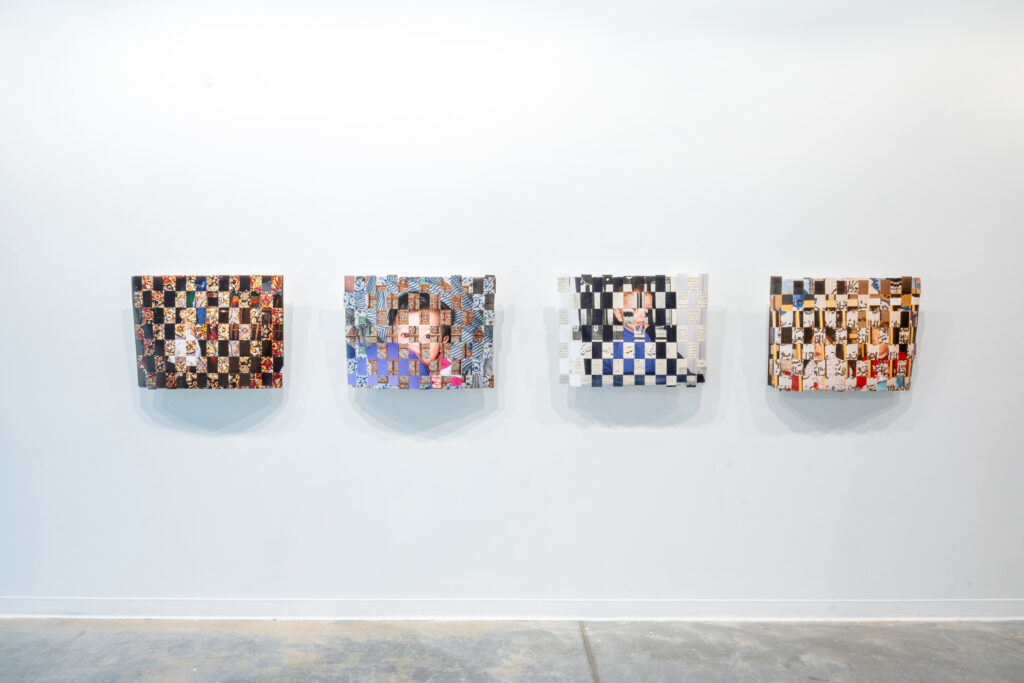
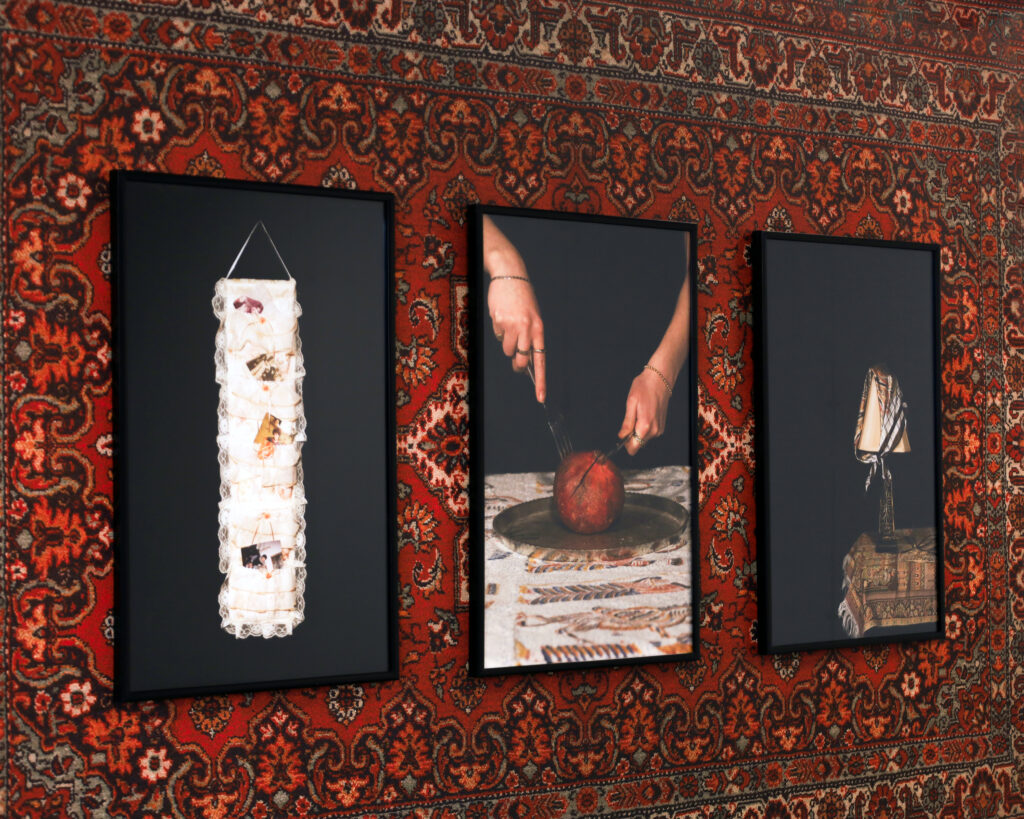
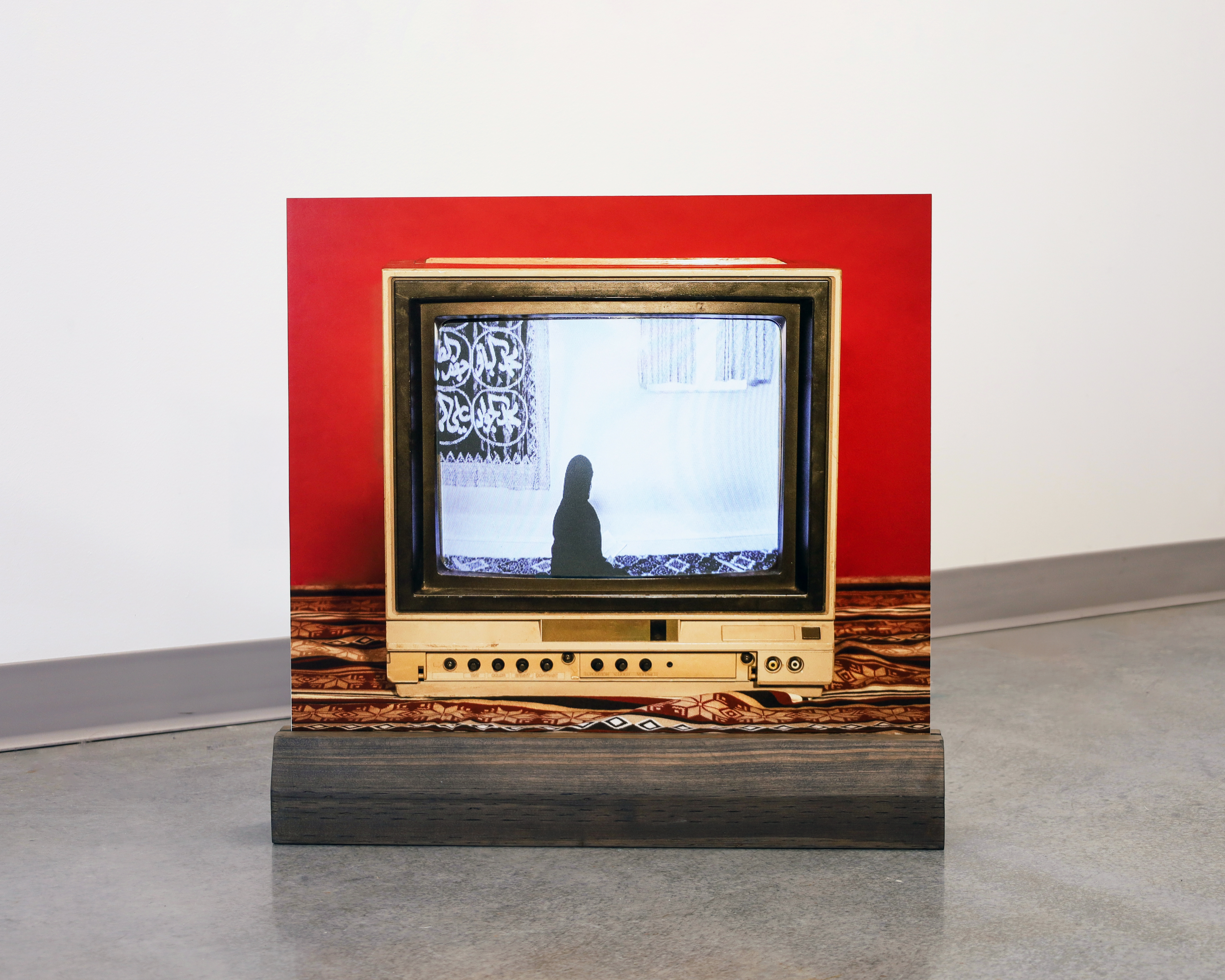
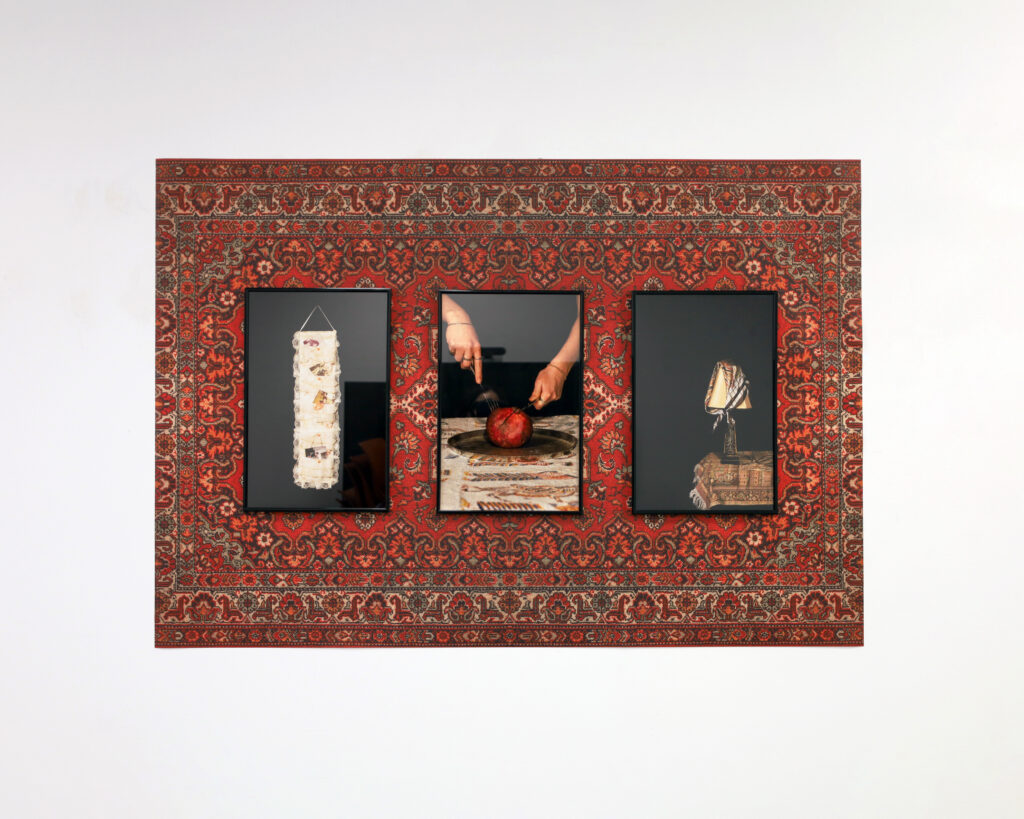
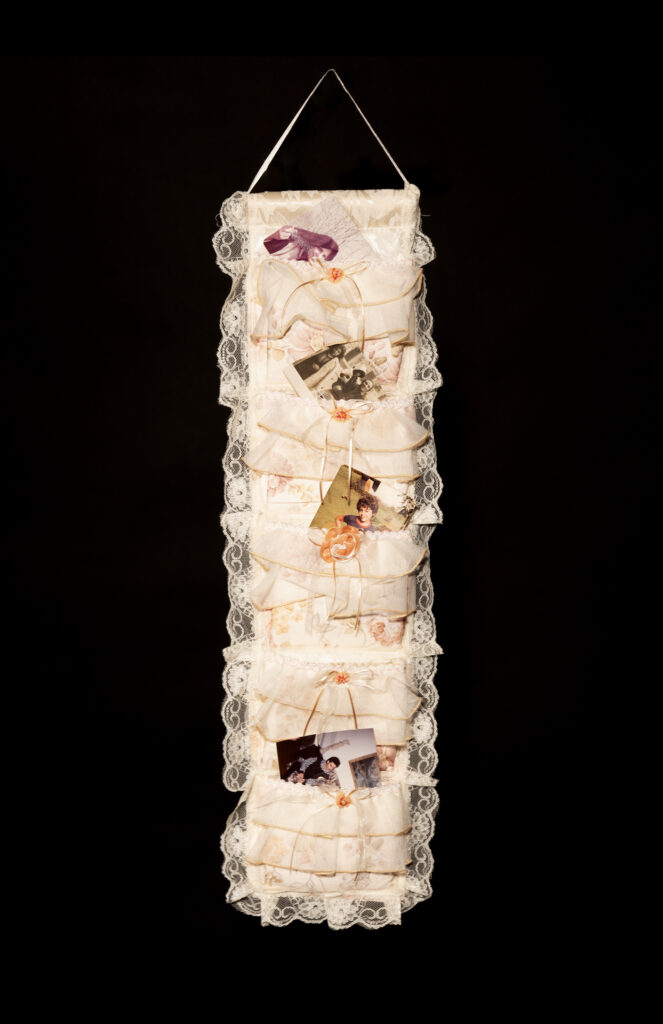
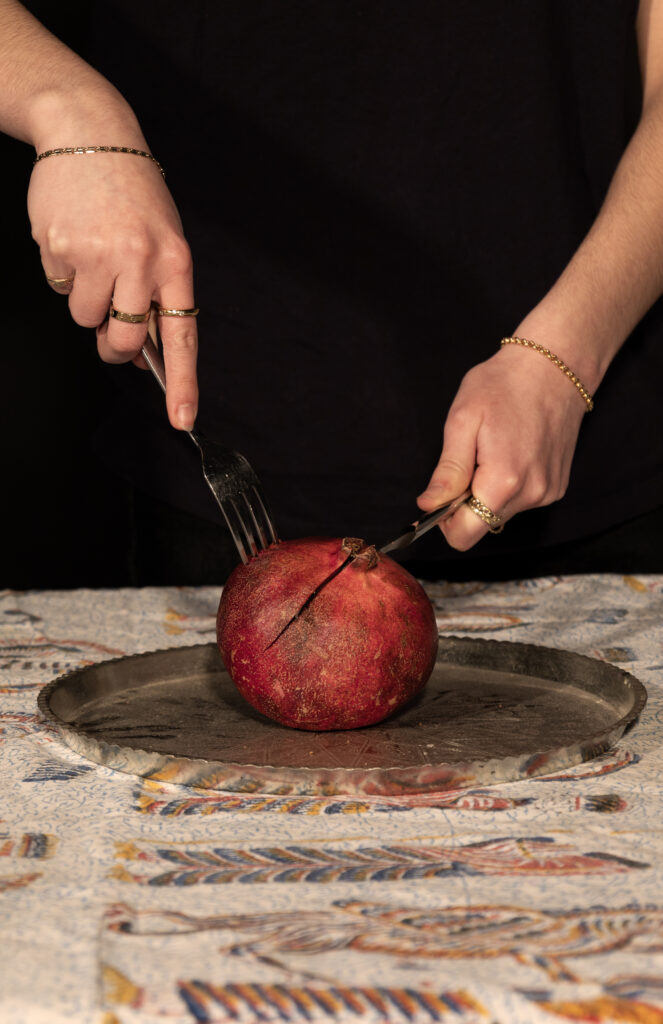
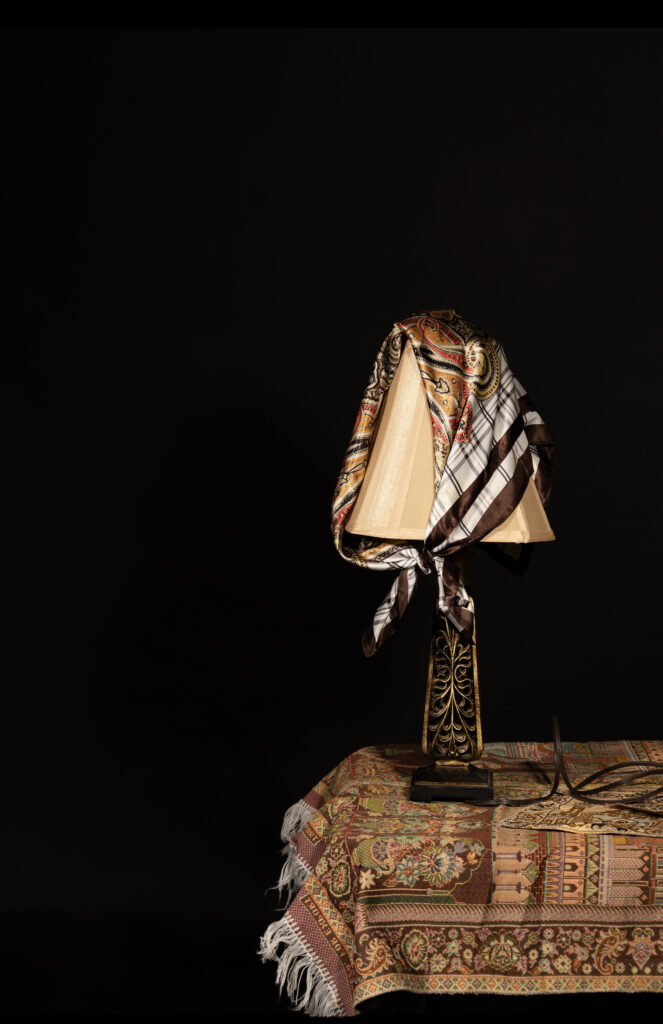
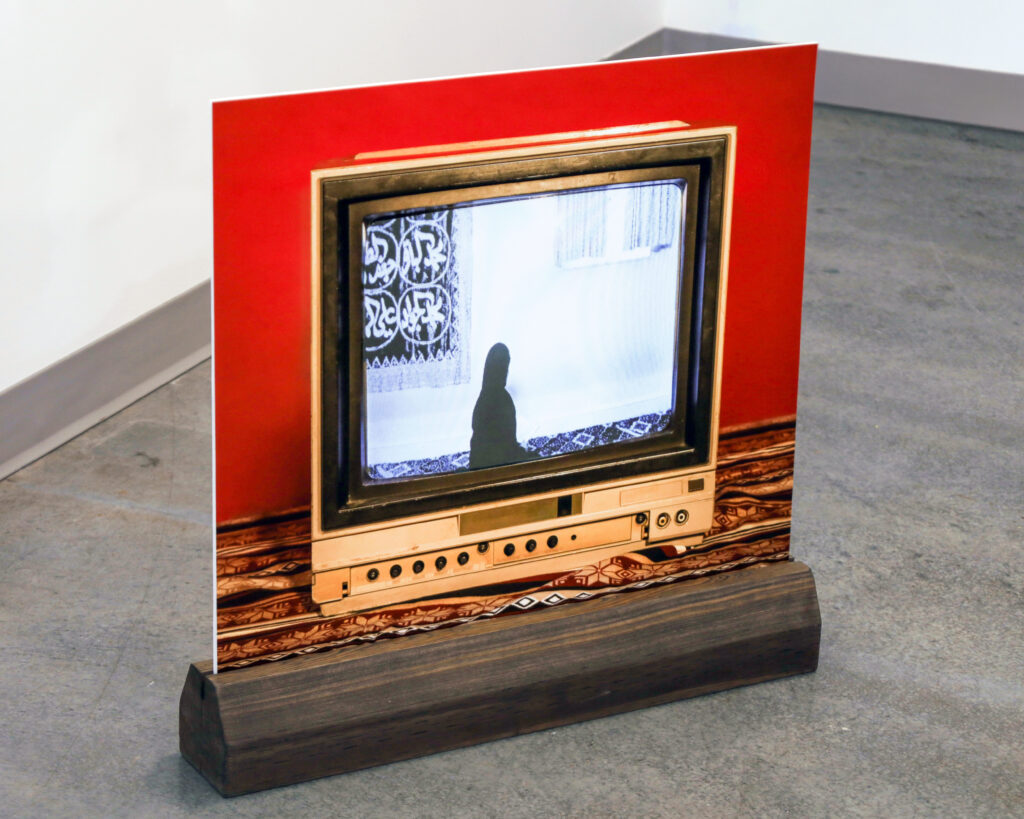
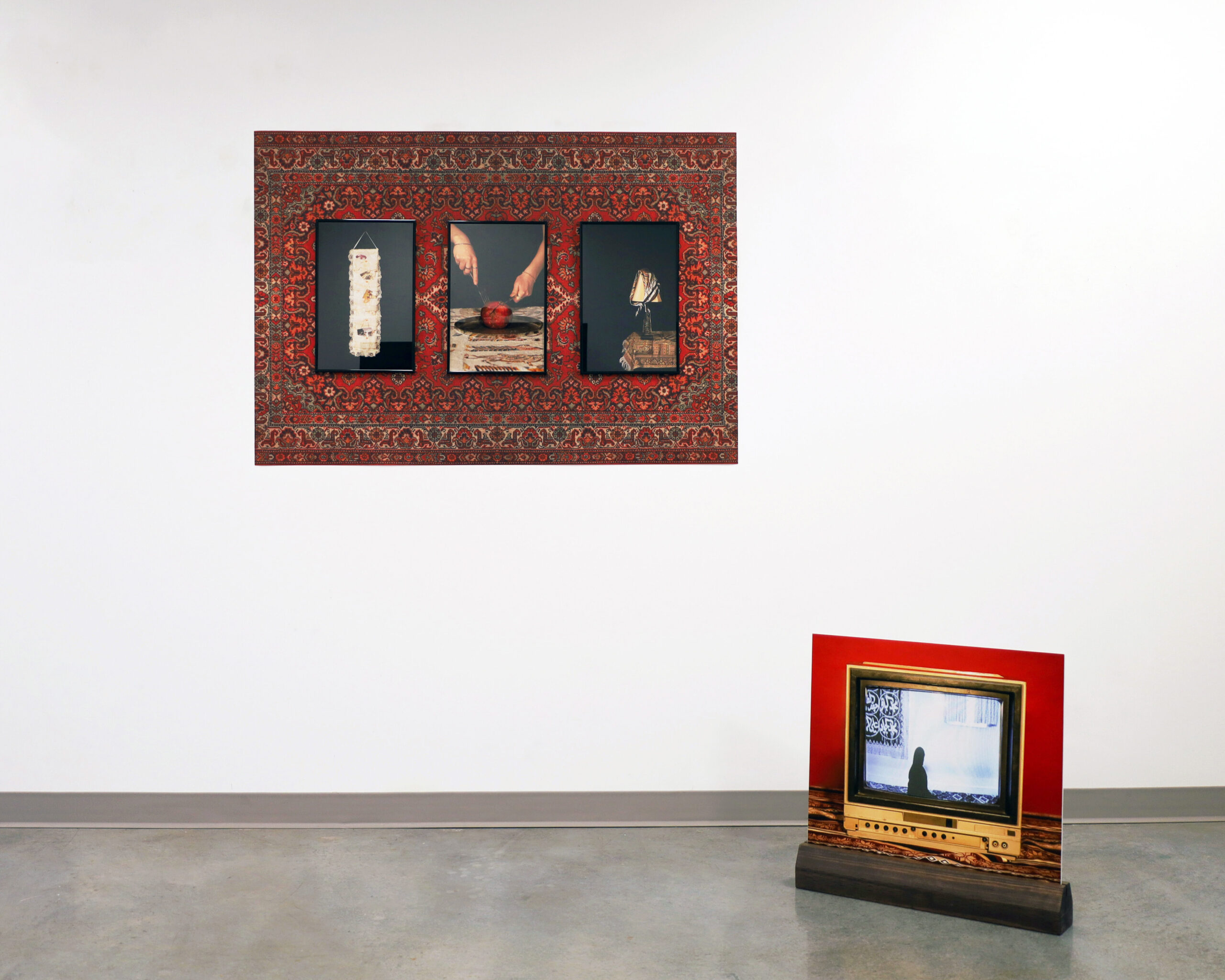
a language i almost speak, 2025, 80 x 60″, archival inkjet prints, wood display stand.
As a second-generation immigrant and a product of the Iranian diaspora, my culture is something that has been woven into my being. My cultural identity never came naturally to me, as all connecting and understanding of it had to be taught to me through a second-hand lens. My father’s side of the family was a victim of the Iranian revolution in 1978. My father was forced to flee his homeland as a child, migrating across a plethora of countries throughout his upbringing until finding his way to Canada in his late adolescence. Although grateful for what Canada was able to give him and his family, this land has never been somewhere he has been able to truly call home, forever tethered to the strings connecting back to Iran. Now residing in Vancouver for 35 years, my family and I still have not been able to go back to Iran due to past relations, my father’s love for his country has remained strong in his heart, and because of that, my Iranian culture has been interwoven into my self-identity for as long as I can remember.
I have always spent my life trying to feel my culture in ways that feel genuine, but it still always felt unauthentic as I had only experienced it through a Westernized lens. I have always tried to experience it without feeling performative, but it always ended up feeling that way. This work taps into the performativity that I often pushed away, and instead, I embraced it. With a series of still lives that feel both odd and different, I further play with this idea of having unconventional items in a studio space and hone in on the performativity of feeling my culture. I touch on these feelings and emotions and reveal objects that hold significance to me and my upbringing, as well as a connection to my culture.
a language i almost speak is a blend of both my Middle Eastern and Western experiences, watching the two merge and converge with each other. These intersections between my Iranian cultural upbringing through a Westernized lens created a completely different outcome than it could have been, transforming the initial understanding of what this might represent. I captured the disorienting and performative feeling of being caught in between, unsure of which side to gravitate toward. Like the work itself, I am visually more Middle Eastern, but a closer look reveals Western influences, exposing the intersections between my Middle Eastern and Western identities. I represented both theses, focusing on the meaning embedded in the objects as well as representing this all through installation, incorporating elements, colour, materials, and motifs that carried throughout the entirety of the work.
Other Exhibitions
Capture Photography Festival Selected Exhibition, Piggybacks through the Living Room 2025 at Unit302
Piggybacks Through the Living Room reaches across memories, objects, and images toward kin and culture, near and far. Emphasizing immigrant memory, artists Geoffrey Lok-Fay Cheung, Claudia Goulet-Blais, Andrew Ina, Tannaz Saatchi, Eknoor Thind, and Parumveer Walia each activate the archival to stipulate its possibilities, while prodding at its slippages and illegibilities. These gestures reveal the complexities of (be)longing and study the most urgent unit of the social: the family.
Located in the historic Edward Hotel, the out-of-use space stands witness to the flux of urban Vancouver and embodies its constant evolutions. In activating the site, the artists seek to situate themselves in Vancouver’s shifting landscape.
For Saatchi and Ina, cultural materials such as Persian rugs, wallpapers, and books are used alongside the family photo to access distant memories and trace the contours of their Middle Eastern heritage. Cheung’s installation, Inadequacies of Care, similarly charts an immigrant experience of family and the labours of accessing ancestries obfuscated by time and space. Such an obfuscation is used to summon the spectre in Walia’s Letters to Reagan, wherein images of those lost to the AIDS epidemic represent a could-have-been family, present in memory but lost in form. Goulet-Blais and Thind employ a mix of staged and archival imagery using the camera and portraiture as a means of developing relationships – Goulet-Blais with her mother, and Thind within her home.
The camera, the impulse to record, and the image all become modes of sense-making, and Piggybacks Through the Living Room maps itself on this premise, anchored to the familial despite the flux of shifting times.
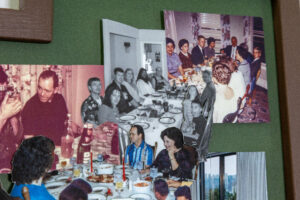
around the kitchen table
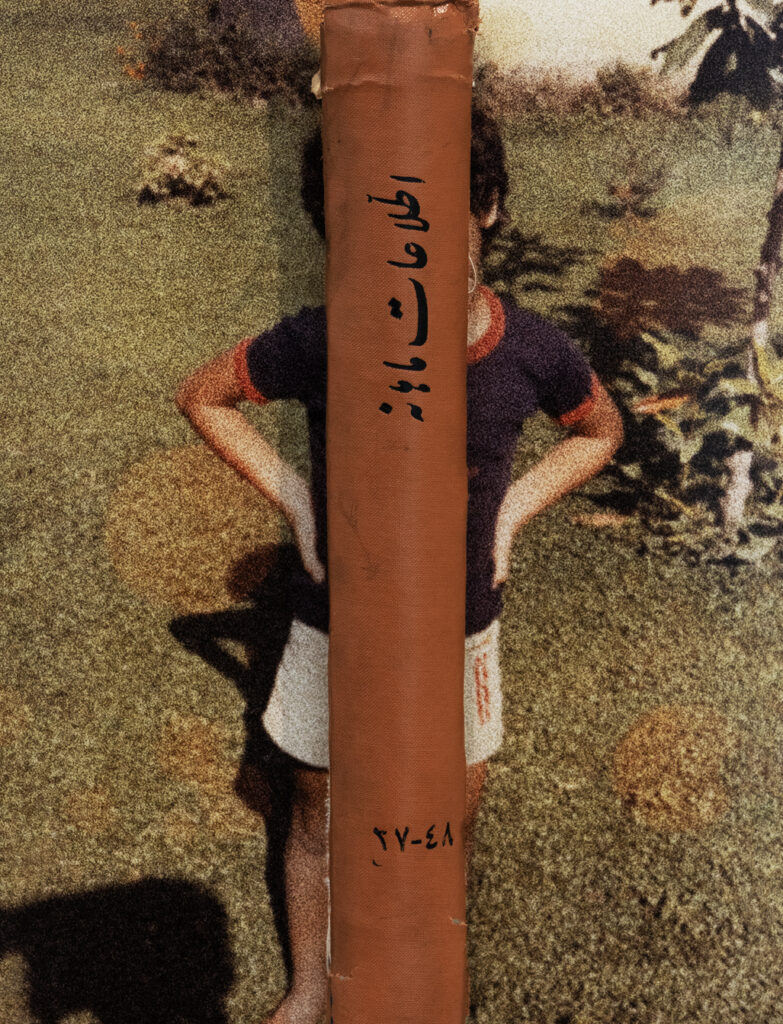
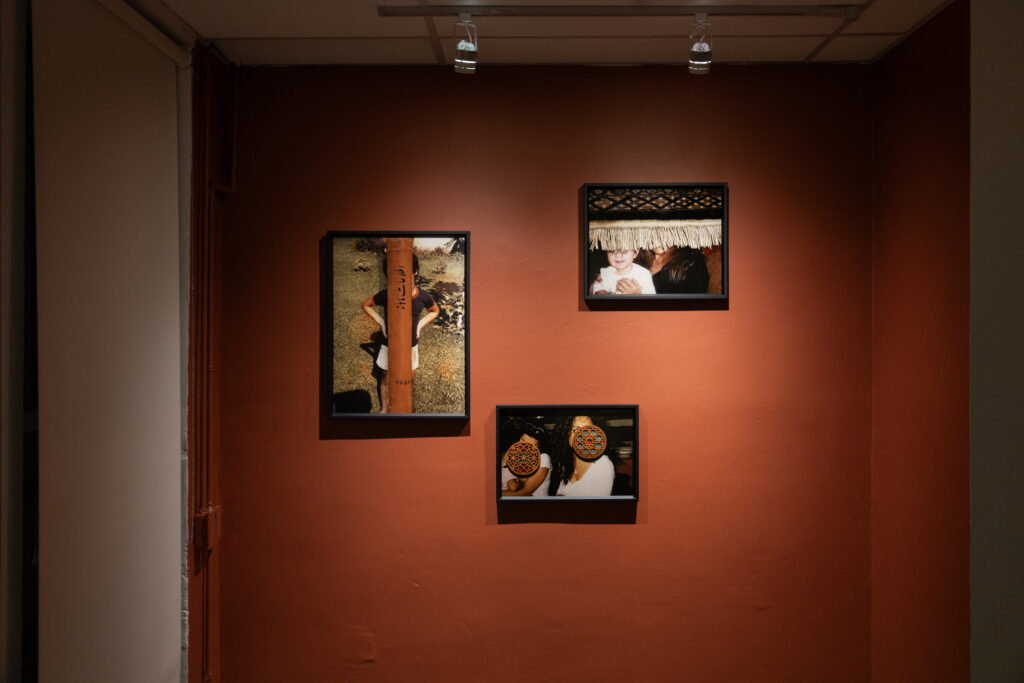
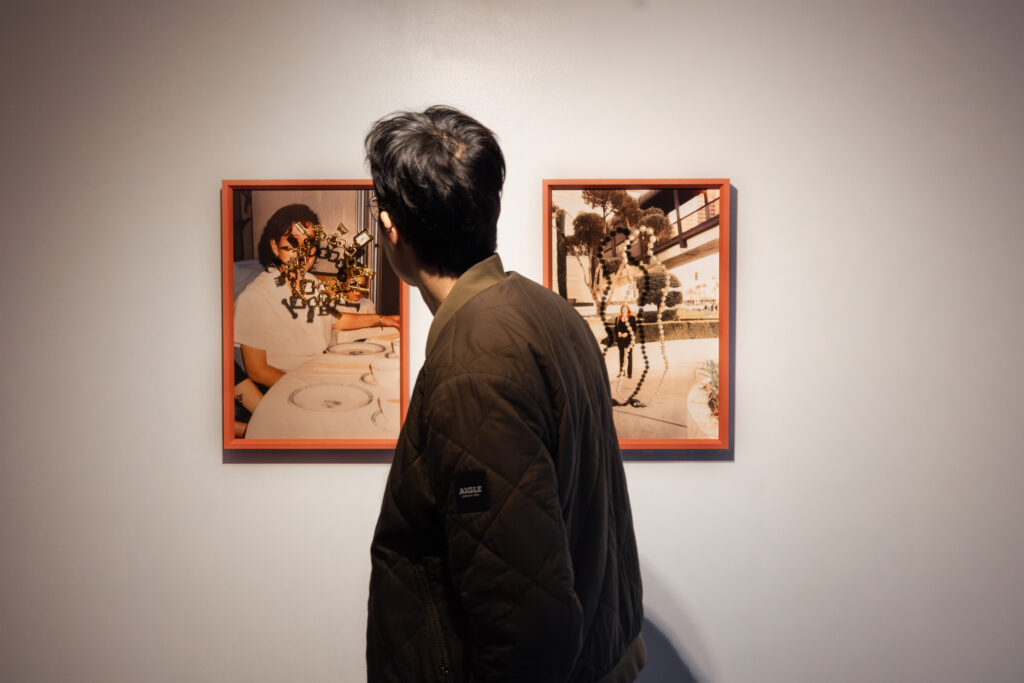
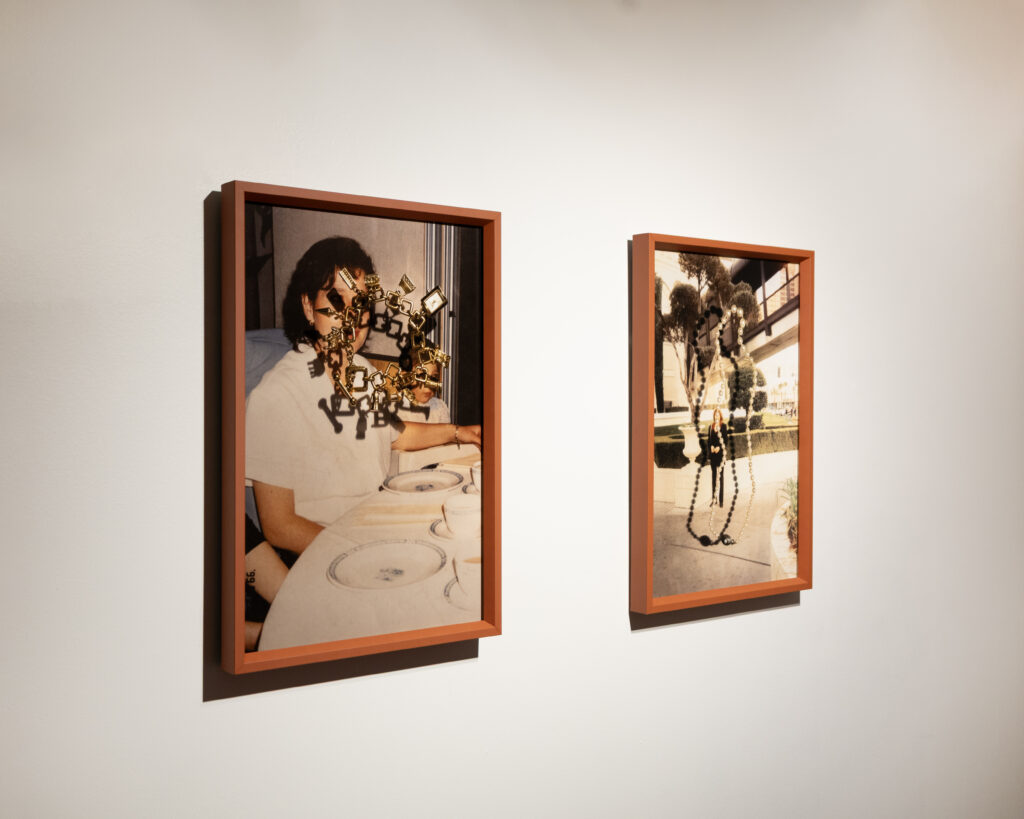
work from around the kitchen table series, 2024, 18 x 24″, archival inkjet print.
As a second-generation Iranian immigrant and a product of the diaspora, my connection to family and culture has always been mediated through stories and objects rather than lived experiences. Growing up, I navigated my identity through the sentimental weight of things—photographs, letters, and keepsakes—that acted as stand-ins for people and places I’ve never truly known.
Family gatherings often unfolded around boxes of old photographs, where faces both familiar and unfamiliar surfaced. Their significance was only revealed through my family’s recollections. These fragments offered me a way to belong, to map out relationships and histories that existed beyond my own reach.
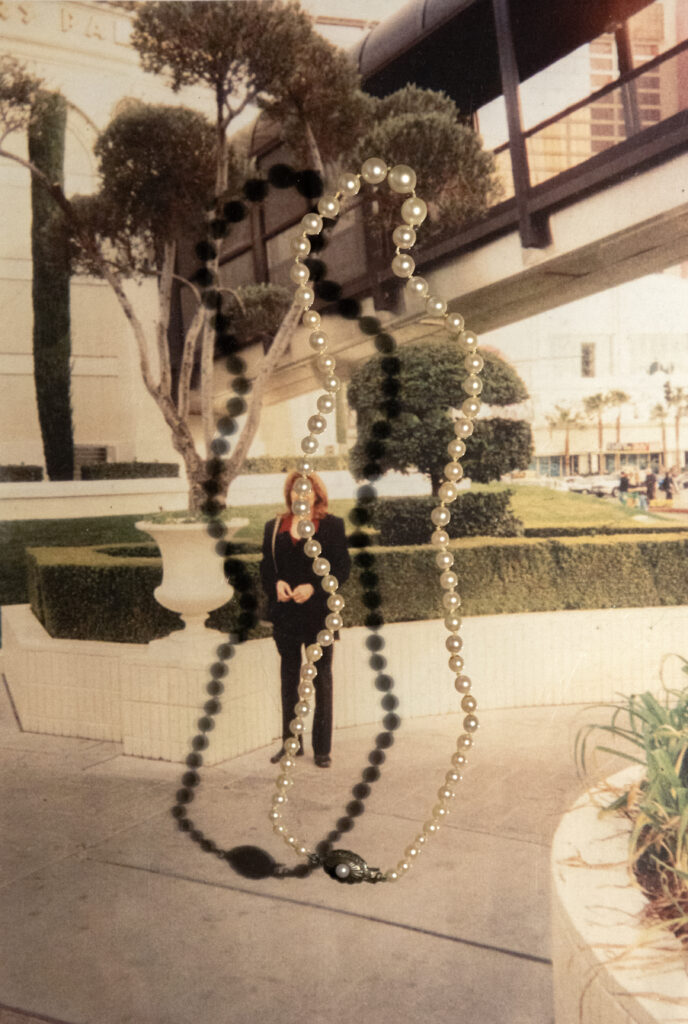
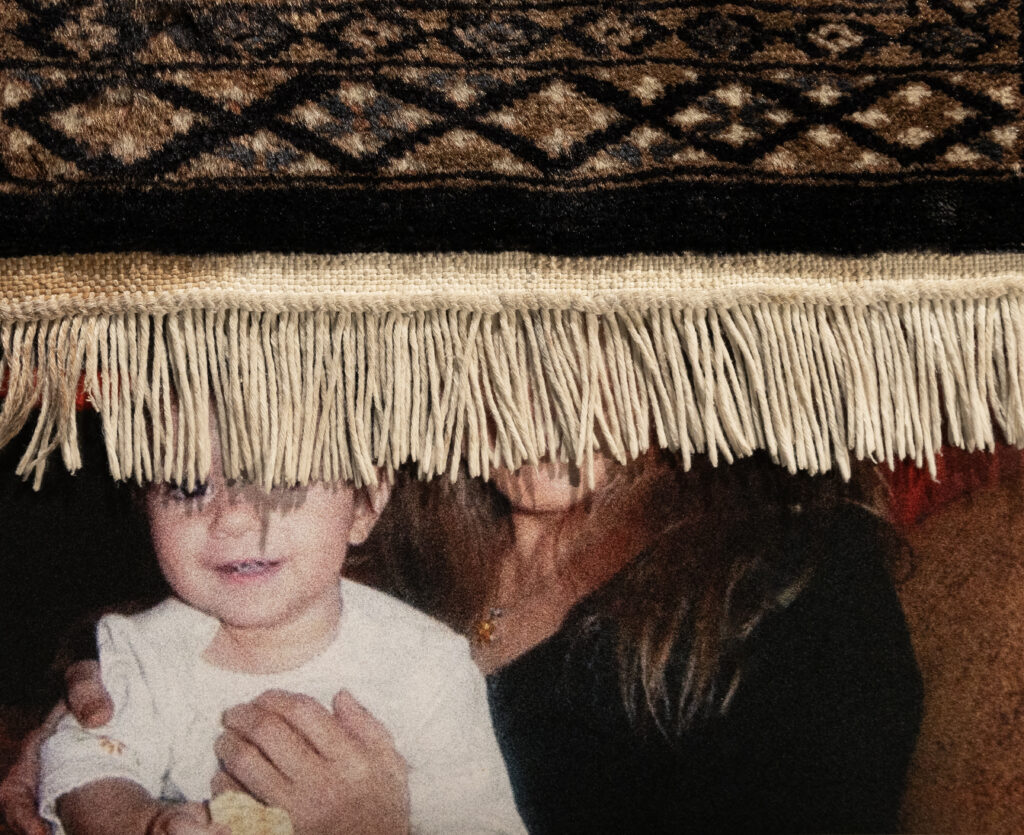
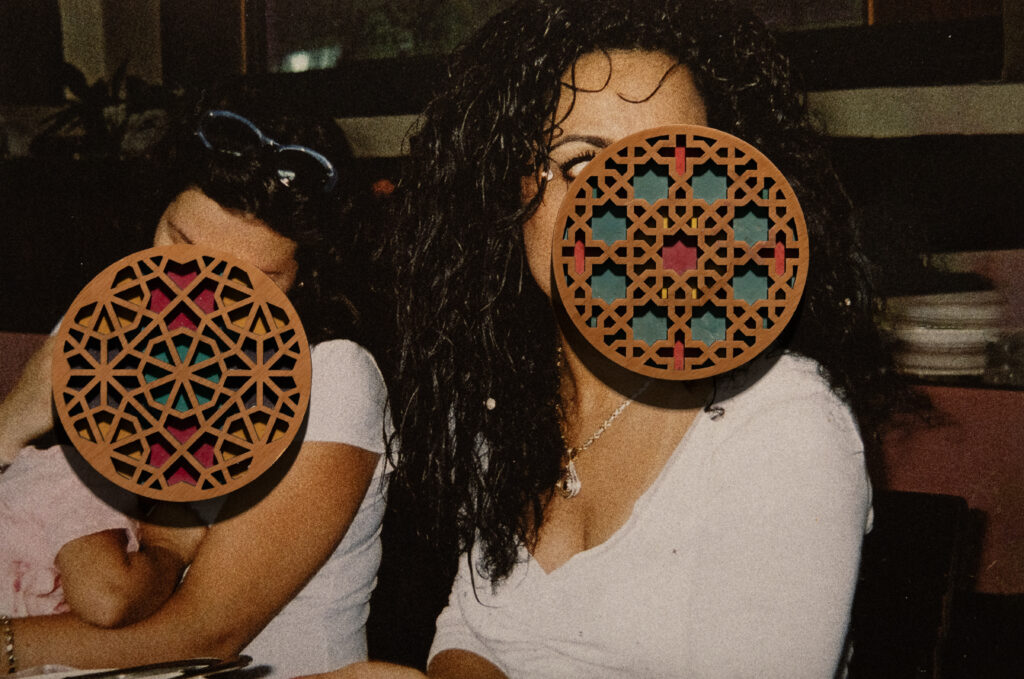
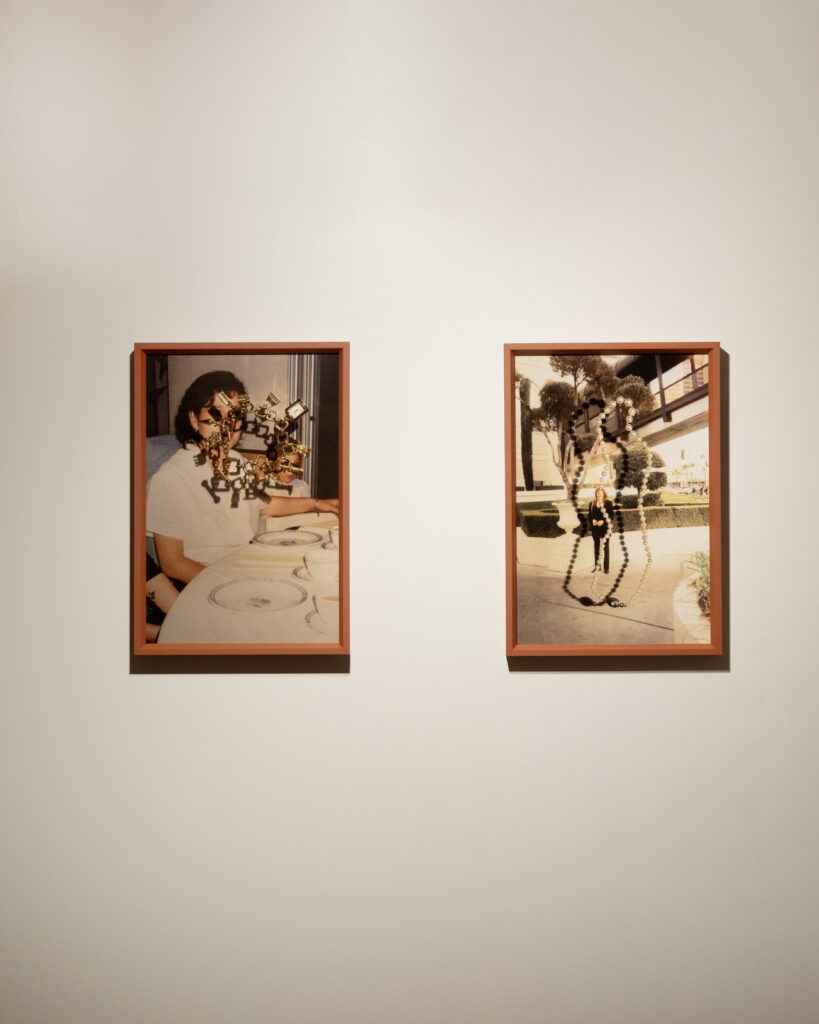
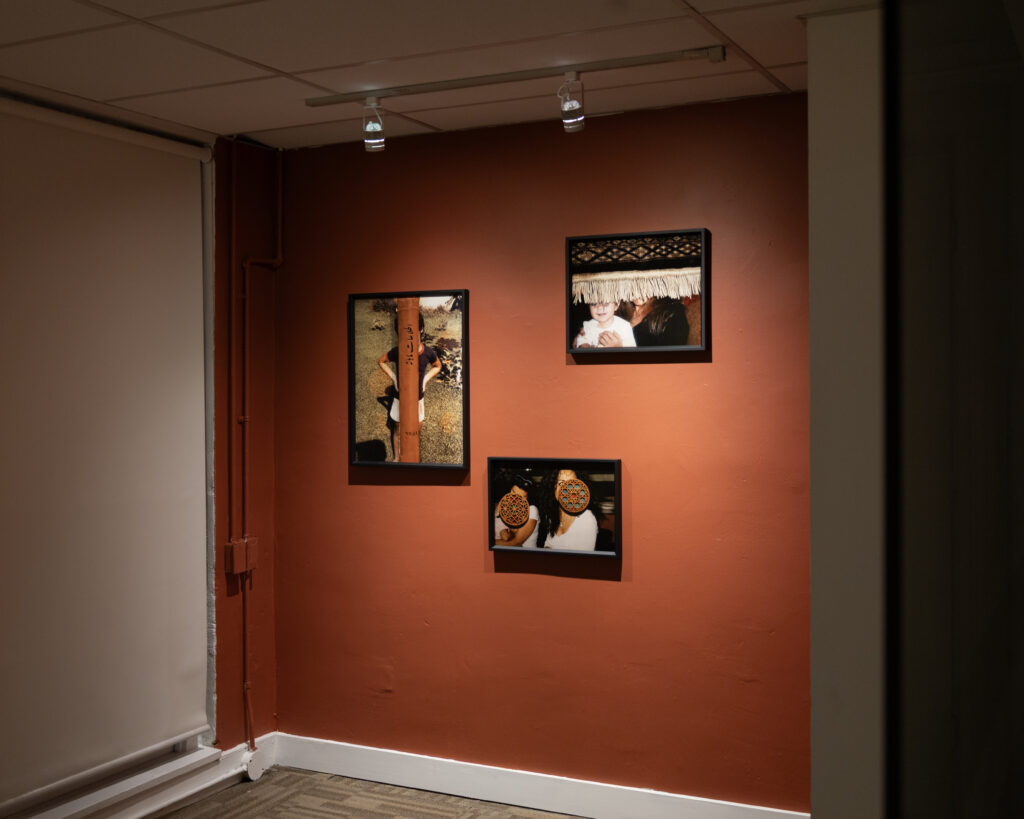
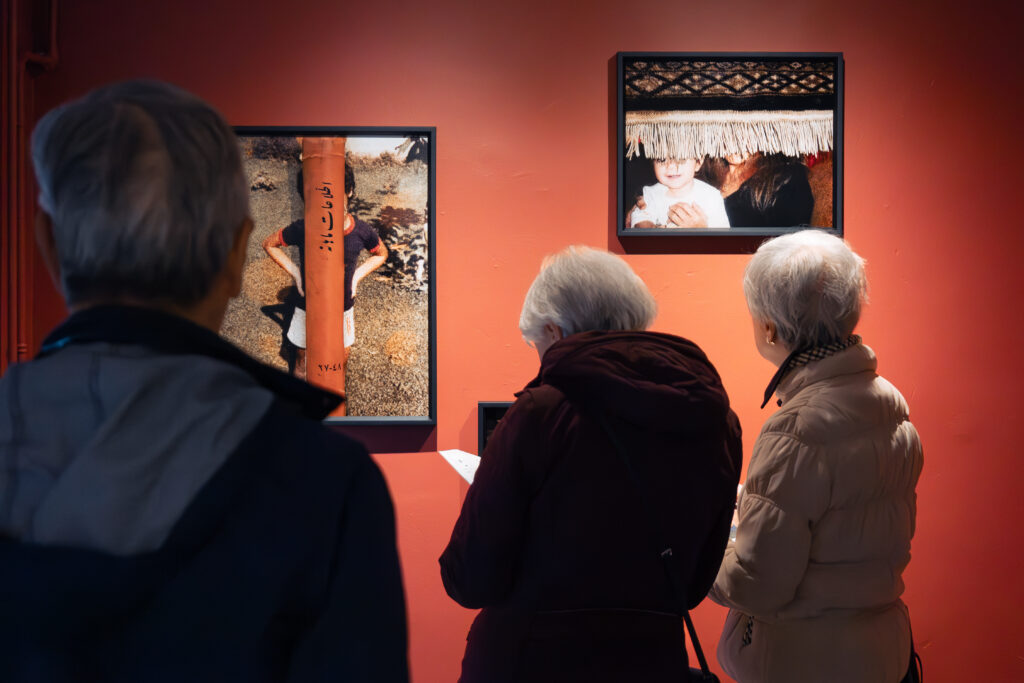
around the kitchen table challenges the conventions of family photographs by obscuring faces and replacing them with archival and found objects—symbols charged with personal and cultural meaning. These objects hold space for absent presences, embodying memory, lineage, and the layered process of understanding identity through what is left behind, rather than through direct experience.
Capture Photography Festival Educational Partnership, Ghost Images: Photography and Trace at Emily Carr University of Art and Design
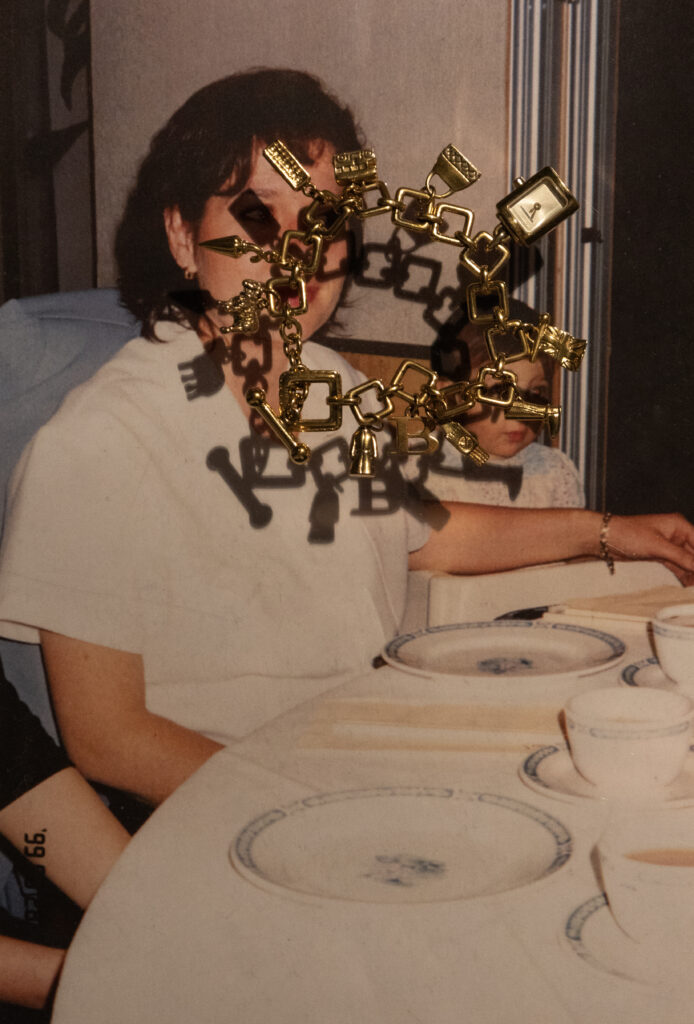
Photographs are often traces of our histories, memories, and stories. Like ghosts from the past, these images can haunt us, reminding us of what once was and is now different. The artists in the exhibition Ghost Images: Photography and Trace consider photographs as traces and use different strategies to activate the present. Some works make us rethink events in the past, drawing attention to issues that still need to be addressed in the now. Others rework images into an echo of a lived experience, filling us with longing for carefree moments of our childhood or addressing the void left behind by the loss of a loved one.
Sometimes, the ghost image exists as physical evidence. A print found in an album or a shoebox then leaves an imprint in our minds and becomes a jumbled memory of a memory, an image we conjure up and alter each time we remember it. Some of the exhibiting artists address this alteration by utilizing physical interventions and treating the photographic image as a malleable object. Others make use of photographic processes and remind us that photography is a process of residues – of light and chemicals.
The artworks in Ghost Images: Photography and Trace speak to the range of photography’s ability to be permanent and impermanent simultaneously. They make us think of images as songs stuck in our heads that we can’t escape, or as scars that altered our bodies and now have become part of us, while addressing the fact that images are also fleeting. They only momentarily exist at the tips of our fingers but are gone the next second, updated by an algorithm that, like an invisible spectre, follows us and shows us what we desire.
Capture x Emily Carr is a partnership between Capture Photography Festival and the Audain Faculty of Art at Emily Carr University of Art + Design.
through tangled threads
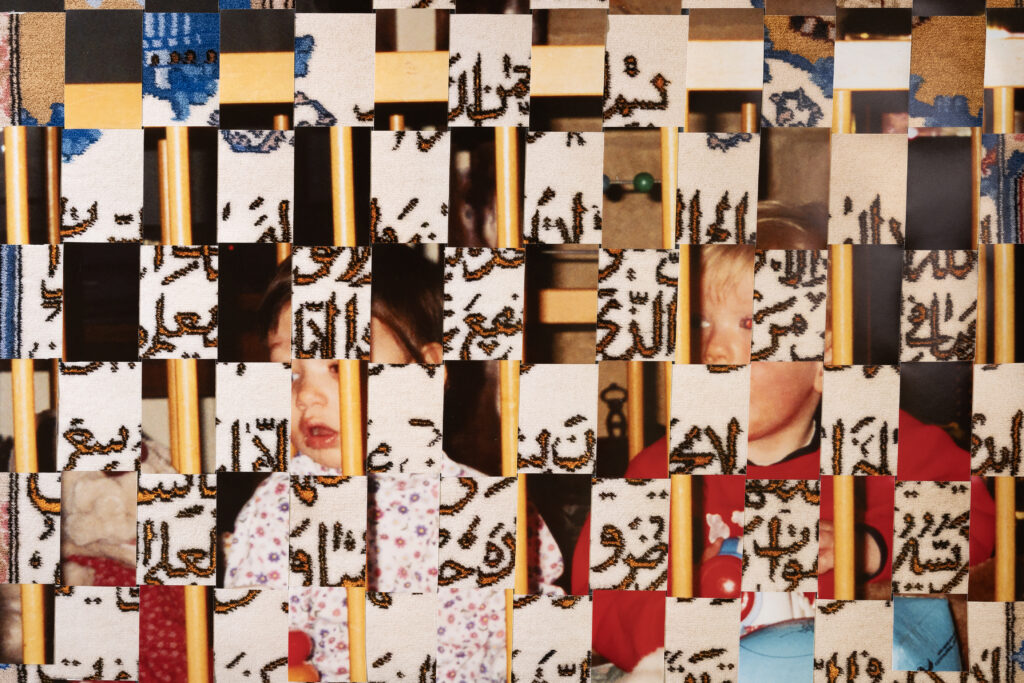
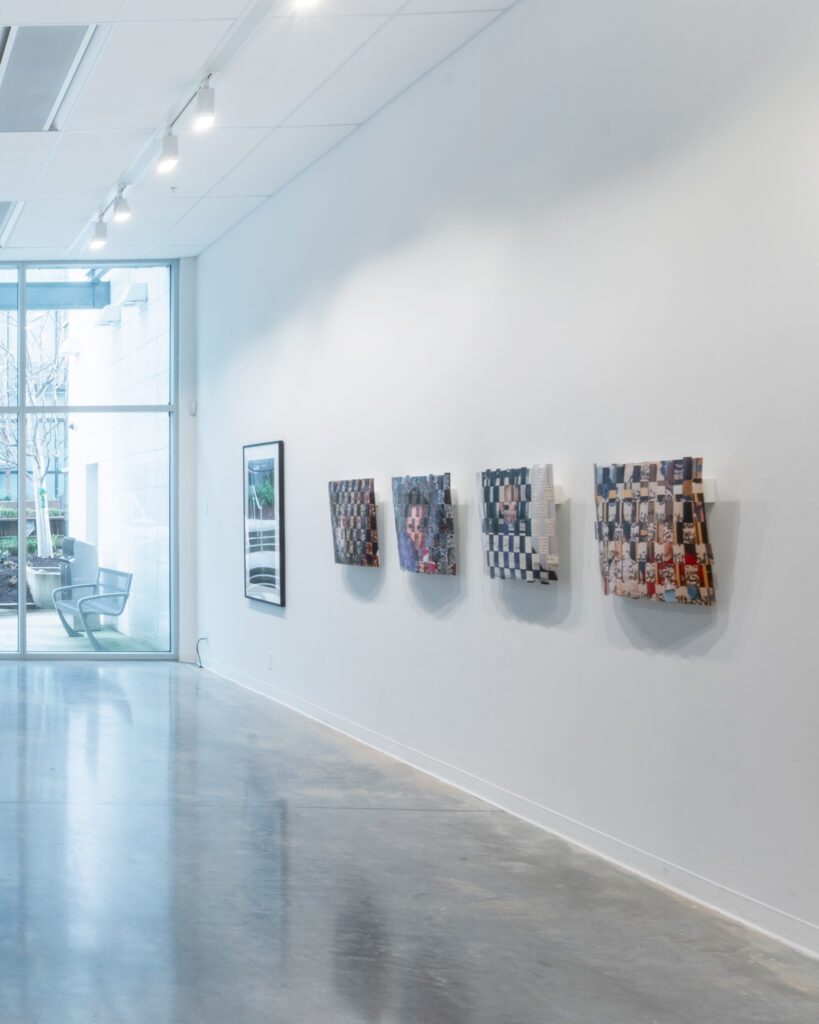
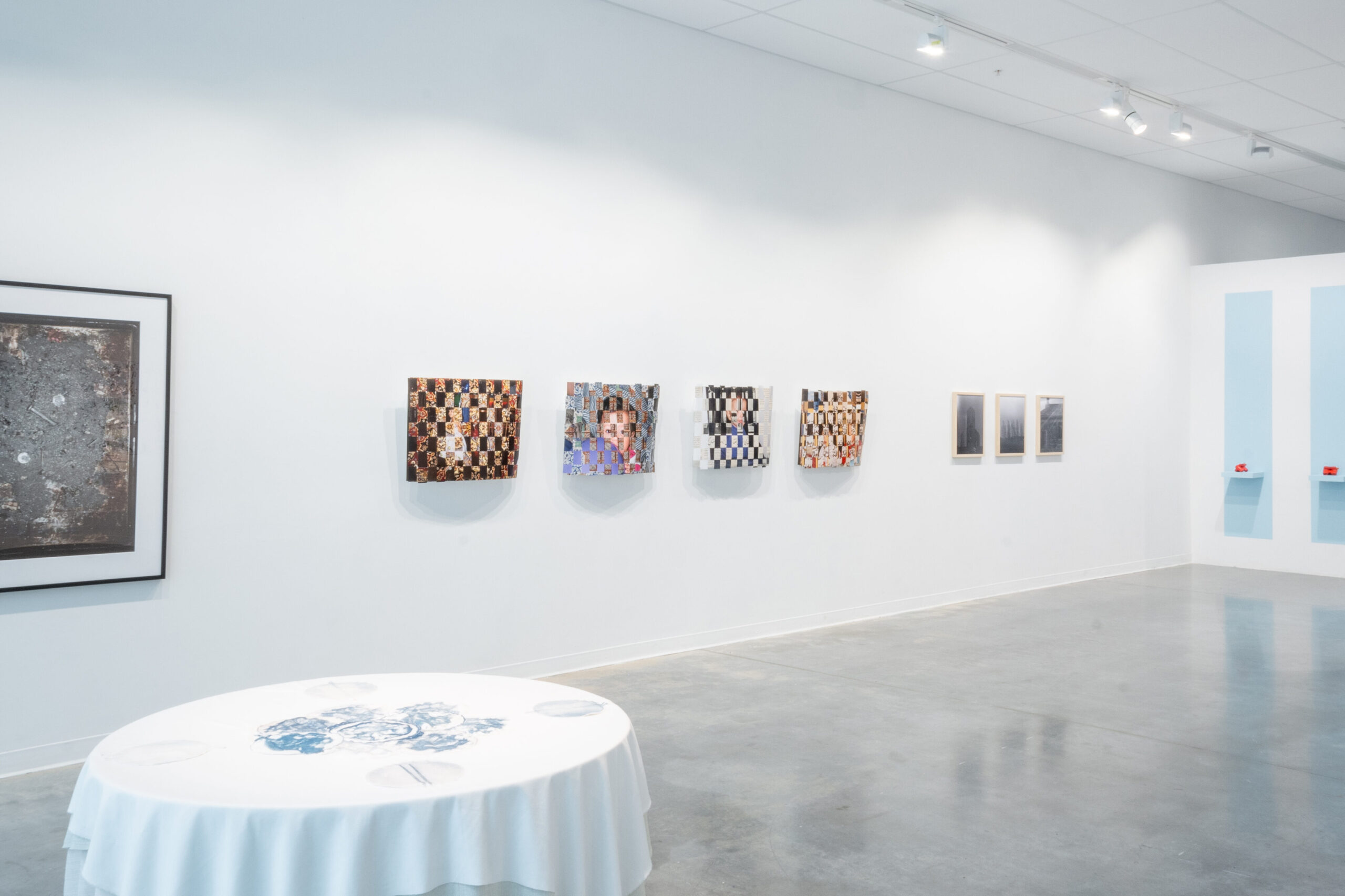
surah, work from through tangled threads series, 2024, archival inkjet print, 21 x 28″, woven archival inkjet print.
As a second-generation immigrant and a product of the Iranian diaspora, my culture is something that has been woven into my being. My cultural identity never came naturally to me, as all connecting and understanding of it has had to be taught to me through a second-hand lens.
My father’s side of the family was a victim of the Iranian revolution in 1978. My father was forced to flee his homeland as a child, migrating across a plethora of countries throughout his upbringing until finding his way to Canada in his late adolescence. My father’s love for his country has still remained strong in his heart, and because of that, my Iranian culture has been interwoven into my self-identity for as long as I can remember.
through tangled threads is a series of woven inkjet photographs that depict my second-generation Iranian experience. Through objects, language, and traditions, my culture has been one that has had to be taught but never come into living in the Western world. These cultural aspects are never things that I can experience firsthand, but are something that had to be influenced and subsequently ingrained so that I didn’t lose half of my personal identity growing up here. This project bridges the gap between the presence and absence of Iran in my identity, embodying a dialogue between the self and cultural history that feels both tangible and spectral. By physically intertwining these images, I look to visually articulate the idea that as children of the diaspora, cultural identity exists in layers—visible, hidden, and forever in flux.
* An Interview with Perrin Grauer: Reflecting on My Experience with the Exhibition