果然拾光 | Fruition of Harvest
Chih Chi Chen
See it On Campus: Level 2
Glenmore Custom Print + Packaging Award — Honourable Mention
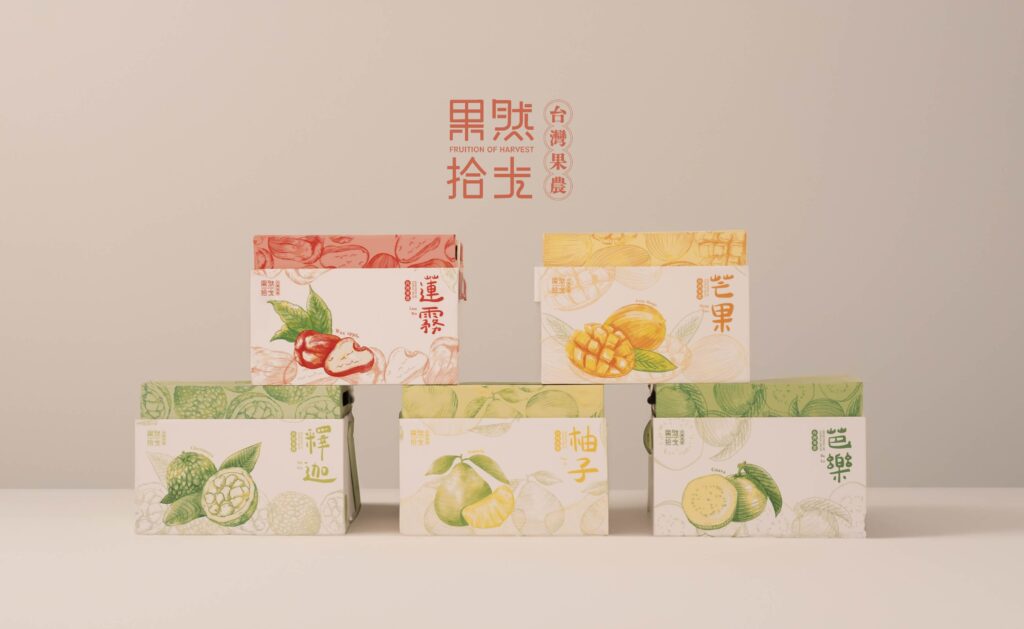
“A journey through Taiwanese Fruits”

Fruition of Harvest is a pop-up exhibition designed to educate and promote Taiwan’s unique fruits through storytelling and visual design. Aiming to be found at community and cultural festivals like TaiwanFest or Richmond Night Market, the exhibition raises awareness of Taiwan’s agricultural heritage while addressing pressing social and environmental challenges, including climate change, labor shortages, and the struggles of small-scale farmers.
Purpose
The project aims to appreciate cultural heritage and local agricultural products, as well as reach people who are concerned about environmental issues and support local farmers.
Mission
• To showcase the diversity and beauty of Taiwanese fruits.
• To raise awareness of the broader societal, historical and environmental challenges.
• Encourage cultural preservation, audience engagement, and emotional responses obtained.
Problem Space Research
Global Climate Change
Global climate change has led to more frequent extreme weather events, such as typhoons, droughts, and heavy rains, directly affecting crop growth and yields. For example, typhoons can cause large-scale crop losses, while droughts can disrupt crop growth cycles and reduce yields. Climate change also contributes to the spread of pests and diseases, increasing the difficulty of agricultural production and raising farmers’ production costs and risks.
Shortage and Aging of Agriculture
Taiwan’s agricultural labor force is facing a serious aging problem, with younger generations showing less interest in farming due to the instability of agricultural income and the high intensity of labor. As the agricultural population ages and the younger workforce declines, agricultural productivity decreases. This makes it challenging for the agricultural sector to attract new talent, which in turn affects innovation and sustainable development in agriculture.
Small-Scale Farming Operations
The farming operations in Taiwan are generally small in scale, leading to lower agricultural production efficiency and difficulty in achieving economies of scale. Small-scale farms are disadvantaged in terms of resource utilization, technology application, and market development, often facing high production costs and unstable income. Additionally, small-scale farming operations struggle to attract large investments and technological innovation, limiting the progress of agricultural modernization.
Trade Liberalization and the Rise of Imports
With the liberalization of international trade, imported agricultural products have become increasingly common in the Taiwanese market. These products often have strong price competitiveness, putting pressure on local agricultural products. Imported goods may enter the market with lower costs or higher yield advantages, making it difficult for local products to compete. Additionally, consumers may prefer imported products due to price or quality considerations, further diminishing the market share of local agricultural products.
Inspiration
The capstone project is inspired by a personal travel with my
family to Taiwan’s rural districts, where the beauty and distinctiveness
Indigenous fruits were rediscovered. Experiencing traditional handcrafted fruit ice cream and fruit shop in Tainan reminded me of the richness of Taiwan’s fruit culture, which is easy to overlook
In the buzz of city life. However, beneath this beauty lies
a silence: environmental and socioeconomic challenges that
threaten the survival of these fruits, including as rising temperatures,
irregular weather patterns, and a shrinking farming
population, etc.

Brand Identity
Main Logo
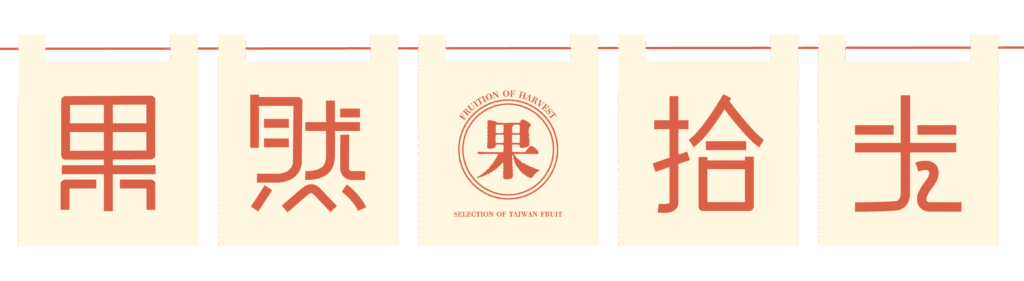
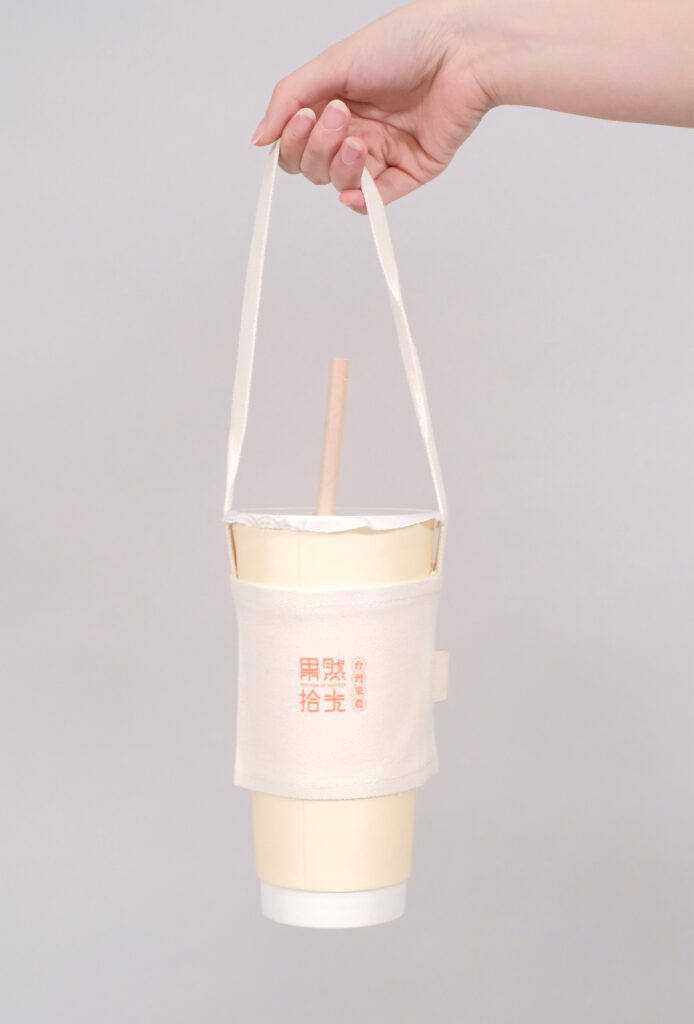
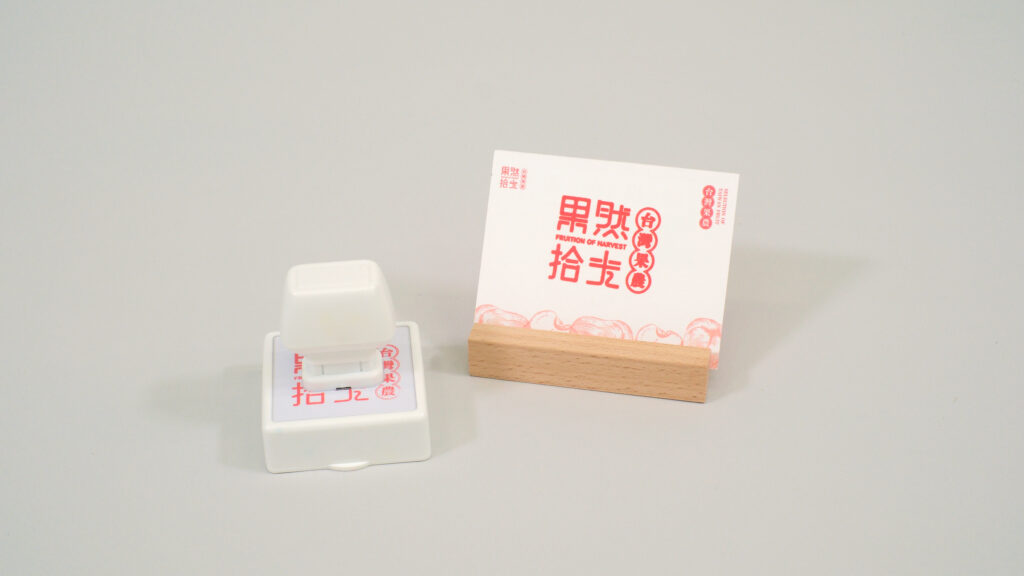
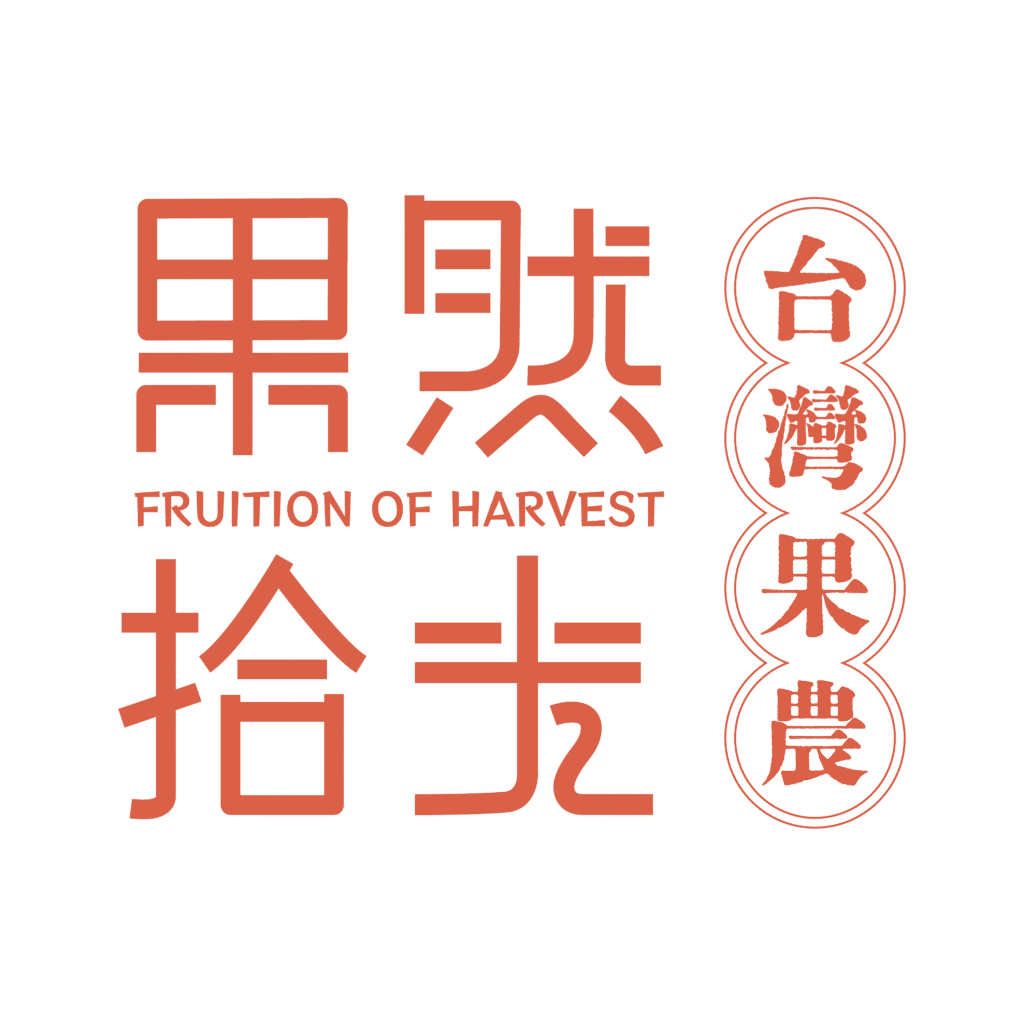
Drawing inspiration from traditional Chinese aesthetics, the logo design incorporates Oracle Bone Script. This ancient script reflects a deep connection to nature and the origins of language.

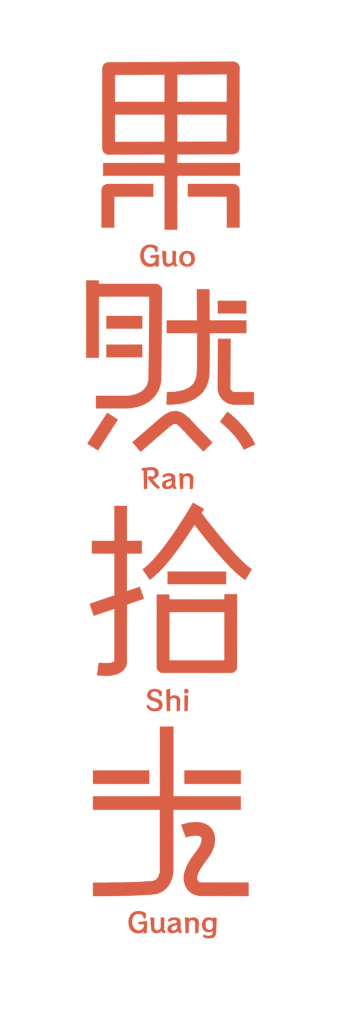
Secondary Logo
The secondary logo is design to highlight the traditional essence while offering flexibility in wider design formats. This secondary logo was designed as a simplified mark that preserves the pronunciation of each character. I used a vertical layout design to echo the traditional Taiwanese reading format.
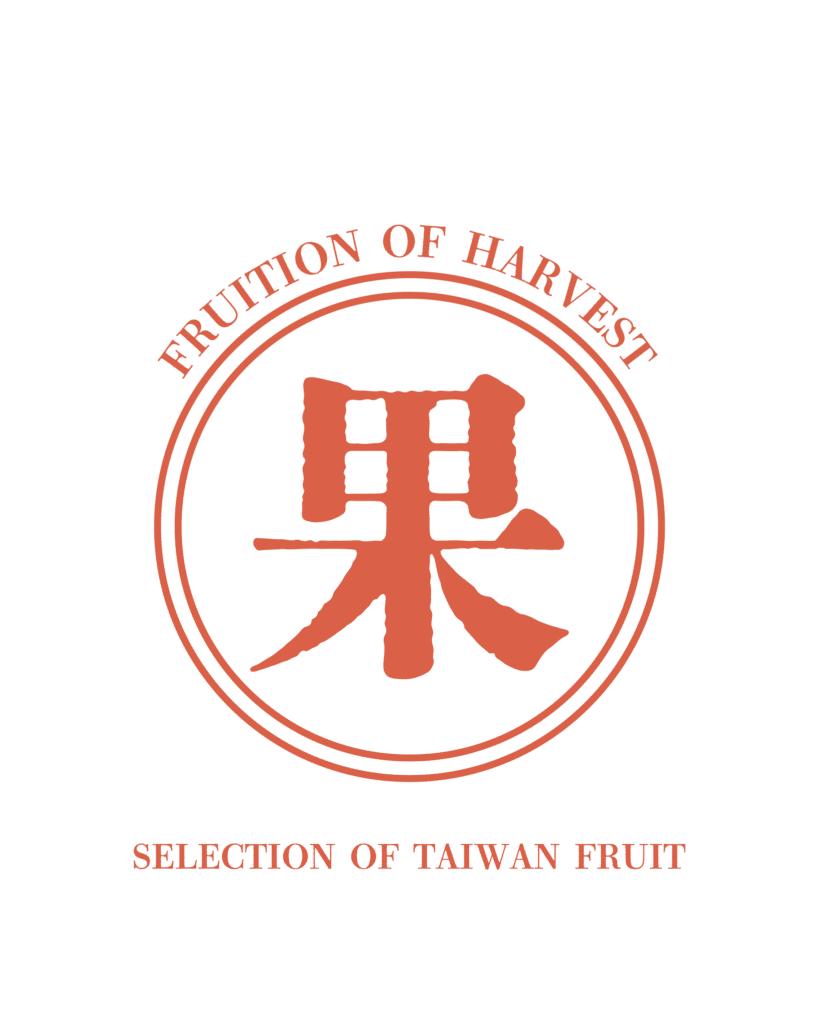
Wordmark
The wordmark features a modern and clean composition with a subtle incorporation of Chinese calligraphy style in the use of “fruit” in the center. The brush-inspired form of “fruit” echoes handwritten signage that I see in markets, reinforcing the project’s connection to local fruit shops.
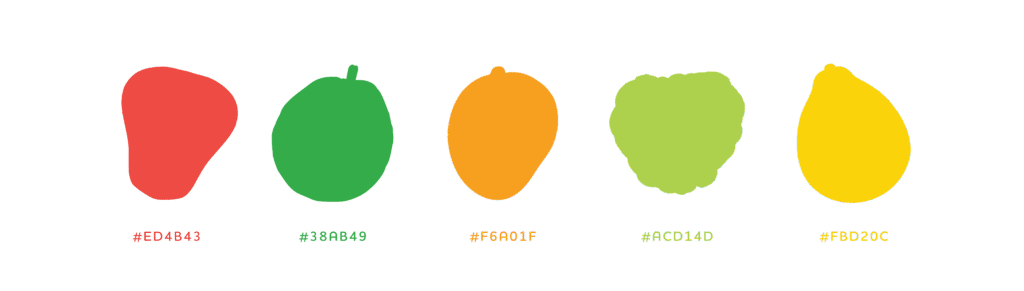
Color Palette
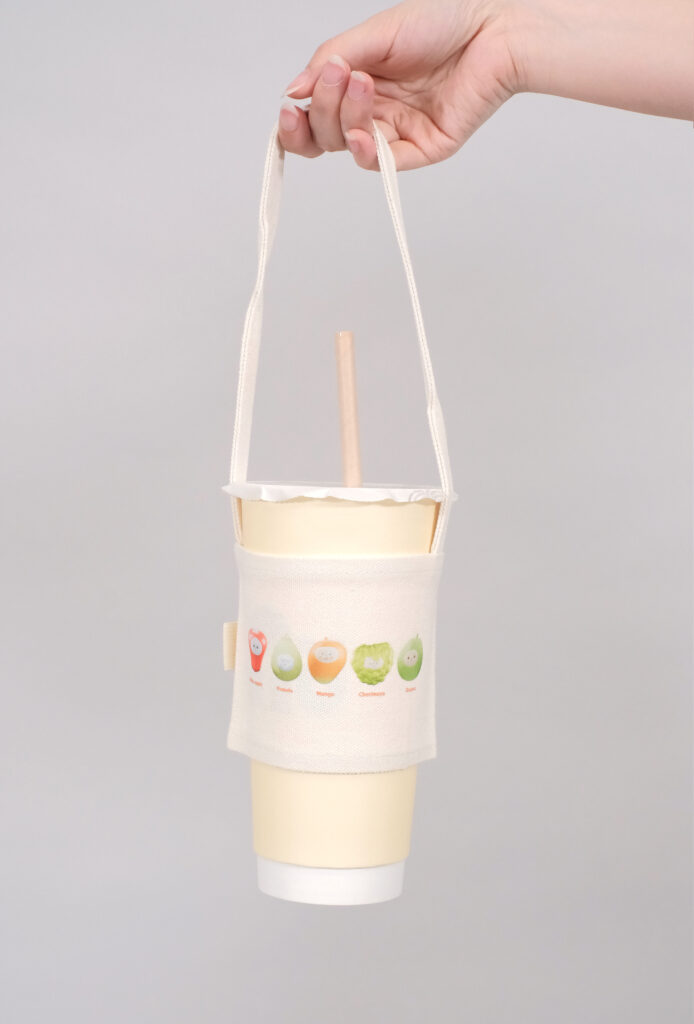
Color palette is an essential part to showcase a lively, inviting atmosphere. The color palette was inspired by Taiwanese fruits themselves. I aimed to convey a sense of freshness and brightness that reflects the vibrant, juicy essence of the fruits itselves.
Typography

Packaging Design
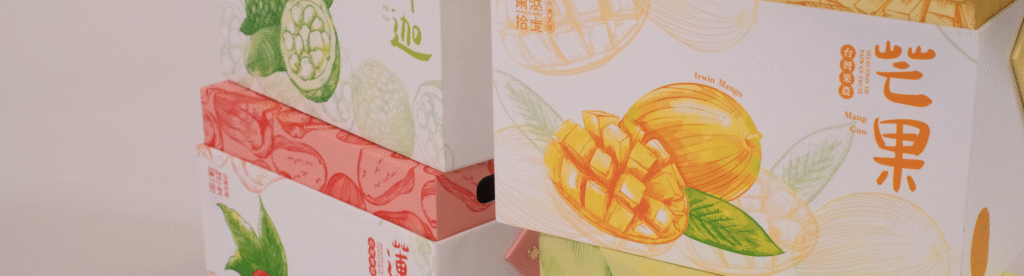
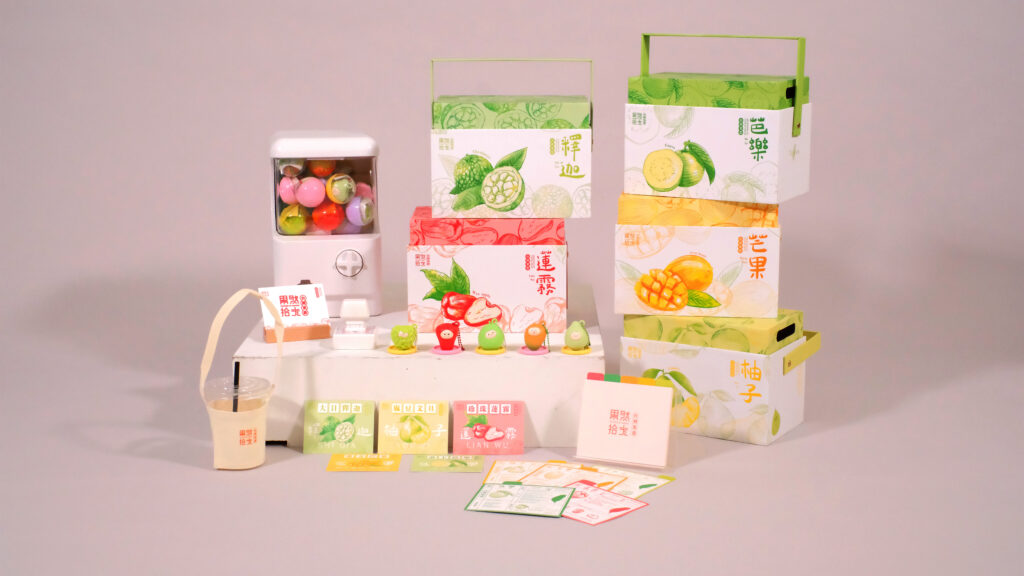
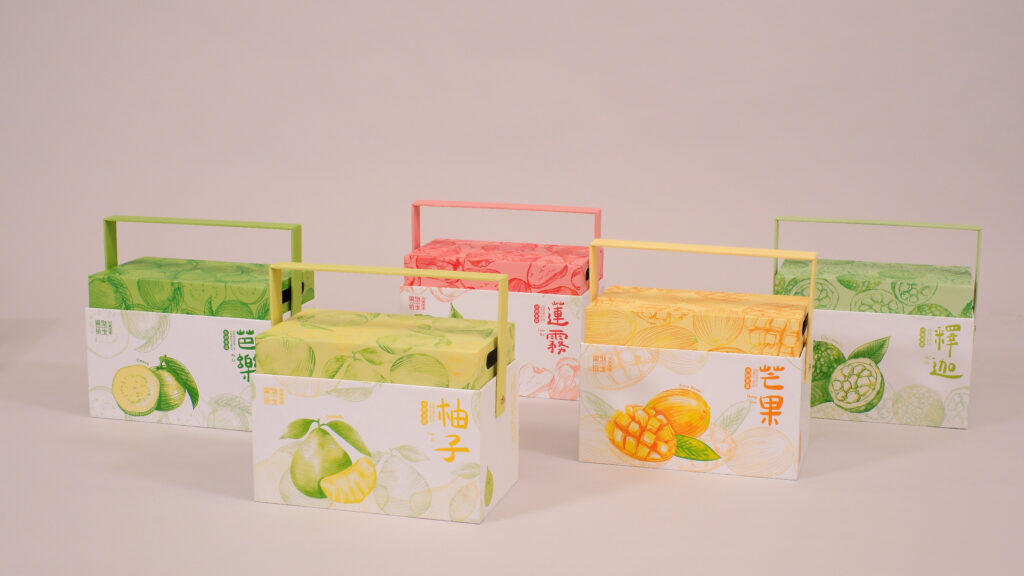
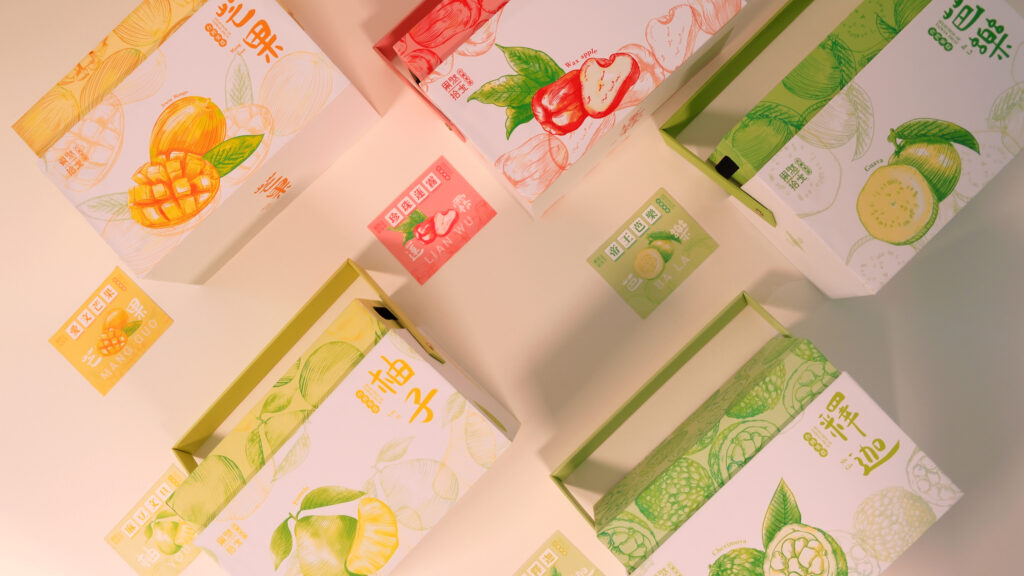
The packaging design is inspired by the shape of a fruit basket, blending traditional charm with modern elegance. I was particularly inspired by lid-style packaging. I developed an inverted lid structure to enhance aesthetics and functionality: the outer layer serves as a sturdy base, while the inner section functions as a lid. This design ensures the holder supports the box securely while maintaining a unique and engaging look.
Handwritten Fruits Titles
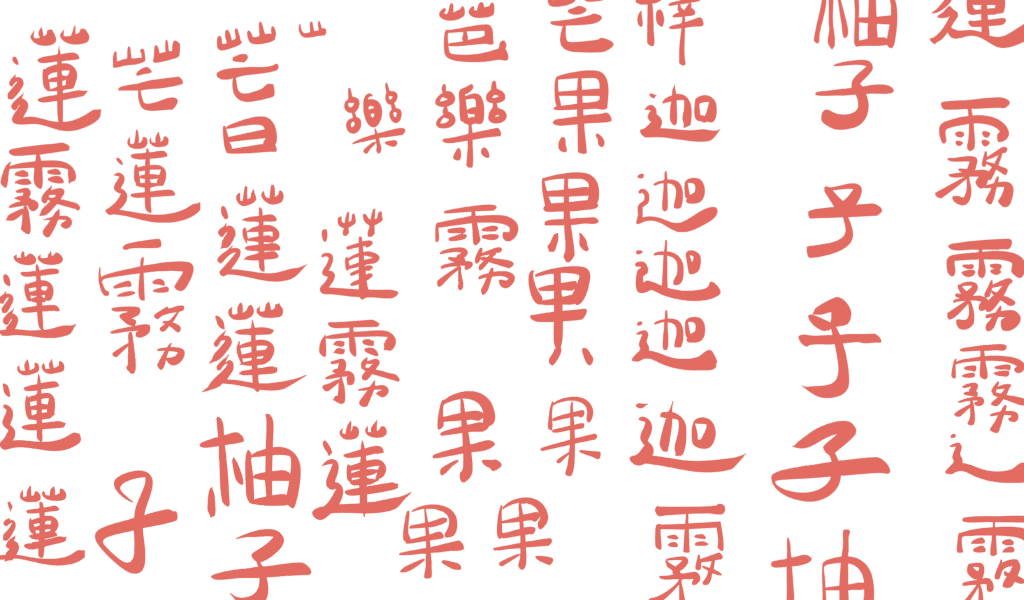
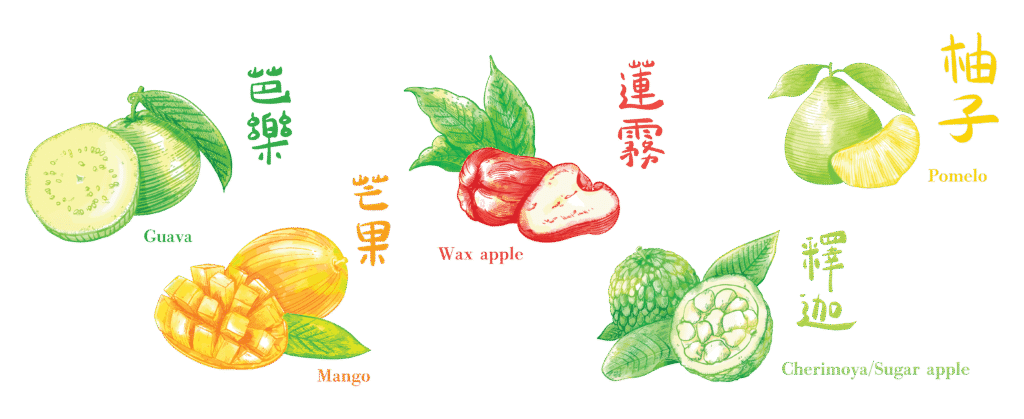
Instead of using standard typefaces for the title of fruit, I chose to handwrite each fruit title, incorporating elements from Oracle Bone Script. And this is the process I experimented with — This is the final look that I ended up with. Reflecting the same inspiration as the primary logo for a cohesive identity.
Gacha Design

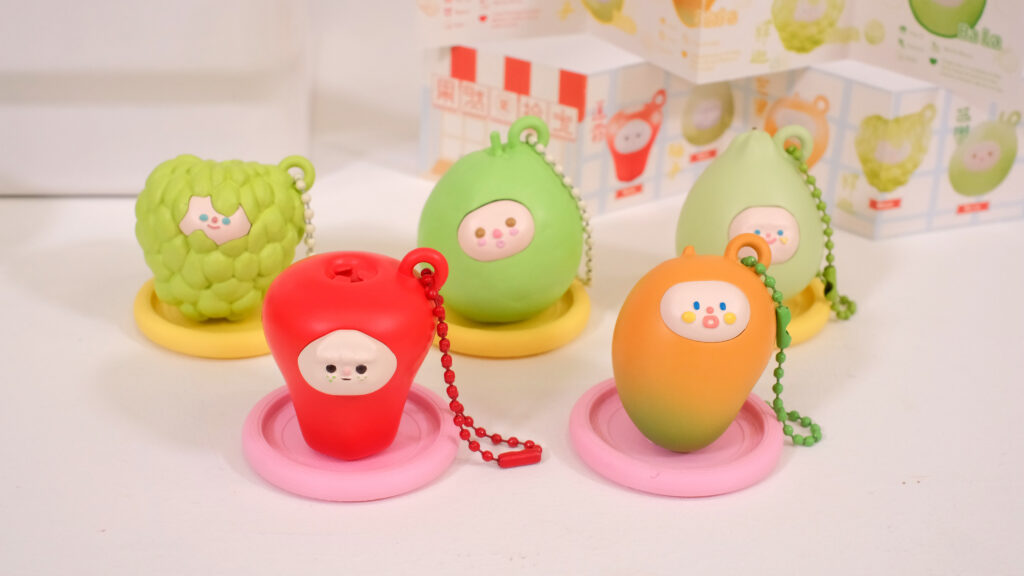
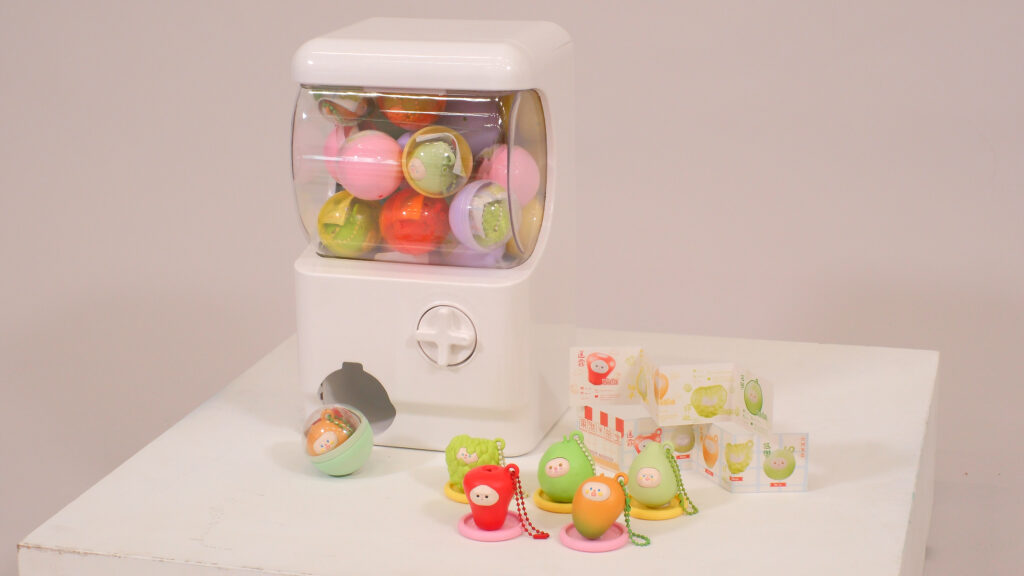
Gacha game is designed to be simple and engaging — just turn the knob, and a surprise fruit will come out from the machine. With that small action, viewers are symbolically joining in the harvest, showing a gesture of support and appreciation for the hardworking hands behind Taiwan’s fruits.
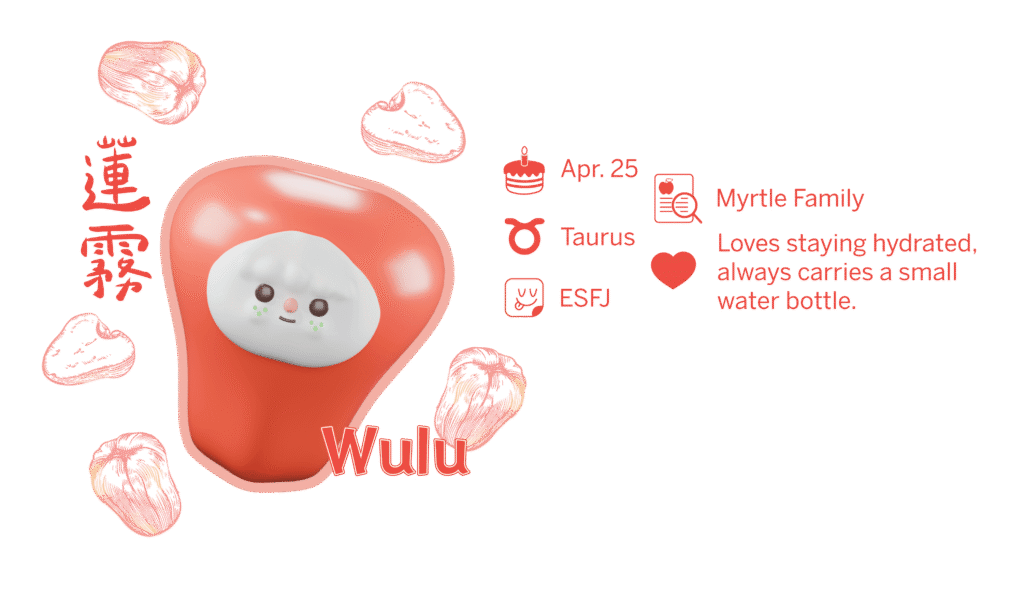
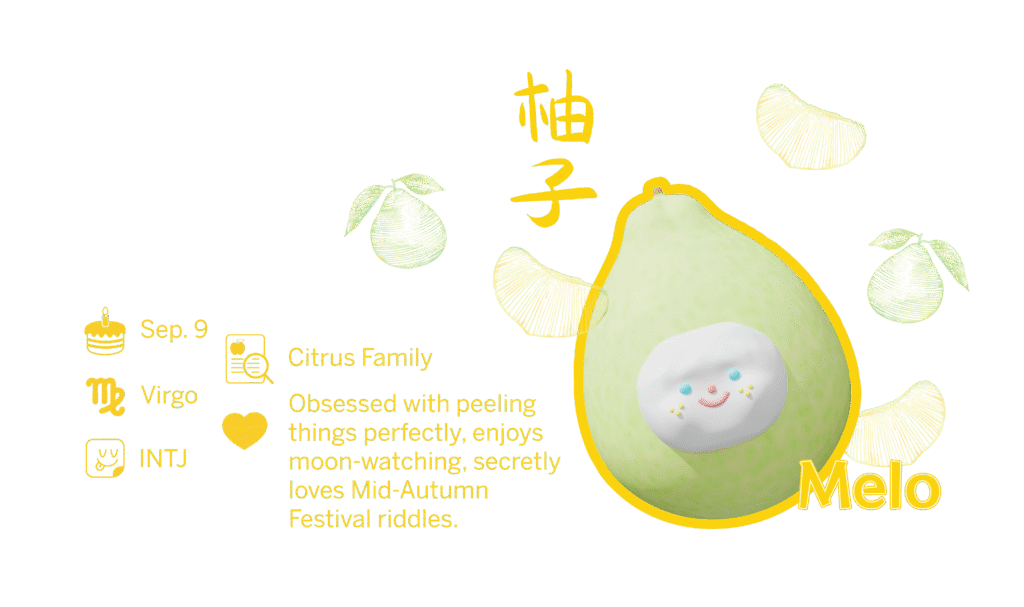
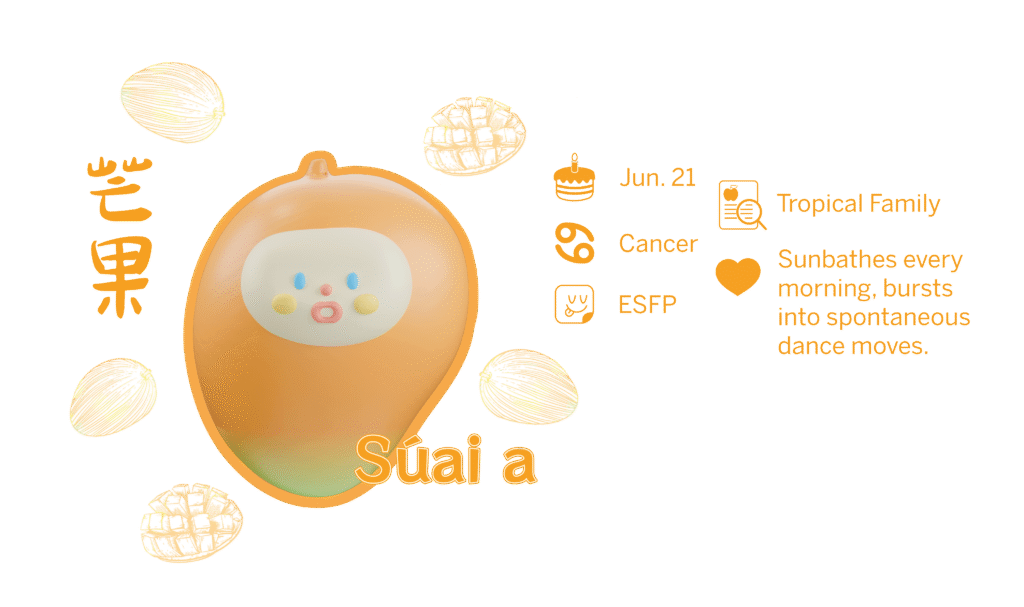
Character Design
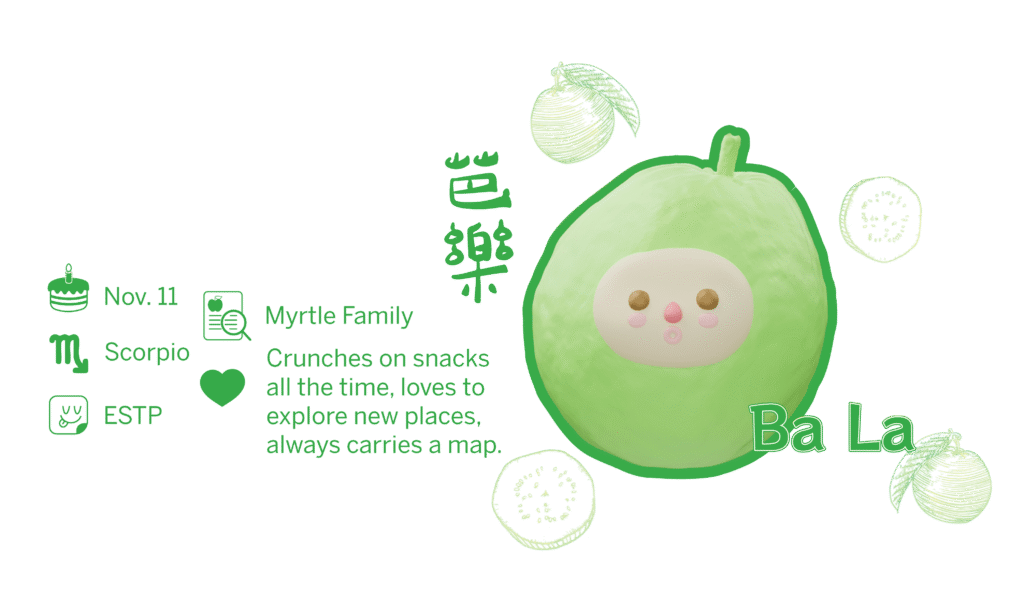
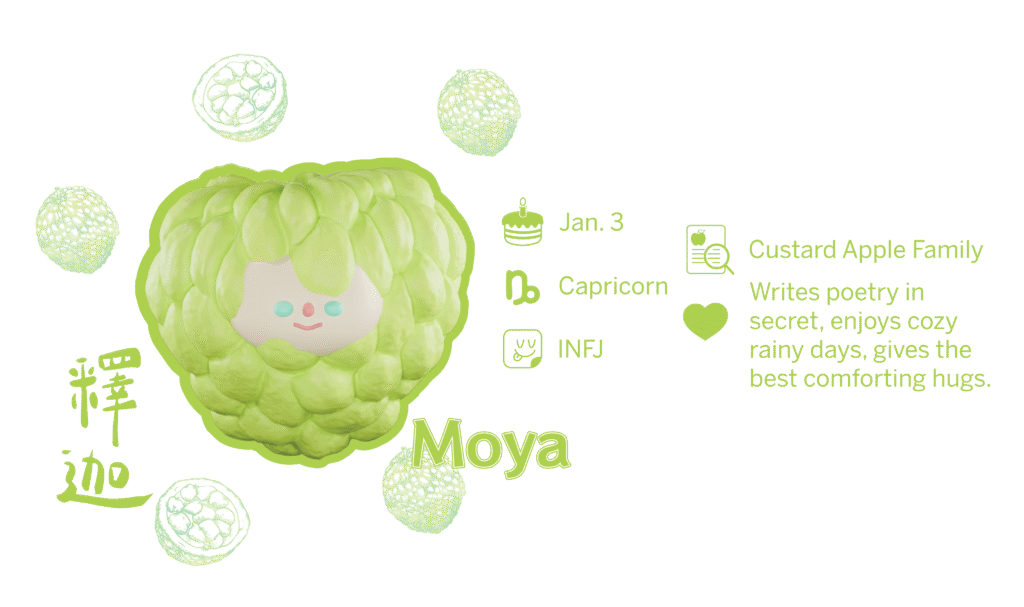
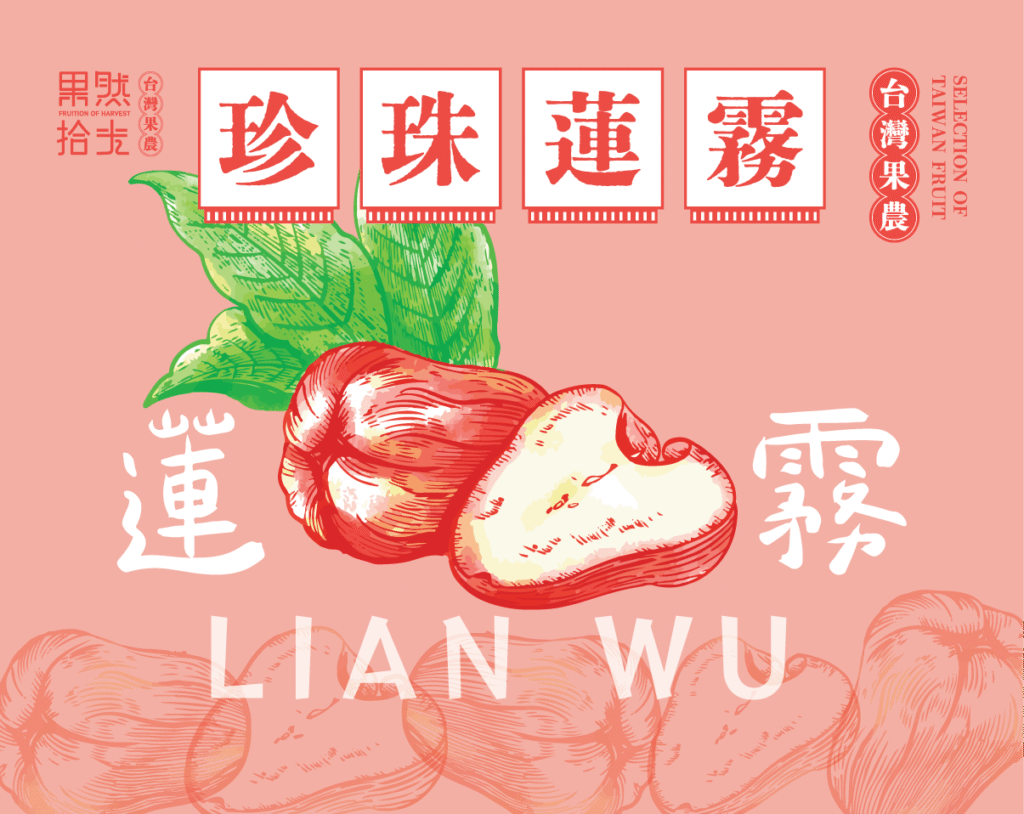
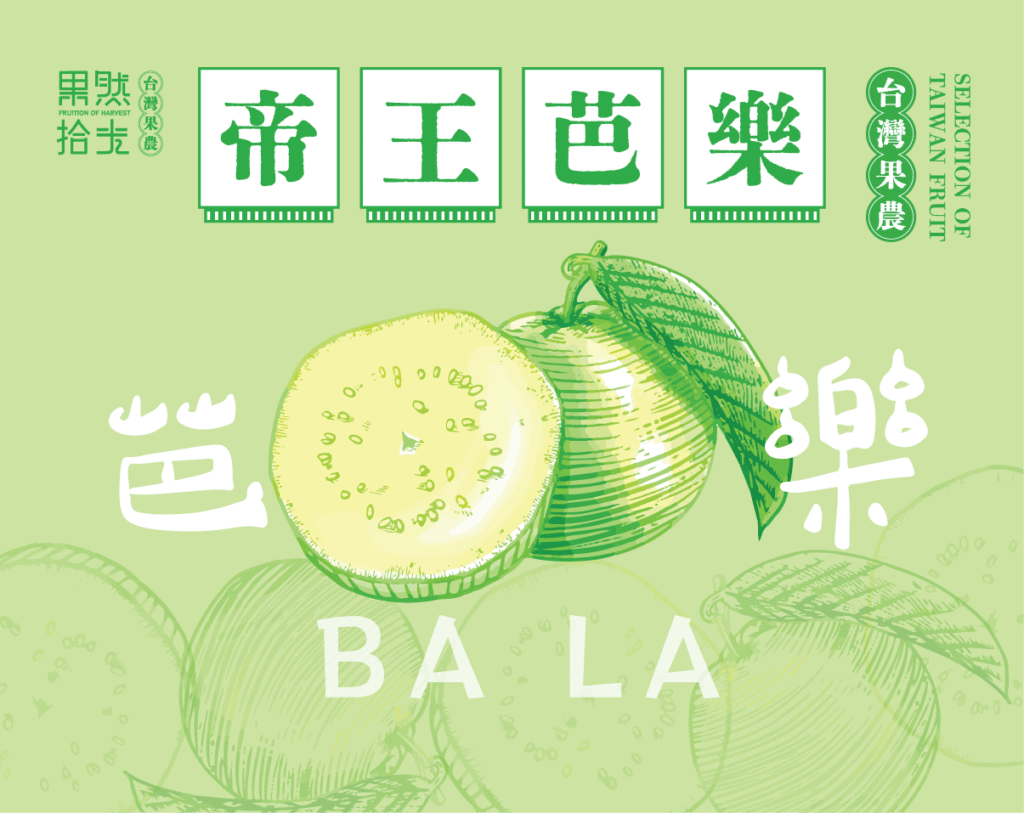
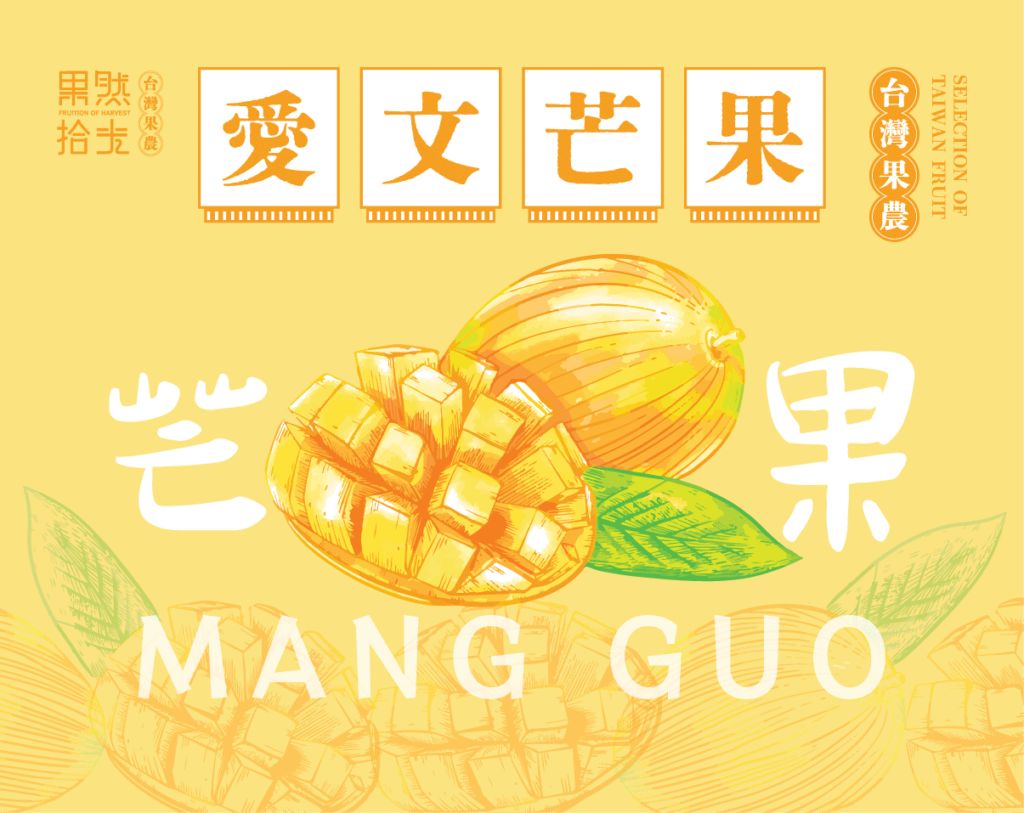
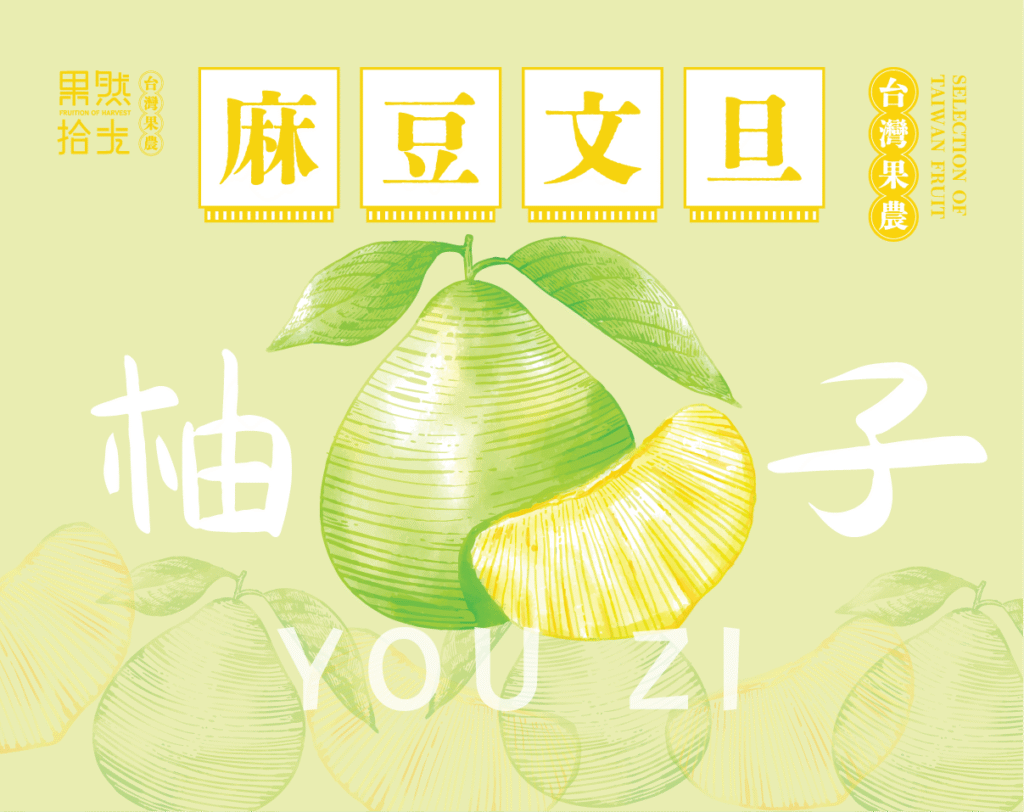
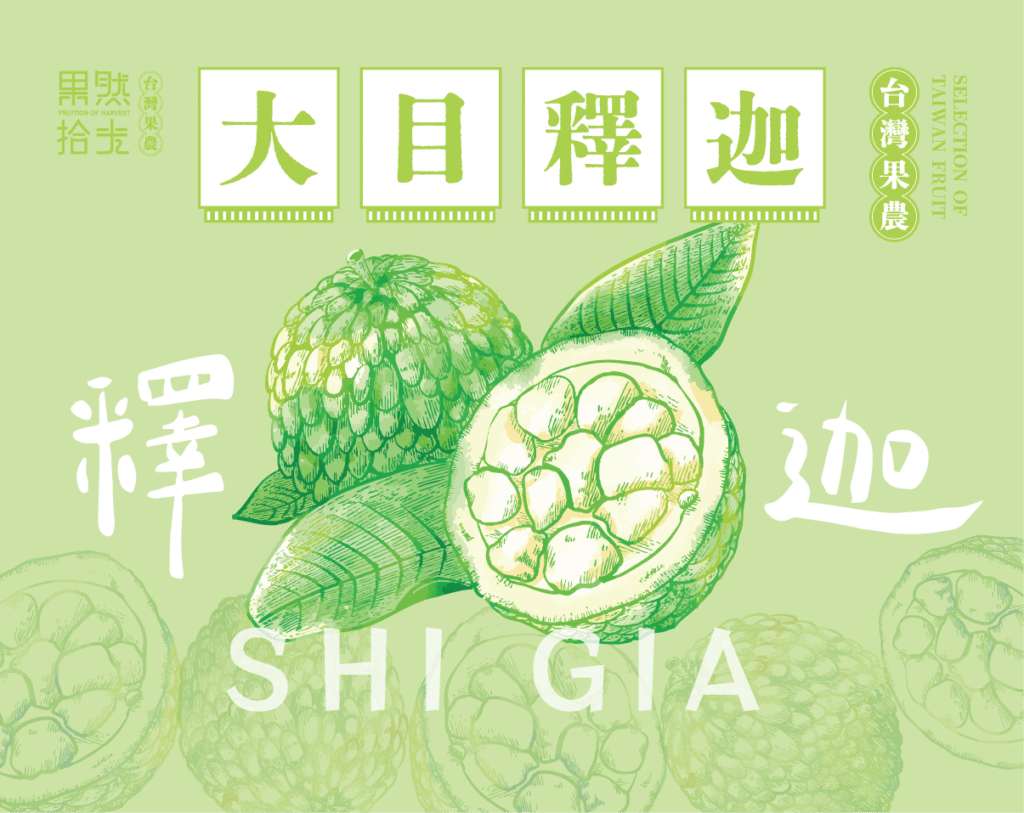
Label


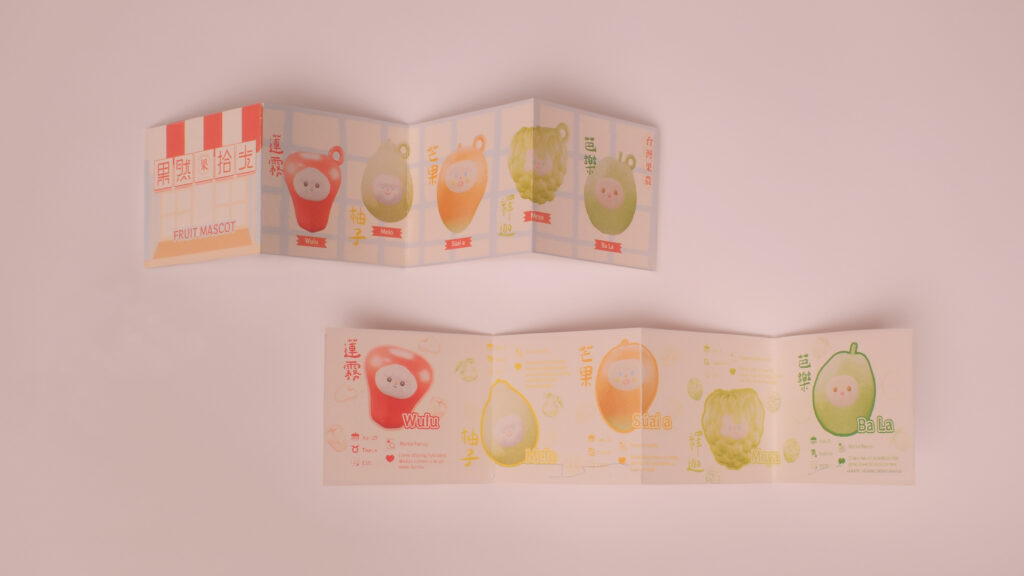
Brochure
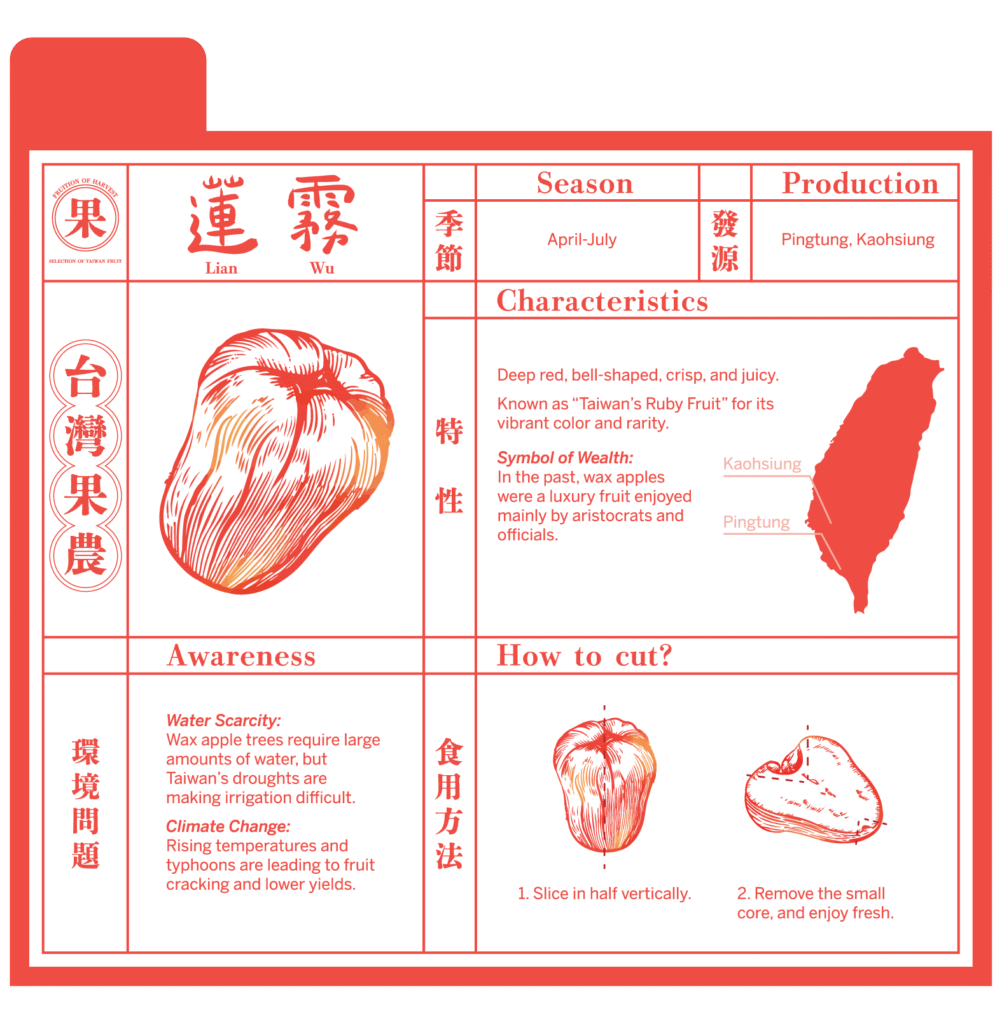
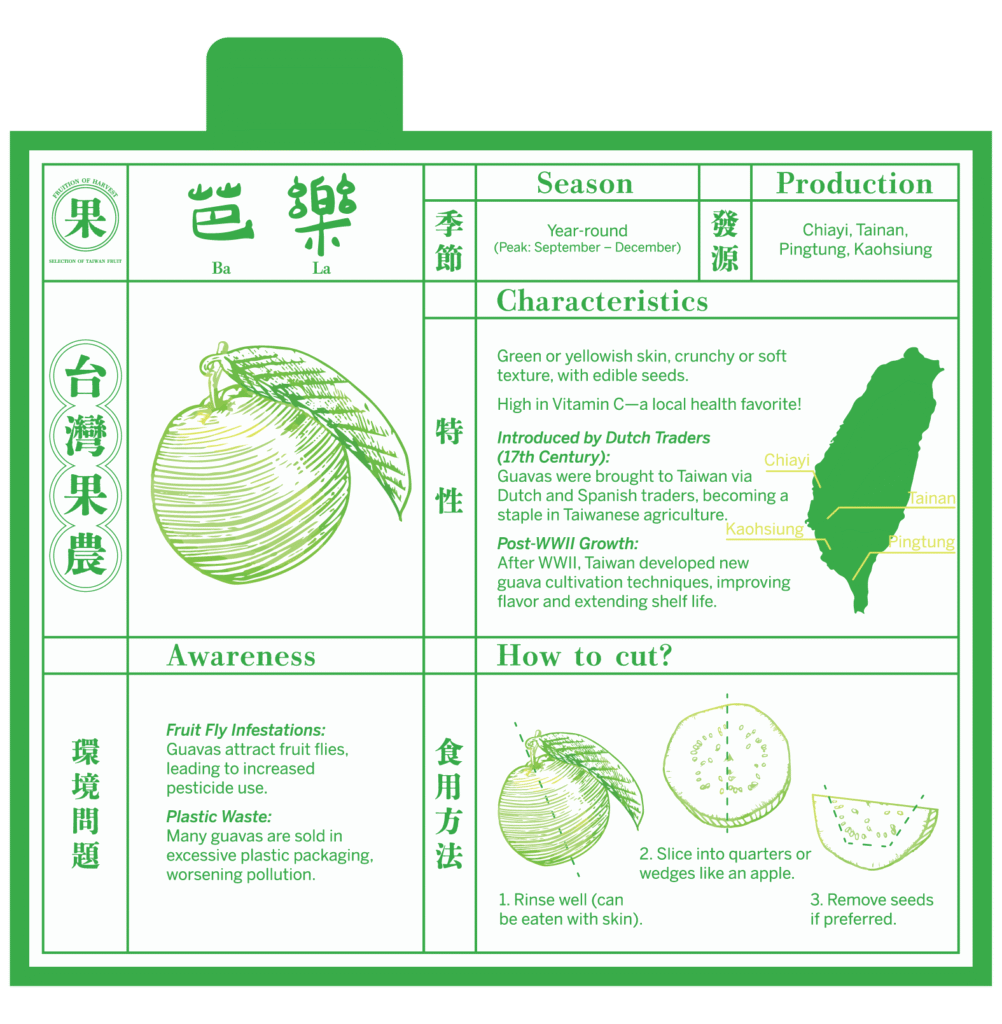
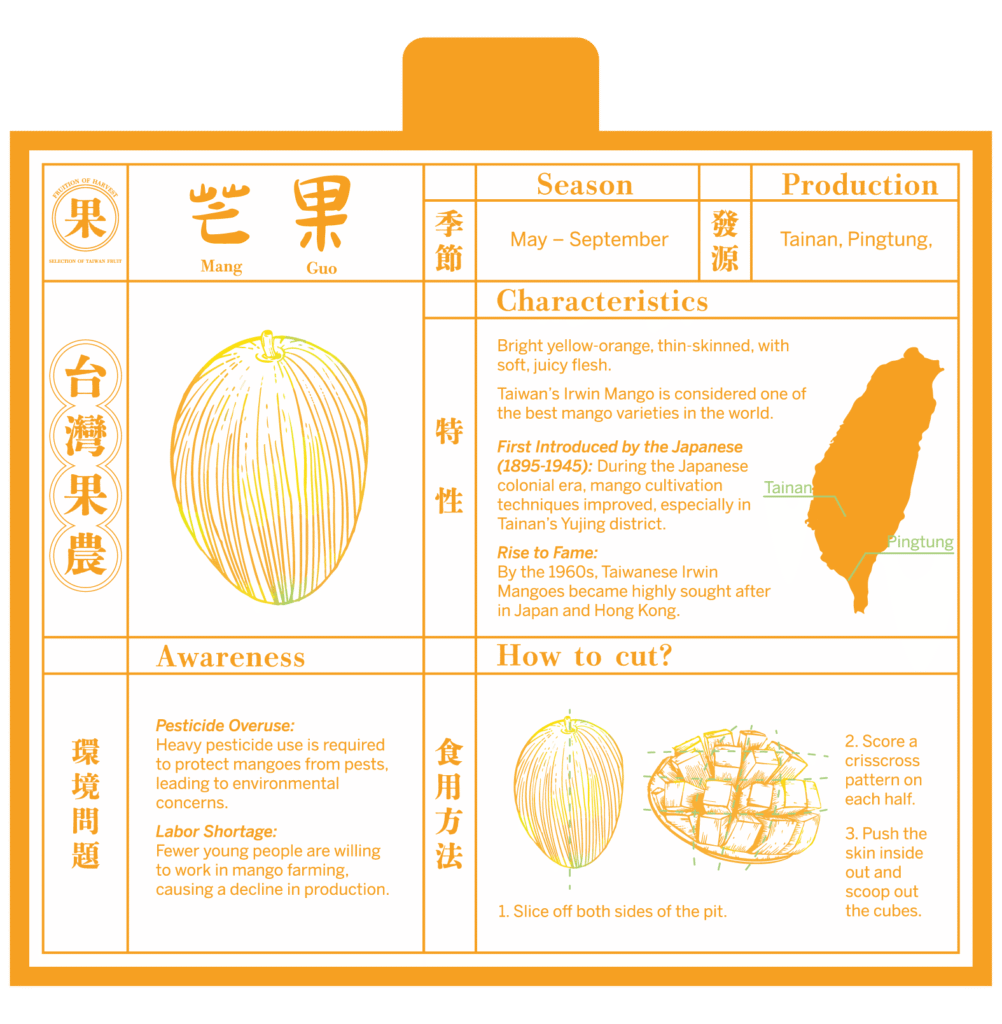
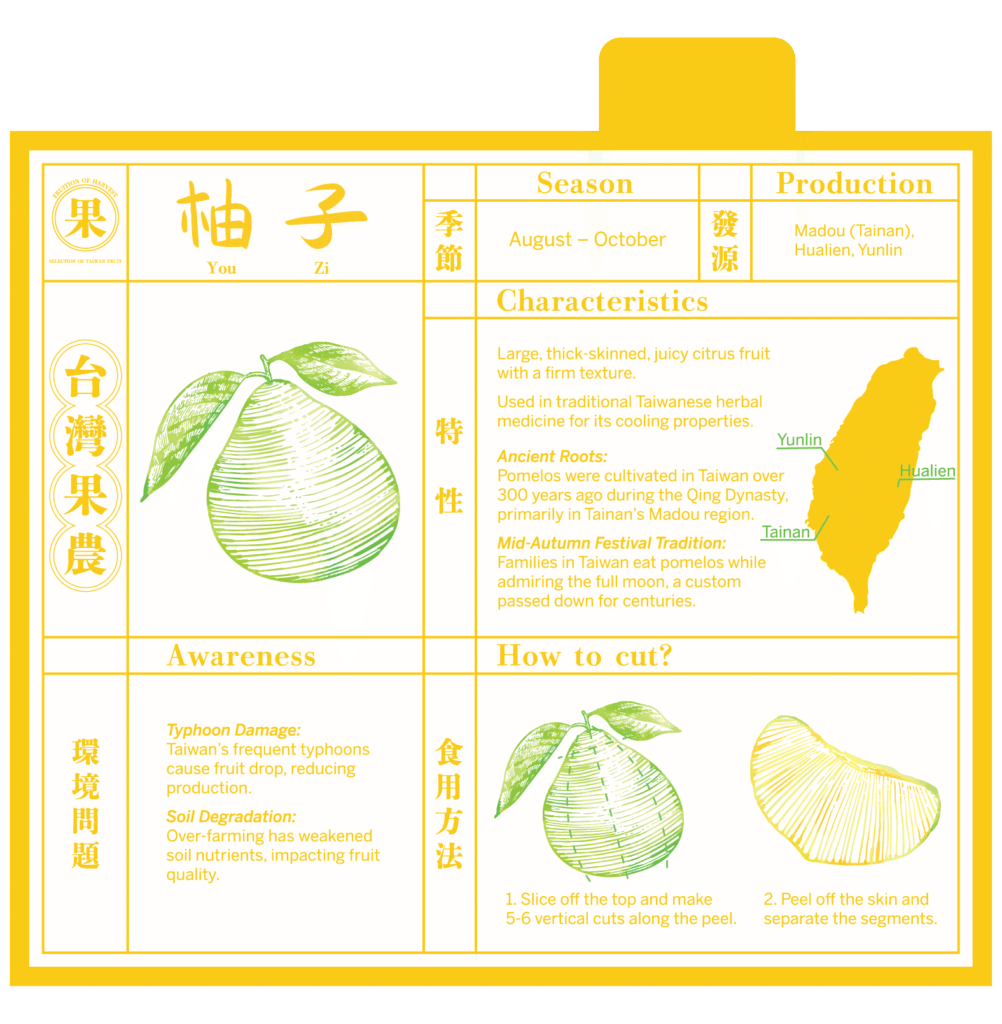
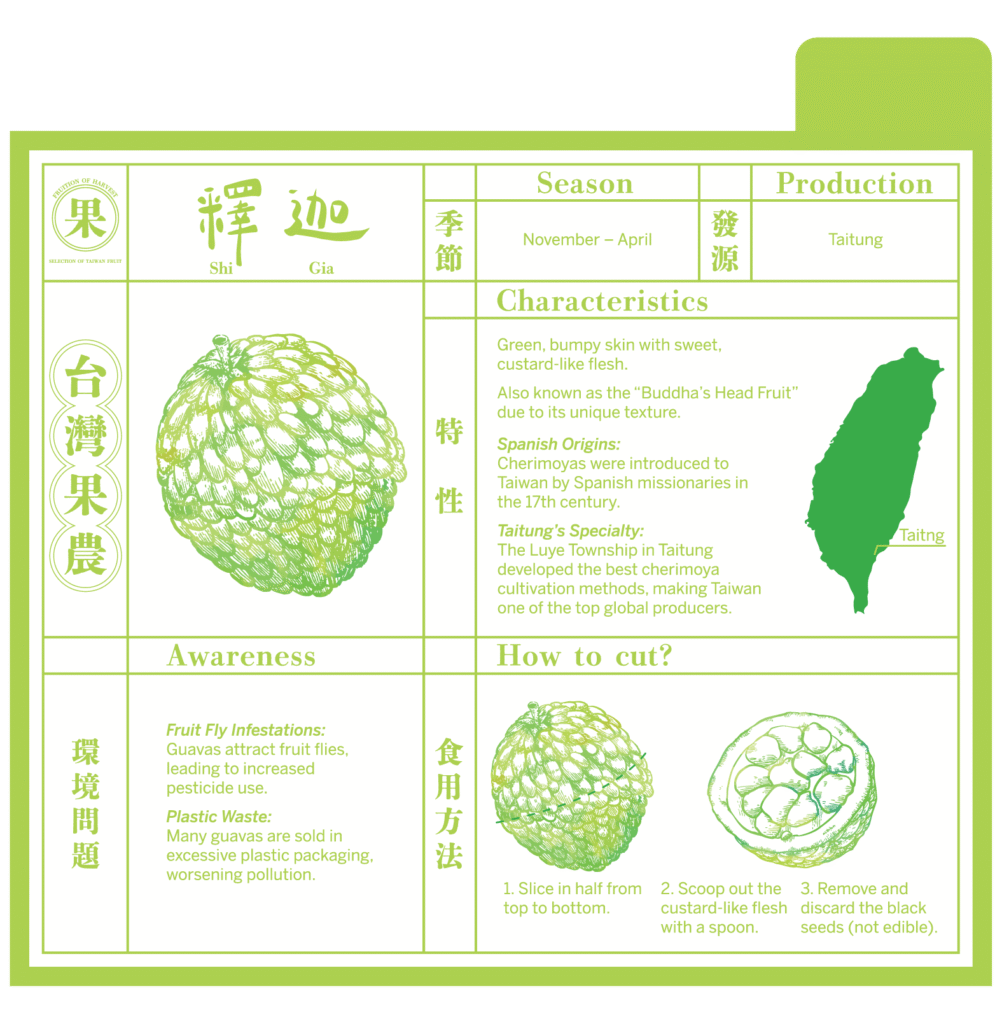
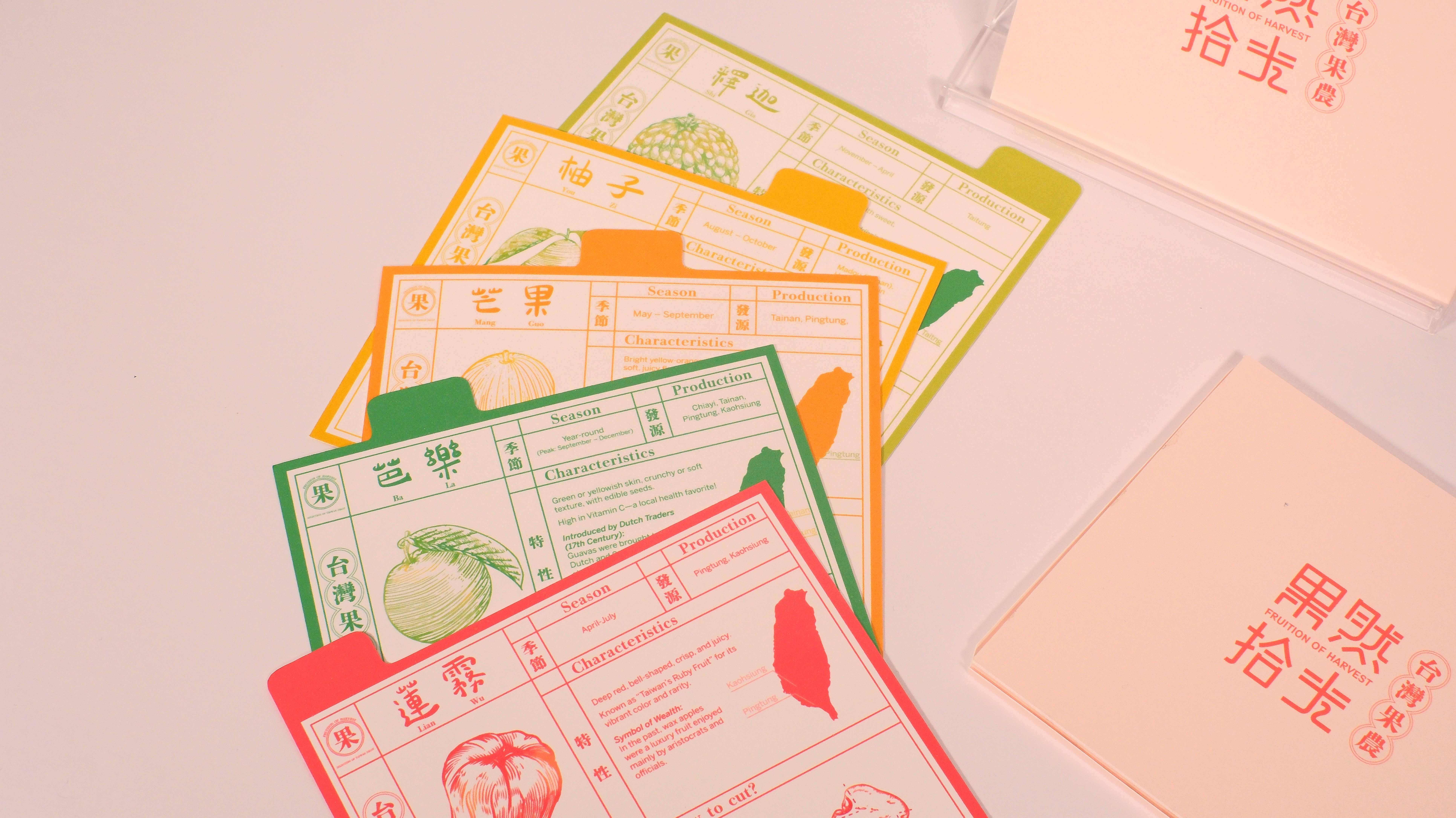
Rather than following a traditional brochure format, I chose to design it in the style of a document file. This choice symbolizes the act of archiving and preserving the unique stories behind each fruit, much like treasured records in a personal archive. The format invites readers to explore the brochure as if they’re uncovering a collection of meaningful narratives—each fruit carrying its own cultural, emotional, or seasonal significance. This approach not only enhances the visual identity but also deepens the storytelling experience.





Card


Other Assets