navigating grief & loss as a sensing & perceiving being
Cimarron Knight
See it On Campus: Level 2
Libby Leshgold Gallery: 'emergent ground' (2025)
Visitor Info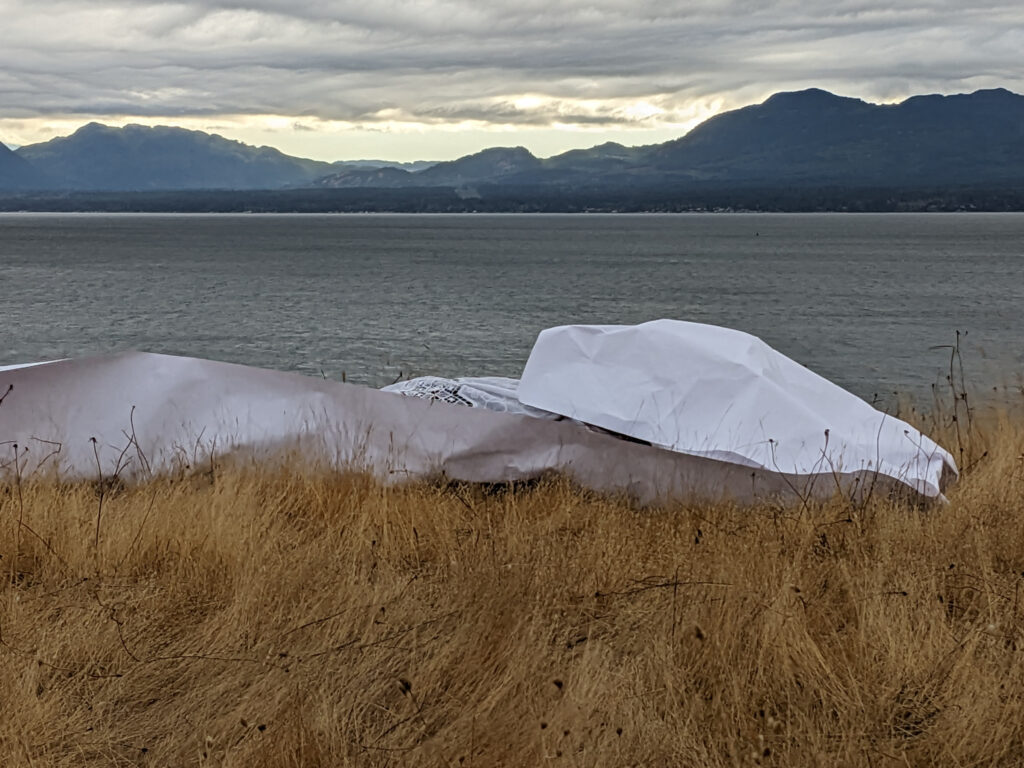
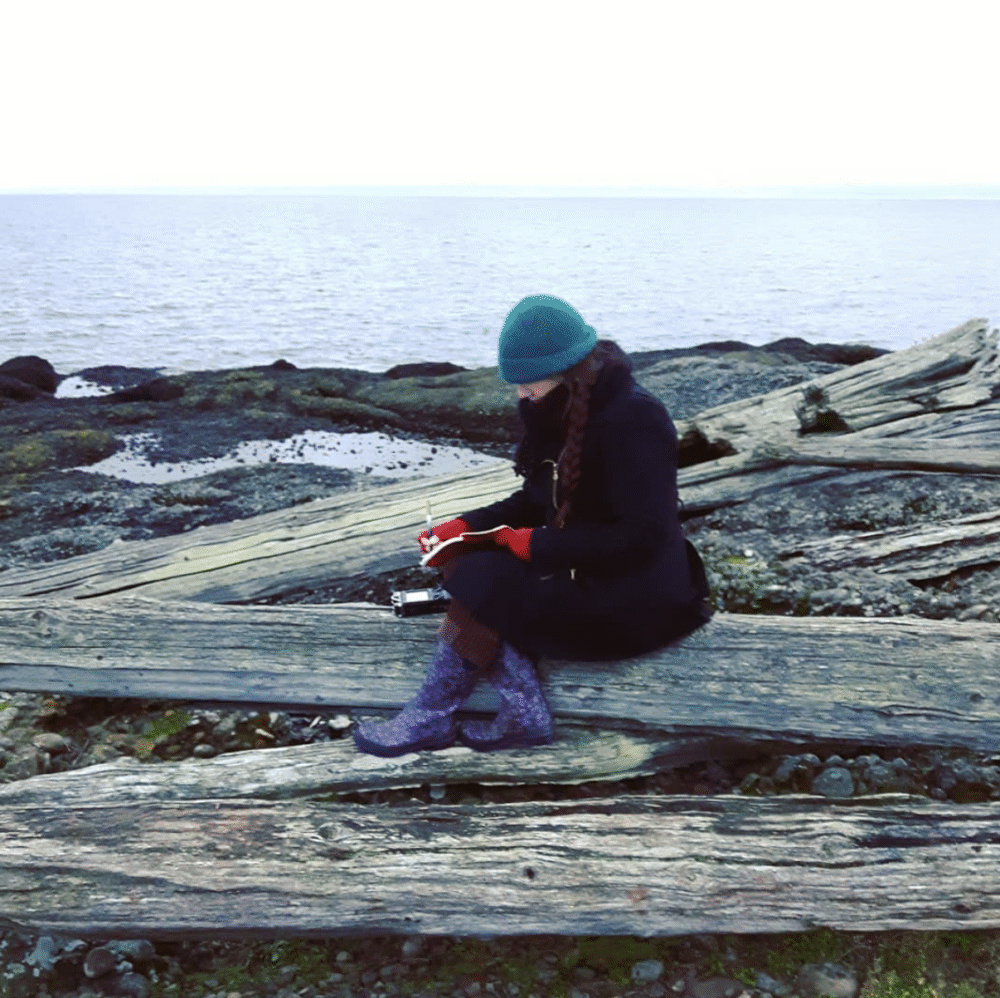
Shroud study: body as landscape. Explorations of the relationship of the shroud to the body as collaboration between paper and wind. Photo created from video footage. Hornby Island. 2022
My research explores the concept of “grief literacy” and healing modalities within the transient space of loss and transformation. Grief literacy is an acknowledgement that loss is part of life, and that openness and conversation may become forms of healing and acceptance. In my research, I utilized visual signifiers of the burial shroud, shadows, and a coffin-form as reminders life is in constant, fluid, flux. These signifiers formed the foundation of my inquiries and were within my thesis exhibition.
Performative and embodied acts of grief-and-loss and healing-and-transformation were researched through methodologies that involved deep listening practices. This is a methodology developed by the late soundscape artist Pauline Oliveros. For her, it required entering into an active listening state utilizing sonic perception, improvisation, and bodily engagement. For my research, I expanded upon this, and included acts that involved sensory engagement, the sensing/perceiving body, and the conscious/unconscious mind as reflections of my relationship to self, more-than-human (non-human) beings, and the immaterial. These methods became a vehicle of healing for me as an artist navigating my own loss—small embodiments of the “practice of dying” and connecting to my own grief literacy. During this process, I was asking whether transitional space could be experienced through embodied performative acts by the artist, and communicated outwardly through the material form? Could moments of pause and reflection be created through an immersive installation, a contemporary memento mori?
Thesis project: Death by Landscape installation
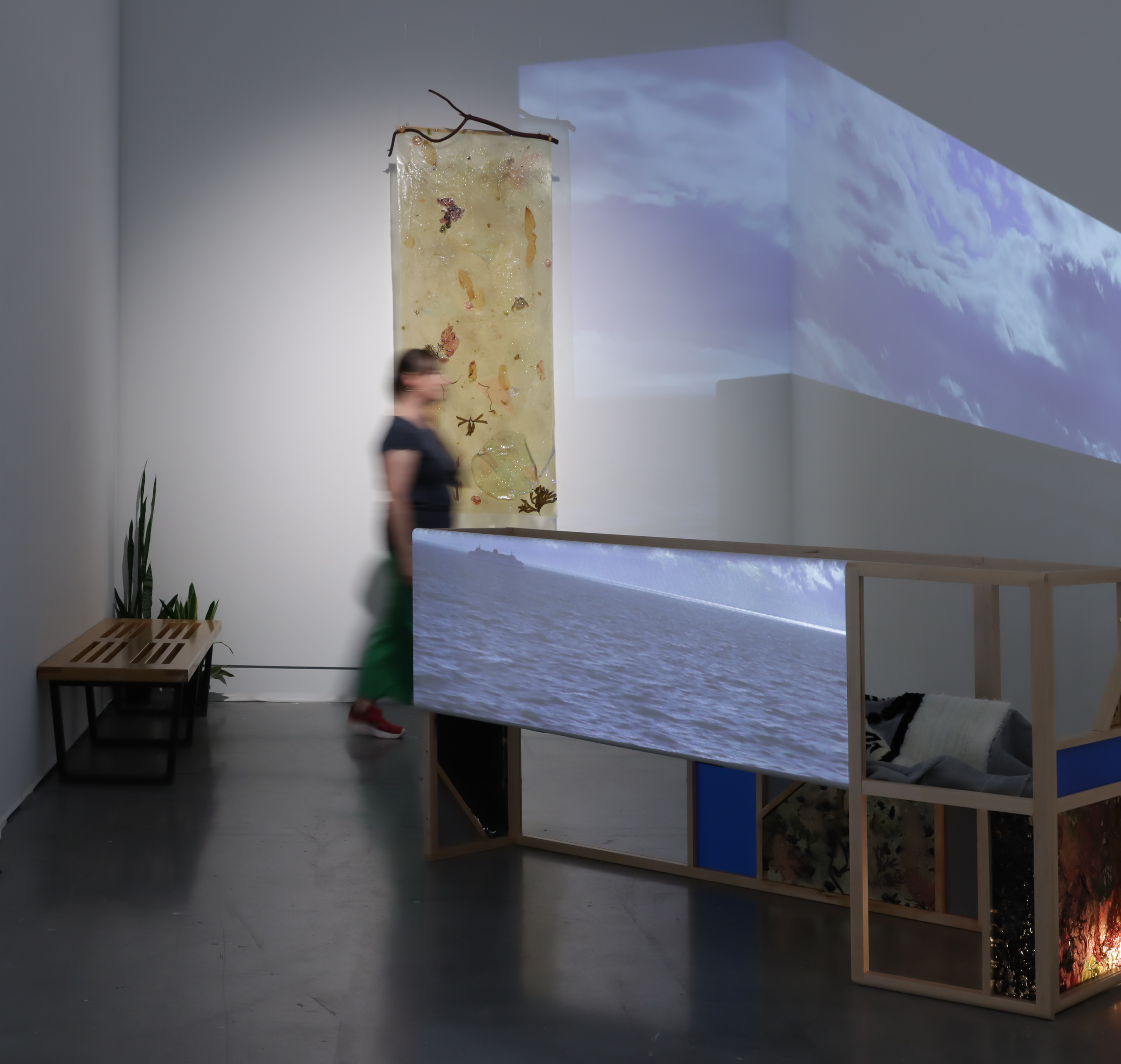
Installation scale view. Death by Landscape. Photo: Andrew Ina, 2024
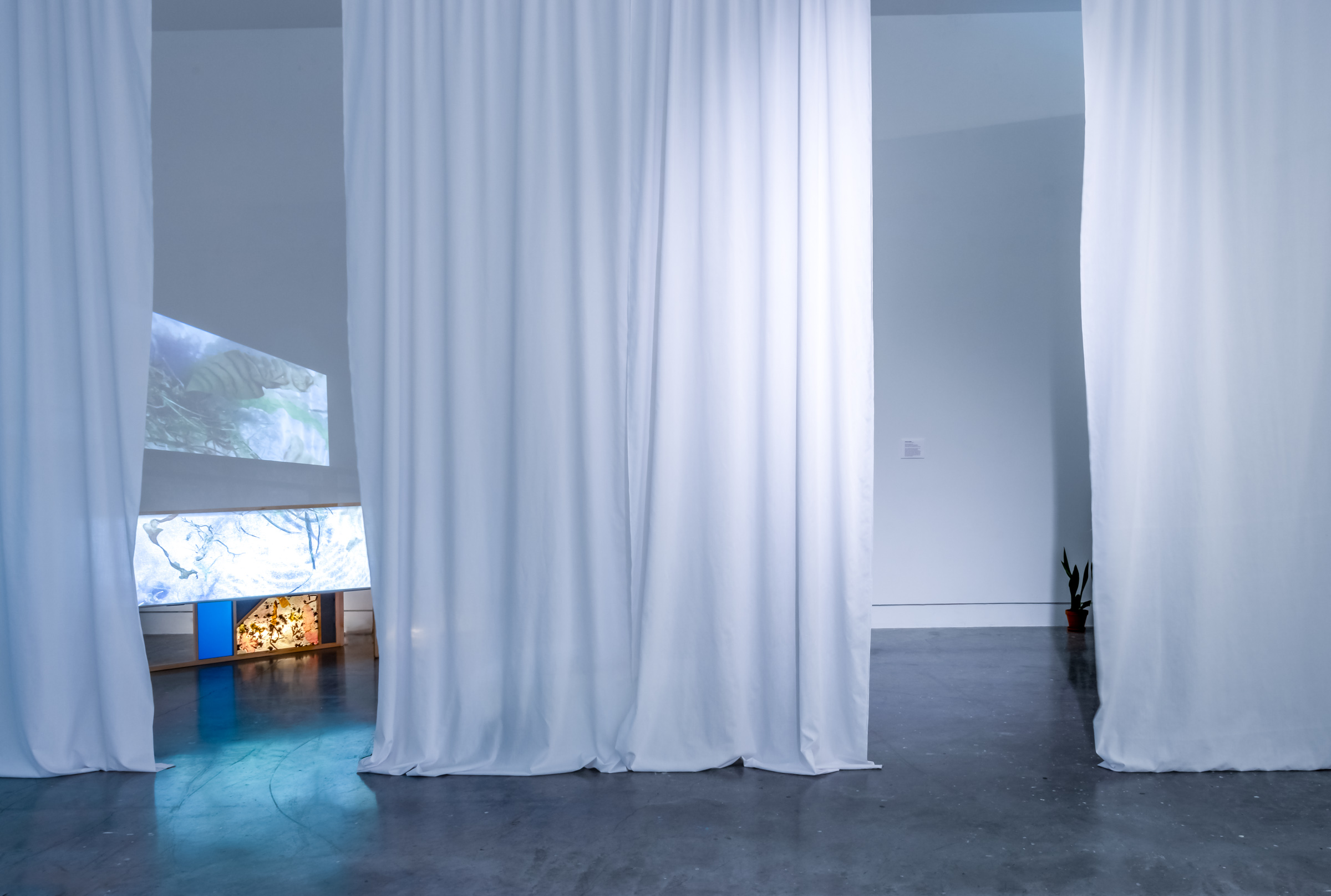
Front View into installation. Entry.
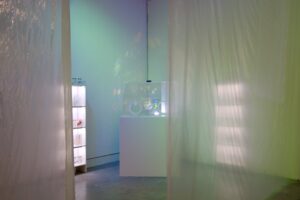
12-foot white suspended curtains create an entry into the installation, an invitation to step into an in-between realm. The drape of the semi-transparent cloth conveys a softness and a sense of moving into a space for pause and reflection.
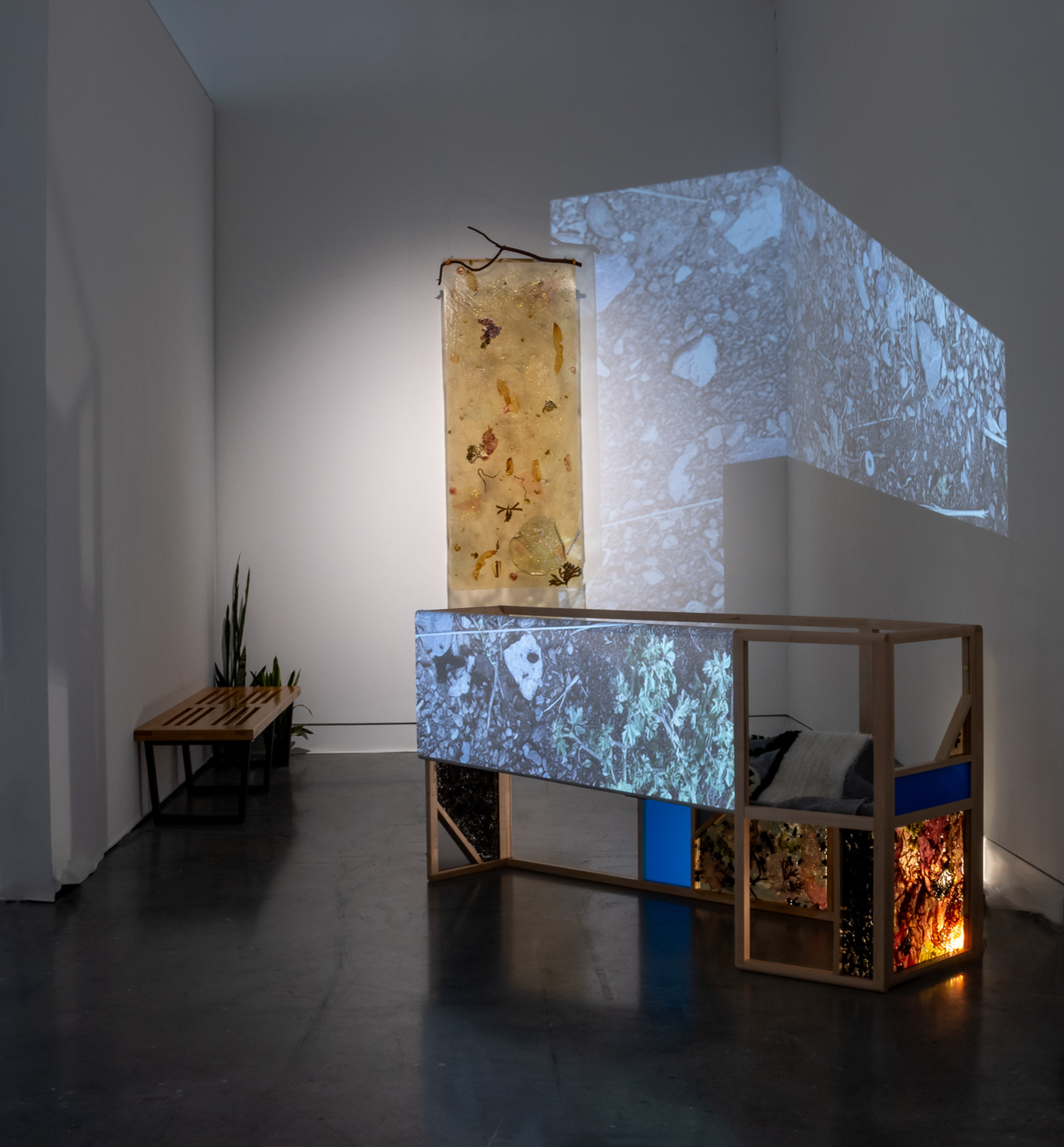
End View facing left. Coffin-form with projection, Bio-shroud.
Within this installation, there are three shrouds, signifiers of grief-and-loss and absence and presence of the body. A coffin-form with projected imagery of more-than-human worlds is the focal point. There are two benches to rest upon and five snake plants. A soundscape fills the space and acts as a connection between the material and immaterial.
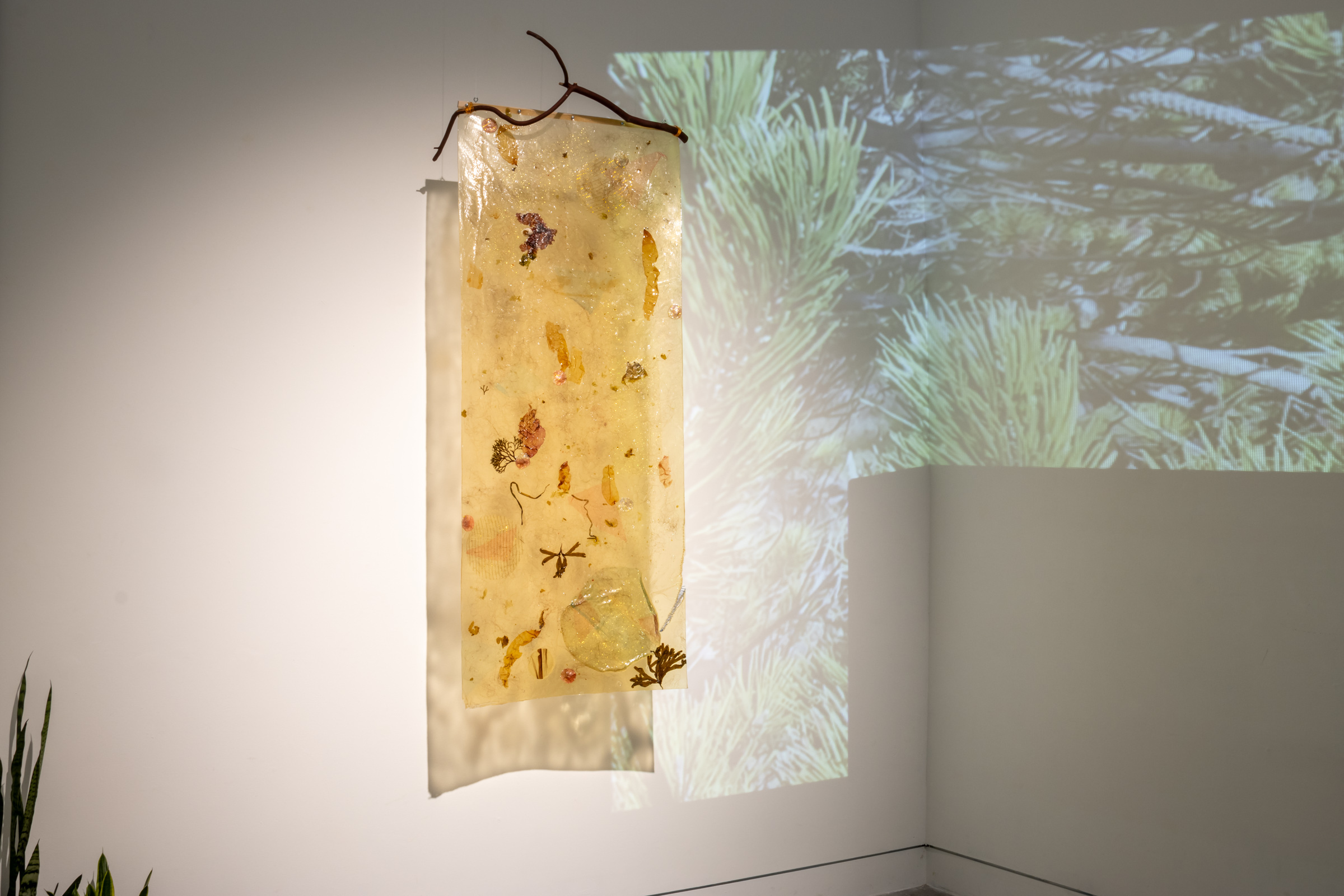
Corner View. Right side. Bio-shroud: Bio-materials, branch. 28” x 72”. 2024
Moving projected images of more-than-human worlds alternate in a rhythm of 30 secs, 30 secs, 60 secs. Repeat. They represent the everyday, the Unseen. Movement in time. These moments are windows into more-than-human lives of the Salish Sea and Island life. Macro views of the adult pausing in daily routine, looking out and forward to the future. Micro views of childhood, imaginary worlds that have become memory.
It was important to me to not plan or seek out these moments. I wanted to be open and present in these worlds. I would pause and record 30-90 seconds of these connections, then keep moving. Life and the in-between is a journey.
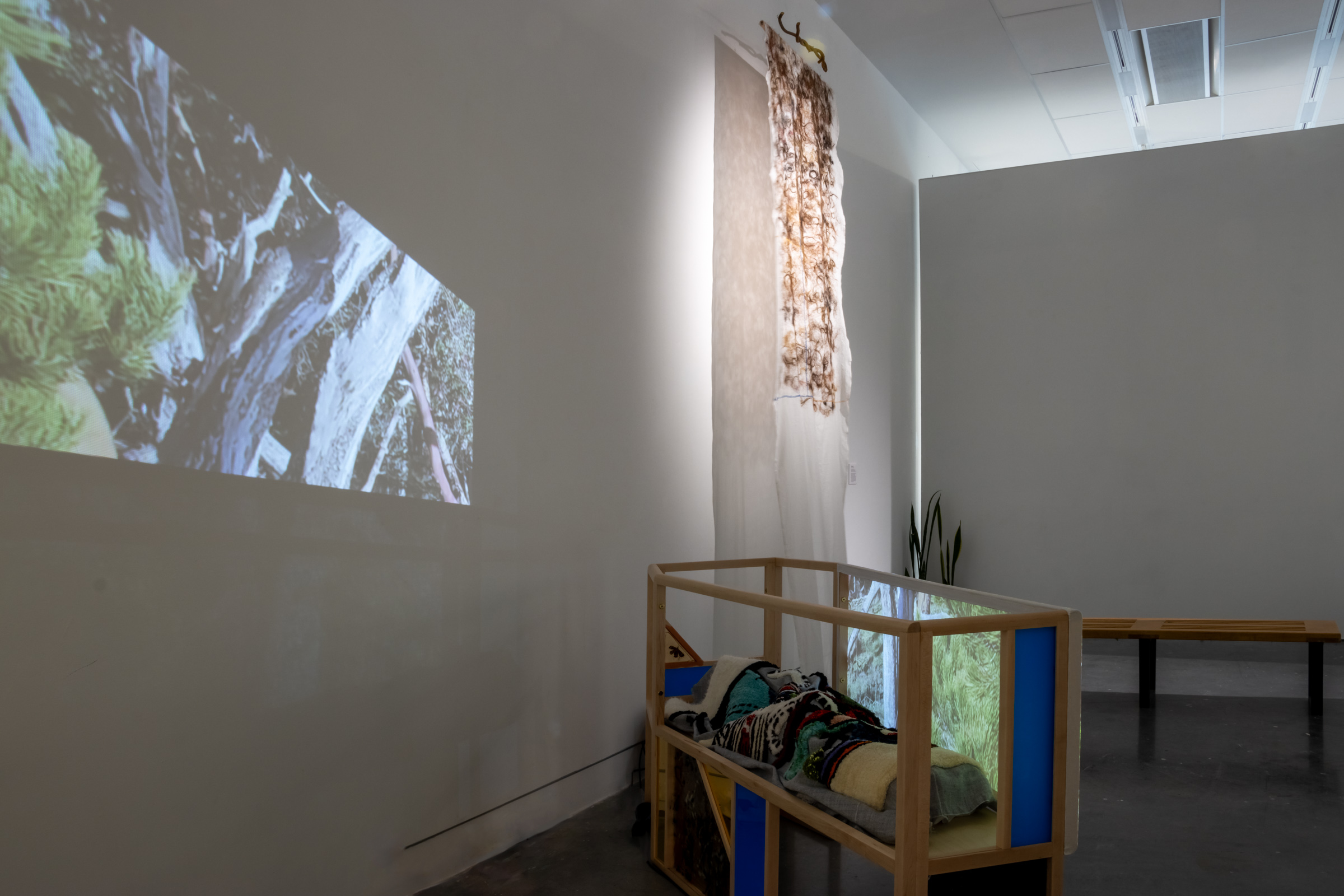
End View facing right. Projection, coffin-form with Shroud study: soft shroud (as weighted blanket), Shroud study: reliquary.
The projector is set up to cast a human shadow on the more-than-human worlds if one chooses to walk through the space. The material and immaterial moving in tandem. And a reference to my shadow walks which are acts of being present as part of my deep listening practice.
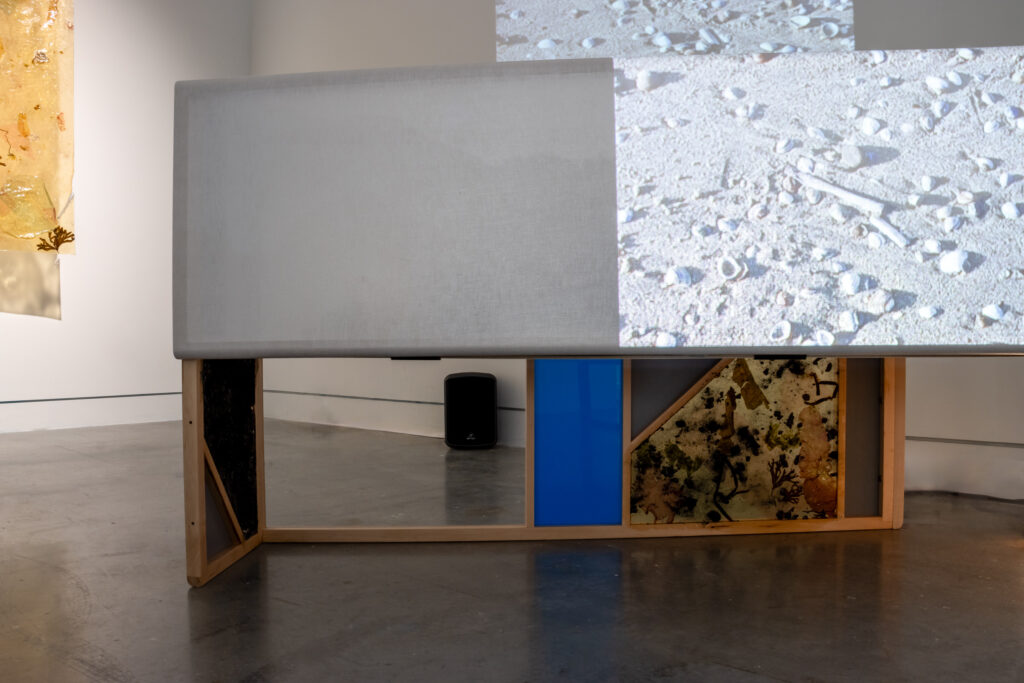
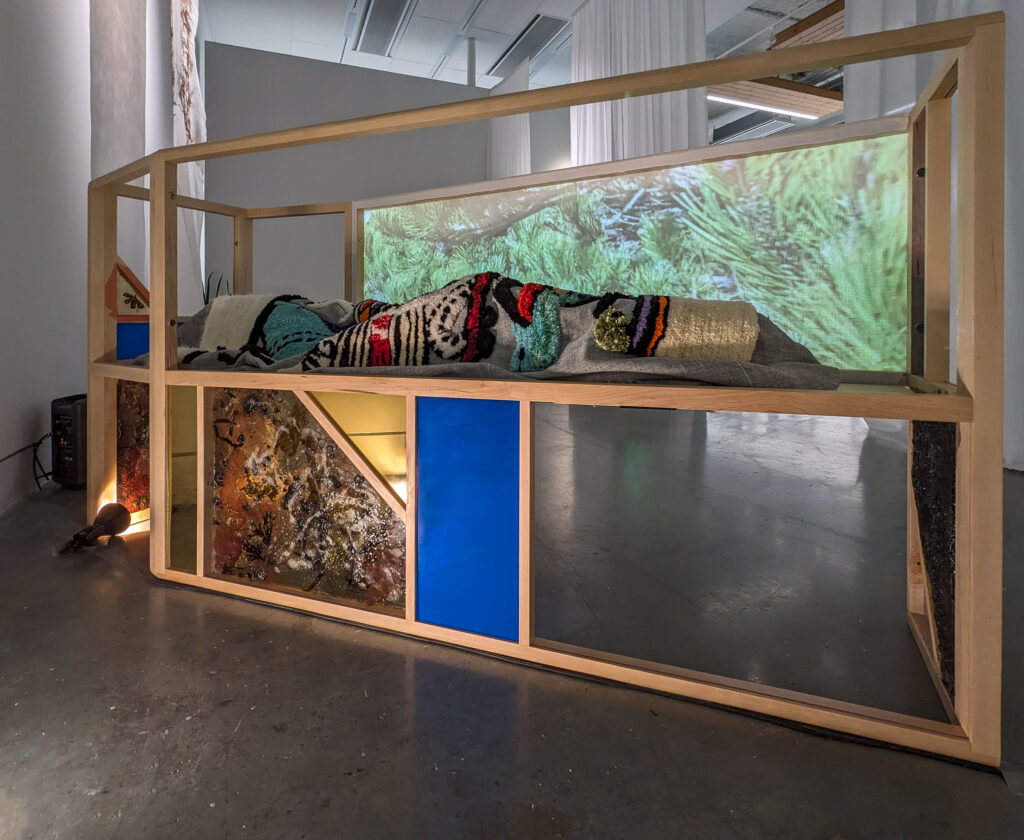
Left: Front View. Coffin-form. Maple, bio-materials, acrylic panel, linen. 28” x 79” x 38” h. 2024
Right: Back View. Coffin-form.
In the centre of the installation is an architectural form, a skeleton of a deconstructed coffin not yet fully formed. Its shadow cuts into the video projection, onto the walls and the floor.
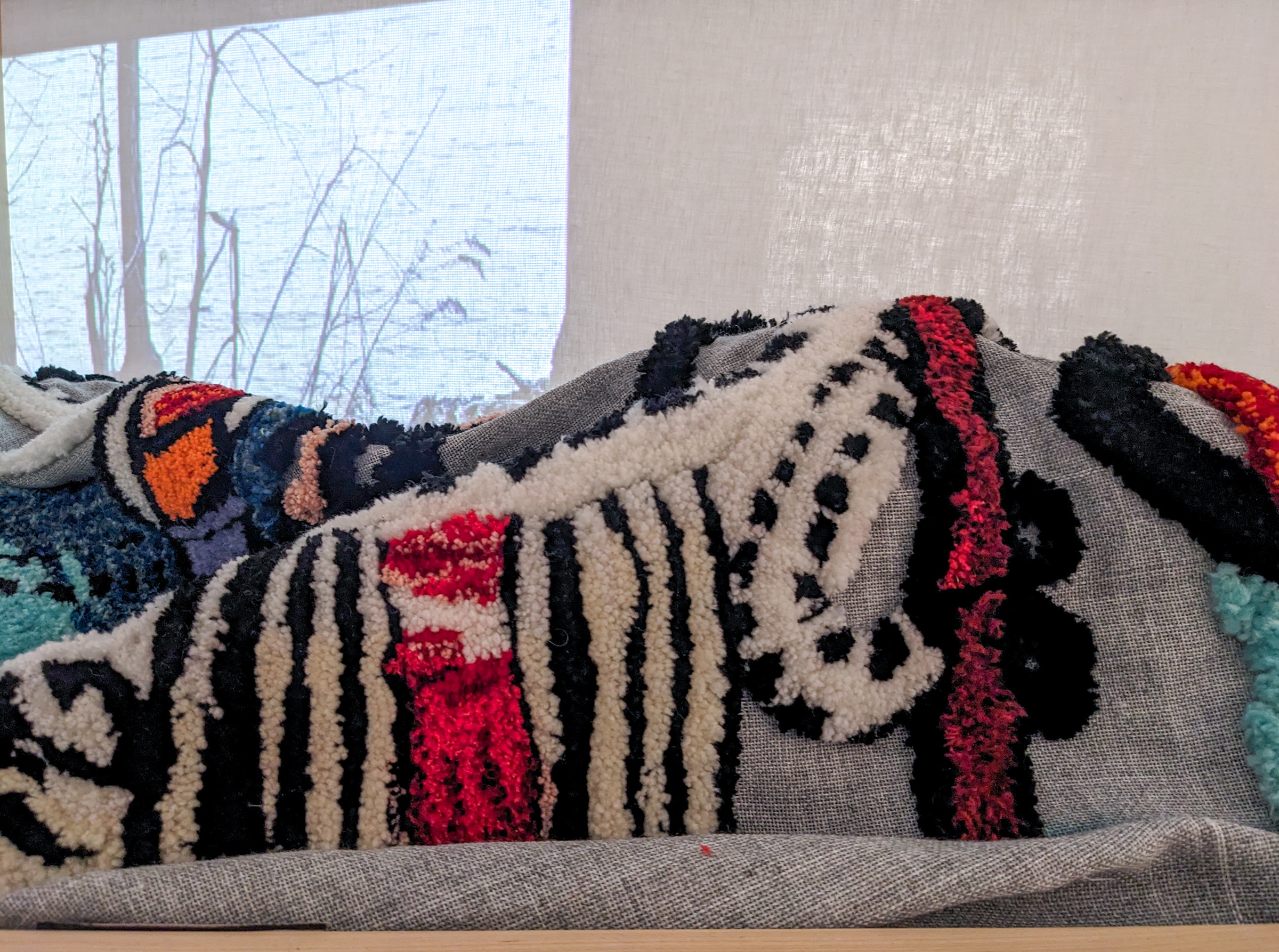
Elevation detail. Shroud study: soft shroud (as weighted blanket). Yarn. 28” x 72”. 2023
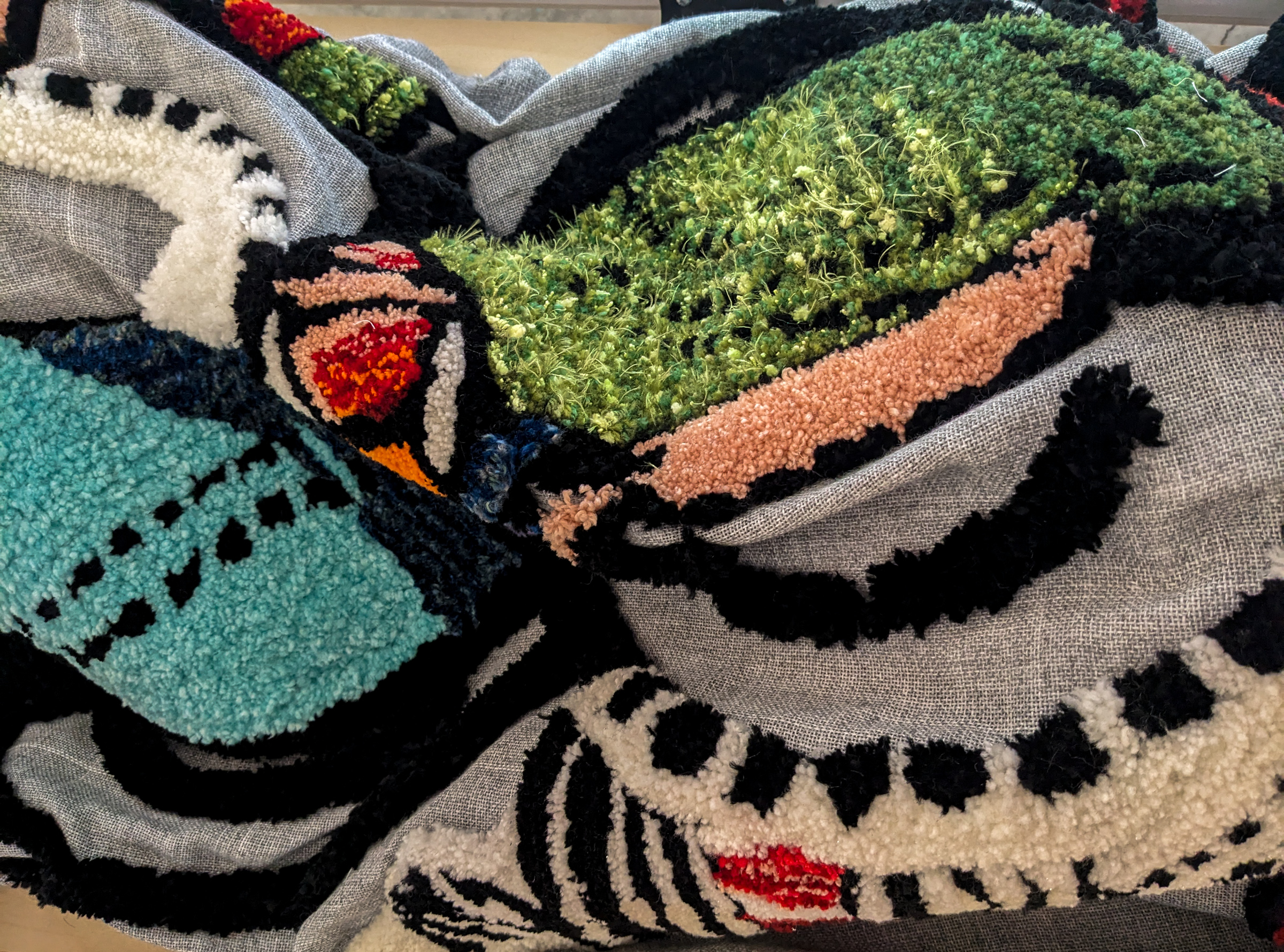
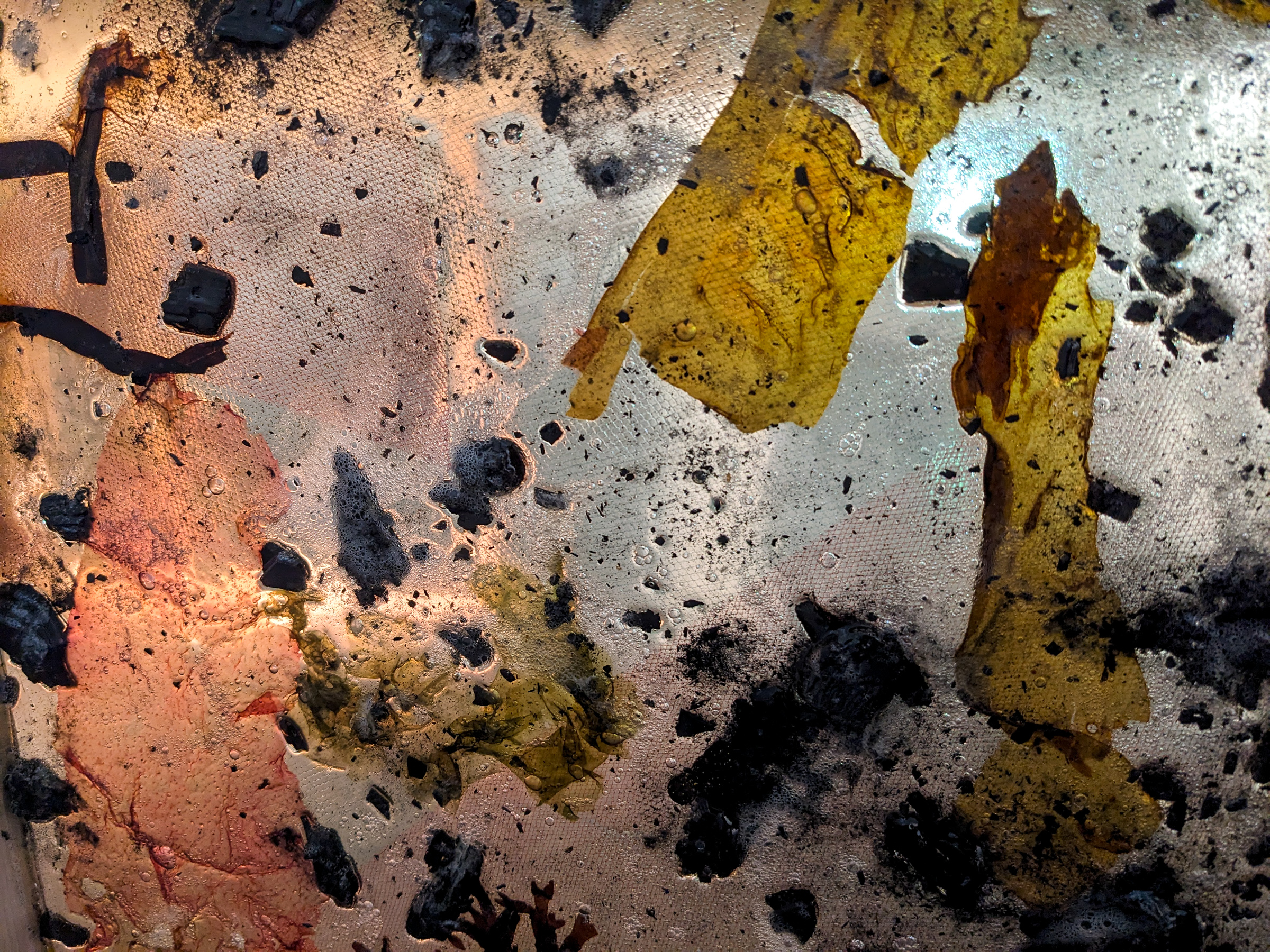
Left: Plan View detail. Shroud study: soft shroud (as weighted blanket).
Right: Detail. Coffin-form bio-material panel.
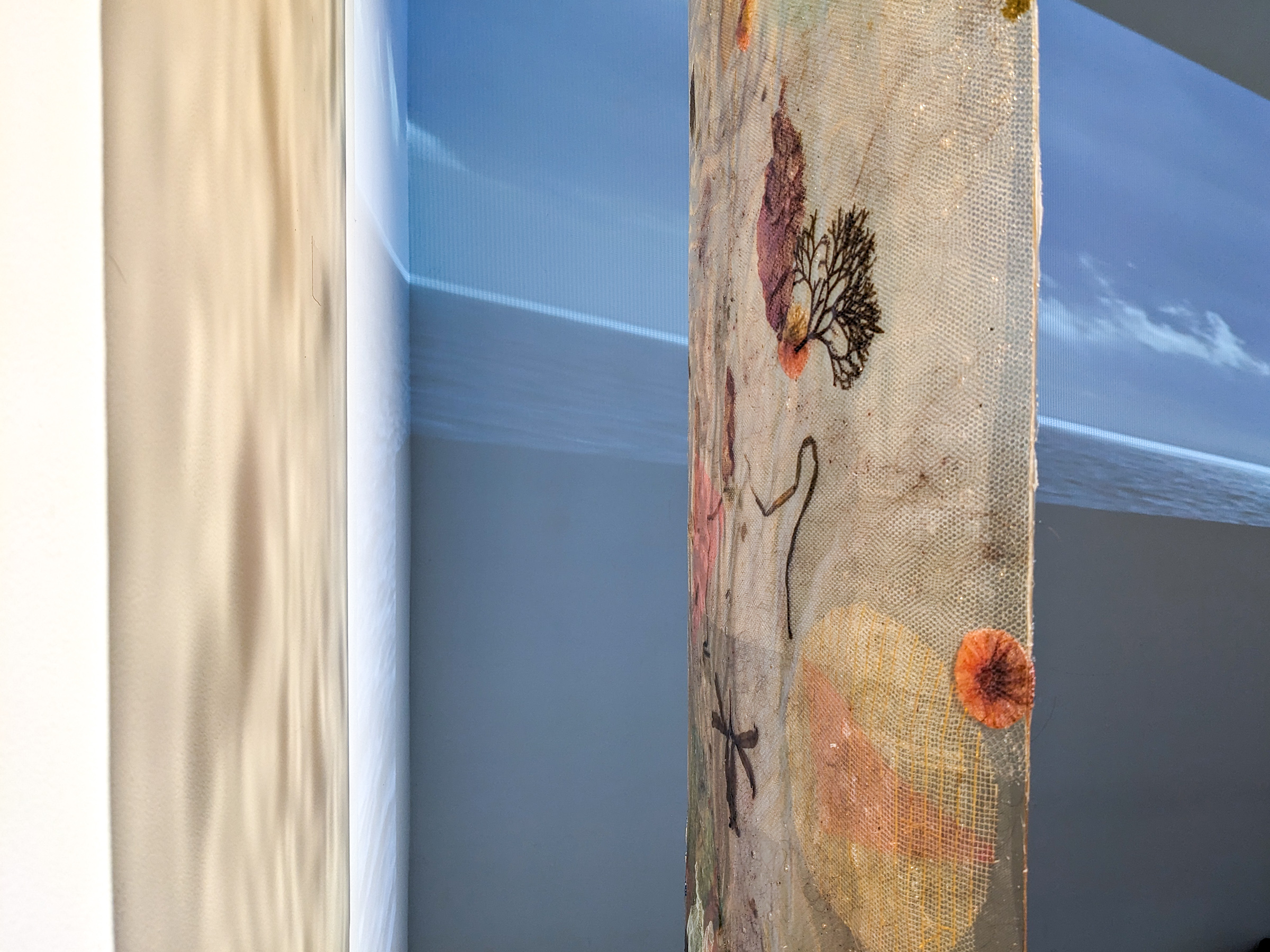
Back angled view. Bio-shroud study.
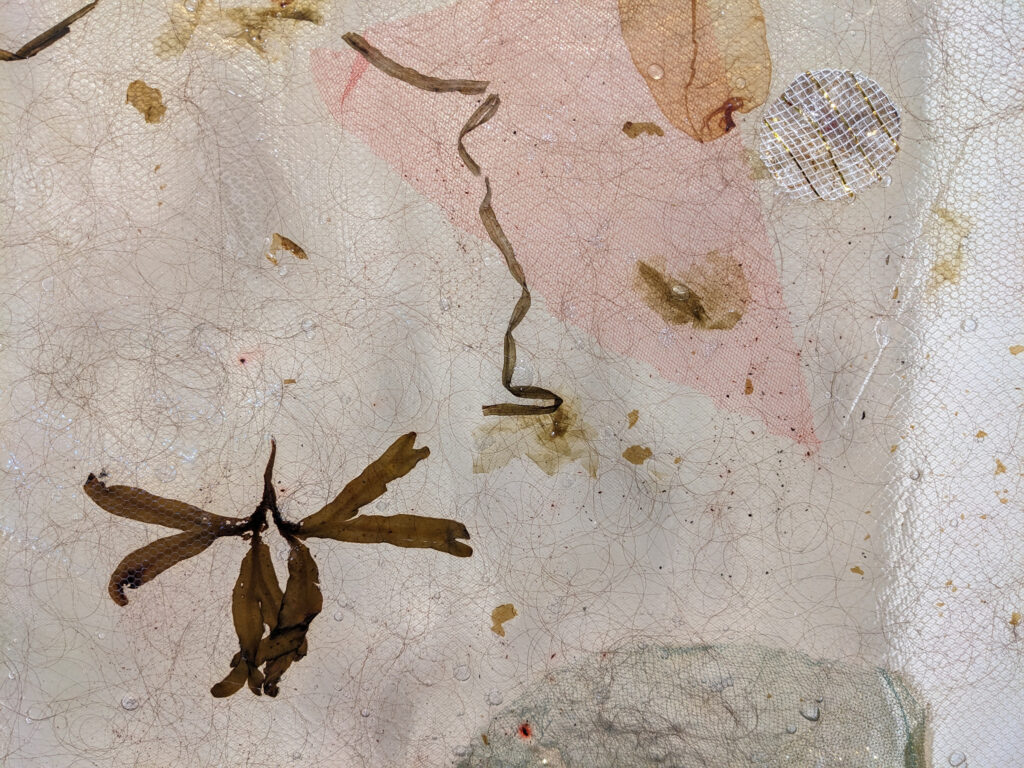
Left: Detail. Bio-shroud study.
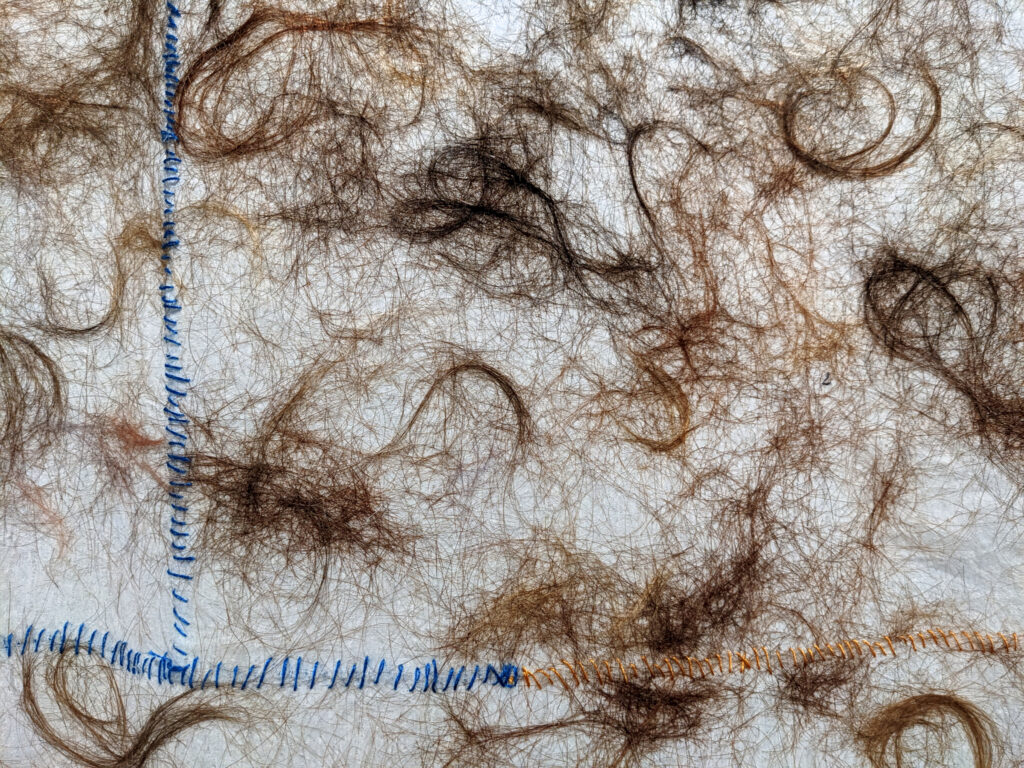
Right: Detail. Shroud study: reliquary.
The same stitching is in the coffin-form and suspended shroud on the left. Fragments of fabric I’ve patched back together, an echoing of the work of women’s hands throughout history. Care and love that was given for the deceased one’s body. A gesture to my Irish relatives who sewed shrouds for their loved ones, women who bathed and prepared the bodies for viewing and the wakes.
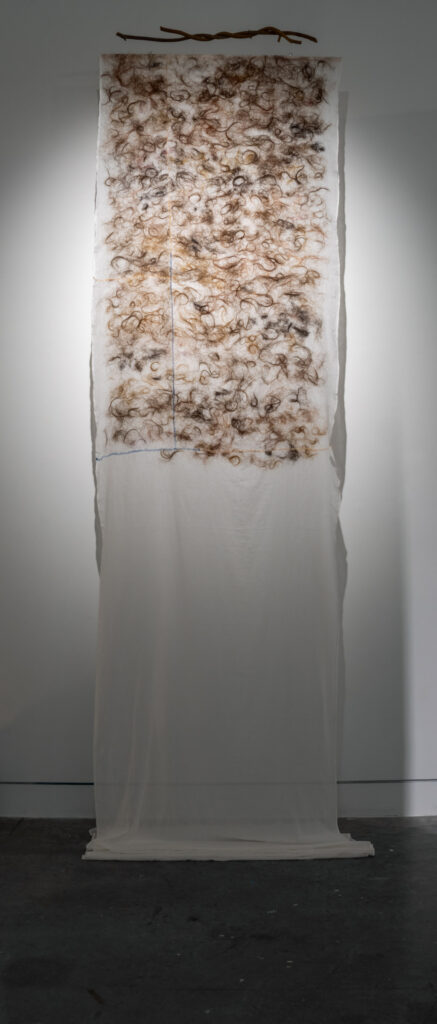
The shroud’s 15-foot length falls and pools on the floor and there’s human hair felted within it. I wanted to create a visceral reaction. The topic of death and loss isn’t comfortable. I carefully stitched these panels together, 6-feet of felted hair that represents the human body.
Shroud study: reliquary. Felted human hair on organic cotton, silk thread, branch. 45” x 15’. 2023
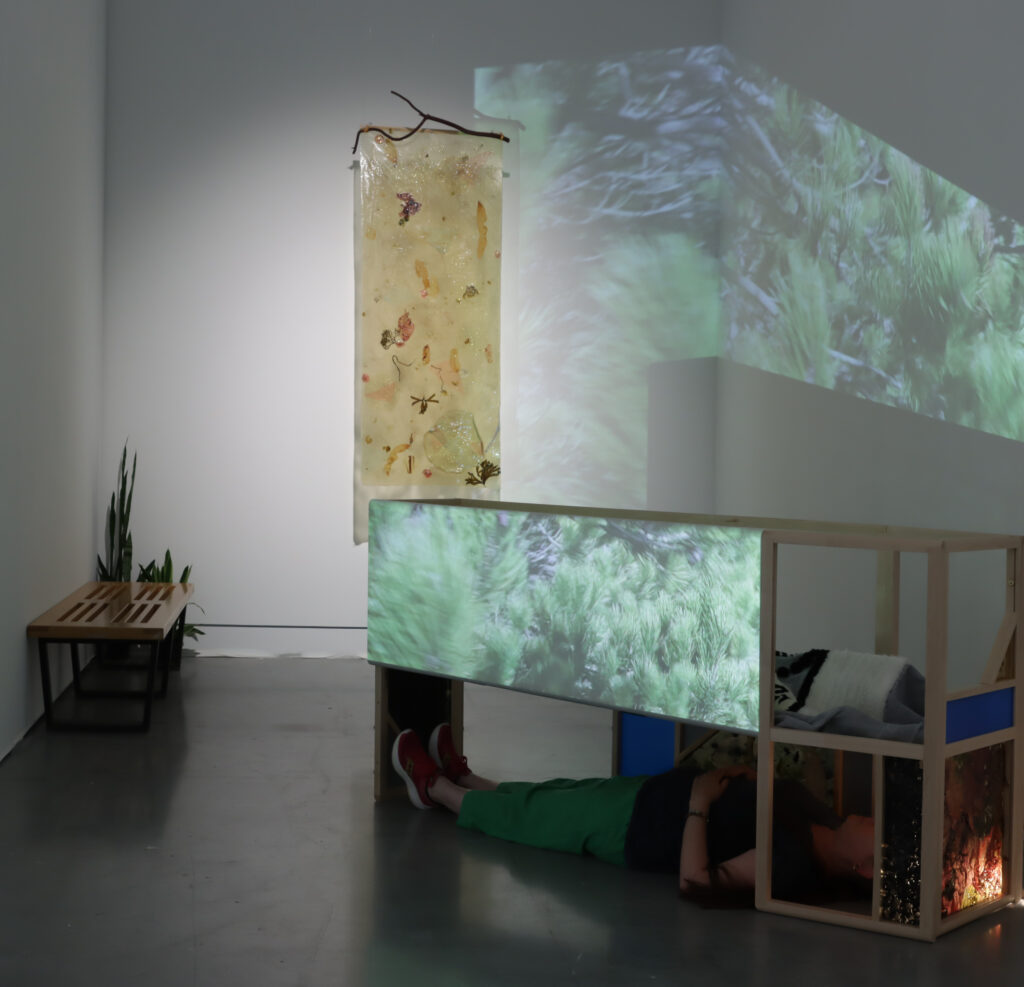
Embodied performative act: the artist lying in repose within the coffin-form. 2024 Photo: Andrew Ina
Death by Landscape. projected video and soundscape, (low resolution version), 10:33 mins. 2024
This is a video montage of 30 second and 60 second cell phone recordings of more-than-human worlds I encountered while on deep listening walks. The accompanying soundscape is field recordings and instruments utilized in sound healing therapies. The video projects onto the side of the coffin-form and becomes fragmented on the wall behind it. This speaks to the fragility of all life, the interconnections between human and more-than-human worlds, and a reminder of the responsibility we have for all life forms.
There are video frames of white which act as moments of pause.
Embodied performative acts, selected
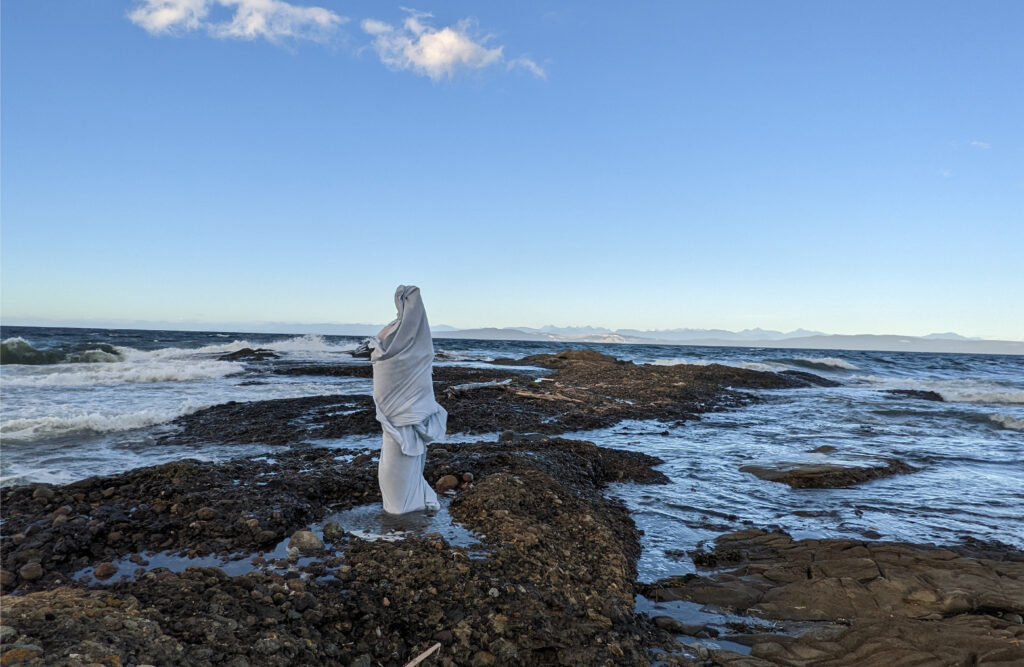
Left: Shroud study: Trinity of land, sky, water. Hornby Island, BC. 2022
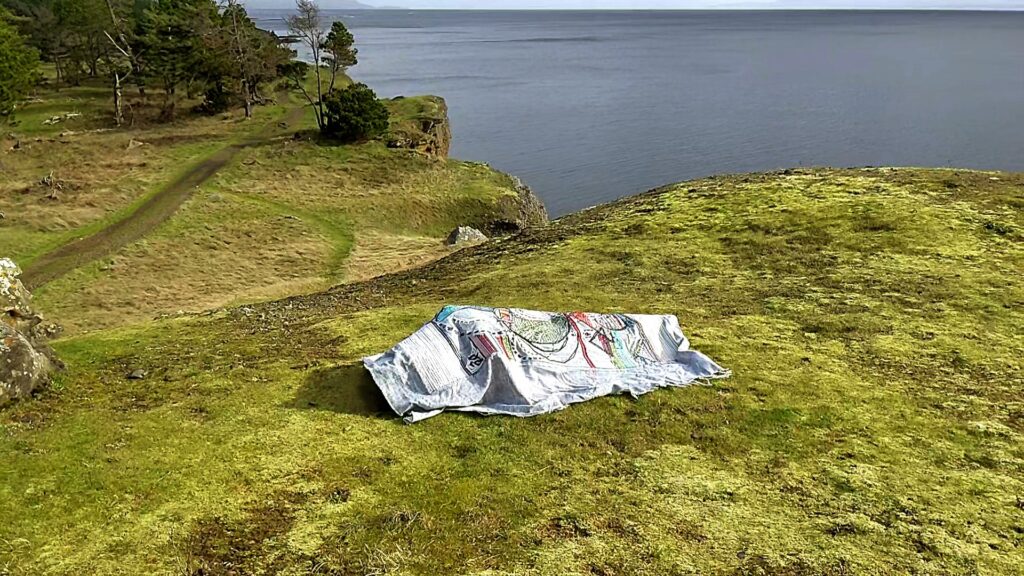
Right: Shroud study: burial mound (soft shroud as weighted blanket). Hornby Island, BC. 2023/24
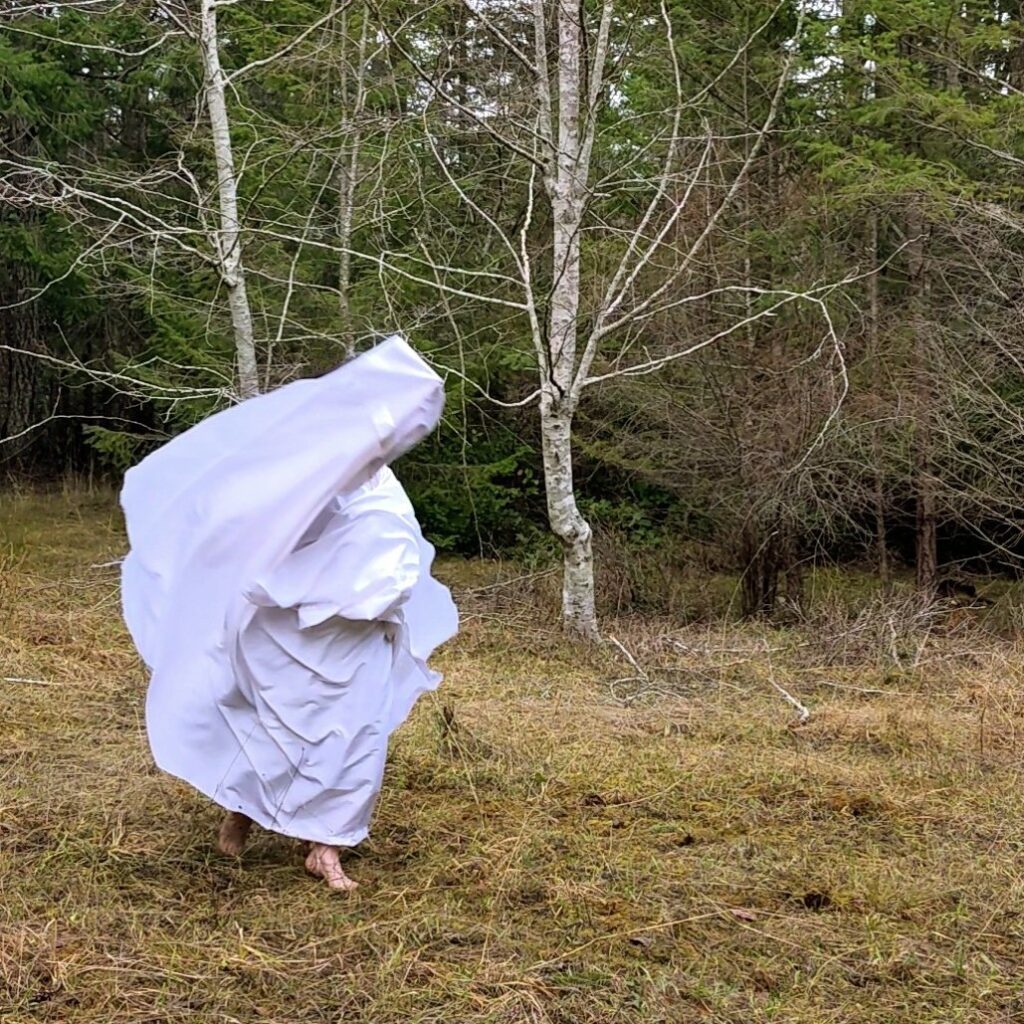
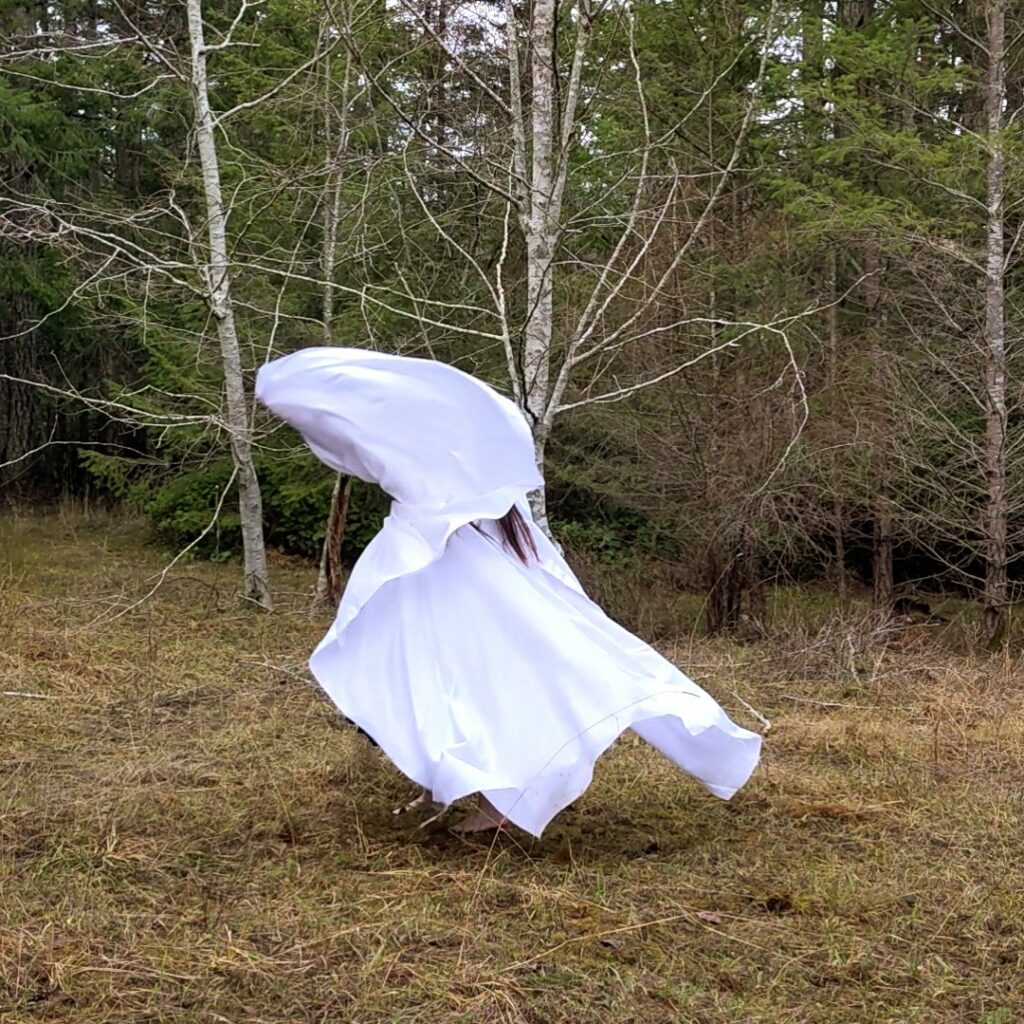
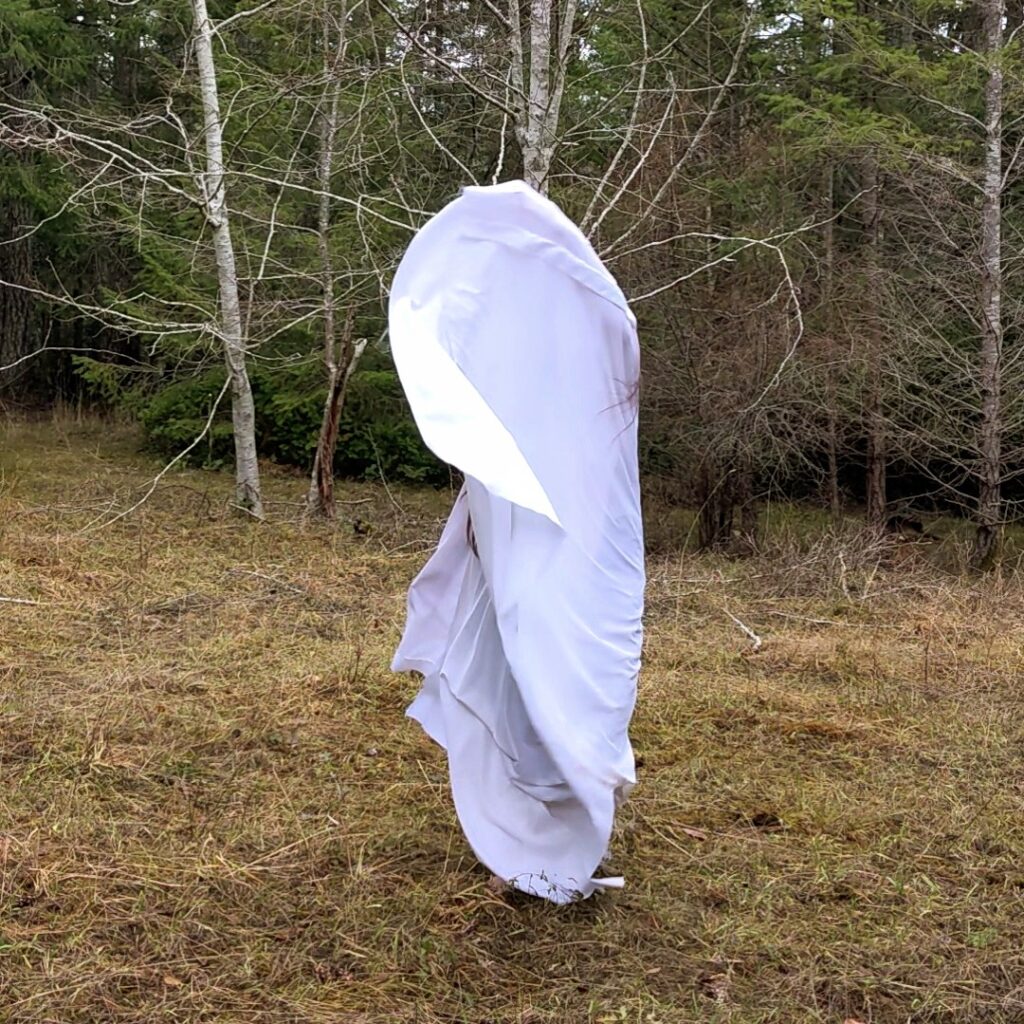
Shroud study: impermanence and time. Video still frames pulled from explorations on how the shroud cloth moved, my body’s relationship to the movement, and allowing intuitive processes of letting the body guide. 2022/23
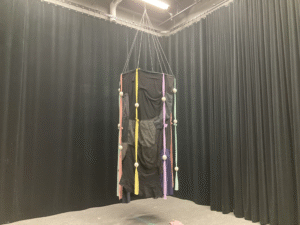
emergent ground, 2025
Libby Leshgold Gallery
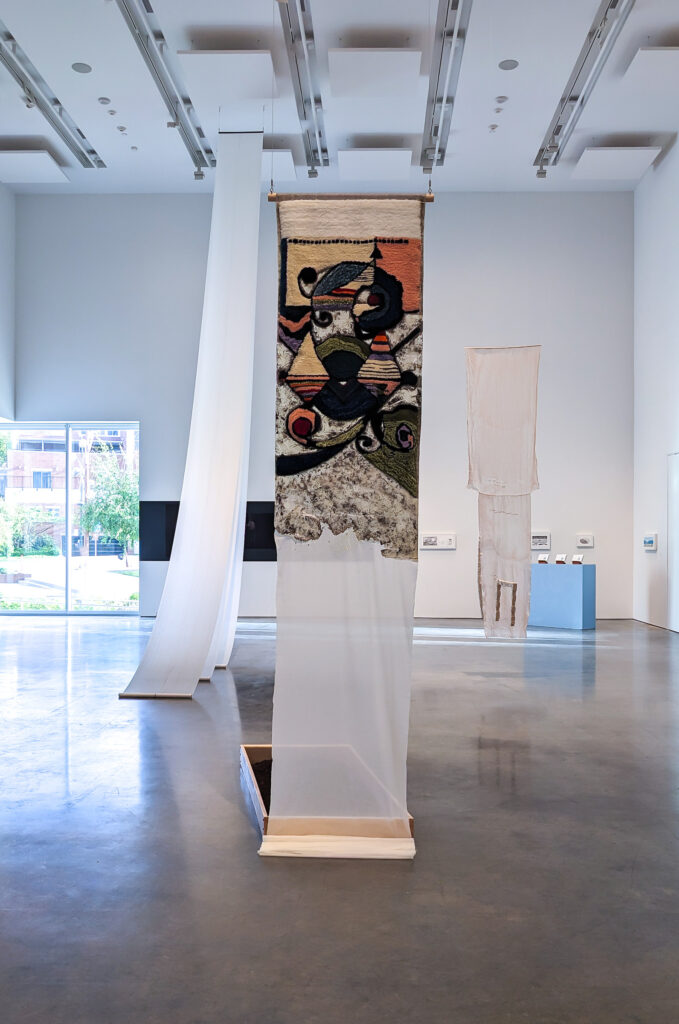
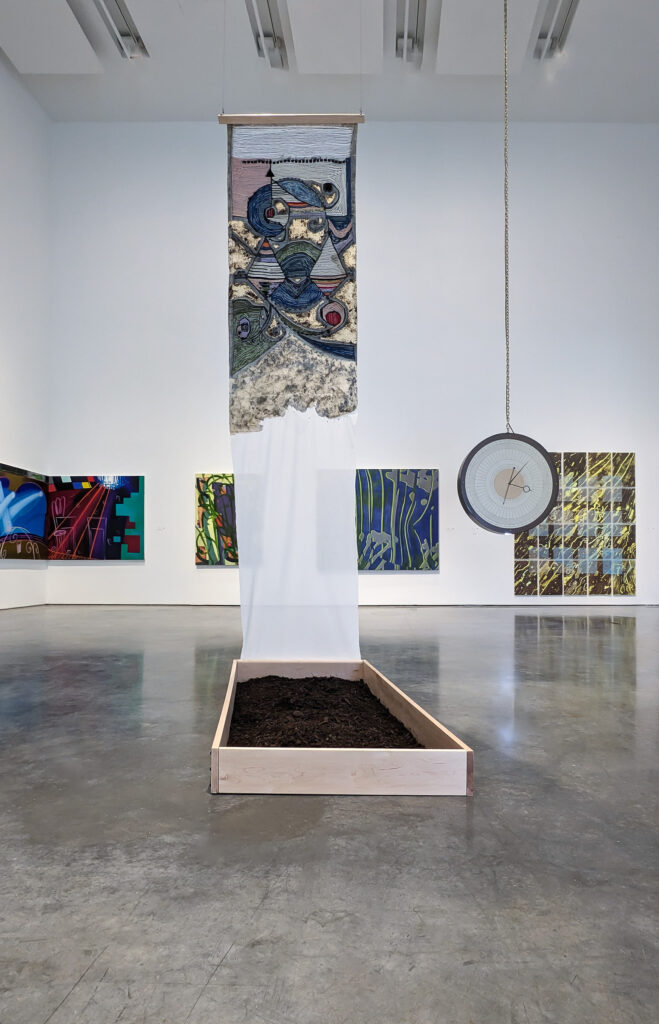
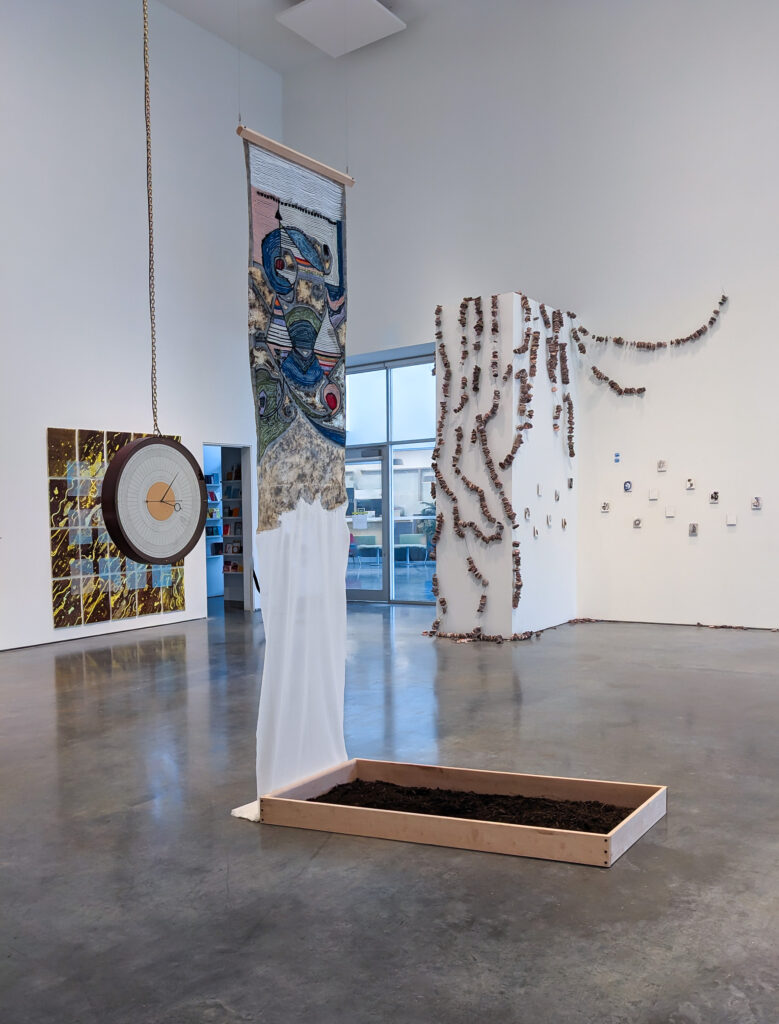
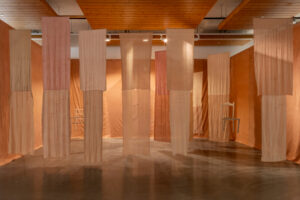
Left: Front view. emergent ground. yarn, biomaterials: tulle, human hair, and dirt, organic cotton, maple wood, earth. 28″w x 64″d x 15’h. 2025
Middle: Back view: emergent ground.
Right: Angled back view: emergent ground.
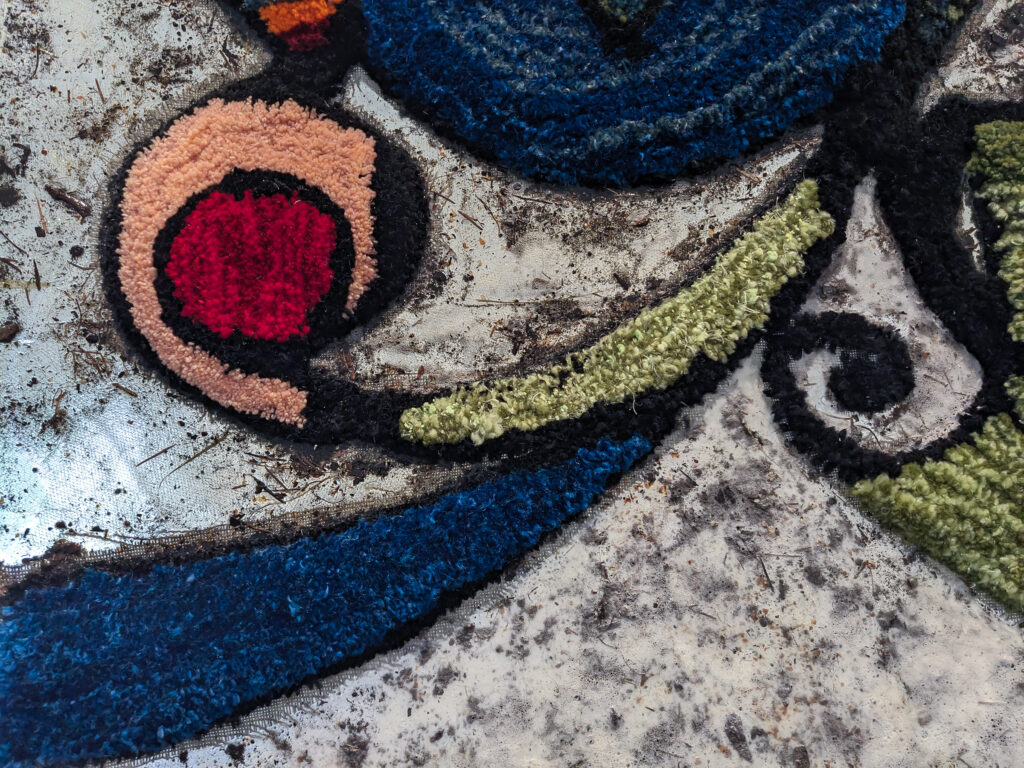
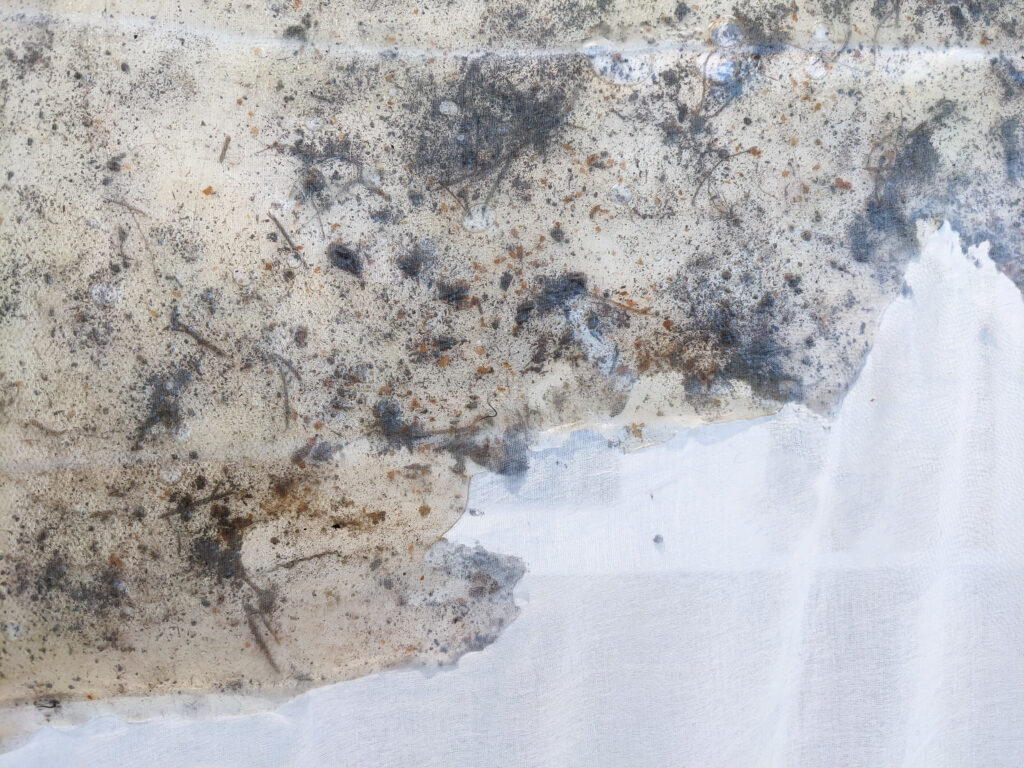
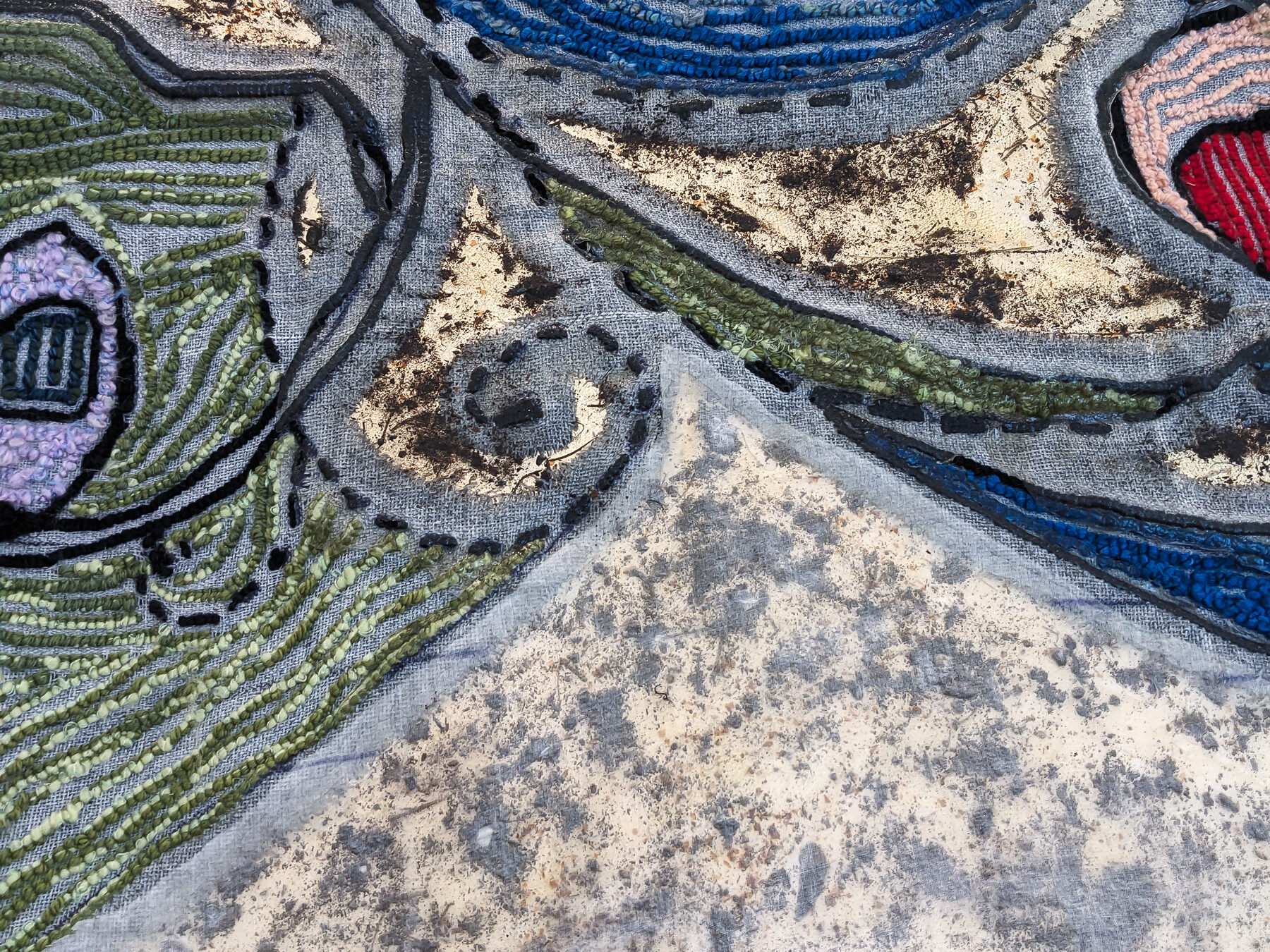
Details: emergent ground