In Memoriam
Shayne Weston Abbott-Arcan
May 27, 2000 – February 27, 2025
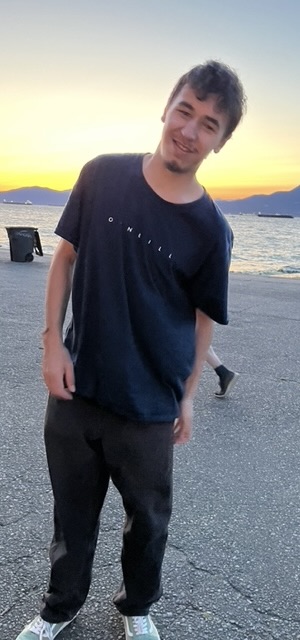
Tragically, Shayne (known by his family as Weston) passed away on February 27, 2025. He collapsed and died suddenly and unexpectedly while out for a walk. The reason is still not known. At the time, he was in the middle of completing his final few credits at Emily Carr University.
And so it is with immense grief, but also with the deepest respect for Shayne’s talent, perseverance, and artistic vision, that I have selected the following works to represent his creative journey. What follows is also my attempt to describe, as best I can, what each series might have meant to him—drawing from our conversations, from witnessing his process, and from the work itself. These pieces are just a glimpse into the world he was.
—Jennifer Abbott (Shayne’s mother)
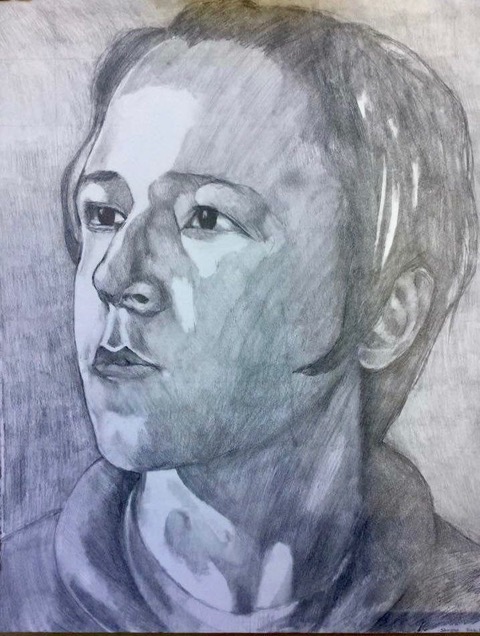
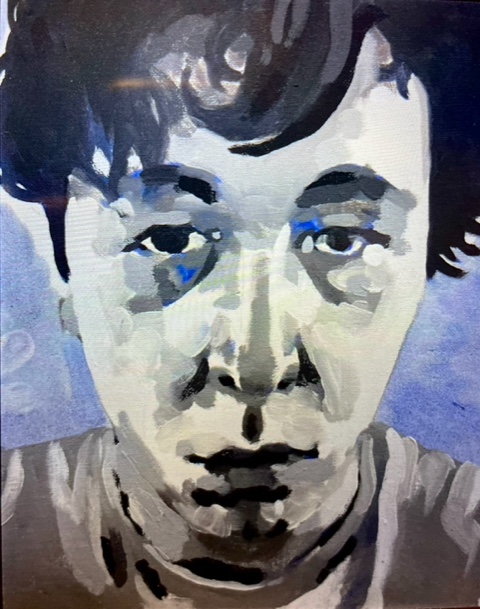
Series 1 – Self-portraits
Series 2
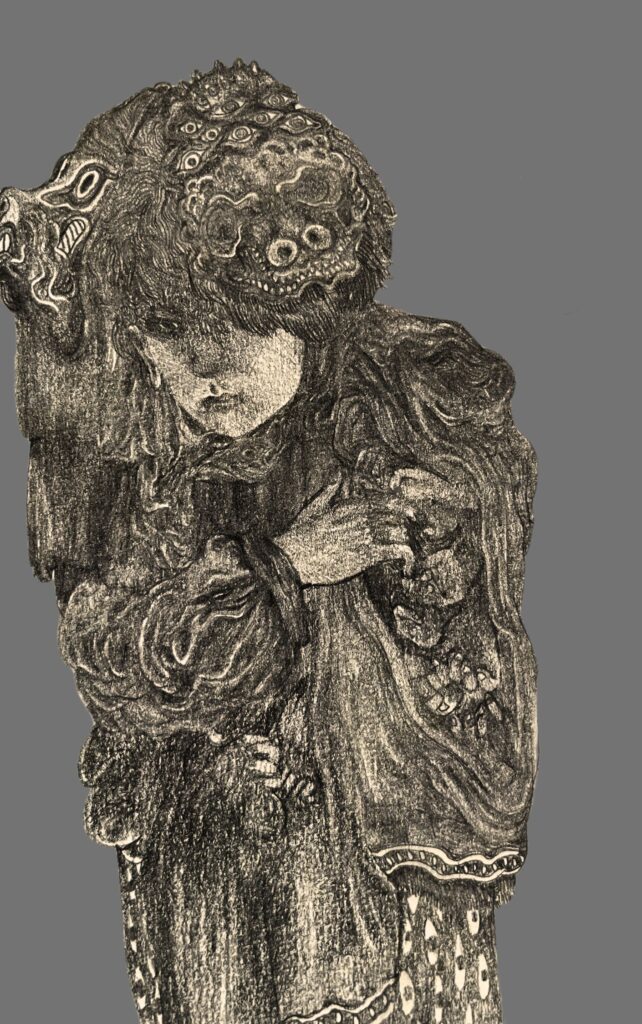
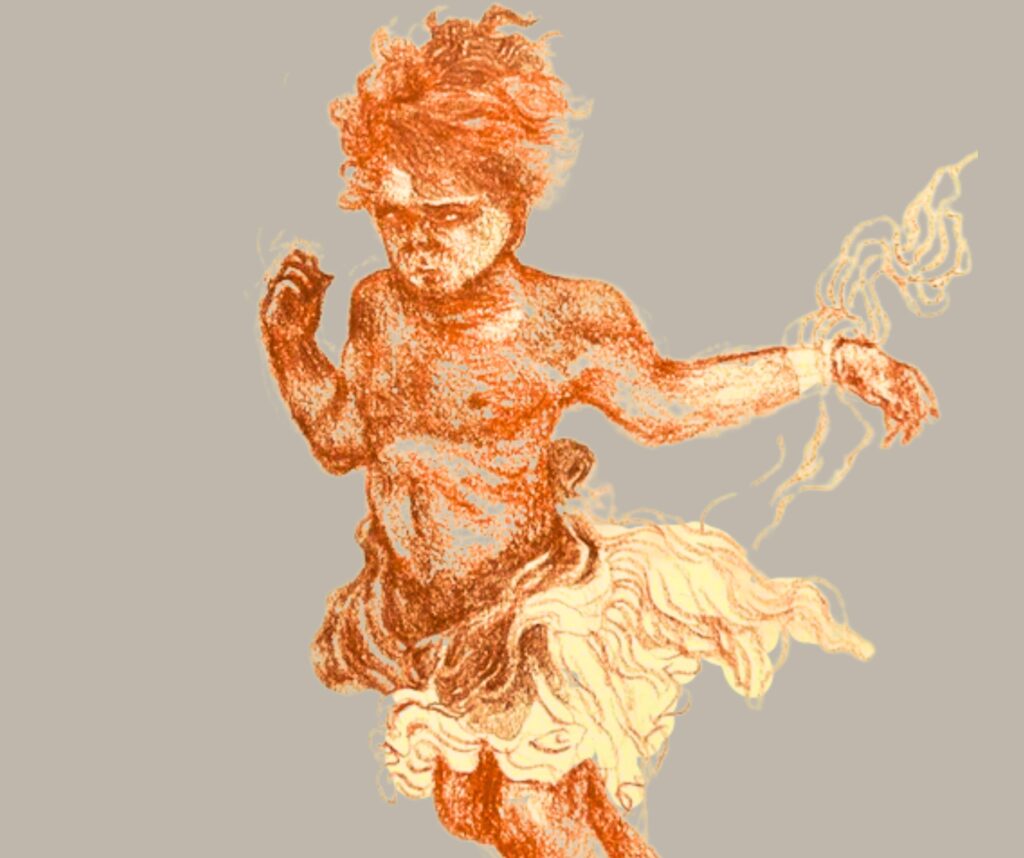
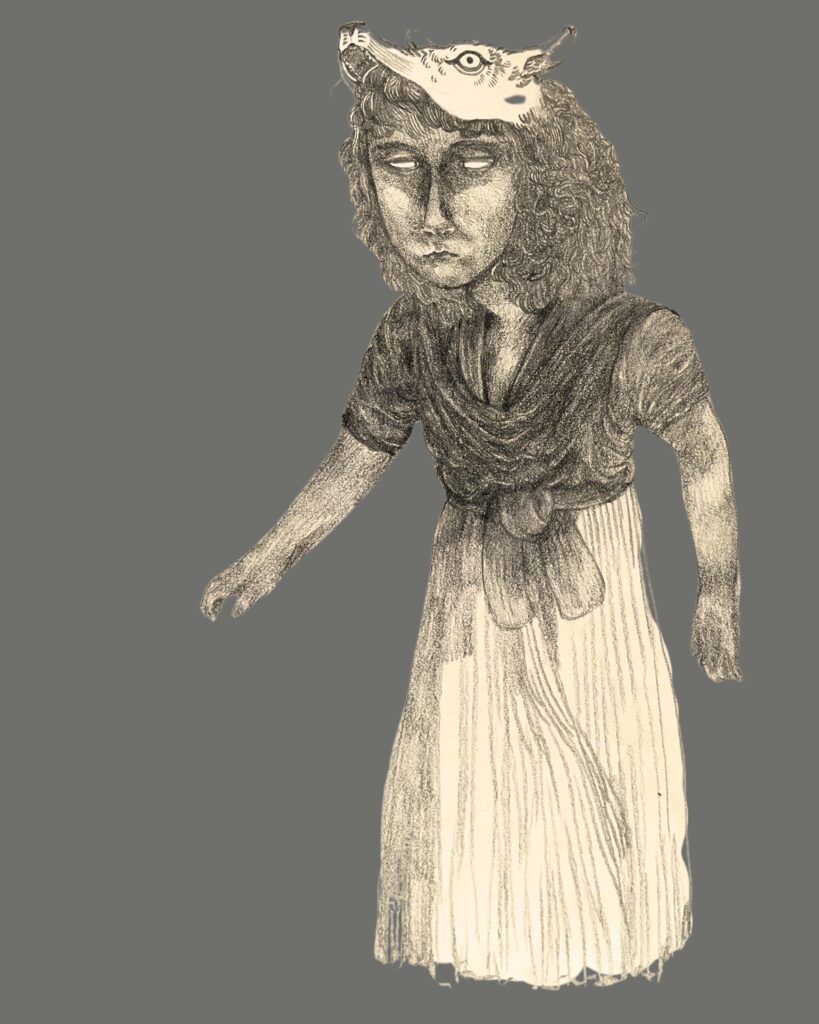
These four drawings show figures that are part-human, part-animal, part-memory. Each one seems caught between worlds—mythic and real, strong and vulnerable. The figures might be ancestors, avatars, or dreams—but all resist erasure. They hold stories that can’t be easily told.
Series 3
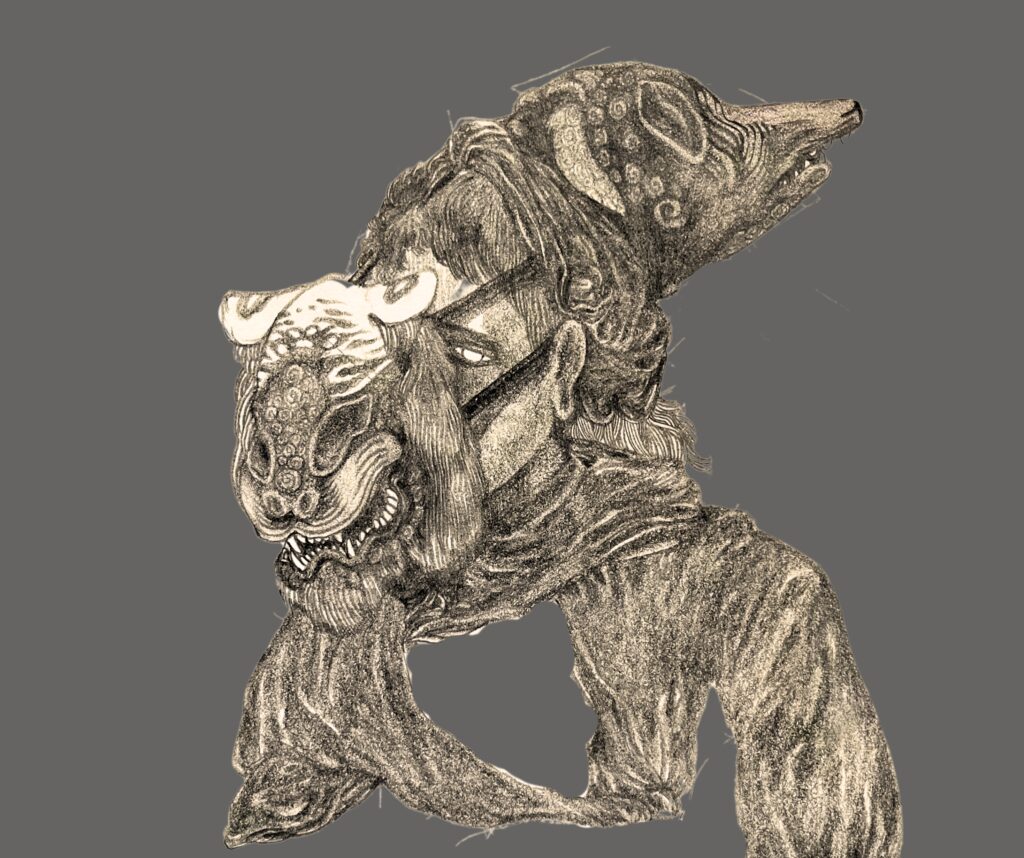
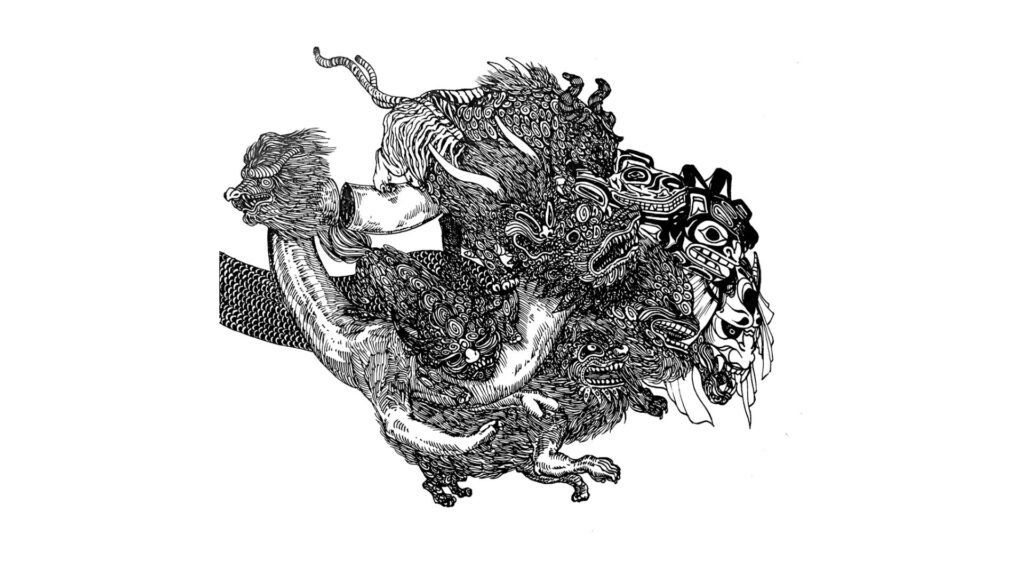
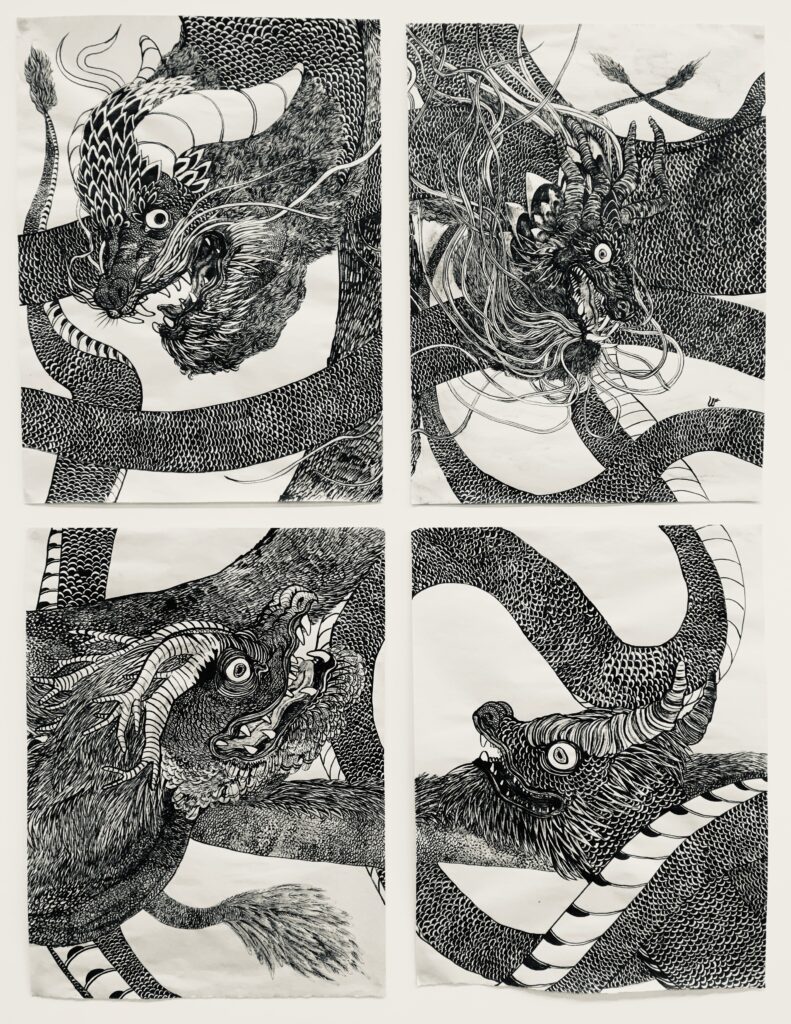
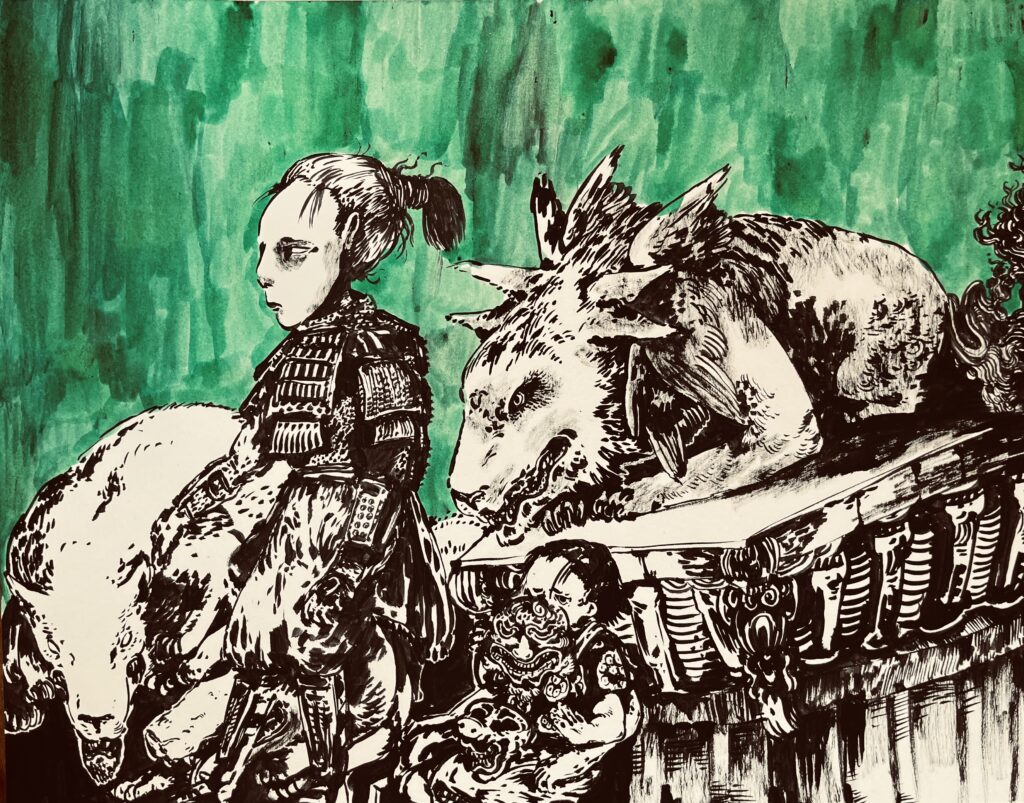
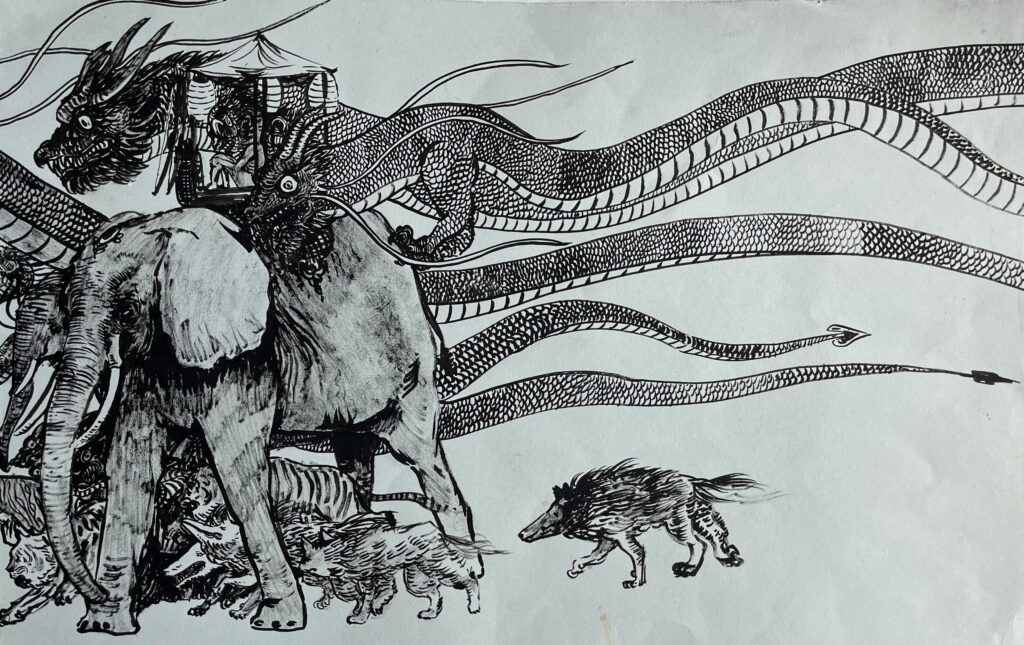
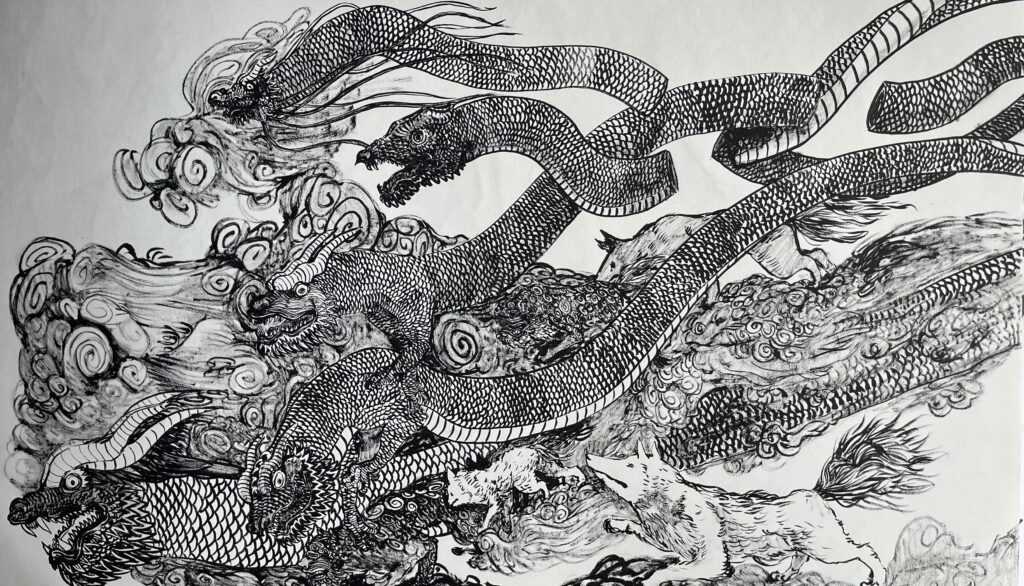
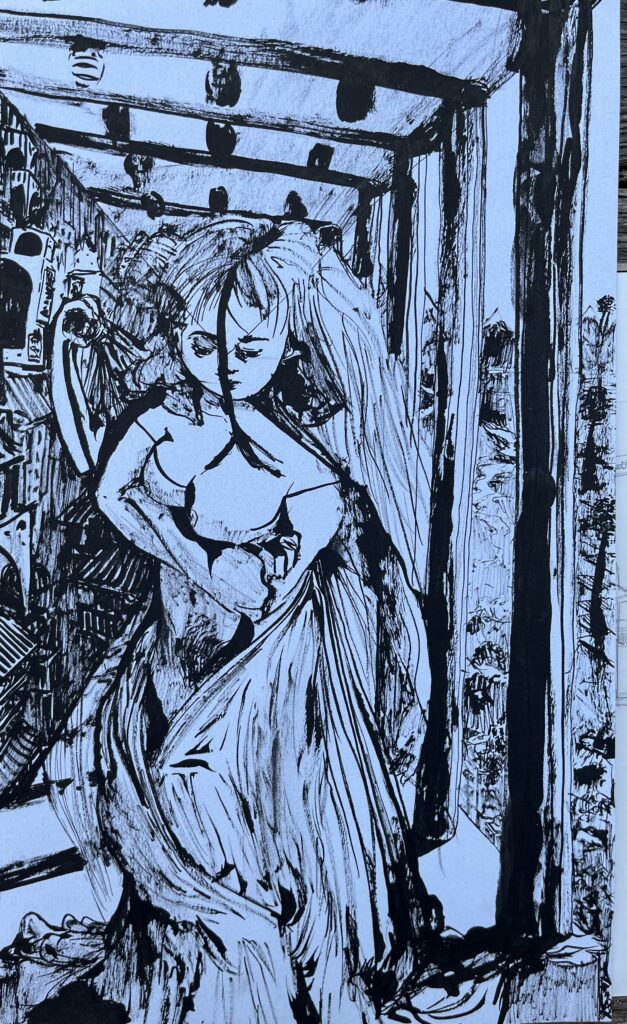
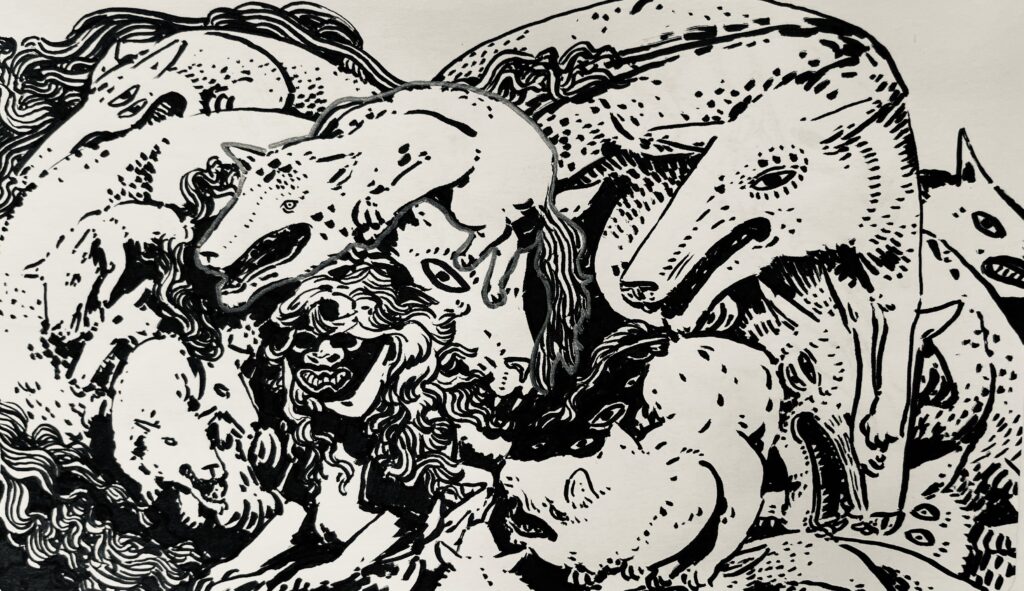
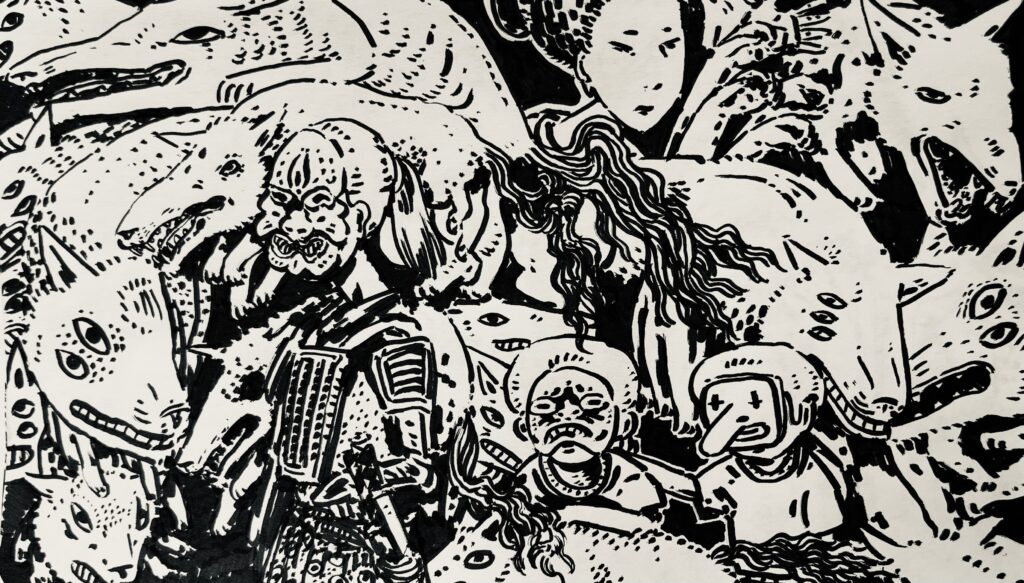
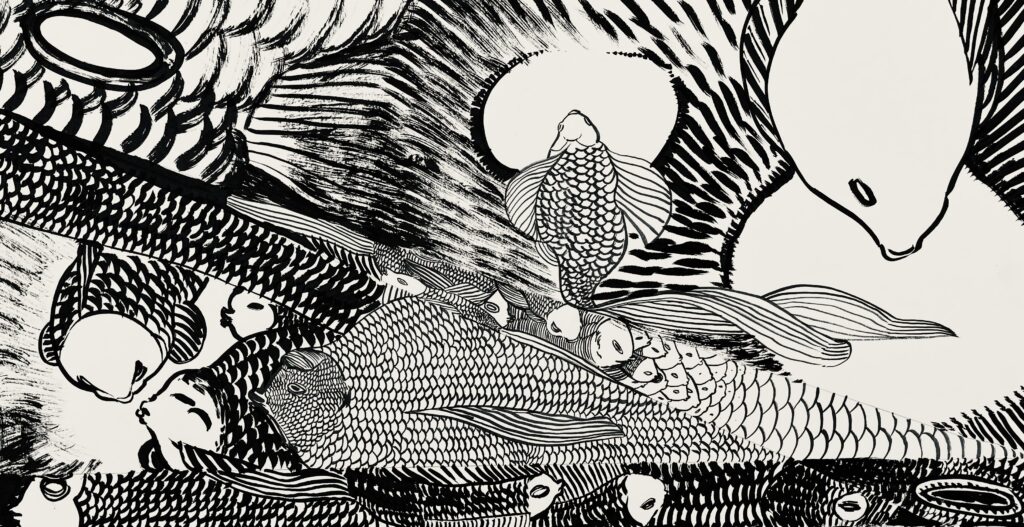
In these ink drawings, mythic creatures—dragons, wolves, fish—collide with human figures caught in moments of struggle, stillness, or transformation. Shayne used densely detailed linework to create a world both dreamlike and sharply observed, where predators and protectors blur, and emotion is embedded in every stroke. While he never offered a fixed explanation, I sense in these works his deep interest in hybridity, guardianship, and survival in hostile worlds. They speak to inherited trauma and to imagination as a form of resistance.
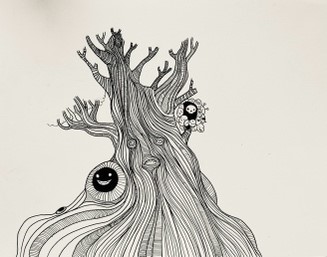
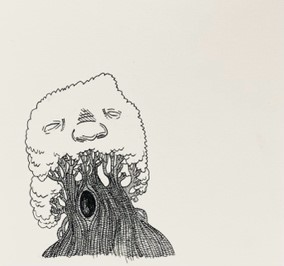
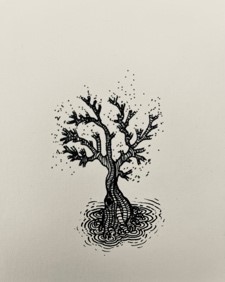
Series 4 – trees/forest
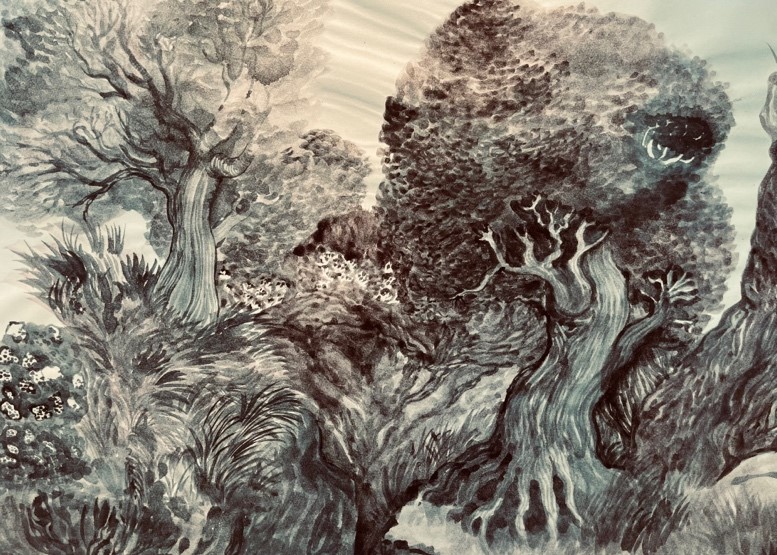
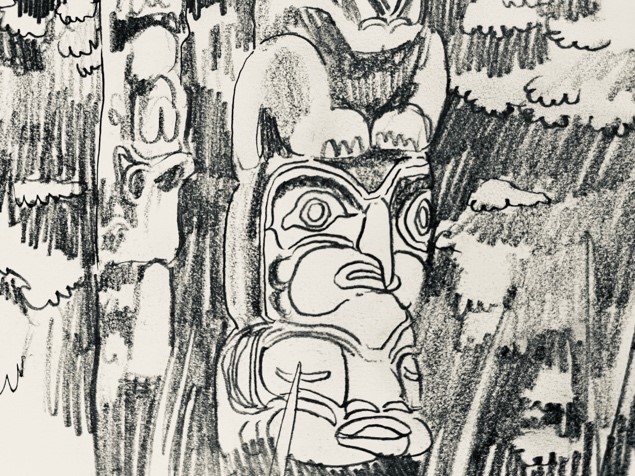
Shayne often returned to the natural world as a place of memory and morphing identity. In these works, trees become witnesses, beings, even self-portraits. The wild world was his home, and here it is alive: trees are anthropomorphized with eyes and gestures that suggest both watchfulness and kinship. His forests pulse with a powerful energy that I know he felt deeply.
Series 5
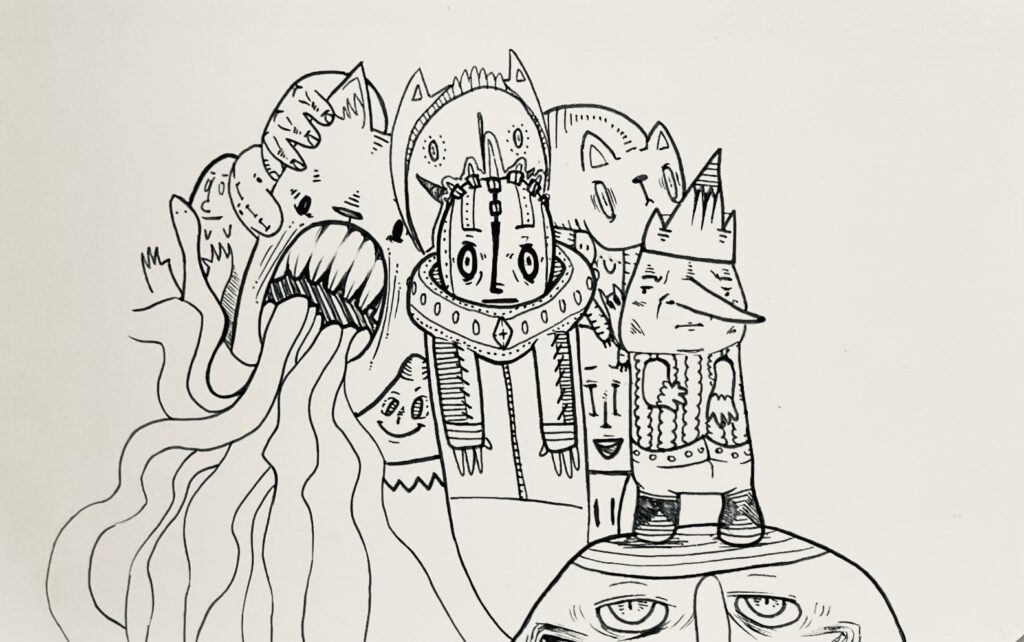
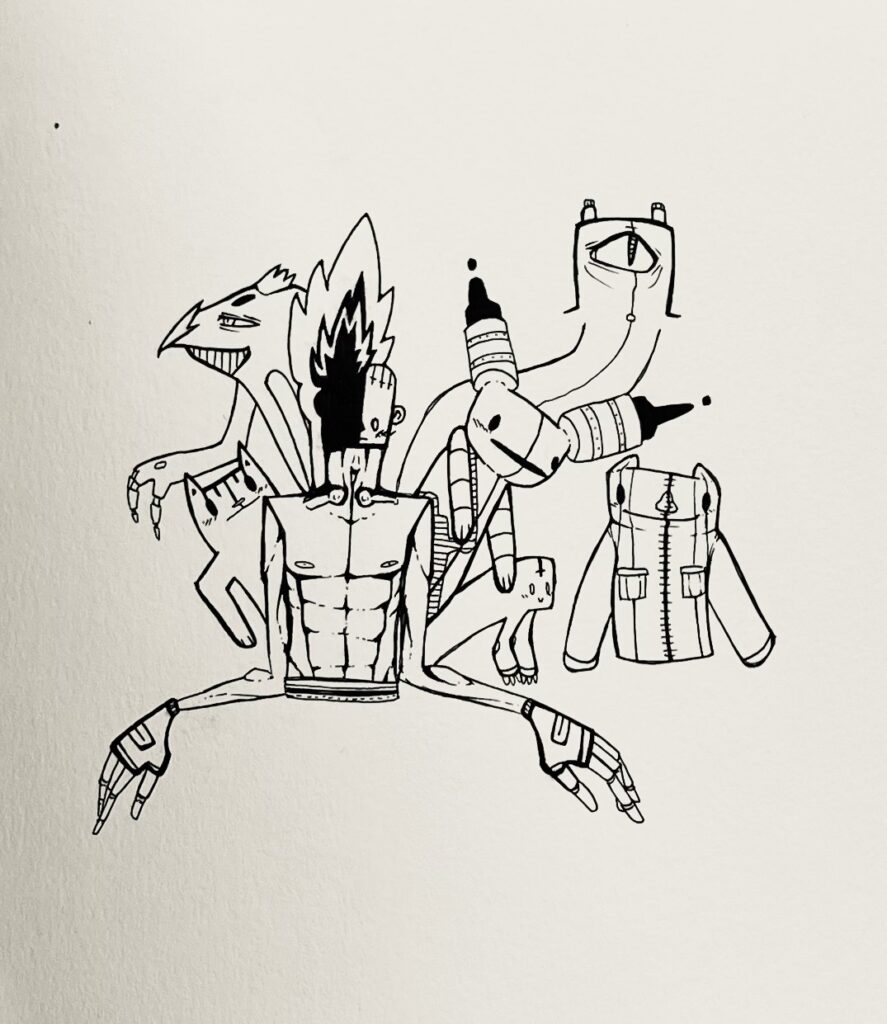
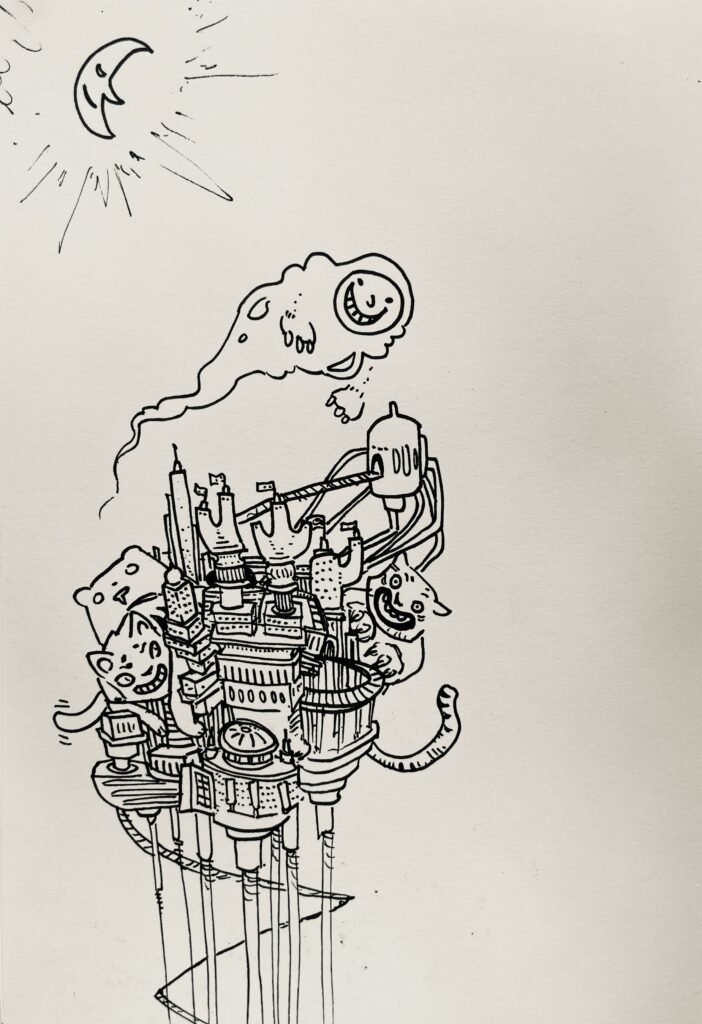
These small ink drawings—barely a few inches tall—reveal Shayne’s comical side. The works feel improvised yet intentional, like snapshots from a mischievous dream or alternate reality.
Series 6
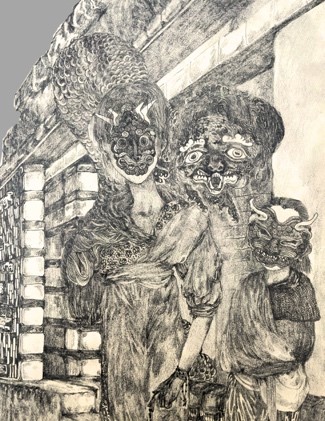
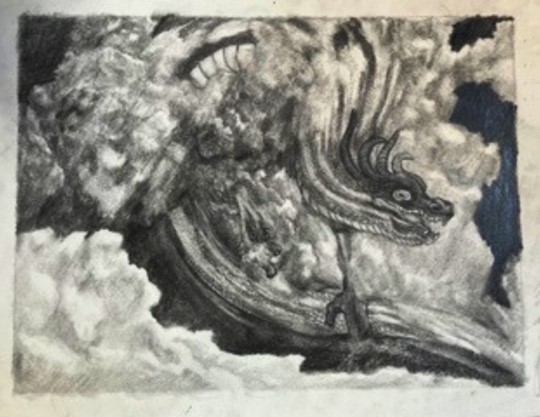
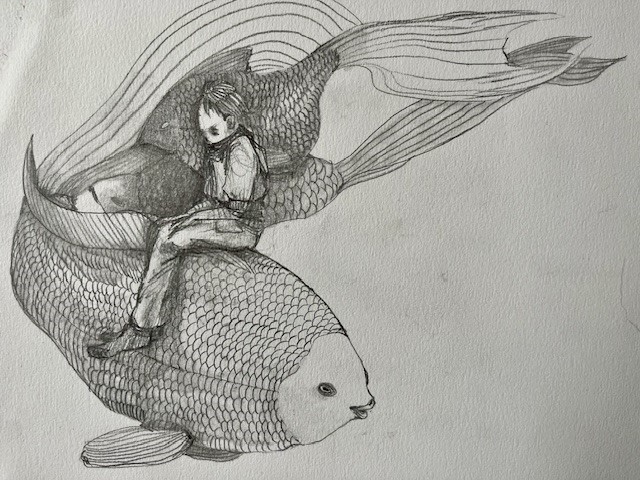
Rendered in pencil and charcoal, these works feel like scenes from a waking dream. They hold wonder and complexity in the same frame—inviting us into a world both intimate and expansive.
Series 7
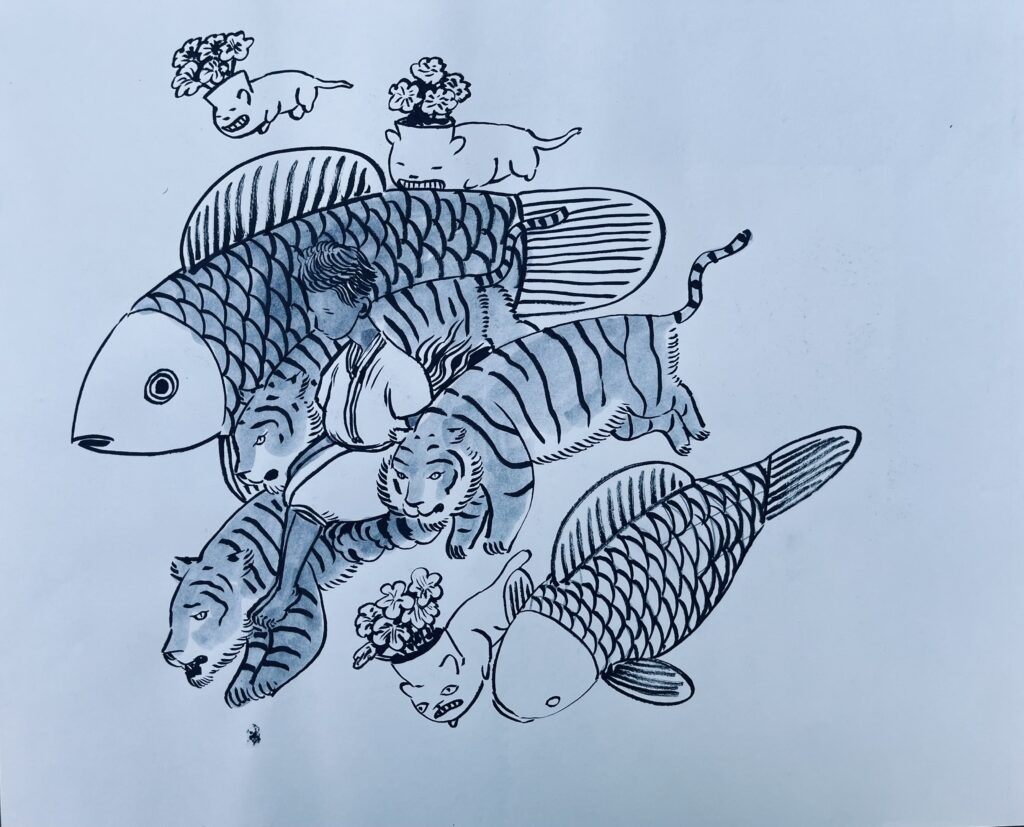
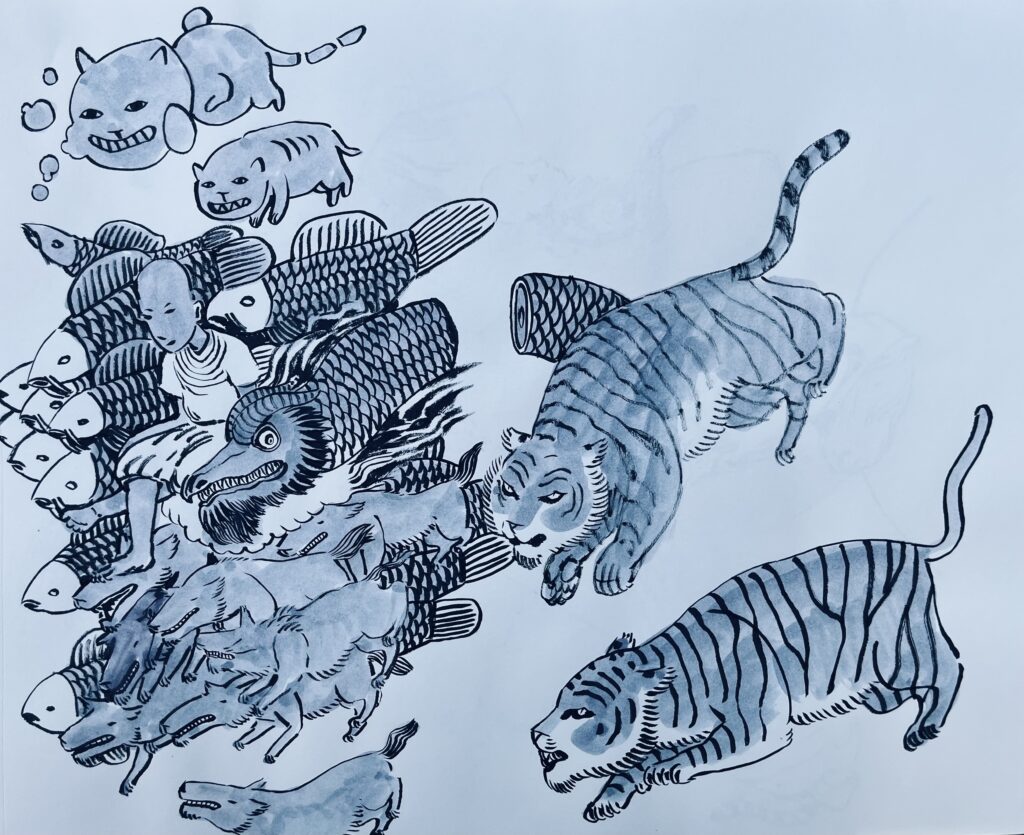
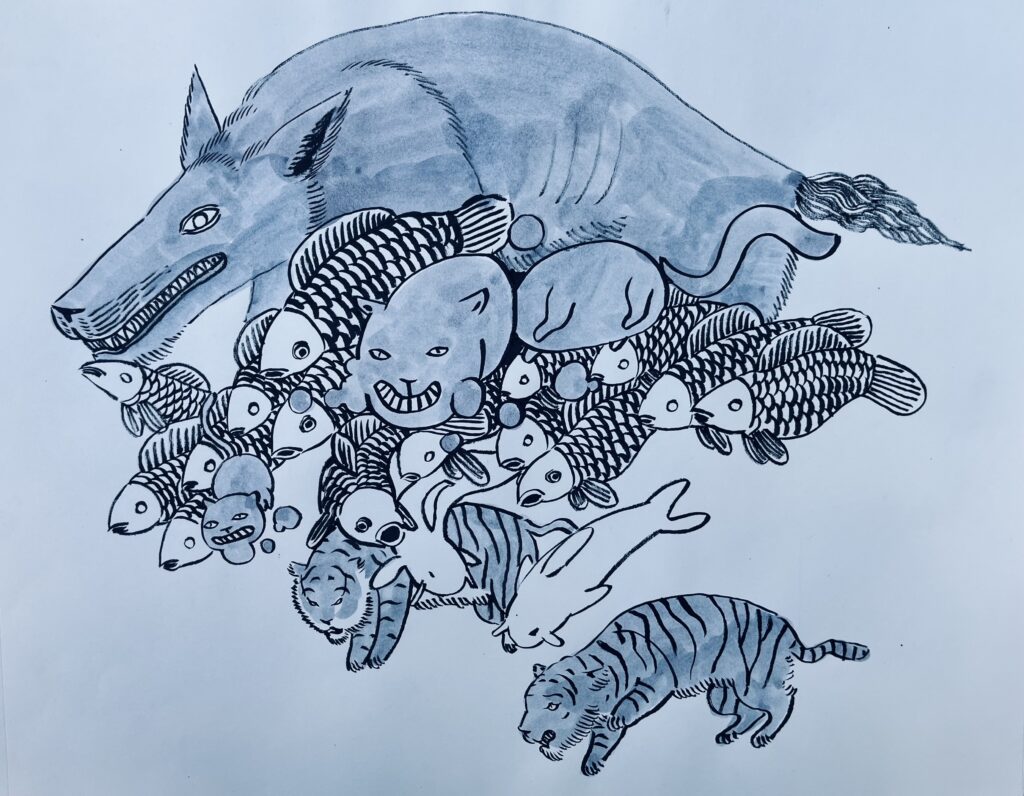
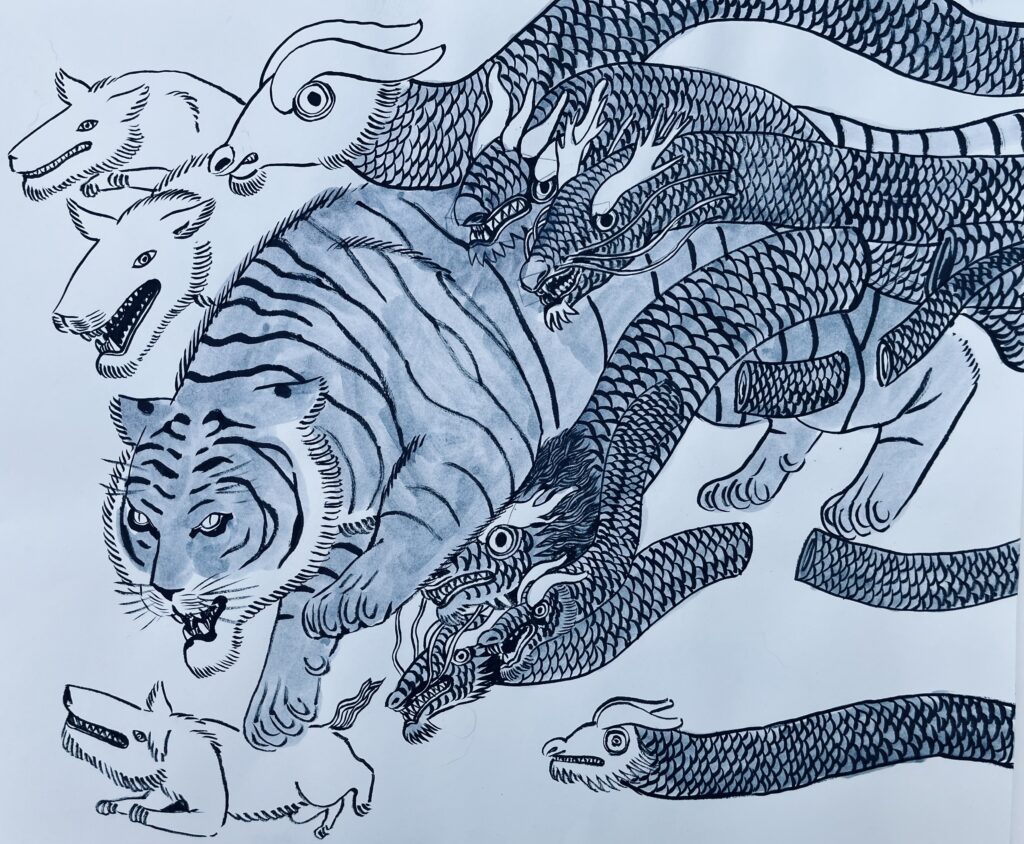
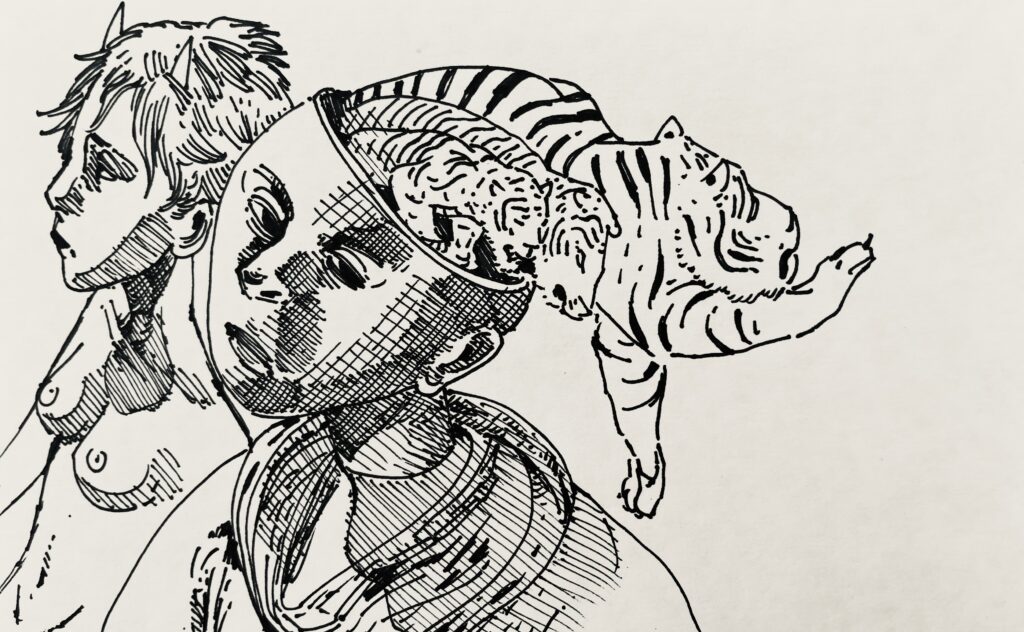
In this series, Shayne let loose a riot of creatures—tigers, fish, wolves, dragons, humans—all tumbling, twisting, and layered in dense, kinetic arrangements. There’s humour here, and a kind of chaos too. Shayne’s love for creatures—real and imagined—is on full display.
Series 8
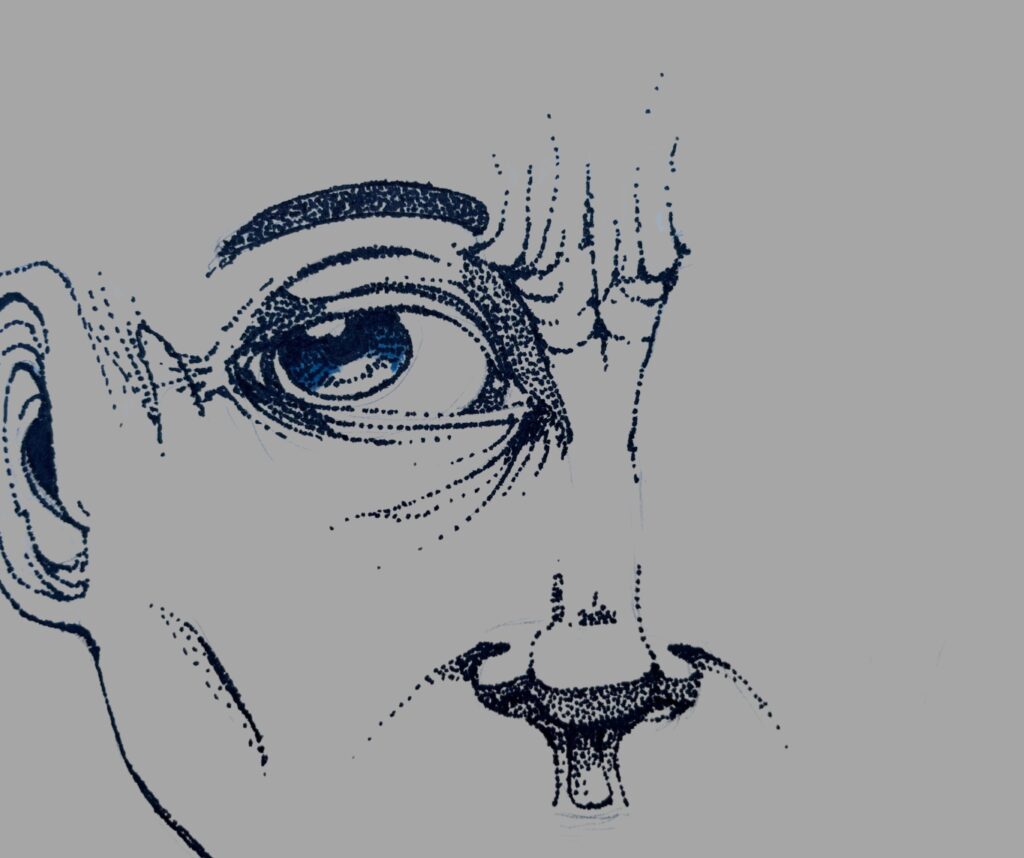
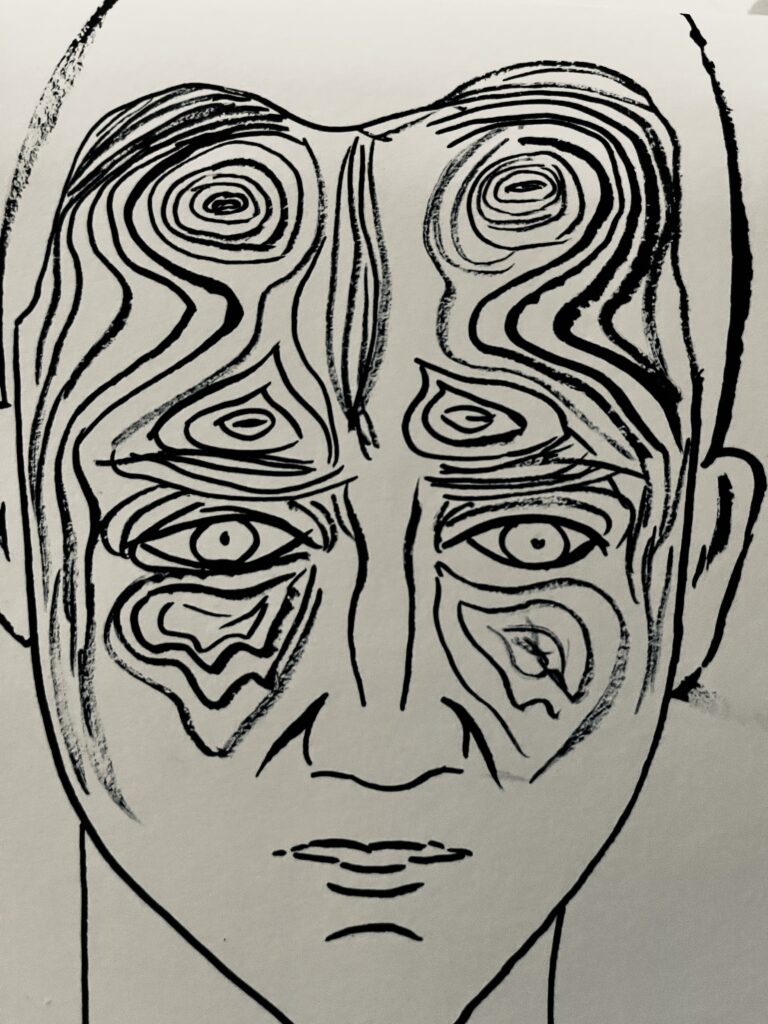
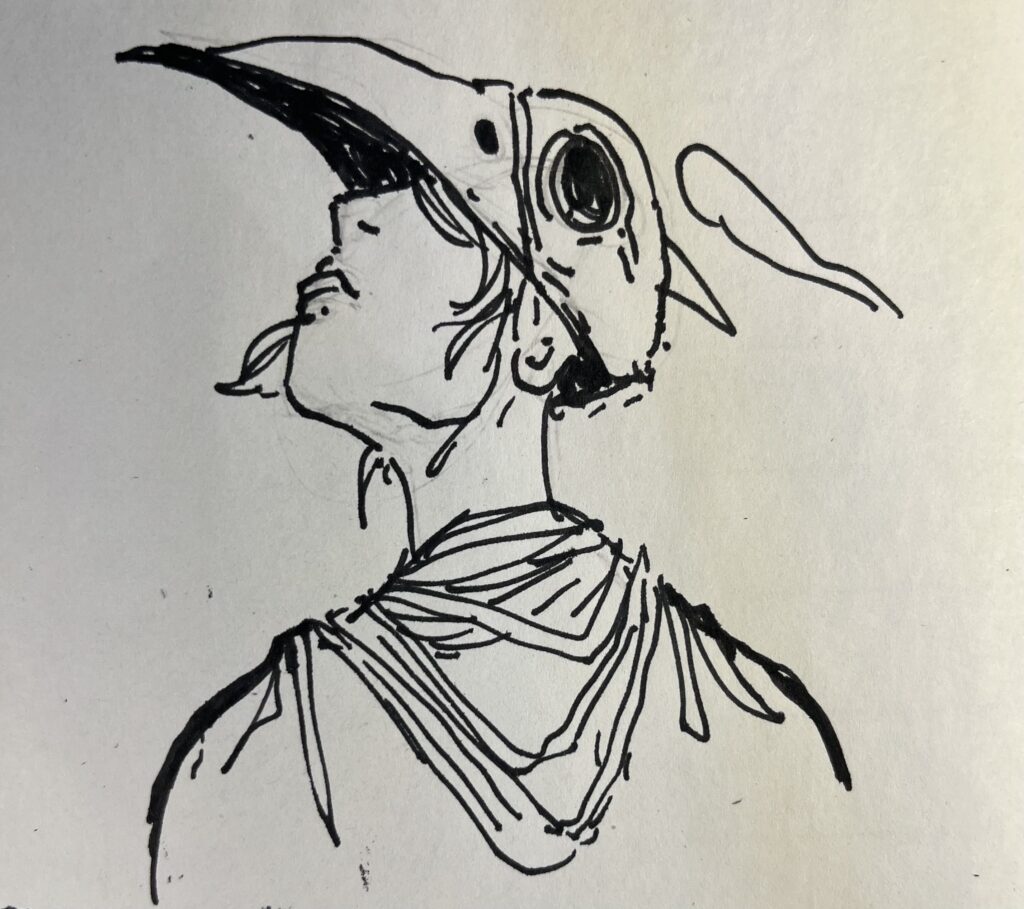
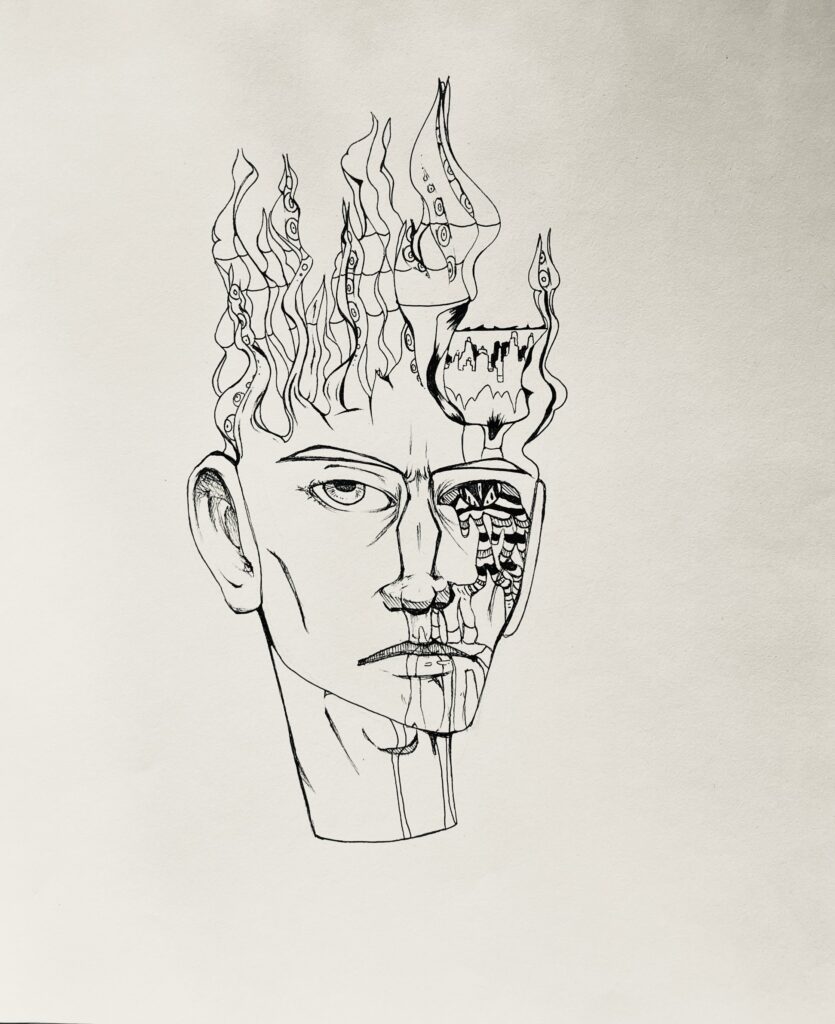
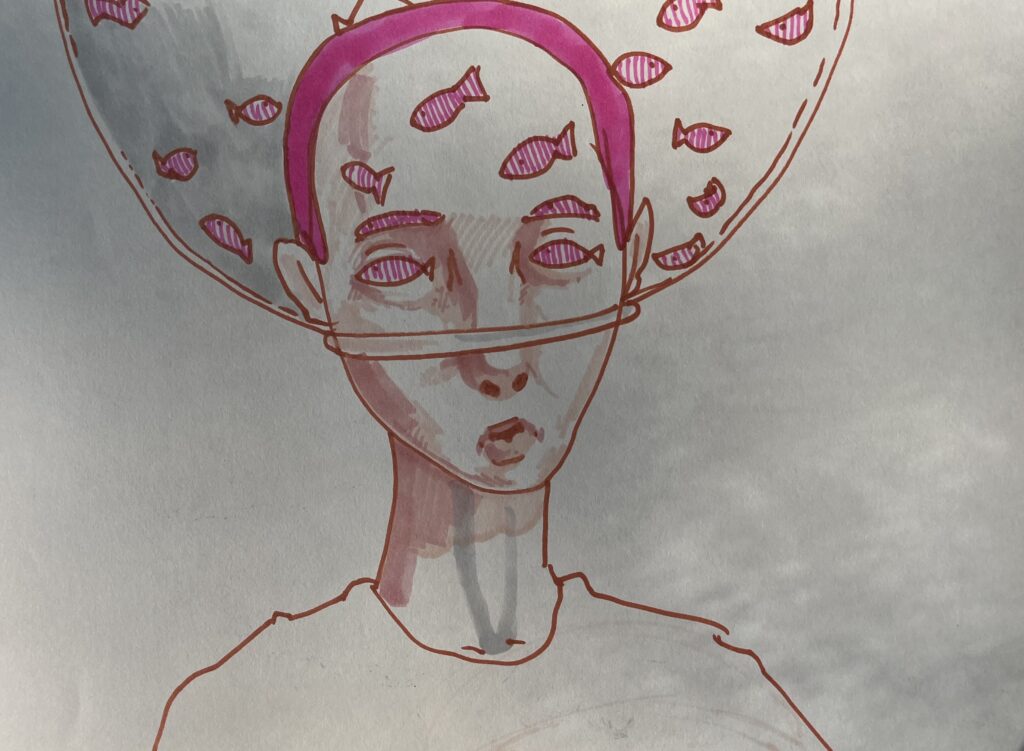
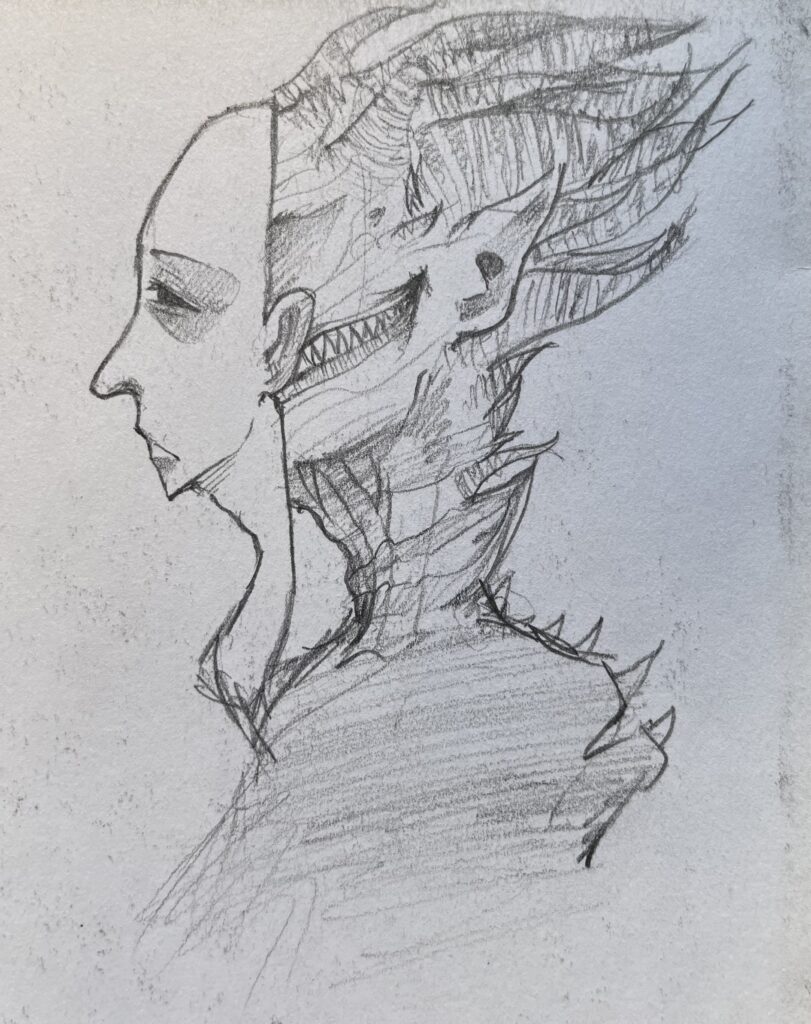
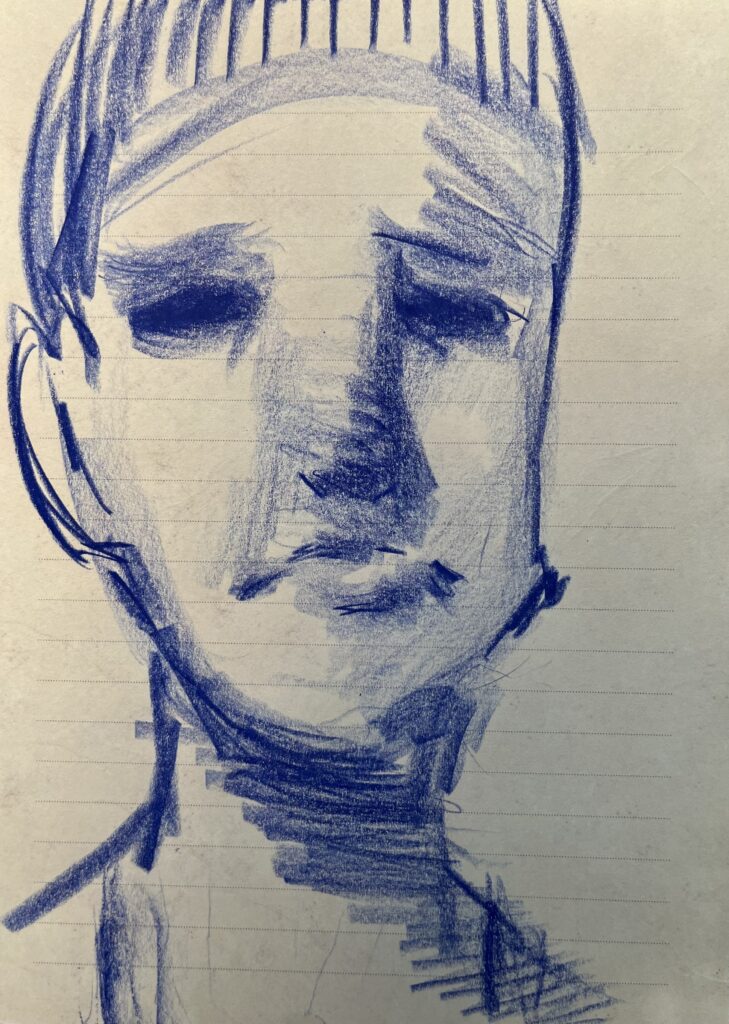
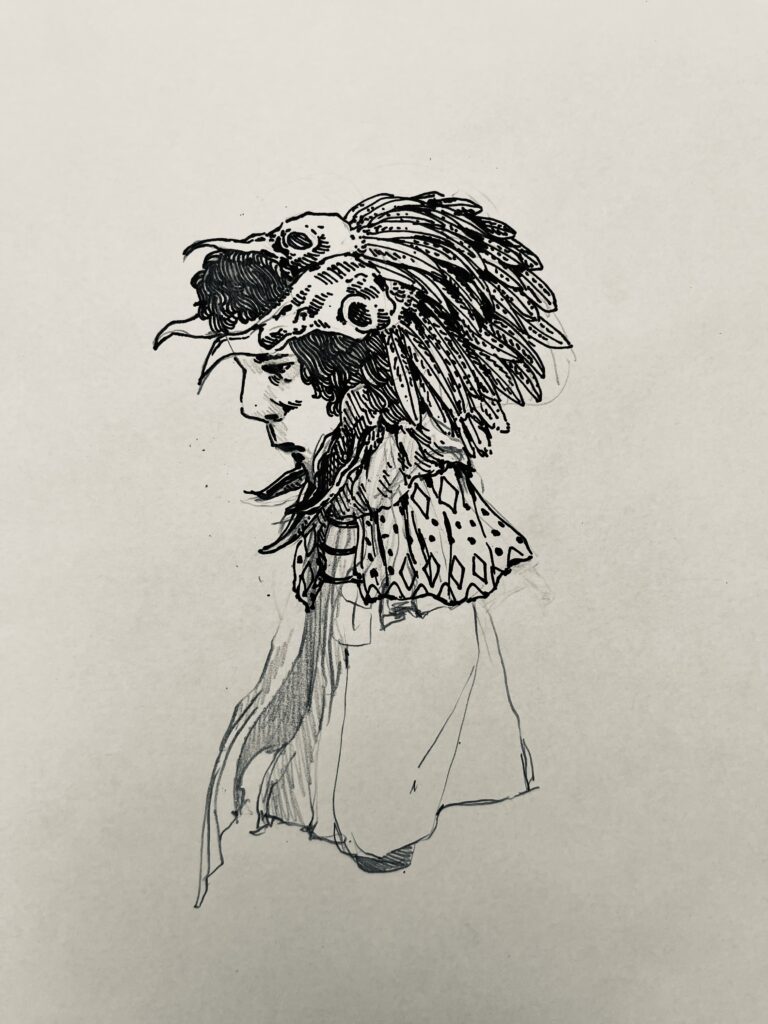
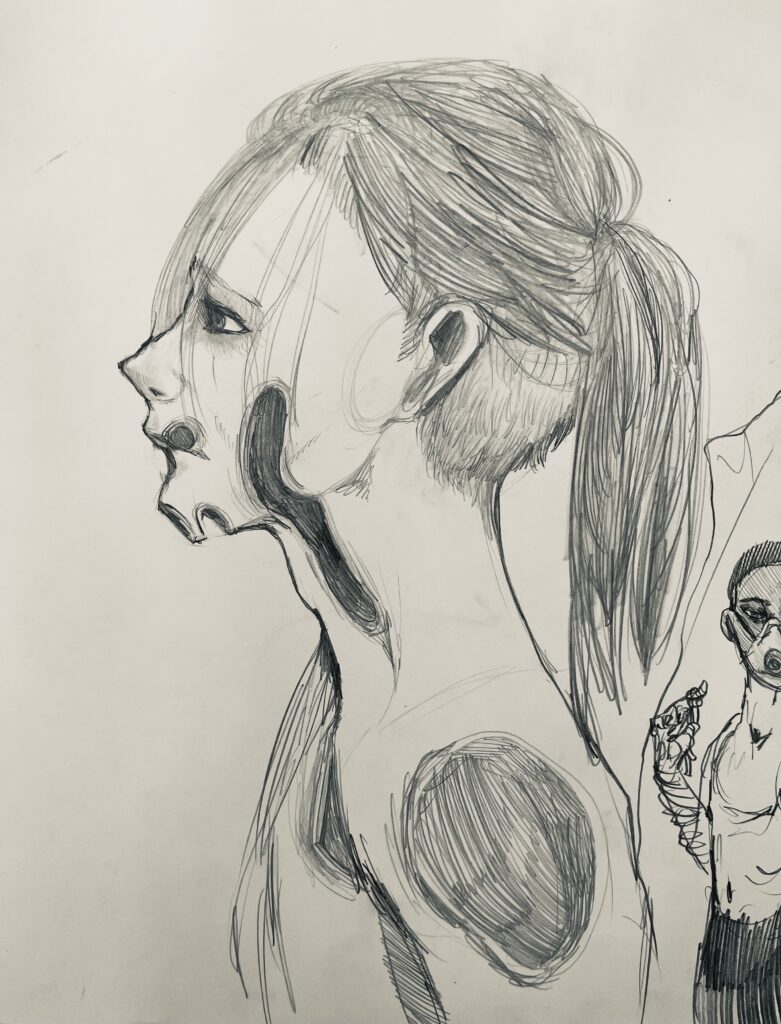
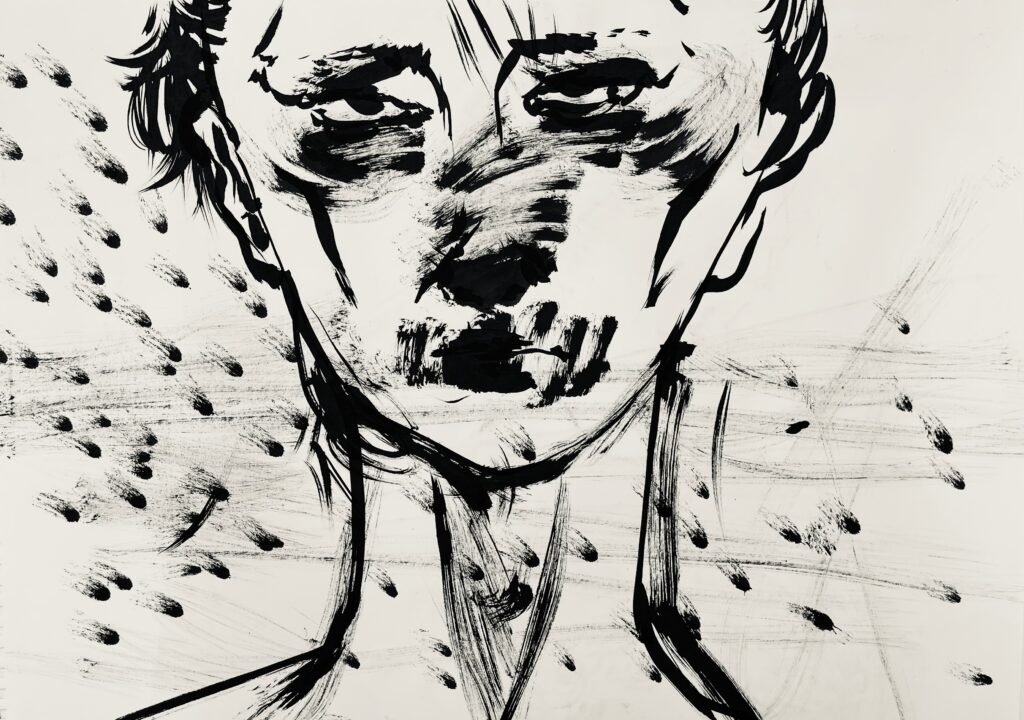
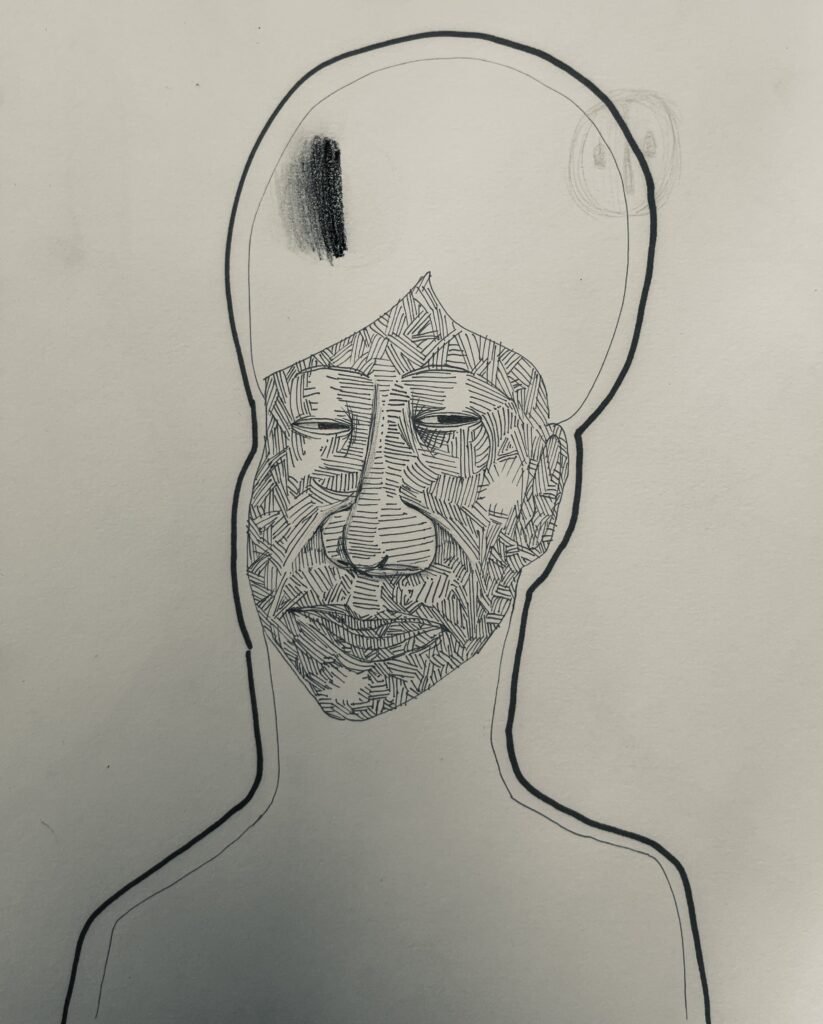
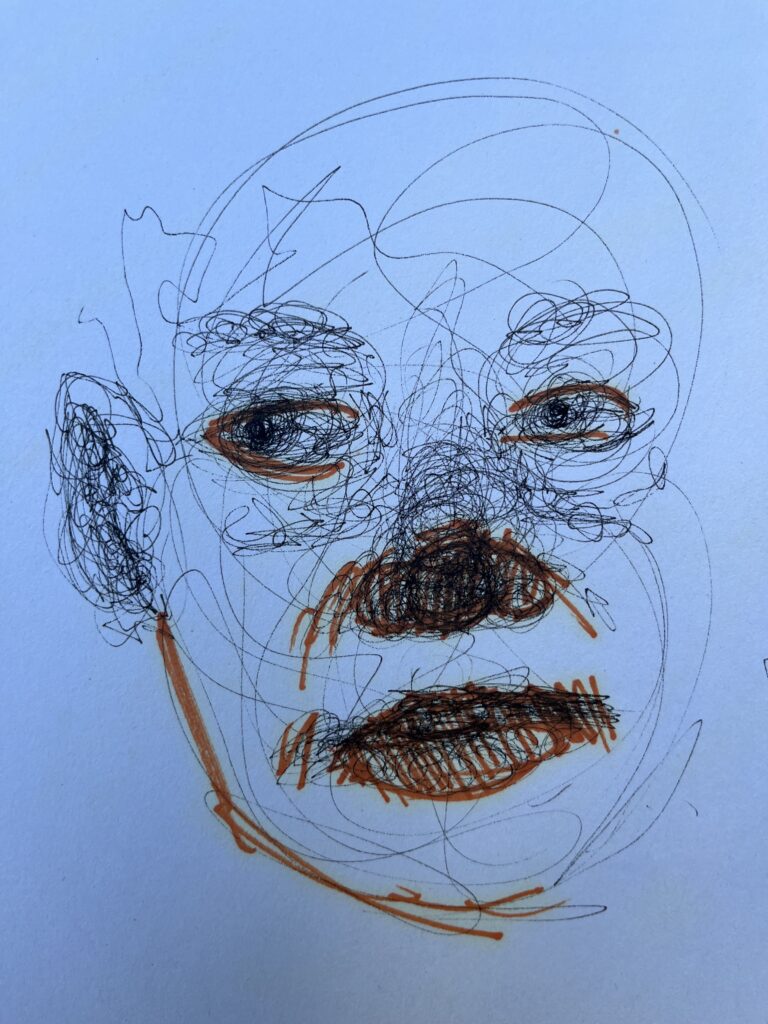
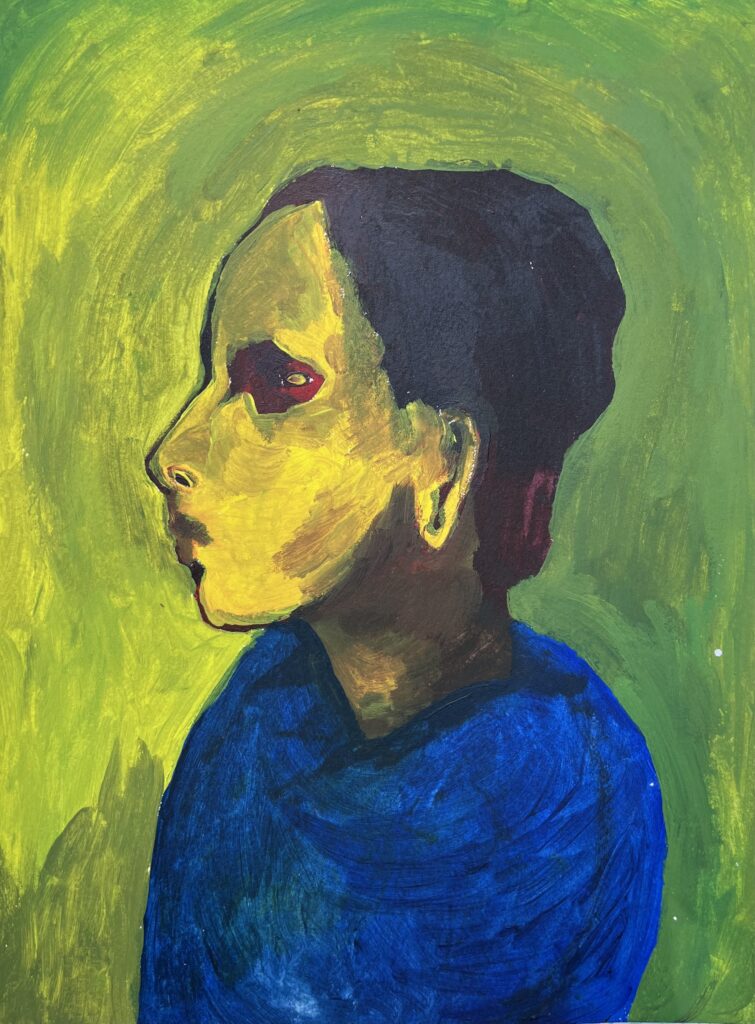
Working across diverse mediums—ink, pencil, marker, paint—Shayne explored many ways of seeing the human face. Some portraits are masked, fragmented, or multiplied; others are rendered with stark directness. Masks were a recurring theme in his work—part protection, part disguise, always suggesting something deeper beneath. These portraits reflect his sense that the surface rarely tells the whole story. Together, they echo the struggles and strangeness of being human.
Series 9
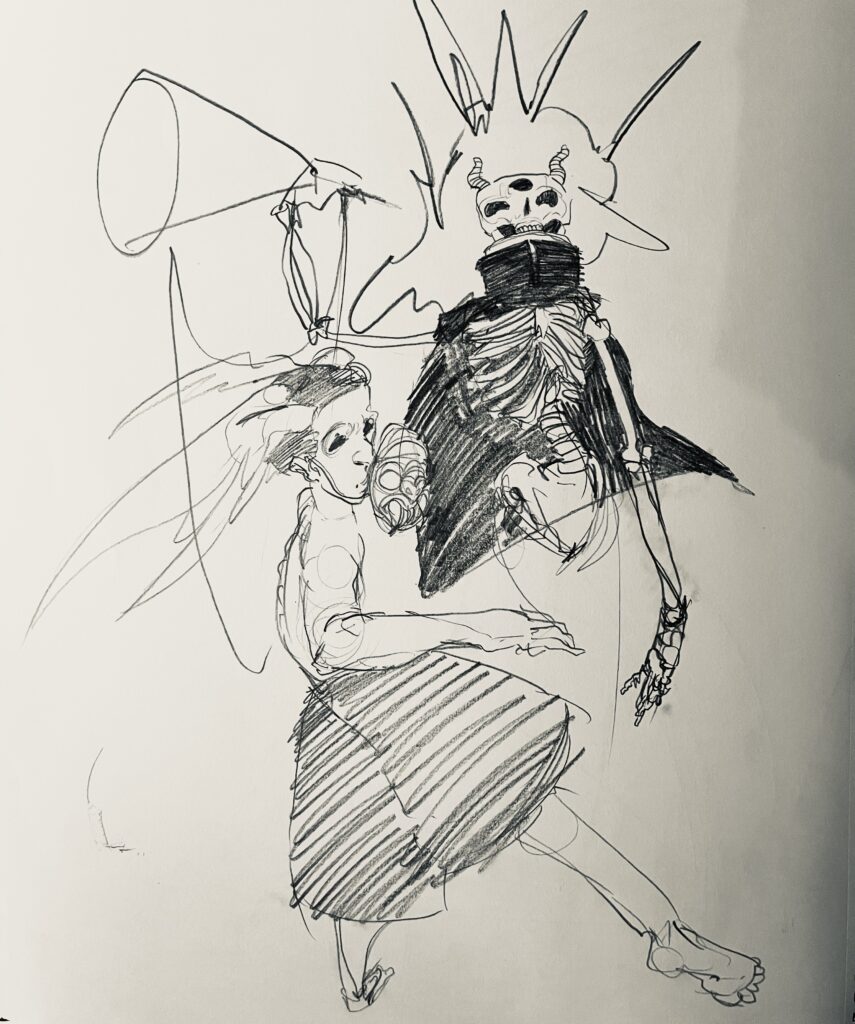
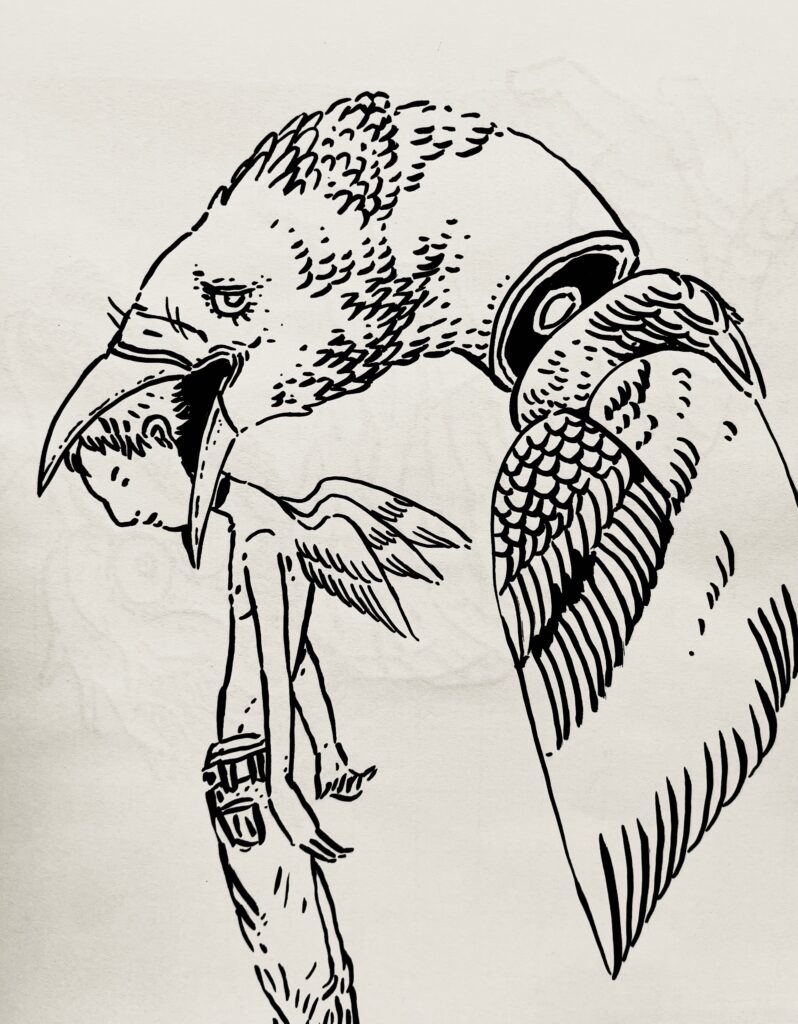
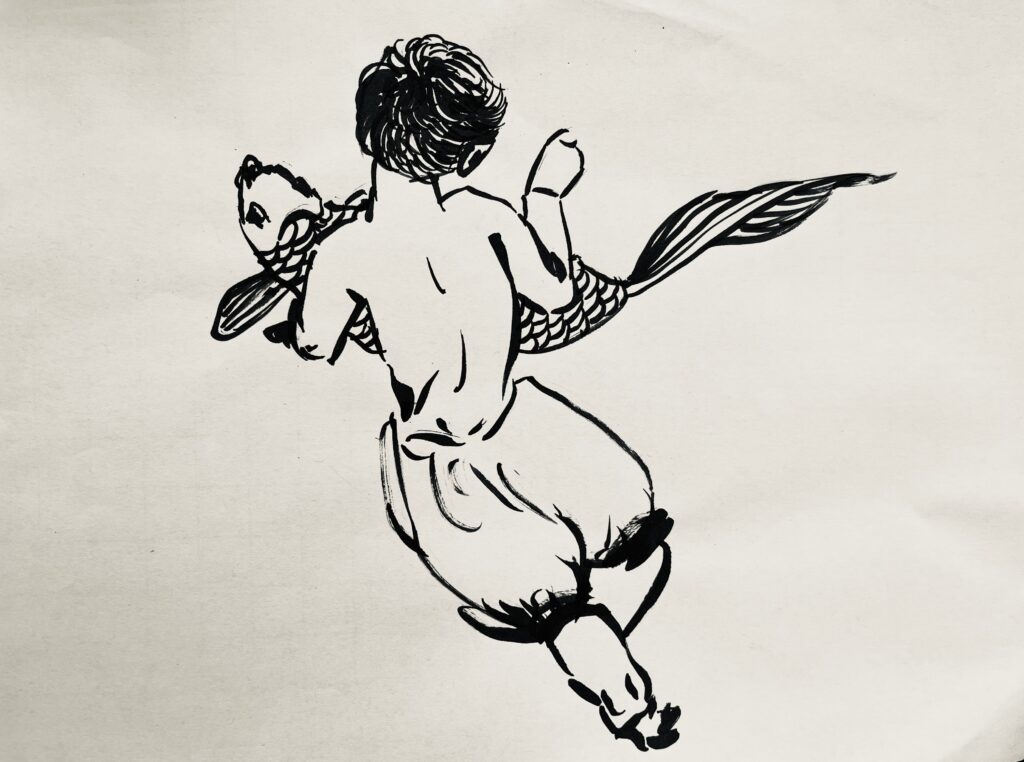
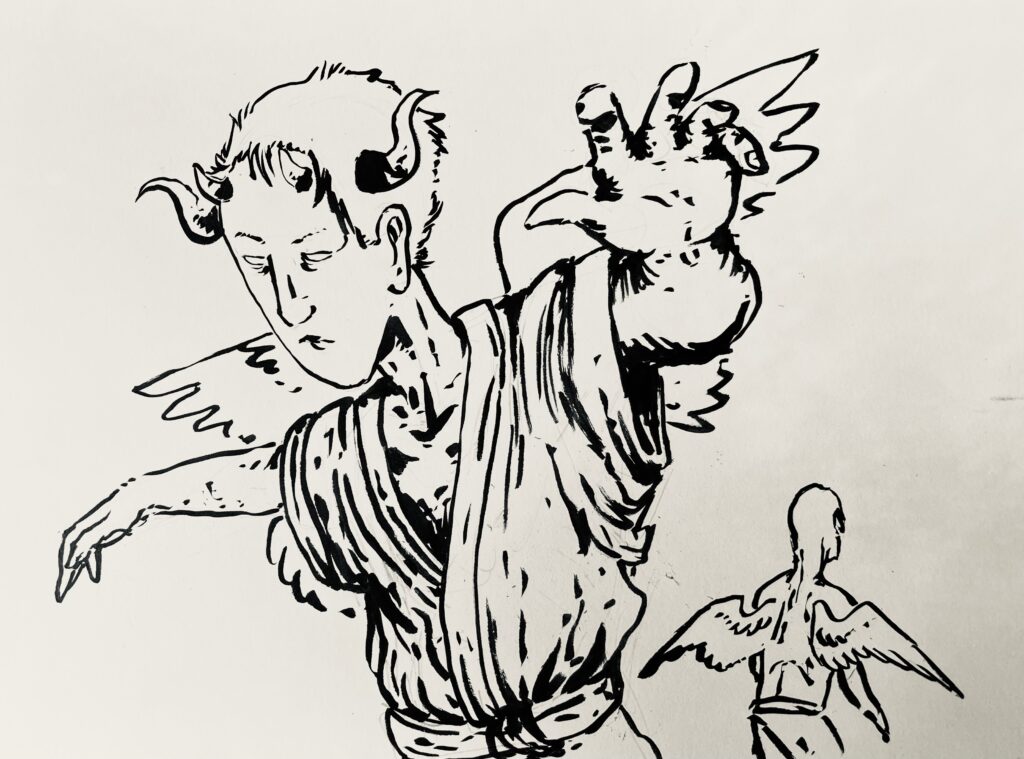
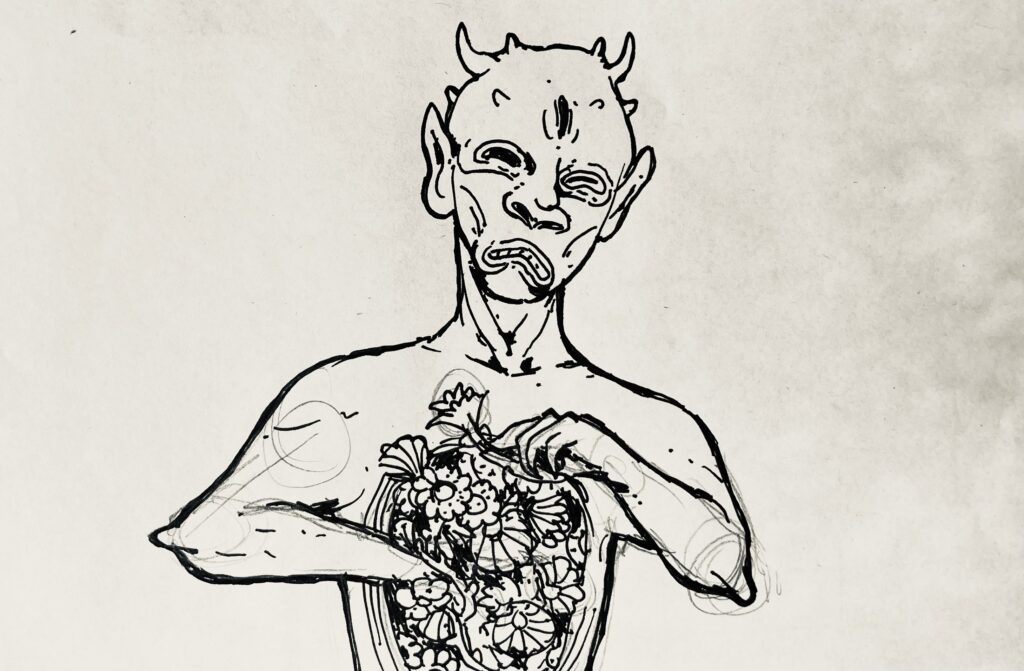
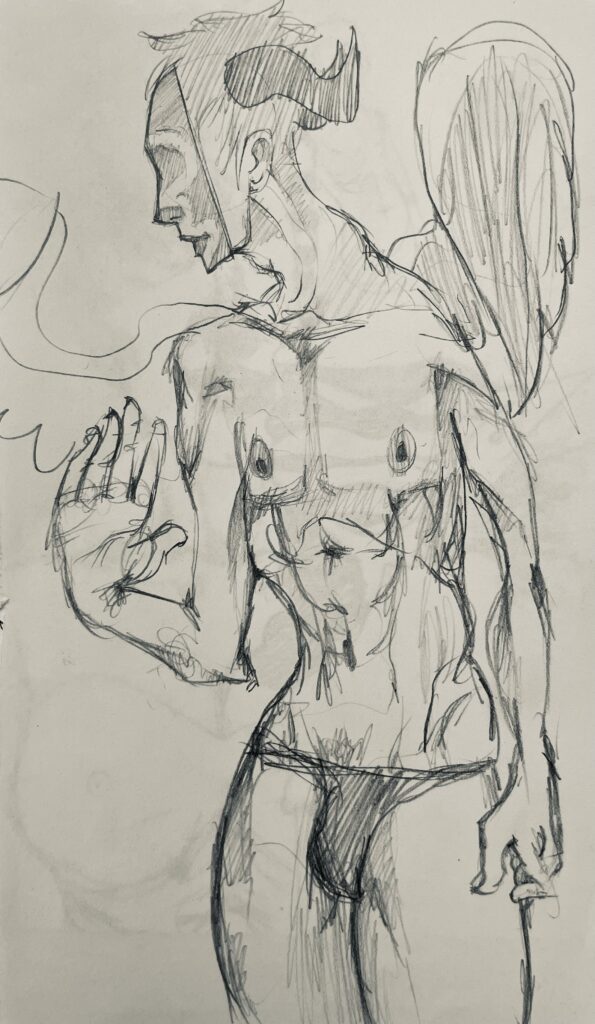
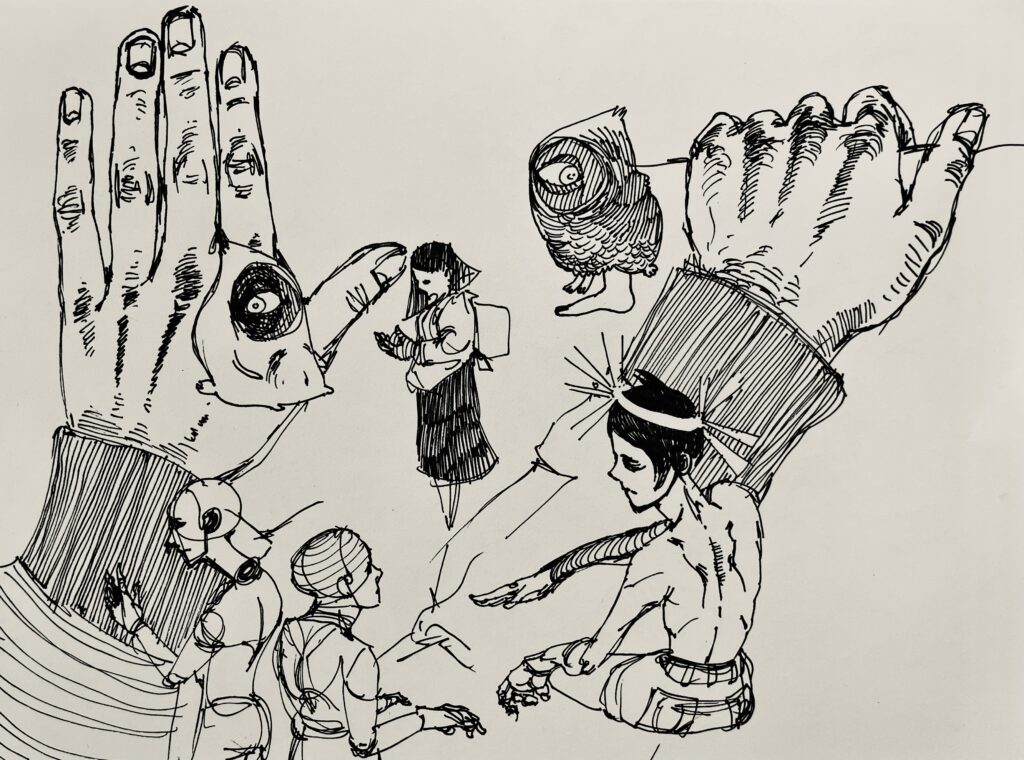
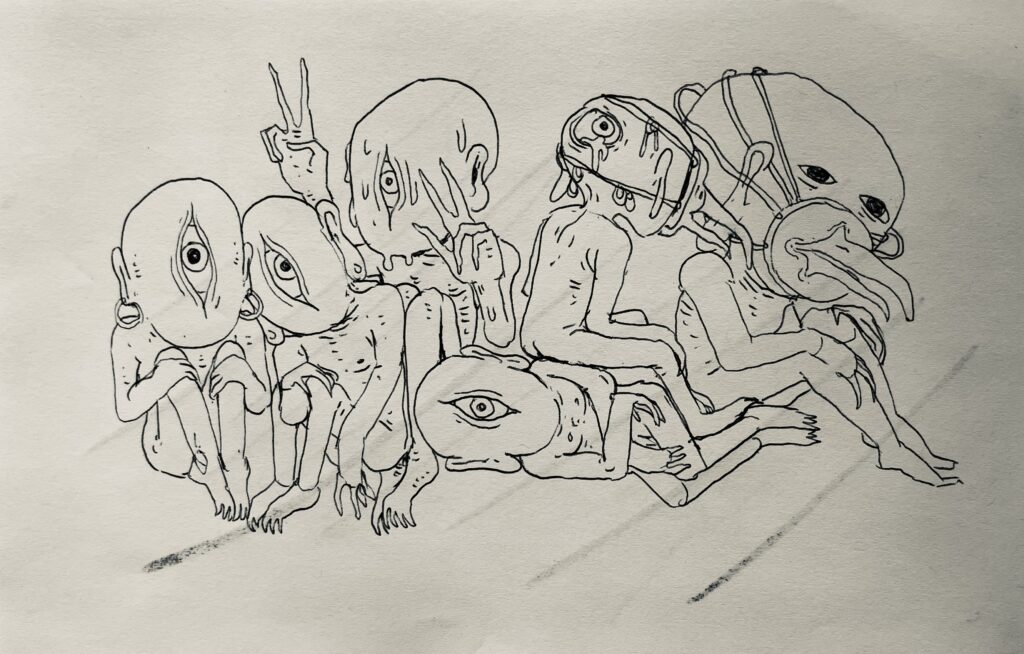
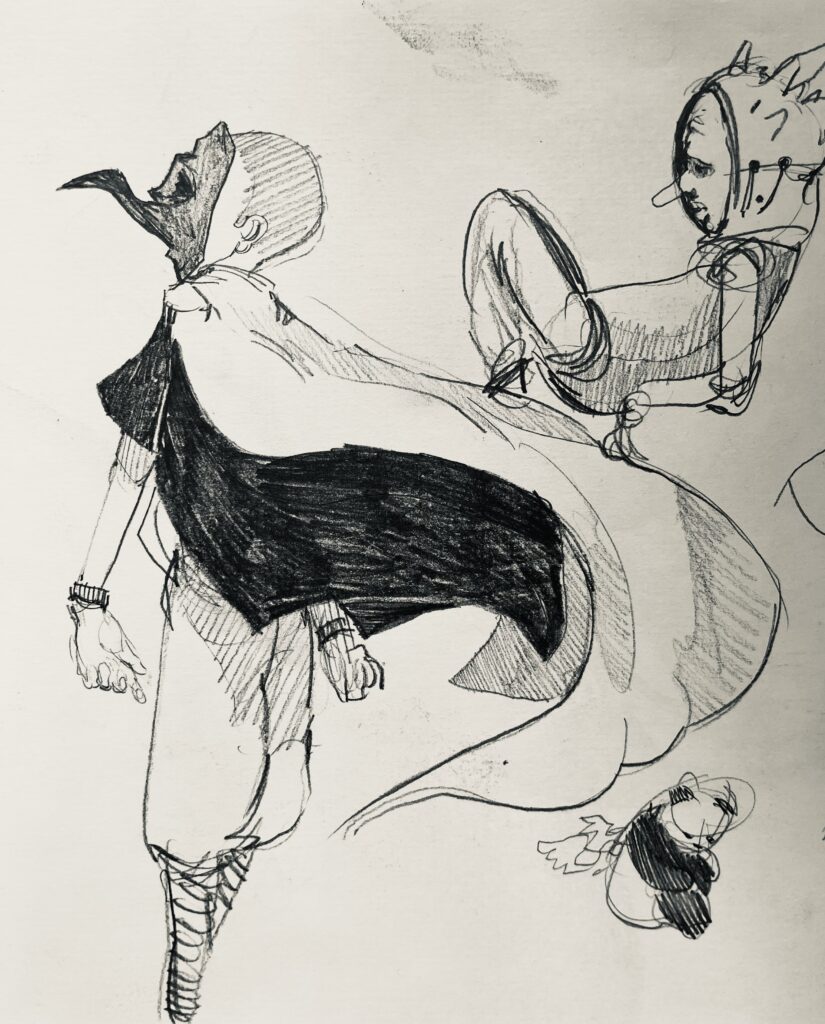
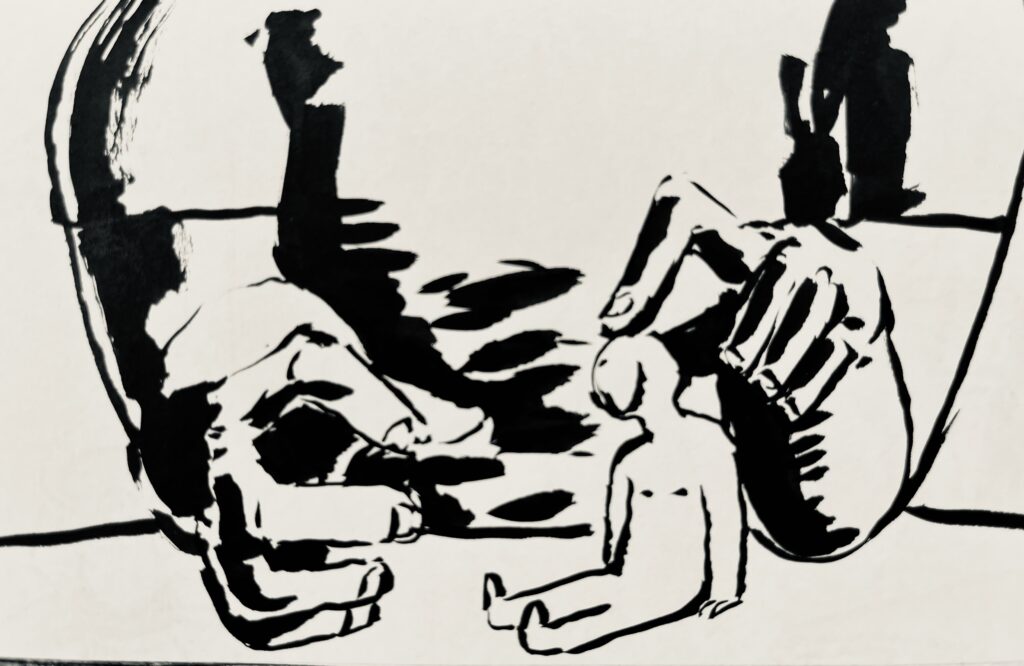
These drawings lean into the surreal and the mythic. Shayne often created alternate worlds that blurred human and nonhuman, sacred and absurd—part theatre, part dream logic—often shaped by a tension between the macabre and the angelic.
Series 10
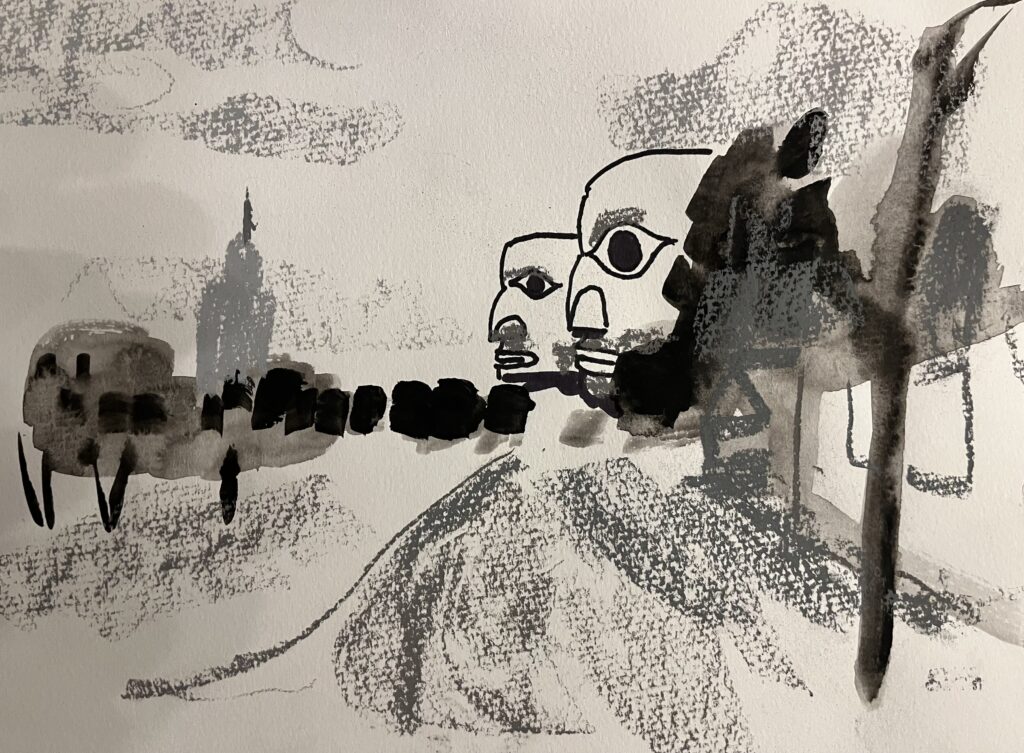
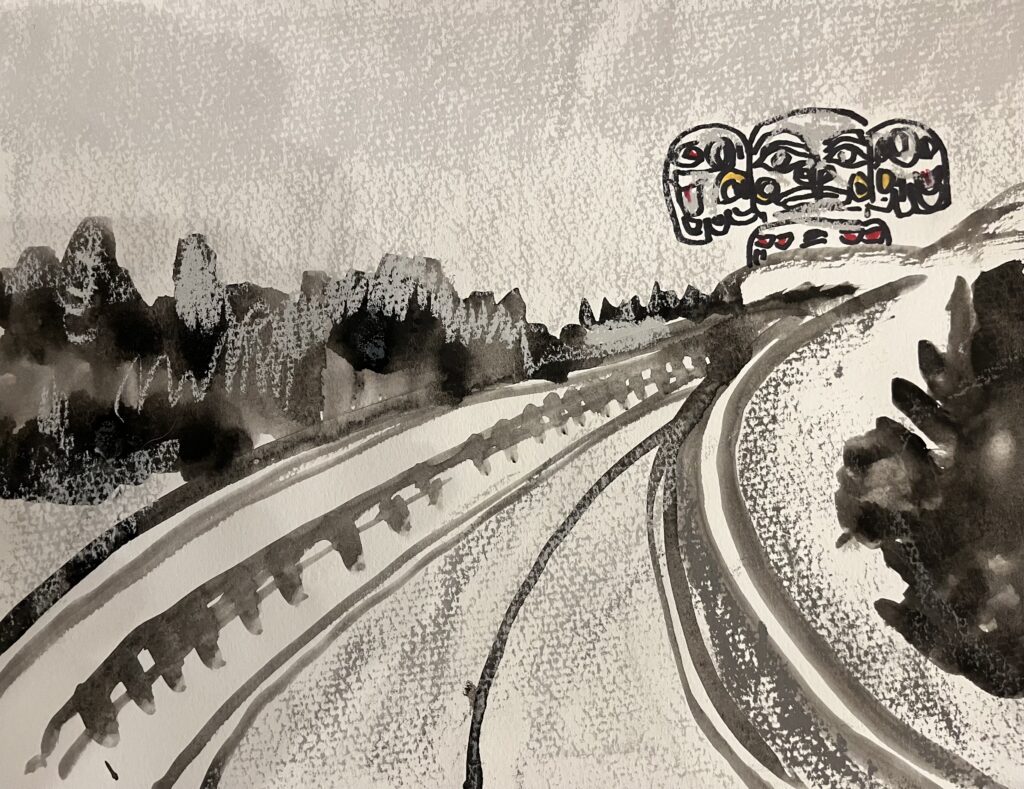
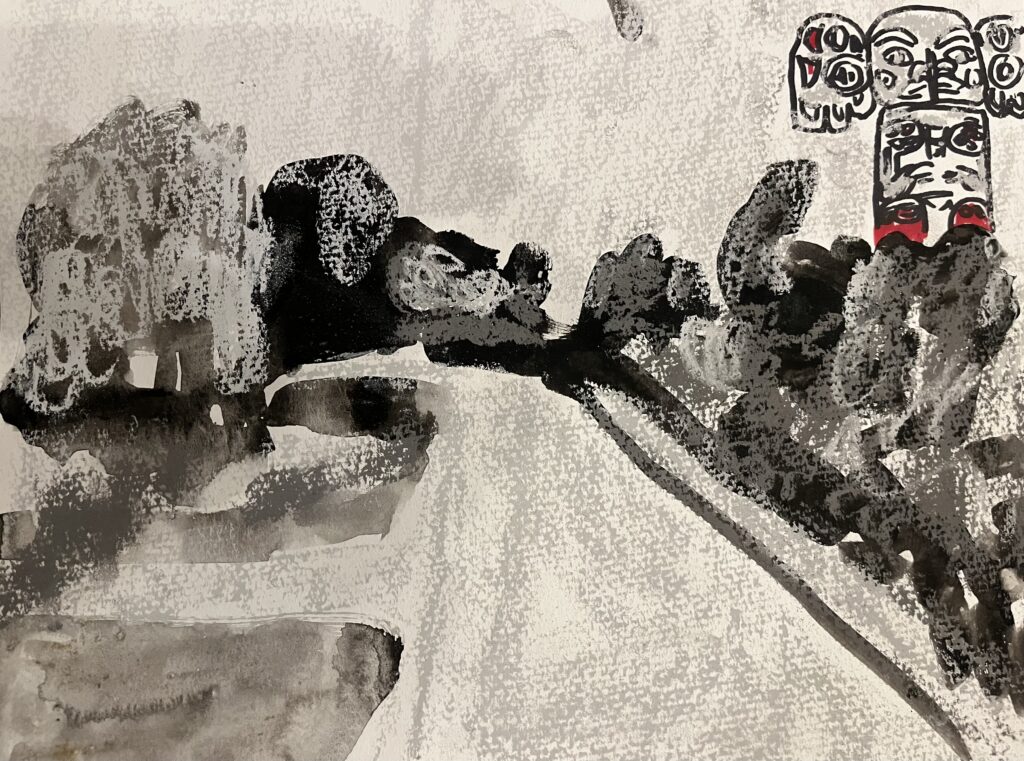
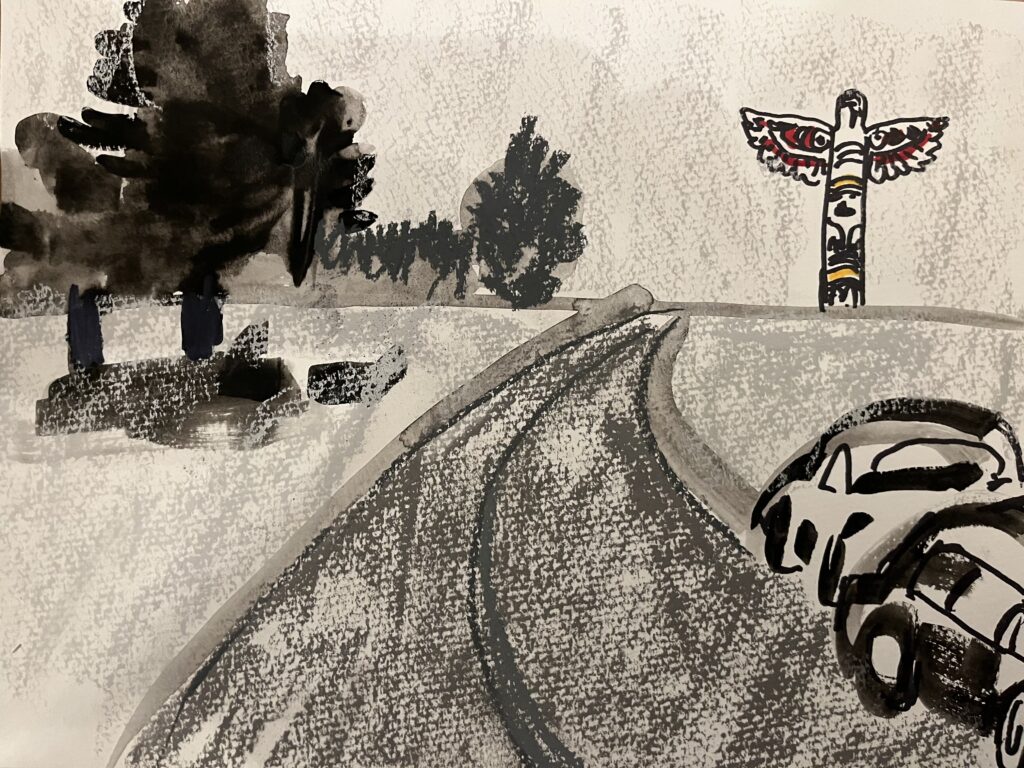
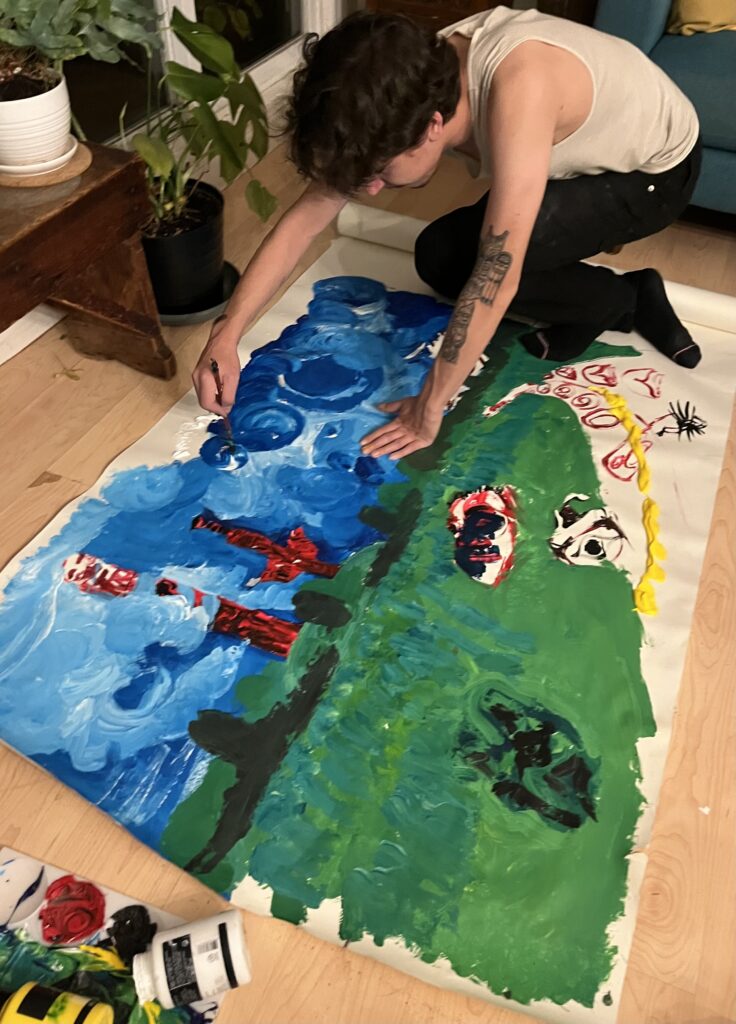
This was the last series Shayne created. It brings together imagery from two geographies that shaped his life and identity in tension: the Prairie homelands of his Plains Cree ancestry and the coastal territories where he was raised. By layering Prairie landscapes with iconography from West Coast Indigenous nations, Shayne confronted the cultural and spatial dislocation he felt growing up far from his ancestral lands. The juxtaposition is both unsettling and intentional—a visual expression of his longing for rootedness, and a critique of how Indigenous identities are often flattened or misread through a colonial lens. In this series, he explored what it meant to inhabit a body and a lineage that felt both seen and unseen, to carry inherited trauma in a world that offered no map for how to belong.
Final Images
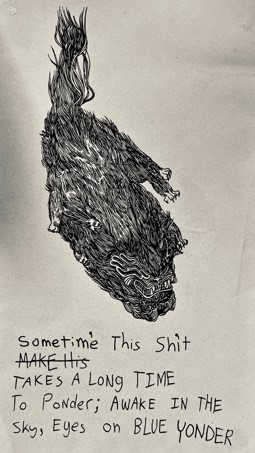
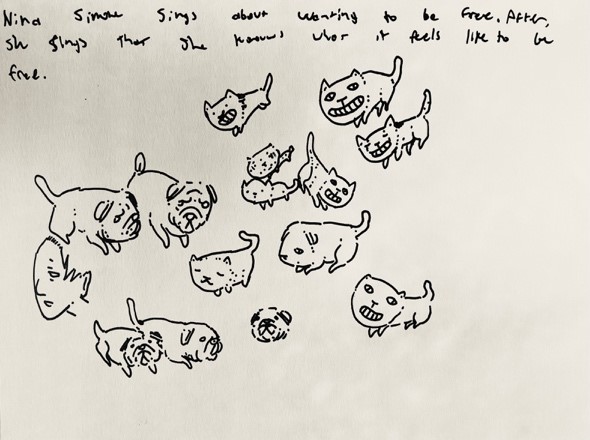
Shayne often combined his art with messy, handwritten reflections—honest, poetic, unfiltered. These two pieces feel like a fitting place to end. One reads, “Sometimes this shit takes a long time to ponder; awake in the sky, eyes on BLUE YONDER.” The other, “Nina Simone sings about wanting to be free. After, she sings that she knows what it feels like to be free.” When Shayne was engaged with making art, I imagine he knew what it was to be free.
Release Granted