Girl With Sword
Lena Tarr
See it On Campus: Level 2
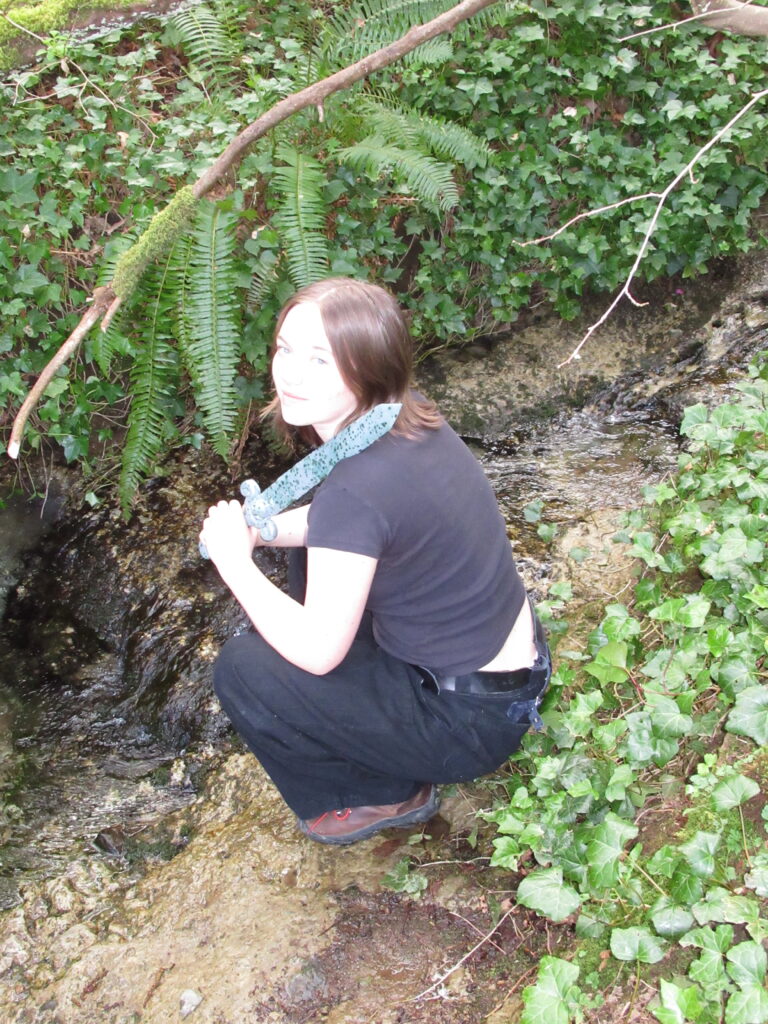
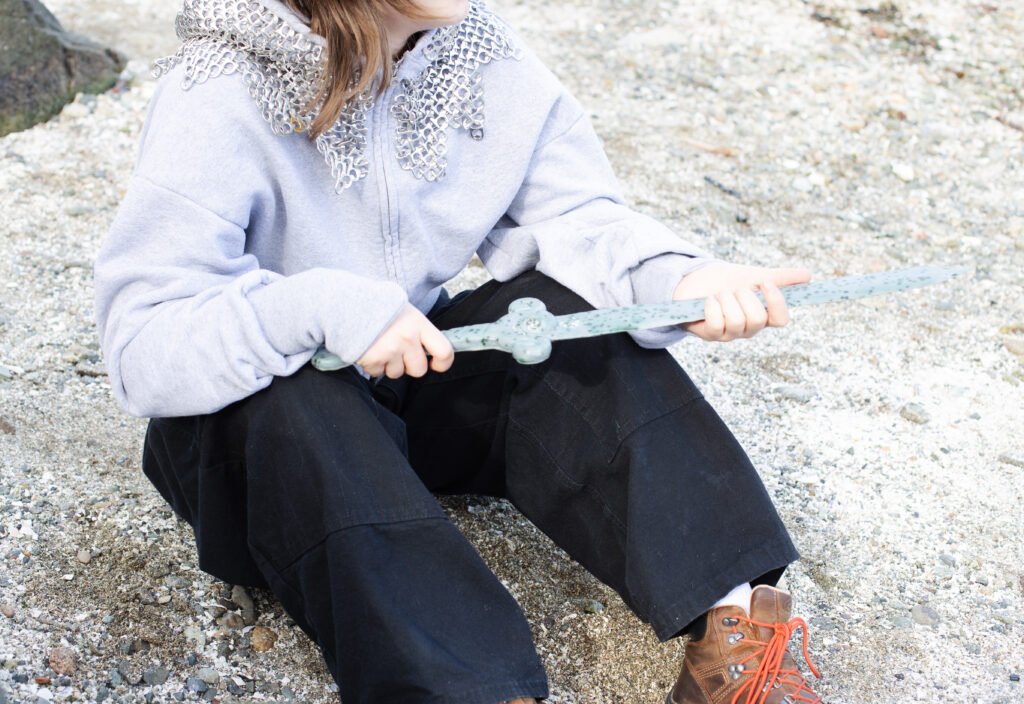
*Locating my positionality and connecting my wardrobe to my social identity, under the theme of armour. *
Industrial Design 2025
__________________________________________________________________________________________________
This year, I’ve given myself a new title: I am a researcher!
I’m always seeking understanding — it’s a core part of how I move through the world. Specifically this semester, I sought an understanding of others, of myself, and of where I belong among my relations.
This project began last summer, sparked by an interest in the connections between clothing, subcultures, and armour — both metaphorically and literally.
I started by going to the library! Investigating books like: Heavy Metal Armour by Thomas Cardwell, and
British and Foreign Arms and Armour by Charles Henry Ashdown
Through these works, I explored heraldry, symbolism, and how clothing functions as identity, status, and protection — especially within subcultures. With a little more than a century between their publications, these books share connections that go beyond what clothing or armour means to the wearer.
They revealed how clothing can act as both armour and a form of social belonging — across many different contexts.


Still, with all this information I gathered, something wasn’t sitting right with me.
I realized I was researching from a distance , I was looking at subcultures I wasn’t fully a part of.
The question evolved into, “How can I research others when I don’t even know myself?”

Focusing on myself then became the core of my project — asking myself the complicated question: “Where, how, and why do I belong?”It guided my design process, which at first was heavily focused on aesthetics.
I was trying to create clothing that would help me fit in or appeal to others — and it was exhausting.
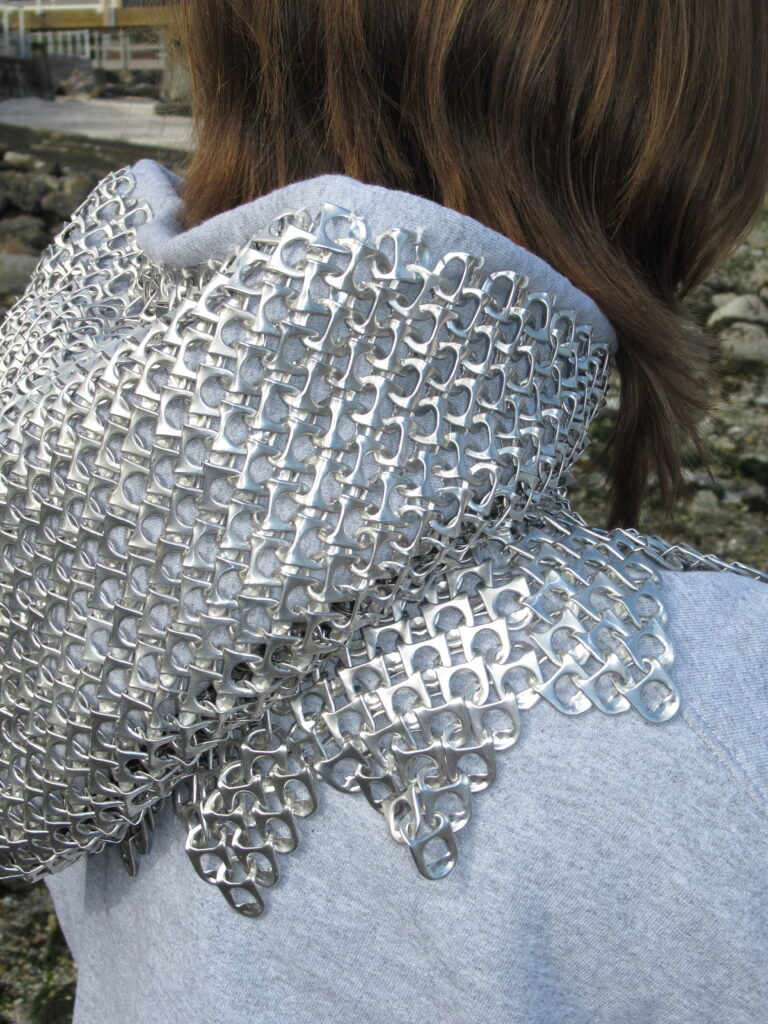
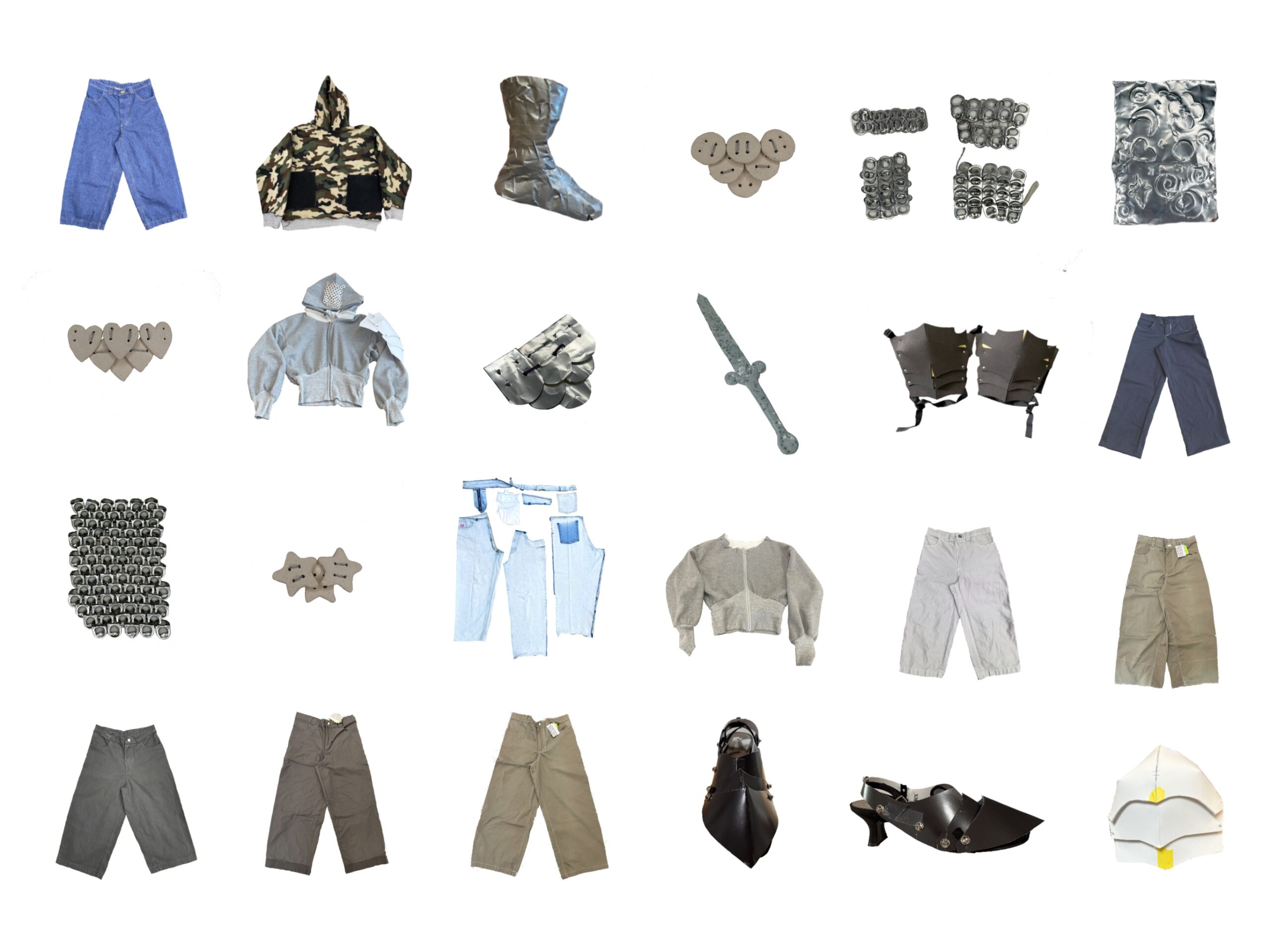
My iterative process became extensive. I began self-drafting patterns of clothing I typically wear every day, like hoodies and jeans. Each of these items I made this year was a step in the process of achieving my final outcome. I prototyped non-stop. But… something wasn’t working. I didn’t feel good in the clothes I was making, especially the shoulder armour.
My prototypes felt restrictive and uncomfortable, leaving me insecure and nervous to even share what I had made.
My focus on aesthetically-driven design to establish a sense of belonging left me anxious and disconnected from the goal of this project.
Ultimately, I just wanted to feel good. So I stopped — and reflected and began prioritizing how I feel .
The shift to putting how I felt first came quite late in the process.
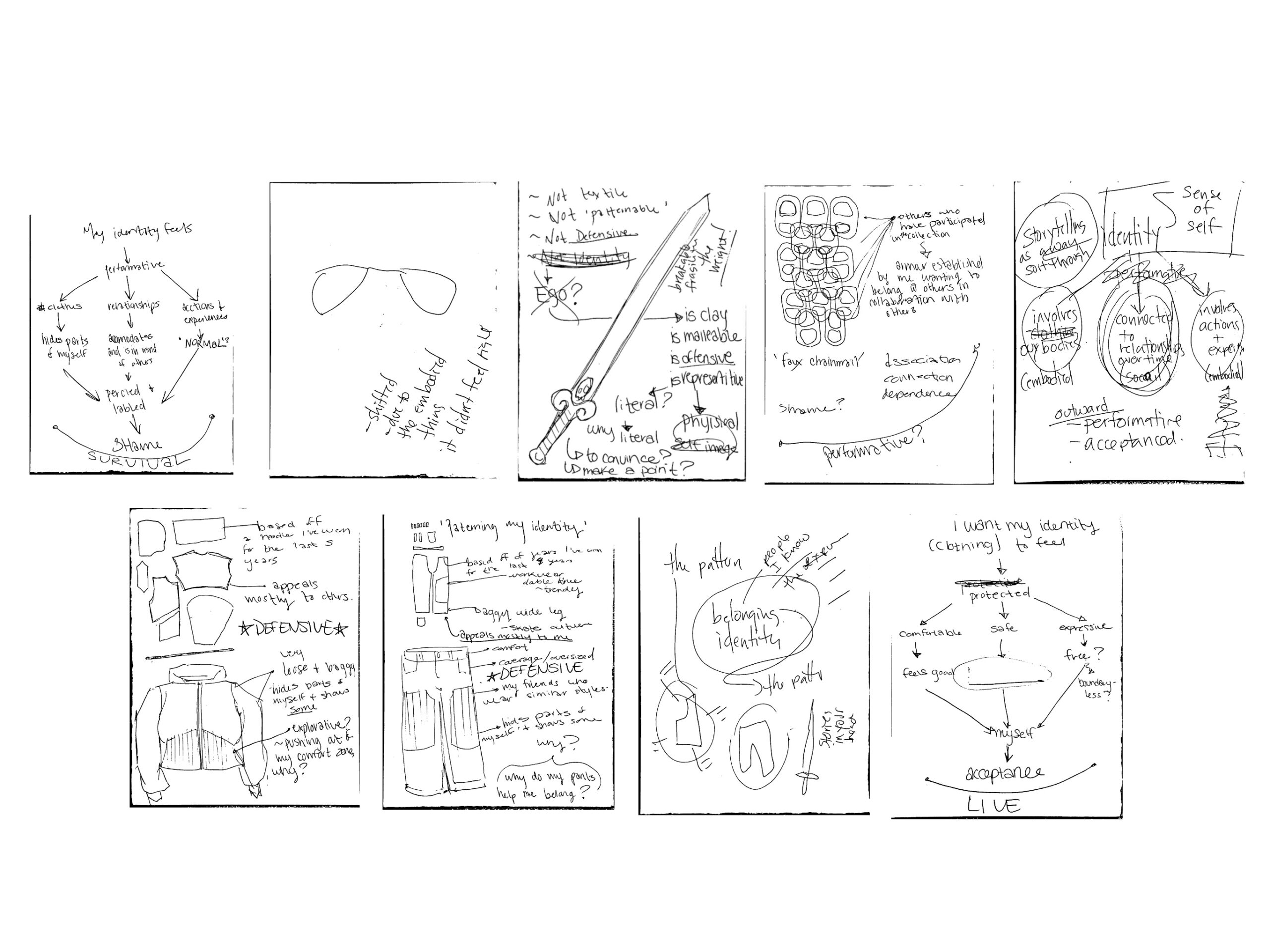
And honestly, when it came time to think about how to communicate those feelings in this presentation — I felt lost and confused.
After spending so long focused on what others thought, I realized that I didn’t have the words to express how I felt.
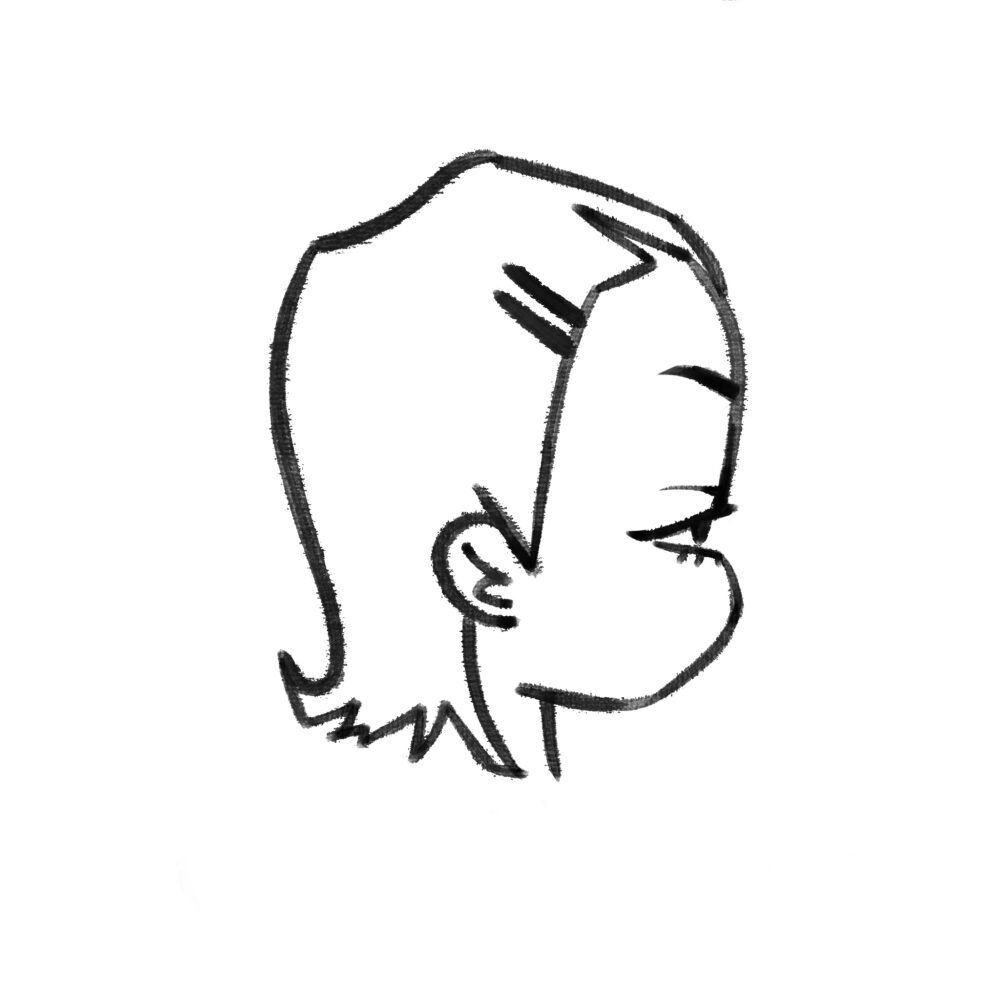
I navigated my inner conflict by doodling and scribbling! (As seen on the left.)
In that confusion, I started doing some independent research online and came across a tool called a Social Identity Map — developed by and used among researchers to navigate their social identity in relation to their positionality.


It acknowledges the many factors that shape how we produce and consume data — things like (but are not limited to) class, citizenship, ability, age, race, sexual orientation, cis/trans status, and gender.
This process helped me build a self-reflexive analysis: how, why, and in what ways research is conducted, and a deeper understanding of power, privilege, and visibility within the research process.
Acknowledging and exploring these facets was crucial to my work.
It helped me realize that the performance of my social identity is simply my identity in action — not a negative or dishonest version of myself. I began to understand how parts of my social identity have informed my interests and behaviours. Who I am is what establishes my belonging — not what others think of me.
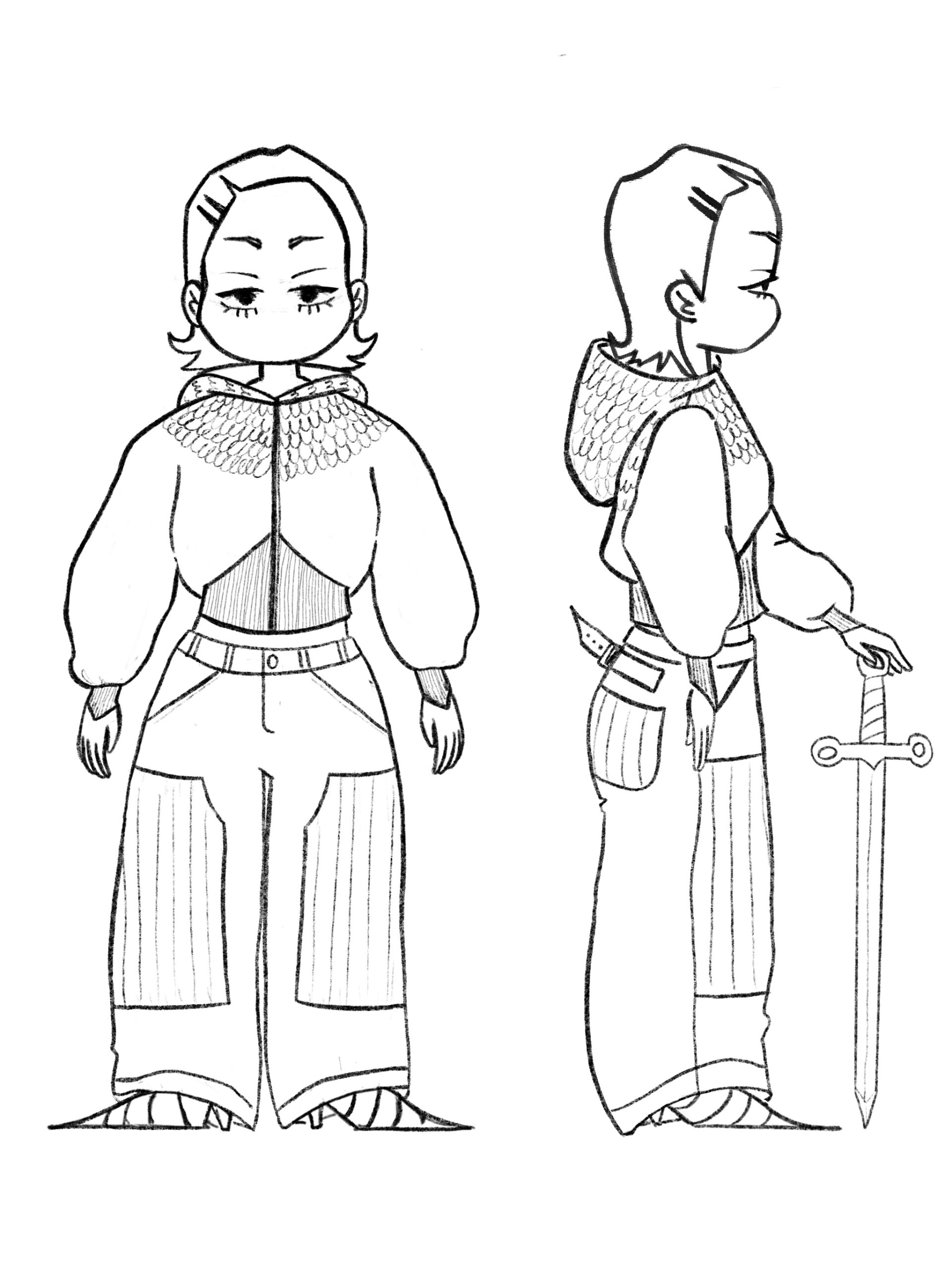
As a researcher, I’ve also learned that my identity is complex, fluid, and always evolving.
And most importantly: I’ve learned that I do belong — and that I don’t need to justify it.
The clothing I make and wear helps me find my own sense of belonging — while making me feel protected at the same time.
To wrap this up:
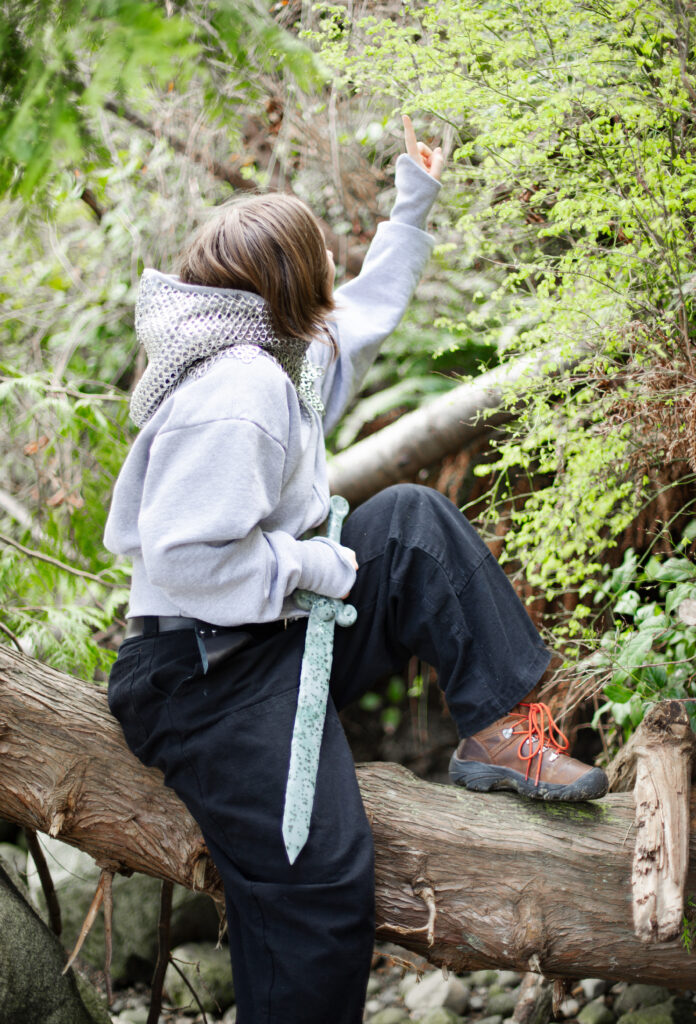
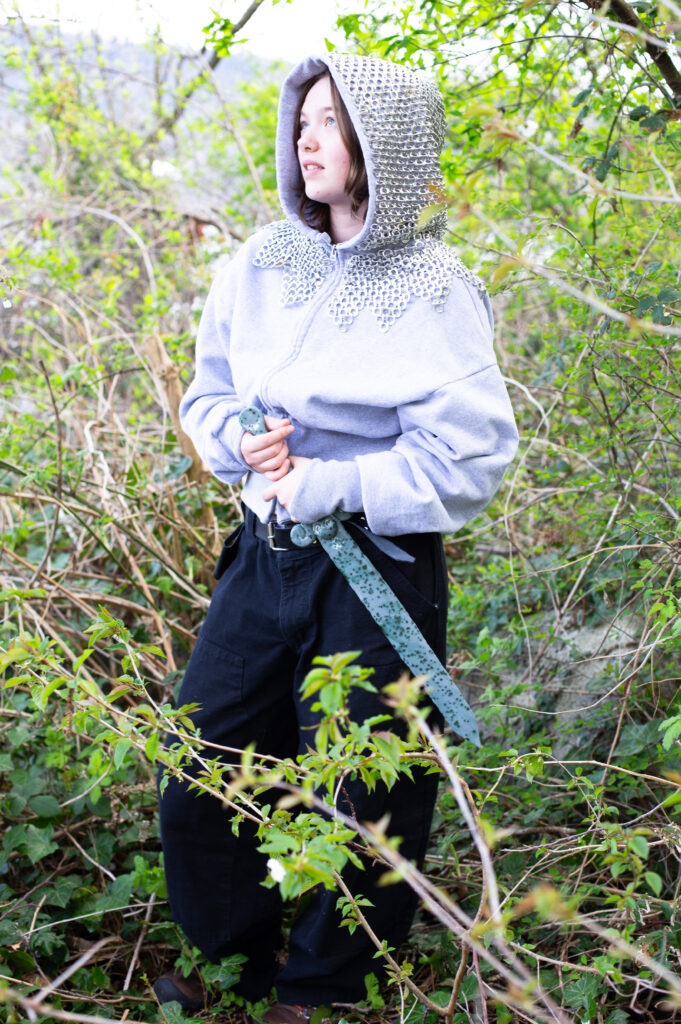
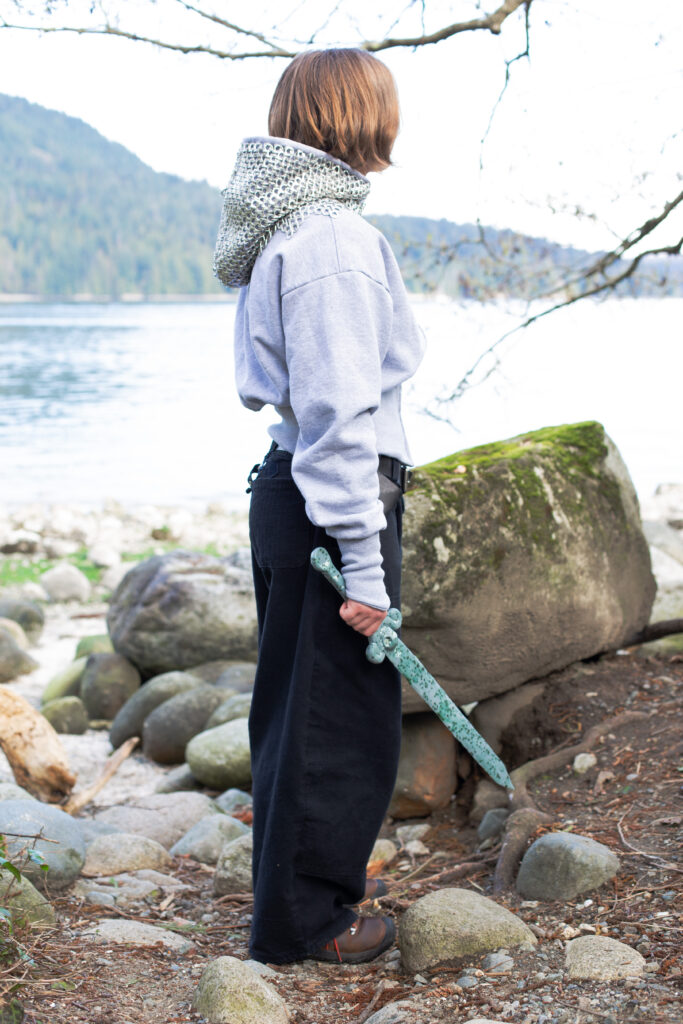
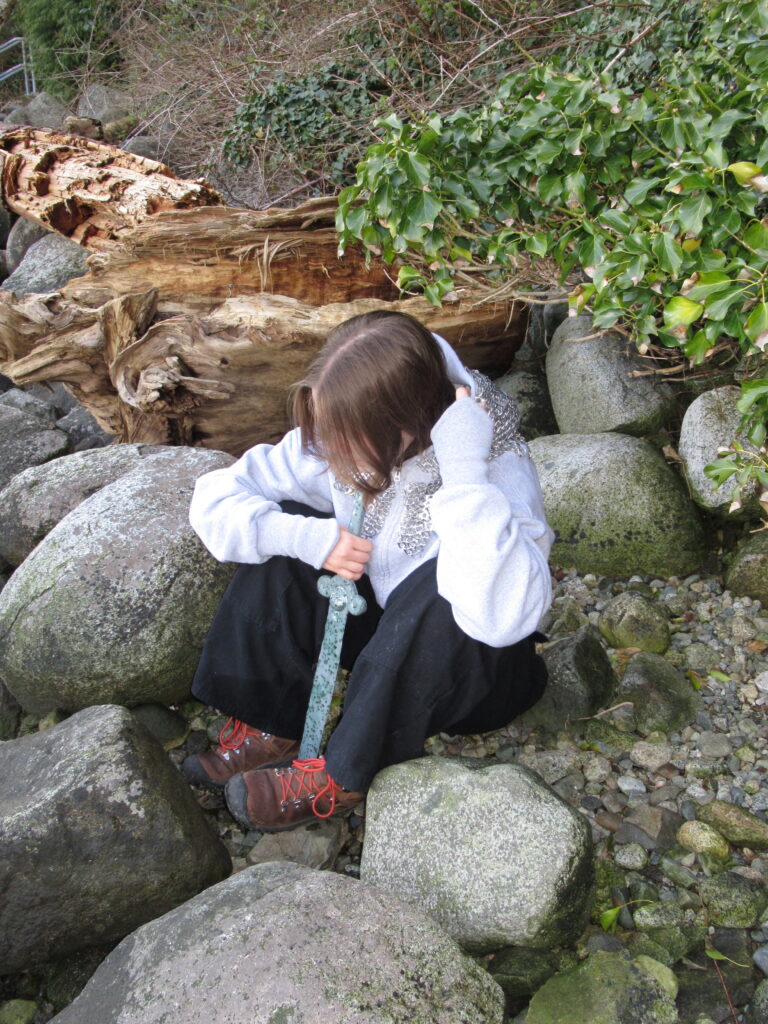
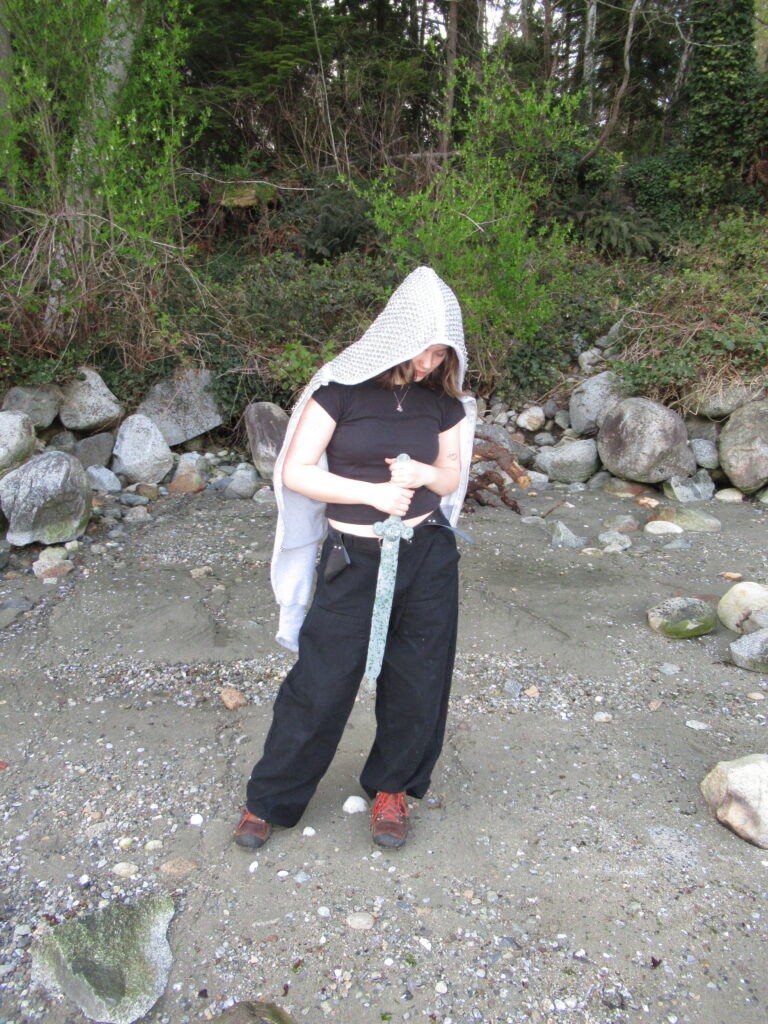
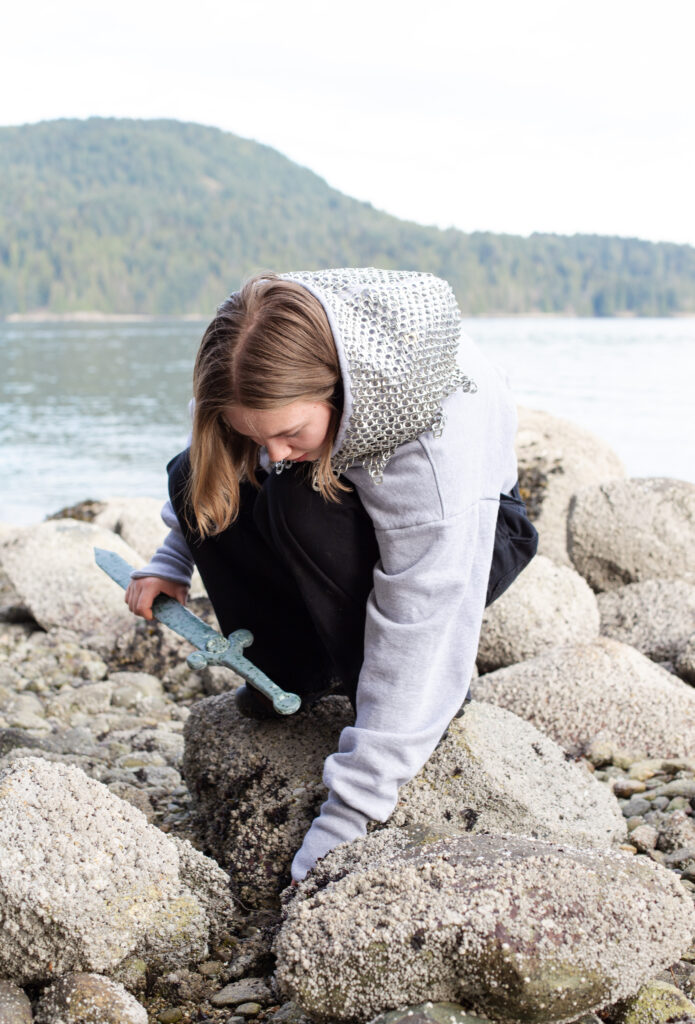
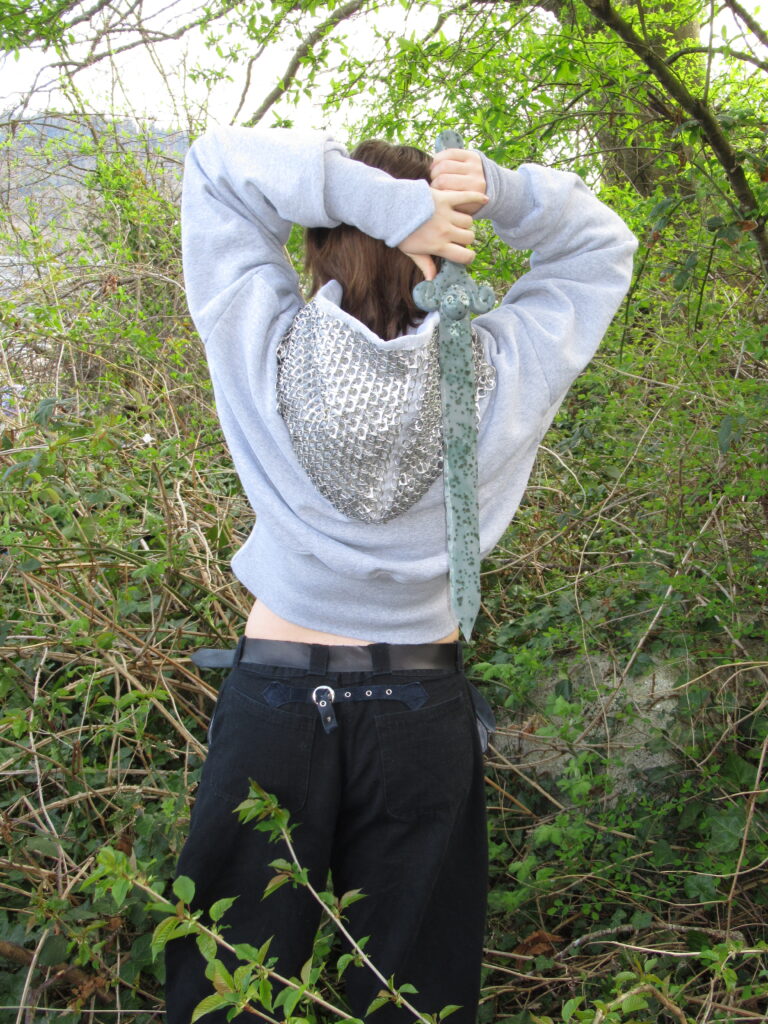
The armour I wear every day — the clothes I’ve made in Girl With Sword — gives me strength. It allows me to feel safe, seen, and good about who I am.
This is how I’ve found belonging, on my own terms.
_____________________________________________________________________________________________
Thanks for looking at my work!
Please check out these links below to my process books to see further into the process of my work. I am passionate about making clothing that advocates for slow making practices done with love and care. Circular, slow, and thoughtful design is our future and I want to be a part of it!!
Establishing my positionality as a researcher will help me to continue in furthering my passion for sustainable clothing design and making and hopefully for those who interact with it!
Photo credit to Luca Jacoe, thanks girl!