Every Day Music.
Stuart Argo
See it On Campus: Level 1
Located in room D1390 by the first floor entrance.
Visitor InfoWhen was the last time you engaged with your music?
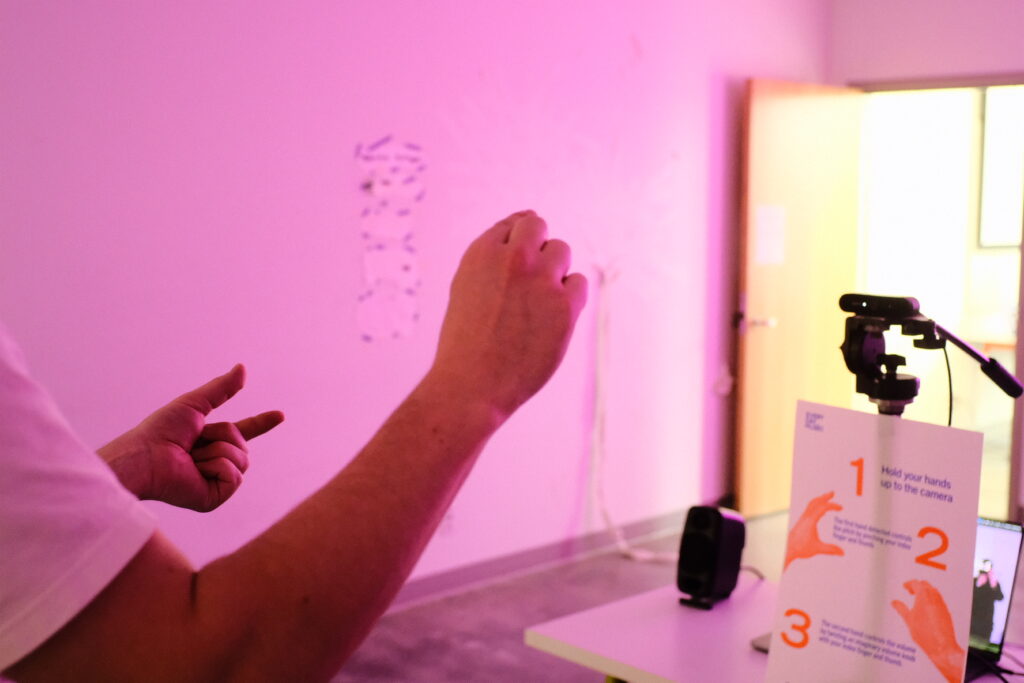
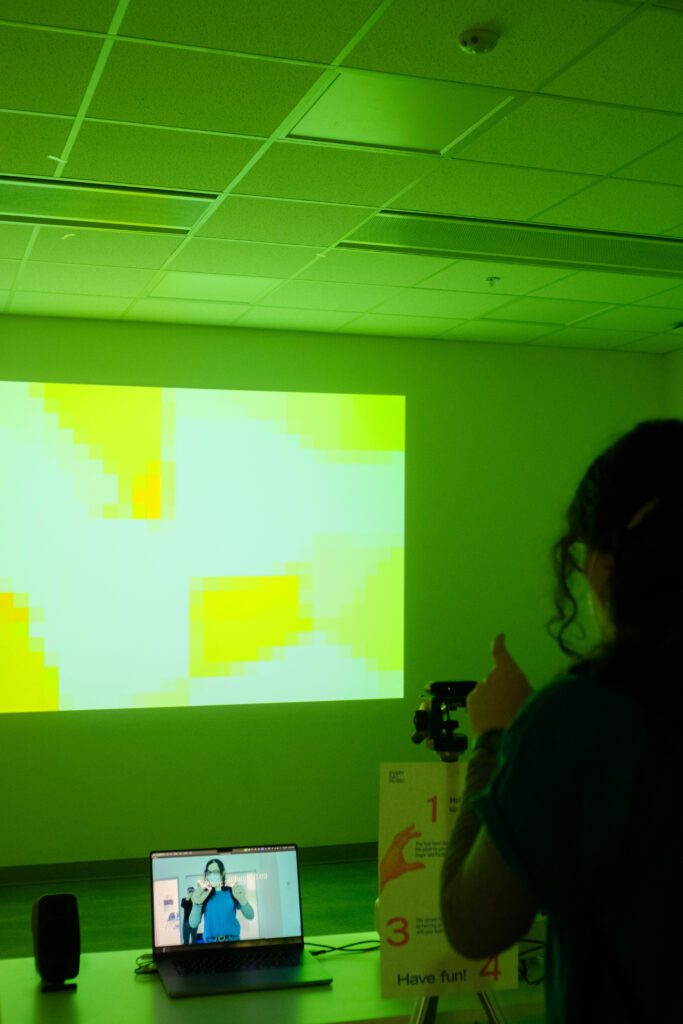
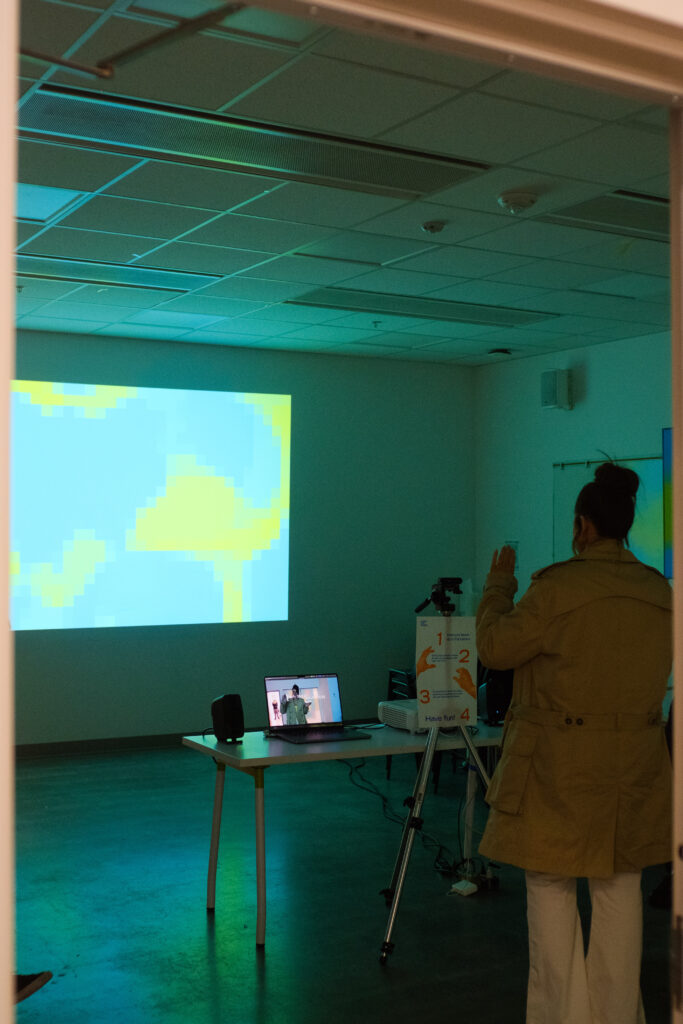
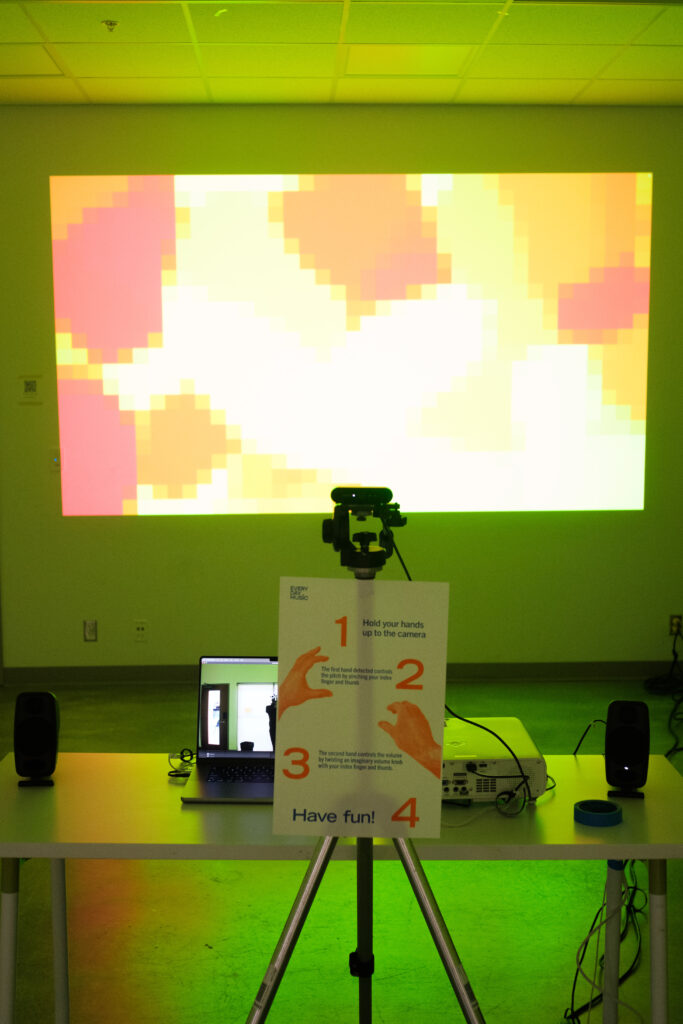
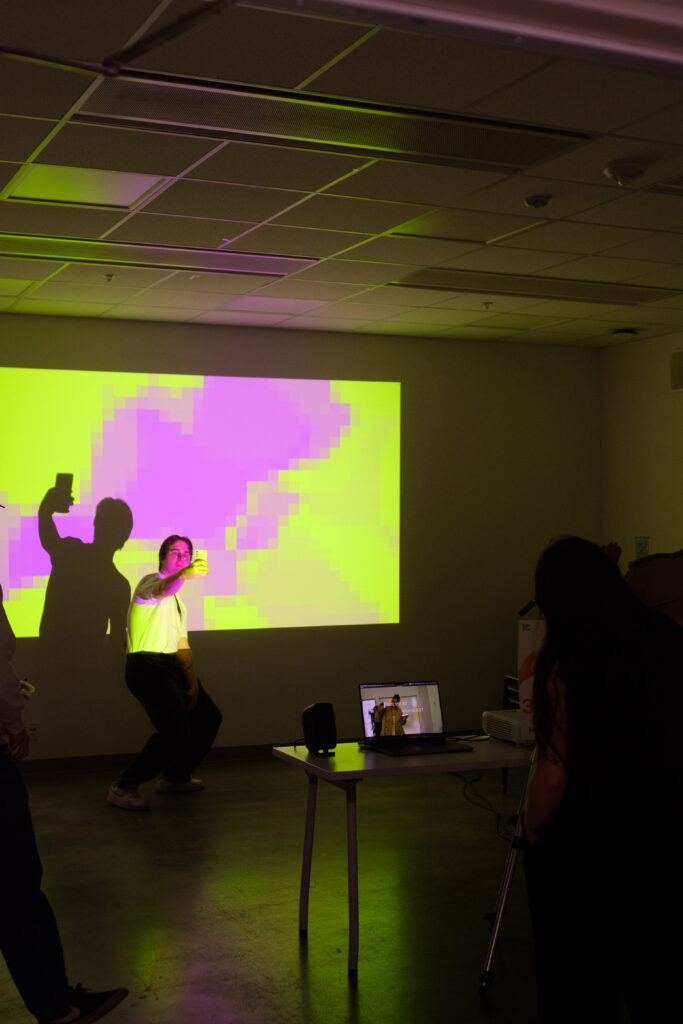
This interactive installation allows you to turn yourself into an instrument and quite literally puts you in the music.
This project all started last summer while I was listening to music one evening. I had been growing disheartened with my listening because of streaming services and decided I wanted to listen more intentionally. I sat down to listen to music in a quiet room and all of a sudden I realized that I could see shapes and colours and feel textures.
It is something I have probably experienced many times before but never thought about it, but this time I noticed. In a time were our music experience is defined by algorithms, AI DJ’s, and Daylists, this project aims to provide a different experience, one of humanity, community, and synesthesia.
The Story of the Project.
01
Research.
I started out this year by doing a lot of research into synesthesia, music streaming, algorithms, AI, and consumer culture and quickly discovered that all of these issues were both incredibly broad and incredibly nuanced. I then turned to see if I could find out how people listened to music and how they connected to music; I wanted to know if I was alone in my experience of music.
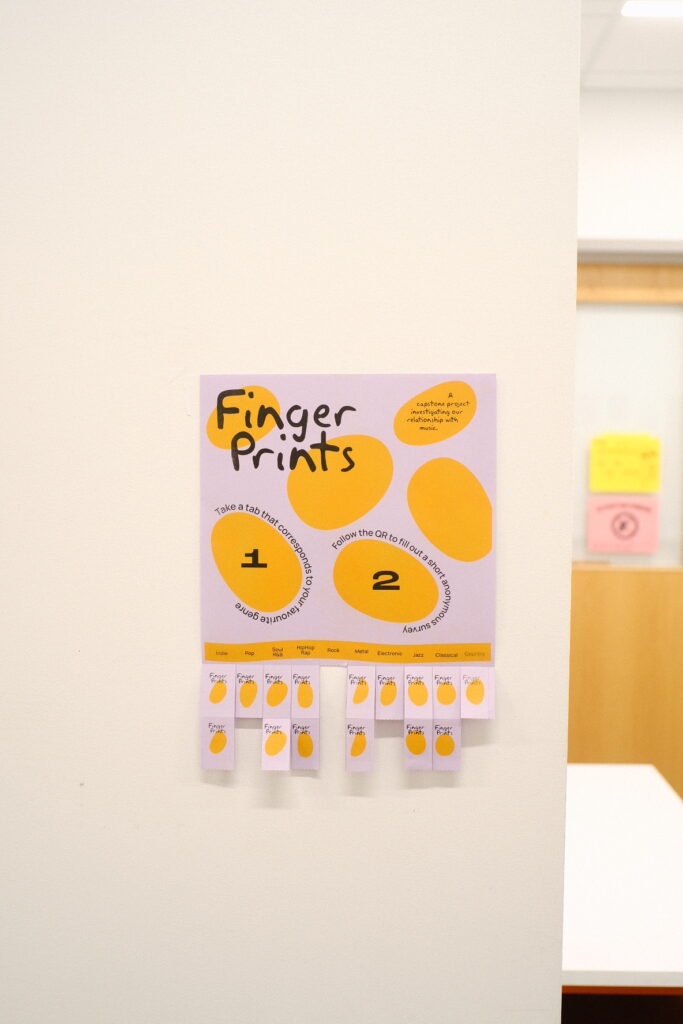
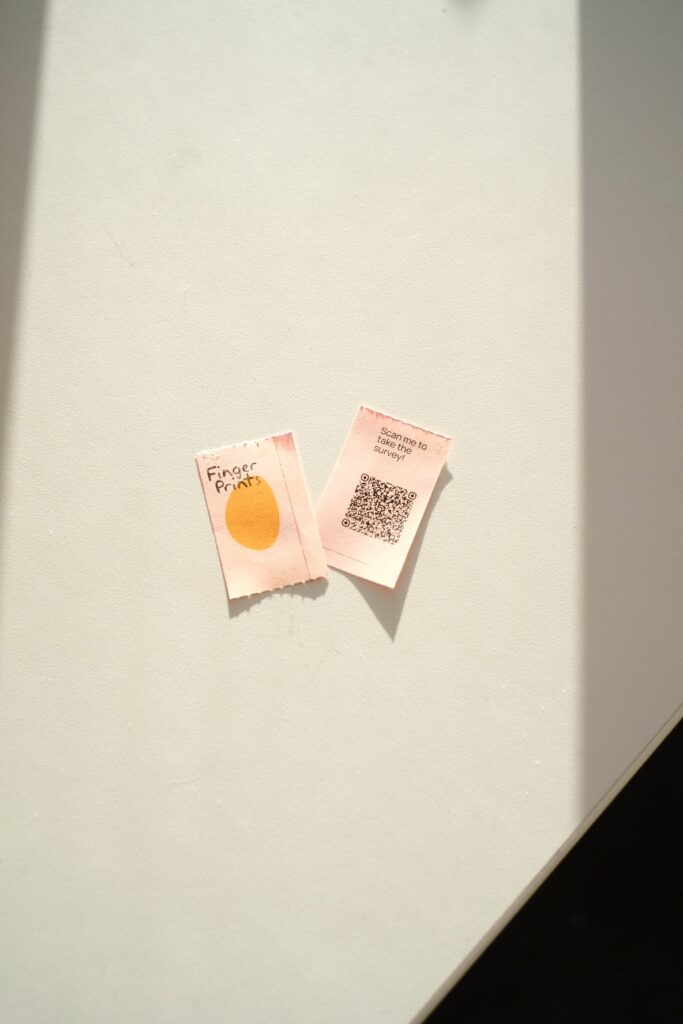
This was a poster for the survey I ran which was posted around the school. The tabs corresponded to a genre of music, thus by taking a tab to participate in the survey you were voting for your favourite genre. On the back of the tab was a QR code that took you to the form.
The survey itself was set up to poll people’s music listening habits and whether or not those aligned with how they would prefer to listen. The majority of people who responded said that they would usually listen to a playlist on a streaming service but maybe desired a more engaged listening experience.
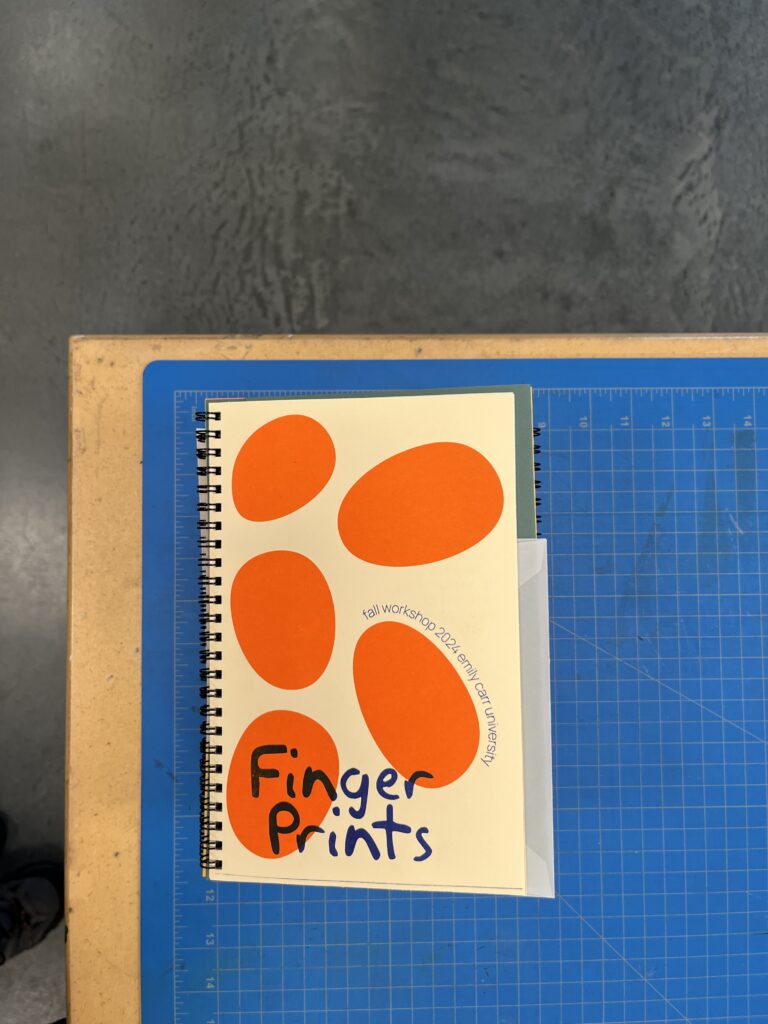
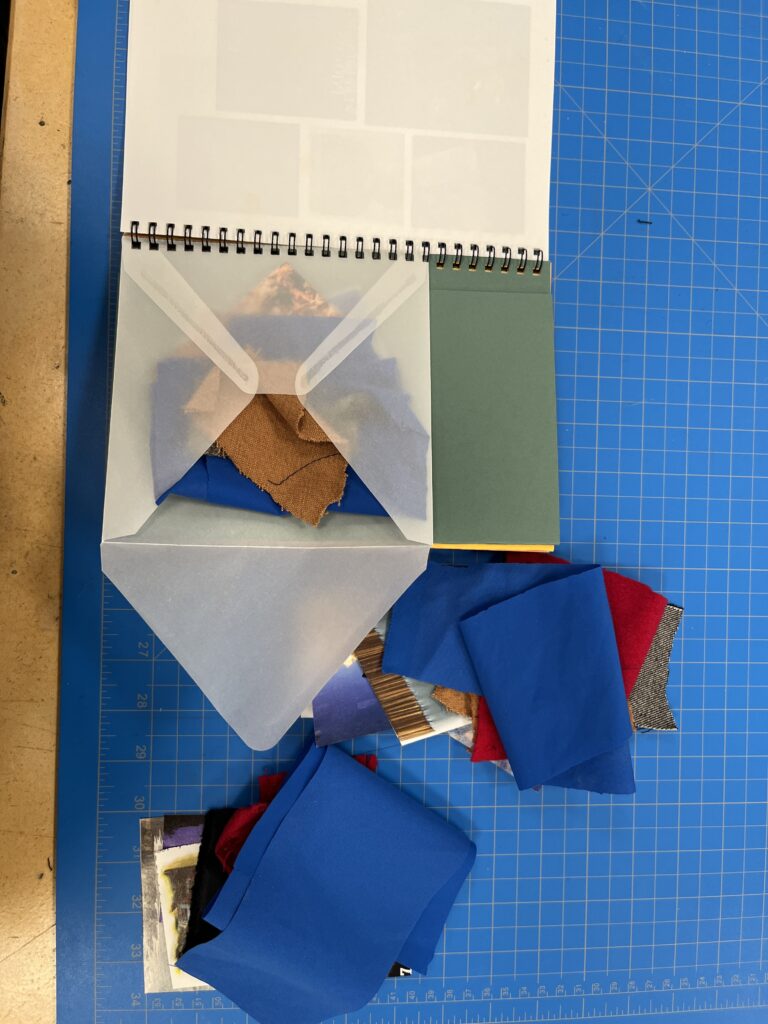
This was a zine I made for a collage workshop that I ran to see how people visualize and connect with music. Each zine contained supplies such as fabrics, paper, images, cut outs from magazines, etc. The idea was to create a fully self-contained workshop, so that there was less barrier for entry and hopefully less excuse for people not to take part.
Each person then took the zine home and was instructed to create a collage based on their favourite song(s) at the moment. This ended up being a hugely influential piece of research for my project. It was a huge privilege to be able to get an inside look into people’s minds and their relationship with music.
02
Making.
After the conclusion of the research phase in December, I faced a tough decision over what I wanted to do with all of the results. I had come to realize that there was no way to really solve or address the issues I had identified at the beginning of the project so what could I actually do?
I thought maybe I could bring people into my experience of music, and that’s what I did.
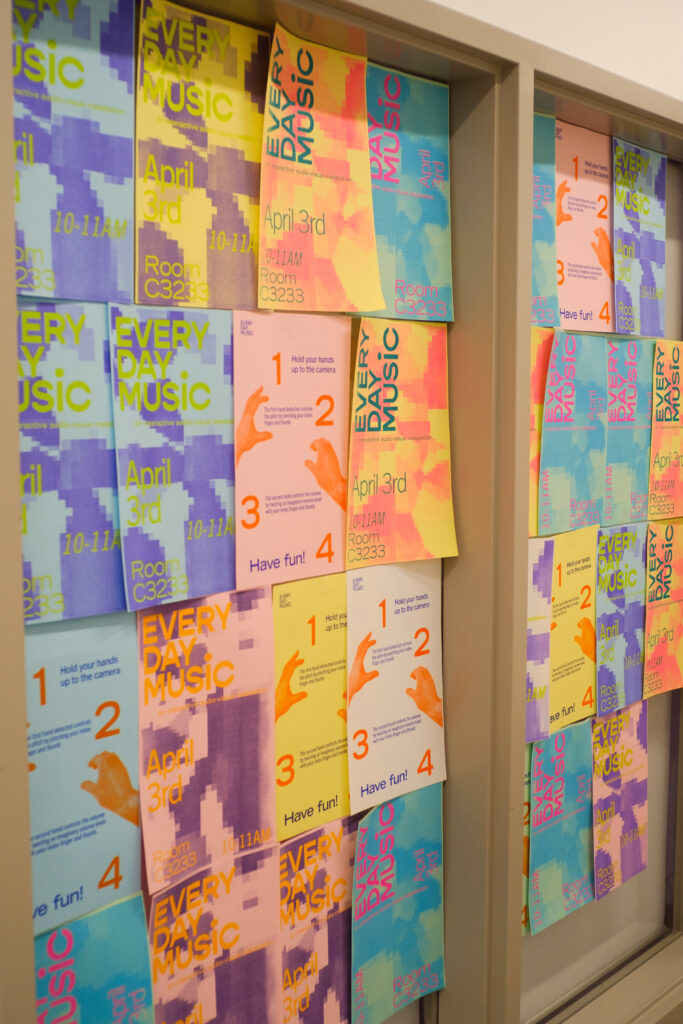
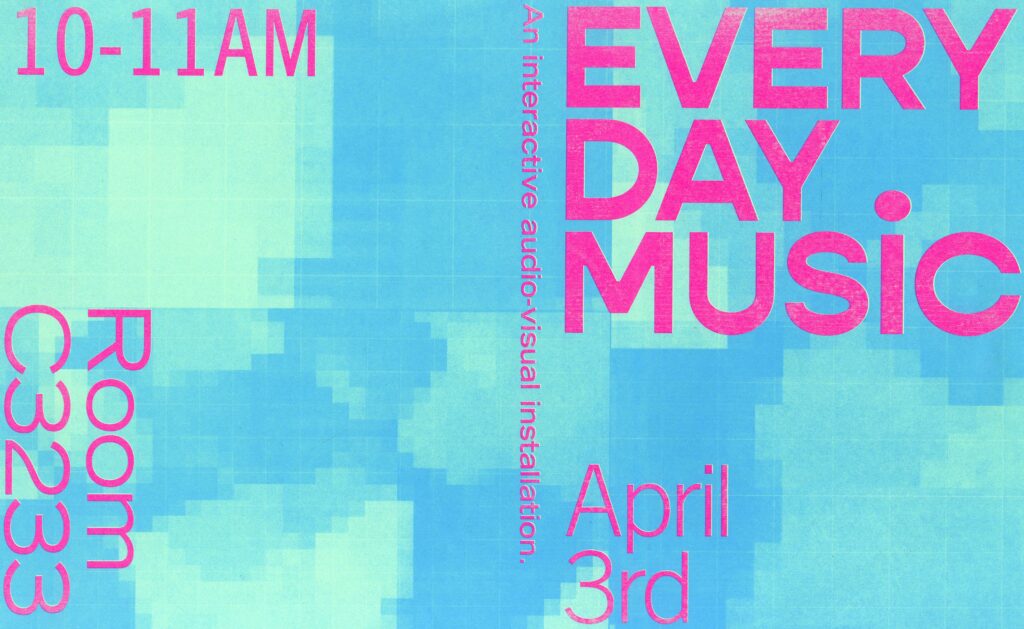
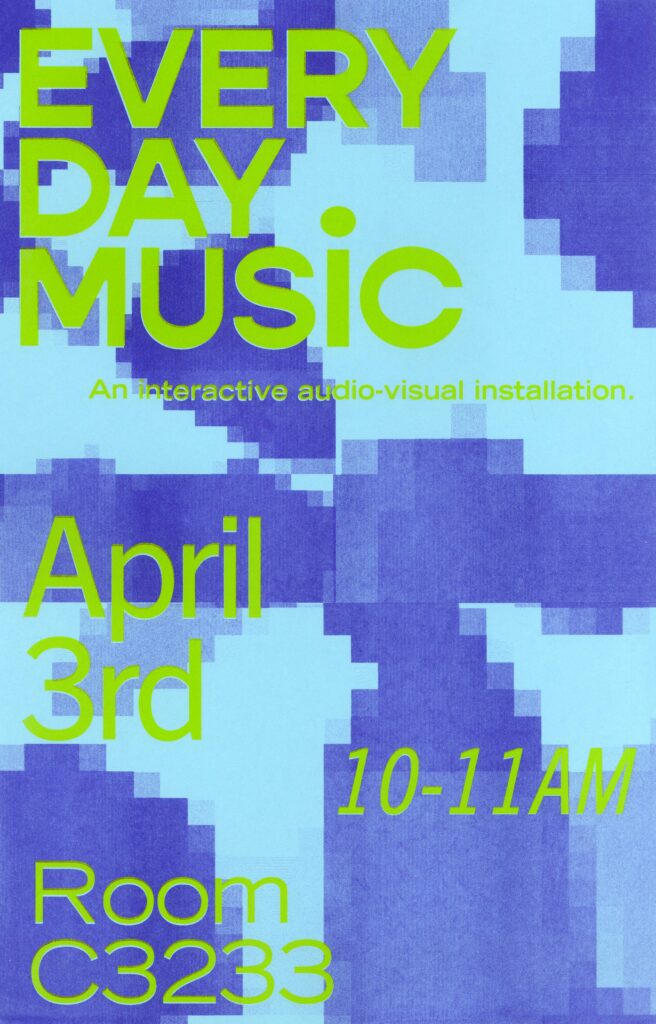
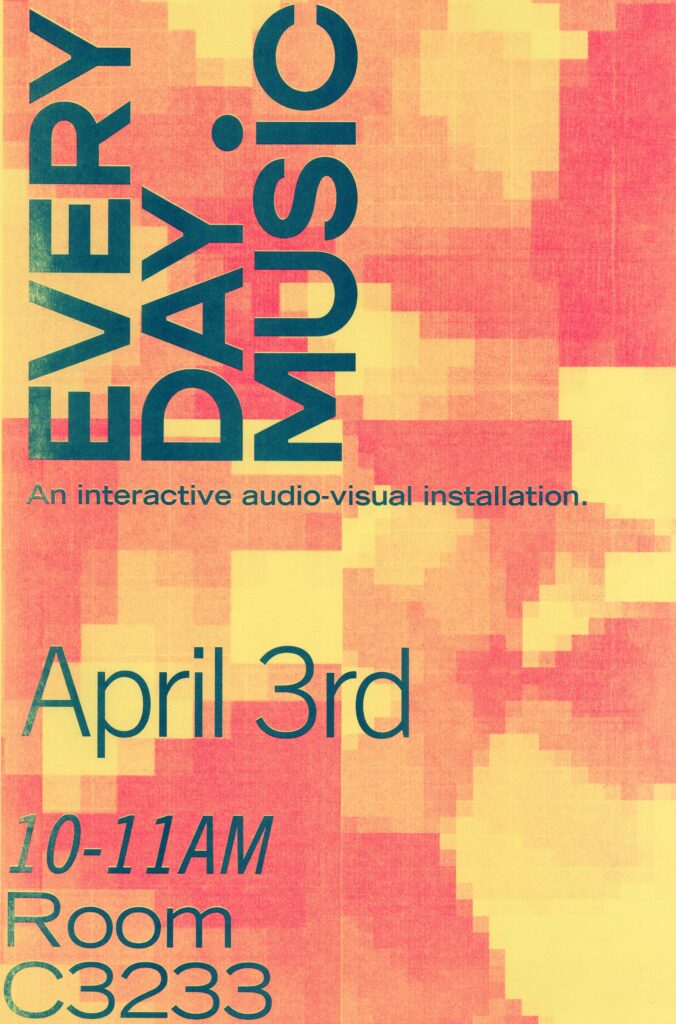
These were a series of Risograph posters that I made to put up around the school to advertise the installation. Over the semester I worked on a visual language to supplement my project and these were the final language in use. I decided on mid-century inspired type using typefaces Trade Gothic,
Akzidenz Grotesk Next, and Schoolbook. I then implemented visuals created in the program for the posters. The type layouts were also dynamic like the generative visuals they were layered over, while sticking to a strict grid like the pixels of the program.
03
Playing.
For our final Pin Up in Communication Design I was able to set up in a separate room with a projector, webcam, and speakers. The room was open for everyone to come in and do as they please. Overall it seemed like people had a lot of fun with it and it provoked good conversation. In my eyes it accomplished what I had set out to do so many months ago. It gave people a unique insight, allowed them to engage with sound and music in a new way, and fostered human connection.