Destroy It Yourself!
Hailey Johnson
See it On Campus: Level 2
Inside Rennie Hall, by the main entrance.
Visitor Info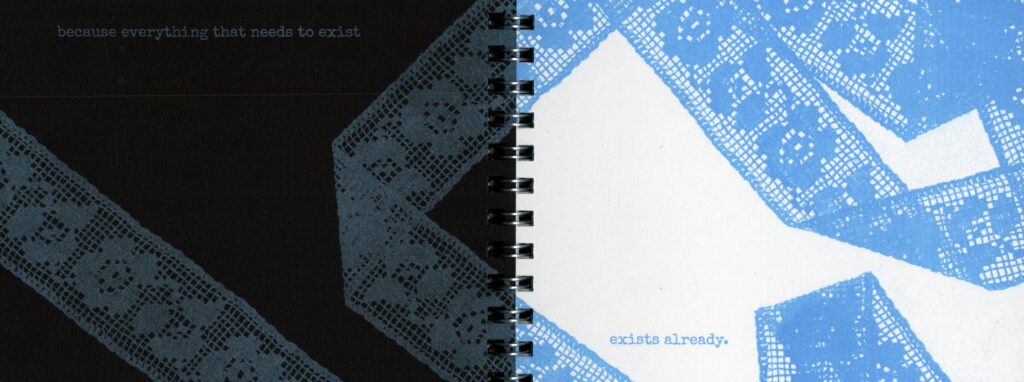
THE CONTEXT
I love the way humans work.
I love the way our love and attachment extends to everything, and our clothes are no exception.
Our current model of consumption with apparel has created one of the biggest pollutants our world has seen yet.
A world that is full of life, that is constantly growing and that deserves more time. There’s too much waste, we can’t keep up.
So let’s look at sentimentality as a means of slowing the cycle.
Let’s look at where these clothes have been with us and the stories they tell. It’s kinda like that child-like instinct to love all of your stuffed animals equally, leaving no one out – but instead we’re looking at those jeans in your wardrobe that haven’t seen the light of day in years.
There is beauty in everything, because it’s real and it’s there.
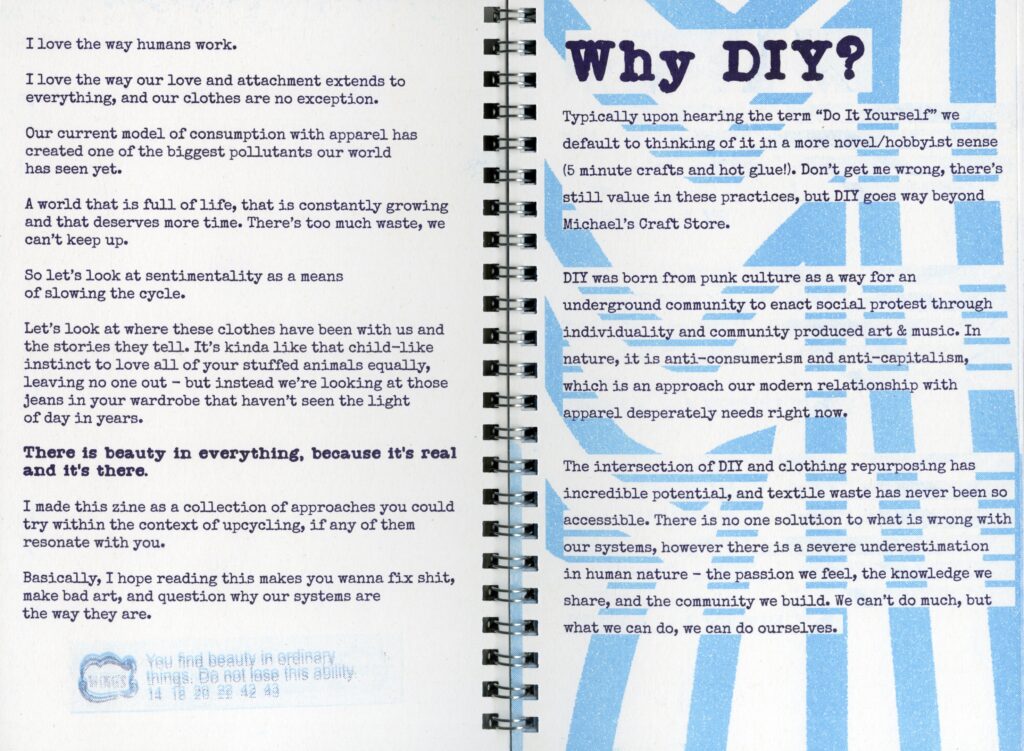
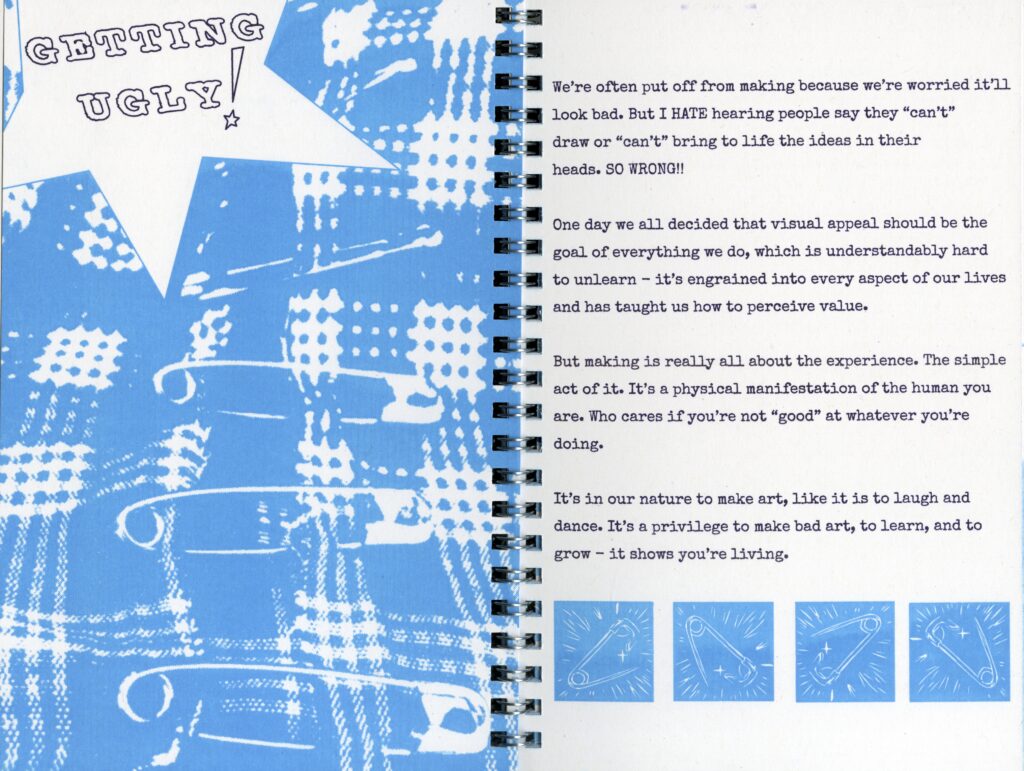
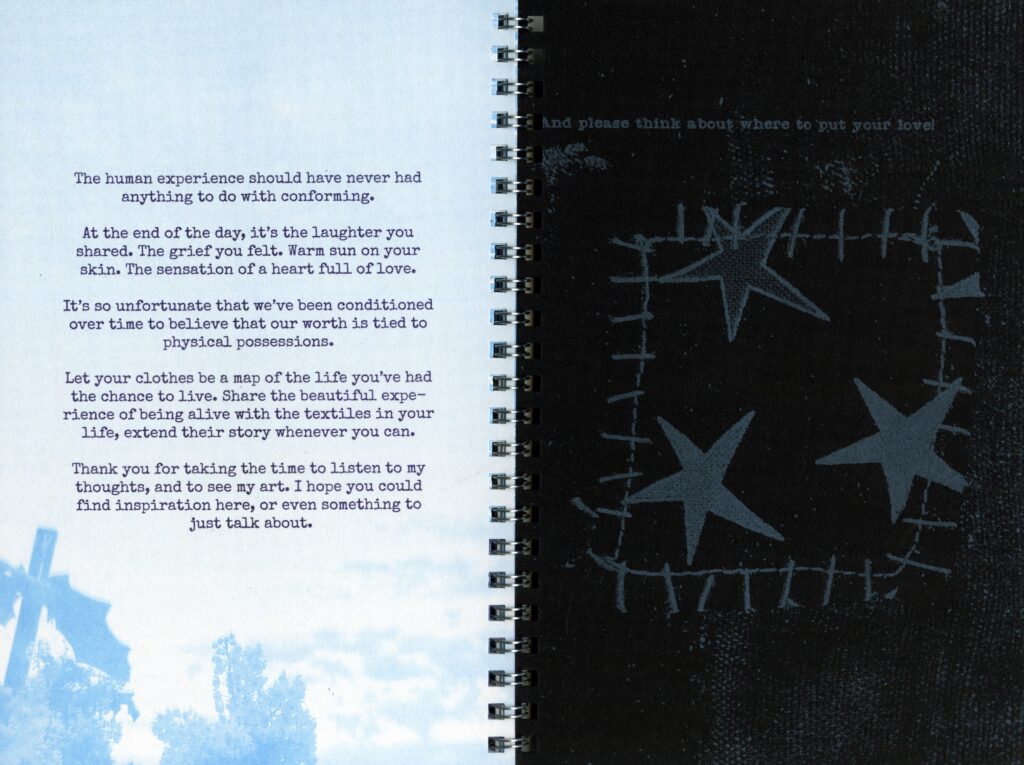
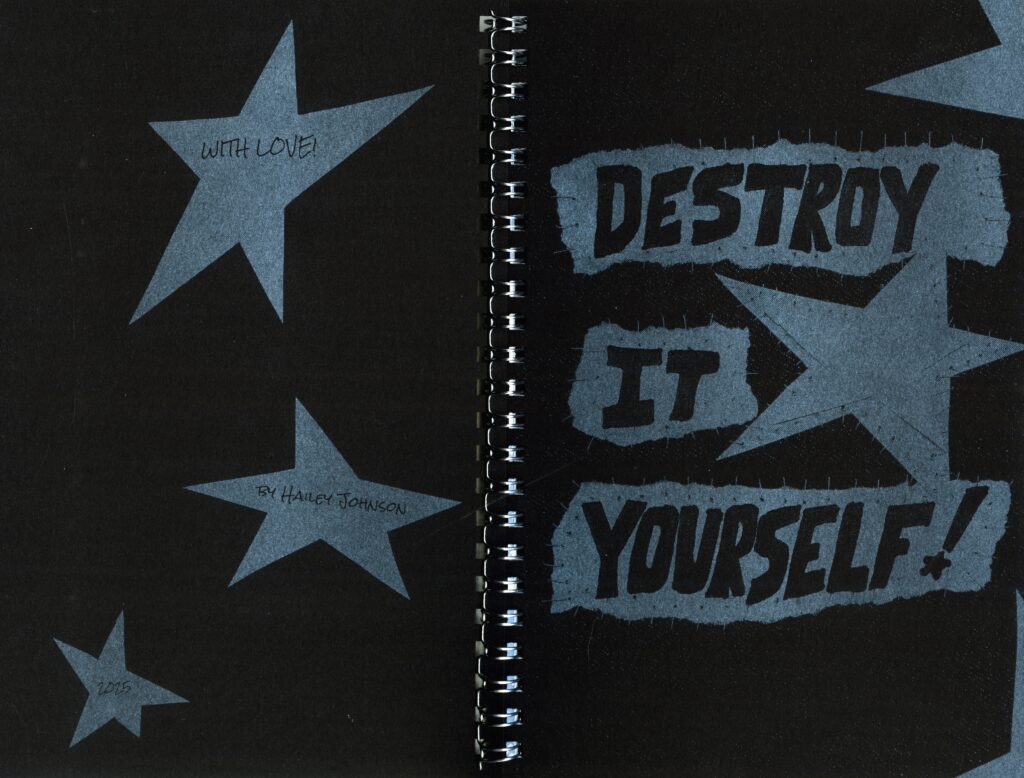
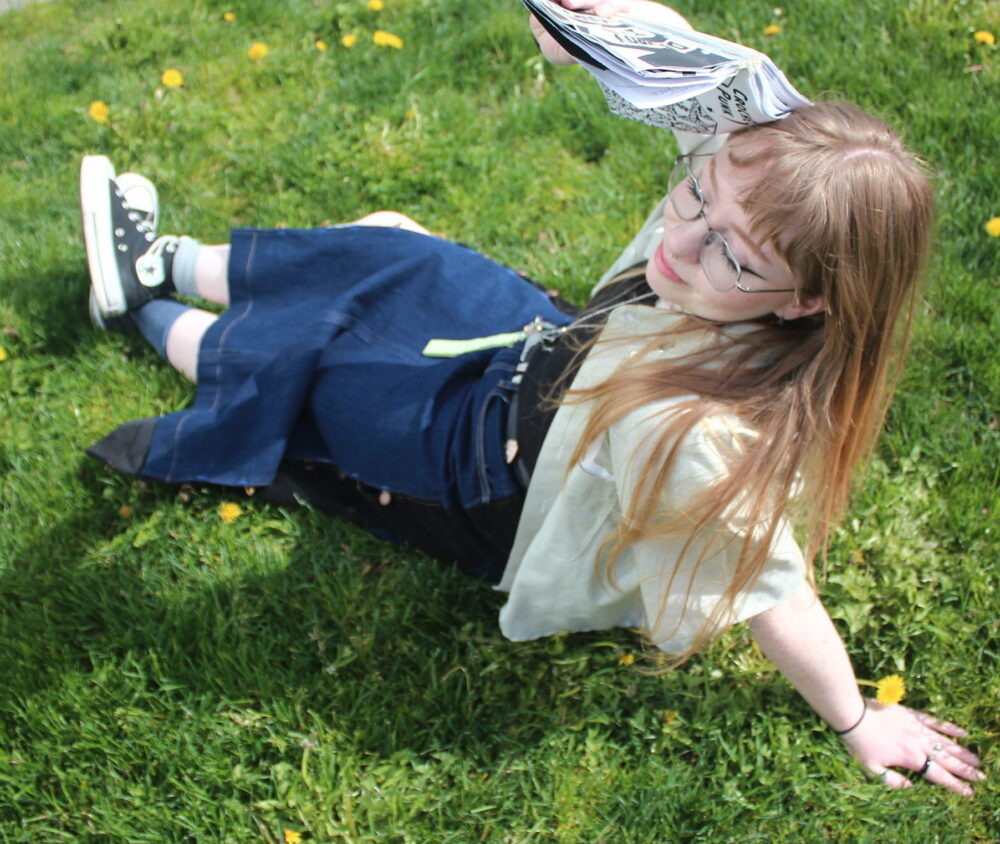
Destroy It Yourself is a zine that encourages making, even if its ugly, especially if it’s ugly, because we are born to make in the same way we are born to dance and laugh. It describes the many ways one can confront consumerism as an individual, through accessible clothing repurposing practices.
The power of DIY is highlighted under the context of punk culture, how it was founded as social protest through non-conformity and indie-produced/distributed art and music, opposing our capitalist systems. In the discussion of slowing fast fashion, we underestimate the strength in our human nature – the passion we feel, the knowledge we share, and the community we build. We can’t do much, but what we can do, we can do ourselves.
UNDERSTANDING LABOUR
Destroy It Yourself is accompanied by several garments made using methods described in its written content – those paragraphs originally scribbled into my notebook as I worked, or as I sat on Emily Carr’s balcony.
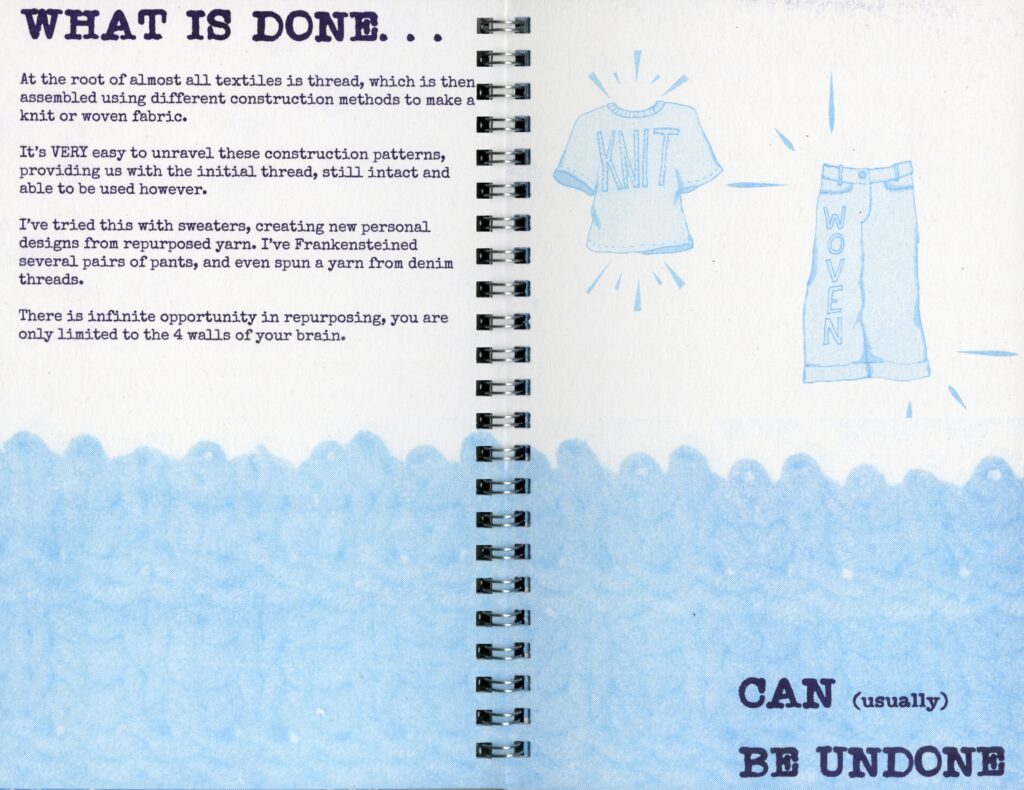
My first article began with a thought I’d been wanting to experiment with for a while – if something’s been woven, it can be UNWOVEN, right?
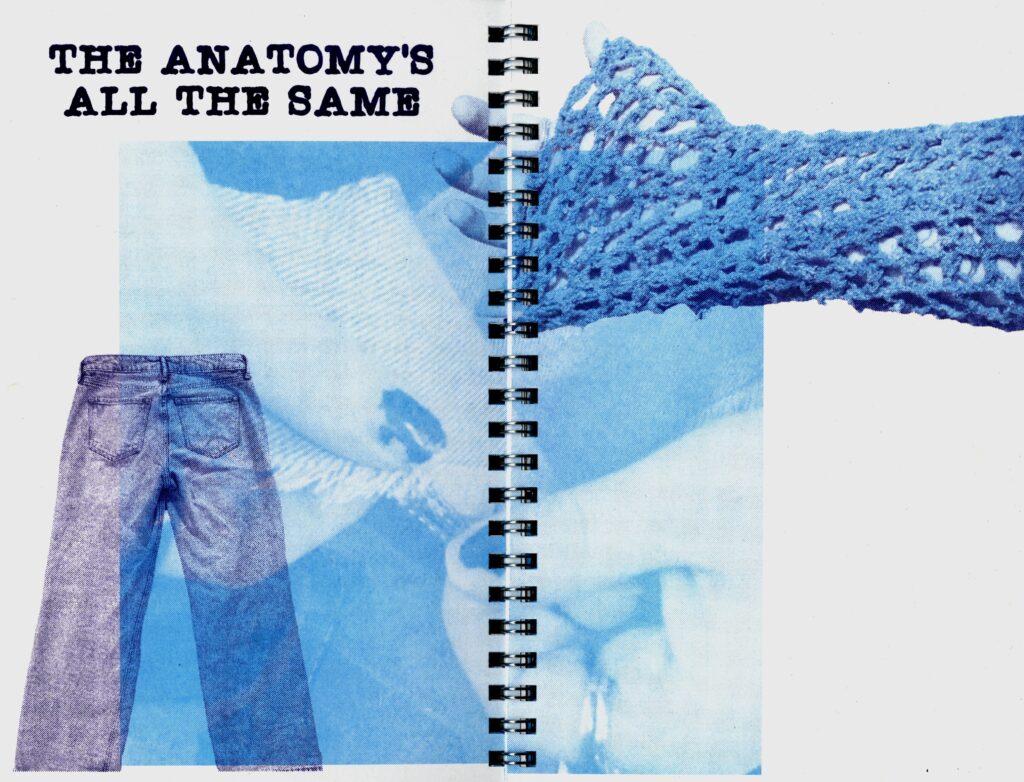
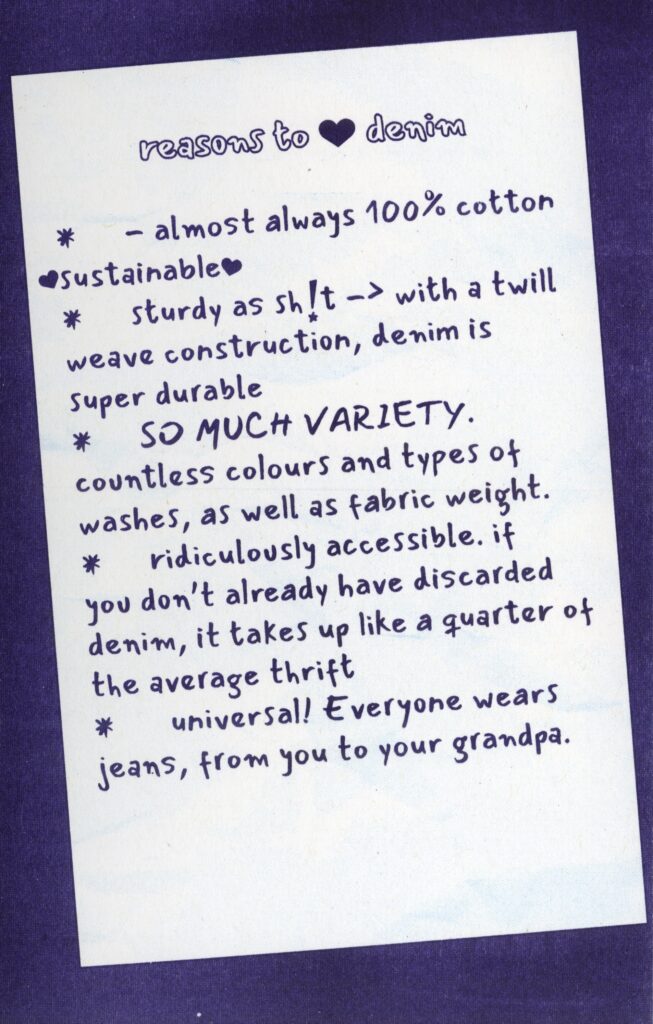
So I made a sweater out of jeans.
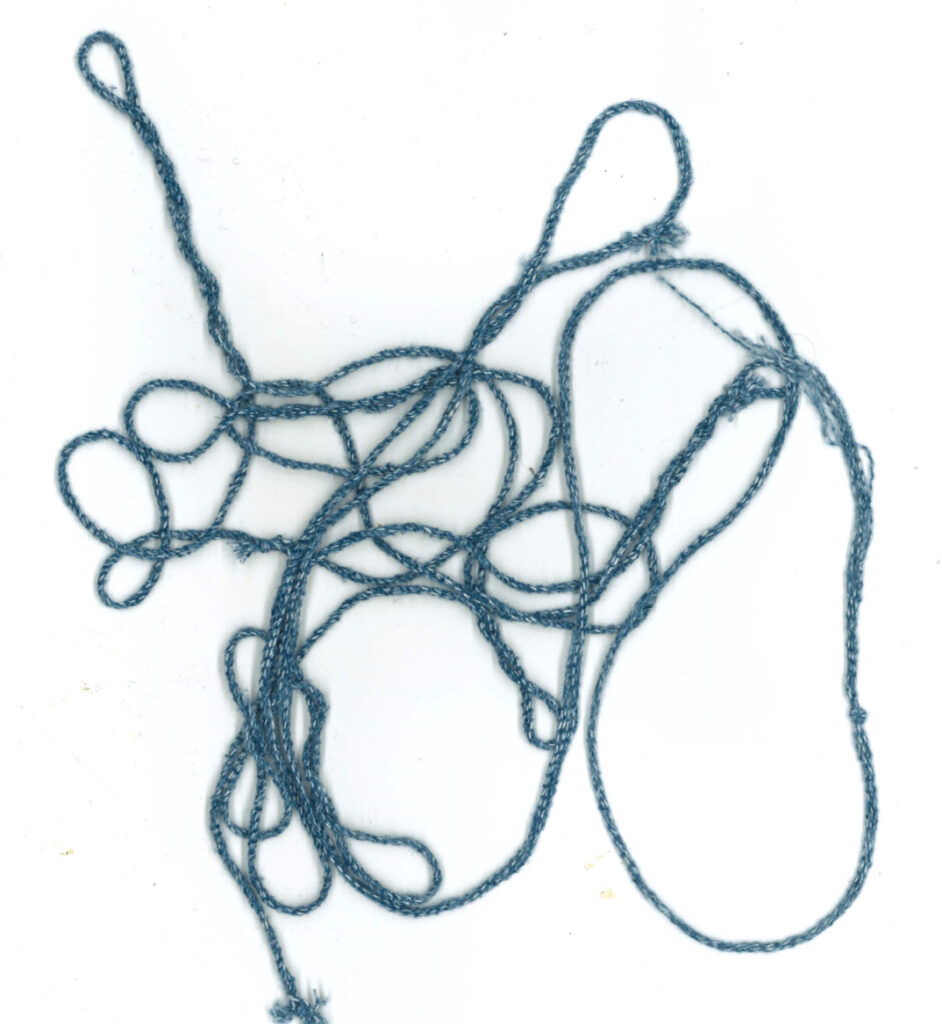
Thread by thread, I’d pull out the warp threads, tie 6 of them together, spin the material, and crochet it into a long body of stitches.
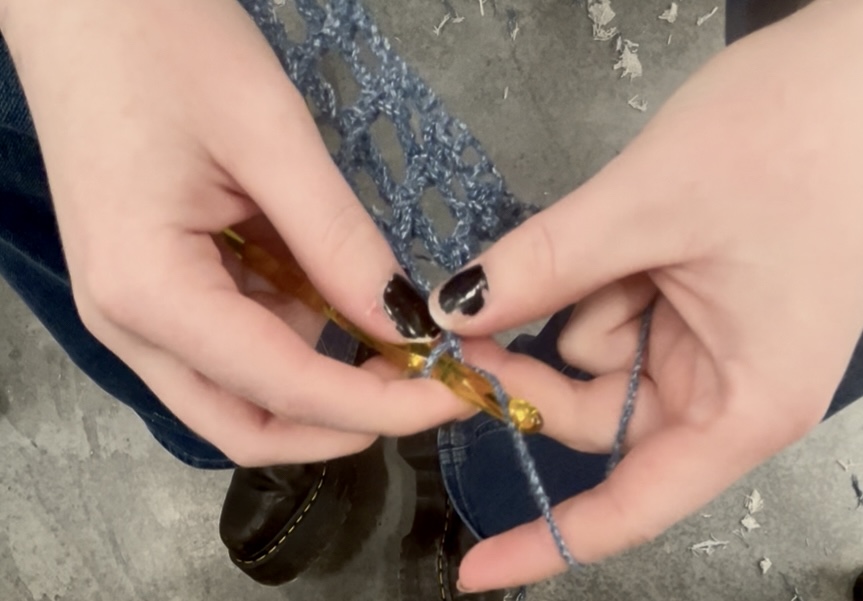
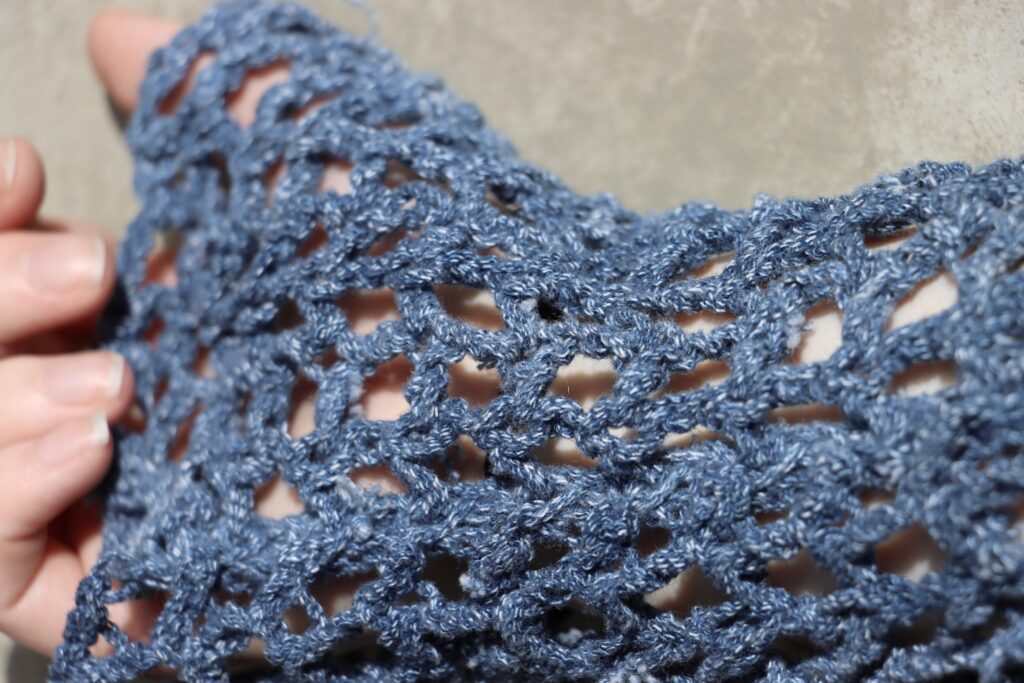
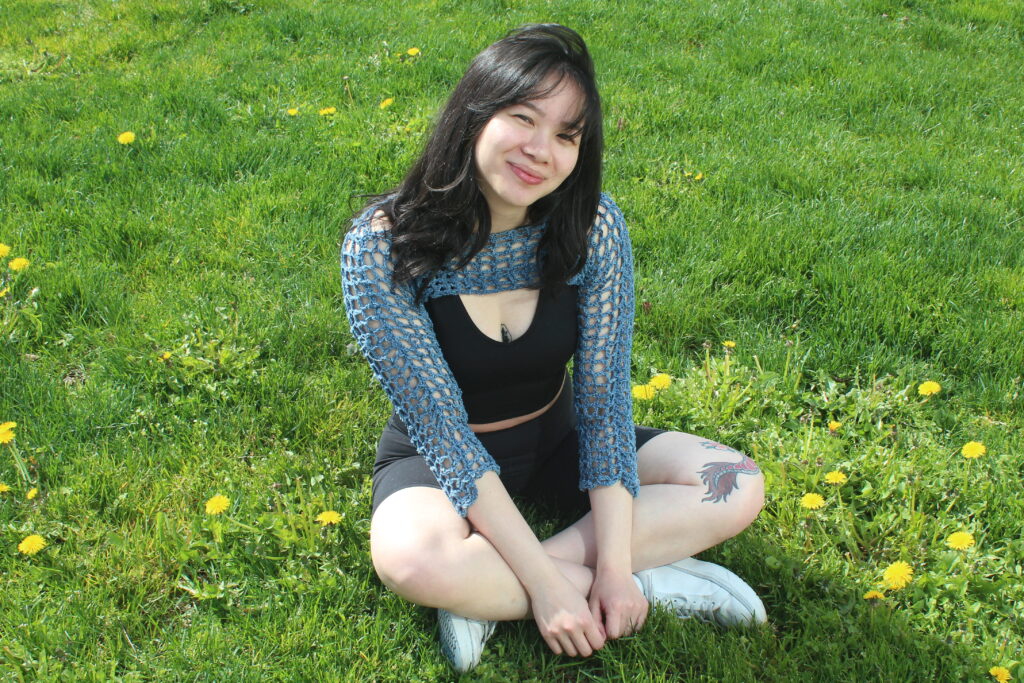
The final result being this shrug.
It was 100% cotton, surprisingly soft, and took WEEKS, which was the most important part.
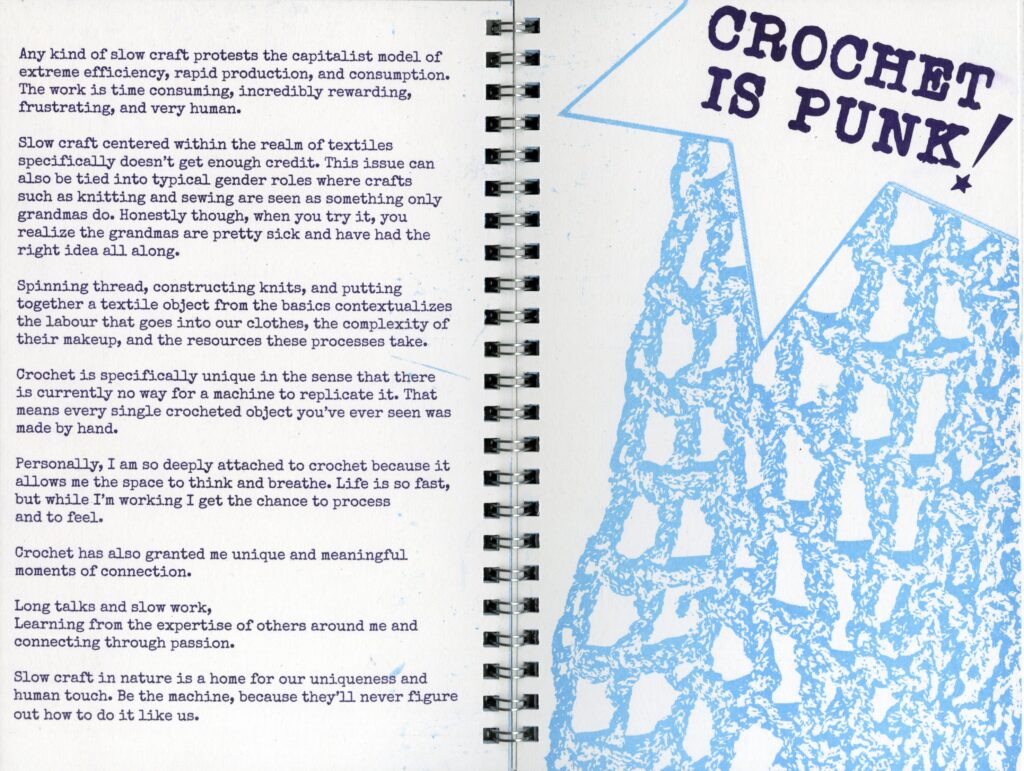
During the countless hours I spent on this one garment, I thought about slow craft – how it contextualizes labour, how it brings people together, and how it’s a powerful space to share knowledge. Understanding the makeup of the everyday items around us such as clothes deepens their value, and makes us wonder why we take these things for granted.
THE PATCH PROJECT

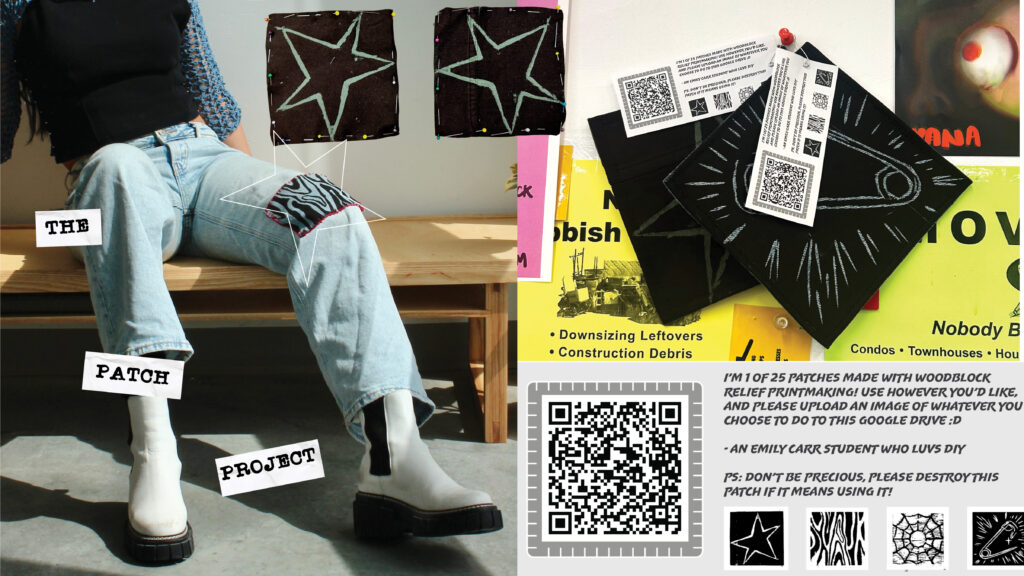
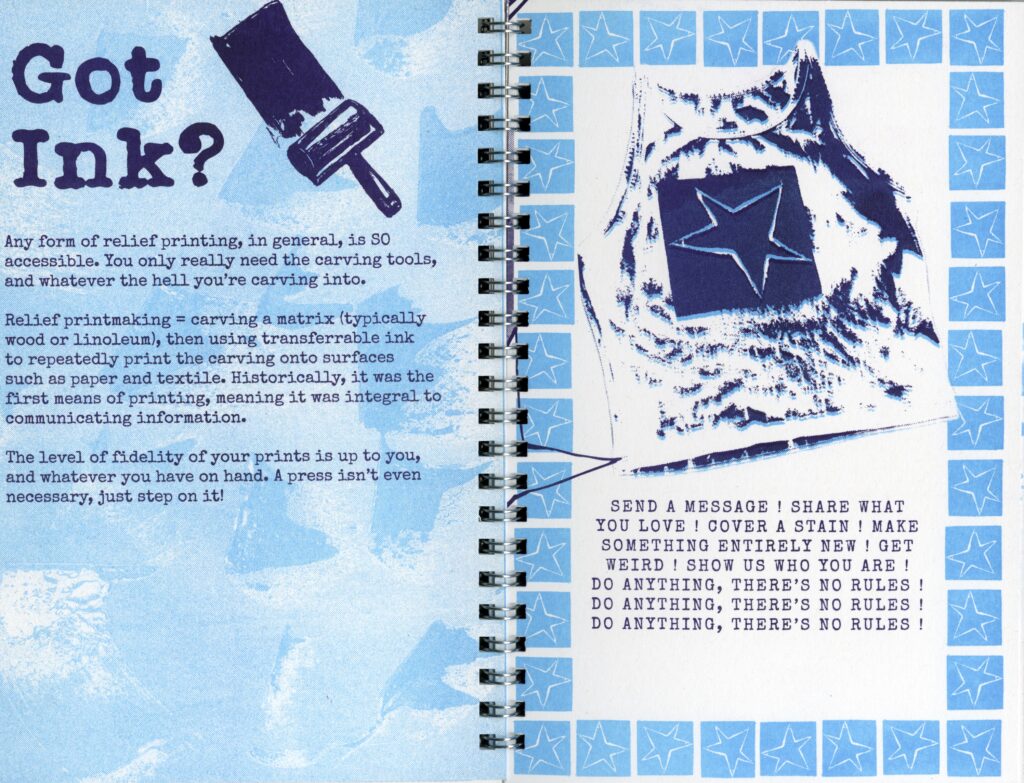
Thinking more about crafts driven by passion and sharing that passion with the community around me, I made a bunch of patches. They were constructed from the legs of old pants, lovingly printed on with woodblocks and sewn, and left randomly around the school. Attached was a tag describing the project, encouraging anyone to take one, and asking only for a picture in return if they desired.
Some friends picked up patches without my knowledge, some I gave away over social media, and many were adopted by complete strangers. I received a couple of images back as I requested, but I genuinely have no idea where most of them ended up, which I’m completely okay with! More than anything, what matters most to me is knowing that someone may treasure it, giving my art a chance to be loved and giving the material a new life.
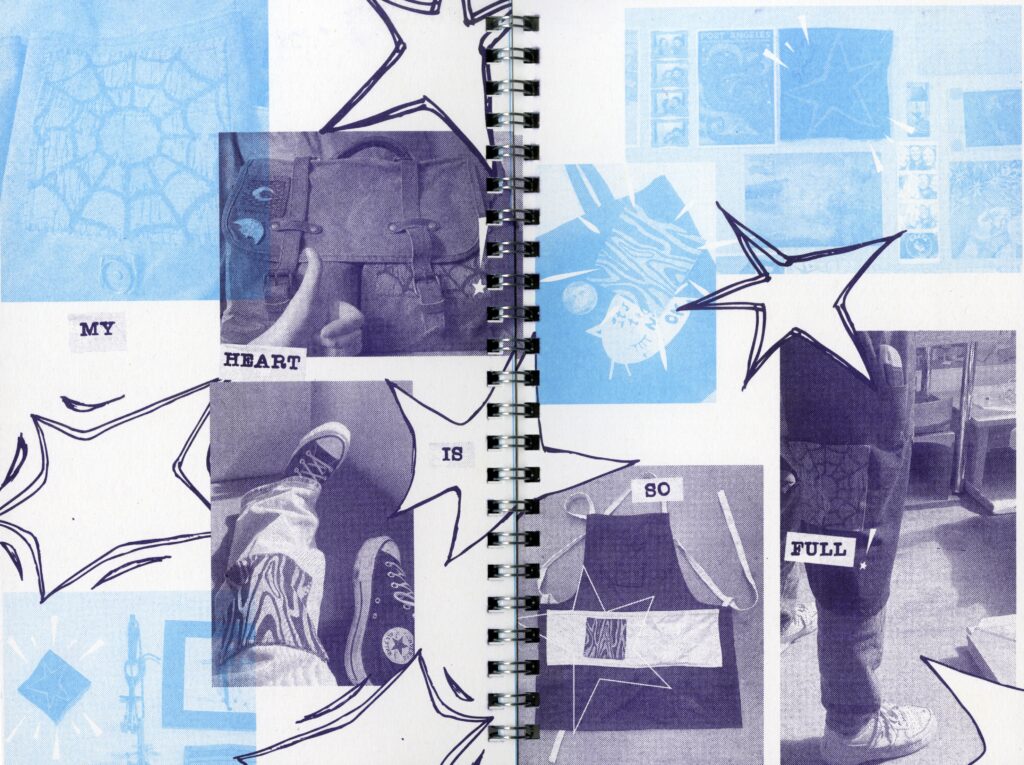
CREATIVE REPURPOSING
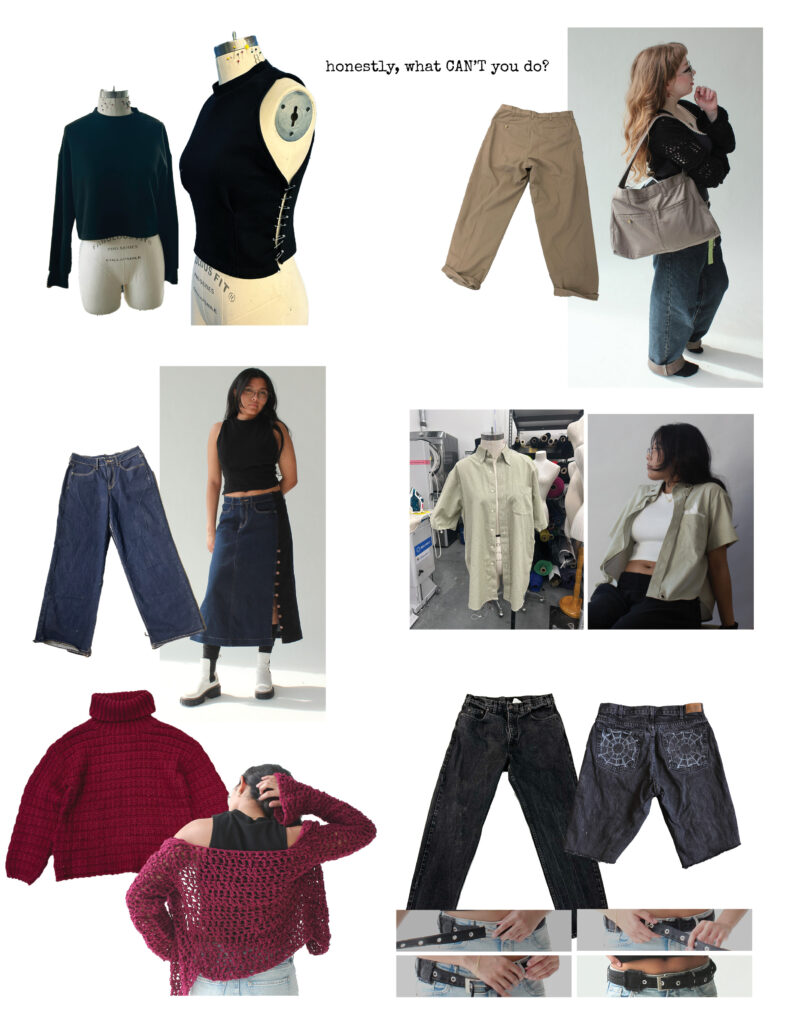
I continued a similar practice of designing by listening to material, utilizing garments donated to me by others alongside unworn items from my own wardrobe.
Some articles were simple – they might have had stains or fit poorly. Others were more complex – they were out of style, they represented the past. What stood out most to me while processing these clothes was how intact the material still was and how much potential remained in the fibres.
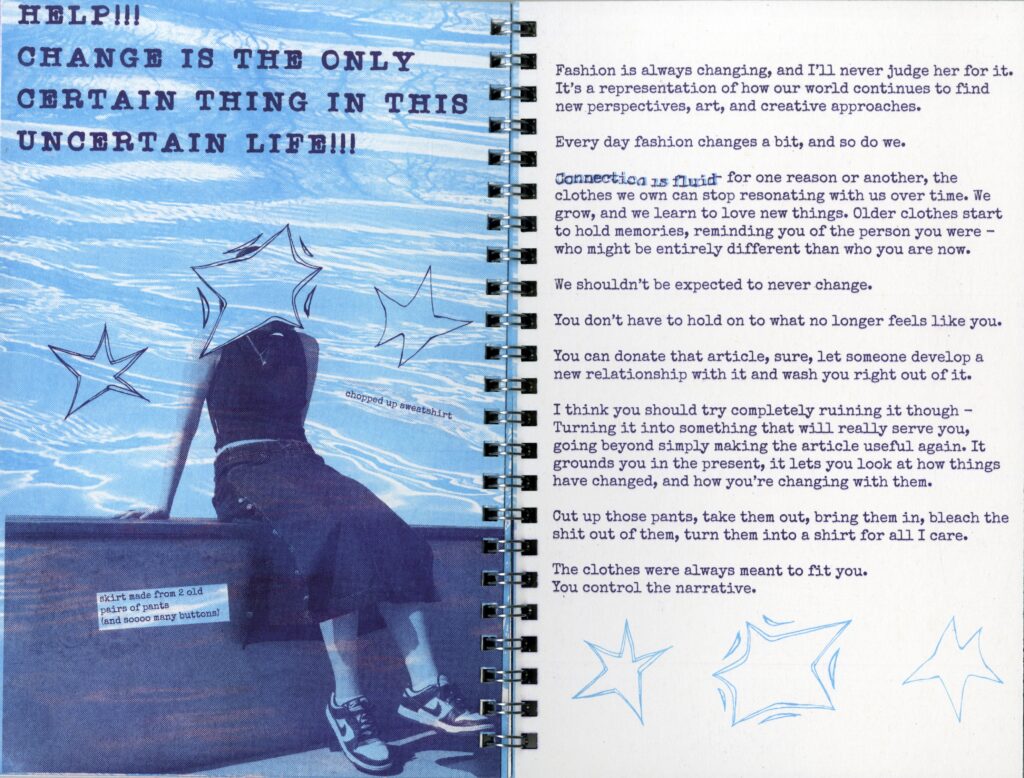
I explored approaches to repurposing these materials with varying levels of fidelity, from slapping a woodblock print over a stain to transforming 2 pairs of pants into a skirt.
IDENTITY, GROWTH, AND CHANGE
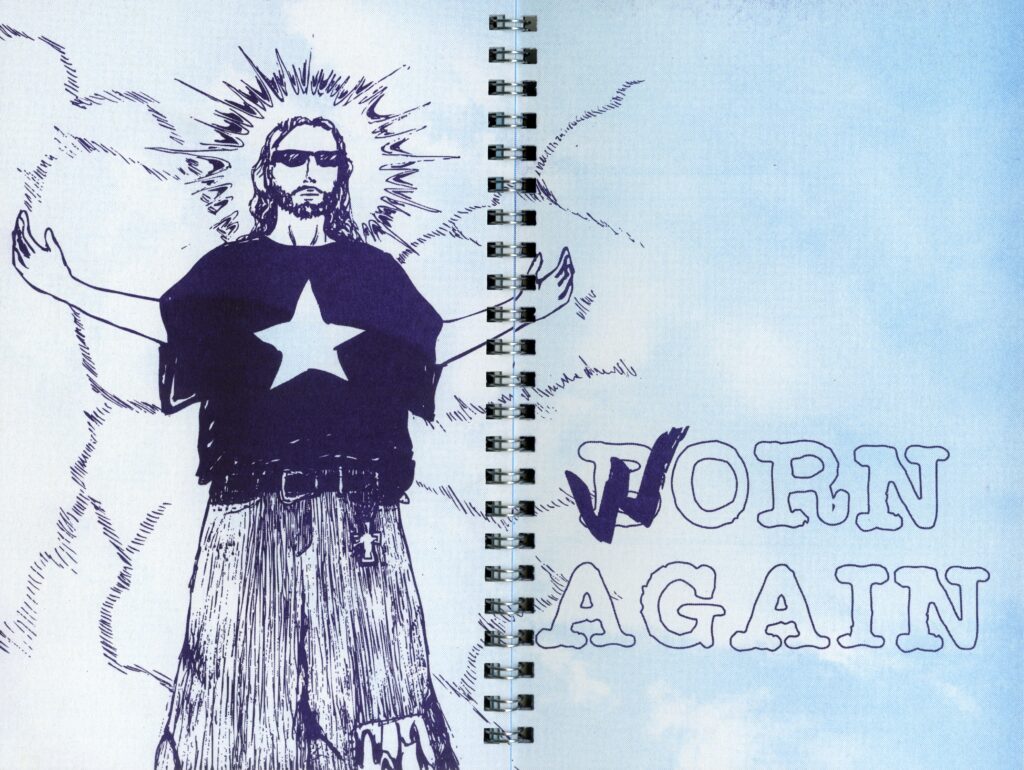
Our relationship with clothing goes far beyond simple utility. It creates community, it harbours individual expression, it’s an amalgamation of our identity and our experience, no one wardrobe the same.
I found myself wondering why attachment falters, and how it could be harnessed again. How do we redefine our relationship with our clothes in a way that feels authentic to our individual expression, without constantly buying new?
I began to think about my personal connection to style and expression – that being a style that is loud, messy, and more on the androgynous side.
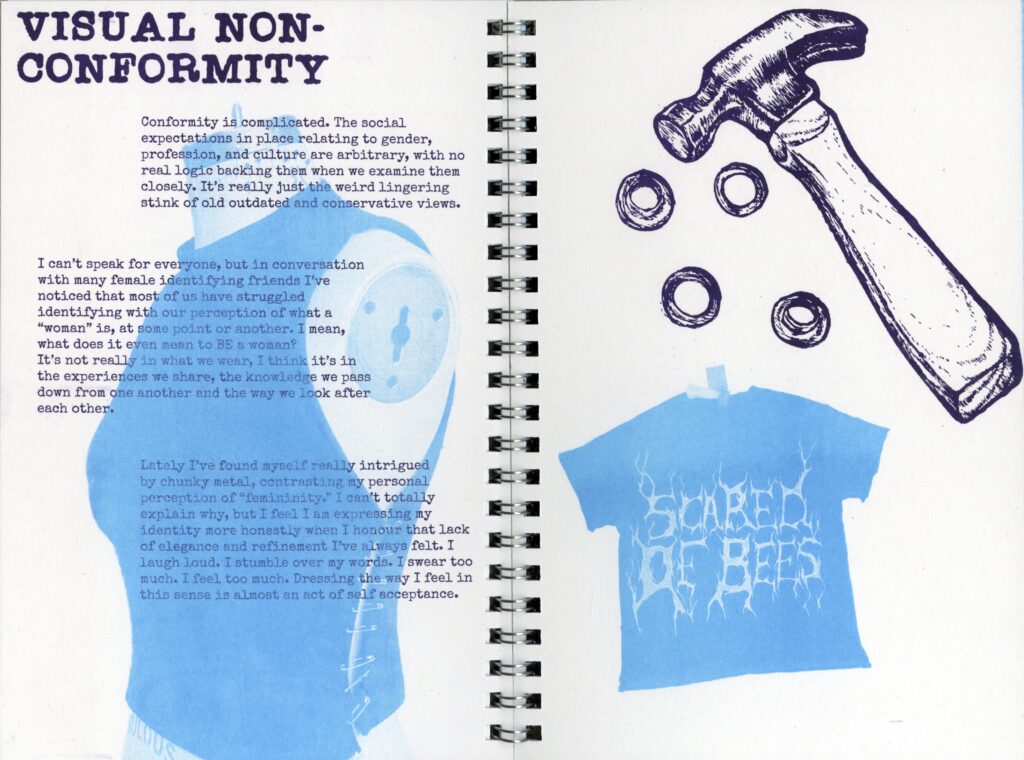
“I can’t speak for everyone, but in conversation with many female-identifying friends, I’ve noticed that most of us have struggled identifying with our perception of what a “woman” is, at some point or another. I mean, what does it even mean to BE a woman?
It’s not really in what we wear, I think it’s in the experiences we share, the knowledge we pass down from one another and the way we look after each other.
Lately I’ve found myself really intrigued by chunky metal, contrasting my personal perception of “femininity.” I can’t totally explain why, but I feel I am expressing my identity more honestly when I honour that lack of elegance and refinement I’ve always felt. I laugh loud. I stumble over my words. I swear too much. I feel too much. Dressing the way I feel in this sense is almost an act of self acceptance.”
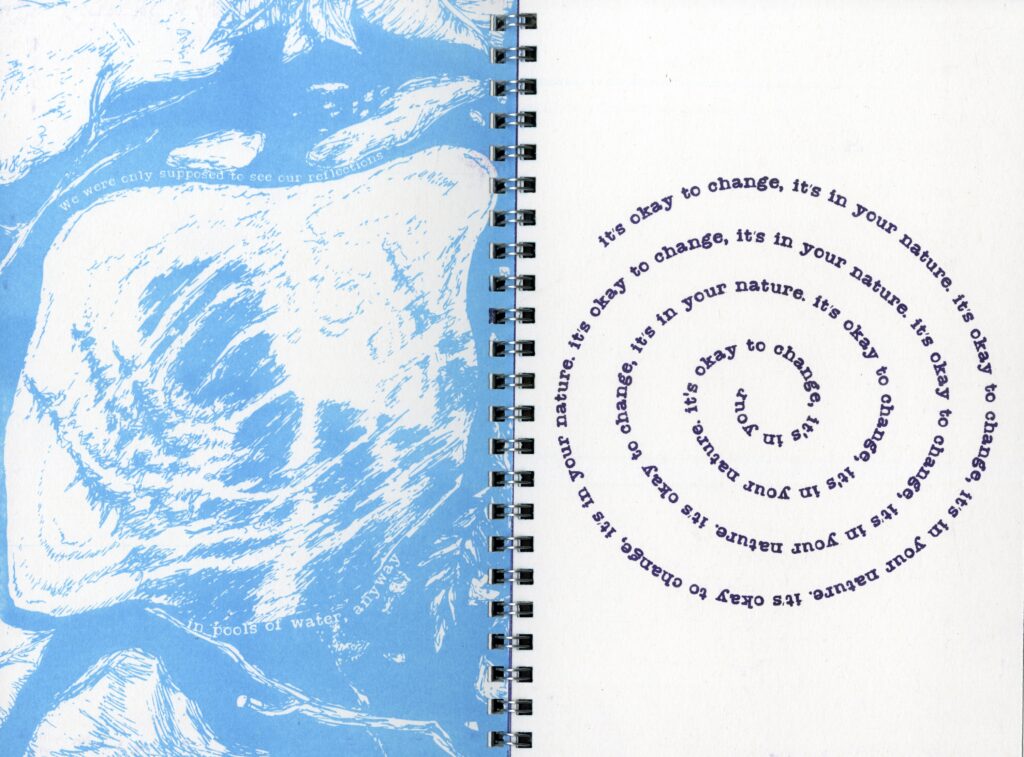
Change is one of our only constants, yet still feels so daunting.
I don’t think many of us truly ever feel comfortable – social standards in relation to style and appearance are incredibly difficult to meet, and evolve constantly.
And we are never static. Our bodies change, our lives change, we grow older.
“We were only supposed to see our reflections in pools of water anyway.”
Destroying the clothes of our past means practicing self-acceptance, acknowledging change, making room for growth.
It’s a privilege to watch a new version of yourself develop. Share that privilege with clothes you once loved.
“You don’t have to hold on to what no longer feels like you. – Cut up those pants, take them out, bring them in, bleach them, turn them into a shirt for all I care.
The clothes were always meant to fit you.
You control the narrative.”
To make this project meant applying firsthand many of the beliefs I preached, which was at times terrifying, as it meant accepting being a novice and sharing my thoughts quite vulnerably.
To be new to something and to be bad at something is intimidating. But in doing it, I have found new conversations and moments I will hold close to me for a very long time. This project would not exist in the way it does without community – my peers and instructors always providing me with ideas, suggestions, and new knowledge.
Because of writing this zine, I have developed new passion in creative practices I previously knew nothing about, and I have memories of countless nights spent at Emily Carr with some of my favourite people. Making is about love, community, and connection above all else, and I’m incredibly grateful I had the chance to experience this, and to learn from the amazing community of designers around me.