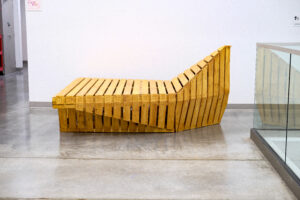
Digital Democracy
Sandro Di Bari
See it On Campus: Level 2
Digital Democracy explores alternative systems of governance through the lens of values and a communal voting methodology which allows all members of Emily Carr University to collaborate and build a community which better represents them. The aim of this research is to begin building a framework for a decision-making tool through voting for the school and broader public to adopt and use as a catalyst for change and empowerment in their own communities.
Inspiration

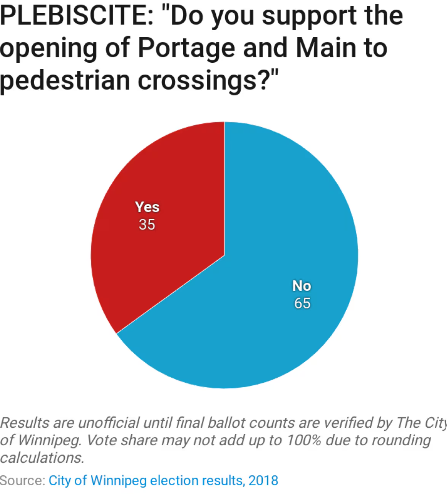
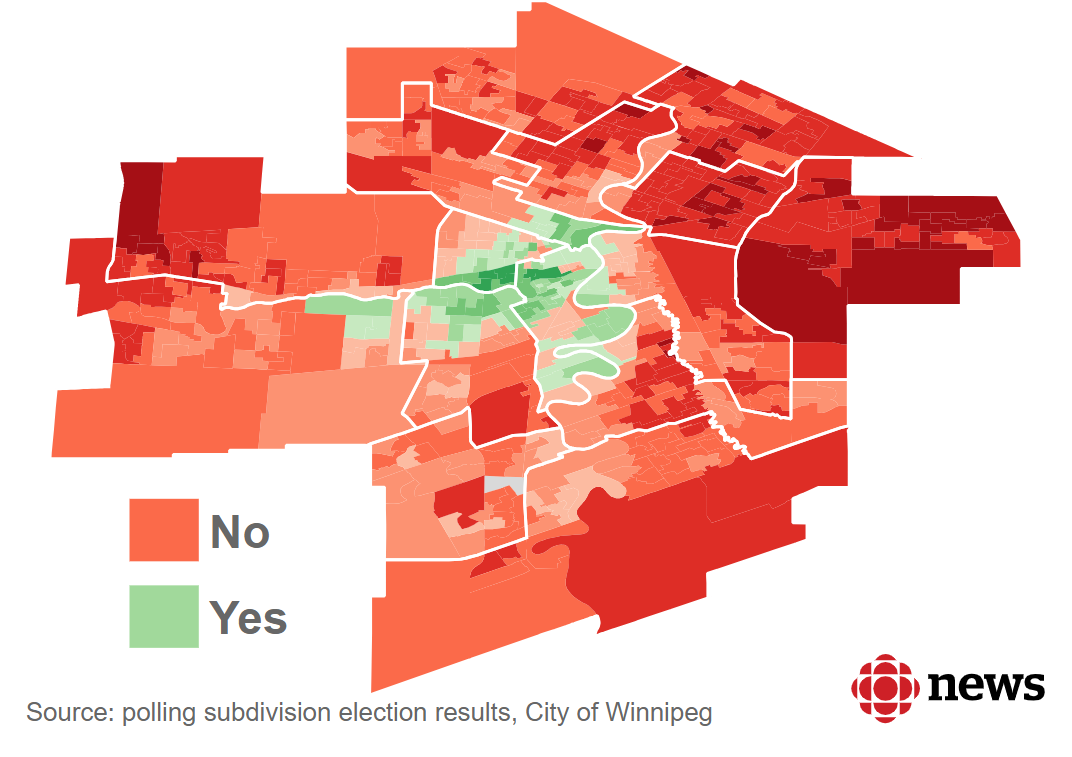
In 2018, my home town of Winnipeg held a plebiscite to give the public a chance to vote on the subject of reopening the Portage and Main street crossing for pedestrian foot traffic. This was the first plebiscite in 35 years. This had me questioning why this wasn’t a regular occurrence for many other decisions.
Like many cryptocurrency organizations such as Bitcoin, Solana and Cardano; Polkadot uses a governance system which includes all members of its platform when proposing and enacting changes to the system. Proposals are submitted, reviewed and voted on by its members through its referenda. These systems are a fresh take on how digital systems can be implemented to empower individuals.
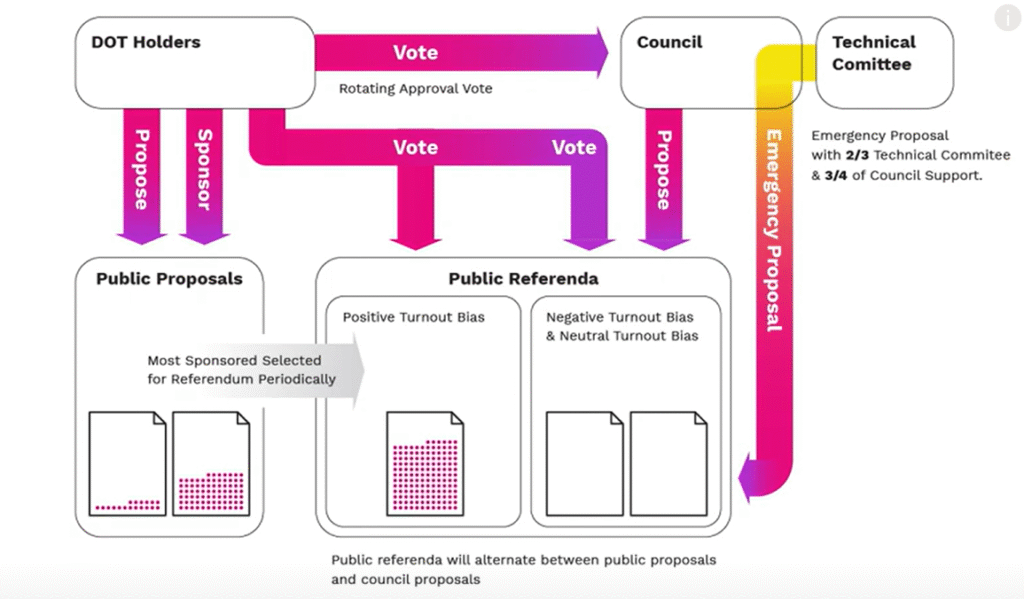
I have often wondered how much time and money is wasted within our own political system and thought of ways of in which people could take back control of their own communities.
Learning About the Community
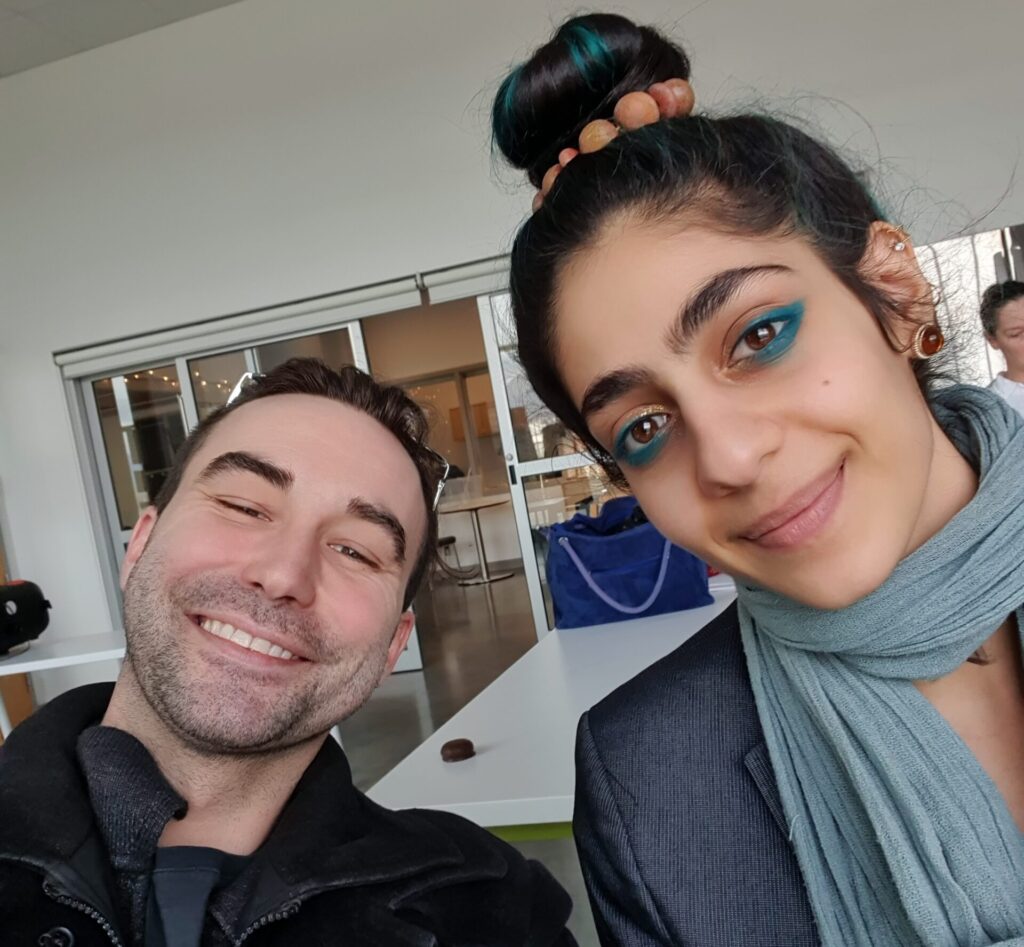
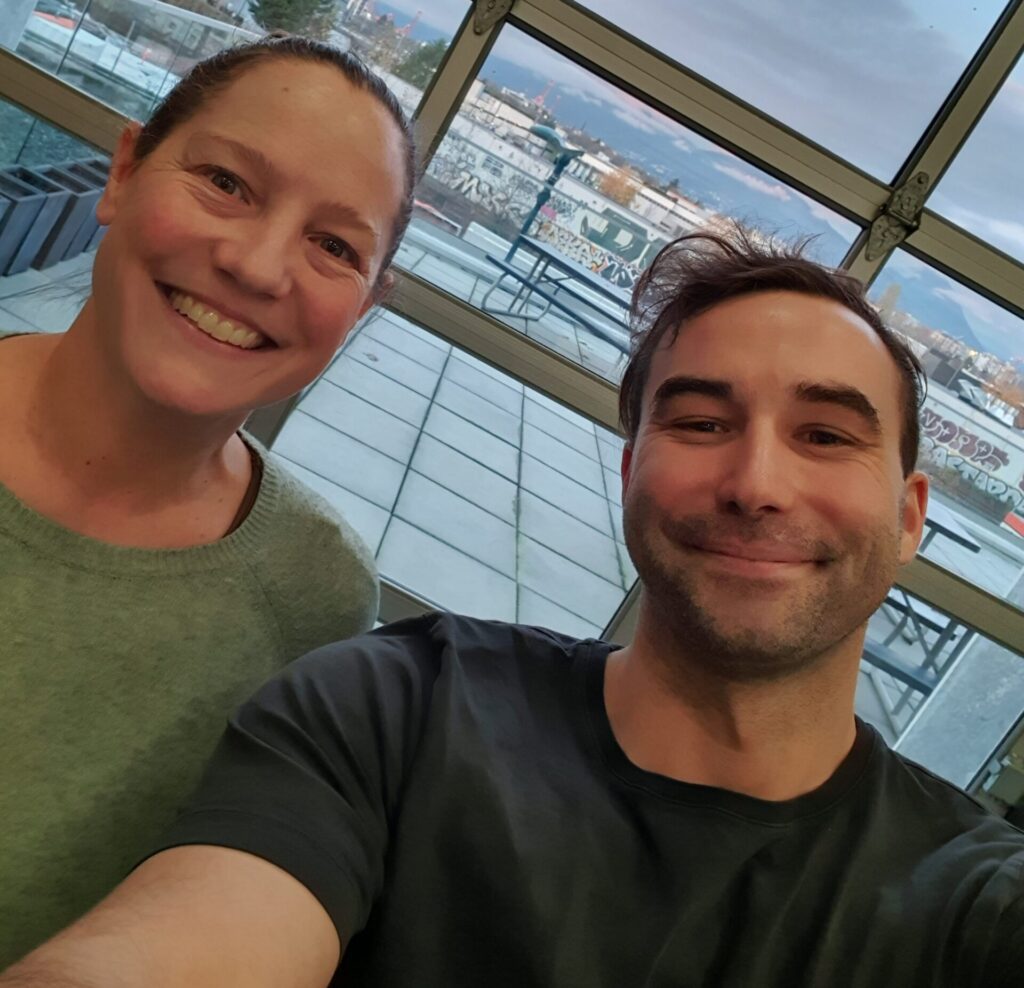
Understanding how the school currently functions when it comes to actioning student ideas was an important part of building a system that would integrate seamlessly with its current processes. Interviewing the Student Union President and representatives provided valuable insight into where a gap could be filled by improving the proposal experience for both the school and students.

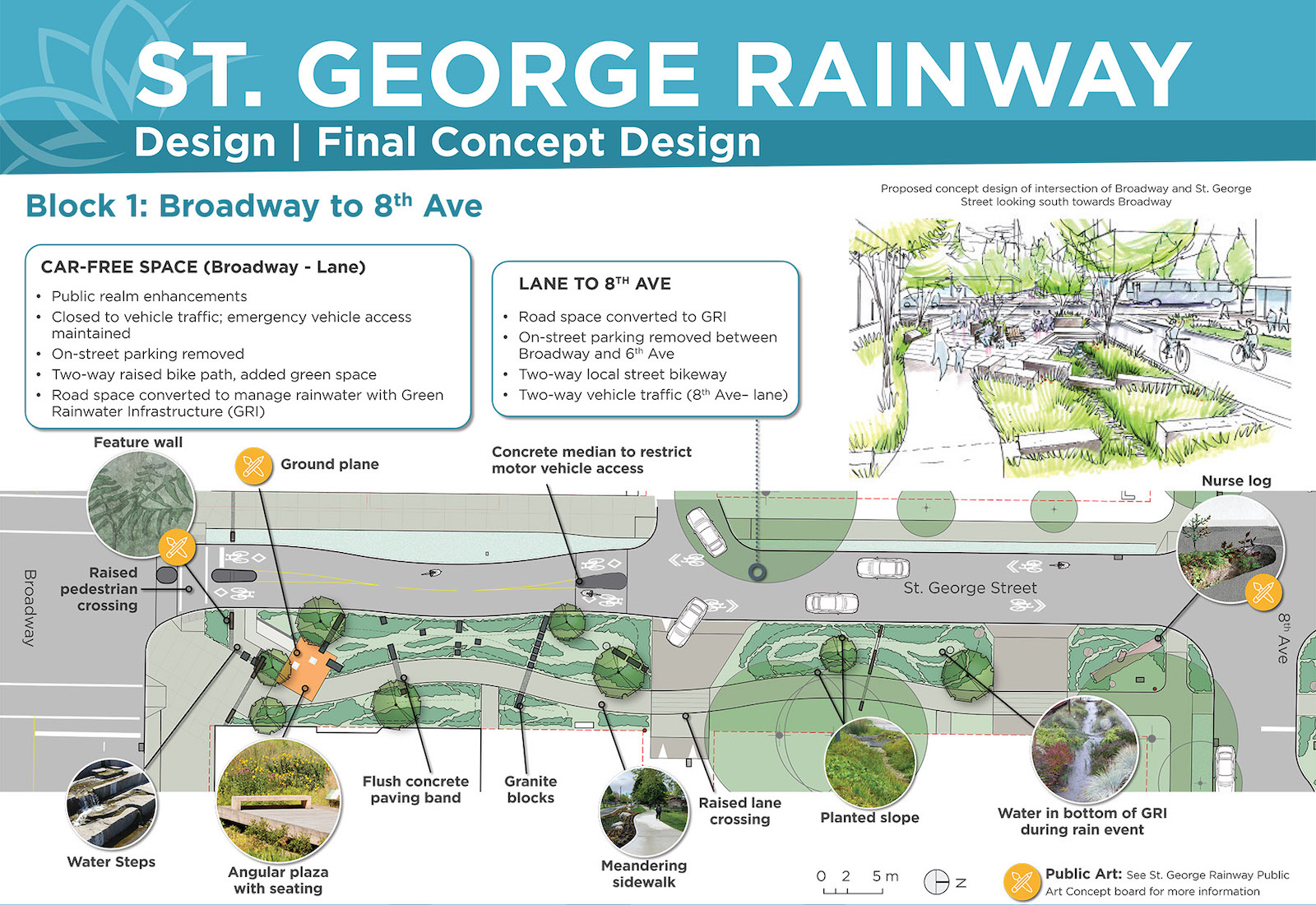
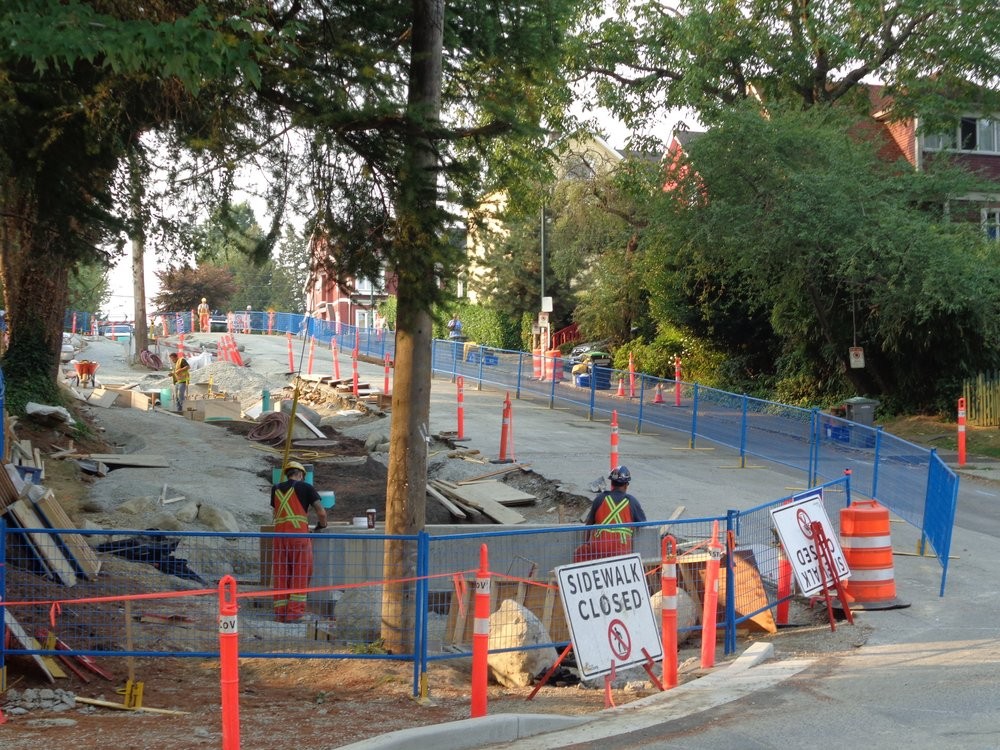
Shape Your City Vancouver is an organization in the city which provides residents an opportunity to provide input and help develop projects within their communities like the St George Rainway.
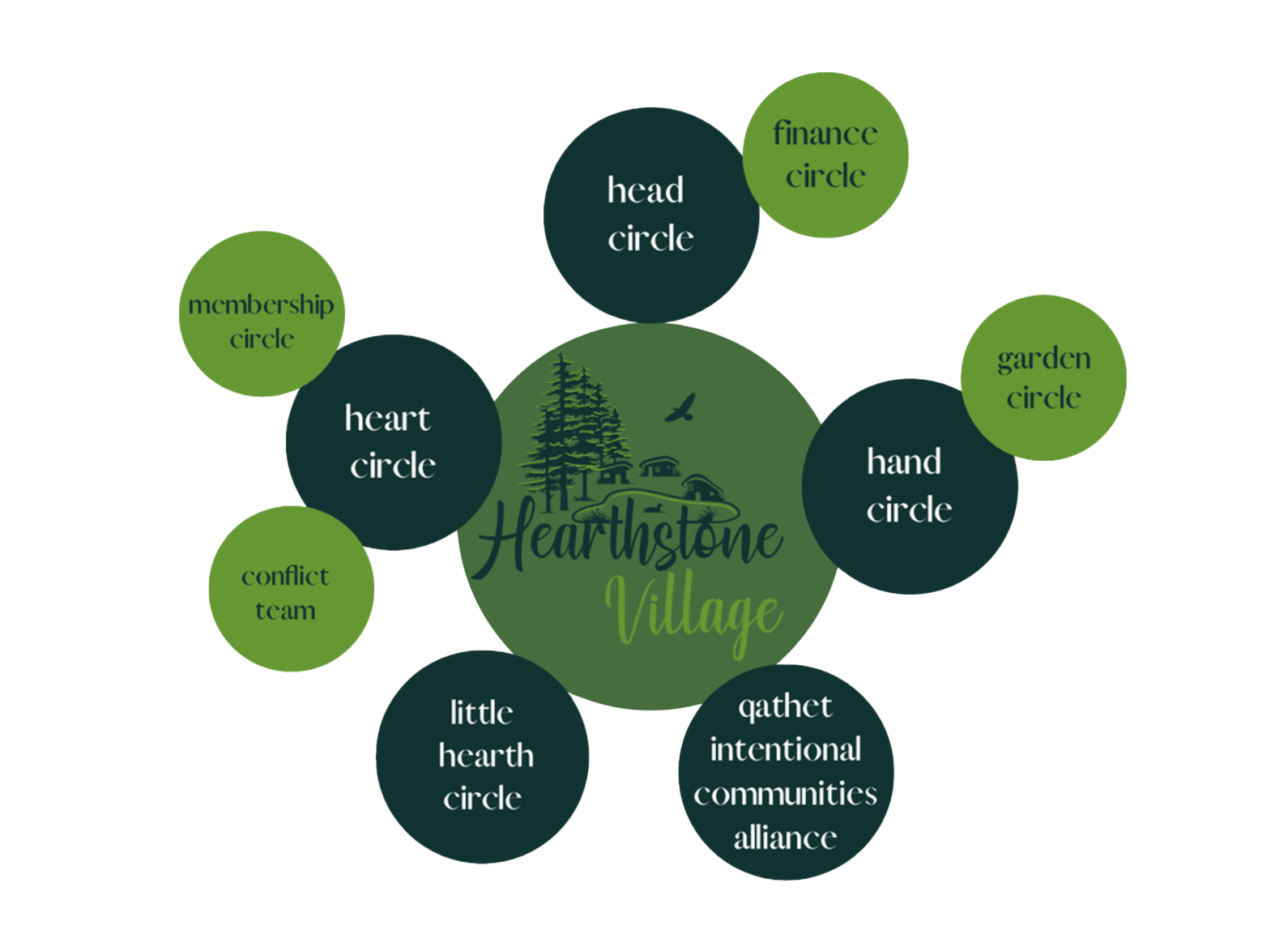
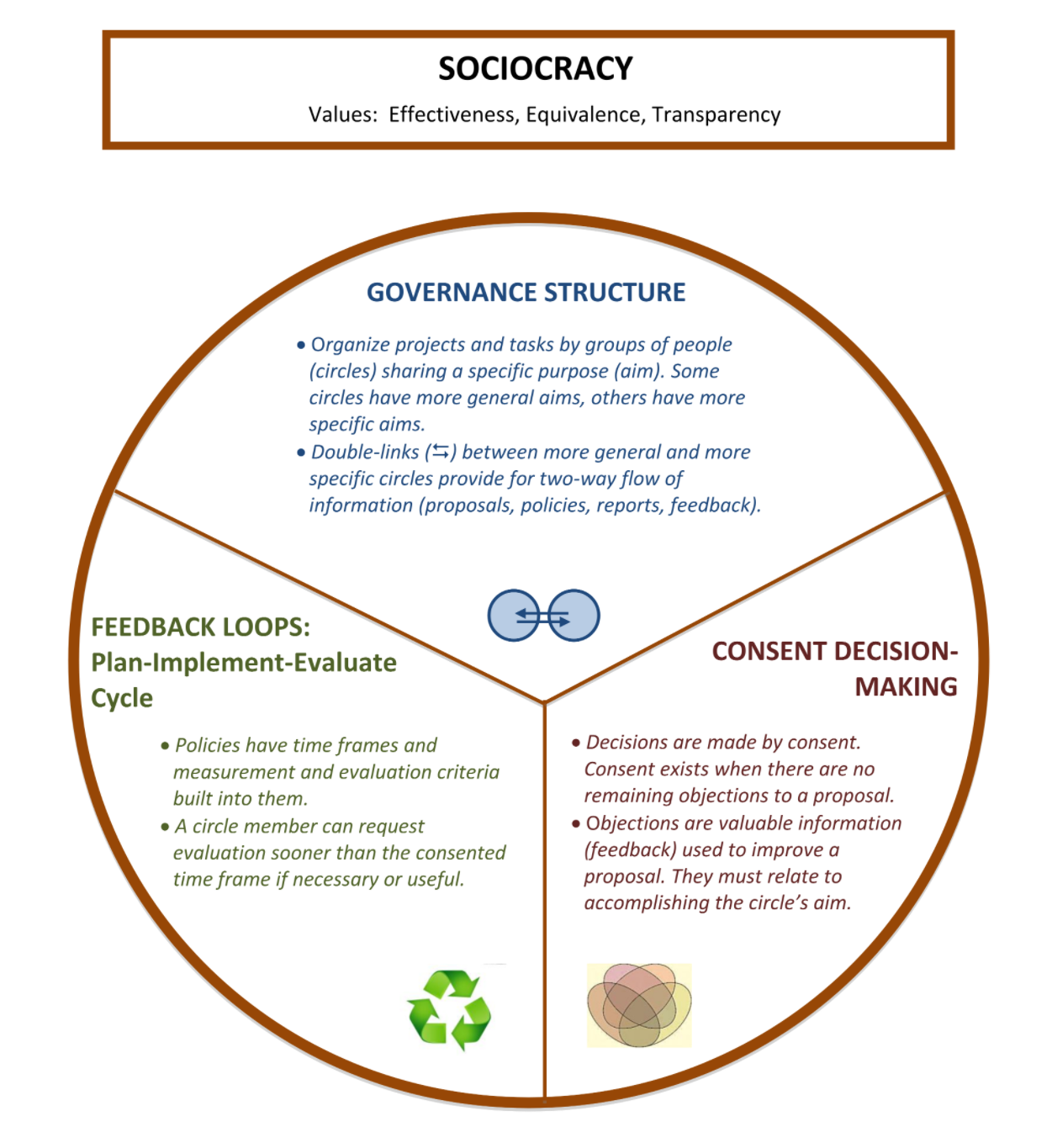
Hearthstone Village is incorporated under the British Columbia Cooperative Act as an Equity Co-op. The Structure of Hearthstone Village was chosen to best reflect the values and the aims of the co-op and is represented using Sociocracy as the governance model which has been integrated to work within the Act. Sociocracy is a decision making method rooted in the values of equivalency, transparency and participation – Their motto is “Good Enough for Now, Safe Enough to Try”.
Building the System
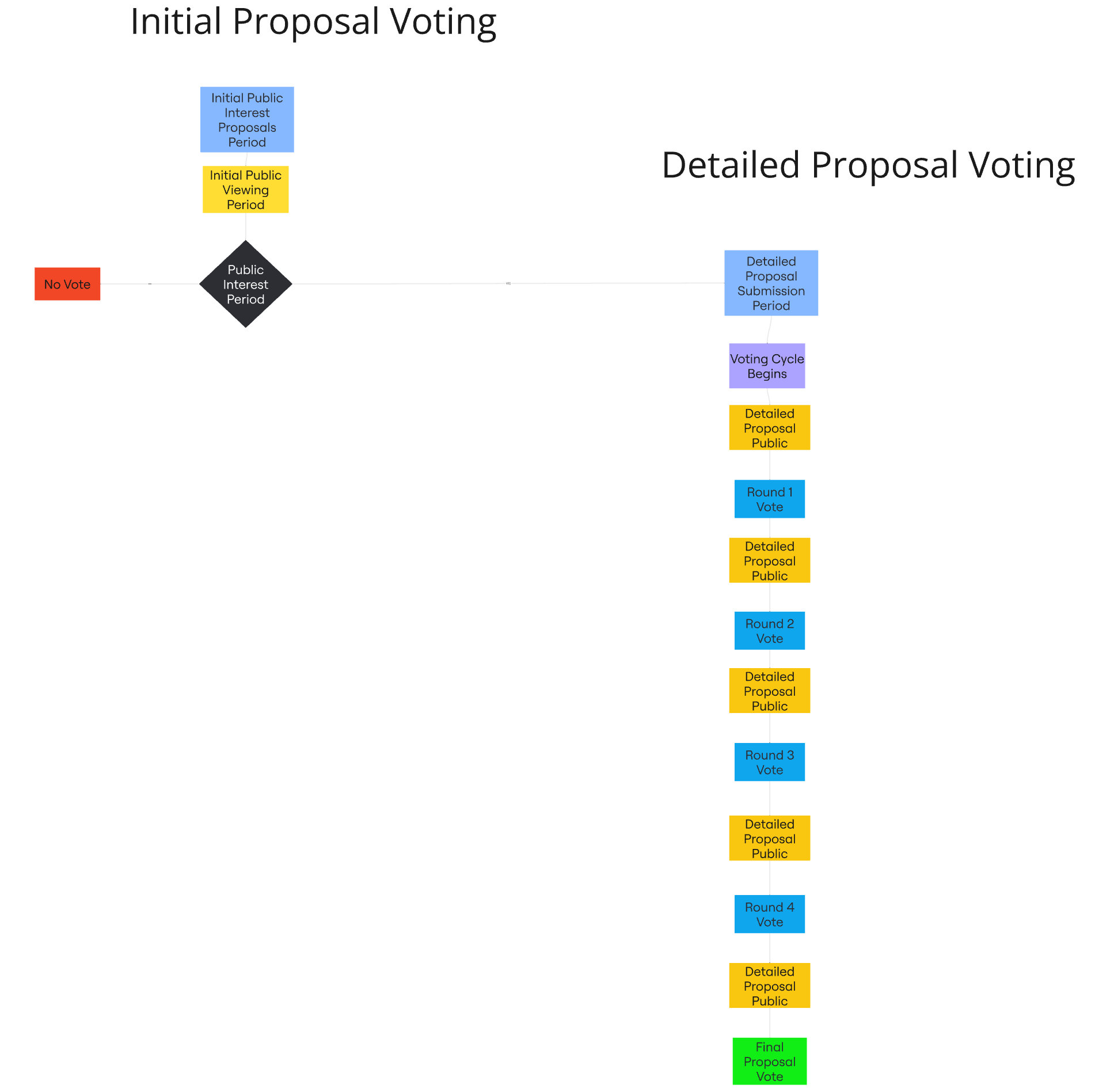
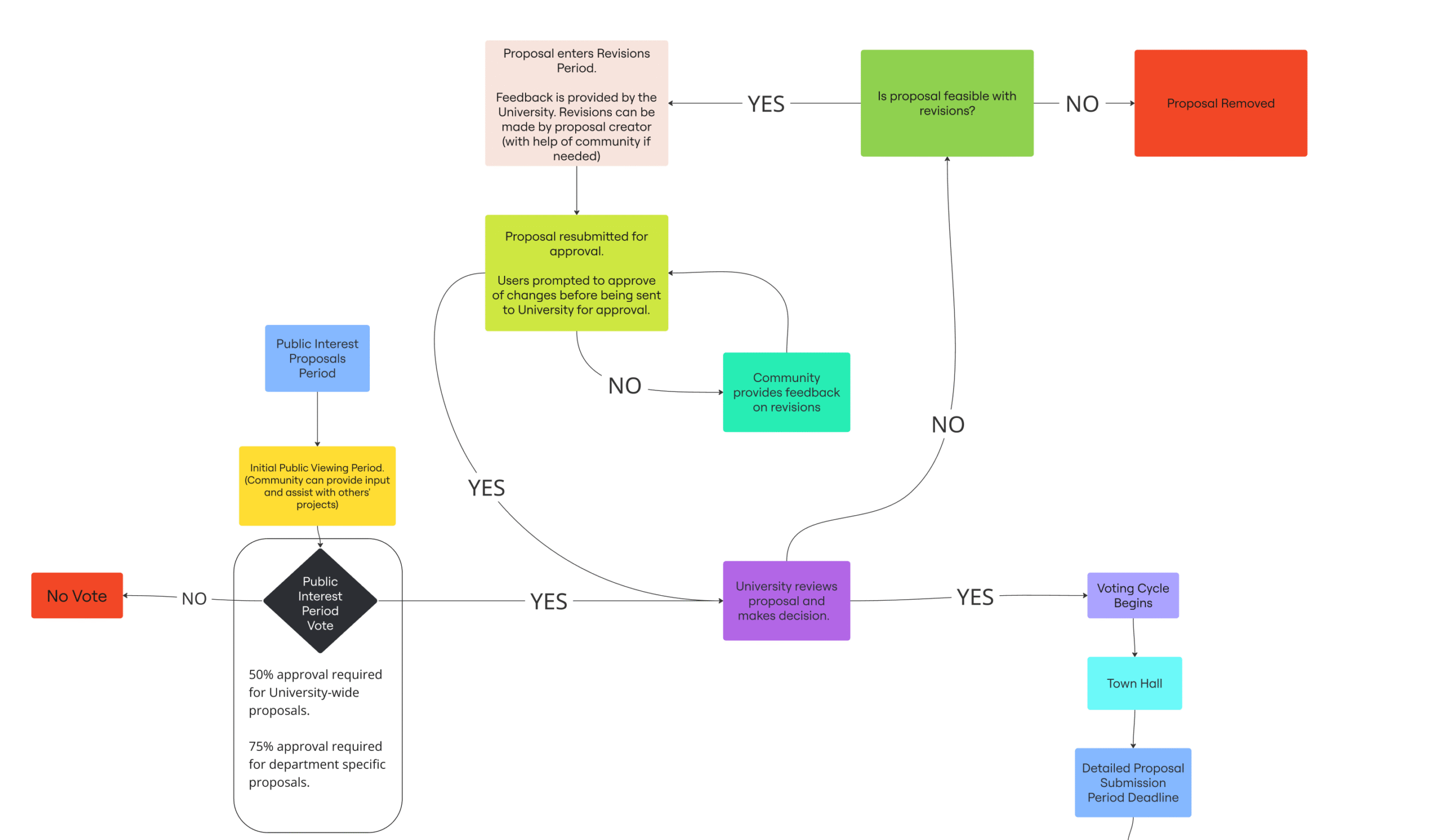
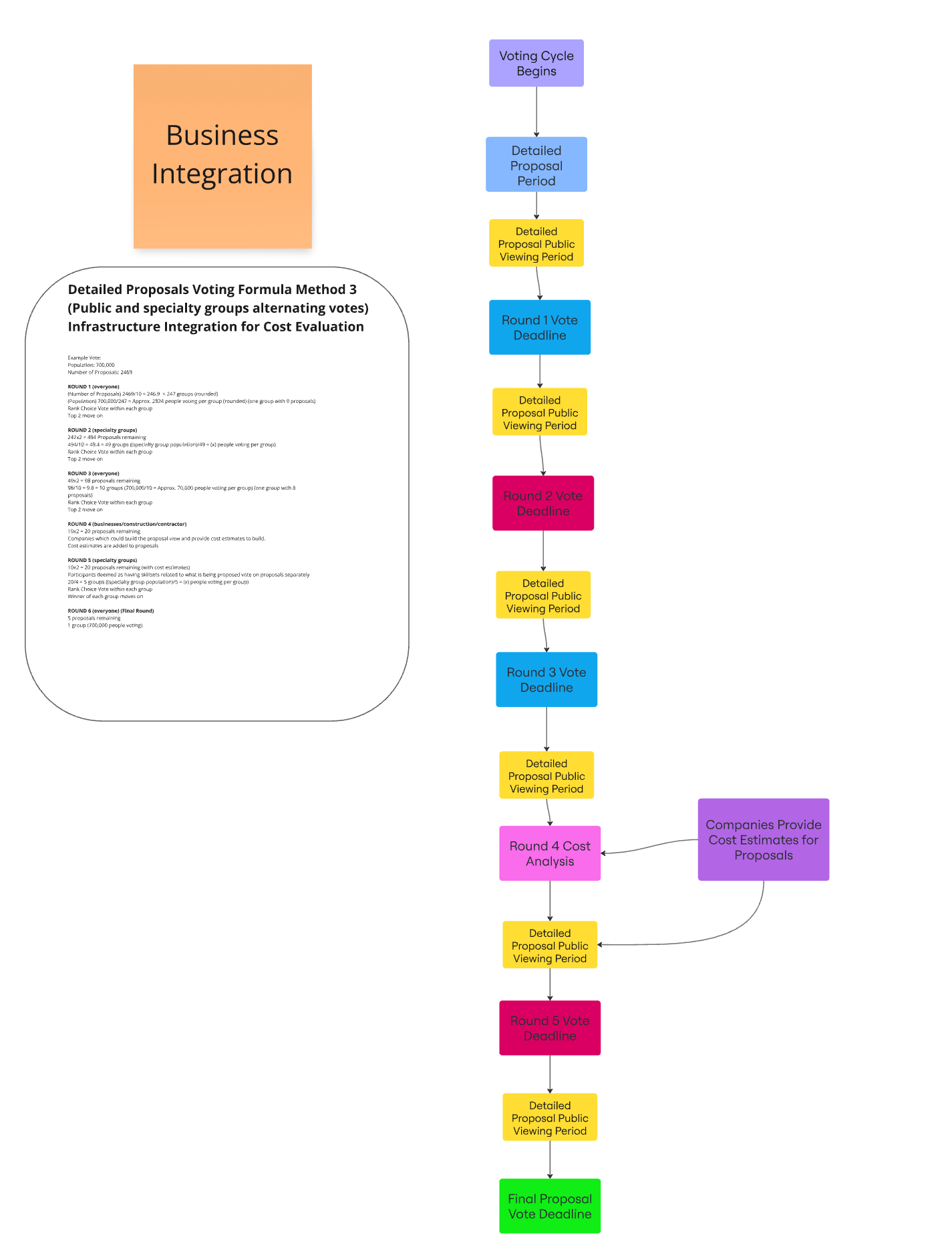
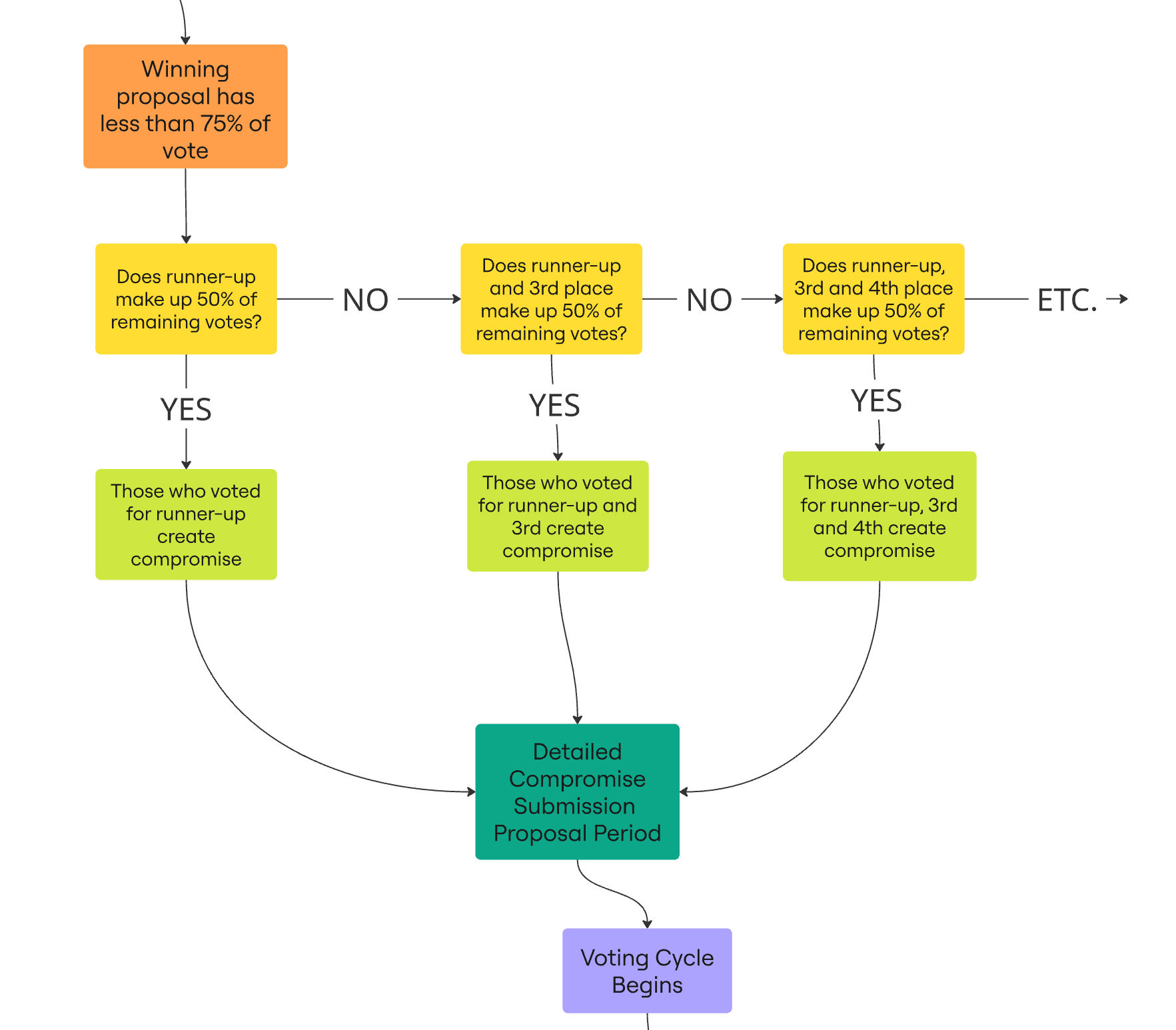
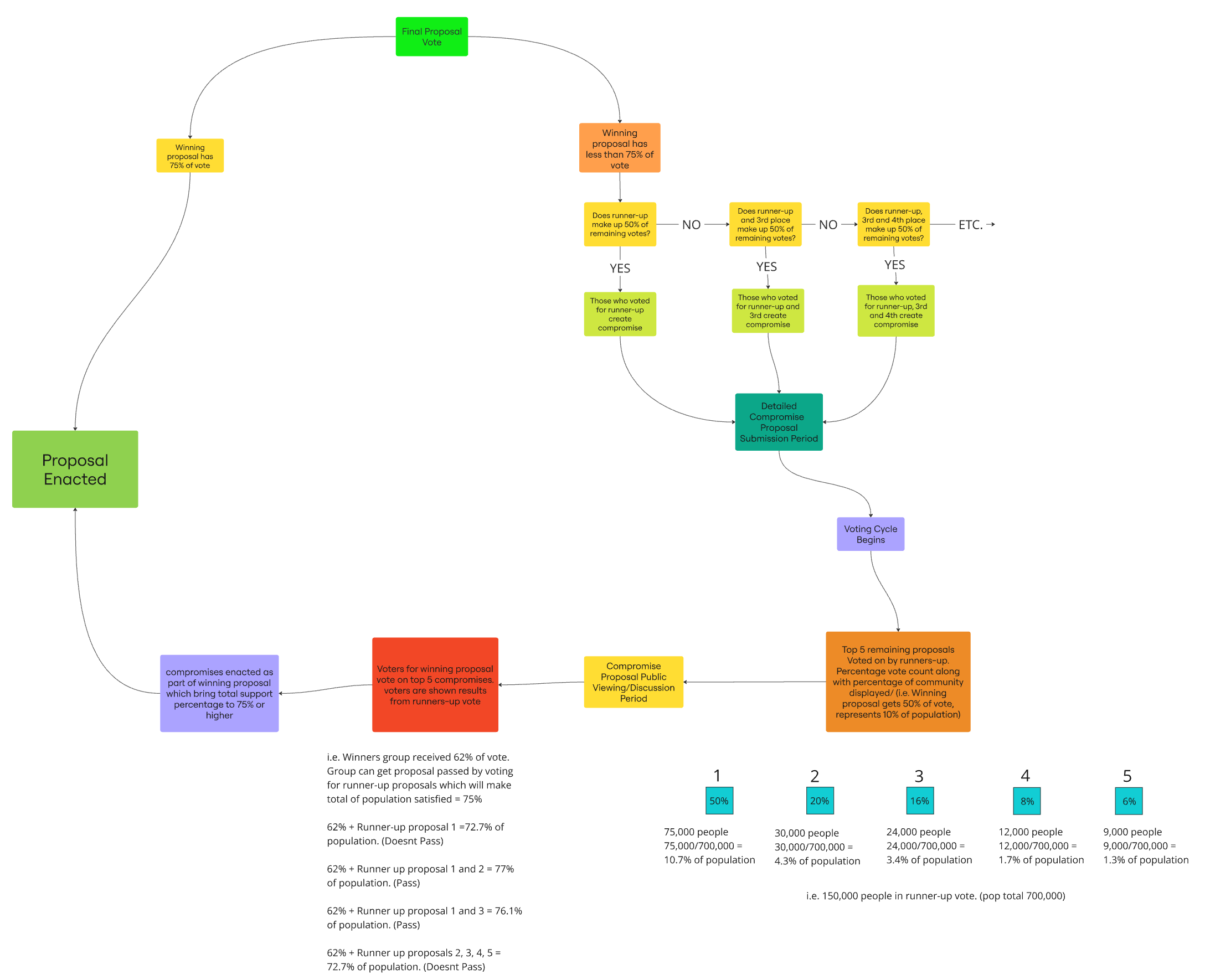
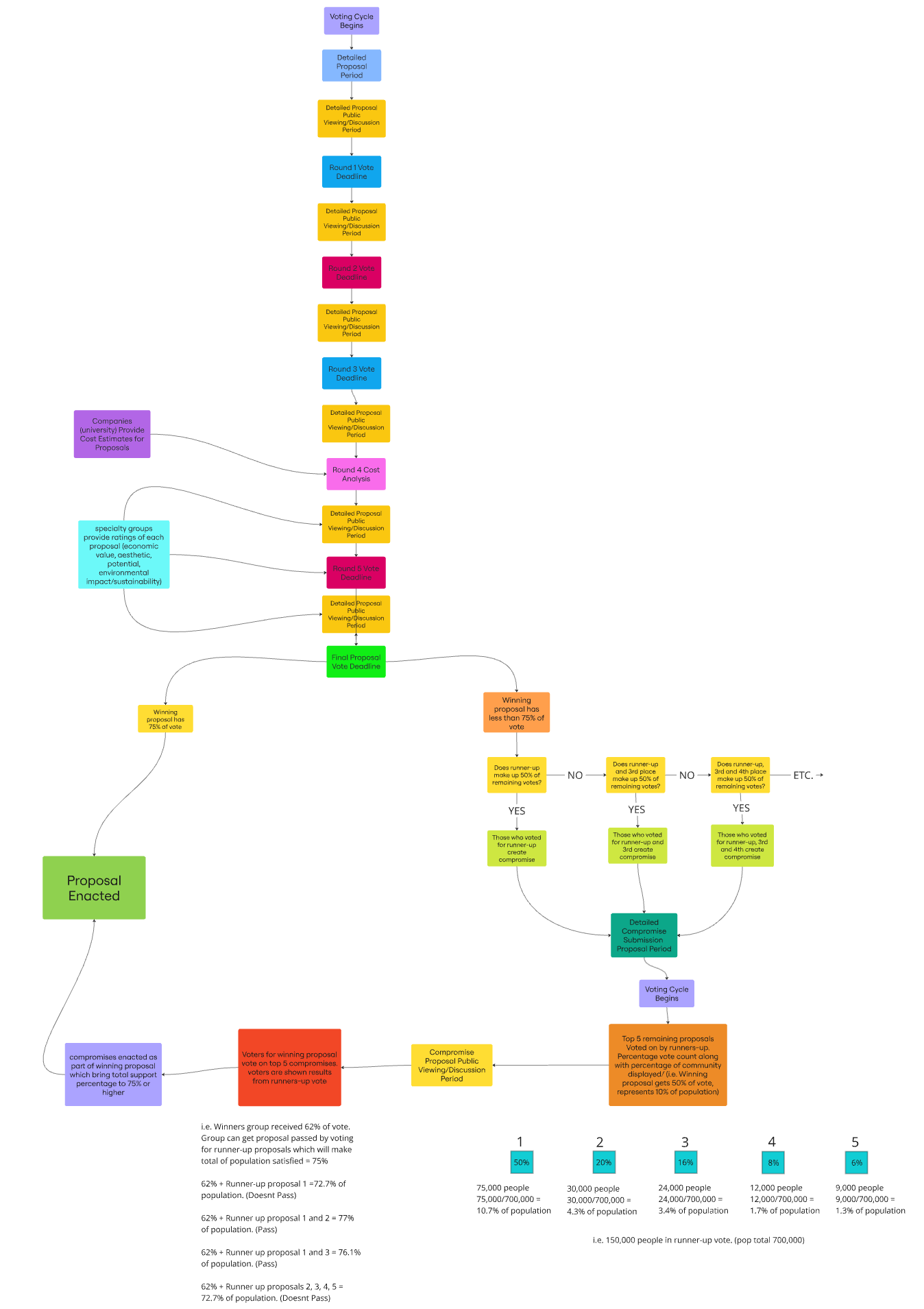
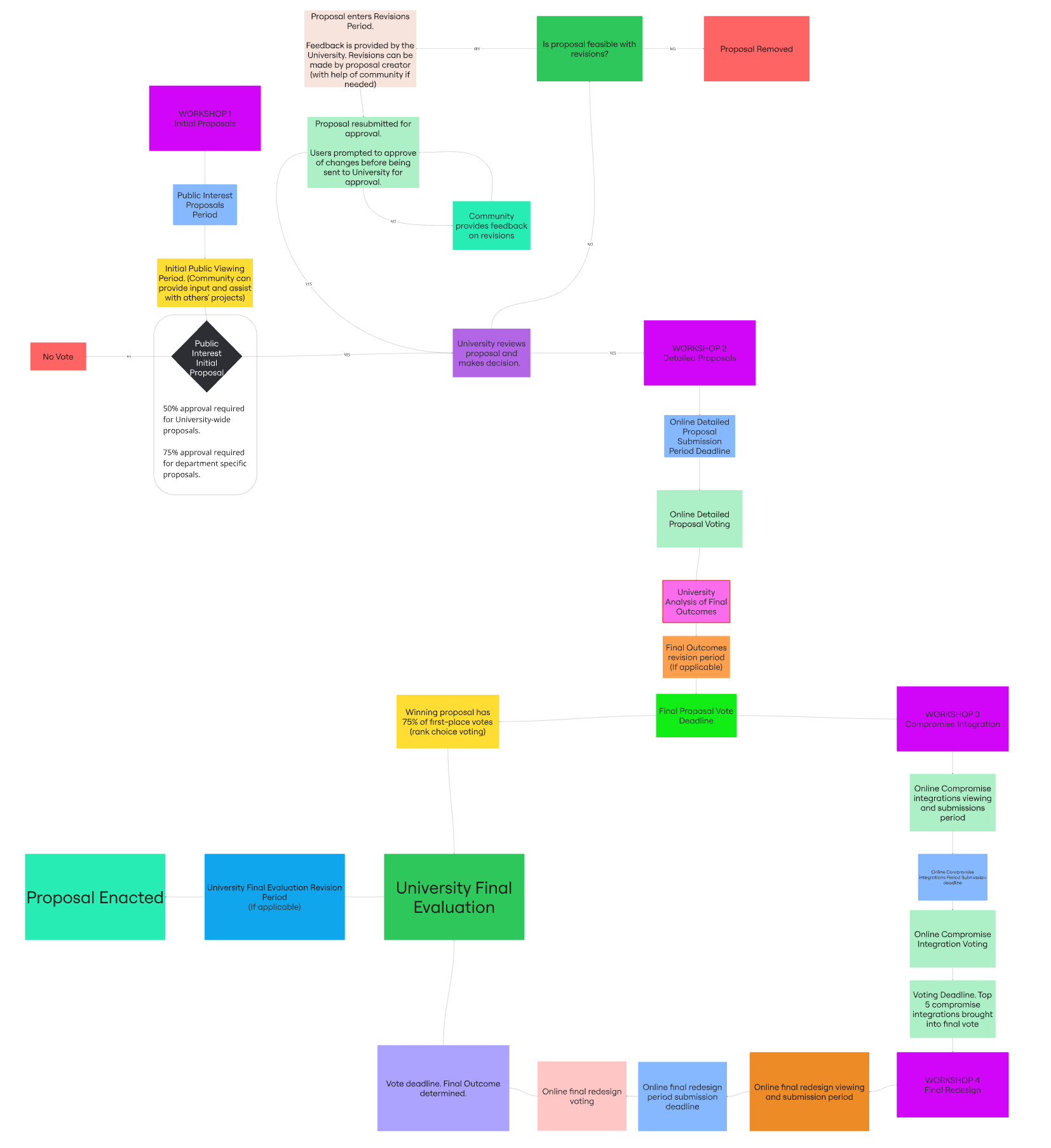
The system was initially designed as working independently from the workshop and existing completely online. The final outcome has the workshop as the focal point of discussion and creation, with voting and further discussion and submissions taking place online for people who can’t attend workshops. This approach provides multiple ways for the community to interact at levels they are comfortable doing so.
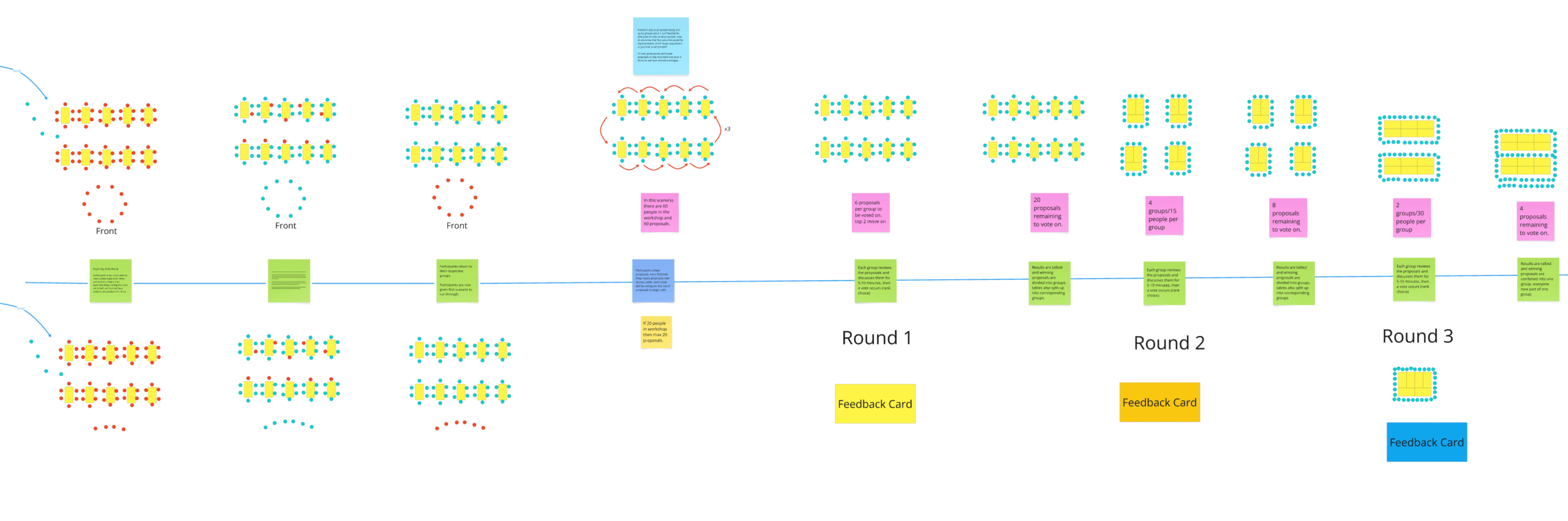
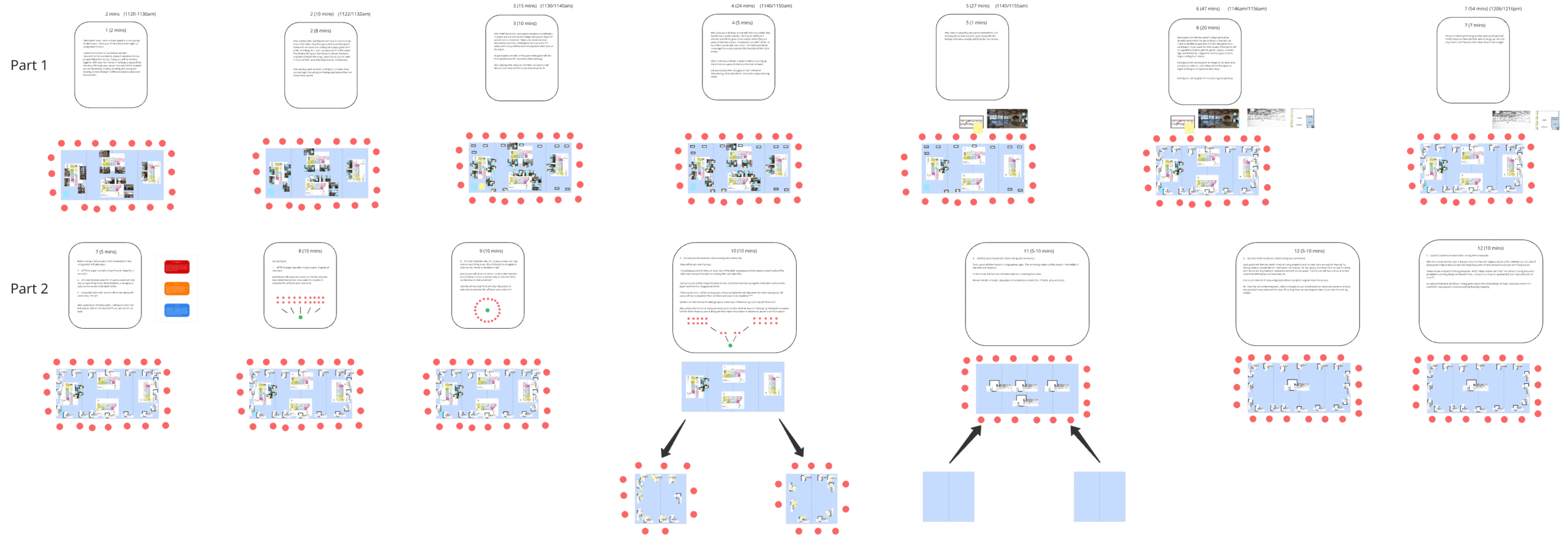
The best way to test my system would be a real-world setting within a workshop environment. My original plan for the workshop was to have an open discussion which would lead to a subject to pursue, but I later thought it would be beneficial to provide a path for participants to follow on the first attempt, so I decided focus on redesigning a space in the school. The workshop would need to be divided into two sections due to the time constraints involved.
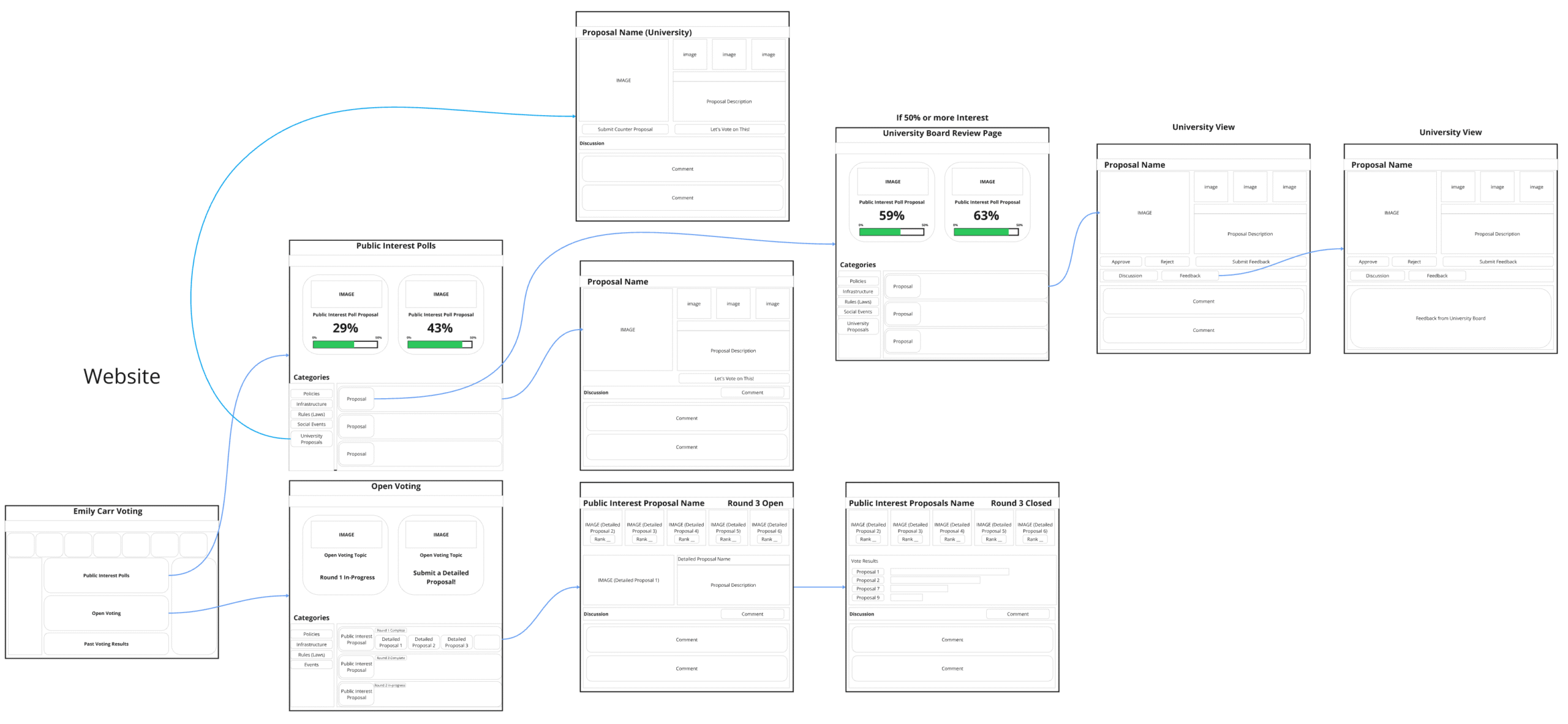
An initial exploration of what a digital space for proposing ideas and voting would look like and function. Voting would take place online and provide full transparency into outcomes with ongoing discussions for each proposal.
Cascade Voting
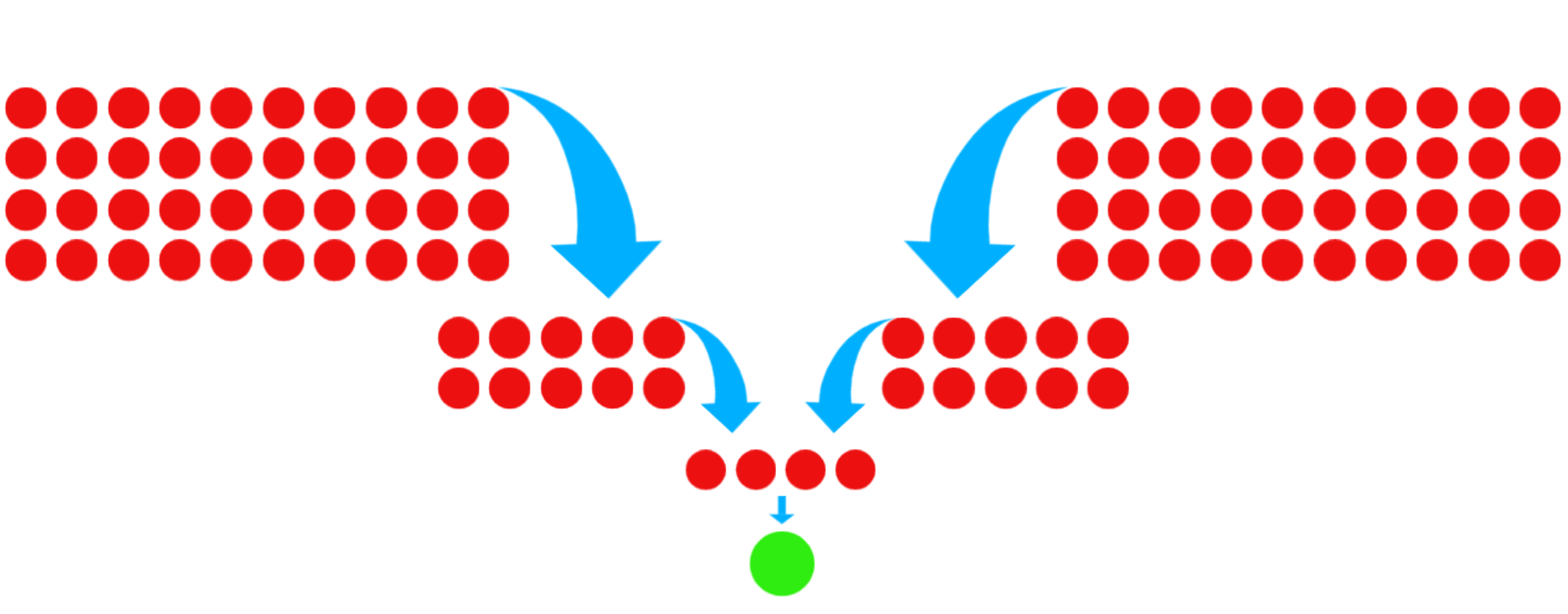
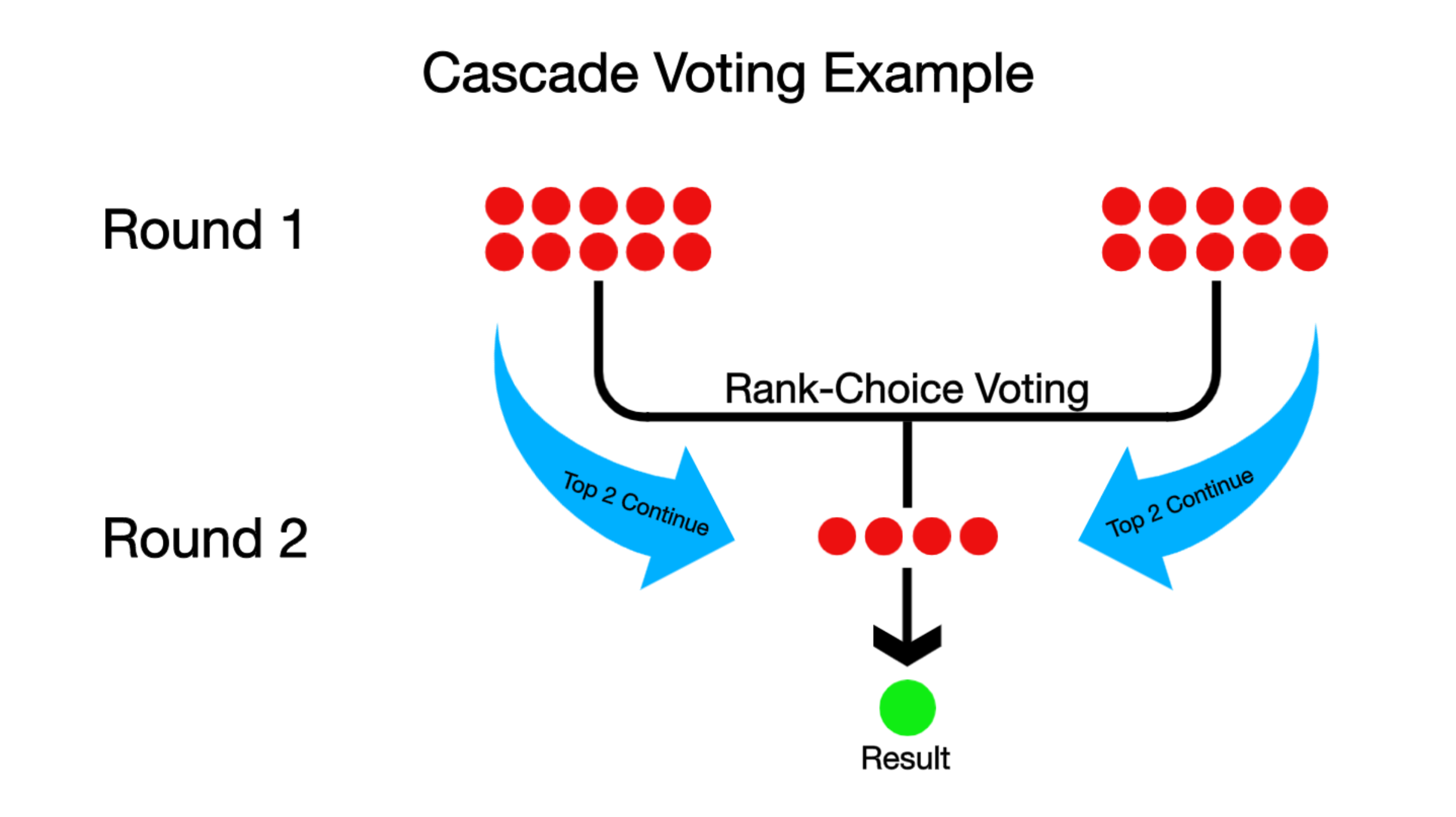
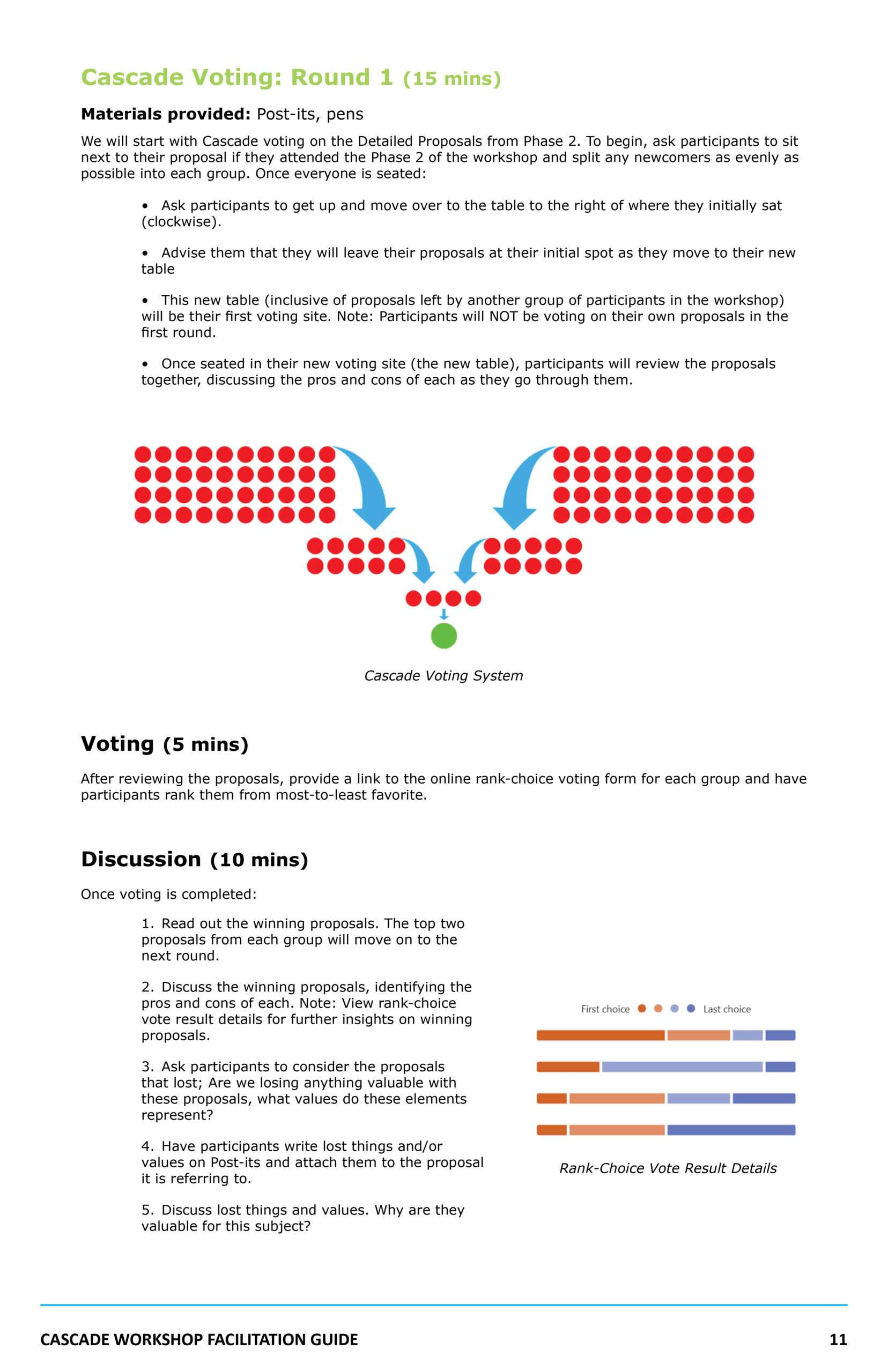
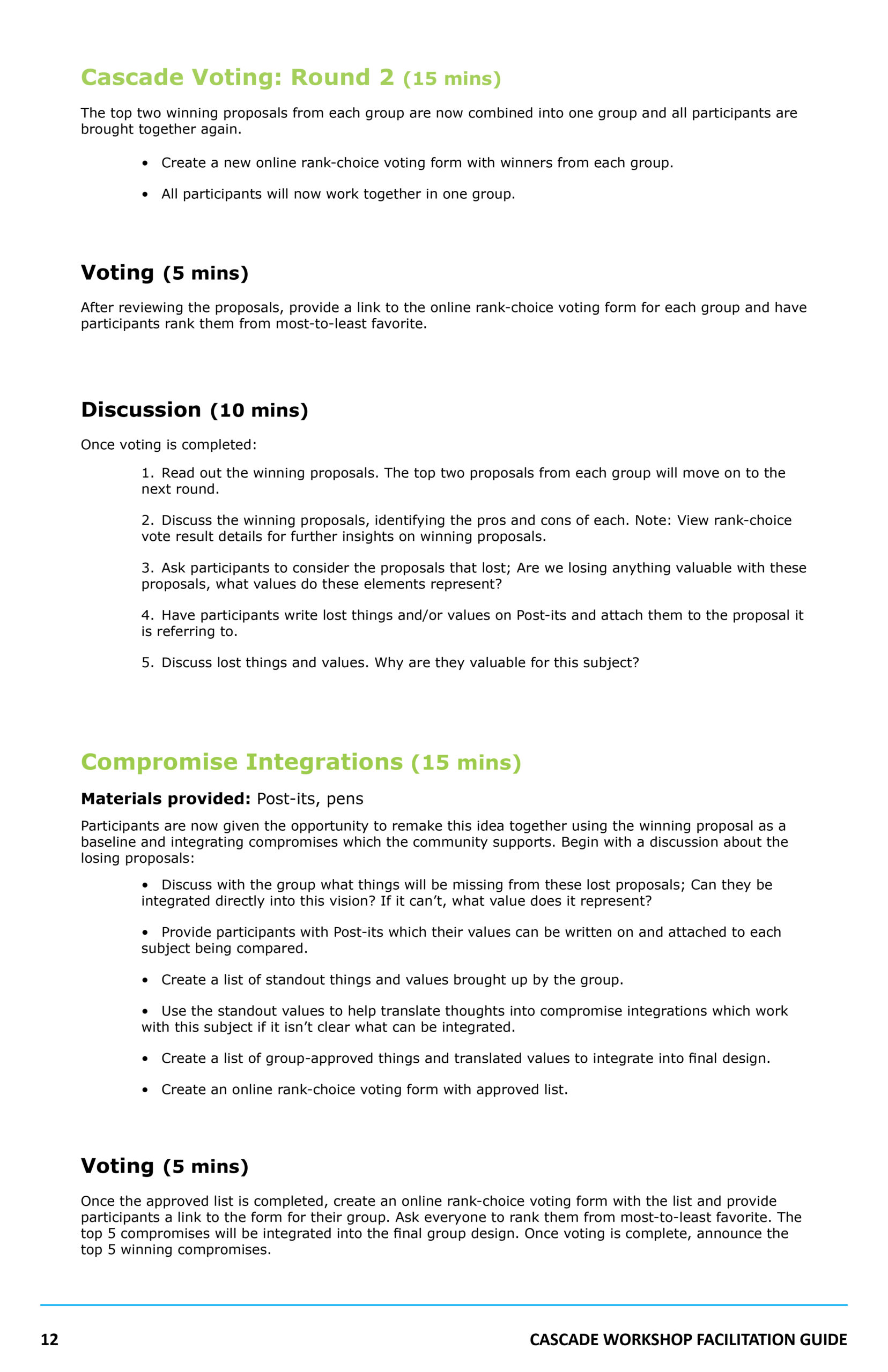
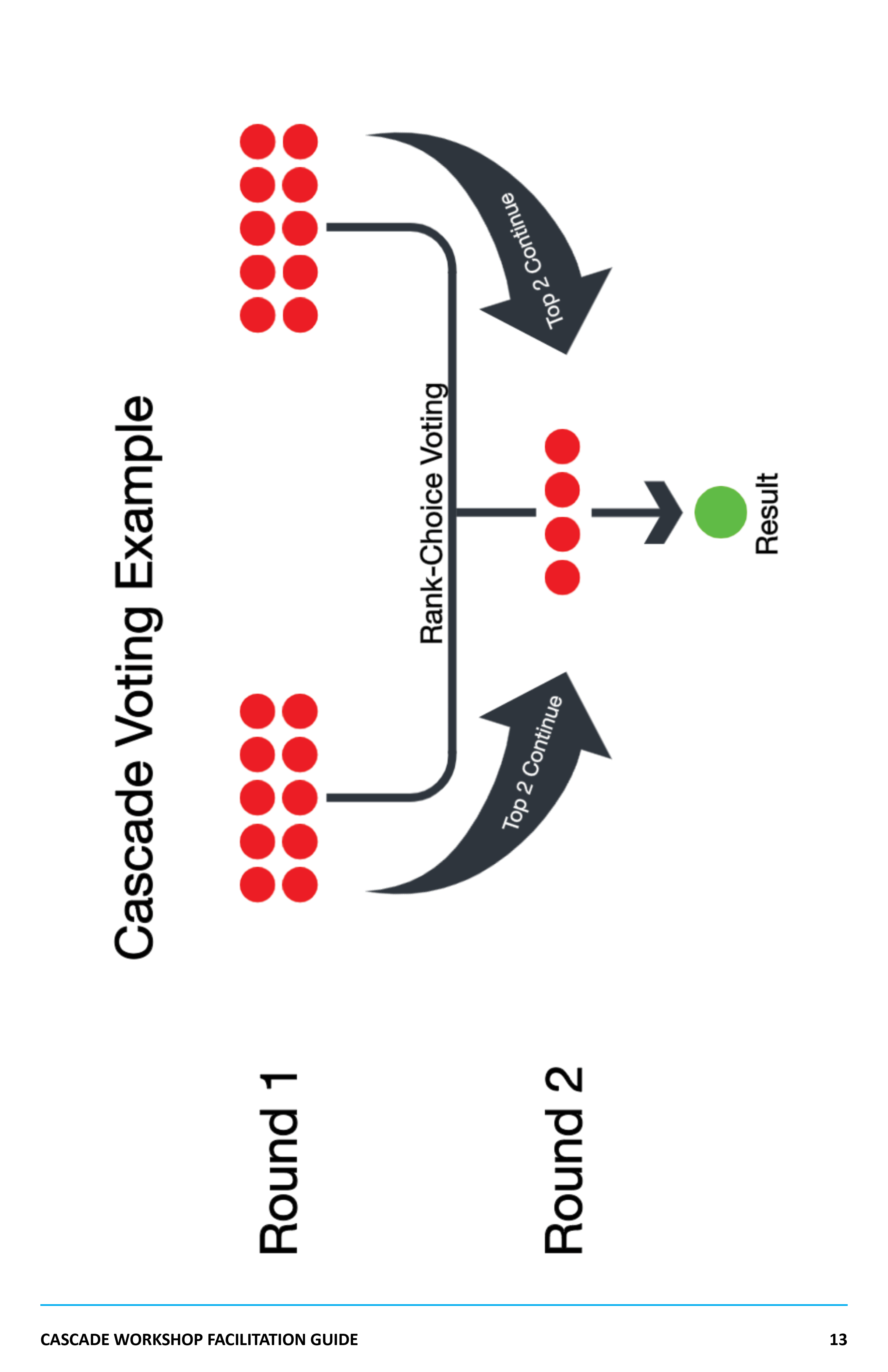
The Cascade Voting system, which was developed as part of this research, uses a series of rank-choice voting with opportunities for ongoing discussion, reiteration and compromise to develop a solution that is accepted by all parties involved. The rank-choice process has proposals and participants placed in groups of maximum ten, with the top two from each group continuing to the next round with other group winners. This process continues until a single outcome is determined, at which point compromises are established based on ideas from losing proposals and then integrated into the winning outcome.
Cascade Workshop
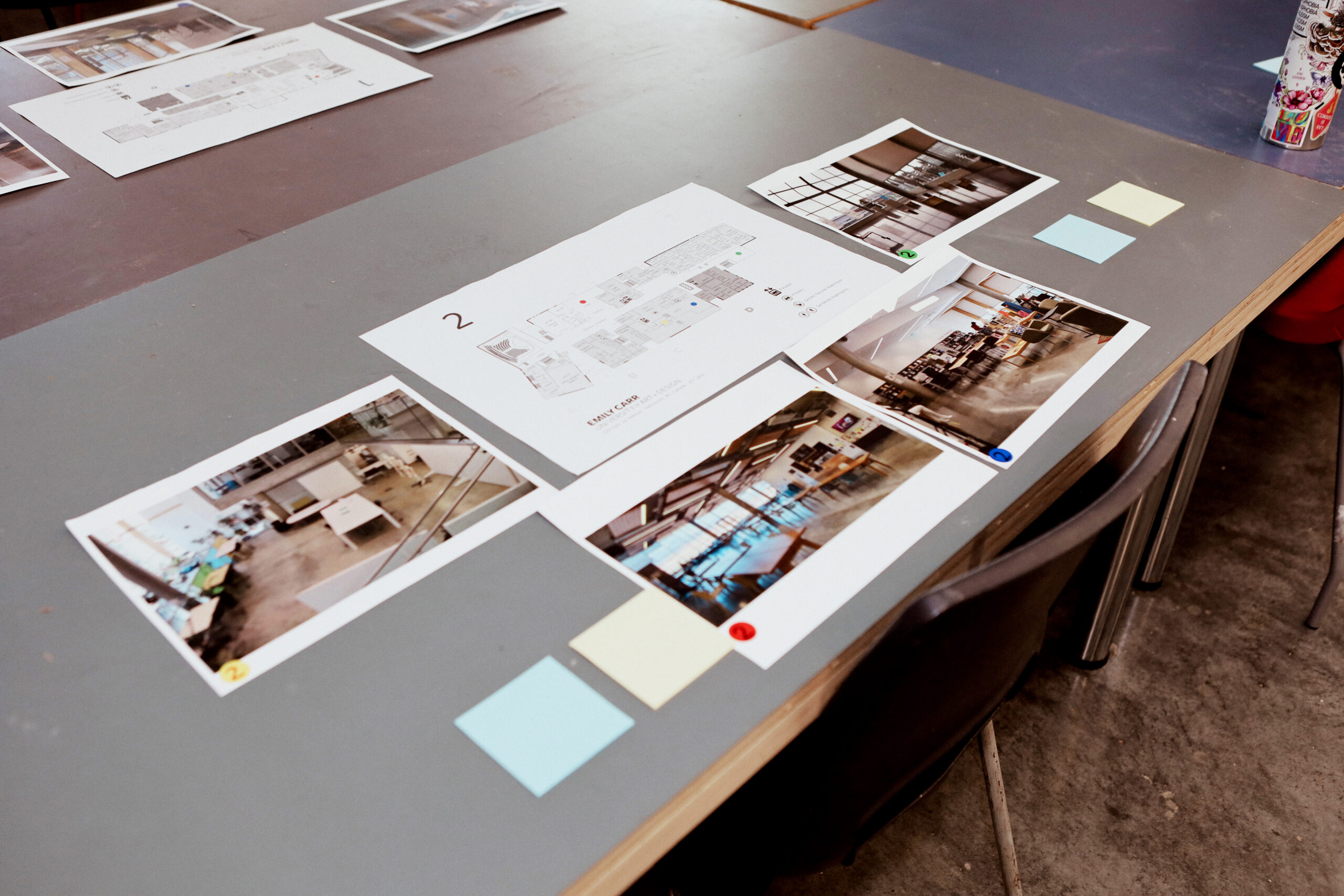
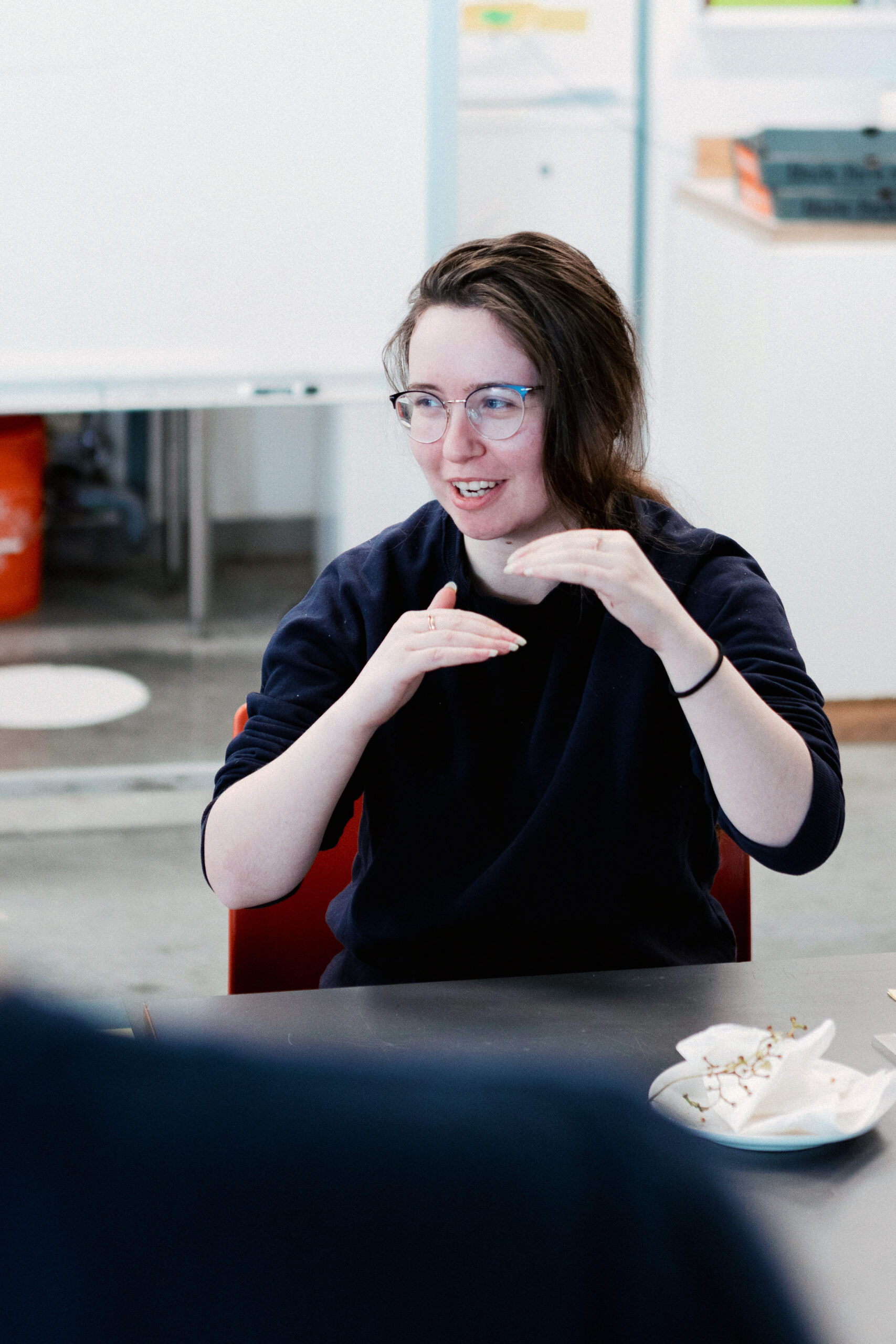
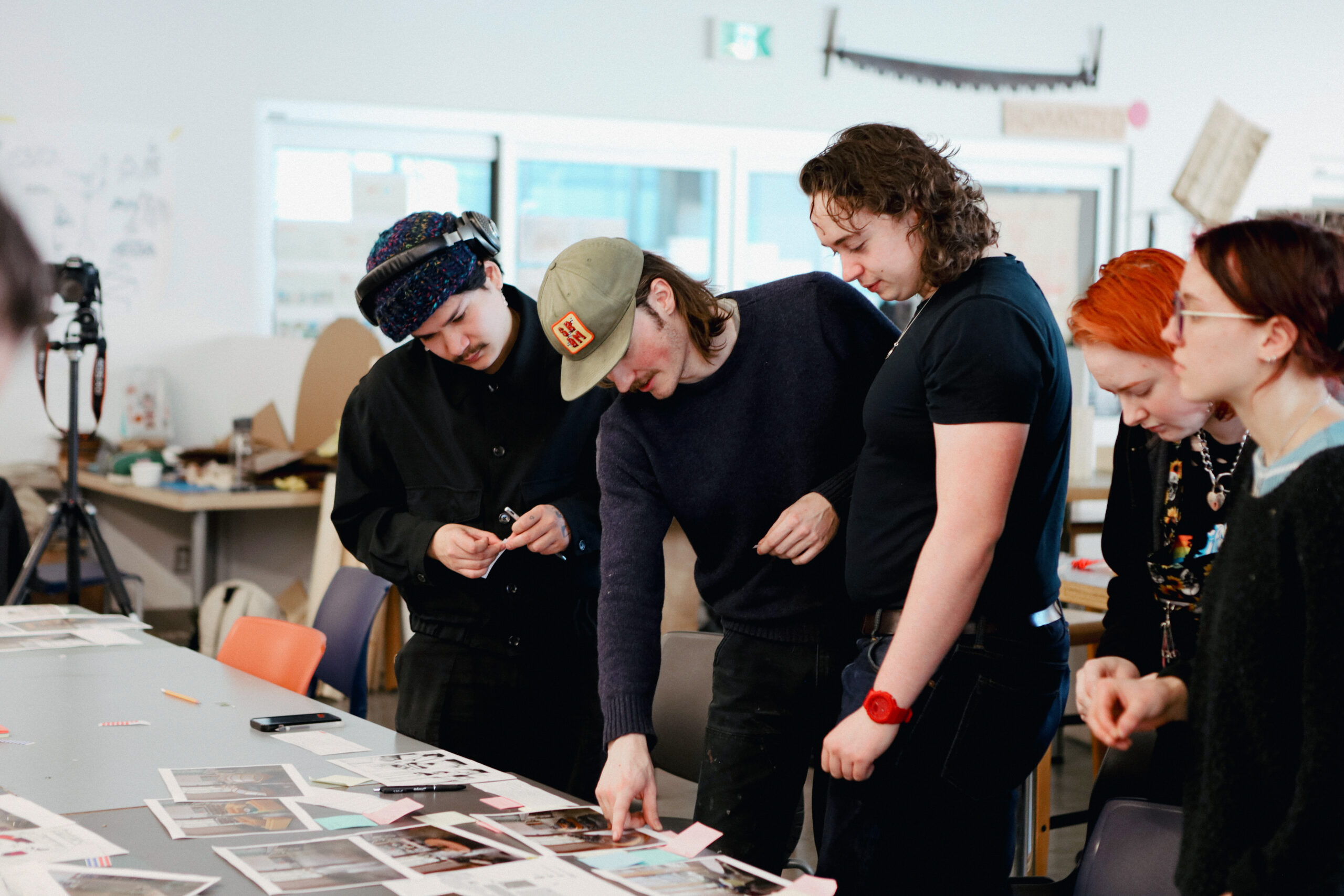
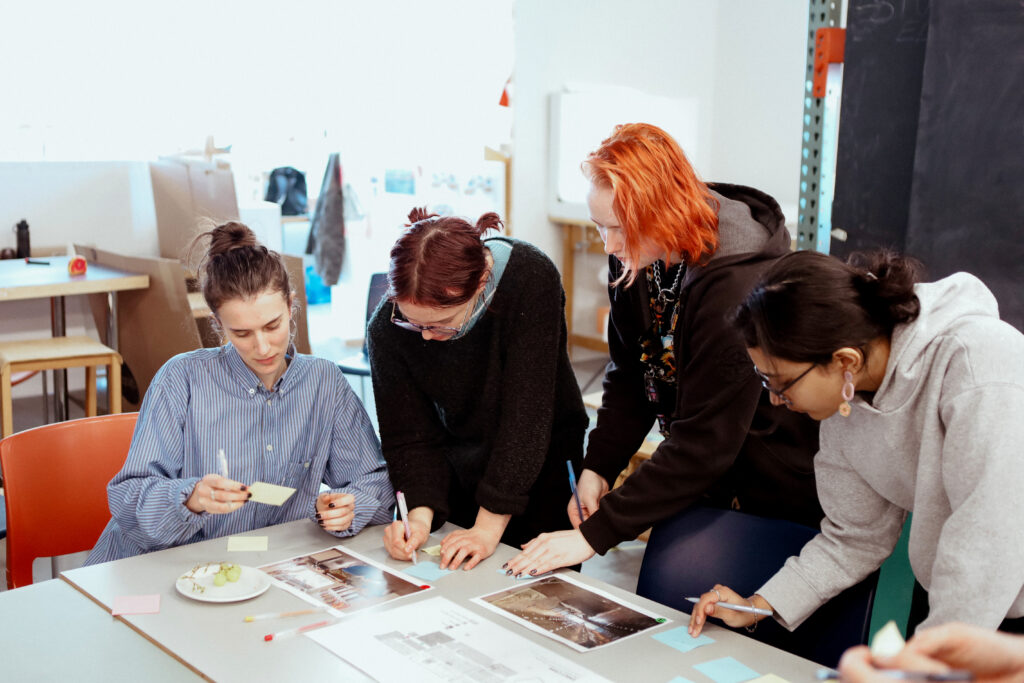

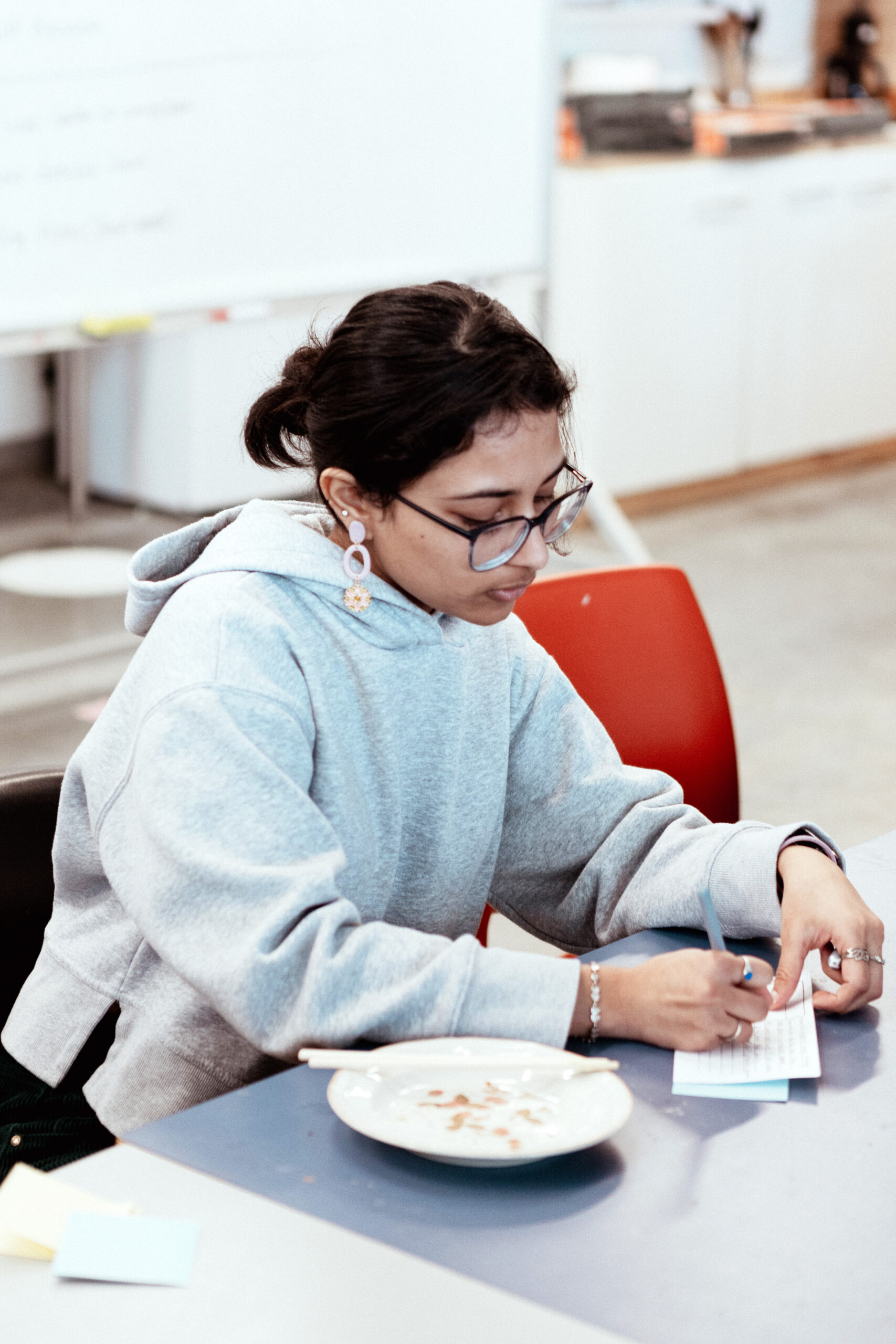


The Cascade workshop started with participants viewing images of 12 spaces within the school while considering their ideal values for them, which opened up conversations by generating relatable talking points which were easy to respond to and debate.
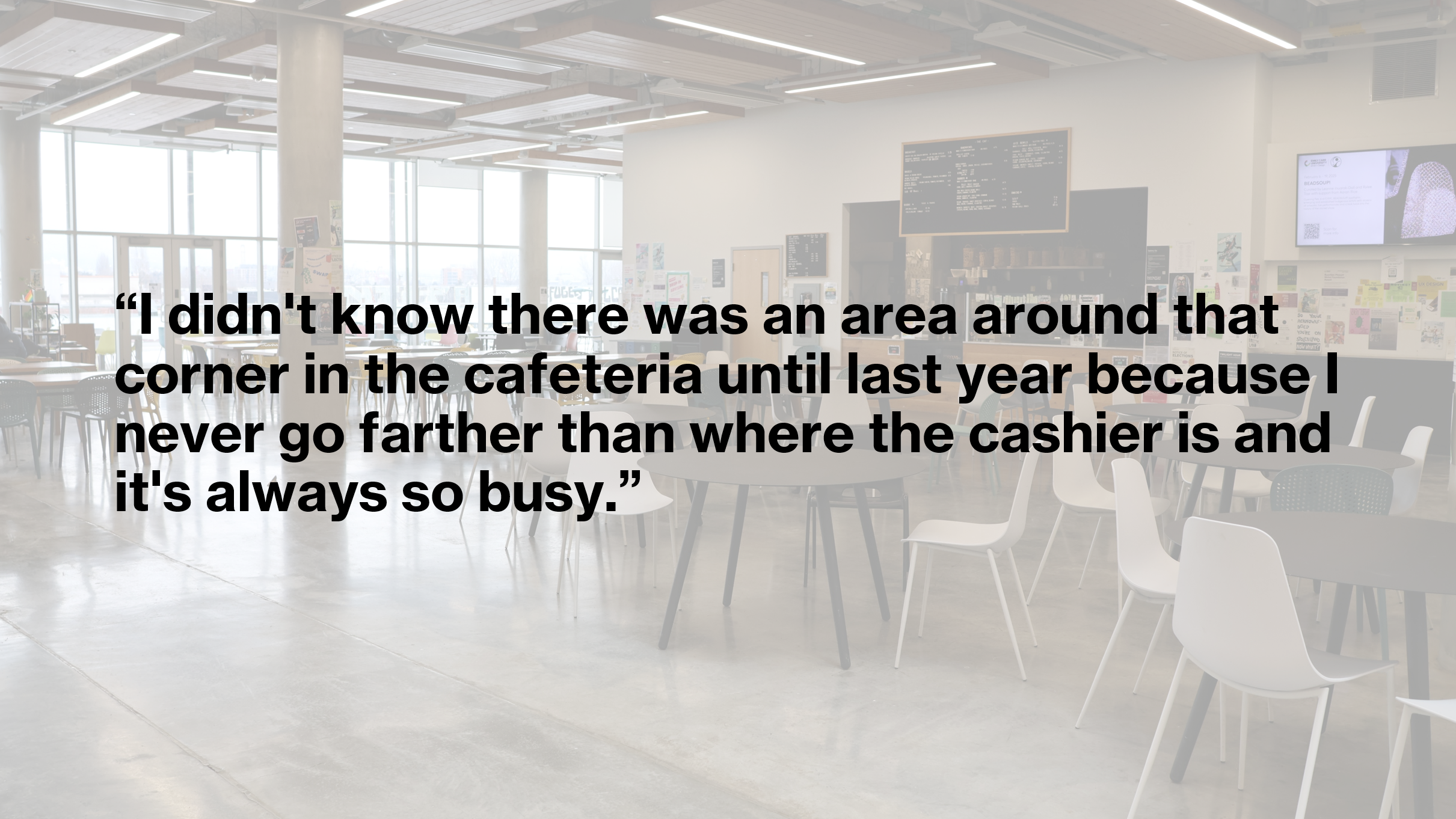
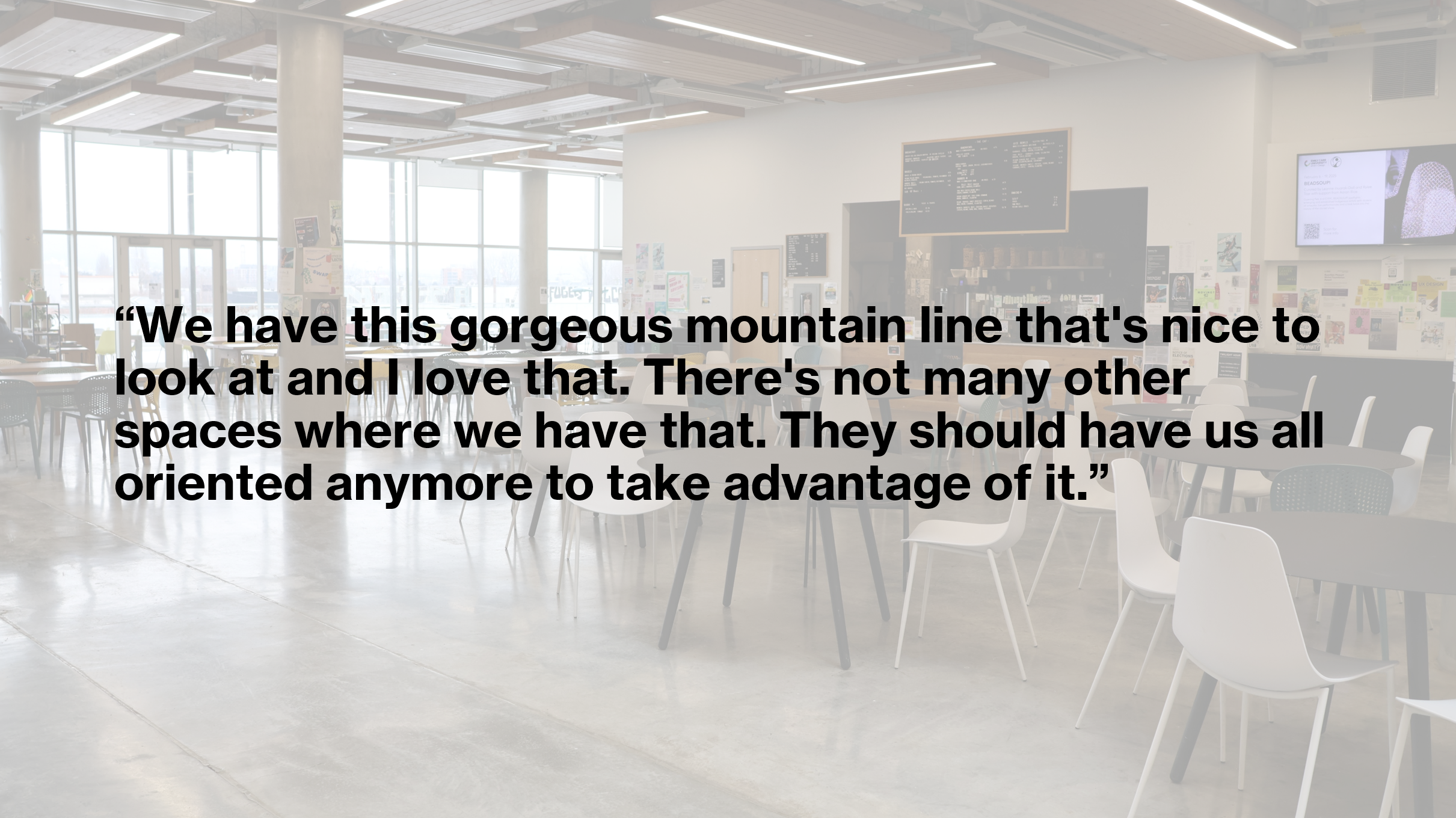
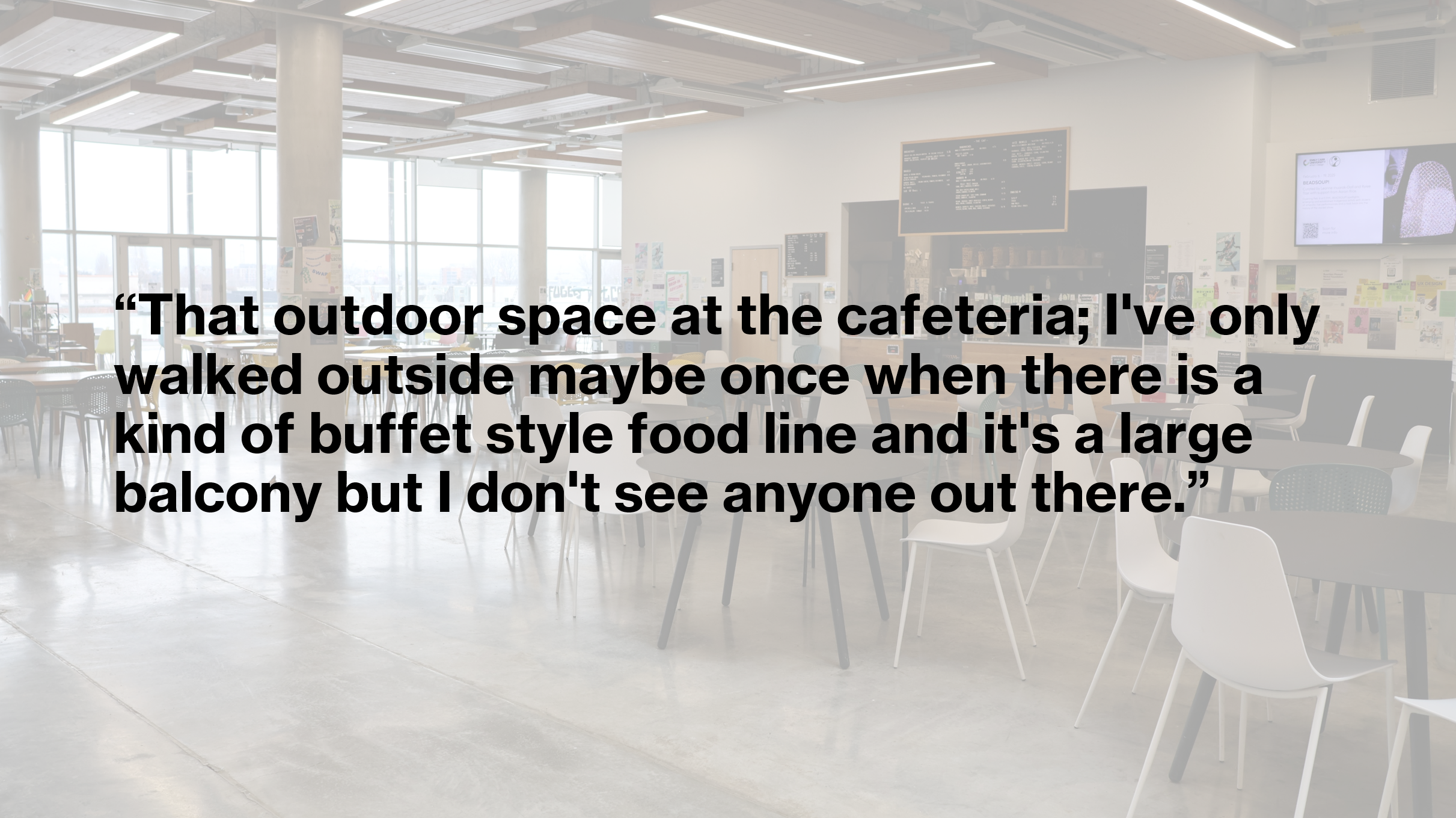
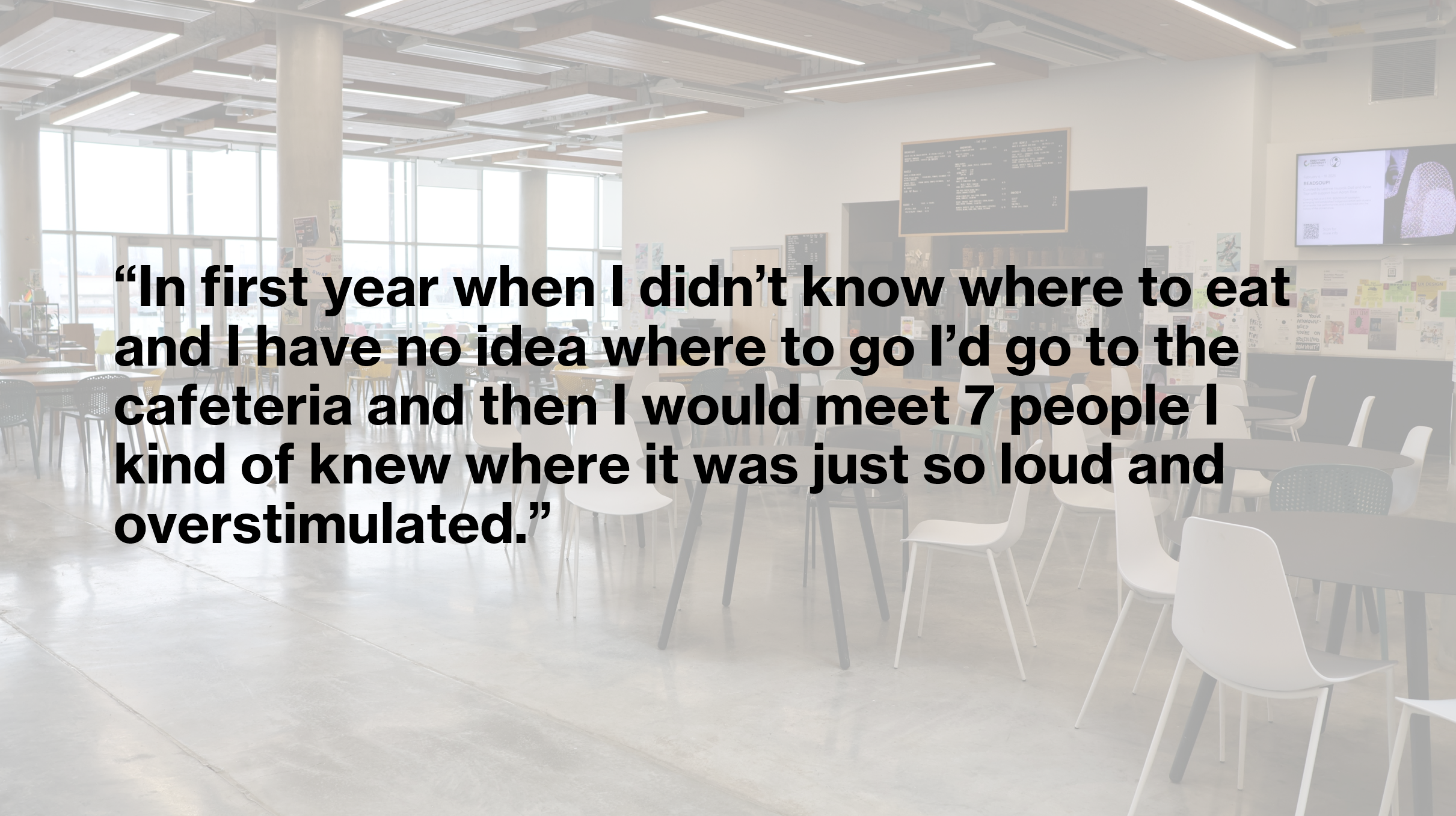
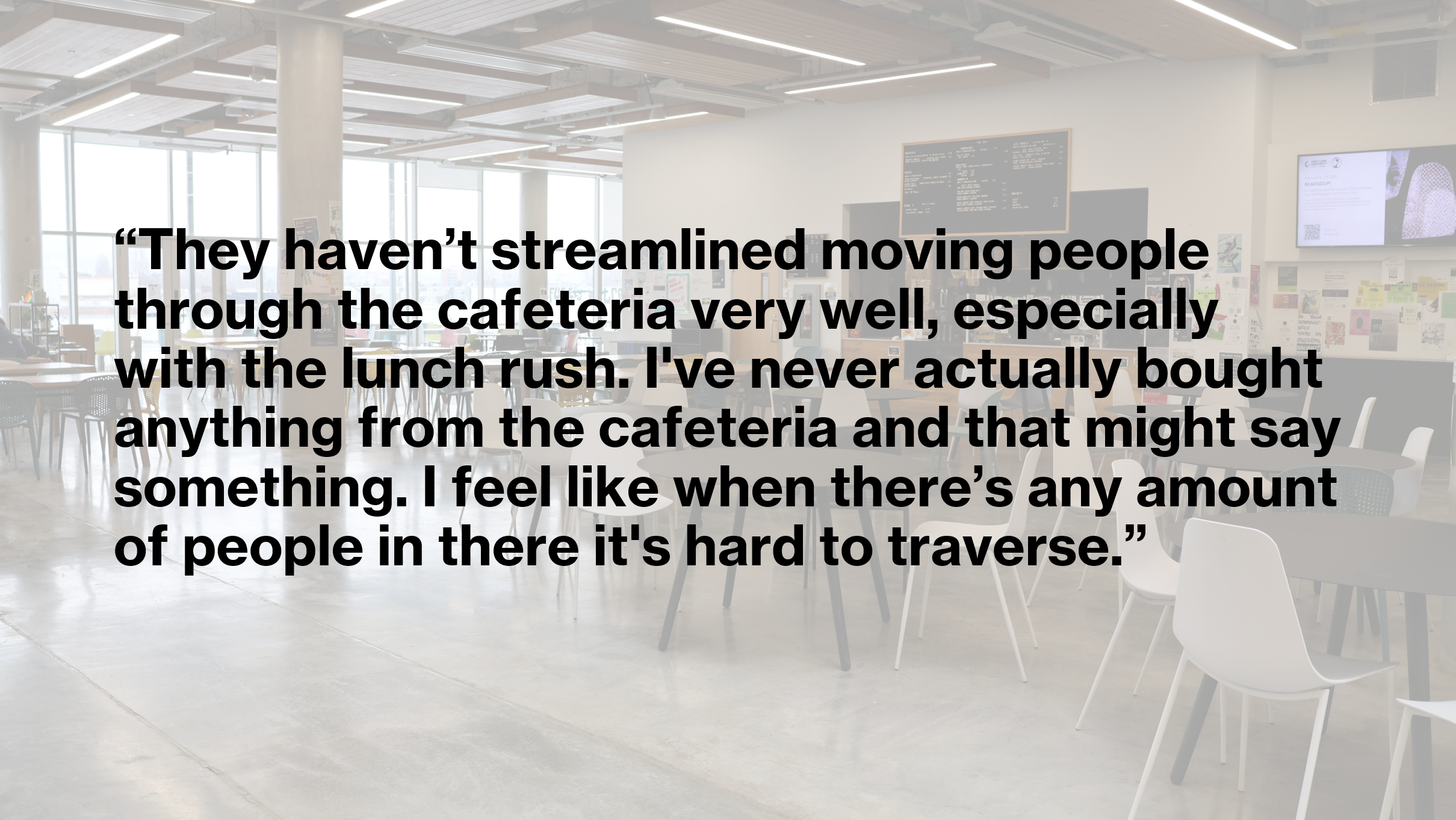
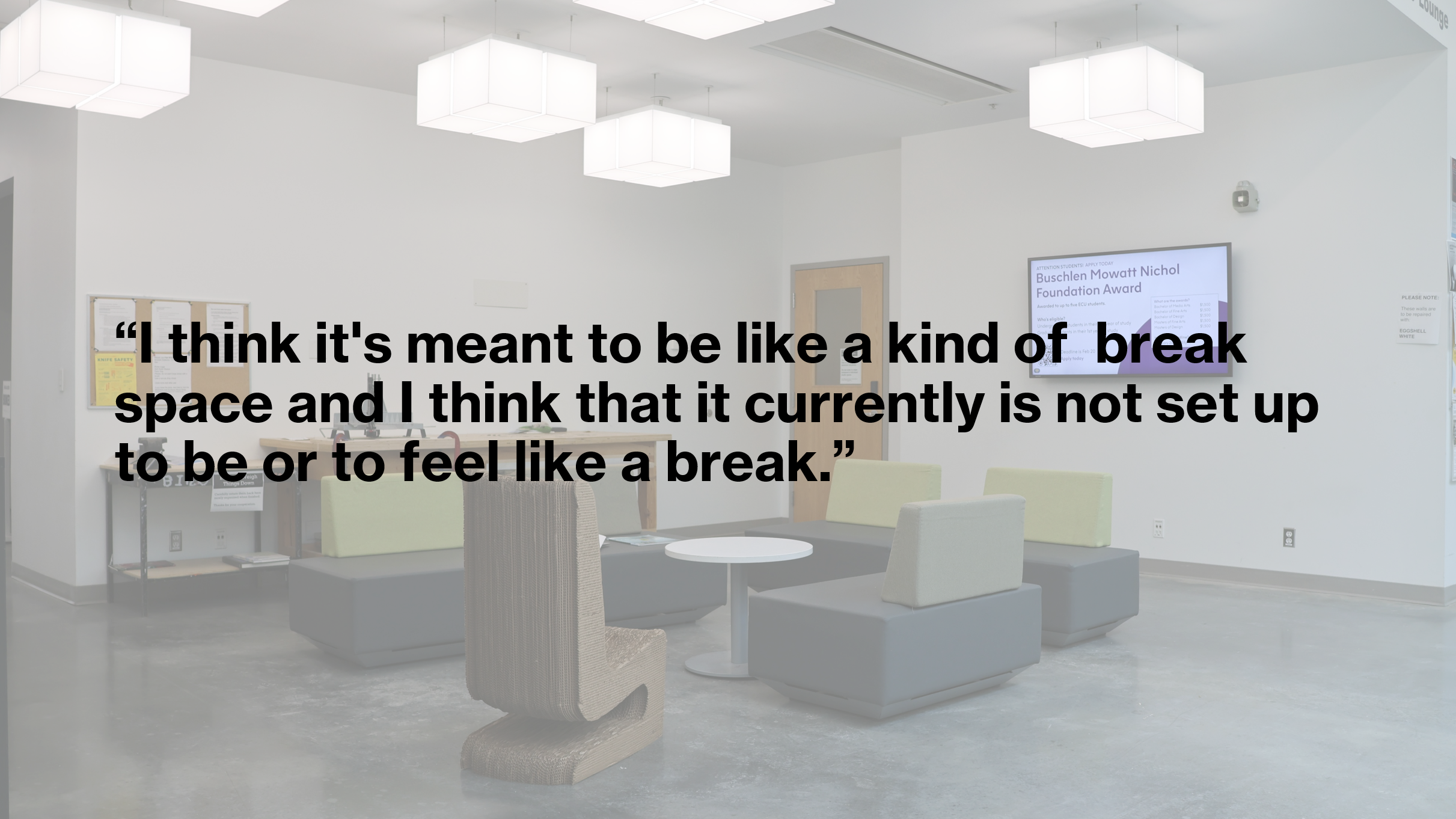
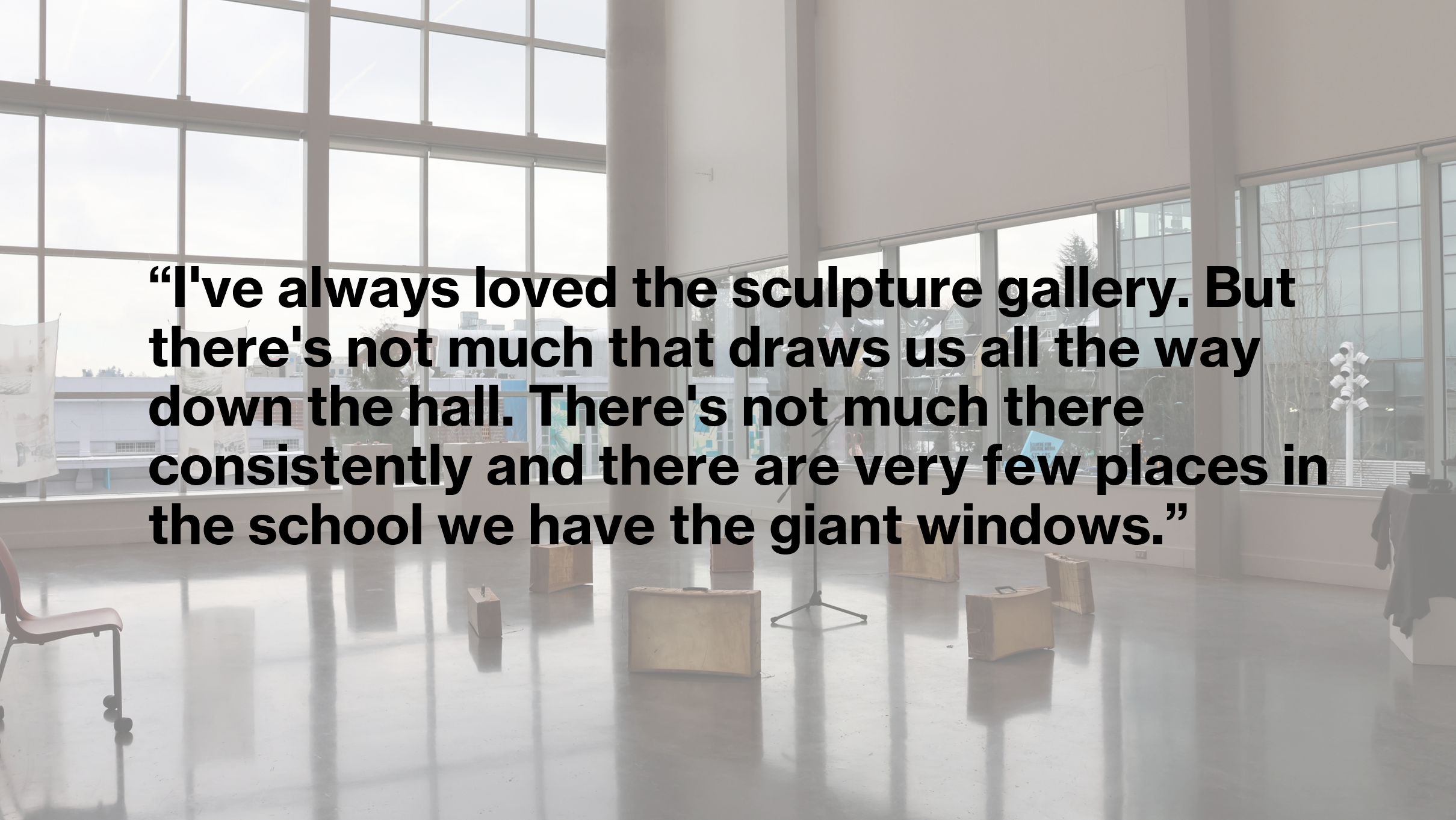
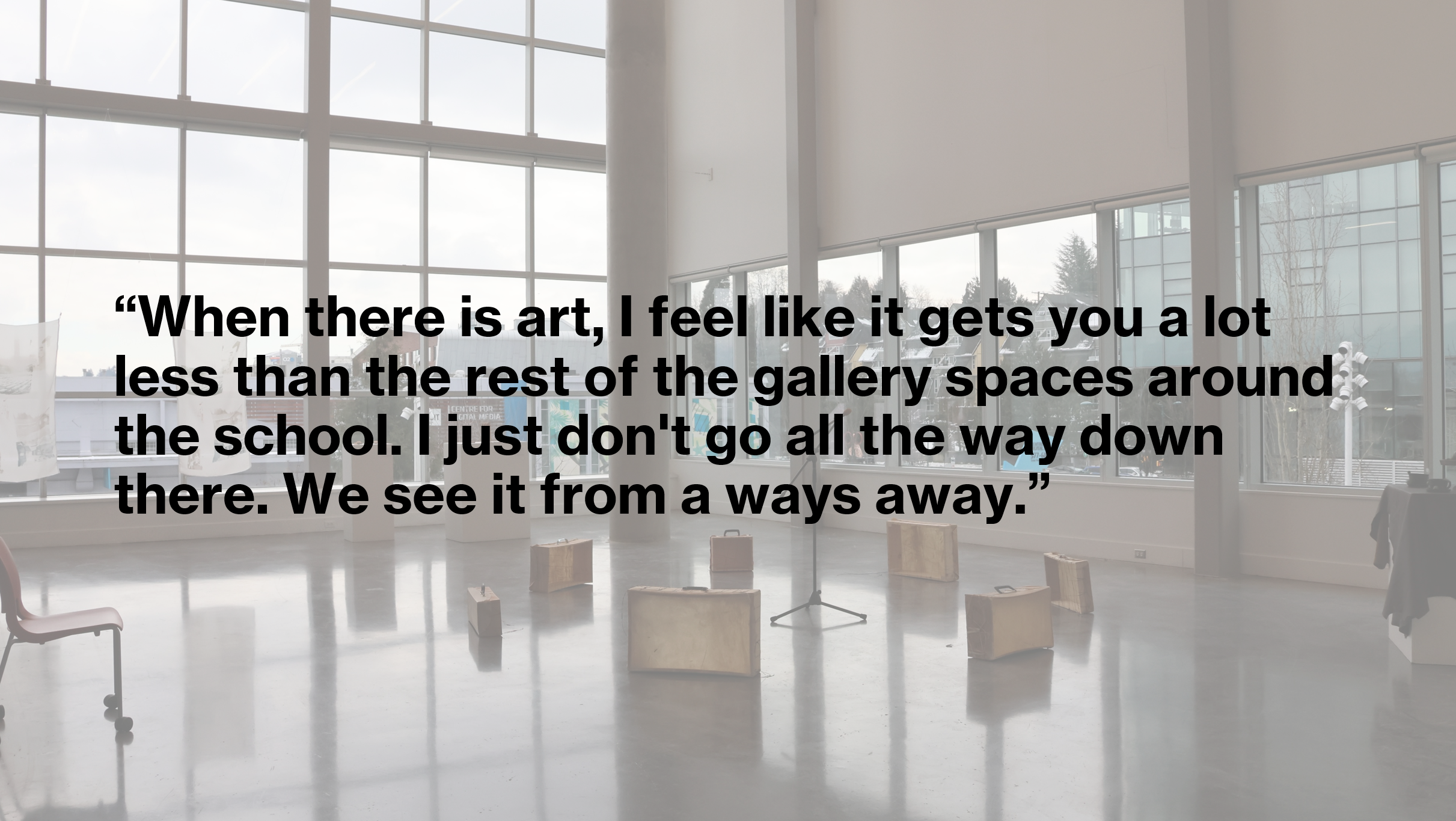
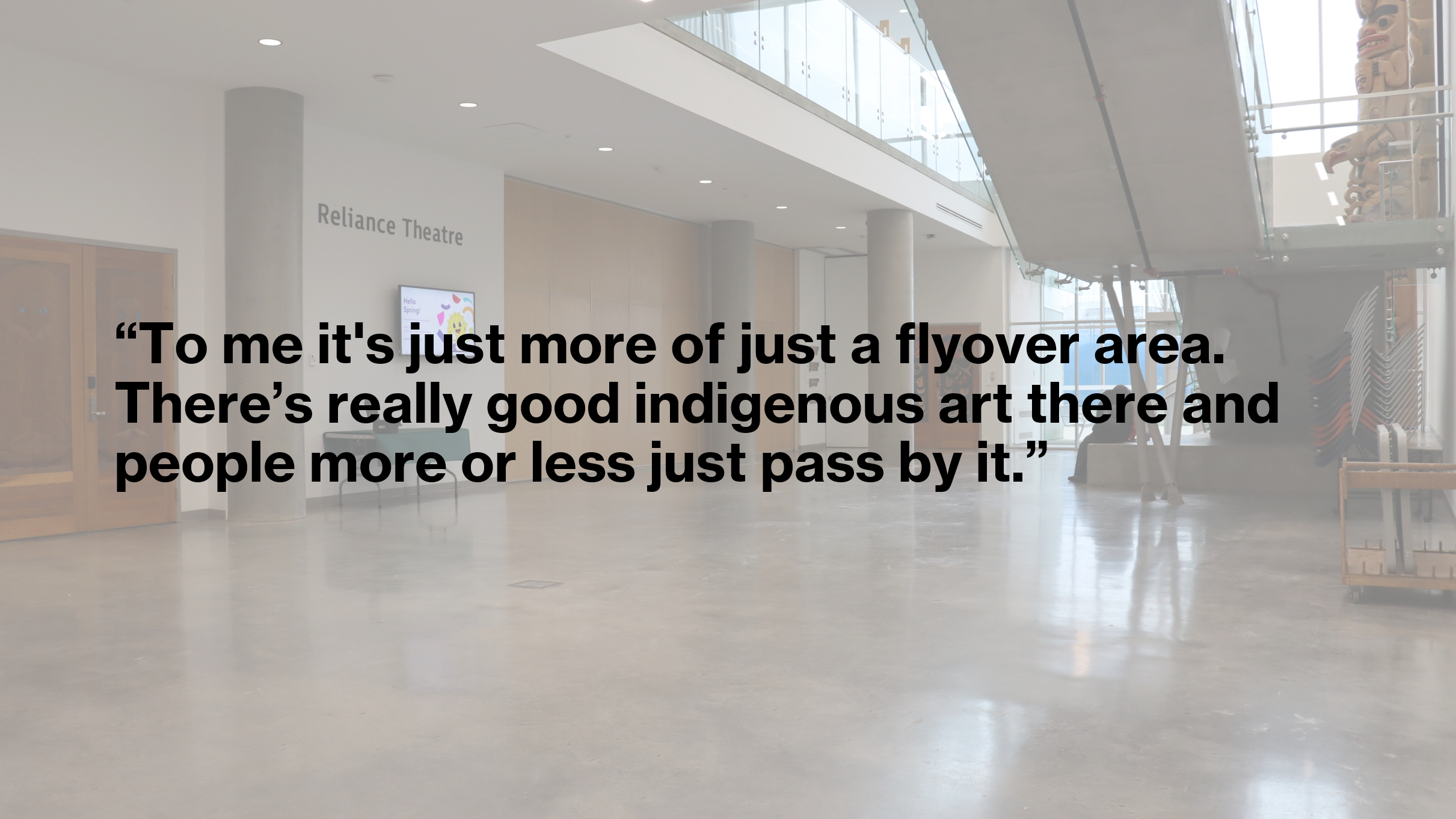
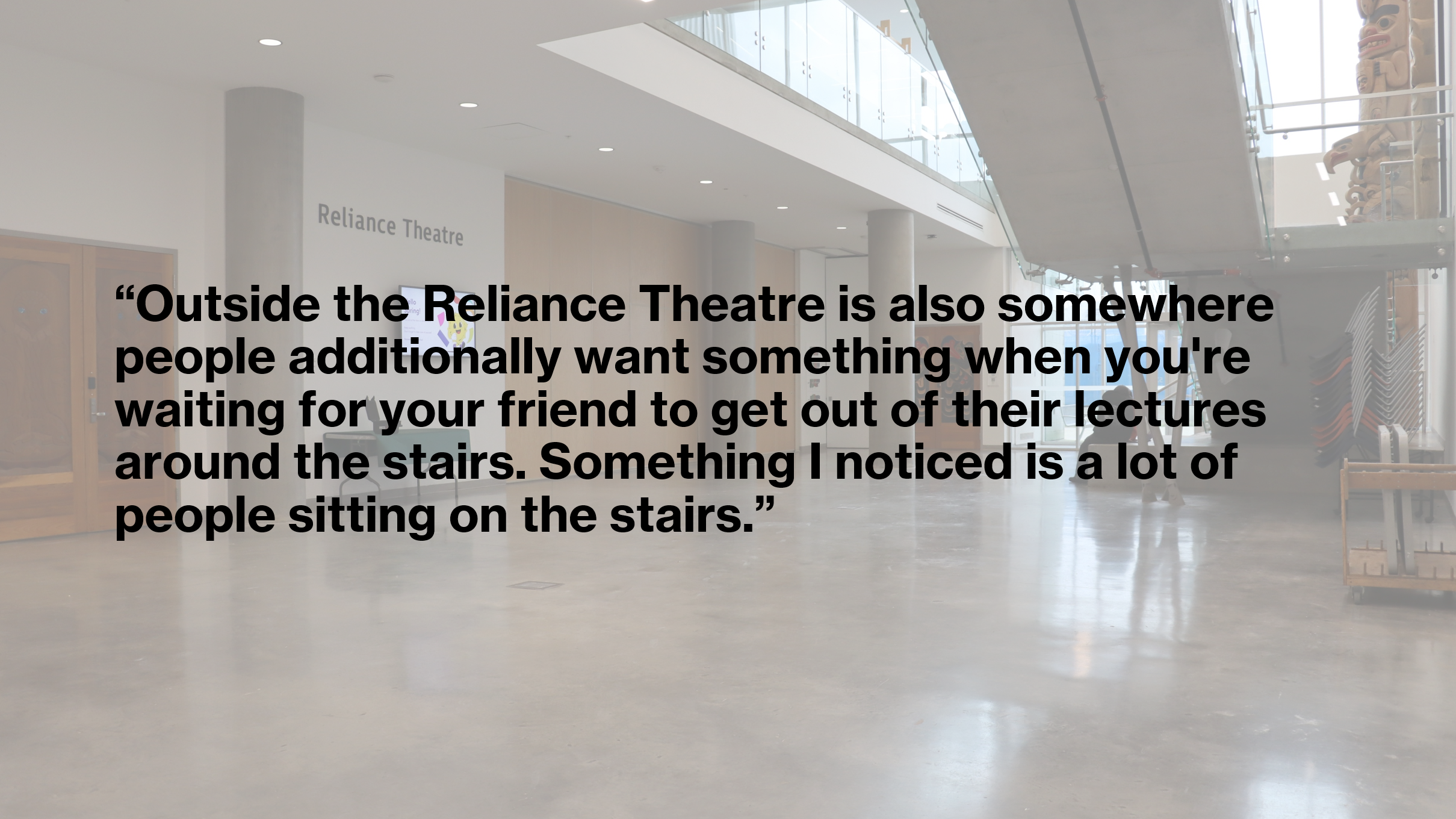
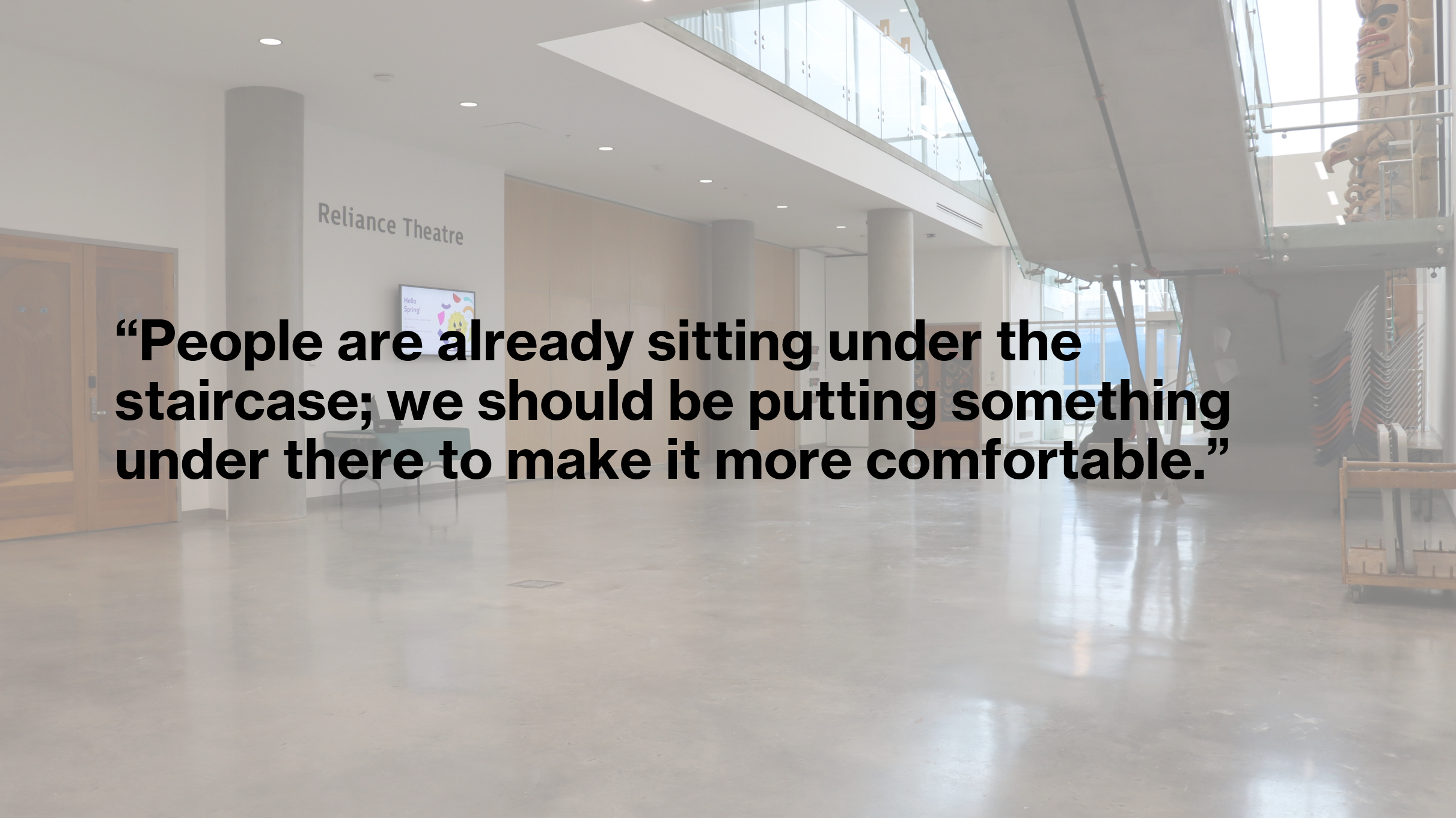
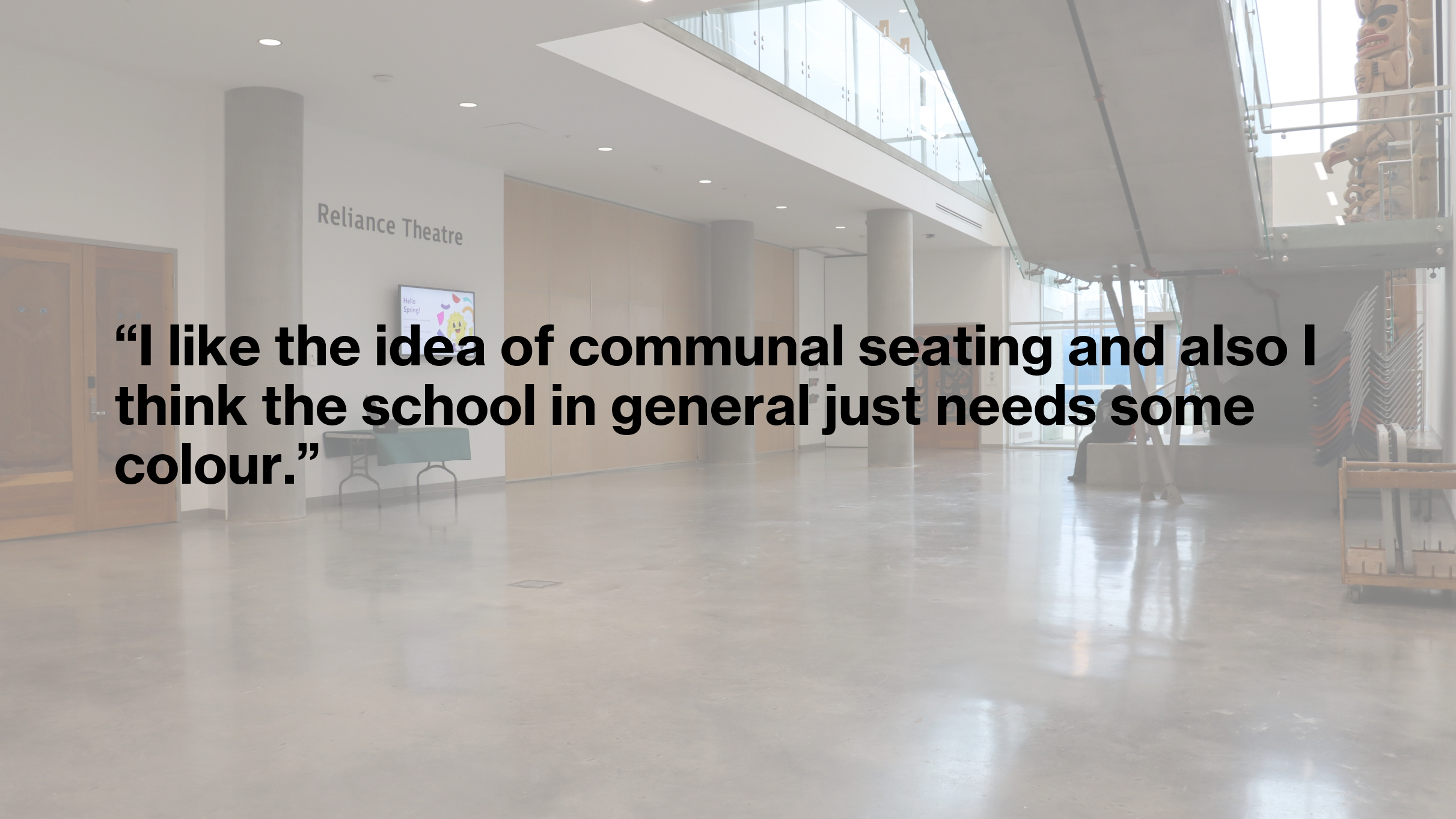
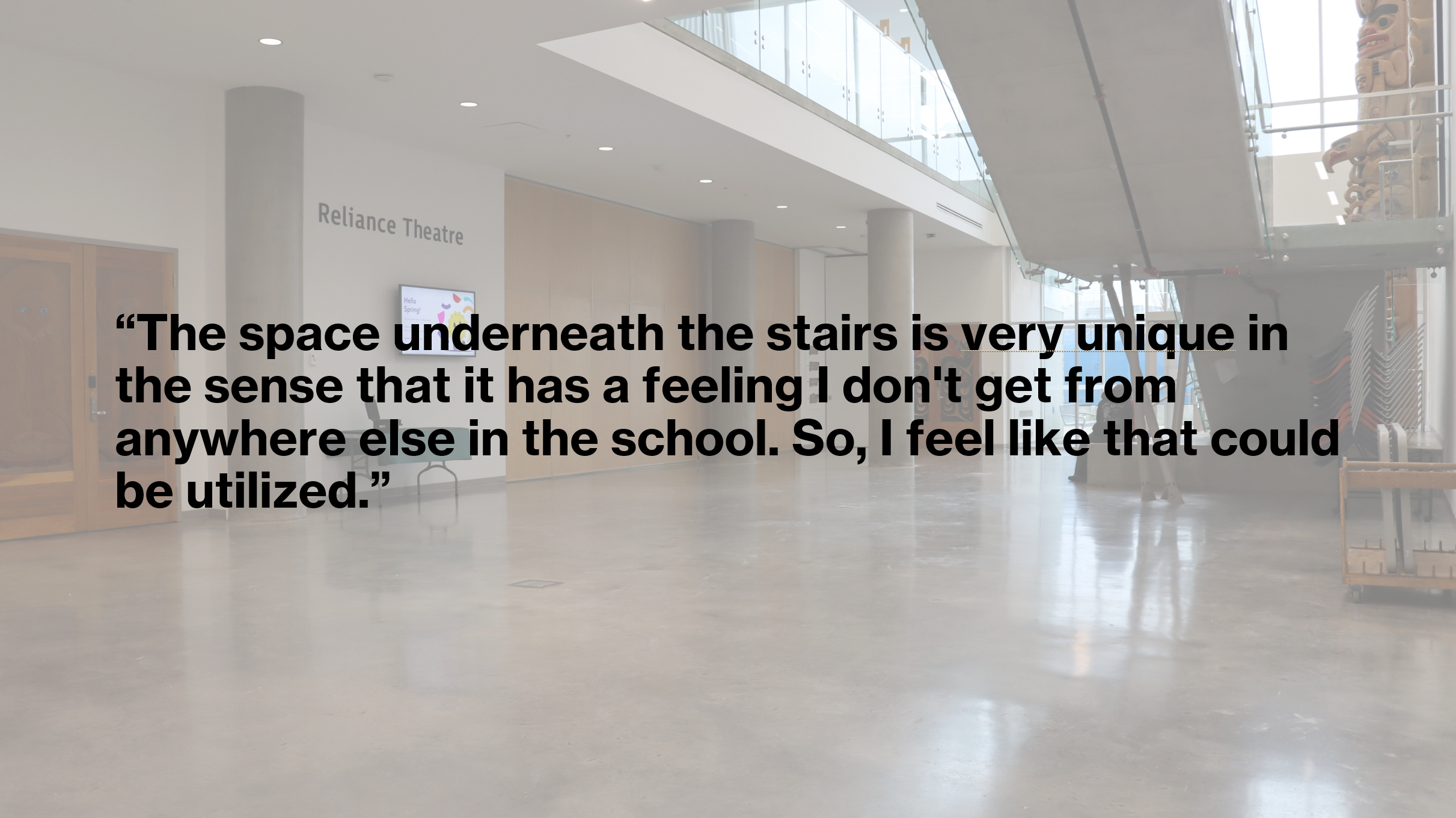
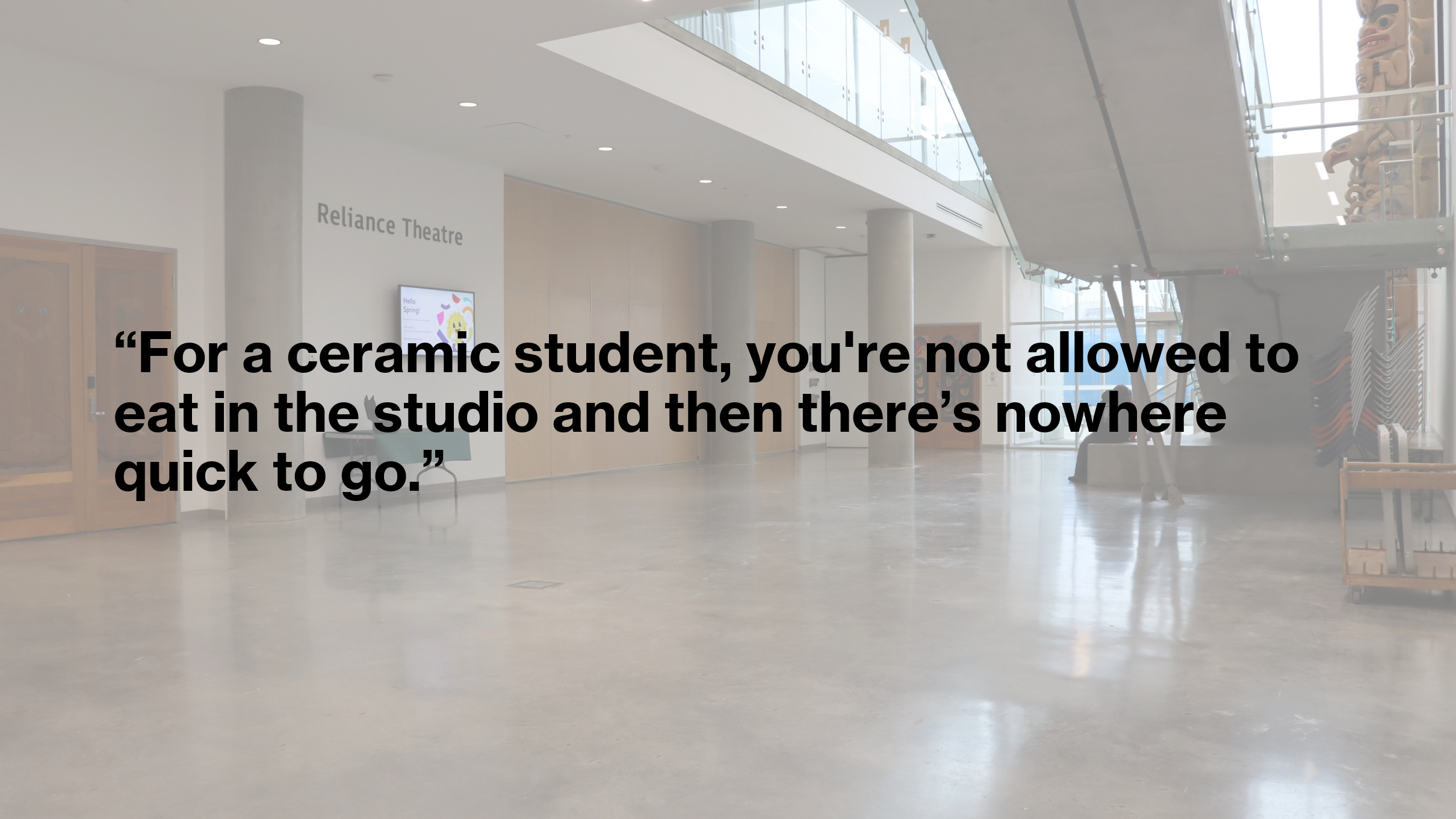
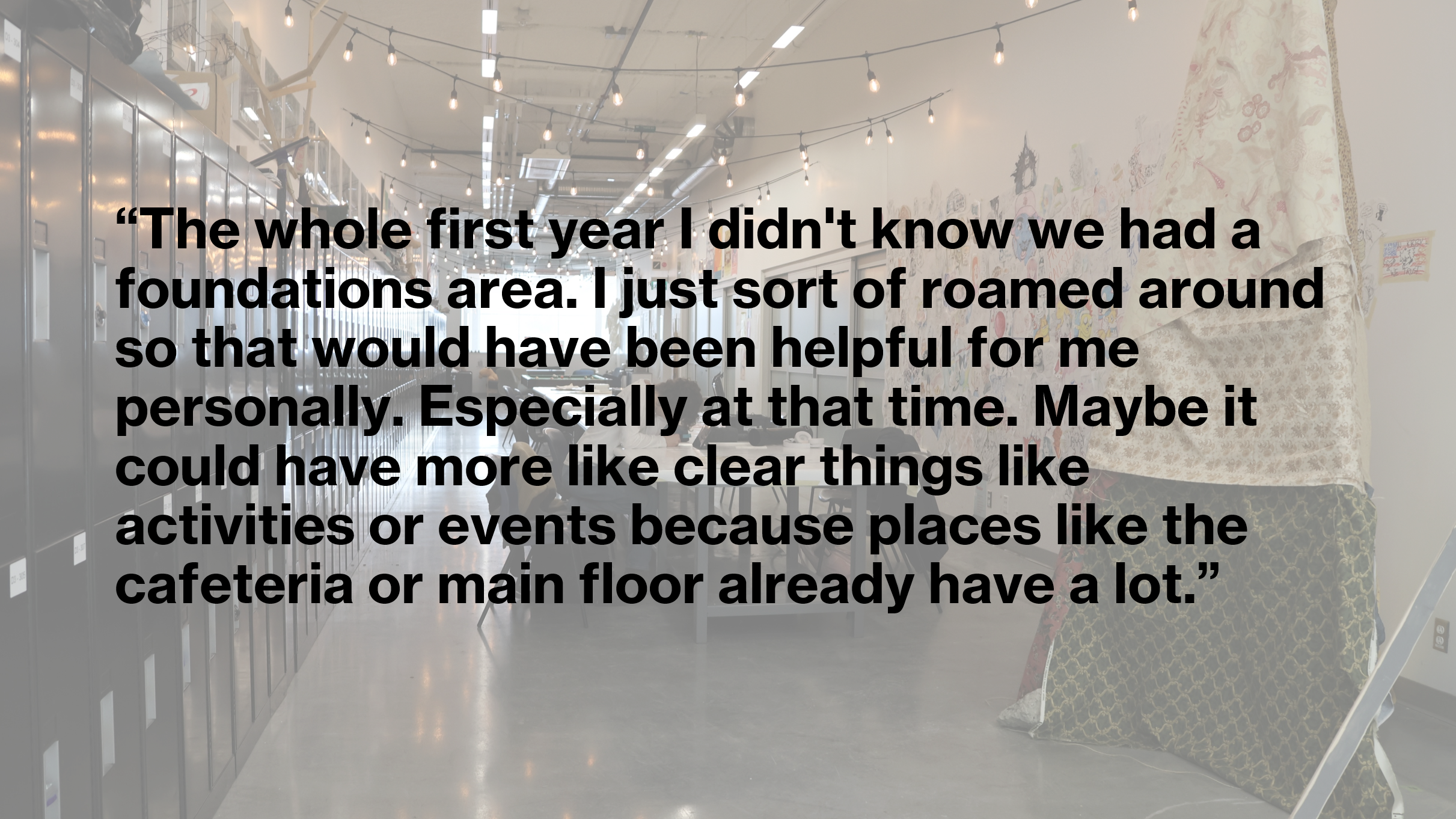
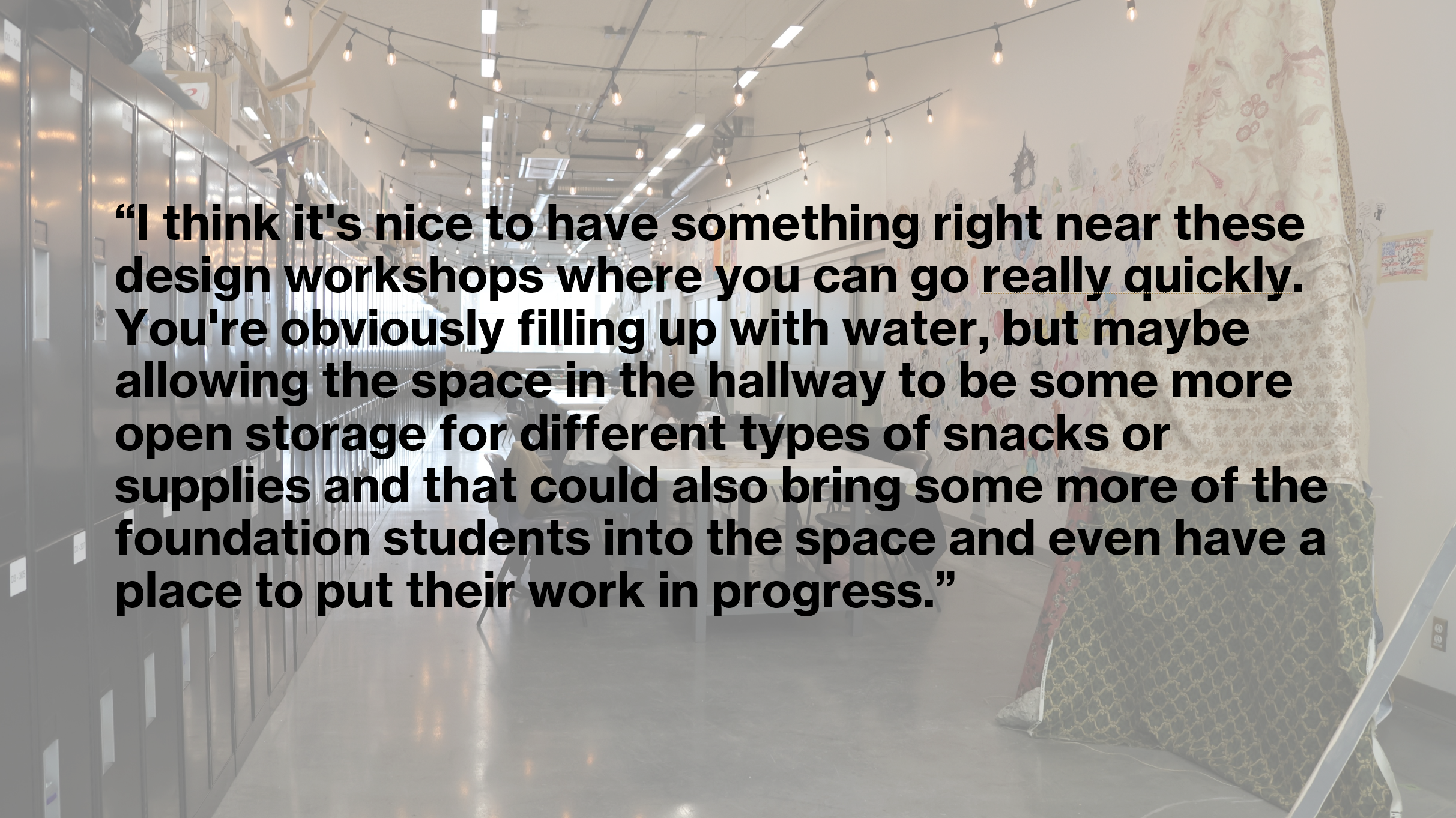
One of the successful parts of the workshop was the discussions which provided many useful insights into the spaces. The participants shared stories and highlighted their own experiences around the school over the years, often finding common ground to begin working from and sometimes educating one another about things at the school. This demonstrated much valuable information can be obtained even on the subjects that were not considered all the way to the end of the workshop, leaving the door open for further discussion on those areas at a later date
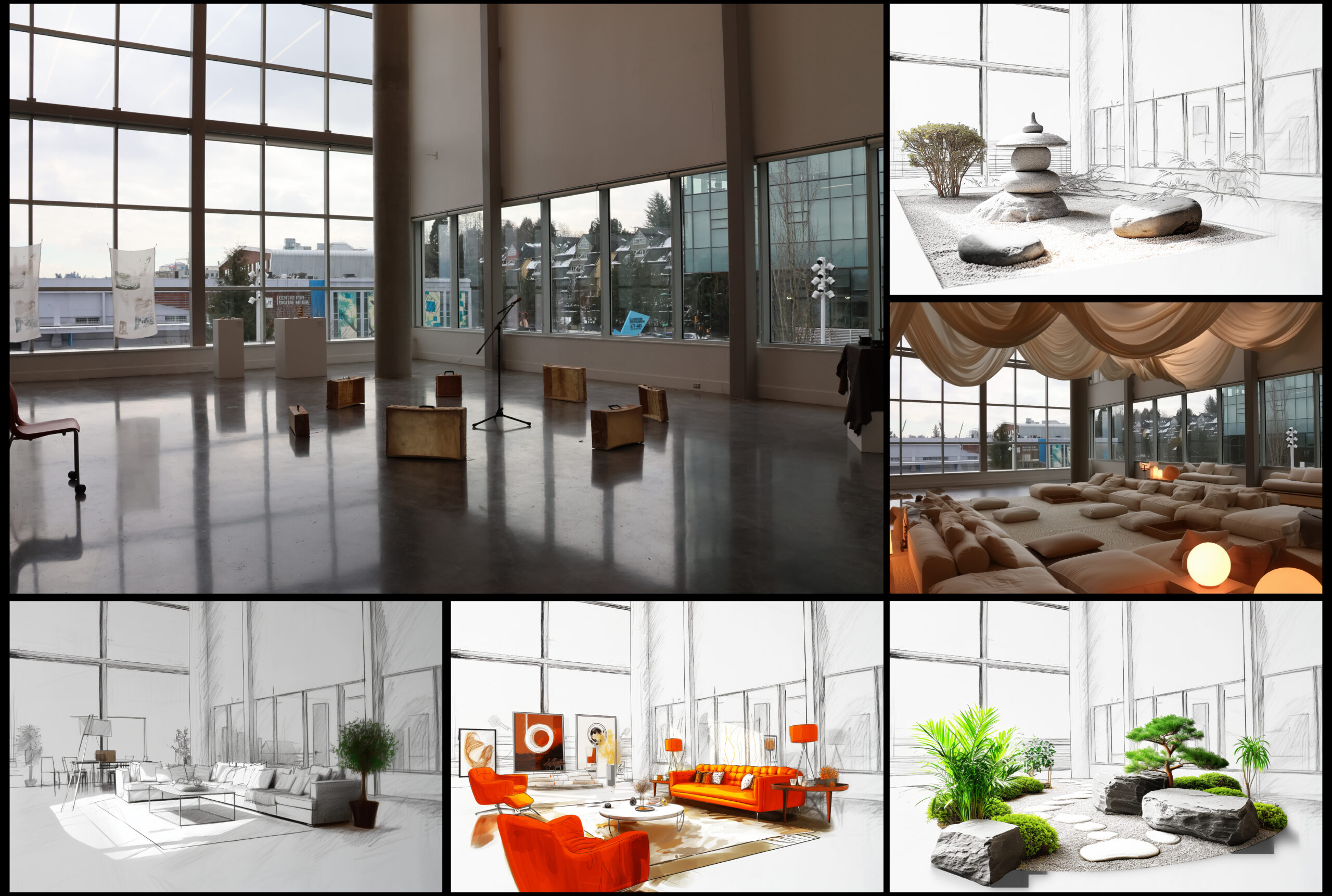
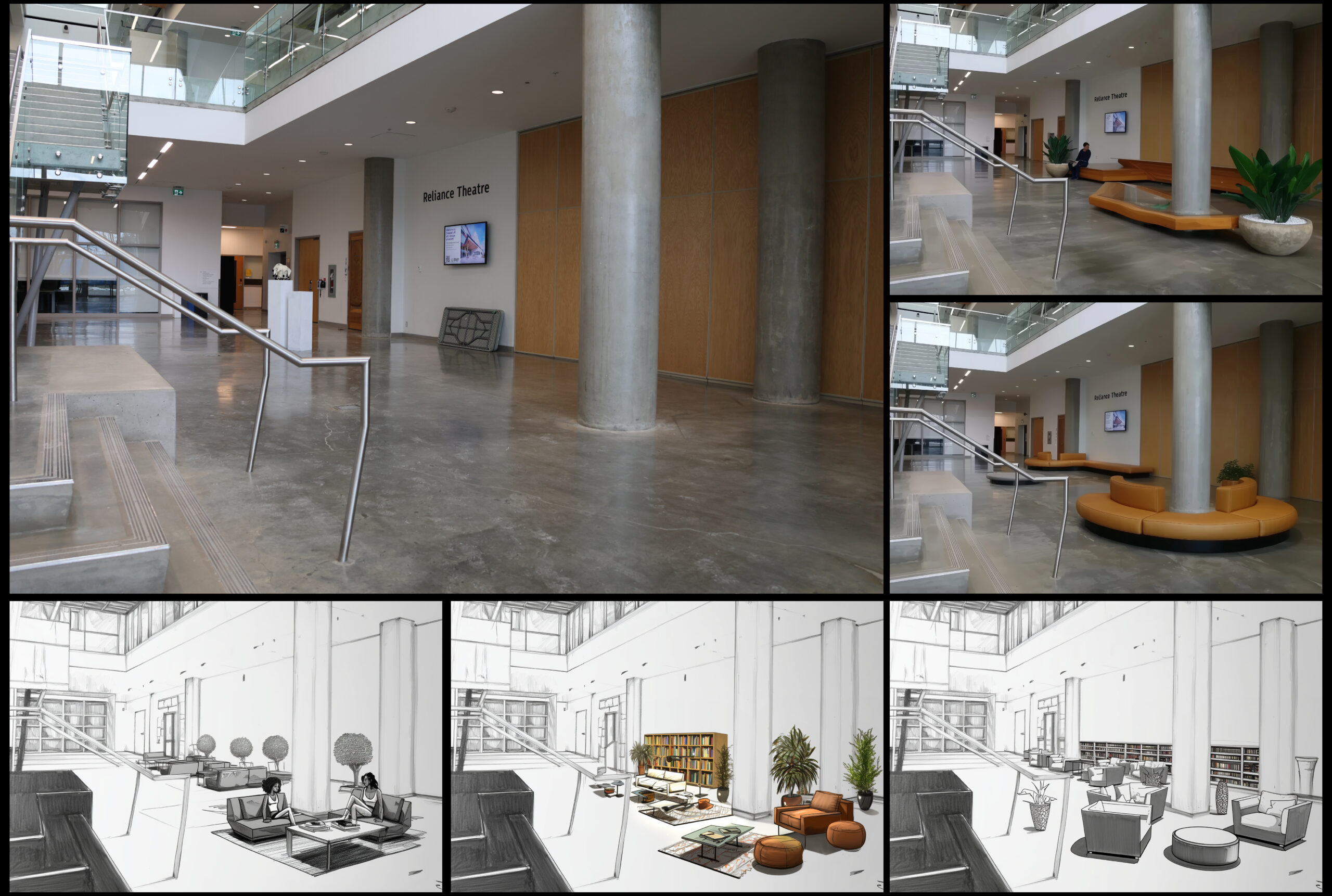
Participants were shown AI generated redesigns of each space created in Midjourney as inspiration before creating their own proposals.
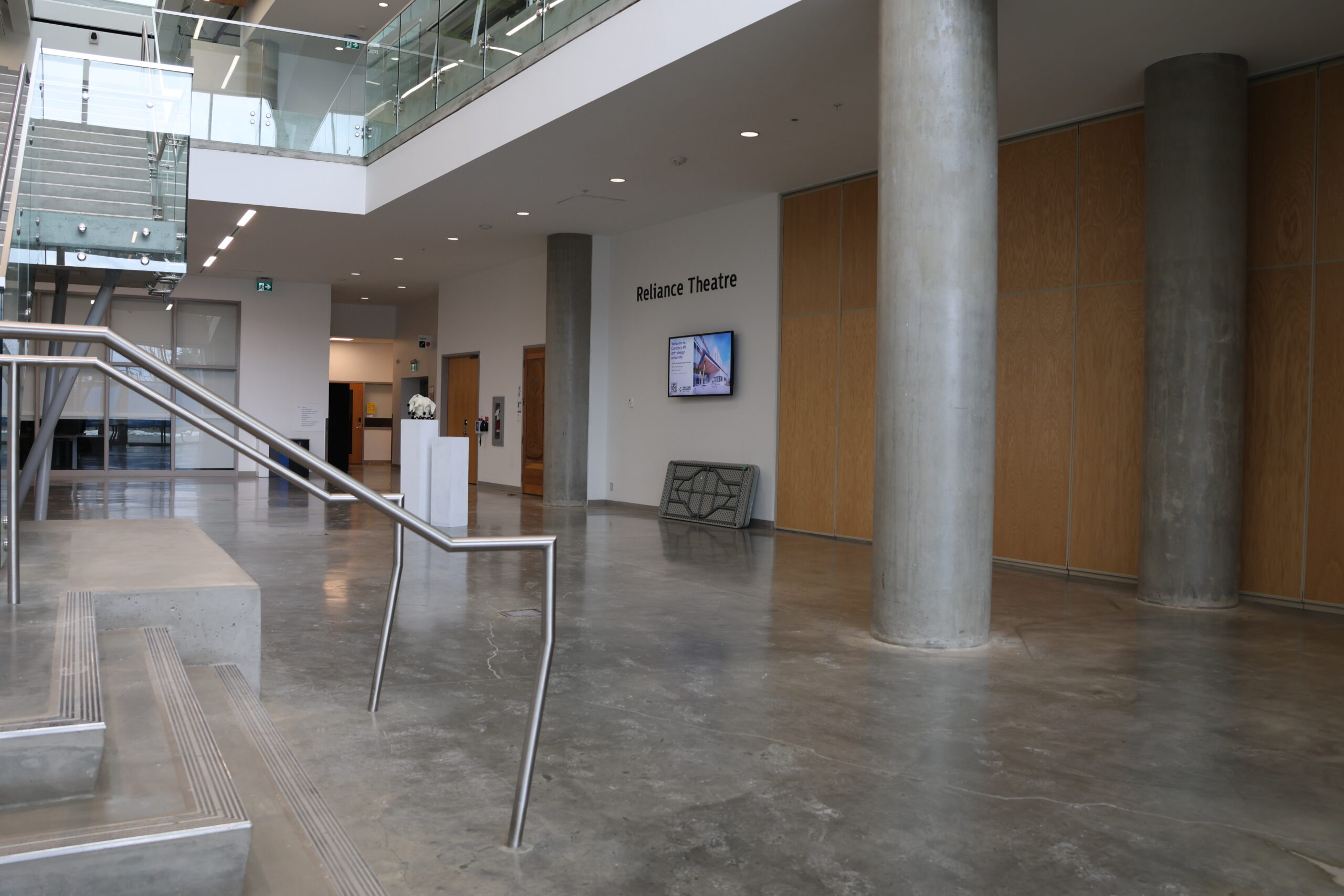
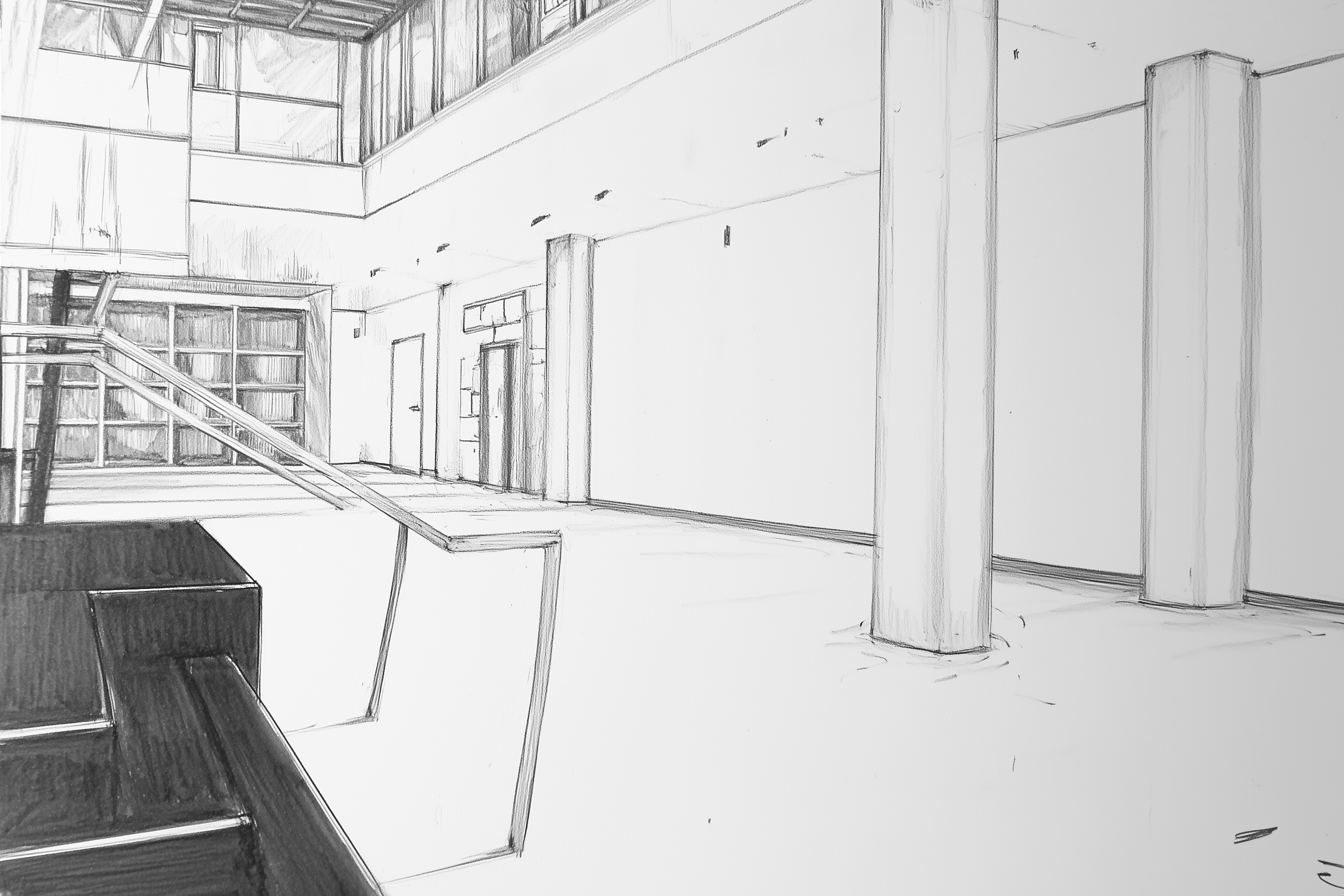
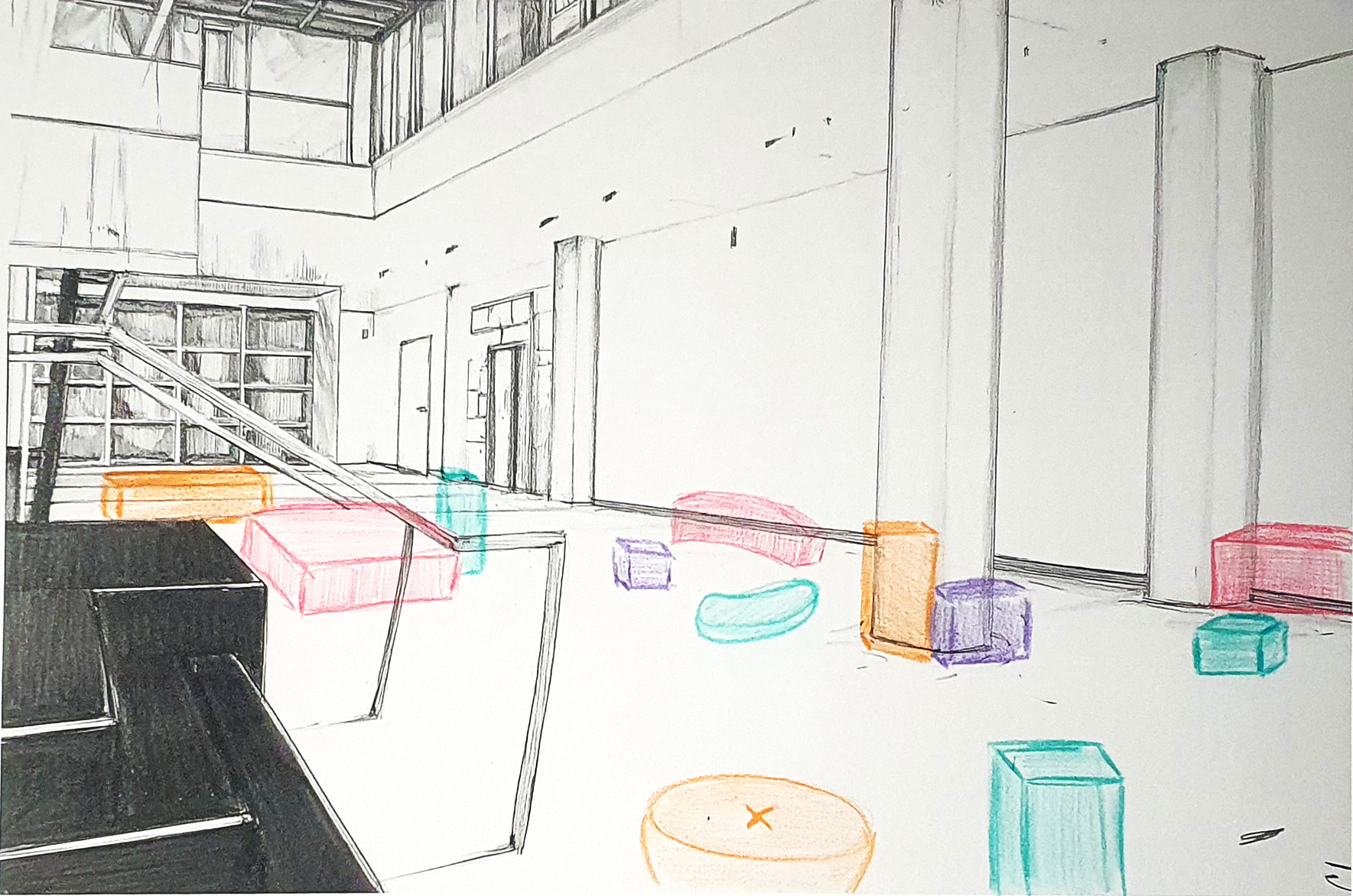
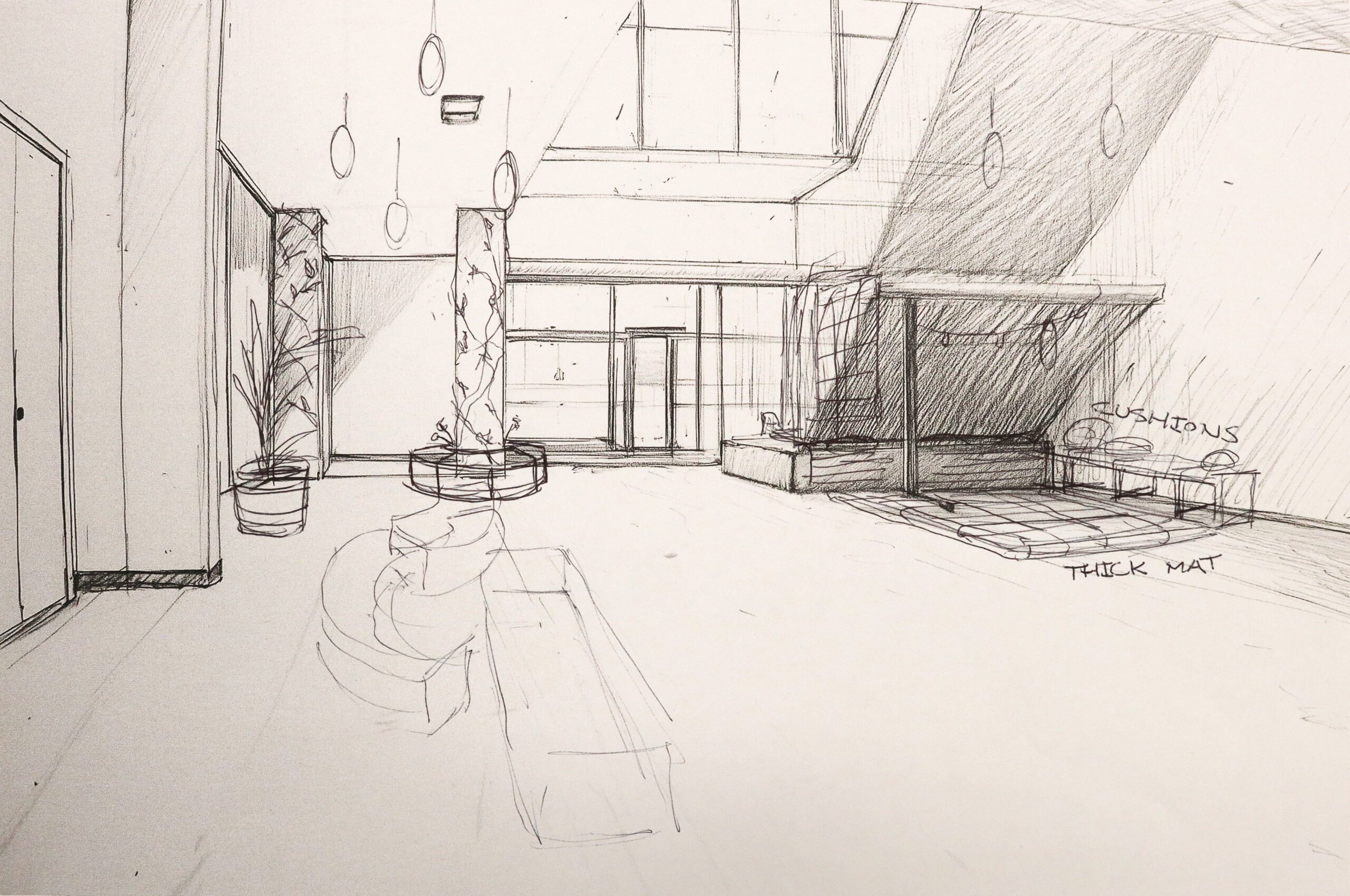
The Reliance Theatre entrance was chosen as the subject of interest for the workshop. To help aid participants in creating their vision for the space, a sketch version of the space was created using Midjourney AI image generator.
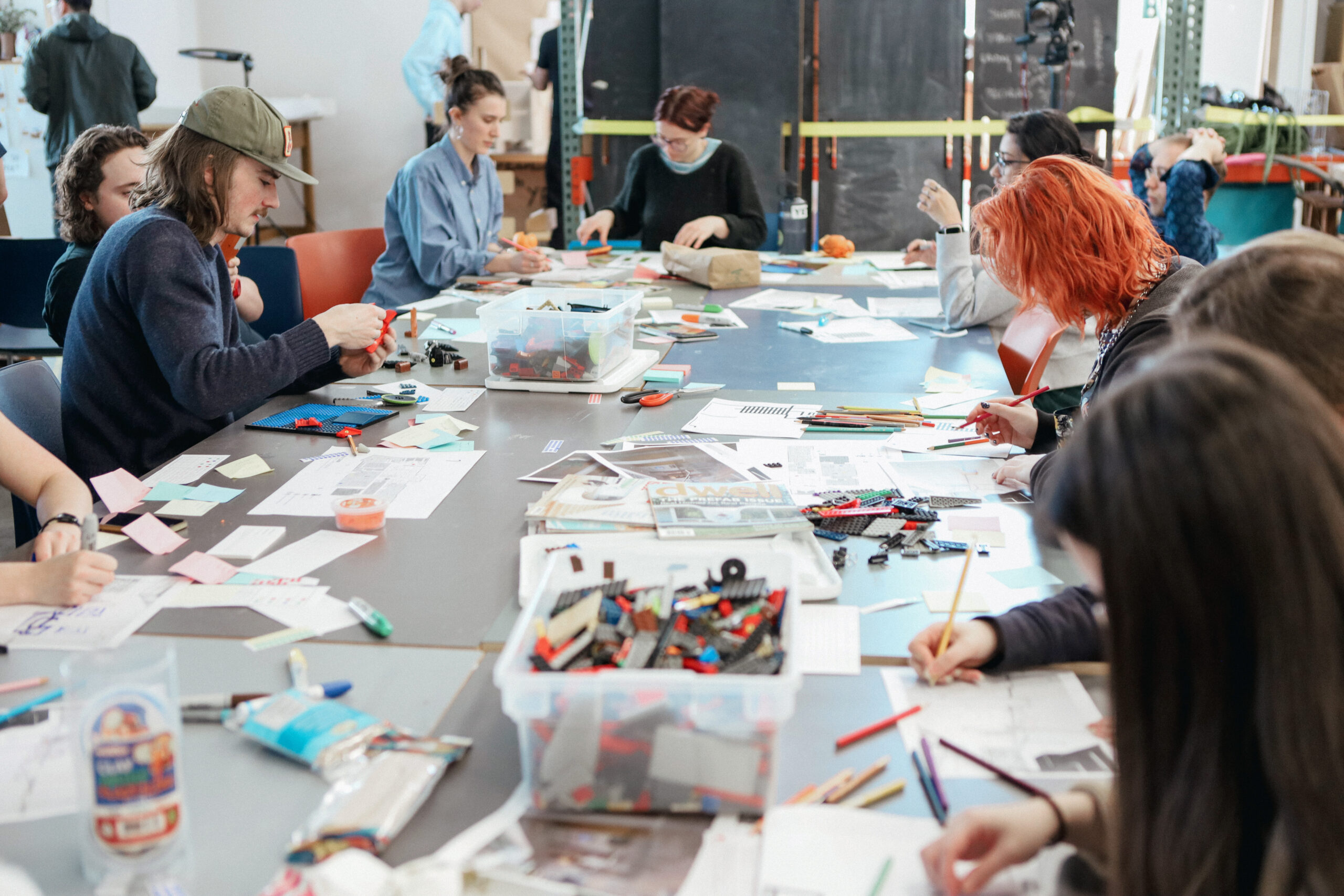
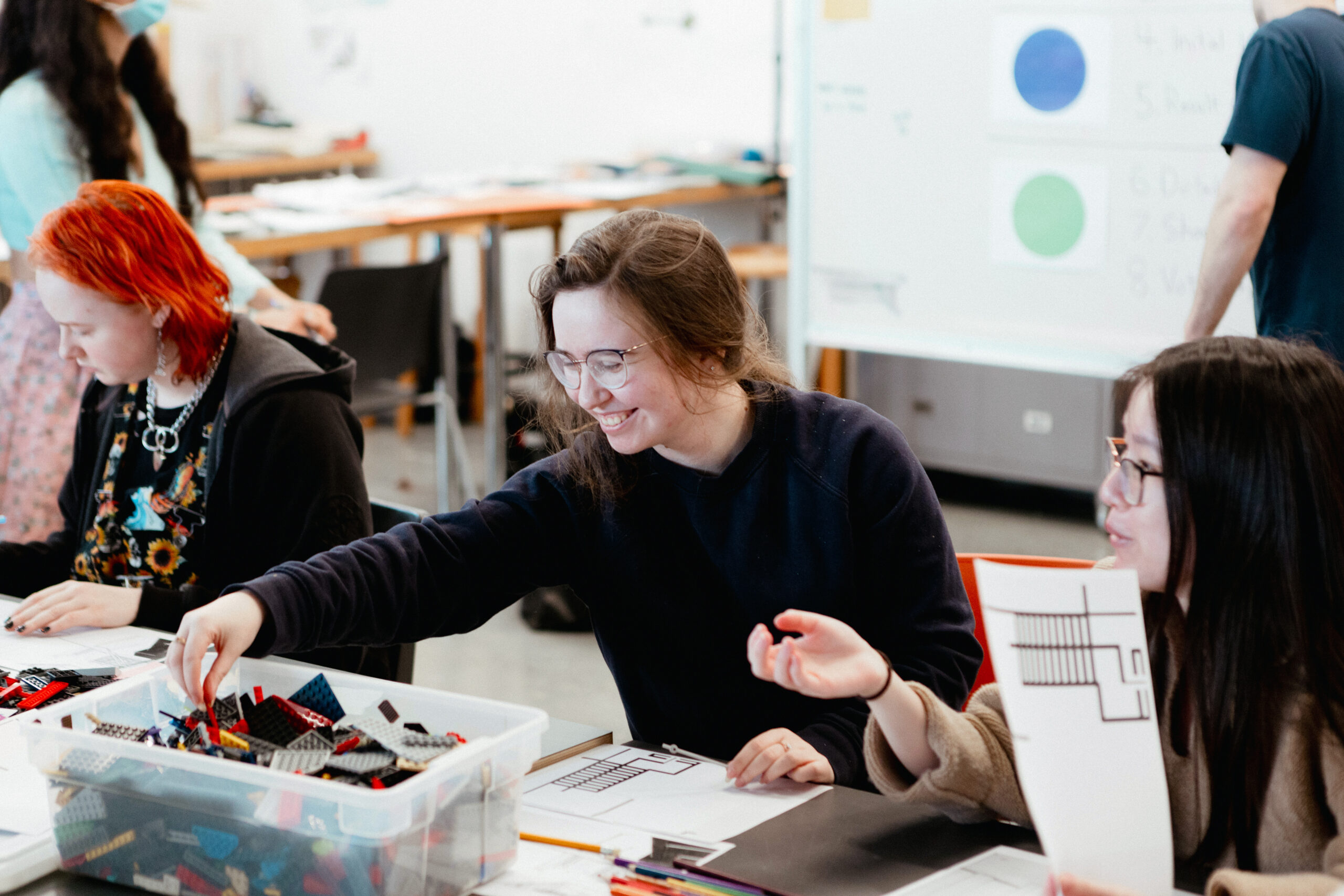






Participants could create their ideas in any medium they felt comfortable using and then presented their ideas to the group.
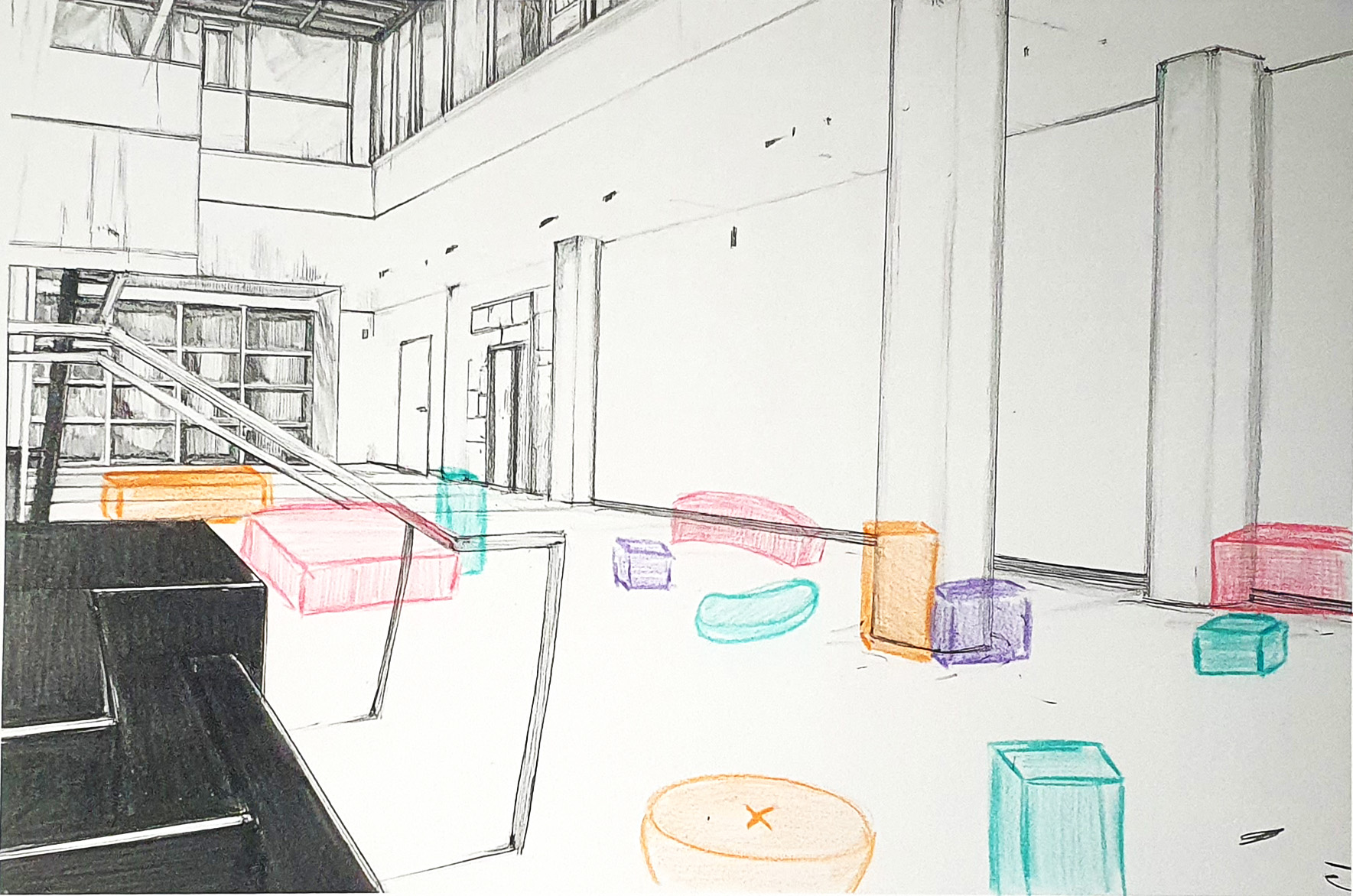
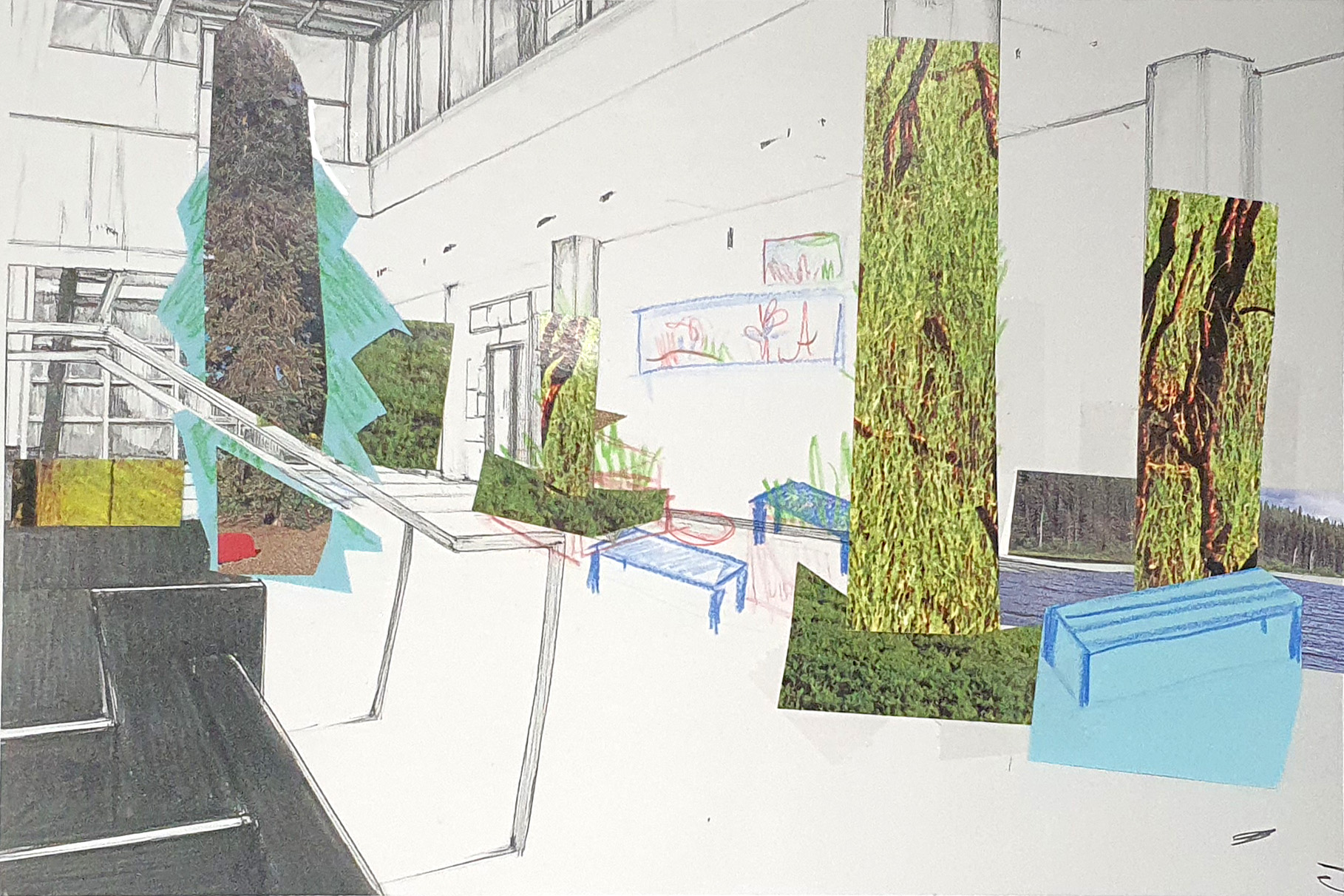
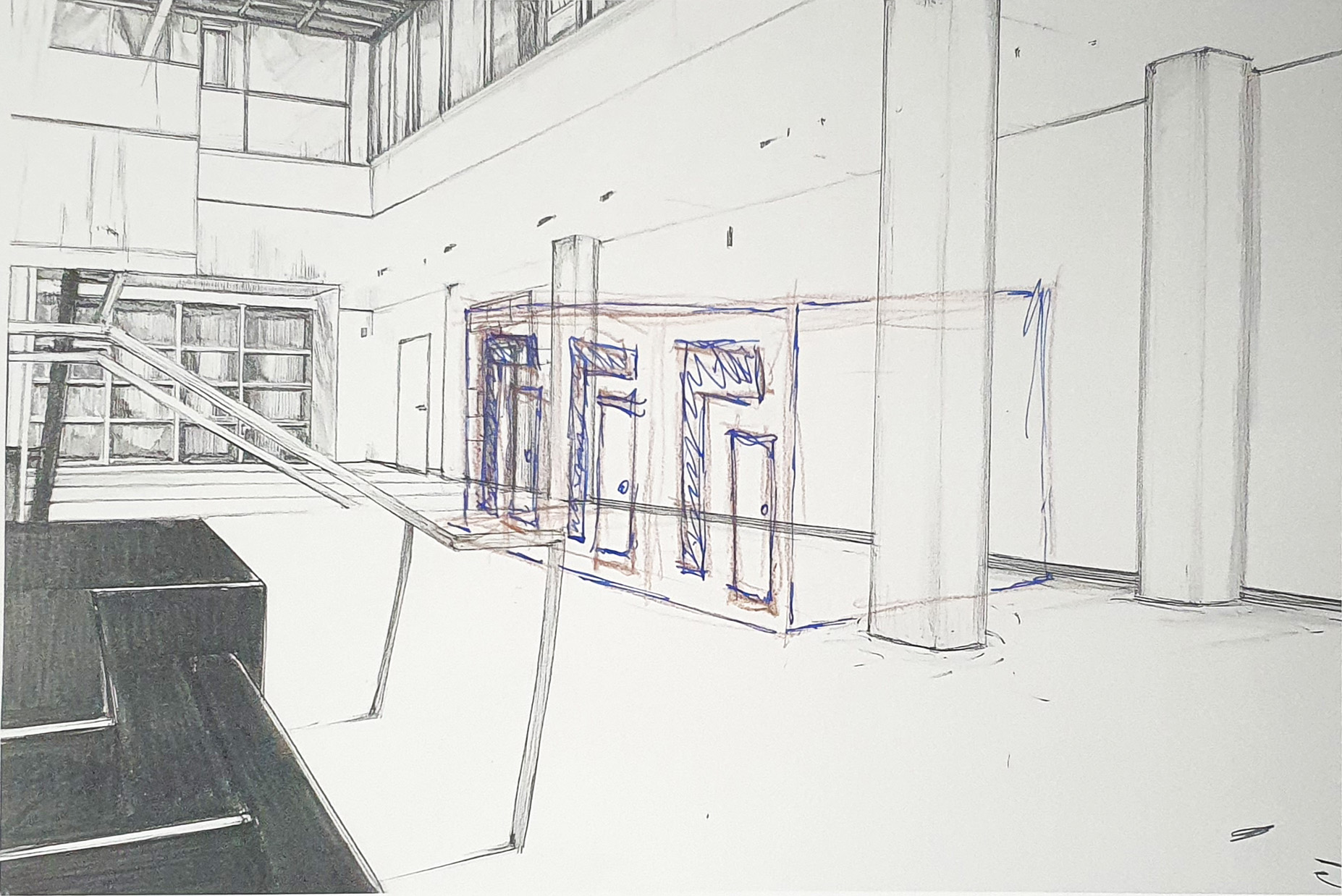
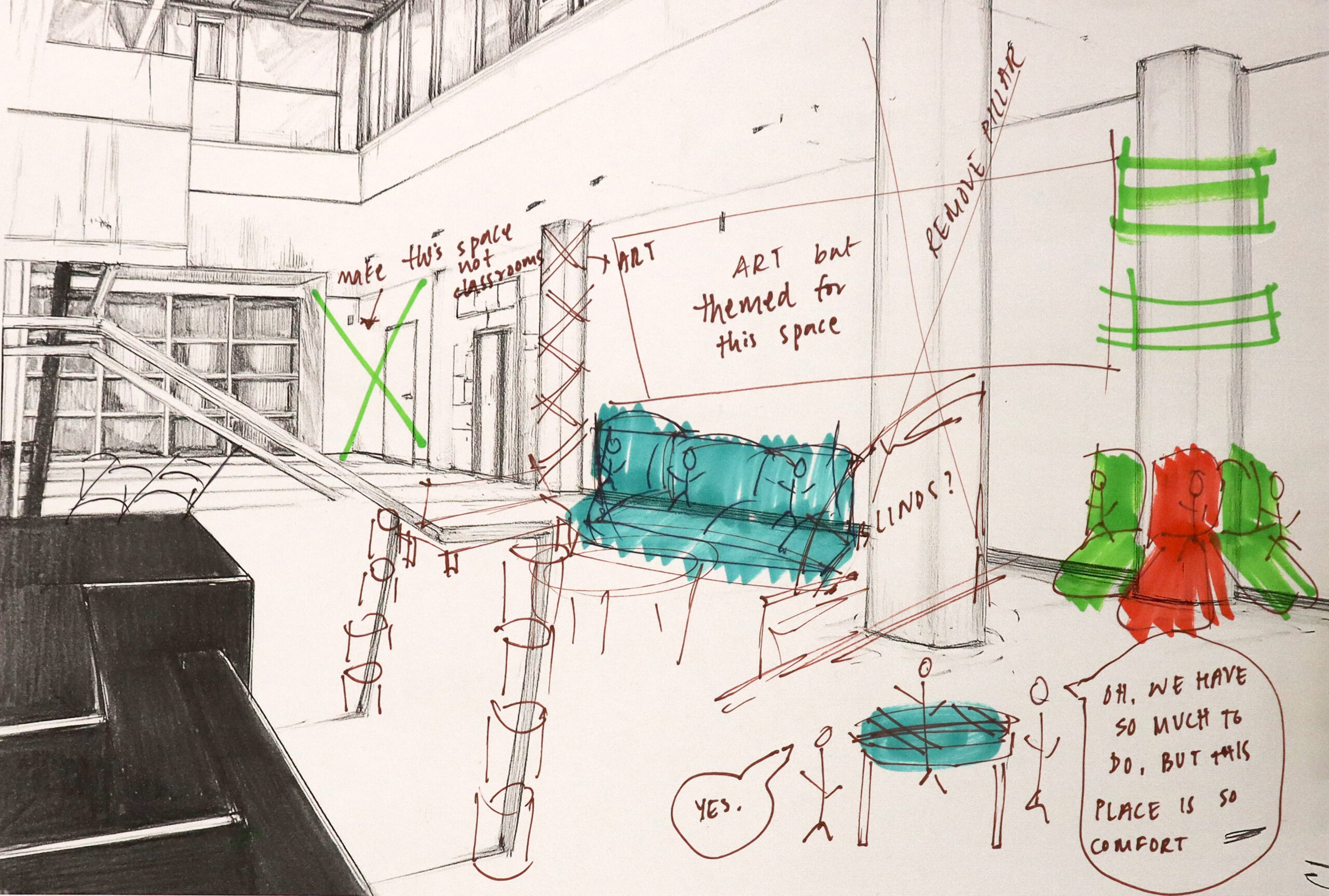
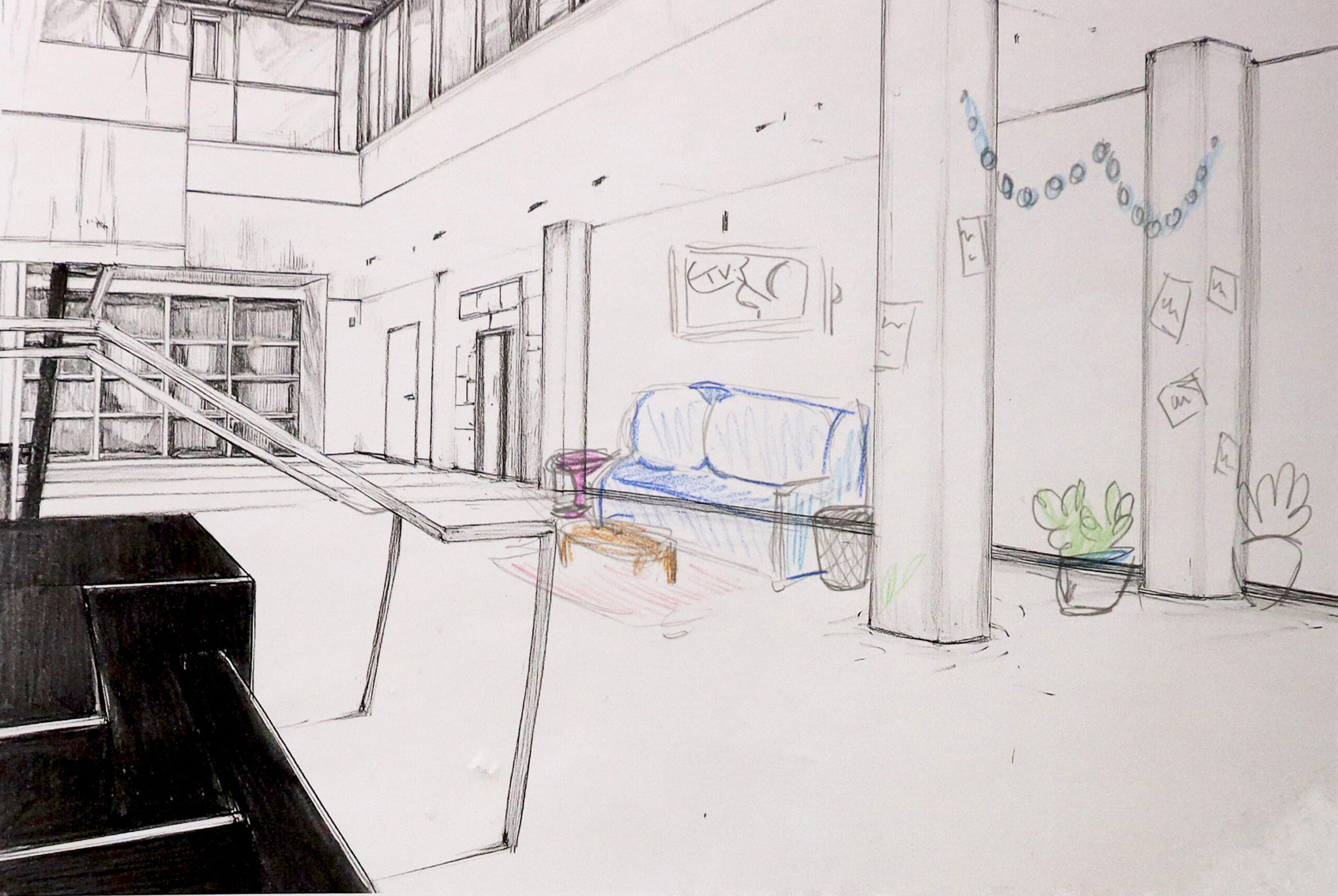
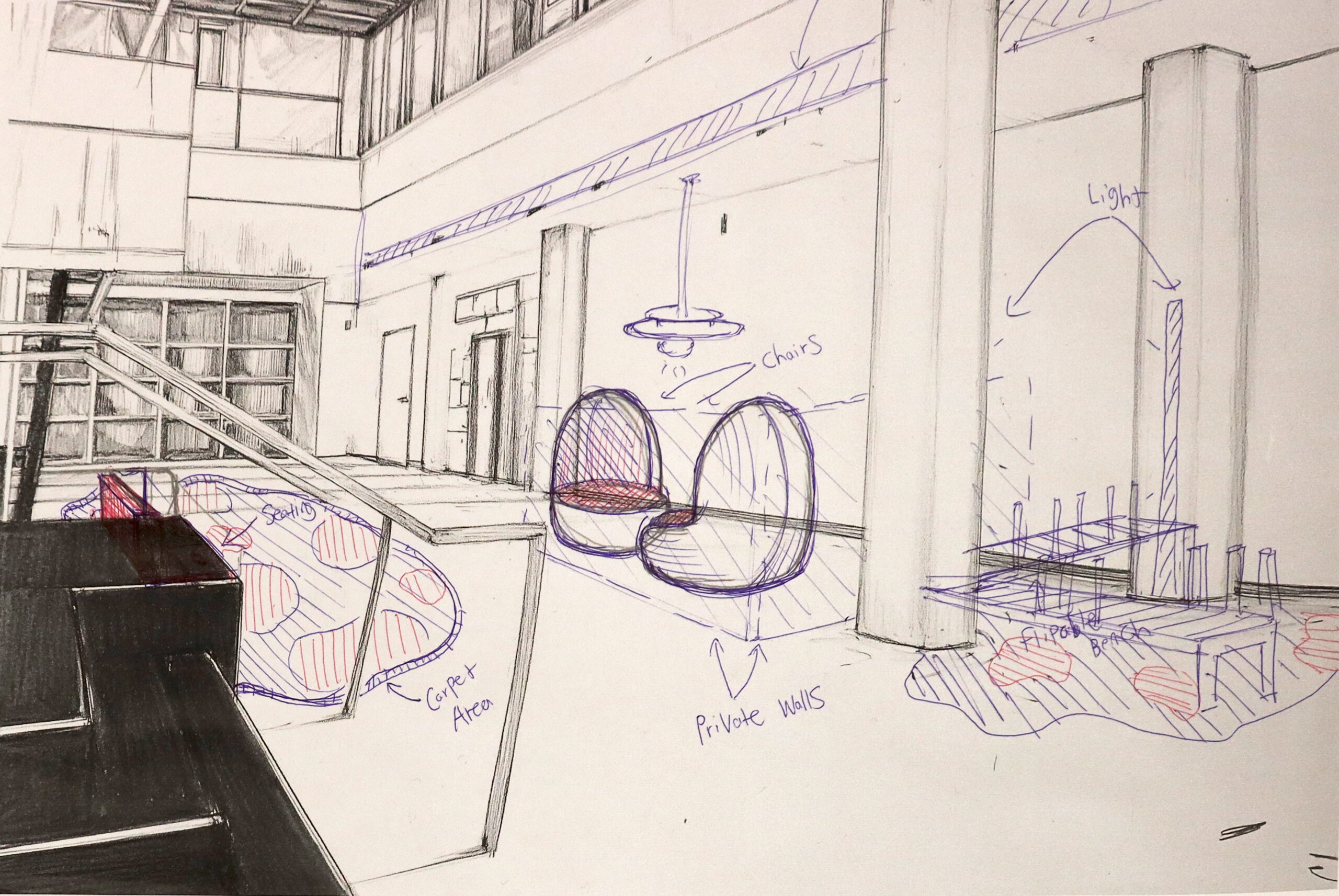
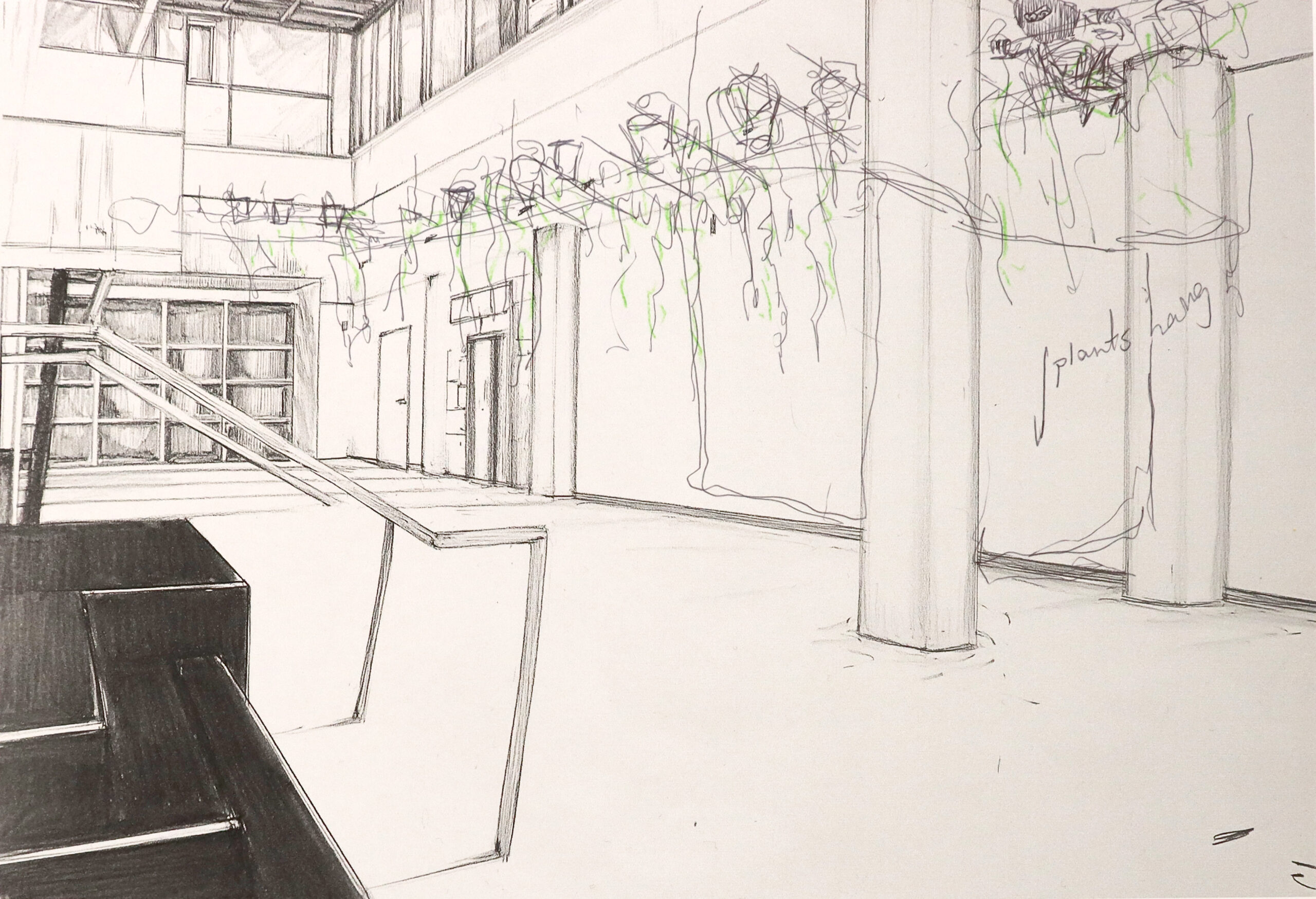
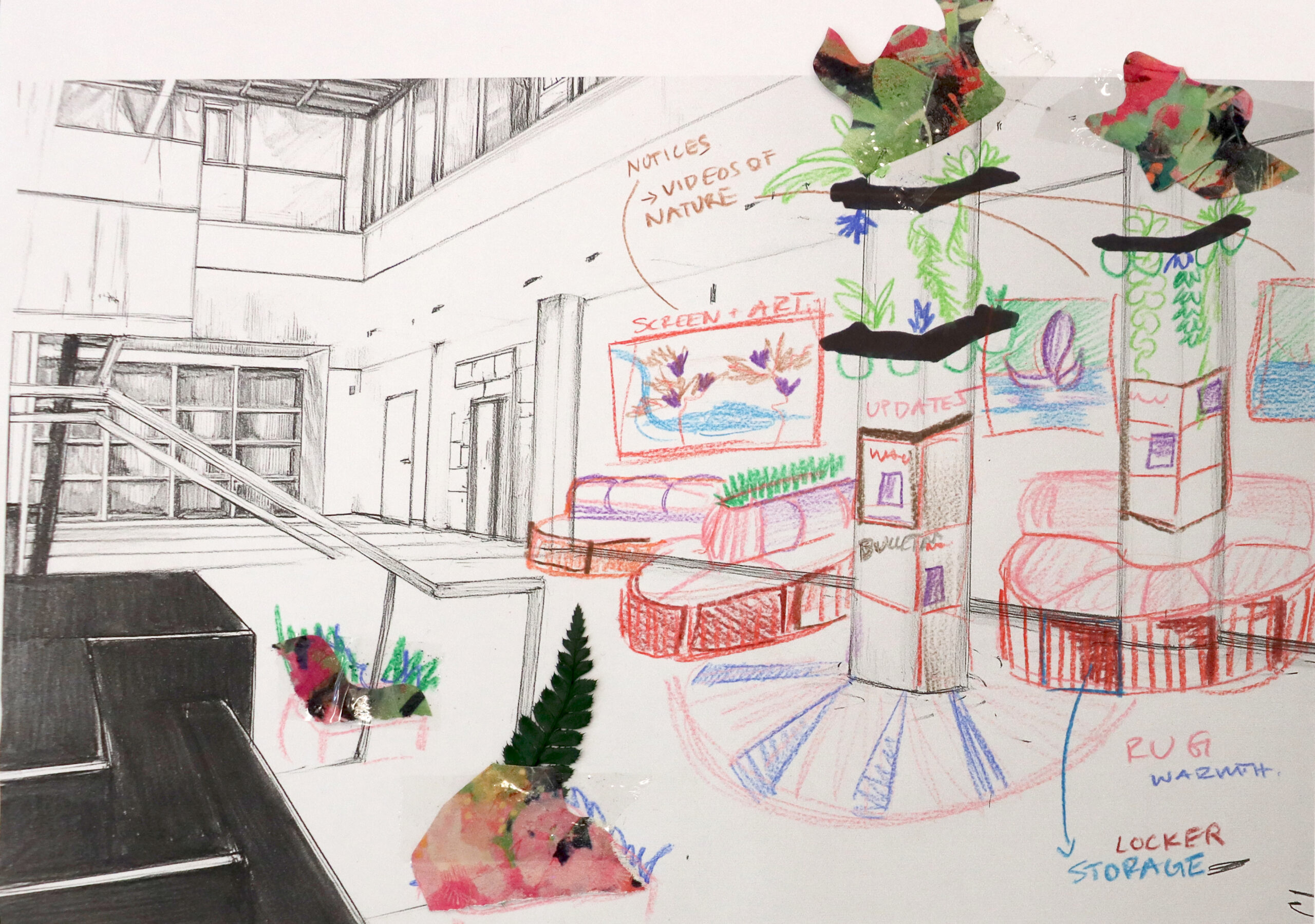
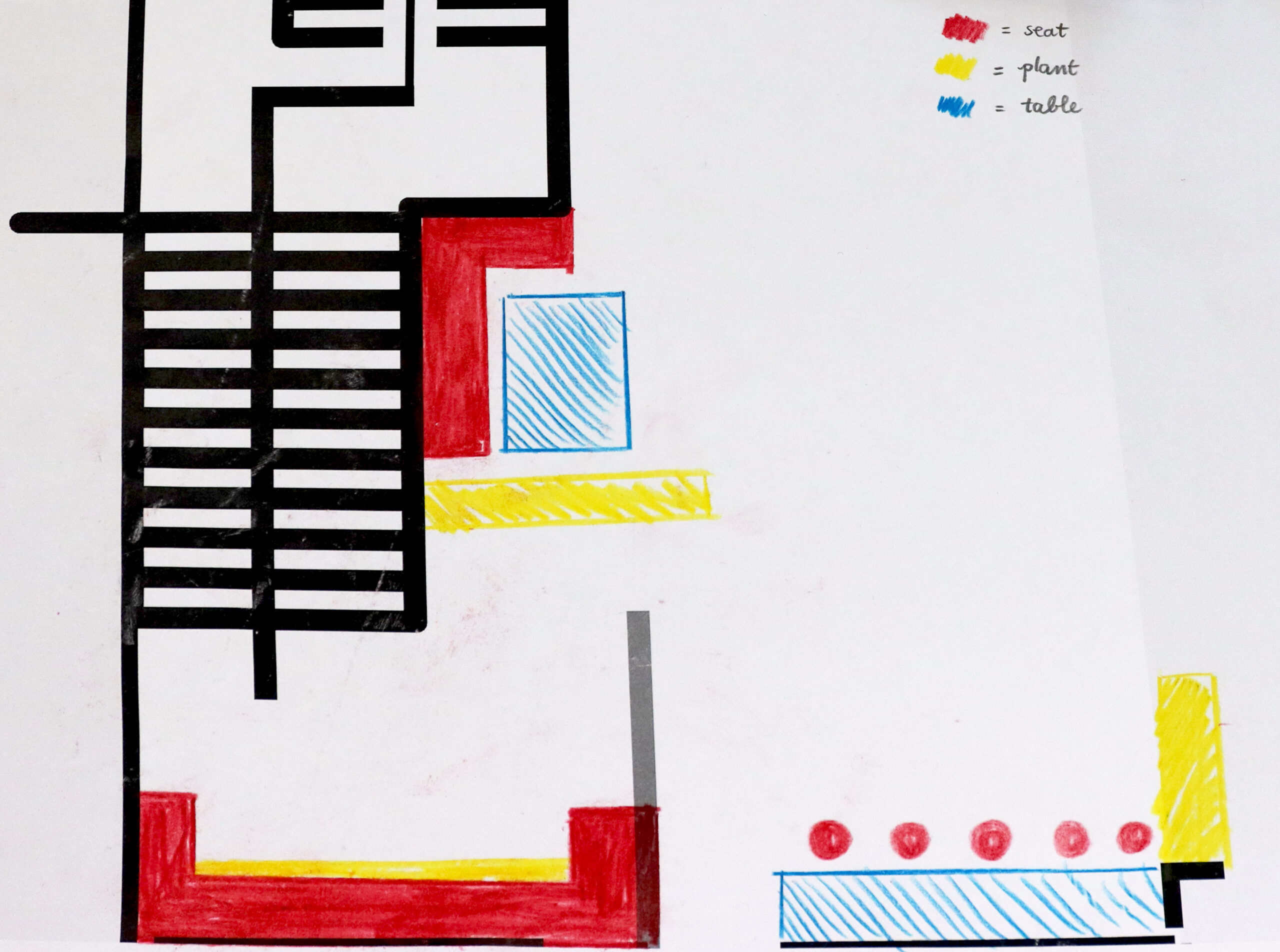
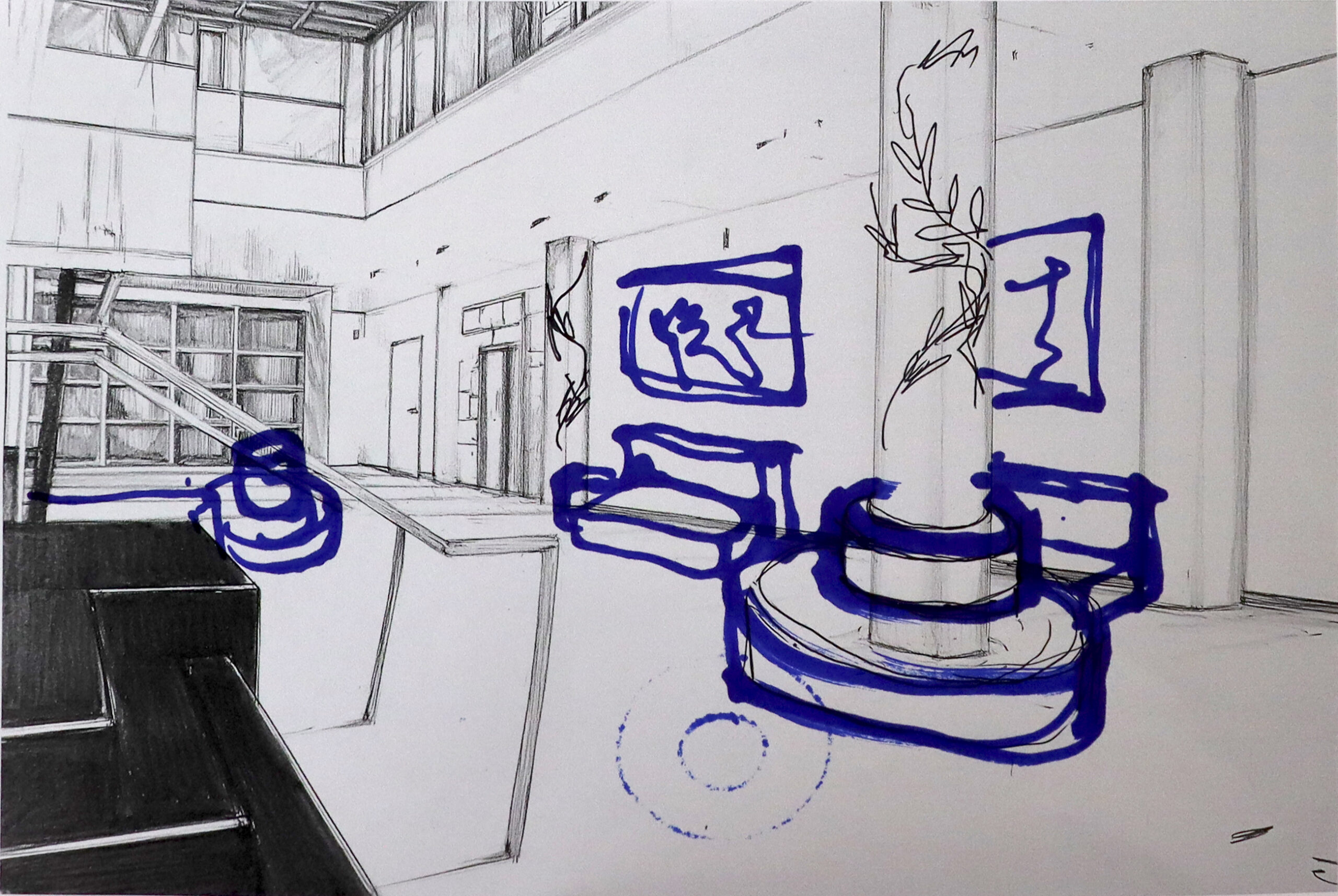
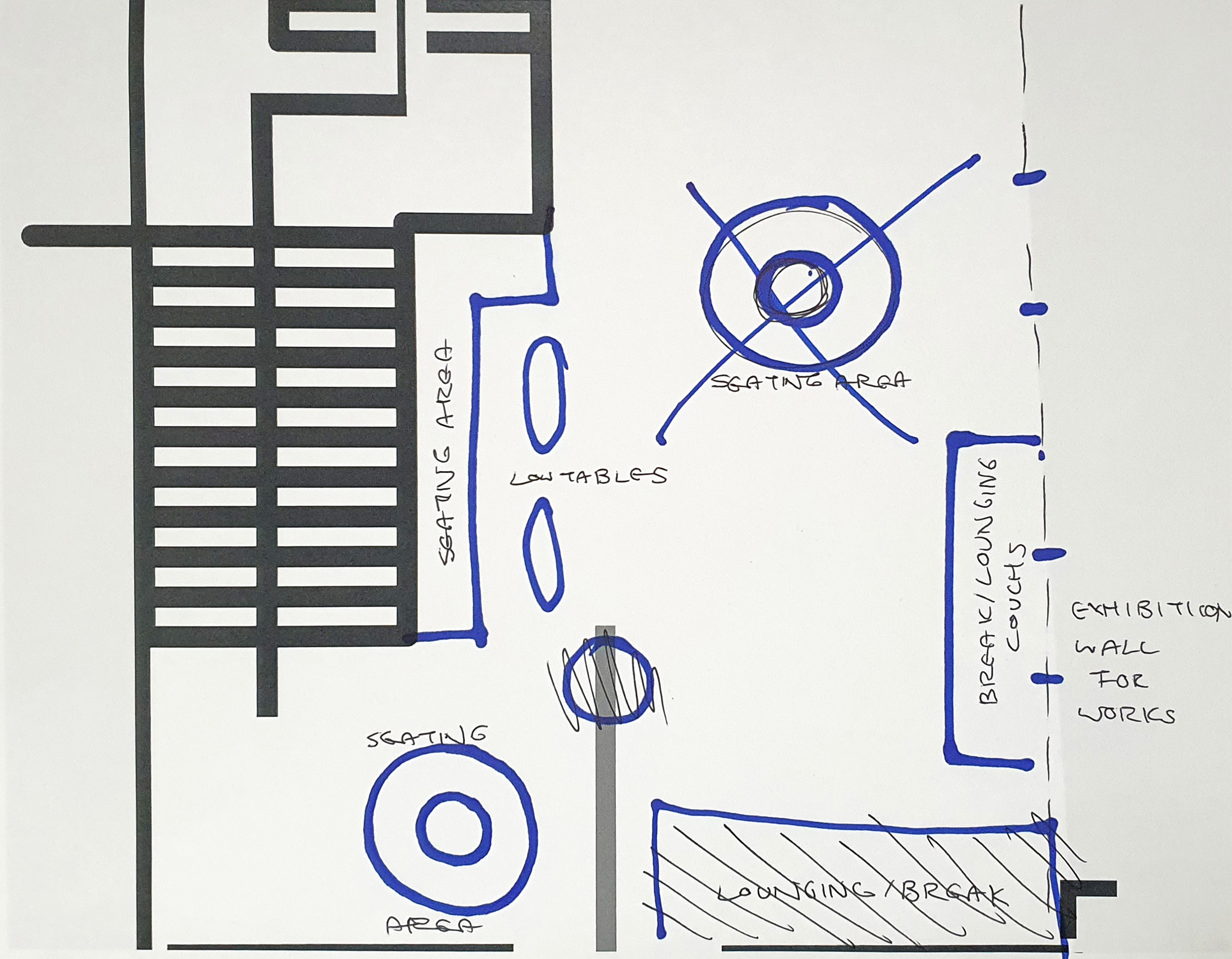
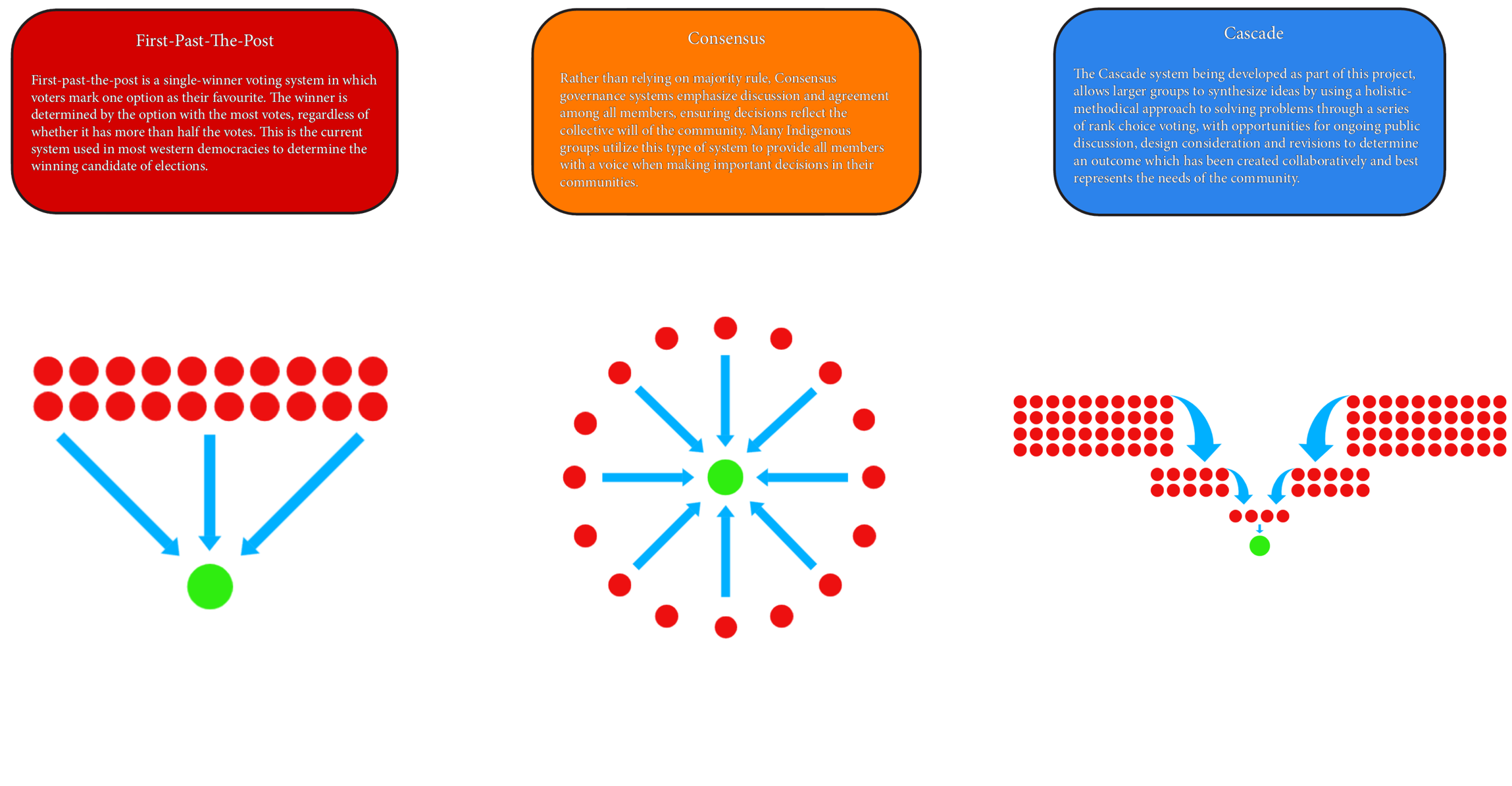
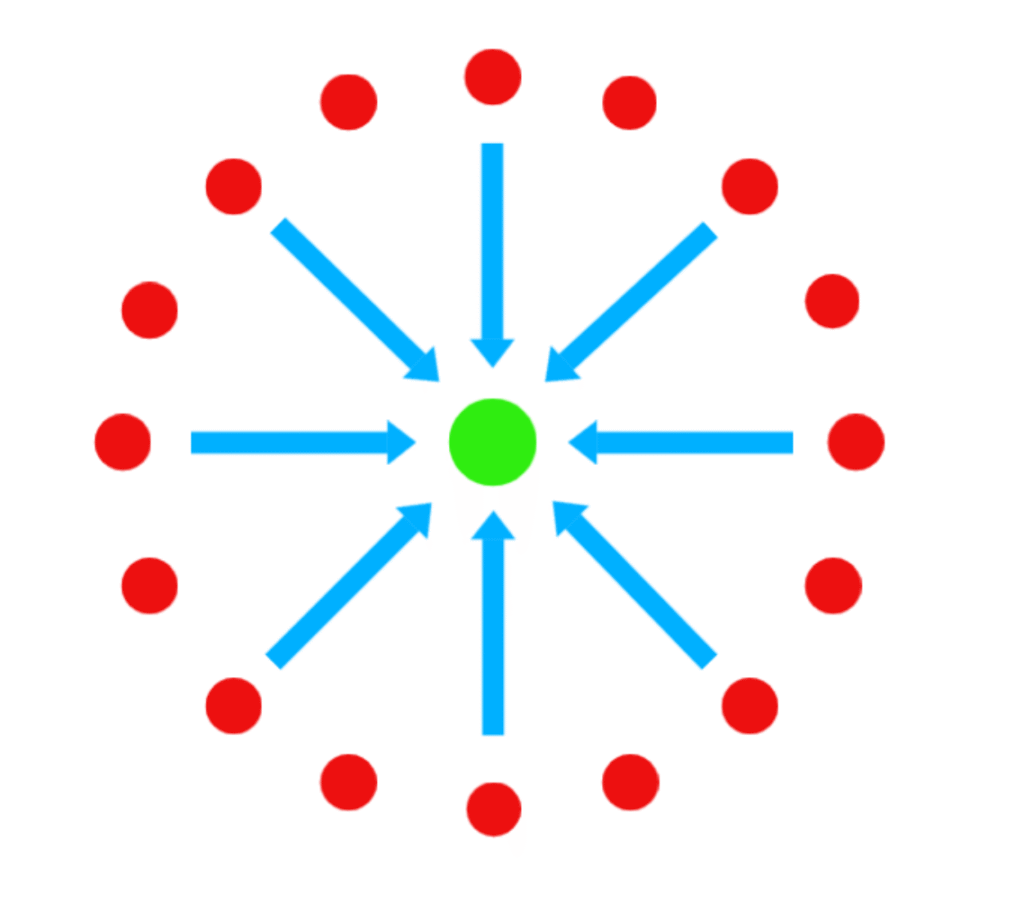
As a way of testing the Cascade system’s effectiveness, the workshop had it up against the First-Past-the-Post system which we use in our current elections and the Consensus system which is practiced by many indigenous cultures and requires all members voting to approve of an idea for it to continue.
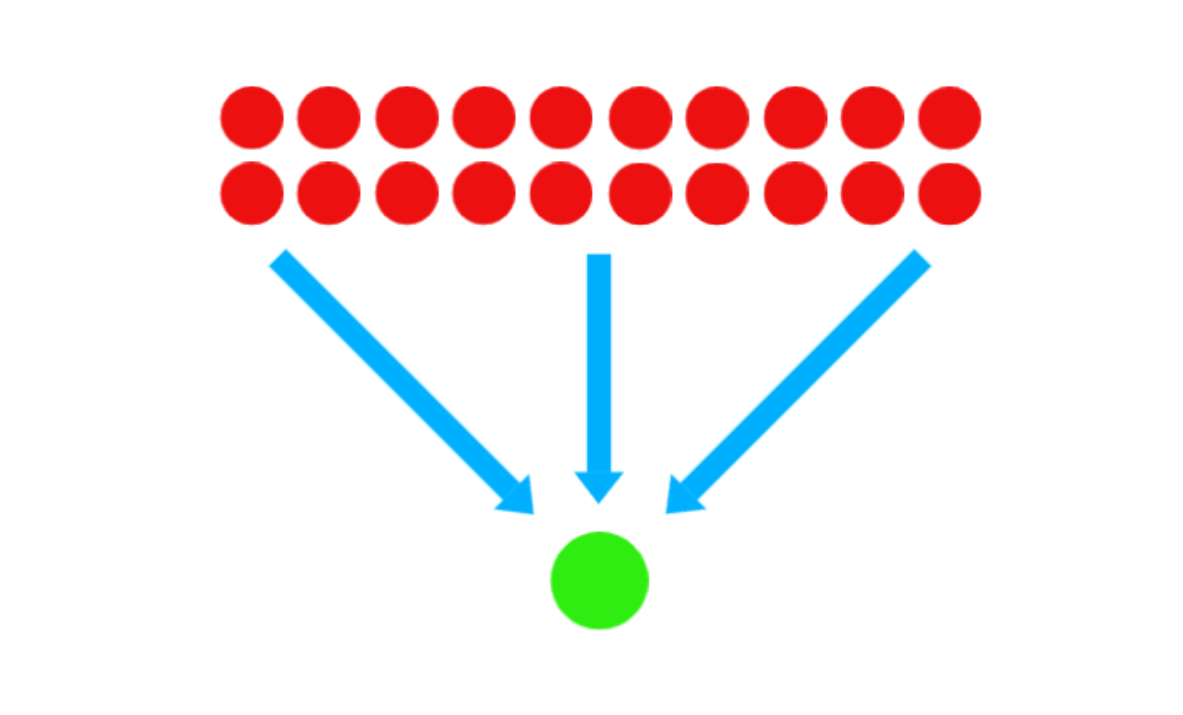
The First-Past-the-Post system had a single vote to determine the outcome. The winner had a design which focused on flexibility of the space with small portable furniture.
The Consensus system had many good discussions, however a full consensus could not be reached in the allotted time so an outcome was not determined.
The Cascade system had a result which also focused on furniture which was easily adaptable to different seating arrangements, but also emphasized plants for a more natural atmosphere.
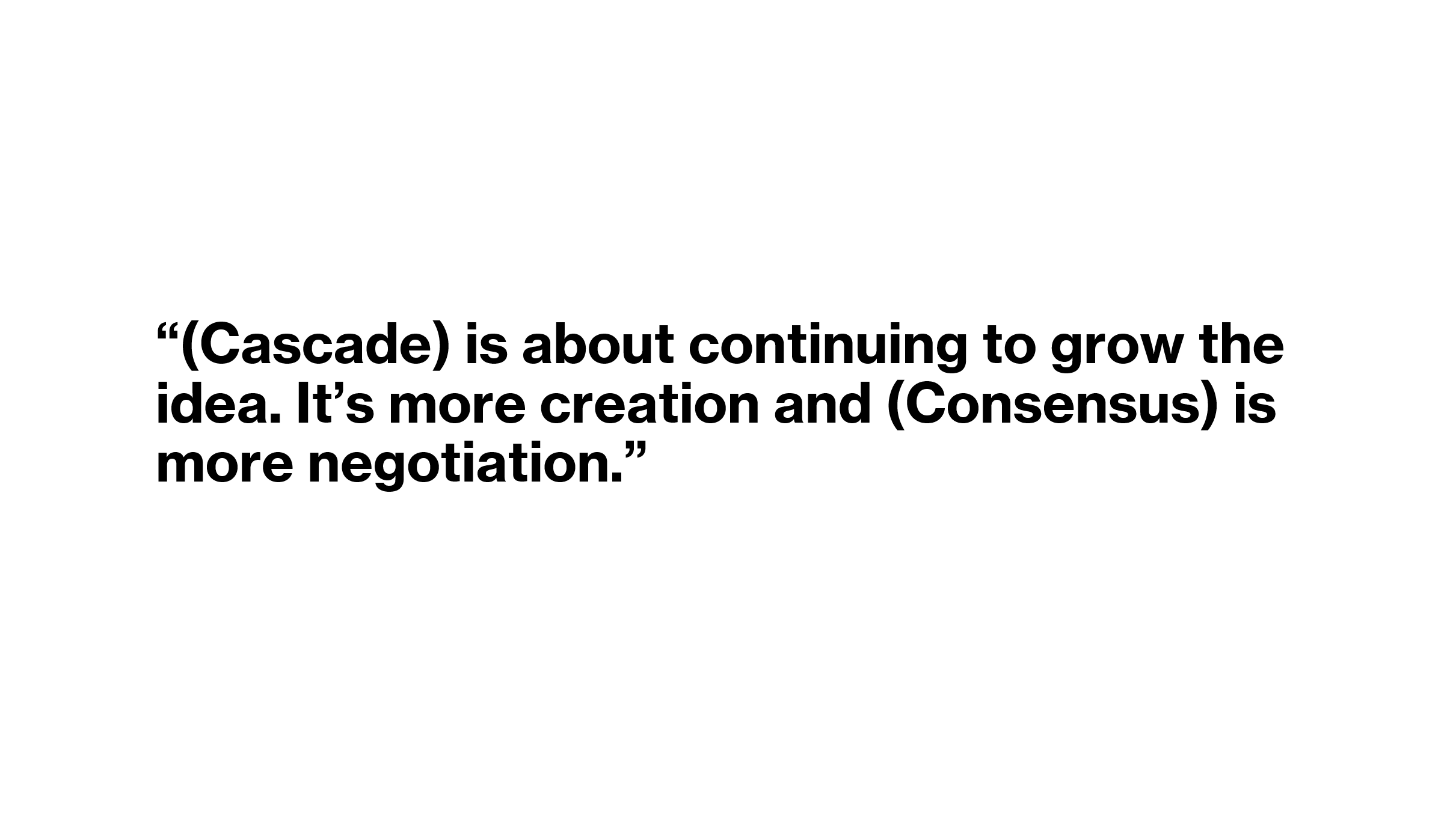
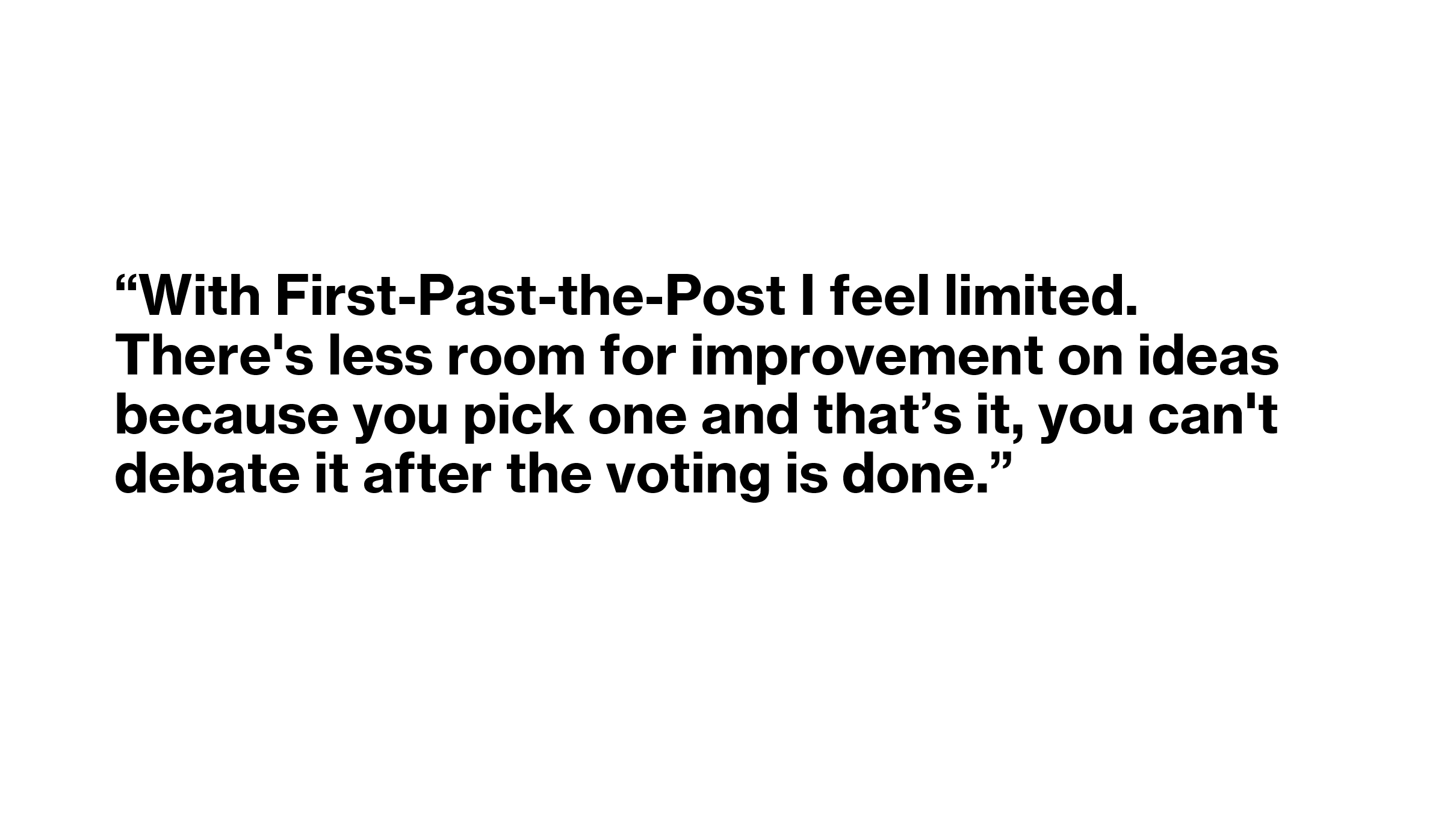
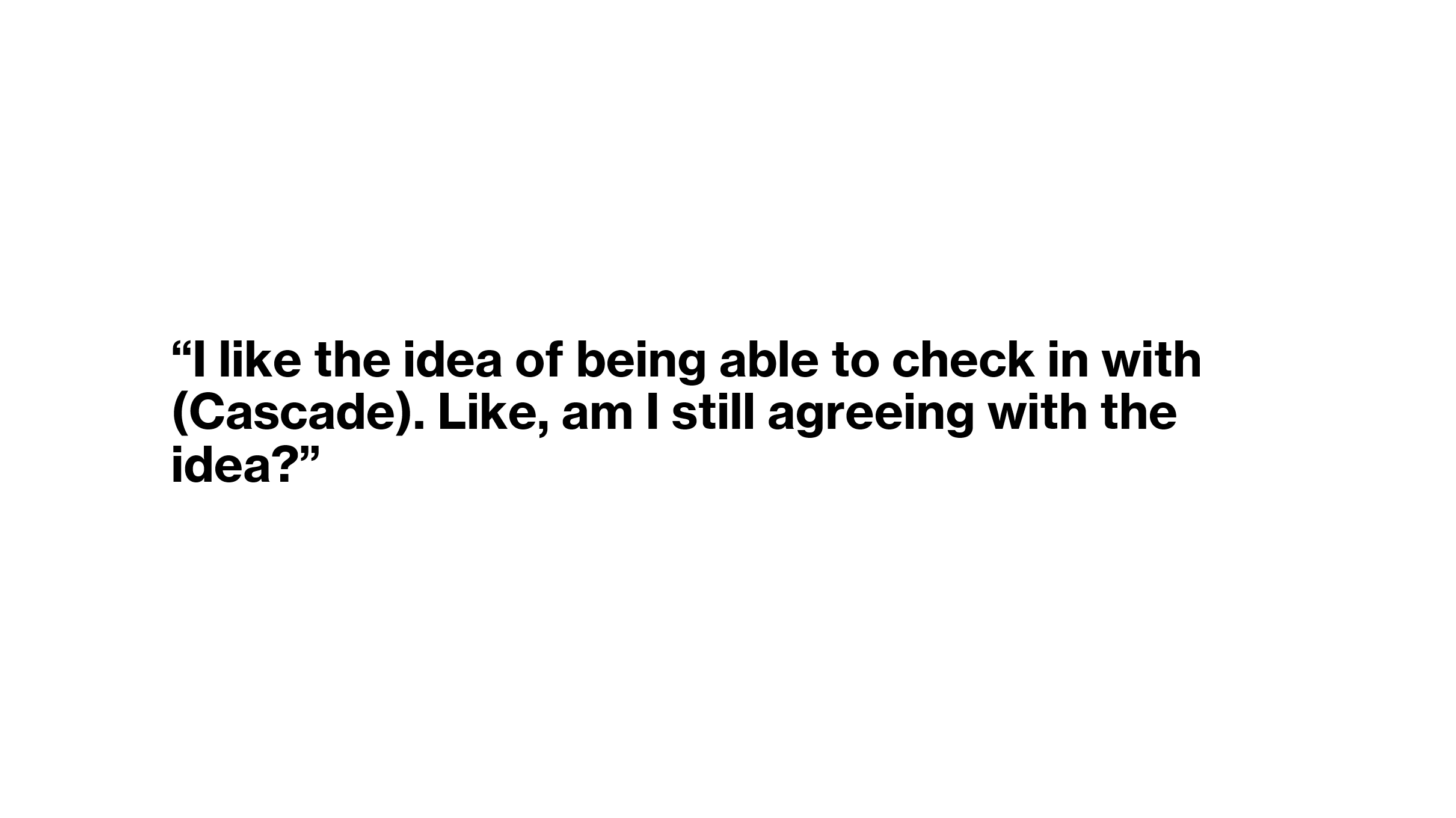
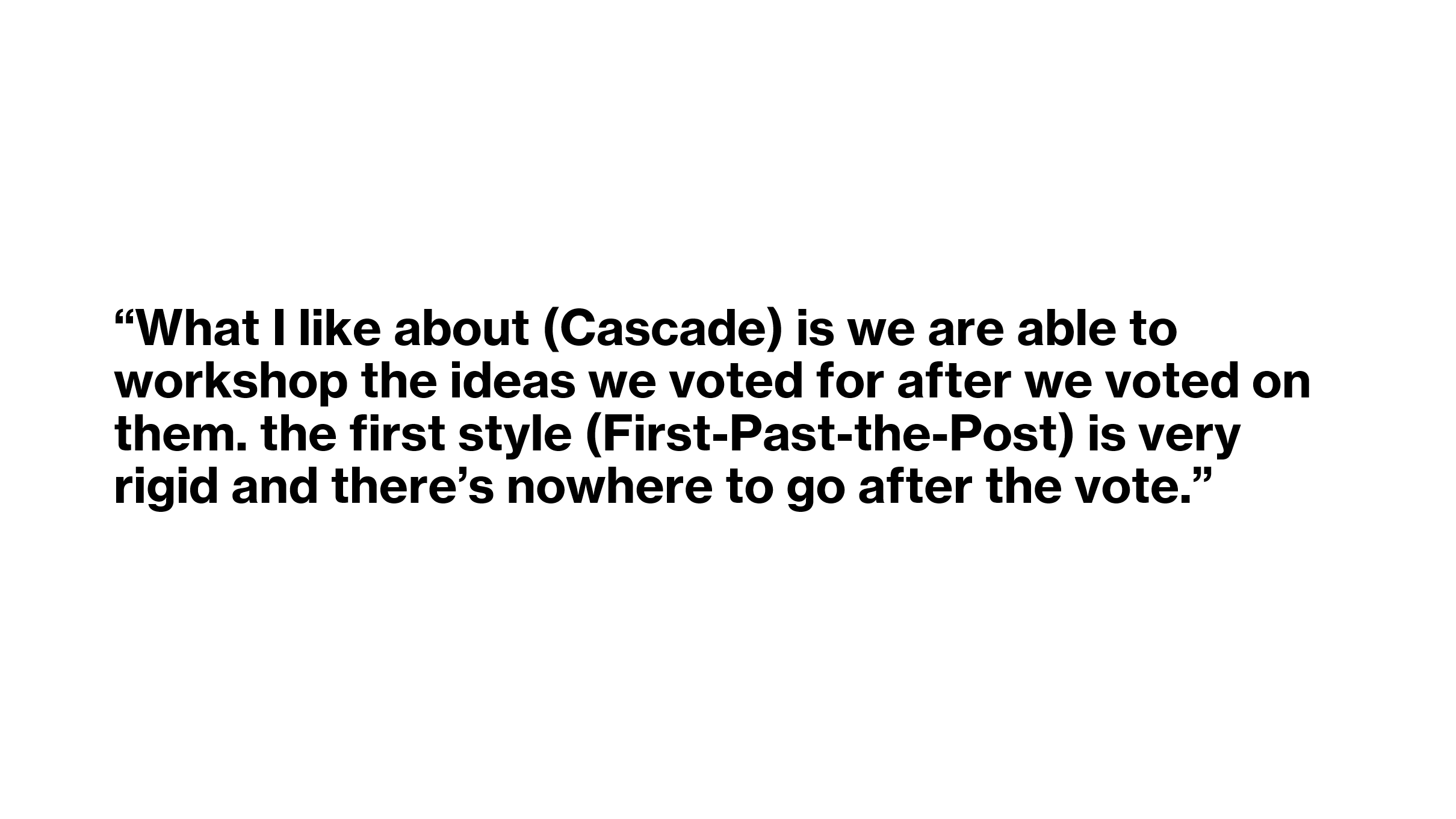
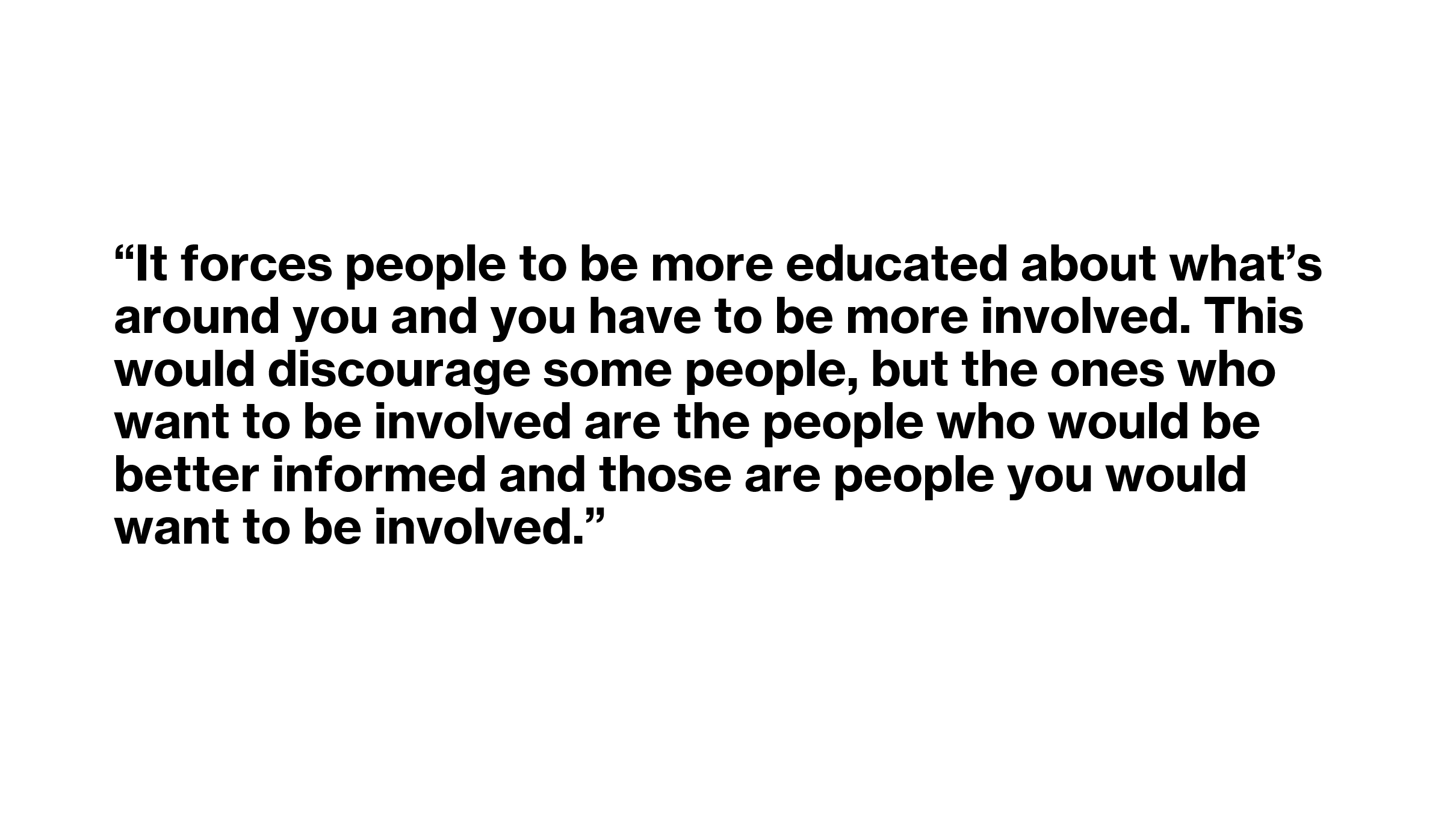
Participants liked the Cascade voting system, highlighting how they enjoyed the reiterative process as well as the level of knowledge and involvement it gives members of the community who want to play a part compared to the other systems.
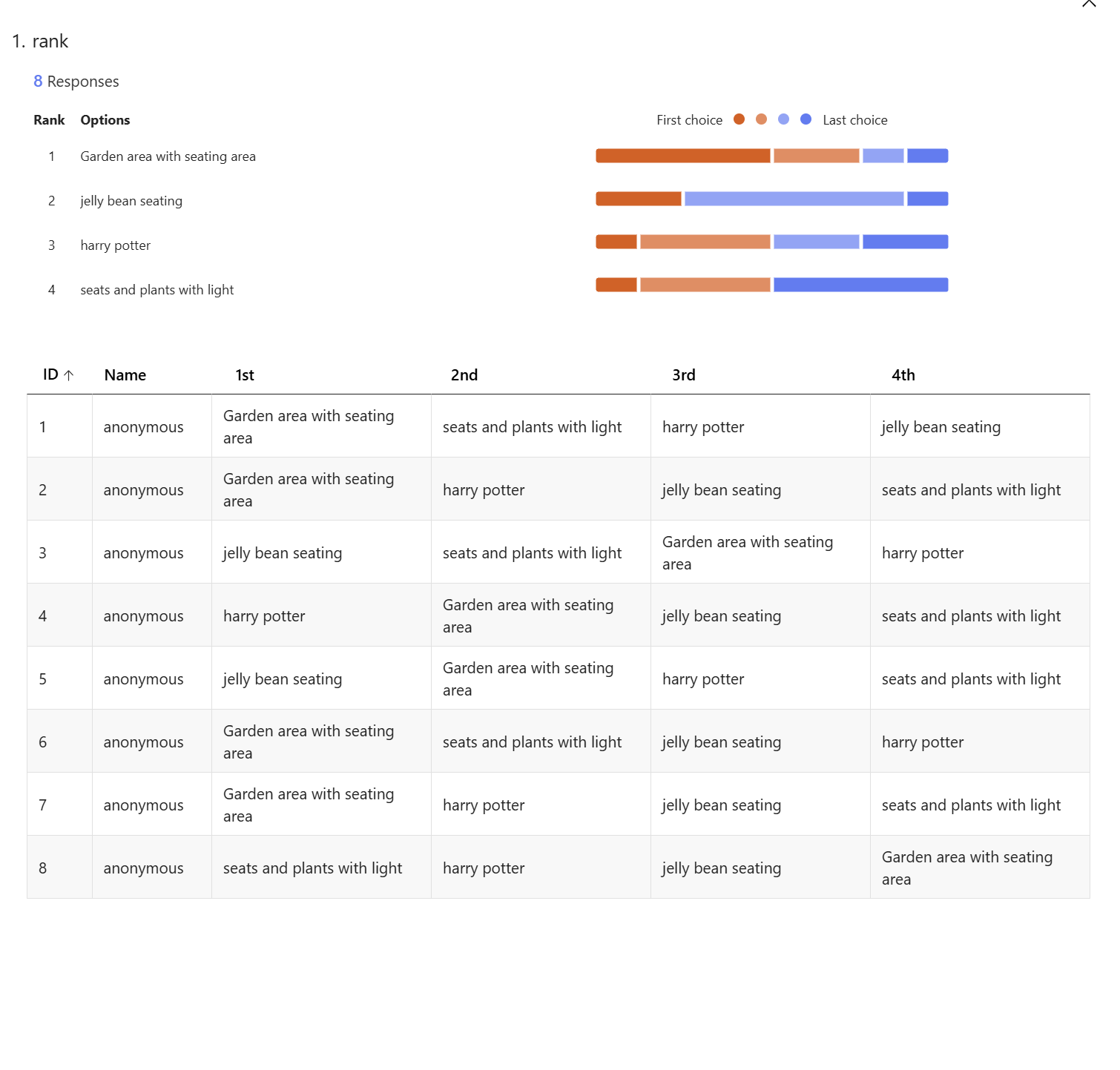
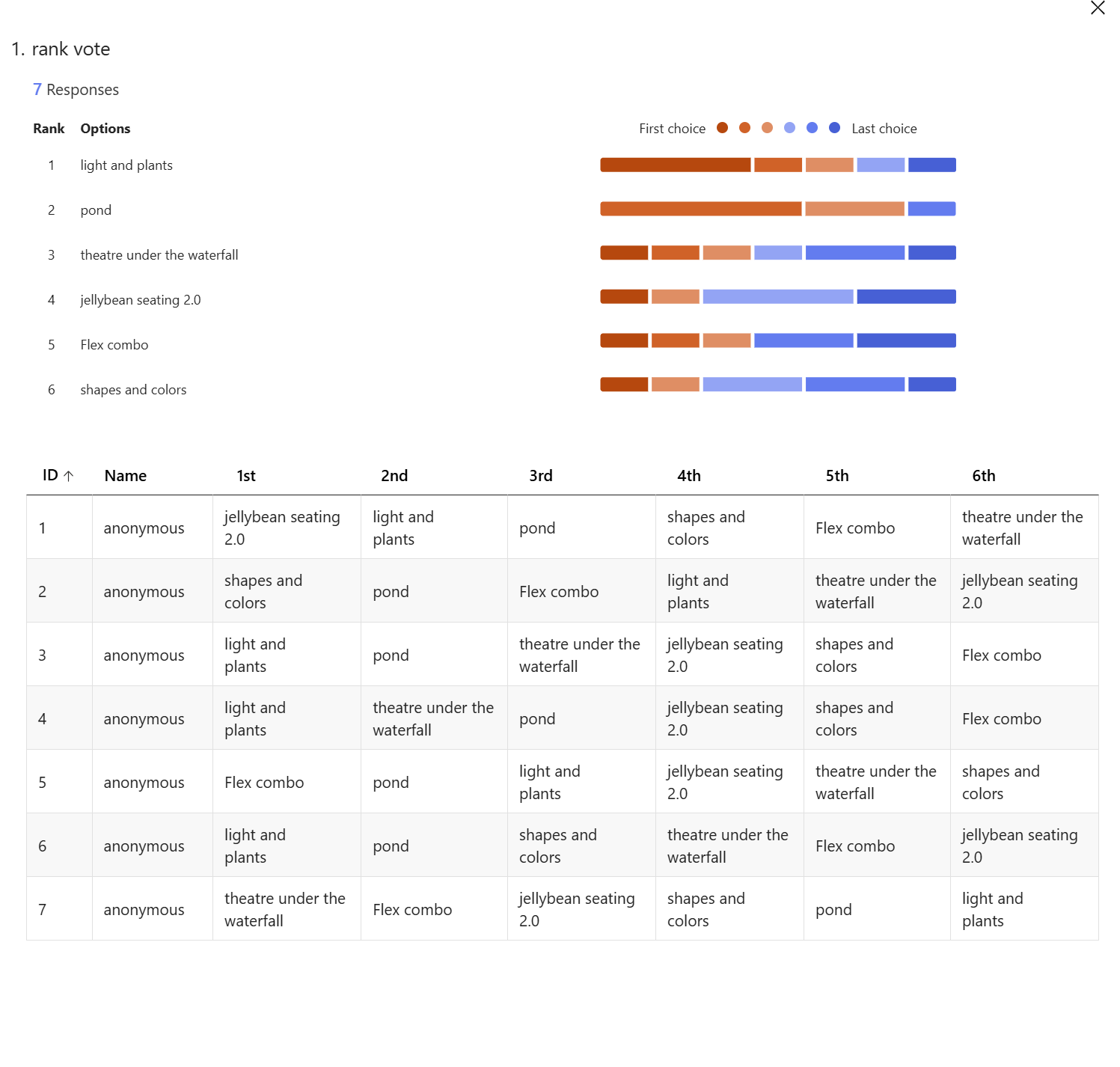
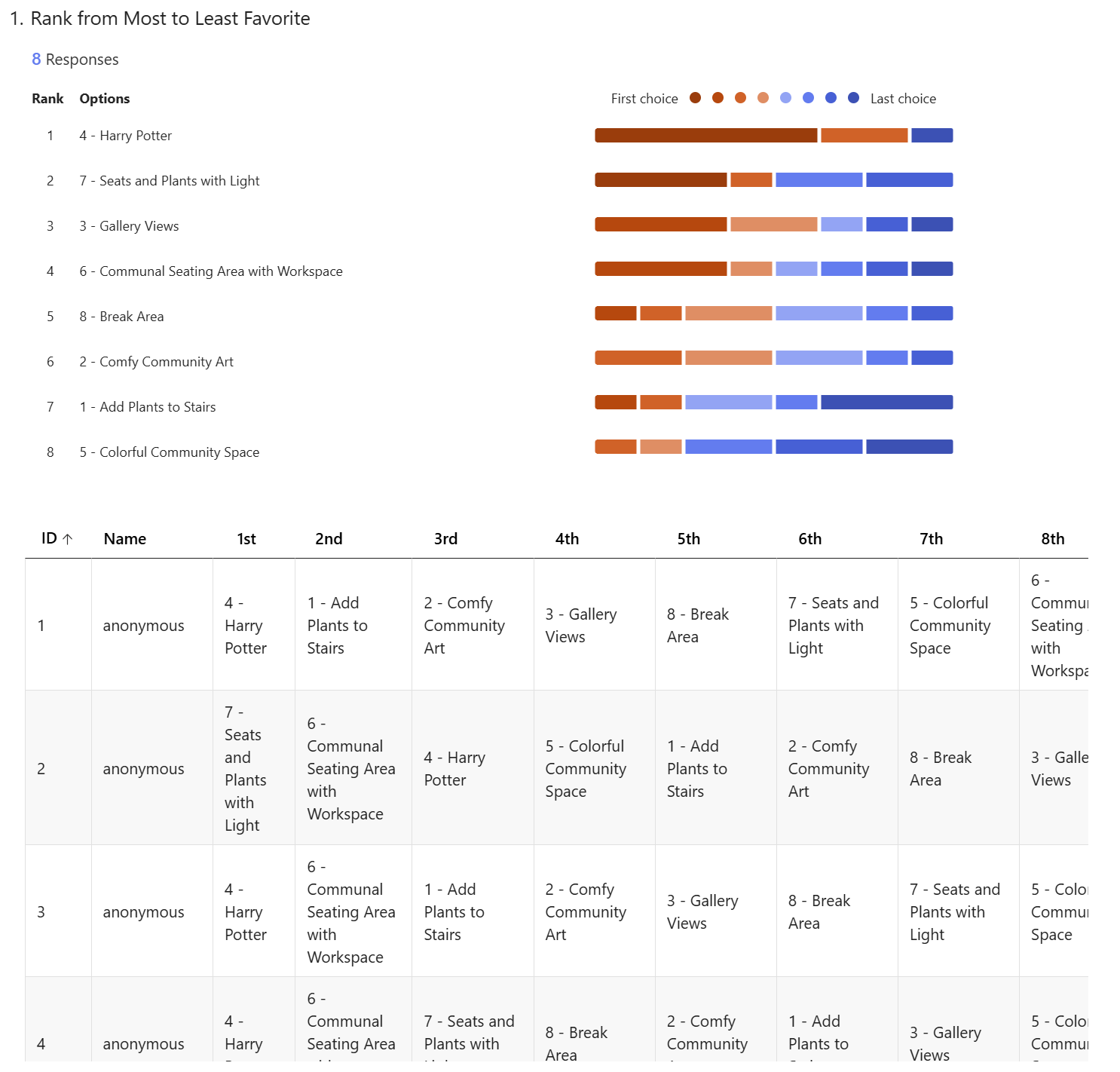
The use of online rank-choice voting forms during the workshop allowed for a quick way to tally up results while also providing key insights into how the group voted for further discussion.
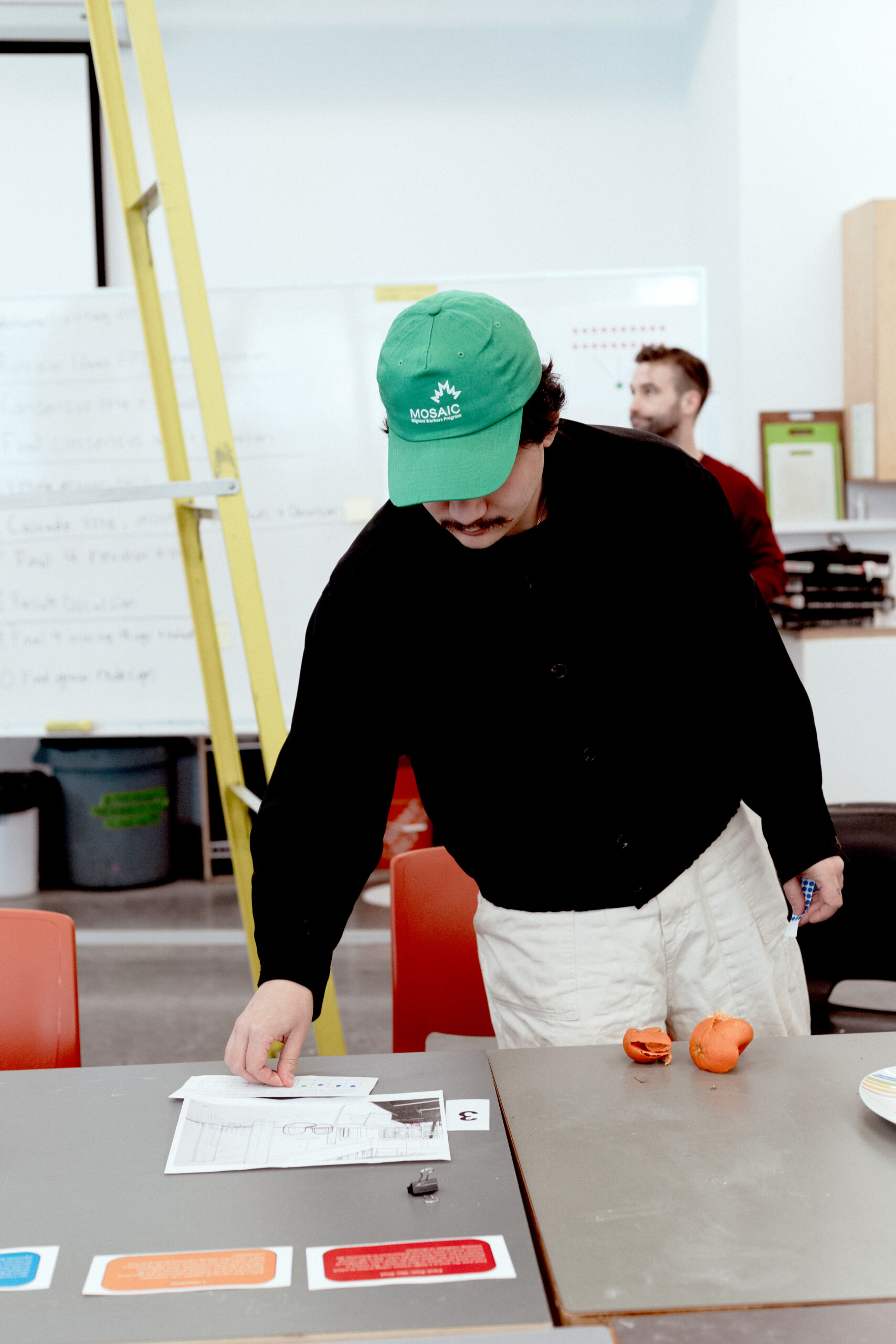
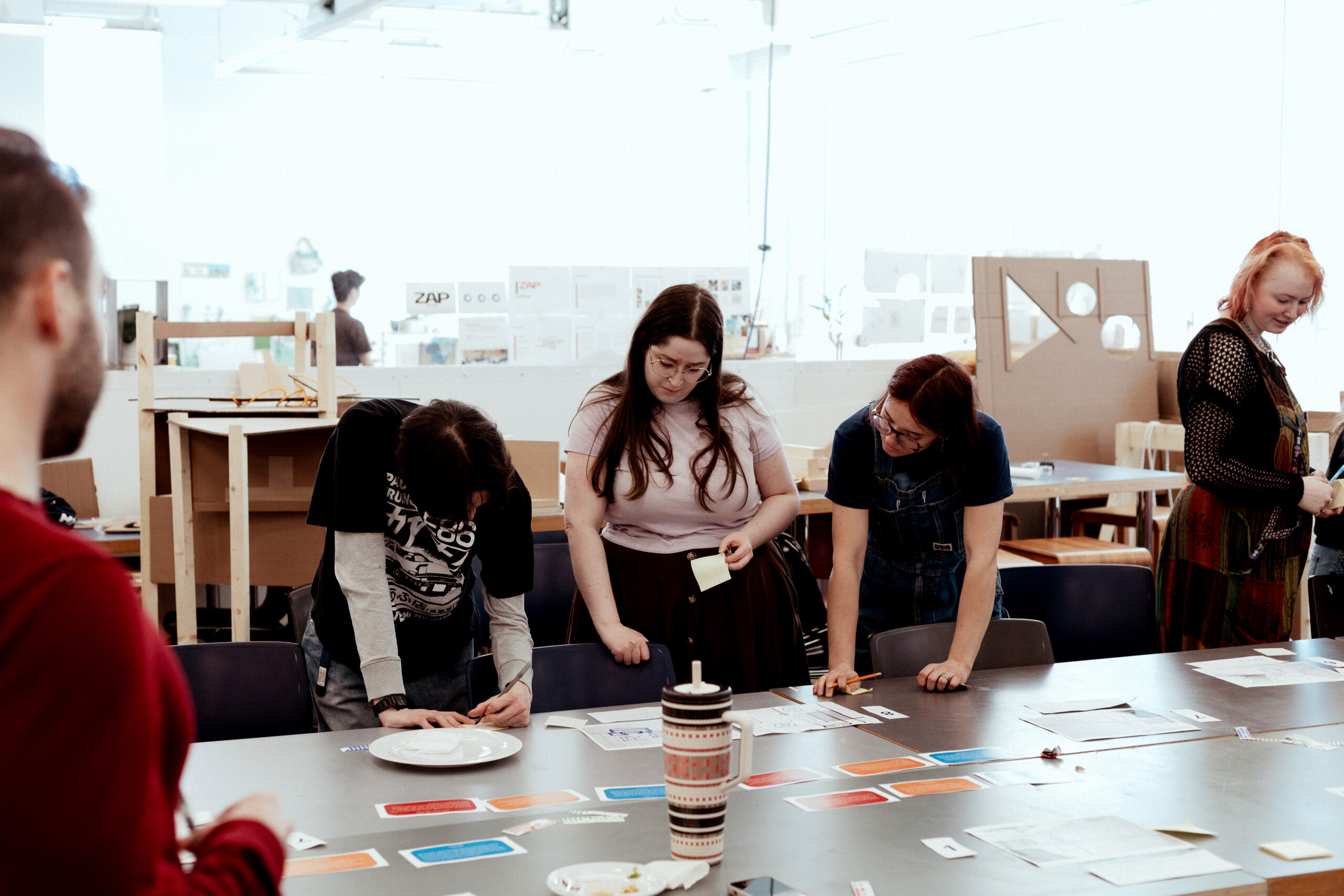
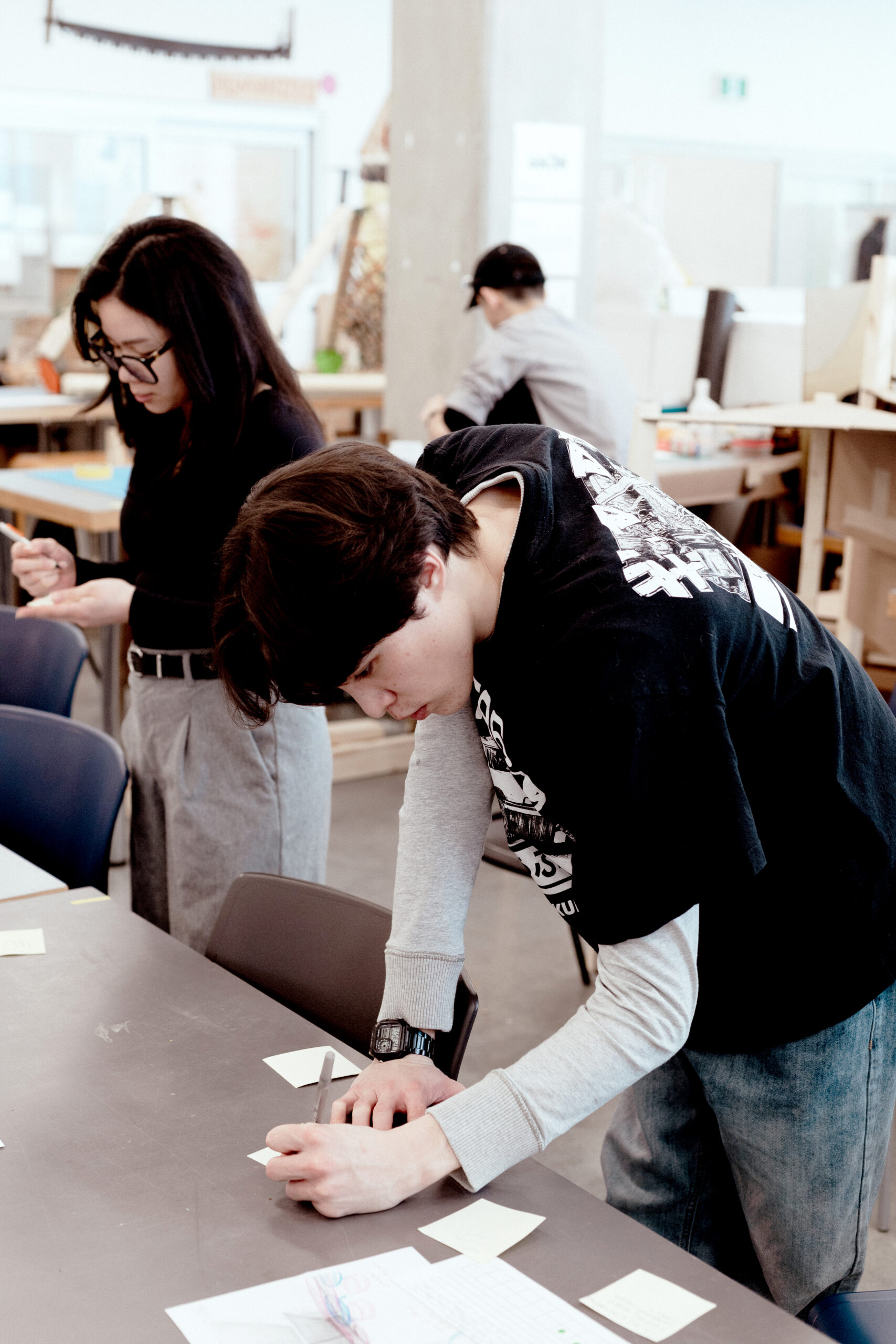
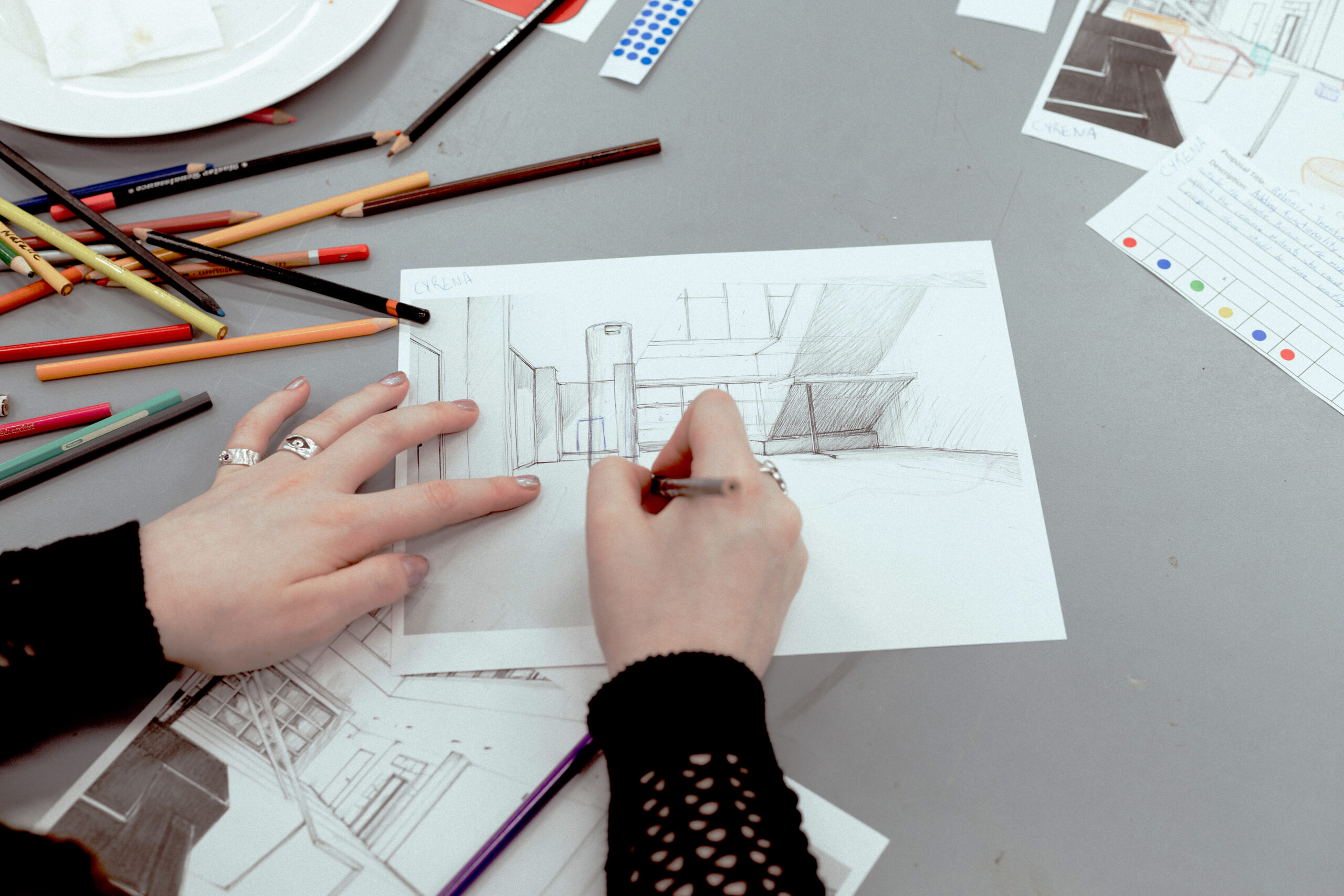
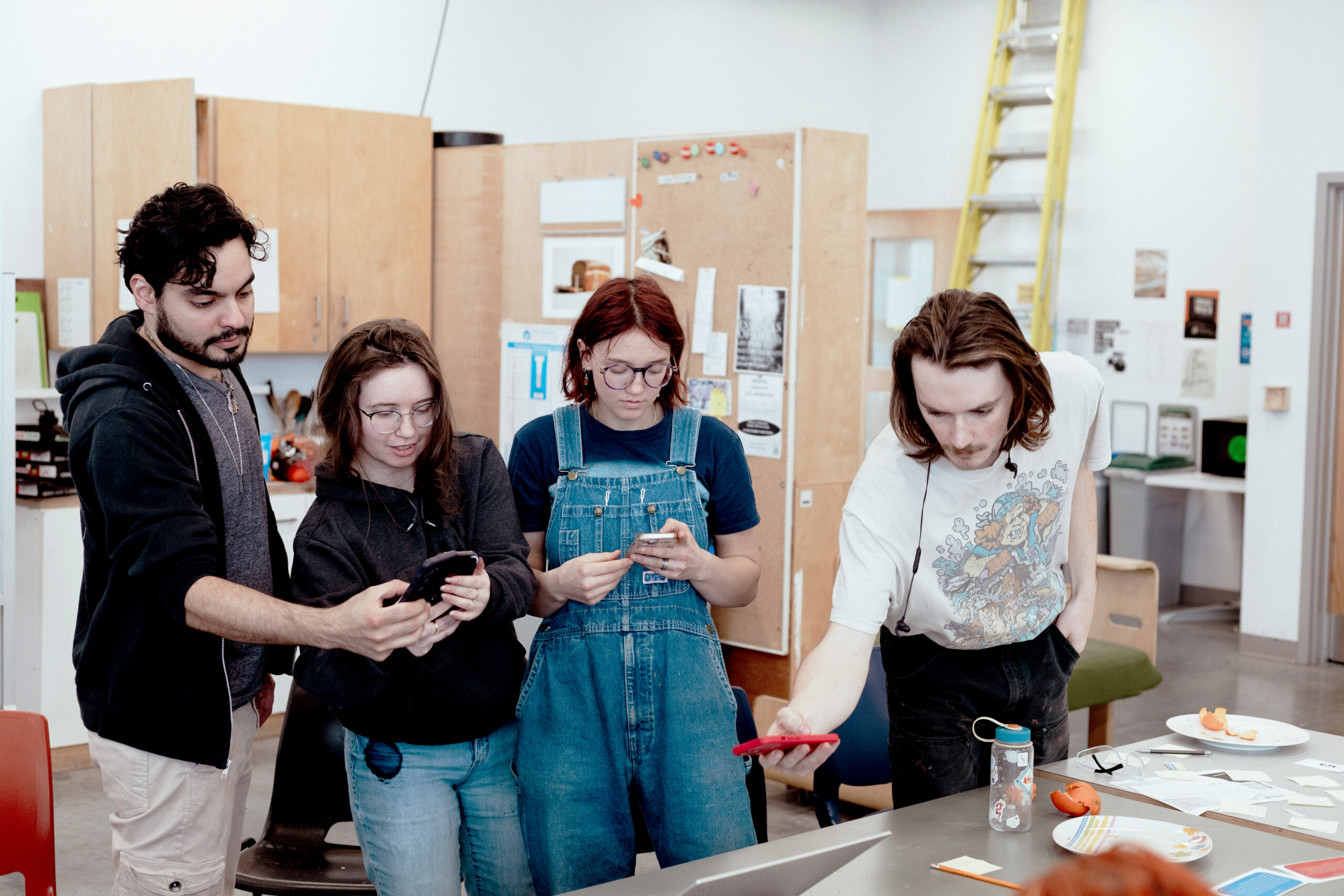
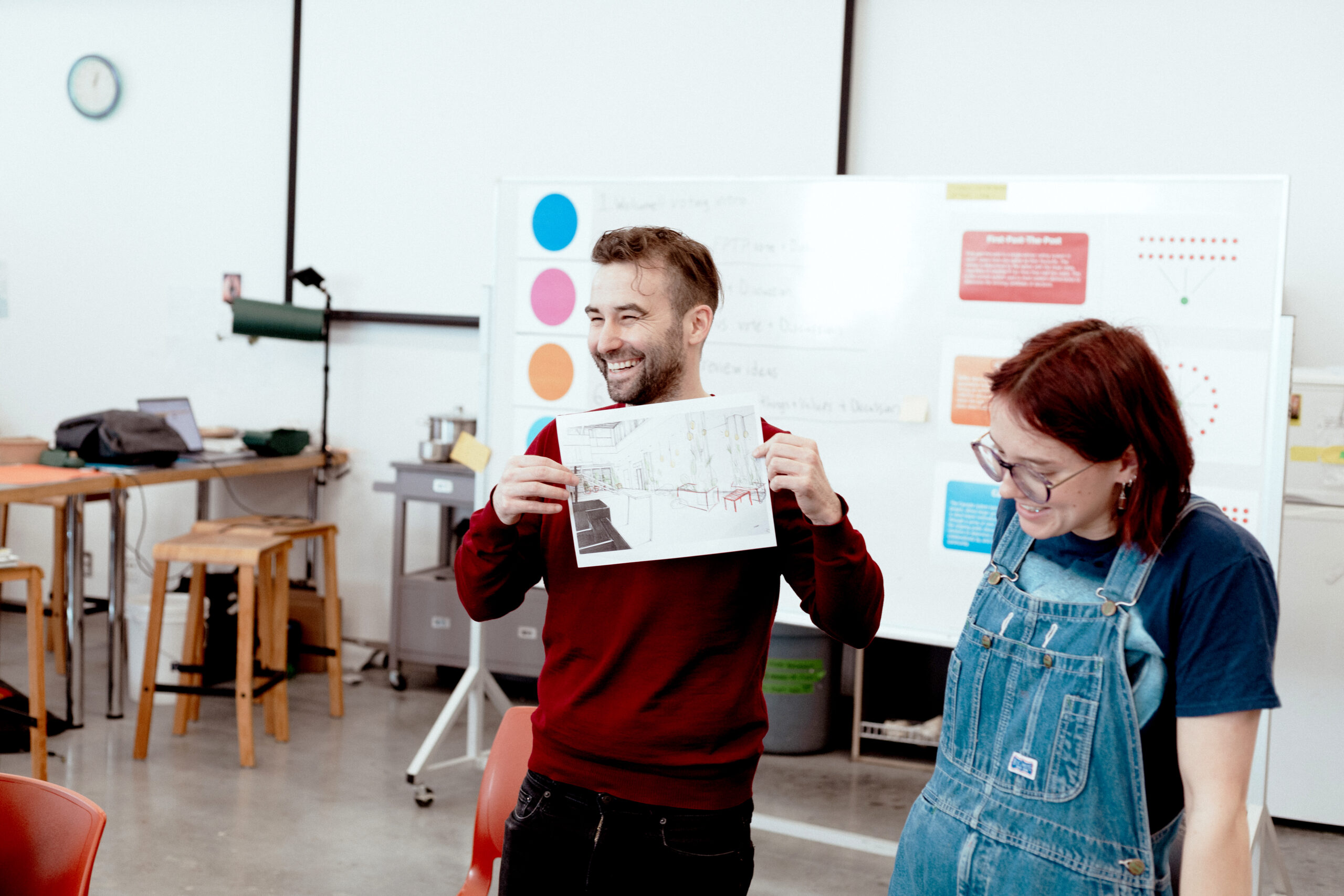
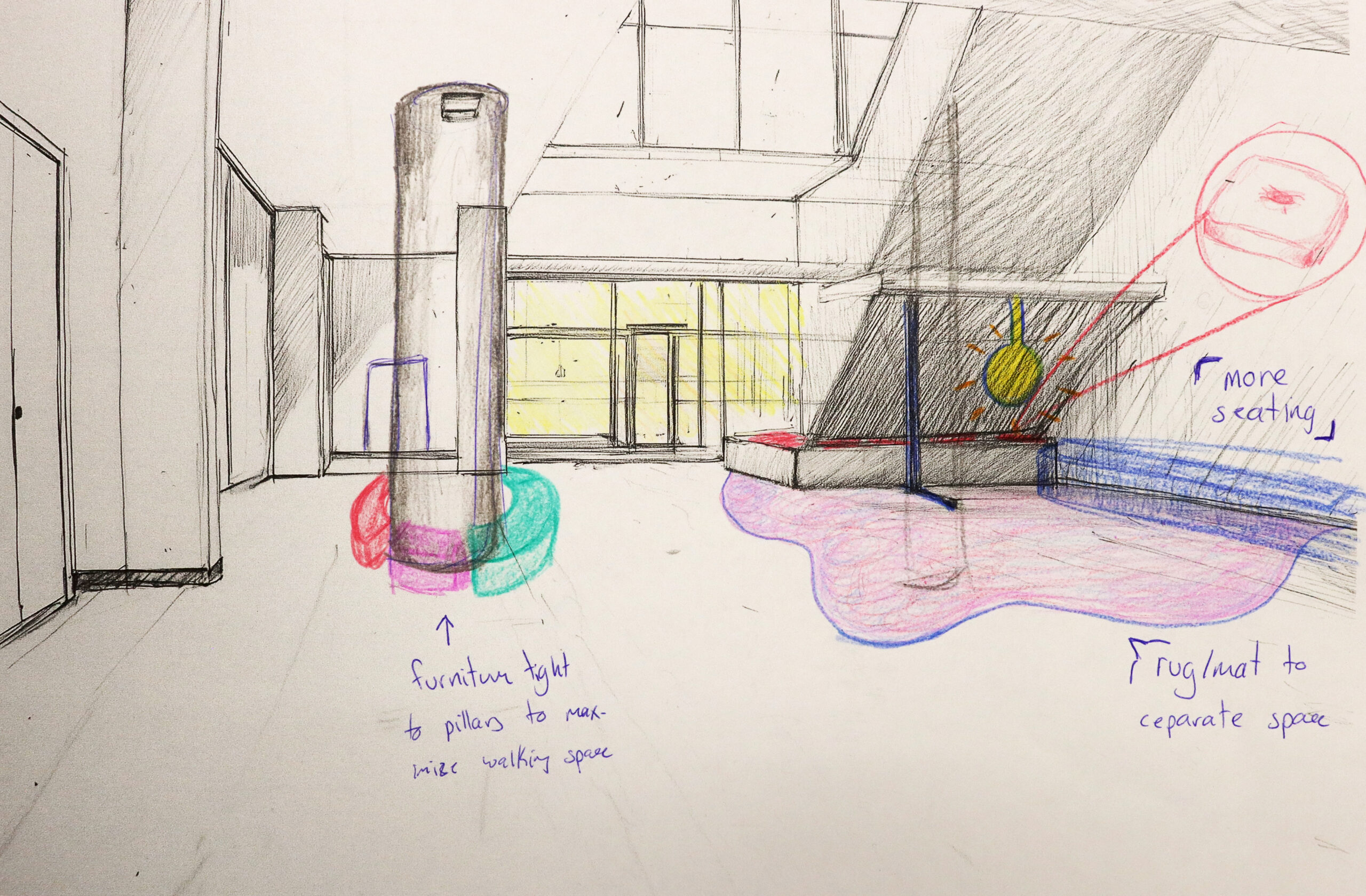
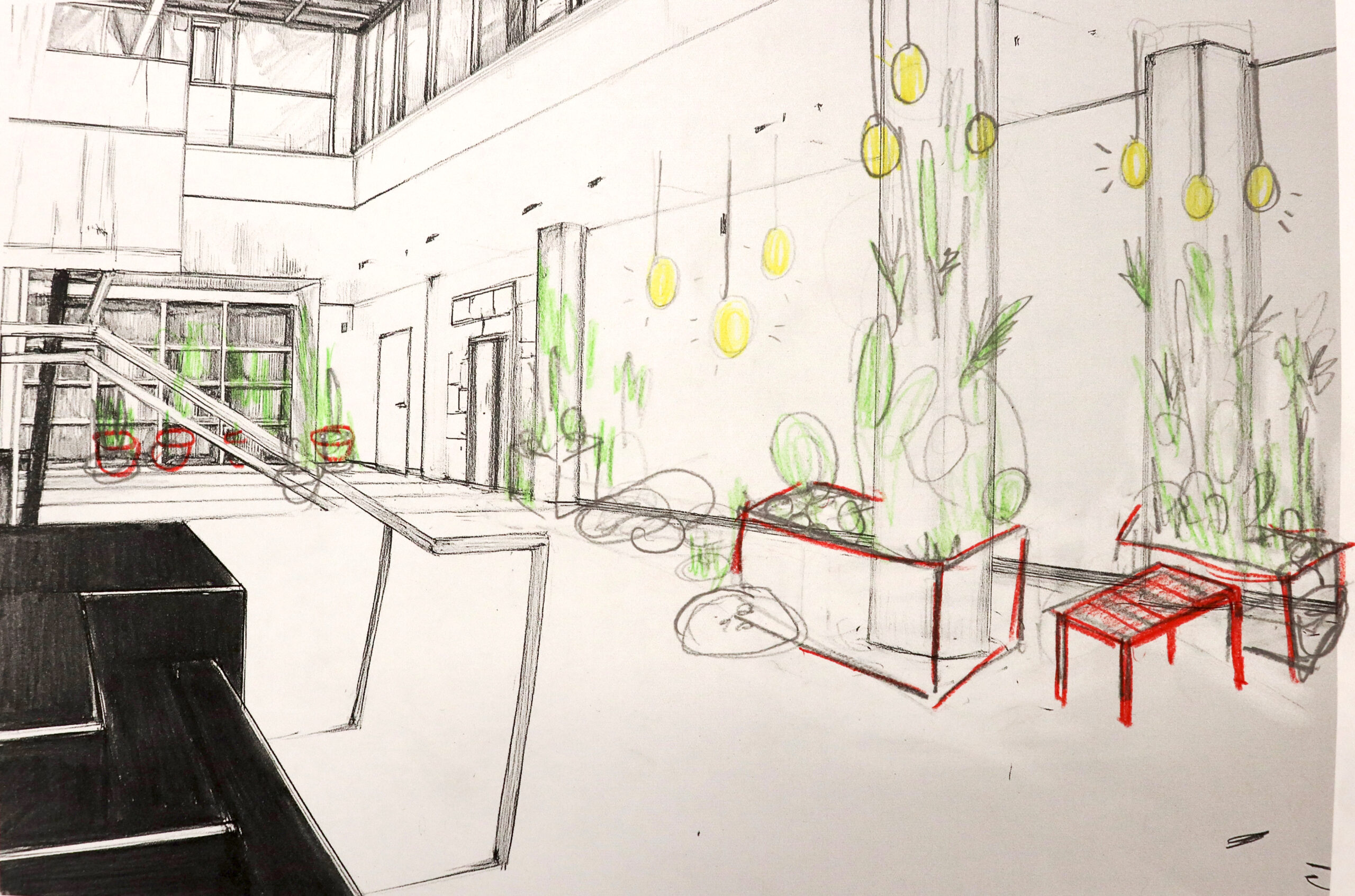
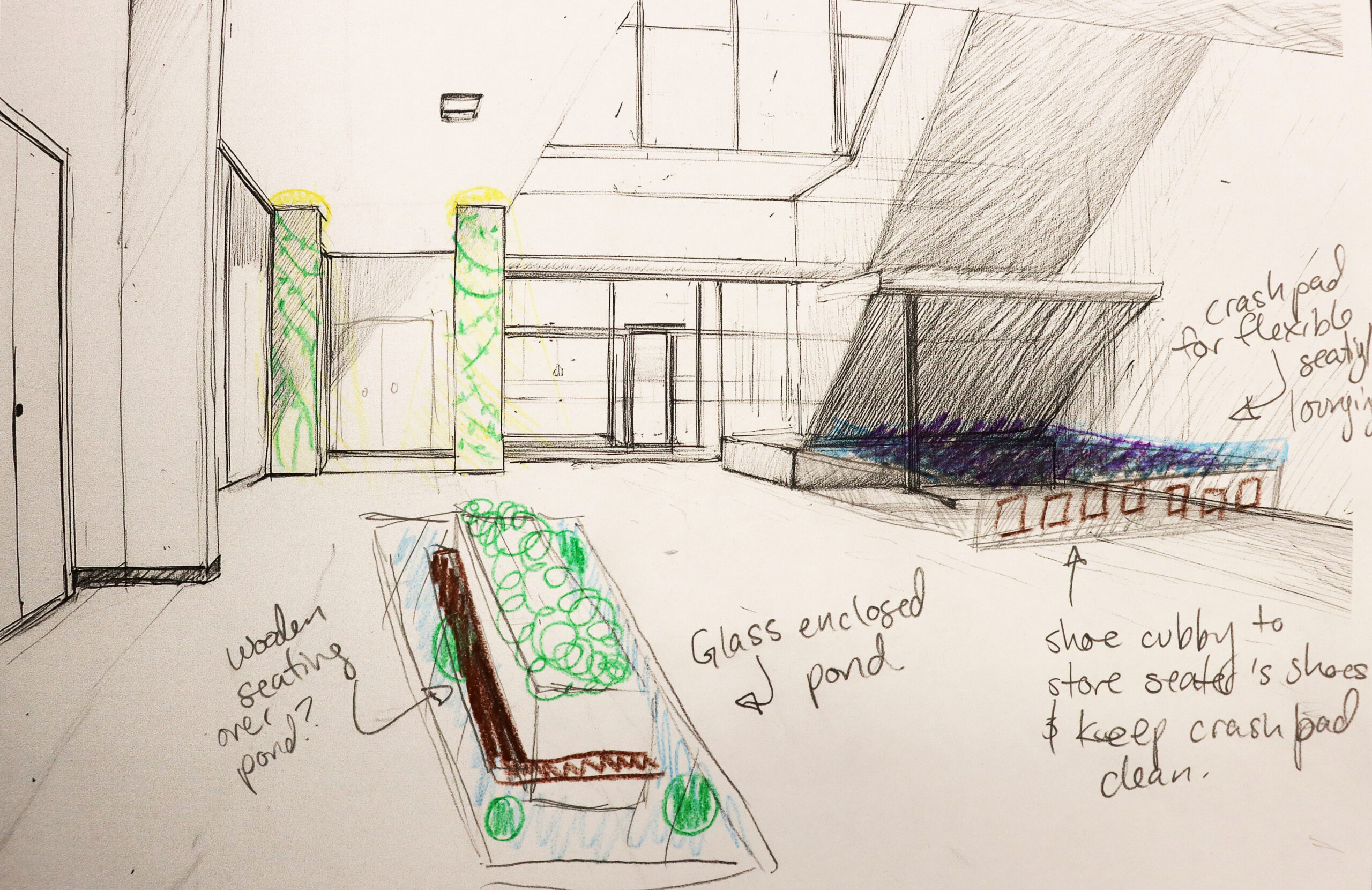
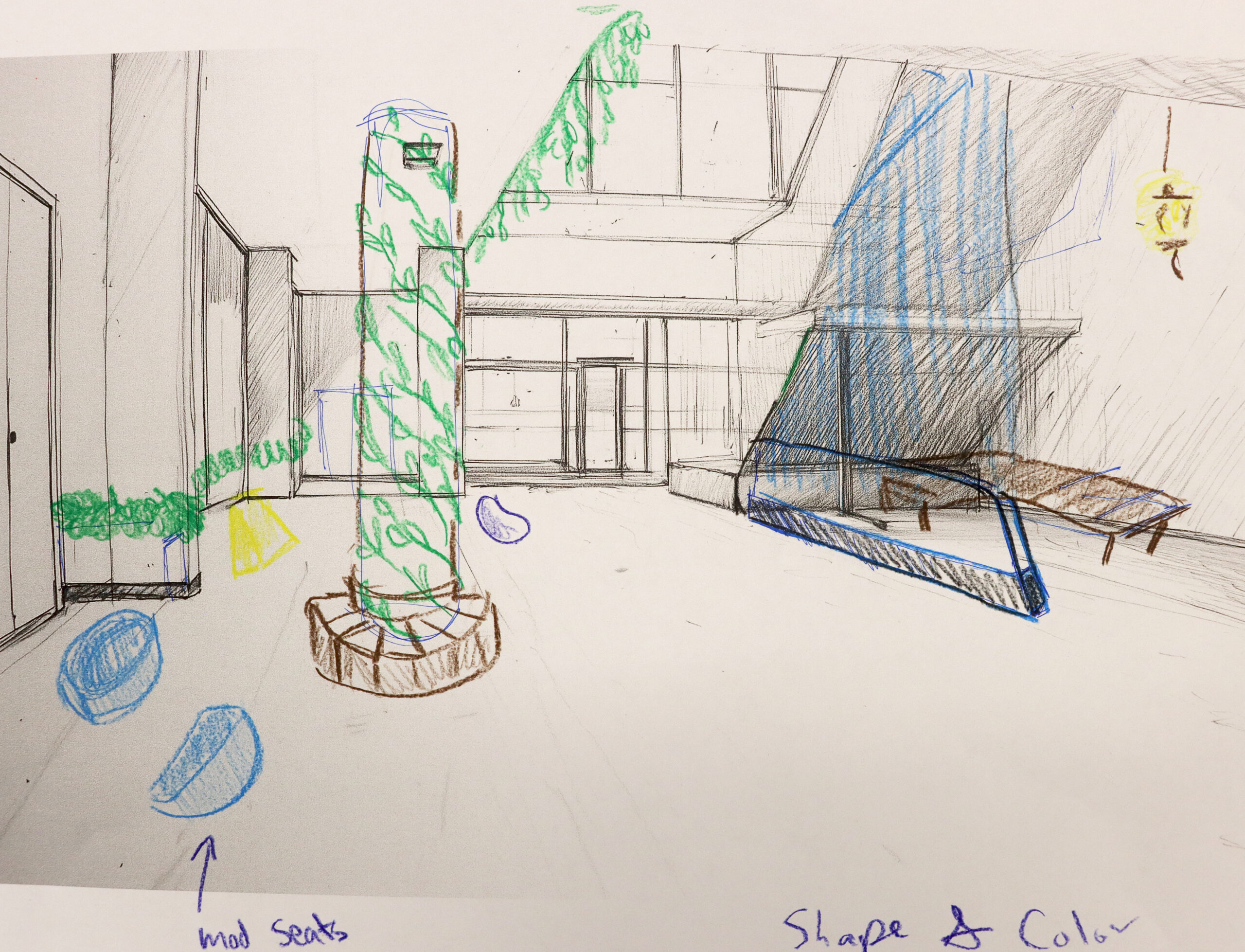
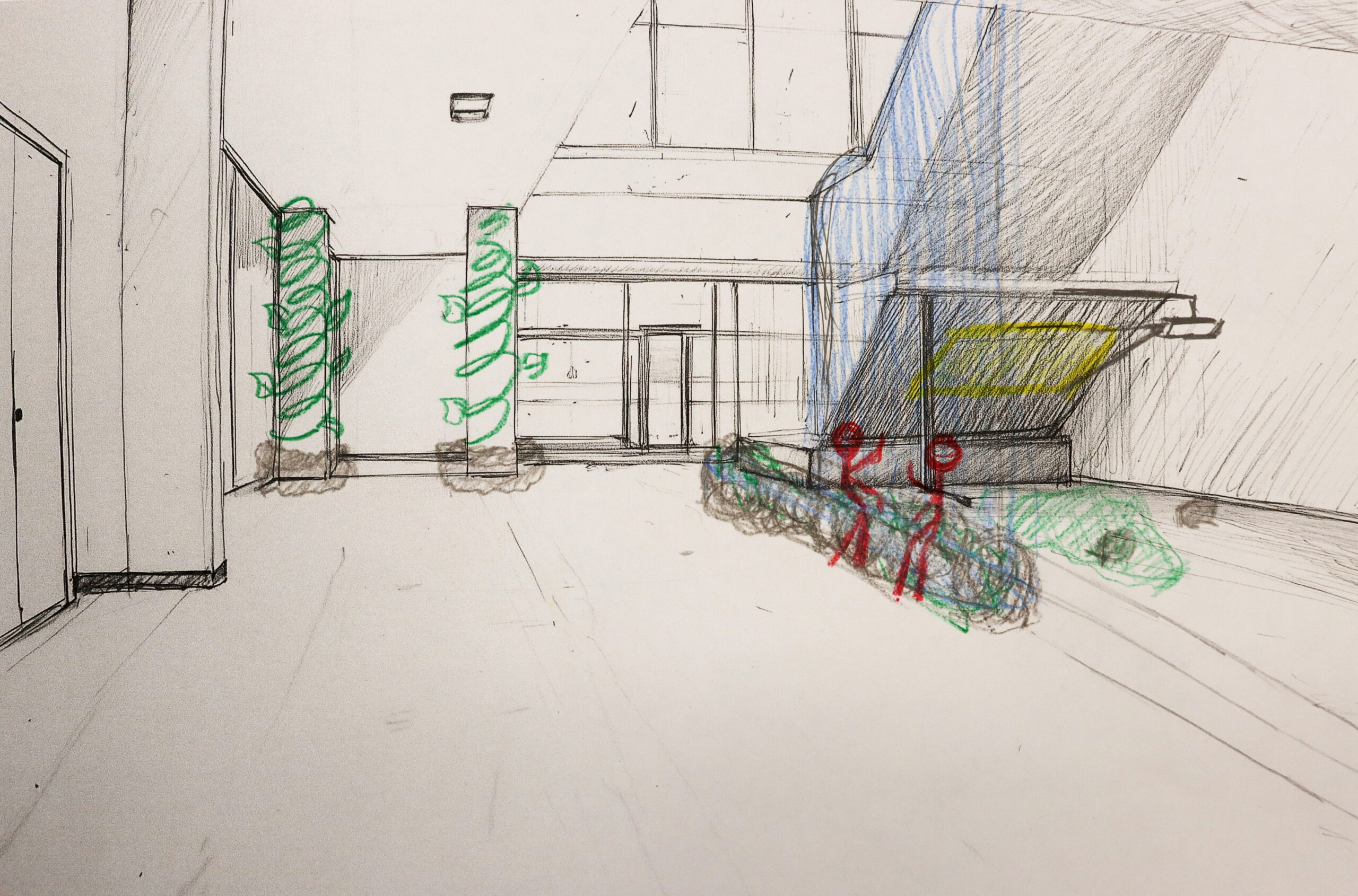
To end the workshop, participants had a chance to do a final redesign as a group after considering what would be missed from the losing proposals through the lens of their values. These compromises were then integrated into the winning proposal as part of the final redesign.
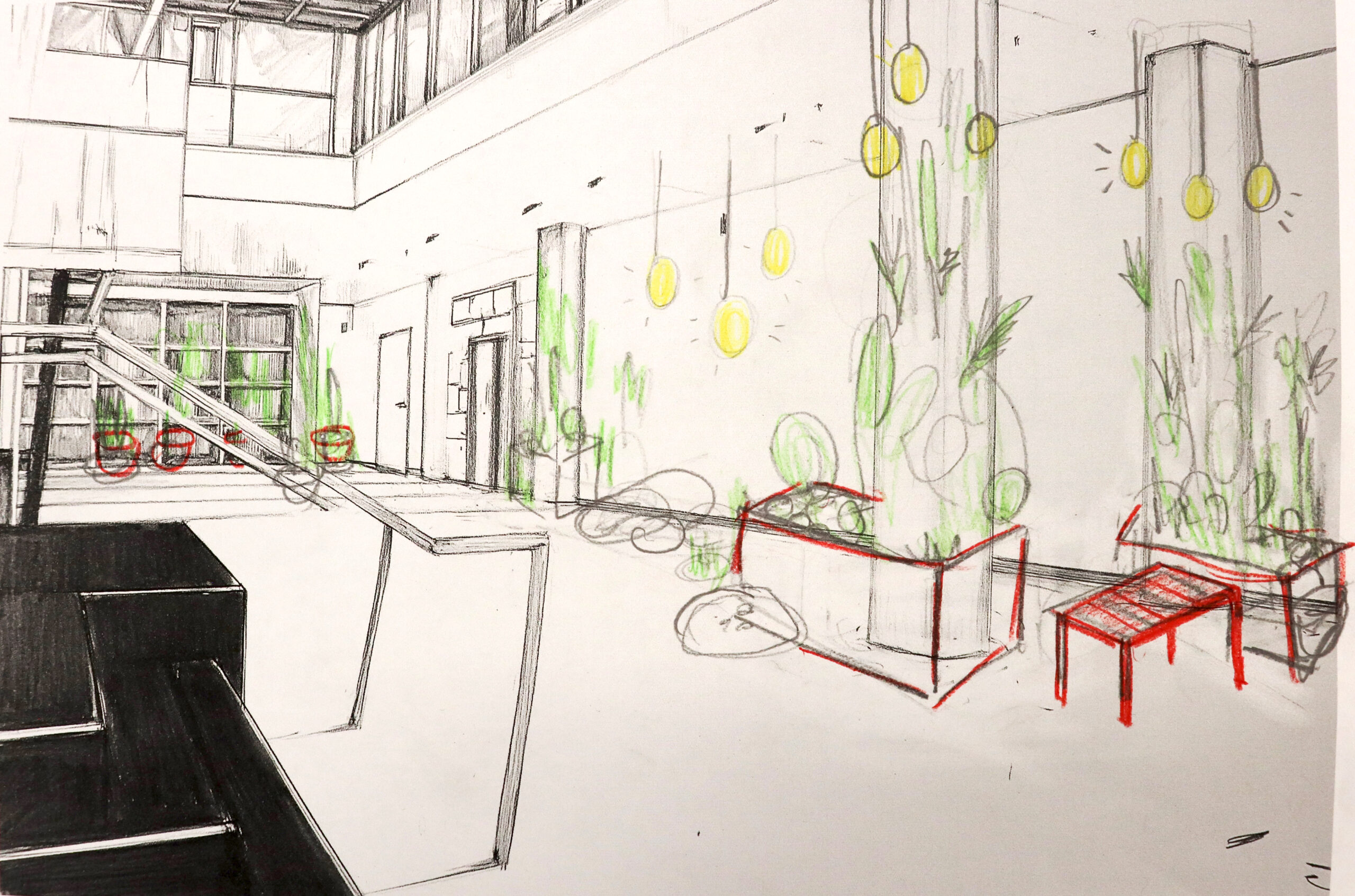
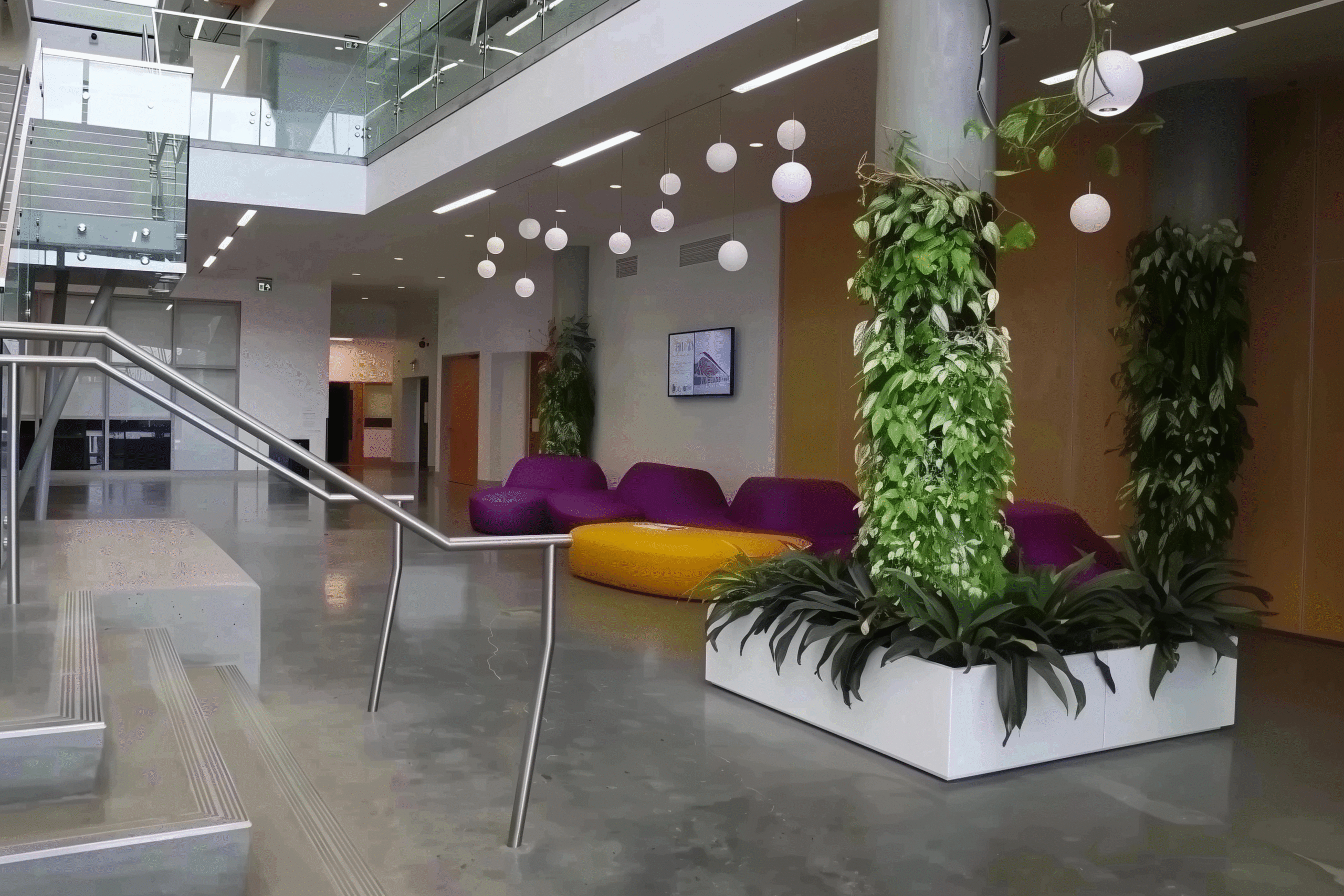
A final rank-choice vote was held and a winner determined. The winning design emphasized flexibility with the furniture, lights that emulate natural lighting and plants to create a more natural atmosphere. The winning design was then remixed using Midjourney to see what a real-world outcome could look like.
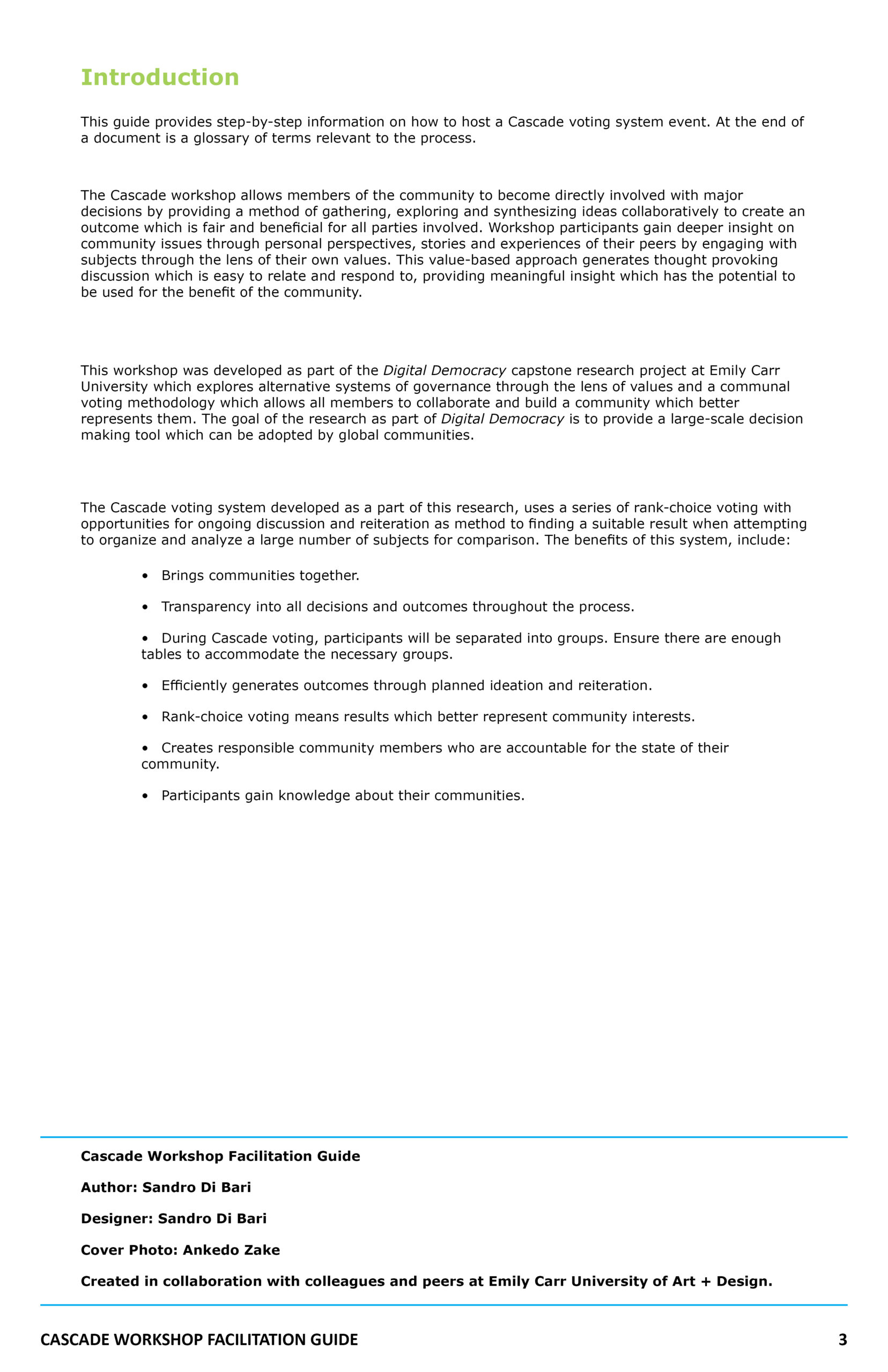
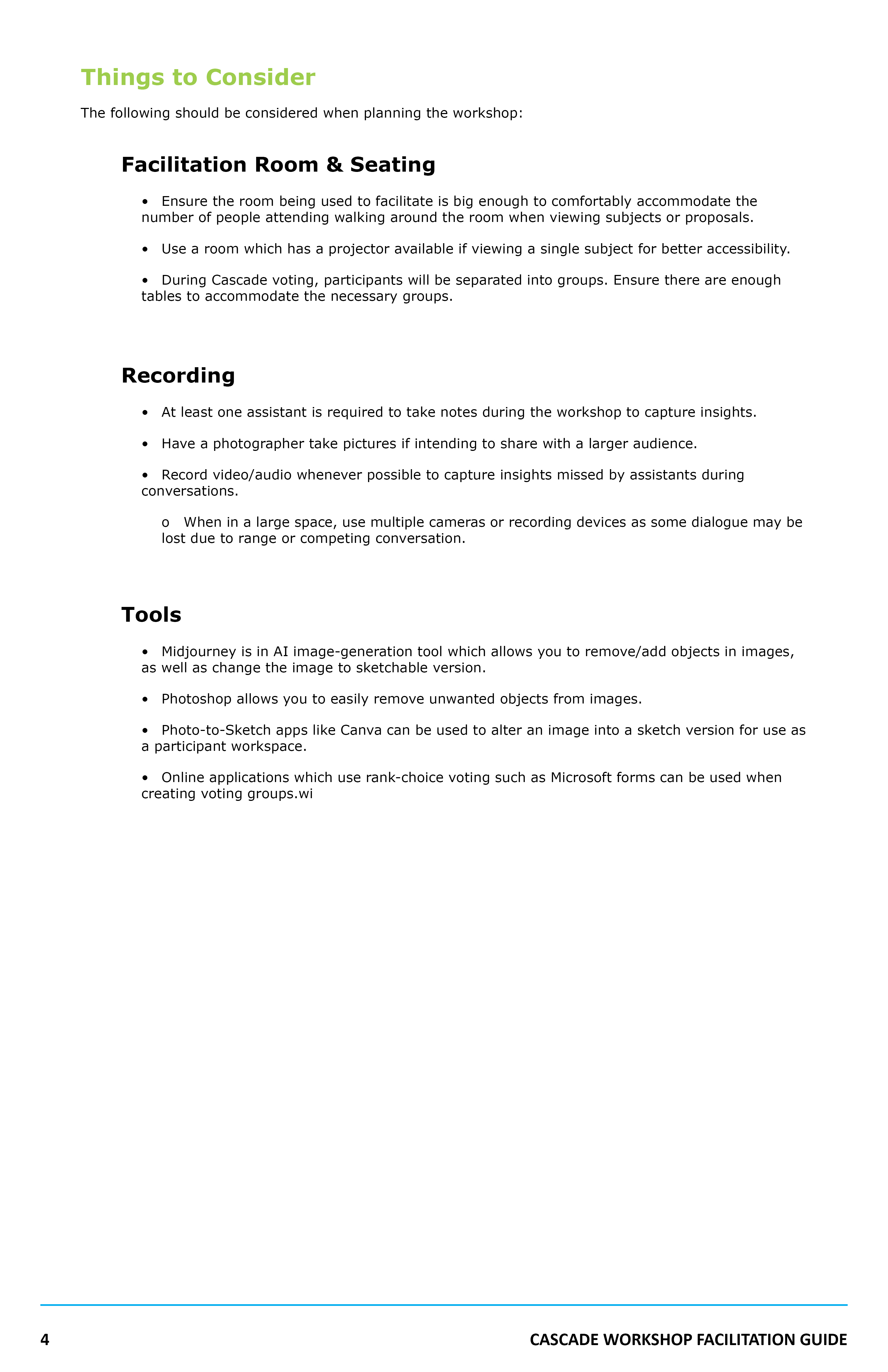
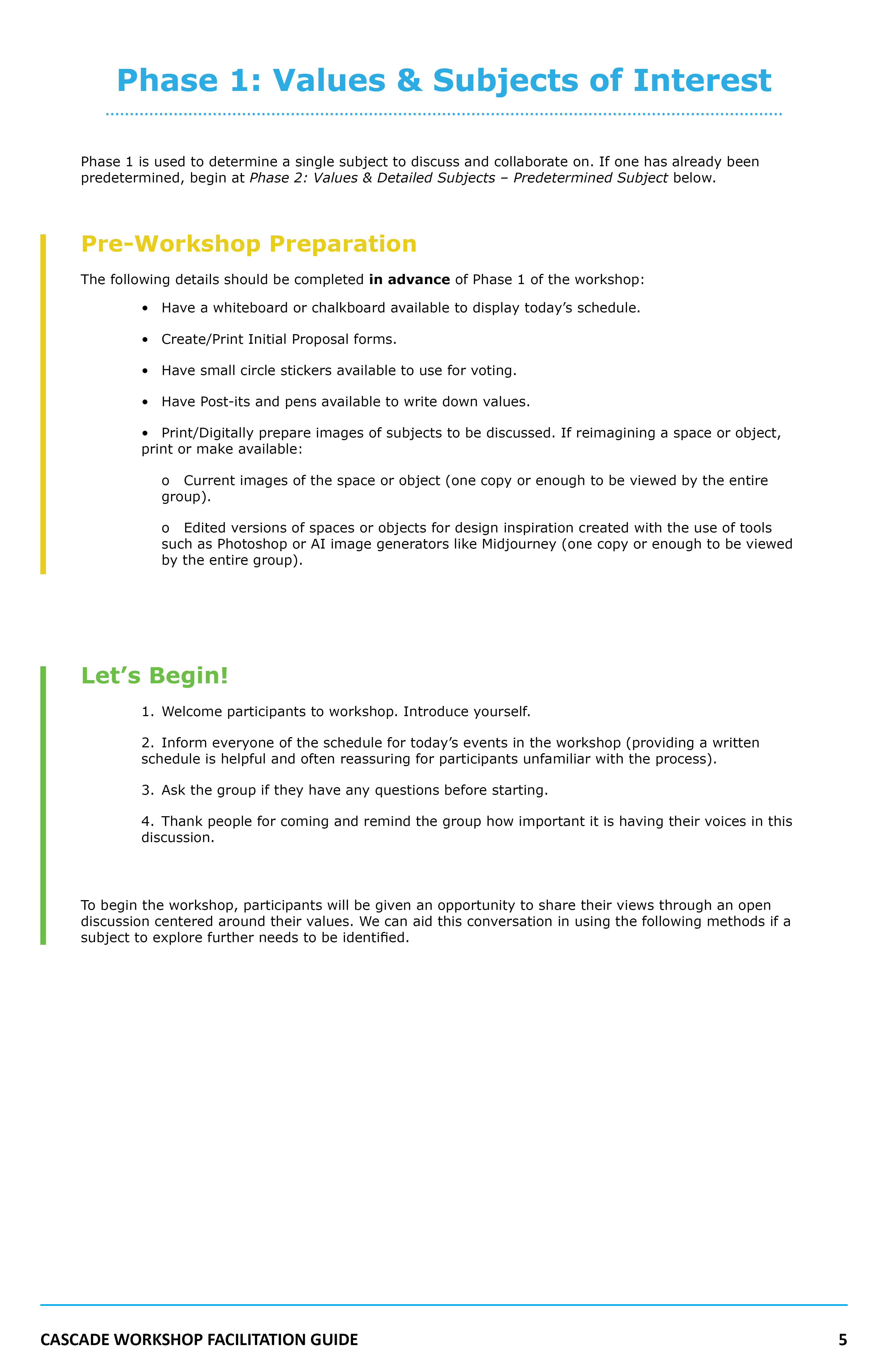
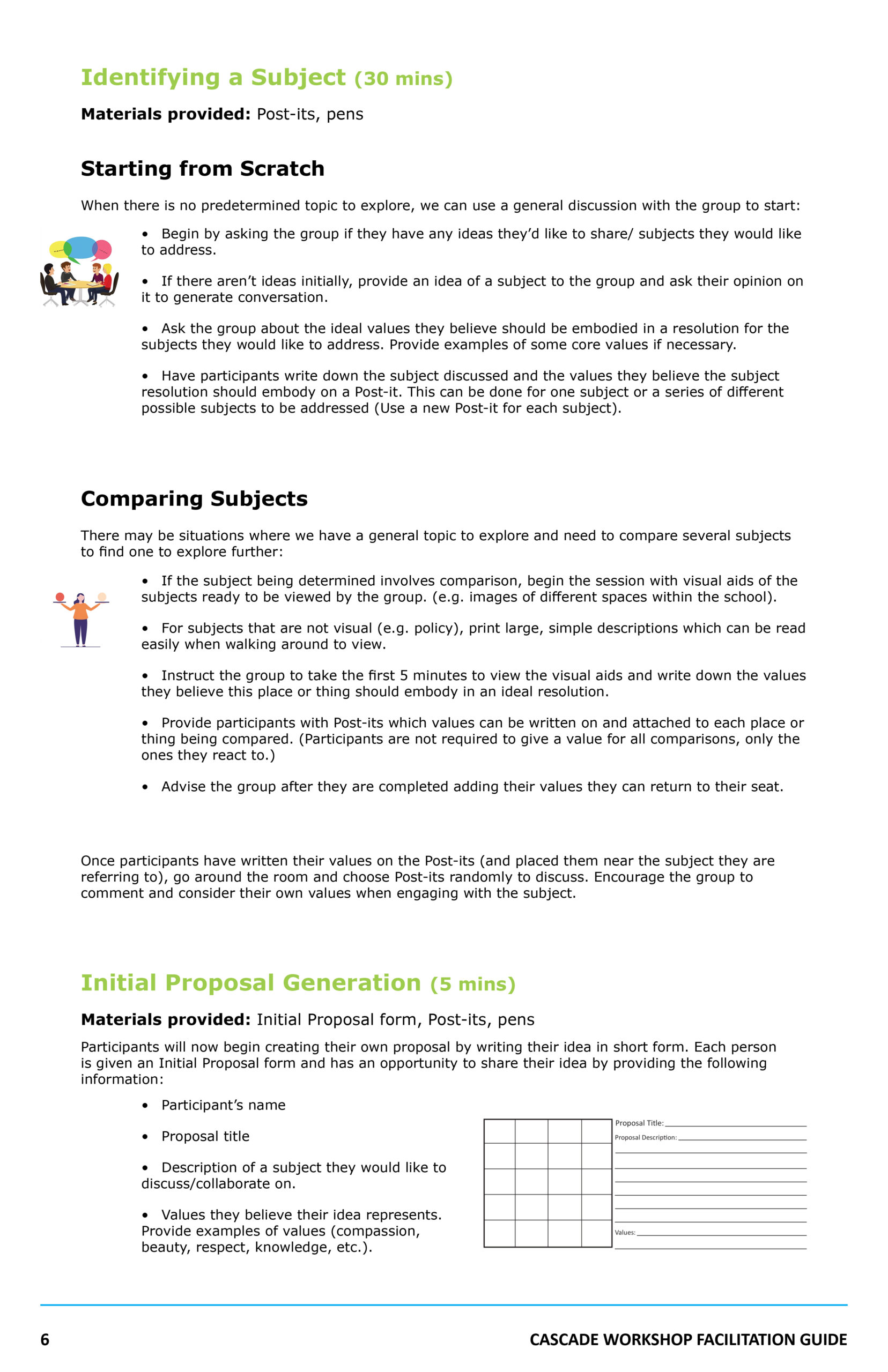
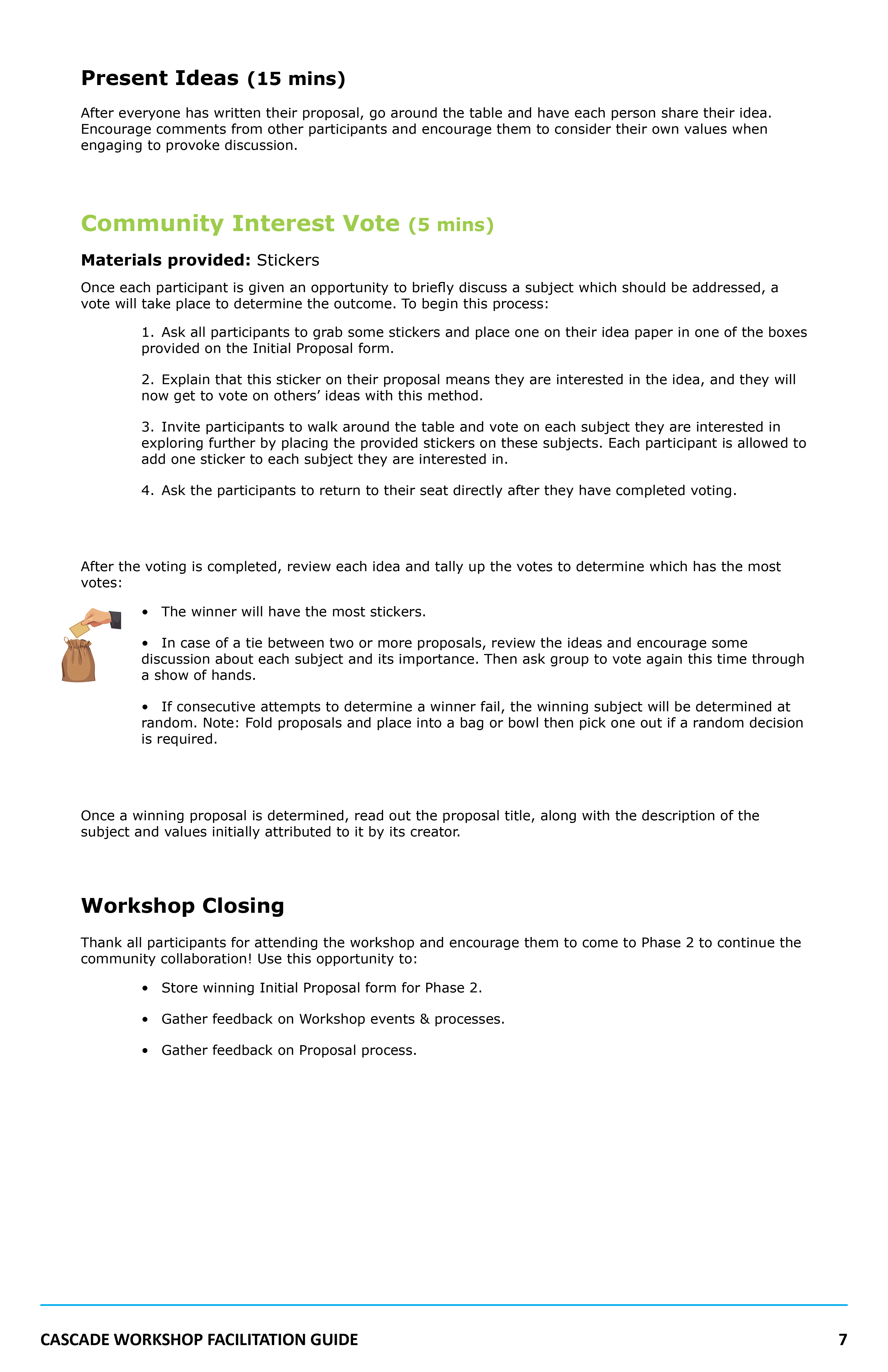
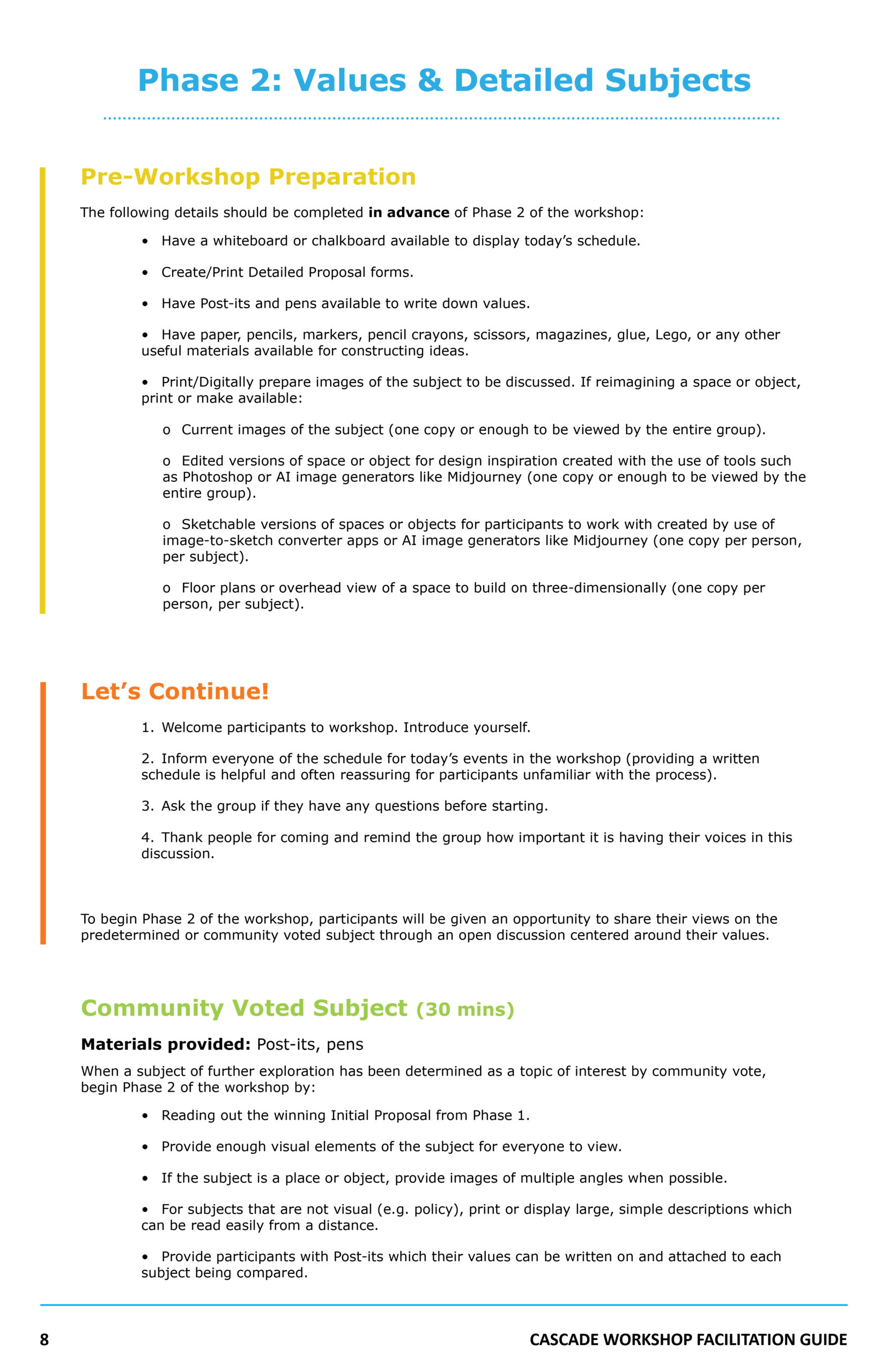
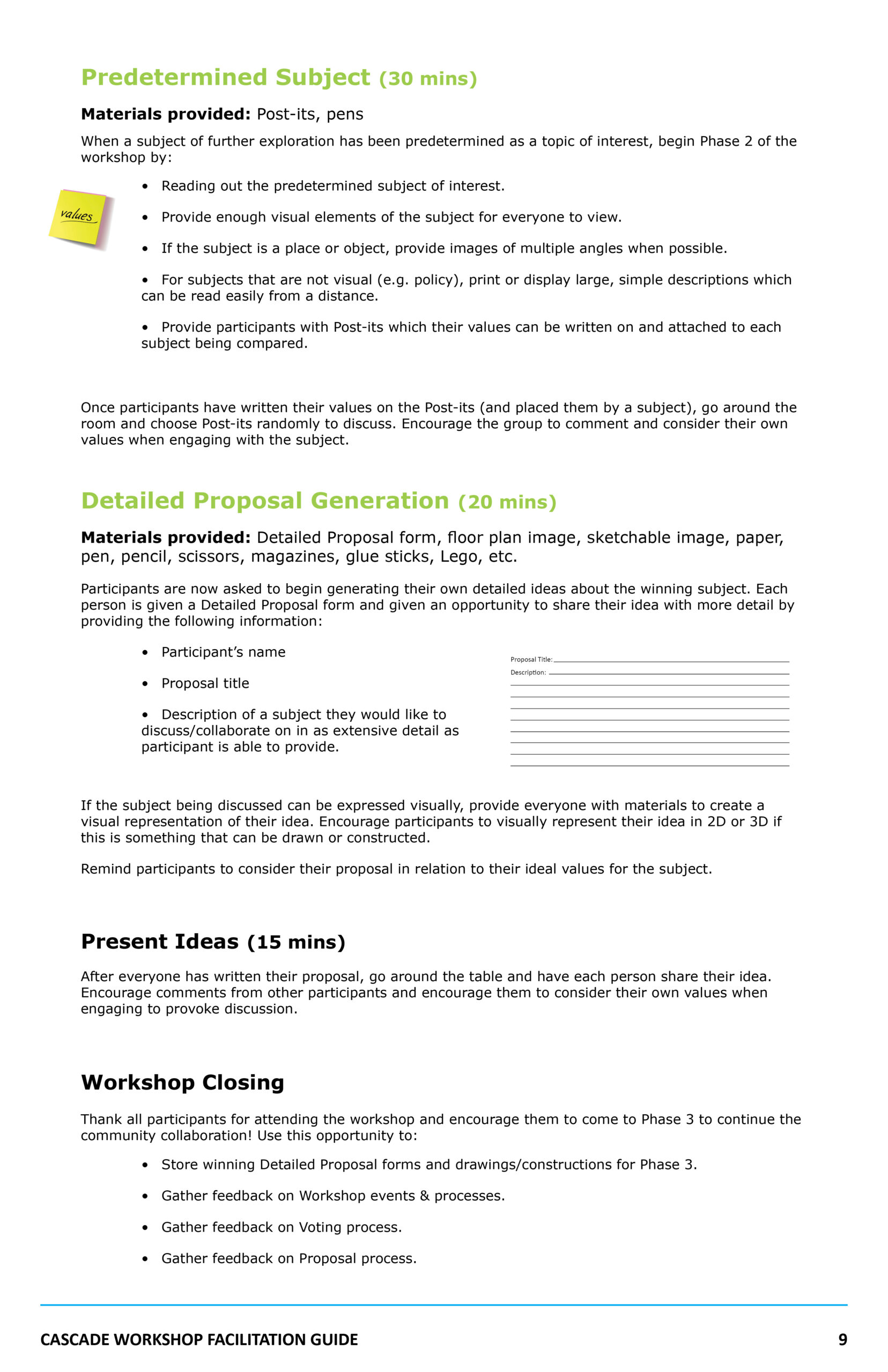
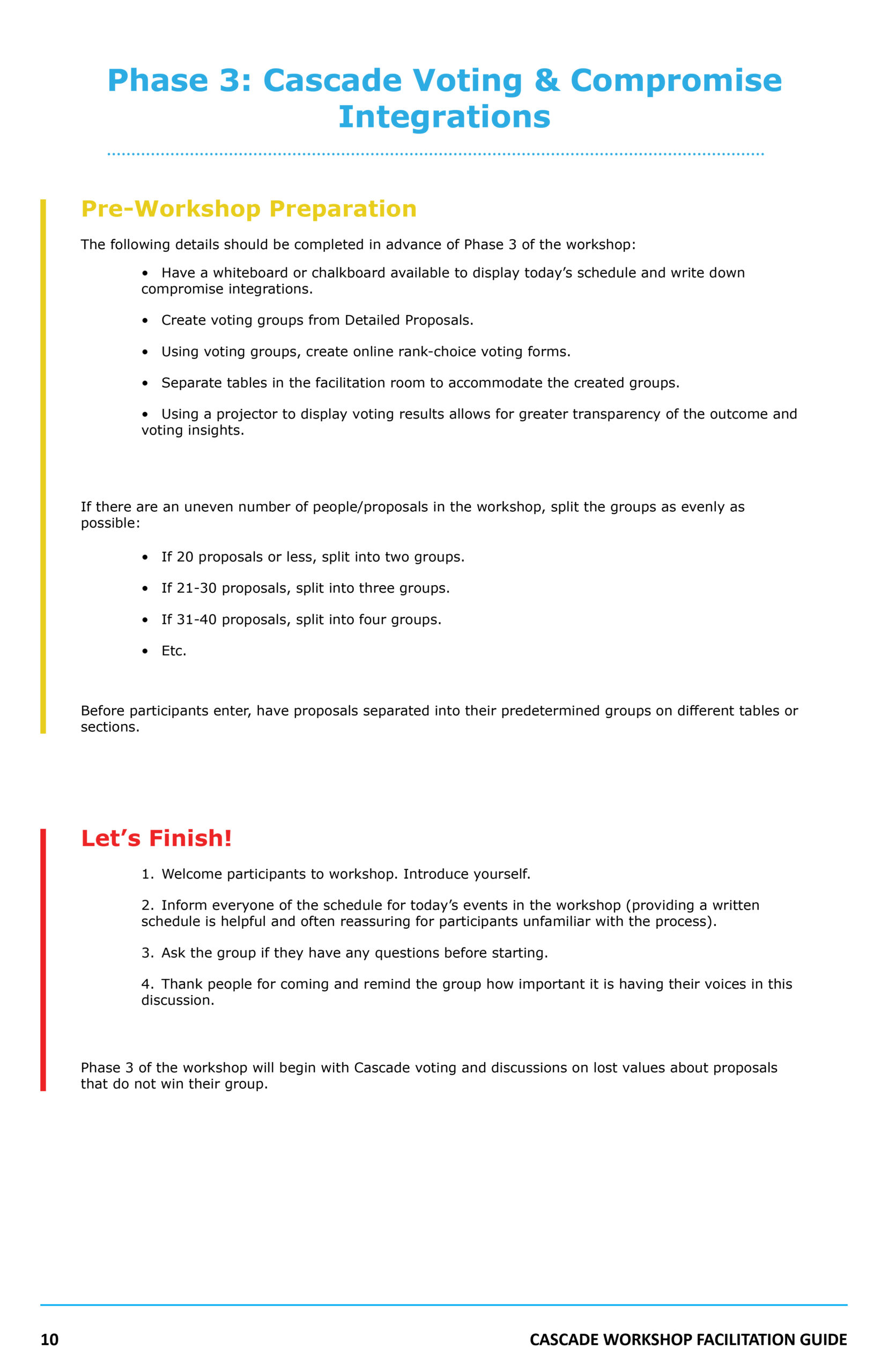
Cascade Workshop Guide
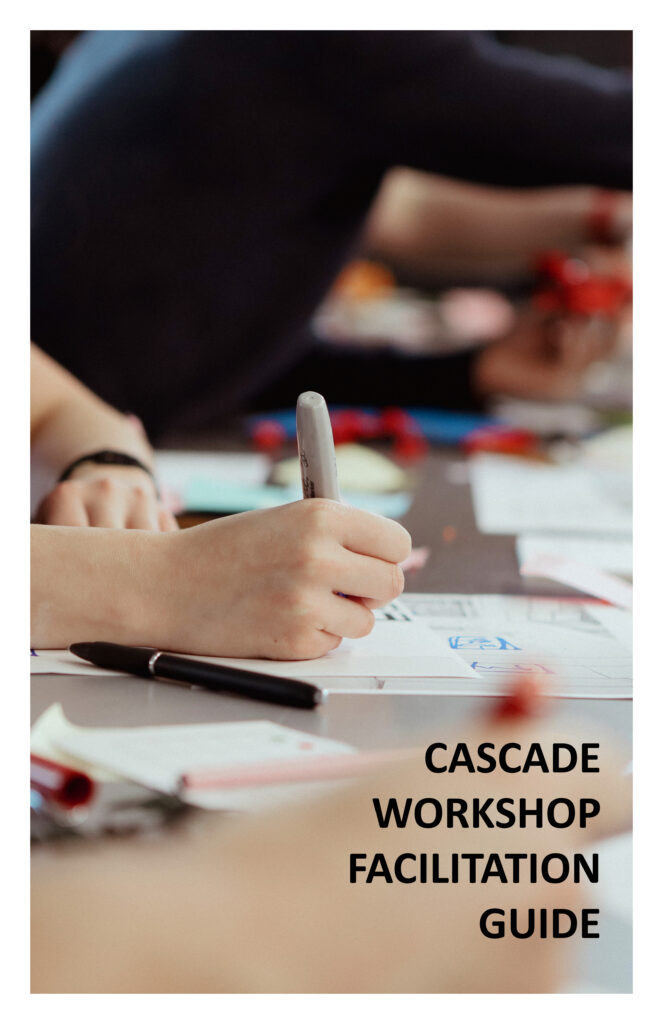
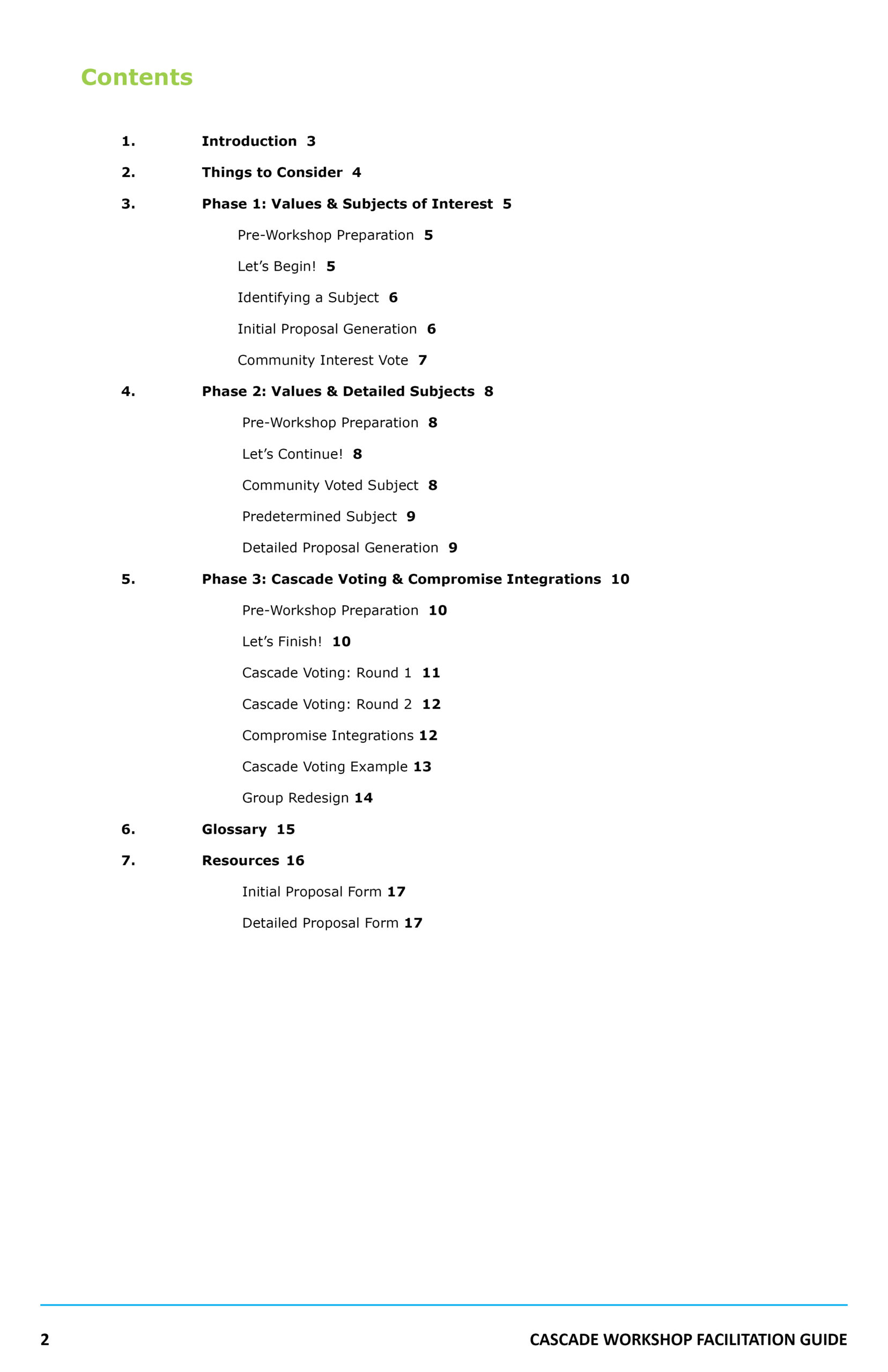
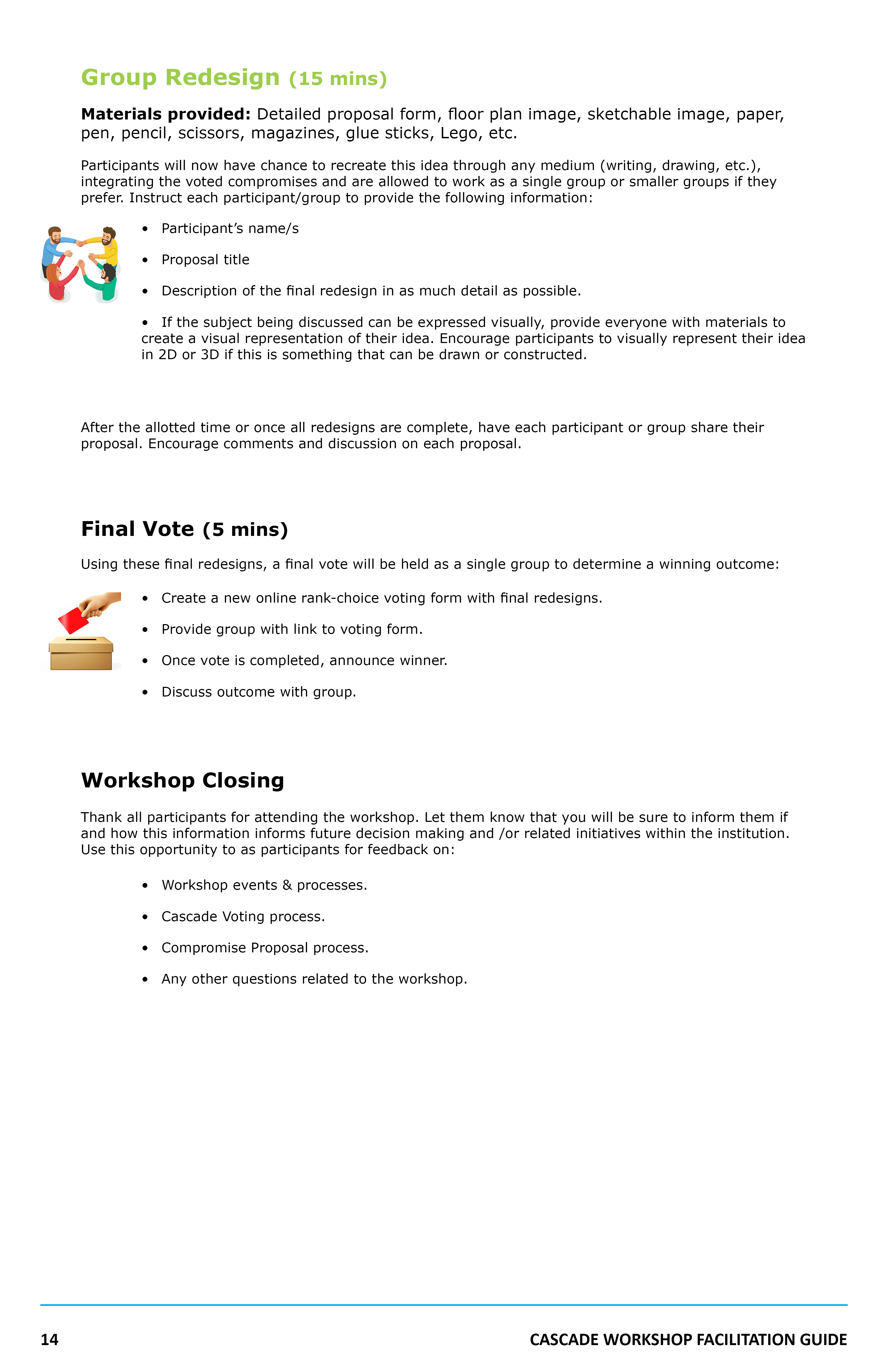
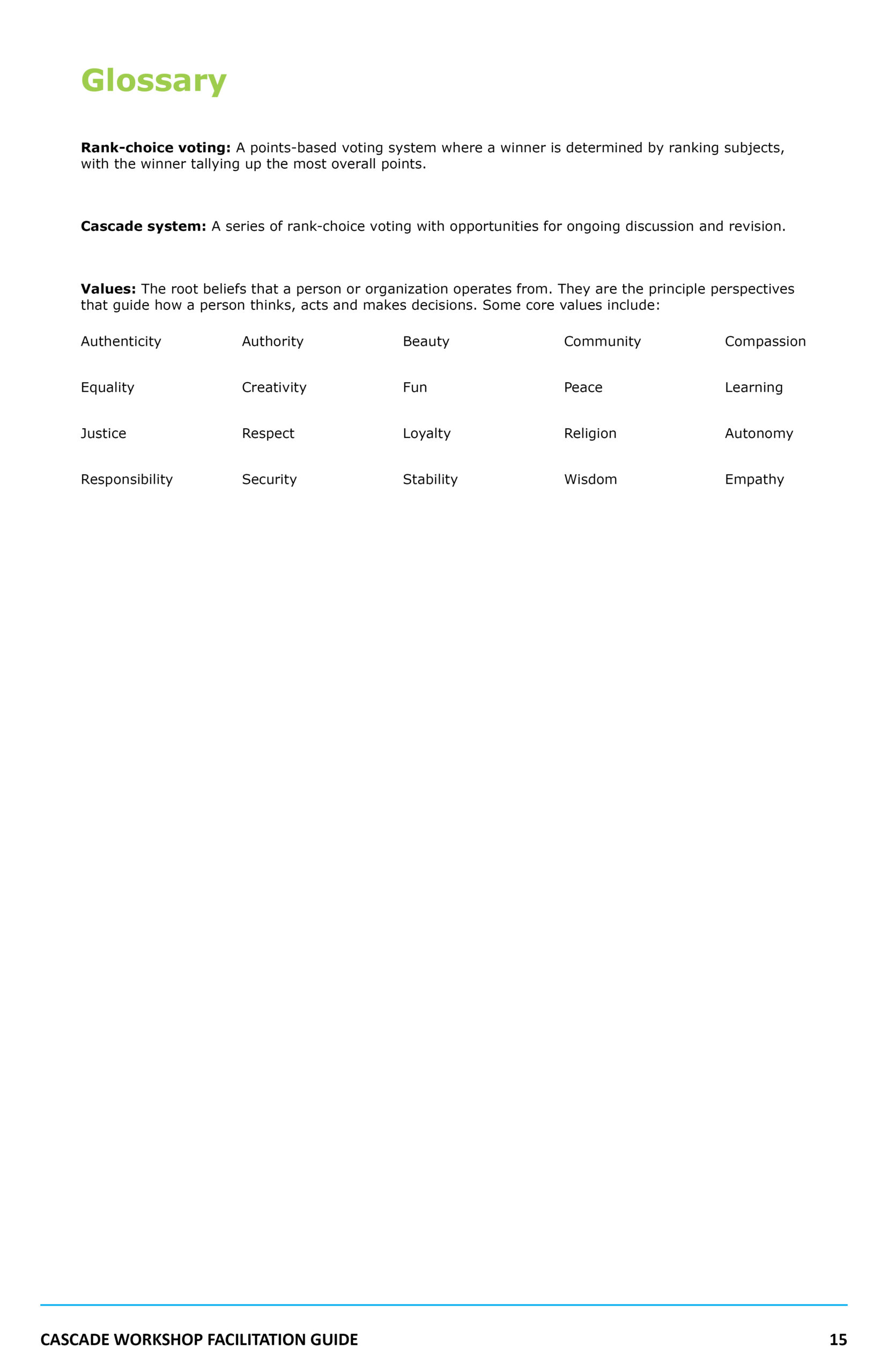
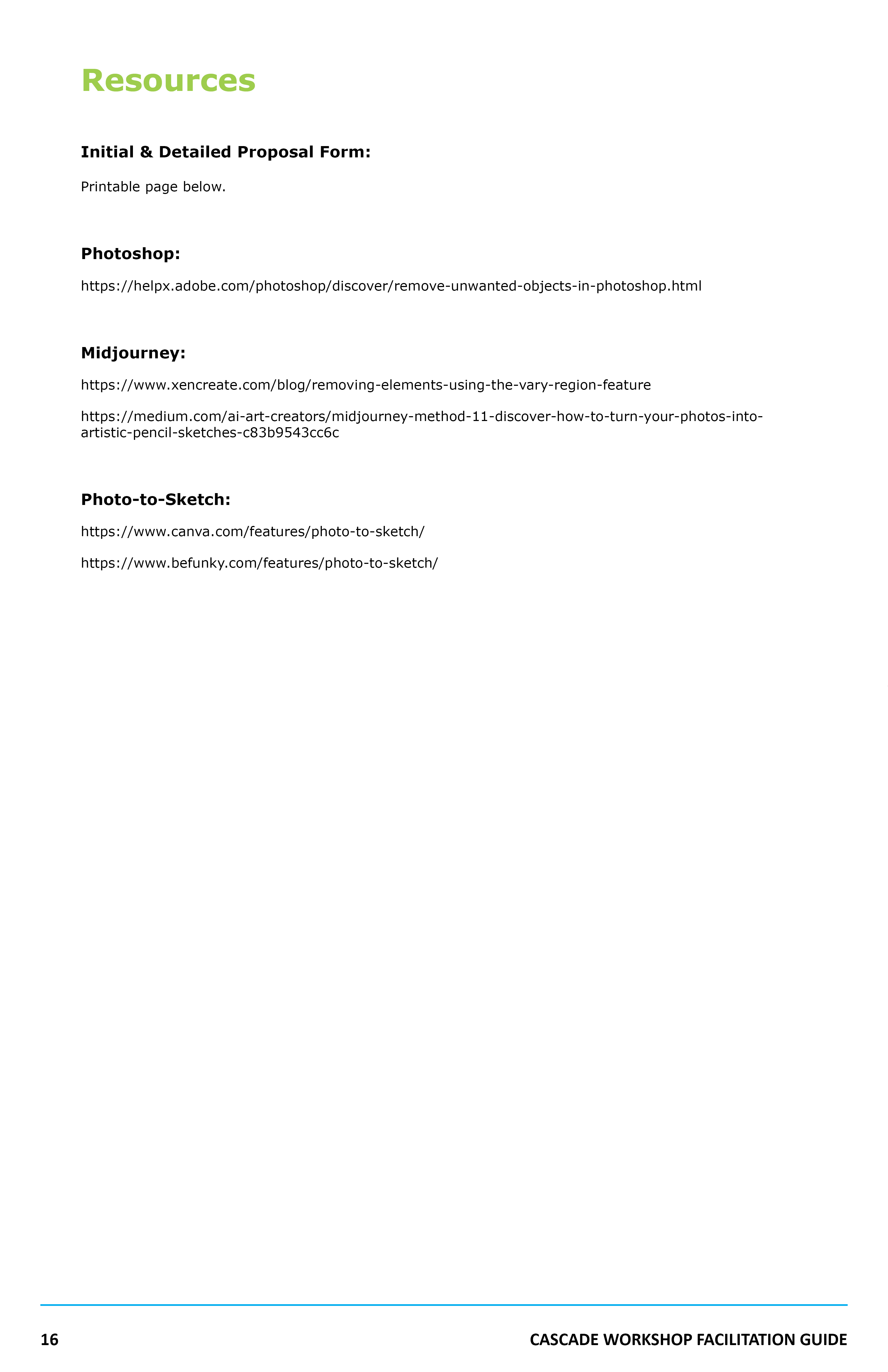
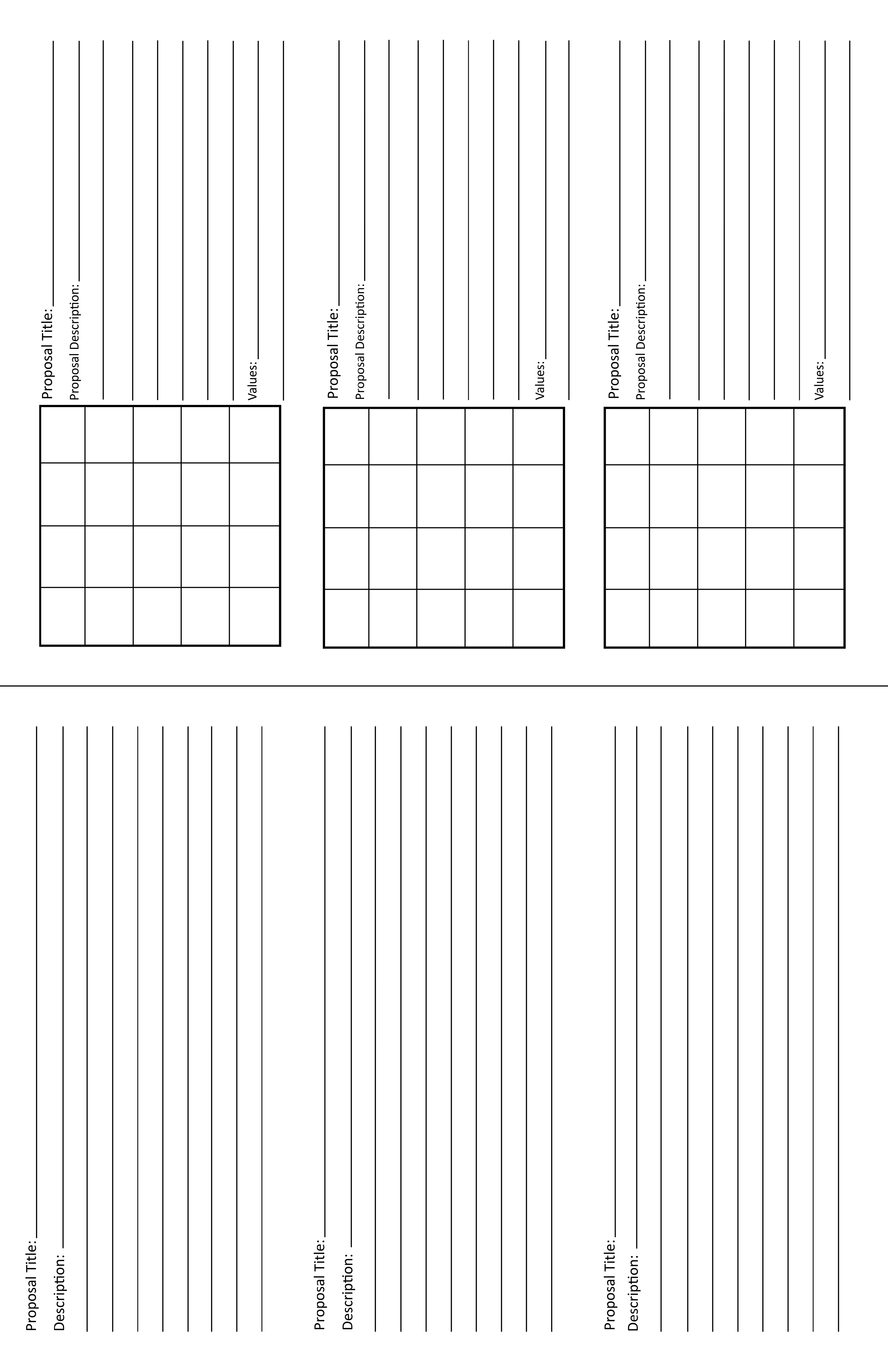
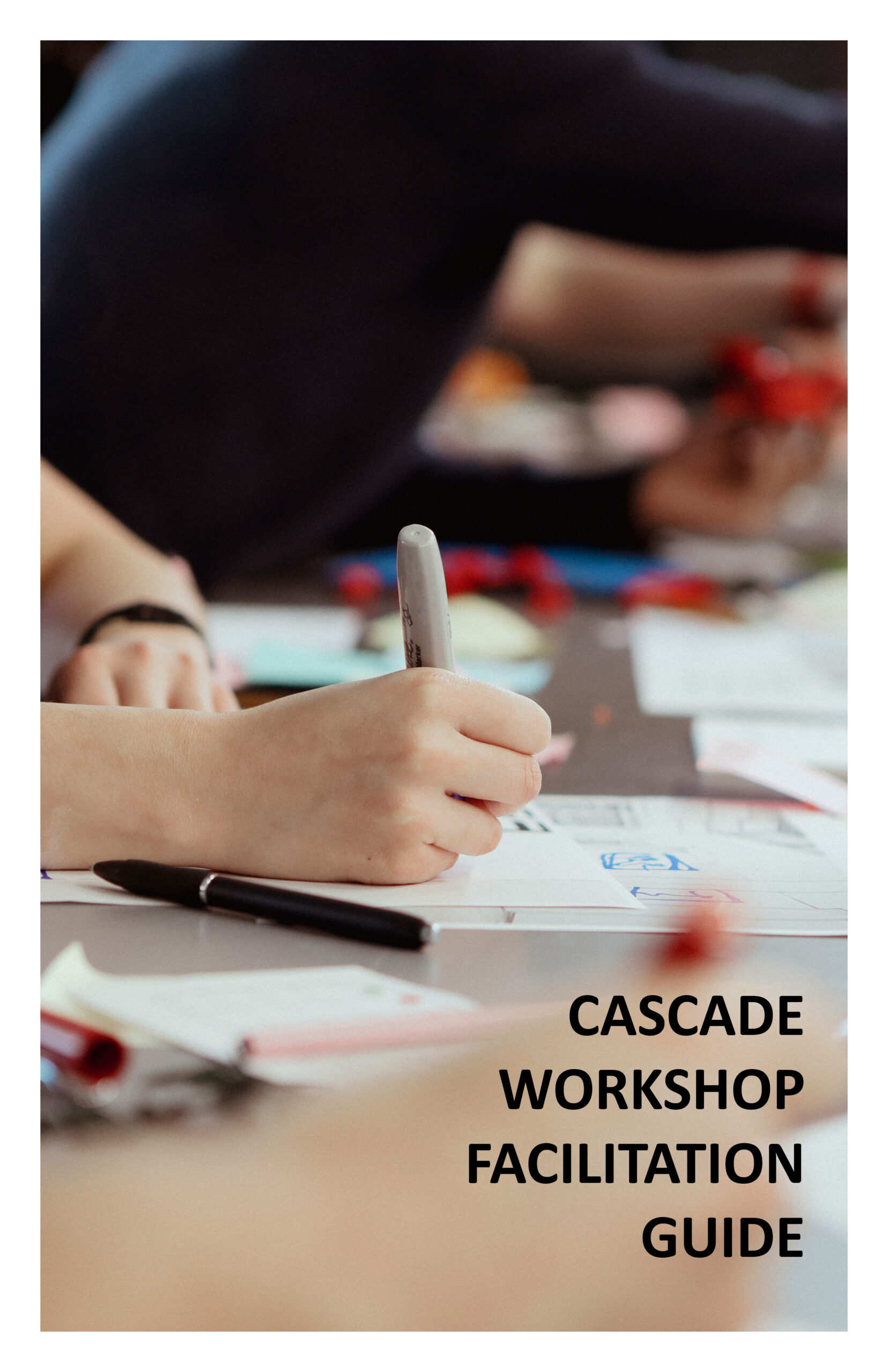
As a way of sharing this system and continuing the research, I created a comprehensive guide for facilitating the Cascade Workshop. This will allow the Emily Carr University and others who wish to gain insight into their communities a chance to use this tool and continue developing the Cascade voting system through continuous real-world usage.
A Digital Solution Going Forward
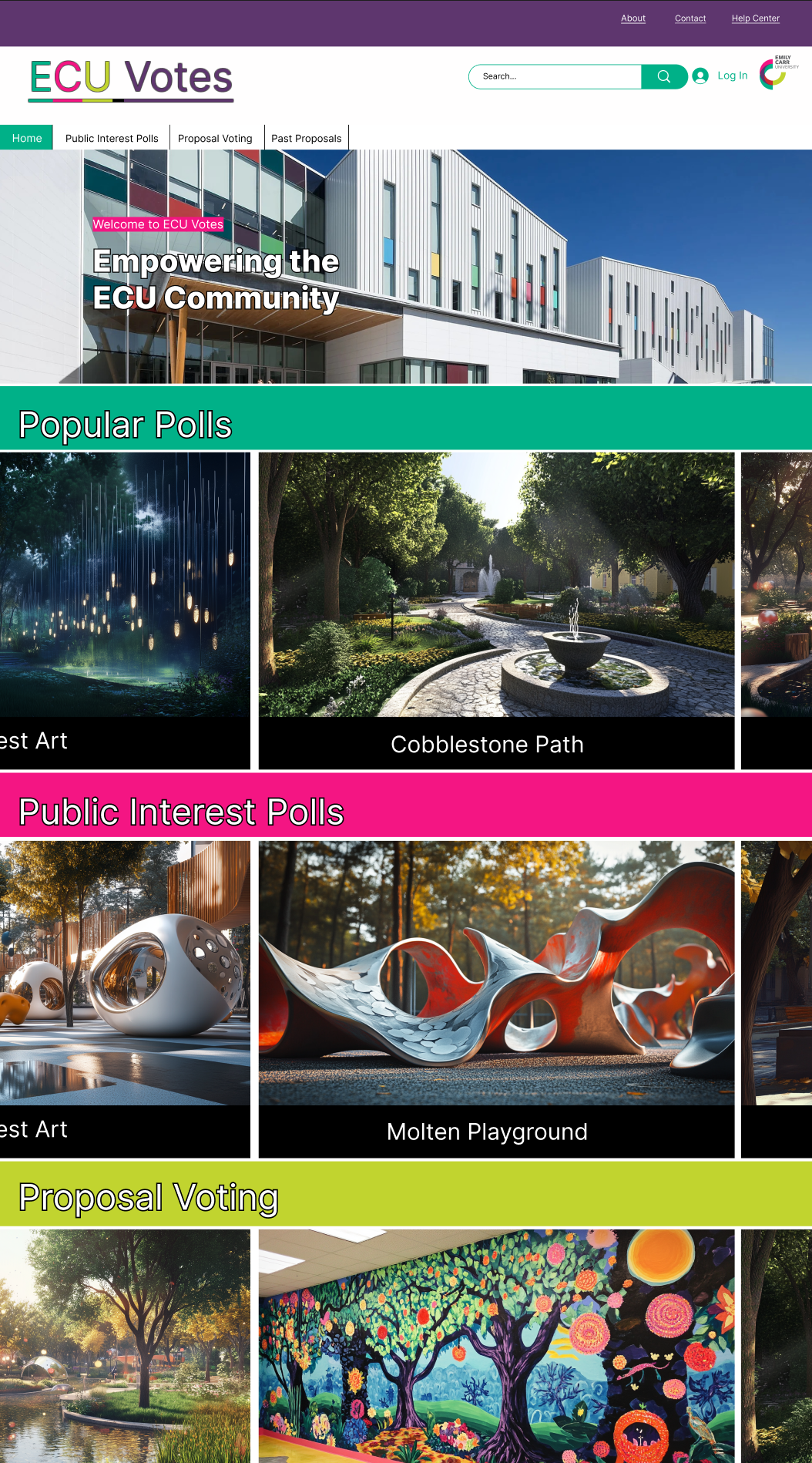
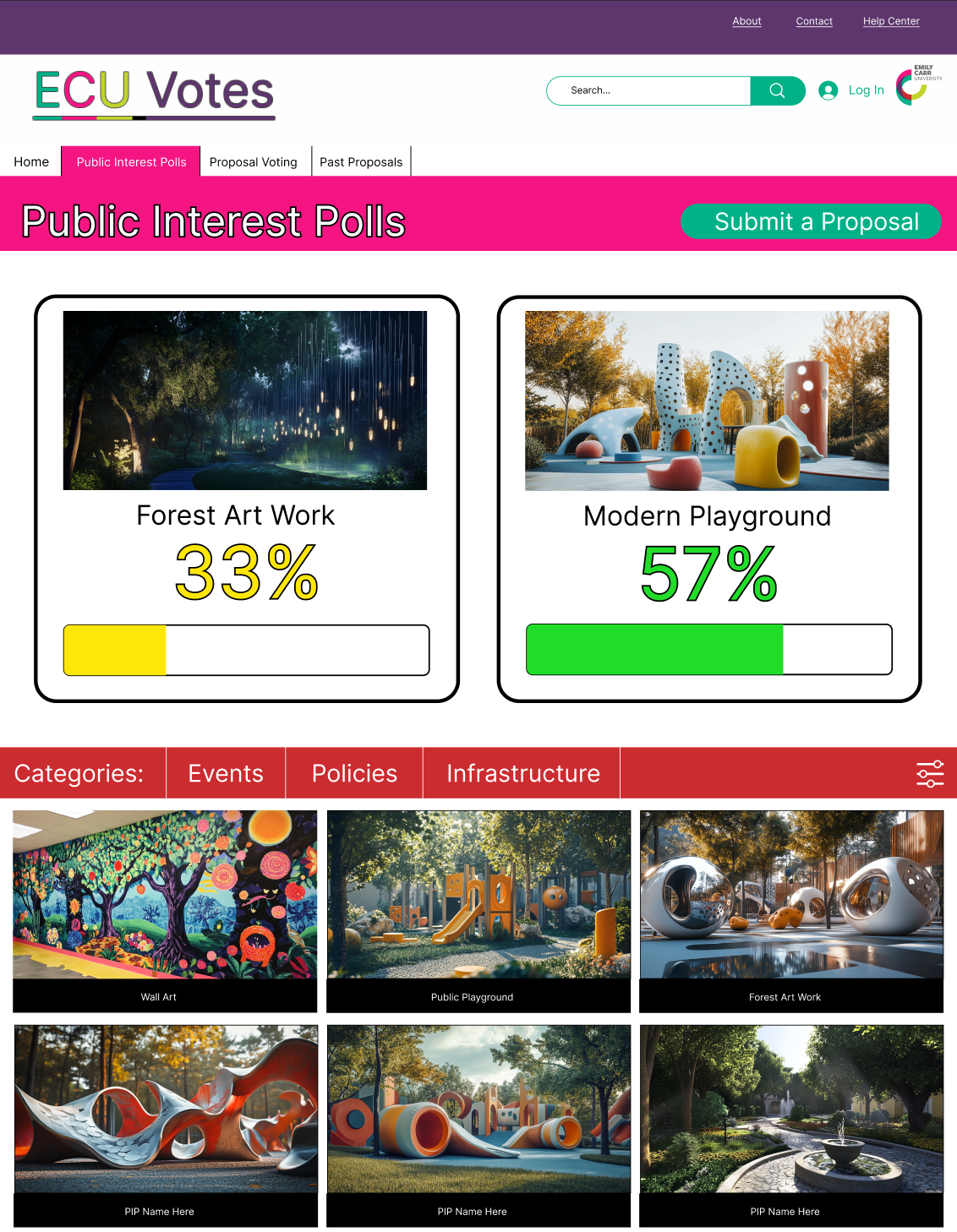
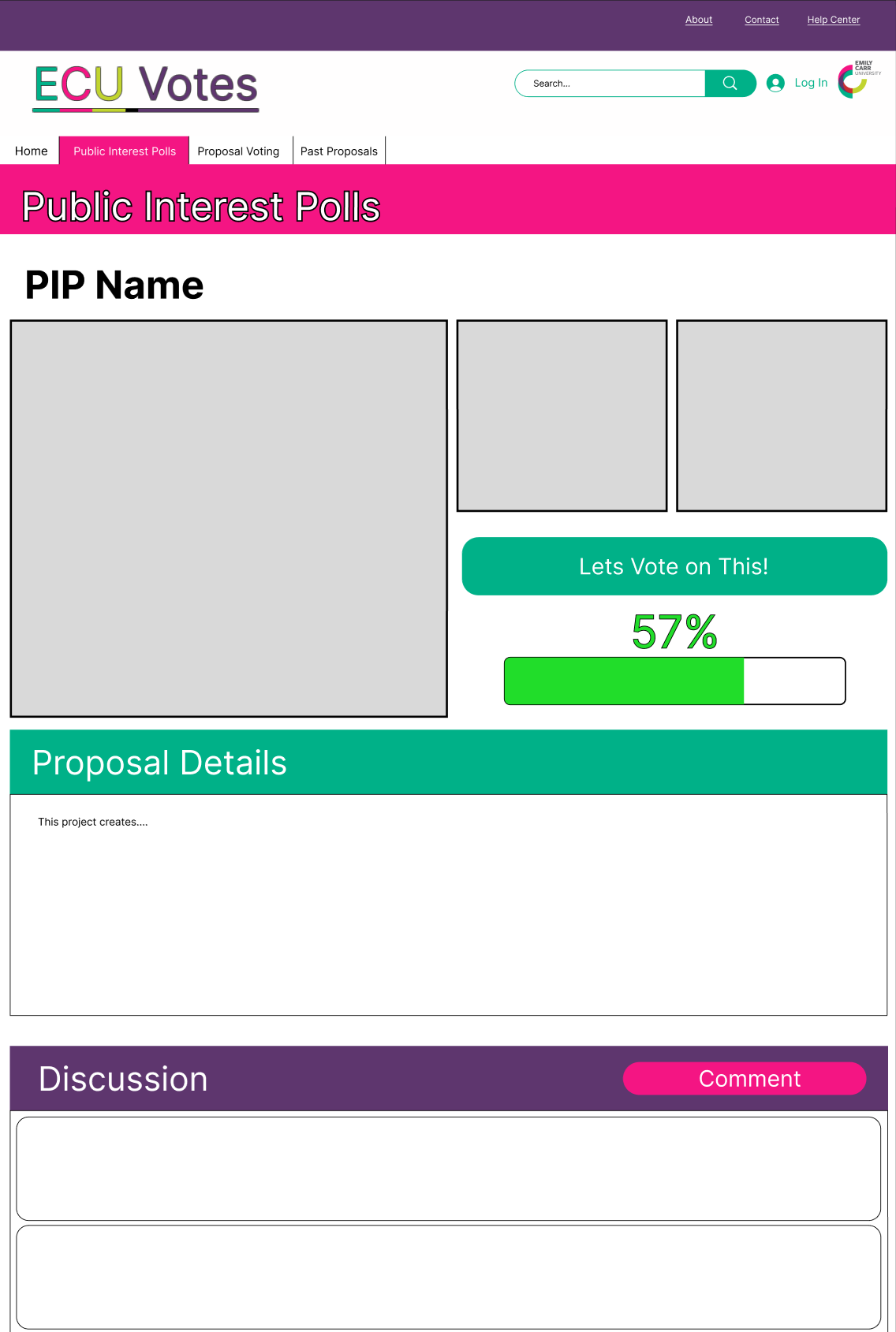
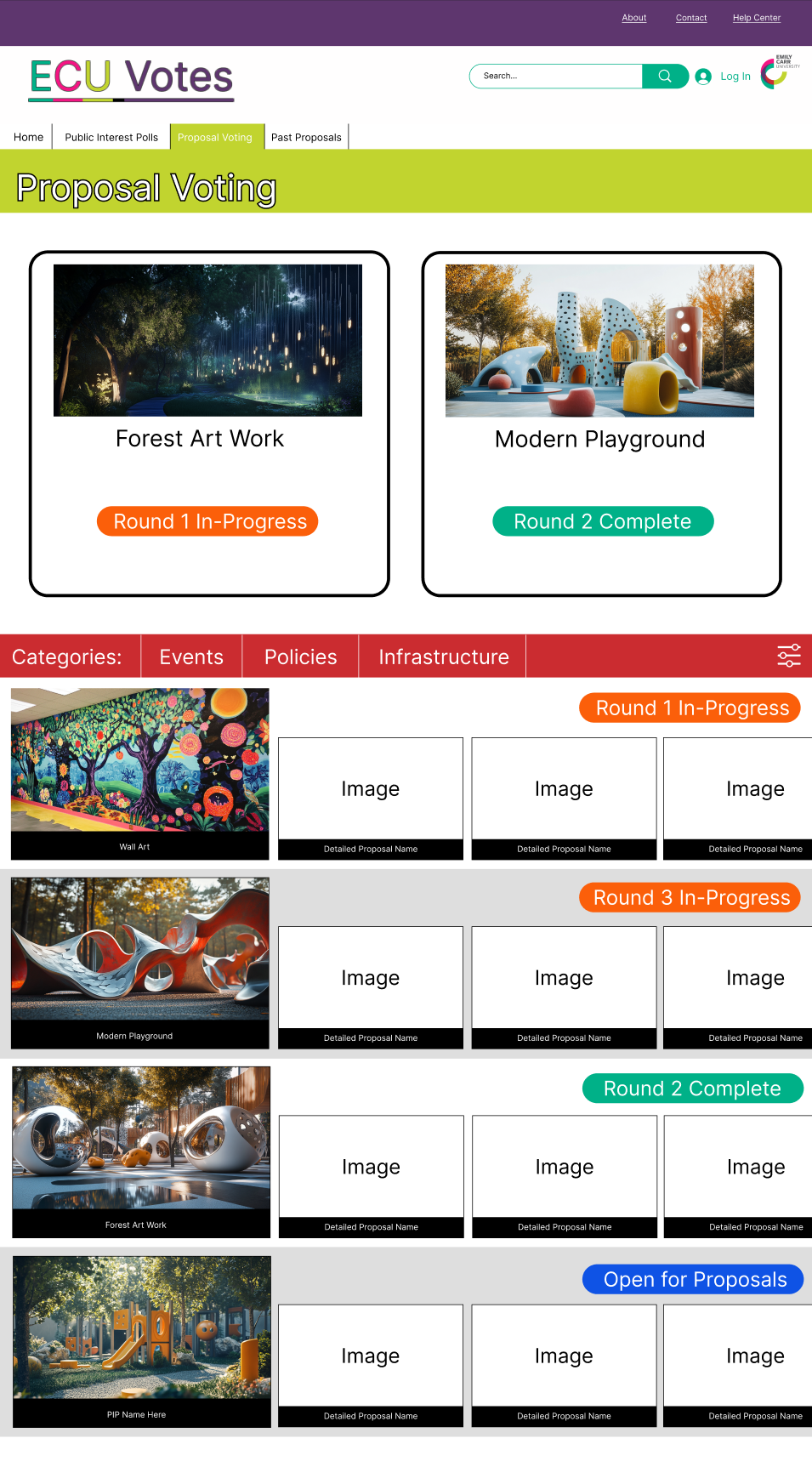
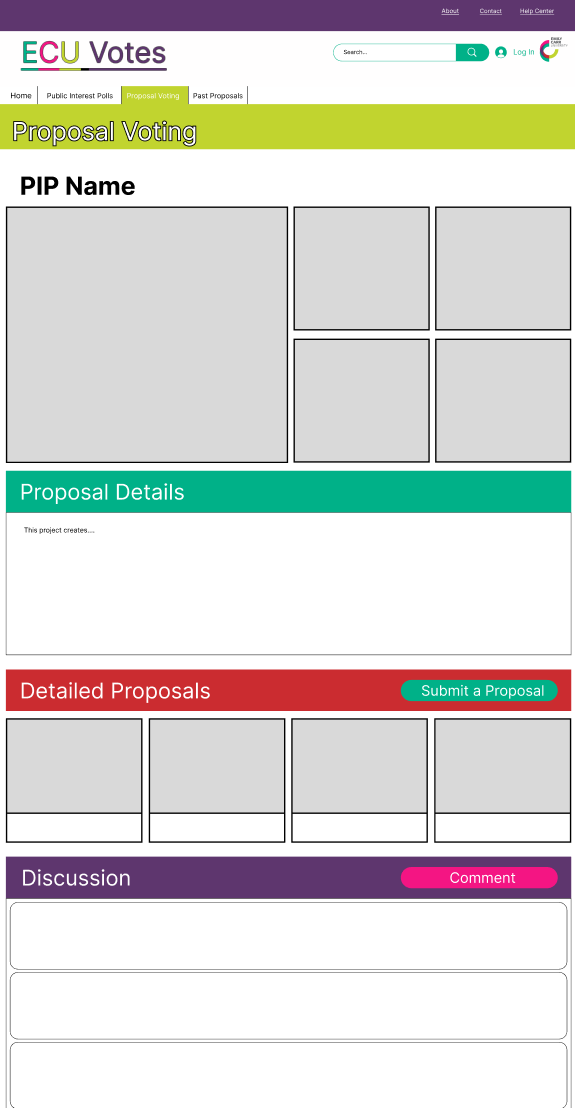
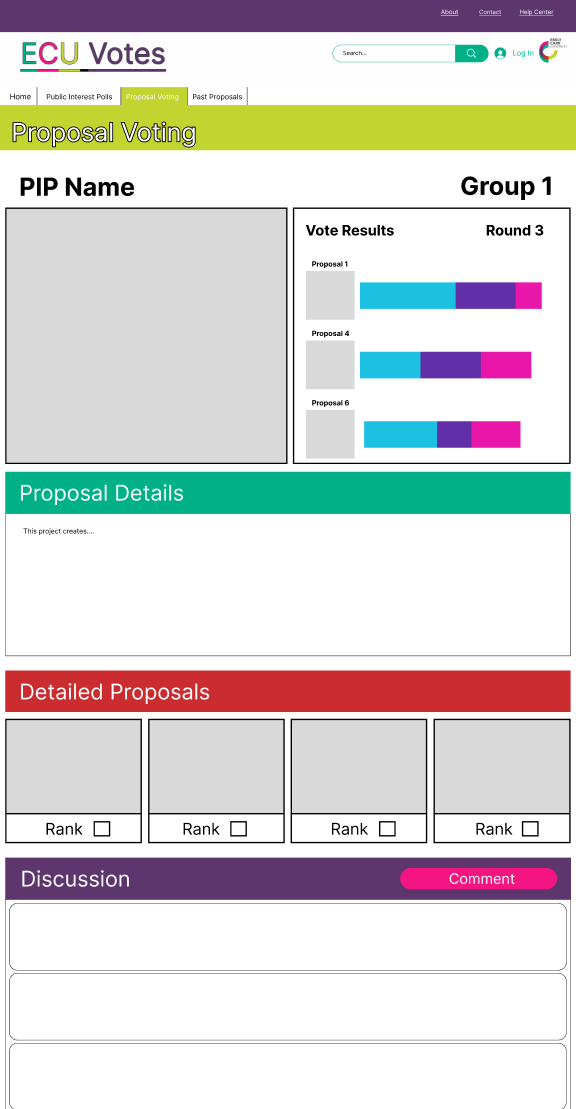
A further exploration into a digital space for voting and proposing ideas for Emily Carr University. Pages would display proposals, voting groups and outcomes, as well as facilitate discussion for community members who cannot attend the workshop.
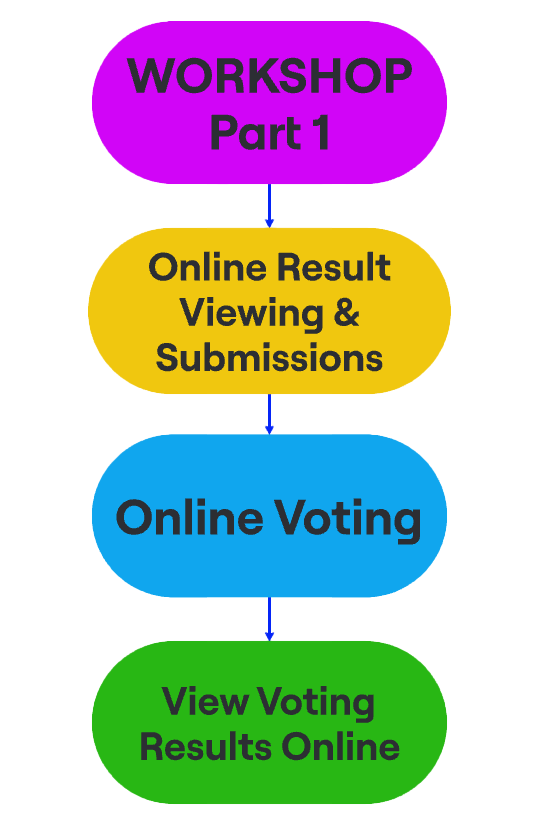
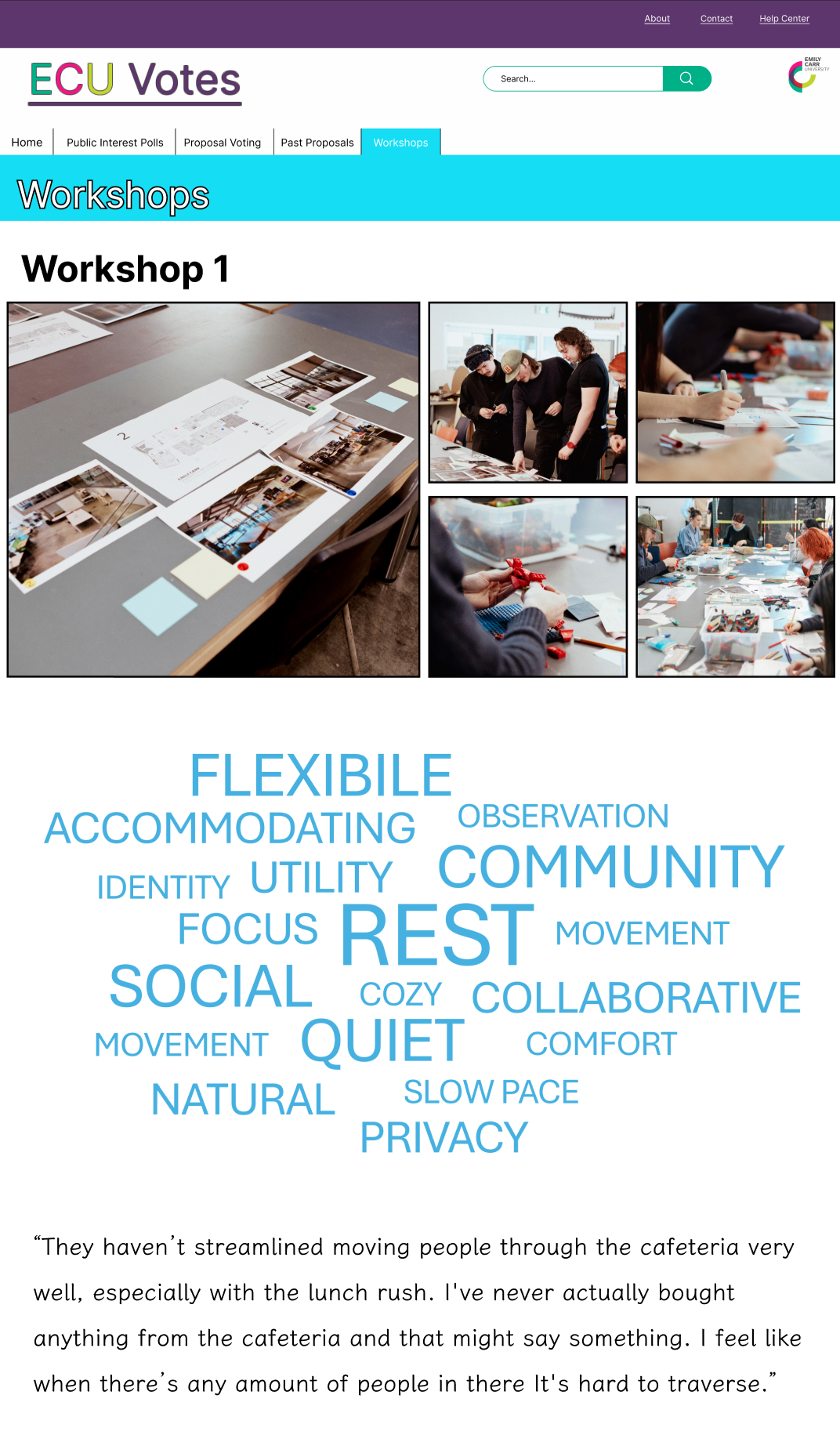
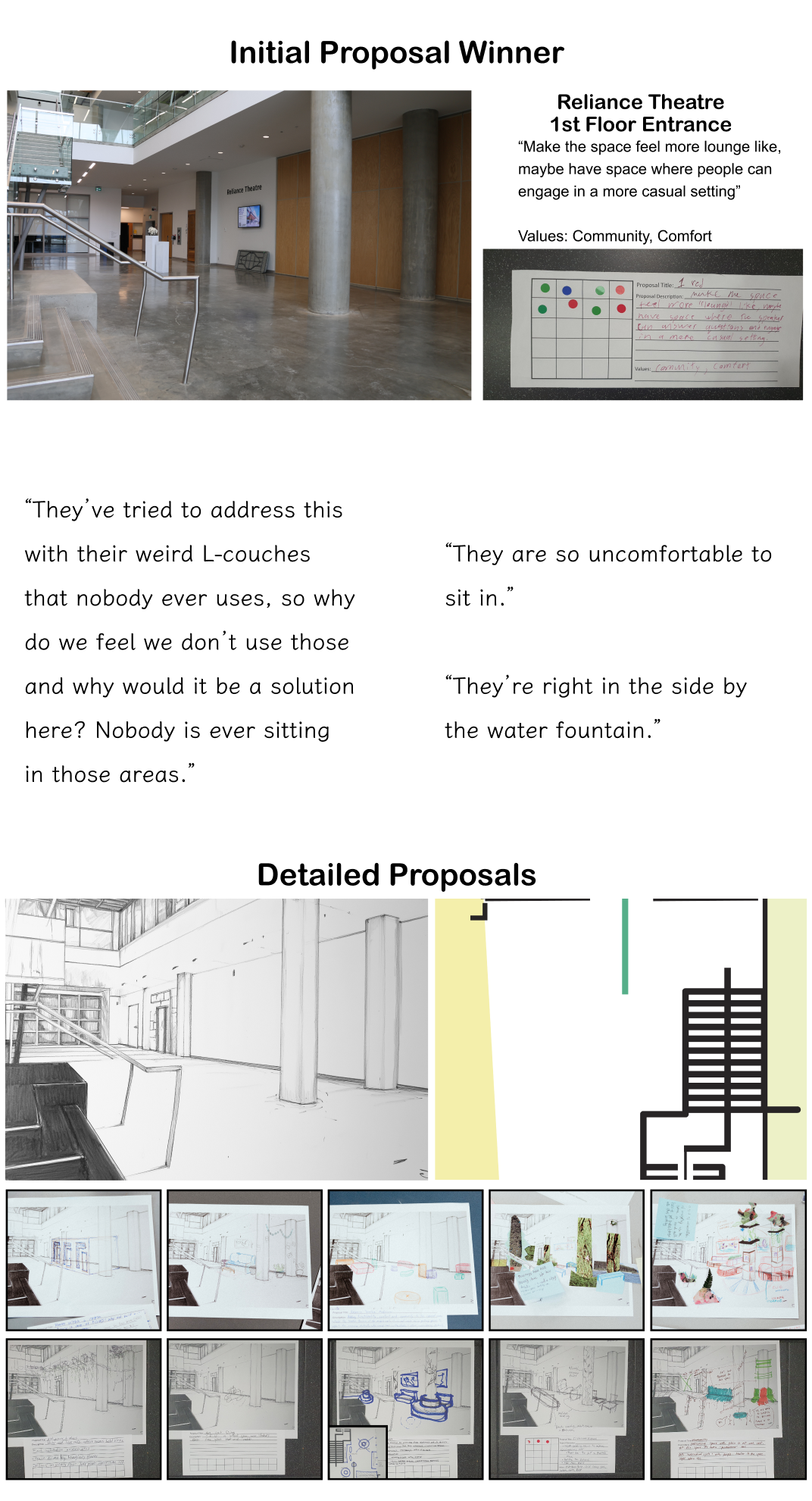
After each workshop, the results would be posted online for those who couldn’t attend to get a better understanding of the community sentiment before creating their own proposals and voting. Having the digital realm to work in enhances some parts of the workshop, like being able to gather values digitally and display them as a word cloud for an easy way to compare all values. It will also allow people in the workshop to create and view others work digitally instead of having to traverse the room, which would make things more accessible for people with disabilities wanting to participate.
Into the Greater Community
Shape Your City Vancouver currently has the infrastructure of the online experience for community proposed projects, but they do not have in-person gatherings where ideas are generated and discussed to consider the best outcome. The Cascade Workshop could be implemented as a part of their process to increase community input and involvement with a more methodical, hands-on approach.