TIDETOSS
Eden Eisses
See it On Campus: Level 1
Ecological Design Graduation Award — Honourable Mention
TIDETOSS
a series intertwining bodies and seas
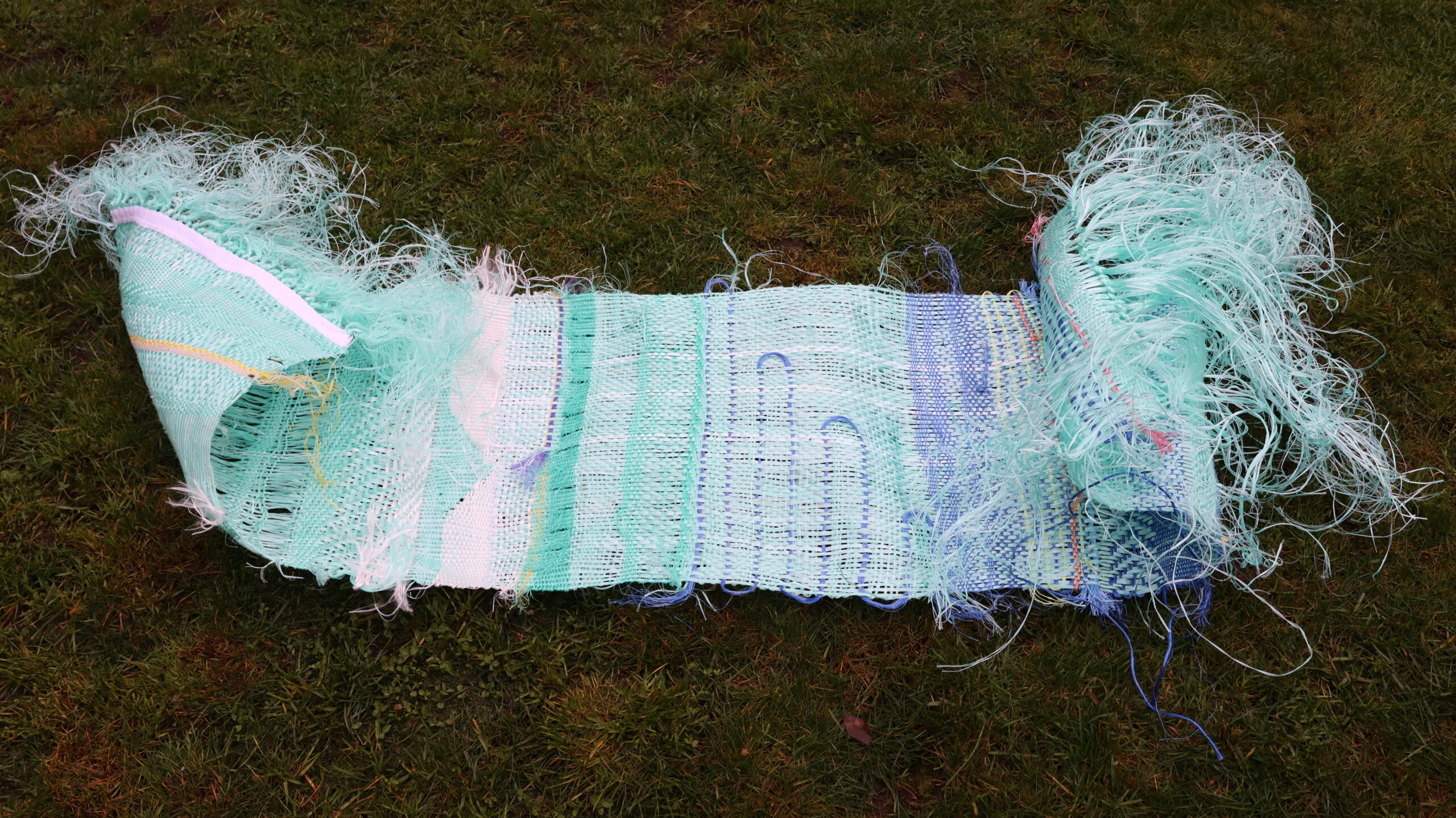
Merging an awareness of our ever-shifting ecosystems with tossed materials from the intertidal zone. Weaving processes in materiality to propel presence throughout play, joy and reflection in noticing our plastic impacts to our precious planet.
Through continued material investigation, this project aims to provide alternative ways of upcycling gathered plastic marine debris from British Columbia’s vast coastline.
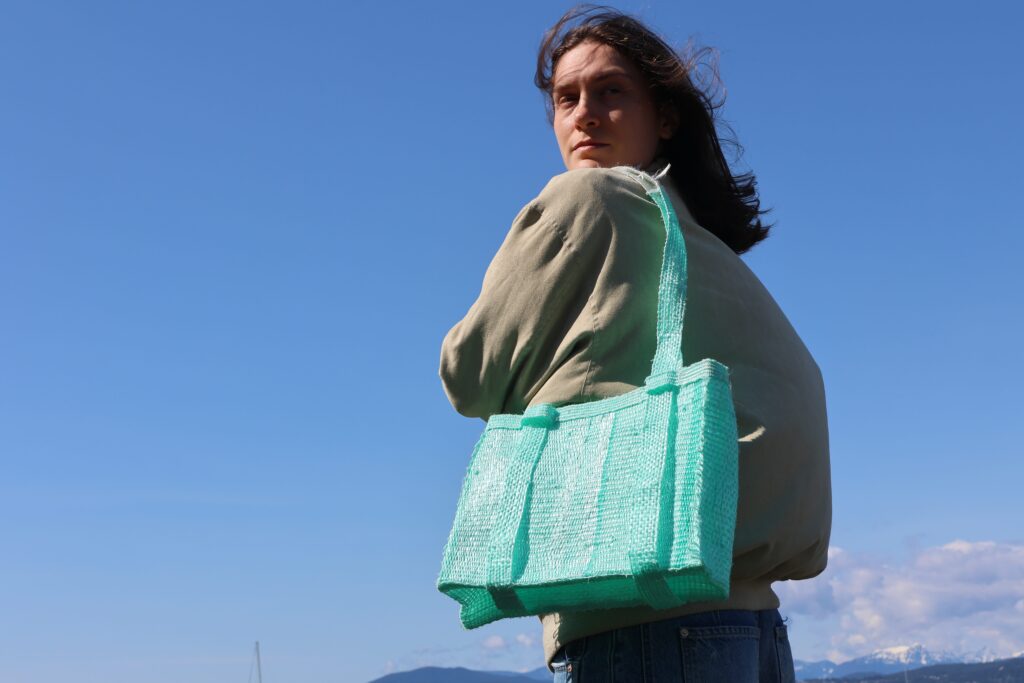
INITIAL DESIGN INTENTION
To design a system that encourages movement, connection and care in one’s self, that reciprocates in their community and natural environment.
In my love for our earth and our seas, I find the catalyst to this work. Playing outdoors has always been a sequence that brings me right back into the present moment, to community, and to myself. In high moments of stress, anxiety and the ever-changing course of life, play that includes both fine and gross motor activities are the simple remedy.
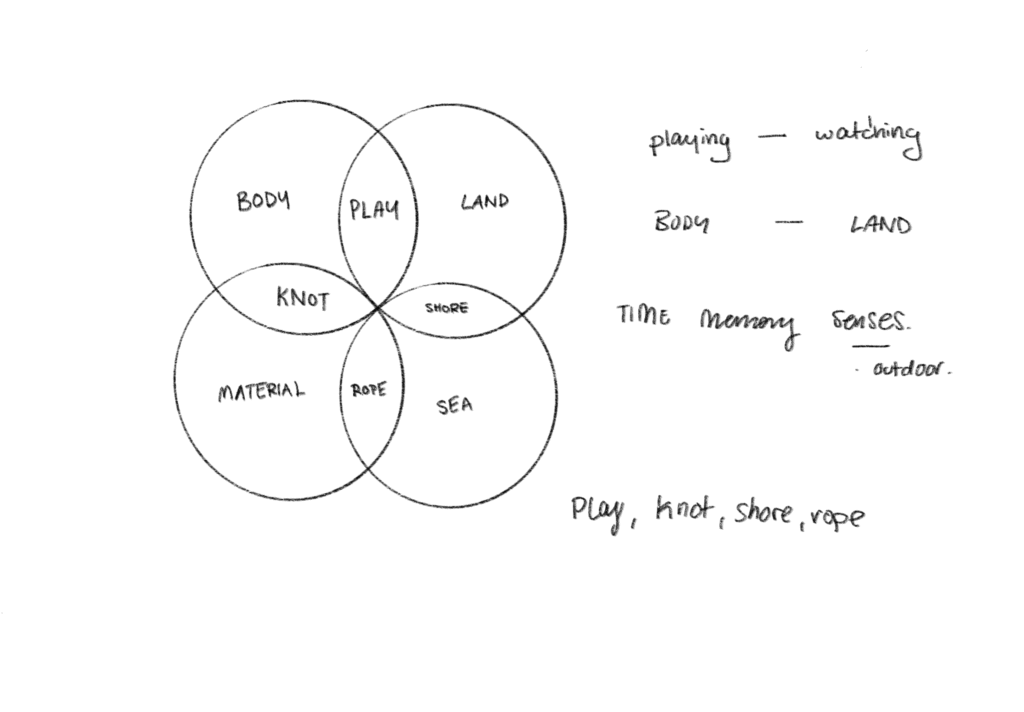
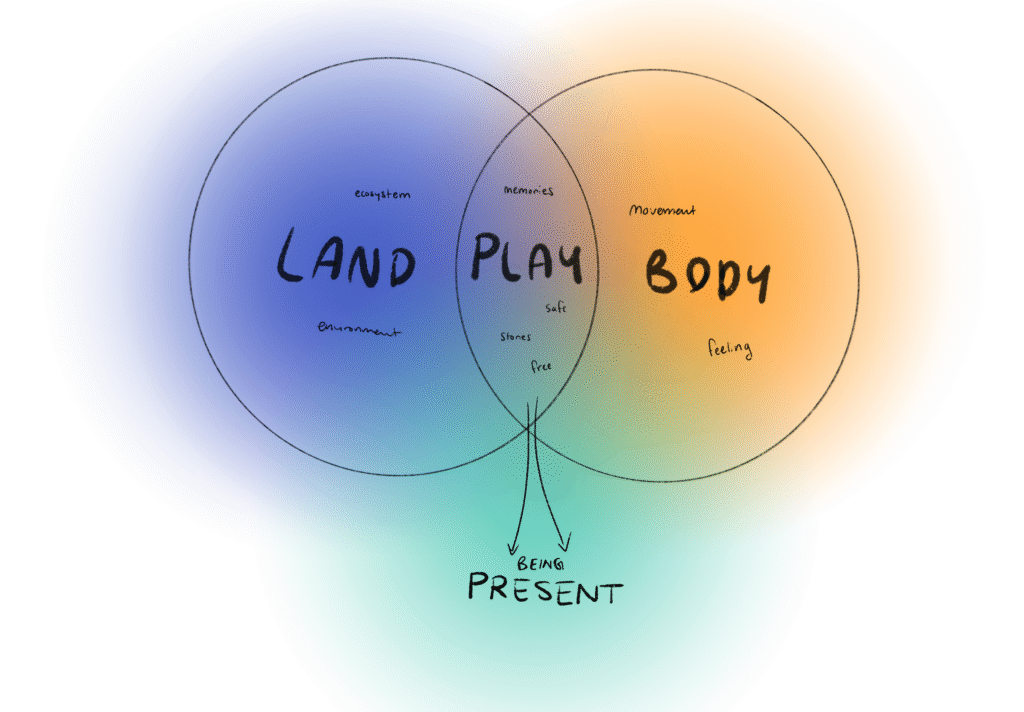
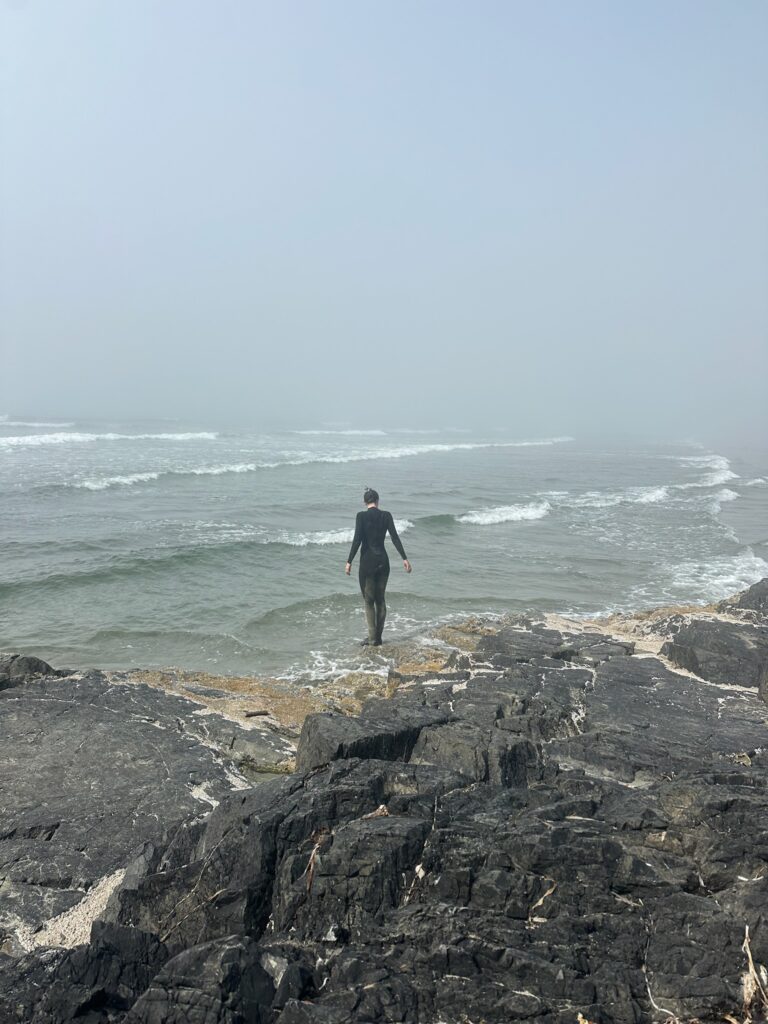
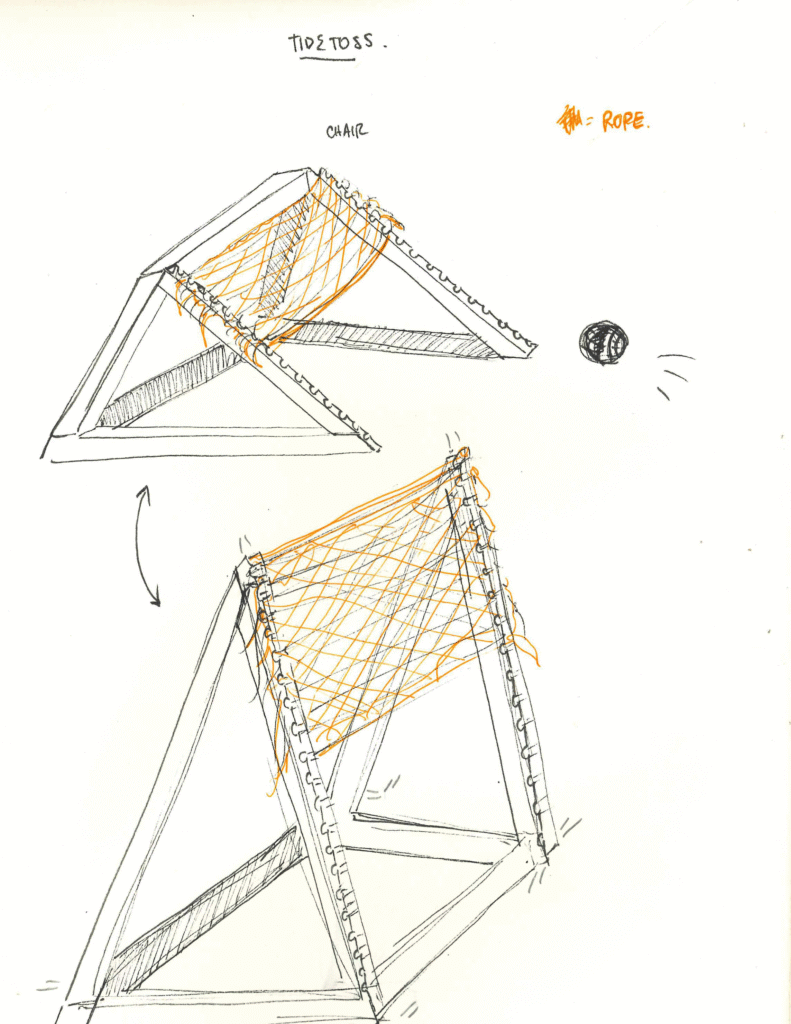
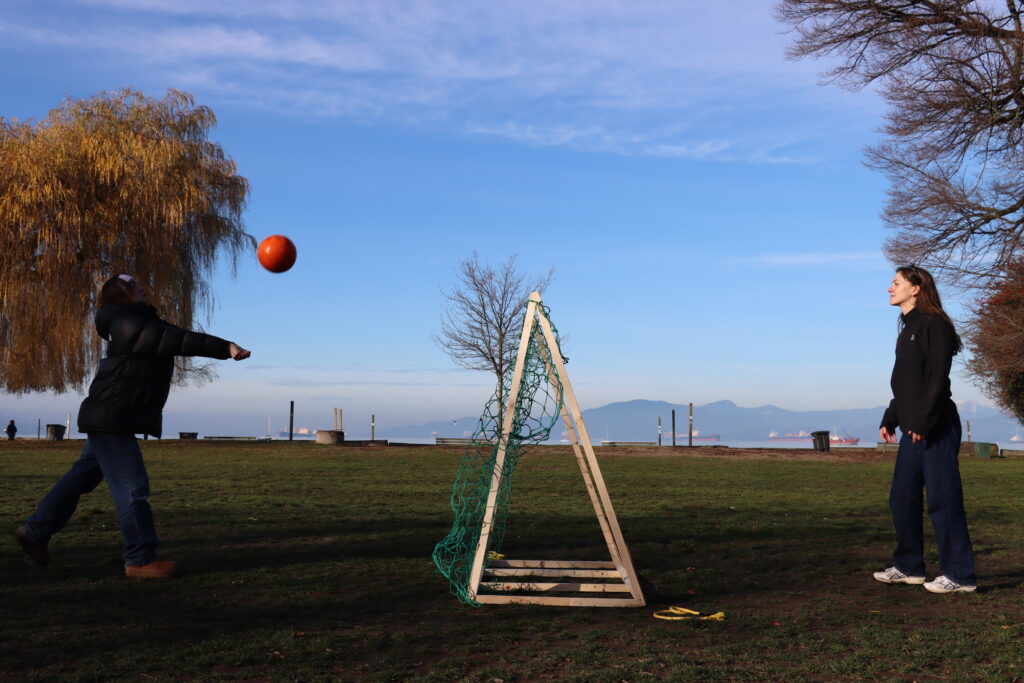
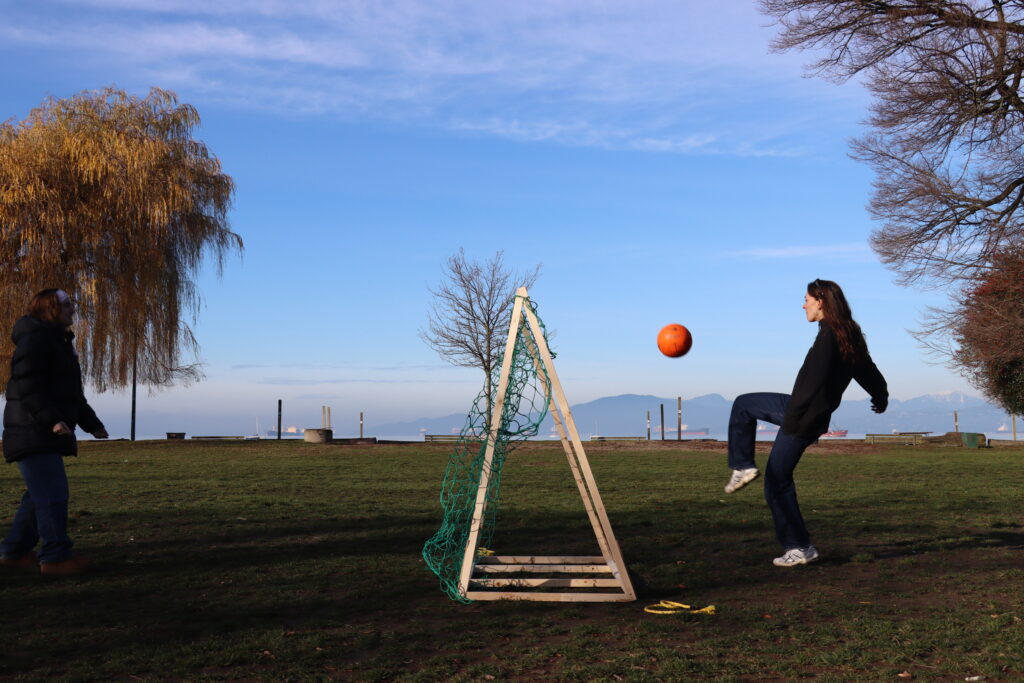
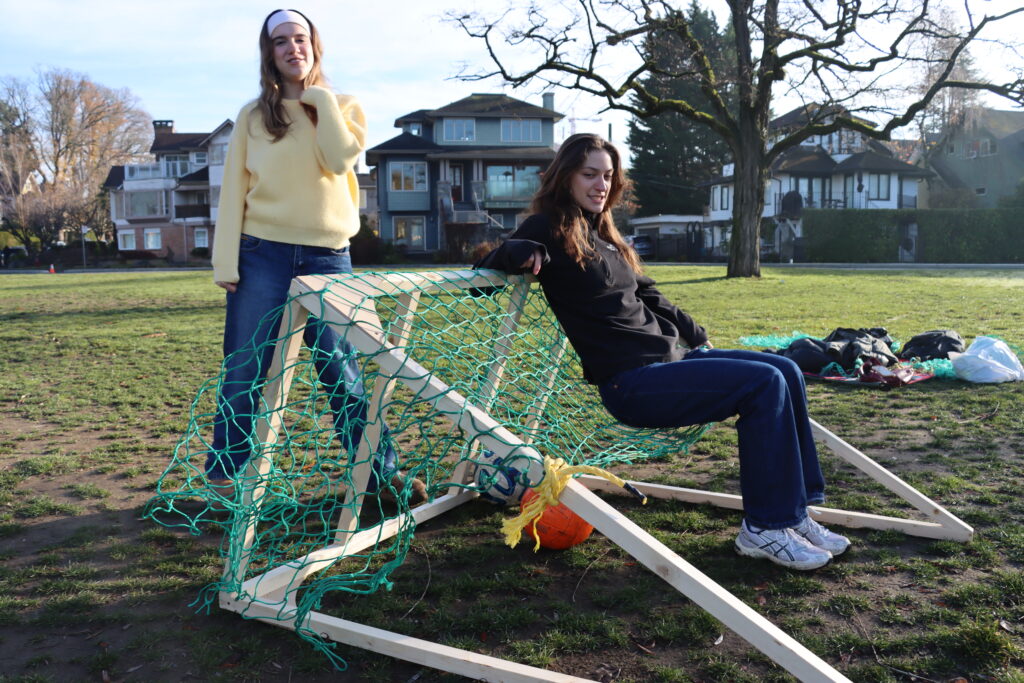
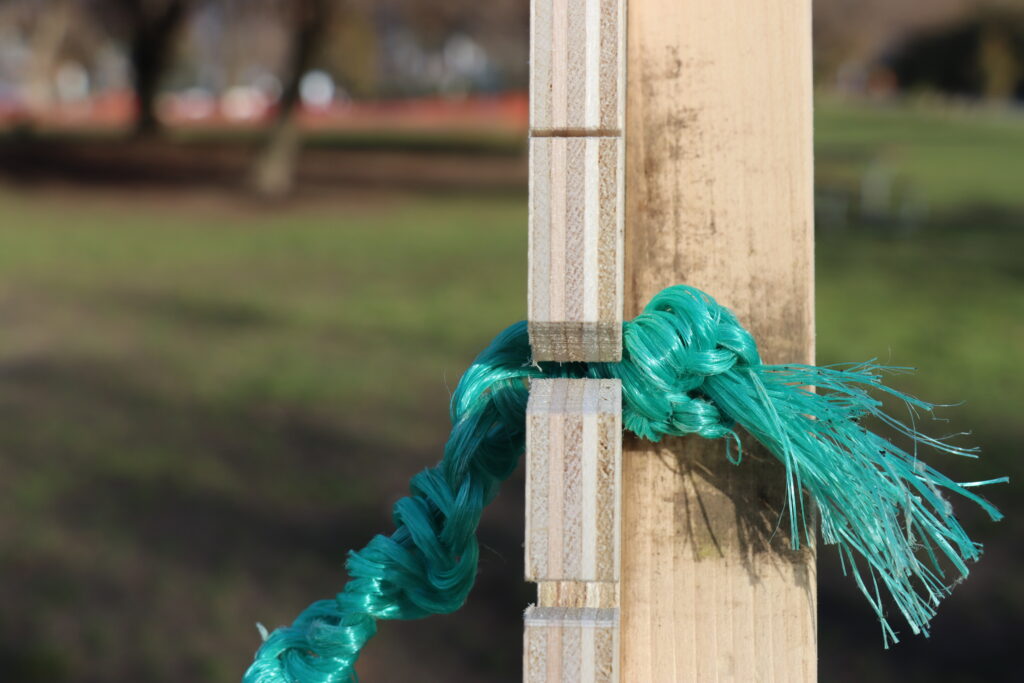
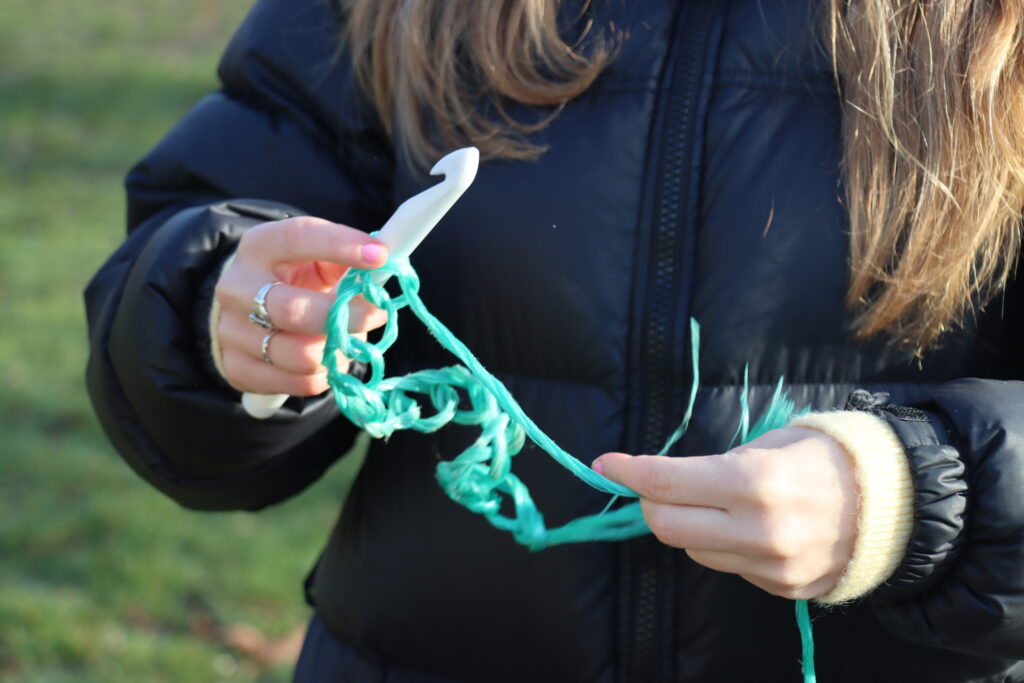
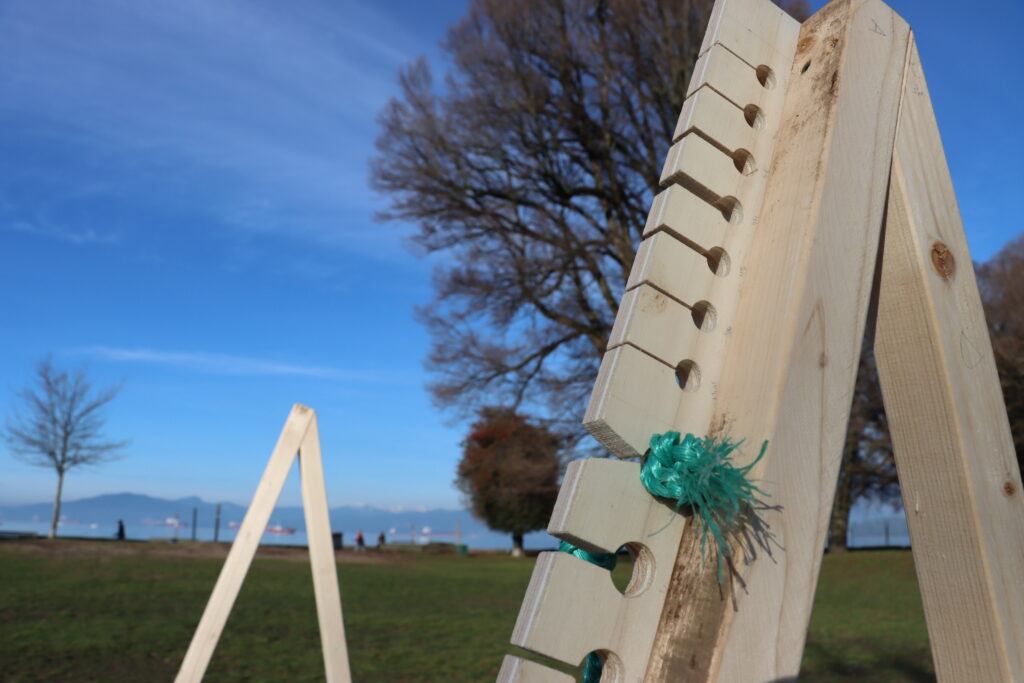
My intention at first was to have that sense of play shared with a collective community. I started with an ideation of a sitting/playing net structure, opening a channel for physical activity and knotting rope methods.
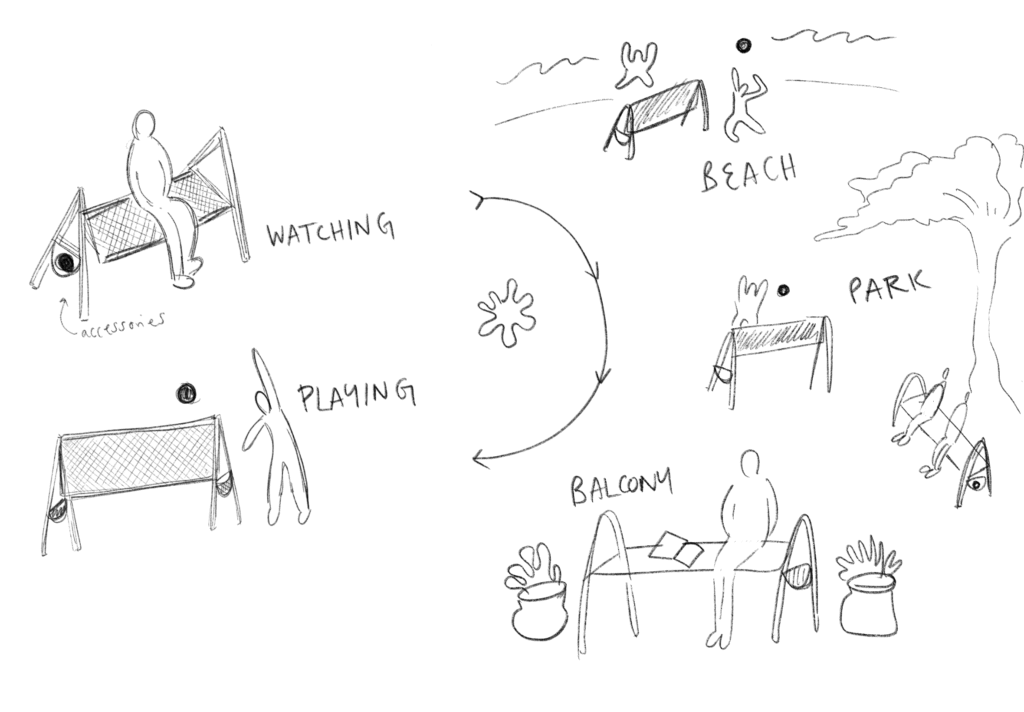
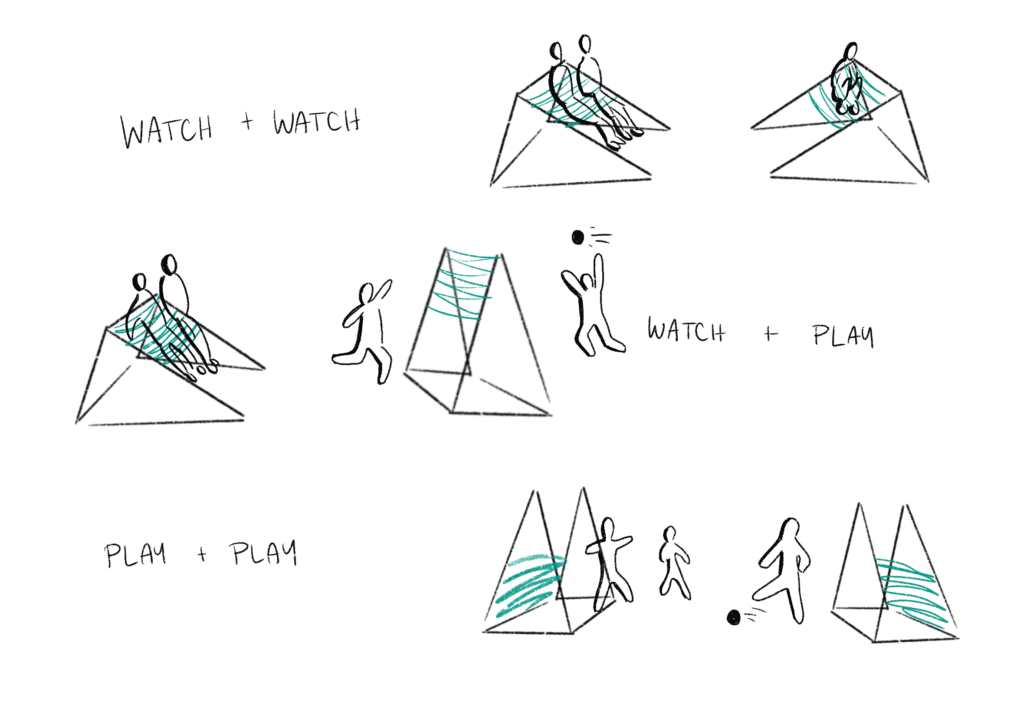
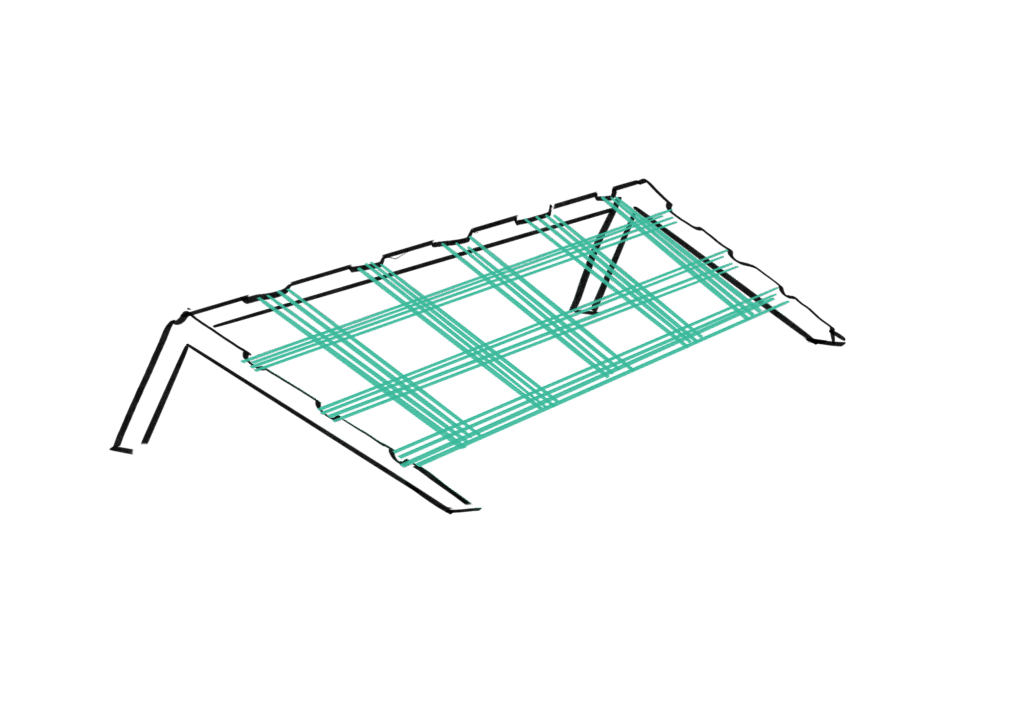
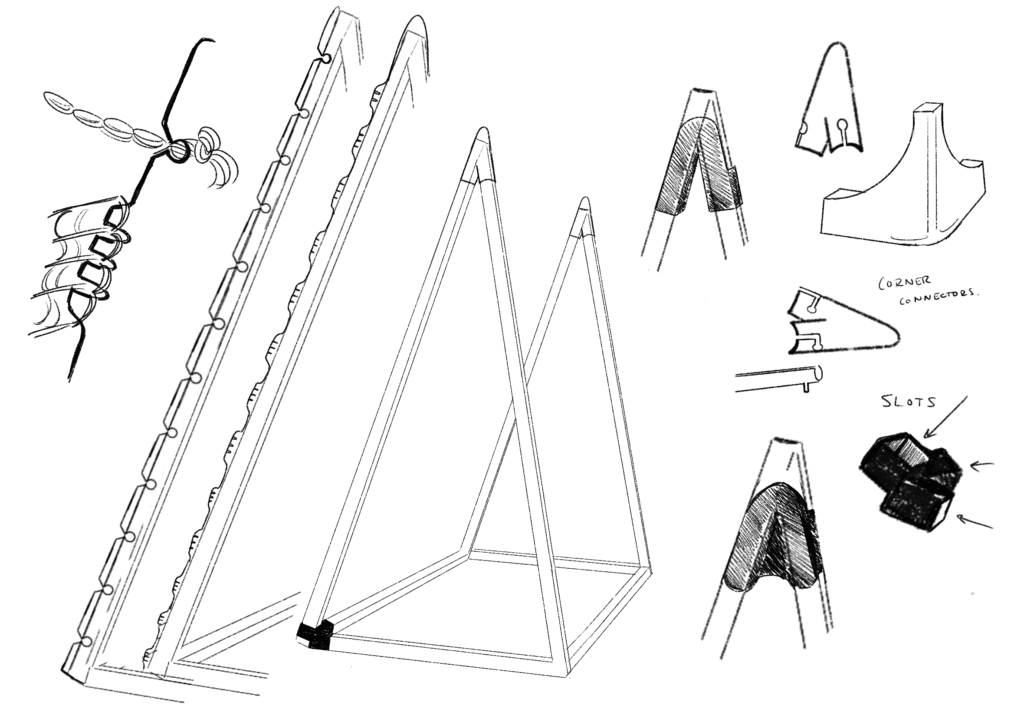
PROTOTYPING
What I created was a large loom. A loom to foster closer connections to my local ecosystem, to my own body and to my community.
MATERIAL EXPLORATION
After much reflection, a period of deepened material research then took hold of my project brief …
From one loom of play to the next, I lead my making next through a variety of weaving techniques, this time in traditional and explorative looms. I noticed that this material was one I was not familiar with, and in not understanding it fully wasn’t able to imagine it’s full possibility. My focus became my personal relationship of play with this material.
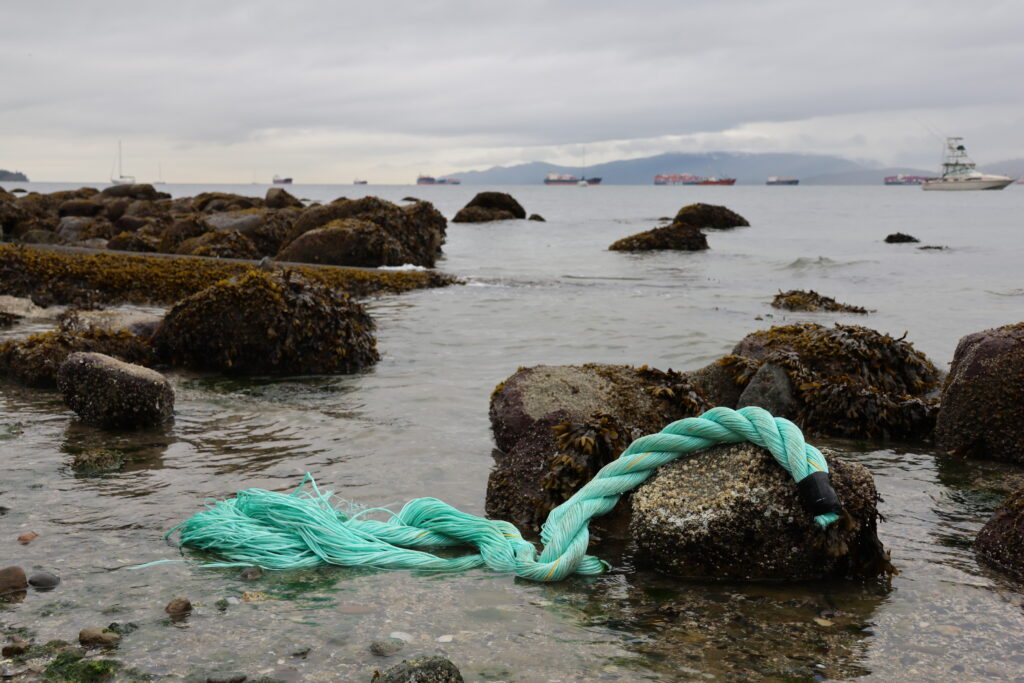
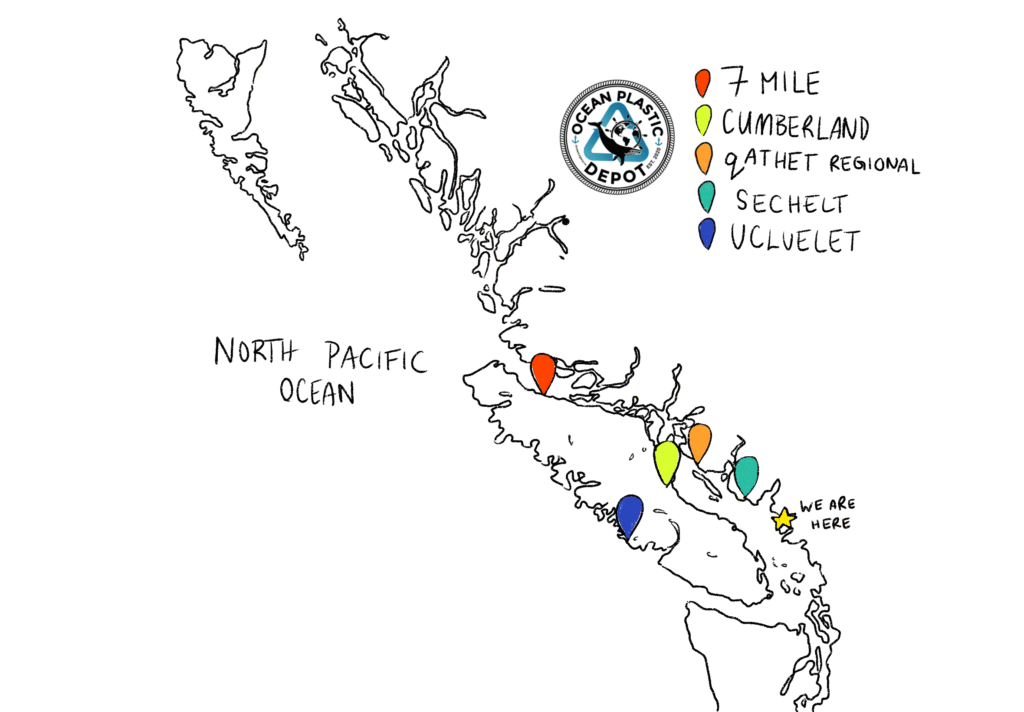
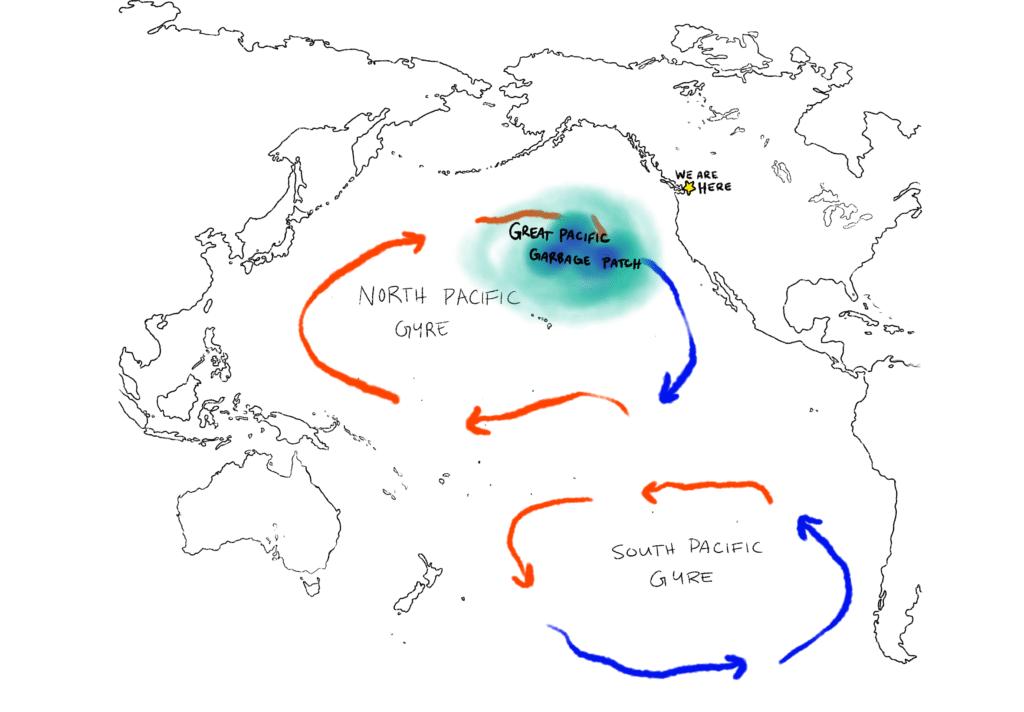
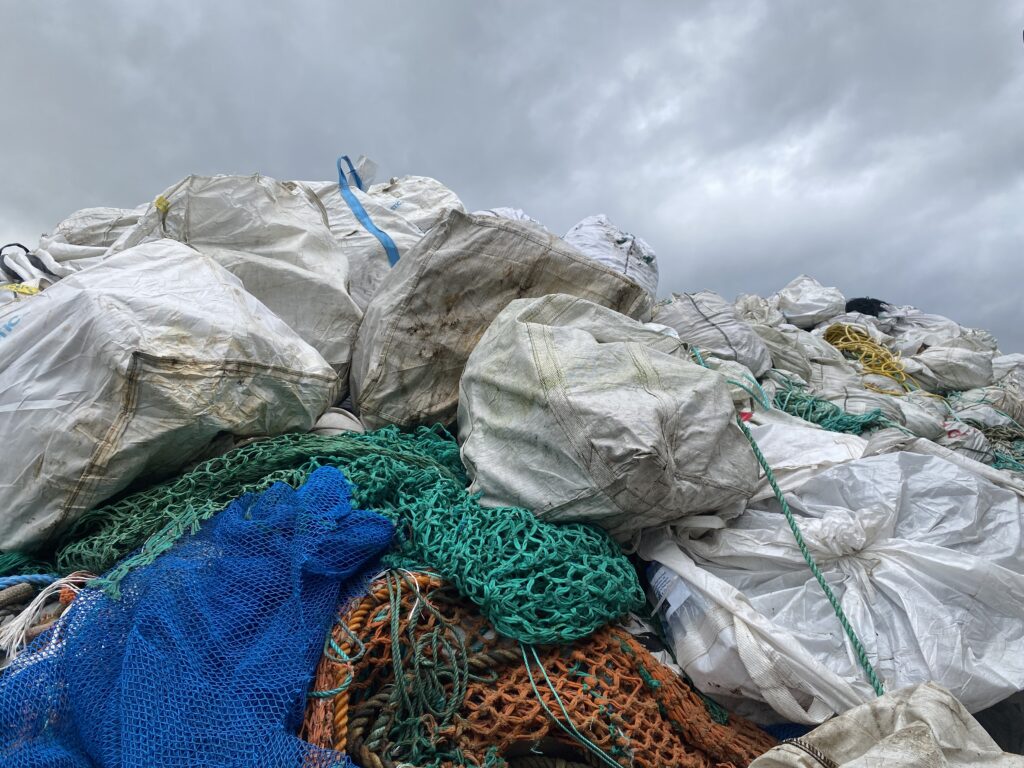
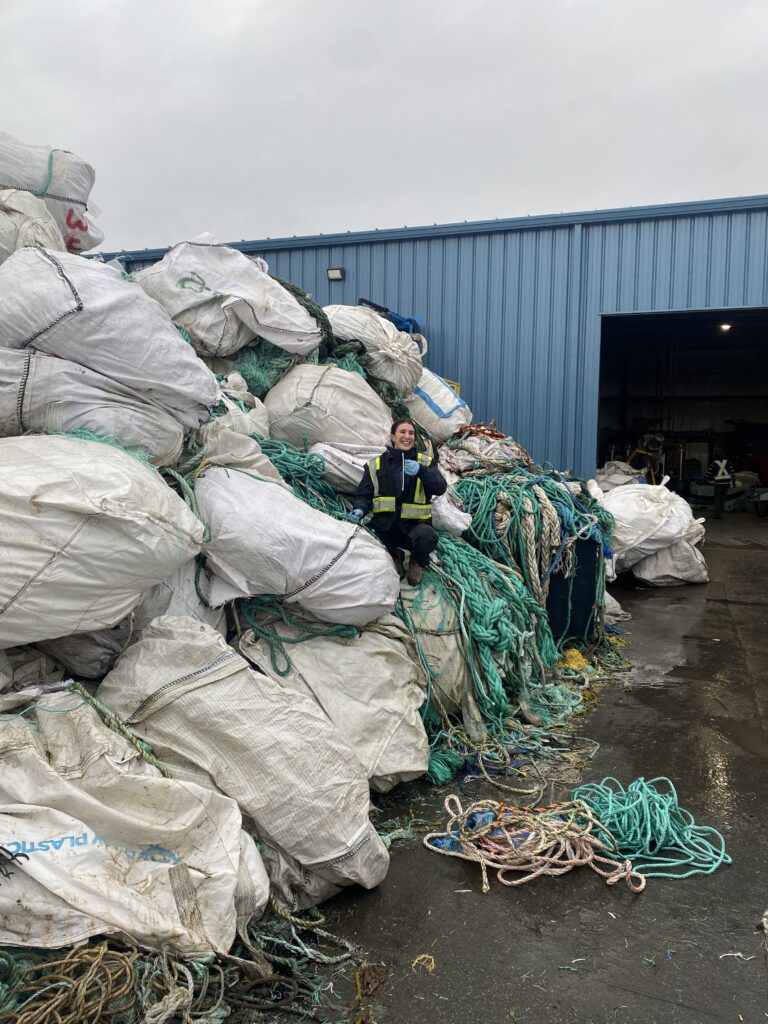
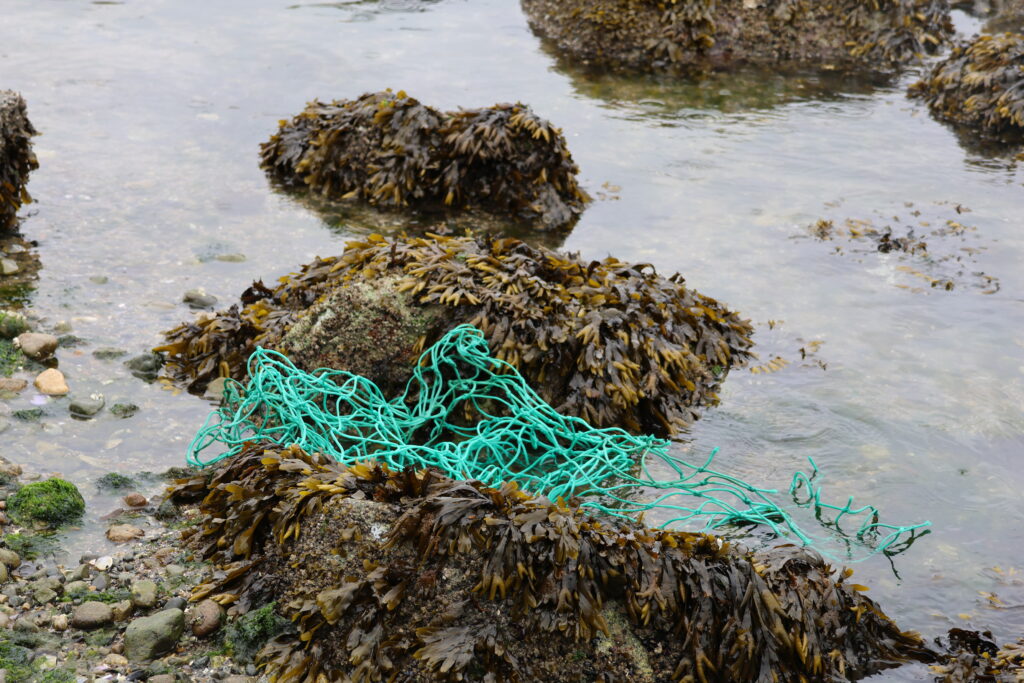
My connection to the sea brought me to the Ocean Legacy Foundation. Here I’ve been able to cultivate bonds to people, to ocean, to environment and to play. Walking into their non-profit for the first time was like a playground. Mounds of collected ocean waste was roughly sorted into large bags. It brought me horror, and coincidentally an explosion of inspiration.
With weekly semi-truck loads of debris, a rope mountain forms at their Steveston, Richmond facility.
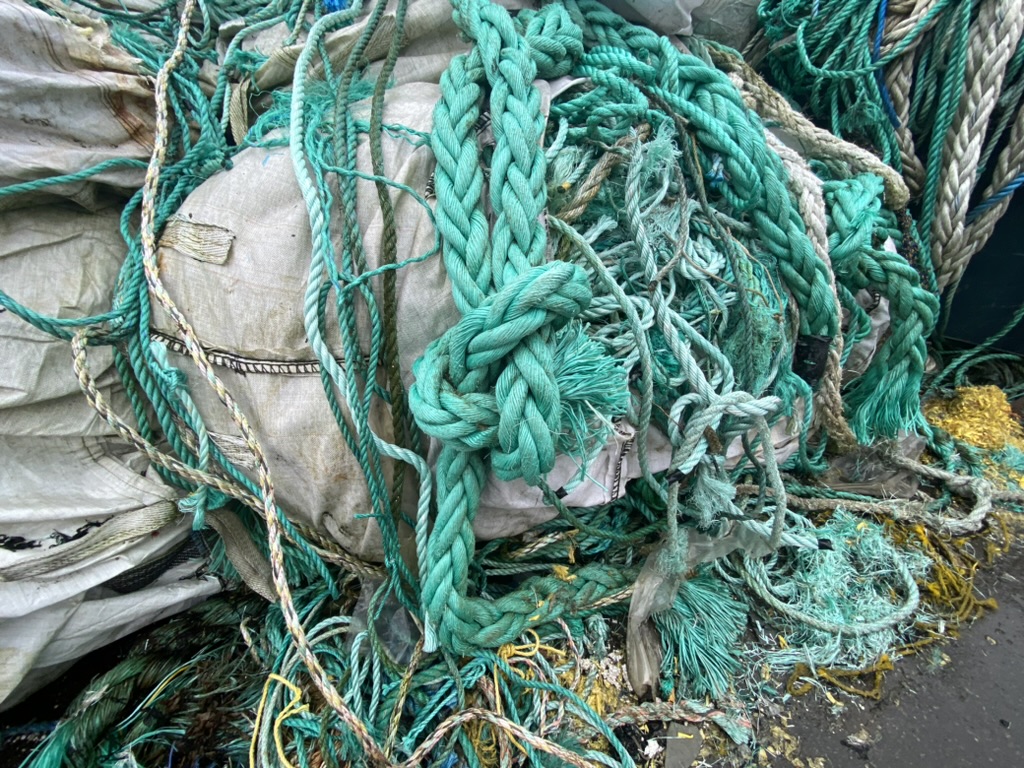
In this jungle of nylon, polypropylene, high density polypropylene and polyester mooring rope, fishing gear, crab traps and buoys, I gathered pieces that sparked joy for me and began an in-depth hands-on connection.
PROCESS, RESEARCH AND REDIRECTION…
GATHERING
In this next phase of making I first collect from source…
WASHING
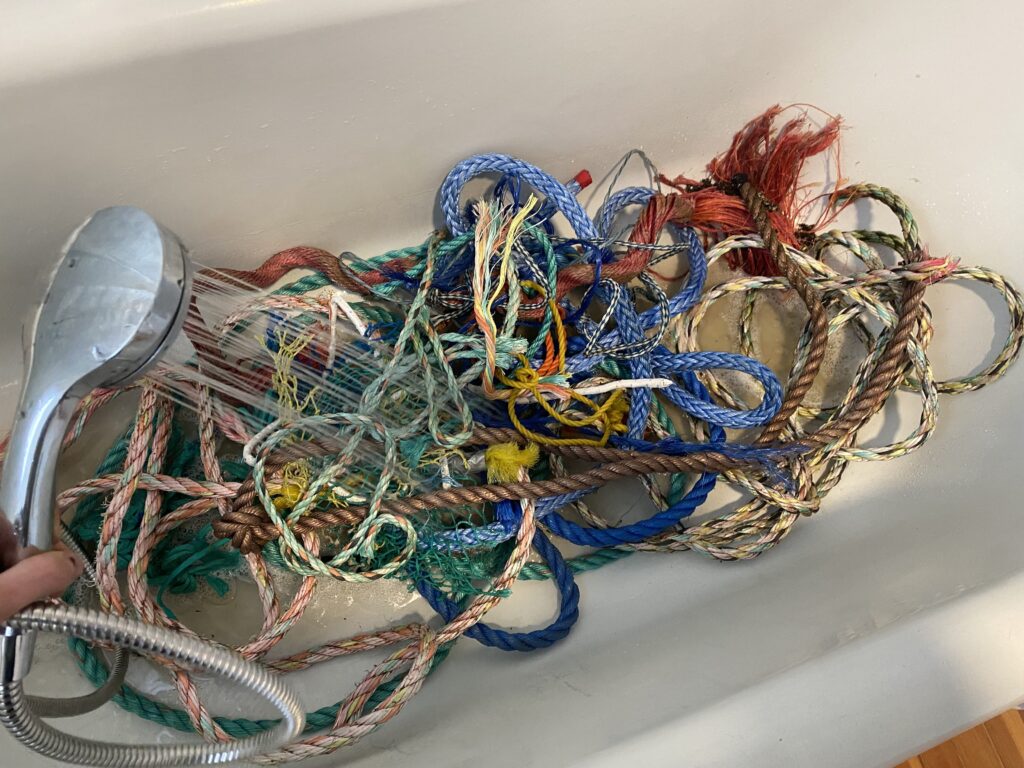
then I roughly washed…
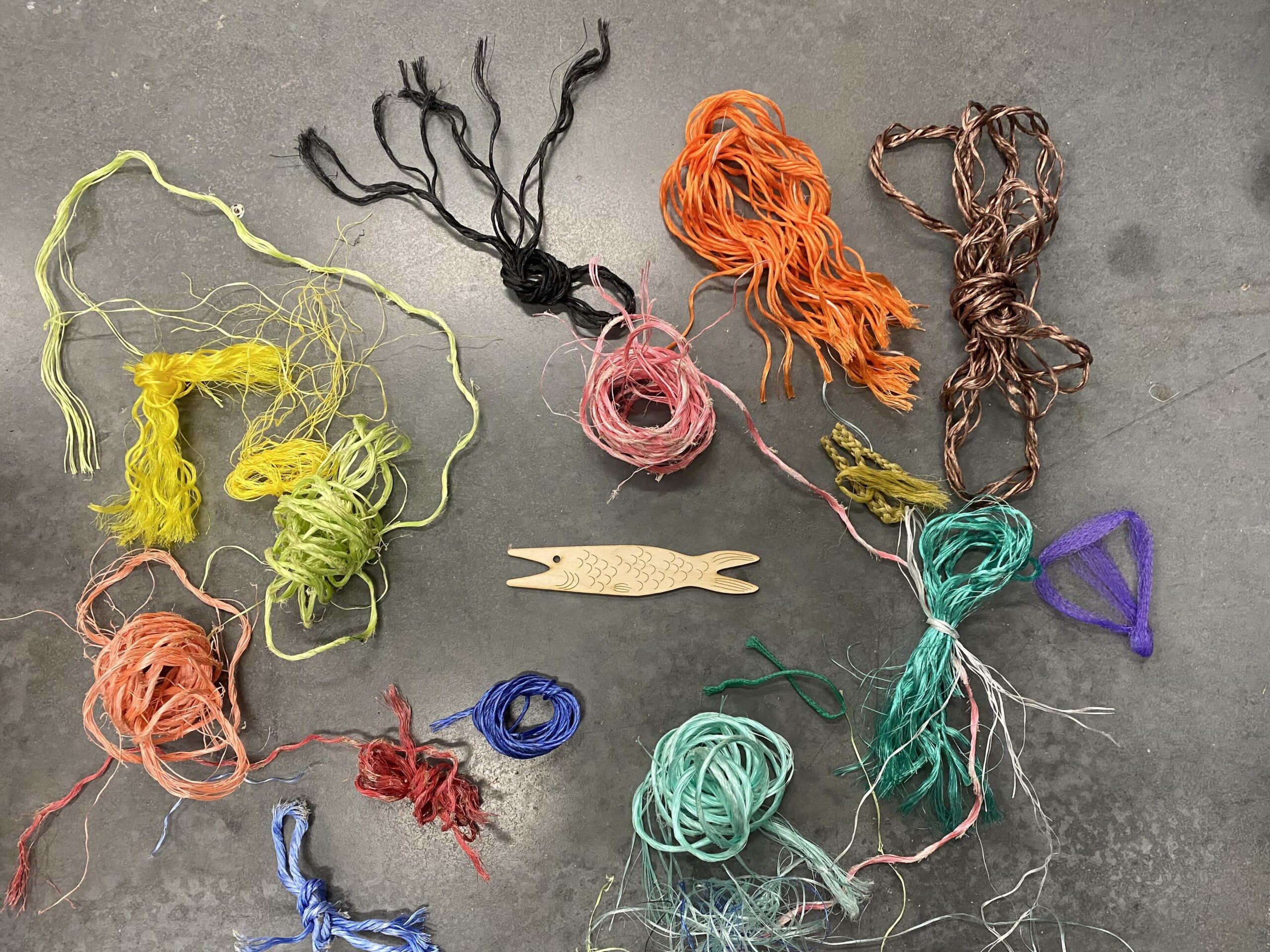
SPLICING
un-did textures and colours…
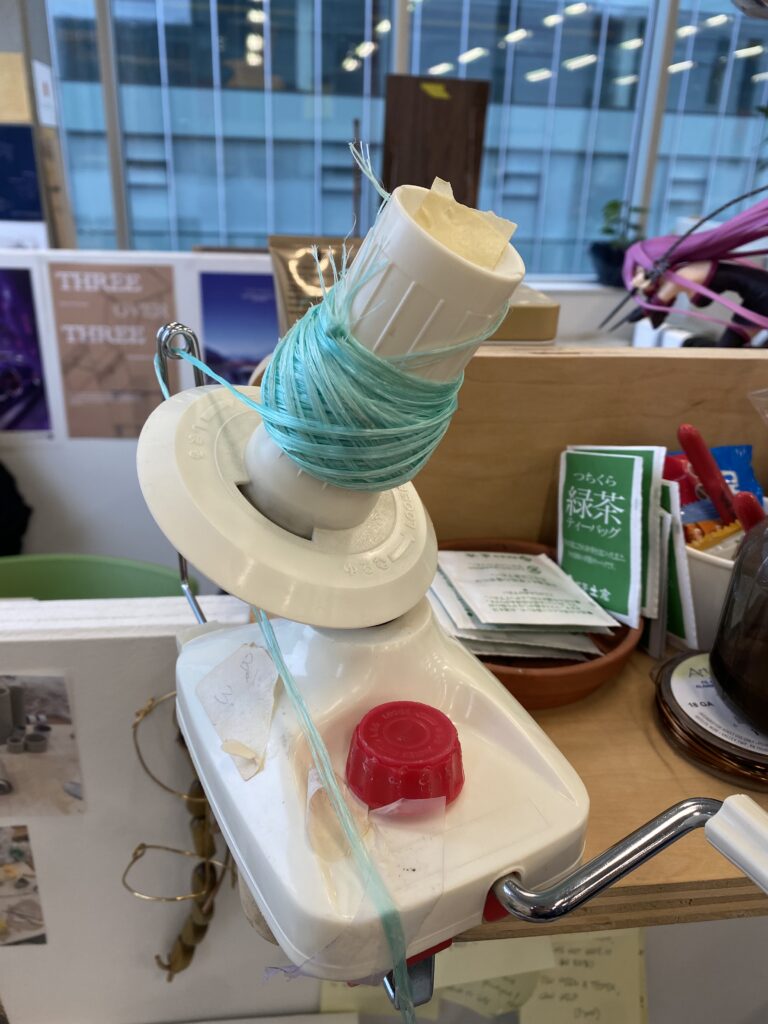
SPINNING
and bunded colours into spools
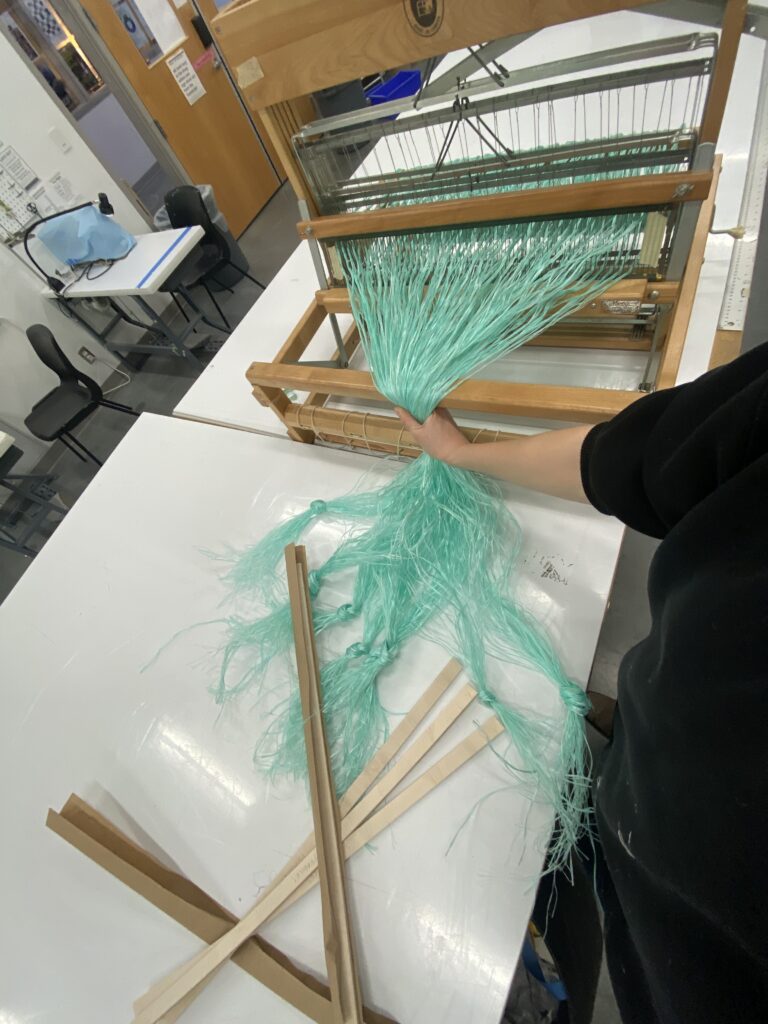
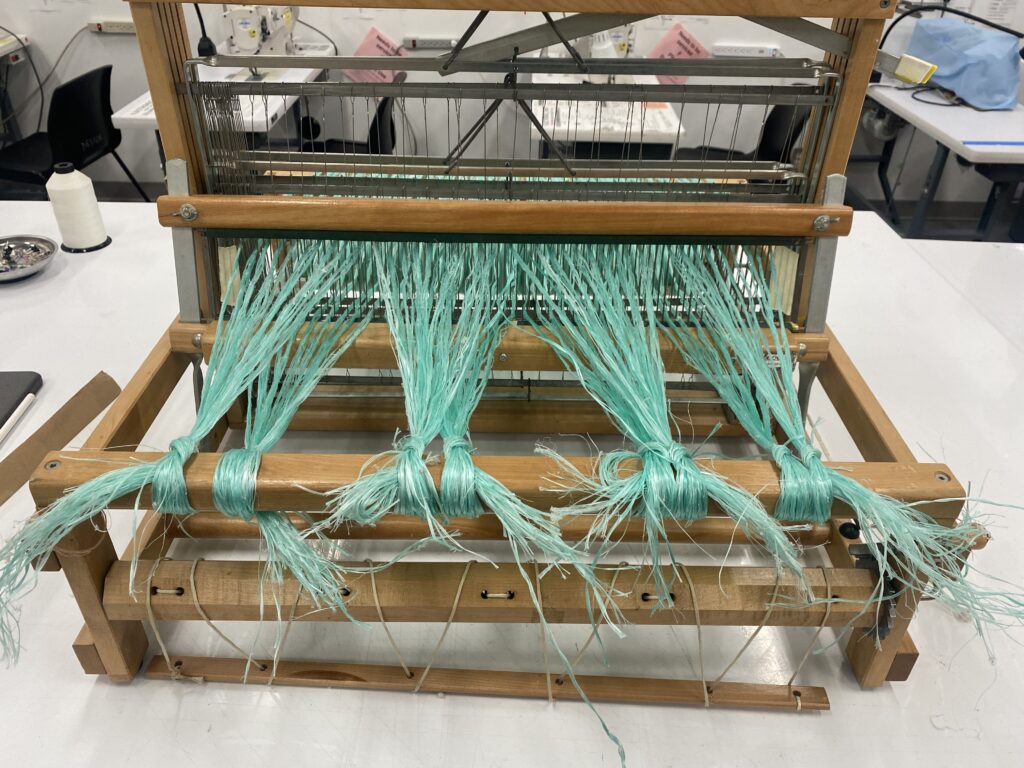
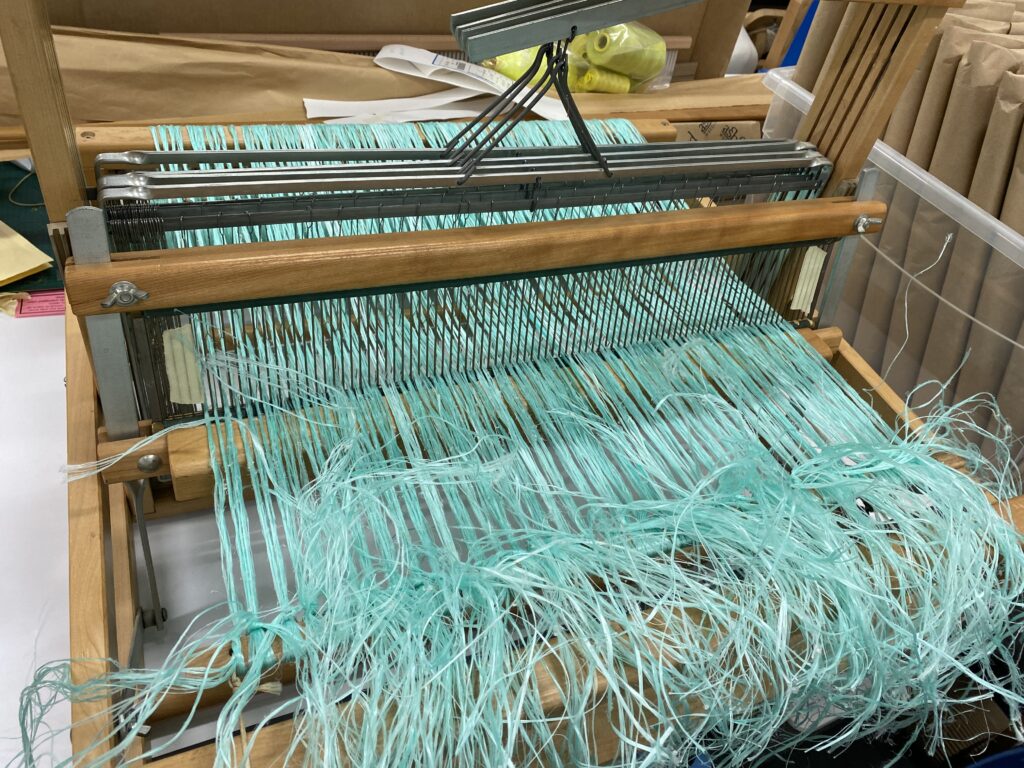
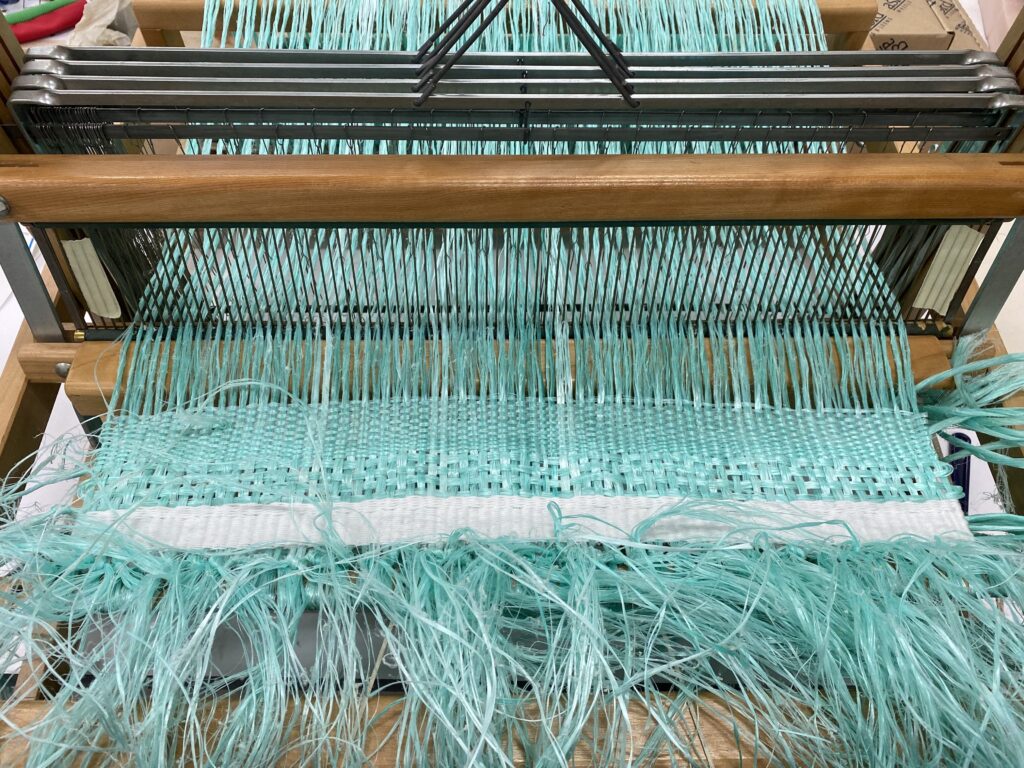
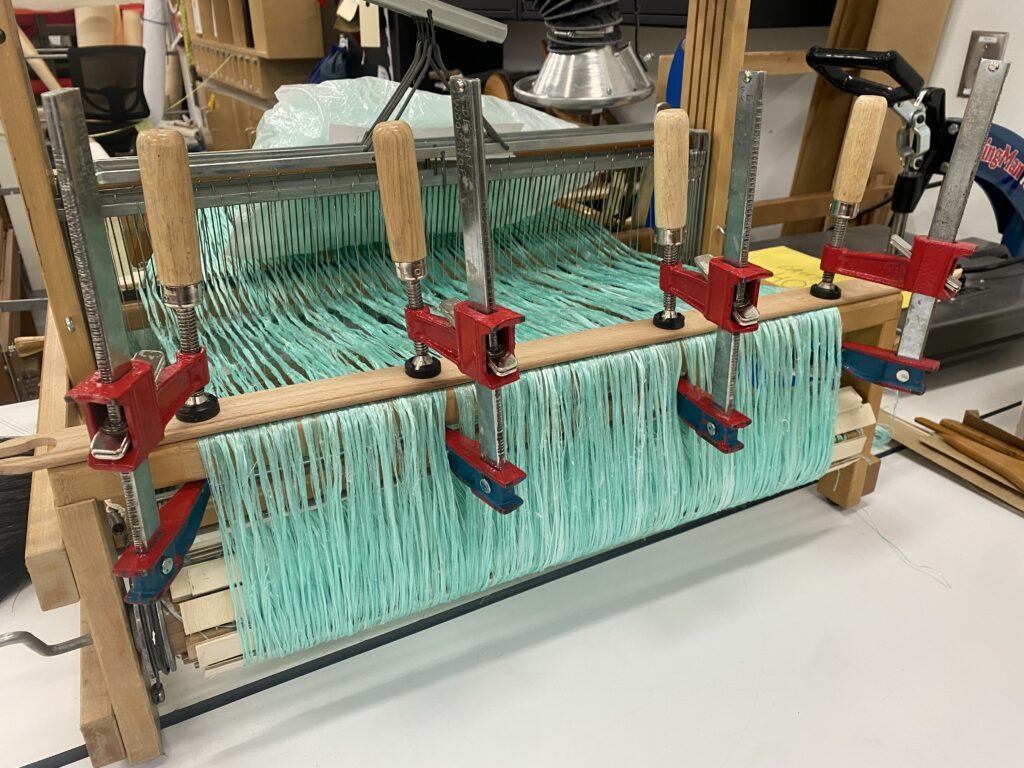
DOROTHY LECLERC TABLE LOOM
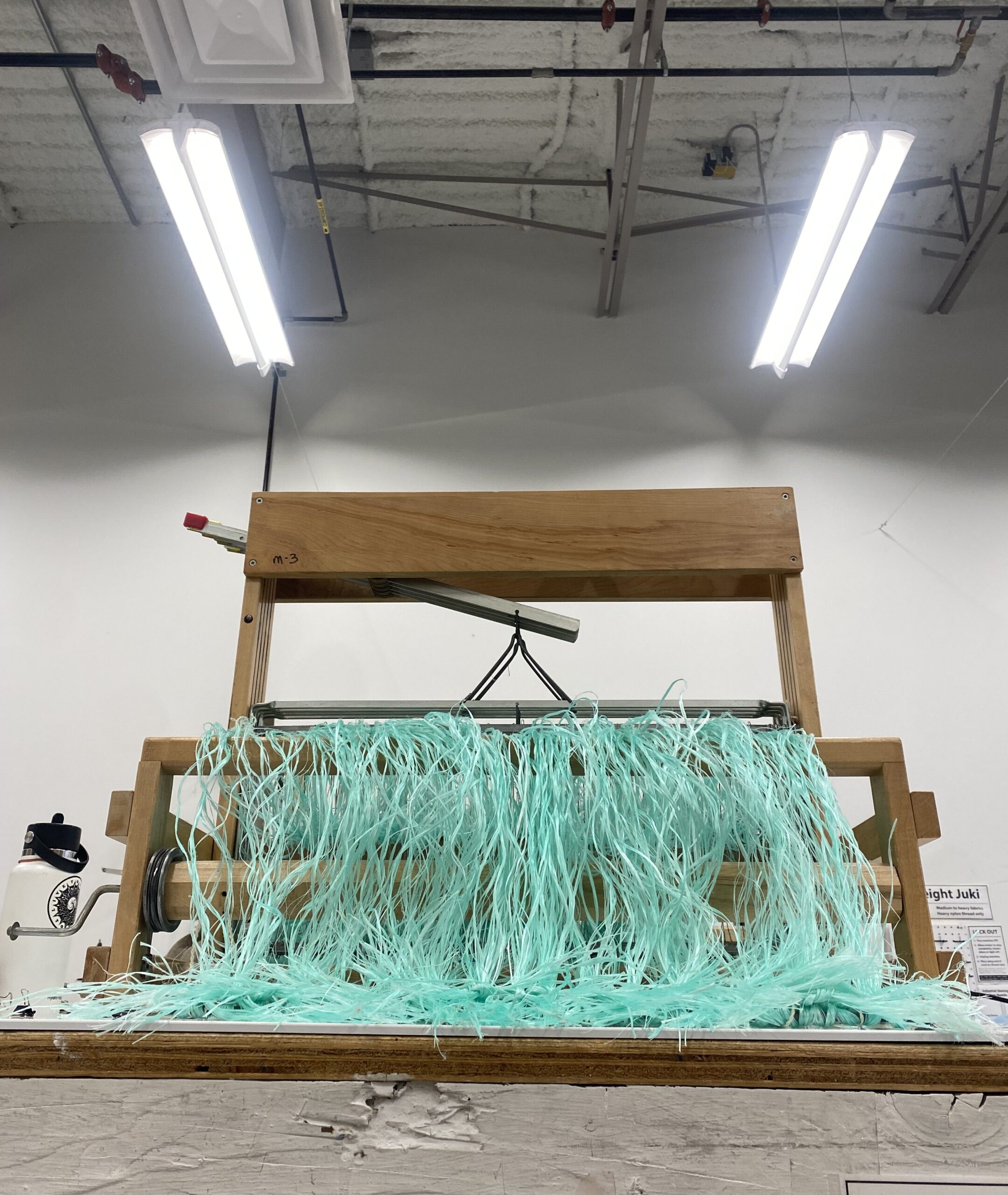
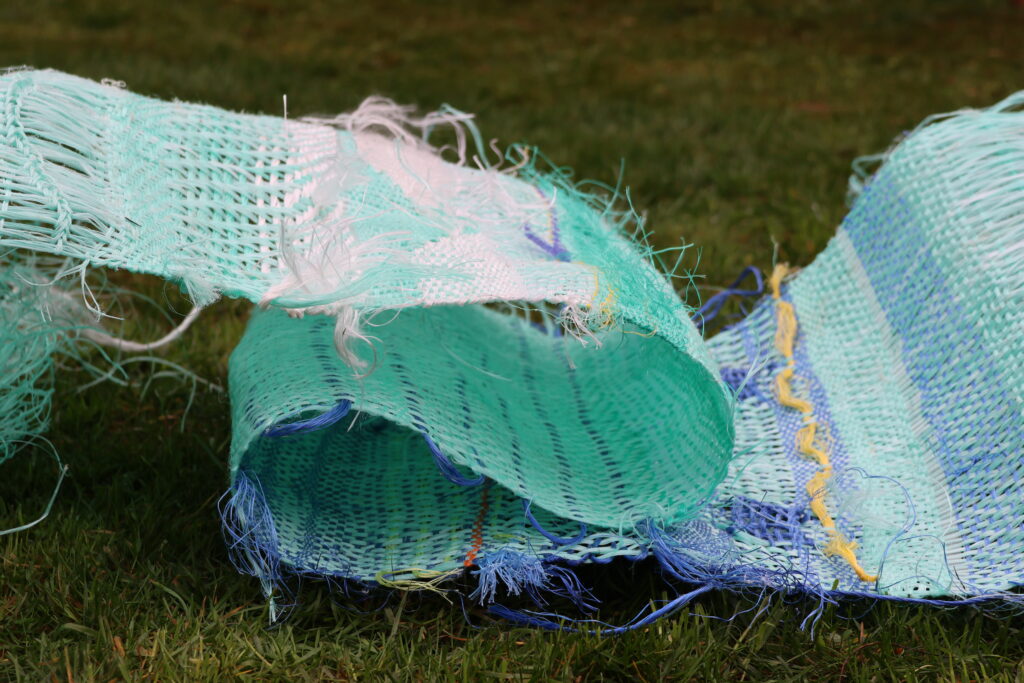
The Dorothy Leclerc table loom became an investigation into the up-cycling possible through this well-known loom. In creating these textiles, I placed my value in regenerative practices, understanding that these plastics will outlive everyone currently on this earth and generations afar. In knowing that, there’s the obligation to continually care and re-work these forever materials. The loom becomes a device to undo textiles and remake them. As I weave my story throughout this piece, there’s possibility later for one to untie and redo the textile into their own.
LOOM PROCESSES
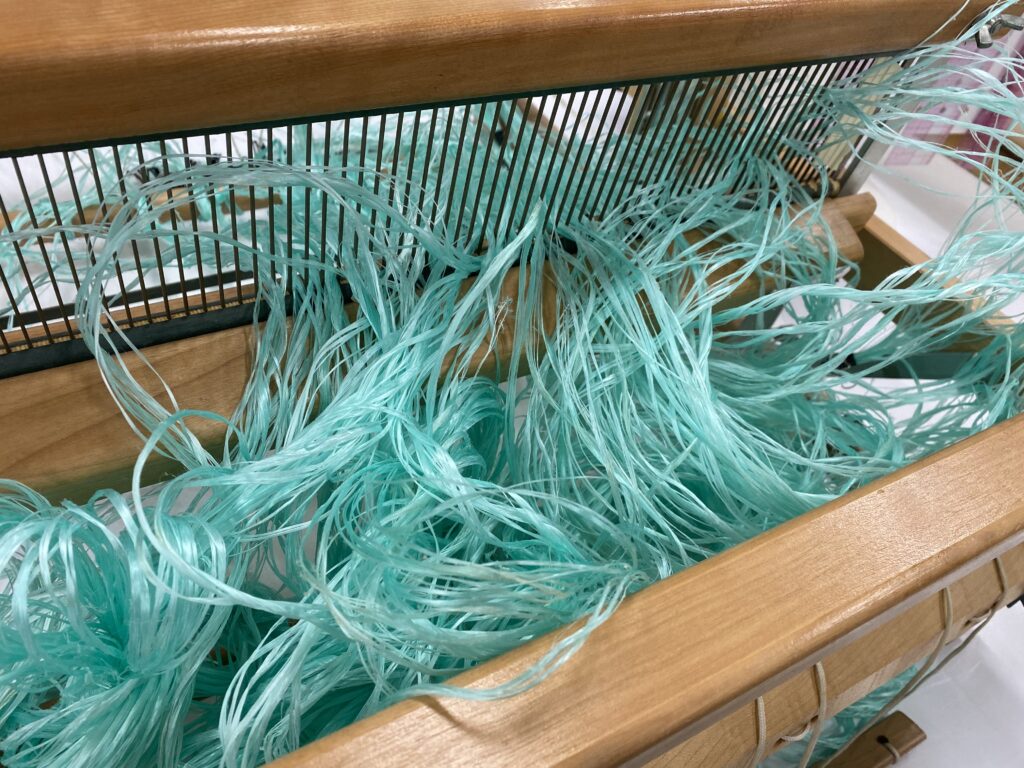
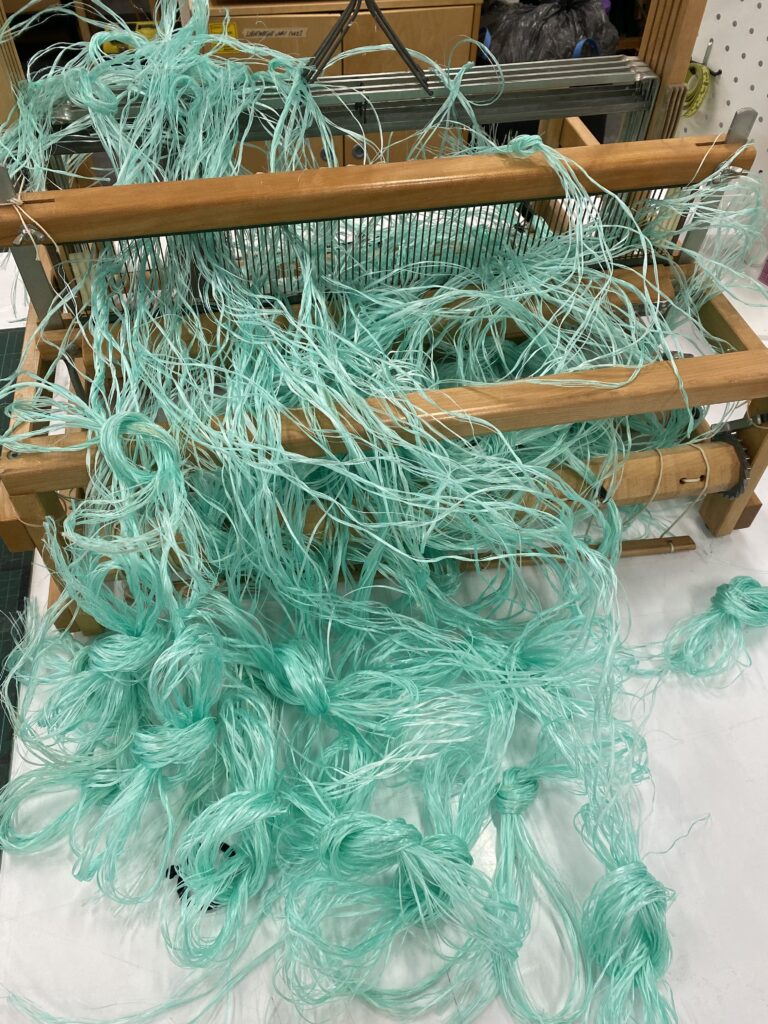
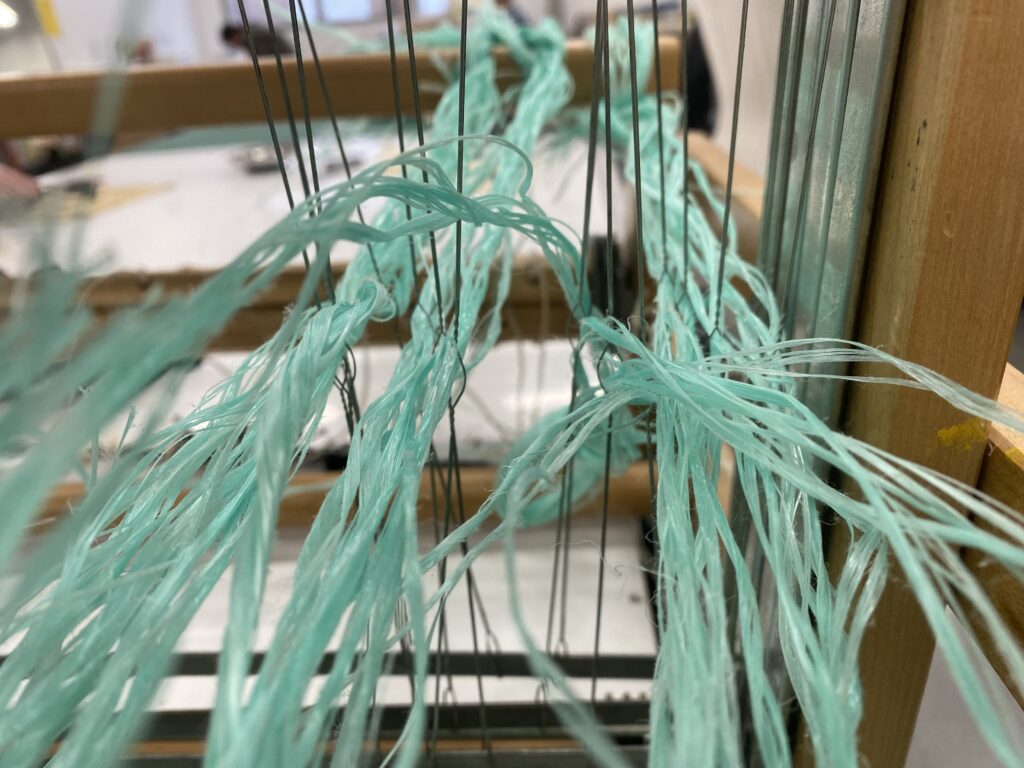
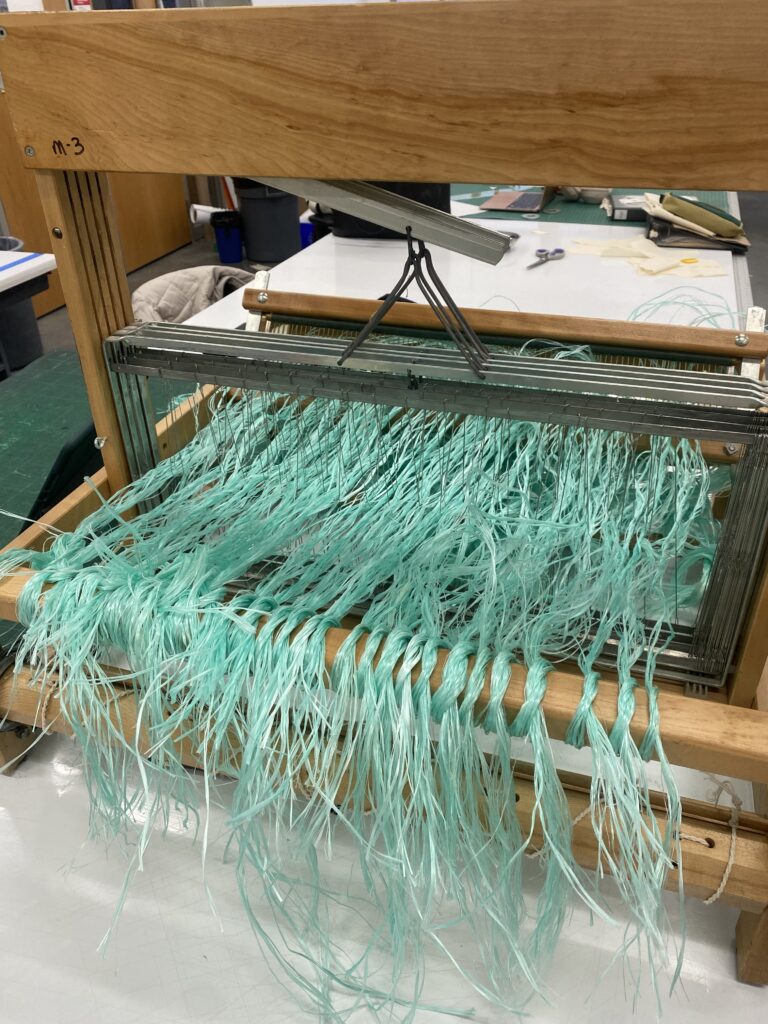
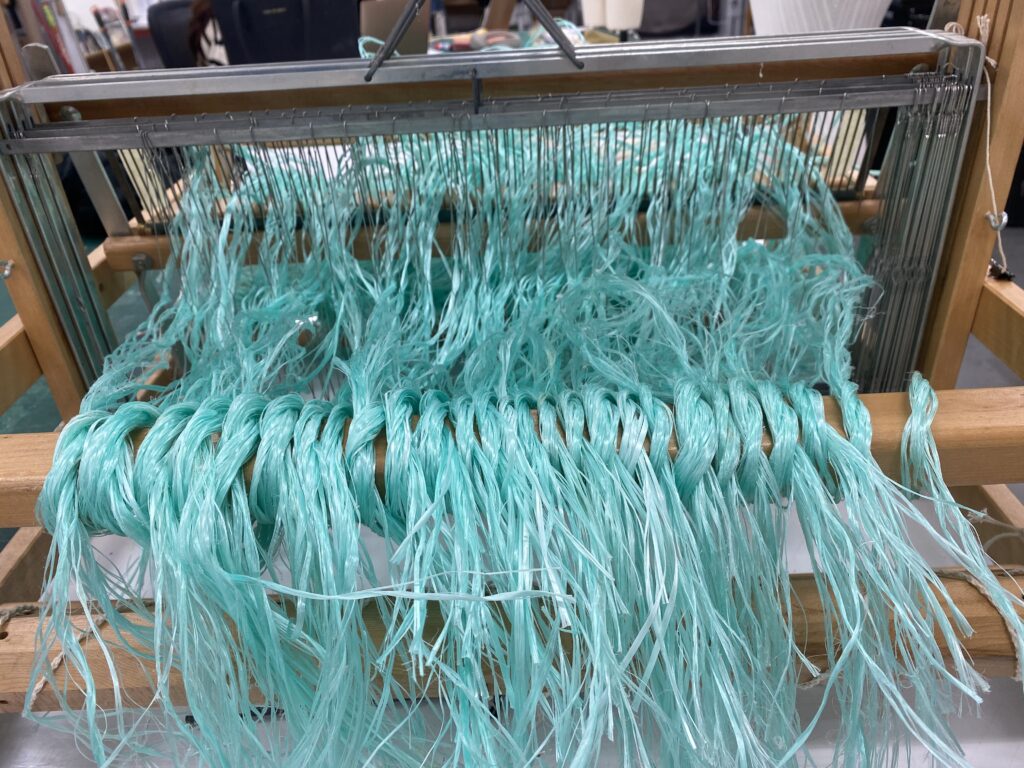
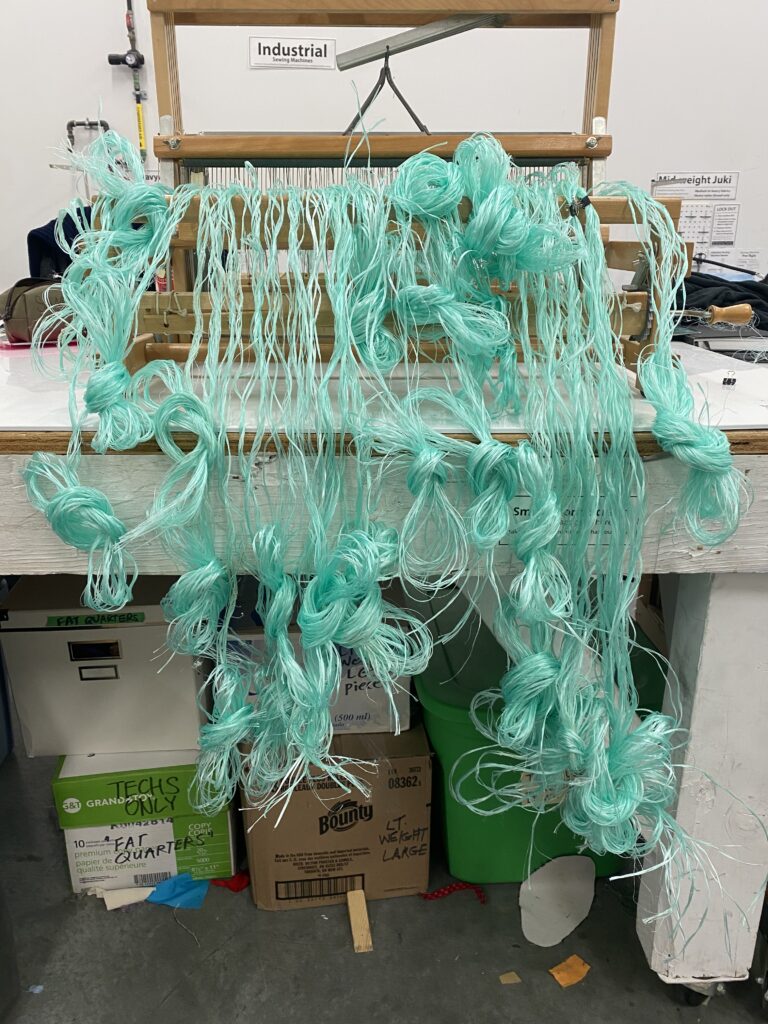
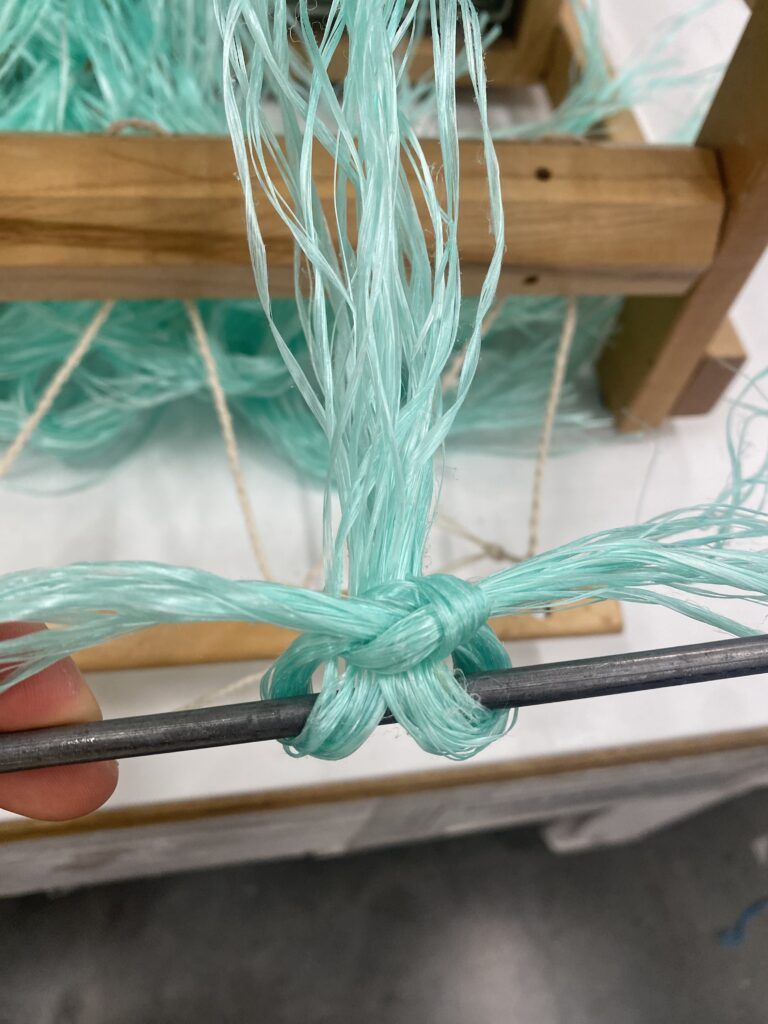
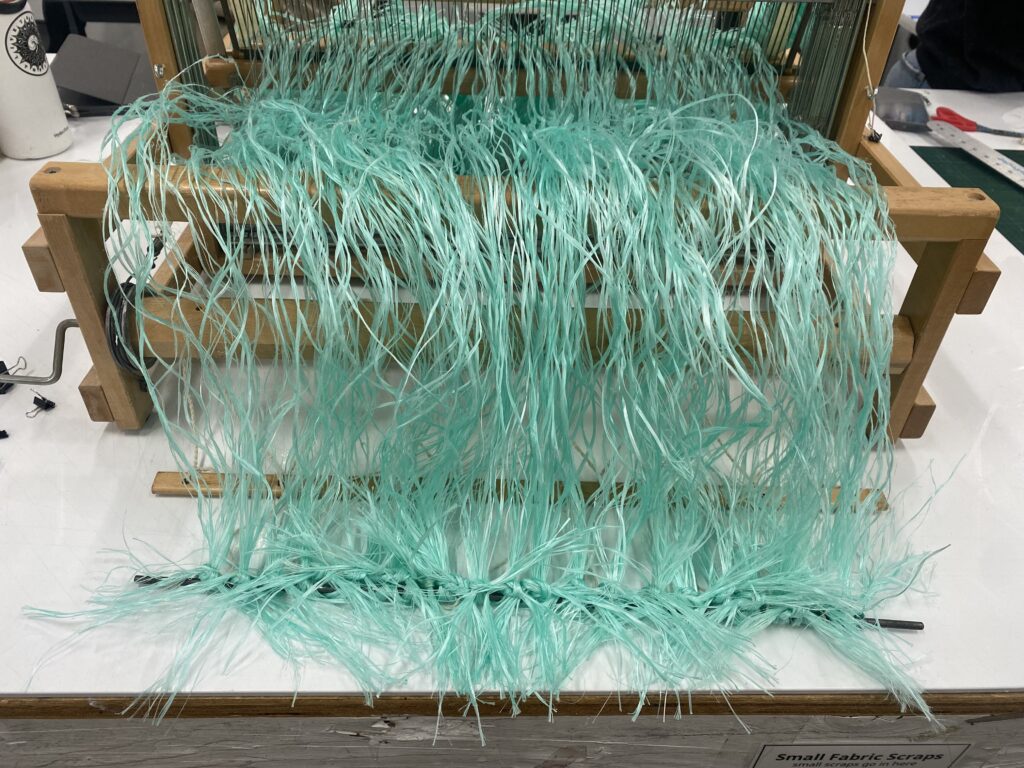
When I think of the ocean, I think of ourselves. They are bodies of water and so are we. Plastic has made its way into every minuscule aspect of our world. This project acknowledges the immense amount of microplastics that are increasing in our bodies, our waters and life itself. My goal is to reveal that we are responsible for this plastic age and obligated to understand and create with it.
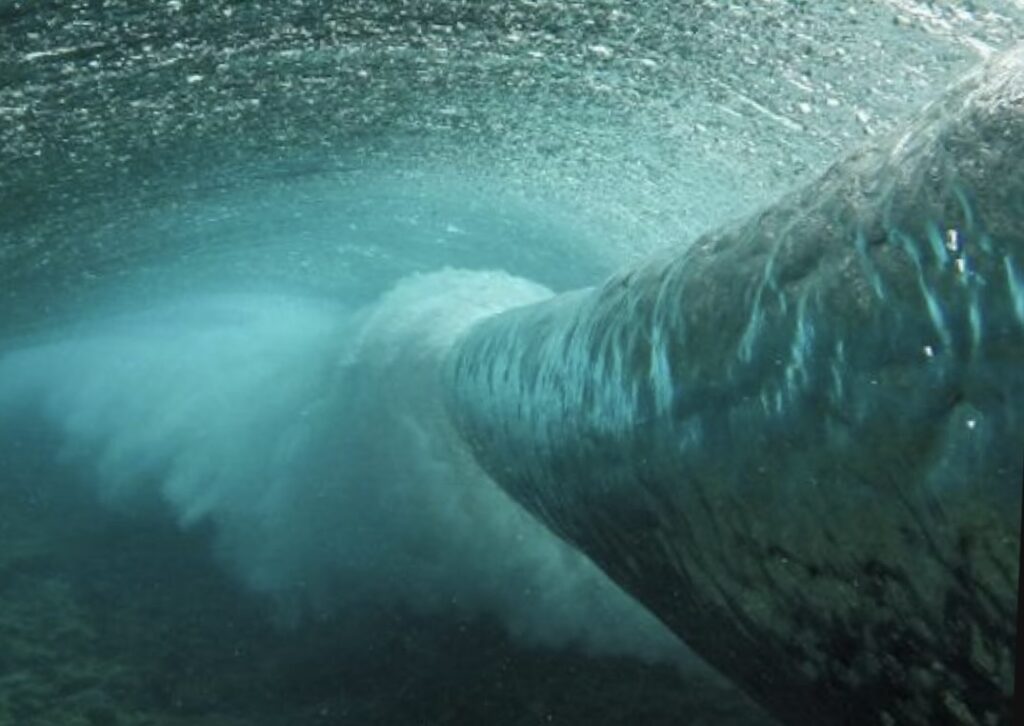
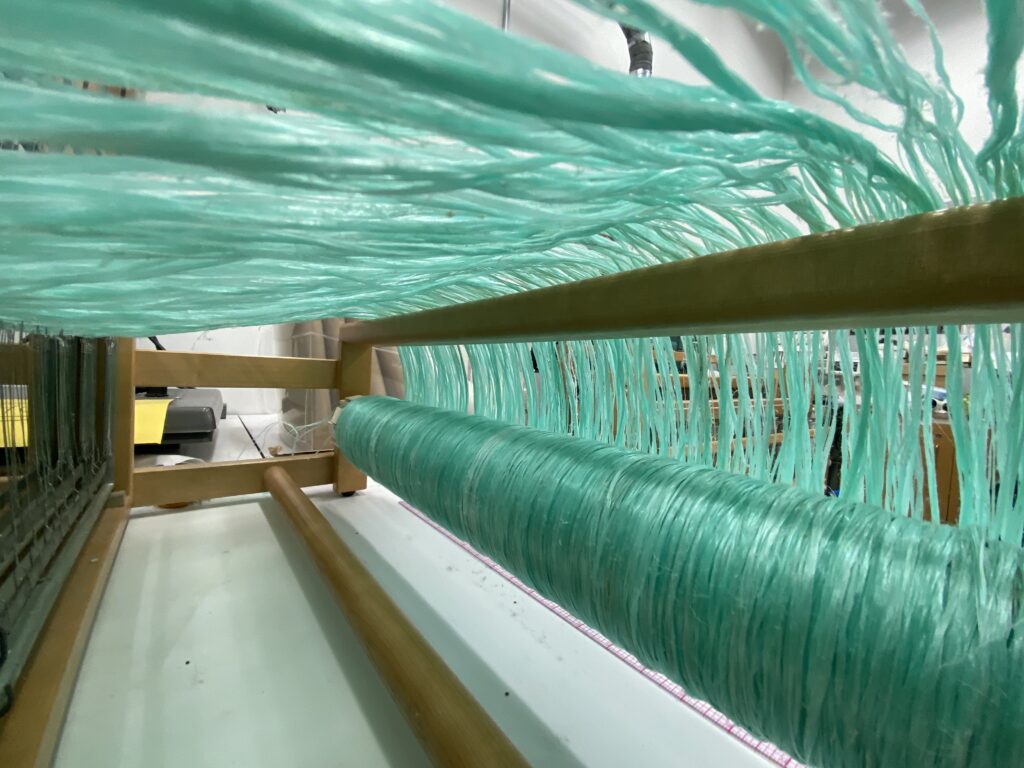
The patterns I make seem to resonate with the home and places that I’ve always been most fond of, being near the sea. I realised the way plastics have created havoc for both the sea that I call home, and the body I call home.
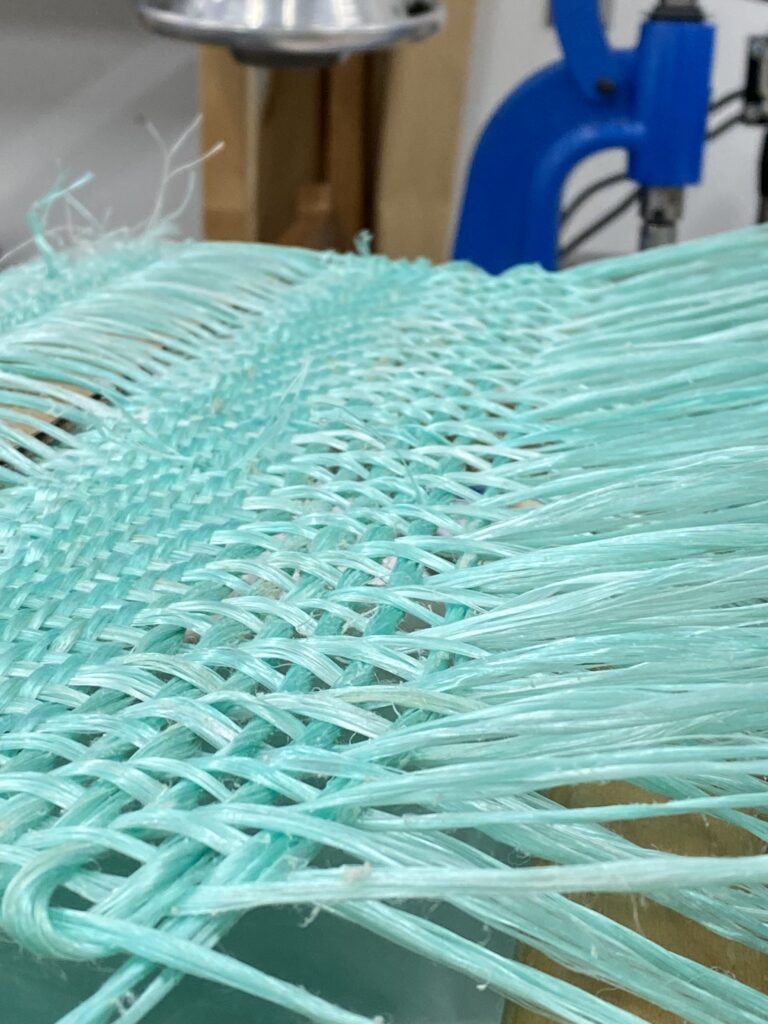

TROUBLE SHOOTING TENSION
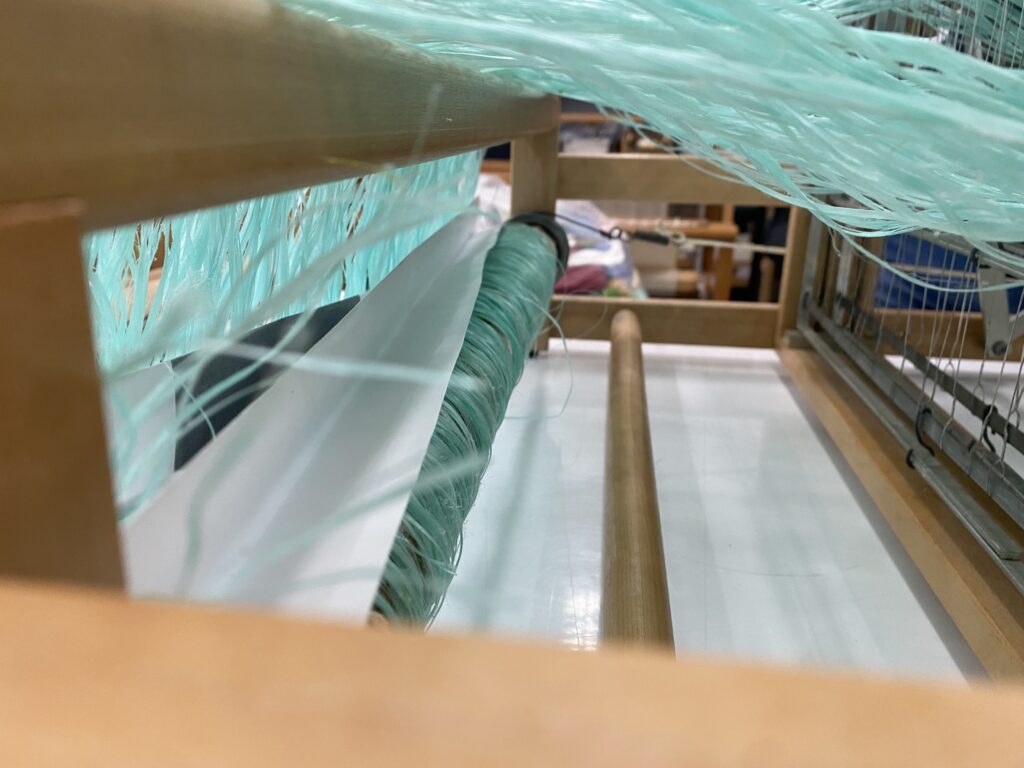
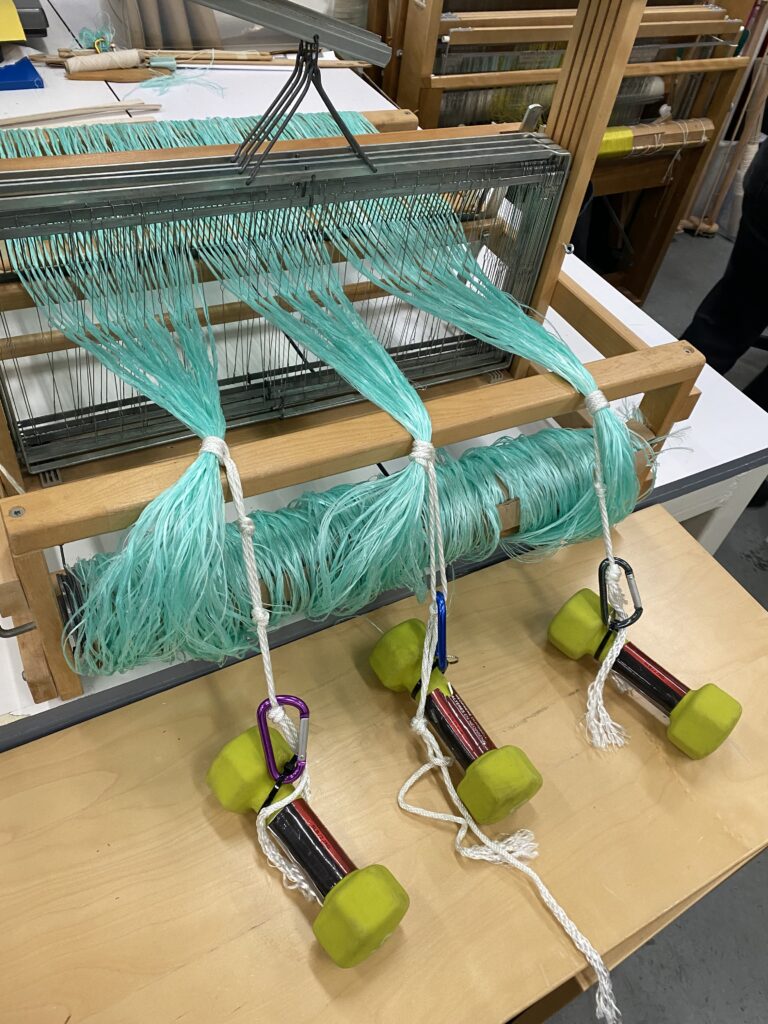
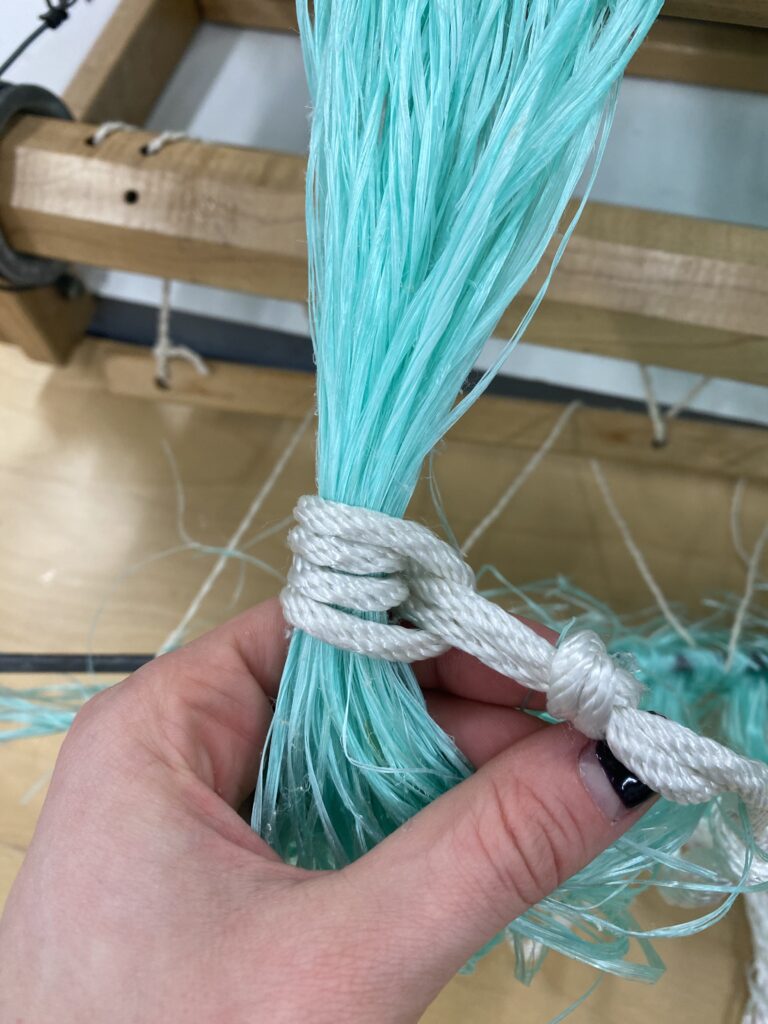
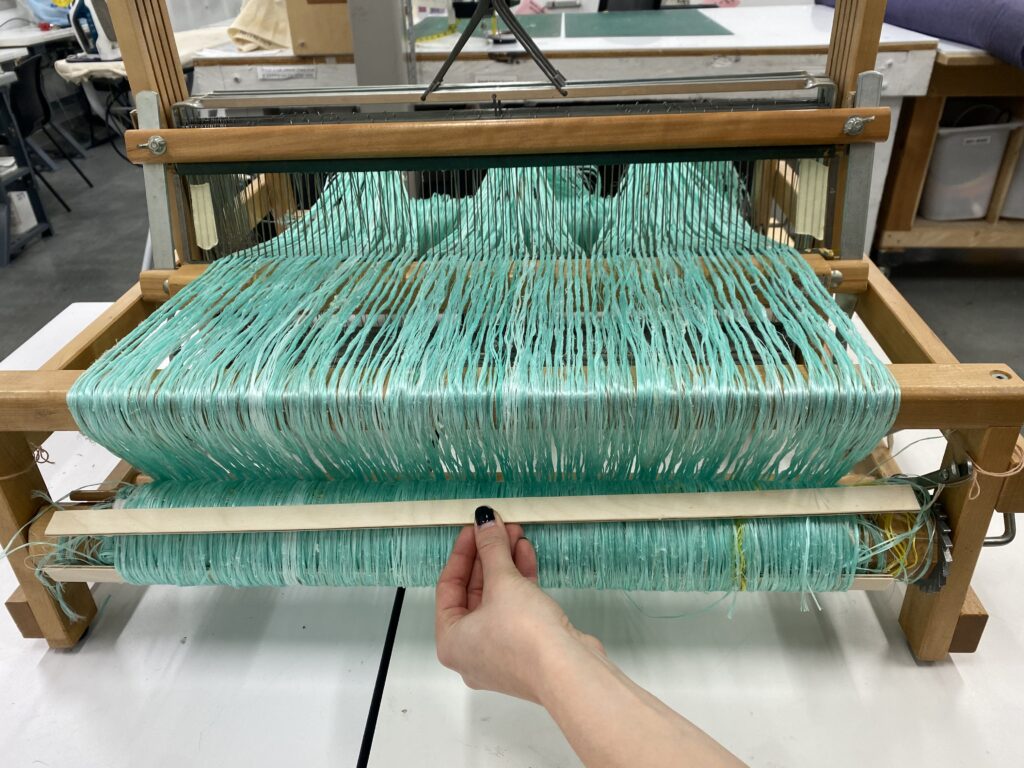
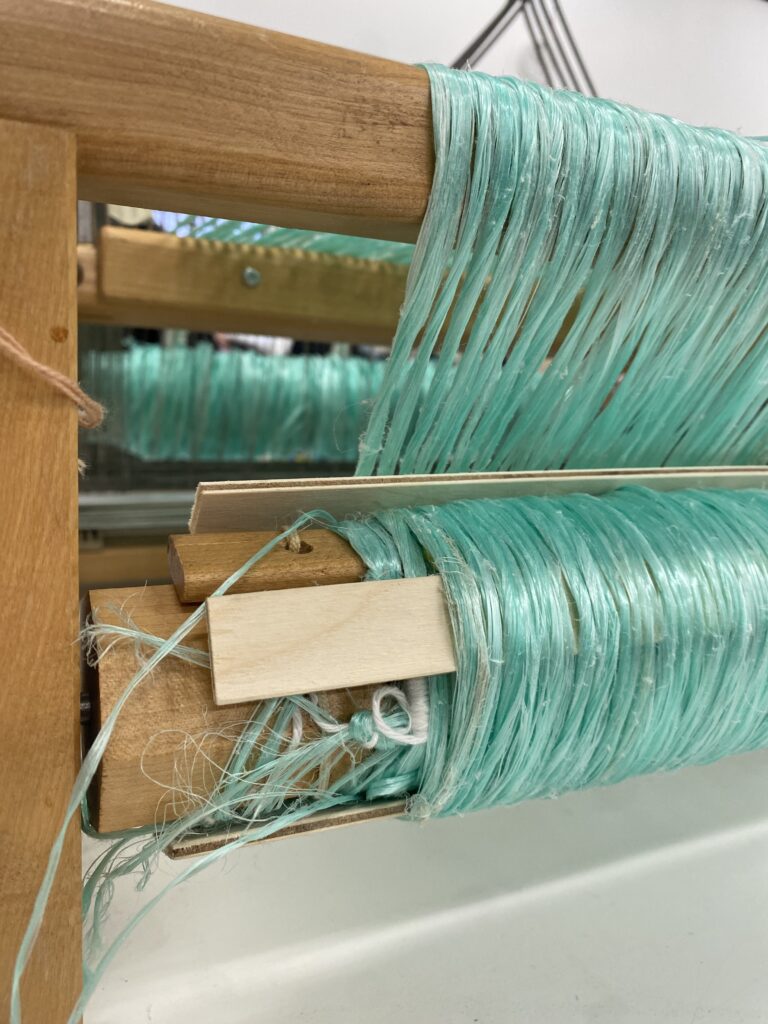
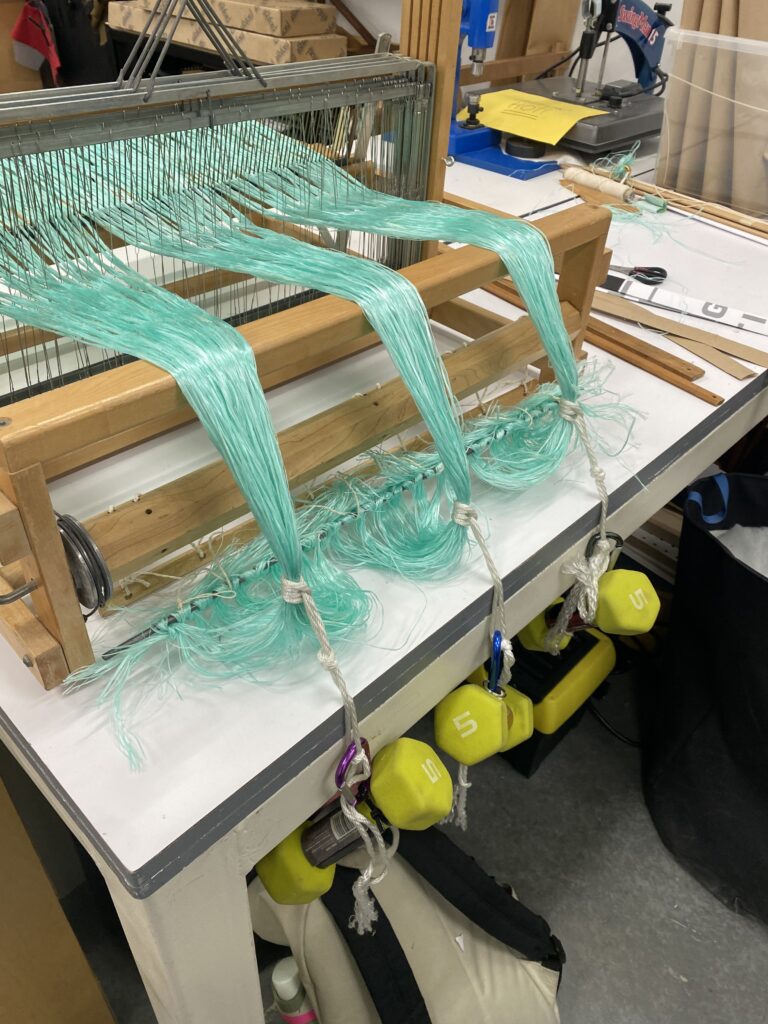
In the deformation of plastic rope, came an irregularity in tension. As I learnt about the loom, the most important fact is to keep the strands at an even tension. With a partial bit of the woven made, and with Jen Hiebert’s help and expertise, we tried for the first time to re-wind and used planks of wood through each layer of the winding operation, allowing the threads to stay as even as possible.
Weights and unconventional tools brought us through. The tool making of this work was as essential as the textile making.
LASER CUT LOOMS


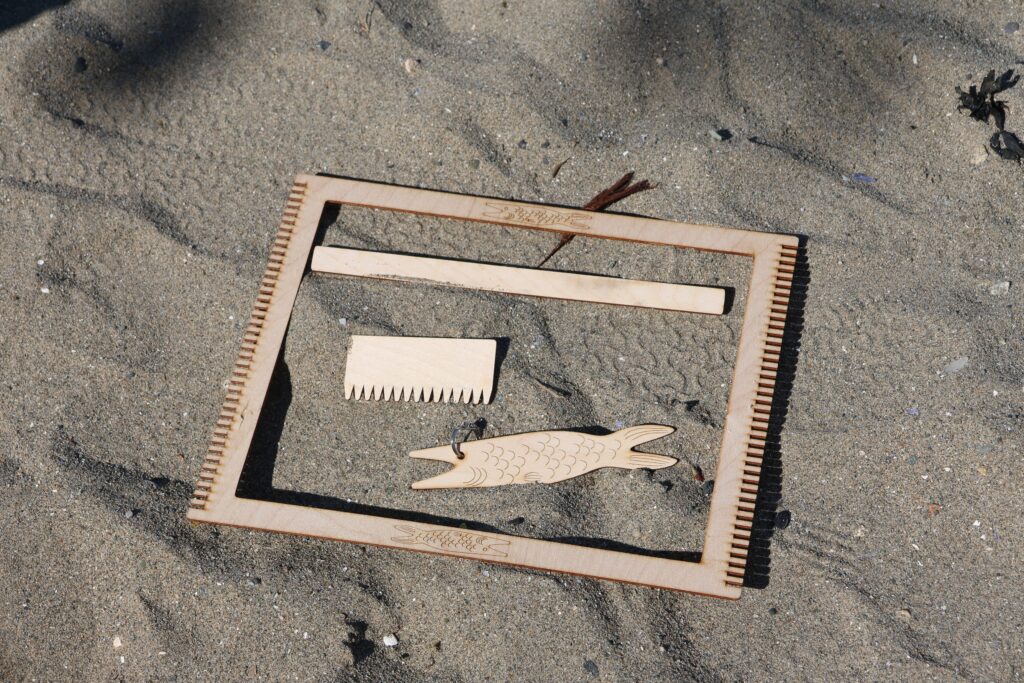
Parallel to making with the large loom, it was important to be portable with this system. Gathering, striping, sorting and making could all happen in the same place with laser cut looms.
BACKSTRAP LOOMS
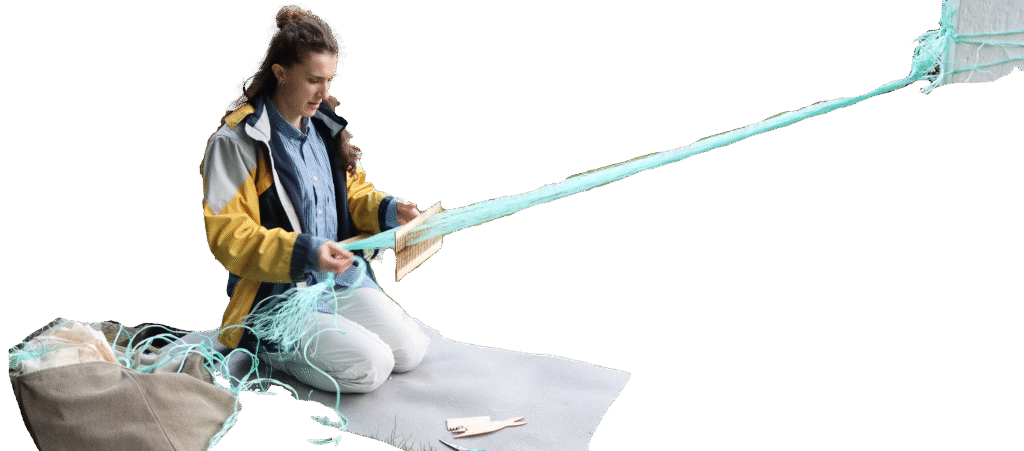
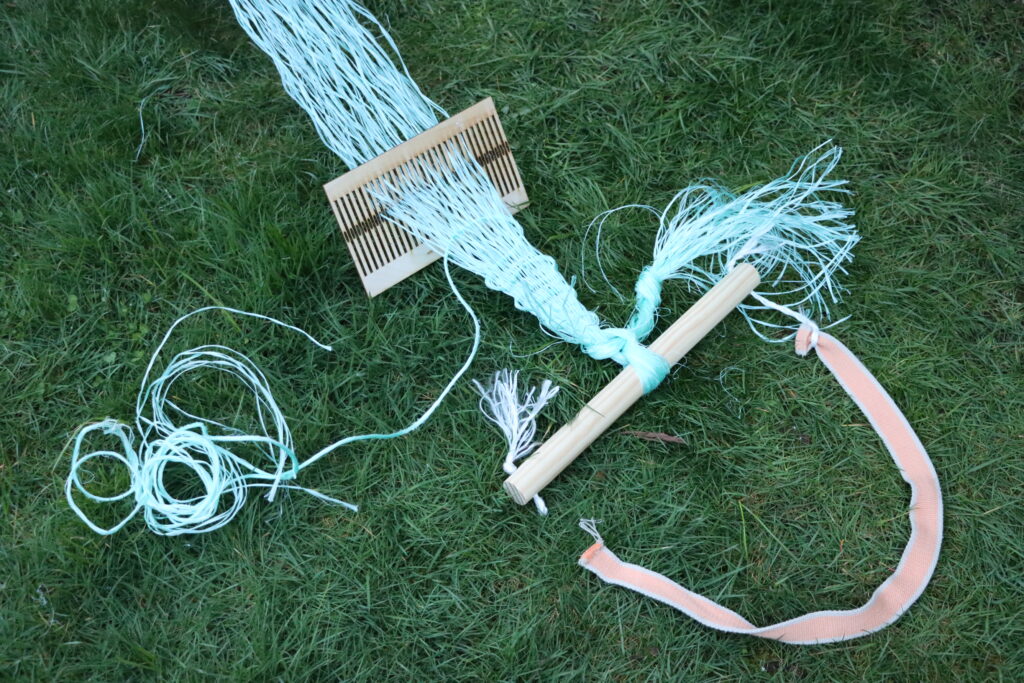
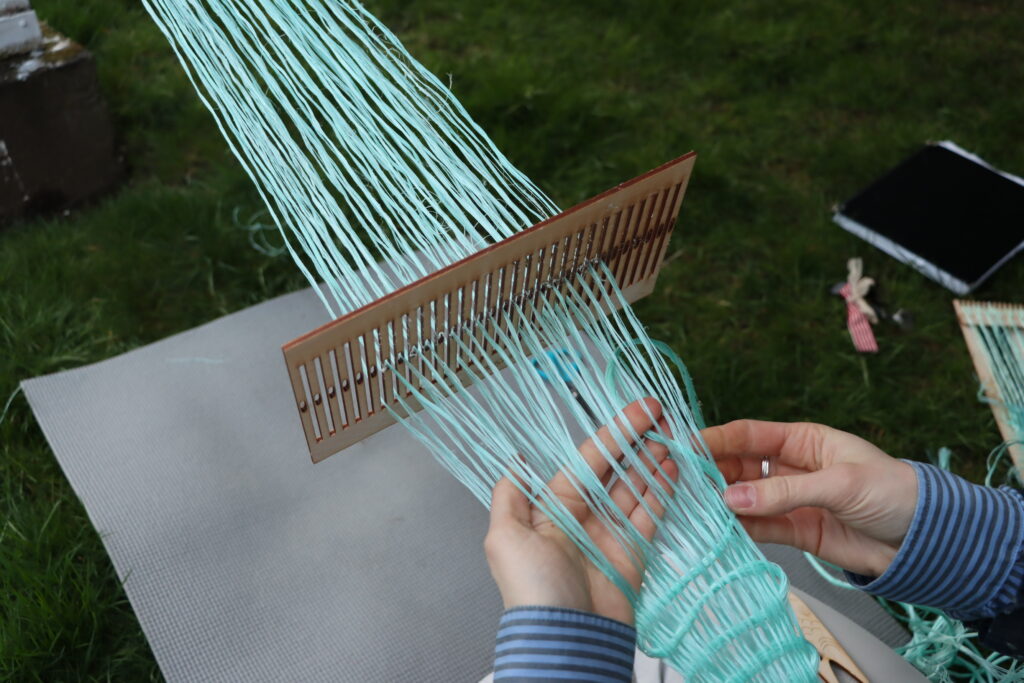
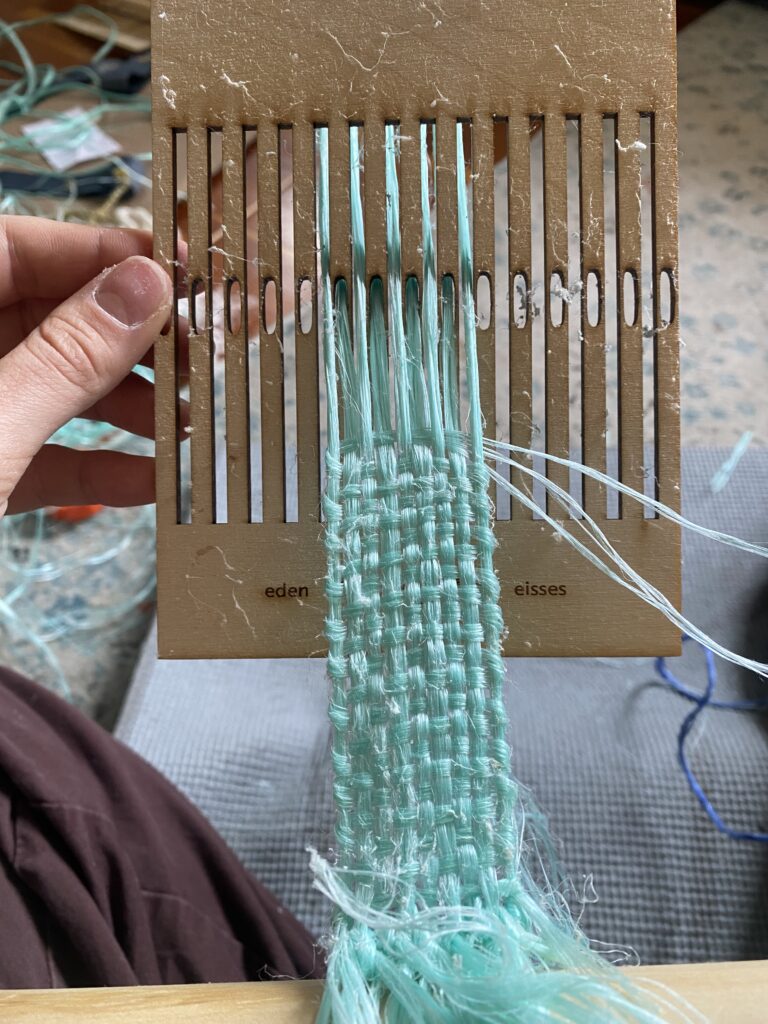
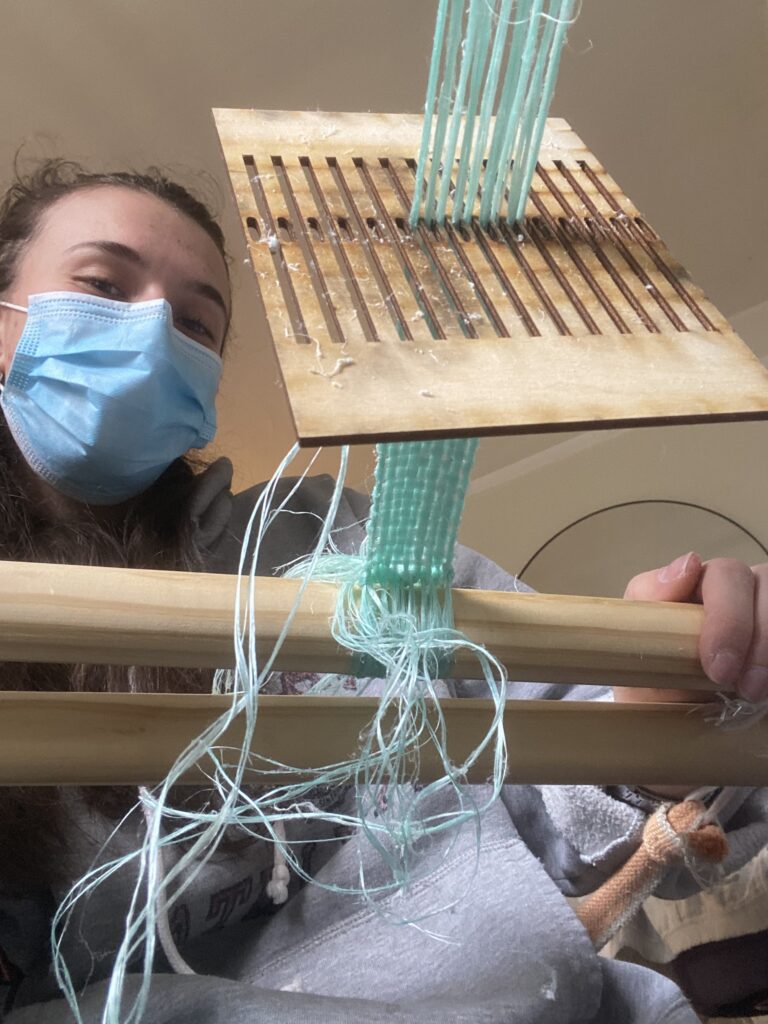
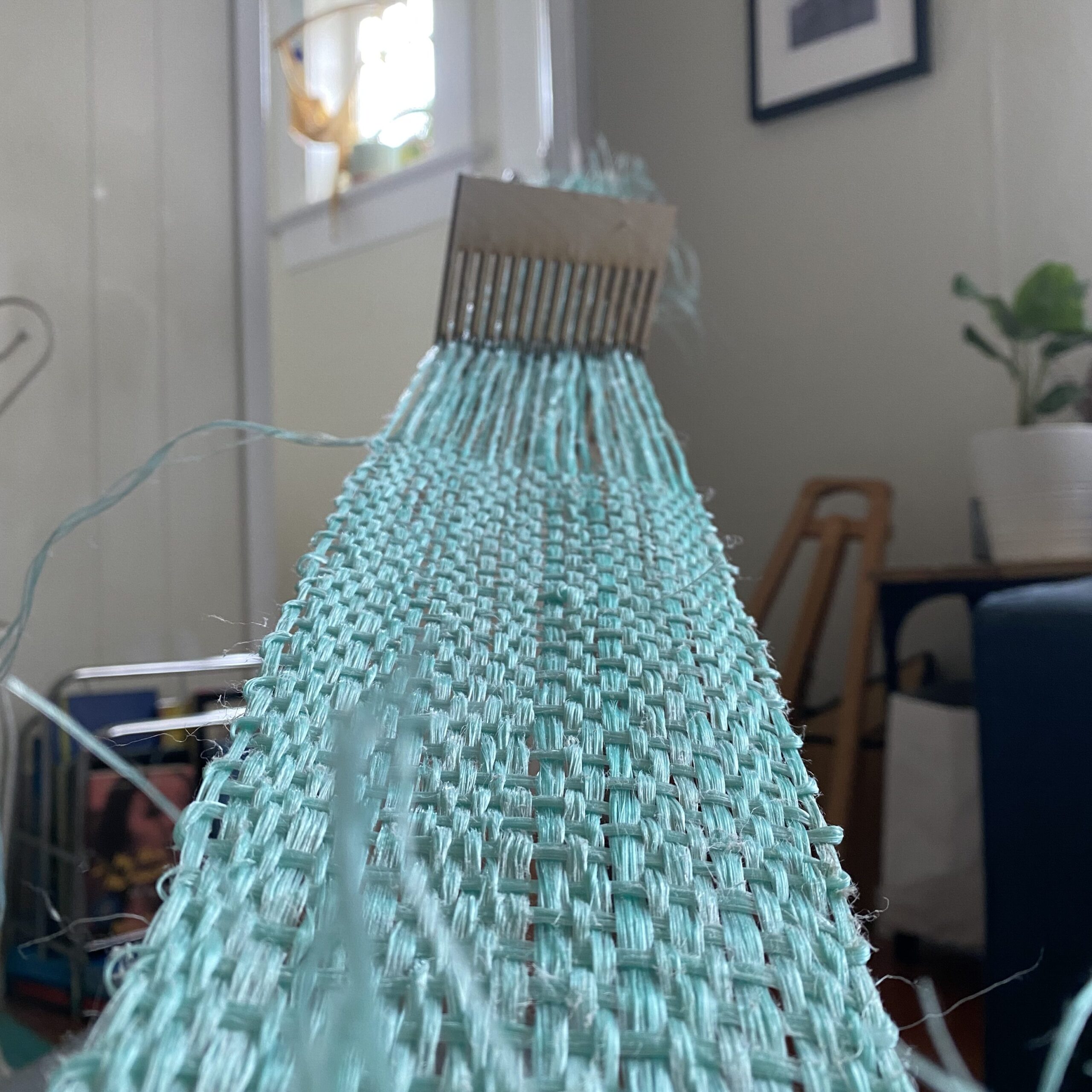
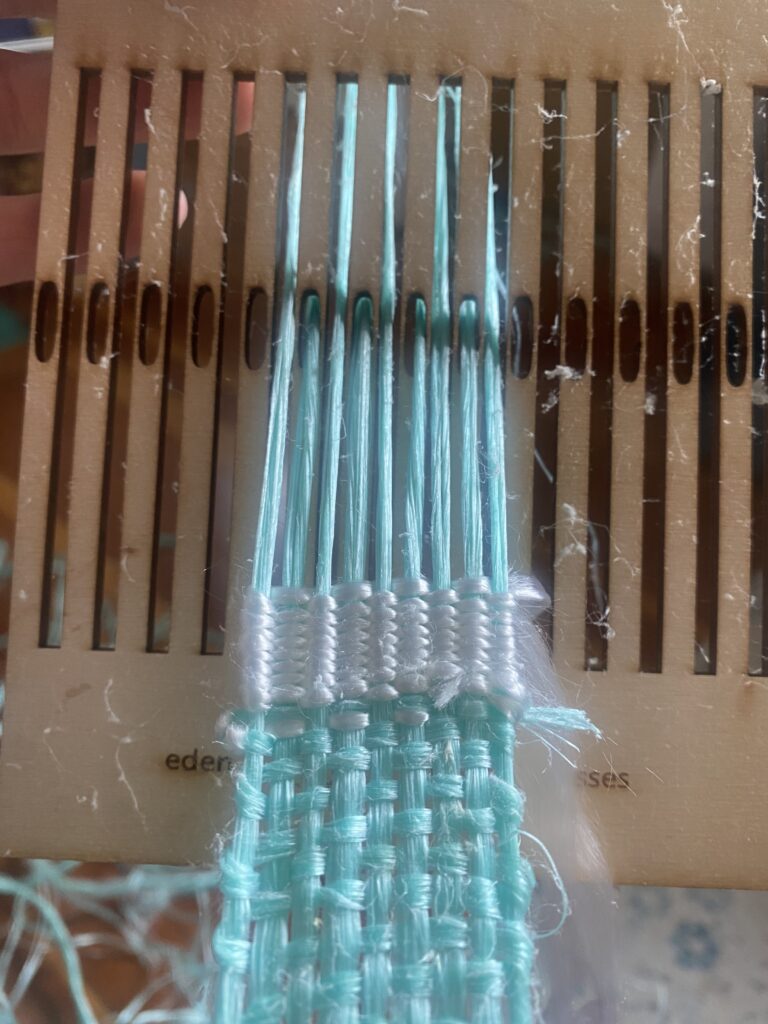
Backstrap looms call on a rich and diverse history as the body is used for tension. I could make in my own room or in an outdoor space.
The way I could adjust tension solved a lot of the issues I was having on the larger loom. If one thread was uneven, I could slightly move my body in a way to recalibrate the layers, or tug and retie the looser strand. Adjusting the tightness through the warp and weft, allowed some strands to be more prominent and others fully concealed.
CARDBOARD LOOMS
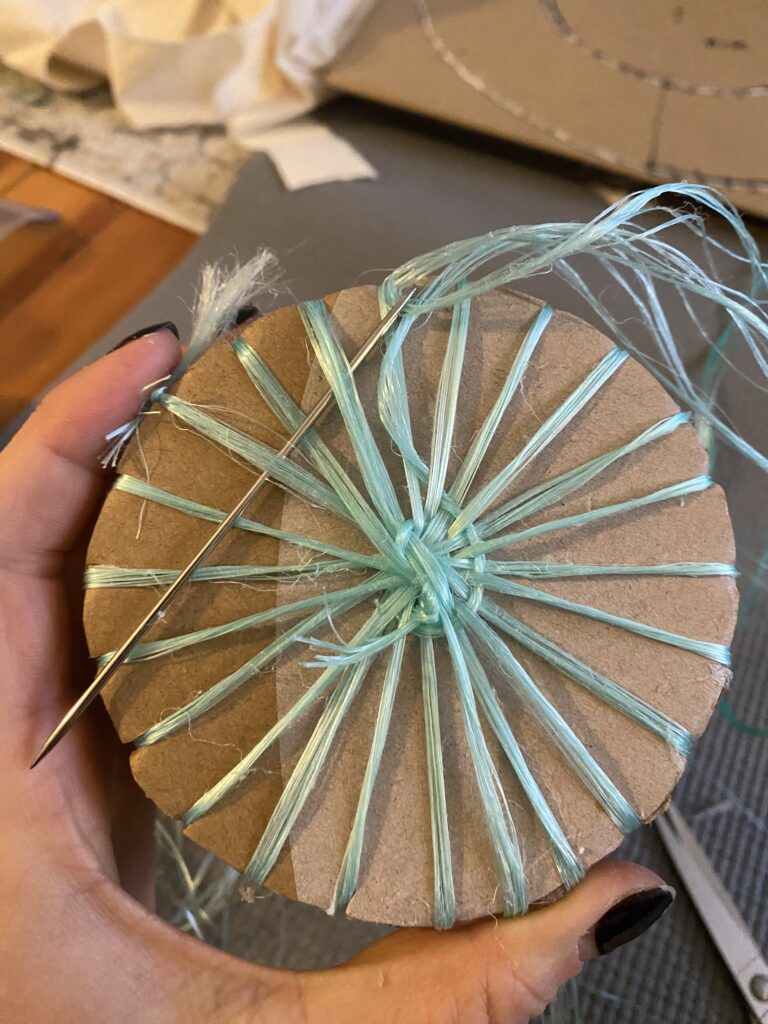
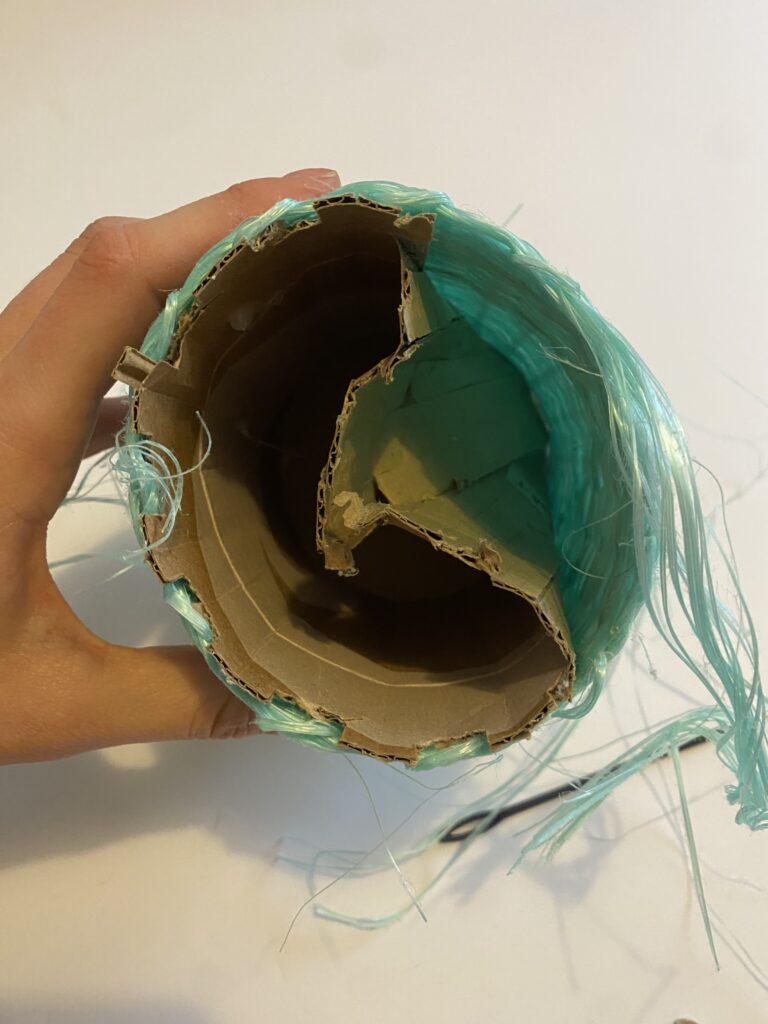
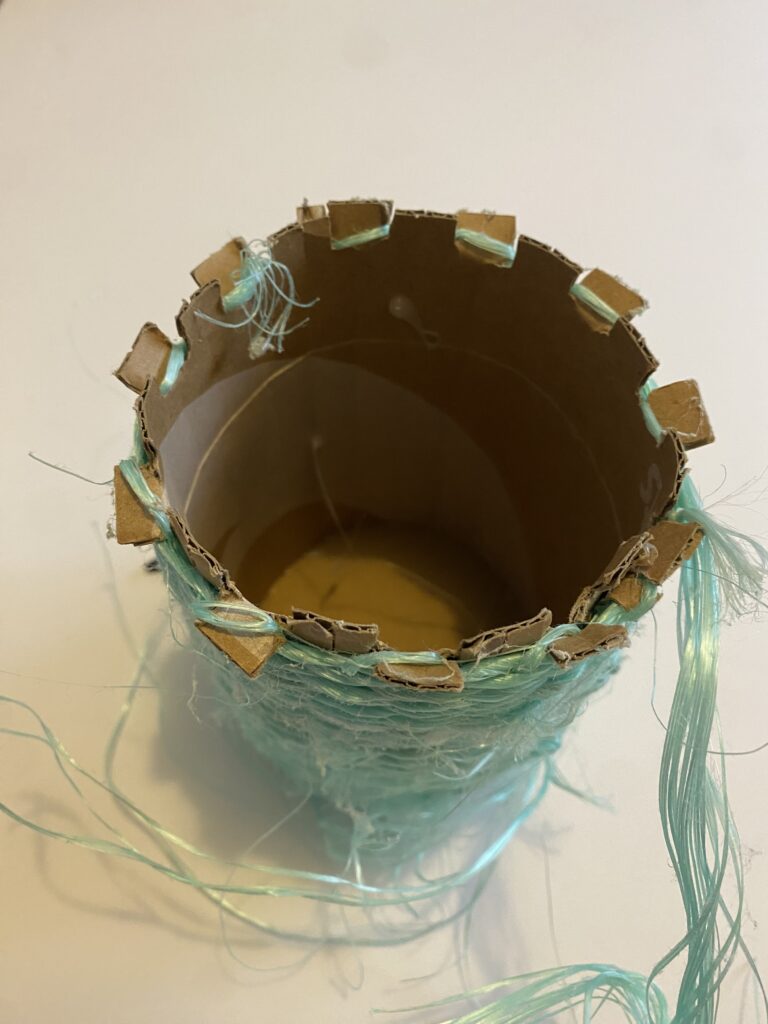
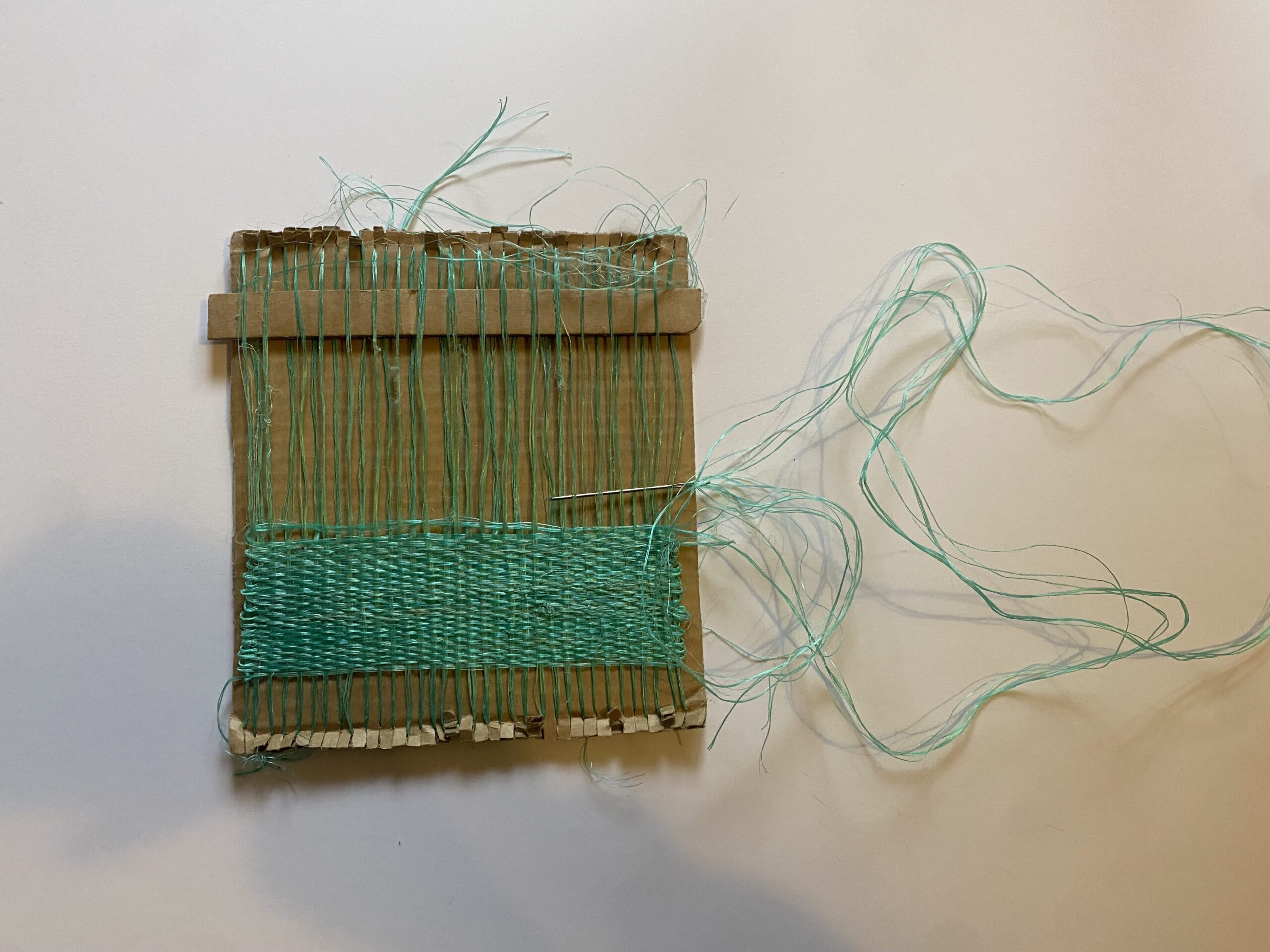
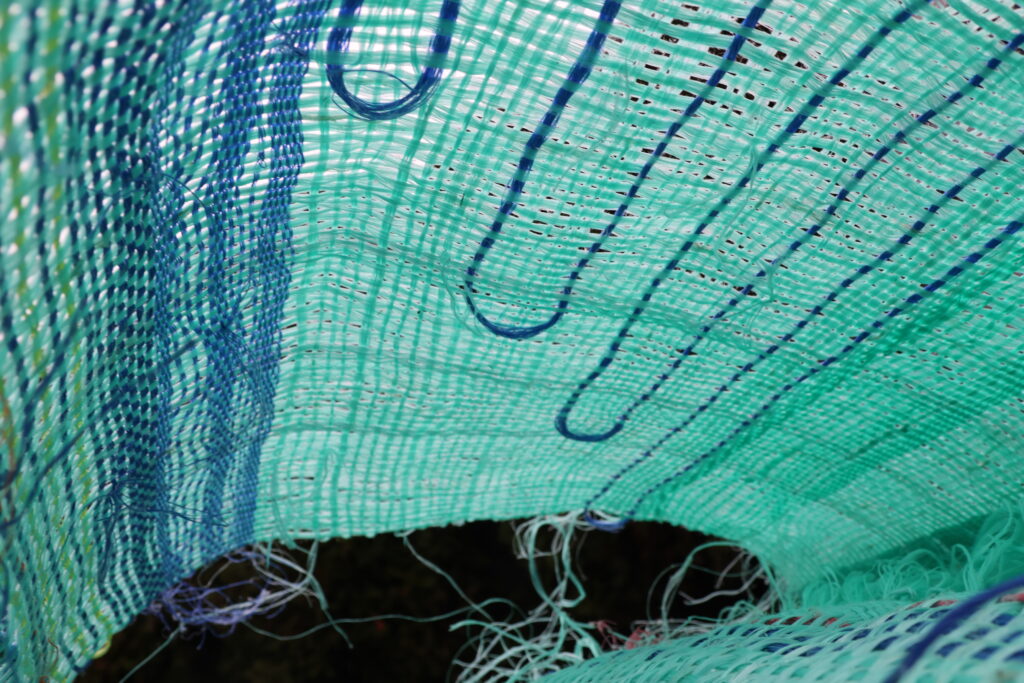
Cardboard looms result in 3 dimensional forms. The texture of cardboard held plastic taught like floss between teeth.
A whole world of weaving opens as this practice is a creation of molds. It provides quick and easily accessible making practices that can be done from home, with minimal materials. One can imagine the variety of form and shape that ideated in cardboard and executed in plastic.
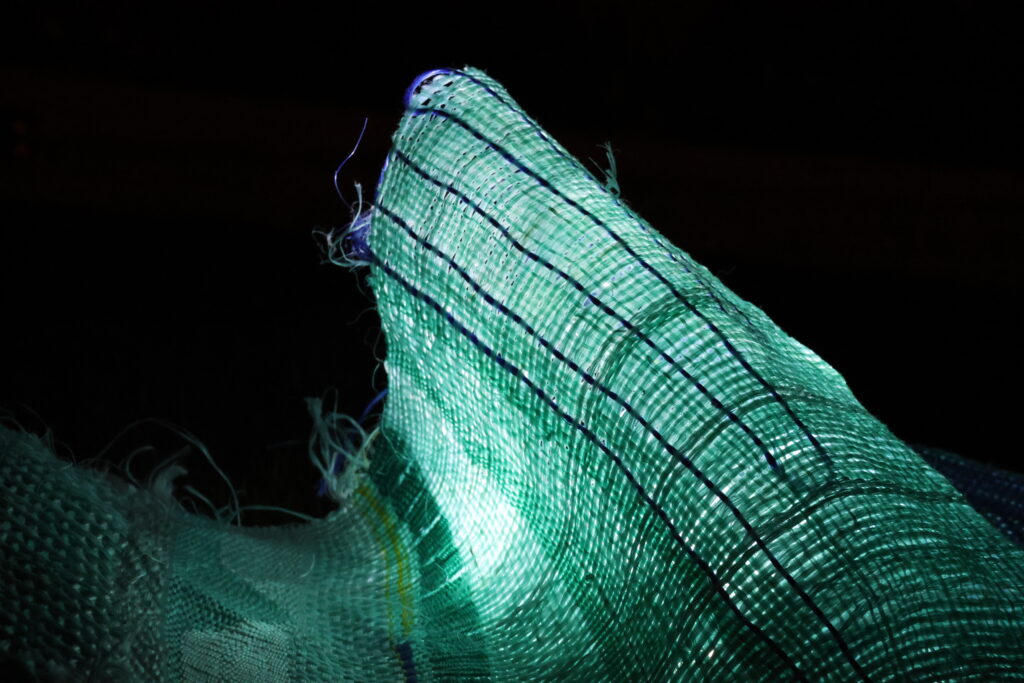
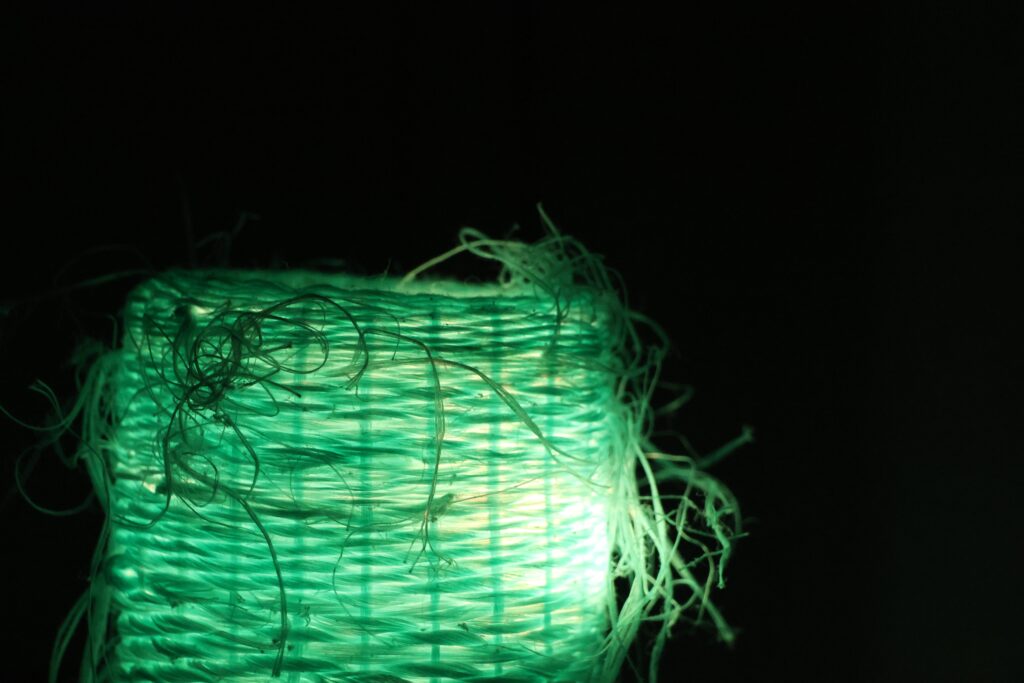
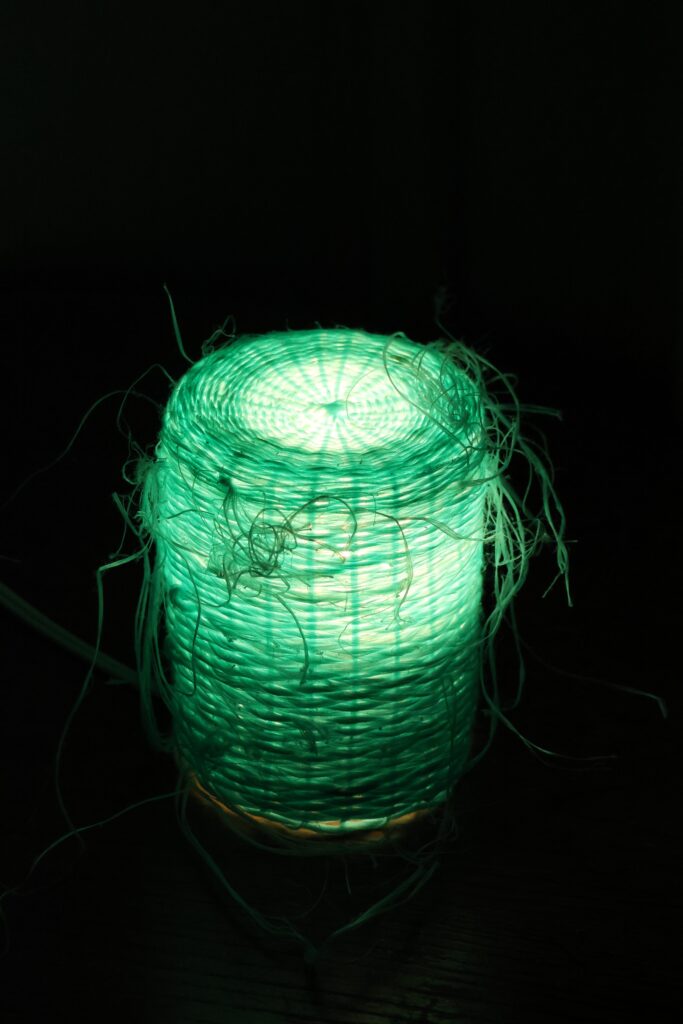
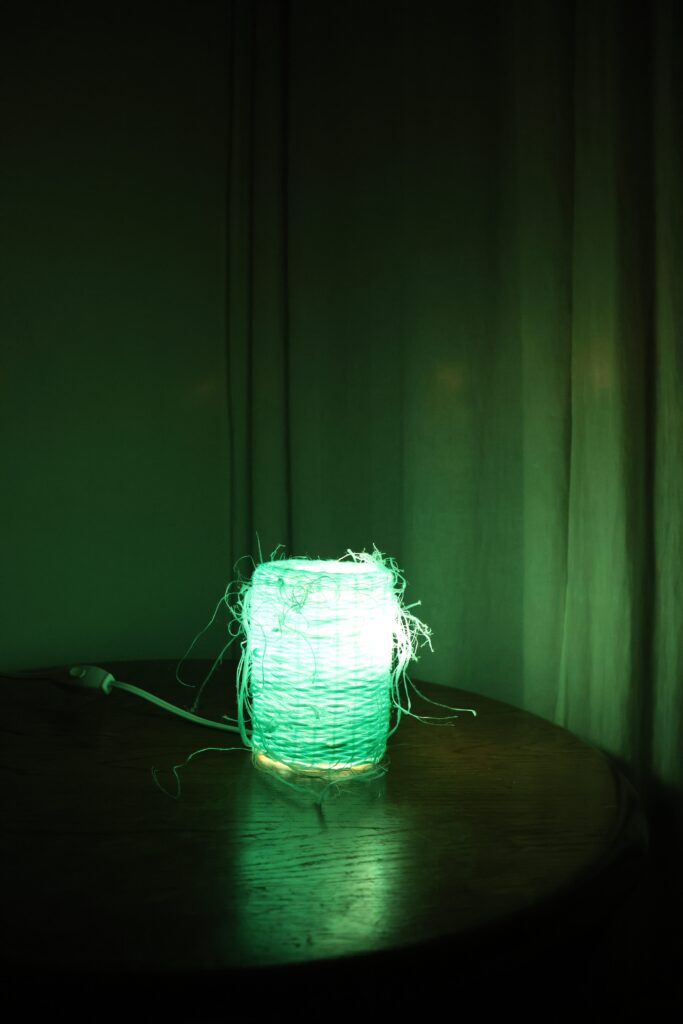
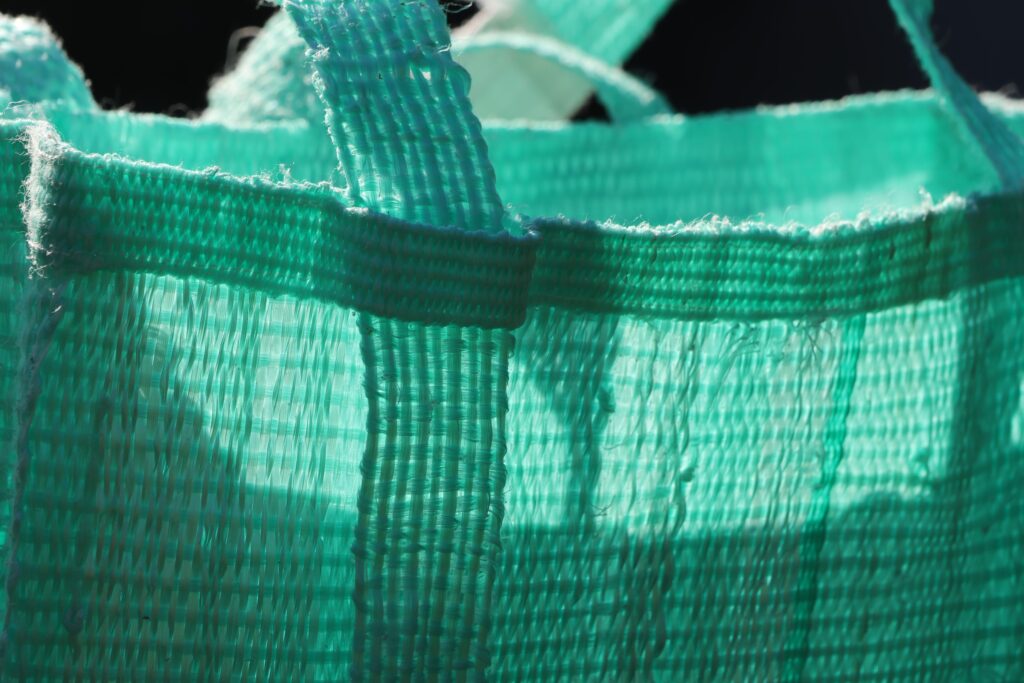
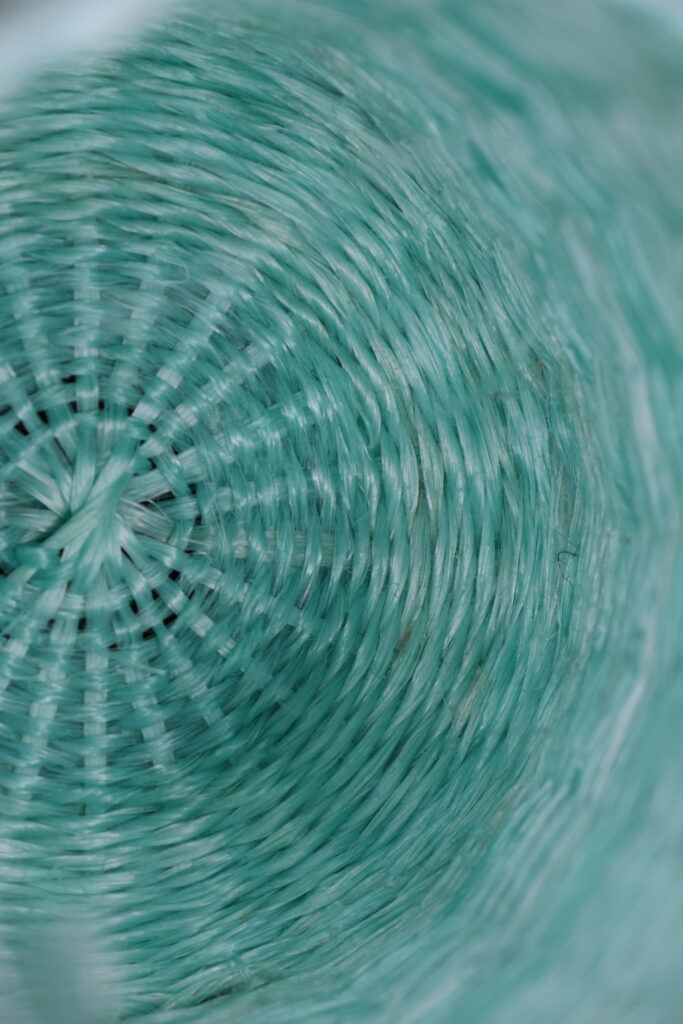
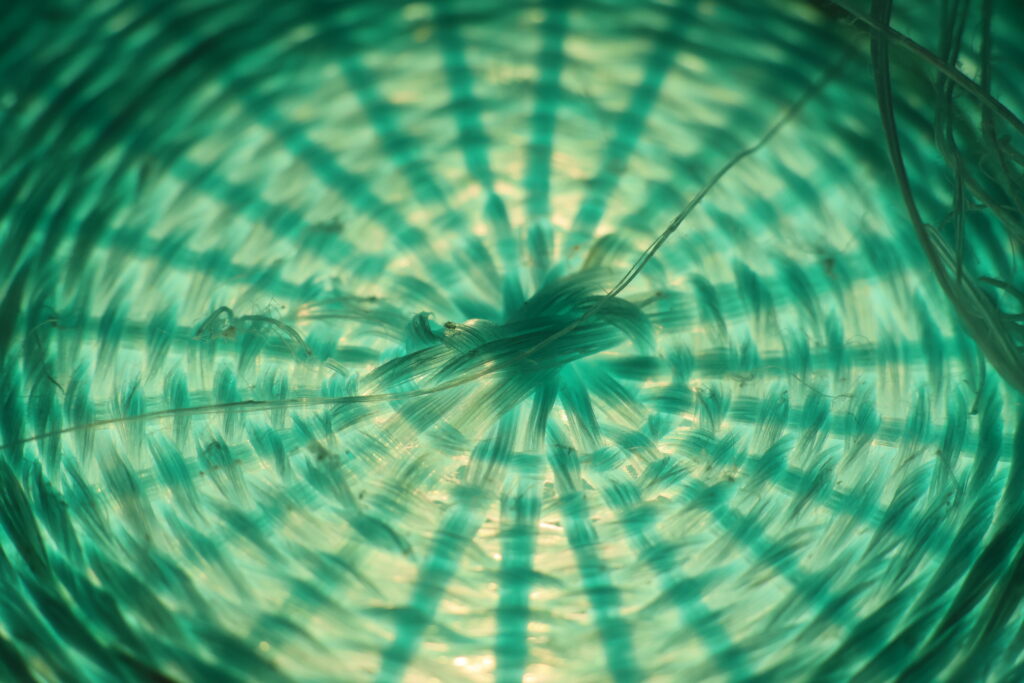
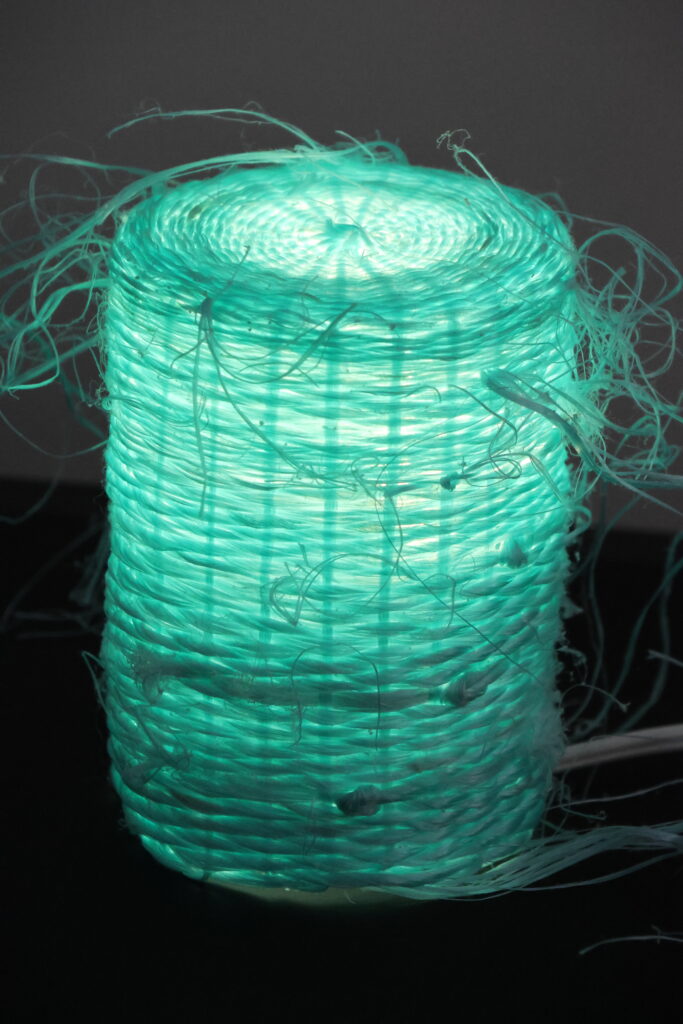
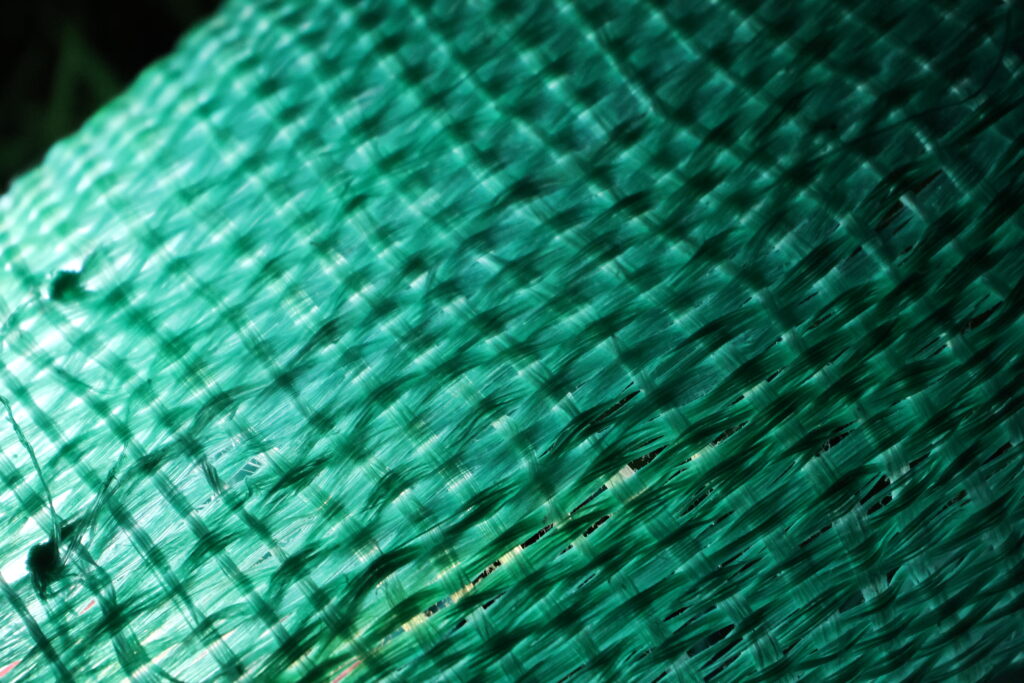
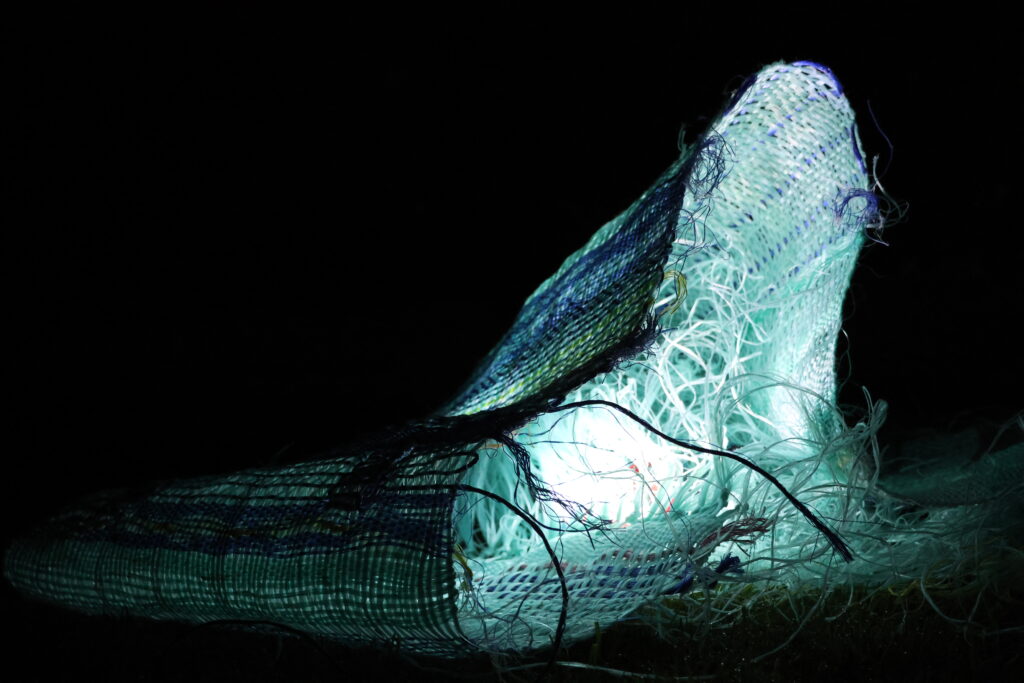
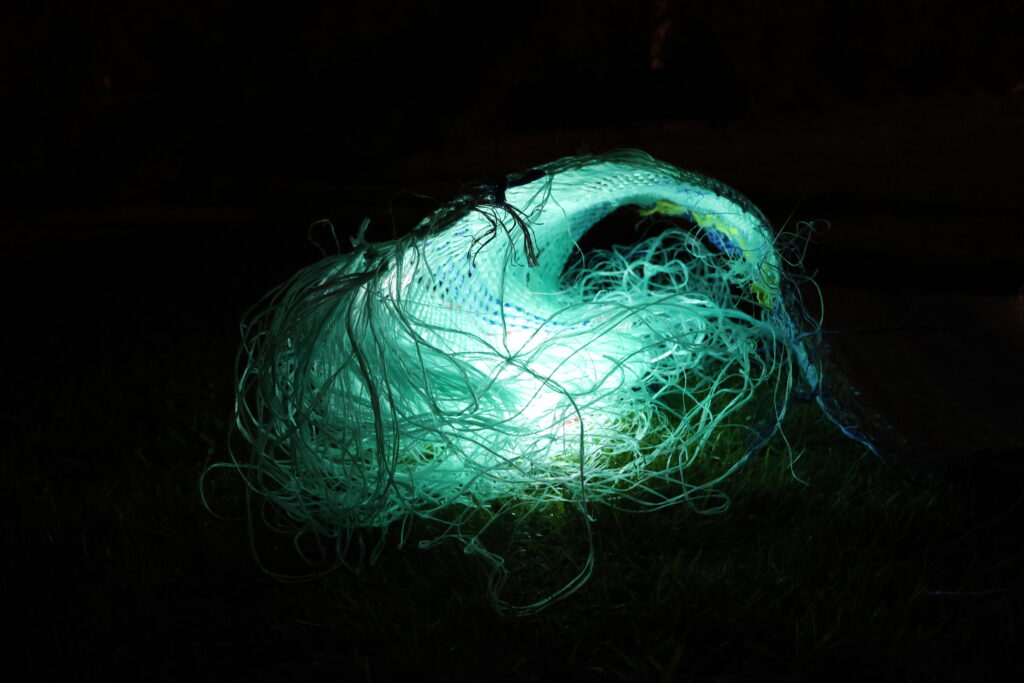
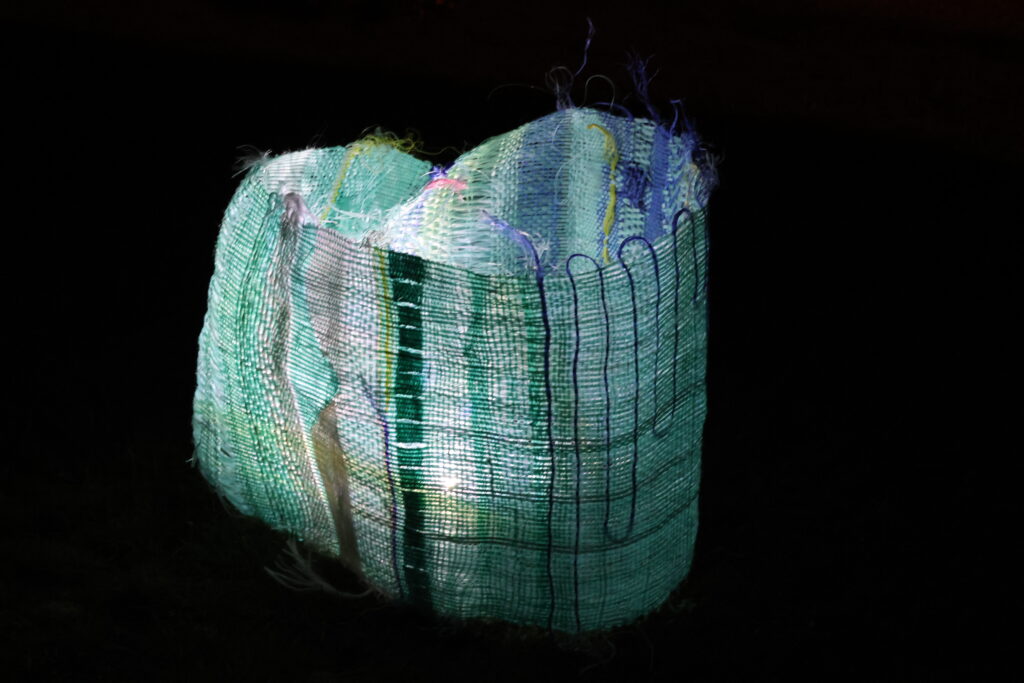
Through this cardboard process a vessel was made. Seeing that the translucent quality of the thinned-out rope creates a bioluminescent aura when combined with light, I took the all the creations to light sources. The TIDETOSS series revealed the dark depths and dark truths of the ocean illuminated in this medium.
BAG MAKING
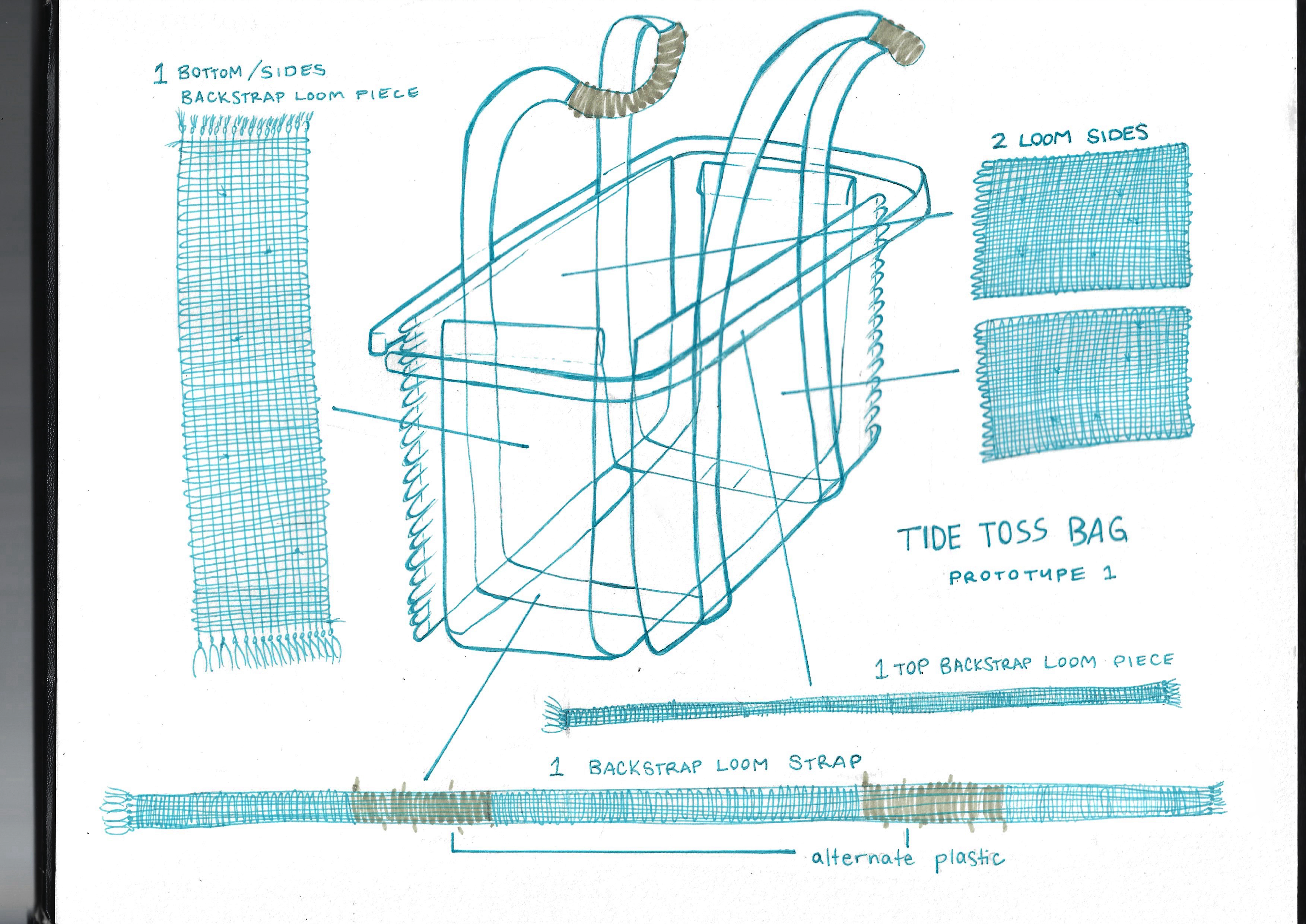
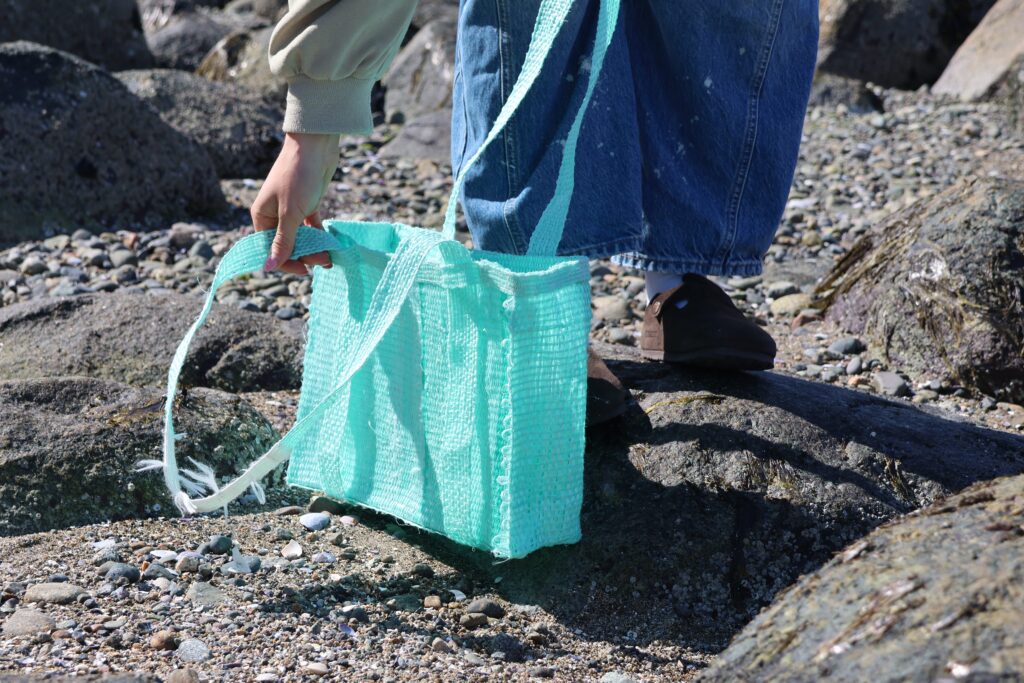
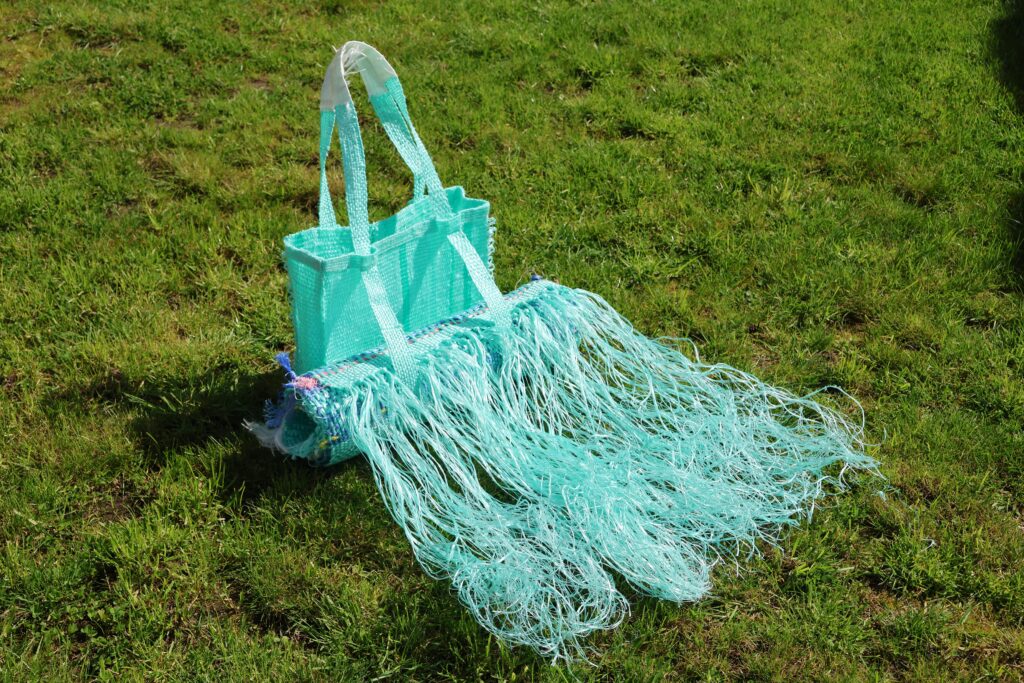
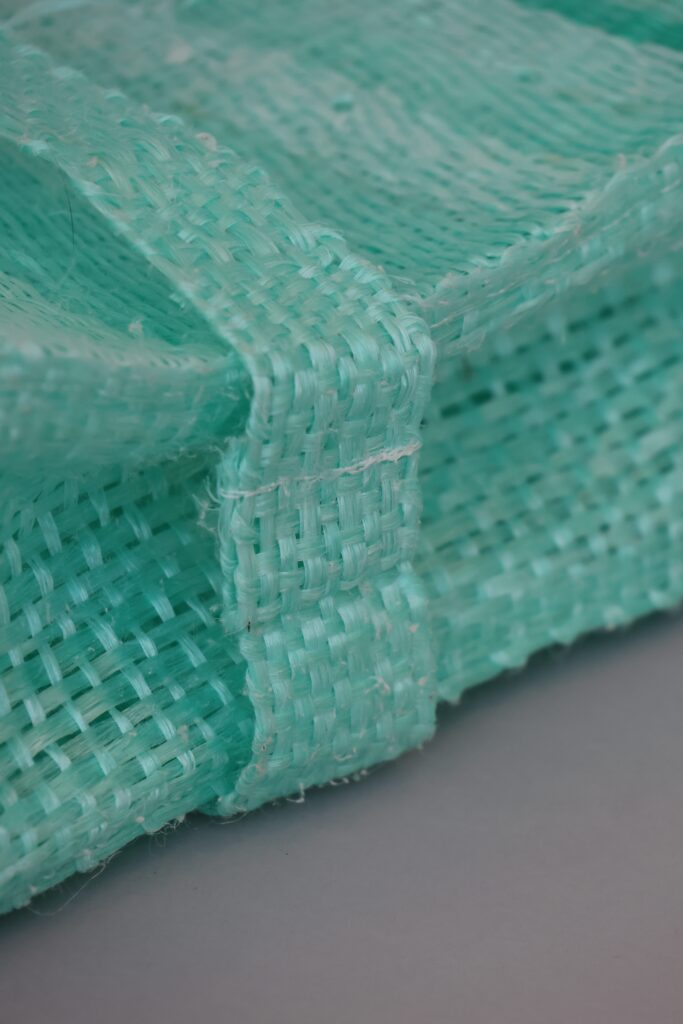
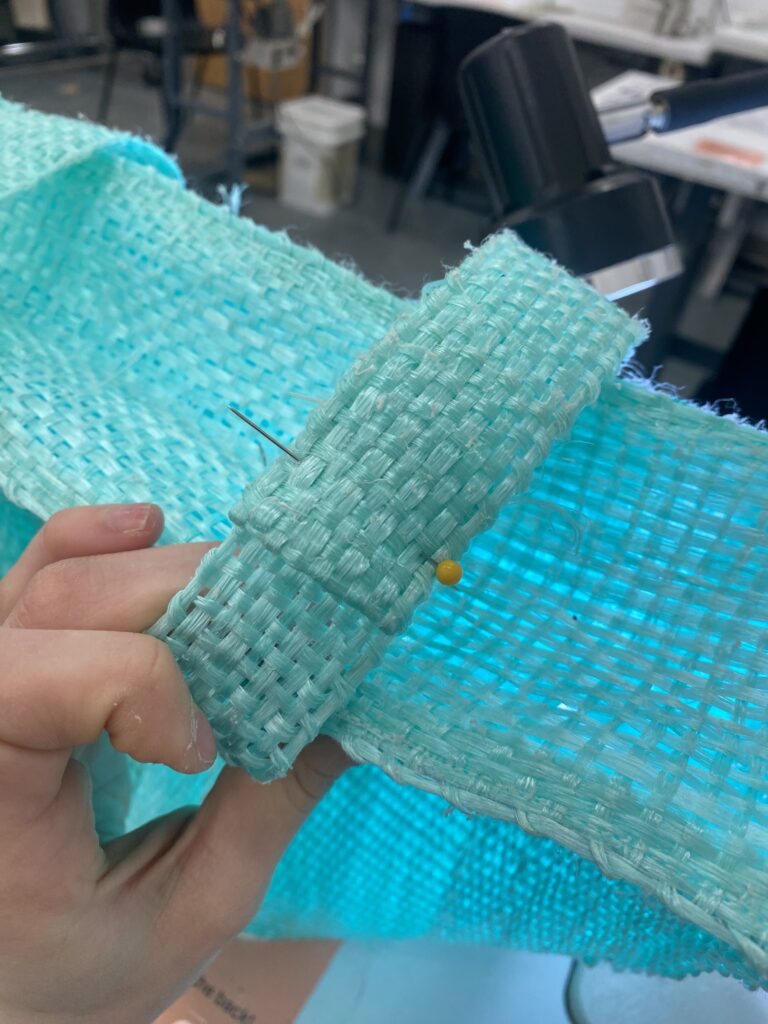
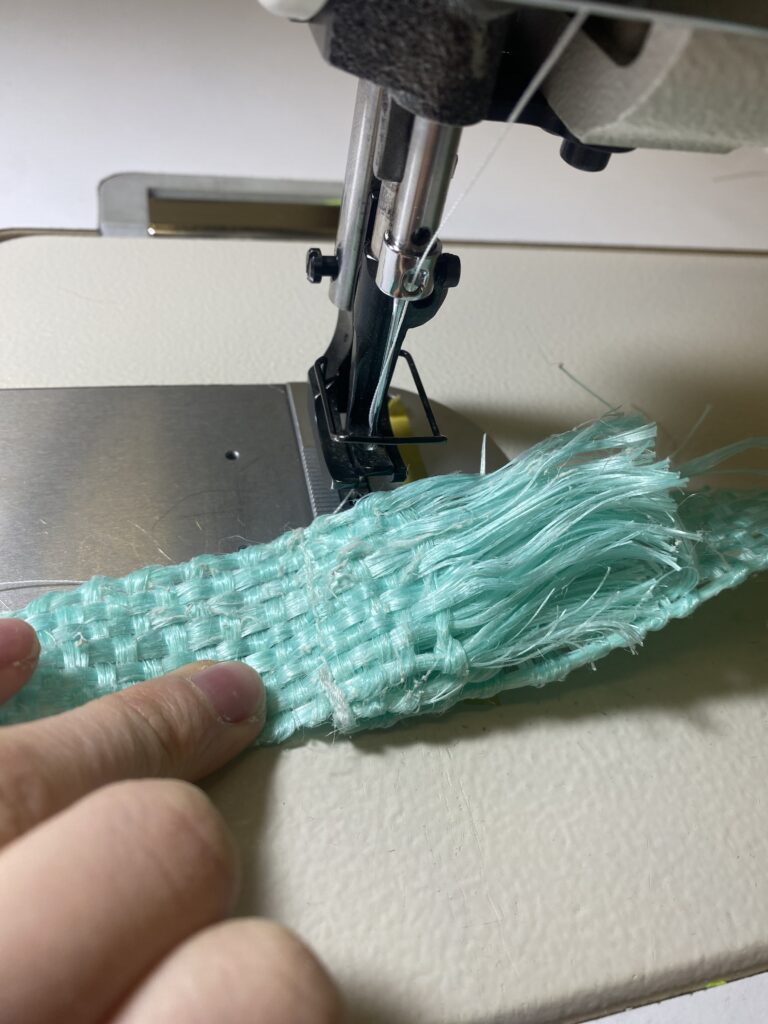
In my own day to day, bringing mounds of plastic material to and from school, the instinct to make a bag came about. It resonated as I was collecting, reflecting and making in unison. I planned pattern pieces then to assemble through both laser cut and backstrap loom methods. My goal in this bag was to highlight the detail, the intentions, and the marks of the maker and the loom.
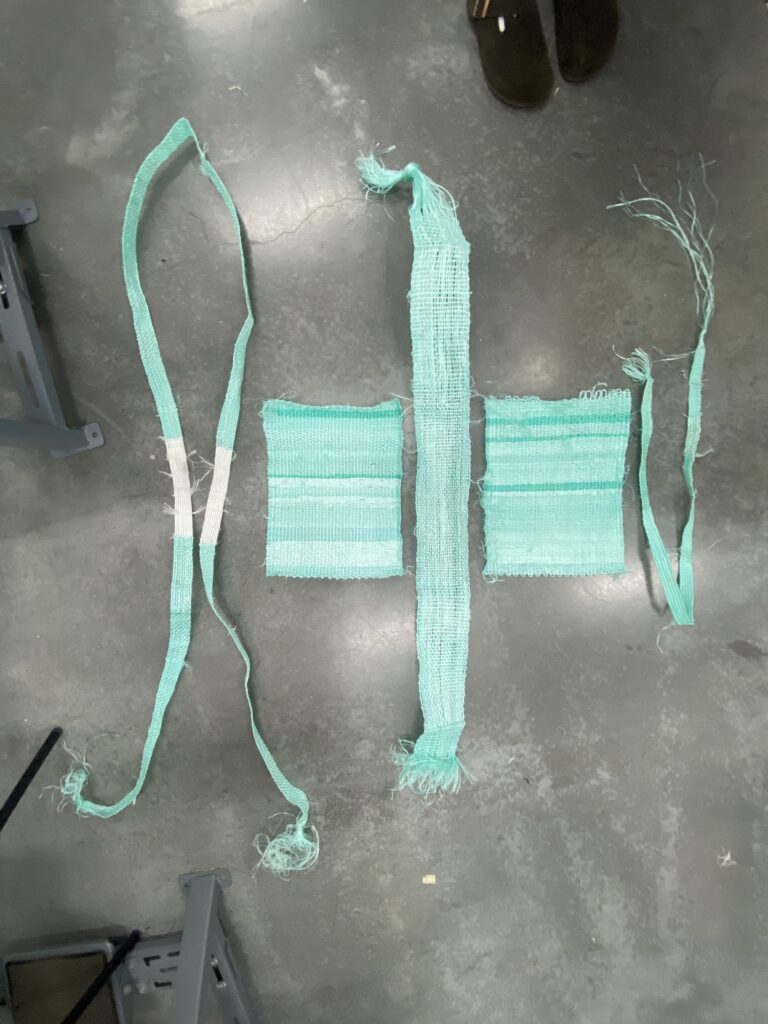
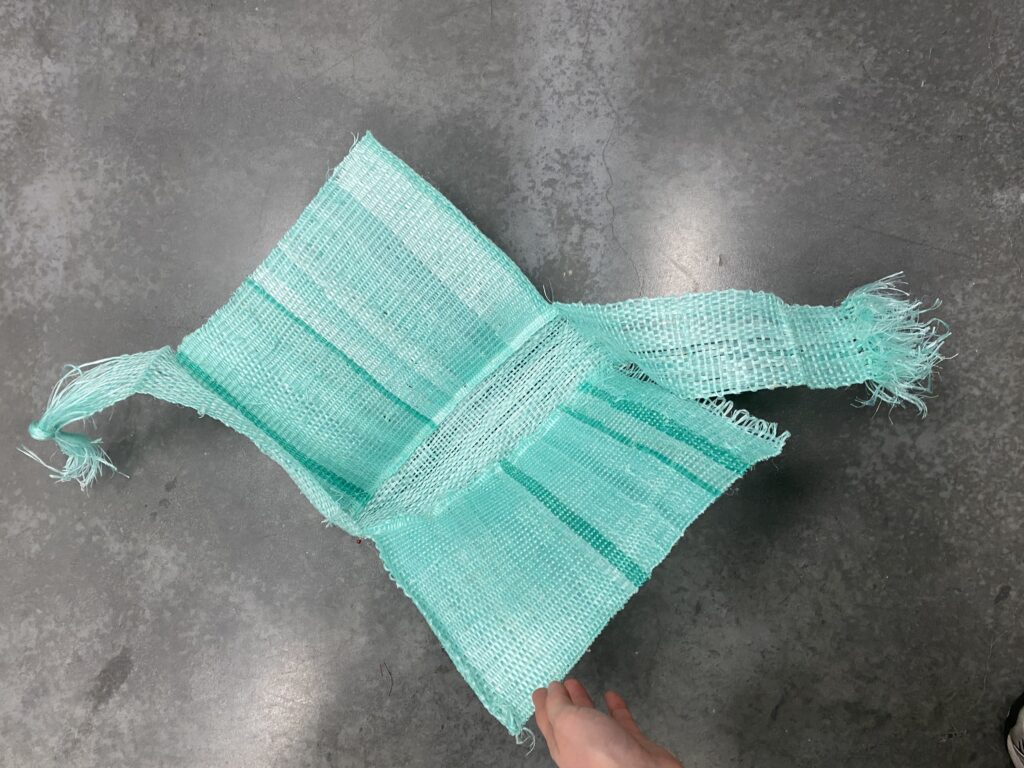
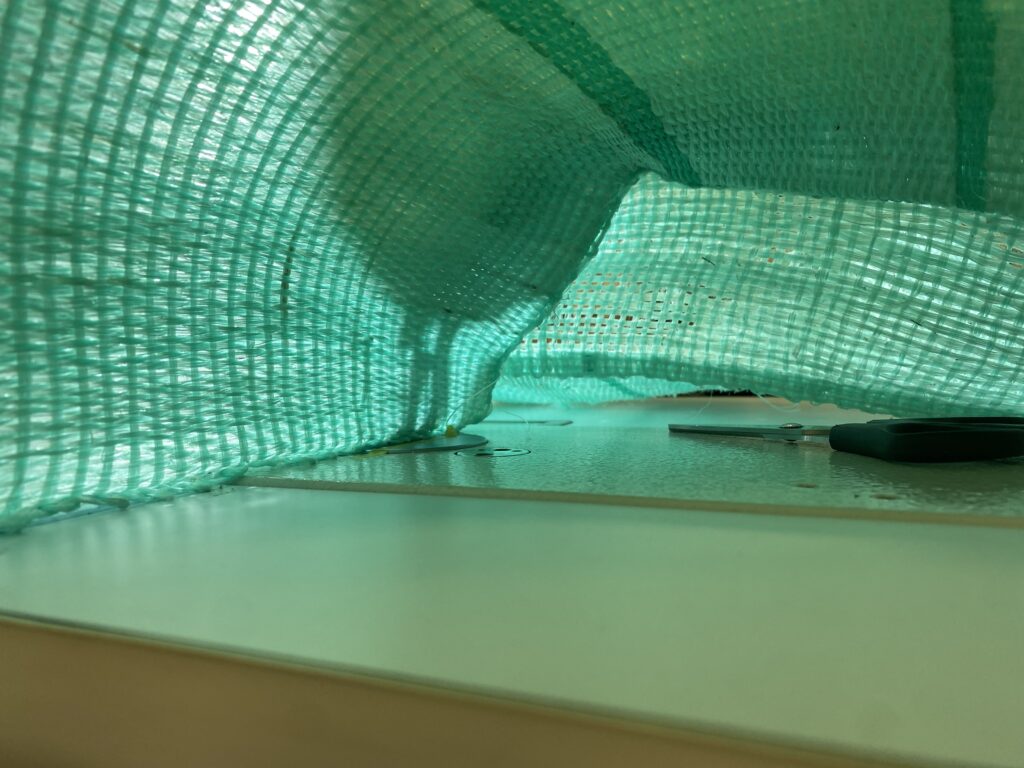
FINISHING/SEALING
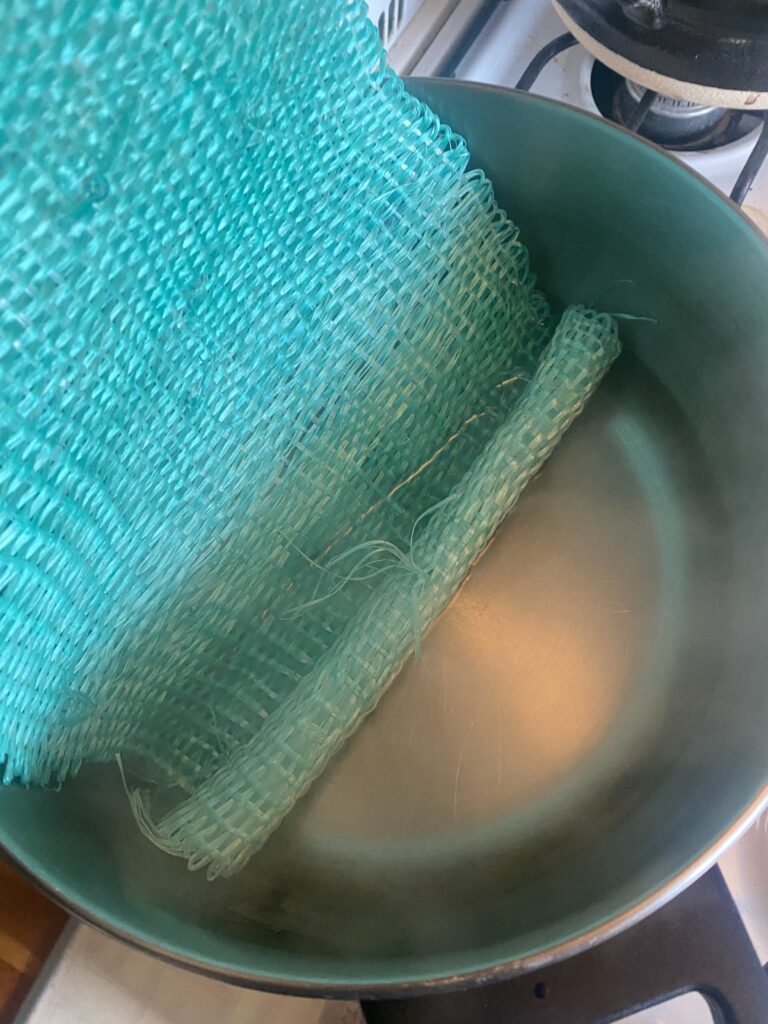
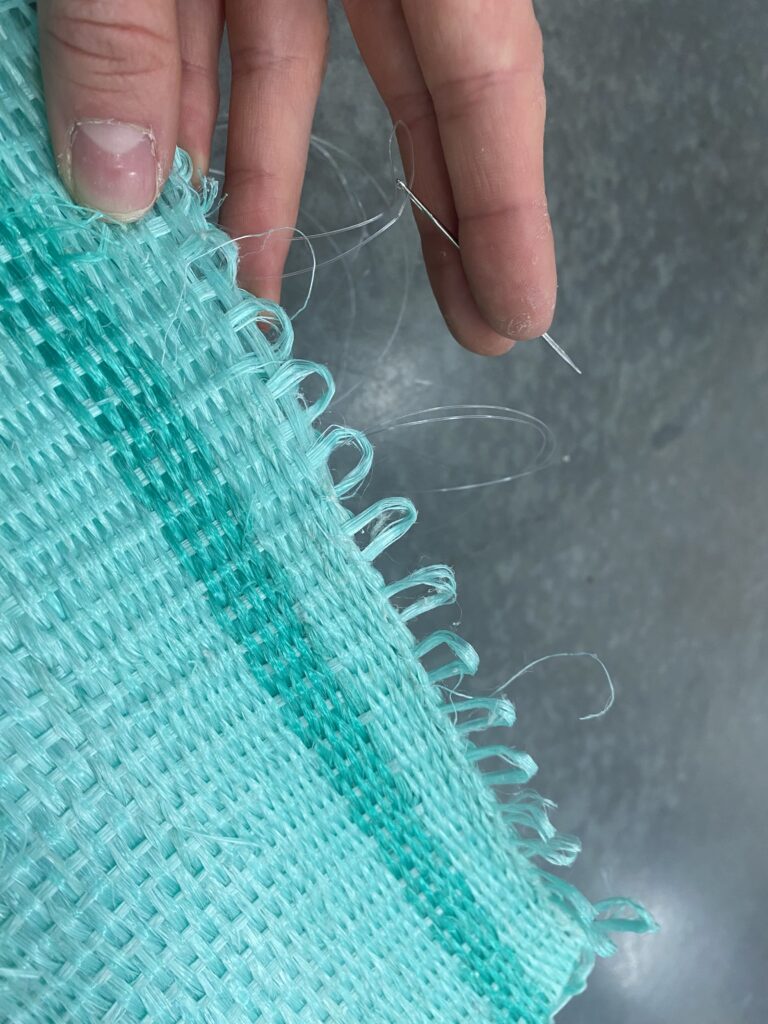
My research continues as I find permanent and impermanent processes to minimize plastic frays from this material. Ironing and boiling have been ways that I see further sealing to be had, however my main concern from heating and melting these plastics being the health and safety of myself and my environment.

The possibilities in this material continue to expand in my journey as designer, and so is its relationship to our local making practices.

TEXTILE NOTEBOOK
I accumulated many methods and variations, seeing vastly different strength, flexibility and customization through this material based on the construction of the textile.


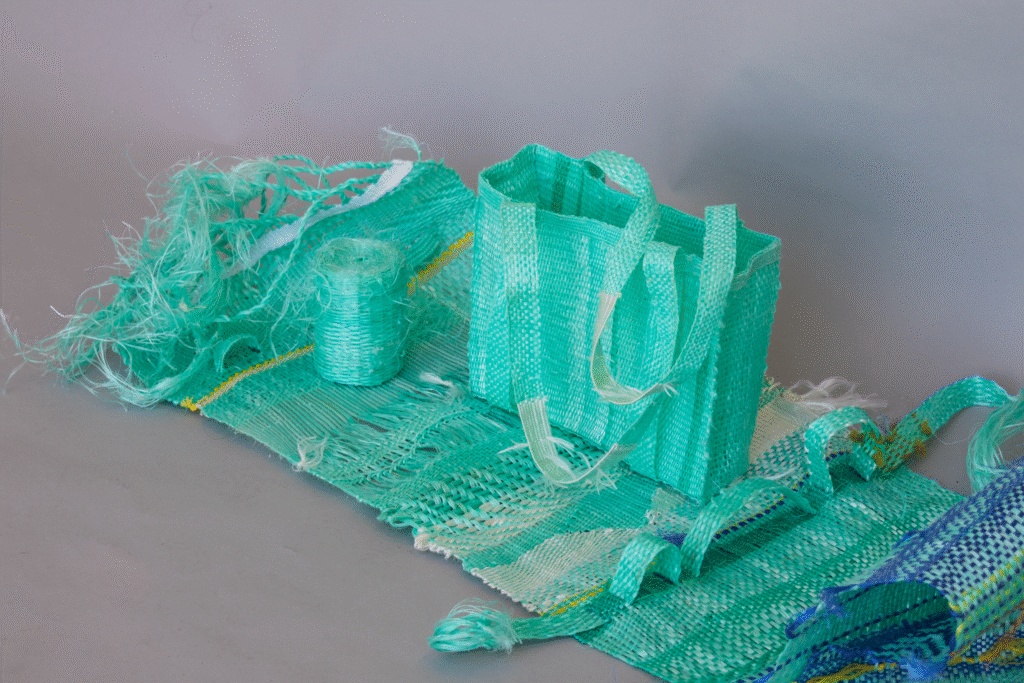
This project has opened an understanding of the labour and the love put into a fabric. As my weaving has been quite a solitary process, in reflection I know community is a network I’ve relied on and reciprocated with persistently.
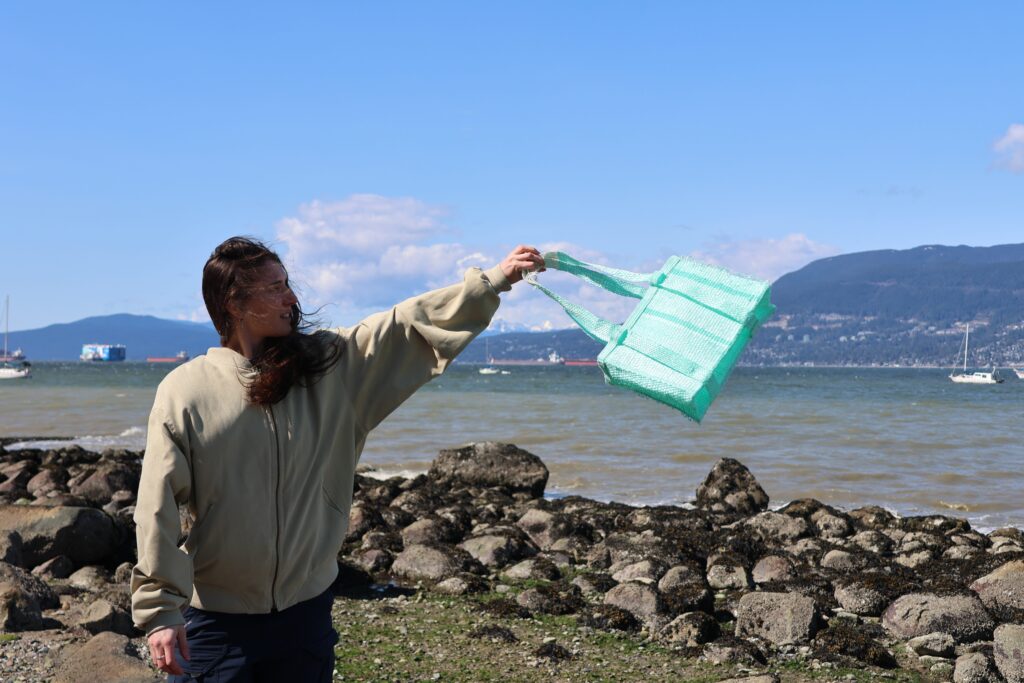
This process notes to all the ways we make relationship with ecosystems, biodiversity, plants, mammals & microorganisms…
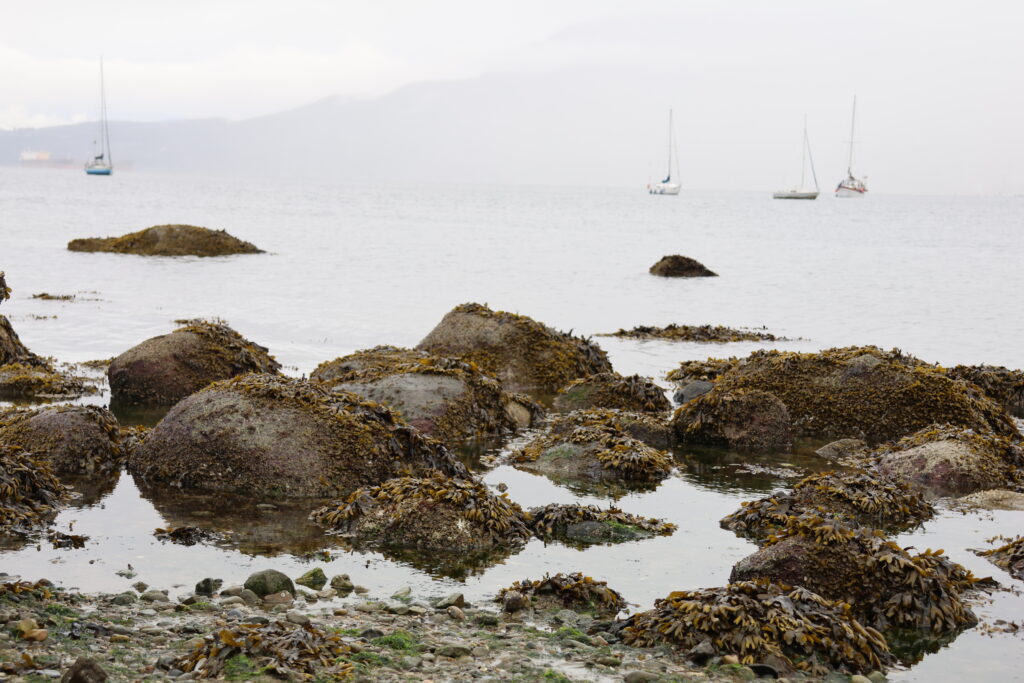
the ocean, the land the tidal realm in between…
with the fishers, for our food…
with the ones functioning the ships out in our harbour, for our supplies and our goods…
with the ones who had allowed the plastics to be cut and released in our oceans…
with the ones who collect waste along our beaches…
Recognising that we are all responsible. All connected and reliant on each other.
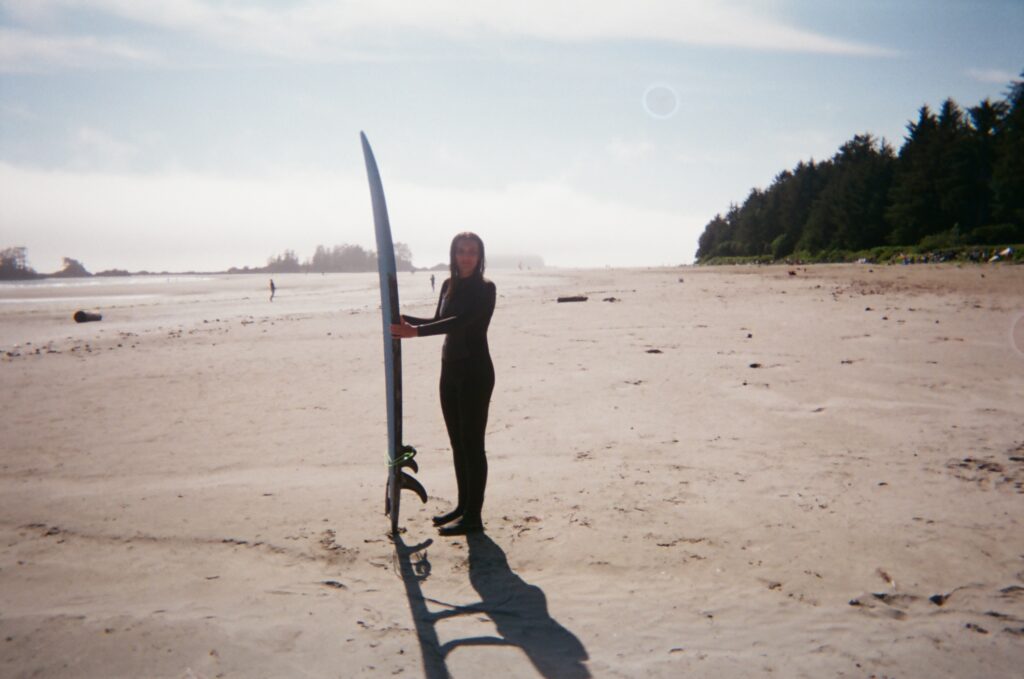
In knowing how much plastic we are exposed to now, the TIDETOSS series propels an awareness and a spark of hope in our treatment of plastic, and therefore our endless treatment with our bodies and our seas.
EDEN EISSES 2025
I acknowledge the land and waters that I continue to weave, make, gather and play on as unceded traditional territories of the xʷməθkʷəy̓əm (Musqueam), Sḵwx̱wú7mesh (Squamish), and səlilwətaɬ (Tsleil-Waututh) Nations