Link
João Bendoval
See it On Campus: Level 2
Located in the sculpture gallery (large panoramic window area at the end of the 2nd floor)
Visitor InfoVan Gogh Designs Furniture + Wood Design Graduation Award — Honourable Mention
Linking the hands of a designer and the mind of an artist.
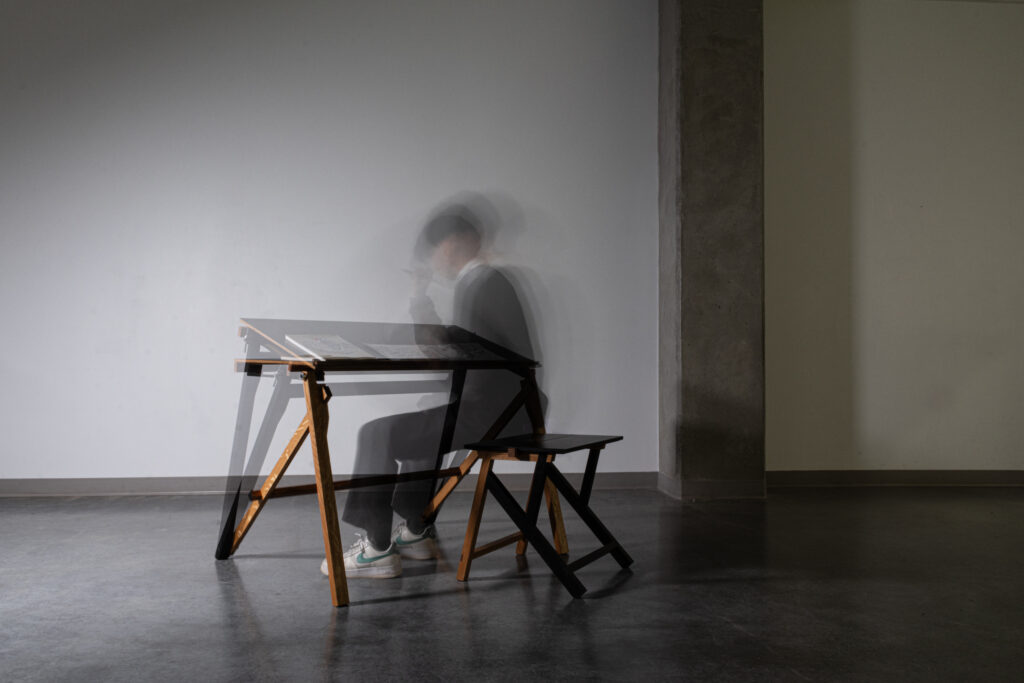
This project represents a dialogue between the two sides of my mind—linking the hands of a designer and the mind of an artist.
It’s inspired by my passions for design and illustration and how they can function cohesively during the process and in the final outcome.
Link is an opportunity for me to fully embrace these passions, allowing me to create something deeply personal and authentic. It’s a chance to express my identity in a meaningful way while designing a solution that not only addresses a problem but also shares my story.
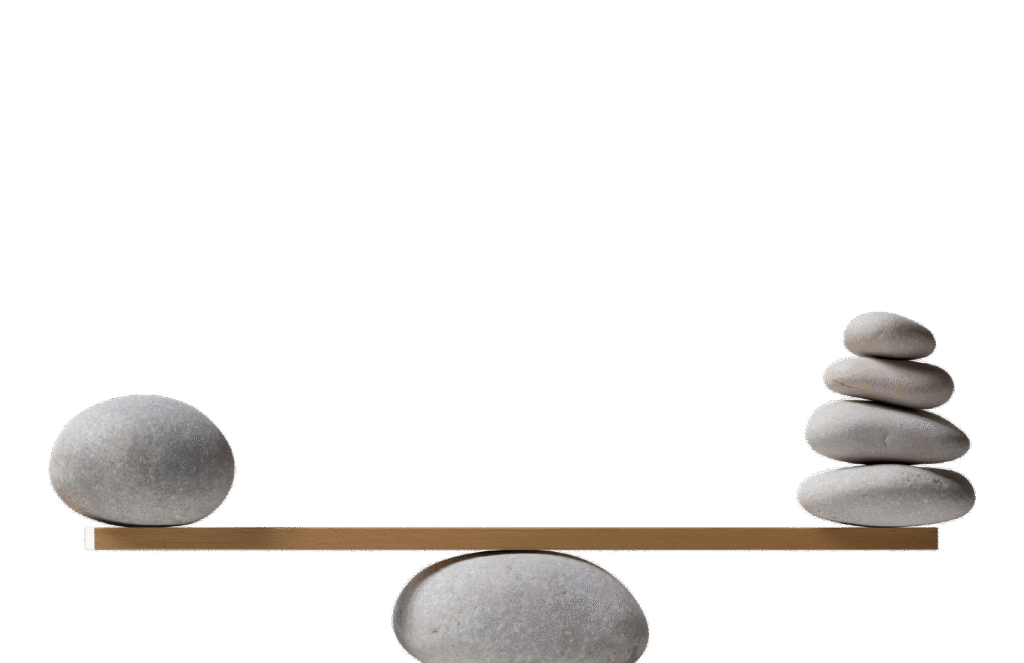
Balancing Left and Right Brain Thinking
Early in the process, I struggled to balance the analytical and creative sides of my brain. The pathways of thinking aren’t linear, so I paused to reflect and draw what I felt. These moments of introspection helped me bridge the gap between critical thinking and creative expression.
I’ve always believed there’s something powerful in the simple markings of a pen, they carry more than just lines; they carry intention. Designers often use sketches as a tool to communicate form, function, proportion. Illustrators, on the other hand, chase emotion, crafting visual narratives that pull you in. I saw the possibility that these two worlds are not opposites, but two sides of the same coin.
Foundation in Illustration
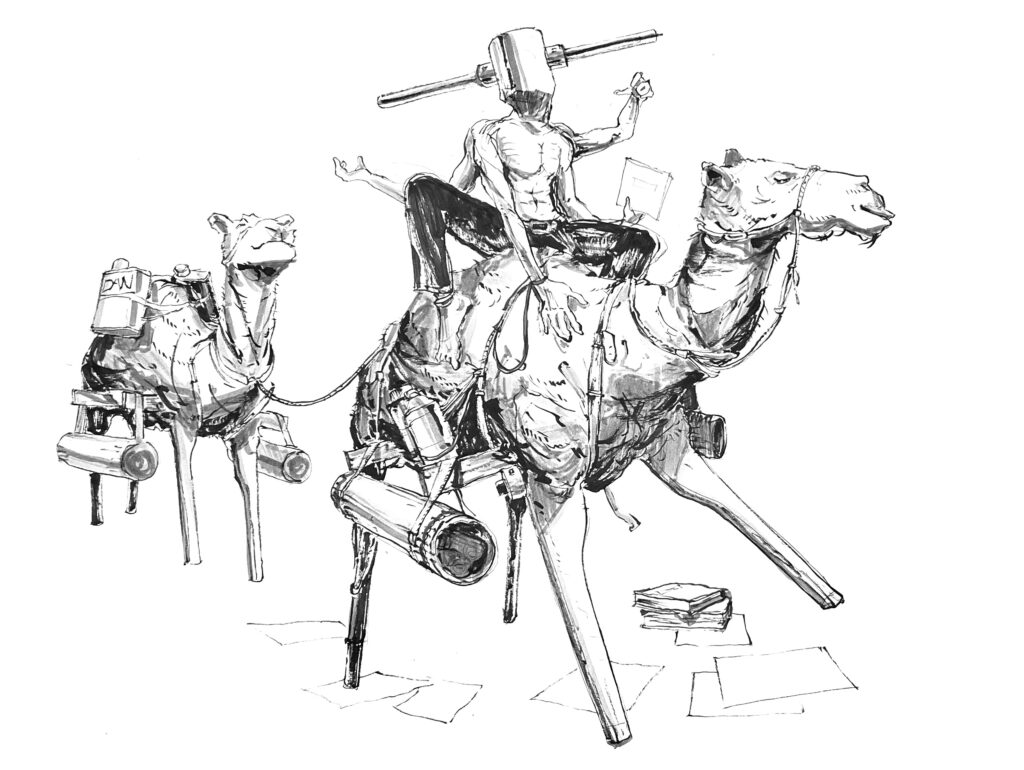
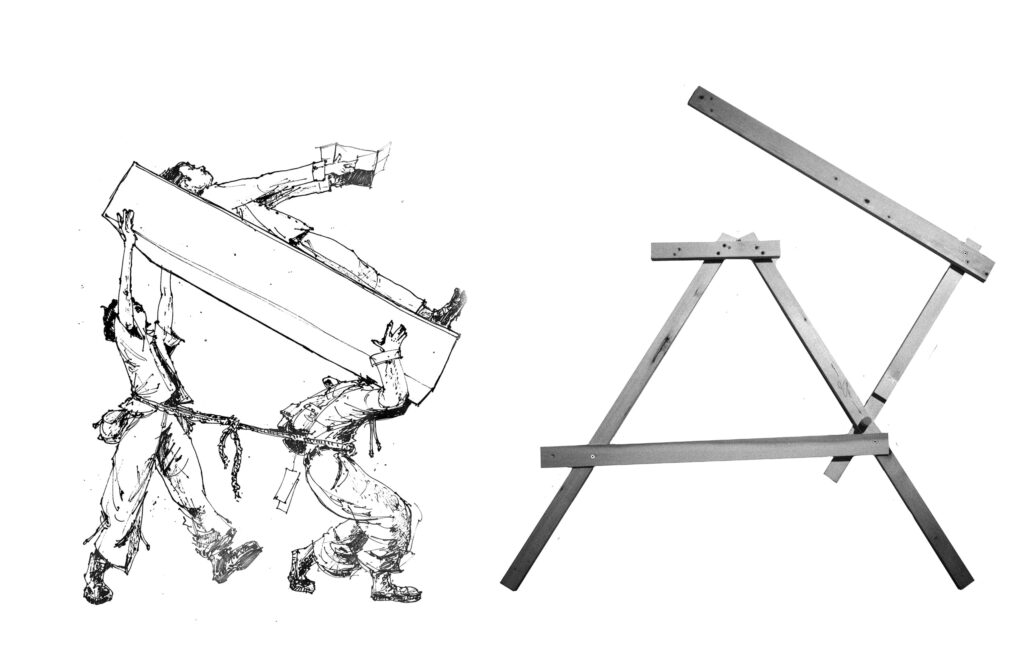
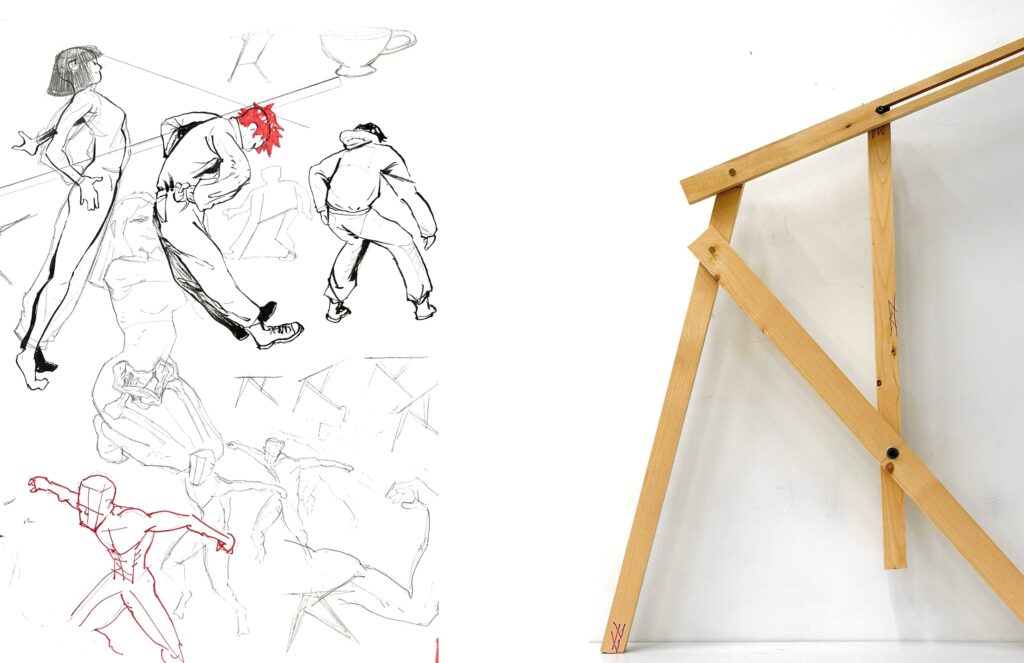
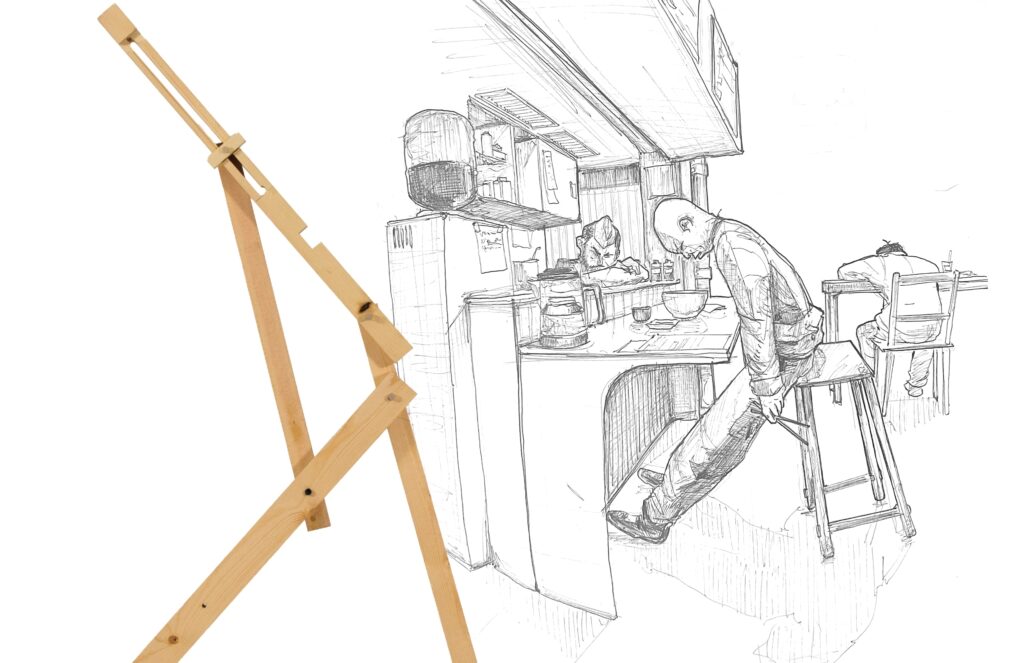
My art is often spontaneous, with no set vision for the final outcome. It stems from familiar concepts and evolves into free-flowing ideas. This spontaneity allows me to take raw inspiration and turn it into something concrete, maintaining creativity and authenticity. My first prototype stemmed from a sketch inspired by my internal dialogue. The composition symbolized my struggle to interchange creative and critical thinking.
As I looked at this drawing, I began to see forms, curves, angles, that could become furniture.
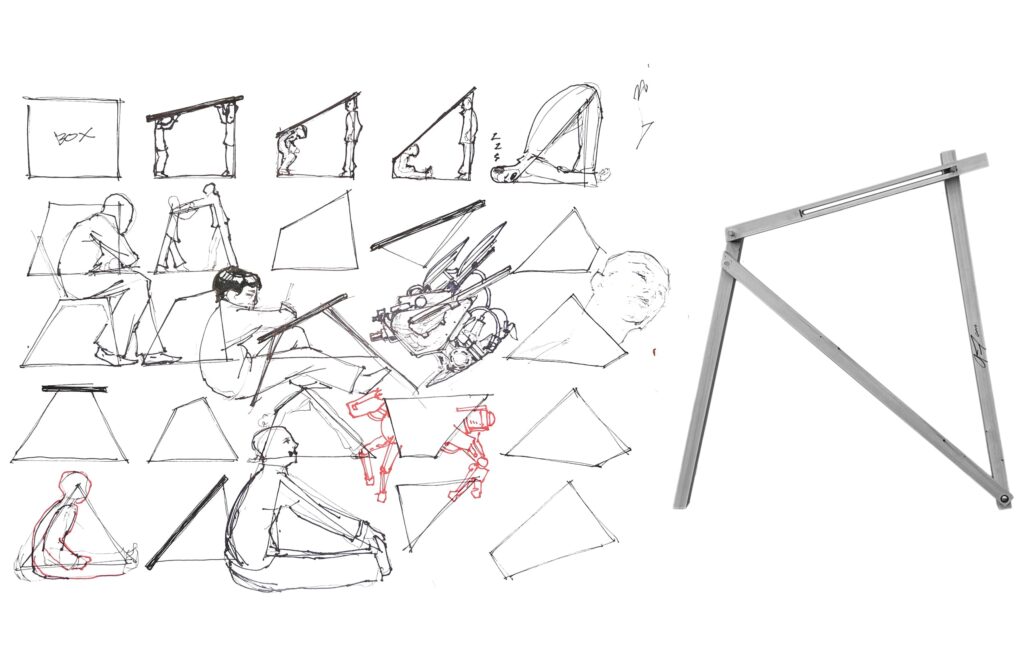
This stage began with simple geometric shapes like boxes, which provided a structured foundation for ideation. Transitioning into trapezoidal forms introduced a sense of movement and dynamism, reflecting the energy and fluidity of human motion. By stepping outside the confines of rigid design thinking, I allowed my illustrative instincts to freely explore and evolve these shapes into potential design concepts. This process bridged the gap between raw, spontaneous artistic exploration and intentional, functional design, enabling me to craft forms that could balance both creative expression and practical utility.
As I continued, I let my drawings lead the way.
I sketched without expectations, letting spontaneous lines suggest new possibilities. At one point, I felt that I exhausted all of my ideas, as I noticed drawing the same things over and over, so I took a break to reflect upon all my output.
Biting Solution
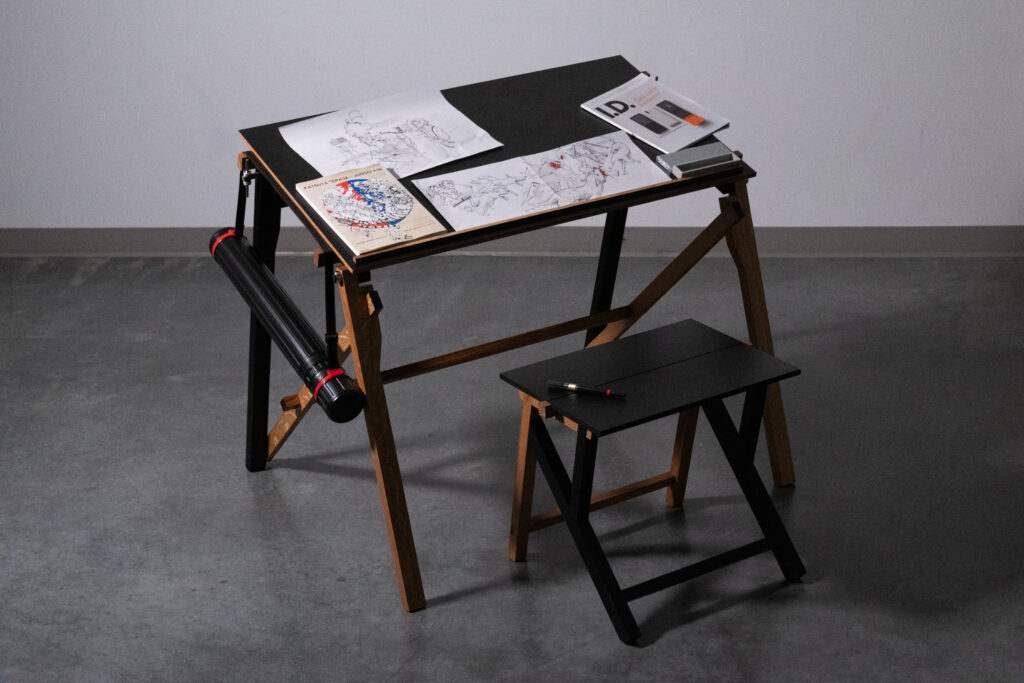
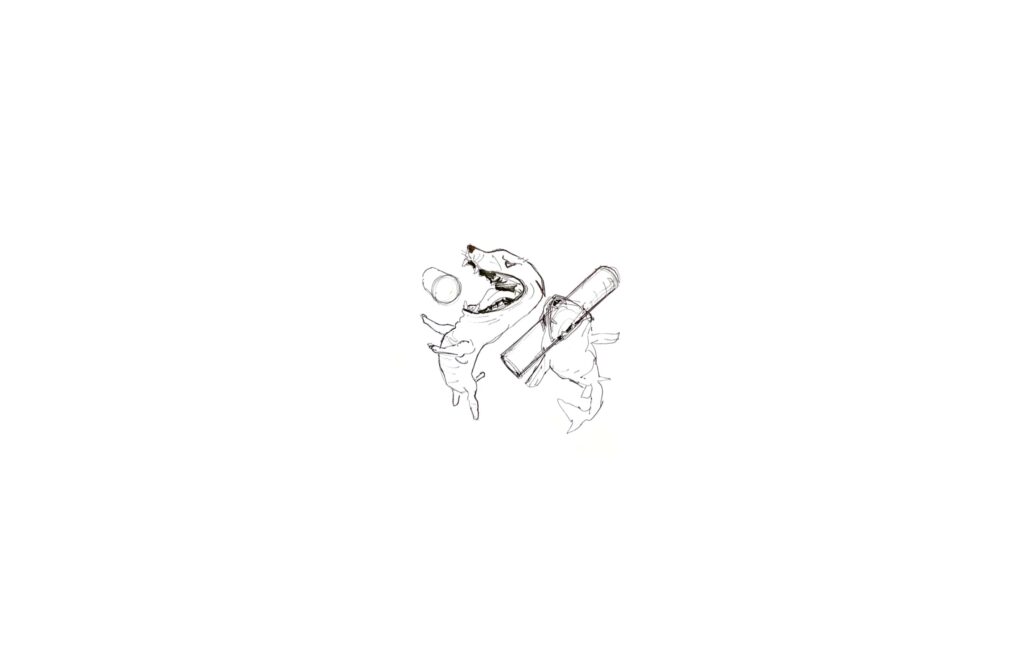
Functional Joinery Inspired by Playfulness: During my fifth iteration, I revisited earlier sketches and found inspiration in doodles of animals biting a cylindrical shape. This evolved into a lockable joinery mechanism: a sliding piece of wood (“food”) that’s “bitten” by a slot to secure the structure. This playful yet functional solution aligned with my goal of blending practicality and expressiveness.
One day, I found a doodle of animals biting into a cylinder, a playful, and a pretty silly image. But that sketch inspired a mechanical solution: a locking mechanism that could “bite” into place, securing the adjustable surface.
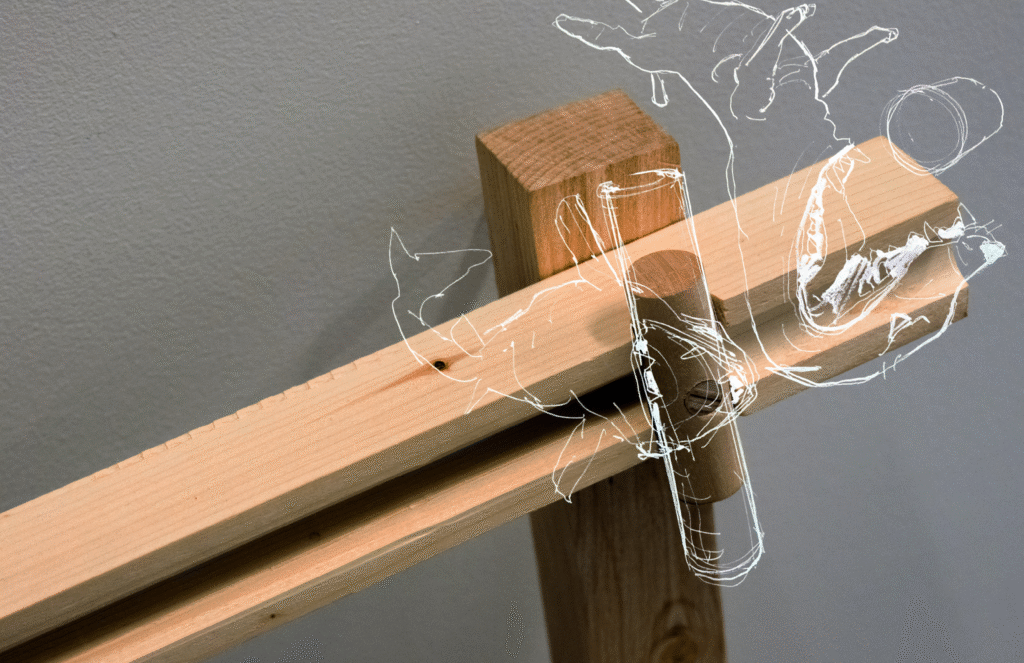
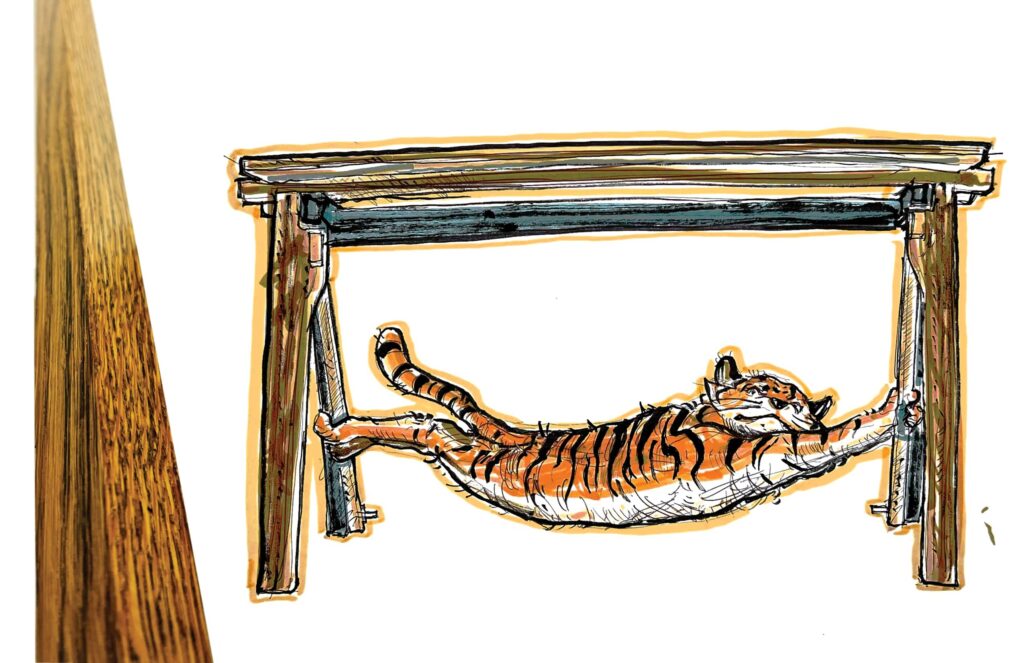
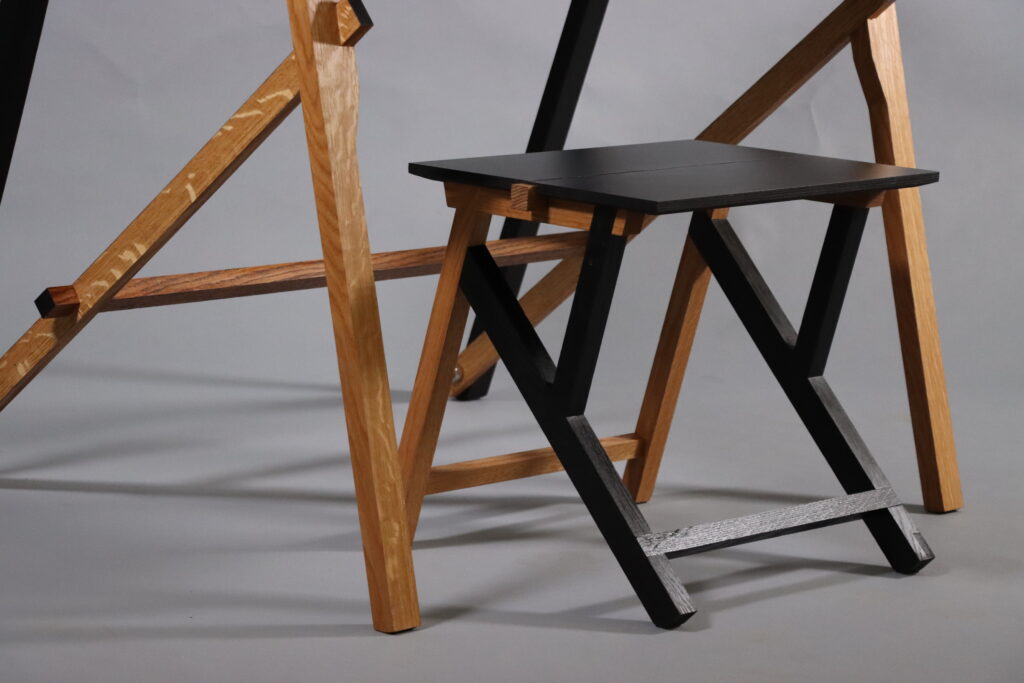
This piece found in the leg supports of the table was previously completely black, I wasn’t satisfied with how it fit along the design’s color scheme. As a result, I sanded and refinished the piece of wood. I couldn’t sand deep enough as the ink has absorbed into the deeper grains, but in my eyes, I saw the stripes of a tiger.
yy
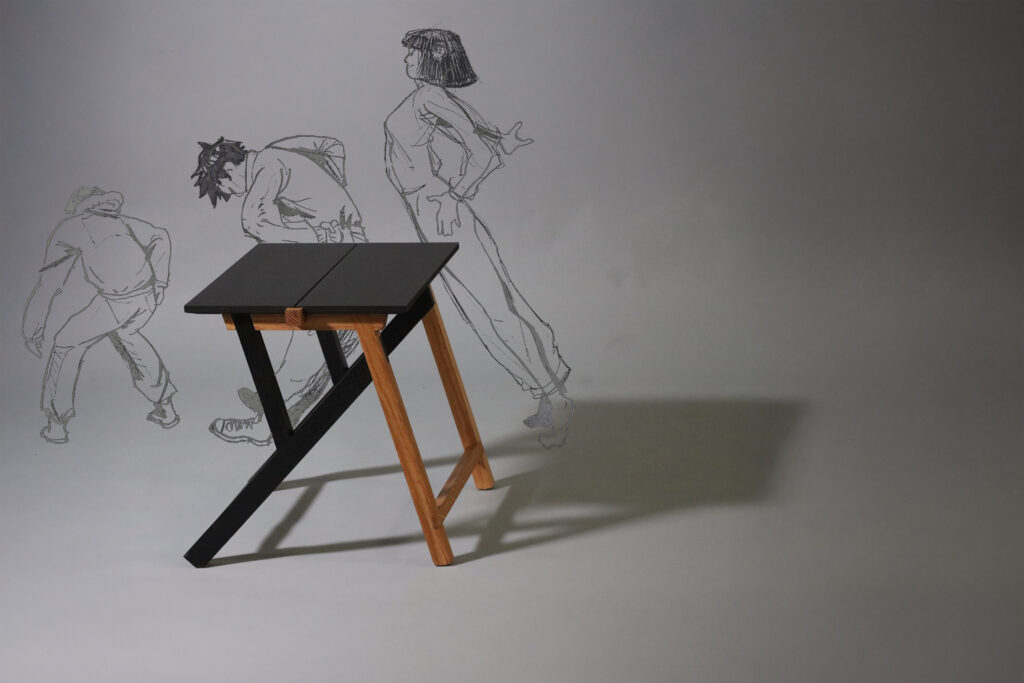
In the earlier stages, I created a profile for the table built from the gestures of my sketches, but at the time, I couldn’t really resonate with it. So, I pushed it aside, telling myself I’d move on. But as the project evolved, that sketch kept quietly returning, as if it still had something to say. I began to see it differently, not as a mistake, but as an overlooked opportunity.
When I revisited the form and refined it, it seamlessly found its role in front of the table. What was once a discarded fragment became an essential character in the set. Now, the two pieces feel like they’re in conversation, balancing and completing each other’s stories.
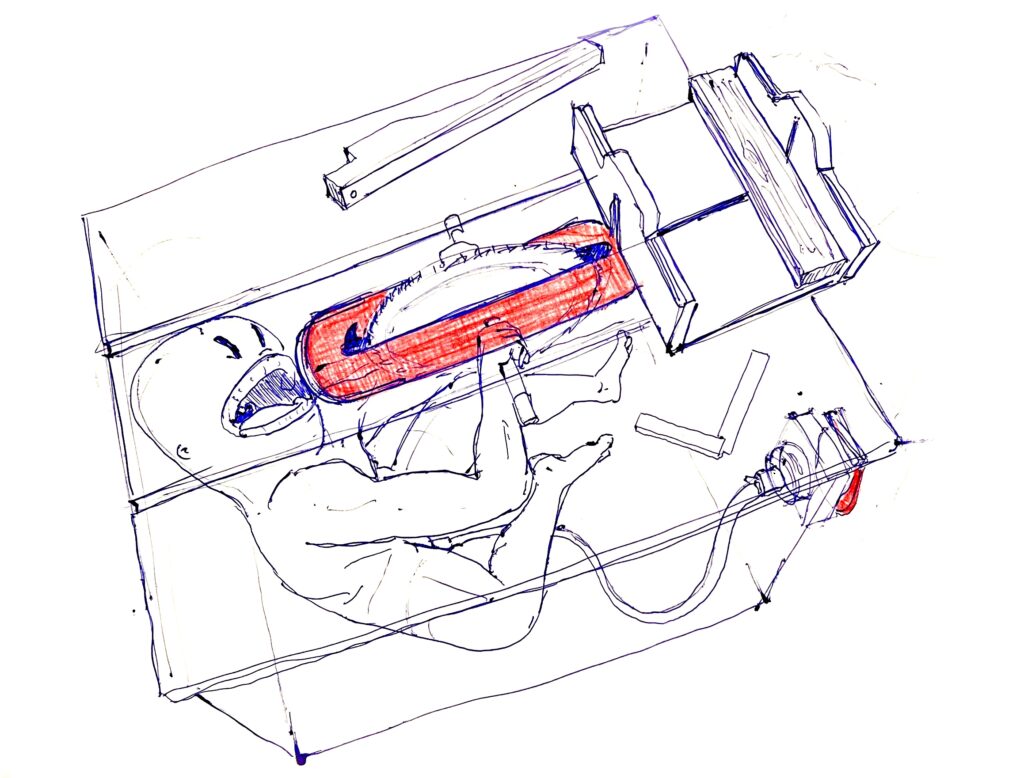
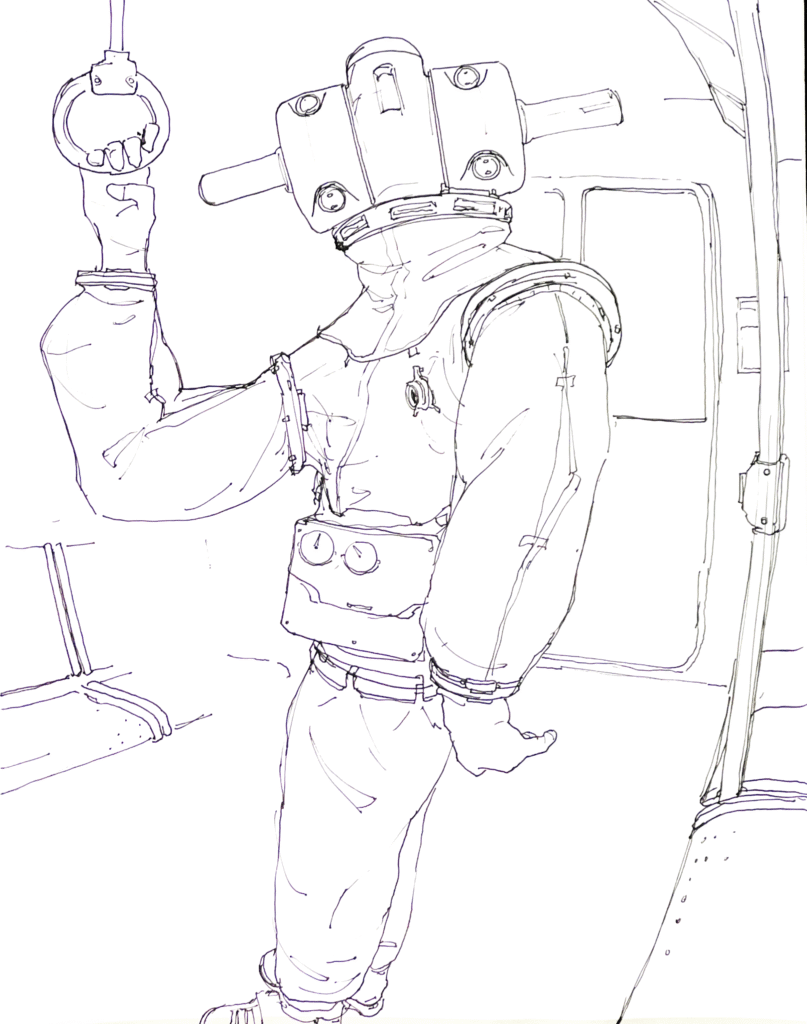
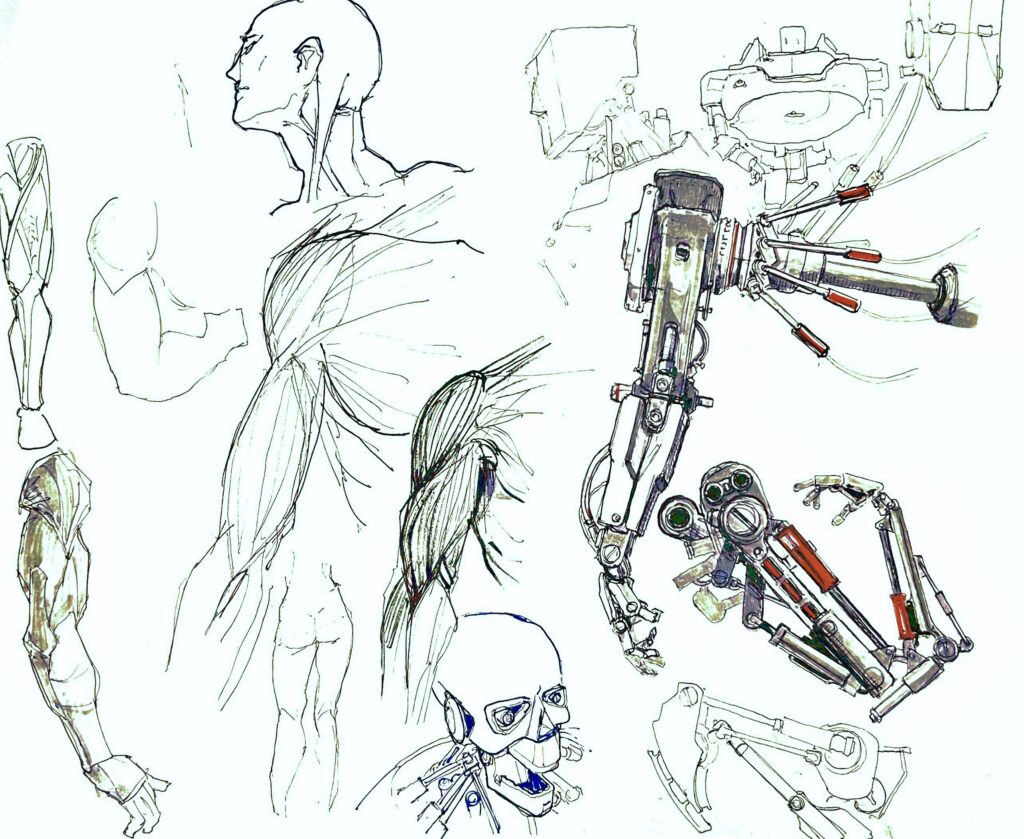
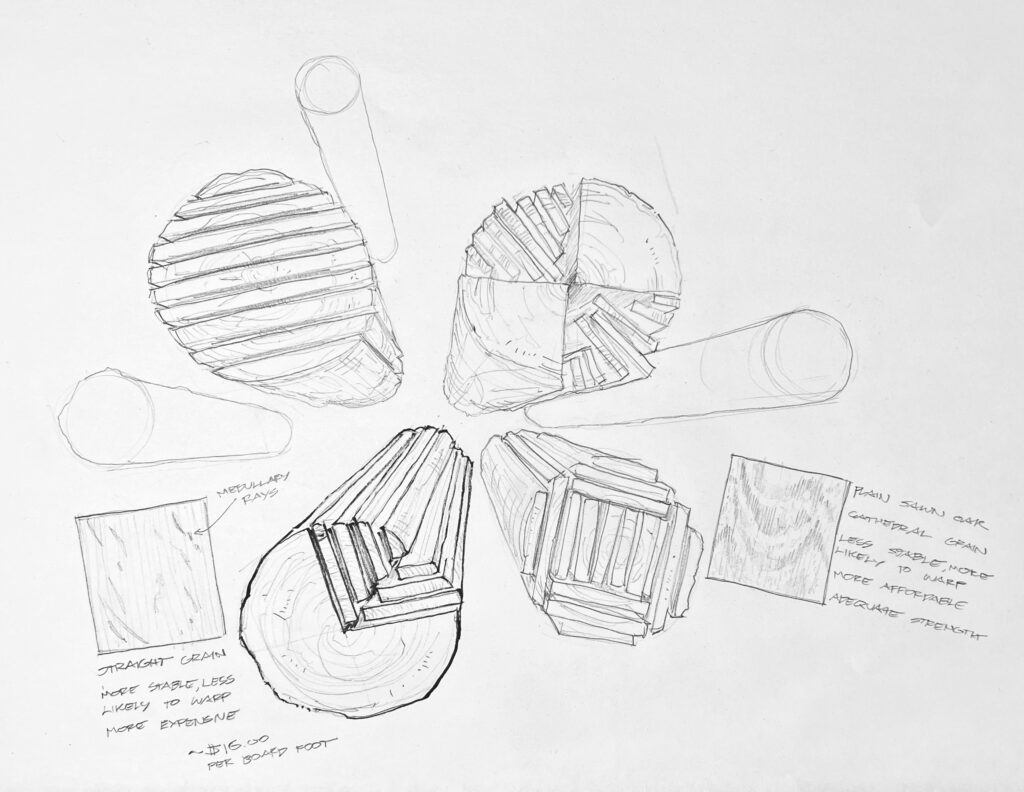
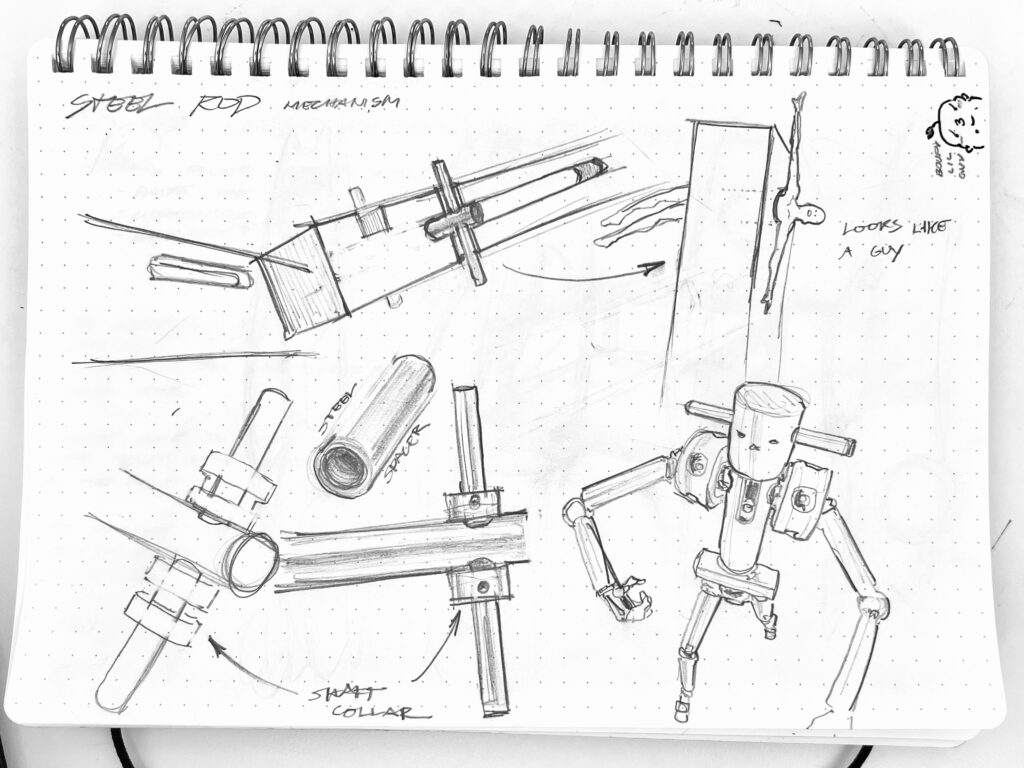
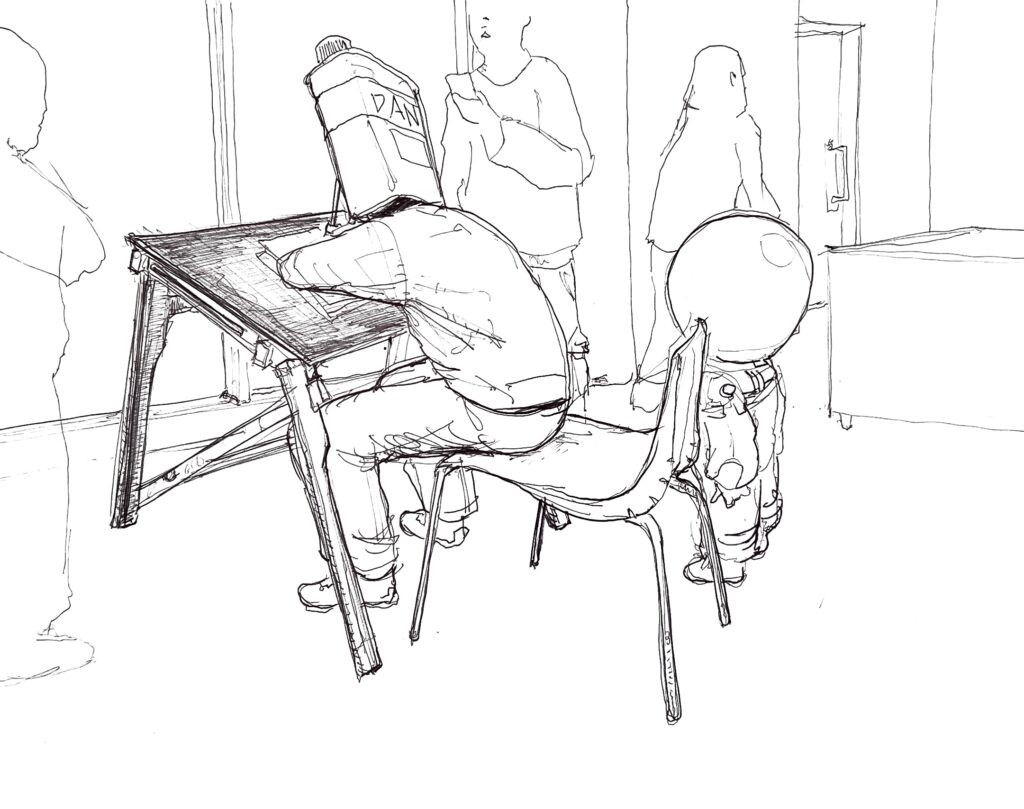
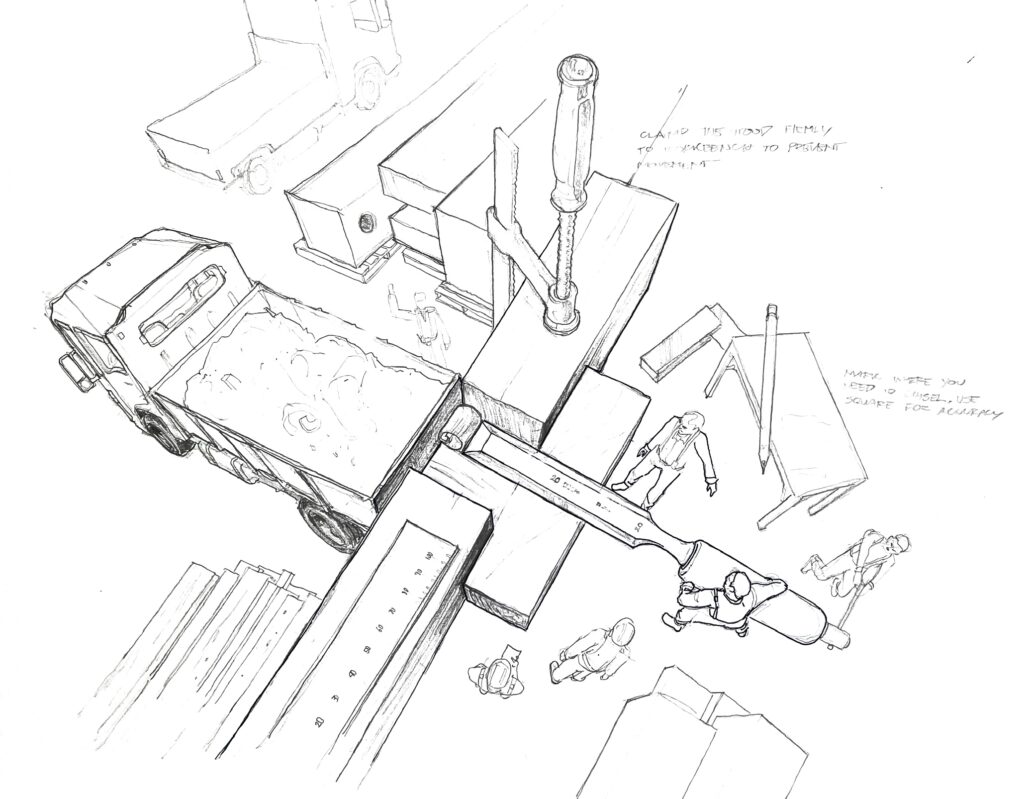
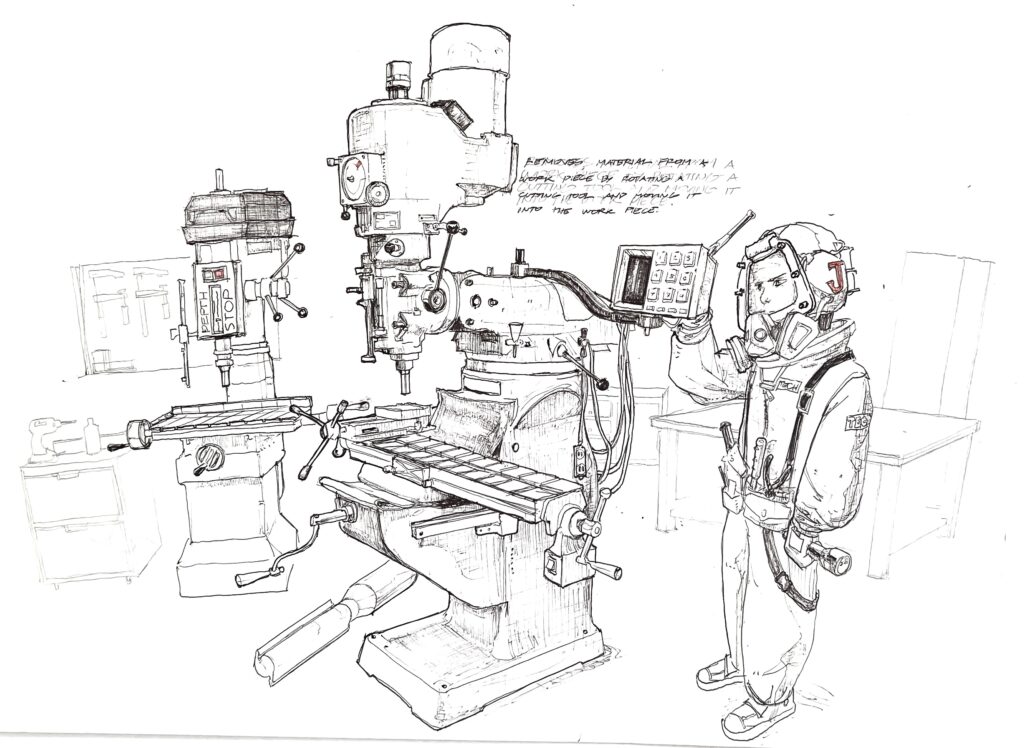
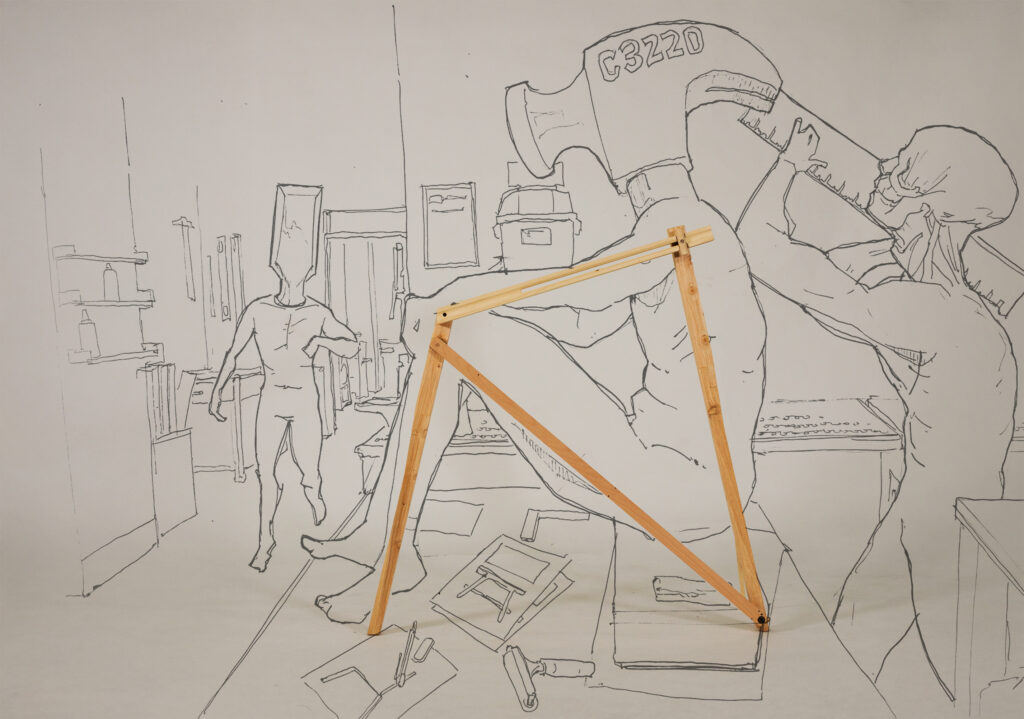
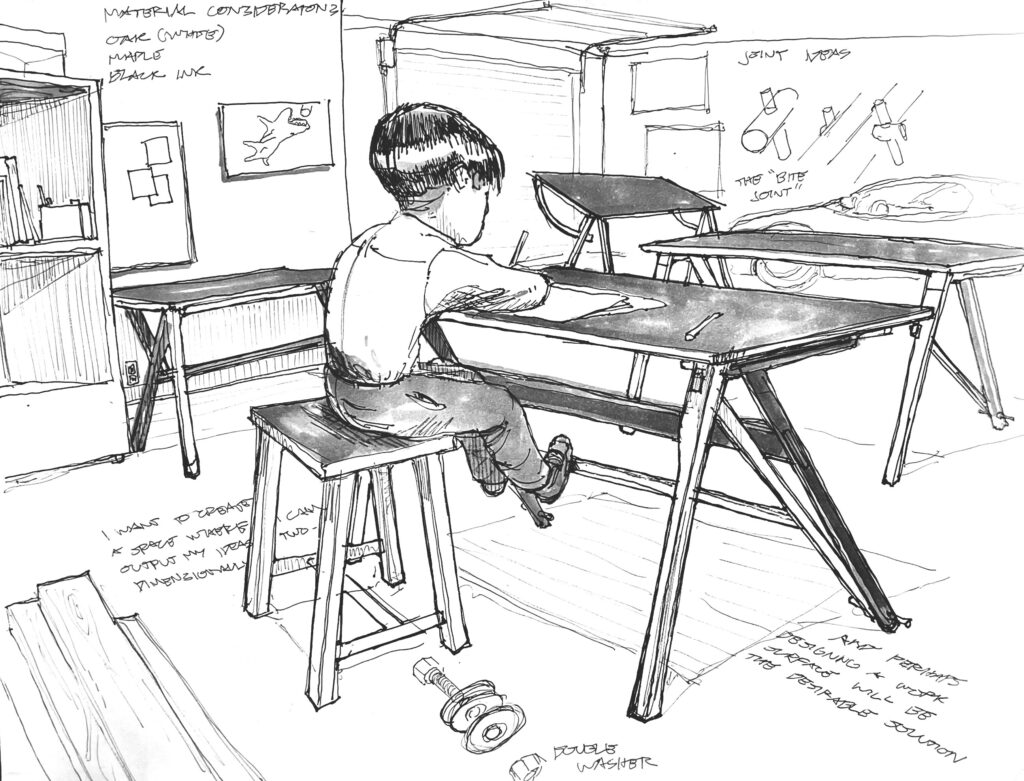
Throughout the making of the table, I found myself sketching the very machines and tools that shaped it. The table saw, the chisels, even the clamps that held the pieces together.
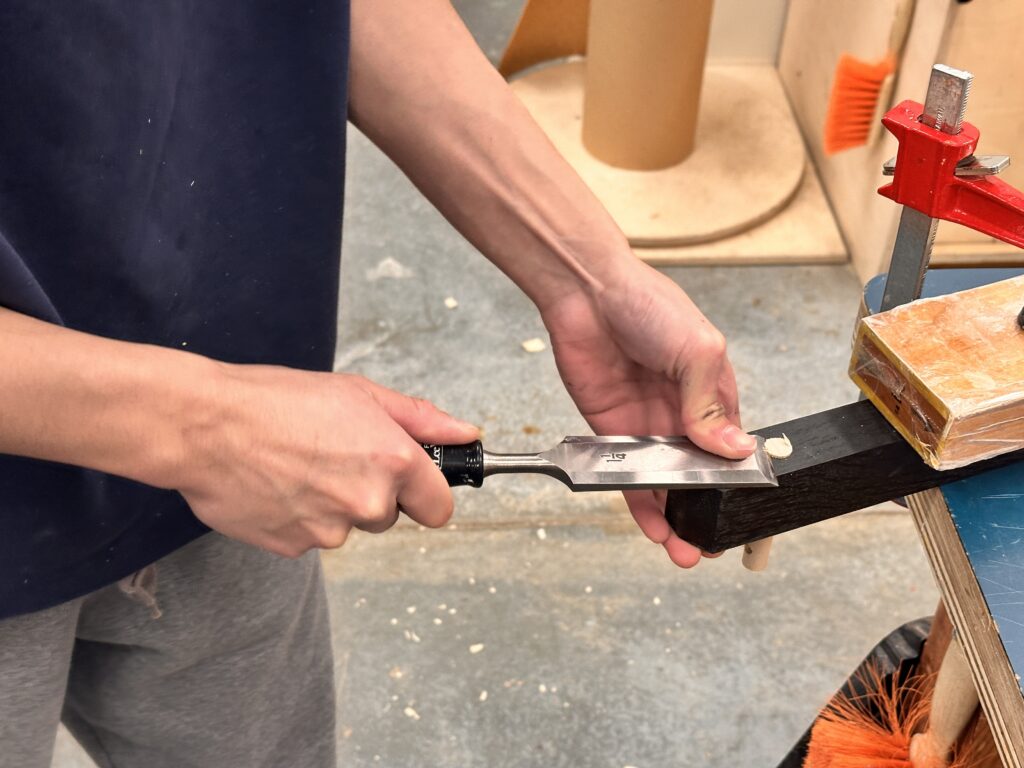
At first, it was just references to improve my visual library, but as I went on, it helped me understand how each tool contributed to building the table. Without really planning it, I ended up with a good amount of visual records of the process.
In a way, building the table taught me to see sketching differently. It wasn’t just a step in the design process – it became a companion to the making itself. I found myself constantly observing my surroundings, not out of habit, but out of curiosity. I wanted to understand the tools, to explore the joinery, and to capture the moments when a challenge turned into a solution
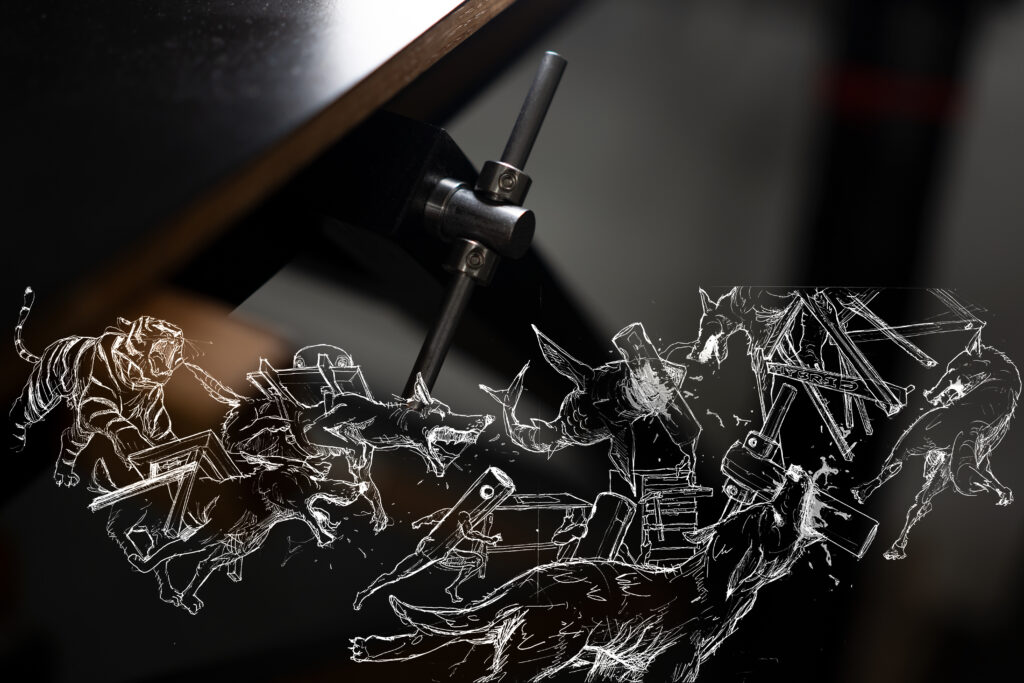
Inkline is a workspace that brings together both sides of how I think – not separating the designer from the artist, but letting them work as one. It’s a space where sketches turn into structures, and ideas flow naturally between the hand and the mind.
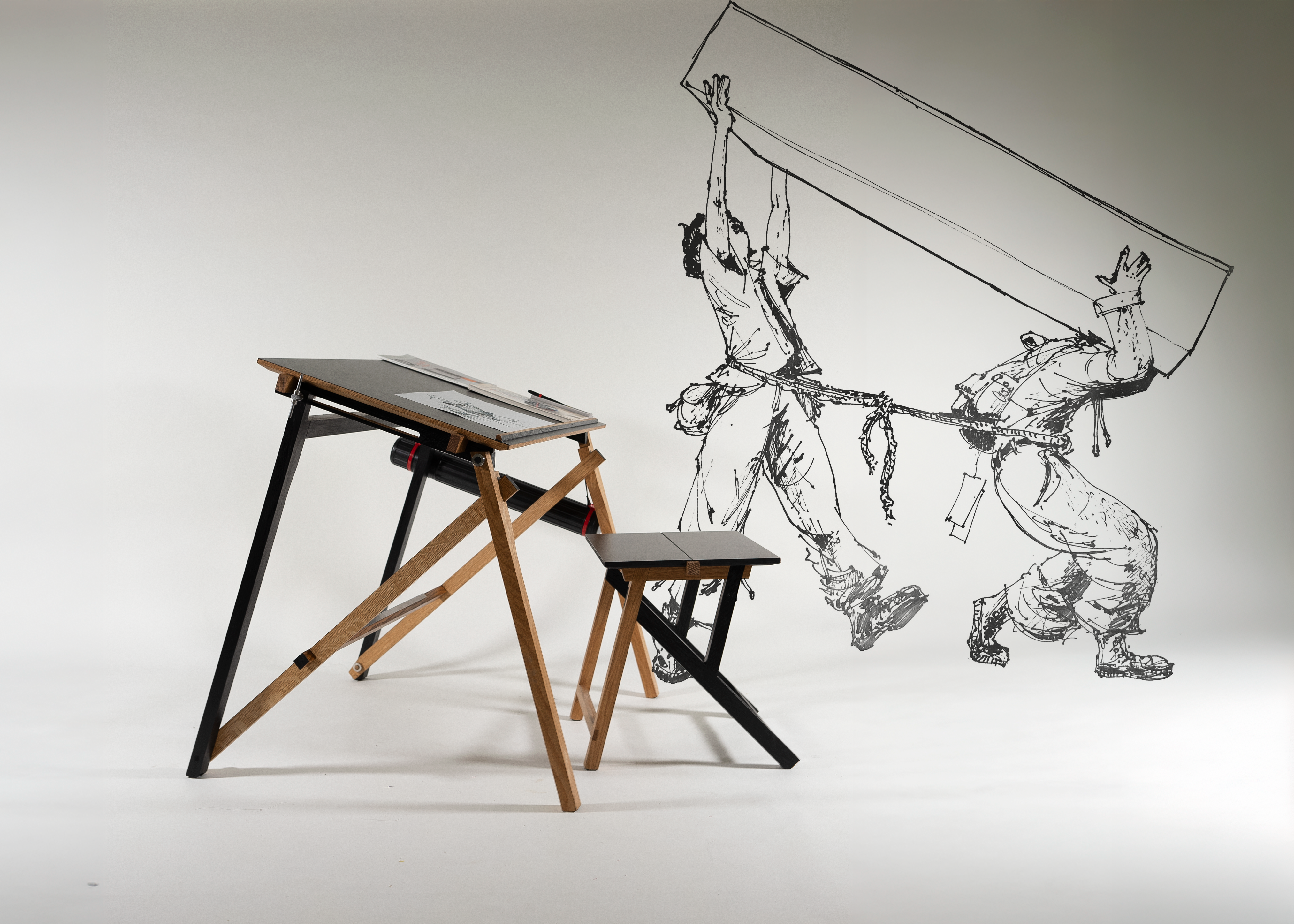
A project that’s mine
Link is the project where I finally resolved the internal conflict I’ve always felt between illustration and design. I used to see them as separate worlds, one driven by emotion and spontaneity, the other by structure and precision. I often felt like I had to choose between them. But as I set out to design a creative workspace, I let go of overthinking and started drawing freely, and that’s when everything shifted. My sketches began guiding the form and function of the piece, even leading to unexpected solutions, like a playful doodle that became a locking mechanism. Drawing became more than just a planning tool; it helped me understand my materials, my process, and myself. In the end, Link isn’t just a finished object, it’s a turning point. A moment where the artist and designer in me began to work together, not in conflict, but in conversation.