A Labour of Agape
Sarah Massé
See it On Campus: Level 1
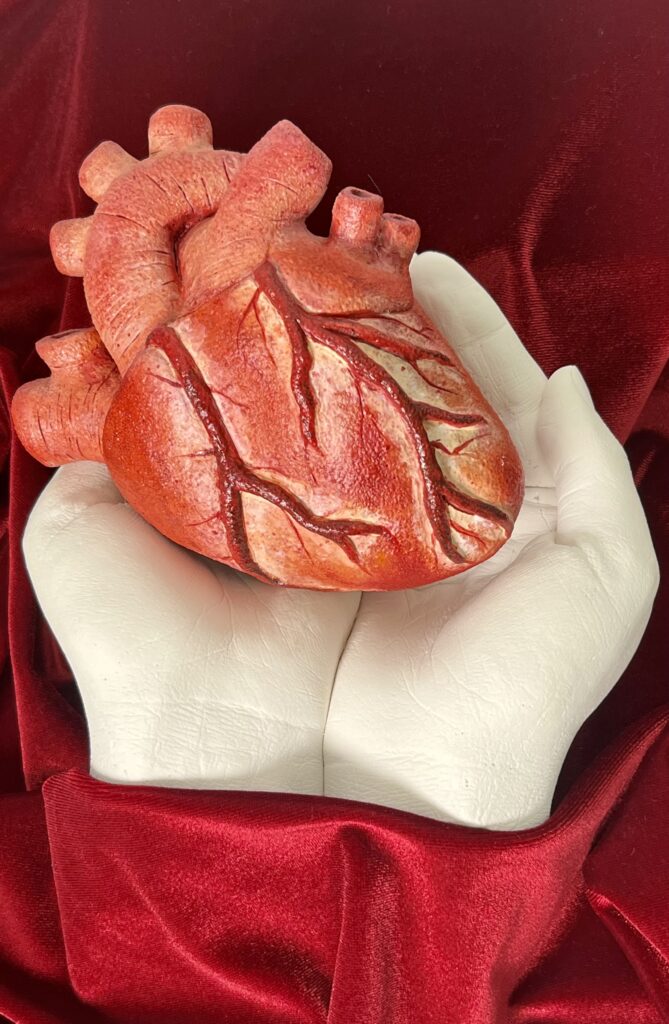
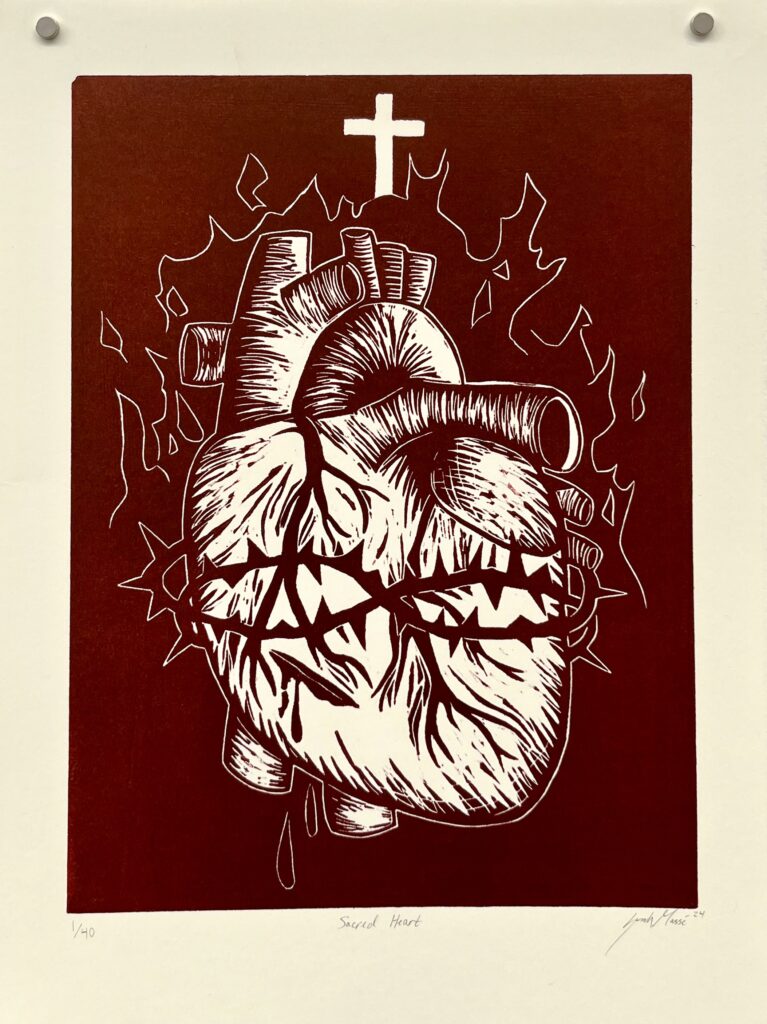
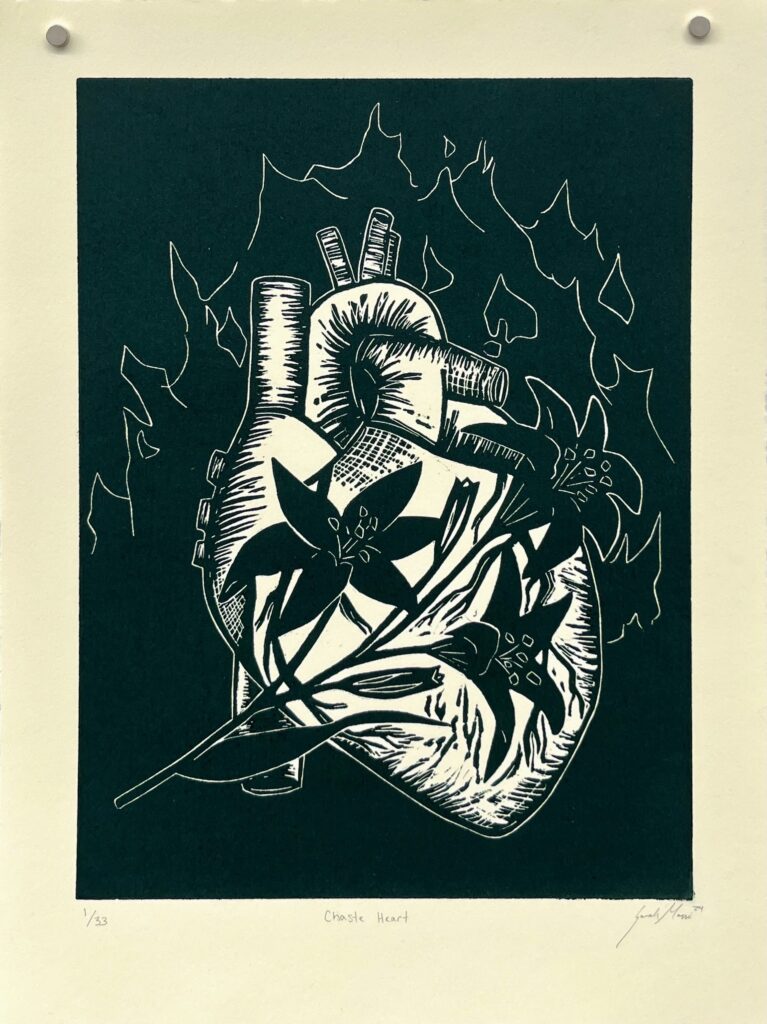
Relief prints on Stonehenge, carved linoleum, plaster, ceramic, acrylic paint, velvet
Artist Statement
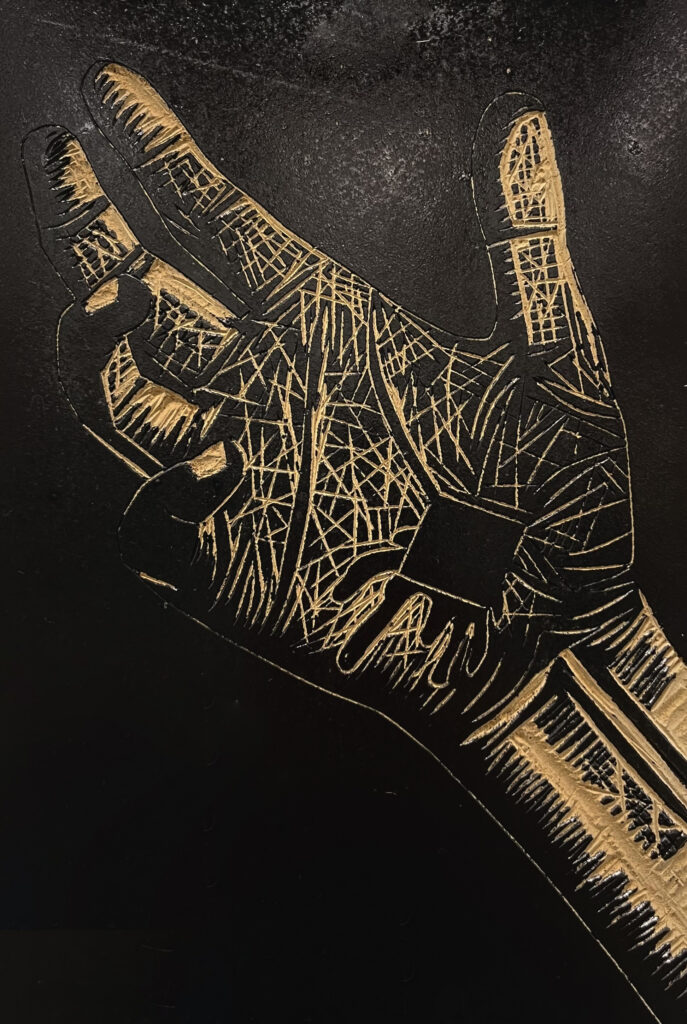
Sarah’s work is an expression of faith, a way to glorify God while witnessing to others. The act of creating, and the labour and processes involved, are viewed by the artist as a form of prayer. She hopes her work allows for questions and dialogues for people curious about Christianity and Catholicism, while also serving as aids to prayer. Inspired by ‘Visio Divina,’ or Divine Seeing, Sarah’s religiously inspired art can be used for meditation, to help people enter into prayer with the use of visuals. She is a mixed-media artist who primarily works in sculpture and printmaking. With a rich history of art within the Catholic Church, Sarah views all art forms as holding the potential to be directed toward God. She is drawn to relief printing for the meditative and expressive process of carving. Sarah is also drawn to natural materials and ceramics, as a reminder of her humanity; Gen 3:19 “From dust you were born, and to dust you shall return.” A Labour of Agape is a plaster cast sculpture of the artist’s hands offering up a ceramic heart. This is directed toward a relief print of the Sacred Heart of Jesus. Devotion to the Sacred Heart of Jesus was established in about 1672, when Jesus appeared to St. Margaret Mary Alacoque on several occasions, asking for His heart to be honoured. Placed on a long plinth, the work is reminiscent of an altar. This piece draws reference from a prayer during Holy Mass when the congregation is called to ‘lift their hearts to the Lord.’ We are called to leave our earthly worries behind as we spend time in worship. The prints depict traditional devotions to the Holy Family: Jesus, Mary and Joseph. These symbols have been rendered with anatomical human hearts, a symbol for living and active faith. Sarah unconventionally displays the carved linoleum with the final piece to highlight the importance of process in my work. Born and raised Catholic, faith is integral to Sarah, informing her creative process.
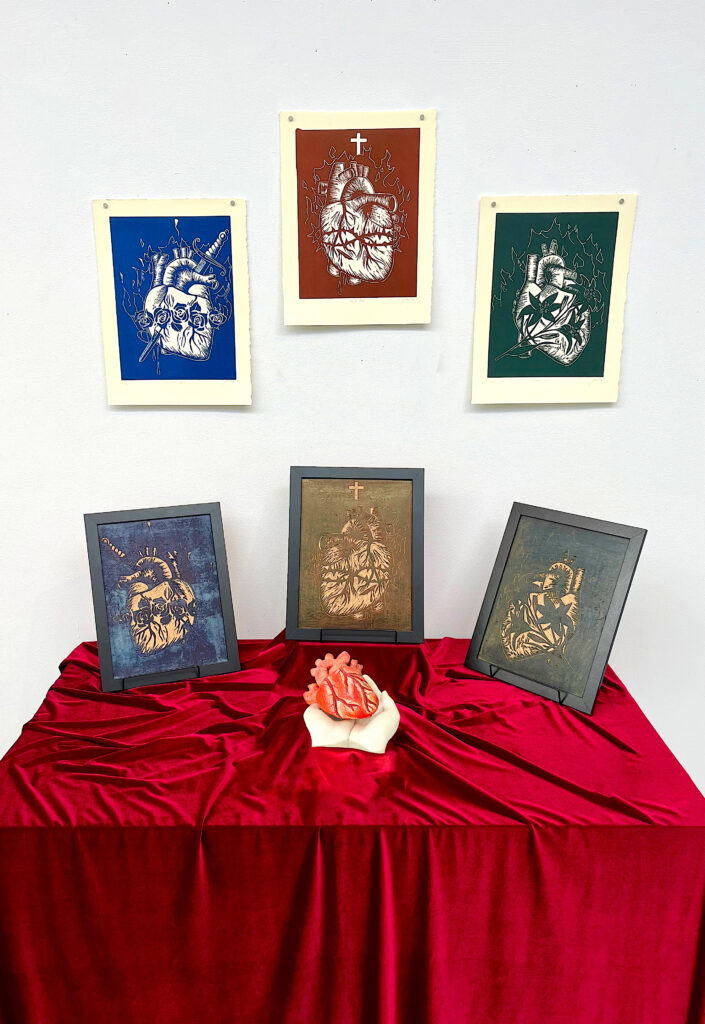
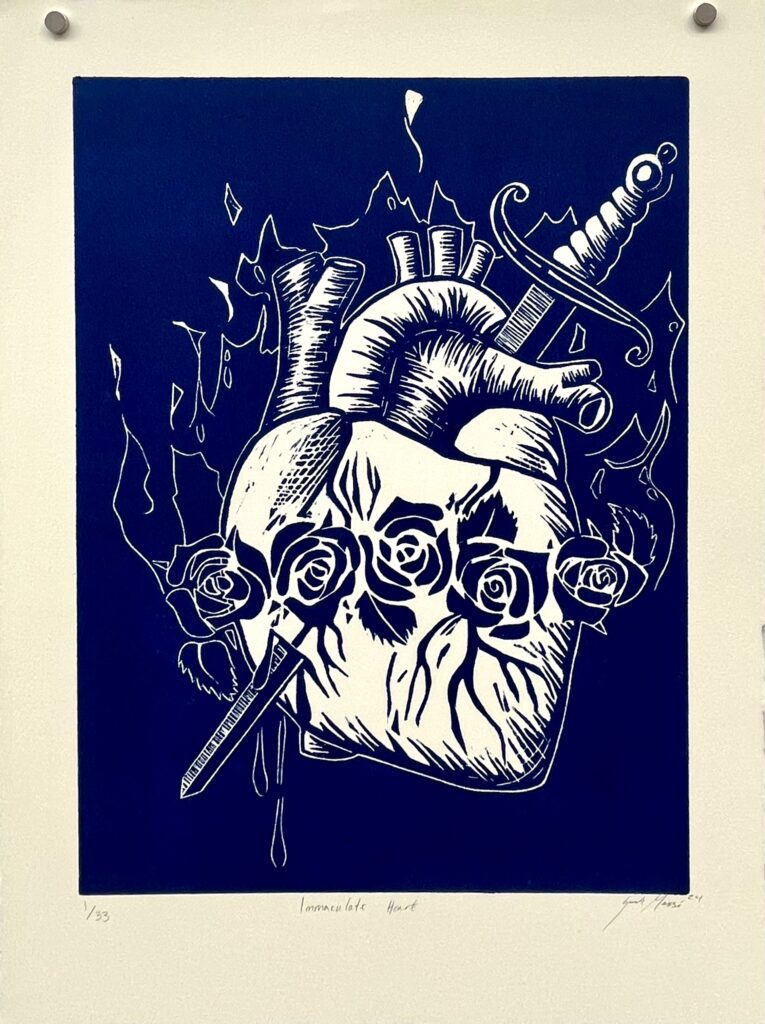
“Immaculate Heart of Mary,” 1/33 11″X15″
“Sacred Heart of Jesus,” 1/40 11″X15″
“Chaste Heart of St. Joseph,” 1/33 11″X15″
Other Works
Baptismal Gown: Psalm 51:2
Cotton, lace, ribbon, charcoal, rope, clothespins
19”x15”

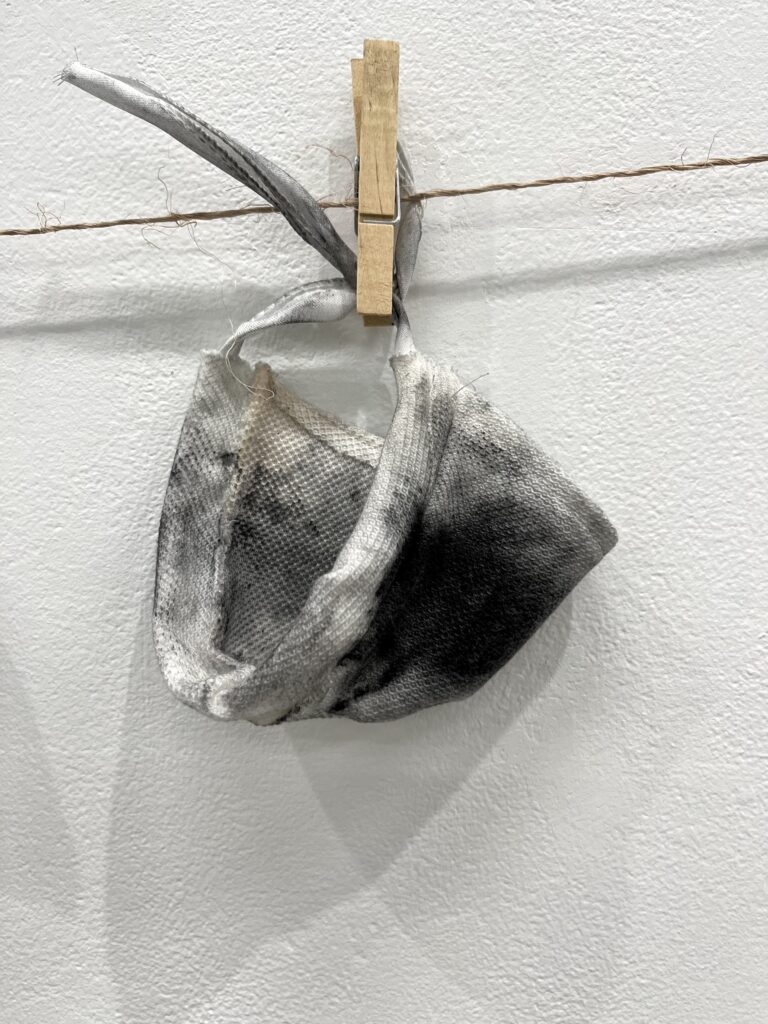
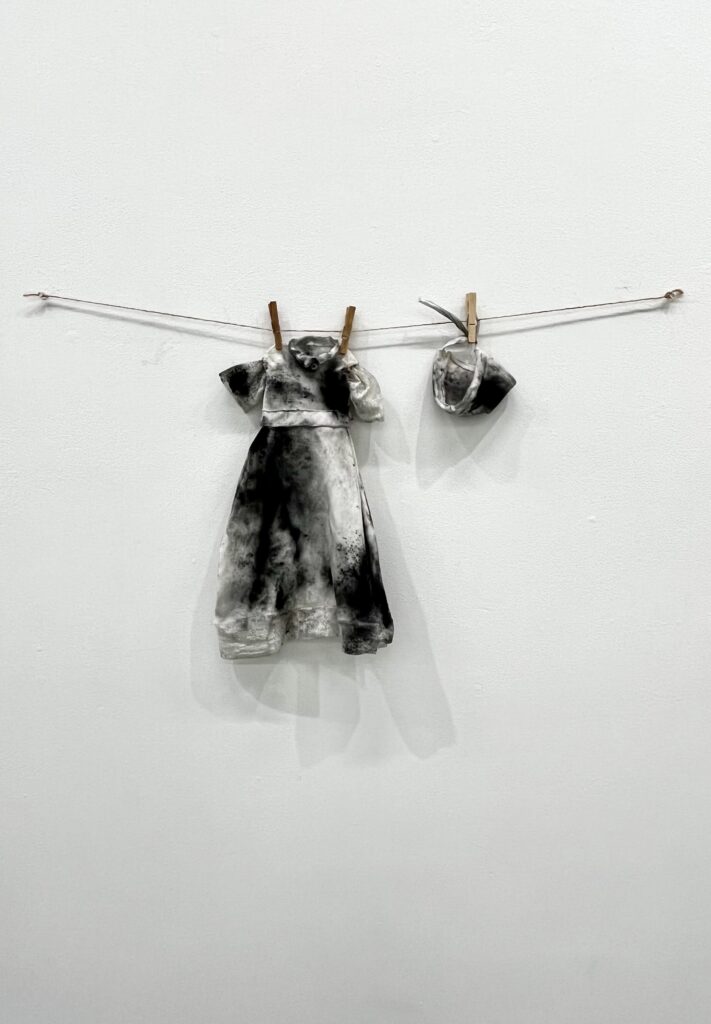
During this season of Lent in the Catholic liturgical calendar, I became inspired by a prayer during Stations of the Cross, a devotional which contains 14 images of Jesus’ Passion:
My beloved Jesus, Your face was beautiful before You began this journey; but now, it no longer appears beautiful and is disfigured with wounds and blood. Alas, my soul also was once beautiful when it received Your grace in Baptism; but I have since disfigured it with my sins. You alone, my Redeemer, can restore it to its former beauty. Do this by the merits of Your passion; and then do with me as You will.
I continue developing the concept of process and labour in art as a form of prayer, with the results used for reflection and visio divina. I wanted to depict a dirty baptismal gown to represent the effects of sin on the soul. Part of baptism means becoming adopted children of God. This beautiful gift is squandered and rejected through sin, marring our once beautiful souls. However, as perfect justice and perfect mercy, Jesus came to free us from sin and death, paying the price for our sins. I have displayed the gown with clothes pins to allude to washing and cleaning, a call of hope in God’s eternal mercy. Like the gown, our souls can be returned to their blemishless states. I was also reflecting on the following Bible verse, a prayer of repentance and return to God:
Psalm 51: 2 Wash me, O Lord, from my iniquity and cleanse me from my sin.
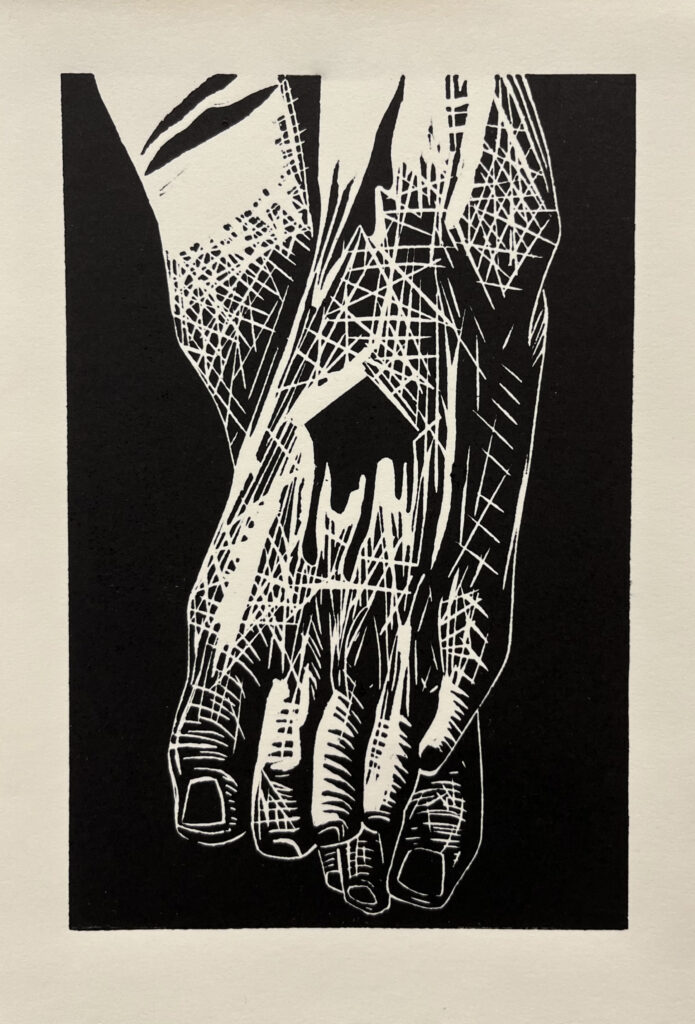
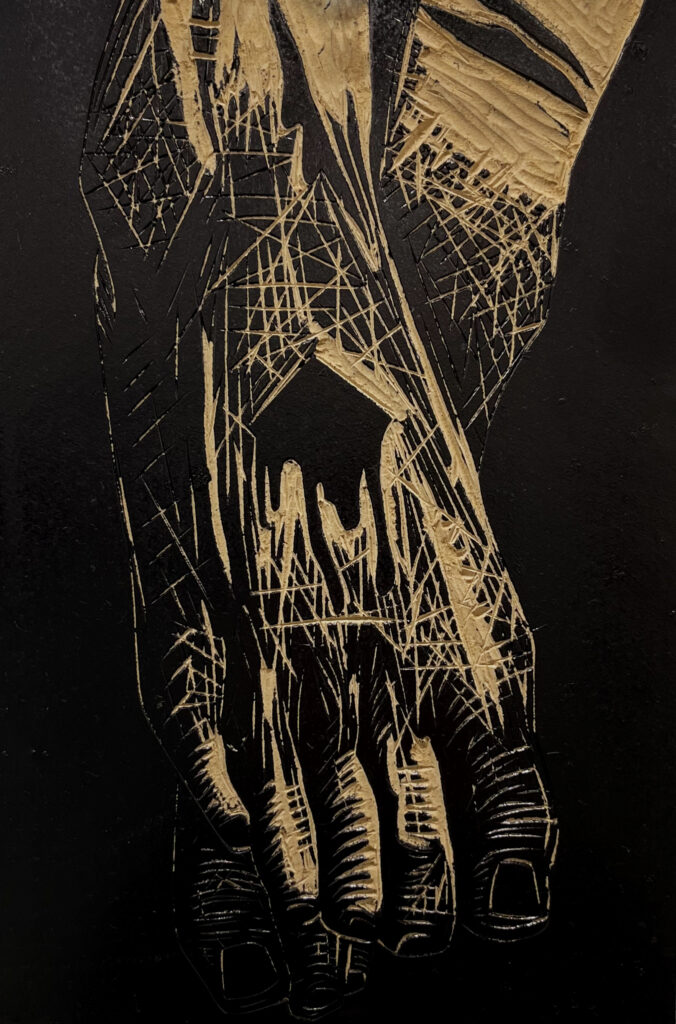
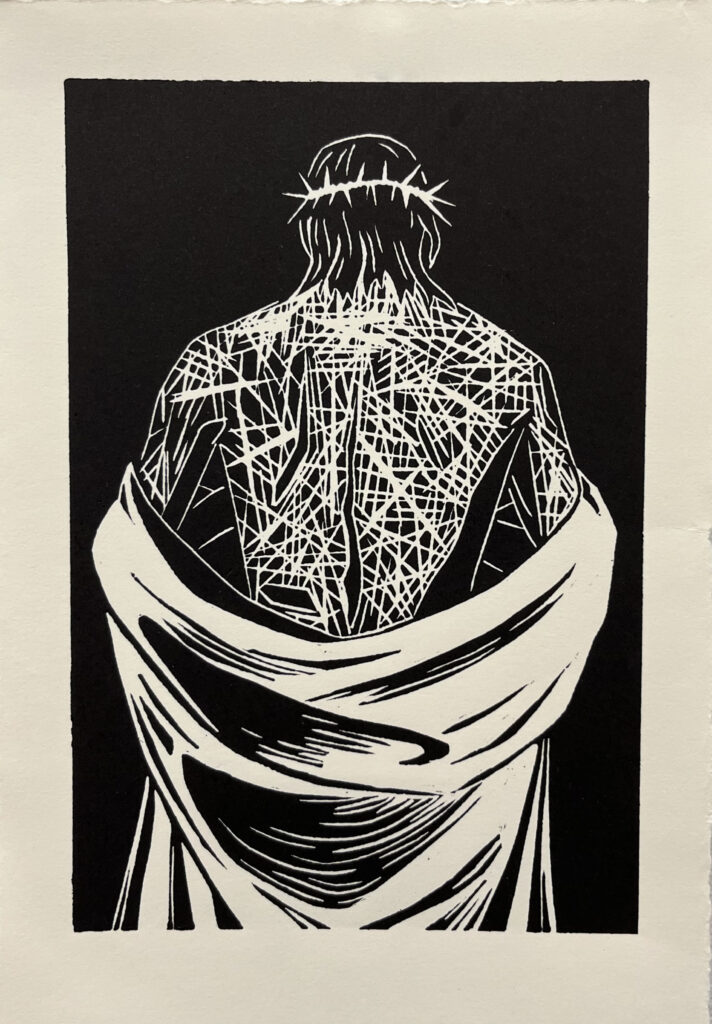
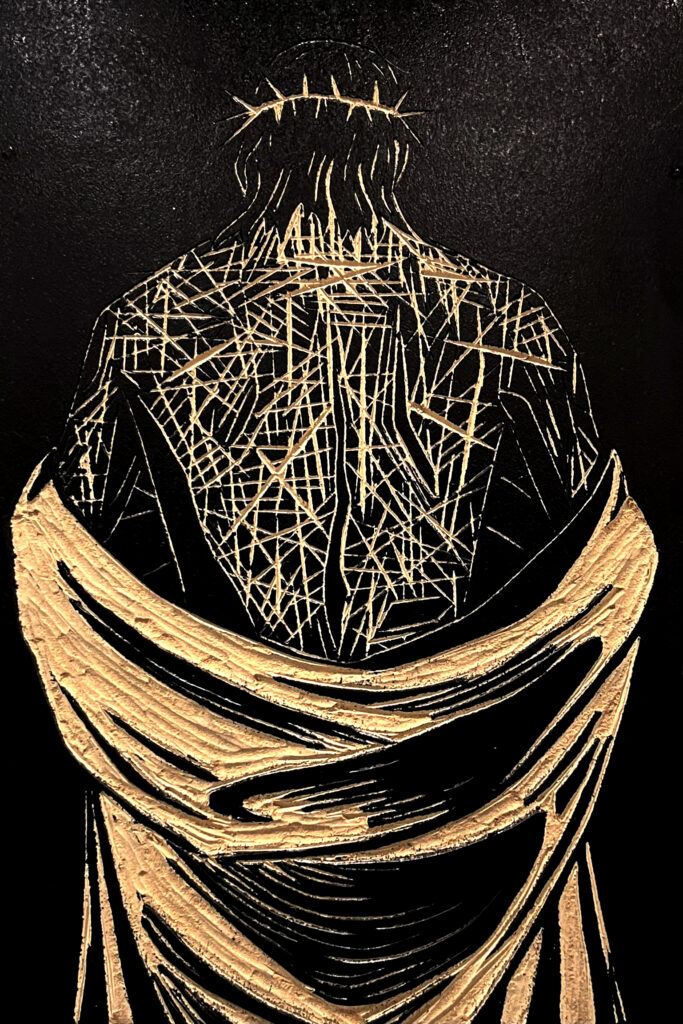
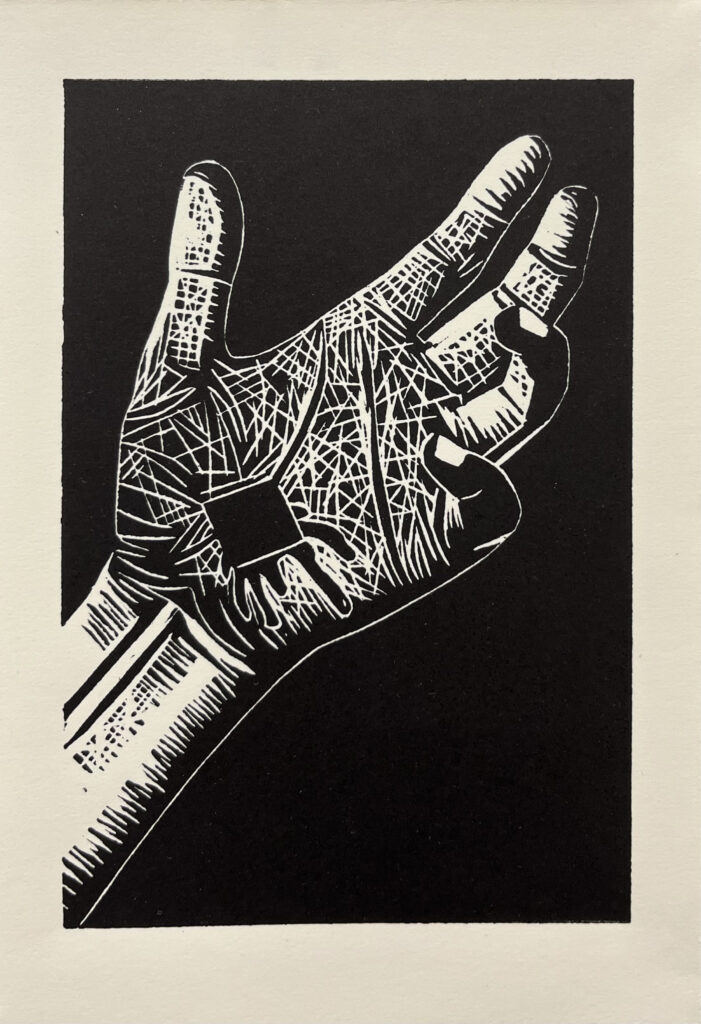
By His Stripes we are Healed
Relief prints on Stonehenge, 7.5″X11″
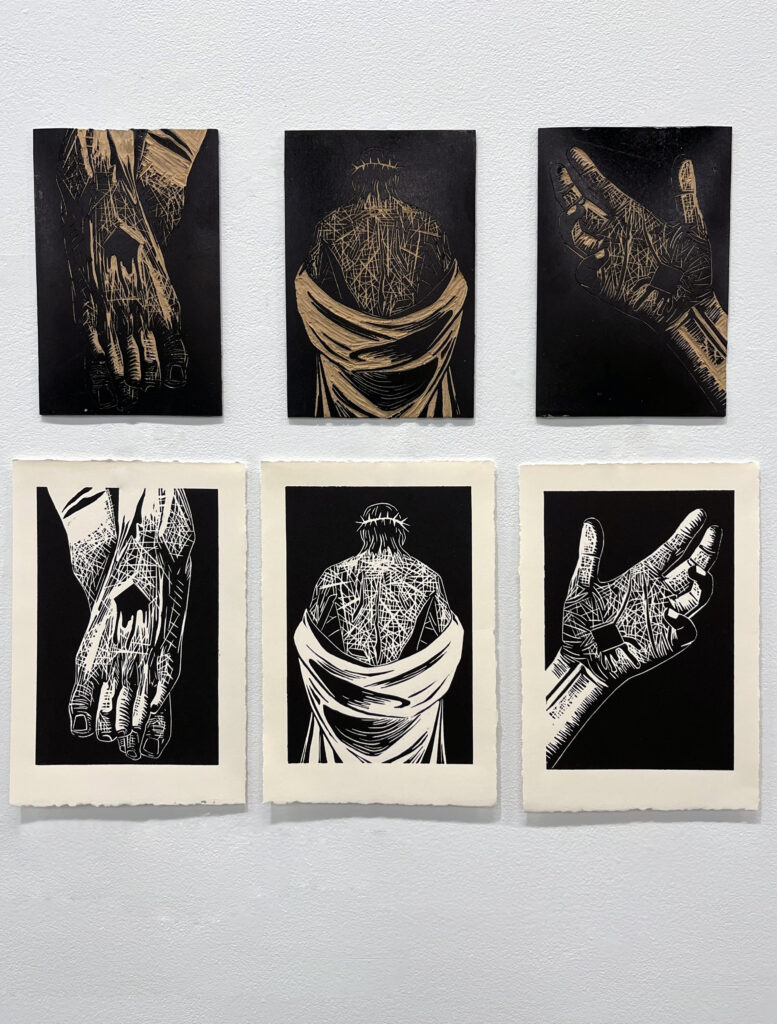
These three linoleum relief prints depict different snapshots from the Passion and crucifixion of Jesus Christ. I chose linocut prints for this subject because, as a Christian, I believe Christ died for our sins, restoring our relationship with Him and paving the way to heaven. Physically carving the wounds of Jesus is a moment for reflection, an action that can be violent, thinking about the effects of sin, the price of my personal sin, which Jesus took on.
Isaiah 53:5 “But He was wounded for our transgressions, He was bruised for our iniquities; The chastisement for our peace was upon Him, And by His stripes we are healed.”
Shroud
Etching on ARCHES Rives BFK – 250gsm
6.5”x9.5”
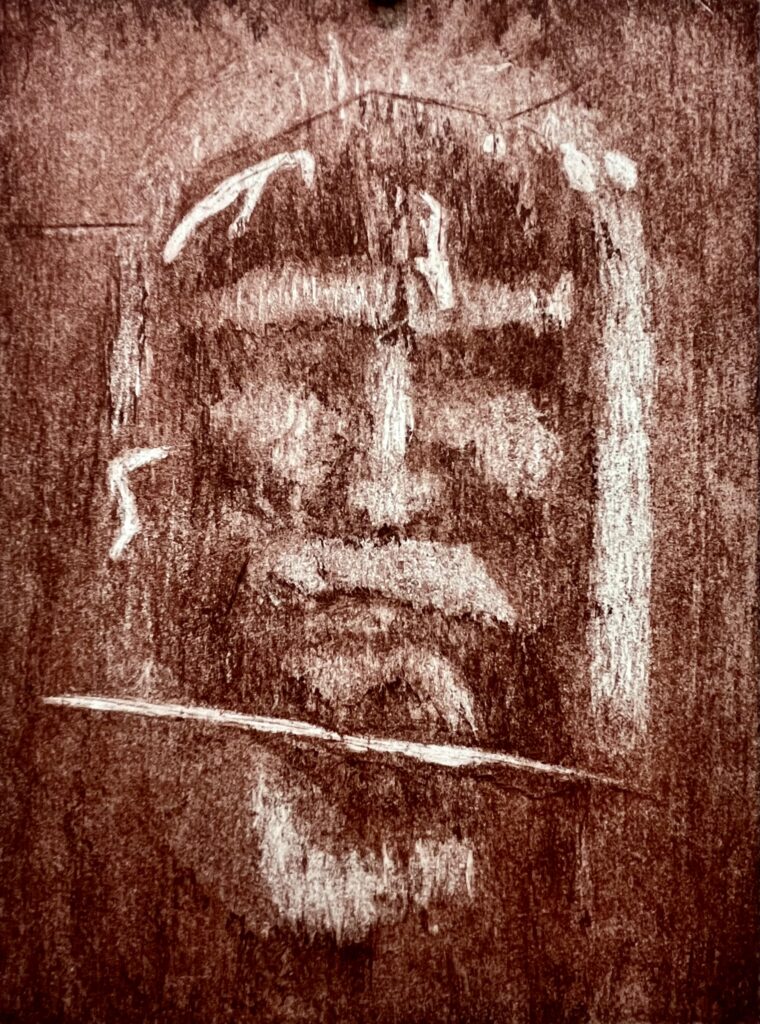
This work is interested in bodily imprinting. Etching allows for the hazy, ambiguous quality I wanted to achieve. This references the original inspiration, the Shroud of Turin, the alleged burial cloth of Christ. Many believe that this burial cloth miraculously has the image of Christ’s body imprinted on it and is revered as a symbol of His Resurrection. The hazy quality and the brownish-red ink also resemble the imprinted bloodied face of Jesus on St. Veronica’s veil. She offered Him this veil to wipe His face as He was carrying the cross. In addition to these traditional references, the ambiguity of the portrait shows reverence when depicting God. This could allow people to more easily reflect and enter into prayer, with their respective images of what Jesus looks like to them. During the printing process, there is something beautiful and meditative about wiping away built-up ink to reveal the portrait’s features. I found myself honing in on an eye that formed, which wasn’t clearly planned out. Printmaking is a very physical process. I draw connections between Jesus’ face being imprinted in Veronica’s veil and the Shroud of Turin, and the physical act of pressing and wiping involved with printmaking.
Thank you to my family and friends, without whom this would not be possible.