The Death of a Family Garden
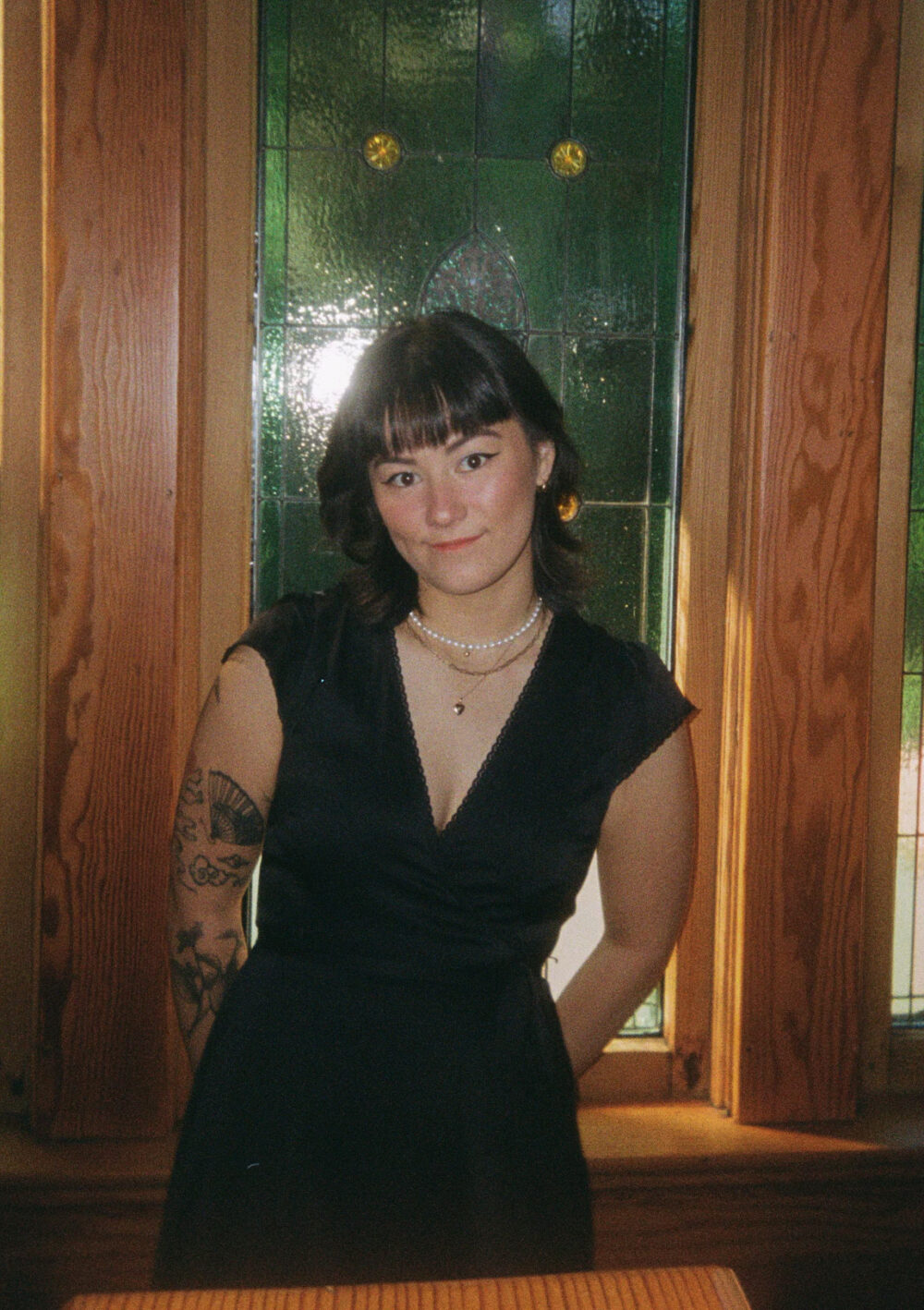
Maya Kamachi
See it On Campus: Level 1
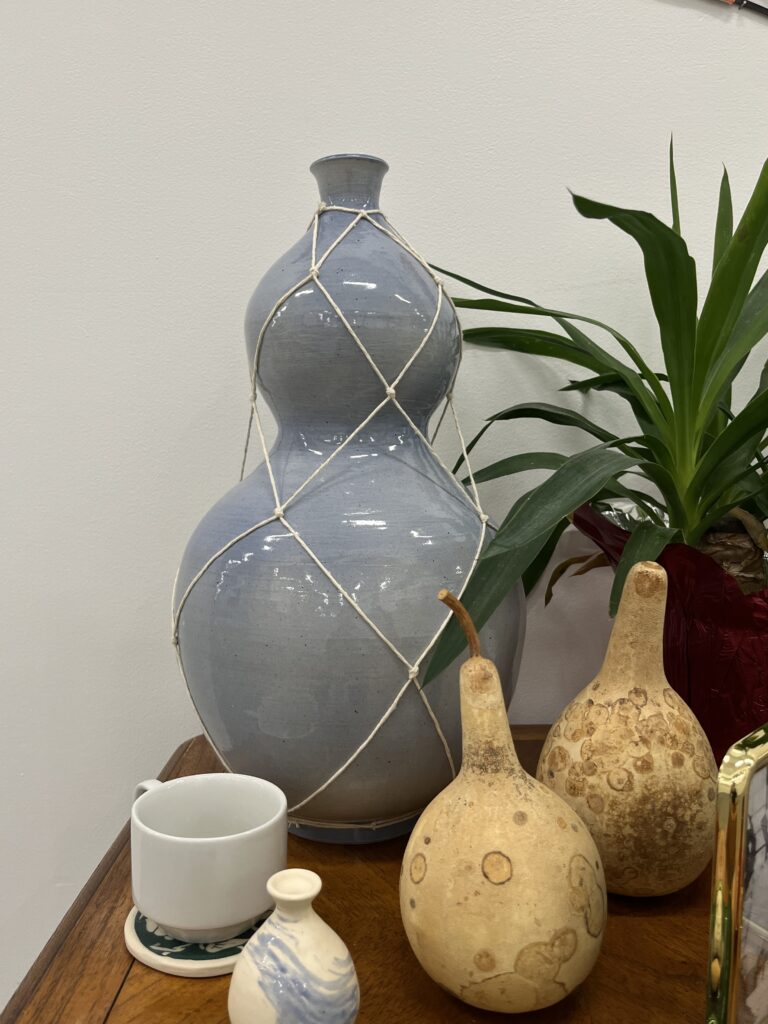
Hyotan bound by chain
For fear of floating away
Shikata ga nai
Let go, let the wind carry
You away into the sky
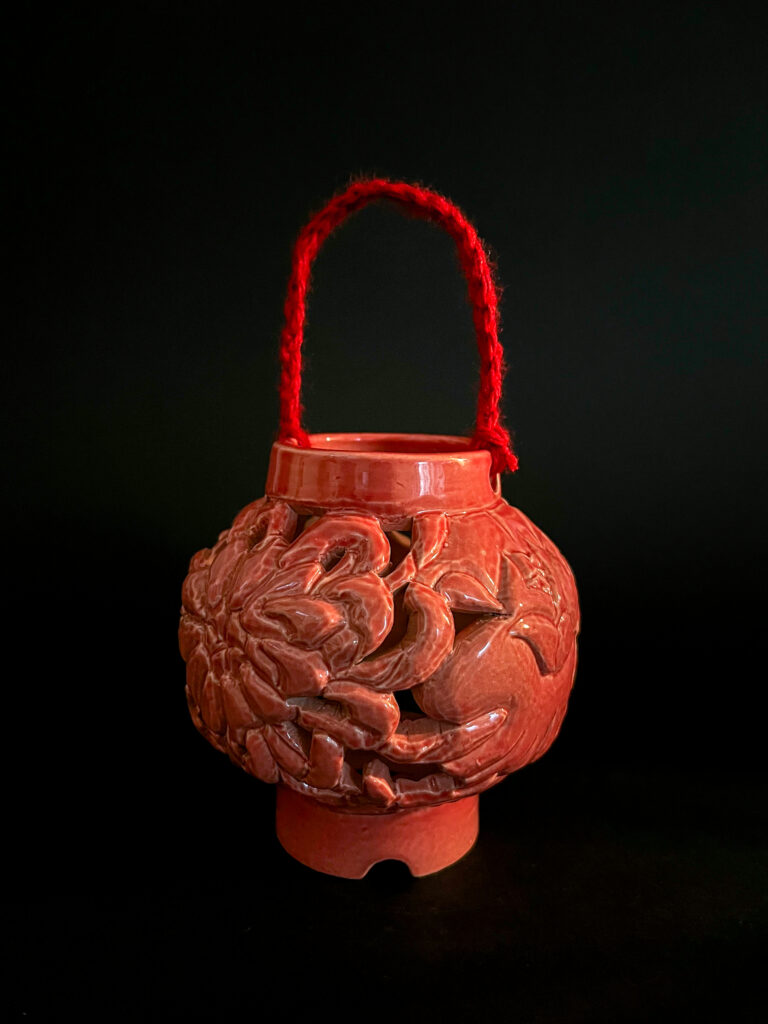
Who will tend to the family garden while we are in camps one hundred miles from home?
The Death of a Family Garden is a reflection upon the lasting impacts of the incarceration of Japanese Canadian families on the West Coast during WWII. The work is meant to spark discussion and the sharing of oral histories so they are not forgotten, and tether us to our ancestry and collective history.
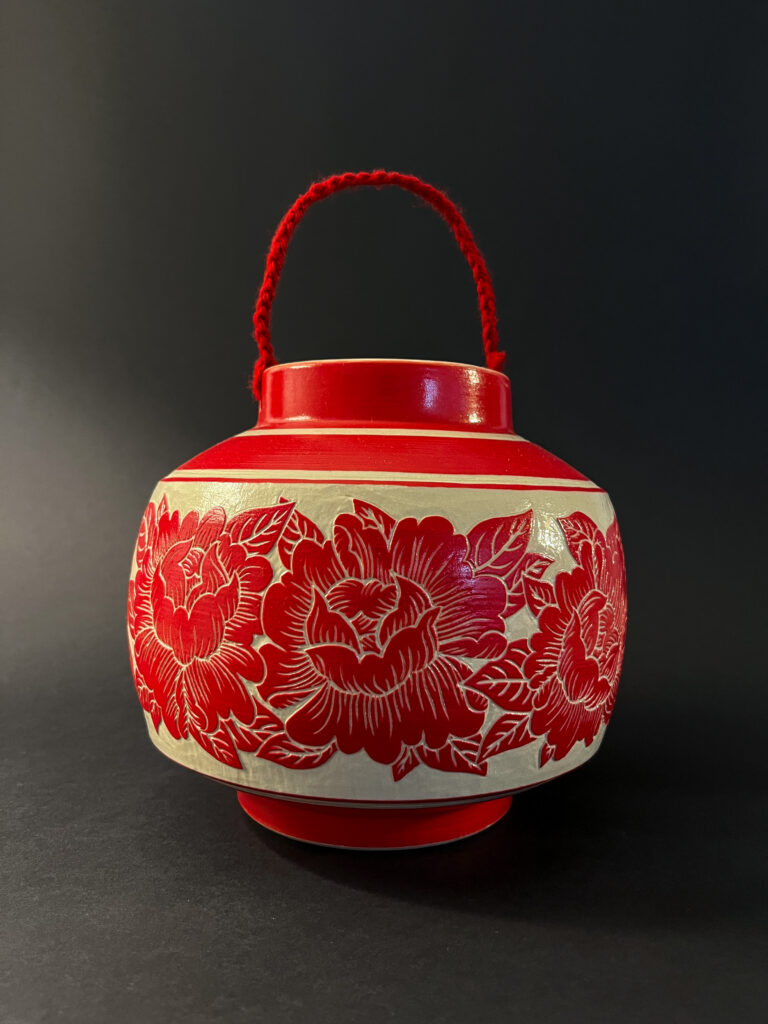
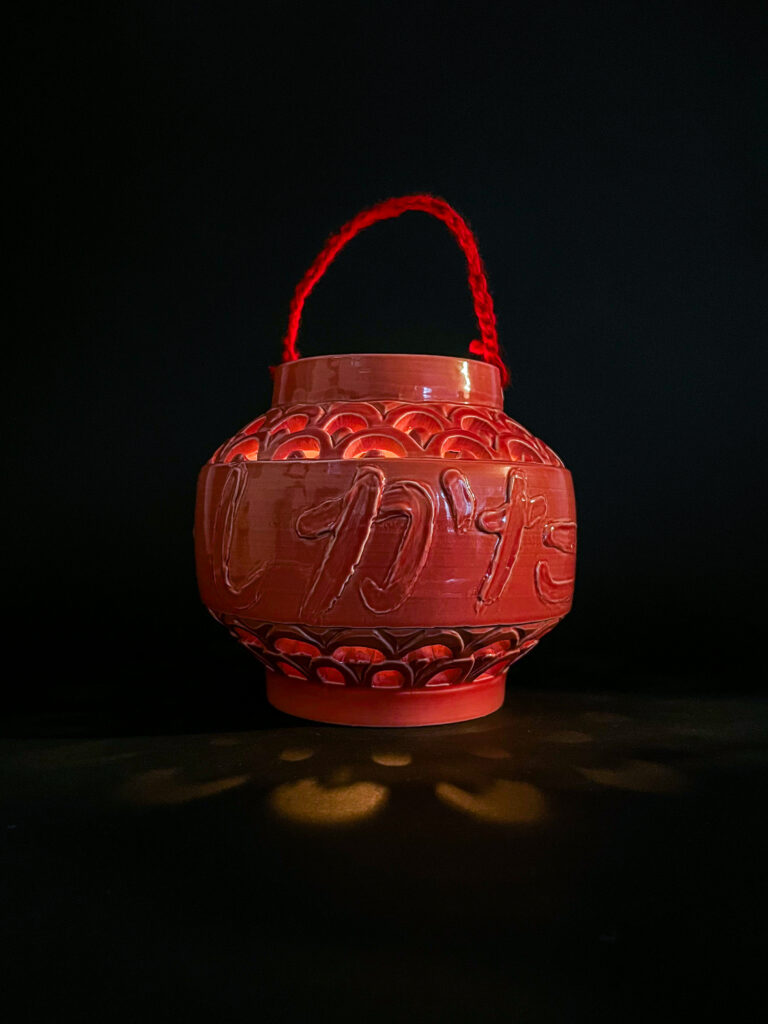
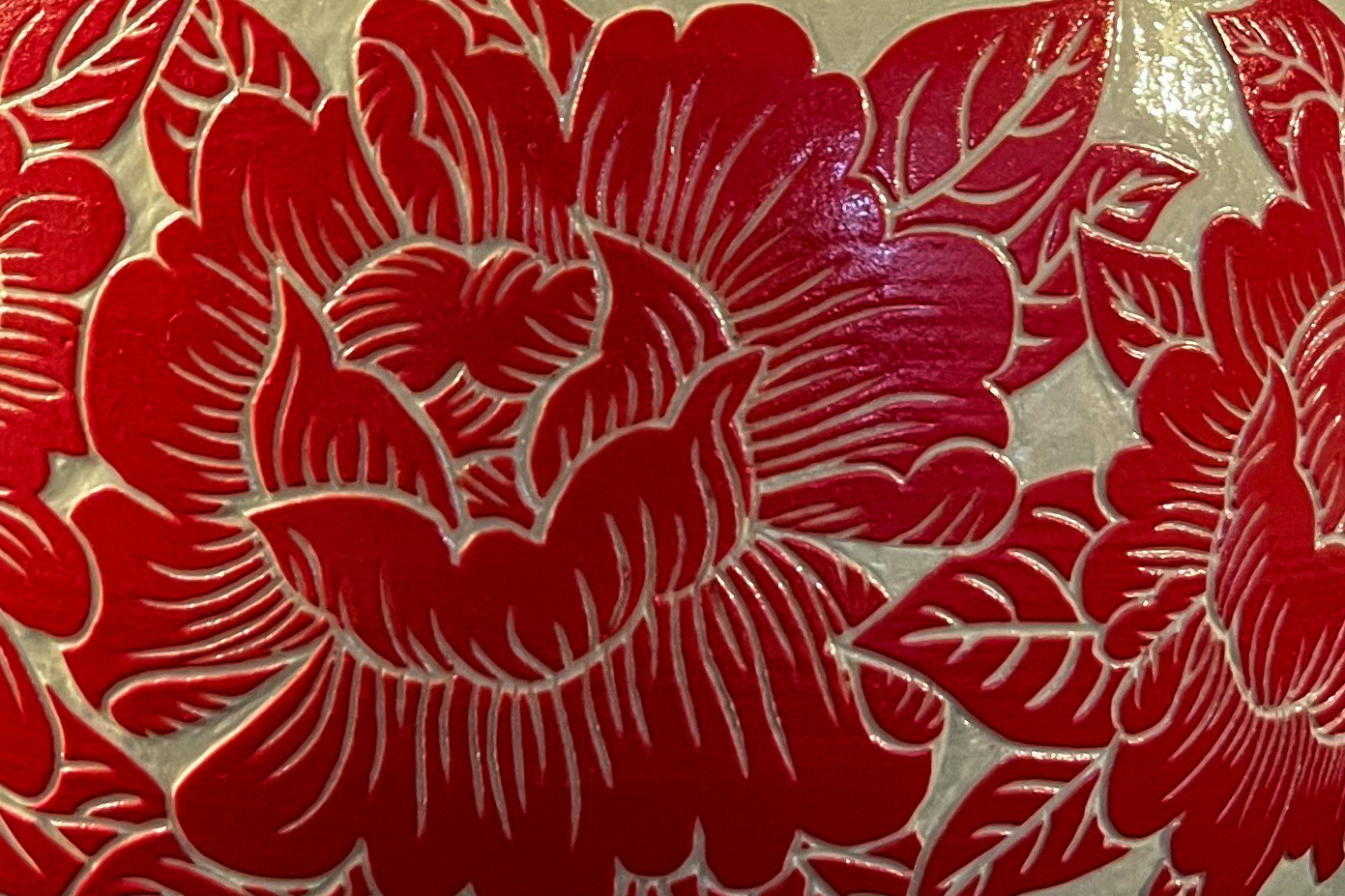
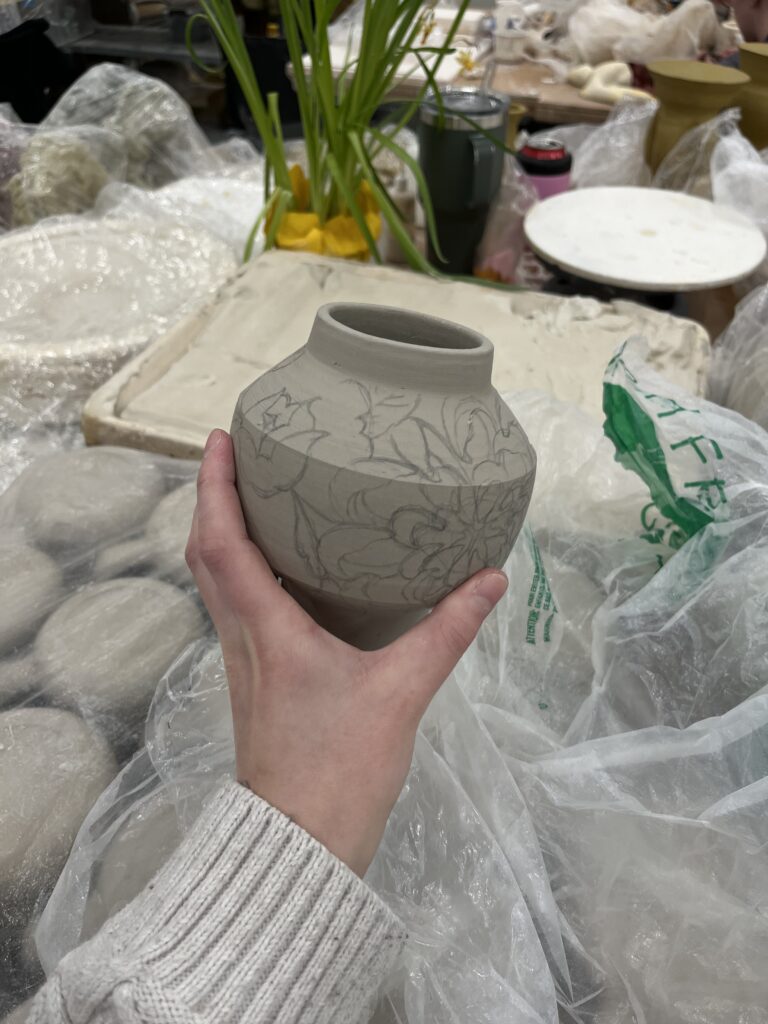
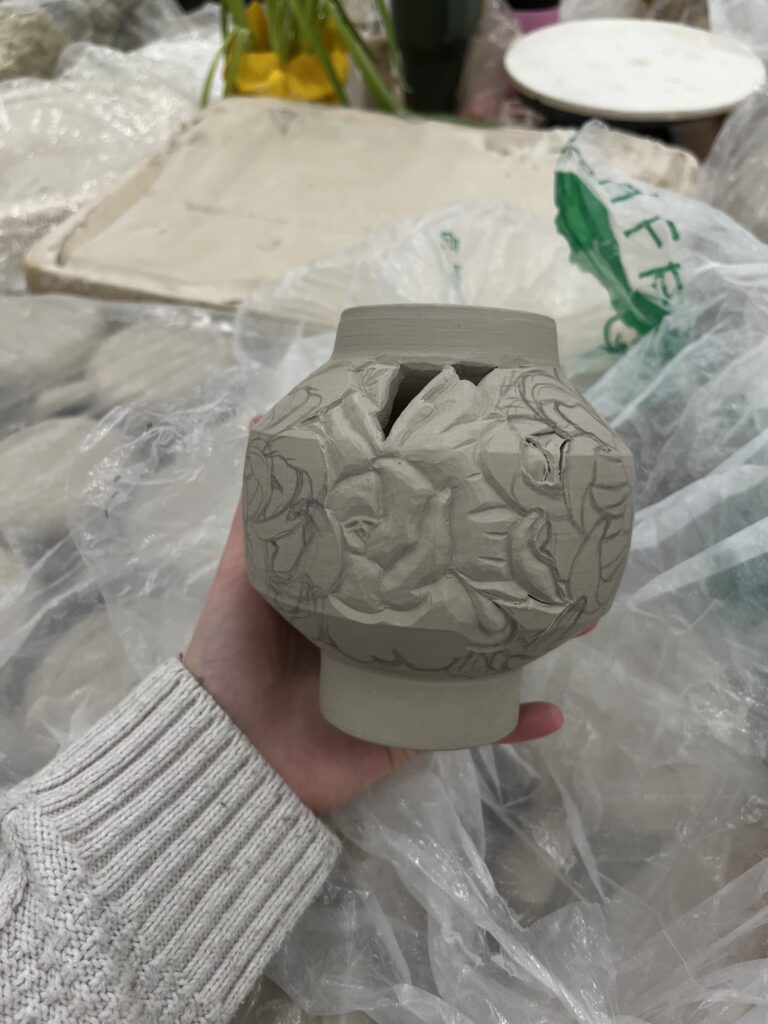
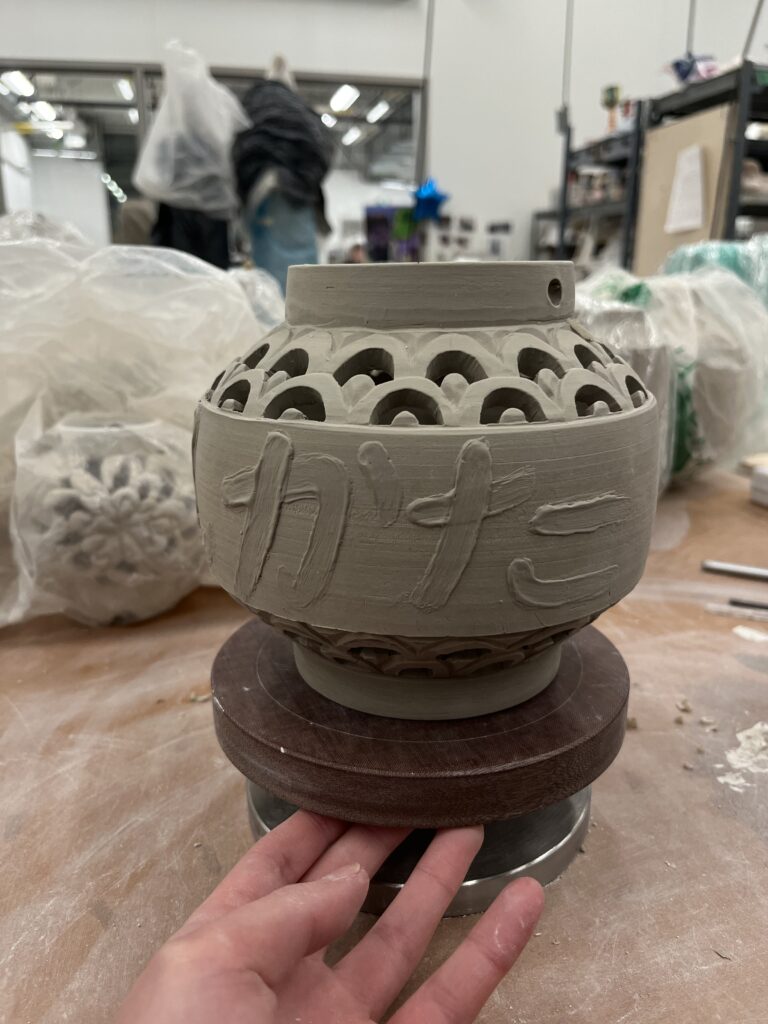
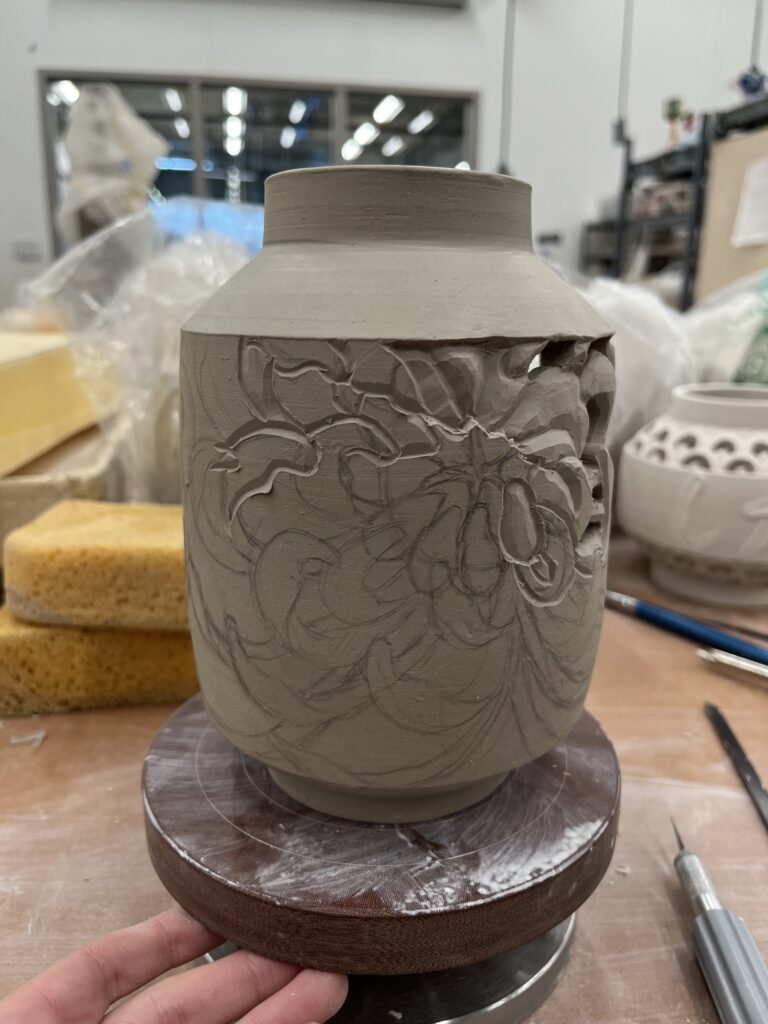
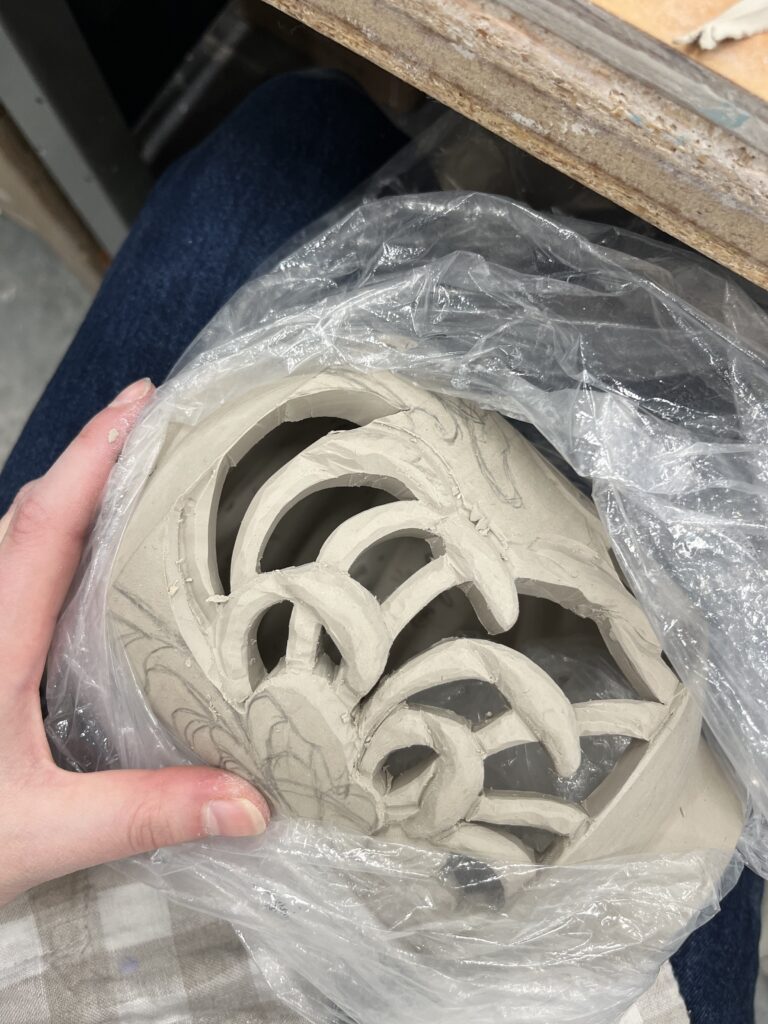
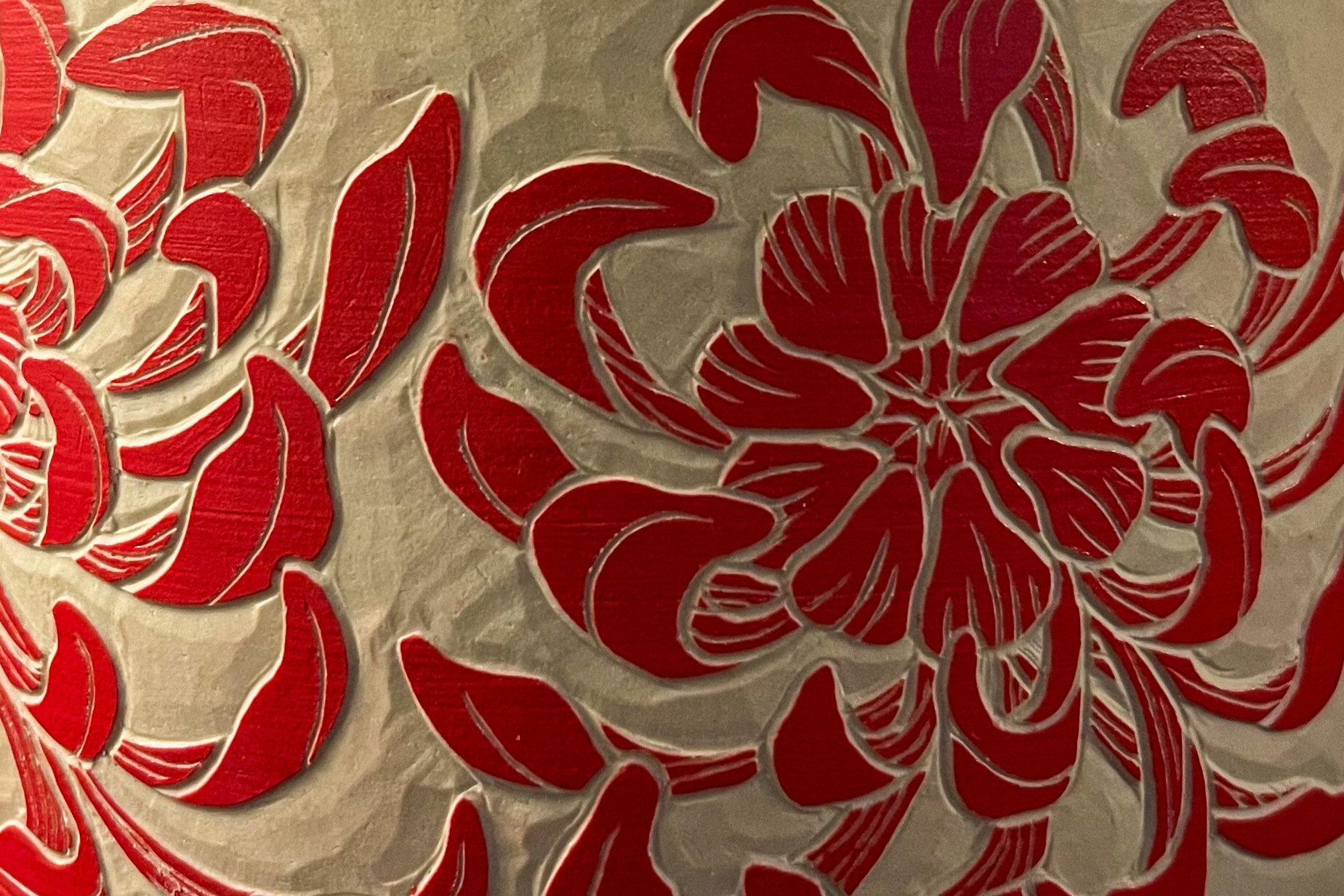
Through the use of ceramics as a medium, these themes are explore along side diasporic identity, opacity, legacy and forgiveness. The lanterns are thrown, carved (sgraffito and open work relief), glazed and fired to vitrification. The act of working in a reductive process is meditative process and acts as a sort of archaeological dig to uncover parts of Japanese Canadian history.
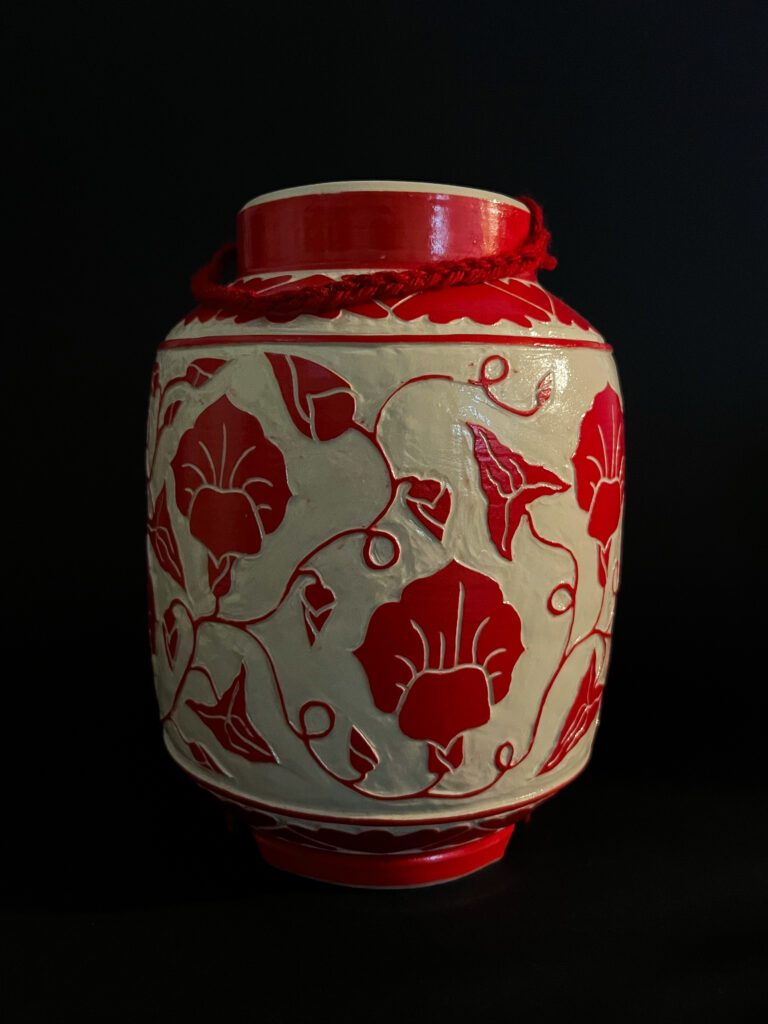
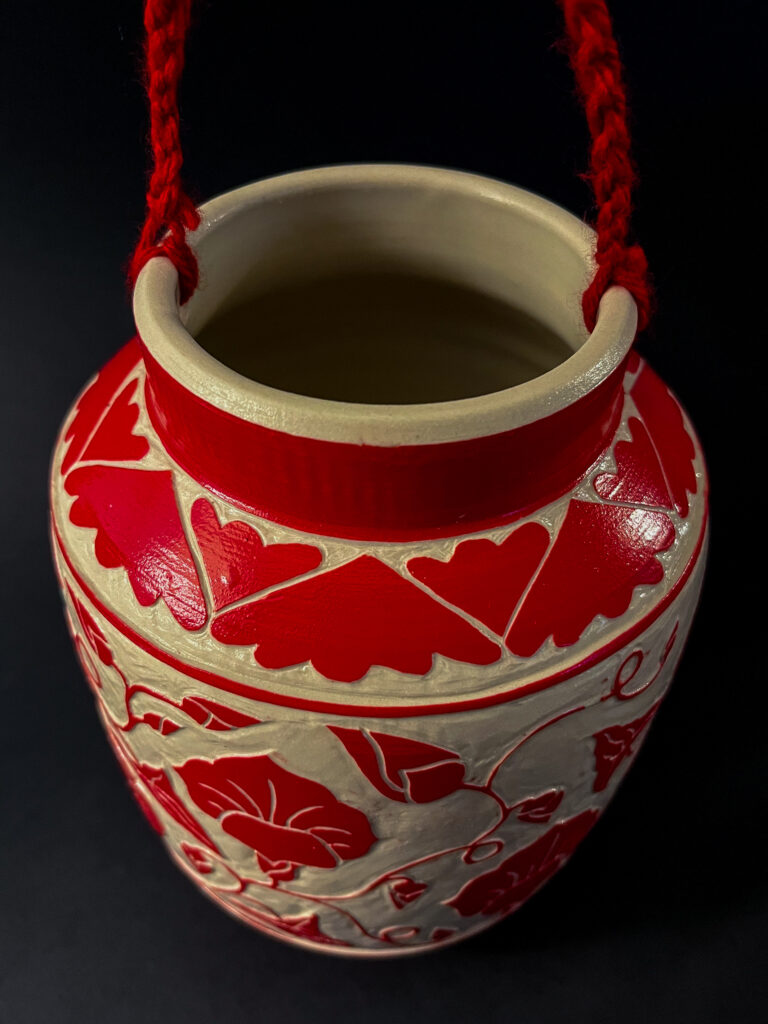
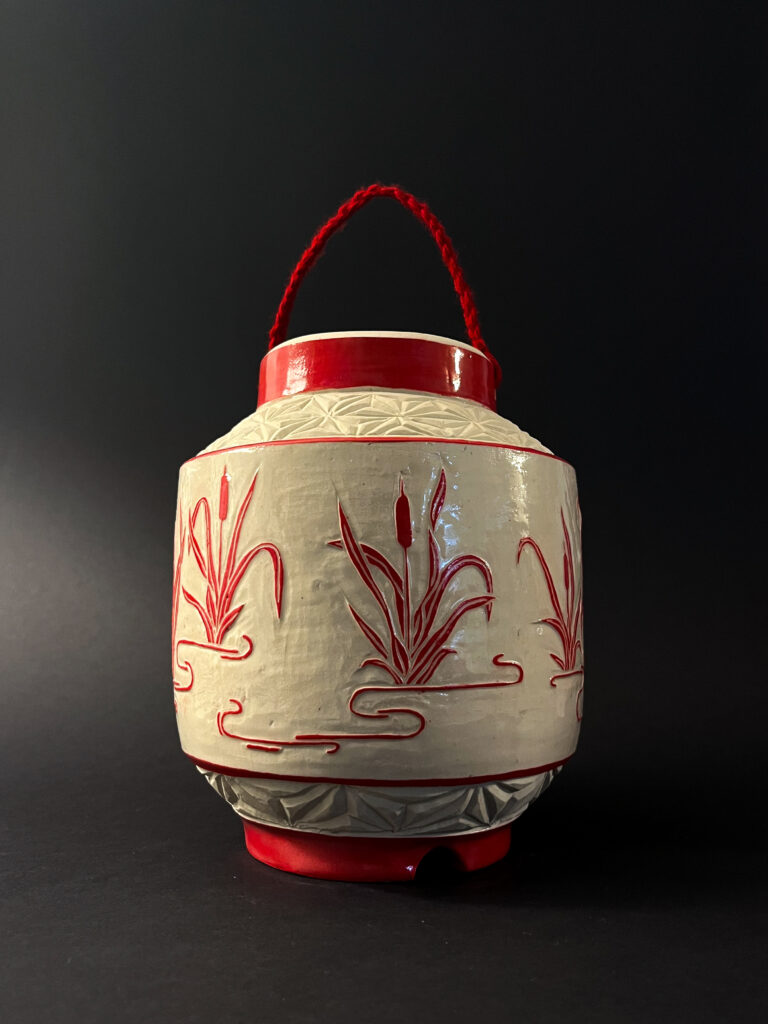
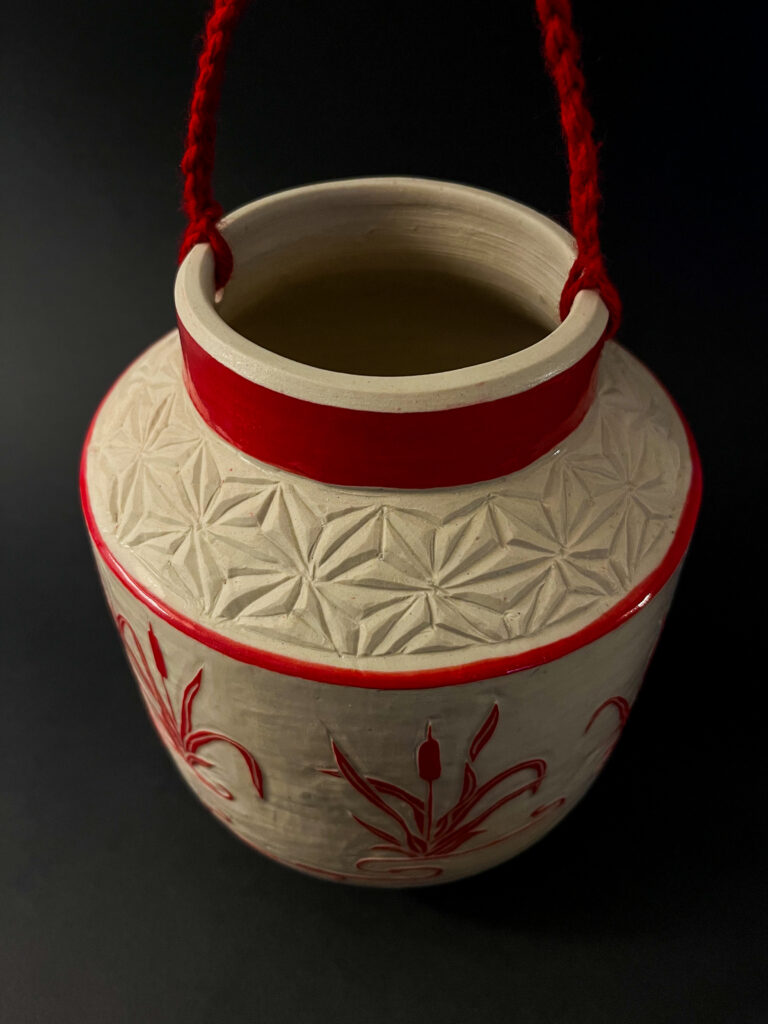
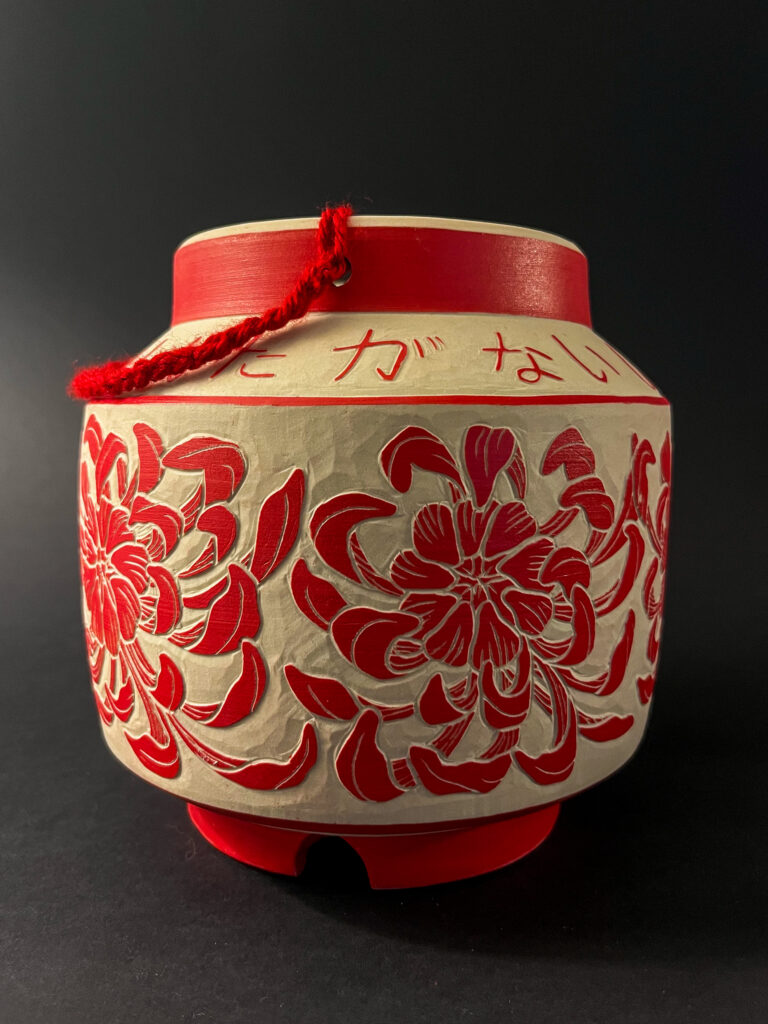
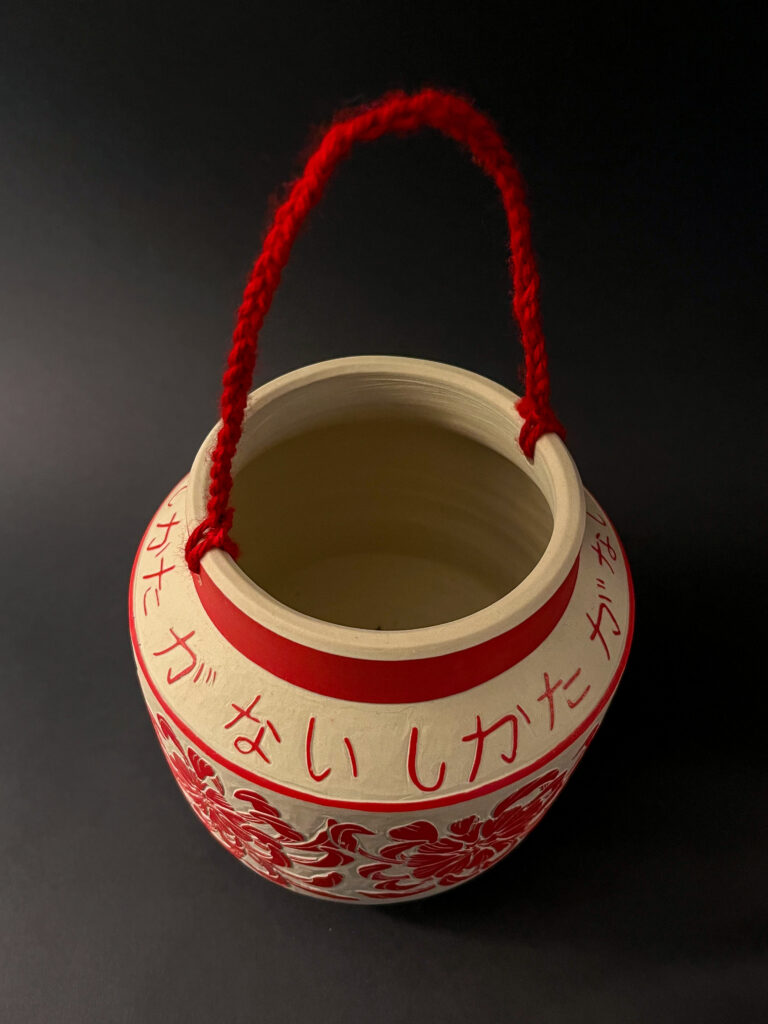
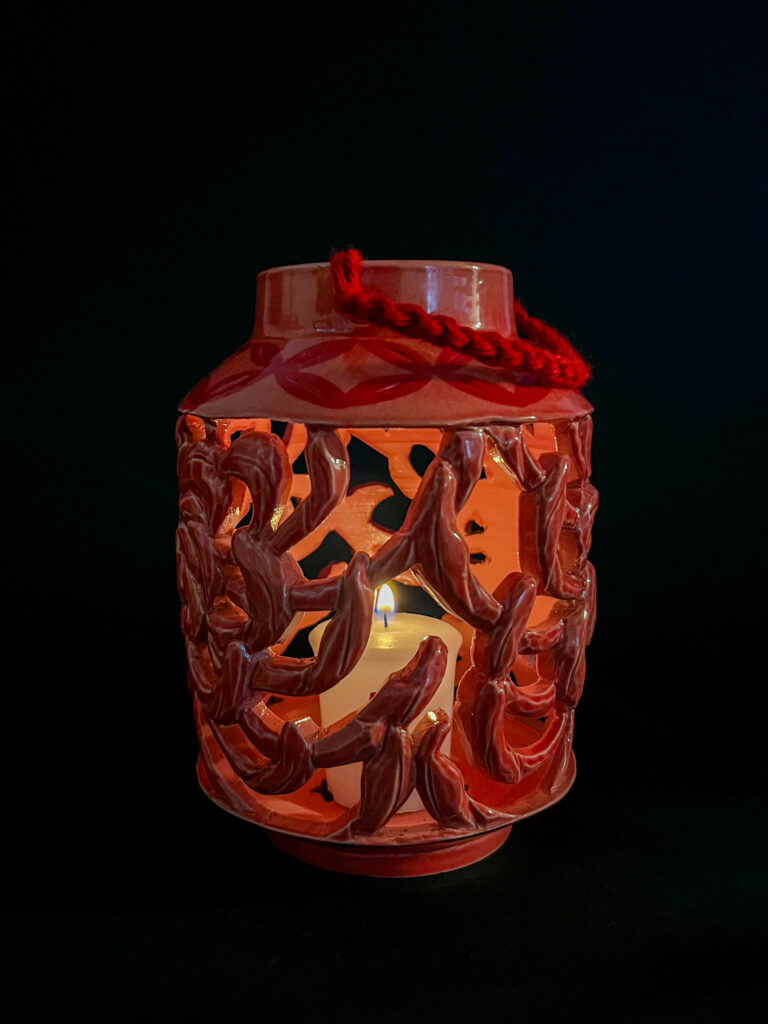
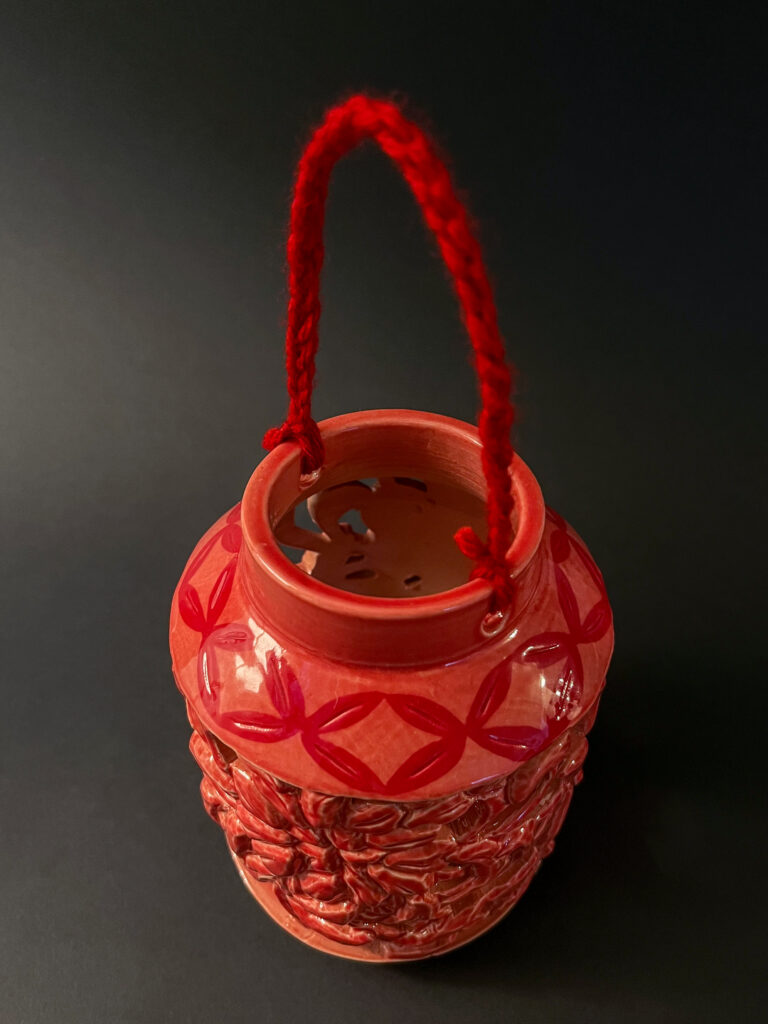
As a Yonsei (4th generation Japanese Canadian), Maya Kamachi uses these methods to reflect upon her lost family history and spark discussion of parts of our collective national history that often go undiscussed.
Kamachi’s grandfather (Shigeaki Kamachi) was displaced because of the War Measures Act in 1942. This stripped all Japanese Canadians of their rights and belongings, forcing them to move 100 miles from the coast and join working camps, Prisoner of War camps or endure harsh conditions as forced labourers on farms in Alberta and Manitoba.
Kamachi was born and raised in Alberta, and moved back to the West coast to pursue higher education, which was taken away from her grandfather and his siblings. This work is made for them and all others in the Japanese Canadian community.
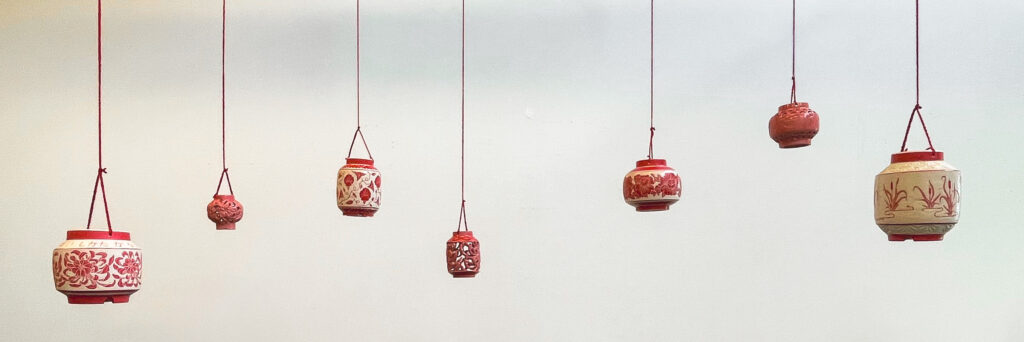
These floral motifs were selected with great care to ensure symbolic depth and drive the works reception. For example, morning glories are a popular vining plant in Japan, but in British Columbia’s climate, they are weeds. Much like how Japanese Canadian’s were viewed during WWII when they were forcibly removed from their homes and away from the West Coast.
Peonies and Chrysanthemums are immensely popular flora in BC and in Japan, with chrysanthemums even being Japan’s national flower. As such both of these plants hold significant weight in the Japanese Canadian community and continue to be motifs ever present in Japanese imagery.
The character for cattail/bulrush in Kanji is: 蒲 which makes up part of the last name Kamachi (蒲池). Being removed from the Japanese language, part of Kamachi’s practice is exploring ideas of access and opacity through the use of a language she doesn’t speak. She uses language as a means of exploring Japanese diaspora and removal from one’s own culture and language identity.
Research and Material Exploration
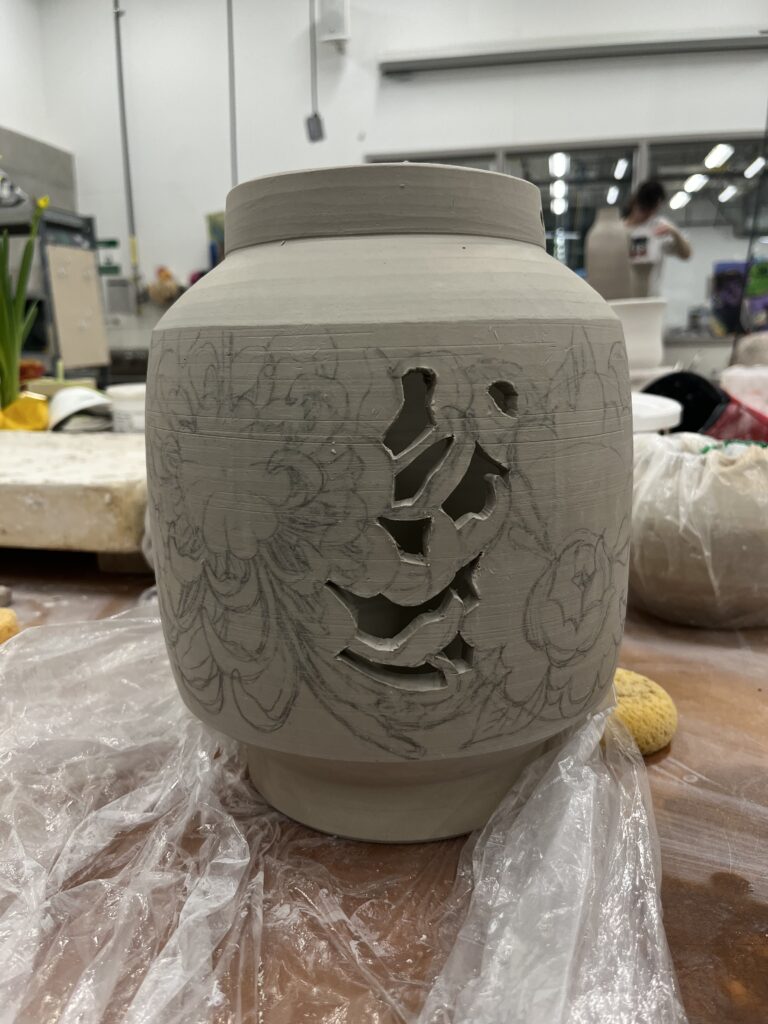
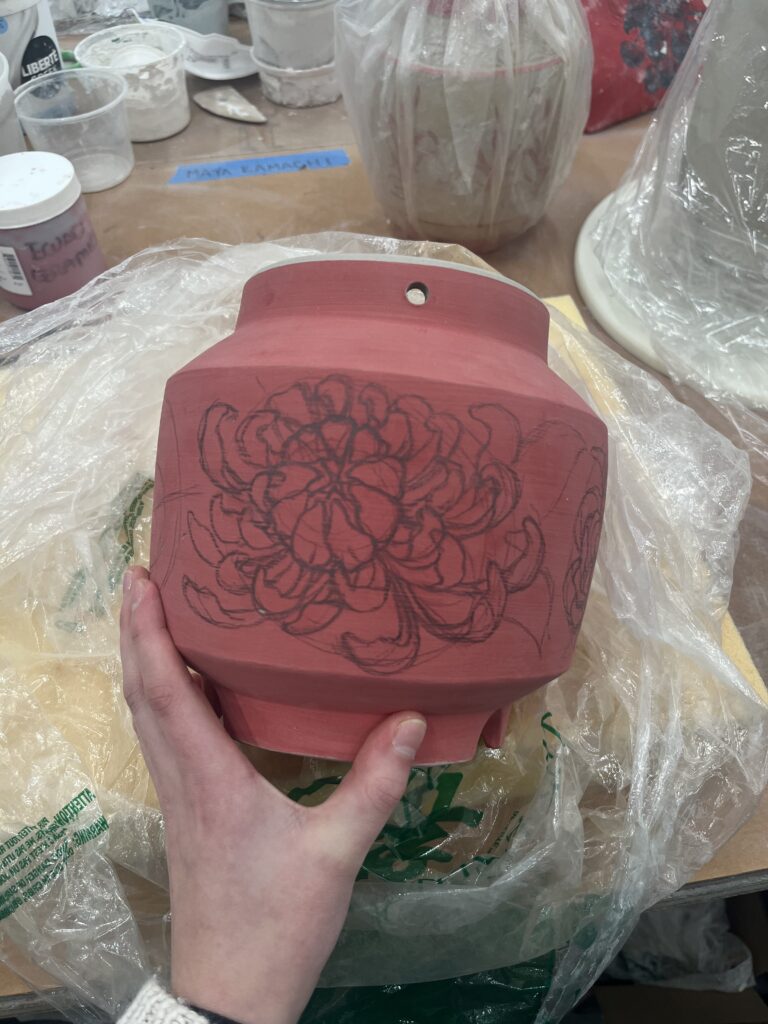
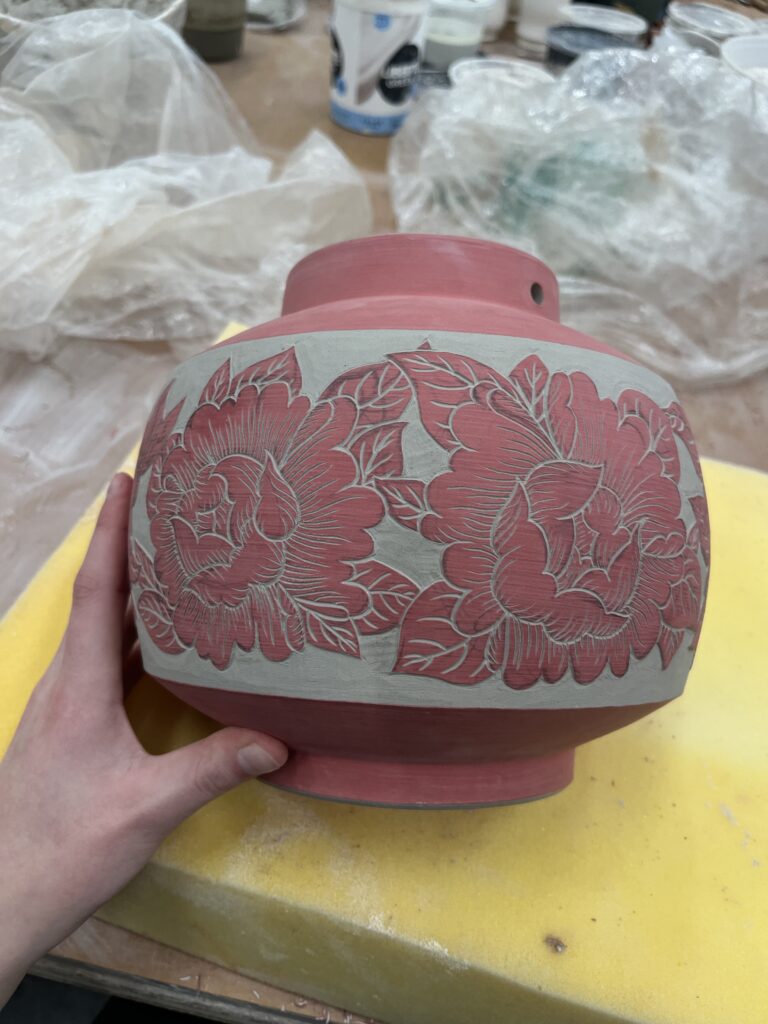
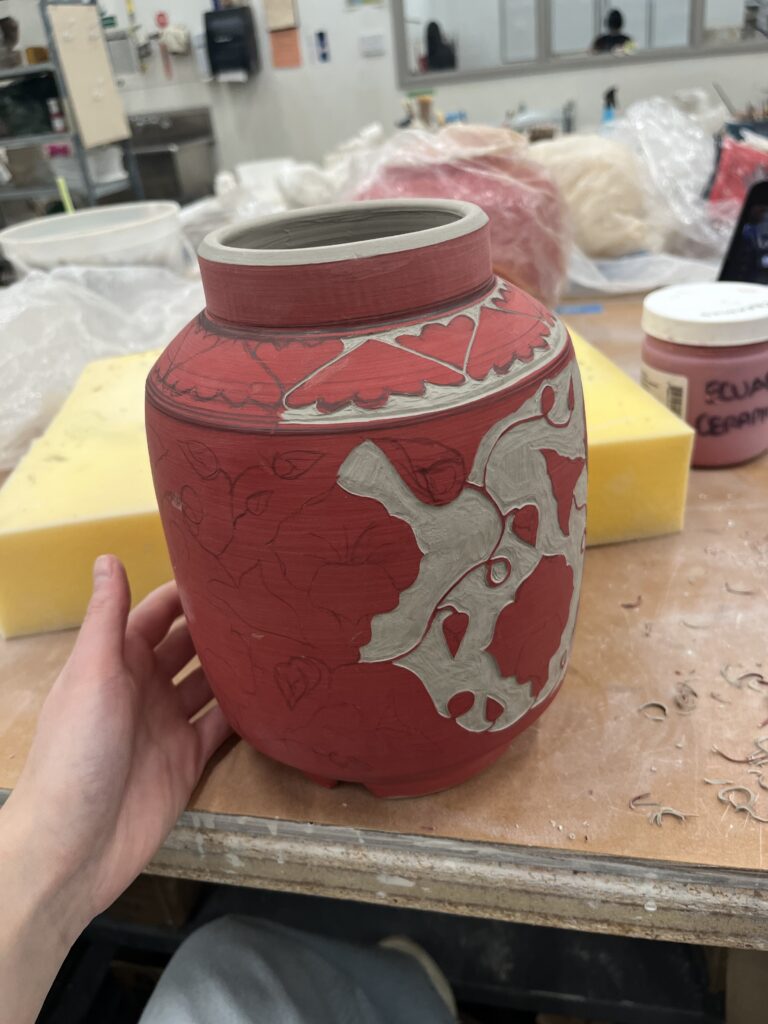
The opening poem was written by the window of the Vancouver airport on what would have been my Jiichan’s 100th birthday: October 25, 2024. It still continues to be one of my favourite poems I have written, and maybe that’s why.
This body of work was supplemented by a plethora of research, so much so that I have been trying to wade my way through it so I don’t lose sight of what’s important. I spent a long time trying to do it all, so I ended up not doing anything I felt connected to. Instead of reading more articles and peer reviewed papers, I began asking my family questions and journaling to try and get to the root of what it is I was trying to say. Here is part of that discovery:
10/22/2024
“I sit here in the Joy Kogawa Historic House in the type of silence humans make. The rustling of papers, clothes and the symphony of sniffles the cold weather always brings. I enjoy being a part of this human symphony. I just bought Obasan, Joy Kogawa’s book. My dad told me to read it a decade ago. I should have listened. Maybe it would have sparked this fire in me long ago. Maybe I could have talked to Bachan and Jiichan about it. If they would talk back, I’m not so sure.
I miss them. I wish I could go back and ask so many questions. Because I’m sure they had many stories that died with them. And I mourn the loss. Not only of my Bachan and Jiichan, but I also mourn the lost knowledge and disruption of the tradition of oral histories. They were my tether to being Japanese. Now what? I’m fighting desperately to not have half of myself swallowed by the bright white light of the other half. I already don’t feel Asian enough. Is it possible for one to “other” themself? How can I make my work read as Japanese when I don’t even think I read as Japanese myself? I am an intruder in my own genealogy.
The Kogawa house reminds me of dad’s childhood home. The one that’s no longer there. 131 Jardine Street, New Westminster. I drove by it not long ago. I could hardly recognize where I was. I wasn’t sure I was at the right address. I knew they demolished it. I sort of wish that I never went back. Now it’s really gone. It only exists in my fleeting memories. If I think about the house for too long I cry. The house was the birthplace of my Japanese Canadian identity, I pray that it’s not the resting place too.”
Tangential Works
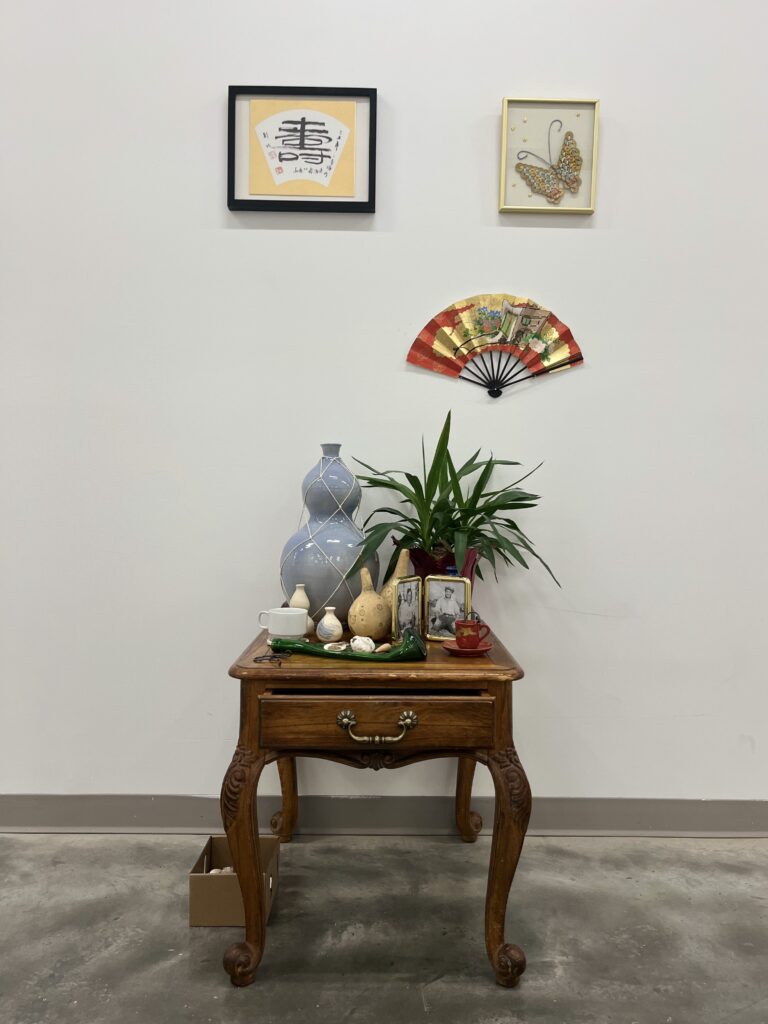
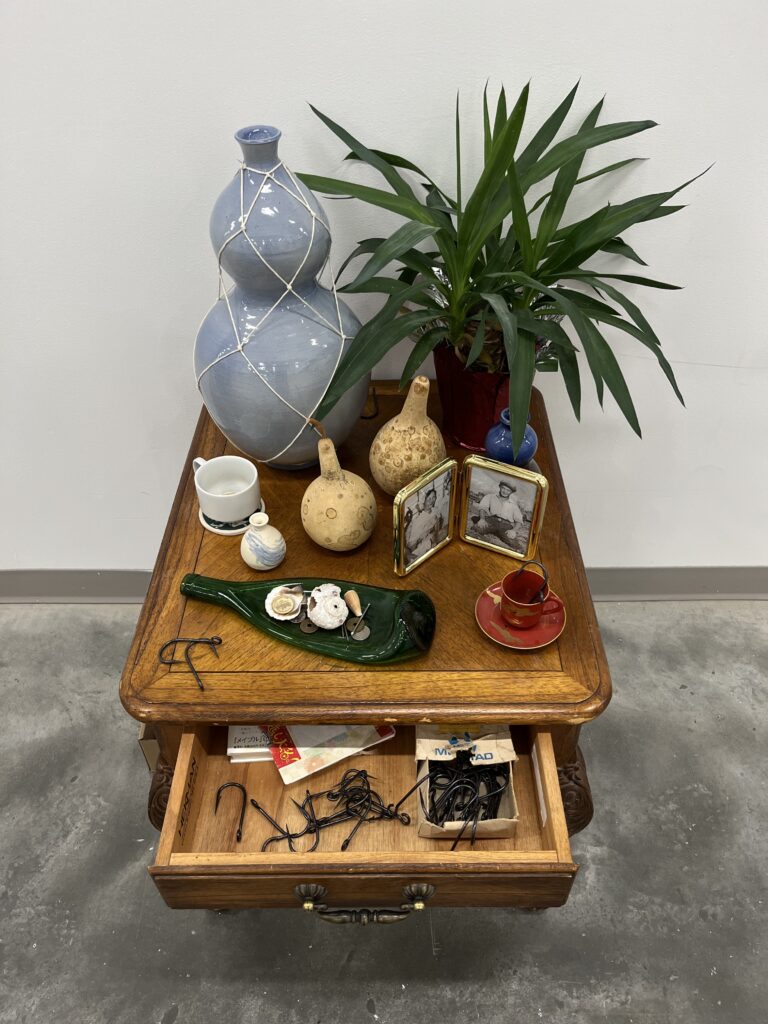
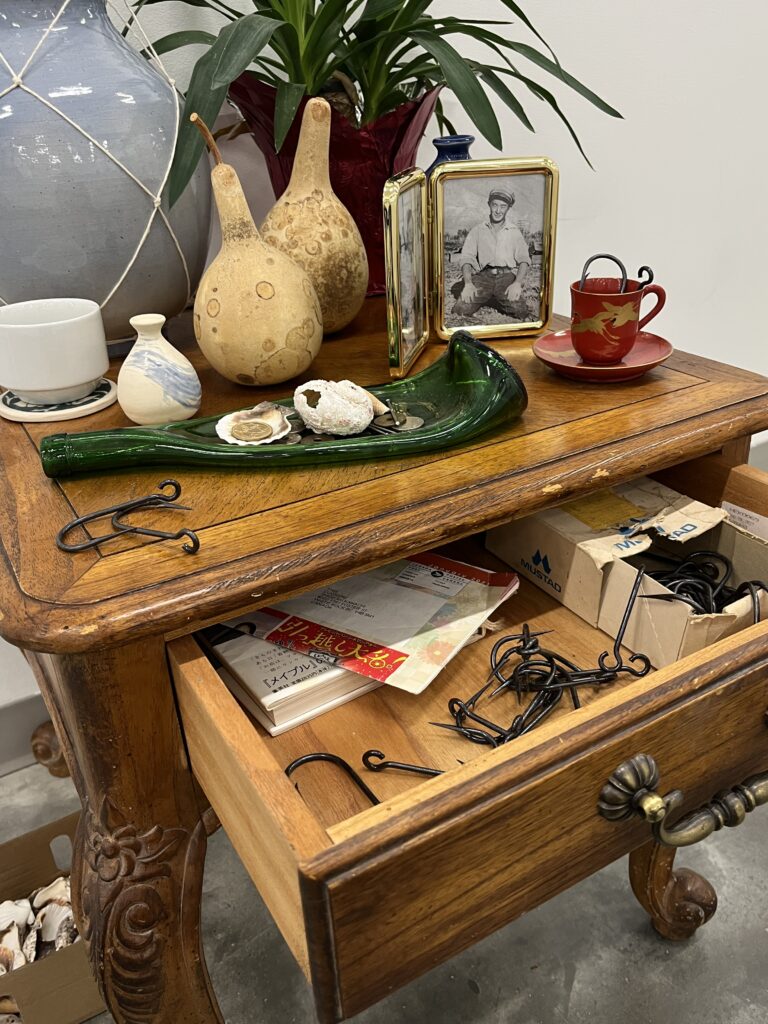
Welcome Home 2024
Ceramic vases, cordage, picture frames, fan, plant, dried gourds, shells, yen coins, fish hooks
3′ x 3′
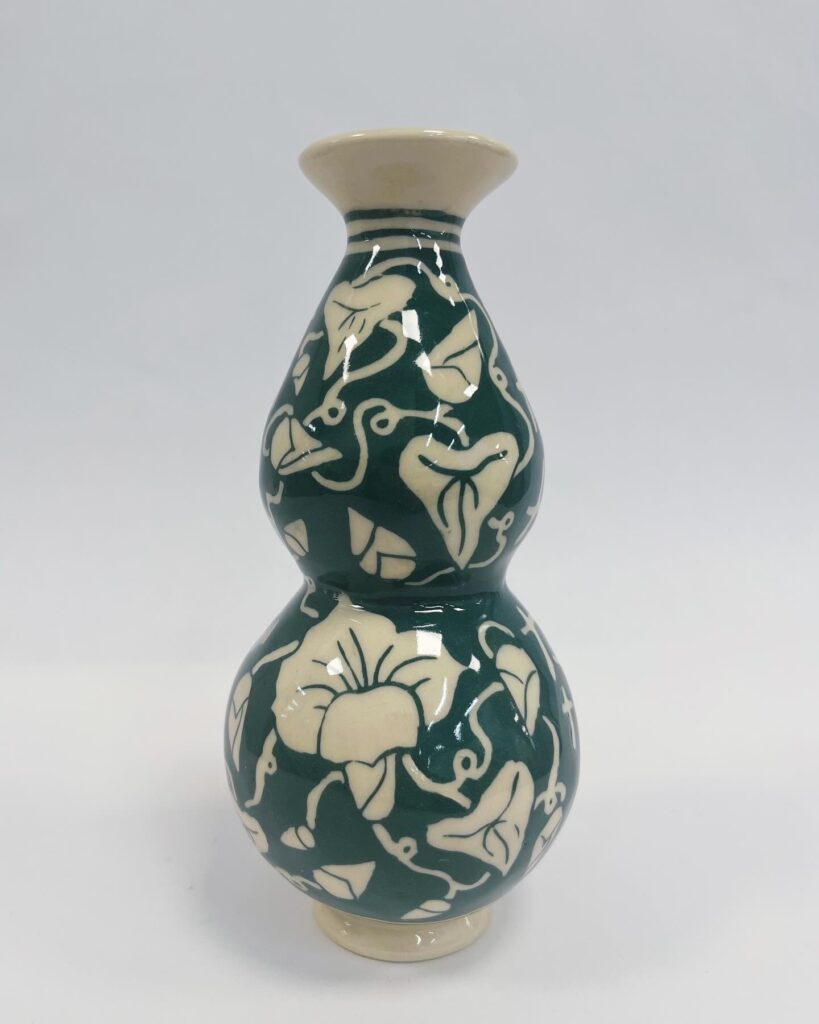
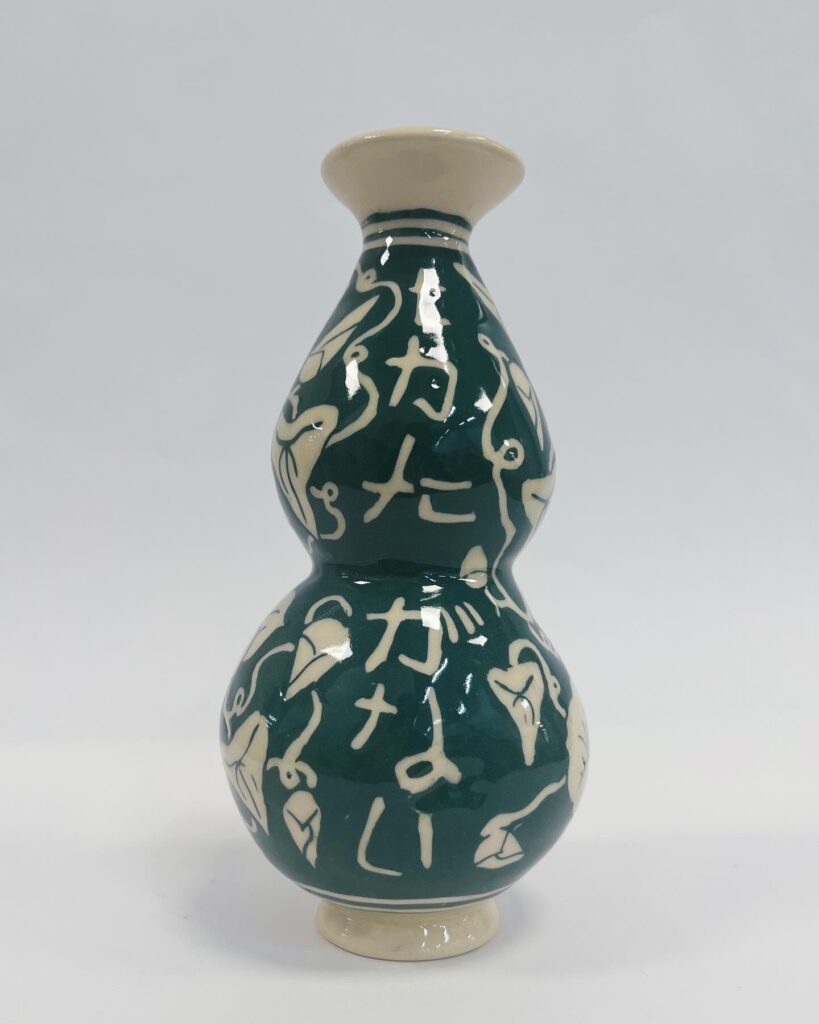
Shikata Ga Nai 2024
Inlay stoneware
7 1/2″ x 3 1/2″
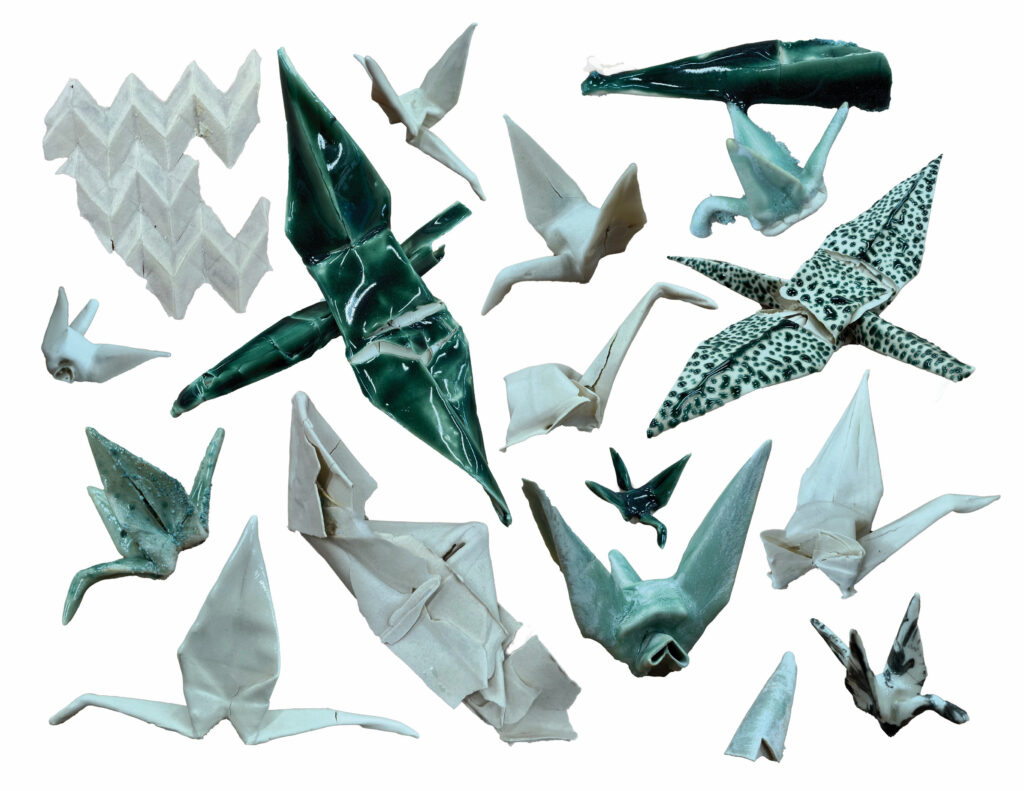
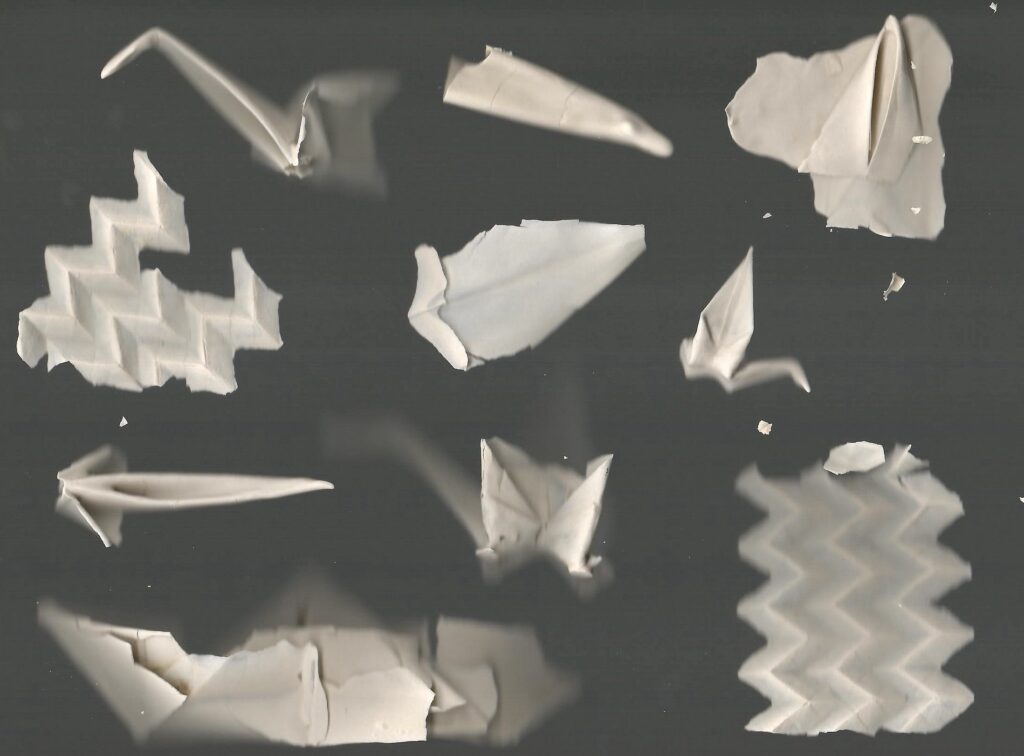
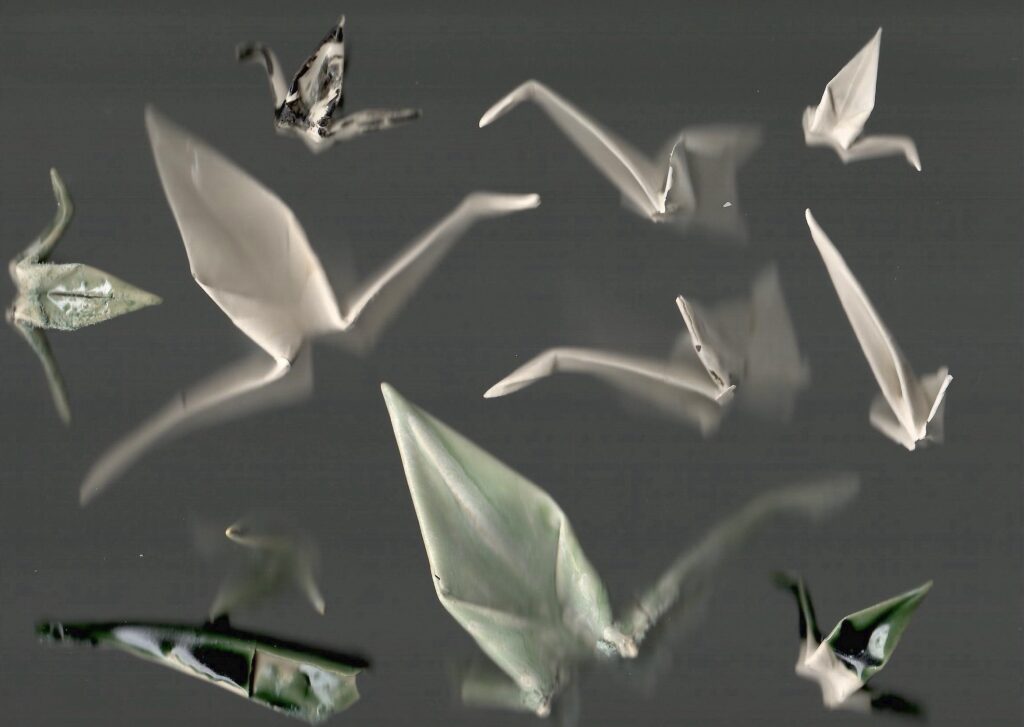
Broken Birds Don’t Fly 2024
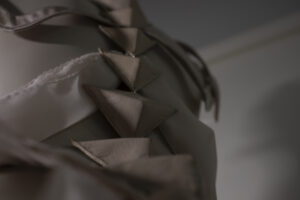
Slip cast origami
Asst. sizing
Like morning glory
We are weeds in our backyard
Just trying to thrive
In a place that is not ours
Will we be weeds forever?