Grief Cloak, 2024
ALEXANDRYA EATON
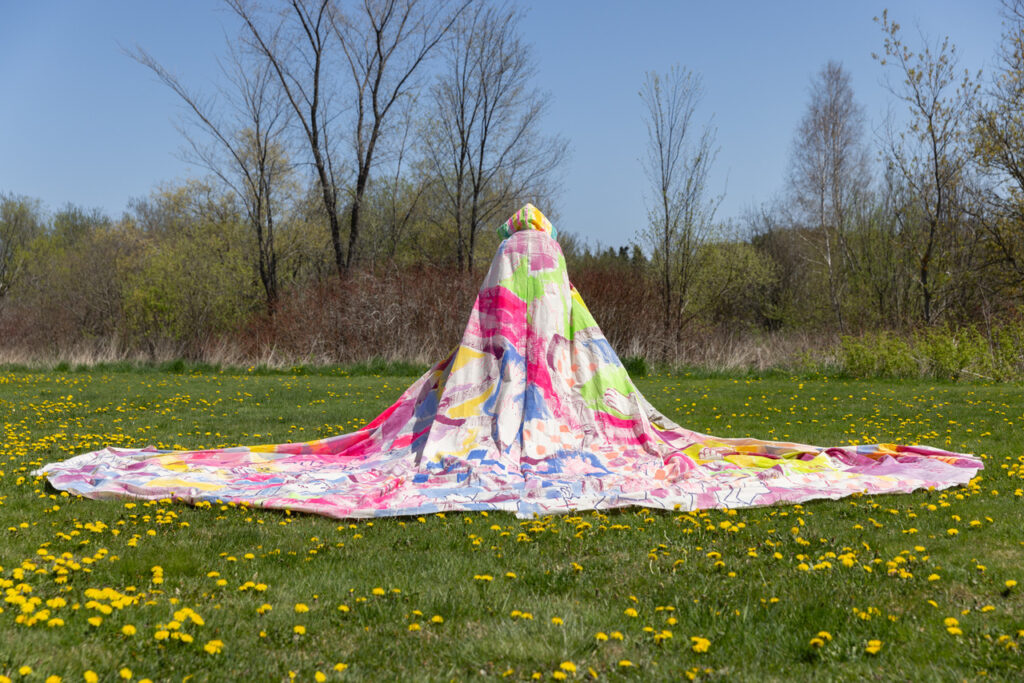
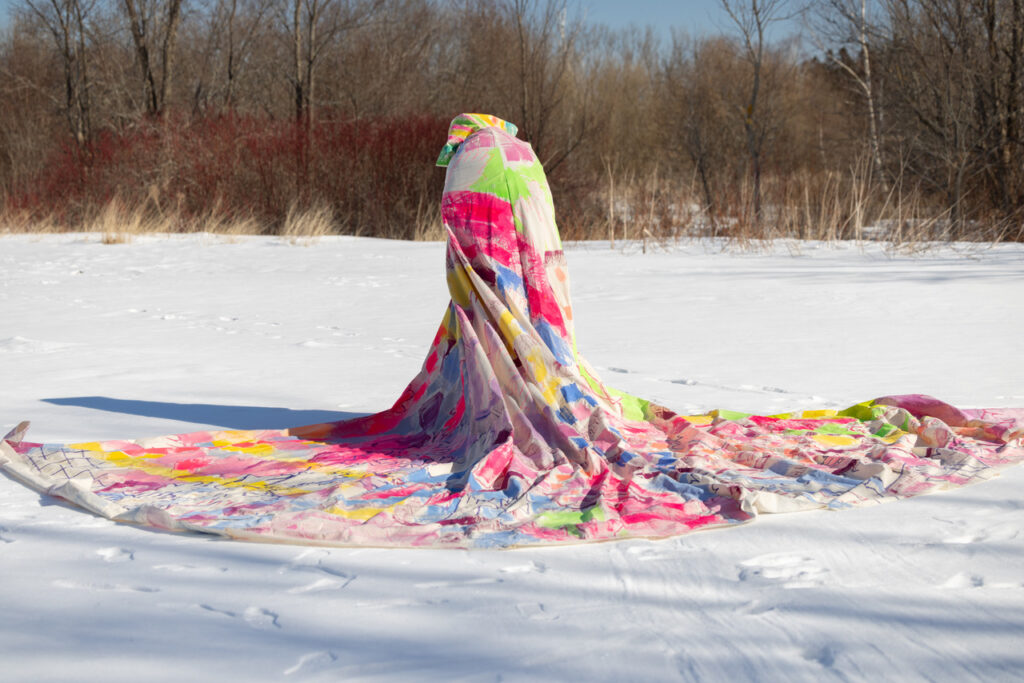
Grief Cloak, 2024
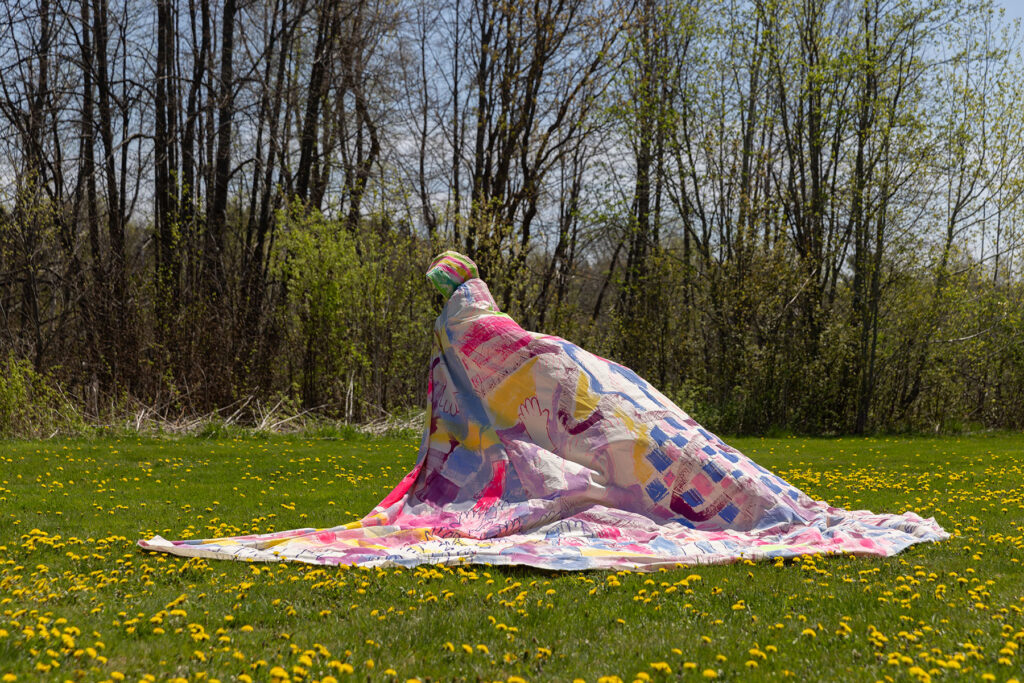
The idea of grief having a form that can be dragged and battered, torn, and then mended, is fascinating to me and directly informs this piece. The cloak is heavy enough to make it difficult to walk but light enough around the edges for the wind to cause it to blow and billow, activating the piece with sense of movement and embodied knowledge. What is grief? Where does it live? Where can it go? From my personal experience it lives in a physical body, in the muscles, the organs, the heart, the brain, but also in the feelings and the memories, in hopes and fears, in tears and laughter. Grief presses down on us, on our physical bodies, but also on our excitement, on our creativity, and it is heavy. During my performance, as I dragged the cloak, I hung my head, and slumped forward, taking slow and careful steps. Walking and wearing the cloak, it dragged on the ground, getting caught on the boardwalk and branches, getting dirty. In this way, I visibly carried my grief through the landscape — a landscape full of memories — and I carried it until I was too tired to carry it any longer.
Grief Cloak represents a very personal experience, my experience of losing my mother. In doing so, it participates in a feminist practice, one of telling women’s stories. Performing with the grief cloak allowed for many new discoveries. It provided the opportunity to collaborate with other artists; I partnered with two artists in my community to assist me with the video and documentation of the cloak. Our first day of filming was sunny and cold, about -10 degrees Celsius. We worked from 10 am until 4:30 pm doing both still photography and moving video footage. There was snow on the ground in most areas. I had not anticipated the shadows cast by the bright sun but was pleasantly surprised by the result. I had also not considered the wind, which as it turned out, provided its own activation of the cloak, billowing and moving around me. The cloak filling with air and expanding, and then moving and collapsing, seemed a reiteration for my intentions with the smocking and stitching that I also use in my research — an expansion and compression of space, form, and material. Like lungs filling with breath and then exhaling, the wind caused the cloak to repeatedly fill with air and then compress around me.
The performance was hard work. That evening, I was physically and emotionally drained. I felt chilled and exhausted, which lasted a few days. My muscles were sore which made sense from carrying the weight of the cloak over an extended time, but emotionally the performative act of tending to grief resulted in an overwhelming sense of fatigue. I came to the realization that making this work, although a statement about the heaviness of grief, was also about letting go of the grief I have personally been carrying for many years.
Grief Cloak represents the weight of grief that we are required to carry throughout normal everyday tasks and routines; our grief is invisible to everyone around us and yet presses down on our bodies, minds, hearts. In contrast, the object Grief Cloak– as a representation and embodiment of grief- is highly visible. The bold bright colour palette of Grief Cloak contrasts the bleakness and despair we often associate with grief itself. This contrast is in direct reference to the idea of holding on and letting go, and to the moments when responsibilities shift, and when caregiving requires you to take a step back. In my experience, motherhood doesn’t end, it transforms.
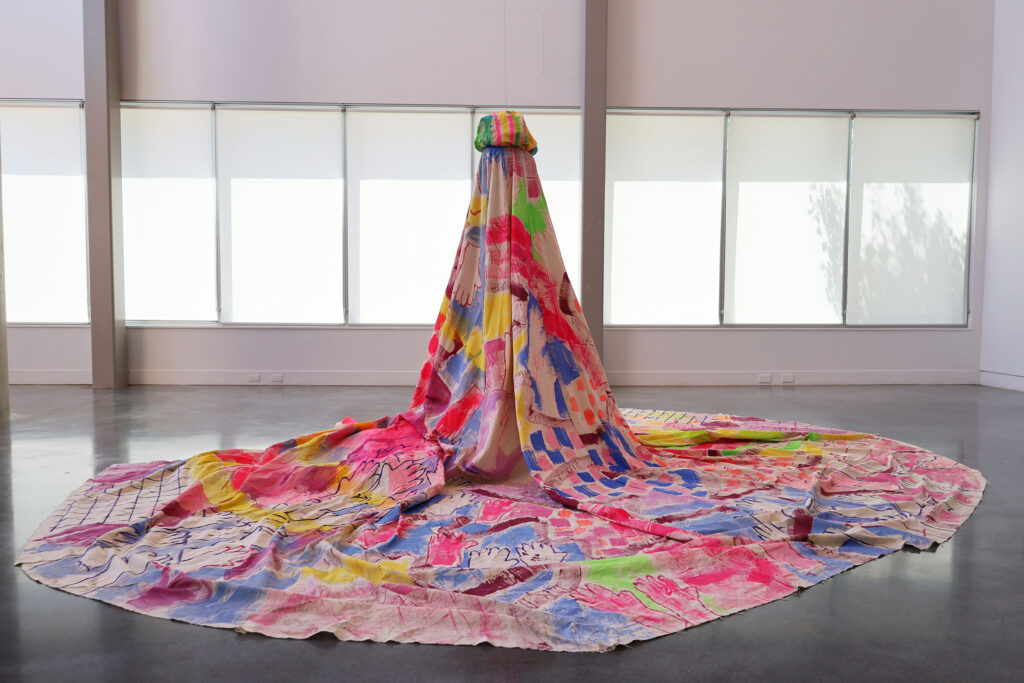
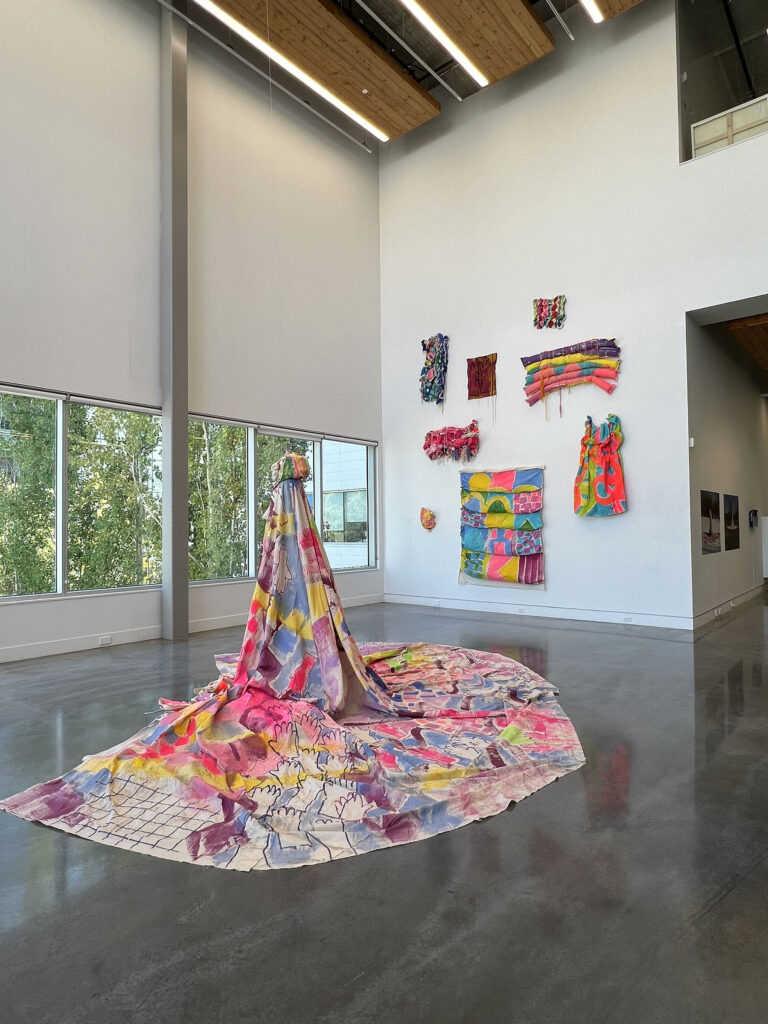
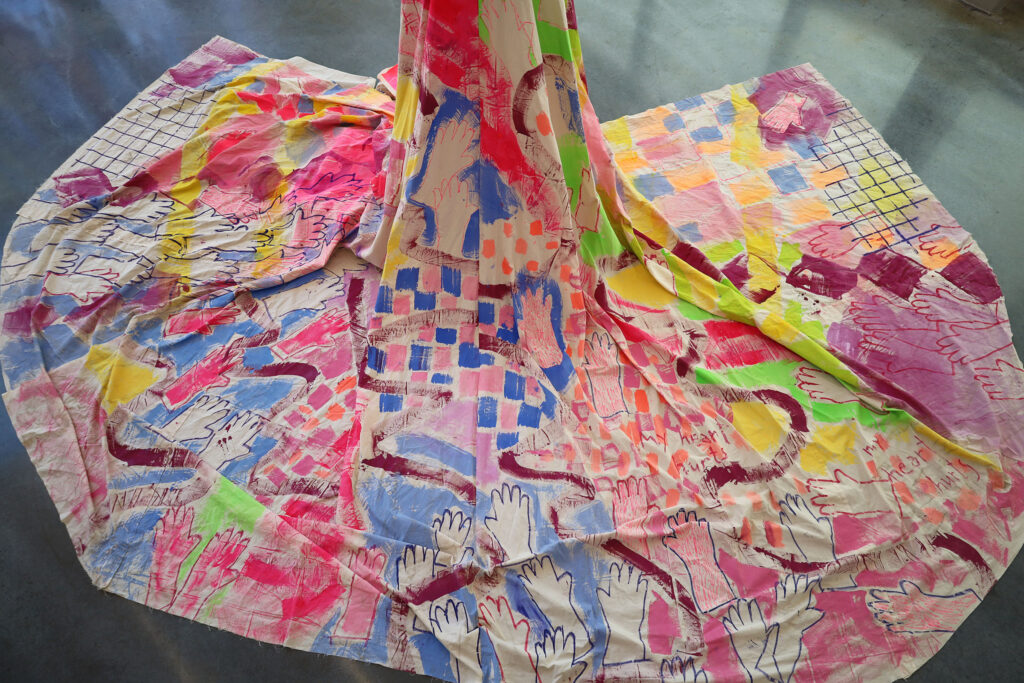
The act of performance, in this case wearing my painting and moving through landscape, is also a process for exploring grief. There are many layers of process in this piece of research: the thought involved in the conceptual planning; the tactile act of making/painting/cutting/sewing; the wearing and draping of the garment; the walking and movement involved in the activation; and the documentation or archive of the activity. Each of these steps is a process in the creative act of making.