女书:Nüshu Archive
Kathy Deng
What is it ?
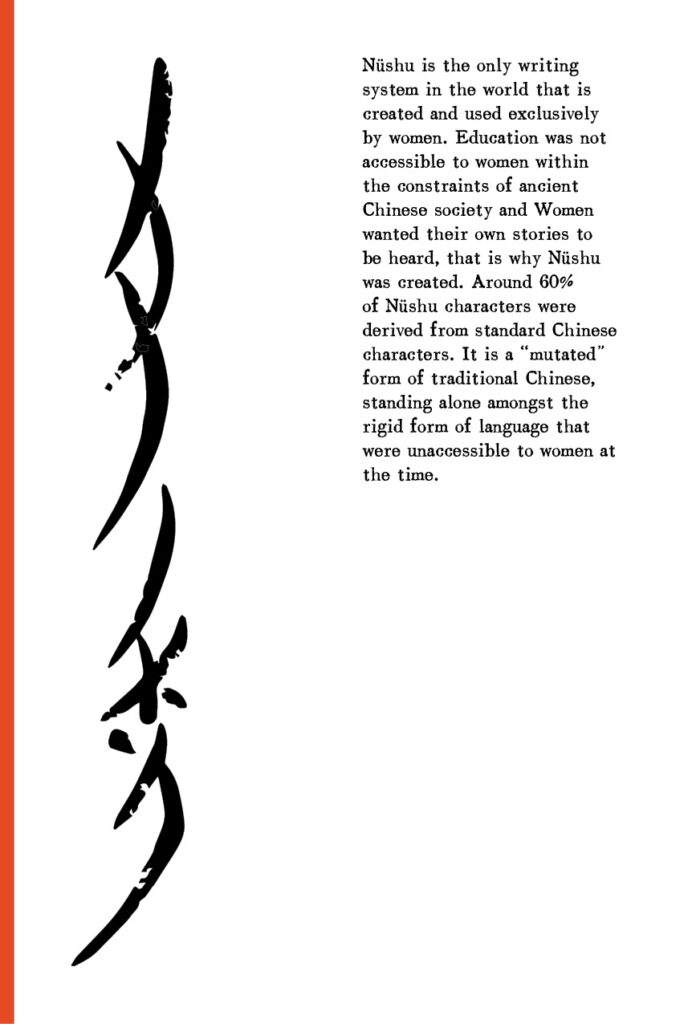
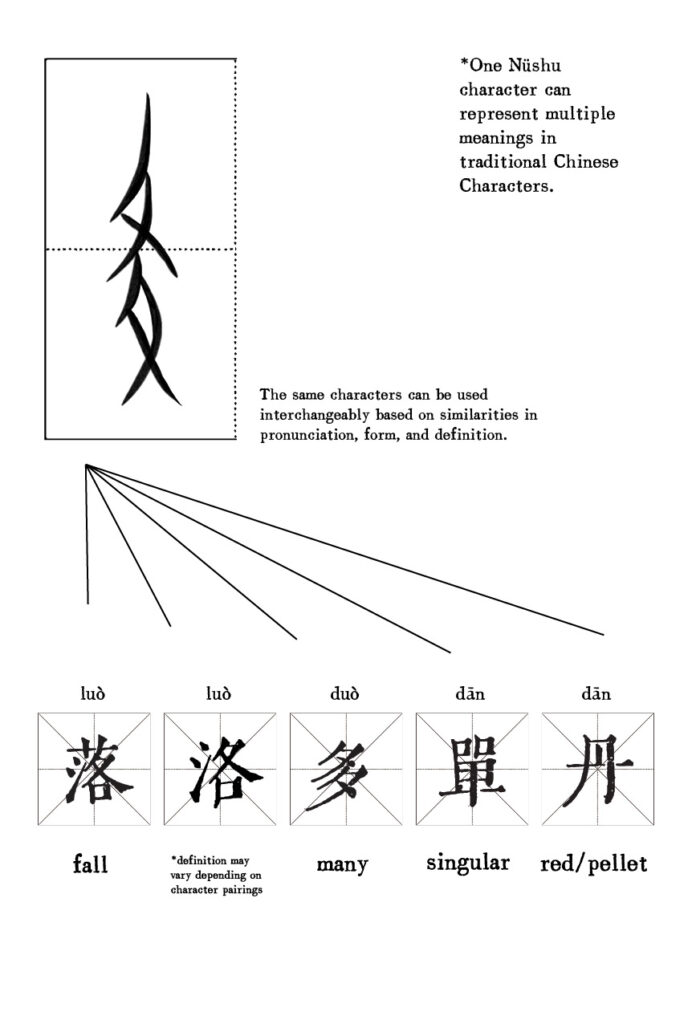
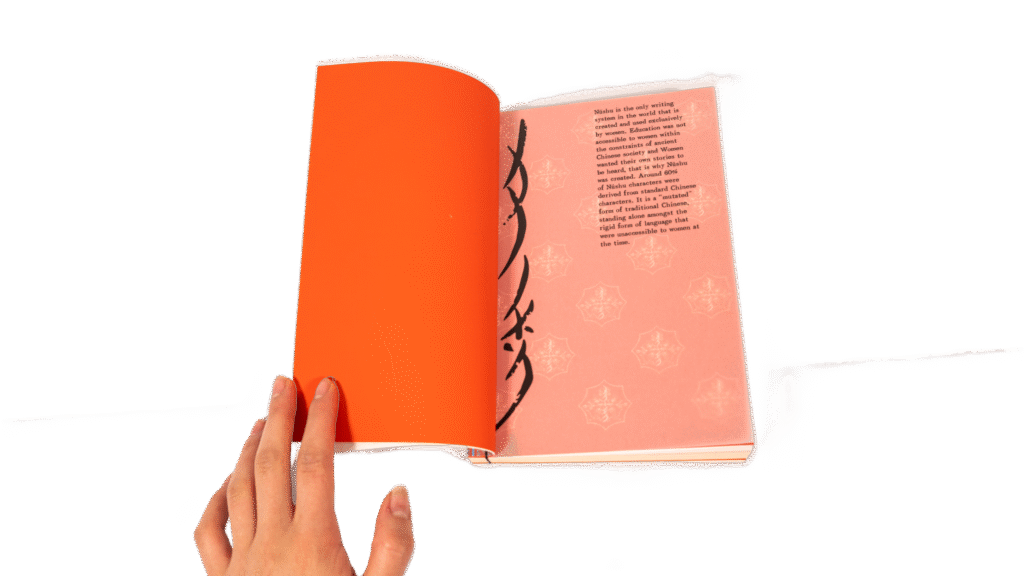
Nüshu is the only writing system in the world that is created and used exclusively by women. Around 60% of Nüshu characters are derived from standard Chinese characters. It is a “mutated” form of traditional Chinese, standing alone amongst the rigid form of language that were unaccessible to women at the time.
Problem Space:
- Geographical origins of Nüshu prevented it from being widespread & known to a wider audience
- Most knowledge was passed down orally or on materials that deteriorated over time
- Lack of institutional support or teachings of this culture as a whole
- Not as valued as male-created literature/culture to be preserved
Project Objectives:
Nüshu is a disappearing language that must not be forgotten. My goal for this project is for Nüshu and the females behind it to be:
KNOWN, HEARD, and REMEMBERED.
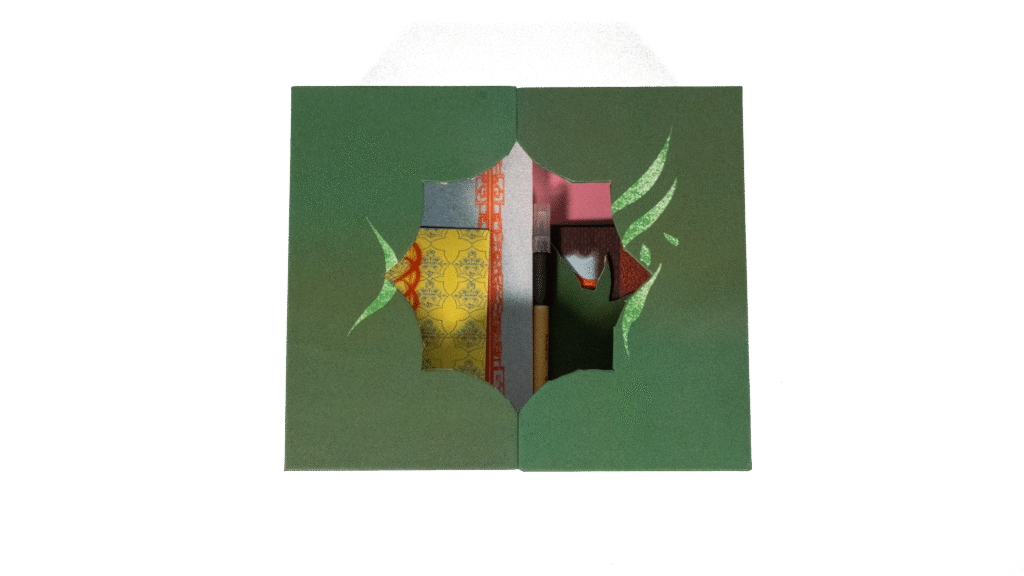
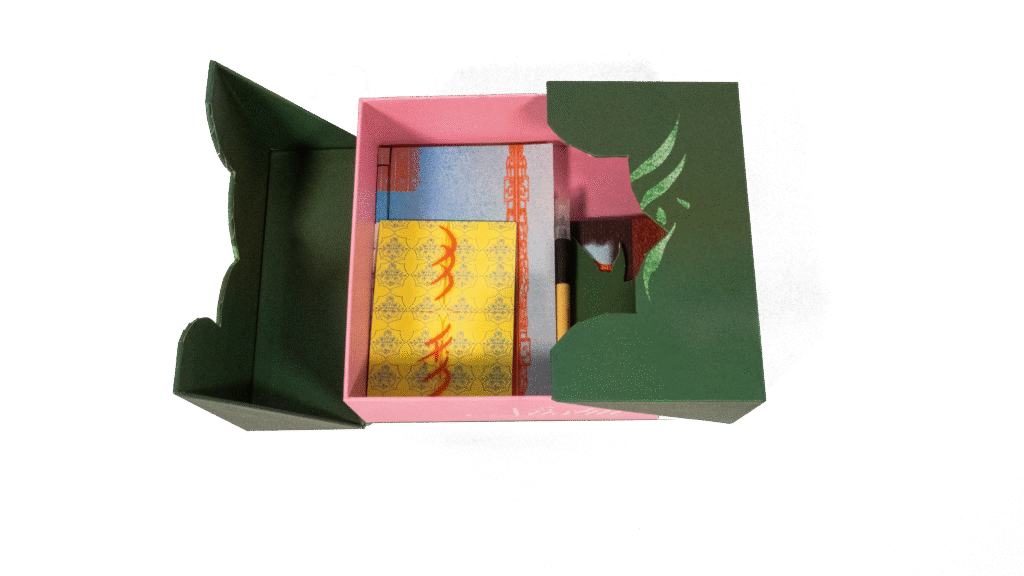
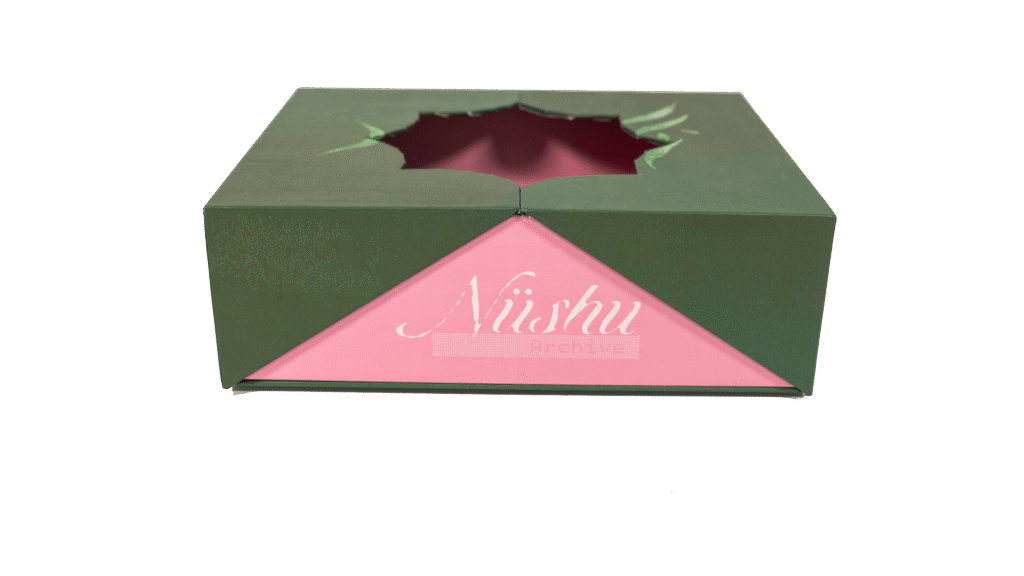
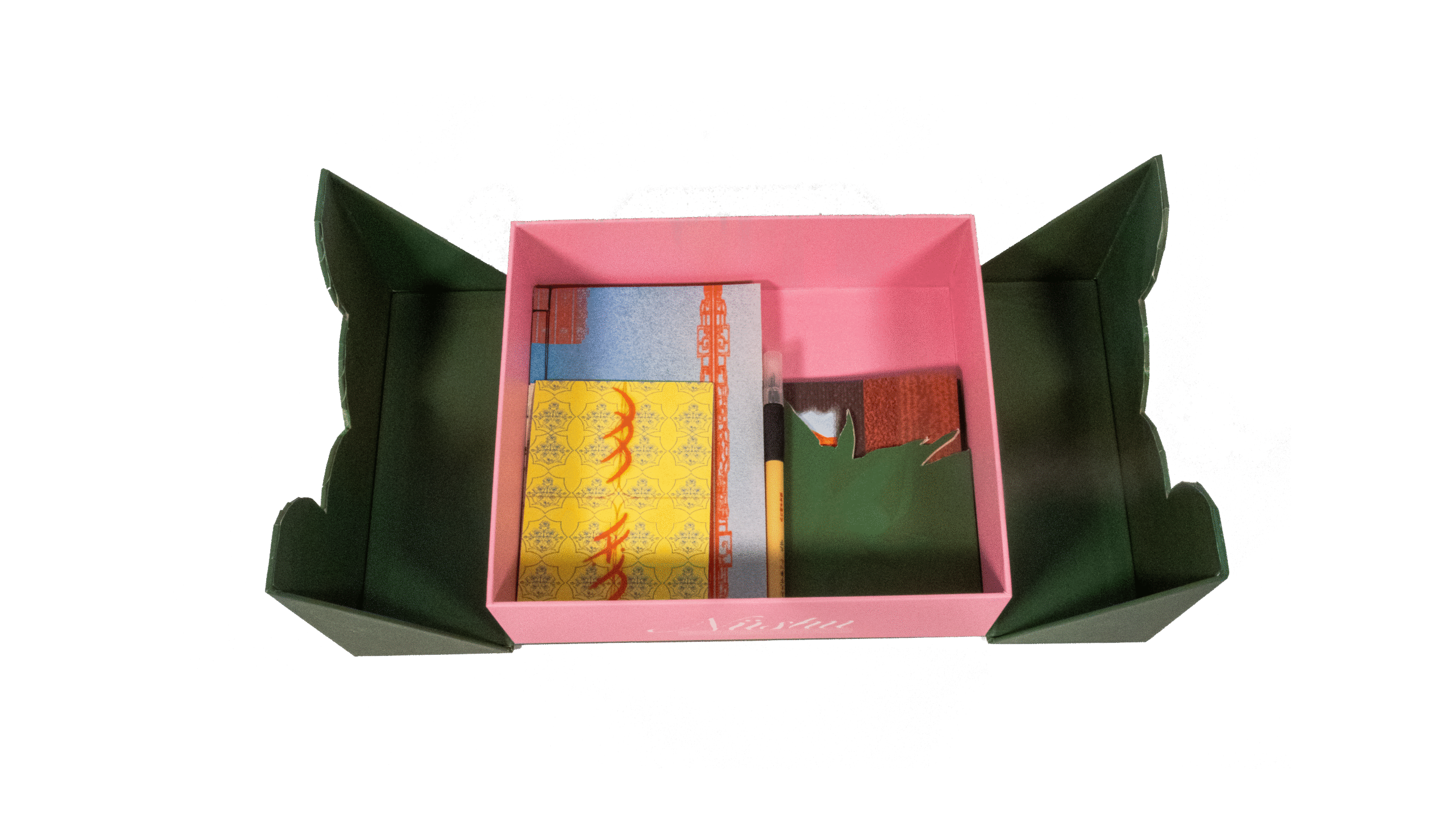
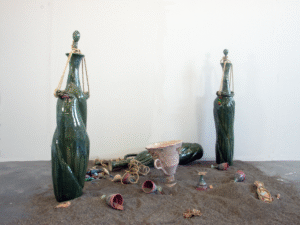
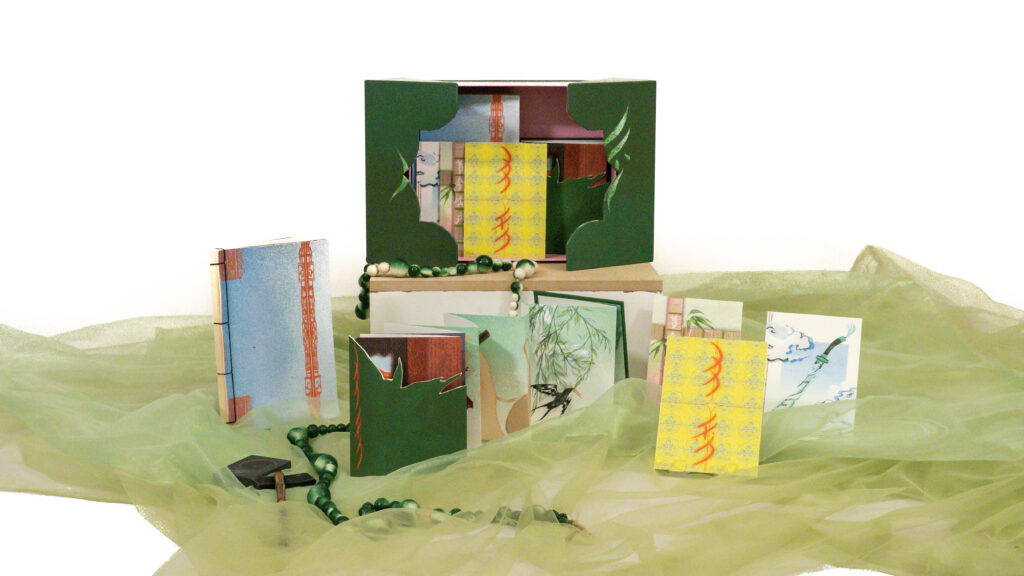
Recreation of the tradtional 文房四宝 in the CONTEXT OF NüSHU (*Four Treasure of Study), which includes: ink, paper, calligraphy, and inkstone. Within the context of male-dominanted society, women were denied access to education. This will be a kit showcasing the stories as well a physical representation of Nüshu writing culture.
Nüshu Guide
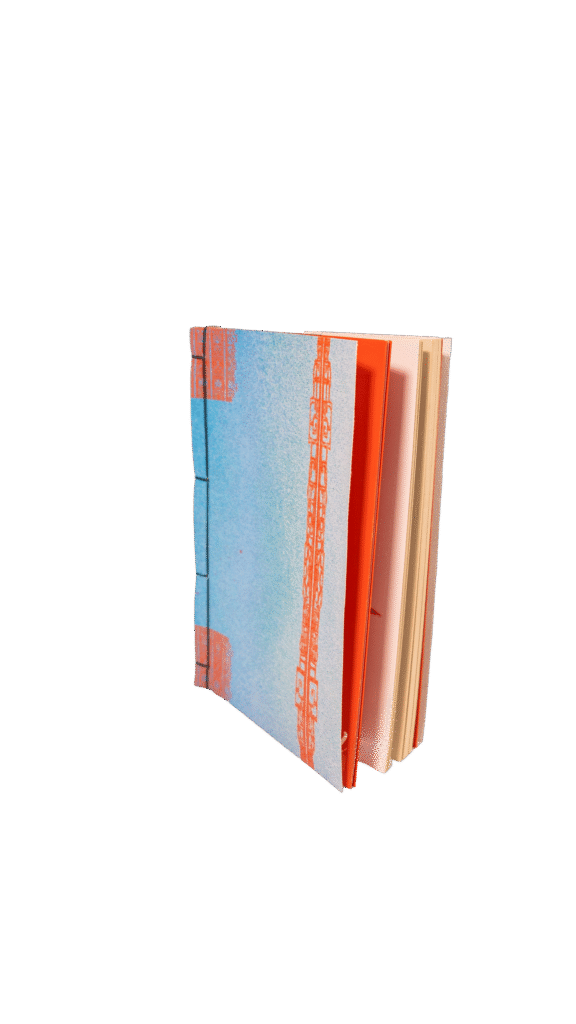
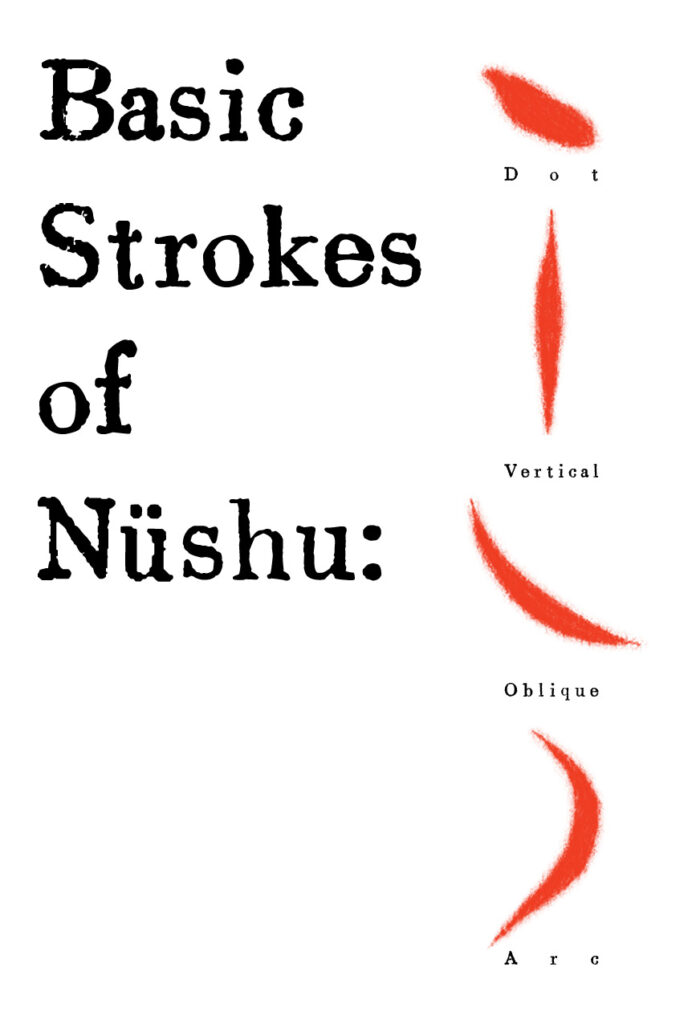
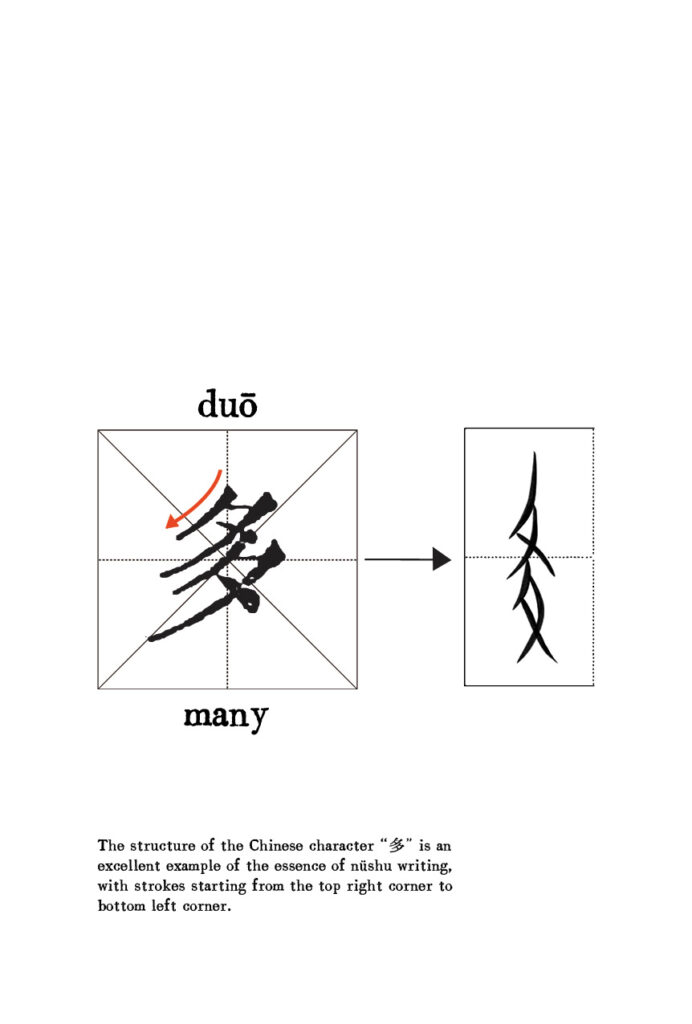
Contrary to Chinese Literature, Nüshu is written from top to bottom and read from right to left. Traditionally, these books are handmade and gifted to brides on the 3rd day of their wedding. The contents can include congratulatory wishes, precious memories shared with the bride, as well as the sorrows of parting with their loved one.

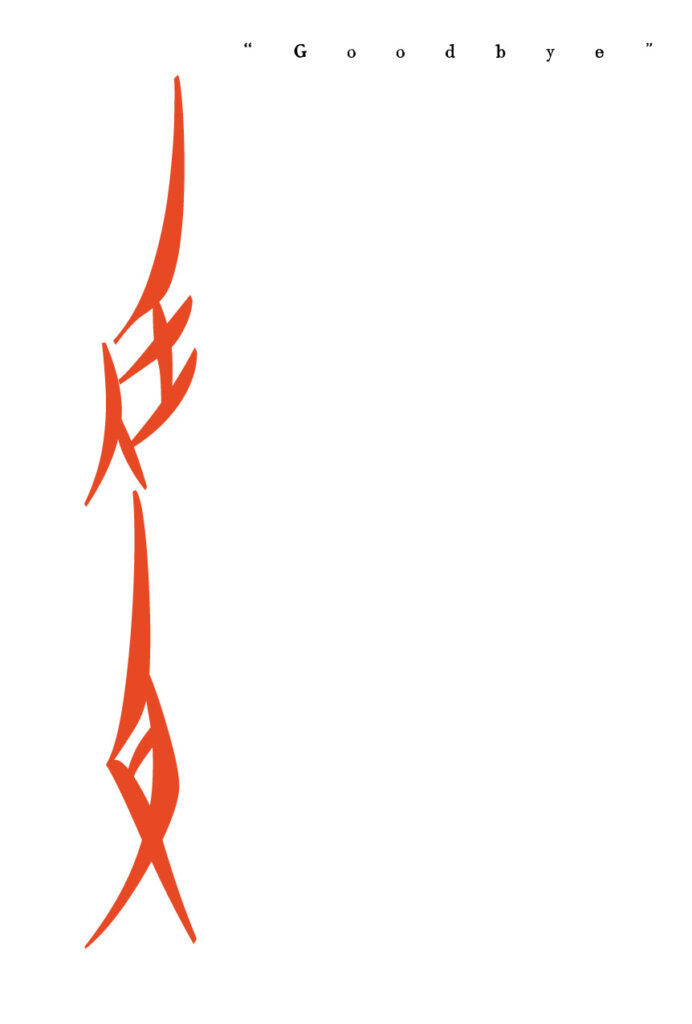
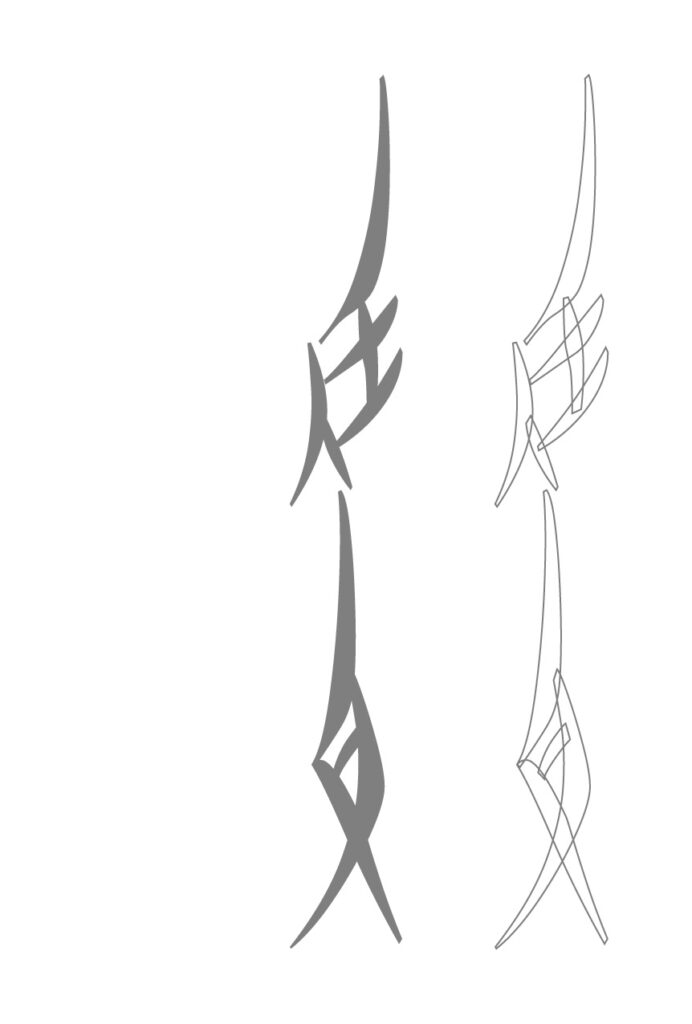
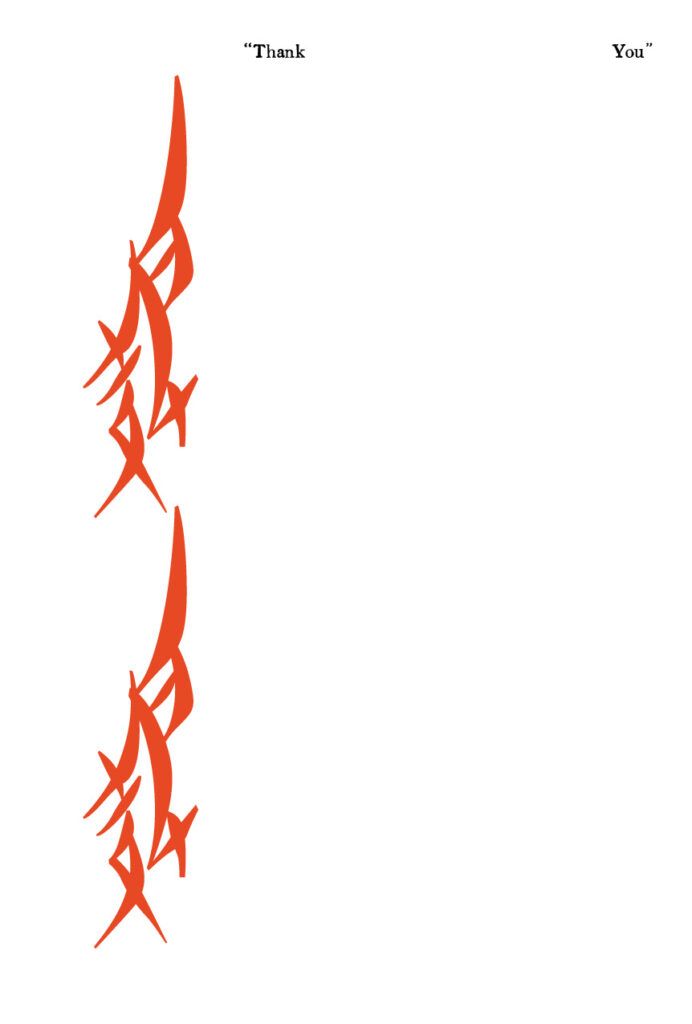
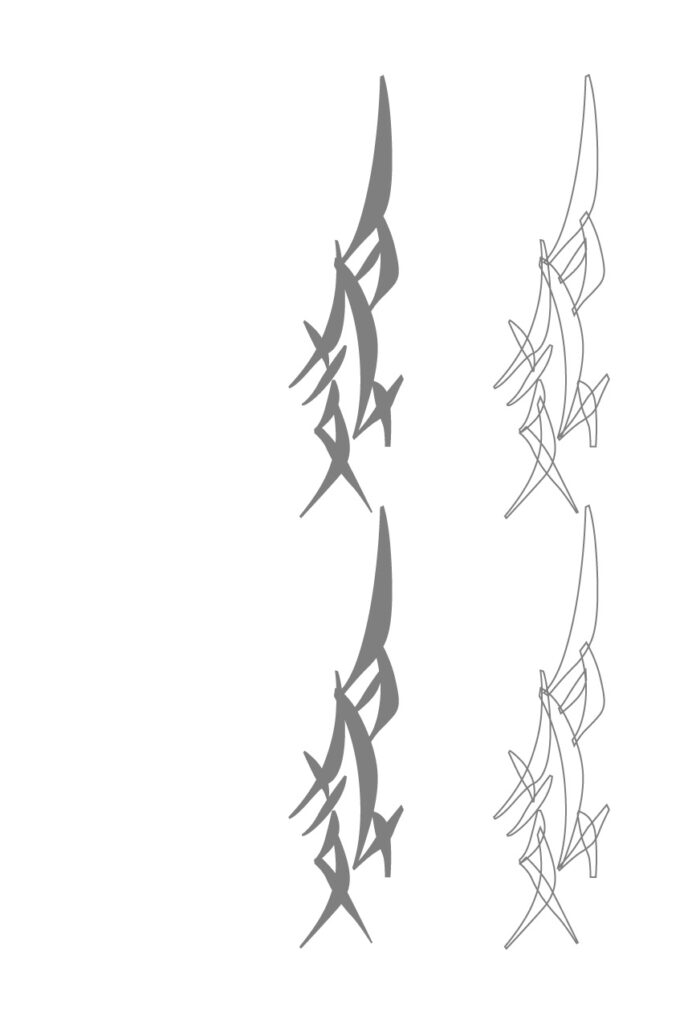
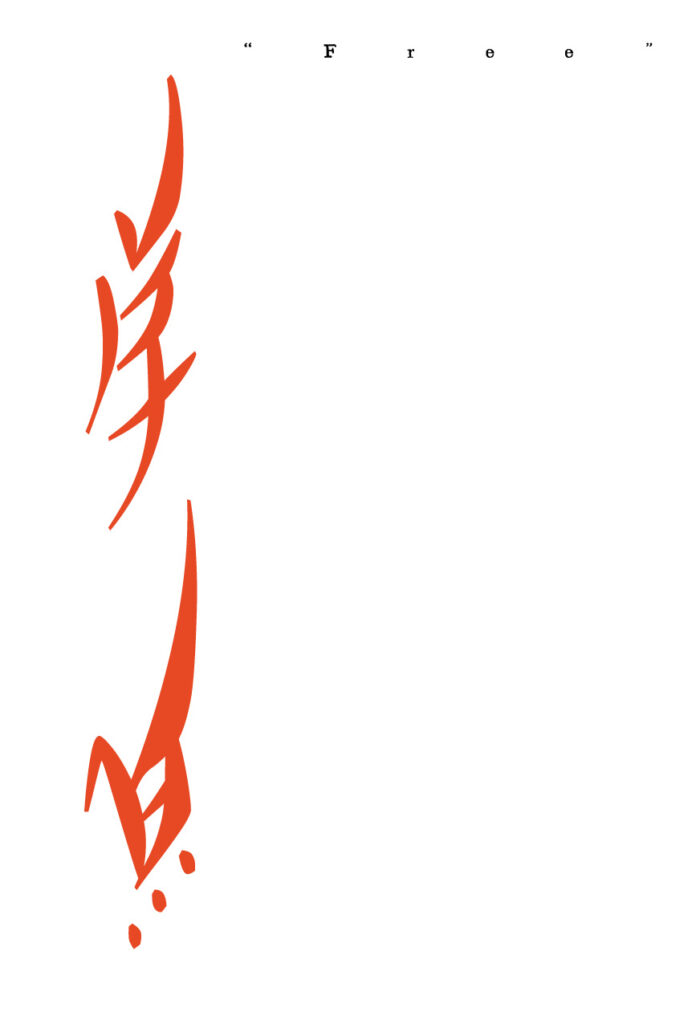
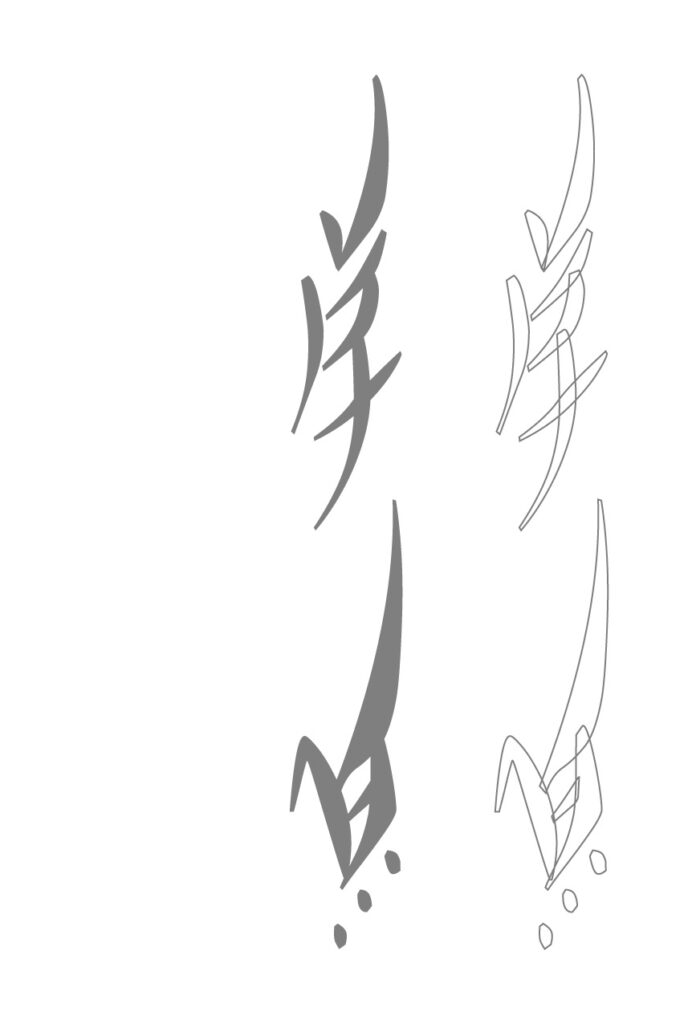
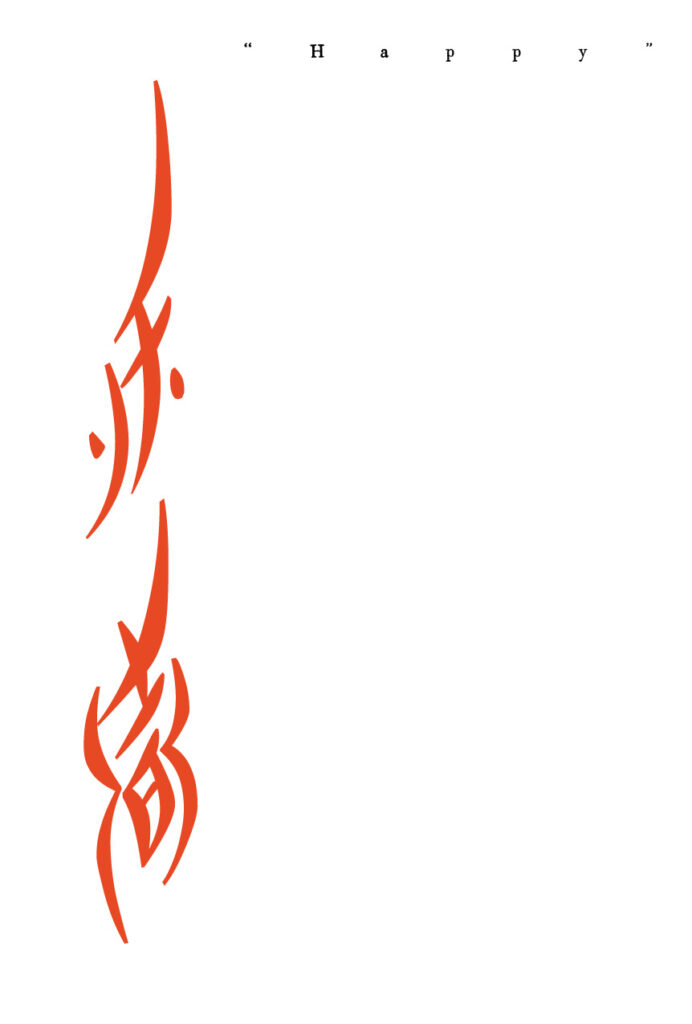
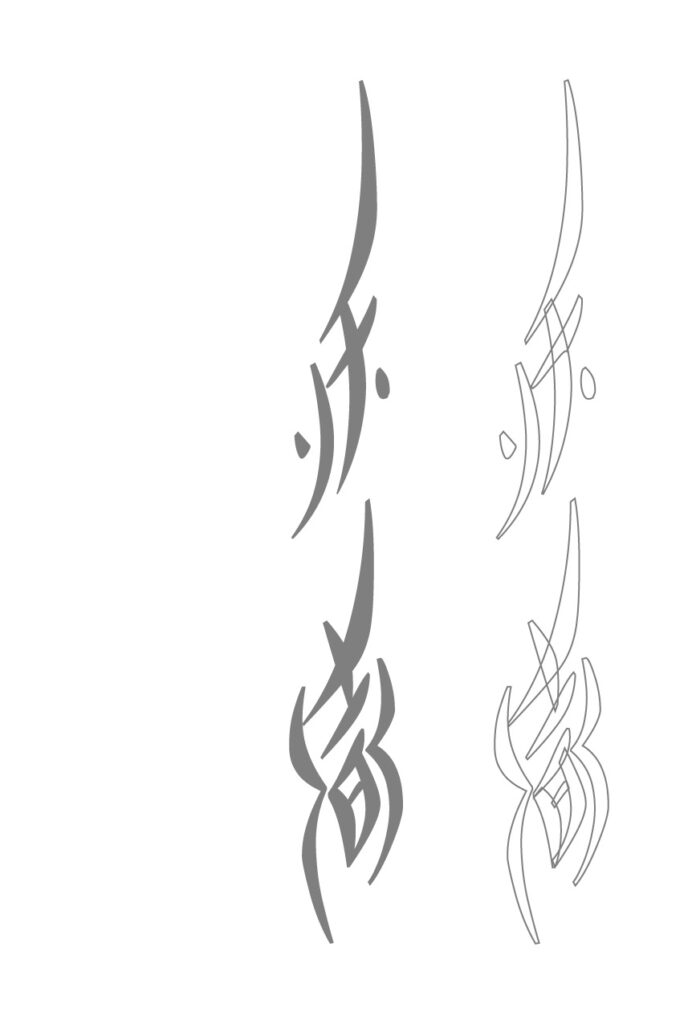


Zine
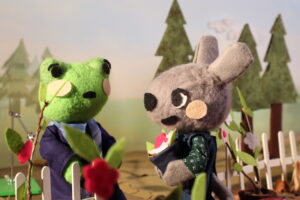
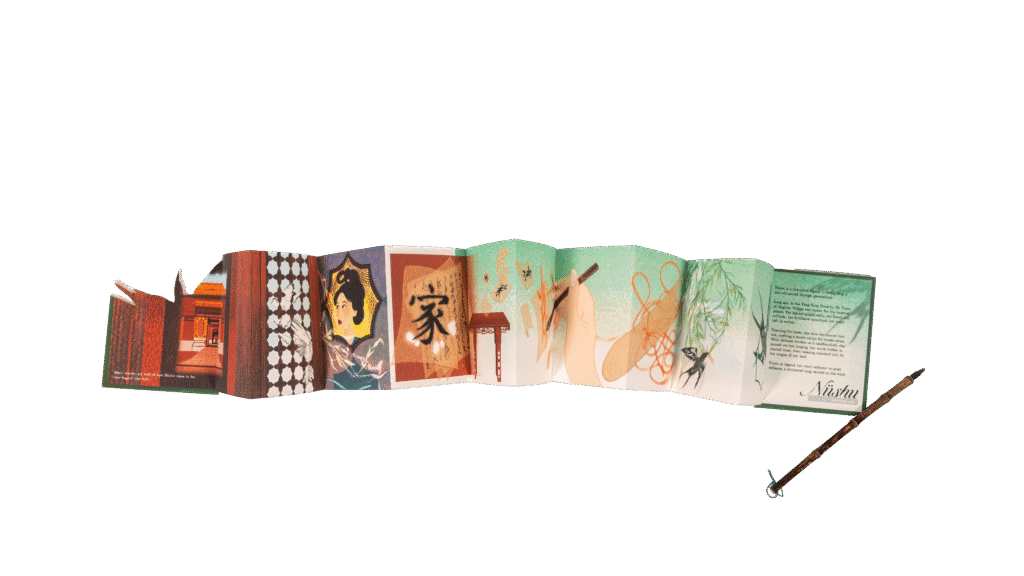
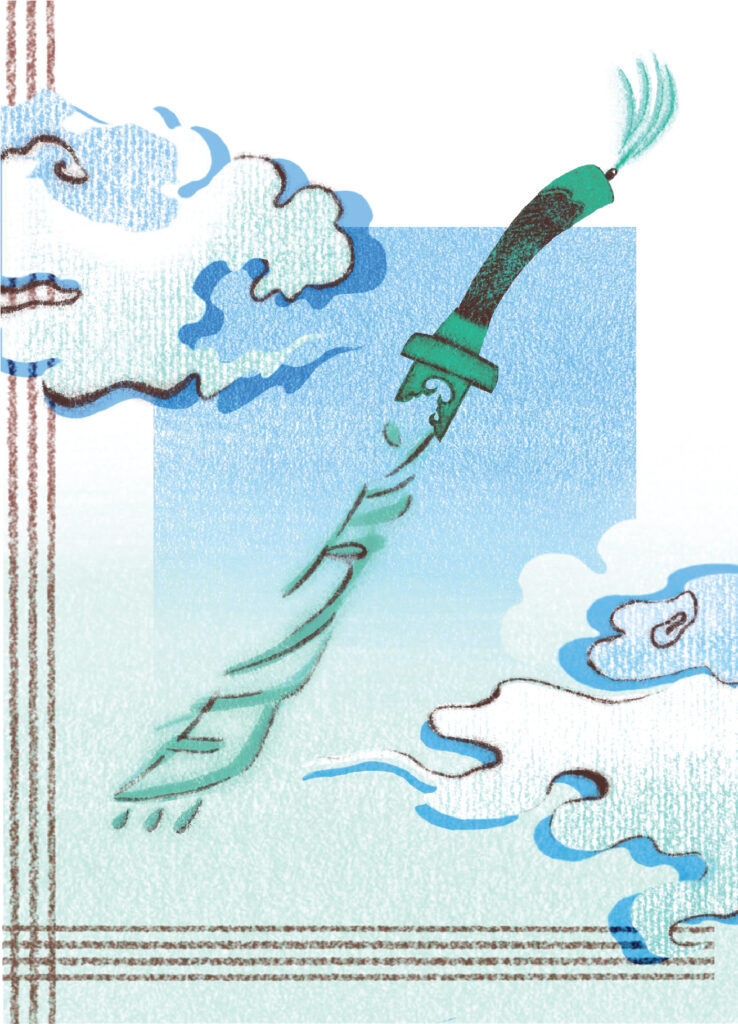
The opening scene of the guide is an illustrated folklore—one of the stories told about the origins of Nüshu. There are several versions of how Nüshu came to be, but none have been officially confirmed. That’s part of what makes it so special—the secrecy, the quiet resilience, and the fact that much of its history lives outside of written records.
The story I chose to include stood out to me because it felt incredibly tender and vulnerable. It’s not necessarily the origin, but it holds a certain emotional truth that I think captures the spirit of Nüshu. I wanted it to act as a gentle entry point into the language, something that doesn’t just explain, but invites you into its world.
Postcards
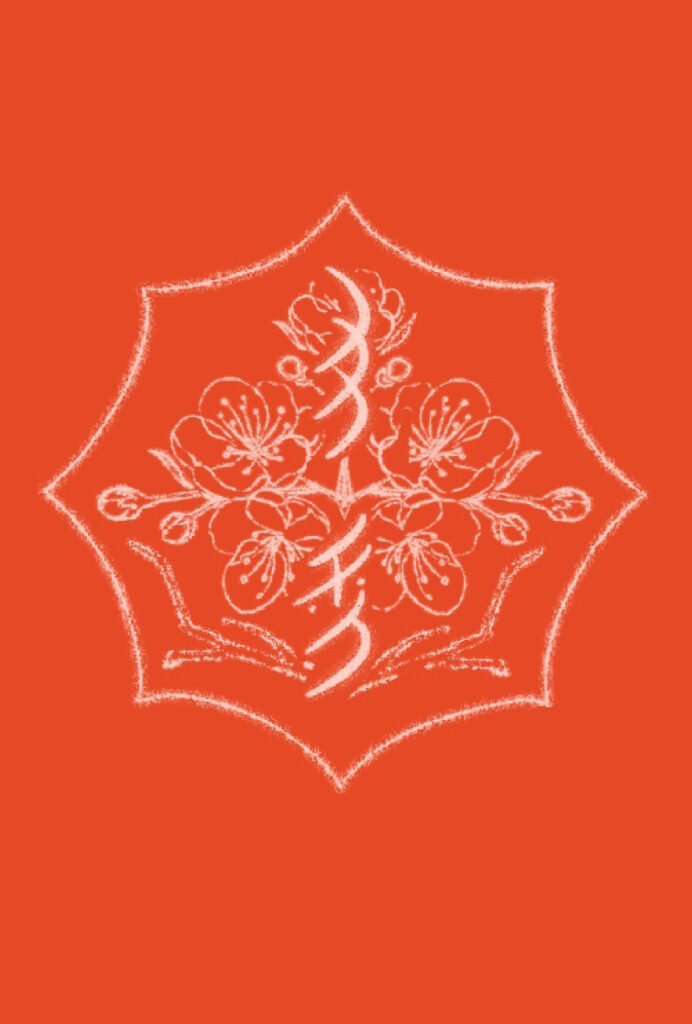
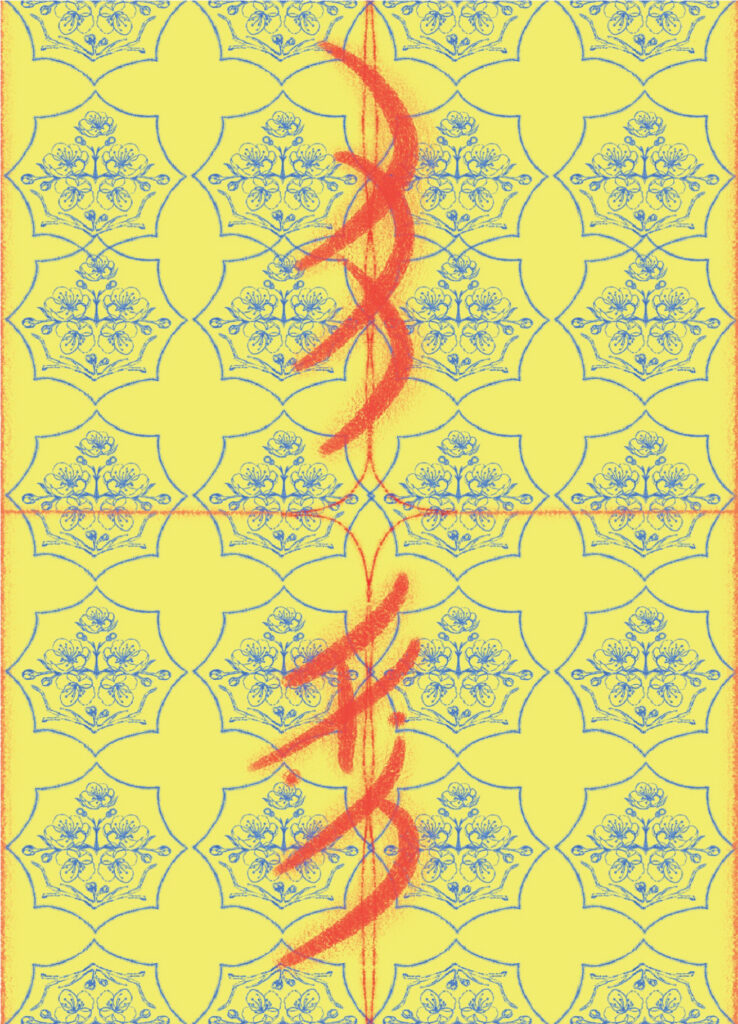
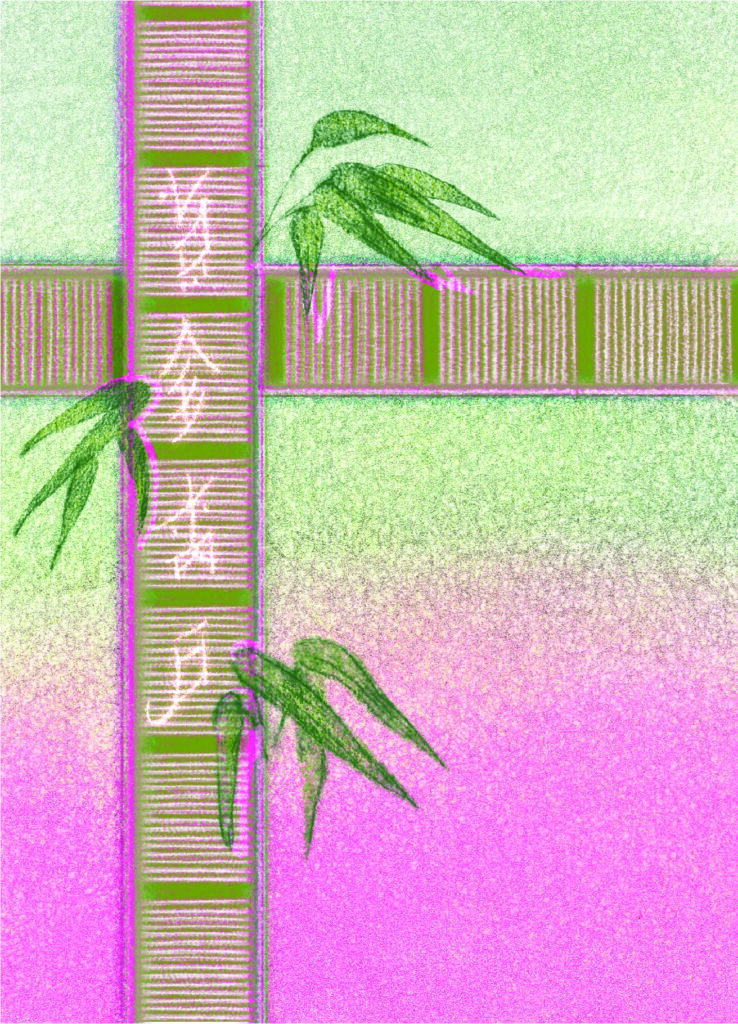
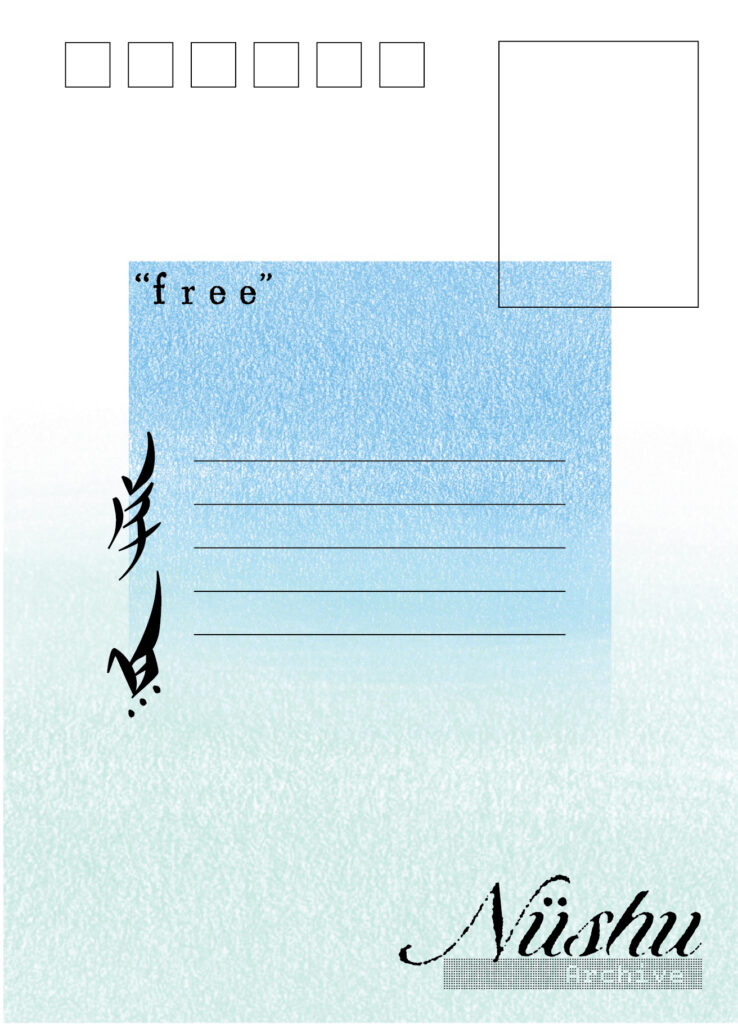
Nüshu is a culture that’s deeply rooted in its place of origin, and I wanted to reflect that sense of location and belonging in the guide. As part of the kit, I included a series of postcards.
Postcards have always been one of my favorite ways to hold onto little slivers of memory while traveling—a small way to carry a piece of a place with you. Even if they’re never sent out, they still act as quiet keepsakes, reminders of where you’ve been.
My hope is that, whether kept or shared, they become a small but meaningful reminder of what Nüshu is and where it comes from.
Release Granted